
Comparative genomics and population resequencing elucidate streamlined immune adaptations to aquatic environments in cetaceans
-
GRAPHICAL ABSTRACT
 DownLoad:
Full size image
DownLoad:
Full size image
-
PUBLIC SUMMARY
-
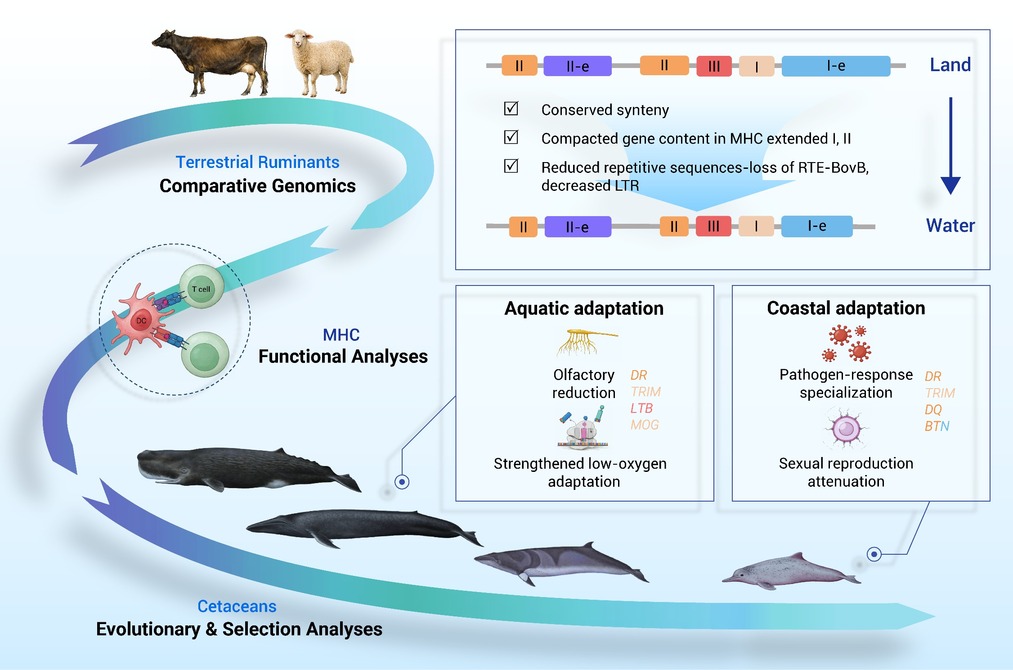
Cetaceans possess streamlined MHC regions with reduced gene content and repetitive elements.
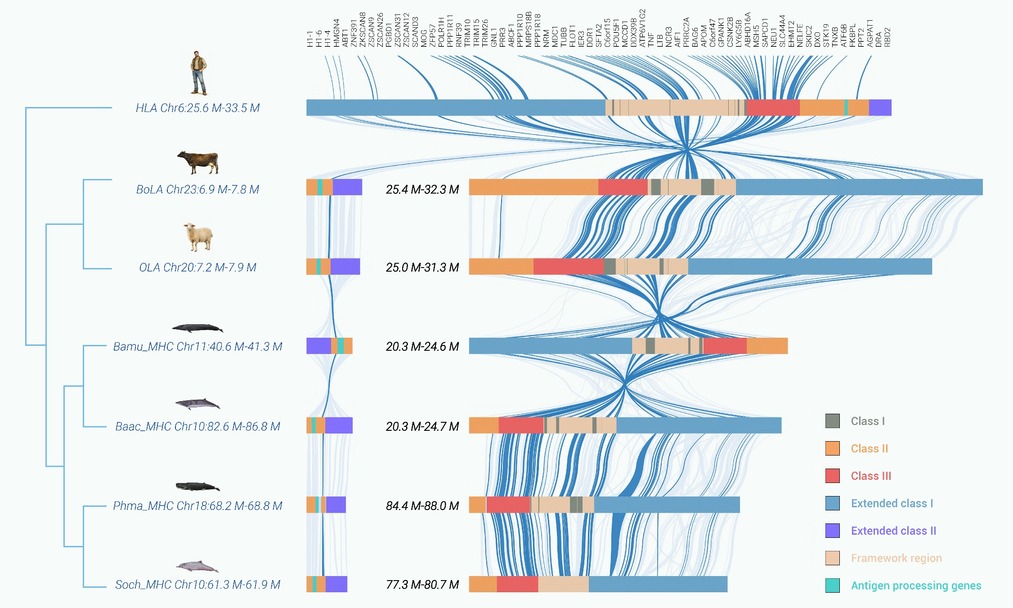
Cetaceans maintain conserved MHC structural frameworks.
Class II genes mediated ancestral cetaceans’ aquatic transition, Class I genes drove species diversity.
Cetaceans exhibit aquatic adaptations, including olfactory reduction and metabolic downregulation.
Sousa chinensis exhibit specialized pathogen defense mechanisms and attenuated reproductive gene sets.
-
-
ABSTRACT
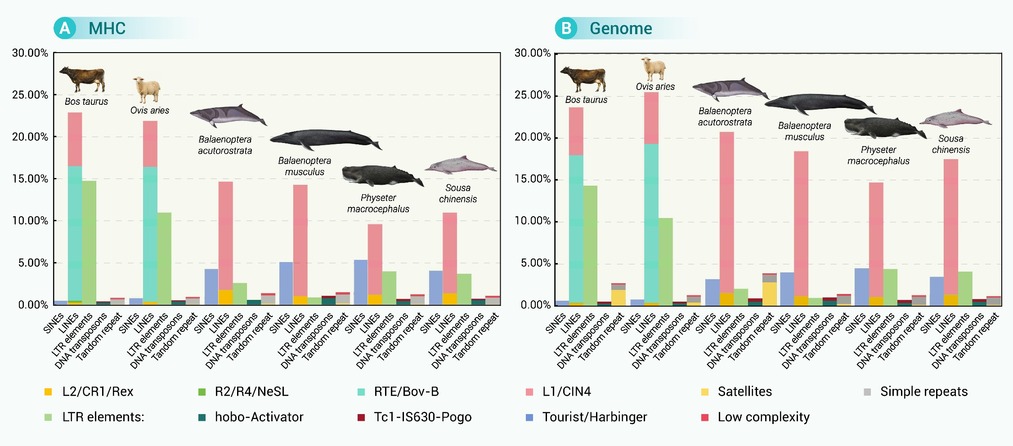
Cetaceans have evolved numerous adaptations to thrive in aquatic environments. In this study, we identified and analyzed the entire MHC regions across cetacean species/populations and their terrestrial counterparts to elucidate immune adaptation strategies to aquatic life. Results reveal cetaceans have evolved a structurally streamlined MHC architecture, marked by reduced repetitive sequences (e.g., loss of BovB, decreased LTRs) and compacted gene content (class II and extended class I regions). Contracted gene sets were involved in olfactory transduction and reproduction. Class II genes were found critical for the initial aquatic transition in ancestral cetaceans, whereas class I genes facilitated subsequent habitat specialization and diversification. Strong signatures of positive selection were detected at both species level (e.g., in DR, TRIM, LTB, MOG genes) and population level (e.g., in DR, TRIM, BTN, DQ genes) within S. chinensis. These findings highlight the pivotal role of MHC-driven adaptations in enabling cetaceans to colonize and thrive in diverse aquatic niches. Collectively, our study provides key insights into the specialized immune evolution underpinning cetacean success in marine environments. -

-
REFERENCES
[1] Liu J., Lu Z., Wang X., et al. (2024). From land to sea: Unique evolution in reproductive strategies of marine mammals. Innov. Life 2:100090. DOI:10.59717/j.xinn-life.2024.100090 [2] Zhang P., Goodman S. J., O’Connell M. J., et al. (2023). Marine mammal genomes: Important resources for unravelling adaptation and evolution in the marine environment. Innov. Geosci. 1:100022. DOI:10.59717/j.xinn-geo.2023.100022 [3] Mössner S. and Ballschmiter K. (1997). Marine mammals as global pollution indicators for organochlorines. Chemosphere 34:1285−1296. DOI:10.1016/s0045-6535(97)00426-8 [4] Lefebvre K. A., Charapata P., Stimmelmayr R., et al. (2025). Bowhead whale faeces link increasing algal toxins in the Arctic to ocean warming. Nature 644:693−698. DOI:10.1038/s41586-025-09230-5 [5] Vermeij G. J. (2017). How the land became the locus of major evolutionary innovations. Curr. Biol. 27:3178-3182. e3171. DOI: 10.1016/j.cub.2017.08.076 [6] Huelsmann M., Hecker N., Springer M. S., et al. (2019). Genes lost during the transition from land to water in cetaceans highlight genomic changes associated with aquatic adaptations. Sci. Adv. 5:eaaw6671. DOI:10.1126/sciadv.aaw6671 [7] Marcovitz A., Turakhia Y., Chen H. I., et al. (2019). A functional enrichment test for molecular convergent evolution finds a clear protein-coding signal in echolocating bats and whales. Proc. Natl. Acad. Sci. USA 116:21094−21103. DOI:10.1073/pnas.1818532116 [8] Yuan Y., Zhang Y., Zhang P., et al. (2021). Comparative genomics provides insights into the aquatic adaptations of mammals. Proc. Natl. Acad. Sci. USA 118:e2106080118. DOI:10.1073/pnas.2106080118 [9] Xu S., Shan L., Tian R., et al. (2025). Multi-level genomic convergence of secondary aquatic adaptation in marine mammals. The Innovation 6:100789. DOI:10.1016/j.xinn.2025.100798 [10] Shen T., Xu S., Wang X., et al. (2012). Adaptive evolution and functional constraint at TLR4 during the secondary aquatic adaptation and diversification of cetaceans. BMC Evol. Biol. 12:39. DOI:10.1186/1471-2148-12-39 [11] Kelley J., Walter L. and Trowsdale J. (2005). Comparative genomics of major histocompatibility complexes. Immunogenetics 56:683−695. DOI:10.1007/s00251-004-0717-7 [12] Benacerraf B. (1981). Role of MHC gene products in immune regulation. Science 212:1229−1238. DOI:10.1126/science.6165083 [13] Radosavljevic M., Cuillerier B., Wilson M. J., et al. (2002). A cluster of ten novel MHC class I related genes on human chromosome 6q24.2-q25.3. Genomics 79:114-123. DOI:10.1006/geno.2001.6673 [14] Trowsdale J. (2011). The MHC, disease and selection. Immunol. Lett. 137:1−8. DOI:10.1016/j.imlet.2011.01.002 [15] Piertney S. B. and Oliver M. K. (2006). The evolutionary ecology of the major histocompatibility complex. Heredity 96:7−21. DOI:10.1038/sj.hdy.6800724 [16] Goldberg A. C. and Rizzo L. V. (2015). MHC structure and function – antigen presentation. Part 1. Einstein-Sao Paulo 13:153-156. DOI:10.1590/s1679-45082015rb3122 [17] Bartl S., Baish M. A., Flajnik M. F., et al. (1997). Identification of class I genes in cartilaginous fish, the most ancient group of vertebrates displaying an adaptive immune response. J. Immunol. 159:6097−6104. DOI:10.4049/jimmunol.159.12.6097 [18] Bartl S. and Weissman I. L. (1994). Isolation and characterization of major histocompatibility complex class IIB genes from the nurse shark. Proc. Natl. Acad. Sci. USA 91:262−266. DOI:10.1073/pnas.91.1.262 [19] Kasahara M., Vazquez M., Sato K., et al. (1992). Evolution of the major histocompatibility complex: Isolation of class II A cDNA clones from the cartilaginous fish. Proc. Natl. Acad. Sci. USA 89:6688−6692. DOI:10.1073/pnas.89.15.6688 [20] Ohta Y., McKinney E. C., Criscitiello M. F., et al. (2002). Proteasome, transporter associated with antigen processing, and class I genes in the nurse shark Ginglymostoma cirratum: Evidence for a stable class I region and MHC haplotype lineages. J. Immunol. 168:771−781. DOI:10.4049/jimmunol.168.2.771 [21] Okamura K., Ototake M., Nakanishi T., et al. (1997). The most primitive vertebrates with jaws possess highly polymorphic MHC class I genes comparable to those of humans. Immunity 7:777−790. DOI:10.1016/s1074-7613(00)80396-9 [22] Belov K., Deakin J. E., Papenfuss A. T., et al. (2006). Reconstructing an ancestral mammalian immune supercomplex from a marsupial major histocompatibility complex. PLoS Biol. 4:e46. DOI:10.1371/journal.pbio.0040046 [23] de Sá A. L. A., Breaux B., Burlamaqui T. C. T., et al. (2019). The marine mammal class II major histocompatibility complex organization. Front. Immunol. 10:696. DOI:10.3389/fimmu.2019.00696 [24] Ruan R., Ruan J., Wan X. L., et al. (2016). Organization and characteristics of the major histocompatibility complex class II region in the Yangtze finless porpoise (Neophocaena asiaeorientalis asiaeorientalis). Sci. Rep. 6:22471. DOI:10.1038/srep22471 [25] Reche P. A. and Reinherz E. L. (2003). Sequence variability analysis of human class I and class II MHC molecules: Functional and structural correlates of amino acid polymorphisms. J. Mol. Biol. 331:623−641. DOI:10.1016/s0022-2836(03)00750-2 [26] Spurgin L. G. and Richardson D. S. (2010). How pathogens drive genetic diversity: MHC, mechanisms and misunderstandings. Proc. Biol. Sci. 277:979−988. DOI:10.1098/rspb.2009.2084 [27] Nei M., Gu X. and Sitnikova T. (1997). Evolution by the birth-and-death process in multigene families of the vertebrate immune system. Proc. Natl. Acad. Sci. USA 94:7799−7806. DOI:10.1073/pnas.94.15.7799 [28] Jefferson T. A., Webber M. A. and Pitman R. L. (2015). Marine mammals of the world (Second Edition) (Academic Press). DOI: 10.1016/B978-0-12-409542-7.50004-4 [29] Xu S., Zhang P., Ij S., et al. (2009). A preliminary analysis of genetic variation at three MHC loci of the Indo-Pacific humpback dolphin (Sousa chinensis ). Acta Theriologica Sinica 29:372-381. https://www.mammal.cn/EN/Y2009/V29/I4/372 [30] Zhang P., Zhao Y., Li C., et al. (2020). An Indo-Pacific humpback dolphin genome reveals insights into chromosome evolution and the demography of a vulnerable species. iScience 23:101640. DOI:10.1016/j.isci.2020.101640 [31] Flynn J. M., Hubley R., Goubert C., et al. (2020). RepeatModeler2 for automated genomic discovery of transposable element families. Proc. Natl. Acad. Sci. USA 117:9451−9457. DOI:10.1073/pnas.1921046117 [32] Ou S. and Jiang N. (2018). LTR_retriever: A highly accurate and sensitive program for identification of long terminal repeat retrotransposons. Plant Physiol. 176:1410−1422. DOI:10.1104/pp.17.01310 [33] Chen N. (2004). Using RepeatMasker to identify repetitive elements in genomic sequences. Curr. Protoc. Bioinformatics 5:4−10. DOI:10.1002/0471250953.bi0410s05 [34] Stanke M., Keller O., Gunduz I., et al. (2006). AUGUSTUS: ab initio prediction of alternative transcripts. Nucleic Acids Res. 34:W435−439. DOI:10.1093/nar/gkl200 [35] Birney E., Clamp M. and Durbin R. (2004). GeneWise and Genomewise. Genome Res. 14:988−995. DOI:10.1101/gr.1865504 [36] Haas B. J., Salzberg S. L., Zhu W., et al. (2008). Automated eukaryotic gene structure annotation using EVidenceModeler and the program to assemble spliced alignments. Genome Biol. 9:R7. DOI:10.1186/gb-2008-9-1-r7 [37] Buchfink B., Xie C. and Huson D. H. (2015). Fast and sensitive protein alignment using DIAMOND. Nat. Methods 12:59−60. DOI:10.1038/nmeth.3176 [38] Wang Y., Tang H., Debarry J. D., et al. (2012). MCScanX: A toolkit for detection and evolutionary analysis of gene synteny and collinearity. Nucleic Acids Res. 40:e49. DOI:10.1093/nar/gkr1293 [39] Emms D. M. and Kelly S. (2019). OrthoFinder: Phylogenetic orthology inference for comparative genomics. Genome Biol. 20:238. DOI:10.1186/s13059-019-1832-y [40] Altschul S. F., Gish W., Miller W., et al. (1990). Basic local alignment search tool. J. Mol. Biol. 215:403−410. DOI:10.1016/s0022-2836(05)80360-2 [41] Rokas A. (2011). Phylogenetic analysis of protein sequence data using the Randomized Axelerated Maximum Likelihood (RAXML) Program. Curr. Protoc. Mol. Biol. 96:19.11.1−19.11.14. DOI:10.1002/0471142727.mb1911s96 [42] Yang Z. and Rannala B. (2006). Bayesian estimation of species divergence times under a molecular clock using multiple fossil calibrations with soft bounds. Mol. Biol. Evol. 23:212−226. DOI:10.1093/molbev/msj024 [43] Yang Z. (2007). PAML 4: Phylogenetic analysis by maximum likelihood. Mol. Biol. Evol. 24:1586−1591. DOI:10.1093/molbev/msm088 [44] Horton R., Wilming L., Rand V., et al. (2004). Gene map of the extended human MHC. Nat. Rev. Genet. 5:889−899. DOI:10.1038/nrg1489 [45] Fukami-Kobayashi K., Shiina T., Anzai T., et al. (2005). Genomic evolution of MHC class I region in primates. Proc. Natl. Acad. Sci. USA 102:9230−9234. DOI:10.1073/pnas.0500770102 [46] Martelossi J., Nicolini F., Subacchi S., et al. (2023). Multiple and diversified transposon lineages contribute to early and recent bivalve genome evolution. BMC Biol. 21:145. DOI:10.1186/s12915-023-01632-z [47] Wong L. H. and Tremethick D. J. (2024). Multifunctional histone variants in genome function. Nat. Rev. Genet. 26:82−104. DOI:10.1038/s41576-024-00759-1 [48] Cassandri M., Smirnov A., Novelli F., et al. (2017). Zinc-finger proteins in health and disease. Cell Death Discov. 3:17071. DOI:10.1038/cddiscovery.2017.71 [49] Rogers L. W., Koehler A. M., Crouch J. A., et al. (2022). Comparative genomic analysis reveals contraction of gene families with putative roles in pathogenesis in the fungal boxwood pathogens Calonectria henricotiae and C. pseudonaviculata. BMC Ecol. Evol. 22:79. DOI:10.1186/s12862-022-02035-4 [50] Demuth J. P. and Hahn M. W. (2009). The life and death of gene families. Bioessays 31:29−39. DOI:10.1002/bies.080085 [51] Freitas L. and Nery M. F. (2020). Expansions and contractions in gene families of independently-evolved blood-feeding insects. BMC Evol. Biol. 20:87. DOI:10.1186/s12862-020-01650-3 [52] Fabrizius A., Hoff M. L., Engler G., et al. (2016). When the brain goes diving: Transcriptome analysis reveals a reduced aerobic energy metabolism and increased stress proteins in the seal brain. BMC Genomics 17:583. DOI:10.1186/s12864-016-2892-y [53] Mazzatenta A., Bondi D., Di Giulio C., et al. (2022). Olfactory response to altitude hypoxia: A pilot study during a Himalayan trek. Adv. Exp. Med. Biol. 1375:55−61. DOI:10.1007/5584_2021_679 [54] Lu T. (2023). The High-altitude adaptation mechanism of Vulpes in the Qinghai-Tibet Plateau. (Northeast Forestry University). DOI: 10.27009/d.cnki.gdblu.2023.000021 [55] Kishida T., Thewissen J., Hayakawa T., et al. (2015). Aquatic adaptation and the evolution of smell and taste in whales. Zoological Lett. 1:9. DOI:10.1186/s40851-014-0002-z [56] Browning J. L., Ngam-ek A., Lawton P., et al. (1993). Lymphotoxin beta, a novel member of the TNF family that forms a heteromeric complex with lymphotoxin on the cell surface. Cell 72:847−856. DOI:10.1016/0092-8674(93)90574-a [57] Browning J. L., Androlewicz M. J. and Ware C. F. (1991). Lymphotoxin and an associated 33-kDa glycoprotein are expressed on the surface of an activated human T cell hybridoma. J. Immunol. 147:1230−1237. DOI:10.4049/jimmunol.147.4.1230 [58] Dahmer M. K., Cornell T. and Quasney M. W. (2016). Genetic and epigenetic factors in the regulation of the immune response. Curr. Opin. Pediatr. 28:281−286. DOI:10.1097/mop.0000000000000356 [59] Nguyen K. H., Le N. V., Nguyen P. H., et al. (2025). Human immune system: Exploring diversity across individuals and populations. Heliyon 11:e41836. DOI:10.1016/j.heliyon.2025.e41836 [60] Mehta S. and Jeffrey K. L. (2015). Beyond receptors and signaling: Epigenetic factors in the regulation of innate immunity. Immunol. Cell Biol. 93:233−244. DOI:10.1038/icb.2014.101 [61] Abeler-Dörner L., Swamy M., Williams G., et al. (2012). Butyrophilins: An emerging family of immune regulators. Trends Immunol. 33:34−41. DOI:10.1016/j.it.2011.09.007 [62] Hatakeyama S. (2017). TRIM family proteins: Roles in autophagy, immunity, and carcinogenesis. Trends Biochem. Sci. 42:297-311. DOI:https://doi.org/10.1016/j.tibs.2017.01.002 [63] Zou J., Niu K., Lu T., et al. (2024). The multifunction of TRIM26: From immune regulation to oncology. Protein Pept. Lett. 31:424−436. DOI:10.2174/0109298665311516240621114519 -
ABOUT THIS ARTICLE
Cite this article:
Liu D., Liu J., Xie P., et al. (2026). Comparative genomics and population resequencing elucidate streamlined immune adaptations to aquatic environments in cetaceans. The Innovation Life 4:100245. https://doi.org/10.59717/j.xinn-life.2026.100245
Welcome!
To request copyright permission to republish or share portions of our works, please visit Copyright Clearance Center's (CCC) Marketplace website at marketplace.copyright.com.
Export File
Citation
Liu D., Liu J., Xie P., et al. (2026). Comparative genomics and population resequencing elucidate streamlined immune adaptations to aquatic environments in cetaceans. The Innovation Life 4:100245. https://doi.org/10.59717/j.xinn-life.2026.100245

Format
Content
-
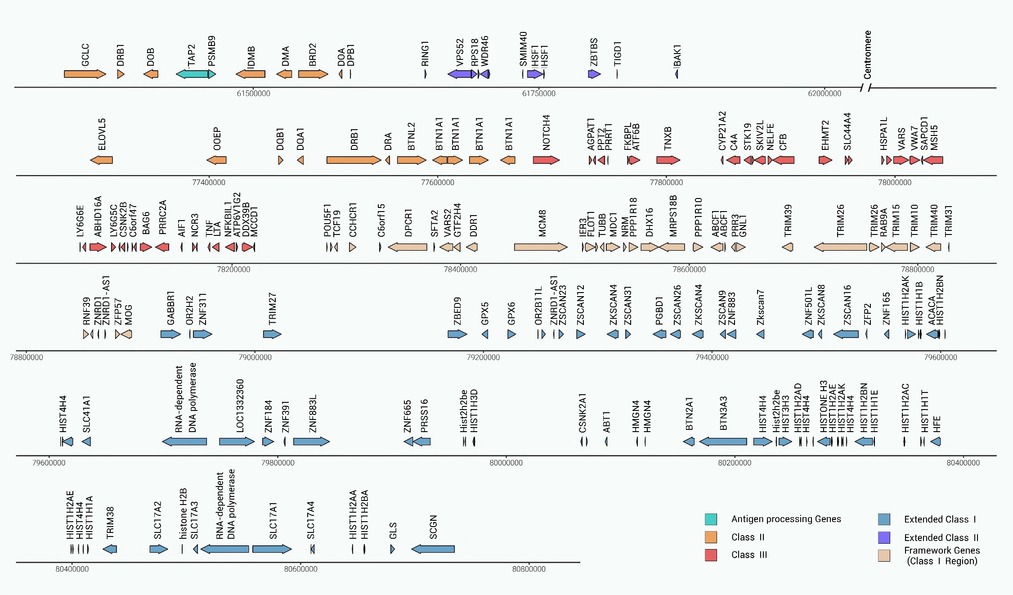
Figure 1.
MHC structure of the S. chinensis.
-
Figure 2.
Ratio of repetitive elements in representative mammalian species
-
Figure 3.
Synteny of MHC gene structure cross multiple species
-
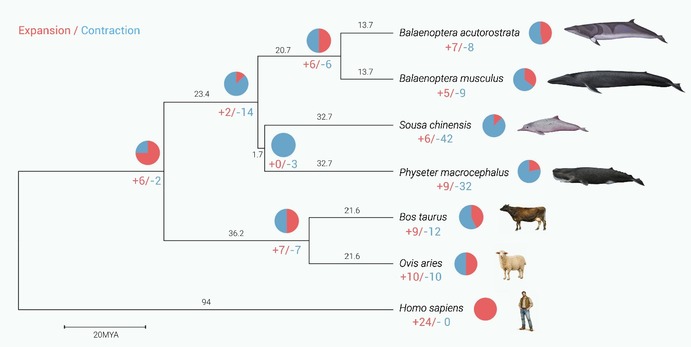
Figure 4.
The expansion and contraction of MHC orthogroups in 7 species.
-
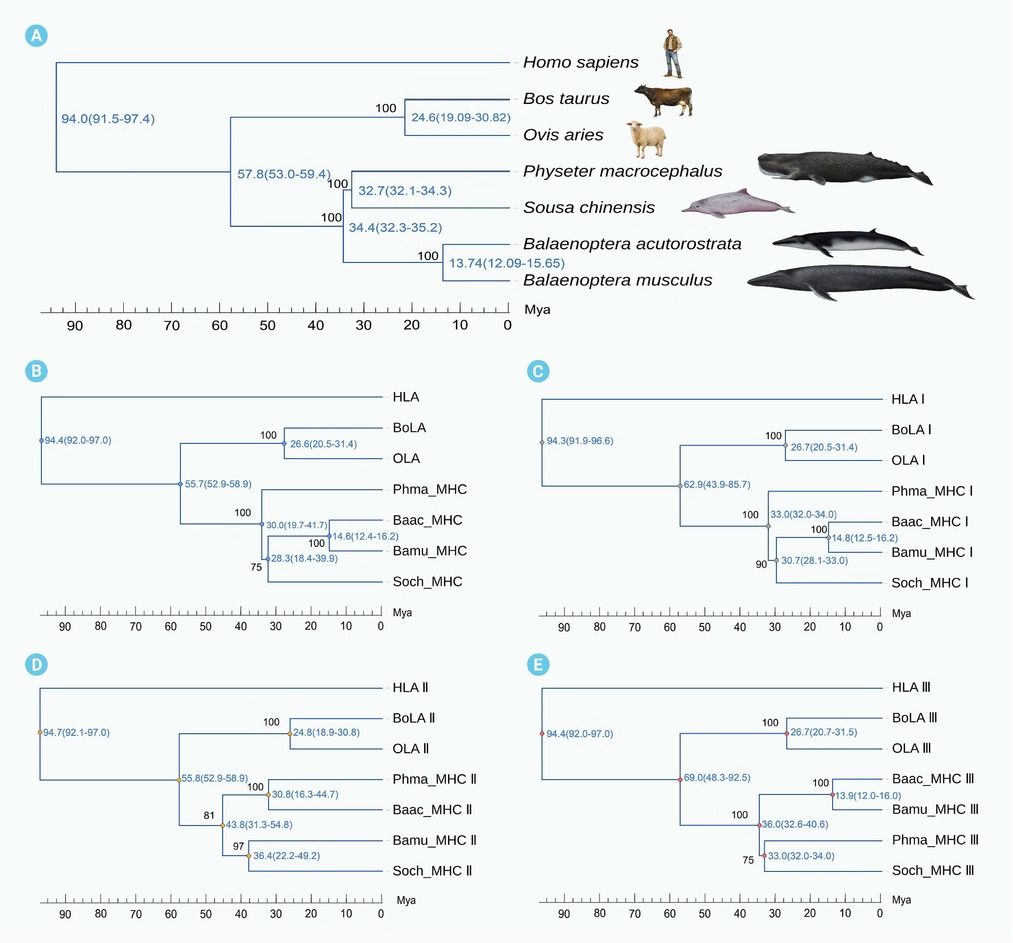
Figure 5.
Phylogenetic tree and divergence times of the investigated species based on different sequences
-
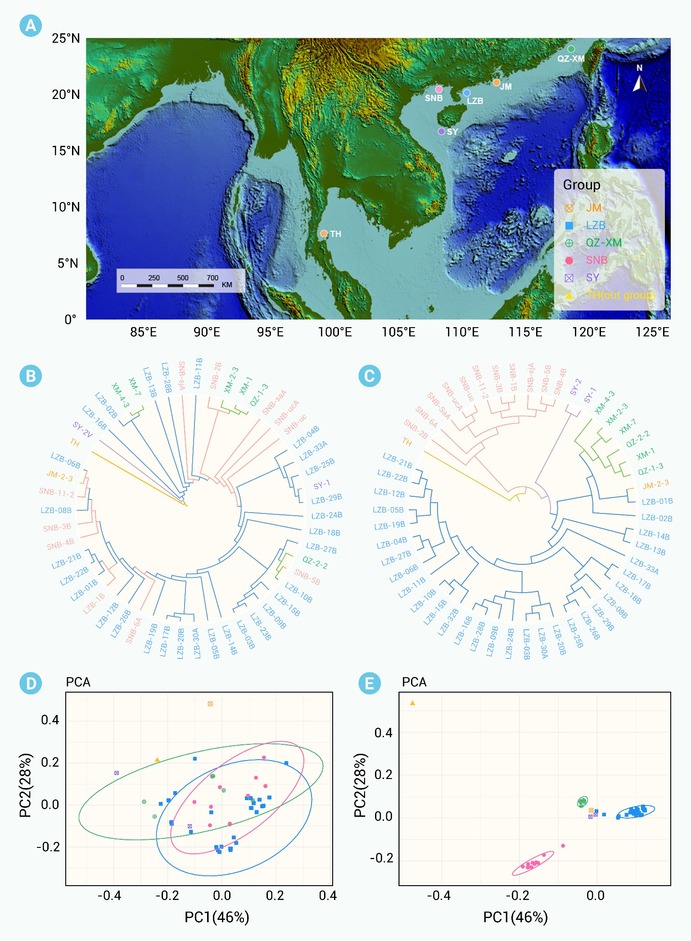
Figure 6.
Geographic distribution and phylogenetic relationships of six populations of the S. chinensis
-
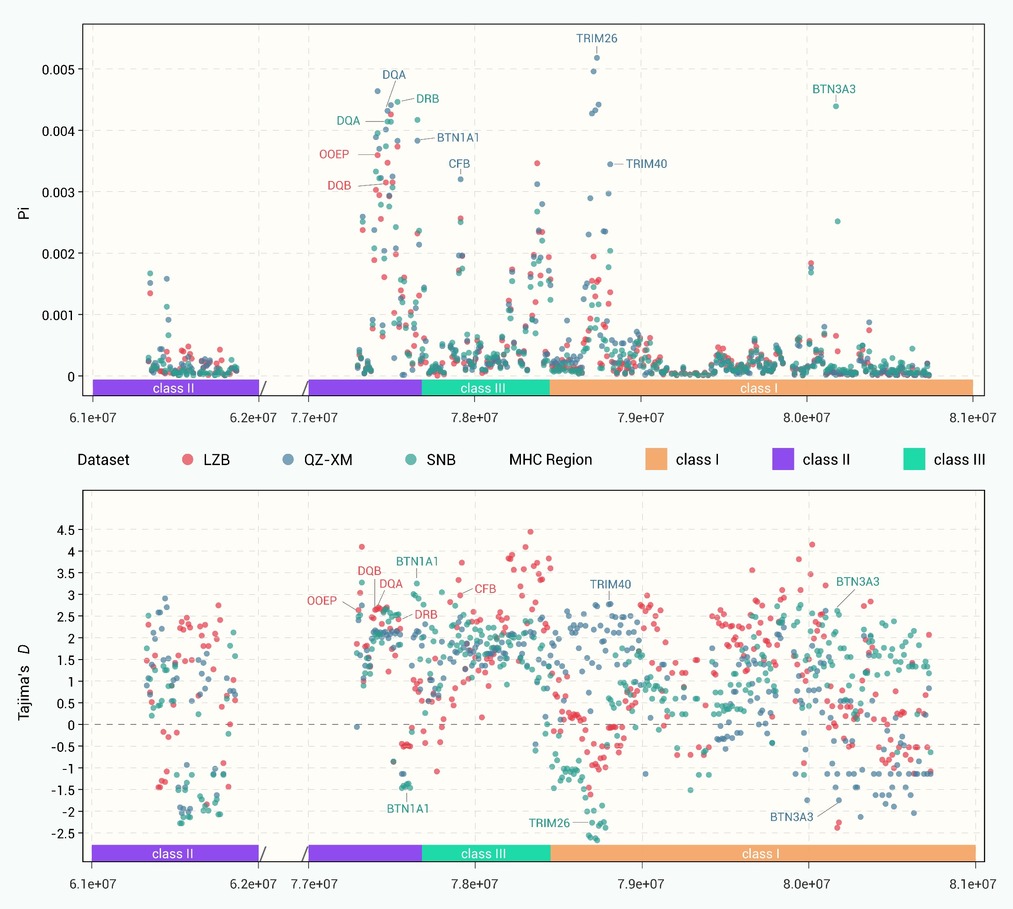
Figure 7.
Polymorphism analysis of Pi and Tajima’s D in S. chinensis populations.
