
-
GRAPHICAL ABSTRACT
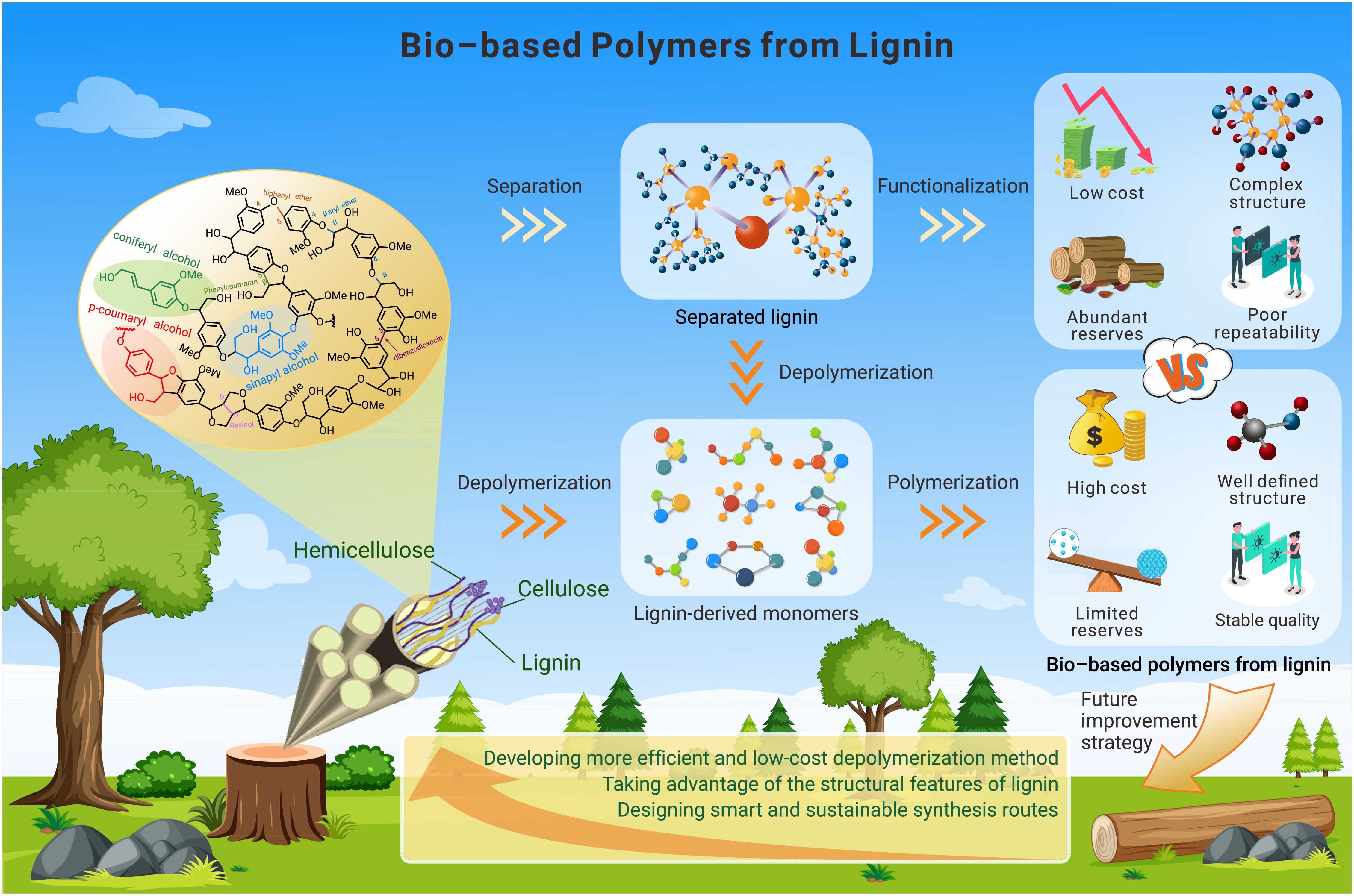
 DownLoad:
Full size image
DownLoad:
Full size image
-
PUBLIC SUMMARY
-
Adequate selection of feedstock is crucial for the properties of lignin-based materials.
Application of these materials is determined by different processing procedures used.
This review discusses two common used strategies for the synthesis of bio-based materials.
-
-
ABSTRACT
Lignin, the most abundant natural aromatic compound on earth, offers valuable resources for the development of bio–based polymers. In recent years, a plethora of diverse polymer materials has been reported using either separated lignin or lignin–derived monomers. In this review, we present a comprehensive summary of recent achievements and compare these two well–known strategies. While utilizing lignin directly as starting materials has advantages in terms of cost–effectiveness and wider options, employing lignin–derived monomers suffer from higher costs and limited structural variety. However, the well–defined structure of lignin-derived aromatic monomers, and retention of functional group characteristics make this a promising strategy for future applications. Through this review paper, we aim to inspire more researchers in material science to focus on lignin—an intriguing and emerging carbon-neutral biomaterial. -

-
REFERENCES
[1] Upton, B.M., and Kasko, A.M. (2016). Strategies for the conversion of lignin to high-value polymeric materials: Review and perspective. Chem. Rev. 116: 75−306. DOI: 10.1021/acs.chemrev.5b00345. [2] Dessbesell, L., Paleologou, M., Leitch, M., et al. (2020). Global lignin supply overview and kraft lignin potential as an alternative for petroleum-based polymers. Renew. Sust. Energy Rev. 123: 109768. DOI: 10.1016/j.rser.2020.109768. [3] Figueiredo, P., Lintinen, K., Hirvonen, J.T., et al. (2018). Properties and chemical modifications of lignin: towards lignin-based nanomaterials for biomedical applications. Prog. Mater. Sci. 93: 233−269. DOI: 10.1016/j.pmatsci.2017.12.001. [4] Gandini, A., Lacerda, T.M., Carvalho, A.J., et al. (2016). Progress of polymers from renewable resources: Furans, vegetable oils, and polysaccharides. Chem. Rev. 116: 1637−1669. DOI: 10.1021/acs.chemrev.5b00264. [5] Alagumalai, A., and Song, H. (2023). A sustainable pathway towards methane-assisted biorefineries. The Innovation Materials 1: 100039. DOI: 10.59717/j.xinn-mater.2023.100039. [6] Zhao, H., Wang, J., Meng, Y., et al. (2022). Bamboo and rattan: nature-based solutions for sustainable development. The Innovation 3: 100337. DOI: 10.1016/j.xinn.2022.100337. [7] Iwata, T. (2015). Biodegradable and bio-based polymers: Future prospects of eco-friendly plastics. Angew. Chem. Int. Ed. 54: 3210−3215. DOI: 10.1002/anie.201410770. [8] Dong, F., Yang, X., Guo, L., et al. (2022). Self-healing polyurethane with high strength and toughness based on a dynamic chemical strategy. J. Mater. Chem. A 10: 10139−10149. DOI: 10.1039/d2ta00802e. [9] Dong, F., Yang, X., Guo, L., et al. (2023). A tough, healable, and recyclable conductive polyurethane/carbon nanotube composite. J. Colloid Interface Sci. 631 :239-248. DOI: 10.1016/j.jcis.0.11.045. [10] Sun, X., Pang, Z., Zhu, Y., et al. (203). All-cellulose hydrogel-based adhesive. The Innovation Materials 1: 100040. DOI: 10.59717/j.xinn-mater.2023.100040. [11] Chio, C., Sain, M., and Qin, W. (2019). Lignin utilization: a review of lignin depolymerization from various aspects. Renew. Sust. Energ. Rev. 107: 232−249. DOI: 10.1016/j.rser.2019.03.008. [12] Liu, H., Zhang, L., Ma, Q., et al. (2023). From tree to forest: Multiple carbon sink constraints. The Innovation 4: 100463. DOI: 10.1016/j.xinn.2023.100463. [13] Abdelaziz, O.Y., Brink, D.P., Prothmann, J., et al. (2016). Biological valorization of low molecular weight lignin. Biotechnol. Adv. 34: 1318−1346. DOI: 10.1016/j.biotechadv.2016.10.001. [14] Eraghi Kazzaz, A., and Fatehi, P. (2020). Technical lignin and its potential modification routes: A mini-review. Ind. Crop. Prod. 154: 112732. DOI: 10.1016/j.indcrop.2020.112732. [15] Mahmood, N., Yuan, Z., Schmidt, J., et al. (2016). Depolymerization of lignins and their applications for the preparation of polyols and rigid polyurethane foams: A review. Renew. Sust. Energ. Rev. 60: 317−329. DOI: 10.1016/j.rser.2016.01.037. [16] Sipponen, M.H., Lange, H., Crestini, C., et al. (2019). Lignin for nano- and microscaled carrier systems: Applications, trends, and challenges. ChemSusChem 1: 2039−2054. DOI: 10.1002/cssc.201900480. [17] Ralph, J., Lapierre, C., and Boerjan, W. (2019). Lignin structure and its engineering. Curr. Opin. Biotechnol. 56: 240−249. DOI: 10.1016/j.copbio.2019.02.019. [18] Liu, X., Bouxin, F.P., Fan, J., et al. (2020). Recent advances in the catalytic depolymerization of lignin towards phenolic chemicals: A review. ChemSusChem 13: 4296−4317. DOI: 10.1002/cssc.202001213. [19] Abu-Omar, M.M., Barta, K., Beckham, G.T., et al. (2021). Guidelines for performing lignin-first biorefining. Energ. Environ. Sci. 14: 262−292. DOI: 10.1039/d0ee02870c. [20] Sun, Z., Fridrich, B., de Santi, A., et al. (2018). Bright side of lignin depolymerization: Toward new platform chemicals. Chem. Rev. 118: 614−678. DOI: 10.1021/acs.chemrev.7b00588. [21] Wong, S.S., Shu, R., Zhang, J., et al. (2020). Downstream processing of lignin derived feedstock into end products. Chem. Soc. Rev. 49: 5510−5560. DOI: 10.1039/d0cs00134a. [22] Lizundia, E., Sipponen, M.H., Greca, L.G., et al. (2021). Multifunctional lignin-based nanocomposites and nanohybrids. Green Chem. 23: 6698−6760. DOI: 10.1039/d1gc01684a. [23] Galkin, M.V., and Samec, J.S.M. (2016). Lignin valorization through catalytic lignocellulose fractionation: A fundamental platform for the future biorefinery. ChemSusChem 9: 1544−1558. DOI: 10.1002/cssc.201600237. [24] Bertella, S., and Luterbacher, J.S. (2020). Lignin functionalization for the production of novel materials. Trends Chem. 2: 440−453. DOI: 10.1016/j.trechm.2020.03.001. [25] Xu, J., Li, C., Dai, L., et al. (2020). Biomass fractionation and lignin fractionation towards lignin valorization. ChemSusChem 13: 4284−4295. DOI: 10.1002/cssc.202001491. [26] Wang, H., Pu, Y., Ragauskas, A., et al. (2019). From lignin to valuable products-strategies, challenges, and prospects. Bioresour Technol 271: 449−461. DOI: 10.1016/j.biortech.2018.09.072. [27] Schutyser, W., Renders, T., Van den Bosch, S., et al. (2018). Chemicals from lignin: an interplay of lignocellulose fractionation, depolymerisation, and upgrading. Chem. Soc. Rev. 47: 852−908. DOI: 10.1039/c7cs00566k. [28] Sethupathy, S., Murillo Morales, G., Gao, L., et al. (2022). Lignin valorization: status, challenges and opportunities. Bioresour. Technol. 347: 126696. DOI: 10.1016/j.biortech.2022.126696. [29] Rajesh Banu, J., Kavitha, S., Yukesh Kannah, R., et al. (2019). A review on biopolymer production via lignin valorization. Bioresour. Technol. 290: 121790. DOI: 10.1016/j.biortech.2019.121790. [30] Huang, C., Peng, Z., Li, J., et al. (2022). Unlocking the role of lignin for preparing the lignin-based wood adhesive: A review. Ind. Crop Prod. 187: 115388. DOI: 10.1016/j.indcrop.2022.115388. [31] Wang, Z. and Deuss, P.J. (2023). The isolation of lignin with native-like structure. Biotechnol. Adv. 68: 108230. DOI: 10.1016/j.biotechadv.2023.108230. [32] Li, W., Sun, H., Wang, G., et al. (2023). Lignin as a green and multifunctional alternative to phenol for resin synthesis. Green Chem. 5: 2241−2261. DOI: 10.1039/d2gc04319j. [33] Banu Jamaldheen, S., Kurade, M.B., Basak, B., et al. (2022). A review on physico-chemical delignification as a pretreatment of lignocellulosic biomass for enhanced bioconversion. Bioresour. Technol. 346: 126591. DOI: 10.1016/j.biortech.2021.126591. [34] Yoo, C.G., Meng, X., Pu, Y., et al. (2020). The critical role of lignin in lignocellulosic biomass conversion and recent pretreatment strategies: A comprehensive review. Bioresour. Technol. 301: 122784. DOI: 10.1016/j.biortech.2020.122784. [35] Zhang, C., and Wang, F. (2020). Catalytic lignin depolymerization to aromatic chemicals. Acc. Chem. Res. 53: 470−484. DOI: 10.1021/acs.accounts.9b00573. [36] Thakur, V.K., and Thakur, M.K. (2015). Recent advances in green hydrogels from lignin: A review. Int. J. Biol. Macromol. 72: 834−847. DOI: 10.1016/j.ijbiomac.2014.09.044. [37] Aro, T., and Fatehi, P. (2017). Production and application of lignosulfonates and sulfonated lignin. ChemSusChem 10: 1861−1877. DOI: 10.1002/cssc.201700082. [38] Ragauskas, A.J., Beckham, G.T., Biddy, M.J., et al. (2014). Lignin valorization: improving lignin processing in the biorefinery. Science 344: 1246843. DOI: 10.1126/science.1246843. [39] Rinaldi, R., Jastrzebski, R., Clough, M.T., et al. (2016). Paving the way for lignin valorisation: Recent advances in bioengineering, biorefining and catalysis. Angew. Chem. Int. Ed. 55: 8164−815. DOI: 10.1002/anie.201510351. [40] Llevot, A., Grau, E., Carlotti, S., et al. (2016). From lignin-derived aromatic compounds to novel biobased polymers. Macromol Rapid Commun. 37 :9-28. DOI: 10.100/marc.01500474. [41] Sajjadi, M., Ahmadpoor, F., Nasrollahzadeh, M., et al. (2021). Lignin-derived (nano)materials for environmental pollution remediation: Current challenges and future perspectives. Int. J. Biol. Macromol. 178: 394−423. DOI: 10.1016/j.ijbiomac.2021.02.165. [42] Jiang, B., Jiao, H., Guo, X., et al. (2023). Lignin-based materials for additive manufacturing: Chemistry, processing, structures, properties, and applications. Adv. Sci. (Weinh) 10: e06055. DOI: 10.1002/advs.202206055. [43] Ponnusamy, V.K., Nguyen, D.D., Dharmaraja, J., et al. (2019). A review on lignin structure, pretreatments, fermentation reactions and biorefinery potential. Bioresour. Technol. 271: 462−472. DOI: 10.1016/j.biortech.2018.09.070. [44] Wang, S., Bai, J., Innocent, M.T., et al. (2022). Lignin-based carbon fibers: Formation, modification and potential applications. Green Energy Environ. 7: 578−605. DOI: 10.1016/j.gee.2021.04.006. [45] Sun, Z., Cheng, J., Wang, D., et al. (2020). Downstream processing strategies for lignin-first biorefinery. ChemSusChem 13: 5199−5212. DOI: 10.1002/cssc.202001085. [46] Sternberg, J., Sequerth, O., and Pilla, S. (2021). Green chemistry design in polymers derived from lignin: Review and perspective. Prog. Poly. Sci. 113: 101344. DOI: 10.1016/j.progpolymsci.2020.101344. [47] Jiang, L., Wang, C.-G., Chee, P.L., et al. (2023). Strategies for lignin depolymerization and reconstruction towards functional polymers. Sustain. Energ. Fuels 7: 2953−2973. DOI: 10.1039/d3se00173c. [48] Wu, X., De Bruyn, M., and Barta, K. (2023). Deriving high value products from depolymerized lignin oil, aided by (bio)catalytic funneling strategies. Chem Commun (Camb) 59: 9929−9951. DOI: 10.1039/d3cc01555f. [49] Jacobs, B., Yao, Y., Van Nieuwenhove, I., et al. (2203). Sustainable lignin modifications and processing methods: Green chemistry as the way forward. Green Chem. 25: 2042−2086. DOI: 10.1039/d2gc04699g. [50] Patel, R., Dhar, P., Babaei-Ghazvini, A., et al. (2023). Transforming lignin into renewable fuels, chemicals, and materials: A review. Bioresource Technol. Rep. 22: 101463. DOI: 10.1016/j.biteb.2023.101463. [51] Yu, S.-H., and Antonietti, M. (2023). Creative and relevant materials innovation. The Innovation Materials 1: 100002. DOI: 10.59717/j.xinn-mater.2023.100002. [52] Madbouly, S.A., Xia, Y., and Kessler, M.R. (2020). Sustainable polyurethane–lignin squeous dispersions and thin films: Rheological behavior and thermomechanical properties. ACS Appl. Polym. Mater. 2: 5198−5207. DOI: 10.1021/acsapm.0c00954. [53] Wang, Y.Y., Scheidemantle, B., Wyman, C.E., et al. (2021). Polyurethanes based on unmodified and refined technical lignins: Correlation between molecular structure and material properties. Biomacromolecules 22: 2129−2136. DOI: 10.1021/acs.biomac.1c00223. [54] Cao, Y., Liu, Z., Zheng, B., et al. (2020). Synthesis of lignin-based polyols via thiol-ene chemistry for high-performance polyurethane anticorrosive coating. Compos. Part. B-Eng. 200: 108295. DOI: 10.1016/j.compositesb.2020.108295. [55] Wang, S., Liu, W., Yang, D., et al. (2018). Highly resilient lignin-containing polyurethane foam. Ind. Eng. Chem. Res. 58: 496−504. DOI: 10.1021/acs.iecr.8b05072. [56] Li, B., Zhou, M., Huo, W., et al. (2020). Fractionation and oxypropylation of corn-stover lignin for the production of biobased rigid polyurethane foam. Ind. Crop. Prod. 143: 111887. DOI: 10.1016/j.indcrop.2019.111887. [57] Griffini, G., Passoni, V., Suriano, R., et al. (2015). Polyurethane coatings based on chemically unmodified fractionated lignin. ACS Sustain. Chem. Eng. 3: 1145−1154. DOI: 10.1021/acssuschemeng.5b00073. [58] Liu, R., Yang, Y., Wu, Y., et al. (2023). Rigid polyurethane foams refined by the lignin oligomers from catalytic upstream biorefining process. Sustain. Mater. Techno. 35: e00577. DOI: 10.1016/j.susmat.2023.e00577. [59] Xue, B.-L., Wen, J.-L., and Sun, R.-C. (2014). Lignin-based rigid polyurethane foam reinforced with pulp fiber: Synthesis and characterization. ACS Sustain. Chem. Eng. 2: 1474−1480. DOI: 10.1021/sc5001226. [60] Li, H., Sun, J.-T., Wang, C., et al. (2017). High modulus, strength, and toughness polyurethane elastomer based on unmodified lignin. ACS Sustain. Chem. Eng. 5: 7942−7949. DOI: 10.1021/acssuschemeng.7b01481. [61] Ma, X., Li, S., Wang, F., et al. (2023). Catalyst-free synthesis of covalent adaptable network (CAN) polyurethanes from lignin with editable shape memory properties. ChemSusChem 16: e202202071. DOI: 10.1002/cssc.202202071. [62] Liu, W., Fang, C., Wang, S., et al. (2019). High-performance lignin-containing polyurethane elastomers with dynamic covalent polymer networks. Macromolecules 52: 6474−6484. DOI: 10.1021/acs.macromol.9b01413. [63] Zhang, Y., Liao, J., Fang, X., et al. (2017). Renewable high-performance polyurethane bioplastics derived from lignin–poly(ε-caprolactone). ACS Sustain. Chem. Eng. 5: 4276−4284. DOI: 10.1021/acssuschemeng.7b00288. [64] Du, J., Wang, H., Huang, Z., et al. (2023). Construction and mechanism study of lignin-based polyurethane with high strength and high self-healing properties. Int. J. Biol. Macromol. 248: 125925. DOI: 10.1016/j.ijbiomac.2023.125925. [65] Chen, Y., Zhang, H., Zhu, Z., et al. (2020). High-value utilization of hydroxymethylated lignin in polyurethane adhesives. Int. J. Biol. Macromol. 152: 775−785. DOI: 10.1016/j.ijbiomac.2020.02.321. [66] Korley, L.T., Epps III, T.H., Helms, B.A., et al. (2021). Toward polymer upcycling—adding value and tackling circularity. Science 373 : 66-69. DOI: 10.116/science.abg4503 [67] O'Dea, R.M., Willie, J.A., and Epps III, T.H. (2020). 100th anniversary of macromolecular science viewpoint: Polymers from lignocellulosic biomass. Current challenges and future opportunities. ACS Macro. Lett. 9 :476-493. DOI: 10.101/acsmacrolett.0c0004. [68] Gioia, C., Colonna, M., Tagami, A., et al. (2020). Lignin-based epoxy resins: Unravelling the relationship between structure and material properties. Biomacromolecules 21: 1920−1928. DOI: 10.1021/acs.biomac.0c00057. [69] Gioia, C., Lo Re, G., Lawoko, M., et al. (2018). Tunable thermosetting epoxies based on fractionated and well-characterized lignins. J. Am. Chem. Soc. 140: 4054−4061. DOI: 10.1021/jacs.7b13620. [70] Nikafshar, S., Wang, J., Dunne, K., et al. (2021). Choosing the right lignin to fully replace bisphenol A in epoxy resin formulation. ChemSusChem 14: 1184−1195. DOI: 10.1002/cssc.202002729. [71] Wang, Z., Gnanasekar, P., Sudhakaran Nair, S., et al. (2020). Biobased epoxy synthesized from a vanillin derivative and its reinforcement using lignin-containing cellulose nanofibrils. ACS Sustain. Chem. Eng. 8: 11215−11223. DOI: 10.1021/acssuschemeng.0c02559. [72] Garcia, J.M., and Robertson, M.L. (2017). The future of plastics recycling. Science 358 : 870-872. DOI: 10.116/science.aao6711. [73] Yang, G., Rohde, B.J., Tesefay, H., et al. (2016). Biorenewable epoxy resins derived from plant-based phenolic acids. ACS Sustain. Chem. Eng. 4: 6524−6533. DOI: 10.1021/acssuschemeng.6b01343. [74] Auvergne, R., Caillol, S., David, G., et al. (2014). Biobased thermosetting epoxy: Present and future. Chem. Rev. 114: 1082−1115. DOI: 10.1021/cr3001274. [75] Kong, X., Xu, Z., Guan, L., et al. (2014). Study on polyblending epoxy resin adhesive with lignin I-curing temperature. Int. J. Adhes Adhes 48: 75−79. DOI: 10.1016/j.ijadhadh.2013.09.003. [76] Li, R.J., Gutierrez, J., Chung, Y.-L., et al. (2018). A lignin-epoxy resin derived from biomass as an alternative to formaldehyde-based wood adhesives. Green Chem. 20: 1459−1466. DOI: 10.1039/c7gc03026f. [77] Fei, Y., Jiang, Z., Zhou, D., et al. (2023). Preparation a highly sensitive and flexible textile supercapacitor based on lignin hydrogel and polyaniline@carbon cloth composites. J. Energy Storage. 73: 108978. DOI: 10.1016/j.est.2023.108978. [78] Engelmann, G., and Ganster, J. (2014). Bio-based epoxy resins with low molecular weight kraft lignin and pyrogallol. Holzforschung 68: 435−446. DOI: 10.1515/hf-2013-0023. [79] Tang, R., Xue, B., Tan, J., et al. (2022). Regulating lignin-based epoxy vitrimer performance by fine-tuning the lignin structure. ACS Appl. Polym. Mater. 4: 1117−1125. DOI: 10.1021/acsapm.1c01541. [80] Xin, J., Li, M., Li, R., et al. (2016). Green epoxy resin system based on lignin and tung oil and its application in epoxy asphalt. ACS Sustain. Chem. Eng. 4: 2754−2761. DOI: 10.1021/acssuschemeng.6b00256. [81] Zhou, S., Huang, K., Xu, X., et al. (2023). Rigid-and-flexible, degradable, fully biobased thermosets from lignin and soybean oil: Synthesis and properties. ACS Sustain. Chem. Eng. 11: 3466−3473. DOI: 10.1021/acssuschemeng.2c06990. [82] Zhao, S., and Abu-Omar, M.M. (2017). Synthesis of renewable thermoset polymers through successive lignin modification using lignin-derived phenols. ACS Sustain. Chem. Eng. 5: 5059−5066. DOI: 10.1021/acssuschemeng.7b00440. [83] Gaudenzi, E., Cardone, F., Lu, X., et al. (2023). The use of lignin for sustainable asphalt pavements: A literature review. Constr. Build. Mater. 36: 129773. DOI: 10.1016/j.conbuildmat.2022.129773. [84] Luo, D., Khater, A., Yue, Y., et al. (2019). The performance of asphalt mixtures modified with lignin fiber and glass fiber: A review. Constr. Build. Mater. 209: 377−387. DOI: 10.1016/j.conbuildmat.2019.03.126. [85] Shen, M., Almallahi, R., Rizvi, Z., et al. (2019). Accelerated hydrolytic degradation of ester-containing biobased epoxy resins. Polym. Chem. 10: 3217−3229. DOI: 10.1039/c9py00240e. [86] Mauck, S.C., Wang, S., Ding, W., et al. (2016). Biorenewable tough blends of polylactide and acrylated epoxidized soybean oil compatibilized by a polylactide star polymer. Macromolecules 49: 1605−1615. DOI: 10.1021/acs.macromol.5b02613. [87] Scarica, C., Suriano, R., Levi, M., et al. (2018). Lignin functionalized with succinic anhydride as building block for biobased thermosetting polyester coatings. ACS Sustain. Chem. Eng. 6: 3392−3401. DOI: 10.1021/acssuschemeng.7b03583. [88] Xu, Y., Odelius, K., and Hakkarainen, M. (2019). One-pot synthesis of lignin thermosets exhibiting widely tunable mechanical properties and shape memory behavior. ACS Sustain. Chem. Eng. 7: 13456−13463. DOI: 10.1021/acssuschemeng.9b02921. [89] Xu, Y., Odelius, K., and Hakkarainen, M. (2020). Recyclable and flexible polyester thermosets derived from microwave-processed lignin. ACS Appl. Polym. Mater. 2: 1917−1924. DOI: 10.1021/acsapm.0c00130. [90] Chung, Y.-L., Olsson, J.V., Li, R.J., et al. (2013). A renewable lignin–lactide copolymer and application in biobased composites. ACS Sustain. Chem. Eng. 1: 1231−1238. DOI: 10.1021/sc4000835. [91] Laurichesse, S., and Avérous, L. (2013). Synthesis, thermal properties, rheological and mechanical behaviors of lignins-grafted-poly(ε-caprolactone). Polymer 54: 3882−3890. DOI: 10.1016/j.polymer.2013.05.054. [92] Kai, D., Zhang, K., Jiang, L., et al. (2017). Sustainable and antioxidant lignin–polyester copolymers and nanofibers for potential healthcare applications. ACS Sustain. Chem. Eng. 5: 6016−6025. DOI: 10.1021/acssuschemeng.7b00850. [93] Kim, S., and Chung, H. (2021). Synthesis and characterization of lignin-graft-poly(ethylene brassylate): A biomass-based polyester with high mechanical properties. ACS Sustain. Chem. Eng. 9: 14766−14776. DOI: 10.1021/acssuschemeng.1c04334. [94] Li, J., Zhang, J., Zhang, S., et al. (2017). Fast curing bio-based phenolic resins via lignin demethylated under mild reaction condition. Polymers (Basel) 9: 428. DOI: 10.3390/polym9090428. [95] Chen, S., Xin, Y., and Zhao, C. (2021). Multispectroscopic analysis in the synthesis of lignin-based biophenolic resins. ACS Sustain. Chem. Eng. 9: 15653−15660. DOI: 10.1021/acssuschemeng.1c06135. [96] Zhang, Y., Yuan, Z., Mahmood, N., et al. (2016). Sustainable bio-phenol-hydroxymethylfurfural resins using phenolated de-polymerized hydrolysis lignin and their application in bio-composites. Ind. Crop. Prod. 79: 84−90. DOI: 10.1016/j.indcrop.2015.10.048. [97] Wang, H., Eberhardt, T.L., Wang, C., et al. (2019). Demethylation of alkali lignin with halogen acids and its application to phenolic resins. Polymers (Basel) 11: 1771. DOI: 10.3390/polym11111771. [98] Nalakathu Kolanadiyil, S., Minami, M., and Endo, T. (2020). Implementation of meta-positioning in tetrafunctional benzoxazines: Synthesis, properties, and differences in the polymerized structure. Macromolecules 53: 6866−6886. DOI: 10.1021/acs.macromol.0c00947. [99] Kudoh, R., Sudo, A., and Endo, T. (2010). A highly reactive benzoxazine monomer, 1-(-hydroxyethyl)-1,3-benzoxazine: Activation of benzoxazine by neighboring group participation of hydroxyl group. Macromolecules 43: 1185−1187. DOI: 10.1021/ma902416h. [100] Zhu, Z., Chen, H., Zhu, X., et al. (2023). Strengthening and toughening of polybenzoxazine by incorporation of polyrotaxane molecules. Compos. Sci. Technol. 235: 109976. DOI: 10.1016/j.compscitech.2023.109976. [101] Phalak, G.A., Patil, D.M., and Mhaske, S.T. (2017). Synthesis and characterization of thermally curable guaiacol based poly(benzoxazine-urethane) coating for corrosion protection on mild steel. Eur. Polym. J. 88: 93−108. DOI: 10.1016/j.eurpolymj.2016.12.030. [102] Abarro, G.J., Podschun, J., Diaz, L.J., et al. (2016). Benzoxazines with enhanced thermal stability from phenolated organosolv lignin. RSC Adv. 6: 107689−107698. DOI: 10.1039/c6ra22334f. [103] Adjaoud, A., Puchot, L., Federico, C.E., et al. (2023). Lignin-based benzoxazines: A tunable key-precursor for the design of hydrophobic coatings, fire resistant materials and catalyst-free vitrimers. Chem Eng J 453: 139895. DOI: 10.1016/j.cej.2022.139895. [104] Shen, Q., Wang, S., and Song, G. (2023). Catechyl lignin-reinforced mechanical performances of poly(vinyl alcohol)-based materials. Compos. Part B-Eng. 264: 110917. DOI: 10.1016/j.compositesb.2023.110917. [105] Mandlekar, N., Cayla, A., Rault, F., et al. (2017). Thermal stability and fire retardant properties of polyamide 11 microcomposites containing different lignins. Ind. Eng. Chem. Res. 56: 13704−13714. DOI: 10.1021/acs.iecr.7b03085. [106] Sallem‐Idrissi, N., Sclavons, M., Debecker, D.P., et al. (2015). Miscible raw lignin/nylon 6 blends: Thermal and mechanical performances. J. Appl. Polym. Sci. 133: 42963. DOI: 10.1002/app.42963. [107] Cayla, A., Rault, F., Giraud, S., et al. (2016). PLA with intumescent dystem containing lignin and ammonium polyphosphate for flame retardant textile. Polymers (Basel) 8: 331. DOI: 10.3390/polym8090331. [108] Feng, Y., Yu, J., Sun, D., et al. (2022). Solvent-induced in-situ self-assembly lignin nanoparticles to reinforce conductive nanocomposite organogels as anti-freezing and anti-dehydration flexible strain sensors. Chem. Eng. J. 433: 133202. DOI: 10.1016/j.cej.2021.133202. [109] Xia, Q., Chen, C., Yao, Y., et al. (2021). A strong, biodegradable and recyclable lignocellulosic bioplastic. Nat. Sustain. 4: 67−635. DOI: 10.1038/s41893-021-00702-w. [110] Yang, G., Gong, Z., Luo, X., et al. (2023). Bonding wood with uncondensed lignins as adhesives. Nature 321: 511−515. DOI: 10.1038/s41586-023-06507-5. [111] Wang, J., Deng, Y., Ma, Z., et al. (2021). Lignin promoted the fast formation of a robust and highly conductive deep eutectic solvent ionic gel at room temperature for a flexible quasi-solid-state supercapacitor and strain sensors. Green Chem. 23: 5120−5128. DOI: 10.1039/d1gc01512e. [112] Wang, X., Li, X., Yadav, C., et al. (2023). Enhancing the mechanical performance of lignin based hydrogel via lignin acetylation. Ind. Crop. Prod. 199: 116780. DOI: 10.1016/j.indcrop.2023.116780. [113] Kai, D., Low, Z.W., Liow, S.S., et al. (2015). Development of lignin supramolecular hydrogels with mechanically responsive and self-healing properties. ACS Sustain. Chem. Eng. 3: 2160−2169. DOI: 10.1021/acssuschemeng.5b00405. [114] Han, X., Su, Y., Che, G., et al. (2023). Novel lignin hydrogel sensors with antiswelling, antifreezing, and anticreep properties. ACS Sustain. Chem. Eng. 11(22): 8255−8270. DOI: 10.1021/acssuschemeng.2c07727. [115] Goliszek, M., Kołodyńska, D., Pylypchuk, I.V., et al. (2021). Synthesis of lignin-containing polymer hydrogels with tunable properties and their application in sorption of nickel(II) ions. Ind. Crop. Prod. 164: 113354. DOI: 10.1016/j.indcrop.2021.113354. [116] Zhao, Q., Yang, Y., Zhu, B., et al. (2023). Low vaporization enthalpy hydrogels for highly efficient solar-driven interfacial evaporation. Desalination 568: 116999. DOI: 10.1016/j.desal.2023.116999. [117] Lin, X., Wang, P., Hong, R., et al. (2022). Fully lignocellulosic biomass‐based double‐layered porous hydrogel for efficient solar steam generation. Adv. Funct. Mater. 32: 2209262. DOI: 10.1002/adfm.202209262. [118] Fache, M., Boutevin, B., and Caillol, S. (2015). Vanillin production from lignin and its use as a renewable chemical. ACS Sustain. Chem. Eng. 4: 35−46. DOI: 10.1021/acssuschemeng.5b01344. [119] Zhu, Y., Liao, Y., Lu, L., et al. (2023). Oxidative catalytic fractionation of lignocellulose to high-yield aromatic aldehyde monomers and pure cellulose. ACS Catal. 13: 7929−7941. DOI: 10.1021/acscatal.3c01309. [120] You, Y., Wang, Z., Chen, Q., et al. (2023). Robust vanillin-derived poly(thioether imidazoles) as both a latent curing and toughening agent for one-component epoxy resins. ACS Macro. Lett. 12: 1151−1158. DOI: 10.1021/acsmacrolett.3c00400. [121] Shibata, M., and Ohkita, T. (2017). Fully biobased epoxy resin systems composed of a vanillin-derived epoxy resin and renewable phenolic hardeners. Eur. Polym. J. 92: 165−173. DOI: 10.1016/j.eurpolymj.2017.05.007. [122] Wang, S., Ma, S., Xu, C., et al. (2017). Vanillin-derived high-performance flame retardant epoxy resins: Facile synthesis and properties. Macromolecules 50: 1892−1901. DOI: 10.1021/acs.macromol.7b00097. [123] Niu, H., Nabipour, H., Wang, X., et al. (2021). Phosphorus-free vanillin-derived intrinsically flame-retardant epoxy thermoset with extremely low heat release rate and smoke emission. ACS Sustain. Chem. Eng. 9: 5268−5277. DOI: 10.1021/acssuschemeng.0c08302. [124] Türel, T., and Tomović, Ž. (2023). Chemically recyclable and upcyclable epoxy resins derived from vanillin. ACS Sustain. Chem. Eng. 11(22): 8308−8316. DOI: 10.1021/acssuschemeng.3c00761. [125] Fang, Z., Nikafshar, S., Hegg, E.L., et al. (2020). Biobased divanillin as a precursor for formulating biobased epoxy resin. ACS Sustain. Chem. Eng. 8: 9095−9103. DOI: 10.1021/acssuschemeng.0c02351. [126] Foyer, G., Chanfi, B.H., Boutevin, B., et al. (2016). New method for the synthesis of formaldehyde-free phenolic resins from lignin-based aldehyde precursors. Eur. Polym. J. 74: 296−309. DOI: 10.1016/j.eurpolymj.2015.11.036. [127] Yang, W., Jiao, L., Wang, X., et al. (2021). Formaldehyde-free self-polymerization of lignin-derived monomers for synthesis of renewable phenolic resin. Int. J. Biol. Macromol. 166: 1312−1319. DOI: 10.1016/j.ijbiomac.2020.11.012. [128] Mankar, S.V., Garcia Gonzalez, M.N., Warlin, N., et al. (2019). Synthesis, life cycle assessment, and polymerization of a vanillin-based spirocyclic diol toward polyesters with increased glass-transition temperature. ACS Sustain. Chem. Eng. 7: 19090−19103. DOI: 10.1021/acssuschemeng.9b04930. [129] Zhao, C., Huang, C., Chen, Q., et al. (2020). Sustainable aromatic aliphatic polyesters and polyurethanes prepared from vanillin-derived diols via green catalysis. Polymers (Basel) 12: 586. DOI: 10.3390/polym12030586. [130] Llevot, A., Grau, E., Carlotti, S., et al. (2015). Renewable (semi)aromatic polyesters from symmetrical vanillin-based dimers. Polym. Chem. 6: 6058−6066. DOI: 10.1039/c5py00824g. [131] Gang, H., Lee, D., Choi, K.-Y., et al. (2017). Development of high performance polyurethane elastomers using vanillin-based green polyol chain extender originating from lignocellulosic biomass. ACS Sustain. Chem. Eng. 5: 4582−4588. DOI: 10.1021/acssuschemeng.6b02960. [132] Gnanasekar, P., Chen, H., Luo, Q., et al. (2022). Mechanically robust, degradable, catalyst-free fully bio-based shape memory polyurethane: Influence of a novel vanillin–alaninol chain extender. ACS Sustain. Chem. Eng. 10: 5203−5211. DOI: 10.1021/acssuschemeng.2c00053. [133] Xu, B., Yin, Q., Han, F., et al. (2022). A bio-based healable/renewable polyurethane elastomer derived from L-tyrosine/vanillin/dimer acid. Chem. Eng. Sci. 258: 117736. DOI: 10.1016/j.ces.2022.117736. [134] Zhao, D., Liang, X., Wang, J., et al. (2023). Vanillin-based degradable polyurethane thermosets demonstrating high bio-content and mechanical properties. ACS Appl. Polym. Mater. 5: 4536−4545. DOI: 10.1021/acsapm.3c00629. [135] Harvey, B.G., Guenthner, A.J., Meylemans, H.A., et al. (2015). Renewable thermosetting resins and thermoplastics from vanillin. Green Chem. 17: 1249−1258. DOI: 10.1039/c4gc01825g. [136] Bai, D., Chen, Q., Chai, Y., et al. (2018). Vanillin derived a carbonate dialdehyde and a carbonate diol: Novel platform monomers for sustainable polymers synthesis. RSC Adv. 8: 34297−34303. DOI: 10.1039/c8ra07185c. [137] Saito, K., Eisenreich, F., Turel, T., et al. (2022). Closed-loop recycling of poly(imine-carbonate) derived from plastic waste and bio-based resources. Angew. Chem. Int. Ed. 61: e202211806. DOI: 10.1002/anie.202211806. [138] Wang, Z., Li, Y., Zhu, T., et al. (2019). Conversion of renewable vanillin into high performance polyimides via an asymmetric aromatic diamine derivation. Polym. Degrad. Stabil. 167: 67−76. DOI: 10.1016/j.polymdegradstab.2019.06.002. [139] Zhang, W., Wu, Q., Shao, W., et al. (2023). Soluble and cross-linkable polyimides from a vanillin-derived diamine: Preparation, post-polymerization and properties. Polym. Chem. 14: 4188−4198. DOI: 10.1039/d3py00755c. [140] Yang, X., Ke, Y., Chen, Q., et al. (2022). Efficient transformation of renewable vanillin into reprocessable, acid-degradable and flame retardant polyimide vitrimers. J. Clean. Prod. 333: 130043. DOI: 10.1016/j.jclepro.2021.130043. [141] Nabipour, H., Wang, X., Song, L., et al. (2021). A high performance fully bio-based epoxy thermoset from a syringaldehyde-derived epoxy monomer cured by furan-derived amine. Green Chem. 23: 501−510. DOI: 10.1039/d0gc03451g. [142] Nabipour, H., Rohani, S., and Hu, Y. (2023). A bio-based epoxy resin derived from syringaldehyde with excellent mechanical properties, flame retardant and high glass transition temperature. Polym. Degrad. Stabil. 214: 110410. DOI: 10.1016/j.polymdegradstab.2023.110410. [143] Rashid, M.A., Zhu, S., Zhang, L., et al. (2023). High-performance and fully recyclable epoxy resins cured by imine-containing hardeners derived from vanillin and syringaldehyde. Eur. Polym. J. 187: 111878. DOI: 10.1016/j.eurpolymj.2023.111878. [144] Li, M. and Wilkins, M. (2020). Lignin bioconversion into valuable products: Fractionation, depolymerization, aromatic compound conversion, and bioproduct formation. Syst. Microbiol. Biomanufacturing 1: 166−185. DOI: 10.1007/s43393-020-00016-6. [145] Ménard, R., Caillol, S., and Allais, F. (2017). Ferulic acid-based renewable esters and amides-containing epoxy thermosets from wheat bran and beetroot pulp: Chemo-enzymatic synthesis and thermo-mechanical properties characterization. Ind. Crop. Prod. 95: 83−95. DOI: 10.1016/j.indcrop.2016.10.016. [146] Ye, J., Ma, S., Wang, B., et al. (2201). High-performance bio-based epoxies from ferulic acid and furfuryl alcohol: Synthesis and properties. Green Chem. 23: 1772−1781. DOI: 10.1039/d0gc03946b. [147] Maiorana, A., Reano, A.F., Centore, R., et al. (2016). Structure property relationships of biobased n-alkyl bisferulate epoxy resins. Green Chem. 18: 4961−4973. DOI: 10.1039/c6gc01308b. [148] Pospiech, D., Korwitz, A., Komber, H., et al. (2021). Polyesters with bio-based ferulic acid units: crosslinking paves the way to property consolidation. Polym. Chem. 12: 5139−5148. DOI: 10.1039/d1py00851j. [149] Tian, Y., Wang, Q., Cheng, J., et al. (2020). A fully biomass based monomer from itaconic acid and eugenol to build degradable thermosets via thiol–ene click chemistry. Green Chem. 22: 921−932. DOI: 10.1039/c9gc03931g. [150] Zheng, J., Cai, Y., Zhang, X., et al. (2022). Eugenol-based siloxane acrylates for ultraviolet-curable coatings and 3D printing. ACS Appl. Polym. Mater. 4: 929−938. DOI: 10.1021/acsapm.1c01405. [151] Oh, H.-G., Oh, T.-U., Hong, S., et al. (2023). Synthesis and characterization of antibacterial self-healable biopolyurethanes with eugenol-based bio-polyol. Mater. Today Commun. 35: 106381. DOI: 10.1016/j.mtcomm.2023.106381. [152] Di Consiglio, M., Sturabotti, E., Brugnoli, B., et al. (2023). Synthesis of sustainable eugenol/hydroxyethylmethacrylate-based polymers with antioxidant and antimicrobial properties. Polym. Chem. 14: 432−442. DOI: 10.1039/d2py01183b. [153] Jia, P., Lamm, M.E., Sha, Y., et al. (2203). Thiol-ene eugenol polymer networks with chemical degradation, thermal degradation and biodegradability. Chem. Eng. J. 454: 140051. DOI: 10.1016/j.cej.2022.140051. [154] Sengoden, M., Bhat, G.A., and Darensbourg, D.J. (2023). Sustainable synthesis of CO-derived polycarbonates from the natural product, eugenol: Terpolymerization with propylene oxide. Macromolecules 56: 2362−2369. DOI: 10.1021/acs.macromol.3c00079. [155] Chen, C.-H., Tung, S.-H., Jeng, R.-J., et al. (2019). A facile strategy to achieve fully bio-based epoxy thermosets from eugenol. Green Chem. 21: 4475−4488. DOI: 10.1039/c9gc01184f. [156] Wu, X., Galkin, M.V., Stern, T., et al. (2022). Fully lignocellulose-based PET analogues for the circular economy. Nat. Commun. 13: 3376. DOI: 10.1038/s41467-022-30735-4. [157] Wang, S., Shuai, L., Saha, B., et al. (2018). From tree to tape: Direct synthesis of pressure sensitive adhesives from depolymerized raw lignocellulosic biomass. ACS Cent. Sci. 4: 701−708. DOI: 10.1021/acscentsci.8b00140. [158] Wu, X., Xu, D., De Bruyn, M., et al. (2023). Novel stereoisomeric lignin-derived polycarbonates: Towards the creation of bisphenol polycarbonate mimics. Polym. Chem. 14: 907−912. DOI: 10.1039/d2py01523d. [159] Wu, X., De Bruyn, M., Trimmel, G., et al. (2023). High-performance thermoplastics from a unique bicyclic lignin-derived diol. ACS Sustain. Chem. Eng. 11: 2819−2829. DOI: 10.1021/acssuschemeng.2c05998. [160] Trullemans, L., Koelewijn, S.-F., Boonen, I., et al. (2023). Renewable and safer bisphenol A substitutes enabled by selective zeolite alkylation. Nat. Sustain. 6: 1693−1704. DOI: 10.1038/s41893-023-01201-w. [161] Wu, X., Galkin, M.V., and Barta, K. (2021). A well-defined diamine from lignin depolymerization mixtures for constructing bio-based polybenzoxazines. Chem. Catal. 1: 1466−1479. DOI: 10.1016/j.checat.2021.10.022. [162] Shi, J., Wang, S., Li, H., et al. (2023). Herbaceous plants-derived hydroxycinnamic units for constructing recyclable and controllable copolyesters. Green Chem. 25: 2458−2465. DOI: 10.1039/d2gc04372f. -
ABOUT THIS ARTICLE
Cite this article:
Zhang B., Qiang G., Barta K., et al., (2024). Bio–based polymers from lignin. The Innovation Materials 2(2): 100062. https://doi.org/10.59717/j.xinn-mater.2024.100062
Welcome!
To request copyright permission to republish or share portions of our works, please visit Copyright Clearance Center's (CCC) Marketplace website at marketplace.copyright.com.
Export File
Citation
Zhang B., Qiang G., Barta K., et al., (2024). Bio–based polymers from lignin. The Innovation Materials 2(2): 100062. https://doi.org/10.59717/j.xinn-mater.2024.100062

Format
Content


-
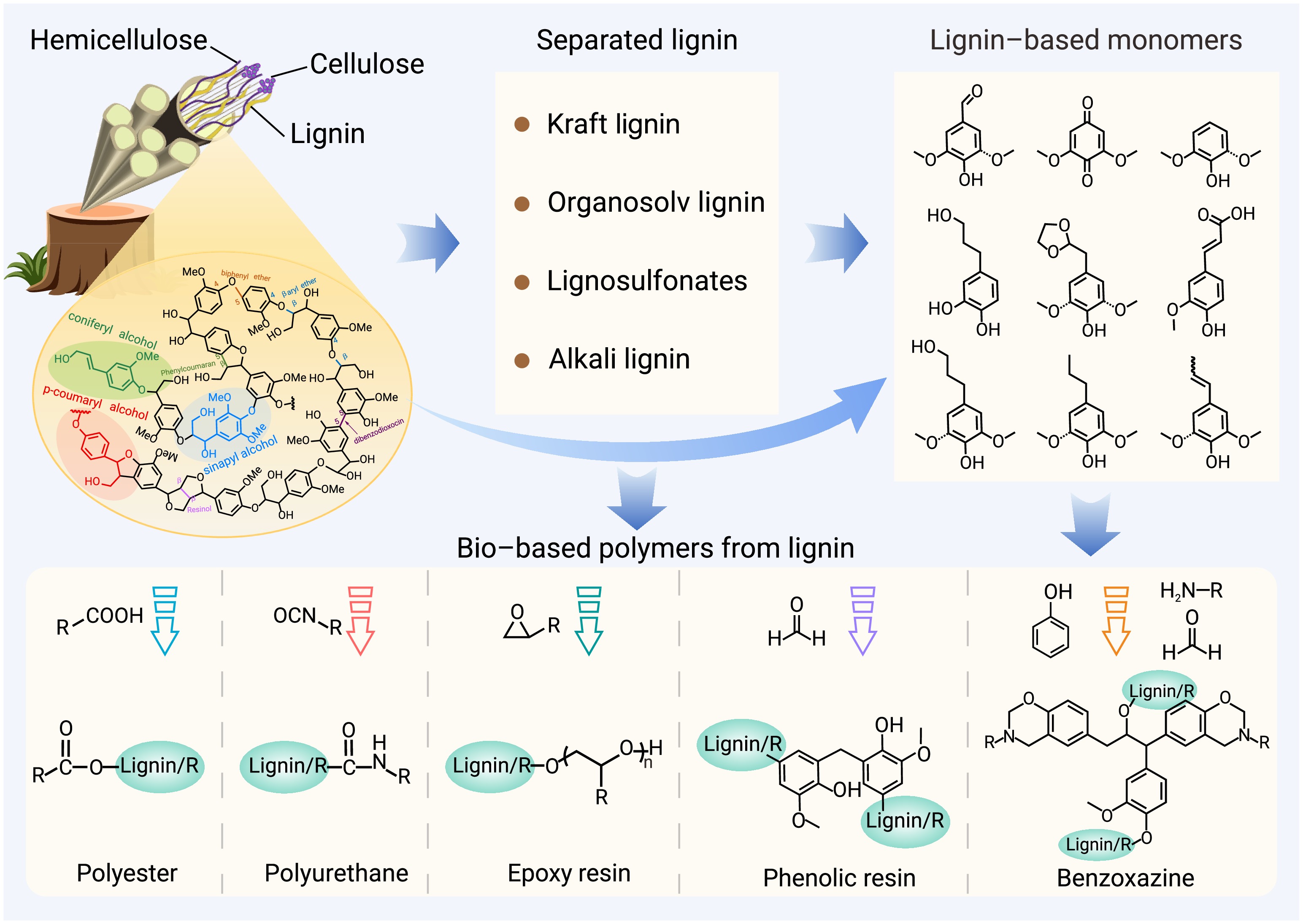
Figure 1.
Schematic diagram of preparation of bio–based polymers from lignin.
-
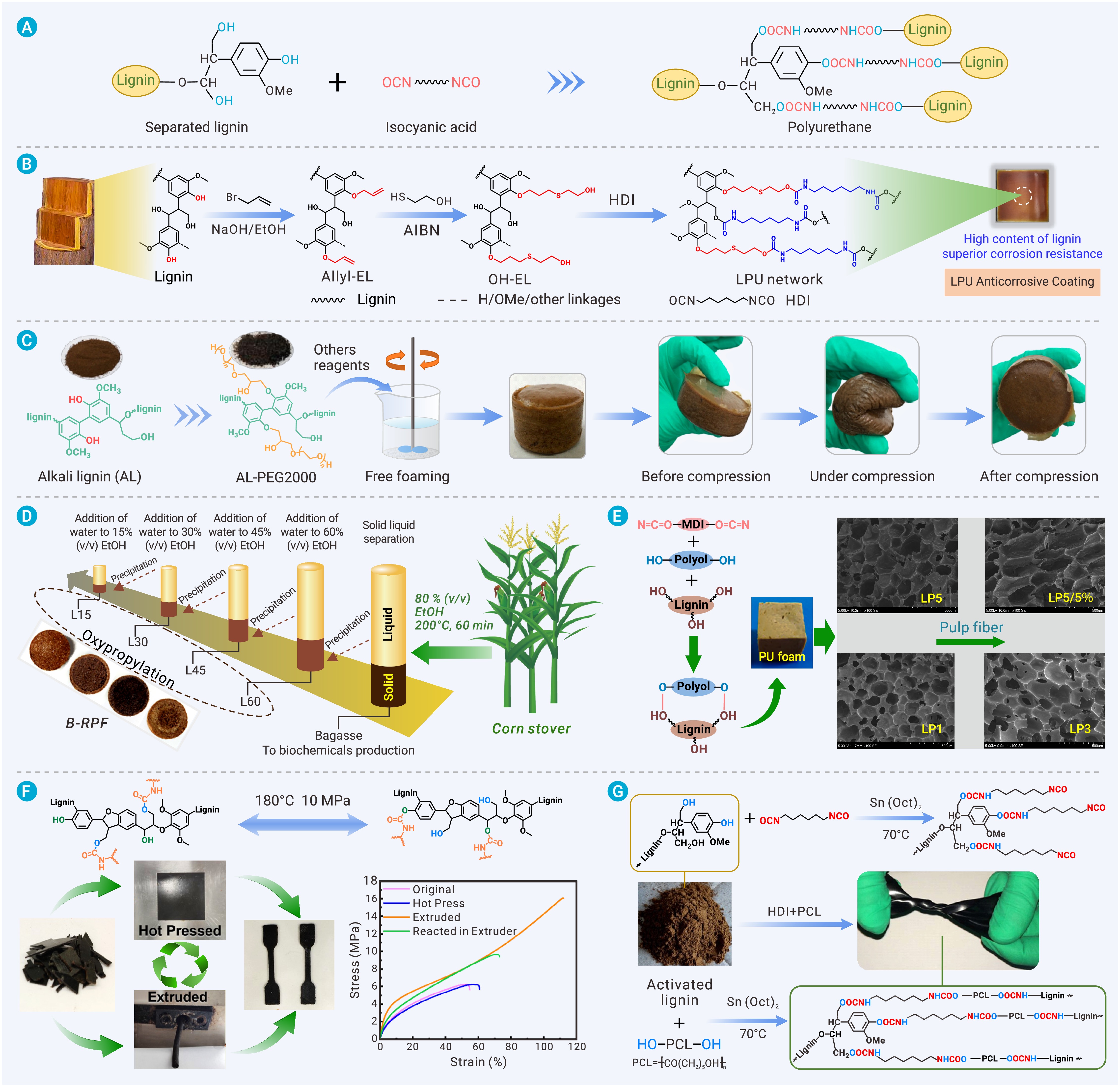
Figure 2.
Selected examples of the preparation of PU from separated lignin
-
Figure 3.
Selected examples of preparation of epoxy resins from separated lignin
-
Figure 4.
Selected examples of preparation of polyesters from separated lignin
-
Figure 5.
Selected examples of preparation of other bio–based polymers from separated lignin
-
Figure 6.
Summary of the synthesis routes of polymeric materials using lignin derived vanillin
-
Figure 7.
Selected examples of preparation of polymer materials from ferulic acid
-
Figure 8.
Summary of the synthesis routes of polymer materials from other lignin derived monomers.
-
Figure 9.
Comparation of two strategies
