
Hofmeister effect regulated gel iontronic sensors for wide-range pressure perception
-
GRAPHICAL ABSTRACT
 DownLoad:
Full size image
DownLoad:
Full size image
-
PUBLIC SUMMARY
-
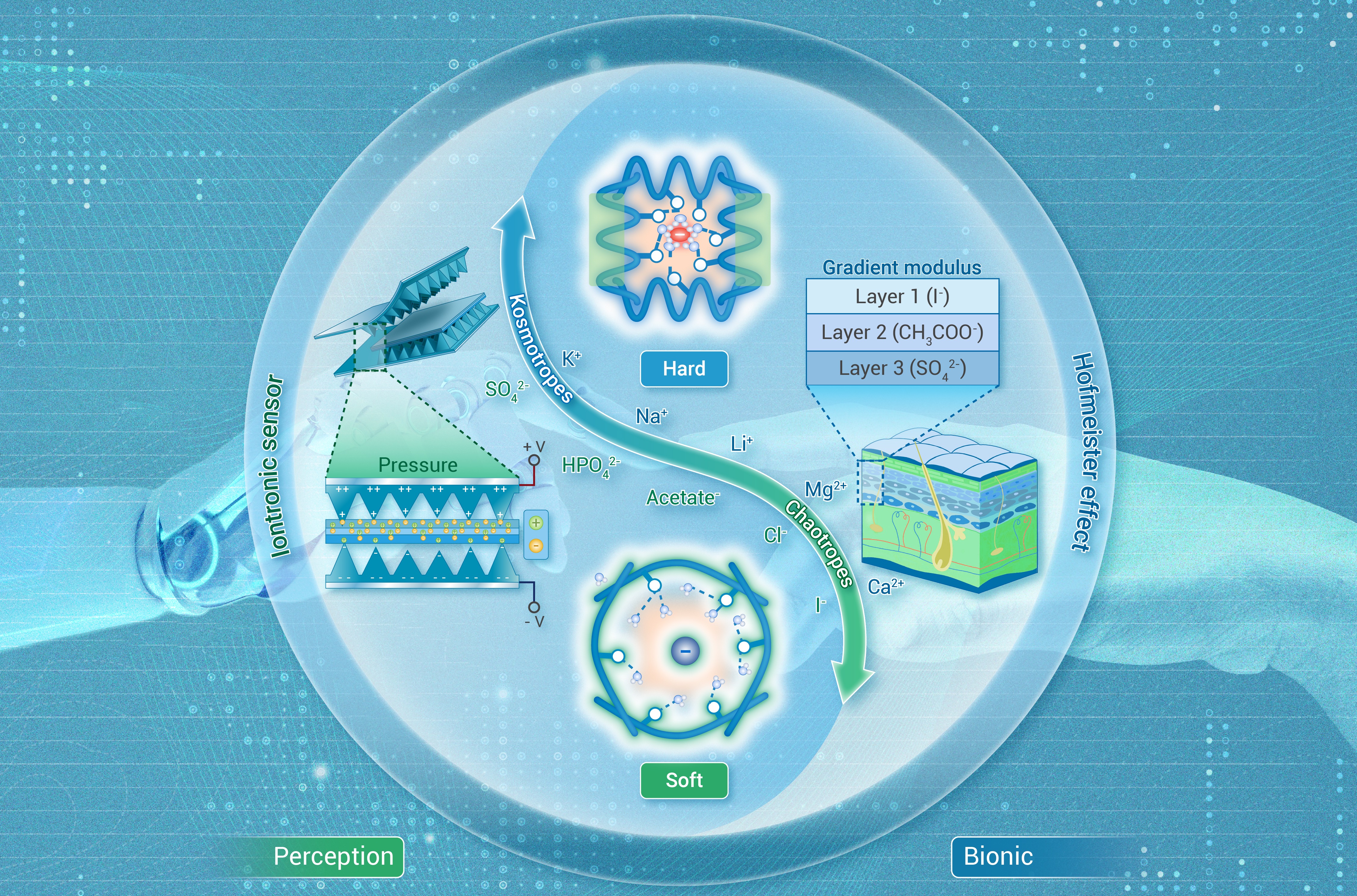
The gradient elastic modulus of the skin is key to achieving wide-range pressure perception.
The modulus of hydrogels can be precisely regulated by Hofmeister effect.
An iontronic sensor with a biomimetic gradient modulus (BGGITS) for ultra-sensitive, wide-range perception was proposed.
-
-
ABSTRACT
Flexible pressure sensors, vital for medical, human-machine interaction, and intelligent recognition applications due to their high-sensitivity, excellent-linearity, and broad-pressure response, face challenges in achieving a harmonious balance among these attributes. Inspired by the gradient modulus in human skin layers, we proposed a pioneering method to adjust the gradient elastic modulus of amino trimethylene phosphonic acid (ATMP)-assisted polyvinyl alcohol (PVA) hydrogel through the Hofmeister effect, introducing micro-pyramid electrodes. This innovative approach successfully constructs a bio-gradient gel iontronic sensor (BGGITS) with an ultra-wide-range perception. The BGGITS exhibits a linear high-sensitivity of 700 kPa-1 within a broad-pressure detection range of up to 800 kPa. The composite design, integrating gradient gel and microstructure electrodes, demonstrates exceptional pressure resolution and mechanical stability. This biomimetic skin pressure sensor holds promise for achieving linear high-sensitivity across a broader pressure range simultaneously and may find applications in electronic skin for health monitoring and tactile perception in the future. -

-
REFERENCES
[1] Boutry, C.M., Negre, M., Jorda, M., et al. (2018). A hierarchically patterned, bioinspired e-skin able to detect the direction of applied pressure for robotics. Sci. Robot. 3: eaau6914. DOI: 10.1126/scirobotics.aau6914. [2] Chortos, A. and Bao, Z. (2014). Skin-inspired electronic devices. Mater. Today 17: 321−331. DOI: 10.1016/j.mattod.2014.05.006. [3] Li, X., Fan, Y.J., Li, H.Y., et al. (2020). Ultracomfortable hierarchical nanonetwork for highly sensitive pressure sensor. ACS Nano 14: 9605−9612. DOI: 10.1021/acsnano.9b10230. [4] Sundaram, S., Kellnhofer, P., Li, Y., et al. (2019). Learning the signatures of the human grasp using a scalable tactile glove. Nature 569: 698−702. DOI: 10.1038/s41586-019-1234-z. [5] Yang, J.C., Mun, J., Kwon, S.Y., et al. (2019). Electronic skin: Recent progress and future prospects for skin‐attachable devices for health monitoring, robotics, and prosthetics. Adv. Mater. 31: 1904765. DOI: 10.1002/adma.201970337. [6] Huang, Y., Fan, X., Chen, S.C., et al. (2019). Emerging technologies of flexible pressure sensors: Materials, modeling, devices, and manufacturing. Adv. Funct. Mater. 29: 1808509. DOI: 10.1002/adfm.201808509. [7] Chen, W.P., Zhai, L.X., Zhang, S.L., et al. (2023). Cascade-heterogated biphasic gel iontronics for electronic-to-multi-ionic signal transmission. Science 382: 559−565. DOI: 10.1126/science.adg0059. [8] Zhao, Z.G., Cao, Z.Q., Wu, Z.X., et al. (2024). Bicontinuous vitrimer heterogels with wide-span switchable stiffness-gated iontronic coordination. Sci. Adv. 10: eadl2737. DOI: 10.1126/sciadv.adl2737. [9] Hammock, M.L., Chortos, A., Tee, B.C.K., et al. (2013). 25th anniversary article: The evolution of electronic skin (e‐skin): A brief history, design considerations, and recent progress. Adv. Mater. 25: 5997−6038. DOI: 10.1002/adma.201302240. [10] Tee, B.C., Wang, C., Allen, R., et al. (2012). An electrically and mechanically self-healing composite with pressure-and flexion-sensitive properties for electronic skin applications. Nat. Nanotechnol. 7: 825−832. DOI: 10.1038/nnano.2012.192. [11] Mannsfeld, S.C., Tee, B.C., Stoltenberg, R.M., et al. (2010). Highly sensitive flexible pressure sensors with microstructured rubber dielectric layers. Nat. Mater. 9: 859−864. DOI: 10.1038/nmat2834. [12] Persano, L., Dagdeviren, C., Su, Y., et al. (2013). High performance piezoelectric devices based on aligned arrays of nanofibers of poly (vinylidenefluoride-co-trifluoroethylene). Nat. Commun. 4: 1633. DOI: 10.1038/ncomms2639. [13] Liu, Z., Li, H., Shi, B., et al. (2019). Wearable and implantable triboelectric nanogenerators. Adv. Funct. Mater. 29: 1808820. DOI: 10.1002/adfm.201808820. [14] Ramuz, M., Tee, B.C.K., Tok, J.B.H., et al. (2012). Transparent, optical, pressure‐sensitive artificial skin for large‐area stretchable electronics. Adv. Mater. 24: 3223−3227. DOI: 10.1002/adma.201200523. [15] Wan, Y., Qiu, Z., Huang, J., et al. (2018). Natural plant materials as dielectric layer for highly sensitive flexible electronic skin. Small 14: 1801657. DOI: 10.1002/smll.201801657. [16] Luo, Z., Chen, J., Zhu, Z., et al. (2021). High-resolution and high-sensitivity flexible capacitive pressure sensors enhanced by a transferable electrode array and a micropillar–PVDF film. ACS Appl. Mater. Interfaces 13: 7635−7649. DOI: 10.1021/acsami.0c23042. [17] Baek, S., Jang, H., Kim, S.Y., et al. (2017). Flexible piezocapacitive sensors based on wrinkled microstructures: Toward low-cost fabrication of pressure sensors over large areas. RSC Adv. 7: 39420−39426. DOI: 10.1039/C7RA06997A. [18] Liu, F., Han, F., Ling, L., et al. (2018). An omni‐healable and highly sensitive capacitive pressure sensor with microarray structure. Chem-Eur. J. 24: 16823−16832. DOI: 10.1002/chem.201803369. [19] Luo, Y., Shao, J., Chen, S., et al. (2019). Flexible capacitive pressure sensor enhanced by tilted micropillar arrays. ACS Appl. Mater. Interfaces 11: 17796−17803. DOI: 10.1021/acsami.9b03718. [20] Bai, N., Wang, L., Wang, Q., et al. (2020). Graded intrafillable architecture-based iontronic pressure sensor with ultra-broad-range high sensitivity. Nat. Commun. 11: 209. DOI: 10.1038/s41467-019-14054-9. [21] Chang, Y., Wang, L., Li, R., et al. (2021). Interfacial iontronic sensing: First decade of interfacial iontronic sensing: From droplet sensors to artificial skins. Adv. Mater. 33: 2170050. DOI: 10.1002/adma.202170050. [22] Liu, Y., Zhao, C., Xiong, Y., et al. (2023). Versatile ion-gel fibrous membrane for energy-harvesting iontronic skin. Adv. Funct. Mater. 33: 2303723. DOI: 10.1002/adfm.202303723. [23] Chang, Y., Wang, L., Li, R., et al. (2021). First decade of interfacial iontronic sensing: From droplet sensors to artificial skins. Adv. Mater. 33: 2003464. DOI: 10.1002/adma.202003464. [24] Lu, P., Wang, L., Zhu, P., et al. (2021). Iontronic pressure sensor with high sensitivity and linear response over a wide pressure range based on soft micropillared electrodes. Sci. Bull. 66: 1091−1100. DOI: 10.1016/j.scib.2021.02.019. [25] Nie, B., Li, R., Brandt, J.D., et al. (2014). Iontronic microdroplet array for flexible ultrasensitive tactile sensing. Lab. Chip. 14: 1107−1116. DOI: 10.1039/C3LC50994J. [26] Nie, B., Li, R., Cao, J., et al. (2015). Flexible transparent iontronic film for interfacial capacitive pressure sensing. Adv. Mater. 27: 6055−6062. DOI: 10.1002/adma.201502556. [27] Qiu, Z., Wan, Y., Zhou, W., et al. (2018). Ionic skin with biomimetic dielectric layer templated from calathea zebrine leaf. Adv. Funct. Mater. 28: 1802343. DOI: 10.1002/adfm.201802343. [28] Zhu, Z., Li, R., and Pan, T. (2018). Imperceptible epidermal–iontronic interface for wearable sensing. Adv. Mater. 30: 1705122. DOI: 10.1002/adma.201705122. [29] He, Q., Huang, Y., and Wang, S. (2018). Hofmeister effect‐assisted one step fabrication of ductile and strong gelatin hydrogels. Adv. Funct. Mater. 28: 1705069. DOI: 10.1002/adfm.201705069. [30] Dandekar, K., Raju, B.I., and Srinivasan, M.A. (2003). 3-D finite-element models of human and monkey fingertips to investigate the mechanics of tactile sense. J. Biomech. Eng. 125: 682−691. DOI: 10.1115/1.1613673. [31] Quindlen-Hotek, J.C. and Barocas, V.H. (2018). A finite-element model of mechanosensation by a Pacinian corpuscle cluster in human skin. Biomech. Model Mechan. 17: 1053−1067. DOI: 10.1007/s10237-018-1011-1. [32] Zhang, M., Yang, Y., Li, M., et al. (2023). Toughening double-network hydrogels by polyelectrolytes. Adv. Mater. 35: 2301551. DOI: 10.1002/adma.202301551. [33] Jaspers, M., Rowan, A.E., and Kouwer, P.H. (2015). Tuning hydrogel mechanics using the hofmeister effect. Adv. Funct. Mater. 25: 6503−6510. DOI: 10.1002/adfm.201502241. [34] Shen, B., Peng, W., Su, B., et al. (2022). Elastic–electric coefficient-sensitive hydrogel sensors toward sweat detection. Anal. Chem. 94: 1910−1917. DOI: 10.1021/acs.analchem.1c05363. [35] Lai, Y.C., Deng, J., Liu, R., et al. (2018). Actively perceiving and responsive soft robots enabled by self‐powered, highly extensible, and highly sensitive triboelectric proximity‐and pressure‐sensing skins. Adv. Mater. 30: 1801114. DOI: 10.1002/adma.201801114. [36] Yuan, Y., Liu, B., Adibeig, M. R., et al. (2024). Microstructured polyelectrolyte elastomer-based ionotronic sensors with high sensitivities and excellent stability for artificial skins. Adv. Mater. 36 : 2310429. DOI:10.1002/adma.202310429. [37] Deng, S.H., Li, Y., Li, S.Z., et al. (2024). A multifunctional flexible sensor based on PI-MXene/SrTiO3 hybrid aerogel for tactile perception. The Innovation 5: 100596. DOI: 10.1016/j.xinn.2024.100596. [38] Wang, S., Zhang, Z., Yang, B., et al. (2023). High sensitivity tactile sensors with ultrabroad linear range based on gradient hybrid structure for gesture recognition and precise grasping. Chem. Eng. J. 457: 141136. DOI: 10.1016/j.cej.2022.141136. [39] Boutry, C.M., Nguyen, A., Lawal, Q.O., et al. (2015). A sensitive and biodegradable pressure sensor array for cardiovascular monitoring. Adv. Mater. 27: 6954−6961. DOI: 10.1002/adma.201502535. [40] Liu, M., Pu, X., Jiang, C., et al. (2017). Large-area all-textile pressure sensors for monitoring human motion and physiological signals. Adv. Mater. 29: 1703700. DOI: 10.1002/adma.201703700. [41] Huang, C.-B., Witomska, S., Aliprandi, A., et al. (2019). Molecule–graphene hybrid materials with tunable mechanoresponse: Highly sensitive pressure sensors for health monitoring. Adv. Mater. 31: 1804600. DOI: 10.1002/adma.201804600. [42] Luo, S., Zhou, X., Tang, X.Y., et al. (2020). Microconformal electrode-dielectric integration for flexible ultrasensitive robotic tactile sensing. Nano Energy 80: 2211−2855. DOI: 10.1016/j.nanoen.2020.105580. [43] Shen, Z., Zhu, X., Majidi, C., et al. (2021). Cutaneous ionogel mechanoreceptors for soft machines, physiological sensing, and amputee prostheses. Adv. Mater. 33: 2102069. DOI: 10.1002/adma.202102069. [44] Lee, D., Lee, H., Jeong, Y., et al. (2016). Highly sensitive, transparent, and durable pressure sensors based on sea-urchin shaped metal nanoparticles. Adv. Mater. 28: 9364−9369. DOI: 10.1002/adma.201603526. [45] Ha, K.-H., Zhang, W., Jang, H., et al. (2021). Highly sensitive capacitive pressure sensors over a wide pressure range enabled by the hybrid responses of a highly porous nanocomposite. Adv. Mater. 33: 2103320. DOI: 10.1002/adma.202103320. -
ABOUT THIS ARTICLE
Cite this article:
He Z., Chen Y., Li J., et al., (2024). Hofmeister effect regulated gel iontronic sensors for wide-range pressure perception. The Innovation Materials 2(3): 100078. https://doi.org/10.59717/j.xinn-mater.2024.100078
Welcome!
To request copyright permission to republish or share portions of our works, please visit Copyright Clearance Center's (CCC) Marketplace website at marketplace.copyright.com.
Article Metrics
Relative Articles
Cited by
Export File
Citation
He Z., Chen Y., Li J., et al., (2024). Hofmeister effect regulated gel iontronic sensors for wide-range pressure perception. The Innovation Materials 2(3): 100078. https://doi.org/10.59717/j.xinn-mater.2024.100078

Format
Content

-
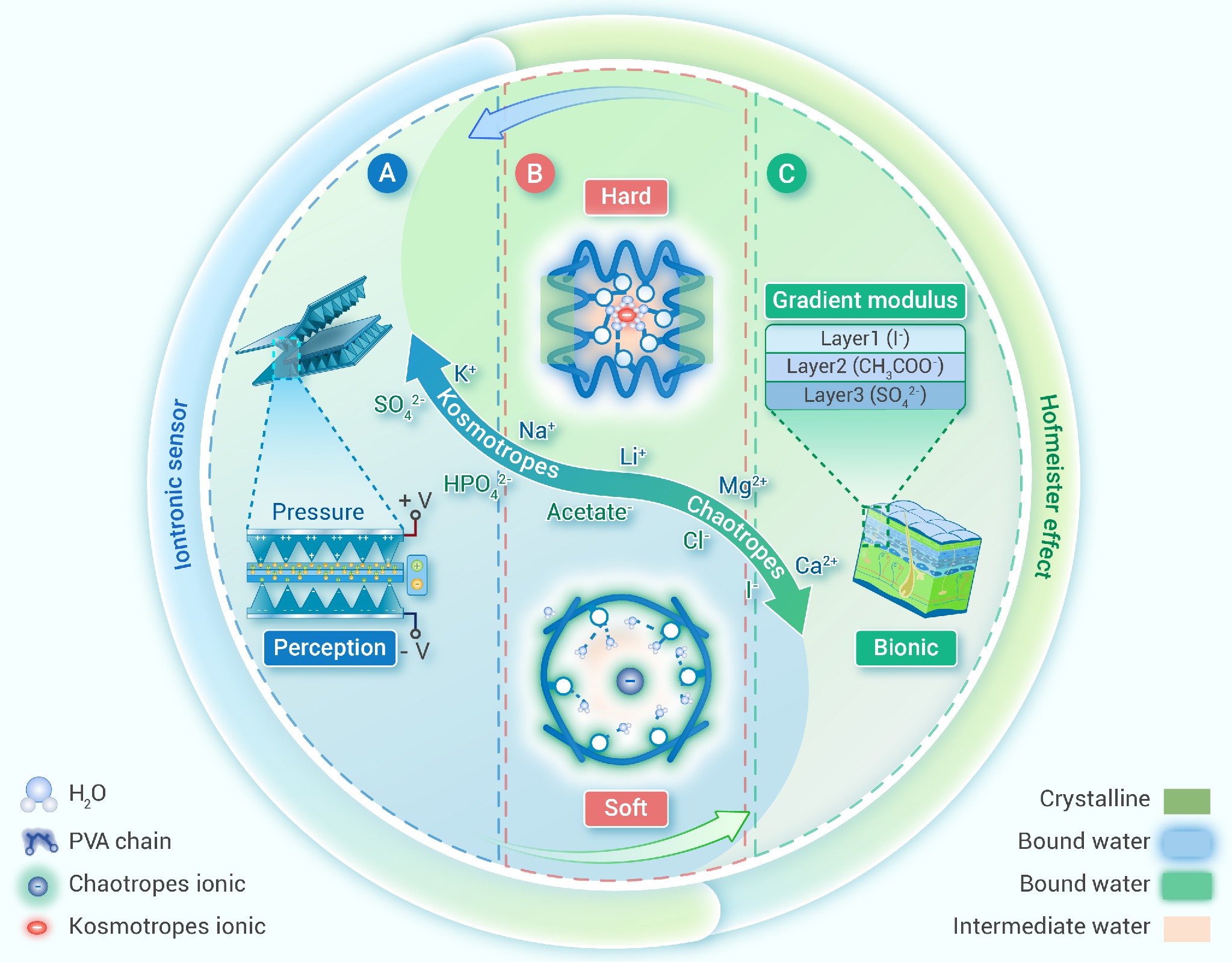
Figure 1.
Schematic illustration of the biomimetic gradient gel iontronic pressure sensor (BGGITS)
-
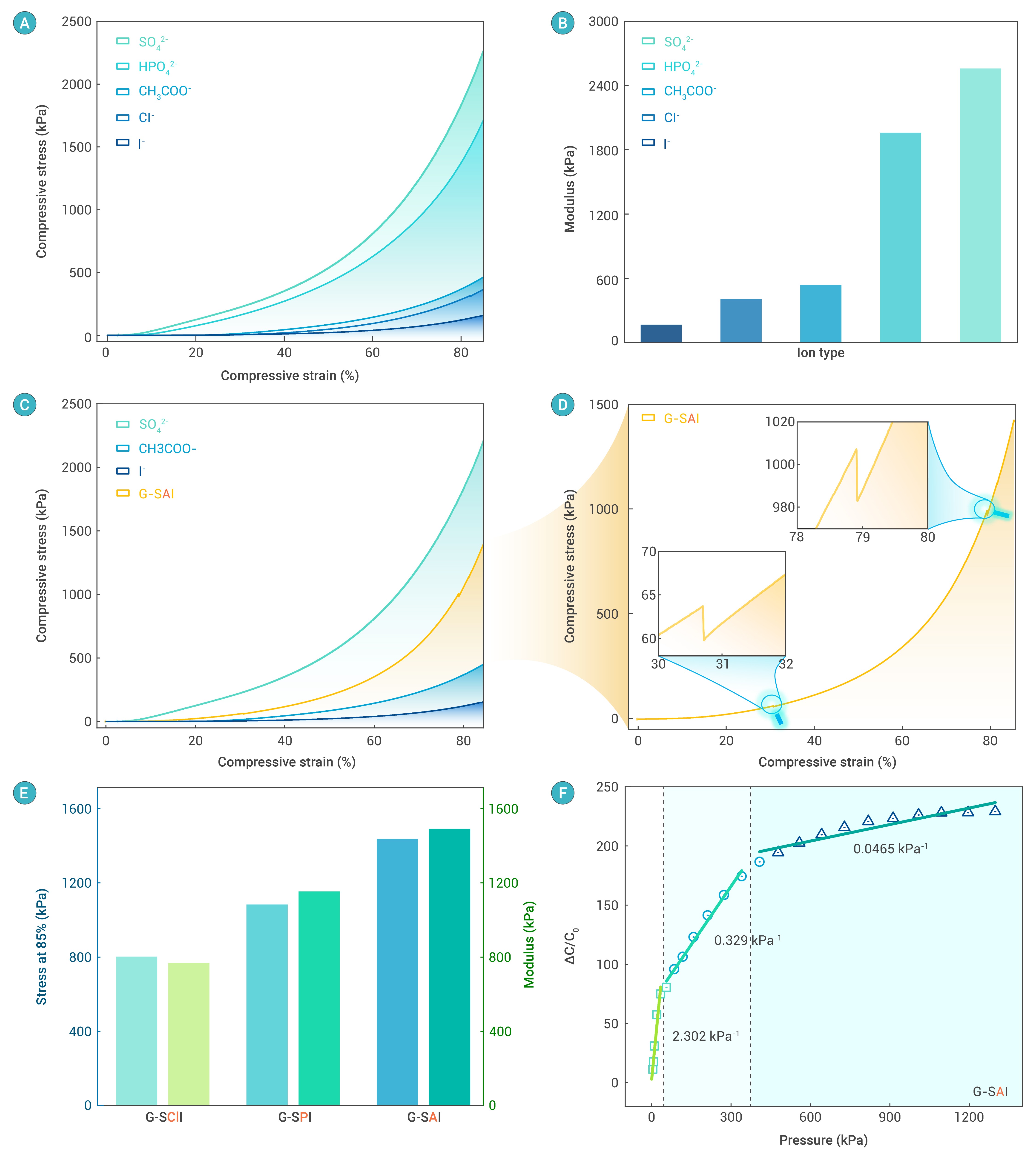
Figure 2.
Characterization and Performance of Biomimetic Gradient Gel Mimicking Skin Structure
-
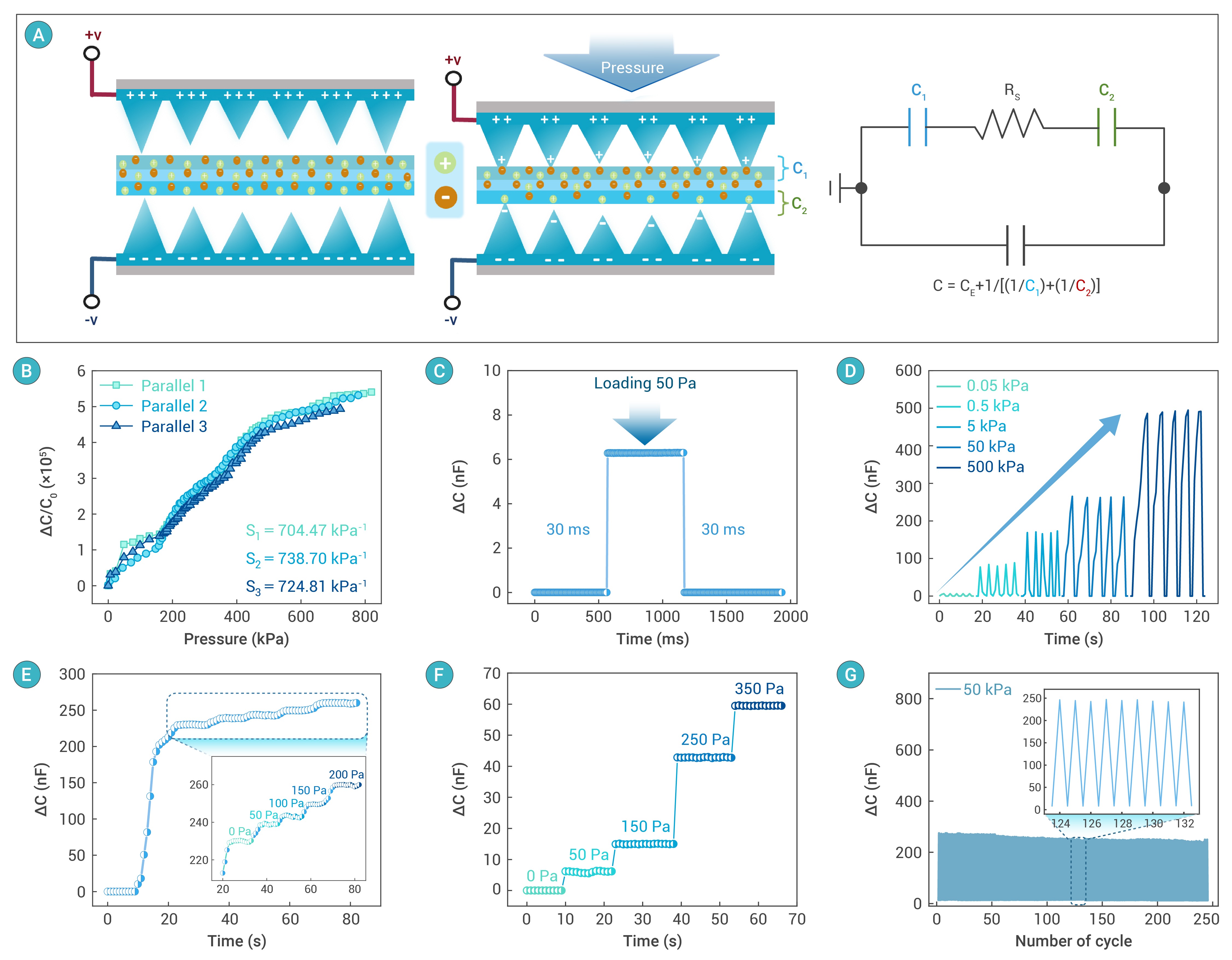
Figure 3.
Perception performance of BGGITS
-
Figure 4.
Working mechanism of BGGITS based pressure sensor
-
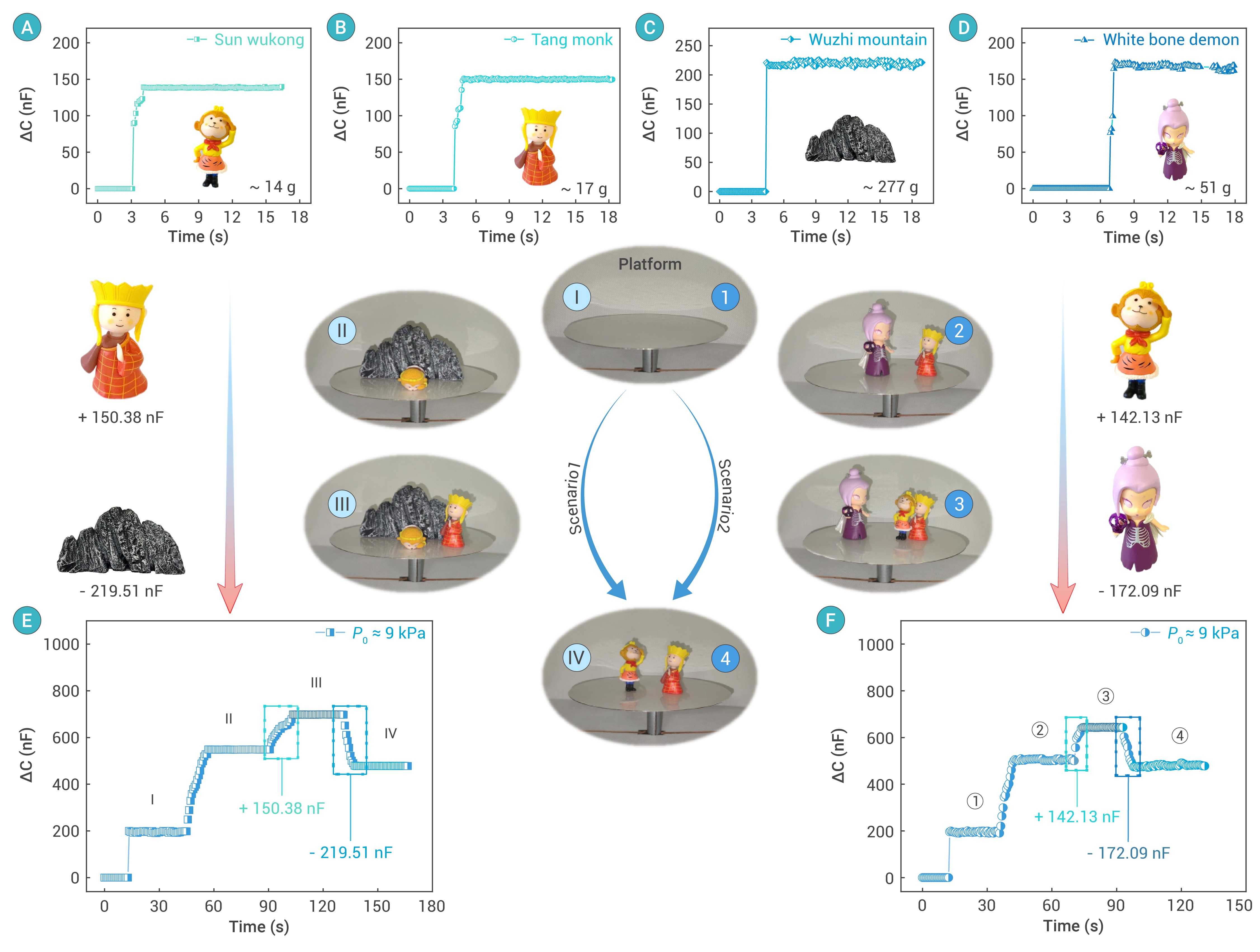
Figure 5.
The Scenario reproduction from "Journey to the West" highlights the exceptional perception capability of BGGITS
