
-
GRAPHICAL ABSTRACT

 DownLoad:
Full size image
DownLoad:
Full size image
-
PUBLIC SUMMARY
-
Human activities emit toxic gases, wastewater, and solid waste, endangering ecological sustainability.
One effective method to mitigate gas, liquid, and solid pollution is heterogeneous catalytic conversion.
Heterogeneous catalysis includes thermocatalysis, electrocatalysis, photocatalysis, and biocatalysis.
This review discusses the current status of heterogeneous catalysis in this field and the potential of AI applications.
-
-
ABSTRACT
Anthropogenic climate and environmental changes increasingly threaten the sustainability of life on Earth, hindering the sustainable development of human societies. These detrimental ecological changes are driven by human activities that have elevated atmospheric levels of greenhouse gases and toxic substances, increased inorganic and organic pollutants in water bodies, and led to the accumulation of solid waste in soils. Over the next two to three decades, the impacts of climate change, water pollution, and soil contamination are expected to intensify, posing increasing risks to human health and global stability. Considering these trends, it is essential to implement robust mitigation and adaptation strategies. This paper analyzes environmental pollution problems from the perspectives of atmospheric, water, and soil contamination. It summarizes current research on heterogeneous catalysis for treating pollutants in gaseous, liquid, and solid phases, with an emphasis on the key challenges of applying these catalytic conversion technologies in cost-effective industrial settings. Finally, strategies for mitigating environmental pollutants via heterogeneous catalysis are discussed from the perspectives of material flow, energy flow, and data flow. This paper aims to offer scientific insights to enhance future research and practice in heterogeneous catalysis for environmental remediation. -

-
REFERENCES
[1] Sun, Y., Zhang, X., Ding, Y., et al. (2021). Understanding human influence on climate change in China. Natl. Sci. Rev. 9: nwab113. DOI: 10.1093/nsr/nwab113. [2] Al-Kindi, S.G., Brook, R.D., Biswal, S., et al. (2020). Environmental determinants of cardiovascular disease: lessons learned from air pollution. Nat. Rev. Cardiol. 17: 656−672. DOI: 10.1038/s41569-020-0371-2. [3] Chatkin, J., Correa, L., Santos, U. (2022). External environmental pollution as a risk factor for asthma. Clin. Rev. Allergy Immunol. 62: 72−89. DOI: 10.1007/s12016-020-08830-5. [4] Mrozik, W., Rajaeifar, M.A., Heidrich, O., et al. (2021). Environmental impacts, pollution sources and pathways of spent lithium-ion batteries. Energy Environ. Sci. 14: 6099−6121. DOI: 10.1039/d1ee00691f. [5] Li, X., Wang, X., Ren, C., et al. (2024). Microplastic pollution: Phytotoxicity, environmental risks, and phytoremediation strategies. Crit. Rev. Environ. Sci. Technol. 54: 486−507. DOI: 10.1080/10643389.2023.2252310. [6] Liu, T., Xiao, S., Li, N., et al. (2023). Water decontamination via nonradical process by nanoconfined Fenton-like catalysts. Nat. Commun. 14: 2881. DOI: 10.1038/s41467-023-38677-1. [7] Martínez-Huitle, C.A., Rodrigo, M.A., Sirés, I., et al. (2023). A critical review on latest innovations and future challenges of electrochemical technology for the abatement of organics in water. Appl. Catal. B 328: 122430. DOI: 10.1016/j.apcatb.2023.122430. [8] Osman, A.I., Elgarahy, A.M., Eltaweil, A.S., et al. (2023). Biofuel production, hydrogen production and water remediation by photocatalysis, biocatalysis and electrocatalysis. Environ. Chem. Lett. 21: 1315−1379. DOI: 10.1007/s10311-023-01581-7. [9] Huang, H., Zhang, M., Xu, K., et al. (2024). The fundamentals, progress, and perspectives of transition-metal dichalcogenides (TMDs) applied in advanced oxidation processes. Chem. Eng. J. 484: 149595. DOI: 10.1016/j.cej.2024.149595. [10] Wang, H., Kou, X., Gao, R., et al. (2024). Enzyme-immobilized porous crystals for environmental applications. Environ. Sci. Technol. 58: 11869−11886. DOI: 10.1021/acs.est.4c01273. [11] Kwon, G., Cho, D.-W., Park, J., et al. (2023). A review of plastic pollution and their treatment technology: A circular economy platform by thermochemical pathway. Chem. Eng. J. 464: 142771. DOI: 10.1016/j.cej.2023.142771. [12] Zhang, X., Huang, W., Yu, L., et al. (2024). Enabling heterogeneous catalysis to achieve carbon neutrality: Directional catalytic conversion of CO2 into carboxylic acids. Carbon Energy 6: e362. DOI: 10.1002/cey2.362. [13] Yu, Z., Deng, Z., Li, Y., et al. (2024). Advances in electrocatalyst design and mechanism for sulfide oxidation reaction in hydrogen sulfide splitting. Adv. Funct. Mater. Early Access : 2403435. DOI: 10.1002/adfm.202403435. [14] Zheng, X., Lei, G., Wang, S., et al. (2023). Advances in resources recovery of H2S: A review of desulfurization processes and catalysts. ACS Catal. 13: 11723−11752. DOI: 10.1021/acscatal.3c02294. [15] Shi, S., Li, Y., Cui, Z., et al. (2023). Recent advances in degradation of the most potent industrial greenhouse gas sulfur hexafluoride. Chem. Eng. J. 470: 144166. DOI: 10.1016/j.cej.2023.144166. [16] Zhao, S., Guan, B., Zhuang, Z., et al. (2024). Removing ammonia from exhaust gas through selective catalytic oxidation reaction: Research status and future perspectives. J. Cleaner Prod. 467: 142771. DOI: 10.1016/j.jclepro.2024.142771. [17] Ekeoma, B.C., Ekeoma, L.N., Yusuf, M., et al. (2023). Recent advances in the biocatalytic mitigation of emerging pollutants: a comprehensive review. J. Biotechnol. 369: 14−34. DOI: 10.1016/j.jbiotec.2023.05.003. [18] Yin, M., Pillai, S.C., Bolan, N., et al. (2023). Low temperature selective catalytic oxidation of H2S: Influencing factors, mechanisms and regeneration. Chem. Eng. J. 479: 147854. DOI: 10.1016/j.cej.2023.147854. [19] Tu, Z., Mu, C., Yao, Y., et al. (2024). Recent advances in unconventional heating and external field-assisted enhancement for dry reforming of methane. Chem. Eng. J. 481: 148899. DOI: 10.1016/j.cej.2024.148899. [20] Yue, X., Hu, Y.H., Tian, C.G., et al. (2024). Increasing impacts of fire air pollution on public and ecosystem health. The Innovation 5: 100609. DOI: 10.1016/j.xinn.2024.100609. [21] Wu, P., Guo, Q., Zhao, Y., et al. (2024). Emerging concern on air pollution and health: Trade-off between air pollution exposure and physical activity. Eco-Env. Health. 3: 202−207. DOI: 10.1016/j.eehl.2024.01.012. [22] Bilgili, F., Kuskaya, S., Magazzino, C., et al. (2024). The mutual effects of residential energy demand and climate change in the United States: A wavelet analysis. Environ. Sustainability Indic. 22: 100384. DOI: 10.1016/j.indic.2024.100384. [23] Wang, F., Harindintwali, J.D., Wei, K., et al. (2023). Climate change: Strategies for mitigation and adaptation. The Innovation Geoscience 1: 100015. DOI: 10.59717/j.xinn-geo.2023.100015. [24] Manisalidis, I., Stavropoulou, E., Stavropoulos, A., et al. (2020). Environmental and health impacts of air pollution: a review. Front. Public Health 8: 14. DOI: 10.3389/fpubh.2020.00014. [25] Liu, H., Jia, S., Wu, L., et al. (2024). Active hydrogen-controlled CO2/N2/NOx electroreduction: From mechanism understanding to catalyst design. The Innovation Materials 2: 100058. DOI: 10.59717/j.xinn-mater.2024.100058. [26] Kumar, A., Verma, A., Palai, T., et al. (2024). Electrochemical CO2 reduction to value-added chemicals. R.K. Arya, G.D. Verros, O.P. Verma, et al. (eds). In from waste to wealth (Springer Nature Singapore). pp. 525-545. DOI: 10.1007/978-981-99-7552-5_24. [27] Zheng, Y., Xu, W., Yang, J., et al. (2024). Catalytic oxidation of VOCs and CO on cobalt-based Materials: Strategies and mechanisms for improving activity and stability. Chem. Eng. J. 484: 149296. DOI: 10.1016/j.cej.2024.149296. [28] Fujimori, S. and Inoue, S. (2022). Carbon monoxide in main-group chemistry. J. Am. Chem. Soc. 144: 2034−2050. DOI: 10.1021/jacs.1c13152. [29] Cotovicz Jr, L.C., Knoppers, B.A., Brandini, N., et al. (2016). Spatio‐temporal variability of methane (CH4) concentrations and diffusive fluxes from a tropical coastal embayment surrounded by a large urban area (Guanabara Bay, Rio de Janeiro, Brazil). Limnol. Oceanogr. 61: S238−S252. DOI: 10.1002/lno.10298. [30] Kang, Y., Tian, P., Li, J., et al. (2023). Methane mitigation potentials and related costs of China's coal mines. Fundam. Res. Early Access. DOI: 10.1016/j.fmre.2023.09.012. [31] Zeng, Y., Tang, Z., Wu, X., et al. (2022). Photocatalytic oxidation of methane to methanol by tungsten trioxide-supported atomic gold at room temperature. Appl. Catal. B 306: 120919. DOI: 10.1016/j.apcatb.2021.120919. [32] Wakerley, D., Lamaison, S., Wicks, J., et al. (2022). Gas diffusion electrodes, reactor designs and key metrics of low-temperature CO2 electrolysers. Nat. Energy 7: 130−143. DOI: 10.1038/s41560-021-00973-9. [33] Blankenship, A., Artsiusheuski, M., Sushkevich, V., et al. (2023). Recent trends, current challenges and future prospects for syngas-free methane partial oxidation. Nat. Catal. 6: 748−762. DOI: 10.1038/s41929-023-01000-8. [34] Len, T. and Luque, R. (2023). Addressing the CO2 challenge through thermocatalytic hydrogenation to carbon monoxide, methanol and methane. Green Chem. 25: 490−521. DOI: 10.1039/D2GC02900F. [35] Wu, Q.-J., Liang, J., Huang, Y.-B., et al. (2022). Thermo-, electro-, and photocatalytic CO2 conversion to value-added products over porous metal/covalent organic frameworks. Acc. Chem. Res. 55: 2978−2997. DOI: 10.1021/acs.accounts.2c00326. [36] Gao, J., Shiong, S.C.S., and Liu, Y. (2023). Reduction of CO2 to chemicals and Fuels: Thermocatalysis versus electrocatalysis. Chem. Eng. J. 472: 145033. DOI: 10.1016/j.cej.2023.145033. [37] Ji, M. and Wang, J. (2021). Review and comparison of various hydrogen production methods based on costs and life cycle impact assessment indicators. Int. J. Hydrogen Energy 46: 38612−38635. DOI: 10.1016/j.ijhydene.2021.09.142. [38] Grigoriev, S., Fateev, V., Bessarabov, D., et al. (2020). Current status, research trends, and challenges in water electrolysis science and technology. Int. J. Hydrogen Energy 45: 26036−26058. DOI: 10.1016/j.ijhydene.2020.03.109. [39] Li, S., Xu, Y., Wang, H., et al. (2023). Tuning the CO2 hydrogenation selectivity of rhodium single‐atom catalysts on zirconium dioxide with alkali ions. Angew. Chem. Int. Ed. 62: e202218167. DOI: 10.1002/anie.202218167. [40] Aitbekova, A., Goodman, E.D., Wu, L., et al. (2019). Engineering of ruthenium–iron oxide colloidal heterostructures: Improved yields in CO2 hydrogenation to hydrocarbons. Angew. Chem. Int. Ed. 58: 17451−17457. DOI: 10.1002/anie.201910579. [41] Gao, J., Choo Sze Shiong, S., Liu, Y. (2023). Reduction of CO2 to chemicals and Fuels: Thermocatalysis versus electrocatalysis. Chem. Eng. J. 472: 145033. DOI: 10.1016/j.cej.2023.145033. [42] Cheng, K., Li, Y., Kang, J., et al. (2024). Selectivity control by relay catalysis in CO and CO2 hydrogenation to multicarbon compounds. Accounts of Chemical Research 57: 714−725. DOI: 10.1021/acs.accounts.3c00734. [43] Cheng, K., Li, Y., Kang, J., et al. (2024). Selectivity control by relay catalysis in CO and CO2 Hydrogenation to Multicarbon Compounds. Acc. Chem. Res. 57: 714−725. DOI: 10.1021/acs.accounts.3c00734. [44] Kim, C., Park, K., Lee, H., et al. (2024). Accelerating the net-zero economy with CO2-hydrogenated formic acid production: Process development and pilot plant demonstration. Joule 8: 693−713. DOI: 10.1016/j.joule.2024.01.003. [45] Biswas, S., Shingyouchi, Y., Ogami, M., et al. (2024) Advancing electrochemical CO2 reduction with group 11 metal nanoclusters for renewable energy solutions. EcoEnergy. Early View. DOI: 10.1002/ece2.56. [46] Niu, Z.-Z., Chi, L.-P., Wu, Z.-Z., et al. (2023). CO2-assisted formation of grain boundaries for efficient CO–CO coupling on a derived Cu catalyst. Natl Sci Open 2: 20220044. DOI: 10.1360/nso/20220044. [47] Deng, T., Jia, S., Chen, C., et al. (2024). Polymer modification strategy to modulate reaction microenvironment for enhanced CO2 electroreduction to ethylene. Angew. Chem. Int. Ed. 63: e202313796. DOI: 10.1002/anie.202313796. [48] Chen, Y., Li, X.-Y., Chen, Z., et al. (2024). Efficient multicarbon formation in acidic CO2 reduction via tandem electrocatalysis. Nat. Nanotechnol. 19: 311−318. DOI: 10.1038/s41565-023-01543-8. [49] Mistry, H., Choi, Y.W., Bagger, A., et al. (2017). Enhanced carbon dioxide electroreduction to carbon monoxide over defect‐rich plasma‐activated silver catalysts. Angew. Chem. Int. Ed. 129: 11552−11556. DOI: 10.1002/anie.201704613. [50] Cao, Z., Zacate, S.B., Sun, X., et al. (2018). Tuning gold nanoparticles with chelating ligands for highly efficient electrocatalytic CO2 reduction. Angew. Chem. Int. Ed. 130: 12857−12861. DOI: 10.1002/anie.201805696. [51] Wang, H., Jia, J., Song, P., et al. (2017). Efficient electrocatalytic reduction of CO2 by nitrogen‐doped nanoporous carbon/carbon nanotube membranes: a step towards the electrochemical CO2 refinery. Angew. Chem. Int. Ed. 129: 7955−7960. DOI: 10.1002/anie.201703720. [52] Song, Y., Chen, W., Zhao, C., et al. (2017). Metal‐free nitrogen‐doped mesoporous carbon for electroreduction of CO2 to ethanol. Angew. Chem. Int. Ed. 56: 10840−10844. DOI: 10.1002/anie.201706777. [53] Zhao, Y., Hao, L., Ozden, A., et al. (2023). Conversion of CO2 to multicarbon products in strong acid by controlling the catalyst microenvironment. Nat. Synth. 2: 403−412. DOI: 10.1038/s44160-022-00234-x. [54] Dou, S., Song, J., Xi, S., et al. (2019). Boosting electrochemical CO2 reduction on metal–organic frameworks via ligand doping. Angew. Chem. Int. Ed. 58: 4041−4045. DOI: 10.1002/anie.201814711. [55] San-Mei, W., Xiaoshi, Y., Shenghua, Z., et al. (2024). Single-atomic-Ni electrocatalyst derived from phthalocyanine-modified MOF for convoying CO2 intelligent utilization. Energy Mater. 4: 400032. DOI: 10.20517/energymater.2023.123. [56] Shangqing, S., Yalan, M., Fang, L., et al. (2024). Recent advances in nanoscale engineering of Pd-based electrocatalysts for selective CO2 electroreduction to formic acid/formate. Energy Mater. 4: 400027. DOI: 10.20517/energymater.2023.88. [57] Liu, L.-X., Ding, Y., Zhu, L., et al. (2023). Recent advances in carbon-supported non-precious metal single-atom catalysts for energy conversion electrocatalysis. Natl Sci Open 2: 20220059. DOI: 10.1360/nso/20220059. [58] Liu, J., Cai, Y., Song, R., et al. (2021). Recent progress on single-atom catalysts for CO2 electroreduction. Mater. Today 48: 95−114. DOI: 10.1016/j.mattod.2021.02.005. [59] Zheng, T., Liu, C., Guo, C., et al. (2021). Copper-catalysed exclusive CO2 to pure formic acid conversion via single-atom alloying. Nat. Nanotechnol. 16: 1386−1393. DOI: 10.1038/s41565-021-00974-5. [60] Zhu, W., Fu, J., Liu, J., et al. (2020). Tuning single atom-nanoparticle ratios of Ni-based catalysts for synthesis gas production from CO2. Appl. Catal., B 264: 118502. DOI: 10.1016/j.apcatb.2019.118502. [61] Jiao, J., Kang, X., Yang, J., et al. (2024). Steering the reaction pathway of CO2 electroreduction by tuning the coordination number of copper catalysts. J. Am. Chem. Soc. 146: 15917−15925. DOI: 10.1021/jacs.4c02607. [62] Wen, C.F., Zhou, M., Liu, P.F., et al. (2022). Highly ethylene‐selective electrocatalytic CO2 reduction enabled by isolated Cu− S motifs in metal–organic framework based precatalysts. Angew. Chem. Int. Ed. 61: e202111700. DOI: 10.1002/anie.202111700. [63] Liu, J., Fu, J., Zhou, Y., et al. (2020). Controlled synthesis of EDTA-modified porous hollow copper microspheres for high-efficiency conversion of CO2 to multicarbon products. Nano Lett. 20: 4823−4828. DOI: 10.1021/acs.nanolett.0c00639. [64] Cai, Y., Yang, R., Fu, J., et al. (2024). Self-pressurizing nanoscale capsule catalysts for CO2 electroreduction to acetate or propanol. Nat. Synth. 3: 891−902. DOI: 10.1038/s44160-024-00552-2. [65] Fu, J., Zhu, W., Chen, Y., et al. (2019). Bipyridine‐assisted assembly of Au nanoparticles on Cu nanowires to enhance the electrochemical reduction of CO2. Angew. Chem. Int. Ed. 131: 14238−14241. DOI: 10.1002/anie.201905318. [66] Yang, B., Liu, K., Li, H., et al. (2022). Accelerating CO2 electroreduction to multicarbon products via synergistic electric–thermal field on copper nanoneedles. J. Am. Chem. Soc. 144: 3039−3049. DOI: 10.1021/jacs.1c11253. [67] Du, H., Liu, L.-X., Li, P., et al. (2023). Enriching reaction intermediates in multishell structured copper catalysts for boosted propanol electrosynthesis from carbon monoxide. ACS Nano 17: 8663−8670. DOI: 10.1021/acsnano.3c01516. [68] Zhang, W., Chao, Y., and Guo, S. (2023). Electro-(Photo) catalysis for concurrent evolution of hydrogen and high value-added chemicals. Energy Lab 1: 220004. DOI: 10.54227/elab.20220004. [69] Li, H., Yu, P., Lei, R., et al. (2021). Facet‐selective deposition of ultrathin Al2O3 on copper nanocrystals for highly stable CO2 electroreduction to ethylene. Angew. Chem. Int. Ed. 133: 25042−25047. DOI: 10.1002/anie.202109600. [70] Zhai, Y., Han, P., Yun, Q., et al. (2022). Phase engineering of metal nanocatalysts for electrochemical CO2 reduction. eScience 2: 467−485. DOI: 10.1016/j.esci.2022.09.002. [71] Zhuang, T.-T., Liang, Z.-Q., Seifitokaldani, A., et al. (2018). Steering post-C–C coupling selectivity enables high efficiency electroreduction of carbon dioxide to multi-carbon alcohols. Nat. Catal. 1: 421−428. DOI: 10.1038/s41929-018-0084-7. [72] Yadav, V., Al-Marri, M.J., Saad, M.A., et al. (2024). Understanding the progress and challenges in the fields of thermo-catalysis and electro-catalysis for the CO2 conversion to fuels. Emergent Mater. 7: 1−16. DOI: 10.1007/s42247-023-00606-9. [73] Kou, Z.K., Li, X., Wang, T.T., et al. (2022). Fundamentals, on-going sdvances and challenges of electrochemical carbon dioxide reduction. Electrochem. Energy Rev. 5: 82−111. DOI: 10.1007/s41918-021-00096-5. [74] Lv, J.J., Jouny, M., Luc, W., et al. (2018). A highly porous copper electrocatalyst for carbon dioxide reduction. Adv. Mater. 30: 1803111. DOI: 10.1002/adma.201803111. [75] Jia, Y., Li, F., Fan, K., et al. (2022). Cu-based bimetallic electrocatalysts for CO2 reduction. Adv. Powder Mater. 1: 100012. DOI: 10.1016/j.apmate.2021.10.003. [76] Xia, Q., Tang, M., Zhang, X. (2023). Flow cells for CO2 reduction. An, L., Chen, R., and Li, Y. (eds). In flow cells for electrochemical energy systems: Fundamentals and applications (Springer International Publishing), pp. 199-228. DOI: 10.1007/978-3-031-37271-1_8. [77] Fan, M., Huang, J.E., Miao, R.K., et al. (2023). Cationic-group-functionalized electrocatalysts enable stable acidic CO2 electrolysis. Nat. Catal. 6: 763−772. DOI: 10.1038/s41929-023-01003-5. [78] da Cunha, S.C., and Resasco, J. (2023). Maximizing single-pass conversion does not result in practical readiness for CO2 reduction electrolyzers. Nat. Commun. 14: 5513. DOI: 10.1038/s41467-023-41348-w. [79] Cobb, S.J., Dharani, A.M., Oliveira, A.R., et al. (2023). Carboxysome‐Inspired Electrocatalysis using Enzymes for the Reduction of CO2 at Low Concentrations. Angew. Chem. Int. Ed. 62: e202218782. DOI: 10.1002/anie.202218782. [80] He, F., Tong, S., Luo, Z., et al. (2023). Accelerating net-zero carbon emissions by electrochemical reduction of carbon dioxide. J. Energy Chem. 79: 398−409. DOI: 10.1016/j.jechem.2023.01.020. [81] Zhang, L., Shen, Q., Kow, K.-W., et al. (2024). Potential solution to the sustainable ethanol production from industrial tail gas: An integrated life cycle and techno-economic analysis. Chem. Eng. J. 487: 150493. DOI: 10.1016/j.cej.2024.150493. [82] Xu, S., Shen, Q., Zheng, J., et al. (2022). Advances in biomimetic photoelectrocatalytic reduction of carbon dioxide. Adv. Sci. 9: 2203941. DOI: 10.1002/advs.202203941. [83] Jiang, L.S., Li, Y., Wu, X.Y., et al. (2021). Rich oxygen vacancies mediated bismuth oxysulfide crystals towards photocatalytic CO2-to-CH4 conversion. Sci. China Mater. 64: 2230−2241. DOI: 10.1007/s40843-020-1622-8. [84] Yi, L., Zhao, W.H., Huang, Y.H., et al. (2020). Tungsten bronze Cs0.33WO3 nanorods modified by molybdenum for improved photocatalytic CO2 reduction directly from air. Sci. China Mater. 63 : 2206-2214. DOI: 10.1007/s40843-019-1263-1. [85] Tang, J., Guo, C., Wang, T., et al. (2024). A review of g-C3N4-based photocatalytic materials for photocatalytic CO2 reduction. Carbon Neutralization 3: 557−583. DOI: 10.1002/cnl2.121. [86] Dong, H., Tong, L., Zhang, P., et al. (2024). Built-in electric field intensified by photothermoelectric effect drives charge separation over Z-scheme 3D/2D In2Se3/PCN heterojunction for high-efficiency photocatalytic CO2 reduction. J. Mater. Sci. Technol. 179: 251−261. DOI: 10.1016/j.jmst.2023.10.012. [87] Wang, F., Zhang, S.X., Jing, W.H., et al. (2024). Double Z-scheme in SnO2 /SnS2 /Cu2SnS3 heterojunction for photocatalytic reduction of CO2 to ethanol. J. Mater. Sci. Technol. 189: 146−154. DOI: 10.1016/j.jmst.2024.01.002. [88] Ng, S.-F., Foo, J.J., and Ong, W.-J. (2022). Solar-powered chemistry: Engineering low-dimensional carbon nitride-based nanostructures for selective CO conversion to C-C products. InfoMat 4: e12279. DOI: 10.1002/inf2.12279. [89] Lu, S., Zhang, S., Liu, Q., et al. (2024). Recent advances in novel materials for photocatalytic carbon dioxide reduction. Carbon Neutralization 3: 142−168. DOI: 10.1002/cnl2.107. [90] Yoshino, S., Iwase, A., Yamaguchi, Y., et al. (2022). Photocatalytic CO2 reduction using water as an electron donor under visible light irradiation by Z-scheme and photoelectrochemical systems over (CuGa)0.5ZnS2 in the presence of basic additives. J. Am. Chem. Soc. 144 : 2323-2332. DOI: 10.1021/jacs.1c12636. [91] Yoshino, S., Takayama, T., Yamaguchi, Y., et al. (2022). CO2 reduction using water as an electron donor over heterogeneous photocatalysts aiming at artificial photosynthesis. Acc. Chem. Res. 55: 966−977. DOI: 10.1021/acs.accounts.1c00676. [92] Li, C., Wang, J., Tong, L., et al. (2024). Recent progress and challenges of photocatalytic CO2 conversion into value-added multi-carbon products. Coord. Chem. Rev. 502: 215623. DOI: 10.1016/j.ccr.2023.215623. [93] Rosenbaum, F.P., and Müller, V. (2023). Moorella thermoacetica: A promising cytochrome- and quinone-containing acetogenic bacterium as platform for a CO2-based bioeconomy. Green Carbon 1: 2−13. DOI: 10.1016/j.greenca.2023.06.002. [94] Huang, X., Cao, M., and Zhao, H. (2020). Integrating biocatalysis with chemocatalysis for selective transformations. Curr. Opin. Chem. Biol. 55: 161−170. DOI: 10.1016/j.cbpa.2020.02.004. [95] Sharma, K., Park, Y.-K., Nadda, A.K., et al. (2022). Emerging chemo-biocatalytic routes for valorization of major greenhouse gases (GHG) into industrial products: A comprehensive review. J. Ind. Eng. Chem. 109: 1−20. DOI: 10.1016/j.jiec.2022.02.001. [96] Luan, L., Ji, X., Guo, B., et al. (2023). Bioelectrocatalysis for CO2 reduction: Recent advances and challenges to develop a sustainable system for CO2 utilization. Biotechnol. Adv. 63: 108098. DOI: 10.1016/j.biotechadv.2023.108098. [97] Zhang, L., Can, M., Ragsdale, S.W., et al. (2018). Fast and selective photoreduction of CO2 to CO catalyzed by a complex of carbon monoxide dehydrogenase, TiO2, and Ag nanoclusters. ACS Catal. 8: 2789−2795. DOI: 10.1021/acscatal.7b04308. [98] Miller, M., Robinson, W.E., Oliveira, A.R., et al. (2019). Interfacing formate dehydrogenase with metal oxides for the reversible electrocatalysis and solar‐driven reduction of carbon dioxide. Angew. Chem. Int. Ed. 58: 4601−4605. DOI: 10.1002/anie.201814419. [99] Kuk, S.K., Singh, R.K., Nam, D.H., et al. (2017). Photoelectrochemical reduction of carbon dioxide to methanol through a highly efficient enzyme cascade. Angew. Chem. Int. Ed. 56: 3827−3832. DOI: 10.1002/anie.201611379. [100] Bierbaumer, S., Nattermann, M., Schulz, L., et al. (2023). Enzymatic conversion of CO2: From natural to artificial utilization. Chem. Rev. 123: 5702−5754. DOI: 10.1021/acs.chemrev.2c00581. [101] Tan, X., Nielsen, J. (2022). The integration of bio-catalysis and electrocatalysis to produce fuels and chemicals from carbon dioxide. Chem. Soc. Rev. 51: 4763−4785. DOI: 10.1039/d2cs00309k. [102] Chen, H., Dong, F., and Minteer, S.D. (2020). The progress and outlook of bioelectrocatalysis for the production of chemicals, fuels and materials. Nat. Catal. 3: 225−244. DOI: 10.1038/s41929-019-0408-2. [103] Haas, T., Krause, R., Weber, R., et al. (2018). Technical photosynthesis involving CO2 electrolysis and fermentation. Nat. Catal. 1: 32−39. DOI: 10.1038/s41929-017-0005-1. [104] Liu, C., Colón, B.C., Ziesack, M., et al. (2016). Water splitting–biosynthetic system with CO2 reduction efficiencies exceeding photosynthesis. Science 352: 1210−1213. DOI: 10.1126/science.aaf5039. [105] Luo, S., Lin, P.P., Nieh, L.-Y., et al. (2022). A cell-free self-replenishing CO2-fixing system. Nat. Catal. 5: 154−162. DOI: 10.1038/s41929-022-00746-x. [106] Chen, D., Su, Z., Si, W., et al. (2023). Boosting CO catalytic oxidation performance via highly dispersed copper atomic clusters: Regulated electron interaction and reaction pathways. Environ. Sci. Technol. 57: 2928−2938. DOI: 10.1021/acs.est.2c07687. [107] Nie, L., Mei, D., Xiong, H., et al. (2017). Activation of surface lattice oxygen in single-atom Pt/CeO2 for low-temperature CO oxidation. Science 358: 1419−1423. DOI: 10.1126/science.aao2109. [108] Salah, B., Ipadeola, A.K., Abdullah, A.M., et al. (2023). Self-standing Pd-based nanostructures for electrocatalytic CO oxidation: Do nanocatalyst shape and electrolyte pH matter. Int. J. Mol. Sci. 24: 11832. DOI: 10.3390/ijms241411832. [109] Auer, A., Andersen, M., Wernig, E.-M., et al. (2020). Self-activation of copper electrodes during CO electro-oxidation in alkaline electrolyte. Nat. Catal. 3: 797−803. DOI: 10.1038/s41929-020-00505-w. [110] Baker, L.R., Hervier, A., Kennedy, G., et al. (2012). Solid-state charge-based device for control of catalytic carbon monoxide oxidation on platinum nanofilms using external bias and light. Nano Lett. 12: 2554−2558. DOI: 10.1021/nl3007787. [111] Wu, X., Lang, J., Sun, Z., et al. (2021). Photocatalytic conversion of carbon monoxide: from pollutant removal to fuel production. Appl. Catal., B 295: 120312. DOI: 10.1016/j.apcatb.2021.120312. [112] Huang, K., Lin, L., Yang, K., et al. (2015). Promotion effect of ultraviolet light on NO+ CO reaction over Pt/TiO2 and Pt/CeO2–TiO2 catalysts. Appl. Catal., B 179: 395−406. DOI: 10.1016/j.apcatb.2015.05.044. [113] Cao, G., Deskins, N.A., and Yi, N. (2021). Carbon monoxide oxidation over copper and nitrogen modified titanium dioxide. Appl. Catal., B 285: 119748. DOI: 10.1016/j.apcatb.2020.119748. [114] Xing, Y., Wang, C., Li, D., et al. (2022). Solution Plasma Processing Single‐Atom Au1 on CeO2 Nanosheet for Low Temperature Photo‐Enhanced Mars–van Krevelen CO Oxidation. Adv. Funct. Mater. 32: 2207694. DOI: 10.1002/adfm.202207694. [115] Cheng, G., Tan, X., Song, X., et al. (2019). Visible light assisted thermocatalytic reaction of CO+ NO over Pd/LaFeO3. Appl. Catal., B 251: 130−142. DOI: 10.1016/j.apcatb.2019.03.029. [116] Sastre, F., Oteri, M., Corma, A., et al. (2013). Photocatalytic water gas shift using visible or simulated solar light for the efficient, room-temperature hydrogen generation. Energy Environ. Sci. 6: 2211−2215. DOI: 10.1039/c3ee40656c. [117] Sastre, F., Corma, A., and García, H. (2013). Visible‐light photocatalytic conversion of carbon monoxide to methane by nickel (II) oxide. Angew. Chem. Int. Ed. 52: 12983−12987. DOI: 10.1002/anie.201307851. [118] Zhao, L., Qi, Y., Song, L., et al. (2019). Solar‐driven water–gas shift reaction over CuOx/Al2O3 with 1.1% of light‐to‐energy storage. Angew. Chem. Int. Ed. 131 : 7790-7794. DOI: 10.1002/anie.201902324. [119] Wang, Y., Zhao, J., Cao, C., et al. (2023). Amino-functionalized Cu for efficient electrochemical reduction of CO to acetate. ACS Catal. 13: 3532−3540. DOI: 10.1021/acscatal.2c05140. [120] Rommens, K.T., Gunasooriya, G.K.K., and Saeys, M. (2024). Key Role of CO Coverage for Chain Growth in Co-Based Fischer–Tropsch Synthesis. ACS Catal. 14: 6696−6709. DOI: 10.1021/acscatal.3c04844. [121] Rommens, K.T. and Saeys, M. (2023). Molecular views on Fischer–Tropsch synthesis. Chem. Rev. 123: 5798−5858. DOI: 10.1021/acs.chemrev.2c00508. [122] Ding, X., Zhu, M., Sun, B., et al. (2024). An overview on dynamic phase transformation and surface reconstruction of iron catalysts for catalytic hydrogenation of COx for hydrocarbons. ACS Catal. 14: 6137−6168. DOI: 10.1021/acscatal.3c05854. [123] Apolinar-Hernández, J.s.E.n., Bertoli, S.v.L., Riella, H.G., et al. (2023). An overview of low-temperature fischer–tropsch synthesis: Market conditions, raw materials, reactors, scale-up, process intensification, mechanisms, and outlook. Energy Fuels 38: 1−28. DOI: 10.1021/acs.energyfuels.3c02287. [124] Van de Loosdrecht, J., Botes, F., Ciobica, I., et al. (2013). Fischer-tropsch synthesis: Catalysts and chemistry. In Comprehensive Inorganic Chemistry II: From elements to applications, (Elsevier), pp. 525-557. [125] Zhu, P., Xia, C., Liu, C.-Y., et al. (2021). Direct and continuous generation of pure acetic acid solutions via electrocatalytic carbon monoxide reduction. Proc. Natl. Acad. Sci. USA 118: e2010868118. DOI: 10.1073/pnas.2010868118. [126] Wang, L., Nitopi, S.A., Bertheussen, E., et al. (2018). Electrochemical carbon monoxide reduction on polycrystalline copper: Effects of potential, pressure, and pH on selectivity toward multicarbon and oxygenated products. ACS Catal. 8: 7445−7454. DOI: 10.1021/acscatal.8b01200. [127] Huang, J.E., Li, F., Ozden, A., et al. (2021). CO2 electrolysis to multicarbon products in strong acid. Science 372: 1074−1078. DOI: 10.1126/science.abg6582. [128] Zhang, Y., Chen, Y., Liu, R., et al. (2023). Oxygen vacancy stabilized BiOCO nanosheet for CO electroreduction at low overpotential enables energy efficient CO-production of formate. InfoMat 5: e12375. DOI: 10.1002/inf2.12375. [129] Du, H., Fu, J., Liu, L.-X., et al. (2022). Recent progress in electrochemical reduction of carbon monoxide toward multi-carbon products. Mater. Today 59: 182−199. DOI: 10.1016/j.mattod.2022.08.012. [130] Zhao, J., Liu, J., Li, Z., et al. (2023). Ruthenium-cobalt single atom alloy for CO photo-hydrogenation to liquid fuels at ambient pressures. Nat. Commun. 14: 1909. DOI: 10.1038/s41467-023-37631-5. [131] Zhong, L., Yu, F., An, Y., et al. (2016). Cobalt carbide nanoprisms for direct production of lower olefins from syngas. Nature 538: 84−87. DOI: 10.1038/nature19786. [132] Jiao, F., Li, J., Pan, X., et al. (2016). Selective conversion of syngas to light olefins. Science 351: 1065−1068. DOI: 10.1126/science.aaf1835. [133] Zhao, Y., Li, Z., Li, M., et al. (2018). Reductive transformation of layered‐double‐hydroxide nanosheets to Fe‐based heterostructures for efficient visible‐light photocatalytic hydrogenation of CO. Adv. Mater. 30: 1803127. DOI: 10.1002/adma.201803127. [134] Li, Z., Liu, J., Zhao, Y., et al. (2018). Co‐based catalysts derived from layered‐double‐hydroxide nanosheets for the photothermal production of light Olefins. Adv. Mater. 30: 1800527. DOI: 10.1002/adma.201800527. [135] Hantoko, D., Khan, W.U., Osman, A.I., et al. (2024). Carbon–neutral hydrogen production by catalytic methane decomposition: a review. Environ. Chem. Lett. 22: 1623−1663. DOI: 10.1007/s10311-024-01732-4. [136] Wang, S., Nabavi, S.A., and Clough, P.T. (2023). A review on bi/polymetallic catalysts for steam methane reforming. Int. J. Hydrogen Energy 48: 15879−15893. DOI: 10.1016/j.ijhydene.2023.01.034. [137] Liu, R., Zhang, X., Liu, T., et al. (2023). Dynamic oxygen migration and reaction over ceria-supported nickel oxides in chemical looping partial oxidation of methane. Appl. Catal., B 328: 122478. DOI: 10.1016/j.apcatb.2023.122478. [138] Alhassan, A.M., Hussain, I., Taialla, O.A., et al. (2023). Advances in catalytic dry reforming of methane (DRM): Emerging trends, current challenges, and future perspectives. J. Cleaner Prod. 423: 138638. DOI: 10.1016/j.jclepro.2023.138638. [139] Torrez-Herrera, J.J., Korili, S.A., and Gil, A. (2023). Recent progress in the application of Ni-based catalysts for the dry reforming of methane. Catal. Rev. 65: 1300−1357. DOI: 10.1080/01614940.2021.2006891. [140] Nieva, M.A., Villaverde, M.M., Monzón, A., et al. (2014). Steam-methane reforming at low temperature on nickel-based catalysts. Chem. Eng. J. 235: 158−166. DOI: 10.1016/j.cej.2013.09.030. [141] Tabor, E., Dedecek, J., Mlekodaj, K., et al. (2020). Dioxygen dissociation over man-made system at room temperature to form the active α-oxygen for methane oxidation. Sci. Adv. 6: eaaz9776. DOI: 10.1126/sciadv.aaz9776. [142] Qi, G., Davies, T.E., Nasrallah, A., et al. (2022). Au-ZSM-5 catalyses the selective oxidation of CH4 to CH3OH and CH3COOH using O2. Nat. Catal. 5: 45−54. DOI: 10.1038/s41929-021-00725-8. [143] Yu, T., Li, Z., Lin, L., et al. (2021). Highly selective oxidation of methane into methanol over Cu-promoted monomeric Fe/ZSM-5. ACS Catal. 11: 6684−6691. DOI: 10.1021/acscatal.1c00905. [144] Shan, J., Li, M., Allard, L.F., et al. (2017). Mild oxidation of methane to methanol or acetic acid on supported isolated rhodium catalysts. Nature 551: 605−608. DOI: 10.1038/nature24640. [145] Jin, Z., Wang, L., Zuidema, E., et al. (2020). Hydrophobic zeolite modification for in situ peroxide formation in methane oxidation to methanol. Science 367: 193−197. DOI: 10.1126/science.aaw1108. [146] Wang, Q., Kan, M., Han, Q., et al. (2021). Electrochemical methane conversion. Small Struct. 2: 2100037. DOI: 10.1002/sstr.202100037. [147] Kim, J., Kim, J.H., Oh, C., et al. (2023). Electro-assisted methane oxidation to formic acid via in-situ cathodically generated H2O2 under ambient conditions. Nat. Commun. 14: 4704. DOI: 10.1038/s41467-023-40415-6. [148] Engelmann, Y., Mehta, P., Neyts, E.C., et al. (2020). Predicted influence of plasma activation on nonoxidative coupling of methane on transition metal catalysts. ACS Sustainable Chem. Eng. 8: 6043−6054. DOI: 10.1021/acssuschemeng.0c00906. [149] Sun, X., Wang, P., Davey, K., et al. (2023). Mild methane electrochemical oxidation boosted via plasma pre‐activation. Small 19: 2303428. DOI: 10.1002/smll.202303428. [150] Yu, X., De Waele, V., Löfberg, A., et al. (2019). Selective photocatalytic conversion of methane into carbon monoxide over zinc-heteropolyacid-titania nanocomposites. Nat. Commun. 10: 700. DOI: 10.1038/s41467-019-08525-2. [151] Song, H., Meng, X., Wang, S., et al. (2019). Direct and selective photocatalytic oxidation of CH4 to oxygenates with O2 on cocatalysts/ZnO at room temperature in water. J. Am. Chem. Soc. 141: 20507−20515. DOI: 10.1021/jacs.9b11440. [152] Zhang, W., Xi, D., Chen, Y., et al. (2023). Light-driven flow synthesis of acetic acid from methane with chemical looping. Nat. Commun. 14: 3047. DOI: 10.1038/s41467-023-38731-y. [153] Tian, Y., Piao, L., Chen, X. (2021). Research progress on the photocatalytic activation of methane to methanol. Green Chem. 23: 3526−3541. DOI: 10.1039/d1gc00658d. [154] Xing, Y., Yao, Z., Li, W., et al. (2021). Fe/Fe3C boosts H2O2 utilization for methane conversion overwhelming O2 generation. Angew. Chem. Int. Ed. 133: 8971−8977. DOI: 10.1002/anie.202016888. [155] Haynes, C.A. andGonzalez, R. (2014). Rethinking biological activation of methane and conversion to liquid fuels. Nat. Chem. Biol. 10: 331−339. DOI: 10.1038/nchembio.1509. [156] Yang, W.-t., Shen, L.-d., and Bai, Y.-n. (2023). Role and regulation of anaerobic methane oxidation catalyzed by NC10 bacteria and ANME-2d archaea in various ecosystems. Environ. Res. 219: 115174. DOI: 10.1016/j.envres.2022.115174. [157] Wood, T.K., Gurgan, I., Howley, E.T., et al. (2023). Converting methane into electricity and higher-value chemicals at scale via anaerobic microbial fuel cells. Renewable Sustainable Energy Rev. 188: 113749. DOI: 10.1016/j.rser.2023.113749. [158] Sharma, J., Dhiman, P., Kumar, A., et al. (2023). Advances in photocatalytic NO oxidation by Z-scheme heterojunctions. Environ. Res. 240: 117431. DOI: 10.1016/j.envres.2023.117431. [159] Wu, Y., Sun, Y., Wu, X., et al. (2024). Reversed charge transfer enables dual active sites on Ir/hBN for synergistic N2O valorization and propane selective oxidation. ACS Catal. 14: 13520−13530. DOI: 10.1021/acscatal.4c03697. [160] Zhang, Z., Wu, Y., Sun, Y., et al. (2024). Dispersed Pr on nickel oxide for efficient nitrous oxide direct decomposition in simulated nitric acid exhaust. ACS ES&T Eng. Early Access . DOI: 10.1021/acsestengg.4c00314. [161] Li, Z., Wu, Y., Wang, H., et al. (2024). High-efficiency electrocatalytic reduction of N2O with single-atom Cu supported on nitrogen-doped carbon. Environ. Sci. Technol. 58: 8976−8987. DOI: 10.1021/acs.est.4c00765. [162] Wu, X., Du, J., Gao, Y., et al. (2024). Progress and challenges in nitrous oxide decomposition and valorization. Chem. Soc. Rev. 53: 8379−8423. DOI: 10.1039/d3cs00919j. [163] Wu, L., Li, Q., Dang, K., et al. (2024). Highly selective ammonia oxidation on BiVO4 photoanodes Co-catalyzed by trace amounts of copper ions. Angew. Chem., Int. Ed. 136: e202316218. DOI: 10.1002/anie.202316218. [164] Wang, D., Chen, Z.-W., Gu, K., et al. (2023). Hexagonal cobalt nanosheets for high-performance electrocatalytic NO reduction to NH3. J. Am. Chem. Soc. 145: 6899−6904. DOI: 10.1021/jacs.3c00276. [165] Peng, L., Guo, A., Chen, D., et al. (2022). Ammonia abatement via selective oxidation over electron-deficient copper catalysts. Environ. Sci. Technol. 56: 14008−14018. DOI: 10.1021/acs.est.2c03666. [166] Zhang, R., Cao, Y., Doronkin, D.E., et al. (2023). Single-atom dispersed Zn-N3 active sites bridging the interlayer of g-C3N4 to tune NO oxidation pathway for the inhibition of toxic by-product generation. Chem. Eng. J. 454: 140084. DOI: 10.1016/j.cej.2022.140084. [167] Zhang, J., Li, Z., He, J., et al. (2022). Reinforced photogenerated electrons in few-layer C3N5 for enhanced catalytic NO oxidation and CO2 reduction. ACS Catal. 13: 785−795. DOI: 10.1021/acscatal.2c05545. [168] Li, K., Zhou, W., Li, X., et al. (2023). Synergistic effect of cyano defects and CaCO3 in graphitic carbon nitride nanosheets for efficient visible-light-driven photocatalytic NO removal. J. Hazard. Mater. 442: 130040. DOI: 10.1016/j.jhazmat.2022.130040. [169] Li, H., Shang, H., Li, Y., et al. (2019). Interfacial charging–decharging strategy for efficient and selective aerobic NO oxidation on oxygen vacancy. Environ. Sci. Technol. 53: 6964−6971. DOI: 10.1021/acs.est.9b01287. [170] Zhang, X., Han, L., Chen, H., et al. (2022). Direct catalytic nitrogen oxide removal using thermal, electrical or solar energy. Chin. Chem. Lett. 33: 1117−1130. DOI: 10.1016/j.cclet.2021.07.034. [171] Li, H., Shang, H., Cao, X., et al. (2018). Oxygen vacancies mediated complete visible light NO oxidation via side-on bridging superoxide radicals. Environ. Sci. Technol. 52: 8659−8665. DOI: 10.1021/acs.est.8b01849. [172] Shan, Y., Du, J., Zhang, Y., et al. (2021). Selective catalytic reduction of NOx with NH3: opportunities and challenges of Cu-based small-pore zeolites. Natl. Sci. Rev. 8: nwab010. DOI: 10.1093/nsr/nwab010. [173] Zhang, K., Luo, N., Huang, Z., et al. (2023). Recent advances in low-temperature NH3-SCR of NOx over Ce-based catalysts: Performance optimizations, reaction mechanisms and anti-poisoning countermeasures. Chem. Eng. J. 476: 146889. DOI: 10.1016/j.cej.2023.146889. [174] Chen, W., Zou, R., Wang, X. (2022). Toward an atomic-level understanding of the catalytic mechanism of selective catalytic reduction of NOx with NH3. ACS Catalysis 12: 14347−14375. DOI: 10.1021/acscatal.2c03508. [175] Kang, L., Han, L., Wang, P., et al. (2020). SO2-tolerant NOx reduction by marvelously suppressing SO2 adsorption over FeδCe1−δVO4 catalysts. Environ. Sci. Technol. 54: 14066−14075. DOI: 10.1021/acs.est.0c05038. [176] Ji, Y., Chen, X., Liu, S., et al. (2023). Tailoring the electronic structure of single Ag atoms in Ag/WO3 for efficient NO reduction by CO in the presence of O2. ACS Catal. 13: 1230−1239. DOI: 10.1021/acscatal.2c05048. [177] Sun, Y., Wu, Y., Bai, Y., et al. (2024). High performance iridium loaded on natural halloysite nanotubes for CO-SCR reaction. Fuel 357: 129938. DOI: 10.1016/j.fuel.2023.129938. [178] Ji, Y., Liu, S., Zhu, H., et al. (2022). Isolating contiguous Ir atoms and forming Ir–W intermetallics with negatively charged Ir for efficient NO reduction by CO. Adv. Mater. 34: 2205703. DOI: 10.1002/adma.202205703. [179] Ding, S., Duan, J., Chen, S. (2024). Recent advances of metal suboxide catalysts for carbon-neutral energy applications. EcoEnergy 2: 45−82. DOI: 10.1002/ece2.26. [180] Liao, P., Kang, J., Xiang, R., et al. (2024). Electrocatalytic systems for NOx valorization in organonitrogen synthesis. Angew. Chem., Int. Ed. 136: e202311752. DOI: 10.1002/anie.202311752. [181] Wu, A., Lv, J., Xuan, X., et al. (2023). Electrocatalytic disproportionation of nitric oxide toward efficient nitrogen fixation. Adv. Energy Mater. 13: 2204231. DOI: 10.1002/aenm.202204231. [182] Li, Z., Zhou, Q., Liang, J., et al. (2023). Defective TiO2-x for high-performance electrocatalytic NO reduction toward ambient NH3 production. Small 19: 2300291. DOI: 10.1002/smll.202300291. [183] Zhou, C., Li, J., Zhang, Y., et al. (2023). A novel SO3•-mediated photoelectrocatalytic system based on MoS2/Fe2O3 and CuNW@ CF for the efficient treatment of sulfurous and nitrogenous oxides. Appl. Catal., B 330: 122579. DOI: 10.1016/j.apcatb.2023.122579. [184] Moon, H.S., Song, B., Jeon, J., et al. (2023). Atomically isolated copper on titanium dioxide for ammonia photosynthesis via nitrate reduction with unprecedently high apparent quantum yield. Appl. Catal., B 339: 123185. DOI: 10.1016/j.apcatb.2023.123185. [185] Roy, S., Marimuthu, A., Hegde, M., et al. (2007). High rates of CO and hydrocarbon oxidation and NO reduction by CO over Ti0.99Pd0.01O1.99. Appl. Catal., B 73 : 300-310. DOI: 10.1016/j.apcatb.2007.01.003. [186] Sharif, H.M.A., Rashad, M., Hussain, I., et al. (2023). Green energy harvesting from CO2 and NOx by MXene materials: Detailed historical and future prospective. Appl. Catal., B 344: 123585. DOI: 10.1016/j.apcatb.2023.123585. [187] Han, F., Yuan, M., Mine, S., et al. (2019). Formation of highly active superoxide sites on CuO nanoclusters encapsulated in SAPO-34 for catalytic selective ammonia oxidation. ACS Catal. 9: 10398−10408. DOI: 10.1021/acscatal.9b02975. [188] Ran, M., Dong, Y., Zhang, X., et al. (2024). Unraveling the mechanistic origin of high N2 selectivity in ammonia selective catalytic oxidation on CuO-based catalyst. Environ. Sci. Technol. 58: 12249−12259. DOI: 10.1021/acs.est.4c02656. [189] Liu, Y., Liu, Z., Wang, C., et al. (2023). Unraveling the lattice O assisted internal selective catalytic reduction mechanism on high N2 selectivity of CuOx/PtCu catalysts in NH3-SCO. ACS Catal. 13: 7178−7188. DOI: 10.1021/acscatal.3c00314. [190] Guan, X., Asakura, H., Han, R., et al. (2023). Cascade NH3 oxidation and N2O decomposition via bifunctional Co and Cu catalysts. ACS Catal. 13: 13816−13827. DOI: 10.1021/acscatal.3c02392. [191] Guan, X., Han, R., Asakura, H., et al. (2022). Designing Reactive Bridging O2– at the Atomic Cu–O–Fe Site for Selective NH3 Oxidation. ACS Catal. 12: 15207−15217. DOI: 10.1021/acscatal.2c04863. [192] Kong, X., Li, Z., Shao, Y., et al. (2022). Modulate the superficial structure of La2Ce2O7 catalyst with anchoring CuOx species for the selective catalytic oxidation of NH3. J. Mater. Sci. Technol. 111: 1−8. DOI: 10.1016/j.jmst.2021.09.044. [193] Sun, M., Liu, J., Song, C., et al. (2019). Different reaction mechanisms of ammonia oxidation reaction on Pt/Al2O3 and Pt/CeZrO2 with various Pt states. ACS Appl. Mater. Interfaces 11: 23102−23111. DOI: 10.1021/acsami.9b02128. [194] Wang, F., Ma, J., He, G., et al. (2018). Nanosize effect of Al2O3 in Ag/Al2O3 catalyst for the selective catalytic oxidation of ammonia. ACS Catal. 8: 2670−2682. DOI: 10.1021/acscatal.7b03799. [195] Siddharth, K., Hong, Y., Qin, X., et al. (2020). Surface engineering in improving activity of Pt nanocubes for ammonia electrooxidation reaction. Appl. Catal., B 269: 118821. DOI: 10.1016/j.apcatb.2020.118821. [196] Siddharth, K., Chan, Y., Wang, L., et al. (2018). Ammonia electro-oxidation reaction: Recent development in mechanistic understanding and electrocatalyst design. Curr. Opin. Electrochem. 9: 151−157. DOI: 10.1016/j.coelec.2018.03.011. [197] Jo, C., Surendran, S., Kim, M.-C., et al. (2023). Meticulous integration of N and C active sites in Ni2P electrocatalyst for sustainable ammonia oxidation and efficient hydrogen production. Chem. Eng. J. 463: 142314. DOI: 10.1016/j.cej.2023.142314. [198] Tian, Y., Tan, H., Li, X., et al. (2024). Metal-based electrocatalysts for ammonia electro-oxidation reaction to nitrate/nitrite: Past, present, and future. Chin. J. Catal. 56: 25−50. DOI: 10.1016/S1872-2067(23)64576-0. [199] Wang, Y., Huang, L., Zhang, T.C., et al. (2024). Visible-Light-Induced photocatalytic oxidation of gaseous ammonia on Mo, C-codoped TiO2: Synthesis, performance and mechanism. Chem. Eng. J. 482: 148811. DOI: 10.1016/j.cej.2024.148811. [200] Lum, M.M.X., Ng, K.H., Lai, S.Y., et al. (2023). Sulfur dioxide catalytic reduction for environmental sustainability and circular economy: A review. Process Saf. Environ. Prot. 176: 580−604. DOI: 10.1016/j.psep.2023.06.035. [201] Flytzani-Stephanopoulos, M., Sakbodin, M., Wang, Z. (2006). Regenerative adsorption and removal of H2S from hot fuel gas streams by rare earth oxides. Science 312: 1508−1510. DOI: 10.1126/science.1125684. [202] Zheng, X., Li, Y., Zhang, L., et al. (2019). Insight into the effect of morphology on catalytic performance of porous CeO2 nanocrystals for H2S selective oxidation. Appl. Catal., B 252: 98−110. DOI: 10.1016/j.apcatb.2019.04.014. [203] Wang, Z., Wang, Q.-N., Ma, W., et al. (2024). Hydrogen sulfide splitting into hydrogen and sulfur through off-field electrocatalysis. Environ. Sci. Technol. DOI: 10.1021/acs.est.4c00312. [204] Lei, G., Zhao, W., Shen, L., et al. (2020). Isolated iron sites embedded in graphitic carbon nitride (g-C3N4) for efficient oxidative desulfurization. Appl. Catal., B 267: 118663. DOI: 10.1016/j.apcatb.2020.118663. [205] Xiao, G., Xie, Q., He, Y., et al. (2023). Synergistic adsorption and in situ catalytic conversion of SO2 by transformed bimetal-phenolic functionalized biomass. Environ. Sci. Technol. 57: 12911−12921. DOI: 10.1021/acs.est.3c03827. [206] Zheng, X., Cai, J., Cao, Y., et al. (2021). Construction of cross-linked δ-MnO2 with ultrathin structure for the oxidation of H2S: Structure-activity relationship and kinetics study. Appl. Catal., B 297: 120402. DOI: 10.1016/j.apcatb.2021.120402. [207] Koralegedara, N.H., Pinto, P.X., Dionysiou, D.D., et al. (2019). Recent advances in flue gas desulfurization gypsum processes and applications–a review. J. Environ. Manage. 251: 109572. DOI: 10.1016/j.jenvman.2019.109572. [208] Ng, K.H. (2021). Reduction of hazardous SO2 into elemental sulphur over chicken eggshells-derived calcium-based redox agent: A systematic step-by-step thermodynamic analysis and process validations. J. Cleaner Prod. 278: 123927. DOI: 10.1016/j.jclepro.2020.123927. [209] Lum, M.M.X., Mohamed, A.R., Lai, S.Y. (2022). Thermodynamic study of regenerative barium-based materials towards barium sulfide for catalytic sulfur dioxide reduction. Chem. Eng. Res. Des. 185: 309−325. DOI: 10.1016/j.cherd.2022.07.023. [210] Ng, K.H., Lai, S.Y., Jamaludin, N.F.M., et al. (2022). A review on dry-based and wet-based catalytic sulphur dioxide (SO2) reduction technologies. J. Hazard. Mater. 423: 127061. DOI: 10.1016/j.jhazmat.2021.127061. [211] Mousavi, S., Pahlavanzadeh, H., Khani, M., et al. (2018). Catalytic reduction of SO2 with CH4 to elemental sulfur: A comparative analysis of alumina, copper-alumina and nickel-alumina catalysts. Iran. J. Chem. Eng. 15 : 94-107. Available: https://sid.ir/paper/298513/en. [212] Moreno-Castilla, C., Carrasco-Marin, F., Utrera-Hidalgo, E., et al. (1993). Activated carbons as adsorbents of sulfur dioxide in flowing air. Effect of their pore texture and surface basicity. Langmuir 9: 1378−1383. DOI: 10.1021/la00029a035. [213] Daley, M., Mangun, C., DeBarrb, J., et al. (1997). Adsorption of SO2 onto oxidized and heat-treated activated carbon fibers (ACFs). Carbon 35: 411−417. DOI: 10.1016/S0008-6223(97)89612-1. [214] Lizzio, A.A., DeBarr, J.A. (1997). Mechanism of SO2 removal by carbon. Energy Fuels 11: 284−291. DOI: 10.1021/ef960197+. [215] Du, Z., Su, L., Chen, G., et al. (2022). Nondissociative activation of O2 for SO2 oxidation on metal-free N-doped carbocatalyst. Surf. Sci. 723: 122116. DOI: 10.1016/j.susc.2022.122116. [216] Qu, Z., Sun, F., Gao, J., et al. (2019). A new insight into SO2 low-temperature catalytic oxidation in porous carbon materials: non-dissociated O2 molecule as oxidant. Catal. Sci. Technol. 9: 4327−4338. DOI: 10.1039/C9CY00960D. [217] Han, X., Yang, S., Schröder, M. (2019). Porous metal–organic frameworks as emerging sorbents for clean air. Nat. Rev. Chem. 3: 108−118. DOI: 10.1038/s41570-019-0073-7. [218] Langeslay, R.R., Kaphan, D.M., Marshall, C.L., et al. (2018). Catalytic applications of vanadium: a mechanistic perspective. Chem. Rev. 119: 2128−2191. DOI: 10.1021/acs.chemrev.8b00245. [219] Jianchen, W., Yong, K., Sun, F. (2022). Mass production of thermally stable Pt single-atom catalysts for the catalytic oxidation of sulfur dioxide. Catal. Sci. Technol. 12: 124−134. DOI: 10.1039/D1CY01578H. [220] Montemore, M.M., Van Spronsen, M.A., Madix, R.J., et al. (2017). O2 activation by metal surfaces: implications for bonding and reactivity on heterogeneous catalysts. Chem. Rev. 118: 2816−2862. DOI: 10.1021/acs.chemrev.7b00217. [221] Han, J., Cheng, H., Zhang, L., et al. (2018). Trash to treasure: Use flue gas SO2 to produce H2 via a photoelectrochemical process. Chem. Eng. J. 335: 231−235. DOI: 10.1016/j.cej.2017.10.116. [222] Dourado, A.H., Munhos, R.L., Silva Jr, N.A., et al. (2019). Opportunities and knowledge gaps of SO2 electrocatalytic oxidation for H2 electrochemical generation. ACS Catal. 9: 8136−8143. DOI: 10.1021/acscatal.9b01336. [223] Raghuwanshi, R., Atrey, I., Shukla, A. (2024). A highly active partially reduced graphite oxide electrode for the electro-oxidation of aqueous sulfur dioxide. Chem. Eng. J. 482: 148821. DOI: 10.1016/j.cej.2024.148821. [224] Hammad, A., Souentie, S., Papaioannou, E., et al. (2011). Electrochemical promotion of the SO2 oxidation over thin Pt films interfaced with YSZ in a monolithic electropromoted reactor. Appl. Catal., B 103: 336−342. DOI: 10.1016/j.apcatb.2011.01.040. [225] Huang, B., He, Y., Wang, Z., et al. (2019). High-performance Pt catalyst with graphene/carbon black as a hybrid support for SO2 electrocatalytic oxidation. Langmuir 36: 20−27. DOI: 10.1021/acs.langmuir.9b02391. [226] Ruth, K., Hayes, M., Burch, R., et al. (2000). The effects of SO2 on the oxidation of CO and propane on supported Pt and Au catalysts. Appl. Catal., B 24: L133−L138. DOI: 10.1016/S0926-3373(99)00100-9. [227] Huang, B., He, Y., Wang, Z., et al. (2020). Ru@ Pt/C core-shell catalyst for SO2 electrocatalytic oxidation in electrochemical Bunsen reaction. Electrochim. Acta 331: 135315. DOI: 10.1016/j.electacta.2019.135315. [228] Zhao, Q., Hou, M., Jiang, S., et al. (2017). Enhanced sulfur dioxide electrooxidation performance on a modified XC-72 carbon catalyst. J. Solid State Electrochem. 21: 3113−3120. DOI: 10.1007/s10008-017-3633-0. [229] Wang, H., You, C., Tan, Z. (2018). Enhanced photocatalytic oxidation of SO2 on TiO2 surface by Na2CO3 modification. Chem. Eng. J. 350: 89−99. DOI: 10.1016/j.cej.2018.05.128. [230] Mei, X., Bai, J., Chen, S., et al. (2020). Efficient SO2 removal and highly synergistic H2O2 production based on a novel dual-function photoelectrocatalytic system. Environ. Sci. Technol. 54: 11515−11525. DOI: 10.1021/acs.est.0c00886. [231] Cao, Y., Liu, J., Ma, Q., et al. (2024). Photoactivation of chlorine and its catalytic role in the formation of sulfate aerosols. J. Am. Chem. Soc. 146: 1467−1475. DOI: 10.1021/jacs.3c10840. [232] Zhang, P., Chen, T., Ma, Q., et al. (2022). Diesel soot photooxidation enhances the heterogeneous formation of H2SO4. Nat. Commun. 13: 5364. DOI: 10.1038/s41467-022-33120-3. [233] Chen, Y., Tong, S., Li, W., et al. (2021). Photocatalytic oxidation of SO2 by TiO2: Aerosol formation and the key role of gaseous reactive oxygen species. Environ. Sci. Technol. 55: 9784−9793. DOI: 10.1021/acs.est.1c01608. [234] Kim, K., Lee, C. (2023). Recent progress in electrochemical hydrogen sulfide splitting: Strategies for enabling Sulfur-tolerant anodic reactions. Chem. Eng. J. 469: 143861. DOI: 10.1016/j.cej.2023.143861. [235] Duan, C., Tang, C., Yu, S., et al. (2023). Efficient electrocatalytic desulfuration and synchronous hydrogen evolution from H2S via anti-sulfuretted NiSe nanowire array catalyst. Appl. Catal., B 324: 122255. DOI: 10.1016/j.apcatb.2022.122255. [236] Zhang, M., Guan, J., Tu, Y., et al. (2020). Highly efficient H2 production from H2S via a robust graphene-encapsulated metal catalyst. Energy Environ. Sci. 13: 119−126. DOI: 10.1039/c9ee03231b. [237] Huang, L., Yuan, Y., Wang, Y., et al. (2022). Visible-Light-Driven photocatalytic oxidation of H2S by Boron-doped TiO2/LDH Heterojunction: Synthesis, performance, and reaction mechanism. Chem. Eng. J. 448: 137607. DOI: 10.1016/j.cej.2022.137607. [238] Li, K., Cai, Y., Yang, X., et al. (2022). H2S involved photocatalytic system: a novel syngas production strategy by boosting the photoreduction of CO2 while recovering hydrogen from the environmental toxicant. Adv. Funct. Mater. 32: 2113002. DOI: 10.1002/adfm.202113002. [239] Ter Heijne, A., de Rink, R., Liu, D., et al. (2018). Bacteria as an electron shuttle for sulfide oxidation. Environ. Sci. Technol. Lett. 5: 495−499. DOI: 10.1021/acs.estlett.8b00319. [240] Kambara, H., Dinh, H.T., Matsushita, S., et al. (2023). New microbial electrosynthesis system for methane production from carbon dioxide coupled with oxidation of sulfide to sulfate. J. Environ. Sci. 125: 786−797. DOI: 10.1016/j.jes.2022.02.029. [241] Dinh, H.T., Kambara, H., Matsushita, S., et al. (2022). Biological methane production coupled with sulfur oxidation in a microbial electrosynthesis system without organic substrates. J. Environ. Sci. 116: 68−78. DOI: 10.1016/j.jes.2021.07.027. [242] Lou, M., Wang, R., Song, H. (2024). Advances and challenges toward efficient utilization of H2S for H2 production. Renewable Sustainable Energy Rev. 199: 114529. DOI: 10.1016/j.rser.2024.114529. [243] Yu, Y.-H., Chiu, P.C. (2014). Kinetics and pathway of vinyl fluoride reduction over rhodium. Environ. Sci. Technol. Lett. 1: 448−452. DOI: 10.1021/ez500291g. [244] Zhang, H., Luo, T., Long, Y., et al. (2022). Identification of the active site during CF4 hydrolytic decomposition over γ-Al2O3. Environ. Sci.: Nano 9: 954−963. DOI: 10.1039/D1EN01202A. [245] Zhang, H., Liu, K., Chen, Y., et al. (2023). Efficient and stable CF 4 decomposition over θ-Al2O3 with extraordinary resistance to HF. Environ. Sci.: Nano 10: 3149−3155. DOI: 10.1039/D3EN00424D. [246] Wang, X., Zhang, H., Chen, Y., et al. (2024). Promoted CF4 decomposition via enhanced tricoordinated Al active sites. ACS ES&T Eng. 4: 1142−1148. DOI: 10.1021/acsestengg.3c00583. [247] Luo, T., Chen, Y., Liu, K., et al. (2023). Rational design of active sites in alumina-based catalysts to optimize antibonding-orbital occupancy for tetrafluoromethane decomposition. Environ. Sci.: Nano 10: 3307−3316. DOI: 10.1039/d3en00473b. [248] Zhang, H., Luo, T., Chen, Y., et al. (2023). Highly efficient decomposition of perfluorocarbons for over 1000 hours via active site regeneration. Angew. Chem., Int. Ed. 62: e202305651. DOI: 10.1002/anie.202305651. [249] Chen, Y., Qu, W., Luo, T., et al. (2023). Promoting C–F bond activation via proton donor for CF4 decomposition. Proc. Natl. Acad. Sci. 120: e2312480120. DOI: 10.1073/pnas.2312480120. [250] Chen, Y., Kao, C.-W., Luo, T., et al. (2024). Enhanced surface Lewis acidity of ZrO2 by–HSO4 for efficient CF4 decomposition. Environ. Sci.: Nano 11: 881−888. DOI: 10.1039/D3EN00826F. [251] Zeng, F., Cai, R., Li, C., et al. (2024). TiO2/SiC supported catalyst for efficient thermocatalytic conversion of SF6 waste gas. J. Phys. D: Appl. Phys. 57: 135502. DOI: 10.1088/1361-6463/ad15bf. [252] Cui, Z., Li, Y., Xiao, S., et al. (2023). Recent progresses, challenges and proposals on SF6 emission reduction approaches. Sci. Total Environ. 906 : 167347. DOI: 10.1016/j.scitotenv.2023.167347. [253] Zhang, Y., Li, Y., Cui, Z., et al. (2018). Simulation and experiment on the catalytic degradation of high-concentration SF6 on TiO2 surface under UV light. AIP Adv. 8: 055215. DOI: 10.1063/1.5034568. [254] Yan, M., Cheng, Z., Zou, Q., et al. (2023). Human exposure levels of volatile organic compounds in e-waste recycling area: Get insight into impacts of manipulation mode and associations with oxidative stress markers. Environ. Health 1: 405−415. DOI: 10.1021/envhealth.3c00131. [255] Gao, Z., Xie, H., Yang, X., et al. (2023). Electric vehicle lifecycle carbon emission reduction: A review. Carbon Neutralization 2: 528−550. DOI: 10.1002/cnl2.81. [256] Zhang, Y., Lu, J., Zhang, L., et al. (2022). Investigation into the catalytic roles of oxygen vacancies during gaseous styrene degradation process via CeO2 catalysts with four different morphologies. Appl. Catal., B 309: 121249. DOI: 10.1016/j.apcatb.2022.121249. [257] Liang, C., Li, C., Zhu, Y., et al. (2023). Recent advances of photocatalytic degradation for BTEX: Materials, operation, and mechanism. Chem. Eng. J. 455: 140461. DOI: 10.1016/j.cej.2022.140461. [258] Bi, F., Zhao, Z., Yang, Y., et al. (2022). Chlorine-coordinated Pd single atom enhanced the chlorine resistance for volatile organic compound degradation: mechanism study. Environ. Sci. Technol. 56: 17321−17330. DOI: 10.1021/acs.est.2c06886. [259] Rao, Z.P., Lu, G.H., Chen, L., et al. (2022). Photocatalytic oxidation mechanism of Gas-Phase VOCs: Unveiling the role of holes, •OH and •O2−. Chem. Eng. J. 430: 132766. DOI: 10.1016/j.cej.2021.132766. [260] Li, S., Lin, Y., Liu, G., et al. (2023). Research status of volatile organic compound (VOC) removal technology and prospect of new strategies: a review. Environ. Sci.: Processes Impacts 25: 727−740. DOI: 10.1039/D2EM00436D. [261] Zhang, B., Shen, Y., Liu, B., et al. (2023). Boosting ozone catalytic oxidation of toluene at room temperature by using hydroxyl-mediated MnOx/Al2O3 Catalysts. Environ. Sci. Technol. 57: 7041−7050. DOI: 10.1021/acs.est.2c08867. [262] Kong, J.J., Xiang, Z.W., Li, G.Y., et al. (2020). Introduce oxygen vacancies into CeO2 catalyst for enhanced coke resistance during photothermocatalytic oxidation of typical VOCs. Appl. Catal., B 269: 118755. DOI: 10.1016/j.apcatb.2020.118755. [263] González-Martín, J., Kraakman, N.J.R., Pérez, C., et al. (2021). A state–of–the-art review on indoor air pollution and strategies for indoor air pollution control. Chemosphere 262: 128376. DOI: 10.1016/j.chemosphere.2020.128376. [264] Xie, R., Lei, D., Zhan, Y., et al. (2020). Efficient photocatalytic oxidation of gaseous toluene over F-doped TiO2 in a wet scrubbing process. Chem. Eng. J. 386: 121025. DOI: 10.1016/j.cej.2019.02.112. [265] Hassan, F.A. (2013). Analysis of Domestic Water Consumption in Malaysia. (Universiti Teknologi Malaysia). [266] Shan, Y., Yang, L., Perren, K., et al. (2015). Household water consumption: Insight from a survey in Greece and Poland. Procedia Eng. 119: 1409−1418. DOI: 10.1016/j.proeng.2015.08.1001. [267] Grilli, R., Di Camillo, D., Lozzi, L., et al. (2015). Surface characterisation and photocatalytic performance of N-doped TiO2 thin films deposited onto 200 nm pore size alumina membranes by sol–gel methods. Mater. Chem. Phys. 159: 25−37. DOI: 10.1016/j.matchemphys.2015.03.044. [268] Ashouri, M. (2014). Water use efficiency, irrigation management and nitrogen utilization in rice production in the North of Iran. APCBEE procedia 8: 70−74. DOI: 10.1016/j.apcbee.2014.03.003. [269] García-Castillo, C., Maldonado-Villalpando, E., Seguí-Amórtegui, L., et al. (2024). Circular economy, eco-innovation and a business model for the operation of wastewater treatment plants in Mexico. Resources 13: 87. DOI: 10.3390/resources13070087. [270] Liu, J., Yang, F., Cai, Y., et al. (2024). Unveiling the existence and ecological hazards of trace organic pollutants in wastewater treatment plant effluents across China. Eco-Env. Health. 3: 21−29. DOI: 10.1016/j.eehl.2023.09.006. [271] Fu, W., Liu, Z., Yang, Z., et al. (2023). Confined iron-based nanomaterials for water decontamination: Fundamentals, applications, and challenges. Fundam. Res. Early Access . DOI: 10.1016/j.fmre.2023.07.011. [272] Qutob, M., Shakeel, F., Alam, P., et al. (2022). A review of radical and non-radical degradation of amoxicillin by using different oxidation process systems. Environ. Res. 214: 113833. DOI: 10.1016/j.envres.2022.113833. [273] Lee, W.J., Bao, Y., Hu, X., et al. (2019). Hybrid catalytic ozonation-membrane filtration process with CeOx and MnOx impregnated catalytic ceramic membranes for micropollutants degradation. Chem. Eng. J. 378: 121670. DOI: 10.1016/j.cej.2019.05.031. [274] Verma, A.K., Dash, R.R., Bhunia, P. (2012). A review on chemical coagulation/flocculation technologies for removal of colour from textile wastewaters. J. Environ. Manage. 93: 154−168. DOI: 10.1016/j.jenvman.2011.09.012. [275] Yu, L., Han, M., He, F. (2017). A review of treating oily wastewater. Arab. J. Chem. 10: S1913−S1922. DOI: 10.1016/j.arabjc.2013.07.020. [276] Jin, X.-C., Liu, G.-Q., Xu, Z.-H., et al. (2007). Decolorization of a dye industry effluent by Aspergillus fumigatus XC6. Appl. Microbiol. Biotechnol. 74: 239−243. DOI: 10.1007/s00253-006-0658-1. [277] Kubiak, A., Siwińska-Ciesielczyk, K., Bielan, Z., et al. (2019). Synthesis of highly crystalline photocatalysts based on TiO2 and ZnO for the degradation of organic impurities under visible-light irradiation. Adsorption 25: 309−325. DOI: 10.1007/s10450-019-00011-x. [278] Kausar, F., Ramzan, H., Zeeshan, U., et al. (2019). Strategies to control the pollution caused by textile industry effluents containing dyes. LGU. J. Life Sci. 3: 163−174. DOI: 10.54692/lgujls.2019.030372. [279] Adeel, M., Yang, Y., Wang, Y., et al. (2018). Uptake and transformation of steroid estrogens as emerging contaminants influence plant development. Environ. Pollut. 243: 1487−1497. DOI. DOI: 10.1016/j.envpol.2018.09.016. [280] Wang, Q., Yang, Z. (2016). Industrial water pollution, water environment treatment, and health risks in China. Environ. Pollut. 218: 358−365. DOI: 10.1016/j.envpol.2016.07.011. [281] Krithiga, T., Sathish, S., Renita, A.A., et al. (2022). Persistent organic pollutants in water resources: Fate, occurrence, characterization and risk analysis. Sci. Total Environ. 831: 154808. DOI: 10.1016/j.scitotenv.2022.154808. [282] Cansado, I.P.d.P., Geraldo, P.F., Mourão, P.A.M., et al. (2024). Utilization of biomass waste at water treatment. Resources 13: 37. DOI: 10.3390/resources13030037. [283] Díaz, B., Sommer-Márquez, A., Ordoñez, P.E., et al. (2024). Synthesis methods, properties, and modifications of biochar-based materials for wastewater treatment: A review. Resources 13: 8. DOI: 10.3390/resources13010008. [284] Cheng, M., Zeng, G., Huang, D., et al. (2016). Hydroxyl radicals based advanced oxidation processes (AOPs) for remediation of soils contaminated with organic compounds: a review. Chem. Eng. J. 284: 582−598. DOI: 10.1016/j.cej.2015.09.001. [285] Krishnan, S., Rawindran, H., Sinnathambi, C., et al. (2017). Comparison of various advanced oxidation processes used in remediation of industrial wastewater laden with recalcitrant pollutants. IOP Conf. Ser.: Mater. Sci. Eng. 206: 012089. DOI: 10.1088/1757-899X/206/1/012089. [286] Li, S., Cai, M., Liu, Y., et al. (2023). Constructing Cd0.5Zn0.5S/Bi2WO6 S-scheme heterojunction for boosted photocatalytic antibiotic oxidation and Cr(VI) reduction. Adv. Powder Mater. 2 : 100073. DOI: 10.1016/j.apmate.2022.100073. [287] Lin, H., Niu, J., Xu, J., et al. (2013). Electrochemical mineralization of sulfamethoxazole by Ti/SnO2-Sb/Ce-PbO2 anode: Kinetics, reaction pathways, and energy cost evolution. Electrochimica Acta 97: 167−174. DOI: 10.1016/j.electacta.2013.03.019. [288] Lin, H., Niu, J., Xu, J., et al. (2013). Highly efficient and mild electrochemical mineralization of long-chain perfluorocarboxylic acids (C9–C10) by Ti/SnO2–Sb–Ce, Ti/SnO2–Sb/Ce–PbO2, and Ti/BDD Electrodes. Environ. Sci. Technol. 47: 13039−13046. DOI: 10.1021/es4034414. [289] Zhao, W., Wang, G., Li, P., et al. (2024). Oxygen vacancy-enhanced electrocatalytic degradation of tetracycline over a Co3O4–La2O3/peroxymonosulfate system. ACS ES&T Water 4: 1411−1421. DOI: 10.1021/acsestwater.3c00575. [290] Ning, Z., Duan, X., Li, Y., et al. (2023). Degradation of polyvinyl chloride microplastics via electrochemical oxidation with a CeO2–PbO2 anode. J. Clean. Prod. 432: 139668. DOI: 10.1016/j.jclepro.2023.139668. [291] Wang, C., Yin, L., Xu, Z., et al. (2017). Electrochemical degradation of enrofloxacin by lead dioxide anode: Kinetics, mechanism and toxicity evaluation. Chem. Eng. J. 326: 911−920. DOI: 10.1016/j.cej.2017.06.038. [292] Yang, C., Lin, L., Shang, S., et al. (2023). Packed OV-SnO2-Sb bead-electrodes for enhanced electrocatalytic oxidation of micropollutants in water. Water Res. 245: 120628. DOI: 10.1016/j.watres.2023.120628. [293] Xu, X., Zeng, X., Zhang, C., et al. (2023). Enhanced electrocatalytic removal of tetracycline using dual carbon material combined particle electrodes in a three-dimensional electrochemical system: Degradation pathway and mechanism. J. Clean. Prod. 419: 138257. DOI: 10.1016/j.jclepro.2023.138257. [294] Huang, S.-T., Lei, Y.-Q., Guo, P.-R., et al. (2024). Electrocatalytic degradation of Favipiravir by heteroatom (P and S) doped biomass-derived carbon with high oxygen reduction reaction activity. Chem. Eng. J. 484: 149543. DOI: 10.1016/j.cej.2024.149543. [295] Qi, H., Shi, X., Liu, Z., et al. (2023). In situ etched graphite felt modified with CuFe2O4/Cu2O/Cu catalyst derived from CuFe PBA for the efficient removal of sulfamethoxazole through a heterogeneous electro-Fenton process. Appl. Catal. B: Environ. 331: 122722. DOI: 10.1016/j.apcatb.2023.122722. [296] Zeng, J., Xie, W., Guo, Y., et al. (2024). Magnetic field facilitated electrocatalytic degradation of tetracycline in wastewater by magnetic porous carbonized phthalonitrile resin. Appl. Catal. B: Environ. 340: 123225. DOI: 10.1016/j.apcatb.2023.123225. [297] Oladipo, H., Adewole, J., Abidoye, L., et al. (2024). Microreactor modeling for green photocatalytic degradation of water contaminants. Chem. Pap. 78: 6395−6403. DOI: 10.1007/s11696-024-03543-x. [298] Meng, Q., Wu, L., Yang, X., et al. (2024). Photo-enhanced uranium recovery from spent fuel reprocessing wastewater via S-scheme 2D/0D C3N5/Fe2O3 heterojunctions. SusMat 4: e199. DOI: 10.1002/sus2.199. [299] Ibhadon, A.O., Fitzpatrick, P. (2013). Heterogeneous photocatalysis: recent advances and applications. Catalysts 3: 189−218. DOI: 10.1002/9781394212767.ch7. [300] Leong, S., Razmjou, A., Wang, K., et al. (2014). TiO2 based photocatalytic membranes: A review. J. Membr. Sci. 472: 167−184. DOI: 10.1016/j.memsci.2014.08.016. [301] Galvão, S.A.O., Mota, A.L., Silva, D.N., et al. (2006). Application of the photo-Fenton process to the treatment of wastewaters contaminated with diesel. Sci. Total Environ. 367: 42−49. DOI: 10.1016/j.scitotenv.2006.01.014. [302] Arimi, M.M. (2017). Modified natural zeolite as heterogeneous Fenton catalyst in treatment of recalcitrants in industrial effluent. Prog. Nat. Sci. Mater. Int. 27: 275−282. DOI: 10.1016/j.pnsc.2017.02.001. [303] Molinari, R., Pirillo, F., Loddo, V., et al. (2006). Heterogeneous photocatalytic degradation of pharmaceuticals in water by using polycrystalline TiO2 and a nanofiltration membrane reactor. Catal. Today 118: 205−213. DOI: 10.1016/j.cattod.2005.11.091. [304] Quiroz, M.A., Martínez-Huitle, C.A., Bandala, E.R. (2011). Advanced oxidation processes (AOPs) for removal of pesticides from aqueous media (IntechOpen London, UK). DOI: 10.1016/B978-0-12-819594-9.00013-9. [305] Bensalah, N., Chair, K., Bedoui, A. (2018). Efficient degradation of tannic acid in water by UV/H2O2 process. Sustain. Environ. Res. 28: 1−11. DOI: 10.1016/j.serj.2017.04.004. [306] Zhu, T., Gao, S.-P. (2014). The stability, electronic structure, and optical property of TiO2 polymorphs. J. Phys. Chem. C 118: 11385−11396. DOI: 10.1021/jp412462m. [307] Cong, S., Xu, Y. (2011). Explaining the high photocatalytic activity of a mixed phase TiO2: a combined effect of O2 and crystallinity. J. Phys. Chem. C 115: 21161−21168. DOI: 10.1021/jp2055206. [308] Moriai, K., Nakajima, N., Moriyoshi, C., et al. (2017). Synthesis of TiO2 nanotubes: effect of post-treatment on crystallinity and photocatalytic activity. Mater. Res. Express 4: 045017. DOI: 10.1088/2053-1591/aa66dc. [309] Muruganandham, M., Swaminathan, M. (2006). Photocatalytic decolourisation and degradation of Reactive Orange 4 by TiO2-UV process. Dyes Pigm. 68: 133−142. DOI: 10.1016/j.dyepig.2005.01.004. [310] Kang, J.-x., Lu, L., Zhan, W., et al. (2011). Photocatalytic pretreatment of oily wastewater from the restaurant by a vacuum ultraviolet/TiO2 system. J. Hazard. Mater. 186: 849−854. DOI: 10.1016/j.jhazmat.2010.11.075. [311] Laoufi, N., Tassalit, D., Bentahar, F. (2008). The degradation of phenol in water solution by TiO2 photocatalysis in a helical reactor. Glob. NEST J. 10: 404−418. DOI: 10.30955/gnj.000525. [312] Si, Y., Chen, Y., Fu, Y., et al. (2020). Hierarchical self-assembly of graphene-bridged on AgIO3/BiVO4: An efficient heterogeneous photocatalyst with enhanced photodegradation of organic pollutant under visible light. J. Alloys Compd. 831: 154820. DOI: 10.1016/j.jallcom.2020.154820. [313] Landmann, M., Rauls, E., Schmidt, W. (2012). The electronic structure and optical response of rutile, anatase and brookite TiO2. J. Phys.: Condens. Matter 24: 195503. DOI: 10.1088/0953-8984/24/19/195503. [314] Lin, C.-P., Chen, H., Nakaruk, A., et al. (2013). Effect of annealing temperature on the photocatalytic activity of TiO2 thin films. Energy Procedia 34: 627−636. DOI: doi.org/10.1016/j.egypro.2013.06.794. DOI: 10.1016/j.egypro.2013.06.794. [315] Ylhäinen, E.K., Nunes, M., Silvestre, A., et al. (2012). Synthesis of titanate nanostructures using amorphous precursor material and their adsorption/photocatalytic properties. J. Mater. Sci. 47: 4305−4312. DOI: 10.48550/arXiv.1201.3644. [316] Komaraiah, D., Radha, E., Kalarikkal, N., et al. (2019). Structural, optical and photoluminescence studies of sol-gel synthesized pure and iron doped TiO2 photocatalysts. Ceram. Int. 45: 25060−25068. DOI: 10.1016/j.ceramint.2019.03.170. [317] Byrne, C., Dervin, S., Hermosilla, D., et al. (2021). Solar light assisted photocatalytic degradation of 1, 4-dioxane using high temperature stable anatase W-TiO2 nanocomposites. Catal. Today 380: 199−208. DOI: 10.1016/j.cattod.2021.02.001. [318] Vargas, X., Tauchert, E., Marin, J.-M., et al. (2012). Fe-doped titanium dioxide synthesized: Photocatalytic activity and mineralization study for azo dye. J. Photochem. Photobiol. A: Chem. 243: 17−22. DOI: 10.1016/j.jphotochem.2012.06.001. [319] Liu, S., Guo, E., Yin, L. (2012). Tailored visible-light driven anatase TiO2 photocatalysts based on controllable metal ion doping and ordered mesoporous structure. J. Mater. Chem. 22: 5031−5041. DOI: 10.1039/C2JM15965A. [320] Siddiqa, A., Masih, D., Anjum, D., et al. (2015). Cobalt and sulfur co-doped nano-size TiO2 for photodegradation of various dyes and phenol. Journal of Environmental Sciences 37: 100−109. DOI: 10.1016/j.jes.2015.04.024. [321] Byrne, C., Moran, L., Hermosilla, D., et al. (2019). Effect of Cu doping on the anatase-to-rutile phase transition in TiO2 photocatalysts: theory and experiments. Appl. Catal. B: Environ. 246: 266−276. DOI: 10.1016/j.apcatb.2019.01.058. [322] Sharma, S.D., Singh, D., Saini, K., et al. (2006). Sol–gel-derived super-hydrophilic nickel doped TiO2 film as active photo-catalyst. Appl. Catal. A Gen. 314: 40−46. DOI: 10.1016/j.apcata.2006.07.029. [323] Morikawa, T., Asahi, R., Ohwaki, T., et al. (2005). Visible-light photocatalyst-nitrogen-doped titanium dioxide. R&D Review of Toyota CRDL 40: 45−50. DOI: 10.1126/science.1061051. [324] Lisovski, O., Piskunov, S., Zhukovskii, Y.F., et al. (2012). Ab initio modeling of sulphur doped TiO2 nanotubular photocatalyst for water-splitting hydrogen generation. IOP Conf. Ser.: Mater. Sci. Eng. 38: 012057. DOI: 10.1088/1757-899X/38/1/012057. [325] Byrne, C., Rhatigan, S., Hermosilla, D., et al. (2019). Modification of TiO2 with hBN: high temperature anatase phase stabilisation and photocatalytic degradation of 1, 4-dioxane. J. Phys.: Mater. 3: 015009. DOI: 10.1088/2515-7639/ab5a31. [326] Barndõk, H., Peláez, M., Han, C., et al. (2013). Photocatalytic degradation of contaminants of concern with composite NF-TiO2 films under visible and solar light. Environ. Sci. Pollut. Res. 20: 3582−3591. DOI: 10.1007/s11356-013-1550-z. [327] Park, Y., Kim, W., Park, H., et al. (2009). Carbon-doped TiO2 photocatalyst synthesized without using an external carbon precursor and the visible light activity. Appl. Catal. B: Environ. 91: 355−361. DOI: 10.1016/j.apcatb.2009.06.001. [328] Kang, X., Liu, S., Dai, Z., et al. (2019). Titanium dioxide: from engineering to applications. Catalysts 9: 191. DOI: 10.3390/catal9020191. [329] Cao, X.P., Li, D., Jing, W.H., et al. (2012). Synthesis of visible-light responsive C, N and Ce co-doped TiO2 mesoporous membranes via weak alkaline sol–gel process. J. Mater. Chem. 22: 15309−15315. DOI: 10.1039/C2JM31576A. [330] Ansari, S.A., Khan, M.M., Ansari, M.O., et al. (2016). Nitrogen-doped titanium dioxide (N-doped TiO2) for visible light photocatalysis. New J. Chem. 40: 3000−3009. DOI: 10.1039/C5NJ03478G. [331] Raza, W., Haque, M., Muneer, M., et al. (2019). Synthesis of visible light driven TiO2 coated carbon nanospheres for degradation of dyes. Arab. J. Chem. 12: 3534−3545. DOI: 10.1016/j.arabjc.2015.09.002. [332] Goei, R., Lim, T.-T. (2014). Ag-decorated TiO2 photocatalytic membrane with hierarchical architecture: Photocatalytic and anti-bacterial activities. Water Res. 59: 207−218. DOI: 10.1016/j.watres.2014.04.025. [333] Etacheri, V., Di Valentin, C., Schneider, J., et al. (2015). Visible-light activation of TiO2 photocatalysts: Advances in theory and experiments. J. Photochem. Photobiol. C: Photochem. Rev. 25: 1−29. DOI: 10.1016/j.jphotochemrev.2015.08.003. [334] Ng, K.H., Lee, C.H., Khan, M.R., et al. (2016). Photocatalytic degradation of recalcitrant POME waste by using silver doped titania: Photokinetics and scavenging studies. Chem. Eng. J. 286: 282−290. DOI: 10.1016/j.cej.2015.10.072. [335] Ahmed, M., El-Katori, E.E., Gharni, Z.H. (2013). Photocatalytic degradation of methylene blue dye using Fe2O3/TiO2 nanoparticles prepared by sol–gel method. J. Alloys Compd. 553: 19−29. DOI: 10.1016/j.jallcom.2012.10.038. [336] Mozia, S., Heciak, A., Darowna, D., et al. (2012). A novel suspended/supported photoreactor design for photocatalytic decomposition of acetic acid with simultaneous production of useful hydrocarbons. J. Photochem. Photobiol. A: Chem. 236: 48−53. DOI: 10.1016/j.jphotochem.2012.03.017. [337] Azrague, K., Aimar, P., Benoit-Marquié, F., et al. (2007). A new combination of a membrane and a photocatalytic reactor for the depollution of turbid water. Appl. Catal. B: Environ. 72: 197−204. DOI: 10.1016/j.apcatb.2006.10.007. [338] Subramaniam, M., Goh, P., Lau, W., et al. (2018). AT-POME colour removal through photocatalytic submerged filtration using antifouling PVDF-TNT nanocomposite membrane. Sep. Purif. Technol. 191: 266−275. DOI: 10.1016/j.seppur.2017.09.042. [339] Ong, C., Lau, W., Goh, P., et al. (2015). The impacts of various operating conditions on submerged membrane photocatalytic reactors (SMPR) for organic pollutant separation and degradation: a review. RSC Adv. 5: 97335−97348. DOI: 10.1039/C5RA17357D. [340] Youssef, Z., Colombeau, L., Yesmurzayeva, N., et al. (2018). Dye-sensitized nanoparticles for heterogeneous photocatalysis: Cases studies with TiO2, ZnO, fullerene and graphene for water purification. Dyes Pigm. 159: 49−71. DOI: 10.1016/j.dyepig.2018.06.002. [341] Goulart, S., Nieves, L.J.J., Dal Bó, A.G., et al. (2020). Sensitization of TiO2 nanoparticles with natural dyes extracts for photocatalytic activity under visible light. Dyes Pigm. 182: 108654. DOI: 10.1016/j.dyepig.2020.108654. [342] Goktas, S., Goktas, A. (2021). A comparative study on recent progress in efficient ZnO based nanocomposite and heterojunction photocatalysts: A review. J. Alloys Compd. 863: 158734. DOI: 10.1016/j.jallcom.2021.158734. [343] Das, A., Patra, M., Bhagavathiachari, M., et al. (2021). Role of type II heterojunction in ZnO–In2O3 nanodiscs for enhanced visible-light photocatalysis through the synergy of effective charge carrier separation and charge transport. Mater. Chem. Phys. 263: 124431. DOI: 10.1016/j.matchemphys.2021.124431. [344] Gaya, U.I., Abdullah, A.H. (2008). Heterogeneous photocatalytic degradation of organic contaminants over titanium dioxide: A review of fundamentals, progress and problems. J. Photochem. Photobiol. C: Photochem. Rev. 9: 1−12. DOI: 10.1016/j.jphotochemrev.2007.12.003. [345] Chong, M.N., Jin, B., Chow, C.W., et al. (2010). Recent developments in photocatalytic water treatment technology: A review. Water Res. 44: 2997−3027. DOI: 10.1016/j.watres.2010.02.039. [346] Chin, S.S., Chiang, K., Fane, A.G. (2006). The stability of polymeric membranes in a TiO2 photocatalysis process. J. Membr. Sci. 275: 202−211. DOI: 10.1016/j.memsci.2005.09.033. [347] Daneshvar, N., Salari, D., Niaei, A., et al. (2006). Photocatalytic degradation of the herbicide erioglaucine in the presence of nanosized titanium dioxide: Comparison and modeling of reaction kinetics. J. Environ. Sci. Health B 41: 1273−1290. DOI: 10.1080/03601230600962302. [348] Chong, M.N., Jin, B., Zhu, H., et al. (2009). Application of H-titanate nanofibers for degradation of Congo Red in an annular slurry photoreactor. Chem. Eng. J. 150: 49−54. DOI: 10.1016/j.cej.2008.12.002. [349] Malato, S., Fernández-Ibáñez, P., Maldonado, M.I., et al. (2009). Decontamination and disinfection of water by solar photocatalysis: recent overview and trends. Catal. Today 147: 1−59. DOI: 10.1016/j.cattod.2009.06.018. [350] Mrowetz, M., Selli, E. (2006). Photocatalytic degradation of formic and benzoic acids and hydrogen peroxide evolution in TiO2 and ZnO water suspensions. J. Photochem. Photobiol. A: Chem. 180: 15−22. DOI: 10.1016/j.jphotochem.2005.09.009. [351] Wang, W.-Y., Ku, Y. (2007). Effect of solution pH on the adsorption and photocatalytic reaction behaviors of dyes using TiO2 and Nafion-coated TiO2. Colloids Surf. A Physicochem. Eng. Asp. 302: 261−268. DOI: 10.1016/j.colsurfa.2007.02.037. [352] Kosmulski, M. (2006). pH-dependent surface charging and points of zero charge: III. Update. J. Colloid Interface Sci. 298: 730−741. DOI: 10.1016/j.jcis.2006.01.003. [353] Sun, J., Wang, X., Sun, J., et al. (2006). Photocatalytic degradation and kinetics of Orange G using nano-sized Sn (IV)/TiO2/AC photocatalyst. J. Mol. Catal. A: Chem. 260: 241−246. DOI: 10.1016/j.molcata.2006.07.033. [354] Guillard, C., Lachheb, H., Houas, A., et al. (2003). Influence of chemical structure of dyes, of pH and of inorganic salts on their photocatalytic degradation by TiO2 comparison of the efficiency of powder and supported TiO2. J. Photochem. Photobiol. A: Chem. 158: 27−36. DOI: 10.1016/S1010-6030(03)00016-9. [355] Kogo, K., Yoneyama, H., Tamura, H. (1980). Photocatalytic oxidation of cyanide on platinized titanium dioxide. J. Phys. Chem. 84: 1705−1710. DOI: 10.1021/j100450a008. [356] Gao, Y., Liu, H. (2005). Preparation and catalytic property study of a novel kind of suspended photocatalyst of TiO2-activated carbon immobilized on silicone rubber film. Mater. Chem. Phys. 92: 604−608. DOI: 10.1016/j.matchemphys.2005.02.018. [357] Muneer, M., Qamar, M., Saquib, M., et al. (2005). Heterogeneous photocatalysed reaction of three selected pesticide derivatives, propham, propachlor and tebuthiuron in aqueous suspensions of titanium dioxide. Chemosphere 61: 457−468. DOI: 10.1016/j.chemosphere.2005.03.006. [358] Qamar, M., Muneer, M., Bahnemann, D. (2006). Heterogeneous photocatalysed degradation of two selected pesticide derivatives, triclopyr and daminozid in aqueous suspensions of titanium dioxide. J. Environ. Manage. 80: 99−106. DOI: 10.1016/j.jenvman.2005.09.002. [359] Tariq, M.A., Faisal, M., Muneer, M. (2005). Semiconductor-mediated photocatalysed degradation of two selected azo dye derivatives, amaranth and bismarck brown in aqueous suspension. J. Hazard. Mater. 127: 172−179. DOI: 10.1016/j.jhazmat.2005.07.001. [360] Tariq, M.A., Faisal, M., Saquib, M., et al. (2008). Heterogeneous photocatalytic degradation of an anthraquinone and a triphenylmethane dye derivative in aqueous suspensions of semiconductor. Dyes Pigm. 76: 358−365. DOI: 10.1016/j.dyepig.2006.08.045. [361] Chong, M.N., Lei, S., Jin, B., et al. (2009). Optimisation of an annular photoreactor process for degradation of Congo Red using a newly synthesized titania impregnated kaolinite nano-photocatalyst. Sep. Purif. Technol. 67: 355−363. DOI: 10.1016/j.seppur.2009.04.001. [362] Saquib, M., Muneer, M. (2003). TiO2-mediated photocatalytic degradation of a triphenylmethane dye (gentian violet), in aqueous suspensions. Dyes Pigm. 56: 37−49. DOI: 10.1016/S0143-7208(02)00101-8. [363] Bahnemann, D. (2004). Photocatalytic water treatment: solar energy applications. Solar Energy 77: 445−459. DOI: 10.1016/j.solener.2004.03.031. [364] Bhatkhande, D.S., Kamble, S.P., Sawant, S.B., et al. (2004). Photocatalytic and photochemical degradation of nitrobenzene using artificial ultraviolet light. Chem. Eng. J. 102: 283−290. DOI: 10.1016/j.cej.2004.05.009. [365] Abdullah, M., Low, G.K., Matthews, R.W. (1990). Effects of common inorganic anions on rates of photocatalytic oxidation of organic carbon over illuminated titanium dioxide. J. Phys. Chem. 94: 6820−6825. DOI: 10.1021/j100380a051. [366] Lin, C., Lin, K.-S. (2007). Photocatalytic oxidation of toxic organohalides with TiO2/UV: The effects of humic substances and organic mixtures. Chemosphere 66: 1872−1877. DOI: 10.1016/j.chemosphere.2006.08.027. [367] Parent, Y., Blake, D., Magrini-Bair, K., et al. (1996). Solar photocatalytic processes for the purification of water: state of development and barriers to commercialization. Solar Energy 56: 429−437. DOI: 10.1016/0038-092X(96)81767-1. [368] Crittenden, J.C., Zhang, Y., Hand, D.W., et al. (1996). Solar detoxification of fuel contaminated groundwater using fixed bed photocatalysts. Water Environ. Res. 68: 270−278. DOI: 10.2175/106143096X127703. [369] Habibi, M.H., Hassanzadeh, A., Mahdavi, S. (2005). The effect of operational parameters on the photocatalytic degradation of three textile azo dyes in aqueous TiO2 suspensions. J. Photochem. Photobiol. A: Chem. 172: 89−96. DOI: 10.1016/j.jphotochem.2004.11.009. [370] Wenhua, L., Hong, L., Sao’an, C., et al. (2000). Kinetics of photocatalytic degradation of aniline in water over TiO2 supported on porous nickel. J. Photochem. Photobiol. A: Chem. 131: 125−132. DOI: 10.1016/S1010-6030(99)00232-4. [371] Özkan, A., Özkan, M., Gürkan, R., et al. (2004). Photocatalytic degradation of a textile azo dye, Sirius Gelb GC on TiO2 or Ag-TiO2 particles in the absence and presence of UV irradiation: the effects of some inorganic anions on the photocatalysis. J. Photochem. Photobiol. A: Chem. 163: 29−35. DOI: 10.1016/S1010-6030(03)00426-X. [372] Riga, A., Soutsas, K., Ntampegliotis, K., et al. (2007). Effect of system parameters and of inorganic salts on the decolorization and degradation of Procion H-exl dyes. Comparison of H2O2/UV, Fenton, UV/Fenton, TiO2/UV and TiO2/UV/H2O2 processes. Desalination 211 : 72-86. DOI: 10.1016/j.desal.2006.04.082. [373] Rincon, A.-G., Pulgarin, C. (2004). Effect of pH, inorganic ions, organic matter and H2O2 on E. coli K12 photocatalytic inactivation by TiO2: implications in solar water disinfection. Appl. Catal. B: Environ. 51 : 283-302. DOI: 10.1016/j.apcatb.2004.03.007. [374] Schmelling, D.C., Gray, K.A., Kamat, P.V. (1997). The influence of solution matrix on the photocatalytic degradation of TNT in TiO2 slurries. Water Res. 31: 1439−1447. DOI: 10.1016/S0043-1354(96)00358-2. [375] Wang, K., Zhang, J., Lou, L., et al. (2004). UV or visible light induced photodegradation of AO7 on TiO2 particles: the influence of inorganic anions. J. Photochem. Photobiol. A: Chem. 165: 201−207. DOI: 10.1016/j.jphotochem.2004.03.025. [376] Diebold, U. (2003). The surface science of titanium dioxide. Surf. Sci. Rep. 48: 53−229. DOI: 10.1016/S0167-5729(02)00100-0. [377] Wang, J., Bai, Z. (2017). Fe-based catalysts for heterogeneous catalytic ozonation of emerging contaminants in water and wastewater. Chem. Eng. J. 312: 79−98. DOI: 10.1016/j.cej.2016.11.118. [378] Temesgen, T., Han, M. (2021). Ultrafine bubbles as an augmenting agent for ozone-based advanced oxidation. Water Sci. Technol. 84: 3705−3715. DOI: 10.2166/wst.2021.475. [379] Li, X., Fu, L., Chen, F., et al. (2023). Application of heterogeneous catalytic ozonation in wastewater treatment: An overview. Catalysts 13: 342. DOI: 10.3390/catal13020342. [380] Hu, E., Wu, X., Shang, S., et al. (2016). Catalytic ozonation of simulated textile dyeing wastewater using mesoporous carbon aerogel supported copper oxide catalyst. J. Clean Prod. 112: 4710−4718. DOI: 10.1016/j.jclepro.2015.06.127. [381] Zhao, L., Sun, Z., Ma, J. (2009). Novel relationship between hydroxyl radical initiation and surface group of ceramic honeycomb supported metals for the catalytic ozonation of nitrobenzene in aqueous solution. Environ. Sci. Technol. 43: 4157−4163. DOI: 10.1021/es900084w. [382] Legube, B., Leitner, N.K.V. (1999). Catalytic ozonation: a promising advanced oxidation technology for water treatment. Catal. Today 53: 61−72. DOI: 10.1016/S0920-5861(99)00103-0. [383] Liu, Y., Chen, C., Duan, X., et al. (2021). Carbocatalytic ozonation toward advanced water purification. J. Mater. Chem. A 9: 18994−19024. DOI: 10.1039/D1TA02953C. [384] Liu, X., Zhou, Z., Jing, G., et al. (2013). Catalytic ozonation of Acid Red B in aqueous solution over a Fe–Cu–O catalyst. Sep. Purif. Technol. 115: 129−135. DOI: 10.1016/j.seppur.2013.05.005. [385] Yuan, S., Zhu, X., Zhu, M., et al. (2023). Enhanced catalytic ozonation of phenol degradation by Mn-loaded γ-Al2O3 catalyst: A facile strategy for treating organic wastewater. Catalysts 14: 29. DOI: 10.3390/catal14010029. [386] Psaltou, S., Mitrakas, M., Zouboulis, A. (2022). Heterogeneous catalytic ozonation: solution pH and initial concentration of pollutants as two important factors for the removal of micropollutants from water. Separations 9: 413. DOI: 10.3390/separations9120413. [387] Chen, C., Chen, H., Guo, X., et al. (2014). Advanced ozone treatment of heavy oil refining wastewater by activated carbon supported iron oxide. J. Ind. Eng. Chem. 20: 2782−2791. DOI: 10.1016/j.jiec.2013.11.007. [388] Kovarik, L., Bowden, M.E., Szanyi, J. (2021). High temperature transition aluminas in gamma-Al2O3. J. Catal. 393: 357−368. DOI: 10.1016/j.jcat.2020.10.009. [389] Shinde, P.S., Suryawanshi, P.S., Patil, K.K., et al. (2021). A brief overview of recent progress in porous silica as catalyst supports. J. Compos. Sci. 5: 75. DOI: 10.3390/jcs5030075. [390] Jüntgen, H. (1986). Activated carbon as catalyst support: A review of new research results. Fuel 65: 1436−1446. DOI: 10.1016/0016-2361(86)90120-1. [391] Wang, X., Guan, F., Huang, Z., et al. (2023). Study on low temperature plasma combined with AC/Mn+ TiO2–Al2O3 catalytic treatment of sewage-containing polyacrylamide. Water Sci. Technol. 87: 879−891. DOI: 10.2166/wst.2023.043. [392] Zeng, X., Liu, J., Zhao, J. (2018). Highly efficient degradation of pharmaceutical sludge by catalytic wet oxidation using CuO-CeO2/γ-Al2O3 as a catalyst. PLoS ONE 13: e0199520. DOI: 10.1371/journal.pone.0199520. [393] Li, Z., Zhao, J., Zhong, W., et al. (2015). Efficiency and kinetics of catalytic ozonation of acid red B over Cu-Mn/γ-Al2O3 catalysts. Ozone-Sci. Eng. 37: 287−293. DOI: 10.1080/01919512.2014.983454. [394] Wu, J., Gao, H., Yao, S., et al. (2015). Degradation of crystal violet by catalytic ozonation using Fe/activated carbon catalyst. Sep. Purif. Technol. 147: 179−185. DOI: 10.1080/01919512.2014.983454. [395] Zhuang, H., Han, H., Hou, B., et al. (2014). Heterogeneous catalytic ozonation of biologically pretreated Lurgi coal gasification wastewater using sewage sludge based activated carbon supported manganese and ferric oxides as catalysts. Bioresour. Technol. 166: 178−186. DOI: 10.1016/j.biortech.2014.05.056. [396] Chen, C., Wei, L., Guo, X., et al. (2014). Investigation of heavy oil refinery wastewater treatment by integrated ozone and activated carbon-supported manganese oxides. Fuel Process. Technol. 124: 165−173. DOI: 10.1016/j.fuproc.2014.02.024. [397] Diaz, E., Brousseau, P., Ampleman, G., et al. (2003). Heats of combustion and formation of new energetic thermoplastic elastomers based on GAP, PolyNIMMO and PolyGLYN. Propellants Explos. Pyrotech. 28: 101−106. DOI: 10.1002/prep.200390015. [398] Zheng, T., Wang, Q., Zhang, T., et al. (2015). Microbubble enhanced ozonation process for advanced treatment of wastewater produced in acrylic fiber manufacturing industry. J. Hazard. Mater. 287: 412−420. DOI: 10.1016/j.jhazmat.2015.01.069. [399] Nair, S.S., Pinedo-Cuenca, R., Stubbs, T., et al. (2022). Contemporary application of microbubble technology in water treatment. Water Sci. Technol. 86: 2138−2156. DOI: 10.2166/wst.2022.328. [400] Haile, C.T., Ahmad, N., Chiu, C.-W., et al. (2023). Highly photoactive novel NiS/BiOI nanocomposite photocatalyst towards efficient visible light organic pollutant degradation and carcinogenetic Cr (VI) reduction for environmental remediation. Chemosphere 323: 138108. DOI: 10.1016/j.chemosphere.2023.138108. [401] Xiong, Y., Liu, X., Zhang, T.C., et al. (2021). MnO2/TiO2 nanotube array-coated titanium substrates as anodes for electrocatalytic oxidation of As (III) in aqueous solution. ACS Applied Nano Materials 4: 7404−7415. DOI: 10.1021/acsanm.1c01376. [402] Wang, H., Yin, Z., Wan, Y., et al. (2024). An integrated electrocatalytic membrane reactor and nanofiltration system for highly efficient removal of arsenic (III) from water. J. Water Process Eng. 59: 105107. DOI: 10.1016/j.jwpe.2024.105107. [403] Zhang, S., Wu, J., Zheng, M., et al. (2023). Fe/Cu diatomic catalysts for electrochemical nitrate reduction to ammonia. Nat. Commun. 14: 3634. DOI: 10.1038/s41467-023-39366-9. [404] Li, P., Li, R., Liu, Y., et al. (2023). Pulsed nitrate-to-ammonia electroreduction facilitated by tandem catalysis of nitrite intermediates. J. Am. Chem. Soc. 145: 6471−6479. DOI: 10.1021/jacs.3c00334. [405] Yuan, J., Yin, H., Jin, X., et al. (2023). A practical FeP nanoarrays electrocatalyst for efficient catalytic reduction of nitrite ions in wastewater to ammonia. Appl. Catal. B: Environ. 325: 122353. DOI: 10.1016/j.apcatb.2022.122353. [406] Feng, Y., Ren, J.-T., Wang, H.-Y., et al. (2023). Core–shell heterojunction engineering of Co3O 4/NiFe LDH nanosheets as bifunctional electrocatalysts for efficient reduction of nitrite to ammonia. Inorg. Chem. Front. 10: 4510−4518. DOI: 10.1039/D3QI00795B. [407] Jehanno, C., Alty, J.W., Roosen, M., et al. (2022). Critical advances and future opportunities in upcycling commodity polymers. Nature 603: 803−814. DOI: 10.1038/s41586-021-04350-0. [408] Nava, V., Chandra, S., Aherne, J., et al. (2023). Plastic debris in lakes and reservoirs. Nature 619: 317−322. DOI: 10.1038/s41586-023-06168-4. [409] Conk, R.J., Hanna, S., Shi, J.X., et al. (2022). Catalytic deconstruction of waste polyethylene with ethylene to form propylene. Science 377: 1561−1566. DOI: 10.1126/science.add1088. [410] Yang, R., Xu, G., Tao, W., et al. (2024). Recycled polymer: Green roads for polyester plastics. Green Carbon 2: 1−11. DOI: 10.1016/j.greenca.2024.01.004. [411] Chu, M., Tu, W., Yang, S., et al. (2022). Sustainable chemical upcycling of waste polyolefins by heterogeneous catalysis. SusMat 2: 161−185. DOI: 10.1002/sus2.55. [412] Ellis, L.D., Rorrer, N.A., Sullivan, K.P., et al. (2021). Chemical and biological catalysis for plastics recycling and upcycling. Nat. Catal. 4: 539−556. DOI: 10.1038/s41929-021-00648-4. [413] Lee, K., Jing, Y., Wang, Y., et al. (2022). A unified view on catalytic conversion of biomass and waste plastics. Nat. Rev. Chem. 6: 635−652. DOI: 10.1038/s41570-022-00411-8. [414] Geyer, R., Jambeck, J.R., Law, K.L. (2017). Production, use, and fate of all plastics ever made. Sci. Adv. 3: e1700782. DOI: 10.1126/sciadv.1700782. [415] Sullivan, K.P., Werner, A.Z., Ramirez, K.J., et al. (2022). Mixed plastics waste valorization through tandem chemical oxidation and biological funneling. Science 378: 207−211. DOI: 10.1126/science.abo4626. [416] Wang, J.Y., Fu, J.Y., Zhao, Z.T., et al. (2023). Benefit analysis of multi-approach biomass energy utilization toward carbon neutrality. Innovation 4: 100423. DOI: 10.1016/j.xinn.2023.100423. [417] Queneau, Y., Han, B.X. (2022). Biomass: Renewable carbon resource for chemical and energy industry. Innovation 3: 100184. DOI: 10.1016/j.xinn.2021.100184. [418] Shylesh, S., Gokhale, A.A., Ho, C.R., et al. (2017). Novel strategies for the production of fuels, lubricants, and chemicals from biomass. Acc. Chem. Res. 50: 2589−2597. DOI: 10.1021/acs.accounts.7b00354. [419] Guselnikova, O., Semyonov, O., Sviridova, E., et al. (2023). “Functional upcycling” of polymer waste towards the design of new materials. Chem. Soc. Rev. 52: 4755−4832. DOI: 10.1039/D2CS00689H. [420] Zheng, K., Wu, Y., Hu, Z., et al. (2023). Progress and perspective for conversion of plastic wastes into valuable chemicals. Chem. Soc. Rev. 52: 8−29. DOI: 10.1039/D2CS00688J. [421] Li, J., Yu, D., Pan, L., et al. (2023). Recent advances in plastic waste pyrolysis for liquid fuel production: Critical factors and machine learning applications. Appl. Energy 346: 121350. DOI: 10.1016/j.apenergy.2023.121350. [422] Zhou, H., Ren, Y., Li, Z., et al. (2021). Electrocatalytic upcycling of polyethylene terephthalate to commodity chemicals and H2 fuel. Nat. Commun. 12: 4679. DOI: 10.1038/s41467-021-25048-x. [423] Sajwan, D., Sharma, A., Sharma, M., et al. (2024). Upcycling of plastic waste using photo-, electro-, and photoelectrocatalytic approaches: A way toward circular economy. ACS Catal. 14: 4865−4926. DOI: 10.1021/acscatal.4c00290. [424] Cao, Z., Xia, W., Wu, S., et al. (2023). Bioengineering comamonas testosteroni CNB-1: a robust whole-cell biocatalyst for efficient PET microplastic degradation. Bioresour. Bioprocess 10: 94. DOI: 10.1186/s40643-023-00715-7. [425] Li, Q., Xie, Y., Tang, J., et al. (2024). Revolutionary spatiotemporal joule heating for closed-loop plastics recycling. The Innovation Materials 2: 100085. DOI: 10.59717/j.xinn-mater.2024.100085. [426] Vollmer, I., Jenks, M.J.F., Roelands, M.C.P., et al. (2020). Beyond mechanical recycling: Giving new life to plastic waste. Angew. Chem. Int. Ed. 59: 15402−15423. DOI: 10.1002/anie.201915651. [427] Park, K.-B., Jeong, Y.-S., Kim, J.-S. (2019). Activator-assisted pyrolysis of polypropylene. Appl. Energy 253: 113558. DOI: 10.1016/j.apenergy.2019.113558. [428] Feng, B., Jing, Y., Liu, X., et al. (2023). Waste PVC upcycling: Transferring unmanageable Cl species into value-added Cl-containing chemicals. Appl. Catal., B 331: 122671. DOI: 10.1016/j.apcatb.2023.122671. [429] Ran, H., Zhang, S., Ni, W., et al. (2024). Precise activation of C–C bonds for recycling and upcycling of plastics. Chem. Sci. 15: 795−831. DOI: 10.1039/D3SC05701A. [430] Martín, A.J., Mondelli, C., Jaydev, S.D., et al. (2021). Catalytic processing of plastic waste on the rise. Chem 7: 1487−1533. DOI: 10.1016/j.chempr.2020.12.006. [431] Zhou, Q., Wang, D., Wang, Q., et al. (2023). Mechanistic understanding of efficient polyethylene hydrocracking over two-dimensional platinum-anchored tungsten trioxide. Angew. Chem. Int. Ed. 62: e202305644. DOI: 10.1002/anie.202305644. [432] Chen, J., Zhang, L., Wang, L., et al. (2023). Toward carbon neutrality: Selective conversion of waste plastics into value-added chemicals. Matter 6: 3322−3347. DOI: 10.1016/j.matt.2023.07.025. [433] Kang, J., Zhou, L., Duan, X., et al. (2019). Degradation of cosmetic microplastics via functionalized carbon nanosprings. Matter 1: 745−758. DOI: 10.1016/j.matt.2019.06.004. [434] Siddiqi, Z., Sarlah, D. (2021). Electrochemical dearomatization of commodity polymers. J. Am. Chem. Soc. 143: 21264−21269. DOI: 10.1021/jacs.1c11546. [435] Jiao, X., Zheng, K., Chen, Q., et al. (2020). Photocatalytic conversion of waste plastics into C2 fuels under simulated natural environment conditions. Angew. Chem. Int. Ed. 59: 15497−15501. DOI: 10.1002/anie.201915766. [436] Xu, J., Jiao, X., Zheng, K., et al. (2022). Plastics-to-syngas photocatalysed by Co–Ga2O3 nanosheets. Natl. Sci. Rev. 9: nwac011. DOI: 10.1093/nsr/nwac011. [437] Chu, M., Liu, Y., Lou, X., et al. (2022). Rational design of chemical catalysis for plastic recycling. ACS Catal. 12: 4659−4679. DOI: 10.1021/acscatal.2c01286. [438] Zhou, H., Wang, Y., Ren, Y., et al. (2022). Plastic waste valorization by leveraging multidisciplinary catalytic technologies. ACS Catal. 12: 9307−9324. DOI: 10.1021/acscatal.2c02775. [439] Yoshida, S., Hiraga, K., Takehana, T., et al. (2016). A bacterium that degrades and assimilates poly(ethylene terephthalate). Science 351: 1196−1199. DOI: 10.1126/science.aad6359. [440] Guo, Y., Jing, Y., Xia, Q., et al. (2022). NbOx-based catalysts for the activation of C–O and C–C bonds in the valorization of waste carbon resources. Acc. Chem. Res. 55: 1301−1312. DOI: 10.1021/acs.accounts.2c00097. [441] Song, B., Yu, Y., Wu, H. (2018). Solvent effect of gamma-valerolactone (GVL) on cellulose and biomass hydrolysis in hot-compressed GVL/water mixtures. Fuel 232: 317−322. DOI: 10.1016/j.fuel.2018.05.154. [442] Khan, Z., Kumar, D., Lander, S., et al. Utilization of sulfonated cellulose membrane for Zn ion hybrid capacitors. EcoEnergy Early Access . DOI: 10.1002/ece2.48. [443] Martey, E., Etwire, P.M., Armah, R., et al. (2024). Empirical analysis of solid biomass fuel and ill-health. Environ. Sustain. Indic. 23: 100437. DOI: 10.1016/j.indic.2024.100437. [444] Jing, Y., Guo, Y., Xia, Q., et al. (2019). Catalytic production of value-added chemicals and liquid fuels from lignocellulosic biomass. Chem 5: 2520−2546. DOI: 10.1016/j.chempr.2019.05.022. [445] Shuo, C., Robert, W., Franck, D., et al. (2018). How catalysts and experimental conditions determine the selective hydroconversion of furfural and 5-hydroxymethylfurfural. Chem. Rev. DOI: 10.1021/acs.chemrev.8b00134. [446] van Putten, R.-J., van der Waal, J.C., de Jong, E., et al. (2013). Hydroxymethylfurfural, a versatile platform chemical made from renewable resources. Chem. Rev. 113: 1499−1597. DOI: 10.1021/cr300182k. [447] Li, X., Peng, K., Liu, X., et al. (2017). Comprehensive understanding of the role of Bronsted and Lewis acid sites in glucose conversion into 5-hydromethylfurfural. ChemCatChem 9: 2739−2746. DOI: 10.1002/cctc.201601203. [448] Kreissl, H.T., Nakagawa, K., Peng, Y.-K., et al. (2016). Niobium oxides: Correlation of acidity with structure and catalytic performance in sucrose conversion to 5-hydroxymethylfurfural. J. Catal. 338: 329−339. DOI: 10.1016/j.jcat.2016.03.007. [449] Kreissl, H.T., Li, M.M.J., Peng, Y.-K., et al. (2017). Structural studies of bulk to nanosize niobium oxides with correlation to their acidity. J. Am. Chem. Soc. 139: 12670−12680. DOI: 10.1021/jacs.7b06856. [450] Dutta, S., Iris, K., Tsang, D.C., et al. (2019). Green synthesis of gamma-valerolactone (GVL) through hydrogenation of biomass-derived levulinic acid using non-noble metal catalysts: A critical review. Chem. Eng. J. 372: 992−1006. DOI: 10.1016/j.cej.2019.04.199. [451] Kang, S., Fu, J., Zhang, G. (2018). From lignocellulosic biomass to levulinic acid: A review on acid-catalyzed hydrolysis. Renew. Sustain. Energy Rev. 94: 340−362. DOI: 10.1016/j.rser.2018.06.016. [452] Morone, A., Apte, M., Pandey, R.A. (2015). Levulinic acid production from renewable waste resources: Bottlenecks, potential remedies, advancements and applications. Renew. Sustain. Energy Rev. 51: 548−565. DOI: 10.1016/j.rser.2015.06.032. [453] Motagamwala, A.H., Won, W., Sener, C., et al. (2018). Toward biomass-derived renewable plastics: Production of 2, 5-furandicarboxylic acid from fructose. Sci. Adv. 4: eaap9722. DOI: 10.1126/sciadv.aap9722. [454] Do, P.T., McAtee, J.R., Watson, D.A., et al. (2013). Elucidation of Diels–Alder reaction network of 2, 5-dimethylfuran and ethylene on HY zeolite catalyst. ACS Catal. 3: 41−46. DOI: 10.1021/cs300673b. [455] Li, H., Riisager, A., Saravanamurugan, S., et al. (2018). Carbon-increasing catalytic strategies for upgrading biomass into energy-intensive fuels and chemicals. ACS Catal. 8: 148−187. DOI: 10.1021/acscatal.7b02577. [456] Li, G., Wang, R., Pang, J., et al. (2024). Production of renewable hydrocarbon biofuels with lignocellulose and its derivatives over heterogeneous catalysts. Chem. Rev. 124: 2889−2954. DOI: 10.1021/acs.chemrev.2c00756. [457] Huber, G.W., Chheda, J.N., Barrett, C.J., et al. (2005). Production of liquid alkanes by aqueous-phase processing of biomass-derived carbohydrates. Science 308: 1446−1450. DOI: 10.1126/science.1111166. [458] Corma, A., de la Torre, O., Renz, M., et al. (2011). Production of high-quality diesel from biomass waste products. Angew. Chem. Int. Ed. 50: 2375−2378. DOI: 10.1002/anie.201007508. [459] Jing, Y., Xia, Q., Liu, X., et al. (2017). Production of low-freezing-point highly branched alkanes through michael addition. ChemSusChem 10: 4817−4823. DOI: 10.1002/cssc.201701789. [460] Jing, Y., Xia, Q., Xie, J., et al. (2018). Robinson annulation-directed synthesis of jet-fuel-ranged alkylcyclohexanes from biomass-derived chemicalsc'c. ACS Catal. 8: 3280−3285. DOI: 10.1021/acscatal.8b00071. [461] Kim, S., Kwon, E.E., Kim, Y.T., et al. (2019). Recent advances in hydrodeoxygenation of biomass-derived oxygenates over heterogeneous catalysts. Green Chem. 21: 3715−3743. DOI: 10.1039/c9gc01210a. [462] Robinson, A.M., Hensley, J.E., Medlin, J.W. (2016). Bifunctional catalysts for upgrading of biomass-derived oxygenates: A review. ACS Catal. 6: 5026−5043. DOI: 10.1021/acscatal.6b00923. [463] Wong, S.S., Shu, R., Zhang, J., et al. (2020). Downstream processing of lignin derived feedstock into end products. Chem. Soc. Rev. 49: 5510−5560. DOI: 10.1039/D0CS00134A. [464] Schutyser, W., Renders, T., Van den Bosch, S., et al. (2018). Chemicals from lignin: an interplay of lignocellulose fractionation, depolymerisation, and upgrading. Chem. Soc. Rev. 47: 852−908. DOI: 10.1039/c7cs00566k. [465] Xu, C., Arancon, R.A.D., Labidi, J., et al. (2014). Lignin depolymerisation strategies: towards valuable chemicals and fuels. Chem. Soc. Rev. 43: 7485−7500. DOI: 10.1039/c4cs00235k. [466] Shuai, L., Saha, B. (2017). Towards high-yield lignin monomer production. Green Chem. 19: 3752−3758. DOI: 10.1039/c7gc01676j. [467] Jing, Y.X., Dong, L., Guo, Y., et al. (2020). Chemicals from Lignin: A Review of catalytic conversion involving hydrogen. ChemSusChem 13: 4181−4198. DOI: 10.1002/cssc.201903174. [468] Van den Bosch, S., Schutyser, W., Vanholme, R., et al. (2015). Reductive lignocellulose fractionation into soluble lignin-derived phenolic monomers and dimers and processable carbohydrate pulps. Energy Environ. Sci. 8: 1748−1763. DOI: 10.1039/c5ee00204d. [469] Shuai, L., Amiri, M.T., Questell-Santiago, Y.M., et al. (2016). Formaldehyde stabilization facilitates lignin monomer production during biomass depolymerization. Science 354: 329−333. DOI: 10.1126/science.aaf7810. [470] Sun, Z., Fridrich, B., de Santi, A., et al. (2018). Bright side of lignin depolymerization: Toward new platform chemicals. Chem. Rev. 118: 614−678. DOI: 10.1021/acs.chemrev.7b00588. [471] Ma, R., Guo, M., Zhang, X. (2018). Recent advances in oxidative valorization of lignin. Catal. Today 302: 50−60. DOI: 10.1016/j.cattod.2017.05.101. [472] Cai, Z.P., Long, J.X., Li, Y.W., et al. (2019). Selective production of diethyl maleate via oxidative cleavage of lignin aromatic unit. Chem 5: 2365−2377. DOI: 10.1016/j.chempr.2019.05.021. [473] Li, H., Bunrit, A., Li, N., et al. (2020). Heteroatom-participated lignin cleavage to functionalized aromatics. Chem. Soc. Rev. 49: 3748−3763. DOI: 10.1039/d0cs00078g. [474] Diao, Q., Chen, X., Tang, Z., et al. (2024). Nanozymes: powerful catalytic materials for environmental pollutant detection and degradation. Environ. Sci.: Nano. 11: 766−796. DOI: 10.1039/d3en00844d. [475] Li, F., Yue, S., Zhao, Z., et al. (2024). Application of molecularly imprinted polymers in the water environmental field: A review on the detection and efficient removal of emerging contaminants. Mater. Today Sustain. 27: 100904. DOI: 10.1016/j.mtsust.2024.100904. [476] Xie, X., Wang, L., Wei, J., et al. (2024). Progress in ceramic membrane coupling ozonation process for water and wastewater treatment: A critical review. Chem. Eng. J. 493: 152475. DOI: 10.1016/j.cej.2024.152475. [477] Wang, W., He, J., Deng, J., et al. (2024). Electro-, thermo-and photo-catalysis of versatile nanocomposites towards tandem process. Iscience 27: 108781. DOI: 10.1016/j.isci.2024.108781. [478] Tan, J.-X., Chen, Z.-Y., Chen, C.H., et al. (2023). Efficient adsorption and photocatalytic degradation of water emerging contaminants through nanoarchitectonics of pore sizes and optical properties of zirconium-based MOFs. J. Hazard. Mater. 451: 131113. DOI: 10.1016/j.jhazmat.2023.131113. [479] Zhang, J., Qu, S., Li, B., et al. (2023). Nitrogen coordination modulation of single-atom CoN4 enables dual-active-sites catalyst featuring synergistic organics adsorption and peroxymonosulfate activation. Chem. Eng. J. 468: 143593. DOI: 10.1016/j.cej.2023.143593. [480] Guo, J., Wang, Y., Shang, Y., et al. (2024). Fenton-like activity and pathway modulation via single-atom sites and pollutants comediates the electron transfer process. Proc. Natl. Acad. Sci. USA 121: e2313387121. DOI: 10.1073/pnas.2313387121. [481] Guo, Y., Li, Y., Zhu, T., et al. (2015). Investigation of SO2 and NO adsorption species on activated carbon and the mechanism of NO promotion effect on SO2. Fuel 143: 536−542. DOI: 10.1016/j.fuel.2014.11.084. [482] Liang, Z., Wang, M., Zhang, X., et al. (2024). A 2D-0D-2D sandwich heterostructure toward high-performance room-temperature gas sensing. ACS Nano 18: 3669−3680. DOI: 10.1021/acsnano.3c11475. [483] Zhang, Q., Xiong, Y., Gao, Y., et al. (2024). First-principles high-throughput inverse design of direct momentum-matching band alignment van der Waals heterostructures utilizing two-dimensional indirect semiconductors. Nano Lett. 24: 3710−3718. DOI: 10.1021/acs.nanolett.4c00042. [484] Narayanan, M., Ali, S.S., El-Sheekh, M. (2023). A comprehensive review on the potential of microbial enzymes in multipollutant bioremediation: Mechanisms, challenges, and future prospects. J. Environ. Manage. 334: 117532. DOI: 10.1016/j.jenvman.2023.117532. [485] Yao, J., Liu, Y., Gu, Z., et al. (2024). Deconstructing PET: Advances in enzyme engineering for sustainable plastic degradation. Chem. Eng. J. 497: 154183. DOI: 10.1016/j.cej.2024.154183. [486] Yin, Y., Ren, H., Wu, H., et al. (2024). Triclosan dioxygenase: A novel two-component rieske nonheme iron ring-hydroxylating dioxygenase initiates triclosan degradation. Environ. Sci. Technol. 58: 13833−13844. DOI: 10.1021/acs.est.4c02845. [487] Ding, Y., Ye, Y., Wang, C., et al. (2024). “Light battery” role of long afterglow phosphor for round-the-clock environmental photocatalysis. J. Cleaner Prod. 450: 142041. DOI: 10.1016/j.jclepro.2024.142041. [488] Xu, Z., Dehkordy, F.M., Li, Y., et al. (2019). High-fidelity profiling and modeling of heterogeneity in wastewater systems using milli-electrode array (MEA): Toward high-efficiency and energy-saving operation. Water Res. 165: 114971. DOI: 10.1016/j.watres.2019.114971. [489] Tao, Z., Pearce, A.J., Mayer, J.M., et al. (2022). Bridge sites of Au surfaces are active for electrocatalytic CO2 reduction. J. Am. Chem. Soc. 144: 8641−8648. DOI: 10.1021/jacs.2c01098. [490] Chen, Q., Wang, X., Zhou, Y., et al. (2024). Electrocatalytic CO2 reduction to C2+ products in flow cells. Adv. Mater. 36: 2303902. DOI: 10.1002/adma.202303902. [491] García de Arquer, F.P., Dinh, C.-T., Ozden, A., et al. (2020). CO2 electrolysis to multicarbon products at activities greater than 1 A cm−2. Science 367: 661−666. DOI: 10.1126/science.aay4217. [492] Zheng, T., Zhang, M., Wu, L., et al. (2022). Upcycling CO2 into energy-rich long-chain compounds via electrochemical and metabolic engineering. Nat. Catal. 5: 388−396. DOI: 10.1038/s41929-022-00775-6. [493] Kar, S., Rahaman, M., Andrei, V., et al. (2023). Integrated capture and solar-driven utilization of CO2 from flue gas and air. Joule 7: 1496−1514. DOI: 10.1016/j.joule.2023.05.022. [494] Xie, B., Hu, D., Kumar, P., et al. (2024). Heterogeneous catalysis via light-heat dual activation: A path to the breakthrough in C1 chemistry. Joule 8: 312−333. DOI: 10.1016/j.joule.2023.12.013. [495] Maksymuk, M., Parashchuk, T., Burbelko, A., et al. (2023). Thermoelectric converter with stepwise legs for high energy conversion efficiency. Chem. Eng. J. 472: 144899. DOI: 10.1016/j.cej.2023.144899. [496] Shen, B., Huang, L., Shen, J., et al. (2023). Morphology engineering in multicomponent hollow metal chalcogenide nanoparticles. ACS Nano 17: 4642−4649. DOI: 10.1021/acsnano.2c10667. [497] Huang, L., Shen, B., Lin, H., et al. (2022). Regioselective deposition of metals on seeds within a polymer matrix. J. Am. Chem. Soc. 144: 4792−4798. DOI: 10.1021/jacs.1c11118. [498] Huang, L., Lin, H., Zheng, C.Y., et al. (2020). Multimetallic high-index faceted heterostructured nanoparticles. J. Am. Chem. Soc. 142: 4570−4575. DOI: 10.1021/jacs.0c00045. [499] Shen, B., Huang, L., Shen, J., et al. (2020). Synthesis of metal-capped semiconductor nanowires from heterodimer nanoparticle catalysts. J. Am. Chem. Soc. 142: 18324−18329. DOI: 10.1021/jacs.0c09222. [500] Gregoire, J.M., Zhou, L., Haber, J.A. (2023). Combinatorial synthesis for AI-driven materials discovery. Nat. Synth. 2: 493−504. DOI: 10.1038/s44160-023-00251-4. [501] Smith, P.T., Wahl, C.B., Orbeck, J.K.H., et al. (2023). Megalibraries: Supercharged acceleration of materials discovery. MRS Bulletin 48: 1172−1183. DOI: 10.1557/s43577-023-00619-z. [502] Smith, P.T., Ye, Z., Pietryga, J., et al. (2023). Molecular thin films enable the synthesis and screening of nanoparticle megalibraries containing millions of catalysts. J. Am. Chem. Soc. 145: 14031−14043. DOI: 10.1021/jacs.3c03910. [503] Lai, M., Shin, D., Jibril, L., et al. (2022). Combinatorial synthesis and screening of mixed halide perovskite megalibraries. J. Am. Chem. Soc. 144: 13823−13830. DOI: 10.1021/jacs.2c05082. [504] Udugama, I.A., Gargalo, C.L., Yamashita, Y., et al. (2020). The role of big data in industrial (bio) chemical process operations. Ind. Eng. Chem. Res. 59: 15283−15297. DOI: 10.1021/acs.iecr.0c01872. [505] Yao, Z., Lum, Y., Johnston, A., et al. (2023). Machine learning for a sustainable energy future. Nat. Rev. Mater. 8: 202−215. DOI: 10.1038/s41578-022-00490-5. [506] Ye, Z., Shen, B., Kang, D., et al. (2024). A data-driven approach for the guided regulation of exposed facets in nanoparticles. Nat. Synth. 3: 922−929. DOI: 10.1038/s44160-024-00561-1. [507] Ye, Z., Shen, B., Kang, D., et al. (2024). Using surface composition and energy to control the formation of either tetrahexahedral or hexoctahedral high-index facet nanostructures. J. Am. Chem. Soc. 146: 13519−13526. DOI: 10.1021/jacs.4c03088. [508] Shen, B., Huang, L., Shen, J., et al. (2021). Crystal structure engineering in multimetallic high-index facet nanocatalysts. Proc. Natl. Acad. Sci. 118: e2105722118. DOI: 10.1073/pnas.210572211. [509] Koo, K., Shen, B., Baik, S.-I., et al. (2023). Formation mechanism of high-index faceted Pt-Bi alloy nanoparticles by evaporation-induced growth from metal salts. Nat. Commun. 14: 3790. DOI: 10.1038/s41467-023-39458-6. [510] Szymanski, N.J., Rendy, B., Fei, Y., et al. (2023). An autonomous laboratory for the accelerated synthesis of novel materials. Nature 624: 86−91. DOI: doi.org/10.1038/s41586-023-06734-w. DOI: 10.1038/s41586-023-06734-w. [511] Abolhasani, M., Kumacheva, E. (2023). The rise of self-driving labs in chemical and materials sciences. Nat. Synth. 2: 483−492. DOI: 10.1038/s44160-022-00231-0. [512] Seifrid, M., Pollice, R., Aguilar-Granda, A., et al. (2022). Autonomous chemical experiments: Challenges and perspectives on establishing a self-driving lab. Acc. Chem. Res. 55: 2454−2466. DOI: 10.1021/acs.accounts.2c00220. [513] Mendes, P.S., Siradze, S., Pirro, L., et al. (2021). Open data in catalysis: From today's big picture to the future of small data. ChemCatChem 13: 836−850. DOI: 10.1002/cctc.202001132. -
ABOUT THIS ARTICLE
Cite this article:
Liu J., Burciaga R., Tang S., et al., (2024). Heterogeneous catalysis for the environment. The Innovation Materials 2(3): 100090. https://doi.org/10.59717/j.xinn-mater.2024.100090
Welcome!
To request copyright permission to republish or share portions of our works, please visit Copyright Clearance Center's (CCC) Marketplace website at marketplace.copyright.com.

Export File
Citation
Liu J., Burciaga R., Tang S., et al., (2024). Heterogeneous catalysis for the environment. The Innovation Materials 2(3): 100090. https://doi.org/10.59717/j.xinn-mater.2024.100090

Format
Content


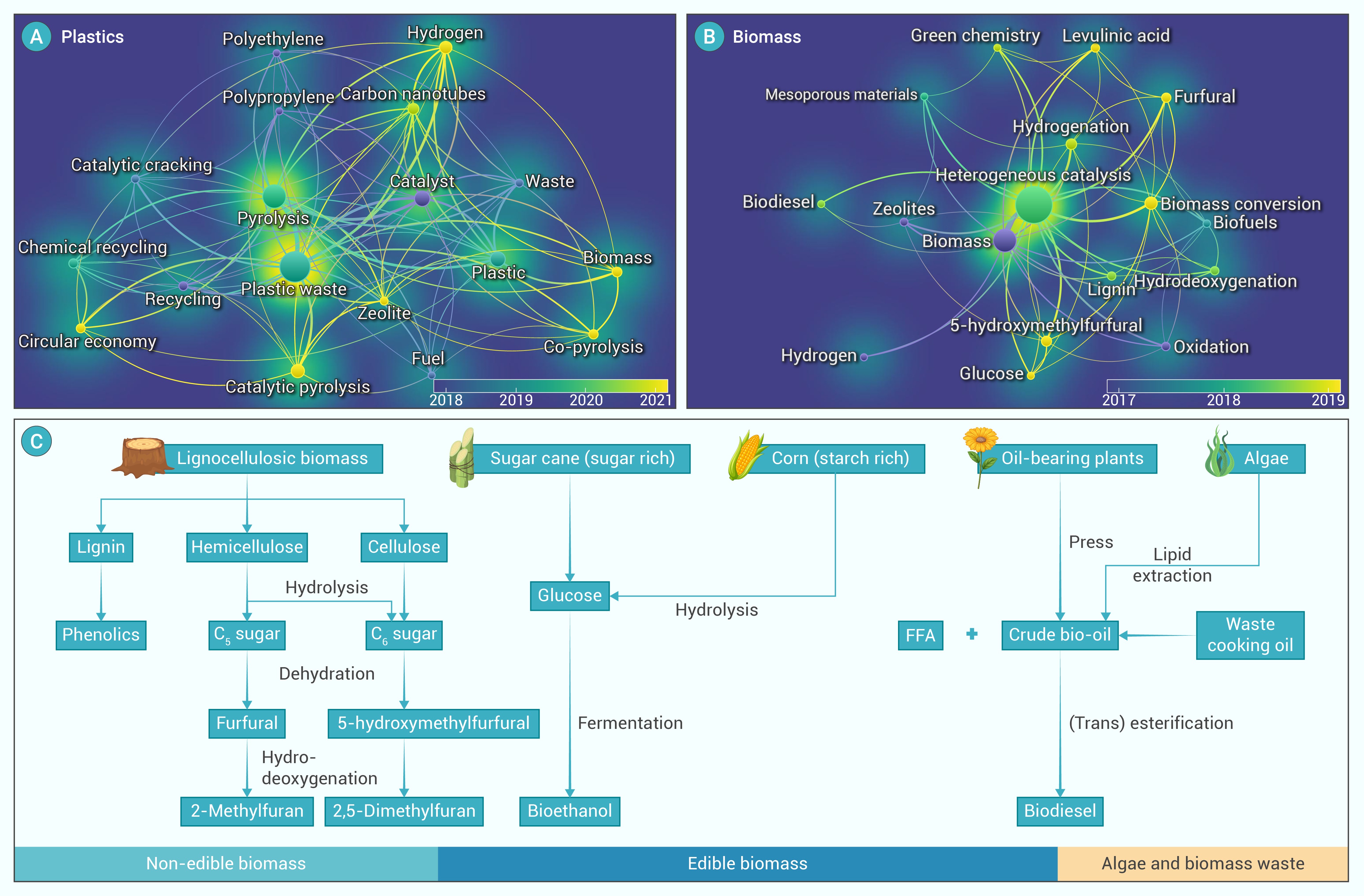

-
Figure 1.
Schematic diagram of rotating discs illustrates the catalytic conversion of air pollutants into high-value products
-
Figure 2.
Research trends and hotspots in the heterogeneous catalytic conversion of carbon family air pollutants, accompanied by schematic diagrams of typical catalytic technologies
-
Figure 3.
Research trends and hotspots in the heterogeneous catalytic conversion of nitrogen family air pollutants, accompanied by schematic diagrams of typical catalytic technologies
-
Figure 4.
Research trends and hotspots in the heterogeneous catalytic conversion of sulfur family air pollutants, accompanied by schematic diagrams of typical catalytic technologies
-
Figure 5.
Research trends and hotspots in the heterogeneous catalytic conversion of VOCs, accompanied by a schematic diagram of a typical catalytic technology
-
Figure 6.
Research hotspots in the heterogeneous catalytic conversion of water contaminants, accompanied by schematic diagrams of typical catalytic technologies
-
Figure 7.
Heterogeneous catalytic conversion of water contaminants
-
Figure 8.
Research hotspots in the heterogeneous catalytic conversion of solid waste, accompanied by a schematic diagram of a typical catalytic technology
-
Figure 9.
Heterogeneous catalytic conversion of plastics
