
Recent advances in dynamically photo-responsive metal complexes for optoelectronic applications
-
GRAPHICAL ABSTRACT

 DownLoad:
Full size image
DownLoad:
Full size image
-
PUBLIC SUMMARY
-
Material category, design strategies and responsive behaviors of photo-responsive metal complexes are summarized.
Research progress of photo-responsive metal complexes in optoelectronic applications is discussed.
Challenges and opportunities in photo-responsive metal complexes are presented.
-
-
ABSTRACT
Photo-responsive metal complexes, which connect certain photo-switches with the distinctive metal ions, have aroused extensive interest in the fields of optoelectronic functional applications. Upon photoisomerization, these metal complexes exhibit dynamically tunable photophysical properties in terms of their absorption ability and range, emission color and intensity, photoisomerization rate, mechanical property, and so on. This review will provide an overview of the recent advances in photo-responsive metal complexes, including small molecules, metal-based macrocycles and supramolecular polymers. Moreover, the responsive mechanisms and design strategies, along with the applications of these photo-responsive metal complexes in optoelectronic devices are also discussed. Finally, the challenges and perspectives on future synthesis and extensive applications of photo-responsive metal complexes are also presented. This review shall offer important guidelines for designing novel photo-responsive metal complexes with controllable responsive behaviors for advanced optoelectronic applications. -

-
REFERENCES
[1] Xu, F. and Feringa, B. L. (2023). Photoresponsive supramolecular polymers: From light-controlled small molecules to smart materials. Adv. Mater. 35: 2204413. DOI: 10.1002/adma.202204413. [2] She, P., Qin, Y., Wang, X. et al. (2022). Recent progress in external-stimulus-responsive 2D covalent organic frameworks. Adv. Mater. 34: 2101175. DOI: 10.1002/adma.202101175. [3] Wang, D., Zhang, J., Liu, Q., et al. (2020) 3D printing challenges in enabling rapid response to public health emergencies. The Innovation 1 : 100056. DOI: 10.1016/j.xinn.2020.100056. [4] Zhang, K., Zhou, X., Li, S., et al. (2023). A general strategy for developing ultrasensitive “transistor-like” thermochromic fluorescent materials for multilevel information encryption. Adv. Mater. 35: 2305472. DOI: 10.1002/adma.202305472. [5] Huang, D., Wang, J., Song C., et al. (2023) Ultrasound-responsive matters for biomedical applications. The Innovation 4 : 100421. DOI: 10.1016/j.xinn.2023.100421. [6] Liu, D.-Y., Li, H.-Y., Han, R.-P., et al. (2023). Multiple stimuli-responsive luminescent chiral hybrid antimony chlorides for anti-counterfeiting and encryption applications. Angew. Chem. Int. Ed. 62: e202307875. DOI: 10.1002/anie.202307875. [7] Zhang, Y., Li, J., Zhou, H., et al. (2021). Electro-responsive actuators based on graphene. The Innovation 2: 100168. DOI: 10.1016/j.xinn.2021.100168. [8] Li, C., Wang, K., Li, J., et al. (2020). Recent progress in stimulus-responsive two-dimensional metal–organic frameworks. ACS Materials Lett. 2: 779−797. DOI: 10.1021/acsmaterialslett.0c00148. [9] Tang, Z. (2023). Printable circularly polarized luminescence materials for advancing flexible 3D imaging. The Innovation Materials 1: 100038. DOI: 10.59717/j.xinn-mater.2023.100038. [10] Xiang, L., Li, Y., Zhao, D., et al. Body-coupled smart fibers: Enhancing seamless integration and efficiency in medical human-machine interaction. The Innovation 5 : 100674. DOI: 10.1016/j.xinn.2024.100674. [11] Huang, Y., Ning, L., Zhang, X., et al. (2024). Stimuli-fluorochromic smart organic materials. Chem. Soc. Rev. 53: 1090−1166. DOI: 10.1039/d2cs00976e. [12] She, P., Lu, J., Qin, Y., et al. (2021). Controllable photoactivated organic persistent room-temperature phosphorescence for information encryption and visual temperature detection. Cell Rep. Phys. Sci. 2: 100505. DOI: 10.1016/j.xcrp.2021.100505. [13] Zhang, J., Shen, H., Liu, X., et al. (2022). A dihydroazulene-based photofluorochromic AIE system for rewritable 4D information encryption. Angew. Chem. Int. Ed. 61: e202208460. DOI: 10.1002/anie.202208460. [14] Chen, S., Ju, Y., Zhang, H., et al. (2023). Photo responsive electron and proton conductivity within a hydrogen-bonded organic framework. Angew. Chem. Int. Ed. 62: e202308418. DOI: 10.1002/anie.202308418. [15] Krause, S., Evans, J. D., Bon, V., et al. (2022). Cooperative light-induced breathing of soft porous crystals via azobenzene buckling. Nat. Commun. 13: 1951. DOI: 10.1038/s41467-022-29149-z. [16] Han, J., Xie, C., Huang, Y.-S., et al. (2021). Ru–Se coordination: A new dynamic bond for visible-light-responsive materials. J. Am. Chem. Soc. 143: 12736−12744. DOI: 10.1021/jacs.1c05648. [17] Chen, J., Leung, F. K.-C., Stuart, M. C. A., et al. (2018). Artificial muscle-like function from hierarchical supramolecular assembly of photoresponsive molecular motors. Nat. Chem. 10: 132−138. DOI: 10.1038/nchem.2887. [18] Hou, G., Zhang, X., Du, F., et al. (2024). Self-regulated underwater phototaxis of a photoresponsive hydrogel-based phototactic vehicle. Nat. Nanotechnol. 19: 77−84. DOI: 10.1038/s41565-023-01490-4. [19] Li, C.-H. and Zuo, J.-L. (2020). Self-healing polymers based on coordination bonds. Adv. Mater. 32: 1903762. DOI: 10.1002/adma.201903762. [20] Wang, J.-X., Li, C. and Tian, H. (2021). Energy manipulation and metal-assisted photochromism in photochromic metal complex. Coord. Chem. Rev. 427: 213579. DOI: 10.1016/j.ccr.2020.213579. [21] Ko, C.-C. and Yam, V. W.-W. (2018). Coordination compounds with photochromic ligands: Ready tunability and visible light-sensitized photochromism. Acc. Chem. Res. 51: 149−159. DOI: 10.1021/acs.accounts.7b00426. [22] Ko, C.-C. and Yam, V. W.-W. (2010). Transition metal complexes with photochromic ligands-photosensitization and photoswitchable properties. J. Mater. Chem. 20: 2063−2070. DOI: 10.1039/B919418E. [23] Khairutdinov, R. F., Giertz, K., Hurst, J. K., et al. (1998). Photochromism of spirooxazines in homogeneous solution and phospholipid liposomes. J. Am. Chem. Soc. 120: 12707−12713. DOI: 10.1021/ja9825985. [24] Moran, M. J., Magrini, M., Walba, D. M., et al. (2018). Driving a liquid crystal phase transition using a photochromic hydrazone. J. Am. Chem. Soc. 140: 13623−13627. DOI: 10.1021/jacs.8b09622. [25] Gemen, J., Church, J. R., Ruoko, T.-P., et al. (2023). Disequilibrating azobenzenes by visible-light sensitization under confinement. Science 381: 1357−1363. DOI: 10.1126/science.adh9059. [26] Qiu, W., Gurr, P. A. and Qiao, G. G. (2019). Color-switchable polar polymeric materials. ACS Appl. Mater. Interfaces 11: 29268−29275. DOI: 10.1021/acsami.9b09023. [27] Yang, H., Li, M., Li, C., et al. (2020). Unraveling dual aggregation-induced emission behavior in steric-hindrance photochromic system for super resolution imaging. Angew. Chem. Int. Ed. 59: 8560−8570. DOI: 10.1002/anie.201909830. [28] Zhang, T., Lou, X.-Y., Li, X., et al. (2023). Tunable photochromism of spirooxazine in the solid state: A new design strategy based on the hypochromic effect. Adv. Mater. 35: 2210551. DOI: 10.1002/adma.202210551. [29] Yu, T.-Y., Niu, Q., Chen, Y., et al. (2023). Interpenetrating 3D covalent organic framework for selective stilbene photoisomerization and photocyclization. J. Am. Chem. Soc. 145: 8860−8870. DOI: 10.1021/jacs.2c12313. [30] Boixel, J., Zhu, Y., Le Bozec, H., et al. (2016). Contrasted photochromic and luminescent properties in dinuclear Pt(II) complexes linked through a central dithienylethene unit. Chem. Commun. 52: 9833−9836. DOI: 10.1039/c6cc03431d. [31] Mei, J.-F., Lv, Z.-P., Lai, J.-C., et al. (2016). A novel photo-responsive europium(III) complex for advanced anti-counterfeiting and encryption. Dalton Trans. 45: 5451−5454. DOI: 10.1039/c6dt00346j. [32] Li, Z., Wang, G., Wang, Y., et al. (2018). Reversible phase transition of robust luminescent hybrid hydrogels. Angew. Chem. Int. Ed. 57: 2194−2198. DOI: 10.1002/anie.201712670. [33] Chen, J.-X., Wang, J.-Y., Zhang, Q.-C., et al. (2017). Multiphotochromism in an asymmetric ruthenium complex with two different dithienylethenes. Inorg. Chem. 56: 13257−13266. DOI: 10.1021/acs.inorgchem.7b02023. [34] Bag, S. K., Pal, A., Jana, S., et al. (2024). Recent advances on diarylethene-based photoswitching materials: Applications in bioimaging, controlled singlet oxygen generation for photodynamic therapy and catalysis. Chem Asian J. 19: e202400238. DOI: 10.1002/asia.202400238. [35] Blanco, V., Leigh, D. A. and Marcos, V. (2024) Artificial switchable catalysts. Chem. Soc. Rev. 44 : 5341-5370. DOI: 10.1039/c5cs00096c. [36] Su, X. and Aprahamian, I. (2014). Hydrazone-based switches, metallo-assemblies and sensors. Chem. Soc. Rev. 43: 1963−1981. DOI: 10.1039/c3cs60385g. [37] Thaggard, G. C., Haimerl, J., Fischer, R. A., et al. (2023). Traffic lights for catalysis: Stimuli-responsive molecular and extended catalytic systems. Angew. Chem. Int. Ed. 62: e202302859. DOI: 10.1002/anie.202302859. [38] Williams, D. E., Rietman, J. A., Maier, J. M., et al. (2014). Energy transfer on demand: Photoswitch-directed behavior of metal–porphyrin frameworks. J. Am. Chem. Soc. 136: 11886−11889. DOI: 10.1021/ja505589d. [39] Li, C., Yan, H., Zhao, L.-X., et al. (2014). A trident dithienylethene-perylenemonoimide dyad with super fluorescence switching speed and ratio. Nat. Commun. 5: 5709. DOI: 10.1038/ncomms6709. [40] Kim, D., Jeong, H., Lee, H., et al. (2014). Flexible molecular-scale electronic devices composed of diarylethene photoswitching molecules. Adv. Mater. 26: 3968−3973. DOI: 10.1002/adma.201306316. [41] Natali, M. and Giordani, S. (2012). Molecular switches as photocontrollable “smart” receptors. Chem. Soc. Rev. 41: 4010−4029. DOI: 10.1039/c2cs35015g. [42] Asadirad, A. M., Boutault, S., Erno, Z., et al. (2014). Controlling a polymer adhesive using light and a molecular switch. J. Am. Chem. Soc. 136: 3024−3027. DOI: 10.1021/ja500496n. [43] Cheng, H.-B., Zhang, H.-Y. and Liu, Y. (2013). Dual-stimulus luminescent lanthanide molecular switch based on an unsymmetrical diarylperfluorocyclopentene. J. Am. Chem. Soc. 135: 10190−10193. DOI: 10.1021/ja4018804. [44] Han, M., Luo, Y., Damaschke, B., et al. (2016). Light-controlled interconversion between a self-assembled triangle and a rhombicuboctahedral sphere. Angew. Chem. Int. Ed. 55: 445−449. DOI: 10.1002/anie.201508307. [45] Presa, A., Brissos, R. F., Caballero, A. B., et al. (2015). Photoswitching the cytotoxic properties of platinum(II) compounds. Angew. Chem. Int. Ed. 54: 4561−4565. DOI: 10.1002/anie.201412157. [46] Presa, A., Barrios, L., Cirera, J., et al. (2016). Non-switching 1,2-dithienylethene-based diplatinum(II) complex showing high cytotoxicity. Inorg. Chem. 55: 5356−5364. DOI: 10.1021/acs.inorgchem.6b00362. [47] Presa, A., Vázquez, G., Barrios, L. A., et al. (2018). Photoactivation of the cytotoxic properties of platinum(II) complexes through ligand photoswitching. Inorg. Chem. 57: 4009−4022. DOI: 10.1021/acs.inorgchem.8b00146. [48] Chan, M. H.-Y., Wong, H.-L. and Yam, V. W.-W. (2016). Synthesis and photochromic studies of dithienylethene-containing cyclometalated alkynylplatinum(II) 1,3-bis(N-alkylbenzimidazol-2′-yl)benzene complexes. Inorg. Chem. 55: 5570−5577. DOI: 10.1021/acs.inorgchem.6b00619. [49] Zhao, H., Garoni, E., Roisnel, T., et al. (2018). Photochromic DTE-substituted-1,3-di(2-pyridyl)benzene platinum(II) complexes: Photomodulation of luminescence and second-order nonlinear optical properties. Inorg. Chem. 57: 7051−7063. DOI: 10.1021/acs.inorgchem.8b00733. [50] Li, X., Shi, Y., Wang, N., et al. (2019). Photoisomerization of PtII complexes containing two different photochromic chromophores: Boron chromophore versus dithienylethene chromophore. Chem. Eur. J. 25: 5757−5767. DOI: 10.1002/chem.201900279. [51] Wang, Y., Zhou, Q., He, X., et al. (2022). Dithienylethene metallodendrimers with high photochromic efficiency. Chin. Chem. Lett. 33: 1613−1618. DOI: 10.1016/j.cclet.2021.09.048. [52] Wu, N. M.-W., Ng, M. and Yam, V. W.-W. (2019). Photochromic benzo[b]phosphole alkynylgold(I) complexes with mechanochromic property to serve as multistimuli-responsive materials. Angew. Chem. Int. Ed. 58: 3027−3031. DOI: 10.1002/anie.201806272. [53] Xu, Z., Cao, Y., Patrick, B. O., et al. (2018). Photoswitching of copper(I) chromophores with dithienylethene-based ligands. Chem. Eur. J. 24: 10315−10319. DOI: 10.1002/chem.201801940. [54] Mörtel, M., Witt, A., Heinemann, F. W., et al. (2017). Synthesis, characterization, and properties of iron(II) spin-crossover molecular photoswitches functioning at room temperature. Inorg. Chem. 56: 13174−13186. DOI: 10.1021/acs.inorgchem.7b01952. [55] Mörtel, M., Lindner, T., Scheurer, A., et al. (2020). Phenanthroline-based molecular switches for prospective chemical grafting: A synthetic strategy and its application to spin-crossover complexes. Inorg. Chem. 59: 2659−2666. DOI: 10.1021/acs.inorgchem.9b01424. [56] Wu, H., Chen, Y. and Liu, Y. (2017). Reversibly photoswitchable supramolecular assembly and its application as a photoerasable fluorescent ink. Adv. Mater. 29: 1605271. DOI: 10.1002/adma.201605271. [57] Li, Z., Liu, X., Wang, G., et al. (2021). Photoresponsive supramolecular coordination polyelectrolyte as smart anticounterfeiting inks. Nat. Commun. 12: 1363. DOI: 10.1038/s41467-021-21677-4. [58] Al Sabea, H., Norel, L., Galangau, O., et al. (2019). Dual light and redox control of nir luminescence with complementary photochromic and organometallic antennae. J. Am. Chem. Soc. 141: 20026−20030. DOI: 10.1021/jacs.9b11318. [59] Uber, J. S., Estrader, M., Garcia, J., et al. (2017). Molecules designed to contain two weakly coupled spins with a photoswitchable spacer. Chem. Eur. J. 23: 13648−13659. DOI: 10.1002/chem.201702171. [60] Karmakar, M., Pal, A., Mondal, B., et al. (2021). Light-triggered metal coordination dynamics in photoswitchable dithienylethene–ferrocene system. Inorg. Chem. 60: 6086−6098. DOI: 10.1021/acs.inorgchem.1c00602. [61] Guo, S., Li, M., Hu, H., et al. (2023). Light-regulating chirality of metallacages featuring dithienylethene switches. Chem. Sci. 14: 6237−6243. DOI: 10.1039/d3sc00828b. [62] Zhang, Q., Qu, D.-H. and Tian, H. (2019). Photo-regulated supramolecular polymers: Shining beyond disassembly and reassembly. Adv. Opt. Mater. 7: 1900033. DOI: 10.1002/adom.201900033. [63] Adhikari, B., Yamada, Y., Yamauchi, M., et al. (2017). Light-induced unfolding and refolding of supramolecular polymer nanofibres. Nat. Commun. 8: 15254. DOI: 10.1038/ncomms15254. [64] Tashiro, K., Katayama, K., Tamaki, K., et al. (2021). Non-uniform photoinduced unfolding of supramolecular polymers leading to topological block nanofibers. Angew. Chem. Int. Ed. 60: 26986−26993. DOI: 10.1002/anie.202110224. [65] Tamaki, K., Aizawa, T. and Yagai, S. (2021). Wavy supramolecular polymers formed by hydrogen-bonded rosettes. Chem. Commun. 57: 4779−4782. DOI: 10.1039/d1cc01636a. [66] Hansen, M. J., Lerch, M. M., Szymanski, W., et al. (2016). Direct and versatile synthesis of red-shifted azobenzenes. Angew. Chem. Int. Ed. 55: 13514−13518. DOI: 10.1002/anie.201607529. [67] Volarić, J., Szymanski, W., Simeth, N. A., et al. (2021). Molecular photoswitches in aqueous environments. Chem. Soc. Rev. 50: 12377−12449. DOI: 10.1039/d0cs00547a. [68] Arima, H., Saito, T., Kajitani, T., et al. (2020). Self-assembly of alkylated and perfluoroalkylated scissor-shaped azobenzene dyads into distinct structures. Chem. Commun. 56: 15619−15622. DOI: 10.1039/d0cc06907h. [69] Fuentes, E., Gerth, M., Berrocal, J. A., et al. (2020). An azobenzene-based single-component supramolecular polymer responsive to multiple stimuli in water. J. Am. Chem. Soc. 142: 10069−10078. DOI: 10.1021/jacs.0c02067. [70] Lin, L.-R., Tang, H.-H., Wang, Y.-G., et al. (2017). Functionalized lanthanide(III) complexes constructed from azobenzene derivative and β-diketone ligands: Luminescent, magnetic, and reversible trans-to-cis photoisomerization properties. Inorg. Chem. 56: 3889−3900. DOI: 10.1021/acs.inorgchem.6b02819. [71] Moreno, J., Grubert, L., Schwarz, J., et al. (2017). Efficient sensitized Z → E photoisomerization of an iridium(III)-azobenzene complex over a wide concentration range. Chem. Eur. J. 23: 14090−14095. DOI: 10.1002/chem.201703376. [72] Oldknow, S., Martir, D. R., Pritchard, V. E., et al. (2018). Structure-switching M3L2 Ir(III) coordination cages with photo-isomerising azo-aromatic linkers. Chem. Sci. 9: 8150−8159. DOI: 10.1039/c8sc03499k. [73] Hossain, M. S. and Bandyopadhyay, S. (2021). Metal ion mediated instant Z → E isomerization of azobenzene macrocycles in the absence of light. J. Org. Chem. 86: 6314−6321. DOI: 10.1021/acs.joc.1c00105. [74] Kartha, K. K., Allampally, N. K., Politi, A. T., et al. (2019). Influence of metal coordination and light irradiation on hierarchical self-assembly processes. Chem. Sci. 10: 752−760. DOI: 10.1039/c8sc03875a. [75] Cheng, H.-B., Li, X., Kwon, N., et al. (2019). Photoswitchable phthalocyanine-assembled nanoparticles for controlled “double-lock” photodynamic therapy. Chem. Commun. 55: 12316−12319. DOI: 10.1039/c9cc03960k. [76] Borré, E., Bellemin-Laponnaz, S. and Mauro, M. (2016). Amphiphilic metallopolymers for photoswitchable supramolecular hydrogels. Chem. Eur. J. 22: 18718−18721. DOI: 10.1002/chem.201604321. [77] Borré, E., Stumbé, J.-F., Bellemin-Laponnaz, S., et al. (2016). Light-powered self-healable metallosupramolecular soft actuators. Angew. Chem. Int. Ed. 55: 1313−1317. DOI: 10.1002/ange.201508241. [78] Borré, E., Stumbé, J.-F., Bellemin-Laponnaz, S., et al. (2017). Control of the light-response in supramolecular metallopolymeric gels by tuning the coordination metal. Chem. Commun. 53: 8344−8347. DOI: 10.1039/c7cc03516k. [79] Yu, H.-J., Wang, H., Shen, F.-F., et al. (2022). Cyclodextrin-confined supramolecular lanthanide photoswitch. Small 18: 2201737. DOI: 10.1002/smll.202201737. [80] Amaral, R. C., Matos, L. S., Zanoni, K. P. S., et al. (2018). Photoreversible molecular motion of stpyCN coordinated to fac-[Re(CO)3(NN)]+ complexes. J. Phys. Chem. A 122: 6071−6080. DOI: 10.1021/acs.jpca.8b02630. [81] Faustino, L. A., Hora Machado, A. E. and Patrocinio, A. O. T. (2018). Photochemistry of fac-[Re(CO)3(dcbH2)(trans-stpy)]+: New insights on the isomerization mechanism of coordinated stilbene-like ligands. Inorg. Chem. 57: 2933−2941. DOI: 10.1021/acs.inorgchem.8b00093. [82] Matos, L. S., Amaral, R. C. and Murakami Iha, N. Y. (2018). Visible photosensitization of trans-styrylpyridine coordinated to fac-[Re(CO)3(dcbH2)]+: new insights. Inorg. Chem. 57: 9316−9326. DOI: 10.1021/acs.inorgchem.8b01304. [83] Zanoni, K. P. S. and Murakami Iha, N. Y. (2017). Reversible trans ⇌ cis photoisomerizations of [Re(CO)3(ph2phen)(stpyCN)]+ towards molecular machines. Dalton Trans. 46: 9951−9958. DOI: 10.1039/c7dt01648d. [84] Sension, R. J., Repinec, S. T., Szarka, A. Z., et al. (1993). Femtosecond laser studies of the cis‐stilbene photoisomerization reactions. J. Chem. Phys. 98: 6291−6315. DOI: 10.1063/1.464824. [85] Kortekaas, L. and Browne, W. R. (2019). The evolution of spiropyran: fundamentals and progress of an extraordinarily versatile photochrome. Chem. Soc. Rev. 48: 3406−3424. DOI: 10.1039/d0cs90099k. [86] Kho, Y.-M. and Shin, E. J. (2017). Spiropyran-isoquinoline dyad as a dual chemosensor for Co(II) and In(III) detection. Molecules 22: 1569. DOI: 10.3390/molecules22091569. [87] Wu, Y., Yin, C., Zhang, W., et al. (2021). A red-emitting fluorescent probe imaging release of calcium ions from lysosome induced by chloroquine based on a photochromic crowned spirobenzopyran. Dyes Pigments 193: 109467. DOI: 10.1016/j.dyepig.2021.109467. [88] Jukes, R. T. F., Bozic, B., Hartl, F., et al. (2006). Synthesis, photophysical, photochemical, and redox properties of nitrospiropyrans substituted with Ru or Os tris(bipyridine) complexes. Inorg. Chem. 45: 8326−8341. DOI: 10.1021/ic0606680. [89] Li, Y., Tam, A. Y.-Y., Wong, K. M.-C., et al. (2011). Synthesis, characterization, and the photochromic, luminescence, metallogelation and liquid-crystalline properties of multifunctional platinum(II) bipyridine complexes. Chem. Eur. J. 17: 8048−8059. DOI: 10.1002/chem.201003738. [90] Ali, A. A., Kharbash, R. and Kim, Y. (2020). Chemo- and biosensing applications of spiropyran and its derivatives - a review. Anal. Chim. Acta 1110: 199−223. DOI: 10.1016/j.aca.2020.01.057. [91] Bhattacharyya, S., Chowdhury, A., Saha, R., et al. (2019). Multifunctional self-assembled macrocycles with enhanced emission and reversible photochromic behavior. Inorg. Chem. 58: 3968−3981. DOI: 10.1021/acs.inorgchem.9b00039. [92] Bhattacharyya, S., Maity, M., Chowdhury, A., et al. (2020). Coordination-assisted reversible photoswitching of spiropyran-based platinum macrocycles. Inorg. Chem. 59: 2083−2091. DOI: 10.1021/acs.inorgchem.9b03572. [93] Liu, J., Chan, A. K.-W., Ng, M., et al. (2019). Synthesis, characterization, and photochromic studies of cyclometalated iridium(III) complexes containing a spironaphthoxazine moiety. Organometallics 38: 3542−3552. DOI: 10.1021/acs.organomet.9b00359. [94] Shao, B. and Aprahamian, I. (2020). Hydrazones as new molecular tools. Chem 6: 2162−2173. DOI: 10.1016/j.chempr.2020.08.007. [95] Aprahamian, I. (2017). Hydrazone switches and things in between. Chem. Commun. 53: 6674−6684. DOI: 10.1039/c7cc02879b. [96] Shao, B., Baroncini, M., Qian, H., et al. (2018). Solution and solid-state emission toggling of a photochromic hydrazone. J. Am. Chem. Soc. 140: 12323−12327. DOI: 10.1021/jacs.8b07108. [97] Qian, H., Pramanik, S. and Aprahamian, I. (2017). Photochromic hydrazone switches with extremely long thermal half-lives. J. Am. Chem. Soc. 139: 9140−9143. DOI: 10.1021/jacs.7b04993. [98] Shao, B., Qian, H., Li, Q., et al. (2019). Structure property analysis of the solution and solid-state properties of bistable photochromic hydrazones. J. Am. Chem. Soc. 141: 8364−8371. DOI: 10.1021/jacs.9b03932. [99] Li, Y., Li, K., Wang, L., et al. (2017). Fluoran salicylaldehyde hydrazone Zn(II) complexes: reversible photochromic systems both in solution and in a solid matrix. J. Mater. Chem. C 5: 7553−7560. DOI: 10.1039/c7tc02437a. [100] Li, Y., Feng, Z., Li, Y., et al. (2020). Metal ions-triggered photo-induced fluorescence change in rhodamine B-based photo-responsive complexes. Spectrochim. Acta A 230: 118069. DOI: 10.1016/j.saa.2020.118069. [101] Ma, Y., Yu, Y., She, P., et al. (2020). On-demand regulation of photochromic behavior through various counterions for high-level security printing. Sci. Adv. 6: eaaz2386. DOI: 10.1126/sciadv.aaz2386. [102] Mutoh, K., Miyashita, N., Arai, K., et al. (2019). Turn-on mode fluorescence switch by using negative photochromic imidazole dimer. J. Am. Chem. Soc. 141: 5650−5654. DOI: 10.1021/jacs.9b01870. [103] Nevskyi, O., Sysoiev, D., Oppermann, A., et al. (2016). Nanoscopic visualization of soft matter using fluorescent diarylethene photoswitches. Angew. Chem. Int. Ed. 55: 12698−12702. DOI: 10.1002/anie.201606791. [104] Ma, Y., Shen, J., Zhao, J., et al. (2022). Multicolor zinc(II)-coordinated hydrazone-based bistable photoswitches for rewritable transparent luminescent labels. Angew. Chem. Int. Ed. 61: e202202655. DOI: 10.1002/anie.202202655. [105] Gao, Z., Han, Y. and Wang, F. (2018). Cooperative supramolecular polymers with anthracene‒endoperoxide photo-switching for fluorescent anti-counterfeiting. Nat. Commun. 9: 3977. DOI: 10.1038/s41467-018-06392-x. [106] Jin, H., Cai, Y., Li, H., et al. (2022). Photo-enhanced-coordination triggered unprecedented bistable AIE for long-term optical memories. Adv. Opt. Mater. 10: 2200130. DOI: 10.1002/adom.202200130. [107] Jin, Y., Peng, Q.-C., Xie, J.-W., et al. (2023). Photo-activated circularly polarized luminescence film based on aggregation-induced emission copper(I) cluster-assembled materials. Angew. Chem. Int. Ed. 62: e202301000. DOI: 10.1002/anie.202301000. [108] Li, Y., Baryshnikov,G. V., Xu, C., et al. (2021) Photoinduced radical emission in a coassembly system. Angew. Chem. Int. Ed. 60 : 23842-23848. DOI: 10.1002/anie.202110405. [109] She, P., Qin, Y., Zhou, Y., et al. (2024). Photoactivated circularly polarized luminescent organic radicals in doped amorphous polymer. Angew. Chem. Int. Ed. 63: e202403660. DOI: 10.1002/anie.202403660. [110] Jin, J.-M., Chen, W.-C., Tan,J.-H., et al. (2023). Photo-controllable luminescence from radicals leading to ratiometric emission switching via dynamic intermolecular coupling. Angew. Chem. Int. Ed. 62: e202214281. DOI: 10.1002/anie.202214281. -
ABOUT THIS ARTICLE
Cite this article:
Qin Y., She P., and Wong W.-Y. (2024). Recent advances in dynamically photo-responsive metal complexes for optoelectronic applications. The Innovation Materials 2(4): 100099. https://doi.org/10.59717/j.xinn-mater.2024.100099
Welcome!
To request copyright permission to republish or share portions of our works, please visit Copyright Clearance Center's (CCC) Marketplace website at marketplace.copyright.com.

Export File
Citation
Qin Y., She P., and Wong W.-Y. (2024). Recent advances in dynamically photo-responsive metal complexes for optoelectronic applications. The Innovation Materials 2(4): 100099. https://doi.org/10.59717/j.xinn-mater.2024.100099

Format
Content




-
Figure 1.
The molecular design of photo-responsive metal complexes
-
Figure 2.
Partial molecular structures of dithienylethene-based metal complexes.
-
Figure 3.
Partial molecular structures of other photo-responsive metal complexes.
-
Figure 4.
DTE-based Au(I) and Ru(II) complexes
-
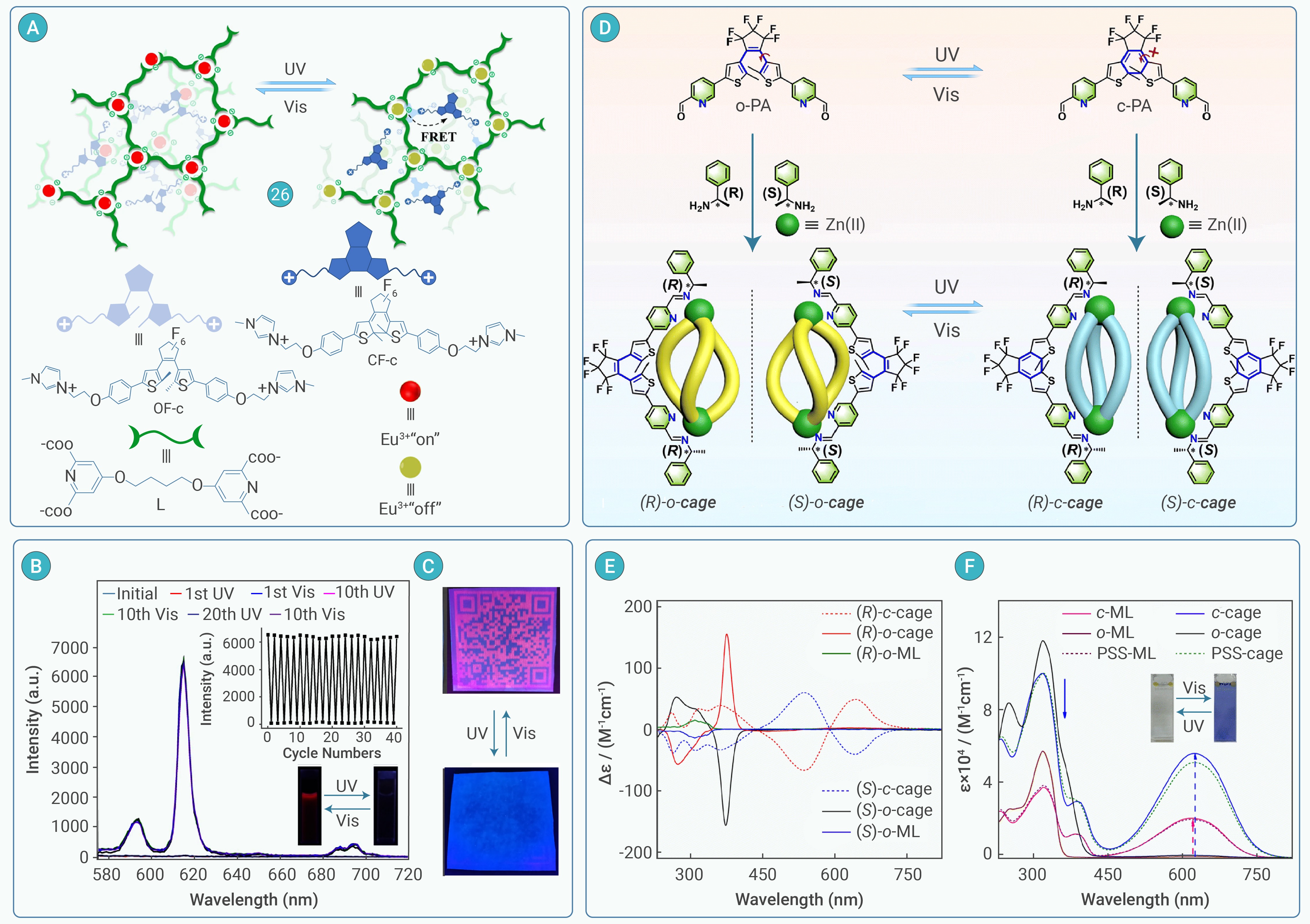
Figure 5.
DTE-based Eu(III) and Zn(II) complexes
-
Figure 6.
Light-powered soft actuators and phase transition
-
Figure 7.
Photo-responsive macrocycles and logic gates application
-
Figure 8.
Hydrazone-based Zn(II) complexes for information storage and anticounterfeiting
-
Figure 9.
Other photo-responsive metal complexes
