
Advancement and functionalization of PAF-1 and its derivatives
-
GRAPHICAL ABSTRACT

 DownLoad:
Full size image
DownLoad:
Full size image
-
PUBLIC SUMMARY
-
Reviews a decade of advancements in PAF-1 analogues, focusing on key modification strategies.
Explores PAF-1 derivatives applications in catalysis, heavy metal adsorption, gas storage, and separation.
Establishes design principles for creating functional porous organic materials with superior performance.
-
-
ABSTRACT
This review explores the research progresses of porous organic framework materials, PAF-1 (PAF = porous aromatic framework) and its derivatives. Initially, the pivotal role of PAF-1 in porous organic frameworks and the successful factors in its design and synthesis, including effective building reactions and the design of stereotopological reaction monomers, are introduced. Subsequently, a systematic review of research on PAF-1 analogues over the past decade is presented from three key perspectives: (1) in terms of modification strategies, involving central atom substitution, functional group incorporation, dimer-type building units, and mixed ligand approaches to enhance material performance; (2) the exploration of alternative polymerization processes such as aluminum trichloride catalyzed polymerization and in situ generated nickel catalyst polymerization, achieving cost reduction and the production of high-specific-surface-area materials; (3) finally, discussion on the functionalization of PAF-1, showcasing its potential in catalysis, heavy metal adsorption, gas storage, and separation applications. This comprehensive study lays a foundation for the design of porous organic materials with specific functionalities and superior performance, guiding the future development of materials science. -

-
REFERENCES
[1] Dawson R. Cooper A.I. and Adams D.J. (2012). Nanoporous organic polymer networks. Prog. Polym. Sci. 37:530−563. DOI:10.1016/j.progpolymsci.2011.09.002 [2] Ren H. and Zhu G.S. (2015). Porous organic frameworks: synthetic strategy and their applications. Acta. Chim. Sinica. 73:587−599. DOI:10.6023/A15010071 [3] Díaz U. and Corma A. (2016). Ordered covalent organic frameworks, COFs and PAFs. from preparation to application. Coord. Chem. Rev. 311:85−124. DOI:10.1016/j.ccr.2015.12.010 [4] Tan L.X. and Tan B.E. (2017). Hypercrosslinked porous polymer materials: design, synthesis, and applications. Chem. Soc. Rev. 46:3322−3356. DOI:10.1039/c6cs00851h [5] Yuan Y. and Zhu G.S. (2019). Porous aromatic frameworks as a platform for multifunctional applications. ACS. Cent. Sci. 5:409−418. DOI:10.1021/acscentsci.9b00047 [6] Geng K.Y., He T., Liu R.Y., et al. (2020). Covalent organic frameworks: design, synthesis, and functions. Chem. Rev. 120:8814−8933. DOI:10.1021/acs.chemrev.9b00550 [7] Li Y.S., Chen W.B., Xing G.L., et al. (2020). New synthetic strategies toward covalent organic frameworks. Chem. Soc. Rev. 49:2852−2868. DOI:10.1039/d0cs00199f [8] Tian Y.Y. and Zhu G.S. (2020). Porous aromatic frameworks (PAFs). Chem. Rev. 120:8934−8986. DOI:10.1021/acs.chemrev.9b00687 [9] Hao Q., Tao Y., Ding X.S., et al. (2023). Porous organic polymers: a progress report in China. Sci. China. Chem. 66:620−682. DOI:10.1007/s11426-022-1475-x [10] Karatayeva U., Siyabi S.A.A., Narzary B.B., et al. (2024). Conjugated microporous polymers for catalytic CO2 Conversion. Adv. Sci. 11:2308228. DOI:10.1002/advs.202308228 [11] Li Y. and Yu J.H. (2021). Emerging applications of zeolites in catalysis, separation and host-guest assembly. Nat. Rev. Mater. 6:1156−1174. DOI:10.1038/s41578-021-00347-3 [12] Singh R., Wang L.Z., Ostrikov K., et al. (2024). Designing carbon-based porous materials for carbon dioxide capture. Adv. Mater. Interfaces 11:2202290. DOI:10.1002/admi.202202290 [13] Ji Z., Wang H.Z., Canossa S., et al. (2020). Pore chemistry of metal-organic frameworks. Adv. Funct. Mater. 30:2000238. DOI:10.1002/adfm.202000238 [14] Zhang Z.J., Ye Y.X., Xiang S.C., et al. (2022). Exploring multifunctional hydrogen-bonded organic framework materials. Acc. Chem. Res. 55:3752−3766. DOI:10.1021/acs.accounts.2c00686 [15] Budd P.M., Ghanem B.S., Makhseed S., et al. (2004). Polymers of intrinsic microporosity (PIMs): Robust, solution-processable, organic nanoporous materials. Chem. Commun. 2004 :230–231. DOI:10.1039/b311764b. [16] McKeown N.B. and Budd P.M. (2010). Exploitation of intrinsic microporosity in polymer-based materials. Macromolecules 43:5163−5176. DOI:10.1021/ma1006396 [17] Cote A.P., Benin A.I., Ockwig N.W., et al. (2005). Porous, crystalline, covalent organic frameworks. Science 310:1166−1170. DOI:10.1126/science.1120411 [18] Jiang J.X., Su F.B., Trewin A., et al. (2007). Conjugated microporous poly(aryleneethynylene) networks. Angew. Chem. Int. Ed. 46:8574−8578. DOI:10.1002/anie.200701595 [19] Ben T., Ren H., Ma S.Q., et al. (2009). Targeted synthesis of a porous aromatic framework with high stability and exceptionally high surface area. Angew. Chem. Int. Ed. 48:9457−9460. DOI:10.1002/anie.200904637 [20] Holst J.R. and Cooper A.I. (2010). Ultrahigh surface area in porous solids. Adv. Mater. 22:5212−5216. DOI:10.1002/adma.201002440 [21] Su Y.Q., Li X.J., Wang Y.X., et al. (2016). Gold nanoparticles supported by imidazolium-based porous organic polymers for nitroarene reduction. Dalton. Trans. 45:16896−16903. DOI:10.1039/c6dt03050e [22] Klumpen C., Gödrich S., Papastavrou G., et al. (2017). Water mediated proton conduction in a sulfonated microporous organic polymer. Chem. Commun. 53:7592−7595. DOI:10.1039/c7cc02117h [23] Lin Z.J., Lü J., Li L., et al. (2017). Defect porous organic frameworks (dPOFs) as a platform for chiral organocatalysis. J. Catal. 355:131−138. DOI:10.1016/j.jcat.2017.09.014 [24] Hou R.J., Smith S.J.D., Konstas K., et al. (2022). Synergistically improved PIM-1 membrane gas separation performance by PAF-1 incorporation and UV irradiation. J. Mater. Chem. A 10:10107−10119. DOI:10.1039/d2ta00138a [25] Yamamoto T., Hayashi Y. and Yamamoto A. (1978). A novel type of polycondensation utilizing transition metal-catalyzed C–C coupling. I. Preparation of thermostable polyphenylene type polymers. Bull. Chem. Soc. Jpn. 51:2091−2097. DOI:10.1246/bcsj.51.2091 [26] Yuan Y., Sun F.X., Ren H., et al. (2011). Targeted synthesis of a porous aromatic framework with a high adsorption capacity for organic molecules. J. Mater. Chem. 21:13498−13502. DOI:10.1039/c1jm11998b [27] Jing X.F., Sun F.X., Ren H., et al. (2013). Targeted synthesis of micro-mesoporous hybrid material derived from octaphenylsilsesquioxane building units. Microporous Mesoporous Mater. 165:92−98. DOI:10.1016/j.micromeso.2012.07.048 [28] Sun L.B., Liang Z.Q., Yu J.H., et al. (2013). Luminescent microporous organic polymers containing the 1,3,5-tri(4-ethenylphenyl)benzene unit constructed by Heck coupling reaction. Polym. Chem. 4:1932−1938. DOI:10.1039/c2py21034g [29] Sun L.B., Liang Z.Q. and Yu J.H. (2015). Octavinylsilsesquioxane-based luminescent nanoporous inorganic-organic hybrid polymers constructed by the Heck coupling reaction. Polym. Chem. 6:917−924. DOI:10.1039/c4py01284d [30] Porath A.J., Lybrand T. and Bour J.R. (2024). Relationships between defectivity and porosity in high surface area porous aromatic frameworks. Angew. Chem. Int. Ed. 63:e202314120. DOI:10.1002/anie.202314120 [31] Li M.P., Ren H., Sun F.X., et al. (2018). Construction of porous aromatic frameworks with exceptional porosity via building unit engineering. Adv. Mater. 30:1804169. DOI:10.1002/adma.201804169 [32] Yuan D.Q., Lu W.G., Zhao D., et al. (2011). Highly stable porous polymer networks with exceptionally high gas-uptake capacities. Adv. Mater. 23:3723−3725. DOI:10.1002/adma.201101759 [33] Jia J.T., Chen Z.J., Jiang H., et al. (2019). Extremely hydrophobic POPs to access highly porous storage media and capturing agent for organic vapors. Chem 5:180−191. DOI:10.1016/j.chempr.2018.10.005 [34] Kim D.W., Chen Y., Kim H., et al. (2024). High hydrogen storage in trigonal prismatic monomer-based highly porous aromatic frameworks. Adv. Mater. 36:202401739. DOI:10.1002/adma.202401739 [35] Baldwin L.A., Crowe J.W., Pyles D.A., et al. (2016). Metalation of a mesoporous three-dimensional covalent organic framework. J. Am. Chem. Soc. 138:15134−15137. DOI:10.1021/jacs.6b10316 [36] Schmidt J., Werner M. and Thomas A. (2009). Conjugated microporous polymer networks via Yamamoto polymerization. Macromolecules 42:4426−4429. DOI:10.1021/ma9005473 [37] Ren H., Ben T., Sun F.X., et al. (2011). Synthesis of a porous aromatic framework for adsorbing organic pollutants application. J. Mater. Chem. 21:10348−10353. DOI:10.1039/c1jm11307k [38] Jiang J.X., Trewin A., Adams D.J., et al. (2011). Band gap engineering in fluorescent conjugated microporous polymers. Chem. Sci. 21:1777−1781. DOI:10.1039/c1sc00329a [39] Ben T., Shi K., Cui Y., et al. (2011). Targeted synthesis of an electroactive organic framework. J. Mater. Chem. 21:18208−18214. DOI:10.1039/c1jm12545a [40] Ben T., Pei C.Y., Zhang D.L., et al. (2011). Gas storage in porous aromatic frameworks (PAFs). Energy. Environ. Sci. 4:3991−3999. DOI:10.1039/c1ee01222c [41] Garibay S.J., Weston M.H., Mondloch J.E., et al. (2013). Accessing functionalized porous aromatic frameworks (PAFs) through a de novo approach. CrystEngComm 15:1515−1519. DOI:10.1039/c2ce26595h [42] Tian Y.Y., Song J., Zhu Y.L., et al. (2019). Understanding the desulphurization process in an ionic porous aromatic framework. Chem. Sci. 10:606−613. DOI:10.1039/c8sc03727b [43] Song J., Li Y., Cao P., et al. (2020). Synergic catalysts of polyoxometalate@cationic porous aromatic frameworks: reciprocal modulation of both capture and conversion materials. Adv. Mater. 31:1902444. DOI:10.1002/adma.201902444 [44] Zhang C., Dong J.C., Zhang P.P., et al. (2023). Unique fluorophilic pores engineering within porous aromatic frameworks for trace perfluorooctanoic acid removal. Natl. Sci. Rev. 10:nwad191. DOI:10.1093/nsr/nwad191 [45] He Y.B., Chen F.L., Li B., et al. (2018). Porous metal-organic frameworks for fuel storage. Coord. Chem. Rev. 373:167−198. DOI:10.1016/j.ccr.2017.10.002 [46] Pei C.Y., Ben T., Li Y.Q., et al. (2014). Synthesis of copolymerized porous organic frameworks with high gas storage capabilities at both high and low pressures. Chem. Commun. 50:6134−6136. DOI:10.1039/c4cc00302k [47] Zhang Z.F., Zheng Y.J., Dou Z.L., et al. (2023). Multivariate porous aromatic frameworks with high porosity and hierarchical structures for enzyme immobilization. ACS. Cent. Sci. 9:488−493. DOI:10.1021/acscentsci.3c00078 [48] Yang A.N., Bukowski B.C., Anstine D.M., et al. (2023). Defect engineering of porous aromatic frameworks via end capping improves dioxane removal from water. Matter 6:2263−2273. DOI:10.1016/j.matt.2023.06.013 [49] Li L.N., Ren H., Yuan Y., et al. (2014). Construction and adsorption properties of porous aromatic frameworks via AlCl3-triggered coupling polymerization. J. Mater. Chem. A 2:11091−11098. DOI:10.1039/c4ta01252f [50] Li B.Y., Guan Z.H., Yang X.J., et al. (2014). Multifunctional microporous organic polymers. J. Mater. Chem. A 2:11930−11939. DOI:10.1039/c4ta01081g [51] Meng S., Ma H.P., Jiang L. C., et al. (2014). A facile approach to prepare porphyrinic porous aromatic frameworks for small hydrocarbon separation. J. Mater. Chem. A 2:14536−14541. DOI:10.1039/c4ta00984c [52] Li L.N., Cai K., Wang P.Y., et al. (2015). Construction of sole benzene ring porous aromatic frameworks and their high adsorption properties. ACS. Appl. Mater. Interfaces 7:201−208. DOI:10.1021/am505697f [53] Rozyyev V., Thirion D., Ullah R., et al. (2019). High-capacity methane storage in flexible alkane-linked porous aromatic network polymers. Nat. Energy 4:604−611. DOI:10.1038/s41560-019-0427-x [54] Zhao S., Zhang J.H., Zhai Y.C., et al. (2021). Highly efficient Lewis acid catalytic activity of the tritylium ion at the node of a tensile organic framework. Chem. Sci. 12:9786−9793. DOI:10.1039/d1sc02594e [55] Rozyyev V., Hong Y., Yavuz M. S., et al. (2021). Extensive screening of solvent-linked porous polymers through Friedel–Crafts reaction for gas adsorption. Adv. Energ. Sust. Res. 2:2100064. DOI:10.1002/aesr.202100064 [56] Wang S.S., Wu Y., Zhang Y., et al. (2022). HF resistant porous aromatic frameworks for electronic special gases separation. Langmuir 38:8667−8676. DOI:10.1021/acs.langmuir.2c01098 [57] Porath A.J., Hettiarachchi M.A., Li S.S., et al. (2022). A Ni(COD)2-free approach for the synthesis of high surface area porous aromatic frameworks. Chem. Commun. 58:6841−6844. DOI:10.1039/d2cc01720b [58] Wang S.S., Wu Y., Zhang W.X., et al. (2024). Rational design of new in situ reduction of Ni(II) catalytic system for low-cost and large-scale preparation of porous aromatic frameworks. Carbon Energy 6:e445. DOI:10.1002/cey2.445 [59] Lu W.G., Yuan D.Q., Sculley J., et al. (2011). Sulfonate-grafted porous polymer networks for preferential CO2 adsorption at low pressure. J. Am. Chem. Soc. 133:18126−18129. DOI:10.1021/ja2087773 [60] Lee S., Jeong J., Moon J., et al. (2021). Anionic three-dimensional porous aromatic framework for fast Li-ion conduction. Chem. Eng. J. 424:130527. DOI:10.1016/j.cej.2021.130527 [61] Lu W.G., Verdegaal W.M., Yu J.M., et al. (2013). Building multiple adsorption sites in porous polymer networks for carbon capture applications. Energy. Environ. Sci. 6:3559−3564. DOI:10.1039/c3ee42226g [62] Li B.Y., Zhang Y.M., Krishna R., et al. (2014). Introduction of π-complexation into porous aromatic framework for highly selective adsorption of ethylene over ethane. J. Am. Chem. Soc. 136:8654−8660. DOI:10.1021/ja502119z [63] Lu W.G., Sculley J.P., Yuan D.Q., et al. (2012). Polyamine-tethered porous polymer networks for carbon dioxide capture from flue gas. Angew. Chem. Int. Ed. 51:7480−7484. DOI:10.1002/anie.201202176 [64] Li B.Y., Zhang Y.M., Ma D.X., et al. (2014). Mercury nano-trap for effective and efficient removal of mercury(II) from aqueous solution. Nat. Commun. 5:5537. DOI:10.1038/ncomms6537 [65] Lee S., Barin G., Ackerman C.M., et al. (2016). Copper capture in a thioether-functionalized porous polymer applied to the detection of wilson’s disease. J. Am. Chem. Soc. 138:7603−7609. DOI:10.1021/jacs.6b02515 [66] Uliana A.A., Bui N.T., Kamcev J., et al. (2021). Ion-capture electrodialysis using multifunctional adsorptive membranes. Science 372:296−299. DOI:10.1126/science.abf5991 [67] Li, B.Y., Sun, Q., Zhang, Y.M., et al. (2017). Functionalized porous aromatic framework for efficient uranium adsorption from aqueous solutions. ACS. Appl. Mater. Interfaces 9:12511−12517. DOI:10.1021/acsami.7b01711 [68] Kamcev J., Taylor M.K., Shin D.M., et al. (2019). Functionalized porous aromatic frameworks as high-performance adsorbents for the rapid removal of boric acid from water. Adv. Mater. 31:1808027. DOI:10.1002/adma.201808027 [69] Wang P.Y., Jiang L.C., Zou X.Q., et al. (2020). Confining polyoxometalate clusters into porous aromatic framework materials for catalytic desulfurization of dibenzothiophene. ACS. Appl. Mater. Interfaces 12:25910−25919. DOI:10.1021/acsami.0c05392 [70] Li B.Y., Zhang Y.M., Ma D.X., et al. (2016). Creation of a new type of ion exchange material for rapid, high-capacity, reversible and selective ion exchange without swelling and entrainment. Chem. Sci. 7:2138−2144. DOI:10.1039/c5sc04507j [71] Banerjee D., Elsaidi S.K., Aguila B., et al. (2016). Removal of pertechnetate-related oxyanions from solution using functionalized hierarchical porous frameworks. Chem. Eur. J. 22:17581−17584. DOI:10.1002/chem.201603908 [72] Liu X.L., Zhu C.J., Yin J., et al. (2022). Installation of synergistic binding sites onto porous organic polymers for efficient removal of perfluorooctanoic acid. Nat. Commn. 13:2132. DOI:10.1038/s41467-022-29816-1 [73] Zhang Y.M., Li B.Y. and Ma S.Q. (2014). Dual functionalization of porous aromatic frameworks as a new platform for heterogeneous cascade catalysis. Chem. Commun. 50:8507−8510. DOI:10.1039/c4cc04012k [74] Ma T.T., Zhao X., Matsuo Y., et al. (2019). Fluorescein-based fluorescent porous aromatic framework for Fe3+ detection with high sensitivity. J. Mater. Chem. C 7:2327−2332. DOI:10.1039/c8tc06288a [75] Chen P., Sun JS., Zhang L., et al. (2019). Porous aromatic framework (PAF-1) as hyperstable platform for enantioselective organocatalysis. Sci. China. Mater. 62:194−202. DOI:10.1007/s40843-018-9319-0 [76] Ma T.T., Zhao R., Li Z.N., et al. (2020). Efficient gold recovery from E-waste via a chelate-containing porous aromatic framework. ACS. Appl. Mater. Interfaces 12:30474−30482. DOI:10.1021/acsmi.0c08352 [77] Ulbricht, M. (2006). Advanced functional polymer membranes. Polymer 47:2217−2262. DOI:10.1016/j.polymer.2006.01.084 [78] Aroon M.A., Ismail A.F., Matsuura T., et al. (2010). Performance studies of mixed matrix membranes for gas separation: A review. Sep. Purif. Technol. 75:229−242. DOI:10.1016/j.seppur.2010.08.023 [79] Lau C.H., Nguyen P.T., Hill M.R., et al. (2014). Ending aging in super glassy polymer membranes. Angew. Chem. Int. Ed. 53:5322−5326. DOI:10.1002/anie.201402234 [80] Lau C.H., Konstas K., Thornton A.W., et al. (2015). Gas-separation membranes loaded with porous aromatic frameworks that improve with age. Angew. Chem. Int. Ed. 54:2669−2673. DOI:10.1002/anie.201410684 [81] Wu D.Y., Hou R.J., Yi C.H., et al. (2021). Enhancing polyimide-based mixed matrix membranes performance for CO2 separation containing PAF-1 and p-DCX. Sep. Purif. Technol. 268:118677. DOI:10.1016/j.seppur.2021.118677 [82] Hou R.J., Eden N.T., Fong C., et al. (2022). Enhanced membrane performance for gas separation by coupling effect of the porous aromatic framework (PAF) incorporation and photo-oxidation. Ind. Eng. Chem. Res. 61:6190−6199. DOI:10.1021/acs.iecr.1c03942 [83] Zhang P.P., Zhang C., Wang L., et al. (2023). Basic alkylamine functionalized PAF-1 hybrid membrane with high compatibility for superior CO2 separation from flue gas. Adv. Funct. Mater. 33:2210091. DOI:10.1002/adfm.202210091 [84] Zhao D.Y., Tian Y.Y., Jing X.F., et al. (2019). PAF-1@cellulose nanofibril composite aerogel for highly-efficient removal of bisphenol A. J. Mater. Chem. A 7:157−164. DOI:10.1039/c8ta09644a [85] Comotti, A., Bracco, S., Mauri, M., et al. (2012). Confined polymerization in porous organic frameworks with an ultrahigh surface area. Angew. Chem. Int. Ed. 51:10136−10140. DOI:10.1002/anie.201205618 [86] Konstas K., Taylor J.W., Thornton A.W., et al. (2012). Lithiated porous aromatic frameworks with exceptional gas storage capacity. Angew. Chem. Int. Ed. 51:6639−6642. DOI:10.1002/anie.201201381 [87] Peng Y., Ben T., Jia Y., et al. (2012). Dehydrogenation of ammonia borane confined by low-density porous aromatic framework. J. Phys. Chem. C 116:25694−25700. DOI:10.1021/jp308066e [88] Lyndon R., Konstas K., Evans R.A., et al. (2015). Tunable photodynamic switching of DArE@PAF-1 for carbon capture. Adv. Funct. Mater. 25:4405−4411. DOI:10.1002/adfm.201502069 [89] Zou J.Y., Trewin A., Ben T., et al. (2020). High uptake and fast transportation of LiPF6 in a porous aromatic framework for solid-state Li-ion batteries. Angew. Chem. Int. Ed. 59:769−774. DOI:10.1002/anie.201913380 [90] Pei C.Y., Ben T., Xu S.X., et al. (2014). Ultrahigh iodine adsorption in porous organic frameworks. J. Mater. Chem. A 2:7179−7187. DOI:10.1039/c4ta00049h [91] Hu J.F., Zhang Z.F., Deng T., et al. (2024). Porous aromatic frameworks enabling polyiodide confinement toward high capacity and long lifespan Zinc–Iodine batteries. Adv. Mater. 36:2401091. DOI:10.1002/adma.202401091 [92] Ben T., Li Y.Q., Zhu L.Q., et al. (2012). Selective adsorption of carbon dioxide by carbonized porous aromatic framework (PAF). Energy. Environ. Sci. 5:8370−8376. DOI:10.1039/c2ee21935b [93] Li Y.Q., Ben T., Zhang B.Y., et al. (2013). Ultrahigh gas storage both at low and high pressures in KOH-activated carbonized porous aromatic frameworks. Sci. Rep. 3:2420. DOI:10.1038/srep02420 -
ABOUT THIS ARTICLE
Cite this article:
Gao X., Zheng B., Cao X., et al. (2025). Advancement and functionalization of PAF-1 and its derivatives. The Innovation Materials 3:100117. https://doi.org/10.59717/j.xinn-mater.2024.100117
Welcome!
To request copyright permission to republish or share portions of our works, please visit Copyright Clearance Center's (CCC) Marketplace website at marketplace.copyright.com.

Export File
Citation
Gao X., Zheng B., Cao X., et al. (2025). Advancement and functionalization of PAF-1 and its derivatives. The Innovation Materials 3:100117. https://doi.org/10.59717/j.xinn-mater.2024.100117

Format
Content



-
Figure 1.
Design, synthesis and properties of PAF-1
-
Figure 2.
Comparison of specific surface areas
-
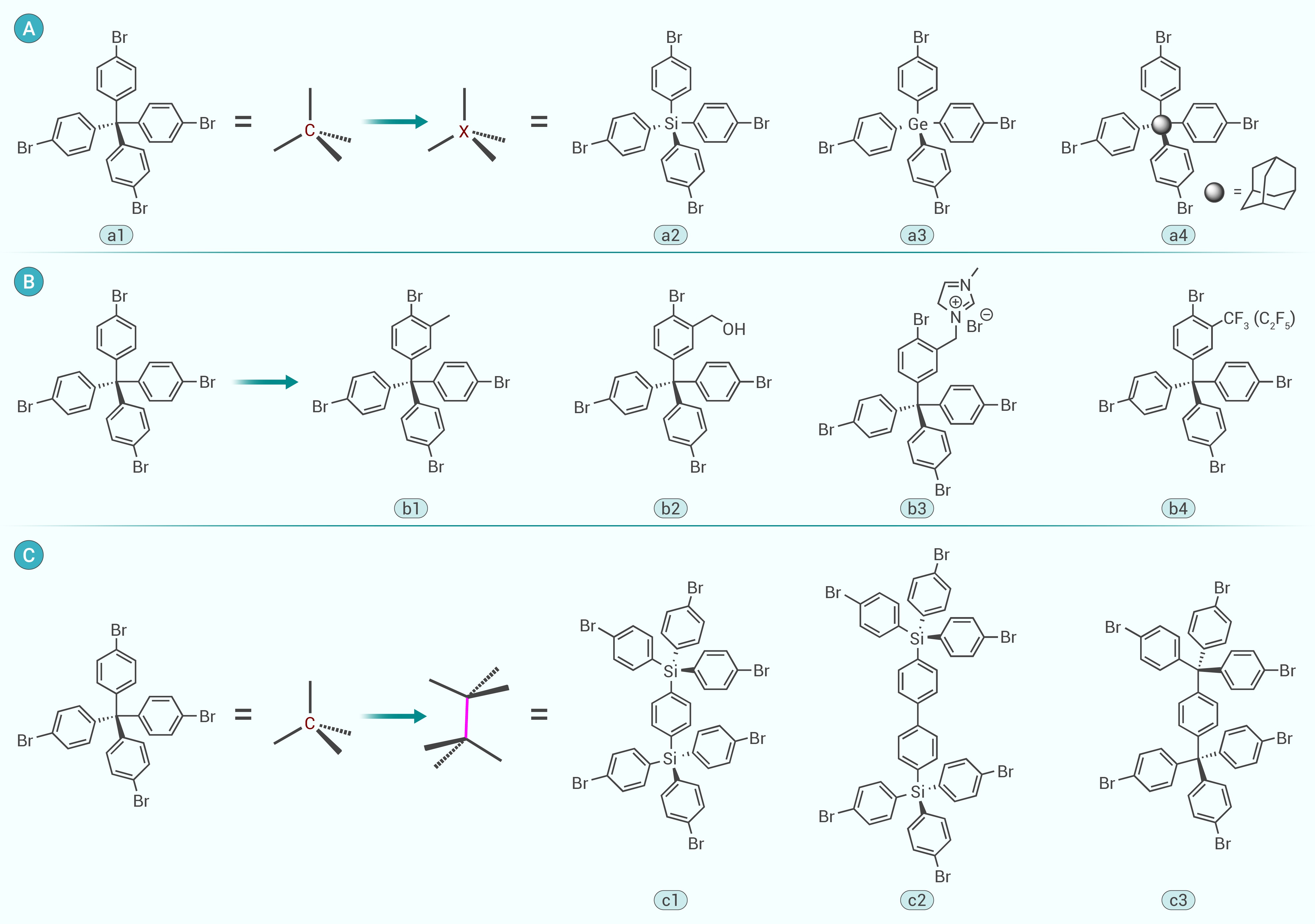
Figure 3.
Strategies for synthesizing PAF-1 analogues
-
Figure 4.
Properties of iPAF-1
-
Figure 5.
The relationship between methane adsorption capacity and specific surface area of typical porous materials.
-
Figure 6.
The BET surface areas of PAF-1 analogues.
-
Figure 7.
Synthesis and properties of PAF-1-NS
-
Figure 8.
Functionalizations of PAF-1
-
Figure 9.
Comparison of BET surface areas of PAF-1 and functionalized PAF-1.
-
Figure 10.
PAF-1 composite
