
Synergistic interaction of non-covalent and coordination bond to fabricate recyclable bamboo-based material
-
GRAPHICAL ABSTRACT
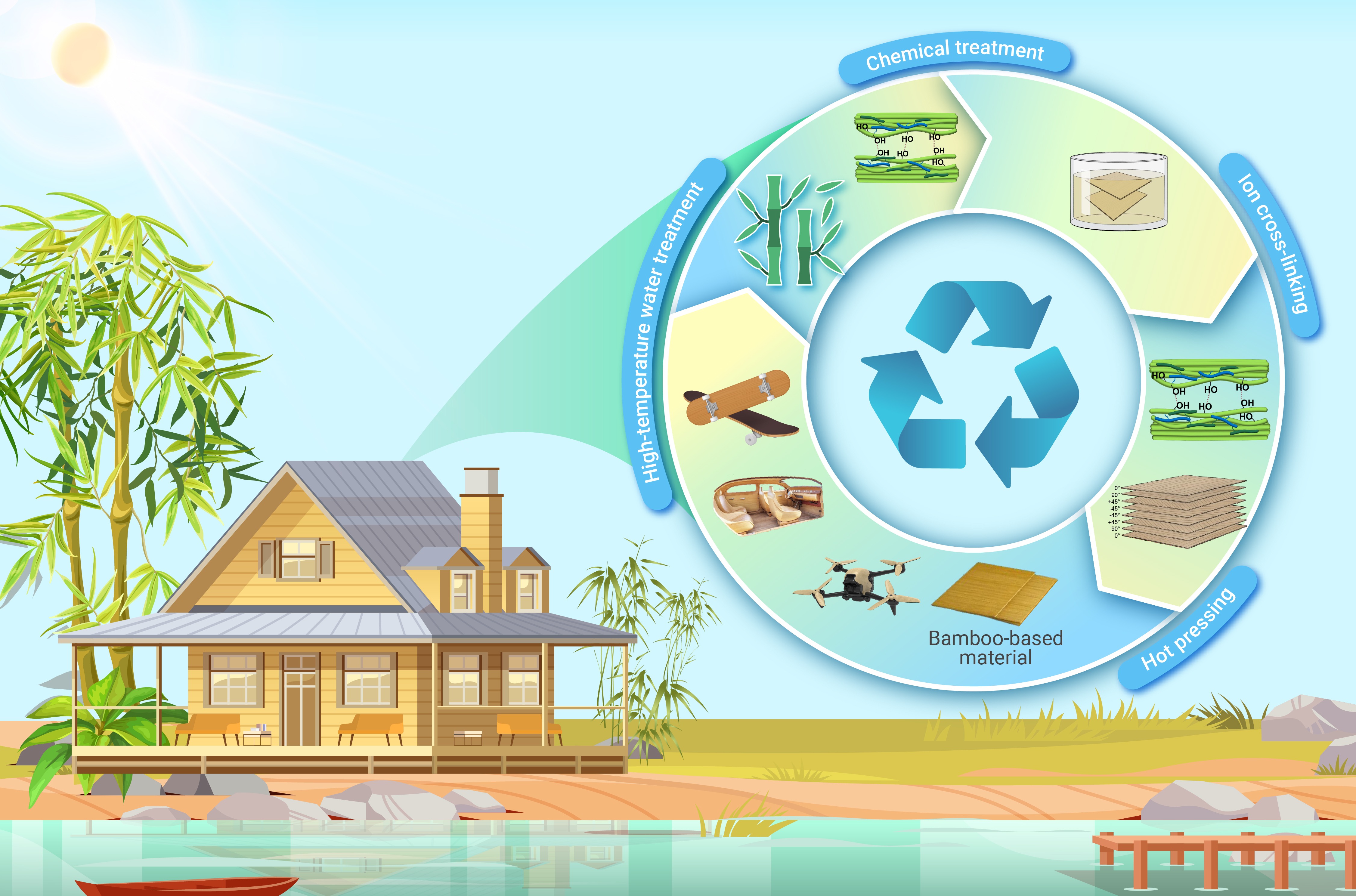
 DownLoad:
Full size image
DownLoad:
Full size image
-
PUBLIC SUMMARY
-
A non-adhesive bamboo-based material created using supramolecular design.
The fabrication process incorporates non-covalent bonds and coordination bonds for structural integrity.
The technique offers a sustainable solution to the recyclability of wood and bamboo-based structural materials.
-
-
ABSTRACT
Biomass materials, such as wood and bamboo, possess properties such as renewability, biodegradability, and carbon storage, making them significantly advantageous in the circular economy. However, the processing of these materials often involves the use of synthetic resins, which is highly detrimental to their recyclability. Here, we report a strategy for preparing non-adhesive bamboo-based material (BBM) through the synergistic interaction of non-covalent bonds and coordination bonds, which exhibits a record-high bonding strength of 10.97 MPa, exceeding those of previously reported biomass adhesive materials. At displacement deformations below 1.4 Å, hydrogen bonds and van der Waals forces play a dominant role on bonding strength; conversely ionic coordination bonds maintain the interface’s stability. The BBM also exhibits quasi-isotropic mechanical properties and excellent moldability. The life-cycle assessment reveals that producing BBM with a non-adhesive method leads to substantial reduction in carbon emissions compared with plywood, and carbon fiber composites. More importantly, the BBM is recyclable and reusable, with a retention in bonding strength of 84.1% after four cycles of recycling. This non-adhesive biomass material fabrication strategy fundamentally addresses the challenge of recycling woody solid waste, promoting the circular economy and global sustainable development. -

-
REFERENCES
[1] Vidal F., van der Marel E. R., Kerr R. W. F., et al. (2024). Designing a circular carbon and plastics economy for a sustainable future. Nature 626:45−57. DOI:10.1038/s41586-023-06939-z [2] Song C., Zhang C., Zhang S., et al. (2020). Thermochemical liquefaction of agricultural and forestry wastes into biofuels and chemicals from circular economy perspectives. Sci. Total Environ. 749:141972. DOI:10.1016/j.scitotenv.2020.141972 [3] Yin, J., Tang. S., Zhu, X., et al. (2024). Research on the Current Situation and Changing Trend of Global Bamboo Resources. Chin. Wild Pl. Resources 43:1006−9690. DOI:10.3969/j.issn.1006-9690.2024.0S.012 [4] Li Z., Chen C., Xie H., et al. (2021). Sustainable high-strength macrofibres extracted from natural bamboo. Nat. Sustain. 5:235−244. DOI:10.1038/s41893-021-00831-2 [5] Li Z., Chen C., Mi R., et al. (2020). A Strong, Tough, and Scalable Structural Material from Fast-Growing Bamboo. Adv. Mater. 32:e1906308. DOI:10.1002/adma.201906308 [6] Chen H., Shi J., Zhong T., et al. (2023). Tunable Physical-Mechanical Properties of Eco-Friendly and Sustainable Processing Bamboo Self-Bonding Composites by Adjusting Parenchyma Cell Content. ACS Sustain. Chem. Eng. 11:10333−10343. DOI:10.1021/acssuschemeng.3c01149 [7] Shi J., Zhong T., Xu X., et al. (2023). Eco-friendly and special-shaped bamboo binderless fiberboards fabricated by self-bonding technology: Effect of bamboo fibers with different sizes. Ind. Crops Prod. 194:116300. DOI:10.1016/j.indcrop.2023.116300 [8] Meng T., Ding Y., Liu Y., et al. (2023). In Situ Lignin Adhesion for High-Performance Bamboo Composites. Nano Lett. 23:8411−8418. DOI:10.1021/acs.nanolett.3c01497 [9] Bekhta P. and Salca E.-A. (2018). Influence of veneer densification on the shear strength and temperature behavior inside the plywood during hot press. Constr. Build. Mater. 162:20−26. DOI:10.1016/j.conbuildmat.2017.11.161 [10] Ju T., Liu L., Jiang Y., et al. (2024). High-Performance, Adhesive-Free, Sustainable Biomass-Based Materials Via a Selective in Situ Oxidation Interface. ACS Sustainable Chem. Eng. 12:13316−13325. DOI:10.1021/acssuschemeng.4c05157 [11] Jin T., Zeng H., Huang Y., et al. (2023). Synthesis of Fully Biomass High-Performance Wood Adhesives from Xylitol and Maleic Anhydride. ACS Sustainable Chem. Eng. 11:11781−11789. DOI:10.1021/acssuschemeng.3c01044 [12] Liu T., Du G., Yang H., et al. (2024). Cellulose-based ultrastrong wood adhesive and composites constructed through “sandwich” profile bonding interface. Compos. Pt. B-Eng. 271:111169. DOI:10.1016/j.compositesb.2023.111169 [13] Ni K., Du G., Liu C., et al. (2023). Cross-linked entanglement of aldehyde and amine-functionalized nanocellulose reinforced with biomineralization to produce an all-bio-based adhesive. Chem. Eng. J. 465:142888. DOI:10.1016/j.cej.2023.142888 [14] Yang G., Gong Z., Luo X., et al. (2023). Bonding wood with uncondensed lignins as adhesives. Nature 621:511−515. DOI:10.1038/s41586-023-06507-5 [15] Zeng G., Zhou Y., Liang Y., et al. (2022). A hair fiber inspired bio-based adhesive with high bonding strength and mildew tolerance. Chem. Eng. J. 434:134632. DOI:10.1016/j.cej.2022.134632 [16] Zeng G., Zhu F., Aladejana J. T., et al. (2023). Barley – a yet un-tapped feedstock for improved vegetable protein-based wood adhesives. J. Mater. Chem. A 11:11310−11325. DOI:10.1039/d3ta00619k [17] Westerman C. R., McGill B. C. and Wilker J. J. (2023). Sustainably sourced components to generate high-strength adhesives. Nature 621:306−311. DOI:10.1038/s41586-023-06335-7 [18] Zhan B., Zhang L., Deng Y., et al. (2023). A multifunctional lignin-based composite ultra-adhesive for wood processing. Green Chem. 25:10061−10071. DOI:10.1039/d3gc03542e [19] Zhou W., Ye Q., Zhou Z., et al. (2023). A high-strength bonding, water-resistance, flame-retardant magnesium oxychloride cement based inorganic adhesive via the construction of supramolecular system. J. Clean Prod. 419:138239. DOI:10.1016/j.jclepro.2023.138239 [20] Chen J. X., Gao Z. E., Peng C. Y., et al. (2024). Mechanical behavior of glubam engineered bamboo at low temperature. Constr. Build. Mater. 414:135045. DOI:10.1016/j.conbuildmat.2024.135045 [21] Chen Y., Rao Y., Liu P., et al. (2024). High-amylose starch-based gel as green adhesive for plywood: Adhesive property, water-resistance, and flame-retardancy. Carbohydr. Polym. 339:122247. DOI:10.1016/j.carbpol.2024.122247 [22] Zuo S., Liang Y., Wu Y., et al. (2023). Using environmentally friendly technology for fabricating special plywood with ultra-high strength. J. Clean Prod. 396:136462. DOI:10.1016/j.jclepro.2023.136462 [23] Wang, J., Yang. D., et al. (2019). Analysis of Life cycle assessment for Plywood. Shaanxi For. Sci. Technol. 47:1001−2117. DOI:10.3969/j.issn.1001-2117.2019.05.017 [24] Lian H., Li P., Xu Y., et al. (2024). A simple and sustainable method for preparing high-strength, lightweight, dimensional stable, and mildew resistant multifunctional bamboo. Constr. Build. Mater. 415:135027. DOI:10.1016/j.conbuildmat.2024.135027 [25] Candan Z. and Akbulut T. (2014). Nano-engineered plywood panels: Performance properties. Compos. Pt. B-Eng. 64:155−161. DOI:10.1016/j.compositesb.2014.04.021 [26] Jakob M., Stemmer G., Czabany I., et al. (2020). Preparation of High Strength Plywood from Partially Delignified Densified Wood. Polymers 12:1796. DOI:10.3390/polym12081796 [27] Yang S., Lee H., Choi G., et al. (2023). Mechanical properties of ply-lam cross-laminated timbers fabricated with lumber and plywood. Eur. J. Wood Wood Prod. 82:189−202. DOI:10.1007/s00107-023-02010-w [28] Butarbutar T., Kohl M. and Neupane P. R. (2016). Harvested wood products and REDD+: looking beyond the forest border. Carbon Balance Manag. 11:4. DOI:10.1186/s13021-016-0046-9 [29] Zhu J., Li F., Hou Y., et al. (2024). Near-room-temperature water-mediated densification of bulk van der Waals materials from their nanosheets. Nat. Mater. 23:604−611. DOI:10.1038/s41563-024-01840-0 [30] Liu, X., Jiang Y., Wei Y., et al. (2022). Strengthening and toughening mechanisms induced by metal ion cross-linking in wet-drawn bacterial cellulose films. Mater. Des. 224:111431. DOI:10.1016/j.matdes.2022.111431 [31] Abd El‐baky M. A. and Attia M. A. (2020). Experimental study on the improvement of mechanical properties of GLARE using nanofillers. Polym. Compos. 41:4130−4143. DOI:10.1002/pc.25699 [32] Maciel N. d. O. R., Ferreira J. B., Vieira J. d. S., et al. (2018). Comparative tensile strength analysis between epoxy composites reinforced with curaua fiber and glass fiber. J. Mater. Res. Technol. 7:561−565. DOI:10.1016/j.jmrt.2018.03.009 [33] Shao R., Li B., Han Q., et al. (2024). Biomimetic laminated fiber-reinforced composites with a co-enhancement of strength and toughness. Chem. Eng. J. 491:152184. DOI:10.1016/j.cej.2024.152184 [34] Zou T., Ji R., Li Y., et al. (2024). The lay-up configuration toughening of carbon fiber/silk/poly-butylene-succinate (PBS) hybrid composites with high mechanical resistance. Constr. Build. Mater. 433:136747. DOI:10.1016/j.conbuildmat.2024.136747 [35] Vinay H B, Govindaraju H K, Banakar P. (2016). Evaluation of glass/carbon reinforced polymer composites. Polym. Polym. Compos. 24:469−472. DOI:10.1177/096739111602400704 [36] Dong X., Gan W., Shang Y., et al. (2022). Low-value wood for sustainable high-performance structural materials. Nat. Sustain. 5:628−635. DOI:10.1038/s41893-022-00887-8 [37] Lingesh B. V., Ravi Kumar B. N., Rudresh B. M., et al. (2018). Hybridization effect of fibers on mechanical properties of PA66/PP blend-based thermoplastic composites. Adv. Compos. Hybrid Mater. 1:766−776. DOI:10.1007/s42114-018-0049-y [38] Luo S., Sun Y., Zhu Y., et al. (2024). A new strategy for the preparation of wood-epoxy resin composites reinforced with controllable osmotic interfaces. Chem. Eng. J. 484:148880. DOI:10.1016/j.cej.2024.148880 [39] Uppalapati S., Bensam Raj J., Natarajan N., et al. (2023). Development and assessment on hemp–carbon–basalt fibre base hybrid composite with organic fillers for structural applications. Int. J. Polym. Anal. Charact. 28:383−395. DOI:10.1080/1023666x.2023.2221483 [40] Song J., Chen C., Zhu S., et al. (2018). Processing bulk natural wood into a high-performance structural material. Nature 554:224−228. DOI:10.1038/nature25476 [41] Ramachandran K., Gnanasagaran C. L. and Vekariya A. (2023). Life cycle assessment of carbon fiber and bio-fiber composites prepared via vacuum bagging technique. J. Manuf. Process. 89:124−131. DOI:10.1016/j.jmapro.2023.01.068 -
ABOUT THIS ARTICLE
Cite this article:
Fu Z., Wang K., Yu X., et al. (2025). Synergistic interaction of non-covalent and coordination bond to fabricate recyclable bamboo-based material. The Innovation Materials 3:100132. https://doi.org/10.59717/j.xinn-mater.2024.100132
Welcome!
To request copyright permission to republish or share portions of our works, please visit Copyright Clearance Center's (CCC) Marketplace website at marketplace.copyright.com.
Article Metrics
Relative Articles
Cited by
Export File
Citation
Fu Z., Wang K., Yu X., et al. (2025). Synergistic interaction of non-covalent and coordination bond to fabricate recyclable bamboo-based material. The Innovation Materials 3:100132. https://doi.org/10.59717/j.xinn-mater.2024.100132

Format
Content


-
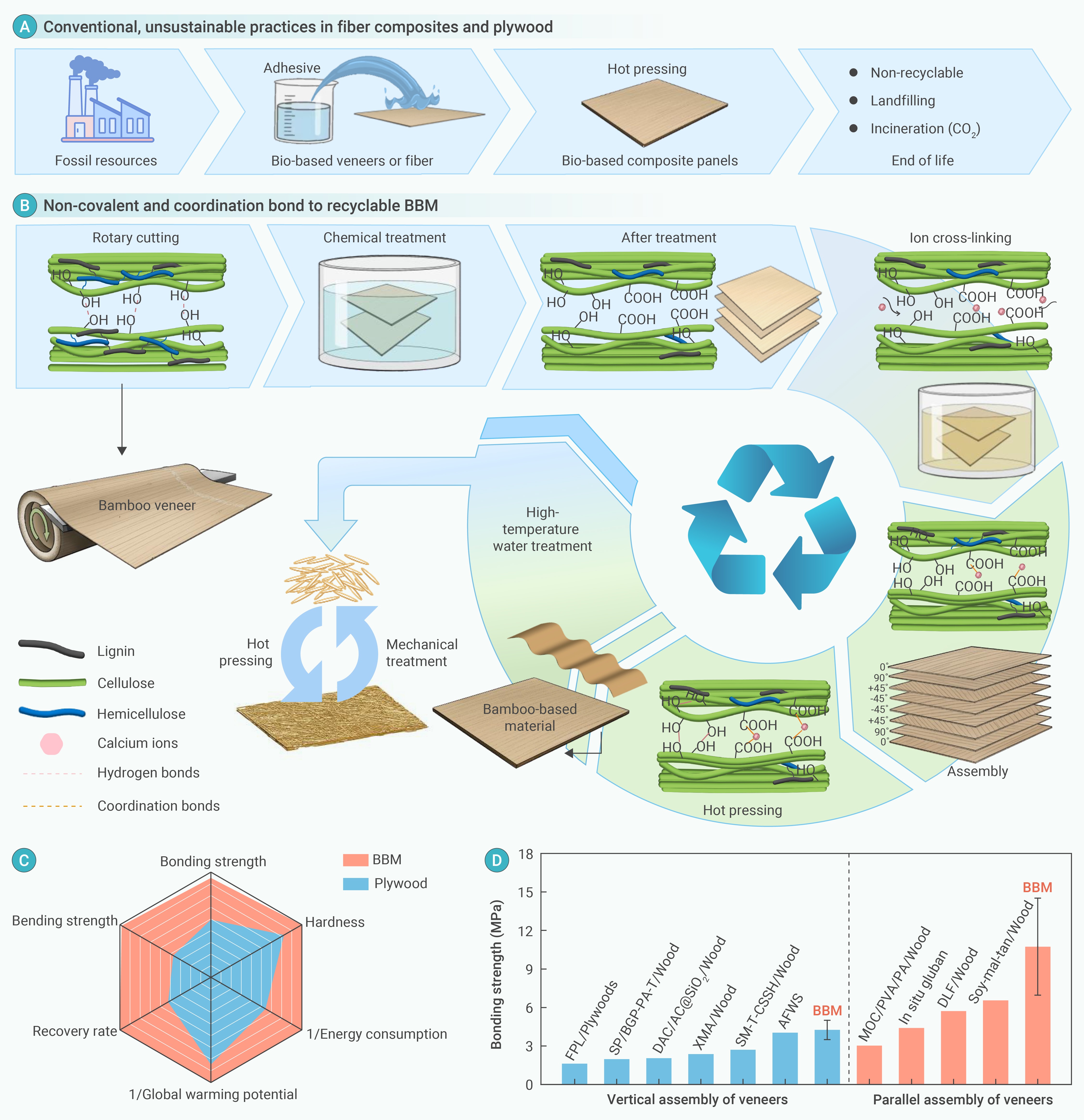
Figure 1.
Synergistic interaction of non-covalent and coordination bond to fabricate recyclable bamboo-based material
-
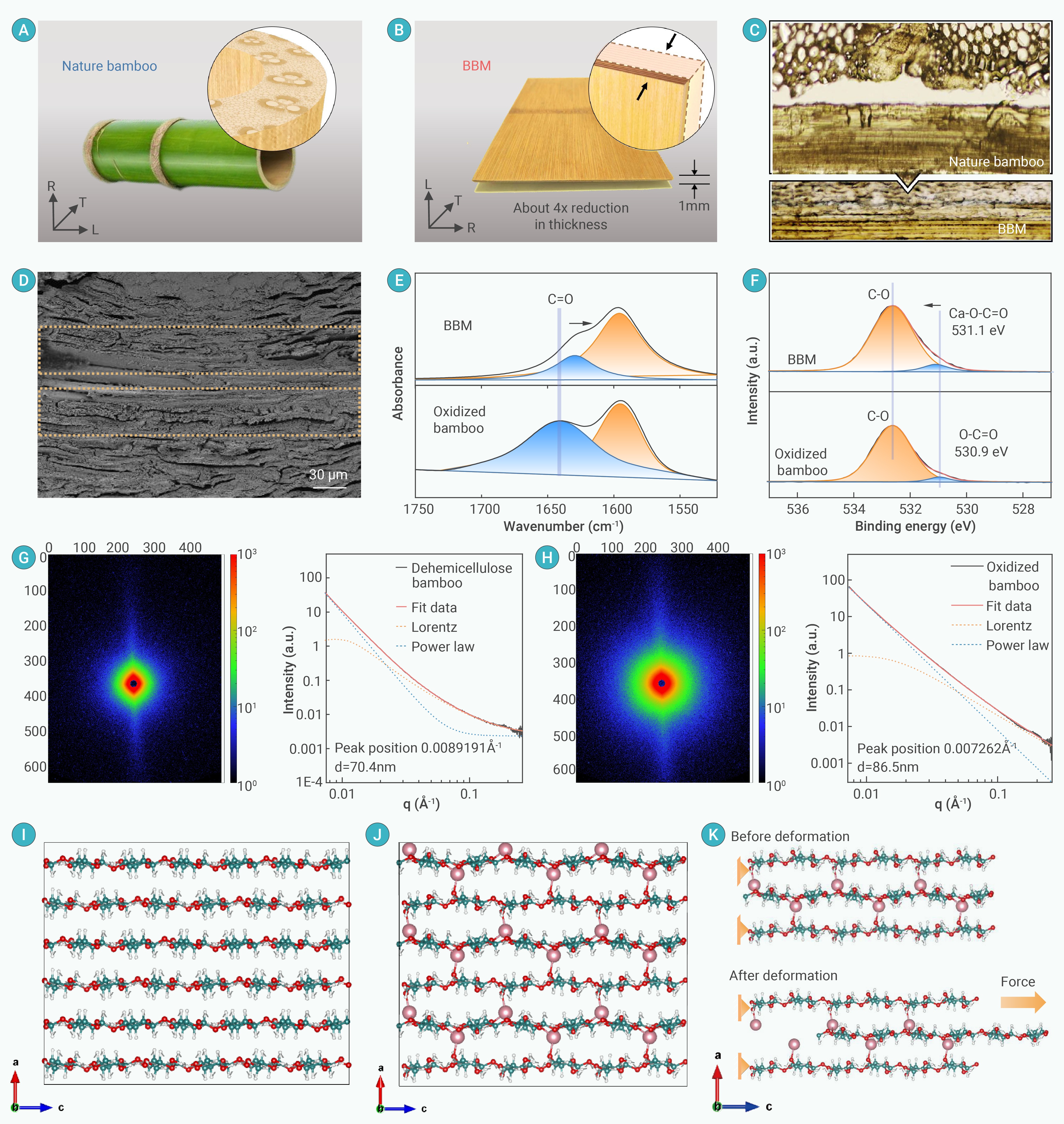
Figure 2.
Enhanced self-bonding performance by bonding synergistic interaction
-
Figure 3.
Mechanical properties and plastic workability of BBM
-
Figure 4.
The environmental impacts and recyclability of BBM
