
Strategies for enhancing catalytic performance of single-atom catalysts in 2e- oxygen reduction reaction: A review
-
GRAPHICAL ABSTRACT
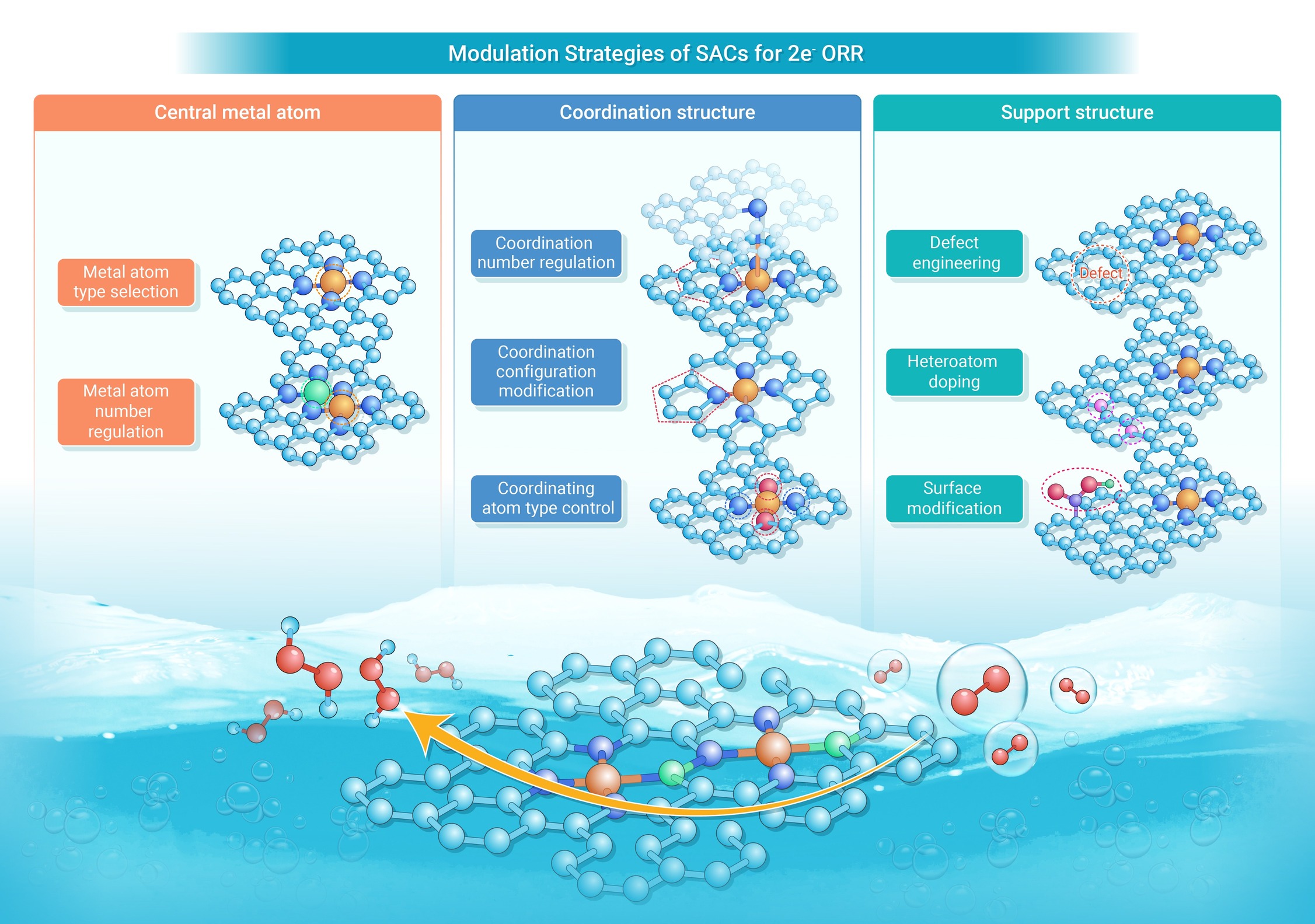
 DownLoad:
Full size image
DownLoad:
Full size image
-
PUBLIC SUMMARY
-
Summarizing modulation strategies of SACs (Single-Atom Catalysts) for 2e– ORR (oxygen reduction reaction).
Summarizing the reaction mechanism of 2e- ORR and the recent theoretical advances in SACs' structural design.
Identifying research gaps and future prospects of SACs for 2e- ORR.
-
-
ABSTRACT
The electrocatalytic two-electron oxygen reduction reaction (2e– ORR) is an effective method for synthesizing hydrogen peroxide under ambient temperature and pressure, which offers advantages such as operational safety and low cost. Single-atom catalysts (SACs) consist of individual metal atoms dispersed on a support, allowing for high structural tunability and cost-effectiveness. Notably, the unsaturated coordination environments and unique electronic structures of SACs significantly enhance their catalytic activity, while isolated active sites improve selectivity for hydrogen peroxide. Consequently, SACs have attracted considerable research interest in the field of 2e– ORR in recent years, leading to significant advancements. This paper first outlines the mechanisms and pathways of the 2e– ORR, as well as the structural design principles of SACs. It then summarizes modulation strategies for SACs, focusing on the selection of metal atoms, optimization of the coordination environment, and modification of the support. Furthermore, the paper discusses how these strategies influence the catalytic activity, selectivity, and stability of SACs. Finally, it highlights the limitations of SACs in 2e– ORR research, including inadequate catalytic performance, insufficient mechanistic studies, and challenges in synthesis, while proposing potential solutions and future research directions. -

-
REFERENCES
[1] Agarwal N., Freakley S. J., McVicker R. U., et al. (2017). Aqueous Au-Pd colloids catalyze selective CH4 oxidation to CH3OH with O2 under mild conditions. Science 358:223−227. DOI:10.1126/science.aan6515 [2] Hage R. and Lienke A. (2006). Applications of transition-metal catalysts to textile and wood-pulp bleaching. Angew. Chem. Int. Ed. 45:206−222. DOI:10.1002/anie.200500525 [3] Jeon T. H., Kim B., Kim C., et al. (2021). Solar photoelectrochemical synthesis of electrolyte-free H2O2 aqueous solution without needing electrical bias and H2. Energy Environ. Sci. 14:3110−3119. DOI:10.1039/D0EE03567J [4] https://www.sohu.com/a/727956610_121172584 (accessed 13 October 2023). [5] Yi Y., Wang L., Li G., et al. (2016). A review on research progress in the direct synthesis of hydrogen peroxide from hydrogen and oxygen: Noble-metal catalytic method, fuel-cell method and plasma method. Catal. Sci. Technol. 6:1593−1610. DOI:10.1039/C5CY01567G [6] Li M., Song P., Hou M., et al. (2024). Atomic-level functionalized carbon-based materials for effective electrosynthesis of hydrogen peroxide: A review. Chem. Eng. J. 479:147608. DOI:10.1016/j.cej.2023.147608 [7] Campos-Martin J. M., Blanco-Brieva G. and Fierro J. L. G. (2006). Hydrogen peroxide synthesis: An outlook beyond the anthraquinone process. Angew. Chem. Int. Ed. 45:6962−6984. DOI:10.1002/anie.200503779 [8] Yang S., Verdaguer-Casadevall A., Arnarson L., et al. (2018). Toward the decentralized electrochemical production of H2O2: A focus on the catalysis. ACS Catal. 8:4064−4081. DOI:10.1021/acscatal.8b00217 [9] Edwards J. K., Freakley S. J., Lewis R. J., et al. (2015). Advances in the direct synthesis of hydrogen peroxide from hydrogen and oxygen. Catal. Today 248:3−9. DOI:10.1016/j.cattod.2014.03.011 [10] Lunsford J. H. (2003). The direct formation of H2O2 from H2 and O2 over palladium catalysts. J. Catal. 216:455−460. DOI:10.1016/S0021-9517(02)00070-2 [11] Fuku K., Miyase Y., Miseki Y., et al. (2017). Photoelectrochemical hydrogen peroxide production from water on a WO3/BiVO4 photoanode and from O2 on an Au cathode without external bias. Chem. Asian J. 12:1111−1119. DOI:10.1002/asia.201700292 [12] Fuku K. and Sayama K. (2016). Efficient oxidative hydrogen peroxide production and accumulation in photoelectrochemical water splitting using a tungsten trioxide/bismuth vanadate photoanode. Chem. Commun. 52:5406−5409. DOI:10.1039/C6CC01605G [13] Shiraishi Y., Kanazawa S., Kofuji Y., et al. (2014). Sunlight-driven hydrogen peroxide production from water and molecular oxygen by metal-free photocatalysts. Angew. Chem. Int. Ed. 53:13454−13459. DOI:10.1002/anie.201407938 [14] Fukuzumi S., Lee Y. M. and Nam W. (2018). Solar-driven production of hydrogen peroxide from water and dioxygen. Chemistry 24:5016−5031. DOI:10.1002/chem.201704512 [15] Fellinger T.-P., Hasché F., Strasser P., et al. (2012). Mesoporous nitrogen-doped carbon for the electrocatalytic synthesis of hydrogen peroxide. J. Am. Chem. Soc. 134:4072−4075. DOI:10.1021/ja300038p [16] Lu Z., Chen G., Siahrostami S., et al. (2018). High-efficiency oxygen reduction to hydrogen peroxide catalysed by oxidized carbon materials. Nat. Catal. 1:156−162. DOI:10.1038/s41929-017-0017-x [17] Melchionna M., Fornasiero P. and Prato M. (2019). The rise of hydrogen peroxide as the main product by metal-free catalysis in oxygen reductions. Adv. Mater. 31:e1802920. DOI:10.1002/adma.201802920 [18] Ciriminna R., Albanese L., Meneguzzo F., et al. (2016). Hydrogen peroxide: A key chemical for today's sustainable development. ChemSusChem 9:3374−3381. DOI:10.1002/cssc.201600895 [19] Zhang H., Xu H., Yao C., et al. (2024). Metal atom–support interaction in single atom catalysts toward hydrogen peroxide electrosynthesis. ACS Nano 18:21836−21854. DOI:10.1021/acsnano.4c07916 [20] Zhu W. and Chen S. (2020). Recent progress of single-atom catalysts in the electrocatalytic reduction of oxygen to hydrogen peroxide. Electroanalysis 32:2591−2602. DOI:10.1002/elan.202060334 [21] Xu S., Gao Y., Liang T., et al. (2022). N, O-coupling towards the selectively electrochemical production of H2O2. Chin. Chem. Lett. 33:5152−5157. DOI:10.1016/j.cclet.2022.01.057 [22] Zhao K., Su Y., Quan X., et al. (2018). Enhanced H2O2 production by selective electrochemical reduction of O2 on fluorine-doped hierarchically porous carbon. J. Catal. 357:118−126. DOI:10.1016/j.jcat.2017.11.008 [23] Pang Y., Wang K., Xie H., et al. (2020). Mesoporous carbon hollow spheres as efficient electrocatalysts for oxygen reduction to hydrogen peroxide in neutral electrolytes. ACS Catal. 10:7434−7442. DOI:10.1021/acscatal.0c00584 [24] Ri K., Pak S., Sun D., et al. (2024). Boron-doped rGO electrocatalyst for high effective generation of hydrogen peroxide: Mechanism and effect of oxygen-enriched air. Appl. Catal. B Environ. 343:123471. DOI:10.1016/j.apcatb.2023.123471 [25] Fan M., Wang Z., Sun K., et al. (2023). N-B-OH site-activated graphene quantum dots for boosting electrochemical hydrogen peroxide production. Adv. Mater. 35:2209086. DOI:10.1002/adma.202209086 [26] Pizzutilo E., Freakley S. J., Cherevko S., et al. (2017). Gold–palladium bimetallic catalyst stability: Consequences for hydrogen peroxide selectivity. ACS Catal. 7:5699−5705. DOI:10.1021/acscatal.7b01447 [27] Jirkovský J. S., Panas I., Ahlberg E., et al. (2011). Single atom hot-spots at Au-Pd nanoalloys for electrocatalytic H2O2 production. J. Am. Chem. Soc. 133:19432−19441. DOI:10.1021/ja206477z [28] Verdaguer-Casadevall A., Deiana D., Karamad M., et al. (2014). Trends in the electrochemical synthesis of H2O2: Enhancing activity and selectivity by electrocatalytic site engineering. Nano Lett. 14:1603−1608. DOI:10.1021/nl500037x [29] Sheng H., Hermes E. D., Yang X., et al. (2019). Electrocatalytic production of H2O2 by selective oxygen reduction using earth-abundant cobalt pyrite (CoS2). ACS Catal. 9:8433−8442. DOI:10.1021/acscatal.9b02546 [30] Sheng H., Janes A. N., Ross R. D., et al. (2022). Linear paired electrochemical valorization of glycerol enabled by the electro-Fenton process using a stable NiSe2 cathode. Nat. Catal. 5:716−725. DOI:10.1038/s41929-022-00826-y [31] Ross R. D., Sheng H., Parihar A., et al. (2021). Compositionally tuned trimetallic thiospinel catalysts for enhanced electrosynthesis of hydrogen peroxide and built-in hydroxyl radical generation. ACS Catal. 11:12643−12650. DOI:10.1021/acscatal.1c03349 [32] Yang X.-F., Wang A., Qiao B., et al. (2013). Single-atom catalysts: A new frontier in heterogeneous catalysis. Acc. Chem. Res. 46:1740−1748. DOI:10.1021/ar300361m [33] Choi C. H., Kim M., Kwon H. C., et al. (2016). Tuning selectivity of electrochemical reactions by atomically dispersed platinum catalyst. Nat. Commun. 7:10922. DOI:10.1038/ncomms10922 [34] Wang Y. L., Gurses S., Felvey N., et al. (2019). In situ deposition of Pd during oxygen reduction yields highly selective and active electrocatalysts for direct H2O2 production. ACS Catal. 9:8453−8463. DOI:10.1021/acscatal.9b01758 [35] Kattel S. and Wang G. (2013). A density functional theory study of oxygen reduction reaction on Me–N4 (Me = Fe, Co, or Ni) clusters between graphitic pores. J. Mater. Chem. A 1:10790−10797. DOI:10.1039/C3TA12142A [36] Jin Q., Shen Y., Ma L., et al. (2019). Novel TiO2 catalyst carriers with high thermostability for selective catalytic reduction of NO by NH3. Catal. Today 327:279−287. DOI:10.1016/j.cattod.2018.04.038 [37] Zhang B., Xu W., Lu Z., et al. (2020). Recent progress on carbonaceous material engineering for electrochemical hydrogen peroxide generation. Trans. Tianjin Univ. 26:188−196. DOI:10.1007/s12209-020-00240-0 [38] Tian Y., Deng D., Xu L., et al. (2023). Strategies for sustainable production of hydrogen peroxide via oxygen reduction reaction: From catalyst design to device setup. Nano-Micro Lett. 15:122. DOI:10.1007/s40820-023-01067-9 [39] Zhuang Z., Huang A., Tan X., et al. (2023). p-Block-metal bismuth-based electrocatalysts featuring tunable selectivity for high-performance oxygen reduction reaction. Joule 7:1003−1015. DOI:10.1016/j.joule.2023.04.005 [40] Montemore M. M., van Spronsen M. A., Madix R. J., et al. (2018). O2 activation by metal surfaces: Implications for bonding and reactivity on heterogeneous catalysts. Chem. Rev. 118:2816−2862. DOI:10.1021/acs.chemrev.7b00217 [41] Wang N., Zhao X., Zhang R., et al. (2022). Highly selective oxygen reduction to hydrogen peroxide on a carbon-supported single-atom pd electrocatalyst. ACS Catal. 12:4156−4164. DOI:10.1021/acscatal.1c05633 [42] Guo X., Lin S., Gu J., et al. (2019). Simultaneously achieving high activity and selectivity toward two-electron O2 electroreduction: The power of single-atom catalysts. ACS Catal. 9:11042−11054. DOI:10.1021/acscatal.9b02778 [43] Karamad M., Tripkovic V. and Rossmeisl J. (2014). Intermetallic alloys as CO electroreduction catalysts—role of isolated active sites. ACS Catal. 4:2268−2273. DOI:10.1021/cs500328c [44] Song M., Liu W., Zhang J., et al. (2023). Single-atom catalysts for H2O2 electrosynthesis via two-electron oxygen reduction reaction. Adv. Funct. Mater. 33:2212087. DOI:10.1002/adfm.202212087 [45] Liu K., Chen P., Sun Z., et al. (2023). The atomic interface effect of single atom catalysts for electrochemical hydrogen peroxide production. Nano Res. 16:10724−10741. DOI:10.1007/s12274-023-5823-7 [46] Huang H., Sun M., Li M., et al. (2023). Recent advances in single-atom catalysts for electrocatalytic synthesis of hydrogen peroxide. Green Energy Resour. 1:100031. DOI:10.1016/j.gerr.2023.100031 [47] Cheng Y., Wang H., Song H., et al. (2023). Design strategies towards transition metal single atom catalysts for the oxygen reduction reaction – A review. Nano Res. Energy 2:e9120082. DOI:10.26599/NRE.2023.9120082 [48] Chen K.-Y., Huang Y.-X., Jin R.-C., et al. (2023). Single atom catalysts for use in the selective production of hydrogen peroxide via two-electron oxygen reduction reaction: Mechanism, activity, and structure optimization. Appl. Catal. B Environ. 337:122987. DOI:10.1016/j.apcatb.2023.122987 [49] Zhang J., Yang H. and Liu B. (2021). Coordination engineering of single-atom catalysts for the oxygen reduction reaction: A review. Adv. Energy Mater. 11:2002473. DOI:10.1002/aenm.202002473 [50] Sun K., Xu W., Lin X., et al. (2021). Electrochemical oxygen reduction to hydrogen peroxide via a two-electron transfer pathway on carbon-based single-atom catalysts. Adv. Mater. Interfaces 8:2001360. DOI:10.1002/admi.202001360 [51] Jiang K., Zhao J. and Wang H. (2020). Catalyst design for electrochemical oxygen reduction toward hydrogen peroxide. Adv. Funct. Mater. 30:2003321. DOI:10.1002/adfm.202003321 [52] Yu A. and Yang Y. (2025). Atomically dispersed metal catalysts for oxygen reduction reaction: Two-electron vs. four-electron pathways. Angew. Chem. Int. Ed. 64:e202424161. DOI:10.1002/anie.202424161 [53] Zhang L., Jiang S., Ma W., et al. (2022). Oxygen reduction reaction on Pt-based electrocatalysts: Four-electron vs. two-electron pathway. Chin. J. Catal. 43:1433−1443. DOI:10.1016/S1872-2067(21)63961-X [54] Gao W., Chen Y., Li B., et al. (2020). Determining the adsorption energies of small molecules with the intrinsic properties of adsorbates and substrates. Nat. Commun. 11:1196. DOI:10.1038/s41467-020-14969-8 [55] Mase K., Ohkubo K. and Fukuzumi S. (2013). Efficient two-electron reduction of dioxygen to hydrogen peroxide with one-electron reductants with a small overpotential catalyzed by a cobalt chlorin complex. J. Am. Chem. Soc 135:2800−2808. DOI:10.1021/ja312199h [56] Yang S., Tak Y. J., Kim J., et al. (2017). Support effects in single-atom platinum catalysts for electrochemical oxygen reduction. ACS Catal. 7:1301−1307. DOI:10.1021/acscatal.6b02899 [57] Chang Q. W., Zhang P., Mostaghimi A. H. B., et al. (2020). Promoting H2O2 production via 2-electron oxygen reduction by coordinating partially oxidized Pd with defect carbon. Nat. Commun. 11:2178. DOI:10.1038/s41467-020-15843-3 [58] Wei Z., Deng B., Chen P., et al. Palladium-based single atom catalysts for high-performance electrochemical production of hydrogen peroxide. Chem. Eng. J. 428:131112. DOI:10.1016/j.cej.2021.131112. [59] Luo E., Yang T., Liang J., et al. (2024). Selective oxygen electroreduction to hydrogen peroxide in acidic media: The superiority of single-atom catalysts. Nano Res. 17:4668−4681. DOI:10.1007/s12274-024-6505-9 [60] Shin S., Kim J., Park S., et al. (2019). Changes in the oxidation state of Pt single-atom catalysts upon removal of chloride ligands and their effect for electrochemical reactions. Chem. Commun. 55:6389−6392. DOI:10.1039/C9CC01593K [61] Zhao J., Fu C., Ye K., et al. (2022). Manipulating the oxygen reduction reaction pathway on Pt-coordinated motifs. Nat. Commun. 13:685. DOI:10.1038/s41467-022-28346-0 [62] Song X. Z., Li N., Zhang H., et al. (2019). Promotion of hydrogen peroxide production on graphene-supported atomically dispersed platinum: Effects of size on oxygen reduction reaction pathway. J. Power Sources 435:226771. DOI:10.1016/j.jpowsour.2019.226771 [63] Yang S., Kim J., Tak Y. J., et al. (2016). Single-atom catalyst of platinum supported on titanium nitride for selective electrochemical reactions. Angew. Chem. Int. Ed. 55:2058−2062. DOI:10.1002/anie.201509241 [64] Fortunato G. V., Pizzutilo E., Mingers A. M., et al. (2018). Impact of palladium loading and interparticle distance on the selectivity for the oxygen reduction reaction toward hydrogen peroxide. J. Phys. Chem. C 122:15878−15885. DOI:10.1021/acs.jpcc.8b04262 [65] Jung E., Shin H., Lee B.-H., et al. (2020). Atomic-level tuning of Co–N–C catalyst for high-performance electrochemical H2O2 production. Nat. Mater. 19:436−442. DOI:10.1038/s41563-019-0571-5 [66] Sun Y., Silvioli L., Sahraie N. R., et al. (2019). Activity–selectivity trends in the electrochemical production of hydrogen peroxide over single-site metal–nitrogen–carbon catalysts. J. Am. Chem. Soc 141:12372−12381. DOI:10.1021/jacs.9b05576 [67] Yuan J., Yin H., Ge X., et al. (2023). Superior efficiency hydrogen peroxide production in acidic media through epoxy group adjacent to Co-O/C active centers on carbon black. Chem. Eng. J. 465:142691. DOI:10.1016/j.cej.2023.142691 [68] Lee C.-S., Jeon T. H., Jang Y. H., et al. (2023). Cobalt single-atom catalyst as a multifunctional electrocatalyst for boosting radical generation. Chem. Eng. J. 481:148431. DOI:10.1016/j.cej.2023.148431 [69] Yang L., Sun G., Fu H., et al. (2023). Isolation of cobalt single atoms on hollow B, N co-doped defective carbon nanotubes for hydrogen peroxide production and tandem reagent-free electro-Fenton oxidation. Chem. Eng. J. 472:145052. DOI:10.1016/j.cej.2023.145052 [70] Liu W., Zhang C., Zhang J., et al. (2022). Tuning the atomic configuration of Co-N-C electrocatalyst enables highly-selective H2O2 production in acidic media. Appl. Catal. B Environ. 310:121312. DOI:10.1016/j.apcatb.2022.121312 [71] Yan L., Wang C., Wang Y., et al. (2023). Optimizing the binding of the *OOH intermediate via axially coordinated Co-N5 motif for efficient electrocatalytic H2O2 production. Appl. Catal. B Environ. 338:123078. DOI:10.1016/j.apcatb.2023.123078 [72] Fan W., Duan Z., Liu W., et al. (2023). Rational design of heterogenized molecular phthalocyanine hybrid single-atom electrocatalyst towards two-electron oxygen reduction. Nat Commun 14:1426. DOI:10.1038/s41467-023-37066-y [73] Gong H., Wei Z., Gong Z., et al. (2022). Low-coordinated Co-N-C on oxygenated graphene for efficient electrocatalytic H2O2 production. Adv. Funct. Mater. 32:2106886. DOI:10.1002/adfm.202106886 [74] Huang H., Sun M., Li S., et al. (2024). Enhancing H2O2 electrosynthesis at industrial-relevant current in acidic media on diatomic cobalt sites. J Am Chem Soc 146:9434−9443. DOI:10.1021/jacs.4c02031 [75] Du J., Han G., Zhang W., et al. (2023). CoIn dual-atom catalyst for hydrogen peroxide production via oxygen reduction reaction in acid. Nat Commun 14:4766. DOI:10.1038/s41467-023-40467-8 [76] Yang L., Cheng H., Li H., et al. (2024). Atomic confinement empowered CoZn dual-single-atom nanotubes for H2O2 production in sequential dual-cathode electro-fenton process. Adv Mater 36:e2406957. DOI:10.1002/adma.202406957 [77] Tong Y., Liu J., Su B.-J., et al. (2024). High-rate electrochemical H2O2 production over multimetallic atom catalysts under acidic–neutral conditions. Carbon Energy 6:e378. DOI:10.1002/cey2.378 [78] Wu Y., Ding Y., Han X., et al. (2022). Modulating coordination environment of Fe single atoms for high-efficiency all-pH-tolerated H2O2 electrochemical production. Appl. Catal. B Environ. 315:121578. DOI:10.1016/j.apcatb.2022.121578 [79] Tang C., Jiao Y., Shi B., et al. (2020). Coordination tunes selectivity: Two-electron oxygen reduction on high-loading molybdenum single-atom catalysts. Angew. Chem. Int. Ed. 59:9171−9176. DOI:10.1002/anie.202003842 [80] Cheng X., Hu J., Shang W., et al. (2024). Asymmetrically ligated single atomic nickel sites for efficient hydrogen peroxide electrosynthesis. Nano Res. 17:1094−1100. DOI:10.1007/s12274-023-5899-0 [81] Zhang B., Han B., Guan C., et al. (2023). Highly selective oxygen reduction to H2O2 on π-d conjugated coordination polymers: The effect of coordination atoms. Chem. Eng. J. 460:141688. DOI:10.1016/j.cej.2023.141688 [82] Xu J., Zheng X., Feng Z., et al. (2021). Organic wastewater treatment by a single-atom catalyst and electrolytically produced H2O2. Nat. Sustain. 4:233−241. DOI:10.1038/s41893-020-00635-w [83] Zhang X., Wang C., Chen K., et al. (2023). Optimizing the Pd sites in pure metallic aerogels for efficient electrocatalytic H2O2 production. Adv. Mater. 35:2211512. DOI:10.1002/adma.202211512 [84] Zhu P., Feng W., Zhao D., et al. (2023). p-Block bismuth nanoclusters sites activated by atomically dispersed bismuth for tandem boosting electrocatalytic hydrogen peroxide production. Angew. Chem. Int. Ed. 62:e202304488. DOI:10.1002/anie.202304488 [85] Yan M., Wei Z., Gong Z., et al. (2023). Sb2S3-templated synthesis of sulfur-doped Sb-N-C with hierarchical architecture and high metal loading for H2O2 electrosynthesis. Nat. Commun. 14:368. DOI:10.1038/s41467-023-36078-y [86] Zhang F., Zhu Y., Tang C., et al. (2022). High-efficiency electrosynthesis of hydrogen peroxide from oxygen reduction enabled by a tungsten single atom catalyst with unique terdentate N1O2 coordination. Adv. Funct. Mater. 32:2110224. DOI:10.1002/adfm.202110224 [87] Li D., Guo Y., Sun Y., et al. (2024). Efficient industrial-current-density H2O2 production in neutral medium via external-shell boron regulation on single-atom VN4 sites. Chem. Eng. J. 494:153211. DOI:10.1016/j.cej.2024.153211 [88] Siahrostami S., Verdaguer-Casadevall A., Karamad M., et al. (2013). Enabling direct H2O2 production through rational electrocatalyst design. Nat. Mater. 12:1137−1143. DOI:10.1038/nmat3795 [89] Zheng C., Zhang X., Zhou Z., et al. (2022). A first-principles study on the electrochemical reaction activity of 3d transition metal single-atom catalysts in nitrogen-doped graphene: Trends and hints. eScience 2:219−226. DOI:10.1016/j.esci.2022.02.009 [90] Gao J., Yang H. b., Huang X., et al. (2020). Enabling direct H2O2 production in acidic media through rational design of transition metal single atom catalyst. Chem 6:658−674. DOI:10.1016/j.chempr.2019.12.008 [91] Calle-Vallejo F., Krabbe A. and García-Lastra J. M. (2017). How covalence breaks adsorption-energy scaling relations and solvation restores them. Chem. Sci. 8:124−130. DOI:10.1039/C6SC02123A [92] Zhao C.-X., Li B.-Q., Liu J.-N., et al. (2021). Intrinsic electrocatalytic activity regulation of m–n–c single-atom catalysts for the oxygen reduction reaction. Angew. Chem. Int. Ed. 60:4448−4463. DOI:10.1002/anie.202003917 [93] Zhang Q., Zhou M., Ren G., et al. (2020). Highly efficient electrosynthesis of hydrogen peroxide on a superhydrophobic three-phase interface by natural air diffusion. Nat. Commun. 11:1731. DOI:10.1038/s41467-020-15597-y [94] Tauster S. J., Fung S. C. and Garten R. L. (1978). Strong metal-support interactions. Group 8 noble metals supported on titanium dioxide. J. Am. Chem. Soc. 100:170-175. DOI:10.1021/ja00469a029. [95] Liu Y., Bao J., Li Z., et al. (2022). Large-scale defect-rich iron/nitrogen co-doped graphene-based materials as the excellent bifunctional electrocatalyst for liquid and flexible all-solid-state zinc-air batteries. J. Colloid. Interface Sci. 607:1201−1214. DOI:10.1016/j.jcis.2021.09.070 [96] Liu D., He Q., Ding S., et al. (2020). Structural regulation and support coupling effect of single-atom catalysts for heterogeneous catalysis. Adv. Energy Mater. 10:2001482. DOI:10.1002/aenm.202001482 [97] Campbell C. T. (2012). Catalyst-support interactions: Electronic perturbations. Nat. Chem. 4:597−598. DOI:10.1038/nchem.1412 [98] Chen S., Luo T., Li X., et al. (2022). Identification of the highly active Co-N4 coordination motif for selective oxygen reduction to hydrogen peroxide. J. Am. Chem. Soc. 144:14505−14516. DOI:10.1021/jacs.2c01194 [99] Wu F., Pan C., He C.-T., et al. (2020). Single-atom Co–N4 electrocatalyst enabling four-electron oxygen reduction with enhanced hydrogen peroxide tolerance for selective sensing. J. Am. Chem. Soc. 142:16861−16867. DOI:10.1021/jacs.0c07790 [100] Li R. and Wang D. (2022). Superiority of dual-atom catalysts in electrocatalysis: One step further than single-atom catalysts. Adv. Energy Mater. 12:2103564. DOI:10.1002/aenm.202103564 [101] Hu Y., Li Z., Li B., et al. (2022). Recent progress of diatomic catalysts: General design fundamentals and diversified catalytic applications. Small 18:2203589. DOI:10.1002/smll.202203589 [102] Zhang W., Chao Y., Zhang W., et al. (2021). Emerging dual-atomic-site catalysts for efficient energy catalysis. Adv. Mater. 33:2102576. DOI:10.1002/adma.202102576 [103] Zhang Y., Chou J. B., Li J., et al. (2019). Broadband transparent optical phase change materials for high-performance nonvolatile photonics. Nat. Commun. 10:4279. DOI:10.1038/s41467-019-12196-4 [104] Guan E., Ciston J., Bare S. R., et al. (2020). Supported metal pair-site catalysts. ACS Catal. 10:9065−9085. DOI:10.1021/acscatal.0c02000 [105] Tian S., Wang B., Gong W., et al. (2021). Dual-atom Pt heterogeneous catalyst with excellent catalytic performances for the selective hydrogenation and epoxidation. Nat. Commun. 12:3181. DOI:10.1038/s41467-021-23517-x [106] Li H., Di S., Niu P., et al. (2022). A durable half-metallic diatomic catalyst for efficient oxygen reduction. Energy Environ. Sci. 15:1601−1610. DOI:10.1039/D1EE03194E [107] Chen Z., Su X., Ding J., et a/l. (2022). Boosting oxygen reduction reaction with Fe and Se dual-atom sites supported by nitrogen-doped porous carbon. Appl. Catal. B Environ. 308:121206. DOI:10.1016/j.apcatb.2022.121206 [108] Hu C., Wang Y., Chen J., et al. (2022). Main-group metal single-atomic regulators in dual-metal catalysts for enhanced electrochemical CO2 reduction. Small 18:2201391. DOI:10.1002/smll.202201391 [109] Yang Y., Qian Y., Li H., et al. (2020). O-coordinated W-Mo dual-atom catalyst for pH-universal electrocatalytic hydrogen evolution. Sci. Adv. 6:eaba6586. DOI:10.1126/sciadv.aba6586 [110] Zhong X., Ye S., Tang J., et al. (2021). Engineering Pt and Fe dual-metal single atoms anchored on nitrogen-doped carbon with high activity and durability towards oxygen reduction reaction for zinc-air battery. Appl. Catal. B Environ. 286:119891. DOI:10.1016/j.apcatb.2021.119891 [111] Yang X., Zeng Y., Alnoush W., et al. (2022). Tuning two‐electron oxygen‐reduction pathways for H2O2 electrosynthesis via engineering atomically dispersed single metal site catalysts. Adv. Mater. 34:2107954. DOI:10.1002/adma.202107954 [112] Zhang W., Choi J. W., Kim S., et al. (2023). Penta nitrogen coordinated cobalt single atom catalysts with oxygenated carbon black for electrochemical H2O2 production. Appl. Catal. B Environ. 331:122712. DOI:10.1016/j.apcatb.2023.122712 [113] Wu Y., Chen C., Yan X., et al. (2021). Boosting CO2 electroreduction over a cadmium single‐atom catalyst by tuning of the axial coordination structure. Angew. Chem. Int. Ed. 60:20803−20810. DOI:10.1002/anie.202105263 [114] Xiao H., Li K., Zhang T., et al. (2023). High loading atomically distributed Fe asymmetrically coordinated with pyridinic and pyrrolic N on porous N-rich carbon matrix driving high performance of Li-S battery. Chem. Eng. J. 471:144553. DOI:10.1016/j.cej.2023.144553 [115] Wang Y., Shi R., Shang L., et al. (2020). High-efficiency oxygen reduction to hydrogen peroxide catalyzed by nickel single-atom catalysts with tetradentate N2O2 coordination in a three-phase flow cell. Angew. Chem. Int. Ed. 59:13057−13062. DOI:10.1002/anie.202004841 [116] Zhang J., Mou Y., Suo W., et al. (2024). Single-atomic Co-N-C sites anchored on helical carbonaceous nanotubes for the oxygen reduction reaction. Adv. Funct. Mater. 35:2417621. DOI:10.1002/adfm.202417621 [117] Hu J., Shang W., Xin C., et al. (2023). Uncovering dynamic edge-sites in atomic Co-N-C electrocatalyst for selective hydrogen peroxide production. Angew. Chem. Int. Ed. 62:e202304754. DOI:10.1002/anie.202304754 [118] Ha Y., Fei B., Yan X., et al. (2020). Atomically dispersed Co-pyridinic N-C for superior oxygen reduction reaction. Adv. Energy Mater. 10:2002592. DOI:10.1002/aenm.202002592 [119] Jiang K., Back S., Akey A. J., et al. (2019). Highly selective oxygen reduction to hydrogen peroxide on transition metal single atom coordination. Nat. Commun. 10:3997. DOI:10.1038/s41467-019-11992-2 [120] Pan J., Fang Q., Xia Q., et al. (2021). Dual effect of the coordination field and sulphuric acid on the properties of a single-atom catalyst in the electrosynthesis of H2O2. Phys. Chem. Chem. Phys. 23:21338−21349. DOI:10.1039/D1CP03189A [121] Zhang E., Tao L., An J., et al. (2022). Engineering the local atomic environments of indium single-atom catalysts for efficient electrochemical production of hydrogen peroxide. Angew. Chem. Int. Ed. 61:e202117347. DOI:10.1002/anie.202117347 [122] Li Z. and Yu C. (2024). Chapter 3 - Structure–performance relationship of nanomaterials. Li Z. and Yu C. (eds). Nanostructured materials (Elsevier), pp:43-92. DOI:10.1016/B978-0-443-19256-2.00006-5. [123] Xiao C., Cheng L., Zhu Y., et al. (2022). Super-coordinated nickel N4Ni1O2 site single-atom catalyst for selective H2O2 electrosynthesis at high current densities. Angew. Chem. Int. Ed. 61:e202206544. DOI:10.1002/anie.202206544 [124] Tian Y., Chen R., Liu X., et al. (2023). Fluorine-regulated carbon nanotubes decorated with Co single atoms for multi-site electrocatalysis toward two-electron oxygen reduction. EcoMat 5:e12336. DOI:10.1002/eom2.12336 [125] Chen S., Luo T., Li X., et al. (2022). Identification of the highly active Co–N4 coordination motif for selective oxygen reduction to hydrogen peroxide. J. Am. Chem. Soc 144:14505−14516. DOI:10.1021/jacs.2c01194 [126] Zhang S., Tao Z., Xu M., et al. (2024). Single-atom Co-O4 sites embedded in a defective-rich porous carbon layer for efficient H2O2 electrosynthesis. Small 20:e2310468. DOI:10.1002/smll.202310468 [127] Gong F., Liu Y., Zhao Y., et al. (2023). Universal sub-nanoreactor strategy for synthesis of yolk-shell MoS2 supported single atom electrocatalysts toward robust hydrogen evolution reaction. Angew. Chem. Int. Ed. 62:e202308091. DOI:10.1002/anie.202308091 [128] Shen R., Chen W., Peng Q., et al. (2019). High-concentration single atomic Pt sites on hollow CuSx for selective O2 reduction to H2O2 in acid solution. Chem 5:2099−2110. DOI:10.1016/j.chempr.2019.04.024 [129] Lei H., Cui M. and Huang Y. (2022). S-doping promotes pyridine nitrogen conversion and lattice defects of carbon nitride to enhance the performance of Zn–air batteries. ACS Appl. Mater. Interfaces 14:34793−34801. DOI:10.1021/acsami.2c09019 [130] Yu A., Ma G., Zhu L., et al. (2022). Conversion of CO2 to defective porous carbons in one electro-redox cycle for boosting electrocatalytic H2O2 production. Appl. Catal. B Environ. 307:121161. DOI:10.1016/j.apcatb.2022.121161 [131] Liu J., Wei Z., Gong Z., et al. (2023). Single-atom CoN4 sites with elongated bonding induced by phosphorus doping for efficient H2O2 electrosynthesis. Appl. Catal. B Environ. 324:122267. DOI:10.1016/j.apcatb.2022.122267 [132] Zhang W., Choi J. W., Kim S., et al. (2023). Penta nitrogen coordinating cobalt single atom catalysts with oxygenated carbon black for electrochemical H2O2 production. Appl. Catal. B Environ. 331:122712. DOI:10.1016/j.apcatb.2023.122712 [133] Ramaswamy N., Tylus U., Jia Q., et al. (2013). Activity descriptor identification for oxygen reduction on nonprecious electrocatalysts: Linking Surface science to coordination chemistry. J. Am. Chem. Soc. 135:15443−15449. DOI:10.1021/ja405149m [134] Mun Y., Lee S., Kim K., et al. (2019). Versatile strategy for tuning orr activity of a single Fe-N4 site by controlling electron-withdrawing/donating properties of a carbon plane. J. Am. Chem. Soc. 141:6254−6262. DOI:10.1021/jacs.8b13543 [135] Chen Z., Su X., Ding J., et al. (2022). Boosting oxygen reduction reaction with Fe and Se dual-atom sites supported by nitrogen-doped porous carbon. Appl. Catal. B Environ. 308:121206. DOI:10.1016/j.apcatb.2022.121206 [136] Yin H., Yuan P., Lu B.-A., et al. (2021). Phosphorus-driven electron delocalization on edge-type FeN4 active sites for oxygen reduction in acid medium. ACS Catal. 11:12754−12762. DOI:10.1021/acscatal.1c02259 [137] Chen Z., Niu H., Ding J., et al. (2021). Unraveling the origin of sulfur-doped Fe-N-C single atom catalyst for enhanced oxygen reduction activity: Effect of Fe-spin state tuning. Angew. Chem. Int. Ed. 60:25404−25410. DOI:10.1002/anie.202110243 [138] Shao C., Wu L., Zhang H., et al. (2021). A versatile approach to boost oxygen reduction of Fe-N4 sites by controllably incorporating sulfur functionality. Adv. Funct. Mater. 31:2100833. DOI:10.1002/adfm.202100833 [139] Gu J., Magagula S., Zhao J., et al. (2019). Boosting ORR/OER activity of graphdiyne by simple heteroatom doping. Small Methods 3:1800550. DOI:10.1002/smtd.201800550 [140] Wang Y., Gan R., Zhao S., et al. (2022). B, N, F tri-doped lignin-derived carbon nanofibers as an efficient metal-free bifunctional electrocatalyst for ORR and OER in rechargeable liquid/solid-state Zn-air batteries. Appl. Surf. Sci. 598:153891. DOI:10.1016/j.apsusc.2022.153891 [141] Kang Y., Wang W., Li J., et al. (2021). Ultrathin B, N co-doped porous carbon nanosheets derived from intumescent flame retardant for rechargeable Zn-air battery. J. Power Sources 493:229665. DOI:10.1016/j.jpowsour.2021.229665 [142] Zhang E., Tao L., An J., et al. (2022). Engineering the local atomic environments of indium single-atom catalysts for efficient electrochemical production of hydrogen peroxide. Angew. Chem. Int. Ed. 61:e202117347. DOI:10.1002/anie.202117347 [143] Wu L., Guo T. and Li T. (2021). Machine learning-accelerated prediction of overpotential of oxygen evolution reaction of single-atom catalysts. iScience 24:102398. DOI:10.1016/j.isci.2021.102398 [144] Shujuan S., Nannan Z., Haokun P., et al. (2025). Research progress on preparation methods of single-atom catalysts. J. Inorg. Mater. 40:113−127. DOI:10.15541/jim20240302 [145] Chang J., Jing W., Yong X., et al. (2024). Synthesis of ultrahigh-metal-density single-atom catalysts via metal sulfide-mediated atomic trapping. Nat. Synth. 3:1427−1438. DOI:10.1038/s44160-024-00607-4 [146] Chen K., Sun W., Huang J., et al. (2024). Batch preparation of Fe single-atom catalysts for ultrahigh power density zinc-air batteries. CCS Chem. 7:1−12. DOI:10.31635/ccschem.024.202404606 [147] Liu P., Zhao Y., Qin R., et al. (2016). Photochemical route for synthesizing atomically dispersed palladium catalysts. Science 352:797−800. DOI:10.1126/science.aaf5251 [148] Zhang Z., Zhu J., Chen S., et al. (2023). Liquid fluxional ga single atom catalysts for efficient electrochemical CO2 reduction. Angew. Chem. Int. Ed. 62:e202215136. DOI:10.1002/anie.202215136 [149] Yan H., Cheng H., Yi H., et al. (2015). Single-atom Pd1/graphene catalyst achieved by atomic layer deposition: Remarkable performance in selective hydrogenation of 1,3-butadiene. J. Am. Chem. Soc. 137:10484−10487. DOI:10.1021/jacs.5b06485 [150] Zhang L., Si R., Liu H., et al. (2019). Atomic layer deposited Pt-Ru dual-metal dimers and identifying their active sites for hydrogen evolution reaction. Nat. Commun. 10:4936. DOI:10.1038/s41467-019-12887-y [151] Lin Y., Xia C., Zhu Z., et al. (2024). Carbon nanocage supported asymmetrically coordinated nickle single‐atom for enhanced CO2 electroreduction in membrane electrode assembly. Angew. Chem. Int. Ed. 64:e202414569. DOI:10.1002/anie.202414569 [152] Li H., Wan Q., Du C., et al. (2021). Vapor-phase self-assembly for generating thermally stable single atom catalysts. Chem. 8:731−748. DOI:10.1016/j.chempr.2021.11.002 [153] Pereira-Hernández X. I., DeLaRiva A., Muravev V., et al. (2019). Tuning Pt-CeO2 interactions by high-temperature vapor-phase synthesis for improved reducibility of lattice oxygen. Nat. Commun. 10:1358. DOI:10.1038/s41467-019-09308-5 [154] Zhang L., Wan S., Du C., et al. (2024). Generating active metal/oxide reverse interfaces through coordinated migration of single atoms. Nat Commun 15:1234. DOI:10.1038/s41467-024-45483-w [155] Prussin S., Margolese D. I. and Tauber R. N. (1985). Formation of amorphous layers by ion implantation. J. Appl. Phys. 57:180-185. DOI:10.1063/1.334840. [156] Fu W., Wan J., Zhang H., et al. (2022). Photoinduced loading of electron-rich Cu single atoms by moderate coordination for hydrogen evolution. Nat. Commun. 13:5496. DOI:10.1038/s41467-022-33275-z [157] Zhang H., Dong Y., Zhao S., et al. (2020). Photochemical preparation of atomically dispersed nickel on cadmium sulfide for superior photocatalytic hydrogen evolution. Appl. Catal. B Environ. 261:118233. DOI:10.1016/j.apcatb.2019.118233 [158] Shen S., Zhao L. and Zhang J. (2022). Promising approach for preparing metallic single-atom catalysts: electrochemical deposition. Front. Energy 16:537−541. DOI:10.1007/s11708-022-0837-5 [159] Zhang Z., Feng C., Liu C., et al. (2020). Electrochemical deposition as a universal route for fabricating single-atom catalysts. Nat. Commun. 11:1215. DOI:10.1038/s41467-020-14917-6 -
ABOUT THIS ARTICLE
Cite this article:
Gao X., Huang G., Jing S., et al. (2025). Strategies for enhancing catalytic performance of single-atom catalysts in 2e- oxygen reduction reaction: A review. The Innovation Materials 3:100141. https://doi.org/10.59717/j.xinn-mater.2025.100141
Welcome!
To request copyright permission to republish or share portions of our works, please visit Copyright Clearance Center's (CCC) Marketplace website at marketplace.copyright.com.
Export File
Citation
Gao X., Huang G., Jing S., et al. (2025). Strategies for enhancing catalytic performance of single-atom catalysts in 2e- oxygen reduction reaction: A review. The Innovation Materials 3:100141. https://doi.org/10.59717/j.xinn-mater.2025.100141

Format
Content




-
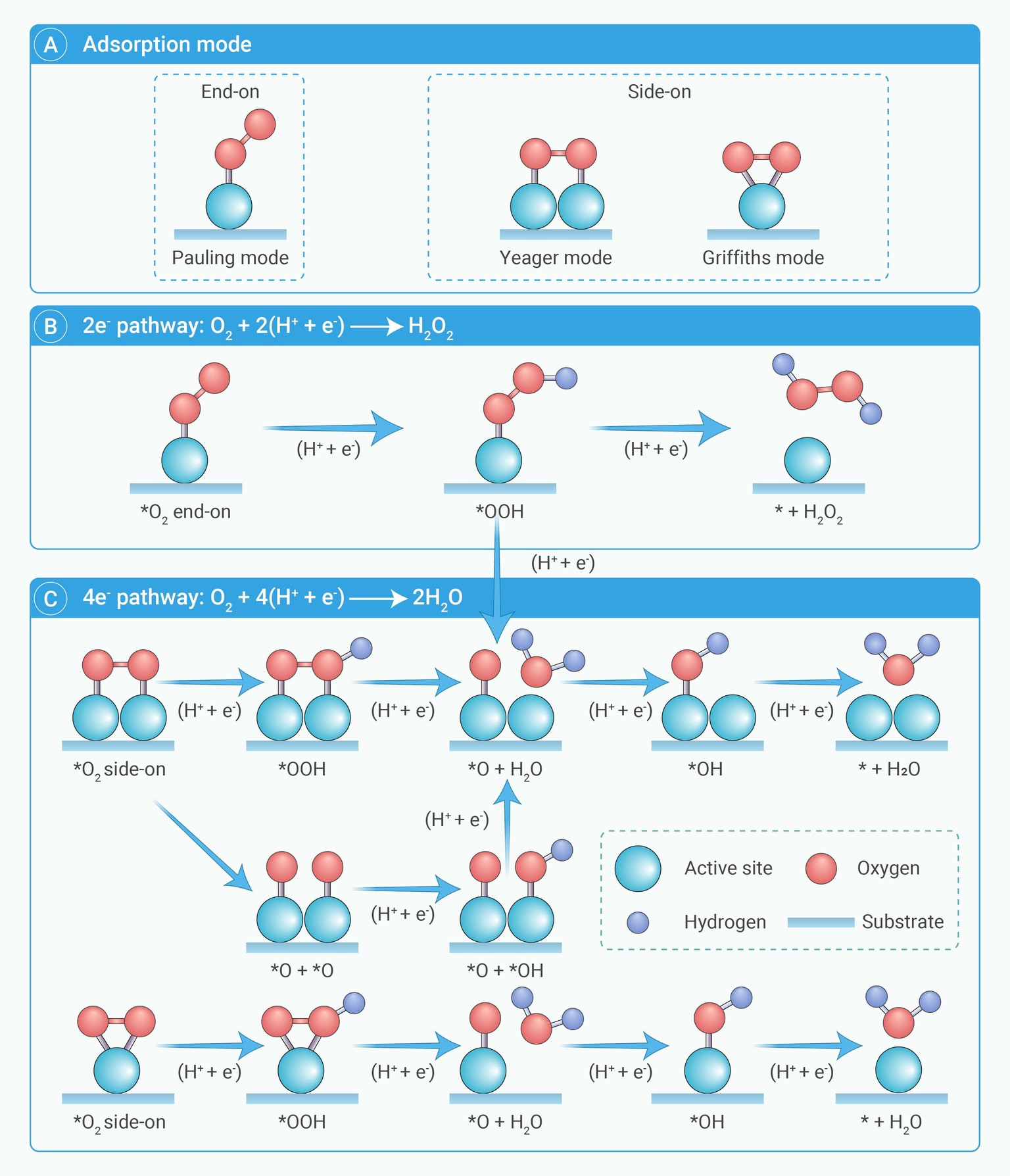
Figure 1.
The oxygen adsorption modes at the active sites and the ORR reaction pathways
-
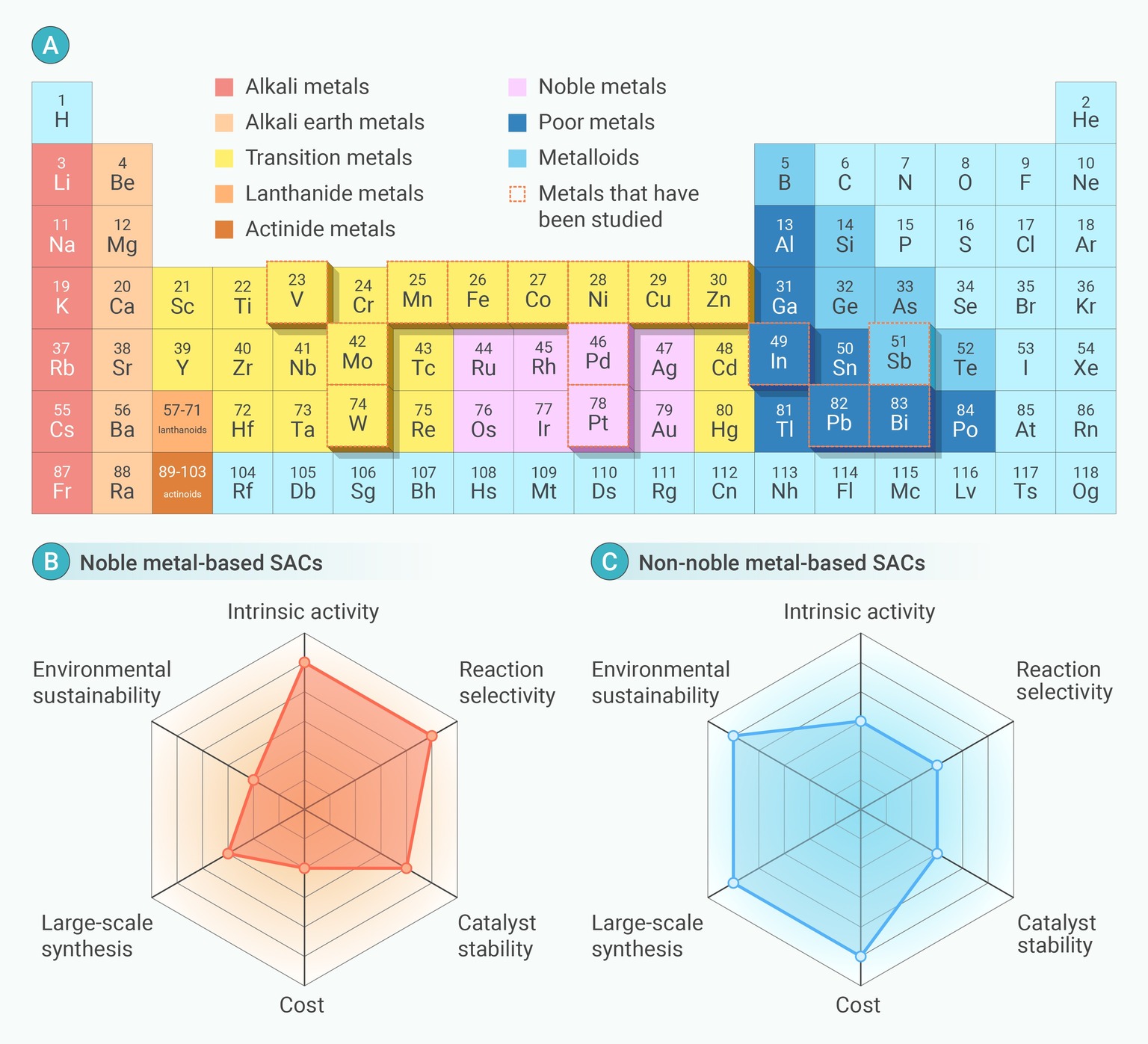
Figure 2.
Types of SACs studied for 2e– ORR and performance comparison of noble vs. non-noble metal SACs via radar chart analysis
-
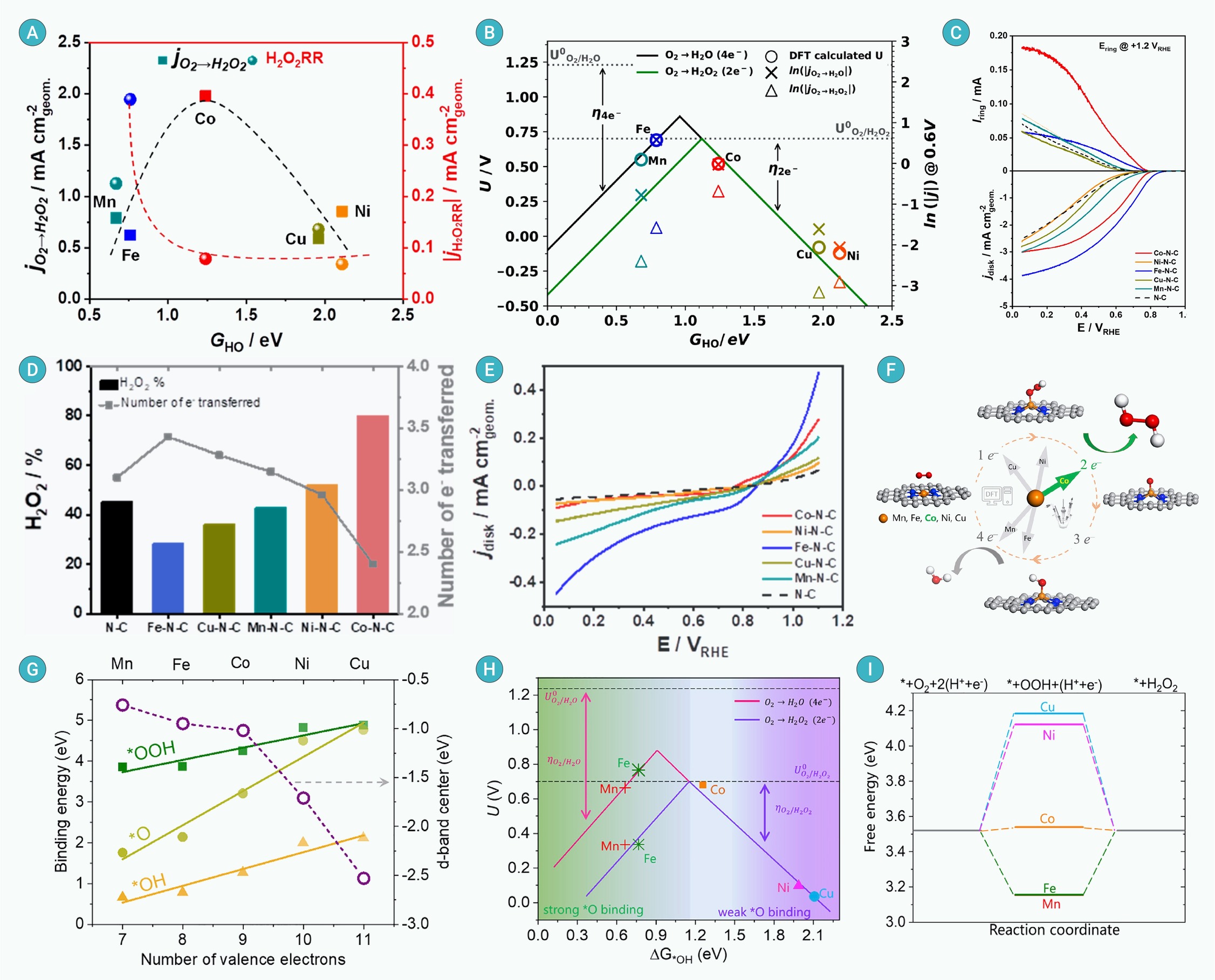
Figure 3.
Theoretical research of different types of SACs for 2e– ORR: volcano plots, adsorption trends, and performance evaluation
-
Figure 4.
A schematic summary of regulation strategies of SACs for 2e– ORR
-
Figure 5.
ORR pathways and H2O2 selectivity in different transition metal SACs: binding energy and activity volcano relationships
-
Figure 6.
Different DACs for 2e– ORR: adsorption modes, electronic structure, and pH-dependent H2O2 selectivity
-
Figure 7.
Regulation of coordination structures of SACs for 2e– ORR pathways: volcano activity, H2O2 selectivity, and electronic structure modulation
-
Figure 8.
Theoretical calculations and performance analysis of 2e– ORR for SACs with engineered support materials
-
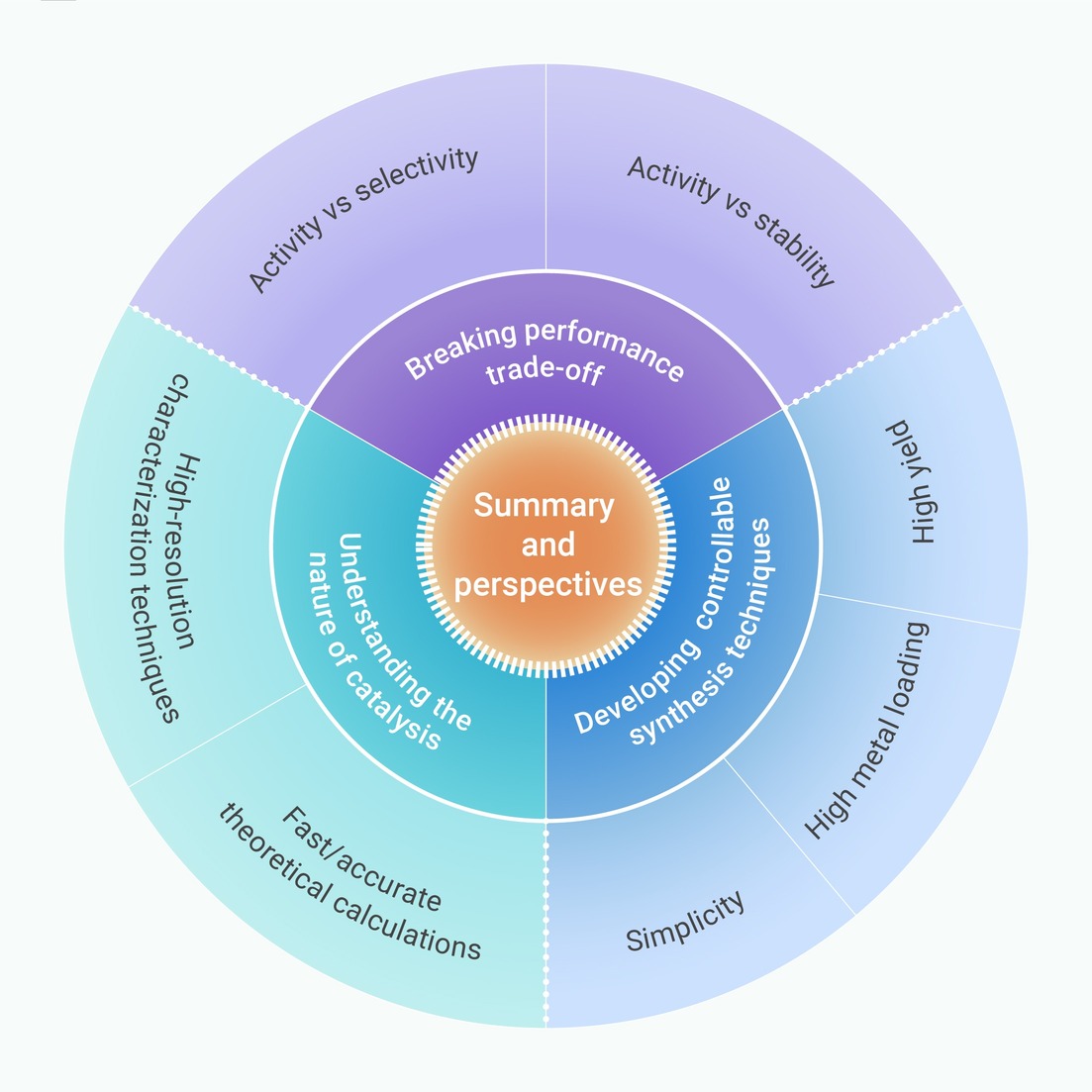
Figure 9.
Summary and perspectives on SACs for 2e– ORR.
