
π-conjugated structures as advanced anion hosts for dual-ion batteries: Mechanistic insights and optimization strategies
-
GRAPHICAL ABSTRACT
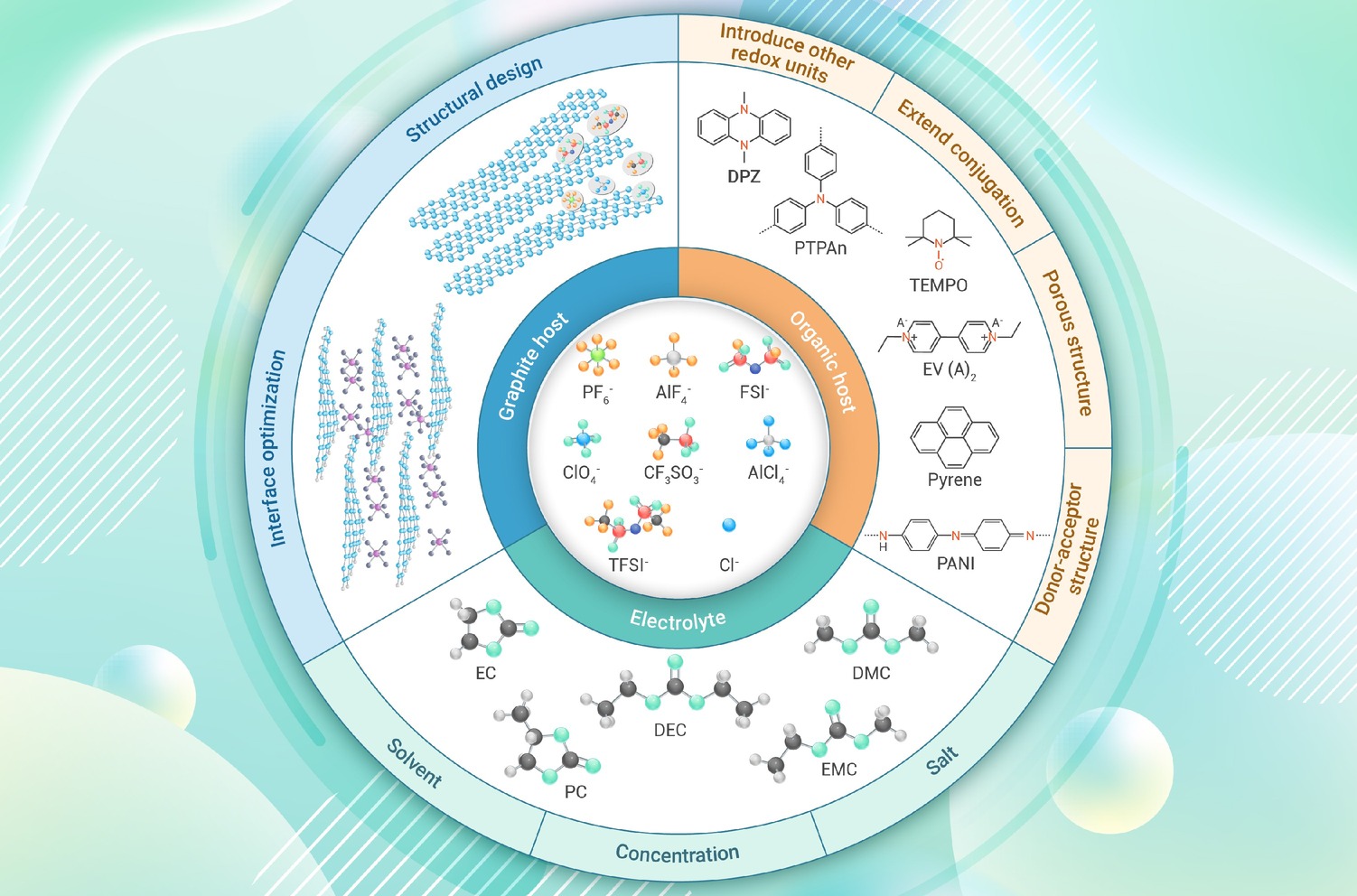
 DownLoad:
Full size image
DownLoad:
Full size image
-
PUBLIC SUMMARY
-
The current research status of π-conjugated anion host for dual-ion batteries is introduced.
Mechanistic insights and optimization strategies of π-conjugated anion-host has been deeply explored.
Some practical problems have been proposed in order to promote the application of dual-ion batteries.
-
-
ABSTRACT
Dual-ion batteries (DIBs) have emerged as a promising energy storage technology due to their cost-effectiveness, environmental friendliness, and potential for high energy and power density. A critical component enabling their performance is the development of efficient anion-hosting cathodes. Among various candidates, π-conjugated structures offer unique advantages, including tunable electronic properties, large π-surfaces for multi-electron transfer, and versatile molecular design. This review comprehensively examines the current progress in π-conjugated materials, like graphite and organic materials, as anion hosts for DIBs, emphasizing the interplay between molecular design and electrochemical performance. We discuss key strategies for enhancing capacity, rate performance, and stability, such as functional group optimization, donor-acceptor architectures, and anion-cation co-storage mechanism. The effects of electrolyte composition, including salt type, concentration, and solvent properties, on anion adsorption and charge transfer processes are critically analyzed. Furthermore, the challenges of achieving high mass loading, improving conductivity, and mitigating side reactions are addressed, alongside innovative approaches such as localized high-concentration electrolytes and interfacial engineering. Lastly, we explore emerging applications of π-conjugated materials in aqueous and low-temperature DIBs, highlighting their potential to expand the operational scope of this technology. The review concludes with perspectives on the future development of π-conjugated anion hosts, including advanced characterization techniques and the integration of computational modeling to unravel fundamental mechanisms. By providing a holistic overview of the design principles and mechanistic insights, this work aims to guide the rational development of high-performance DIBs leveraging π-conjugated materials. -

-
REFERENCES
[1] Dunn B., Kamath H. and Tarascon J.-M. (2011). Electrical energy storage for the grid: A battery of choices. Science 334:928−935. DOI:10.1126/science.1212741 [2] Frith J. T., Lacey M. J. and Ulissi U. (2023). A non-academic perspective on the future of lithium-based batteries. Nat. Commun. 14:420. DOI:10.1038/s41467-023-35933-2 [3] Vaalma C., Buchholz D., Weil M., et al. (2018). A cost and resource analysis of sodium-ion batteries. Nat. Rev. Mater. 3:18013. DOI:10.1038/natrevmats.2018.13 [4] Schmuch R., Wagner R., Hörpel G., et al. (2018). Performance and cost of materials for lithium-based rechargeable automotive batteries. Nat. Energy 3:267−278. DOI:10.1038/s41560-018-0107-2 [5] Ma R., Tao S., Sun X., et al. (2024). Pathway decisions for reuse and recycling of retired lithium-ion batteries considering economic and environmental functions. Nat. Commun. 15:7641. DOI:10.1038/s41467-024-52030-0 [6] Wang J., Ma J., Zhuang Z., et al. (2024). Toward direct regeneration of spent lithium-ion batteries: A next-generation recycling method. Chem. Rev. 124:2839−2887. DOI:10.1021/acs.chemrev.3c00884 [7] Liu W., Li Y., Yang H., et al. (2023). Pursuing high voltage and long lifespan for low-cost Al-based rechargeable batteries: Dual-ion design and prospects. Energy Storage Mater. 62:102922. DOI:10.1016/j.ensm.2023.102922 [8] Placke T., Heckmann A., Schmuch R., et al. (2018). Perspective on performance, cost, and technical challenges for practical dual-ion batteries. Joule 2:2528−2550. DOI:10.1016/j.joule.2018.09.003 [9] Sui Y., Liu C., Masse R. C., et al. (2020). Dual-ion batteries: The emerging alternative rechargeable batteries. Energy Storage Mater. 25:1−32. DOI:10.1016/j.ensm.2019.11.003 [10] Zhao Z. and Alshareef H. N. (2023). Sustainable dual-ion batteries beyond Li. Adv. Mater. 36:2100135. DOI:10.1002/aenm.202100135 [11] Xing F., Bi Z., Su F., et al. (2022). Unraveling the design principles of battery-supercapacitor hybrid devices: From fundamental mechanisms to microstructure engineering and challenging perspectives. Adv. Energy Mater. 12:2200594. DOI:10.1002/aenm.202200594 [12] Wang M. and Tang Y. (2018). A review on the features and progress of dual-ion batteries. Adv. Energy Mater. 8:108364. DOI:10.1016/j.nanoen.2023.108364 [13] Tebyetekerwa M., Duignan T. T., Xu Z., et al. (2022). Rechargeable dual-carbon batteries: A sustainable battery technology. Adv. Energy Mater. 12:2202450. DOI:10.1002/aenm.202202450 [14] Liu Q., Wang Y., Yang X., et al. (2022). Rechargeable anion-shuttle batteries for low-cost energy storage. Chem 7:1993−2021. DOI:10.1016/j.chempr.2021.02.004 [15] Lu Y. and Chen J. (2020). Prospects of organic electrode materials for practical lithium batteries. Nat. Rev. Chem. 4:127−142. DOI:10.1038/s41570-020-0160-9 [16] Yin X., Sarkar S., Shi S., et al. (2020). Recent Progress in advanced organic electrode materials for sodium-ion batteries: Synthesis, mechanisms, challenges and perspectives. Adv. Funct. Mater. 30:1908445. DOI:10.1002/adfm.201908445 [17] Haldar S., Schneemann A. and Kaskel S. (2023). Covalent organic frameworks as model materials for fundamental and mechanistic understanding of organic battery design principles. J. Amer. Chem. Soc. 145:13494−13513. DOI:10.1021/jacs.3c01131 [18] Zhang M., Zhang W., Zhang F., et al. (2024). Anion-hosting cathodes for current and late-stage dual-ion batteries. Sci. China Chem. 67:1485−1509. DOI:10.1007/s11426-023-1957-3 [19] Li Z., Tan J., Wang Y., et al. (2023). Building better aqueous Zn-organic batteries. Energy Environ. Sci. 16:2398−2431. DOI:10.1039/d3ee00211j [20] Tong Y., Wei Y., Song A., et al. (2024). Organic electrode materials for dual-ion batteries. ChemSusChem 17:1155−1179. DOI:10.1002/eem2.12442 [21] Zhang M., Song X., Ou X., et al. (2019). Rechargeable batteries based on anion intercalation graphite cathodes. Energy Storage Mater. 16:65−84. DOI:10.1016/j.ensm.2018.04.023 [22] Yacoby A. (2011). Graphene: Tri and tri again. Nat. Phys. 7:925−926. DOI:10.1038/nphys2166 [23] Wang G., Yu M. and Feng X. (2021). Carbon materials for ion-intercalation involved rechargeable battery technologies. Chem. Soc. Rev. 50:2388−2443. DOI:10.1039/d0cs00187b [24] Li Y., Lu Y., Adelhelm P., et al. (2019). Intercalation chemistry of graphite: Alkali metal ions and beyond. Chem. Soc. Rev. 48:4655−4687. DOI:10.1039/c9cs00162j [25] Dou Q., Wu N., Yuan H., et al. (2021). Emerging trends in anion storage materials for the capacitive and hybrid energy storage and beyond. Chem. Soc. Rev. 50:6734−6789. DOI:10.1039/d0cs00721h [26] Huang Z., Li X., Chen Z., et al. (2023). Anion chemistry in energy storage devices. Nat. Rev. Chem. 7:616−631. DOI:10.1038/s41570-023-00506-w [27] Rüdorff W. (1940). Kristallstruktur der Säureverbindungen des Graphits. Zeitschrift für Physikalische Chemie 45B:42-68. DOI:10.1515/zpch-1940-4504. [28] Sui Y., Liu C., Masse R., et al. (2020). Dual-ion batteries: The emerging alternative rechargeable batteries. Energy Storage Mater. 25:1−32. DOI:10.1016/j.ensm.2019.11.003 [29] Daumas N. and Herold A. (1969). Relations between phase concept and reaction mechanics in graphite insertion compounds. Comptes Rendus Hebdomadaires Des Seances De L Academie Des Sciences Serie C 268:373. [30] Dimiev A., Ceriotti G., Behabtu N., et al. (2013). Direct real-time monitoring of stage transitions in graphite intercalation compounds. ACS nano 7:2773−2780. DOI:10.1021/nn400207e [31] Zhao Z. and Alshareef H. (2024). Sustainable dual-ion batteries beyond Li. Adv. Mater. 36:2309223. DOI:10.1002/adma.202309223 [32] Xu W., Li L., Zhao Y., et al. (2025). Some basics and details for a better dual-ion battery. Energy Environ. Sci. 18:2686−2719. DOI:10.1039/d4ee04063e [33] Read J. A. (2015). In-situ studies on the electrochemical intercalation of hexafluorophosphate anion in graphite with selective cointercalation of solvent. J. Phys. Chem. C 119:8438−8446. DOI:10.1021/jp5115465 [34] Balabajew M., Reinhardt H., Bock N., et al. (2016). In-situ Raman study of the intercalation of bis(trifluoromethylsulfonyl)imid ions into graphite inside a dual-ion cell. Electrochim. Acta 211:679−688. DOI:10.1016/j.electacta.2016.06.083 [35] Guo Q., Kim K., Jiang H., et al. (2020). A high-potential anion-insertion carbon cathode for aqueous zinc dual-ion battery. Adv. Funct. Mater. 30:2002825. DOI:10.1002/adfm.202002825 [36] Cai S., Chu X, Liu C, et al. (2021). Water-salt oligomers enable supersoluble electrolytes for high‐performance aqueous batteries. Adv. Mater. 33:2007470. DOI:10.1002/adma.202007470 [37] Wang G., Oswald S., Löffler M., et al. (2019). Beyond activated carbon: graphite-cathode-derived Li-ion pseudocapacitors with high energy and high power densities. Adv. Mater. 31:1807712. DOI:10.1002/adma.201807712 [38] Wang G., Yu M. and Feng X. (2021). Carbon materials for ion-intercalation involved rechargeable battery technologies. Chem. Soc. Rev. 50:2388−2443. DOI:10.1039/d0cs00187b [39] Huang Z., Li X., Chen Z., et al. (2023). Anion chemistry in energy storage devices. Nat. Rev. Chem. 7:616−631. DOI:10.1038/s41570-023-00506-w [40] Zhang M., Zhang W., Zhang F., et al. (2024). Anion-hosting cathodes for current and late-stage dual-ion batteries. Sci. China Chem. 67:1485−1509. DOI:10.1007/s11426-023-1957-3 [41] Wang D., Wei C., Lin M., et al. (2017). Advanced rechargeable aluminium ion battery with a high-quality natural graphite cathode. Nat. Commun. 8:14238. DOI:10.1038/ncomms14283 [42] Wang G., Yu M., Wang J., et al. (2018). Self-activating, capacitive anion intercalation enables high-power graphite cathodes. Adv. Mater. 30:1800533. DOI:10.1002/adma.201800533 [43] Wei Y., Tang B., Liang X., et al. (2023). An Ultrahigh-mass-loading integrated free-standing functional all-carbon positive electrode prepared using an architecture tailoring strategy for high-energy-density dual-ion batteries. Adv. Mater. 35:2302086. DOI:10.1002/adma.202302086 [44] Qiu X., Duan Y., Fan L., et al. (2023). A binary-heteroatom doped 3D multimode carbonaceous hybrids for high performance quasi-solid-state sodium dual-ion batteries. Carbon 214:118312. DOI:10.1016/j.carbon.2023.118312 [45] Raymundo-Piñero E., Kierzek K., Machnikowski J., et al. (2006). Relationship between the nanoporous texture of activated carbons and their capacitance properties in different electrolytes. Carbon 44:2498−2507. DOI:10.1016/j.carbon.2006.05.022 [46] Largeot C., Portet C., Chmiola J., et al. (2008). Relation between the ion size and pore size for an electric double-layer capacitor. J. Am. Chem. Soc. 130:2730−2731. DOI:10.1021/ja7106178 [47] Zhang M., Yan D., Li W. (2022). Regulation of dual-ion batteries via the defects design in carbon electrode based on the different storage behaviors of PF6- and Li+. J. Power Sources 527:231169. DOI:10.1016/j.jpowsour.2022.231169 [48] Chen C., Lee C. and Tang Y. (2023). Fundamental understanding and optimization strategies for dual-Ion batteries: A review. Nano-Micro Lett. 15:121. DOI:10.1007/s40820-023-01086-6 [49] Winter M., Besenhard J., Spahr M., et al. (1998). Insertion electrode materials for rechargeable lithium batteries. Adv. Mater. 10:725−763. DOI:10.1007/s41918-020-00070-7 [50] Zhang X., Tang Y., Zhang F., et al. (2016). A novel aluminum-graphite dual-ion battery. Adv. Energy Mater. 6:1502588. DOI:10.1002/aenm.201502588 [51] Wang M. and Tang Y. (2018). A review on the features and progress of dual-ion batteries. Adv. Energy Mater. 8:108364. DOI:10.1016/j.nanoen.2023.108364 [52] Kim T.-H., Jeon E.K., Ko Y., et al. (2014). Enlarging the d-spacing of graphite and polarizing its surface charge for driving lithium ions fast. J. Mater. Chem. A 2:7600−7605. DOI:10.1039/c3ta15360f [53] Dong X., Xu H., Chen H., et al. (2019). Commercial expanded graphite as high-performance cathode for low-cost aluminum-ion battery. Carbon 148:134−140. DOI:10.1016/j.carbon.2019.03.080 [54] Dong X., Chen H., Lai H., et al. (2022). A graphitized expanded graphite cathode for aluminum-ion battery with excellent rate capability. J. Energy Chem. 66:38−44. DOI:10.1016/j.jechem.2021.07.016 [55] Wen Y., He K., Zhu Y., et al. (2014). Expanded graphite as superior anode for sodium-ion batteries. Nat. Commun. 5:4033. DOI:10.1038/ncomms5033 [56] Matsuo Y., Sekito K., Ashida Y., et al. (2023). Factors affecting the electrochemical behaviors of graphene-like graphite as a positive electrode of a dual-ion battery. ChemSusChem 16:e202201127. DOI:10.1002/cssc.202201127 [57] Hu X., Ma Y., Qu W., et al. (2023). Large interlayer distance and heteroatom-doping of graphite provide new insights into the dual-ion storage mechanism in dual-carbon batteries. Angew. Chem. Int. Ed. 62:e202307083. DOI:10.1002/anie.202307083 [58] Yang H., Qin T., Zhou X., et al. (2022). Boosting the kinetics of PF6- into graphitic layers for the optimal cathode of dual-ion batteries: the rehearsal of pre-intercalating Li. J. Energy Chem. 71:392−399. DOI:10.1016/j.jechem.2022.04.009 [59] Liu X., Ma X., Zhang X., et al. (2023). Insertion of AlCl3 in graphite as both cation and anion insertion host for dual-ion battery. J. Energy Storage 72:392−399. DOI:10.1016/j.jechem.2022.04.009 [60] Ghosh S., Nihad M., Muduli S., et al. (2023). Optimizing anion storage performances of graphite/non-graphitic carbon composites as cathodes for dual-ion batteries. Electrochim. Acta 441:141754. DOI:10.1016/j.electacta.2022.141754 [61] Yang K., Liu Q., Zheng Y., et al. (2021). Locally ordered graphitized carbon cathodes for high-capacity dual-ion batteries. Angew. Chem. Int. Ed. 60:6326−6332. DOI:10.1002/anie.202016233 [62] Zhan C., Zeng X., Ren X., et al. (2020). Dual-ion hybrid supercapacitor: Integration of Li-ion hybrid supercapacitor and dual-ion battery realized by porous graphitic carbon. J. Energy Chem. 42:180−184. DOI:10.1016/j.jechem.2019.06.009 [63] Yao Q., Tang P., Xie S., et al. (2024). Tailoring carbon cathode microstructure for synergistic integration of hybrid ion capacitor and dual-ion battery. Adv. Funct. Mater. 34:2314962. DOI:10.1002/adfm.202314962 [64] Zhang G., Ou X., Cui C., et al. (2019). High-performance cathode based on self-templated 3D porous microcrystalline carbon with improved anion adsorption and intercalation. Adv. Funct. Mater. 29:1806722. DOI:10.1002/adfm.201806722 [65] Zhang K., Li D., Qu Q., et al. (2023). π-π stacking of unsaturated sulfonates on natural graphite enables a green and cost-effective cathode for high-voltage dual-ion batteries. Green Chem. 25:8770−8777. DOI:10.1039/D3GC01802D [66] Zhang K., Li D., Shao J., et al. (2023). Electrochemistry-driven interphase doubly protects graphite cathodes for ultralong life and fast charge of dual-ion batteries. ChemSusChem 16:e202300324. DOI:10.1002/cssc.202300324 [67] Ghosh S., Bhattacharjee U., Dutta J., et al. (2023). Ultrathin, flexible and smooth carbon coating extends the cycle life of dual-ion batteries. J. Power Sources 584:233585. DOI:10.1016/j.jpowsour.2023.233585 [68] Zhang K., Li D., Shao J., et al. (2023). Ultrafast charge and long life of high-voltage cathodes for dual-ion batteries via a bifunctional interphase nanolayer on graphite particles. Small 19:2206360. DOI:10.1002/smll.202206360 [69] Li W., Li Y., Liu X., et al. (2022). All-climate and ultrastable dual-ion batteries with long life achieved via synergistic enhancement of cathode and anode interfaces. Adv. Funct. Mater. 32:2201038. DOI:10.1002/adfm.202201038 [70] Han X., Xu G., Zhang Z., et al. (2019). An in situ interface reinforcement strategy achieving long cycle performance of dual-ion batteries. Adv. Energy Mater. 9:1804022. DOI:10.1002/aenm.201804022 [71] Nisar U., Muralidharan N., Essehli R., et al. (2021). Valuation of surface coatings in high-energy density lithium-ion battery cathode materials. Energy Storage Mater. 38:309−328. DOI:10.1016/j.ensm.2021.03.015 [72] Hall D., Gauthier R., Eldesoky A., et al. (2019). New chemical insights into the beneficial role of Al2O3 cathode coatings in lithium-ion cells. ACS Appl. Mater. Interfaces 11:14095−14100. DOI:10.1021/acsami.8b22743 [73] Zhang K., Li D., Shao J., et al. (2023). Electrochemistry-driven interphase doubly protects graphite cathodes for ultralong life and fast charge of dual-ion batteries. ChemSusChem 16:e202300324. DOI:10.1002/cssc.202300324 [74] Wang R., Wang L., Liu R., et al. (2024). "Fast-charging" anode materials for lithium-ion batteries from perspective of ion diffusion in crystal structure. ACS Nano 18:2611−2648. DOI:10.1021/acsnano.3c08712 [75] Asfaw H., Kotronia A., Garcia-Araez N., et al. (2024). Charting the course to solid-state dual-ion batteries. Carbon Energy 6:e425. DOI:10.1002/cey2.425 [76] Jiang H., Chen Z., Yang Y., et al. (2023). Rational design of functional electrolytes towards commercial dual-ion batteries. ChemSusChem 16:e202201561. DOI:10.1002/cssc.202201561 [77] Wu X., Xu Y., Zhang C., et al. (2019). Reverse dual-ion battery via a ZnCl2 water-in-salt electrolyte. J. Am. Chem. Soc. 141:6338−6344. DOI:10.1021/jacs.9b00617 [78] Jiang H., Wei Z., Ma L., et al. (2019). An aqueous dual-ion battery cathode of Mn3O4 via reversible insertion of nitrate. Angew. Chem. Int. Ed. 58:5286−5291. DOI:10.1002/anie.201814646 [79] Gao J., Yoshio M., Qi L., et al. (2015). Solvation effect on intercalation behaviour of tetrafluoroborate into graphite electrode. J. Power Sources 278:452−457. DOI:10.1016/j.jpowsour.2014.12.107 [80] Gao J., Tian S., Qi, L., et al. (2015). Intercalation manners of perchlorate anion into graphite electrode from organic solutions. Electrochim. Acta 176:22−27. DOI:10.1016/j.electacta.2015.06.152 [81] Wang H. and Yoshio M. (2006). Graphite, a suitable positive electrode material for high-energy electrochemical capacitors. Electrochem. Commun. 8:1481−1486. DOI:10.1016/j.elecom.2006.07.016 [82] Ou X., Gong D., Han C., et al. (2021). Advances and prospects of dual-ion batteries. Adv. Energy Mater. 11:2102498. DOI:10.1002/aenm.202102498 [83] Xu K. (2014). Electrolytes and interphases in Li-Ion batteries and beyond. Chem. Rev. 114:11503−11618. DOI:10.1021/cr500003w [84] Lin M., Gong M., Lu B., et al. (2015). An ultrafast rechargeable aluminium-ion battery. Nature 520:324−328. DOI:10.1038/nature14340 [85] Liu T., Peng N., Zhang X., et al. (2021). Insight into anion storage batteries: Materials, properties and challenges. Energy Storage Mater. 42:42−67. DOI:10.1016/j.ensm.2021.07.011 [86] Luo P., Zheng C., He J., et al. (2022). Structural engineering in graphite-based metal-ion batteries. Adv. Funct. Mater. 32:2107277. DOI:10.1002/adfm.202107277 [87] Liu M., Zhang W. and Zheng W. (2023). Spreading the landscape of dual ion batteries: from electrode to electrolyte. ChemSusChem 16:e202201375. DOI:10.1002/cssc.202201375 [88] Wang Y., Wang S., Zhang Y., et al. (2019). Unlocking the true capability of graphite-based dual-ion batteries with ethyl methyl carbonate electrolyte. ACS Appl. Energy Mater. 2:7512−7517. DOI:10.1021/acsaem.9b01499 [89] Santhanam R. and Noel M. (1995). Electrochemical intercalation of ionic species of tetrabutylammonium perchlorate on graphite electrodes. A potential dual-intercalation battery system. J. Power Sources 56:101−105. DOI:10.1016/0378-7753(95)80016-A [90] Santhanam R. and Noel M. (1997). Effect of solvents on the intercalation/de-intercalation behaviour of monovalent ionic species from non-aqueous solvents on polypropylene-graphite composite electrode. J. Power Sources 66:47−54. DOI:10.1016/s0378-7753(96)02472-x [91] Wang Y., Ma S. and Wang H. (2022). Difluoro(oxalato)borate's role in the intercalation behavior of mixed anions from sulfolane. ChemSusChem 16:e202201218. DOI:10.1002/cssc.202201218 [92] Fan H., Gao J., Qi L., et al. (2016). Hexafluorophosphate anion intercalation into graphite electrode from sulfolane/ethylmethyl carbonate solutions. Electrochim. Acta 189:9−15. DOI:10.1016/j.electacta.2015.12.078 [93] Wu W., Bai Y., Wang X., et al. (2021). Sulfone-based high-voltage electrolytes for high energy density rechargeable lithium batteries: Progress and perspective. Chinese Chem. Lett. 32:1309−1315. DOI:10.1016/j.cclet.2020.10.009 [94] Wei F., Zhang T., Xu H., et al. (2023). 2D mesoporous naphthalene-based conductive heteroarchitectures toward long-life, high-capacity zinc-iodine batteries. Adv. Funct. Mater. 34:2310693. DOI:10.1002/adfm.202310693 [95] Chen J., Peng Y., Yin Y., et al. (2021). A desolvation‐free sodium dual‐ion chemistry for high power density and extremely low temperature. Angew. Chem. Int. Ed. 60:23858−23862. DOI:10.1002/anie.202110501 [96] Shen M., Dai Z., Fan L., et al. (2024). Cosolvent electrolyte chemistries for high-voltage potassium-ion battery. Natl. Sci. Rev. 11:nwae359. DOI:10.1093/nsr/nwae359 [97] Hu Y., Fu H., Geng Y., et al. (2024). Chloro‐functionalized ether‐based electrolyte for high‐voltage and stable potassium-ion batteries. Angew. Chem. 136:e202403269. DOI:10.1002/ange.202403269 [98] Li J., Fu H., Gu M., et al. (2024). Ether-based gel polymer electrolyte for high-voltage potassium ion batteries. Nano Lett. 24:11419−11428. DOI:10.1021/acs.nanolett.4c02168 [99] Tao S., Demir B., Baktash A., et al. (2023). Solvent-derived fluorinated secondary interphase for reversible Zn-graphite dual-ion batteries. Angew. Chem. Int. Ed. 62:e202307208. DOI:10.1002/anie.202307208 [100] Guan D., Wang W., Chen B., et al. (2023). Does salt concentration matter? New insights on the intercalation behavior of PF6- into graphite cathode for the dual-ion battery. Adv. Funct. Mater. 33:2215113. DOI:10.1002/adfm.202215113. [101] Sabaghi D., Wang G., Mikhailova D., et al. (2023). High energy density and durable pouch-cell graphite-based dual ion battery using concentrated hybrid electrolytes. J. Power Sources 588:233685. DOI:10.1016/j.jpowsour.2023.233685 [102] Guo Z., Cheng G., Xu Z., et al. (2022). Sodium dual-ion batteries with concentrated electrolytes. ChemSusChem 16:e202201583. DOI:10.1002/cssc.202201583 [103] Zafar Z., Abbas G., Knizek K., et al. (2022). Chaotropic anion based "water-in-salt" electrolyte realizes a high voltage Zn-graphite dual-ion battery. J. Mater. Chem. A 10:2064−2074. DOI:10.1039/D1TA10122F [104] Li J., Han C., Ou X., et al. (2022). Concentrated electrolyte for high-performance Ca-ion battery based on organic anode and graphite cathode. Angew. Chem. Int. Ed. 61:e202116668. DOI:10.1002/anie.202116668 [105] Küpers V., Dohmann J., Bieker P., et al. (2021). Opportunities and limitations of ionic liquid- and organic carbonate solvent-based electrolytes for Mg-ion-based dual-ion batteries. ChemSusChem 14:4480−4498. DOI:1002/cssc.202101227. [106] Zhu Y., Yin J., Emwas A., et al. (2021). An aqueous Mg-based dual-ion battery with high power density. Adv. Funct. Mater. 31:2107523. DOI:10.1002/adfm.202107523 [107] Xiang L., Ou X., Wang X., et al. (2020). Highly concentrated electrolyte towards enhanced energy density and cycling life of dual-ion battery. Angew. Chem. Int. Ed. 59:17924−17930. DOI:10.1002/anie.202006595 [108] Zhang H., Liu X., Qin B., et al. (2020). Electrochemical intercalation of anions in graphite for high-voltage aqueous zinc battery. J. Power Sources 449:227594. DOI:10.1016/j.jpowsour.2019.227594 [109] Kraychyk K., Bhauriyal P., Piveteau L., et al. (2018). High-energy-density dual-ion battery for stationary storage of electricity using concentrated potassium fluorosulfonylimide. Nat. Commun. 9:4469. DOI:10.1038/s41467-018-06923-6 [110] Yu D., Zhang W., Zhang Q., et al. (2022). Tuning anion chemistry enables high-voltage and stable potassium-based tellurium-graphite batteries. Nano Energy 92:106744. DOI:10.1016/j.nanoen.2021.106744 [111] Heckmann A., Thienenkamp J., Beltrop K., et al. (2018). Towards high-performance dual-graphite batteries using highly concentrated organic electrolytes. Electrochim. Acta 260:514−525. DOI:10.1016/j.electacta.2017.12.099 [112] Hu Y. and Lu Y. (2020). The mystery of electrolyte concentration: From superhigh to ultralow. ACS Energy Lett. 5:3633−3636. DOI:10.1021/acsenergylett.0c02234 [113] Efaw C., Wu Q., Gao N., et al. (2023). Localized high-concentration electrolytes get more localized through micelle-like structures. Nat. Mater. 22:1531−1539. DOI:10.1038/s41563-023-01700-3 [114] Holoubek J., Yin Y., Li M., et al. (2019). Exploiting mechanistic solvation kinetics for dual-graphite batteries with high power output at extremely low temperature. Angew. Chem. Int. Ed. 58:18892−18897. DOI:10.1002/anie.201912167 [115] Yang J., Shang J., Liu Q., et al. (2024). Variant-localized high-concentration electrolyte without phase separation for low-temperature batteries. Angew. Chem. Int. Ed. 63:e202406182. DOI:10.1002/anie.202406182 [116] Zhao Y., Zhu H., Xing L., et al. (2024). Electrolyte design for high power dual-ion battery with graphite cathode for low temperature applications. Chem. Eng. J. 493:152602. DOI:10.1016/j.cej.2024.152602 [117] Lang J., Liu Y., Liu Q., et al. (2024). Regulation of interfacial chemistry enabling high-power dual-ion batteries at low temperatures. Small 20:2401200. DOI:10.1002/smll.202401200 [118] Que L., Wu J., Lan Z., et al. (2023). Potassium-based dual-ion batteries operating at -60°C enabled by co-intercalation anode chemistry. Adv. Mater. 35:2307592. DOI:10.1002/adma.202307592 [119] Gupta A. and Manthiram A. (2020). Designing advanced lithium-based batteries for low-temperature conditions. Adv. Energy Mater. 10:2001972. DOI:10.1002/aenm.202001972 [120] Yu D., Li K., Ma G., et al. (2023). Advances in low-temperature dual-ion batteries. ChemSusChem 16:e202201595. DOI:10.1002/cssc.202201595 [121] Jia H., Kim J., Gao P., et al. (2023). A Systematic study on the effects of solvating solvents and additives in localized high‐concentration electrolytes over electrochemical performance of lithium-ion batteries. Angew. Chem. 135:e202218005. DOI:10.1002/ange.202218005 [122] Piao Z., Wu X., Ren H., et al. (2023). A semisolvated sole-solvent electrolyte for high-voltage lithium metal batteries. J. Am. Chem. Soc. 145:24260−24271. DOI:10.1021/jacs.3c08733 [123] Jiang L., Yan C., Yao Y., et al. (2021). Inhibiting solvent co‐intercalation in a graphite anode by a localized high‐concentration electrolyte in fast-charging batteries. Angew. Chem. Int. Ed. 60:3402−3406. DOI:10.1002/anie.202009738 [124] Kotronia A., Asfaw H. and Edström K. (2023). Evaluating electrolyte additives in dual-ion batteries: Overcoming common pitfalls. Electrochim. Acta 459:142517. DOI:10.1016/j.electacta.2023.142517 [125] Zheng Y., Zhang W., Liu F., et al. (2024). Additive-rejuvenated anions (De)intercalation into graphite cathode enables optimum dual-ion battery. Energy Storage Mater. 67:103326. DOI:10.1016/j.ensm.2024.103326 [126] Ghosh S. and Martha S. (2023). Potential dependent formation of fluorine-rich artificial interfaces for durable dual-ion batteries. J. Energy Storage 74:109491. DOI:10.1016/j.est.2023.109491 [127] Yang Z., Zhou X., Hao Z., et al. (2024). Insight into the role of fluoroethylene carbonate on the stability of Sb. |graphite dual-ion batteries in propylene carbonate-based electrolyte. Angew. Chem. Int. Ed. 63:e202313142. DOI:10.1002/anie.202313142 [128] Wang Y., Zhang Y., Duan Q., et al. (2020). Engineering cathode-electrolyte interface of graphite to enable ultra long-cycle and high-power dual-ion batteries. J. Power Sources 471:228466. DOI:10.1016/j.jpowsour.2020.228466 [129] Cui G., Han X., Jiang H., et al. (2024). Helmholtz plane regulation empowers PF6- permselectivity towards high coulombic efficiency dual ion battery of 5.5 V. Angew. Chem. Int. Ed. 137:e202412753. DOI:10.1002/anie.202412753. [130] Tong X., Zhang F., Chen G., et al. (2018). Core-shell aluminum@carbon nanospheres for dual-ion batteries with excellent cycling performance under high rates. Adv. Energy Mater. 8:1701967. DOI:10.1002/aenm.201701967 [131] Liang J., Lin Q., Rawal A., et al. (2024). Ionic conductive polymer stabilized cathode-electrolyte interface for quasi-solid-state dual-ion battery. ACS Energy Lett. 9:1082−1089. DOI:10.1021/acsenergylett.4c00011 [132] Liu Z., Yang Q., Wang D., et al. (2019). A flexible solid-state aqueous zinc hybrid battery with flat and high-voltage discharge plateau. Adv. Energy Mater. 9:1902473. DOI:10.1002/aenm.201902473 [133] Xie D., Zhang M., Wu Y., et al. (2020). A flexible dual-ion battery based on sodium-ion quasi-solid-state electrolyte with long cycling life. Adv. Funct. Mater. 30:1906770. DOI:10.1002/adfm.201906770 [134] Sun L., Yao Y., Dai L., et al. (2022). Sustainable and high-performance Zn dual-ion batteries with a hydrogel-based water-in-salt electrolyte. Energy Storage Mater. 47:187−194. DOI:10.1016/j.ensm.2022.02.012 [135] Xu X., Lin K., Zhou D., et al. (2020). Quasi-solid-state dual-ion sodium metal batteries for low-cost energy storage. Chem 6:902−918. DOI:10.1016/j.chempr.2020.01.008 [136] Kye H., Kang Y., Jang D., et al. (2022). P-type redox-active organic electrode materials for next-generation rechargeable batteries. Adv. Energy Sustainability Res. 3:2200030. DOI:10.1002/aesr.202200030 [137] Lee M., Hong J., Seo D., et al. (2013). Redox cofactor from biological energy transduction as molecularly tunable energy-storage compound. Angew. Chem. 125:8480−8486. DOI:10.1002/ange.201301850 [138] Hong J., Lee M., Lee B., et al. (2014). Biologically inspired pteridine redox centres for rechargeable batteries. Nat. Commun. 5:5335. DOI:10.1038/ncomms6335 [139] Lee S., Kwon G., Kang T., et al. (2023). High-voltage (4.1 V) organic electrode material with an oxygen redox center. J. Mater. Chem. A 11:22441-22448. DOI:10.1039/D3TA04373H. [140] Cui H., Wang T., Huang Z., et al. (2022). High-voltage organic cathodes for zinc-ion batteries through electron cloud and solvation structure regulation. Angew. Chem. Int. Ed. 61:e202203453. DOI:10.1002/anie.202203453 [141] Zhao C., Chen Z.; Wang W., et al. (2020). In situ electropolymerization enables ultrafast long cycle life and high-voltage organic cathodes for lithium batteries. Angew. Chem. Int. Ed. 59:11992−11998. DOI:10.1002/anie.202000566 [142] Park H., Kye H., Lee J., et al. (2024). Indolocarbazole-based small molecule cathode‐active material exhibiting double redox for high-voltage Li-organic batteries. Energy Environ. Mater. 7:e12694. DOI:10.1002/eem2.12694 [143] Pallasch S., Bhosale M., Smales G., et al. (2024). Porous azatruxene covalent organic frameworks for anion insertion in battery cells. J. Amer. Chem. Soc. 146:17318−17324. DOI:10.1021/jacs.4c04044 [144] Ning J., Zhang X., Xie D., et al. (2024). Unveiling phenoxazine's unique reversible two‐electron transfer process and stable redox intermediates for high‐performance aqueous zinc‐ion batteries. Angew. Chem. Int. Ed. 63:e202319796. DOI:10.1002/anie.202319796 [145] Lee M., Hong J., Lee B., et al. (2017). Multi-electron redox phenazine for ready-to-charge organic batteries. Green Chem. 19:2980−2985. DOI:10.1039/C7GC00849J [146] Lee S., Lee K., Ku K., et al. (2020). Utilizing latent multi‐redox activity of p‐type organic cathode materials toward high energy density lithium‐organic batteries. Adv. Energy Mater. 10:2001635. DOI:10.1002/aenm.202001635 [147] Tengen B., Winkelmann T., Ortlieb N., et al. (2023). Immobilizing poly(vinylphenothiazine) in ketjenblack‐based electrodes to access its full specific capacity as battery electrode material. Adv. Funct. Mater. 33:2210512. DOI:10.1002/adfm.202210512 [148] Otteny F., Kolek M., Becking J., et al. (2018). Unlocking full discharge capacities of poly(vinylphenothiazine) as battery cathode material by decreasing polymer mobility through cross-linking. Adv. Energy Mater. 8:1802151. DOI:10.1002/aenm.201802151 [149] Duan A., Wang Z., Huang X., et al. (2023). Anion‐dependent redox chemistry of p-type poly(vinyldimethylphenazine) cathode materials. Angew. Chem. 135:e202302754. DOI:10.1002/ange.202302754 [150] Yang Z., Huang X., Meng P., et al. (2023). Phenoxazine polymer-based p-type positive electrode for aluminum-ion batteries with ultra-long cycle life. Angew. Chem. Int. Ed. 62:e202216797. DOI:10.1002/anie.202216797 [151] Gong Y., Zhang W., Liu Z., et al. (2024). Phenothiazine derivatives as small‐molecule organic cathodes with adjustable dropout voltage and cycle performance. Adv. Mater. 36:2312486. DOI:10.1002/adma.202312486 [152] Dai G., Wang X., Qian Y., et al. (2019). Manipulation of conjugation to stabilize N redox-active centers for the design of high-voltage organic battery cathode. Energy Storage Mater. 16:236−242. DOI:10.1016/j.ensm.2018.06.005 [153] Acker P., Rzesny L., Marchiori C., et al. (2019). π-conjugation enables ultra-high rate capabilities and cycling stabilities in phenothiazine copolymers as cathode-active battery materials. Adv. Funct. Mater. 29:1906436. DOI:10.1002/adfm.201906436 [154] Ma W., Zhang P., Tang L., et al. (2024). Towards durable and high-rate rechargeable aluminum dual-ion batteries via a crosslinked diphenylphenazine-based conjugated polymer cathode. ChemSusChem 17:e202301725. DOI:10.1002/cssc.202301725 [155] Lee K., Serdiuk I., Kwon G., et al. (2020). Phenoxazine as a high-voltage p-type redox center for organic battery cathode materials: small structural reorganization for faster charging and narrow operating voltage. Energy Environ. Sci. 13:4142−4156. DOI:10.1039/D0EE01003K [156] Wang X., Li G., Han Y., et al. (2021). Facile synthesis of polyphenothiazine as a high-performance p-type cathode for rechargeable lithium batteries. ChemSusChem 14:3174−3181. DOI:10.1002/cssc.202101008 [157] Meng Z., Zhang Y., Dong M., et al. (2021). Readily useable bulk phenoxazine-based covalent organic framework cathode materials with superior kinetics and high redox potentials. J. Mater. Chem. A 9:10661−10665. DOI:10.1039/D0TA10785A [158] Zhong L., Zhang Y., Li J., et al. (2023). Unveiling the role of charge dilution and anionic chemistry in enabling high-rate p-type polymer cathodes for dual-ion batteries. ACS Nano 17:18190−18199. DOI:10.1021/acsnano.3c05077 [159] Zhao X., Qiu X., Xue H., et al. (2023). Conjugated and non-conjugated polymers containing two-electron redox dihydrophenazines for lithium-organic batteries. Angew. Chem. Int. Ed. 62:e202216713. DOI:10.1002/anie.202216713 [160] Ma W., Luo L., Huang X., et al. (2022). Dihydrophenazine-based conjugated microporous polymer cathodes with enhanced electronic and ionic conductivities for high-performance aluminum dual-ion batteries. Adv. Energy Mater. 13:2203253. DOI:10.1002/aenm.202203253 [161] Dai G., He Y., Niu Z., et al. (2019). A dual-ion organic symmetric battery constructed from phenazine-based artificial bipolar molecules. Angew. Chem. Int. Ed. 58:9902−9906. DOI:10.1002/anie.201901040 [162] Wang N., Guo Z., Ni Z., et al. (2021). Molecular tailoring of an n/p-type phenothiazine organic scaffold for zinc batteries. Angew. Chem. Int. Ed. 60:20826−20832. DOI:10.1002/anie.202106238 [163] Liu Y., Niu Z., Dai G., et al. (2021). Phenothiazine-based copolymer with redox functional backbones for organic battery cathode materials. Mater. Today Energy 21:100812. DOI:10.1016/j.mtener.2021.100812 [164] Lin Z., Fan G., Zhang T., et al. (2022). Solid-electrolyte interphase for ultra-stable aqueous dual-ion storage. Adv. Energy Mater. 13:2370028. DOI:10.1002/aenm.202370028 [165] Xu Q., Liu Z., Jin Y., et al. (2024). A bipolar-type covalent organic framework on carbon nanotubes with enhanced density of redox-active sites for high-performance lithium-ion batteries. Energy Environ. Sci. 17:5451−5460. DOI:10.1039/D4EE00520A [166] Yu J., Cheng L., Zhang X., et al. (2024). Integrating p-type phenazine into covalent triazine framework to achieve co-storage of cations and anions for quasi-solid-state dual-ion batteries. Chem. Eng. J. 489:151320. DOI:10.1016/j.cej.2024.151320 [167] Qiu X., Xu J., Zhou K., et al. (2023). Molecular tailoring of p-type organics for zinc batteries with high energy density. Angew. Chem. Int. Ed. 62:e202304036. DOI:10.1002/anie.202304036 [168] Wang H., Wang H., Si Z., et al. (2019). A bipolar and self-polymerized phthalocyanine complex for fast and tunable energy storage in dual-ion batteries. Angew. Chem. Int. Ed. 58:10204−10208. DOI:10.1002/anie.201904242 [169] He X., Wei B., Tang W., et al. (2023). Single bipolar polymer electrode with MXene for Na/K-based dual-ion symmetric batteries. Adv. Funct. Mater. 34:2311740. DOI:10.1002/adfm.202311740 [170] Peng C., Wang F., Chen Q., et al. (2024). Proton-coupled chemistry enabled p-n conjugated bipolar organic electrode for high‐performance aqueous symmetric battery. Adv. Funct. Mater. 34:2401001. DOI:10.1002/adfm.202401001 [171] Zhao Y., Wu M., Zhang H., et al. (2022). One polymer with three charge states for two types of lithium-ion batteries with different characteristics as needed. Energy Storage Mater. 47:141−148. DOI:10.1016/j.ensm.2022.02.011 [172] Chen X., Zhang W., Zhang C., et al. (2024). Electropolymerization of donor-acceptor conjugated polymer for efficient dual-ion storage. Adv. Sci. 11:2310239. DOI:10.1002/advs.202310239 [173] Tang C., Wei B., Tang W., et al. (2023). Carbon-coating small-molecule organic bipolar electrodes for symmetric Li-dual-ion batteries. Chem. Eng. J. 474:145114. DOI:10.1016/j.cej.2023.145114 [174] Ma W., Luo L. W., Dong P., et al. (2021). Toward high‐performance dihydrophenazine‐based conjugated microporous polymer cathodes for dual-ion batteries through donor-acceptor structural design. Adv. Funct. Mater. 31:2105027. DOI:10.1002/adfm.202105027 [175] Fu M., Chen Y., Jin W., et al. (2023). A donor-acceptor (D-A) conjugated polymer for fast storage of anions. Angew. Chem. Int. Ed. 63:e202317393. DOI:10.1002/anie.202317393 [176] Hatakeyama-Sato K., Go C., Akahane T., et al. (2022). Quadruply fused aromatic heterocycles toward 4 V-class robust organic cathode‐active materials. Batteries Supercaps 5:202200178. DOI:10.1002/batt.202200178 [177] Zheng Y., Ji H., Liu J., et al. (2022). Surpassing the redox potential limit of organic cathode materials via extended p-pi conjugation of dioxin. Nano Lett. 22:3473−3479. DOI:10.1021/acs.nanolett.2c00965 [178] Russo R., Chotard J., Gachot G., et al. (2023). High-output-voltage and -energy-density all-organic dual-ion battery using molecular thianthrene. ACS Energy Lett. 8:4597−4607. DOI:10.1021/acsenergylett.3c01456 [179] Luo L., Zhang C., Ma W., et al. (2024). Regulating the double-way traffic of cations and anions in ambipolar polymer cathodes for high-performing aluminum dual-ion batteries. Adv. Mater. 36:2406106. DOI:10.1002/adma.202406106 [180] Gao H., Xue L., Xin S., et al. (2018). A High-energy-density potassium battery with a polymer-gel electrolyte and a polyaniline cathode. Angew. Chem. Int. Ed. 57:5449−5453. DOI:10.1002/anie.201802248 [181] Cheng F., Tang W., Li C., et al. (2006). Conducting poly(aniline) nanotubes and nanofibers: controlled synthesis and application in lithium/poly(aniline) rechargeable batteries. Chem. Eur. J. 12:3082−3088. DOI:10.1002/chem.200500883 [182] Matsunaga T., Daifuku H., Nakajima T., et al. (1990). Development of polyaniline lithium secondary battery, Polym. Advan. Tecnol. 1:33−39. DOI:10.1002/pat.1990.220010106 [183] Sun Z., Zhu K., Liu P., et al. (2021). Optimized cathode for high‐energy sodium‐ion based dual-ion full battery with fast kinetics. Adv. Funct. Mater. 31:201601963. DOI:10.1002/aenm.201601963 [184] Wang S., Huang S., Yao M., et al. (2020). Engineering active sites of polyaniline for AlCl2+ storage in an aluminum-ion battery. Angew. Chem. Int. Ed. 59:11800−11807. DOI:10.1002/anie.202002132 [185] Guo Z., Wang J., Yu P., et al. (2023). Toward full utilization and stable cycling of polyaniline cathode for nonaqueous rechargeable batteries. Adv. Energy Mater. 13:2301520. DOI:10.1002/aenm.202301520 [186] Sun Z., Zhu K., Liu P., et al. (2022). Fluorination treatment of conjugated protonated polyanilines for high-performance sodium dual-ion batteries. Angew. Chem. Int. Ed. 61:e202211866. DOI:10.1002/ange.202211866 [187] Wan F., Zhang L., Wang X., et al. (2018). An aqueous rechargeable zinc-organic battery with hybrid mechanism. Adv. Funct. Mater. 28:1804975. DOI:10.1002/adfm.201804975 [188] Shi H., Ye Y., Liu K., et al. (2018). A long-cycle-life self-doped polyaniline cathode for rechargeable aqueous zinc batteries. Angew. Chem. Int. Ed. 57:16359−16363. DOI:10.1002/anie.201808886 [189] Gu J., Yuan Z., Wang H., et al. (2022). Local protonation of polyaniline induced by nitrogen-doped carbon skeleton towards ultra-stable Zn-organic batteries with a dual-ion insertion/extraction mechanism. Chem. Eng. J. 448:137711. DOI:10.1016/j.cej.2022.137711 [190] Zhu Y., Yin J., Emwas A., et al. (2021). An aqueous Mg2+-based dual-ion battery with high power density. Adv. Funct. Mater. 31:2107523. DOI:10.1002/adfm.202107523 [191] Yan L., Zhu Q., Qi Y., et al. (2022). Towards high-performance aqueous zinc batteries via a semi-conductive bipolar-type polymer. Angew. Chem. Int. Ed. 61:e202211107. DOI:10.1002/anie.202211107 [192] Zhao X., Wang Z., Yang J., et al. (2024). In situ fabricated poly(1,8-naphthalenediamine)/active carbon composite cathodes for aqueous zinc‐ion batteries with high active sites utilization and ultralong life span of 50 000 cycles. Adv. Funct. Mater. 34:2408875. DOI:10.1002/adfm.202408875 [193] Obrezkov F., Shestakov A., Vasil'ev S., et al. (2021). Polydiphenylamine as a promising high-energy cathode material for dual-ion batteries. J. Mater. Chem. A 9:2864−2871. DOI:10.1039/D0TA09427G [194] Wang J., Li G., Wang Q., et al. (2023). Influence of alkali metal ions (Li+, Na+, and K+) on the redox thermodynamics and kinetics of organic electrode materials for rechargeable batteries. Energy Storage Mater. 63:102956. DOI:10.1016/j.ensm.2023.102956 [195] Su C., He H., Xu L., et al. (2017). A mesoporous conjugated polymer based on a high free radical density polytriphenylamine derivative: its preparation and electrochemical performance as a cathode material for Li-ion batteries. J. Mater. Chem. A 5:2701−2709. DOI:10.1039/C6TA10127E [196] Huang L., Yu Z., Wang L., et al. (2023). Spiro-based triphenylamine molecule with steric structure as a cathode material for high-stable all organic lithium dual-ion batteries. J. Energy Chem. 83:24−31. DOI:10.1016/j.jechem.2023.04.018 [197] Gu S., Chen J., Hao R., et al. (2023). Redox of anionic and cationic radical intermediates in a bipolar polyimide COF for high-performance dual-ion organic batteries. Chem. Eng. J. 454:139877. DOI:10.1016/j.cej.2022.139877 [198] Xu L., Fei Q., Yao L., et al. (2024). Triphenylamine-containing dihydrophenazine copolymers with adjustable multi-electron redox characteristics and their application as cathodes in lithium-organic batteries. J. Mater. Chem. A 12:13320−13327. DOI:10.1039/D4TA00778F [199] Zhao J., Tang M., Lan H., et al. (2024). An anode-free sodium dual-ion battery. Energy Storage Mater. 70:103480. DOI:10.1016/j.ensm.2024.103480 [200] Ge J., Yi X., Fan L., et al. (2021). An all-organic aqueous potassium dual-ion battery. J. Energy Chem. 57:28−33. DOI:10.1016/j.jechem.2020.08.049 [201] Fan L., Liu Q., Xu Z., et al. (2017). An organic cathode for potassium dual-ion full battery. ACS Energy Lett. 2:1614−1620. DOI:10.1021/acsenergylett.7b00378 [202] Mohammadiroudbari M., Huang J., Kim E., et al. (2023). Porous bipolar polymers as organic cathodes for sustainable sodium/potassium-ion batteries. J. Mater. Chem. A 11:16636−16647. DOI:10.1039/D3TA02445H [203] Glatz H., Lizundia E., Pacifico F., et al. (2019). An organic cathode based dual-ion aqueous zinc battery enabled by a cellulose membrane. ACS Appl. Energy Mater. 2:1288−1294. DOI:10.1021/acsaem.8b01851 [204] Li H., Cao M., Fu Z., et al. (2024). A covalent organic framework as a dual-active-center cathode for a high-performance aqueous zinc-ion battery. Chem. Sci. 15:4341−4348. DOI:10.1039/D3SC07013A [205] Jiang B., Su Y., Liu R., et al. (2022). Calcium based all-organic dual-ion batteries with stable low temperature operability. Small 18:2200049. DOI:10.1002/smll.202200049 [206] Zhou R., Hou Z., Fan K., et al. (2023). An advanced organic cathode for non-aqueous and aqueous calcium-based dual ion batteries. J. Power Sources 569:232995. DOI:10.1016/j.jpowsour.2023.232995 [207] Xiu Y., Mauri A., Dinda S., et al. (2022). Anion storage chemistry of organic cathodes for high‐energy and high-power density divalent metal batteries. Angew. Chem. Int. Ed. 62:e202212339. DOI:10.1002/anie.202212339 [208] Dong X., Yu H., Ma Y., et al. (2017). All-organic rechargeable battery with reversibility supported by "water-in-salt" electrolyte. Chem. Eur. J. 23:2560−2565. DOI:10.1002/chem.201700063 [209] Zhang H., Zhong L., Xie J., et al. (2021). A COF-like N-rich conjugated microporous polytriphenylamine cathode with pseudocapacitive anion storage behavior for high-energy aqueous zinc dual-ion batteries. Adv. Mater. 33:2101857. DOI:10.1002/adma.202101857 [210] Pan X., Xue P., Wang X., et al. (2022). Boosting the energy density of organic cathode materials by designing planarized conjugated p-type polymer with multi-redox-active centers. Chem. Eng. J. 450:137920. DOI:10.1016/j.cej.2022.137920 [211] Zheng L., Ren J., Ma H., et al. (2023). Bis-imidazole ring-containing bipolar organic small molecule cathodes for high-voltage and ultrastable lithium-ion batteries. J. Mater. Chem. A 11:108−117. DOI:10.1039/D2TA07199A [212] Yu Z., Huang L., Wang Y., et al. (2024). Symmetric dual-ion batteries enabled by conjugated p-n fusion microporous polymers. Energy Storage Mater. 66:103220. DOI:10.1016/j.ensm.2024.103220 [213] Kim T., Lee T., Yoon Y., et al. (2024). Rational design of naphthol groups functionalized bipolar polymer cathodes for high performance alkali-ion batteries. Small 20:2470253. DOI:10.1002/smll.202470253 [214] Dong X., Guo Z., Guo Z., et al. (2018). Organic batteries operated at -70°C. Joule 2:902−913. DOI:10.1016/j.joule.2018.01.017 [215] Qin J., Lan Q., Liu N., et al. (2020). A metal-free battery working at -80°C. Energy Storage Mater. 26:585−592. DOI:10.1016/j.ensm.2019.12.002 [216] Janoschka T., Hager M. and Schubert U. (2012). Powering up the future: radical polymers for battery applications. Adv. Mater. 24:6397−409. DOI:10.1002/adma.201203119 [217] Nguyen T., Easley A., Kang N., et al. (2021). Polypeptide organic radical batteries. Nature 593:61−66. DOI:10.1038/s41586-021-03399-1 [218] Luo Y., Zheng F., Liu L., et al. (2020). A high-power aqueous zinc-organic radical battery with tunable operating voltage triggered by selected anions. ChemSusChem 13:2239−2244. DOI:10.1002/cssc.201903083 [219] Deng Y., Teng C., Wu Y., et al. (2022). Polypeptide radical cathode for aqueous Zn-ion battery with two-electron storage and faster charging rate. ChemSusChem 15:e202102710. DOI:10.1002/cssc.202102710 [220] Mitra Thakur R., Ma T., Shamblin G., et al. (2024). Recyclable organic radical electrodes for metal-free batteries. ChemSusChem 17:e202400788. DOI:10.1002/cssc.202400788 [221] Chen B., Lu Z., Chen X., et al. (2024). Two-electron conversion nitroxide radicals-based electrode synergistically enhancing charge storage in water-in-salt electrolyte. Chem. Eng. J. 490:151768. DOI:10.1016/j.cej.2024.151768 [222] Jiang S., Xie Y., Xie Y., et al. (2023). Lewis acid-induced reversible disproportionation of TEMPO enables aqueous aluminum radical batteries. J. Amer. Chem. Soc. 145:14519−14528. DOI:10.1021/jacs.3c04203 [223] Li F., Gore D., Wang S., et al. (2017). Unusual internal electron transfer in conjugated radical polymers. Angew. Chem. Int. Ed. 56:9856−9859. DOI:10.1002/anie.201705204 [224] Xie Y., Zhang K., Monteiro M., et al. (2019). Conjugated nitroxide radical polymers: Synthesis and application in flexible energy storage devices. ACS Appl. Mater. Interfaces 11:7096−7103. DOI:10.1021/acsami.8b21073 [225] Casado N., Hernandez G., Veloso A., et al. (2016). PEDOT radical polymer with synergetic redox and electrical properties. ACS Macro. Lett. 5:59−64. DOI:10.1021/acsmacrolett.5b00811 [226] Fan H., Hu B., Li H., et al. (2022). Conjugate-driven electron density delocalization of piperidine nitroxyl radical for stable aqueous zinc hybrid flow batteries. Angew. Chem. Int. Ed. 134:e202115908. DOI:10.1002/ange.202115908 [227] Ou Y., Xiong Y., Hu Z., et al. (2022). Emerging conjugated radical polymer cathodes with ultra-long cycle life for an entire polymer rechargeable battery. J. Mater. Chem. A 10:10373−10382. DOI:10.1039/D2TA01183B [228] Xiong Y., Wang Z., Li Y., et al. (2024). Conjugated nitroxide radical polymer with low temperature tolerance potential for high-performance organic polymer cathode. J. Amer. Chem. Soc. 146:22777−22786. DOI:10.1021/jacs.4c07941 [229] Choi W., Ohtani S., Oyaizu K., et al. (2011). Radical polymer-wrapped SWNTs at a molecular level: high-rate redox mediation through a percolation network for a transparent charge-storage material. Adv. Mater. 23:4440−4443. DOI:10.1002/adma.201102372 [230] Zhou T., Jin W., Xue W., et al. (2021). Radical polymer-grafted carbon nanotubes as high-performance cathode materials for lithium organic batteries with promoted n-/p-type redox reactions. J. Power Sources 483:229136. DOI:10.1016/j.jpowsour.2020.229136 [231] Li W., Jiang S., Xie Y., et al. (2022). Anthraquinone-catalyzed TEMPO reduction to realize two-electron energy storage of poly(TEMPO-methacrylate). ACS Energy Lett. 7:1481−1489. DOI:10.1021/acsenergylett.2c00063 [232] Kim J., Kim Y., Park S., et al. (2016). Encapsulation of organic active materials in carbon nanotubes for application to high-electrochemical-performance sodium batteries. Energy Environ. Sci. 9:1264−1269. DOI:10.1039/C5EE02806J [233] Jouhara A., Quarez E., Dolhem F., et al. (2019). Tuning the chemistry of organonitrogen compounds for promoting all-organic anionic rechargeable batteries. Angew. Chem. Int. Ed. 58:15680−15684. DOI:10.1002/anie.201908475 [234] Kato M., Sano H., Kiyobayashi T., et al. (2020). Viologen derivatives extended with aromatic rings acting as negative electrode materials for use in rechargeable molecular ion batteries. ChemSusChem 13:2379−2385. DOI:10.1002/cssc.201903541 [235] Perticarari S., Sayed-Ahmad-Baraza Y., Ewels C., et al. (2018). Dual anion-cation reversible insertion in a bipyridinium-diamide triad as the negative electrode for aqueous batteries. Adv. Energy Mater. 8:1701988. DOI:10.1002/aenm.201701988 [236] Li H., Fan H., Hu B., et al. (2021). Spatial structure regulation: A rod‐shaped viologen enables long lifetime in aqueous redox flow batteries. Angew. Chem. Int. Ed. 60:26971−26977. DOI:10.1002/anie.202110010 [237] Wu W., Wang A.P., Luo J., et al. (2023). A highly stable, capacity dense carboxylate viologen anolyte towards long-duration energy storage. Angew. Chem. 135:e202216662. DOI:10.1002/ange.202216662 [238] Ma T., Liu L., Wang J., et al. (2020). Charge storage mechanism and structural evolution of viologen crystals as the cathode of lithium batteries. Angew. Chem. Int. Ed. 59:11533−11539. DOI:10.1002/anie.202002773 [239] Zhou L., Zhao L., Gao X., et al. (2023). Multiple working mechanisms enabled by an lodized organic salt cathode for high energy density potassium-organic batteries. ACS Energy Lett. 8:5152−5160. DOI:10.1021/acsenergylett.3c01990 [240] Wang F., Wang J., Li G., et al. (2022). A high-energy dual-ion battery based on chloride-inserted polyviologen cathode and LiCl/DMSO electrolyte. Energy Storage Mater. 50:658−667. DOI:10.1016/j.ensm.2022.05.055 [241] Yu A., Li C., Chen X., et al. (2024). Design and synthesis of viologen-based copolymers for high performance Li-dual-ion batteries. ChemSusChem 17:e202301809. DOI:10.1002/cssc.202301809 [242] Sun W., Zhou C., Fan Y., et al. (2023). Ion co‐storage in porous organic frameworks through on‐site coulomb interactions for high energy and power density batteries. Angew. Chem. 135:e202300158. DOI:10.1002/ange.202300158 [243] Kong D., Cai T., Fan H., et al. (2022). Polycyclic aromatic hydrocarbons as a new class of promising cathode materials for aluminum-ion batteries. Angew. Chem. Int. Ed. 61:e20211468. DOI:10.1002/anie.202114681 [244] Rodríguez-Pérez I., Jian Z., Waldenmaier P., et al. (2016). A hydrocarbon cathode for dual-ion batteries. ACS Energy Lett. 1:719−723. DOI:10.1021/acsenergylett.6b00300 [245] Dong S., Li Z., Rodríguez-Pérez I., et al. (2017). A novel coronene//Na2Ti3O7 dual-ion battery. Nano Energy 40:233−239. DOI:10.1016/j.nanoen.2017.08.022 [246] Walter, M., Kravchyk, K.V., Bofer, C., et al. (2018). Polypyrenes as high-performance cathode materials for aluminum batteries. Adv. Mater. 30:1705644. DOI:10.1002/adma.201705644 [247] Tang M., Jiang C., Liu S., et al. (2020). Small amount COFs enhancing storage of large anions. Energy Storage Mater. 27:35−42. DOI:10.1016/j.ensm.2020.01.015 [248] Zhang C., Ma W., Han C., et al. (2021). Tailoring the linking patterns of polypyrene cathodes for high-performance aqueous Zn dual-ion batteries. Energy Environ. Sci. 14:462−472. DOI:10.1039/D0EE03356A [249] Kong Y., Tang C., Lei C., et al. (2022). Enabling two-electron redox chemistry of P-type organic cathode for high-capacity aluminium-ion batteries. Nano Energy 102:107727. DOI:10.1016/j.nanoen.2022.107727 [250] Wang H., Wu Q., Cheng L., et al. (2022). Porphyrin- and phthalocyanine-based systems for rechargeable batteries. Energy Storage Mater. 52:495−513. DOI:10.1016/j.ensm.2022.08.022 [251] Zeng Y., Zhou J., Zhang J., et al. (2023). Ultra-long cycle life organic-sodium batteries enabled by thiophene-based porphyrin in-situ electropolymerization. Chem. Eng. J. 453:139951. DOI:10.1016/j.cej.2022.139951 [252] Song W., Jiao S., Han X., et al. (2024). Functional group-driven competing mechanism in electrochemical reaction and adsorption/desorption processes toward high-capacity aluminum-porphyrin batteries. Angew. Chem. Int. Ed. 63:e202410110. DOI:10.1002/anie.202410110 [253] Wu X., Zhou W., Ye C., et al. (2024). Porphyrin-thiophene based conjugated polymer cathode with high capacity for lithium-organic batteries. Angew. Chem. Int. Ed. 63:e202317135. DOI:10.1002/anie.202317135 [254] Zhou Y., Huang X., Chen X., et al. (2022). Ethynyl and furyl functionalized porphyrin complexes as new organic cathodes enabling high power density and long-term cycling stability. ACS Appl. Mater. Interfaces 14:40862−40870. DOI:10.1021/acsami.2c09649 [255] Wang H., Li Q., Wu Q., et al. (2021). Conjugated microporous polymers with bipolar and double redox‐active centers for high-performance dual-ion, organic symmetric battery. Adv. Energy Mater. 11:2100381. DOI:10.1002/aenm.202100381 [256] Zhang S., Hwang J., Phung Q., et al. (2023). Sufficiently enriched dual‐ion batteries with ferrocenyl substituted nickel(II) norcorrole organic electrodes. Adv. Energy Mater. 13:2301443. DOI:10.1002/aenm.202301443 [257] Zeng Y., Zhou J., Zhang J., et al. (2023). A bipolar porphyrin molecule for stable dual-ion symmetric batteries with high potential. Chem. Commun. 59:4962−4965. DOI:10.1039/D3CC00650F [258] Feng X., Wu X., Chen X., et al. (2021). A bipolar organic molecule toward a universal pseudocapacitive cathode for stable dual ion charge storage. Energy Storage Mater. 42:454−463. DOI:10.1016/j.ensm.2021.08.003 [259] Cheng L., Yan X., Yu J., et al. (2024). Redox‐bipolar polyimide two‐dimensional covalent organic framework cathodes for durable. Adv. Mater. 37:2411625. DOI:10.1002/adma.202411625 [260] Sakaushi K., Nickerl G., Wisser F., et al. (2012). An energy storage principle using bipolar porous polymeric frameworks. Angew. Chem. Int. Ed. 51:7850−7854. DOI:10.1002/anie.201202476 [261] Sakaushi K., Hosono E., Nickerl G., et al. (2013). Aromatic porous-honeycomb electrodes for a sodium-organic energy storage device. Nat. Commun. 4:1485. DOI:10.1038/ncomms2481 [262] Xiong P., Zhang S., Wang R., et al. (2023). Covalent triazine frameworks for advanced energy storage: challenges and new opportunities. Energy Environ. Sci. 16:3181−3213. DOI:10.1039/D3EE01360J [263] Yin M., Guo K., Meng J., et al. (2024). Ferrocene-based polymer organic cathode for extreme fast charging lithium-ion batteries with ultralong lifespans. Adv. Mater. 36:2405747. DOI:10.1002/adma.202405747 [264] Holoubek J., Kim K., Yin Y., et al. (2022). Electrolyte design implications of ion-pairing in low-temperature Li metal batteries. Energy Environ. Sci. 15:1647−1658. DOI:10.1039/d1ee03422g [265] Zhang Q., Lu Y., Liu X., et al. (2024). Nonaggregated anions enable the undercooled aqueous electrolyte for low-temperature applications. J. Am. Chem. Soc. 146:12743−12749. DOI:10.1021/jacs.4c02462 [266] Dong H., Wang L., Zhang F., et al. (2024). Green proton reservoirs of PANI for disposable high-performance zinc-ion batteries. Nano Energy 128:109768. DOI:10.1016/j.nanoen.2024.109768 [267] Feng D., Jiao Y., Wu P. (2023). Proton‐reservoir hydrogel electrolyte for long-term cycling Zn/PANI batteries in wide temperature range. Angew. Chem. 135:e202215060. DOI:10.1002/ange.202215060 [268] Lee M., Kwon G., Lim H., et al. (2022). High-energy and long-lasting organic electrode for a rechargeable aqueous battery. ACS Energy Lett. 7:3637−3645. DOI:10.1021/acsenergylett.2c01535 [269] Yu F., Yang Y., Liu P., et al. (2025) Curvature enhanced NH2-MIL-53 (Al) electrode for boosting ion diffusion and capacitive deionization defluorination. Chem. Sci. 16:4635-4645 DOI:10.1039/d4sc08020c. [270] Niu L., Yang L., Yang J., et al. (2023). Understanding the charging of supercapacitors by electrochemical quartz crystal microbalance. Ind. Chem. Mater. 1:175−187. DOI:10.1039/d2im00038e [271] Ji Y., Yin Z.W., Yang Z., et al. (2021). From bulk to interface: electrochemical phenomena and mechanism studies in batteries via electrochemical quartz crystal microbalance. Chem. Soc. Rev. 50:10743−10763. DOI:10.1039/d1cs00629k [272] Wang S., Li F., Easley A., et al. (2019). Real-time insight into the doping mechanism of redox-active organic radical polymers. Nat. Mater. 18:69−75. DOI:10.1038/s41563-018-0215-1 [273] Duan A., Wang Z., Huang X., et al. (2023). Anion‐dependent redox chemistry of p‐type poly (vinyldimethylphenazine) cathode materials. Angew. Chem. Int. Ed. 62:e202302754. DOI:10.1002/anie.202302754 [274] Ma T., Li C., Thakur R., et al. (2023). The role of the electrolyte in non-conjugated radical polymers for metal-free aqueous energy storage electrodes. Nat. Mater. 22:495−502. DOI:10.1038/s41563-023-01518-z [275] Li H., Hao J., Qiao S. (2024). AI‐driven electrolyte additive selection to boost aqueous Zn‐ion batteries stability. Adv. Mater. 36:2411991. DOI:10.1002/adma.202411991 [276] Wu J., Torresi L., Hu M., et al. (2024). Inverse design workflow discovers hole-transport materials tailored for perovskite solar cells. Science 386:1256−1264. DOI:10.1126/science.ads0901 -
ABOUT THIS ARTICLE
Cite this article:
Zhang S., Wei C. and Lin T. (2025). π-conjugated structures as advanced anion hosts for dual-ion batteries: Mechanistic insights and optimization strategies. The Innovation Materials 3:100150. https://doi.org/10.59717/j.xinn-mater.2025.100150
Welcome!
To request copyright permission to republish or share portions of our works, please visit Copyright Clearance Center's (CCC) Marketplace website at marketplace.copyright.com.
Export File
Citation
Zhang S., Wei C. and Lin T. (2025). π-conjugated structures as advanced anion hosts for dual-ion batteries: Mechanistic insights and optimization strategies. The Innovation Materials 3:100150. https://doi.org/10.59717/j.xinn-mater.2025.100150

Format
Content
-
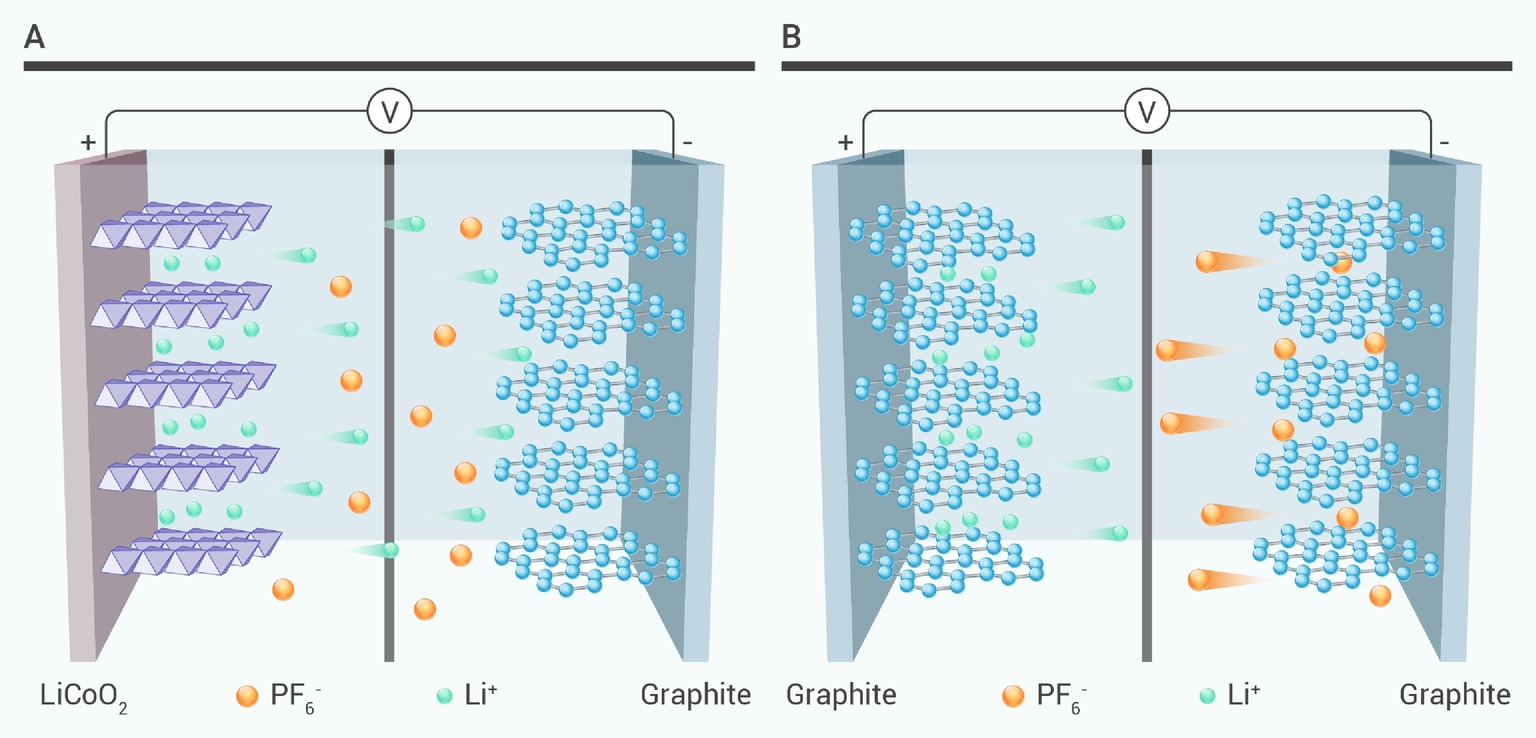
Figure 1.
Schematic diagram of the working mechanism of
-
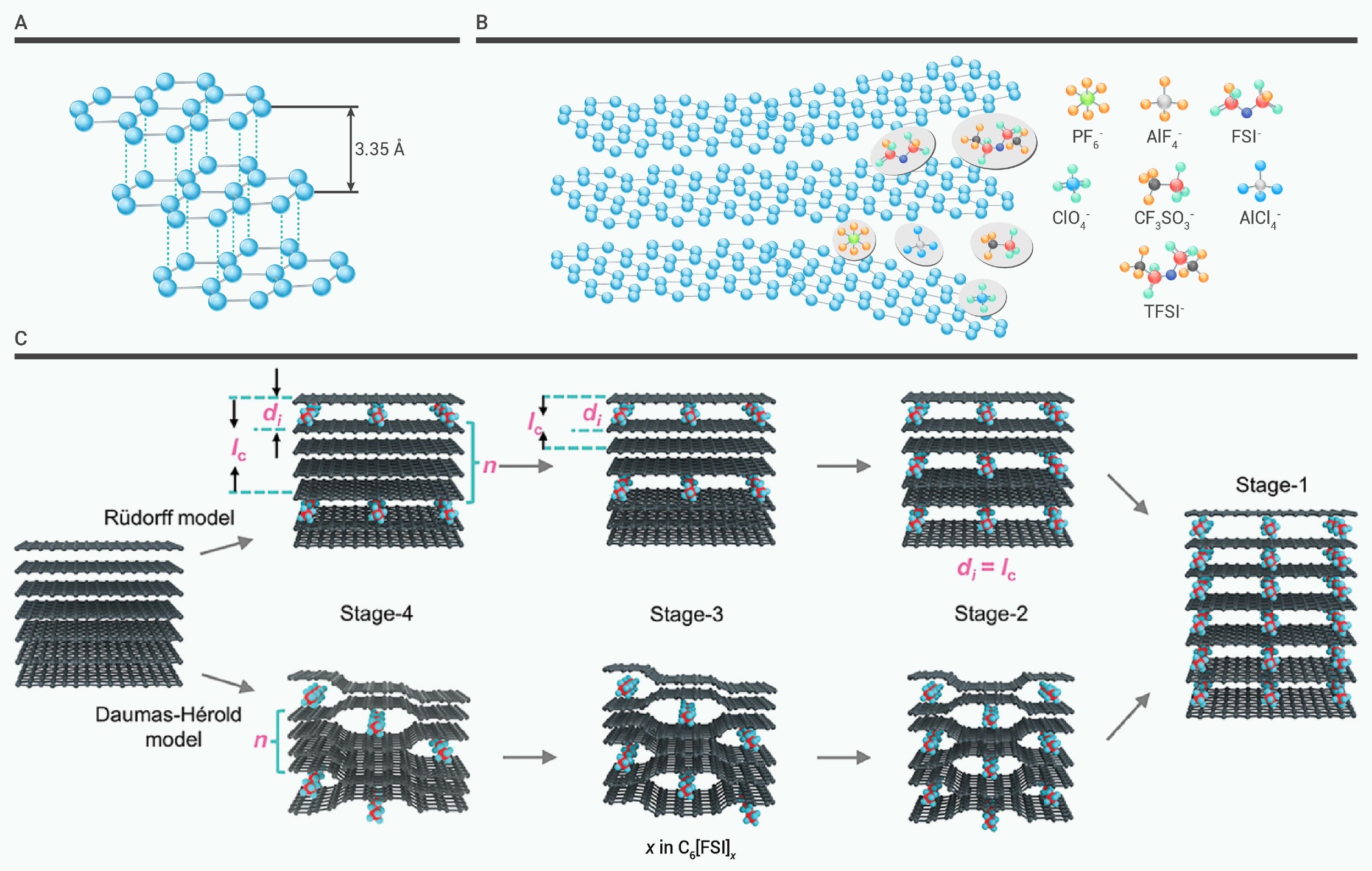
Figure 2.
Graphite structure and staging mechanism
-
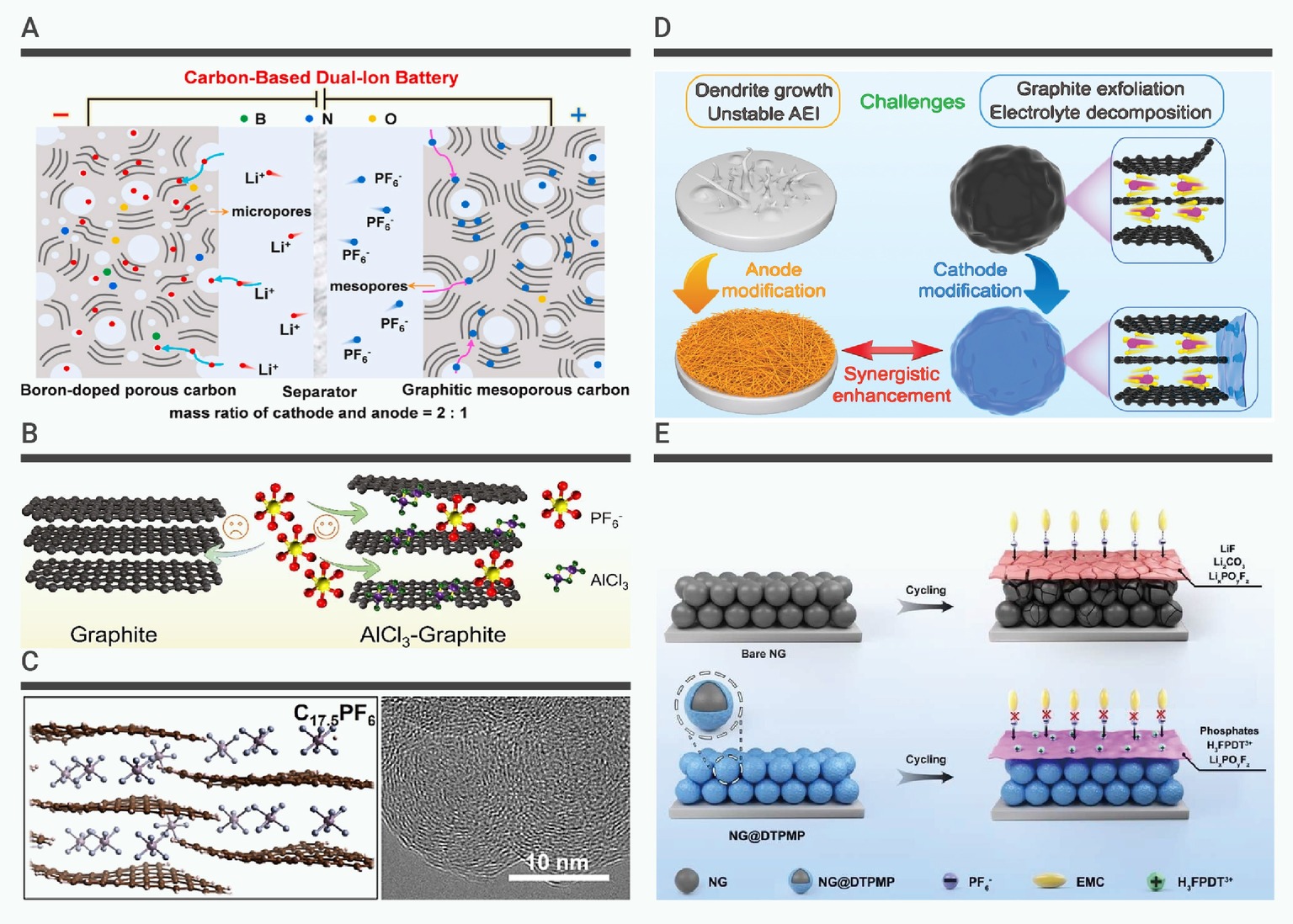
Figure 3.
Graphite optimization strategies
-
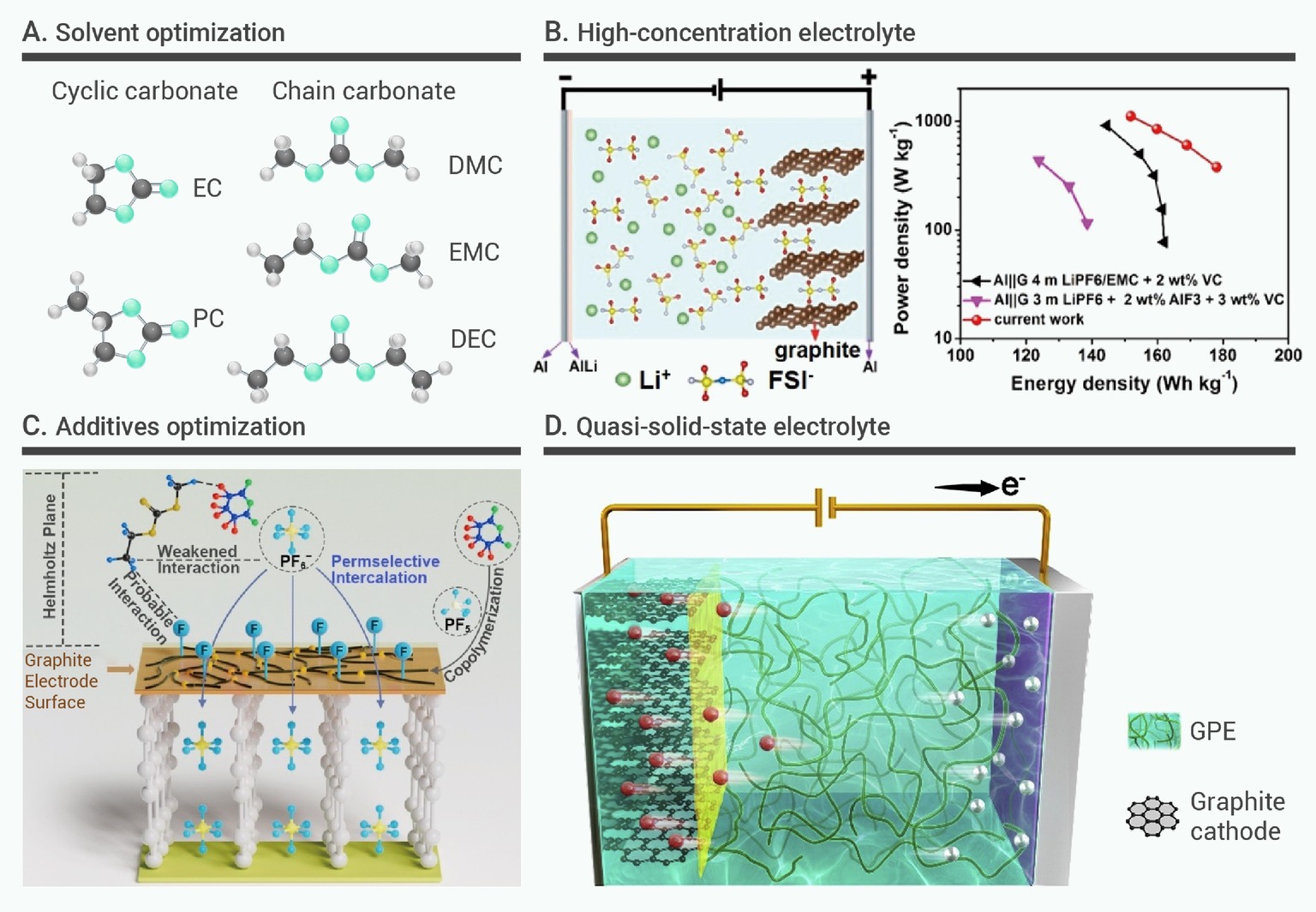
Figure 4.
Electrolyte optimization strategies
-
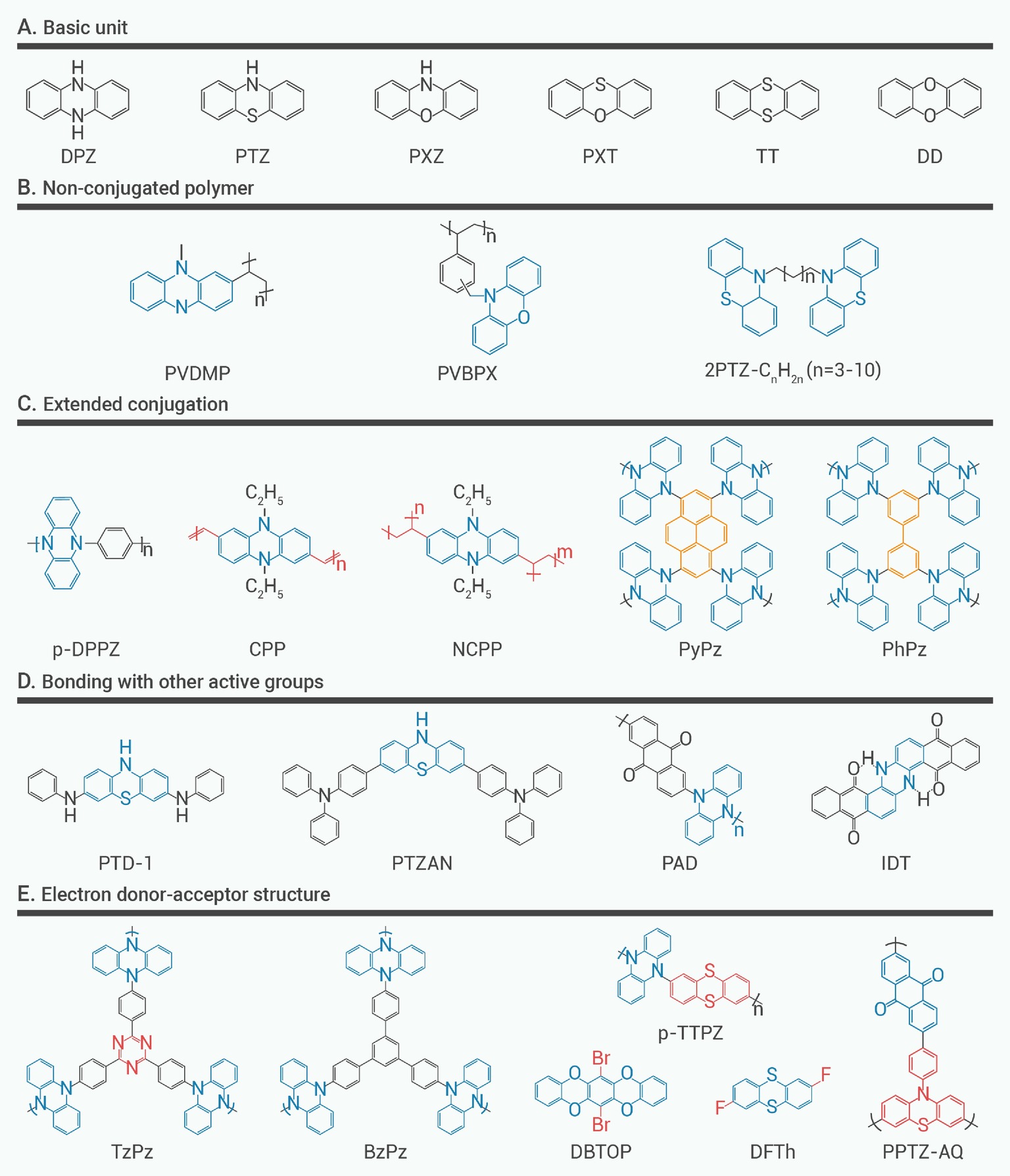
Figure 5.
Molecular structural and modification strategy of heterocyclic compounds.
-
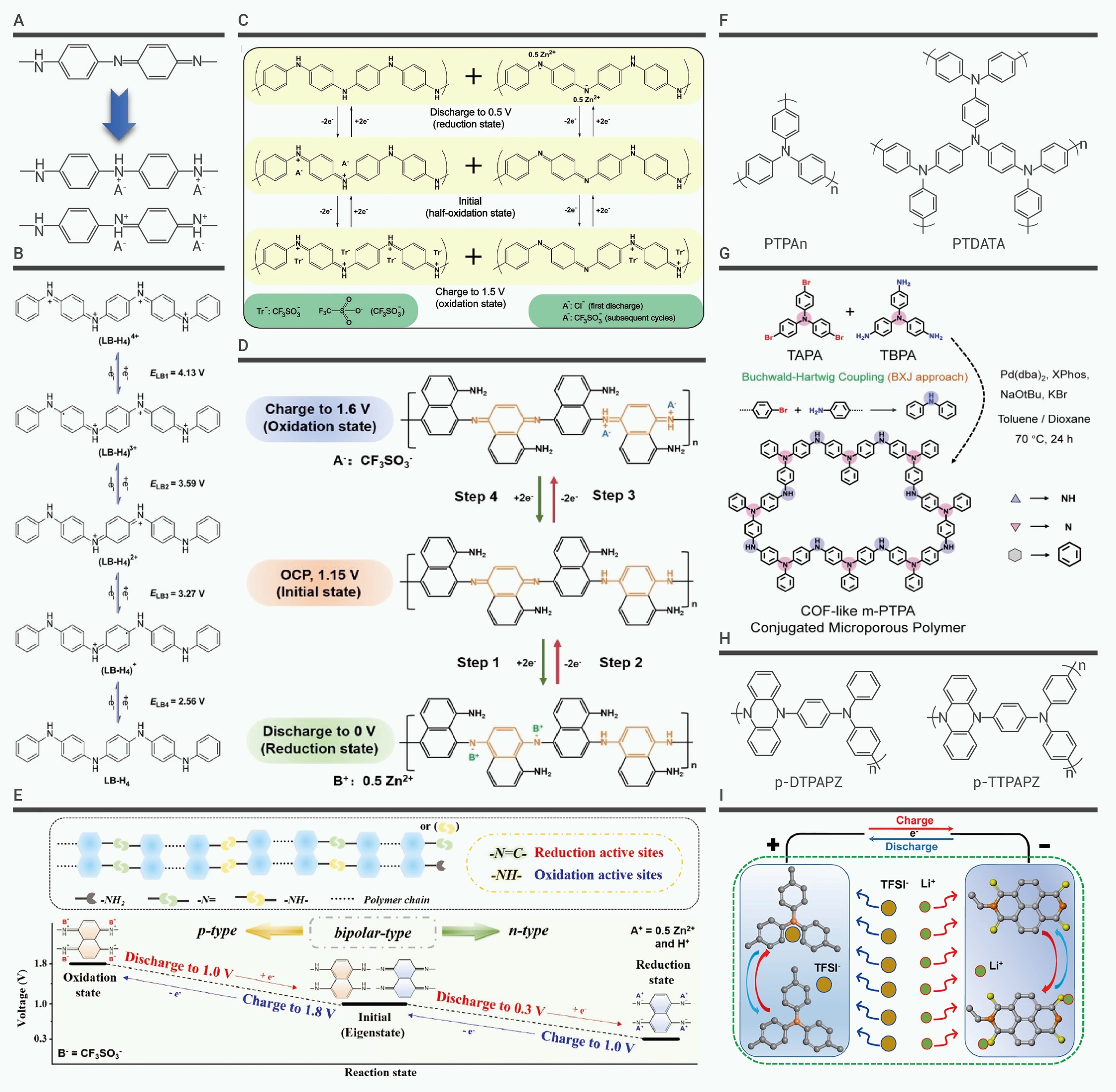
Figure 6.
Polyaniline and its derivates
-
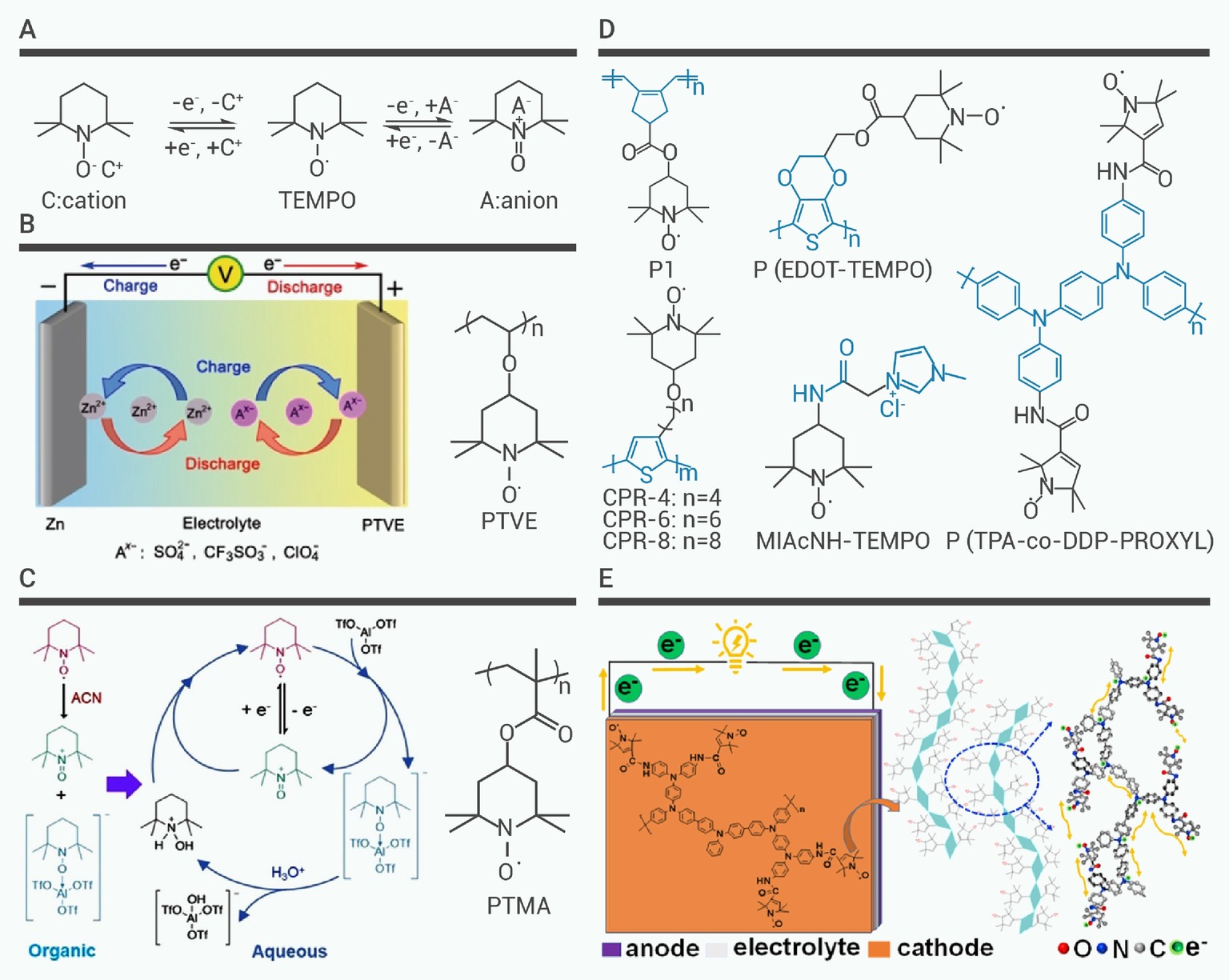
Figure 7.
Nitroxide radical compound and its derivates
-
Figure 8.
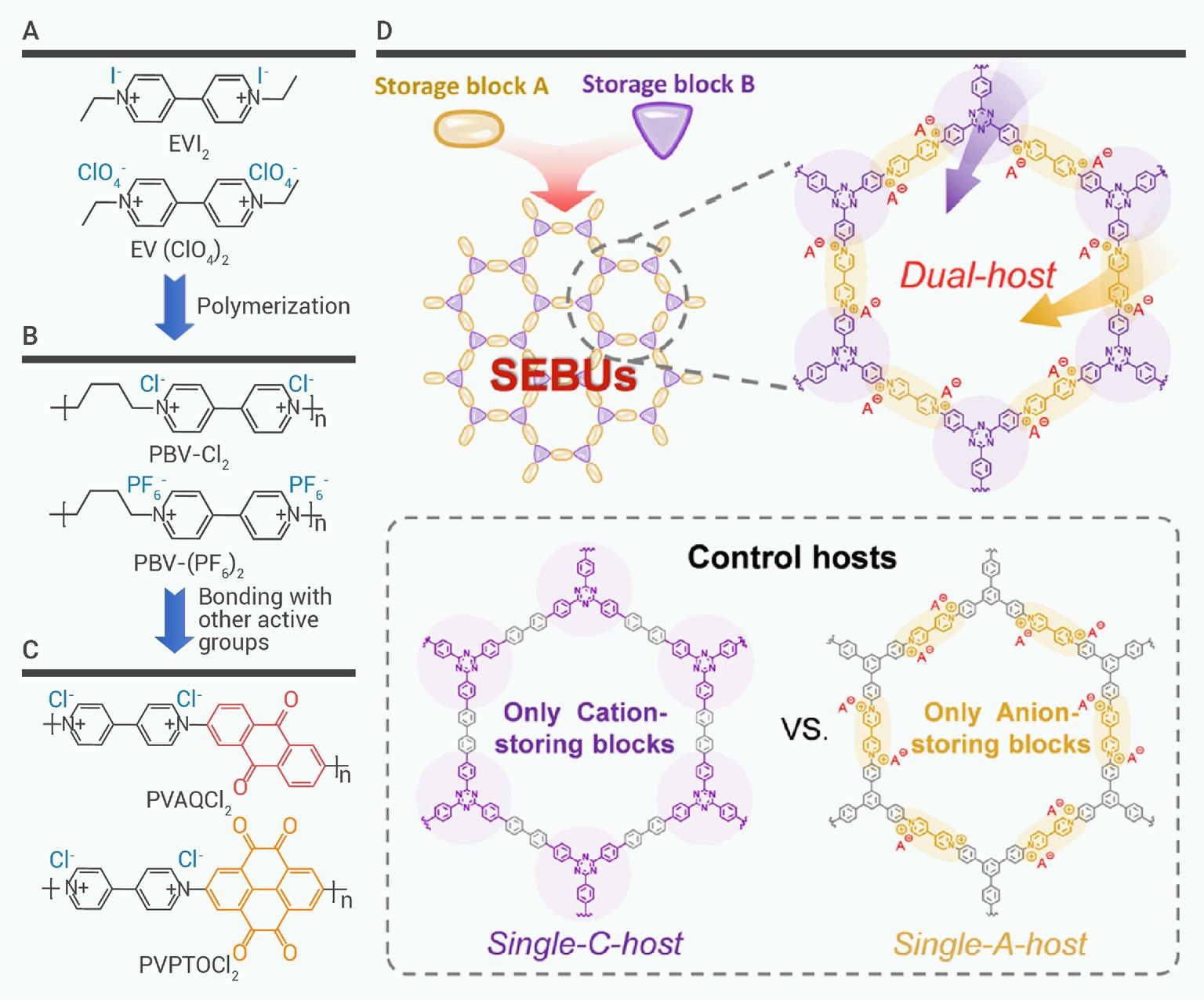
Viologen compounds. Structural development of viologen compounds:
-
Figure 9.
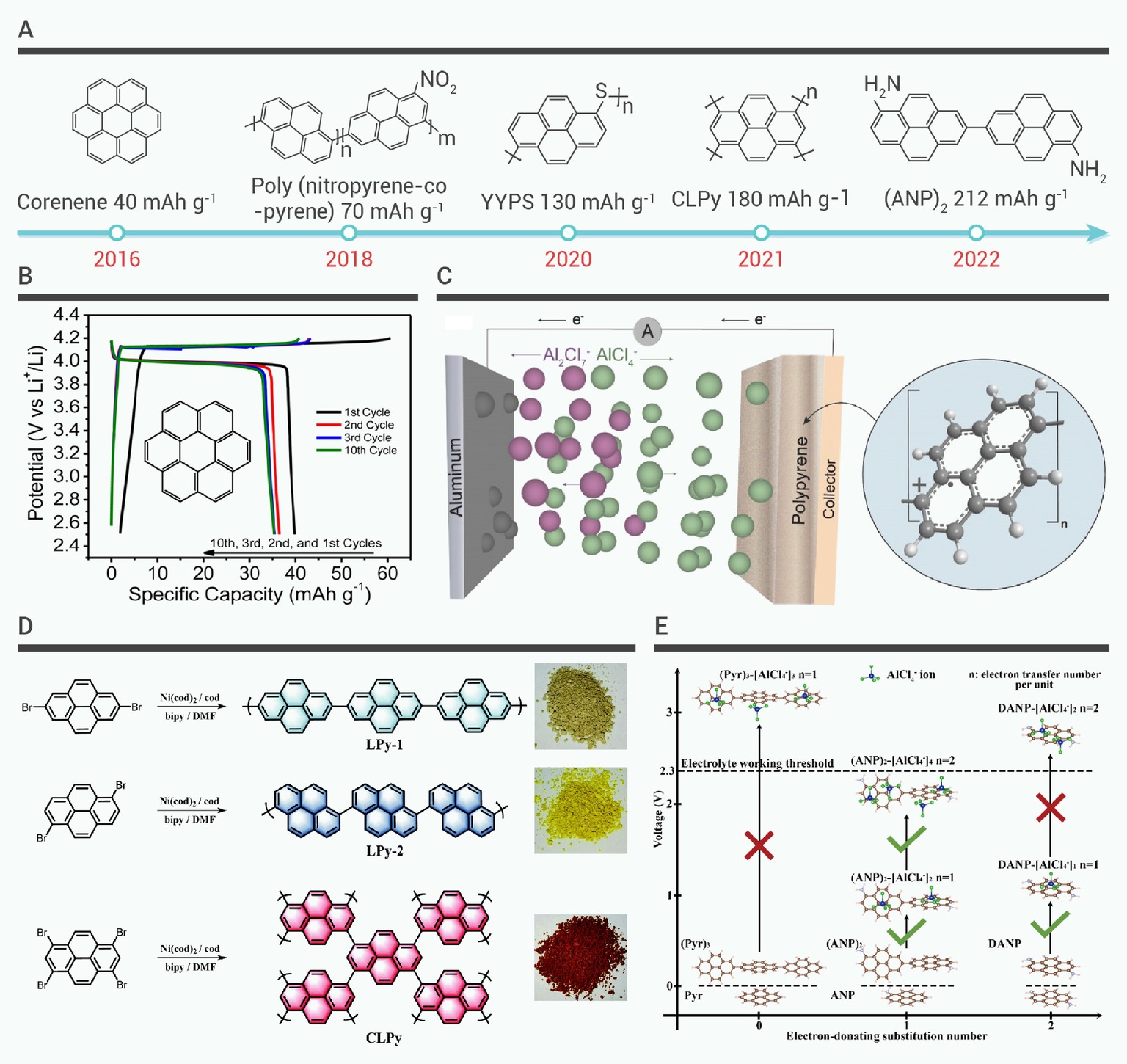
Polycyclic aromatic hydrocarbons (PAHs) and their derivatives
-
Figure 10.
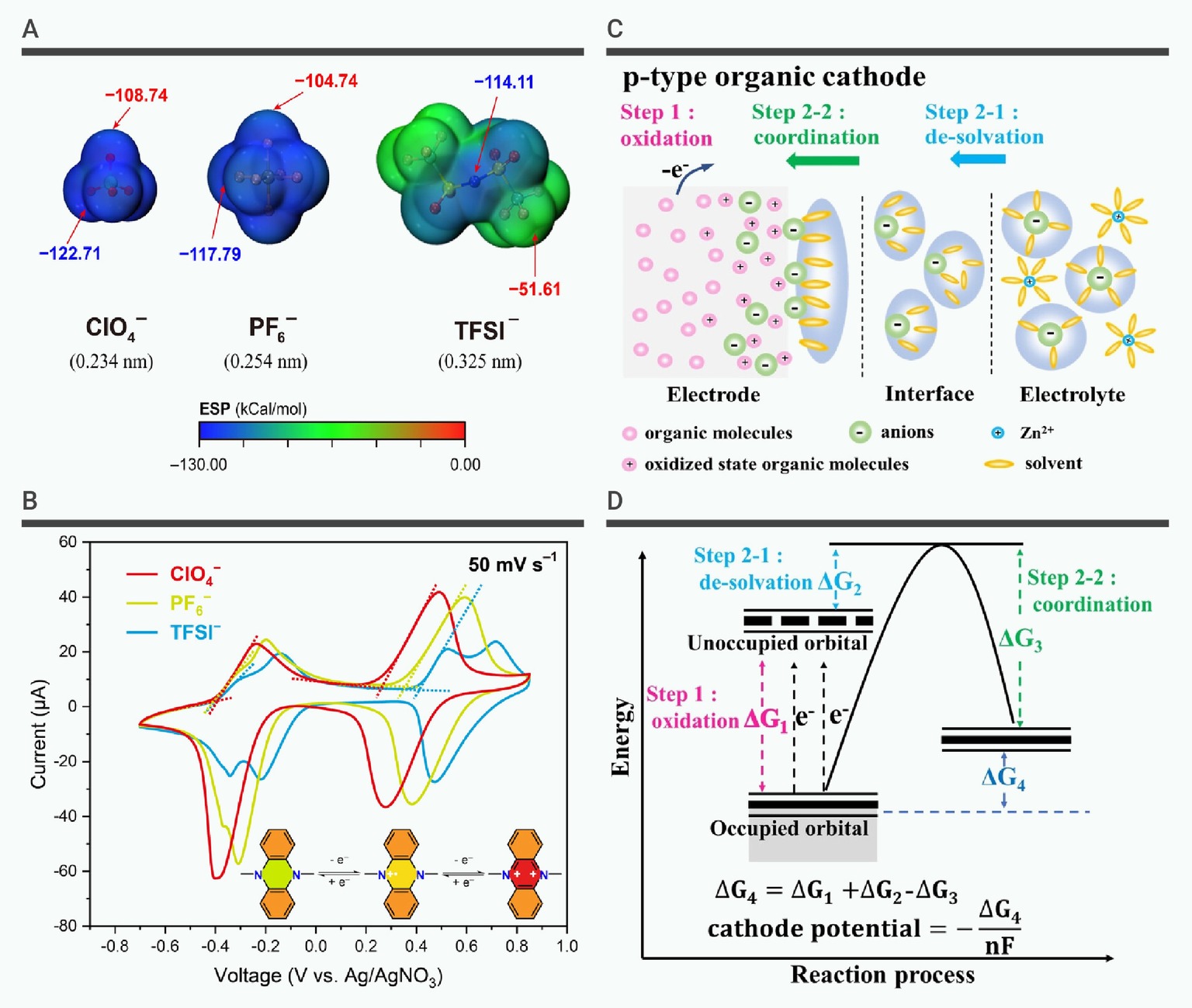
Electrolyte optimization of organic anion hosts
