
Recent advances in organic circularly polarized room-temperature phosphorescence: Materials and applications
-
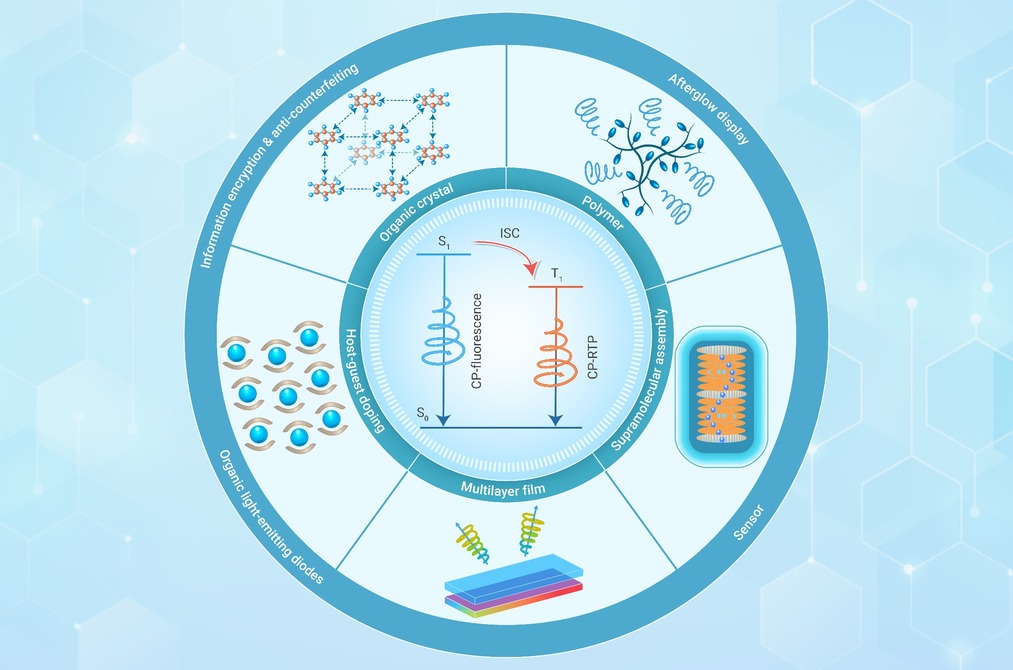
GRAPHICAL ABSTRACT
 DownLoad:
Full size image
DownLoad:
Full size image
-
PUBLIC SUMMARY
-
Overview of organic circularly polarized room-temperature phosphorescence (CP-RTP) materials.
Emphasis on molecular design strategies, structure-property relationships, and key material systems.
Discussion of application prospects and challenges in achieving high-performance CP-RTP systems.
-
-
ABSTRACT
Circularly polarized luminescence (CPL) has attracted significant attention for its potential in chiral recognition, 3D displays, and asymmetric catalysis. Among CPL-active systems, organic circularly polarized room-temperature phosphorescence (CP-RTP) materials stand out by combining long-lived emissive lifetimes with chiroptical activity, offering promising avenues in organic electronics. This review highlights recent advances in CP-RTP materials, emphasizing molecular design strategies, structure-property relationships, and emerging applications. Key material systems are systematically discussed, including organic crystals, polymers, host-guest doping systems, supramolecular assemblies, and multilayer systems, along with their emerging applications in information encryption and anti-counterfeiting, organic light-emitting diodes, afterglow display, and sensor. Additionally, we discuss the challenges and future opportunities in developing high-performance CP-RTP materials, with the aim of inspiring ongoing innovation in this rapidly advancing field. -

-
REFERENCES
[1] Lee H., Ahn H., Mun J., et al. (2018). Amino-acid- and peptide-directed synthesis of chiral plasmonic gold nanoparticles. Nature 556:360−365. DOI:10.1038/s41586-018-0034-1 [2] Grelet E. and Tortora M.M.C. (2024). Elucidating chirality transfer in liquid crystals of viruses. Nat. Mater. 23:1276−1282. DOI:10.1038/s41563-024-01897-x [3] Liu M., Zhang L. and Wang T. (2015). Supramolecular chirality in self-assembled systems. Chem. Rev. 115:7304−7397. DOI:10.1021/cr500671p [4] Wang H., Zhu X. and Liu M. (2025). Emergent chiral and topological nanoarchitectonics in self-assembled supramolecular systems. Chem. Soc. Rev. 54:5516−5550. DOI:10.1039/D2CS00259K [5] Yang Y., Da Costa R.C., Fuchter M.J., et al. (2013). Circularly polarized light detection by a chiral organic semiconductor transistor. Nat. Photonics 7:634−638. DOI:10.1038/NPHOTON.2013.176 [6] Zhang J., Wu K., Gao X., et al. (2024). Achiral and chiral ligands synergistically harness chiral self-assembly of inorganics. Sci. Adv. 10:eado5948. DOI:10.1126/sciadv.ado5948 [7] Maynard J.R.J., Gallagher P., Lozano D., et al. (2022). Mechanically axially chiral catenanes and noncanonical mechanically axially chiral rotaxanes. Nat. Chem. 14:1038−1044. DOI:10.1038/s41557-022-00973-6 [8] Long G., Sabatini R., Saidaminov M.I., et al. (2020). Chiral-perovskite optoelectronics. Nat. Rev. Mater. 5:423−439. DOI:10.1038/s41578-020-0181-5 [9] Lininger A., Palermo G., Guglielmelli A., et al. (2023). Chirality in light-matter interaction. Adv. Mater. 35:2107325. DOI:10.1002/adma.202107325 [10] Wan J., Sun L., Sun X., et al. (2024). Cu2+-dominated chirality transfer from chiral molecules to concave chiral au nanoparticles. J. Am. Chem. Soc. 146:10640−10654. DOI:10.1021/jacs.4c00322 [11] Lozano-Gómez D., Iqbal Y. and Vojta M. (2024). A classical chiral spin liquid from chiral interactions on the pyrochlore lattice. Nat. Commun. 15:10162. DOI:10.1038/s41467-024-54558-7 [12] Shi Y., Duan P., Huo S., et al. (2018). Endowing perovskite nanocrystals with circularly polarized luminescence. Adv. Mater. 30:1705011. DOI:10.1002/adma.201705011 [13] MacKenzie L.E. and Pal R. (2021). Circularly polarized lanthanide luminescence for advanced security inks. Nat. Rev. Chem. 5:109−124. DOI:10.1038/s41570-020-00235-4 [14] Fan H., Li K., Tu T., et al. (2022). ATP-induced emergent circularly polarized luminescence and encryption. Angew. Chem. Int. Ed. 61:e202200727. DOI:10.1002/anie.202200727 [15] Yang D., Duan P., Zhang L., et al. (2017). Chirality and energy transfer amplified circularly polarized luminescence in composite nanohelix. Nat. Commun. 8:15727. DOI:10.1038/ncomms15727 [16] Kumar V., Paez J.L., Miguez-Lago S., et al. (2025). Chiral nanographenes exhibiting circularly polarized luminescence. Chem. Soc. Rev. 54:4922−4947. DOI:10.1039/d4cs00745j [17] Gong Z.L., Li Z.Q. and Zhong Y.W. (2022). Circularly polarized luminescence of coordination aggregates. Aggregate 3:e177. DOI:10.1002/agt2.177 [18] Sang Y., Han J., Zhao T., et al. (2020). Circularly polarized luminescence in nanoassemblies: Generation, amplification, and application. Adv. Mater. 32:1900110. DOI:10.1002/adma.201900110 [19] Trippe S. (2014). Polarization and polarimetry: A review. J. Korean Astron. Soc. 47:15−39. DOI:10.5303/JKAS.2014.47.1.15 [20] Yu N., Aieta F., Genevet P., et al. (2012). A broadband, background-free quarter-wave plate based on plasmonic metasurfaces. Nano Lett. 12:6328−6333. DOI:10.1021/nl303445u [21] Baek K., Lee D., Lee Y., et al. (2019). Simultaneous emission of orthogonal handedness in circular polarization from a single luminophore. Light Sci. Appl. 8:120. DOI:10.1038/s41377-019-0232-0 [22] Zhang Y., Yu S., Han B., et al. (2022). Circularly polarized luminescence in chiral materials. Matter 5:837−875. DOI:10.1016/j.matt.2022.01.001 [23] Zhao T., Han J., Jin X., et al. (2019). Enhanced circularly polarized luminescence from reorganized chiral emitters on the skeleton of a zeolitic imidazolate framework. Angew. Chem. Int. Ed. 58:4978−4982. DOI:10.1002/anie.201900052 [24] Carr R., Evans N.H. and Parker D. (2012). Lanthanide complexes as chiral probes exploiting circularly polarized luminescence. Chem. Soc. Rev. 41:7673−7686. DOI:10.1039/c2cs35242g [25] Liu J., Su X., Xu Y., et al. (2025). Mechano-thermochemical synthesis of chiral multicentre fluorescent MOFs for chiral VOCs detection and adsorption. Sens. Actuators B Chem. 429:137277. DOI:10.1016/j.snb.2025.137277 [26] Xiong R., Yu S., Smith M.J., et al. (2019). Self-assembly of emissive nanocellulose/quantum dot nanostructures for chiral fluorescent materials. ACS Nano 13:9074−9081. DOI:10.1021/acsnano.9b03305 [27] Takaishi K., Hinoide S., Matsumoto T., et al. (2019). Axially chiralperi-xanthenoxanthenes as a circularly polarized luminophore. J. Am. Chem. Soc. 141:11852−11857. DOI:10.1021/jacs.9b06240 [28] Feuillastre S., Pauton M., Gao L., et al. (2016). Design and synthesis of new circularly polarized thermally activated delayed fluorescence emitters. J. Am. Chem. Soc. 138:3990−3993. DOI:10.1021/jacs.6b00850 [29] Wang X., Lu X., Hu R., et al. (2025). Chiral blue TADF materials enhance the spin transitions to improve emission quantum yield. Nano Lett. 25:3344−3350. DOI:10.1021/acs.nanolett.4c06632 [30] Chen L., Zou P., Chen J., et al. (2025). Hyperfluorescence circularly polarized OLEDs consisting of chiral TADF sensitizers and achiral multi-resonance emitters. Nat. Commun. 16:1656. DOI:10.1038/s41467-025-56923-6 [31] Liu G. and Zhao Y. (2017). Switching between phosphorescence and fluorescence controlled by chiral self-assembly. Adv. Sci. 4:1700021. DOI:10.1002/advs.201700021 [32] Bai M., Qin L., Zeng X., et al. (2024). Dithiocarbonate-protected au25 nanorods of a Chiral D5 configuration and NIR-II phosphorescence. J. Am. Chem. Soc. 146:12734−12742. DOI:10.1021/jacs.4c02411 [33] Jiang Z., Wang J., Gao T., et al. (2020). Rational design of axially chiral platinabinaphthalenes with aggregation-induced emission for red circularly polarized phosphorescent organic light-emitting diodes. ACS Appl. Mater. Interfaces 12:9520−9527. DOI:10.1021/acsami.9b20568 [34] Li B., Li Y., Chan M.H., et al. (2021). Phosphorescent cyclometalated platinum(II) enantiomers with circularly polarized luminescence properties and their assembly behaviors. J. Am. Chem. Soc. 143:21676−21684. DOI:10.1021/jacs.1c10943 [35] Zou X., Gan N., Gao Y., et al. (2024). Organic circularly polarized room-temperature phosphorescence: strategies, applications and challenges. Angew. Chem. Int. Ed. 64:e202417906. DOI:10.1002/anie.202417906 [36] Liu J., Zhou X., Tang X., et al. (2024). Circularly polarized organic ultralong room‐temperature phosphorescence: Generation, enhancement, and application. Adv. Funct. Mater. 35:2414086. DOI:10.1002/adfm.202414086 [37] Patil Y., Demangeat C. and Favereau L. (2023). Recent advances in room temperature phosphorescence of chiral organic materials. Chirality 35:390−410. DOI:10.1002/chir.23551 [38] Wang T., Liu M., Mao J., et al. (2024). Recent advances in long-persistent luminescence materials based on host-guest architecture. Chin. Chem. Lett. 35:108385. DOI:10.1016/j.cclet.2023.108385 [39] Tao Y., Chen R., Li H., et al. (2018). Resonance-activated spin-flipping for efficient organic ultralong room-temperature phosphorescence. Adv. Mater. 30:1803856. DOI:10.1002/adma.201803856 [40] Jin J., Jiang H., Yang Q., et al. (2020). Thermally activated triplet exciton release for highly efficient tri-mode organic afterglow. Nat. Commun. 11:842. DOI:10.1038/s41467-020-14669-3 [41] Li H., Li X., Su H., et al. (2024). Highly stable color-tunable organic long-persistent luminescence from a single-component exciplex copolymer for in vitro antibacterial. Chem. Sci. 15:14880−14887. DOI:10.1039/D4SC02839B [42] Xing C., Qi Z., Ma Y., et al. (2025). Dynamic ultralong phosphorescence and optical waveguiding switches in silver-organic complex via reversible single-crystal-to-single-crystal conversion. Angew. Chem. Int. Ed. 64:e202502782. DOI:10.1002/anie.202502782 [43] Ostroverkhova O. (2016). Organic optoelectronic materials: Mechanisms and applications. Chem. Rev. 116:13279−13412. DOI:10.1021/acs.chemrev.6b00127 [44] Dai M., Qi Z. and Yan D. (2025). In situ generation of microwire heterojunctions with flexible optical waveguide and hydration-mediated photochromism. Angew. Chem. Int. Ed. 64:e202420139. DOI:10.1002/anie.202420139 [45] Zinna F. and Di Bari L. (2015). Lanthanide circularly polarized luminescence: Bases and applications. Chirality 27:1−13. DOI:10.1002/chir.22382 [46] Hu M., Feng H., Yuan Y., et al. (2020). Chiral AIEgens-chiral recognition, CPL materials and other chiral applications. Coord. Chem. Rev. 416:213329. DOI:10.1016/j.ccr.2020.213329 [47] Chen W., Tian Z., Li Y., et al. (2018). Long-persistent circularly polarized phosphorescence from chiral organic ionic crystals. Chem.-Eur. J. 24:17444−17448. DOI:10.1002/chem.201804342 [48] Ye W., Meng Z., Zhan G., et al. (2024). High-performance circularly polarized phosphorescence by confining isolated chromophores with chiral counterions. Adv. Mater. 36:2410073. DOI:10.1002/adma.202410073 [49] Yang C., Fu S., Li S., et al. (2025). A chiral cocrystal strategy producing room-temperature phosphorescence and enhancing circularly polarized luminescence. Adv. Opt. Mater. 13:2402522. DOI:10.1002/adom.202402522 [50] Yang B., Yan S., Zhang Y., et al. (2024). Double-model decay strategy integrating persistent photogenic radicaloids with dynamic circularly polarized doublet radiance and triplet afterglow. J. Am. Chem. Soc. 146:7668−7678. DOI:10.1021/jacs.3c14262 [51] Li H., Li H., Wang W., et al. (2020). Stimuli-responsive circularly polarized organic ultralong room temperature phosphorescence. Angew. Chem. Int. Ed. 59:4756−4762. DOI:10.1002/anie.201915164 [52] Li H., Gu J., Wang Z., et al. (2022). Single-component color-tunable circularly polarized organic afterglow through chiral clusterization. Nat. Commun. 13:429. DOI:10.1038/s41467-022-28070-9 [53] Yu L., Gao Z., Cheng H., et al. (2023). Time-dependent colorful circularly polarized organic ultralong room temperature phosphorescence from a single-component chiral molecule. Small 19:2303579. DOI:10.1002/smll.202303579 [54] Ma C., Ma H., Ling K., et al. (2018). Insight into chirality on molecular stacking for tunable ultralong organic phosphorescence. J. Mater. Chem. C 6:10179−10183. DOI:10.1039/C8TC03297A [55] Wu X., Huang C., Chen D., et al. (2020). Exploiting racemism enhanced organic room-temperature phosphorescence to demonstrate wallach’s rule in the lighting chiral chromophores. Nat. Commun. 11:2145. DOI:10.1038/s41467-020-15976-5 [56] Favereau L., Quinton C., Poriel C., et al. (2020). Persistent organic room-temperature phosphorescence in cyclohexane-trans-1,2-bisphthalimide derivatives: The dramatic impact of heterochiral vs homochiral interactions. J. Phys. Chem. Lett. 11:6426−6434. DOI:10.1021/acs.jpclett.0c01816 [57] Qin M., Chu Y., Wu Z., et al. (2025). Room-temperature phosphorescence and aggregation behavior in chiral heavy-atom-free organic molecules. Spectrochim. Acta A Mol. Biomol. Spectrosc. 326:125247. DOI:10.1016/j.saa.2024.125247 [58] Liang X., Liu T., Yan Z., et al. (2019). Organic room-temperature phosphorescence with strong circularly polarized luminescence based on paracyclophanes. Angew. Chem. Int. Ed. 58:17220−17225. DOI:10.1002/anie.201909076 [59] Ji B., Qin L. and Yu Y. (2025). Dynamic structural colors in helical superstructures: From supramolecules to polymers. Chin. J. Polym. Sci. 43:406−428. DOI:10.1007/s10118-025-3279-9 [60] Li S., Tang Y., Fan Q., et al. (2024). When quantum dots meet blue phase liquid crystal elastomers: Visualized full-color and mechanically-switchable circularly polarized luminescence. Light Sci. Appl. 13:140. DOI:10.1038/s41377-024-01479-1 [61] Luo J., Li Y., Li H., et al. (2024). Ultrastrong circularly polarized luminescence triggered by the synergistic effect of chiral coassembly and selective reflective cholesteric liquid crystal film. ACS Mater. Lett. 6:2957−2963. DOI:10.1021/acsmaterialslett.4c00782 [62] Gong W., Huang G., Yuan Y., et al. (2023). Strong and multicolor-tunable pure organic circularly polarized room-temperature phosphorescence from cholesteric liquid crystal. Adv. Opt. Mater. 11:2300745. DOI:10.1002/adom.202300745 [63] Gan N., Shi H., An Z., et al. (2018). Recent advances in polymer-based metal-free room-temperature phosphorescent materials. Adv. Funct. Mater. 28:1802657. DOI:10.1002/adfm.201802657 [64] Miao Y., Lin F., Guo D., et al. (2024). Stable and ultralong room-temperature phosphorescent copolymers with excellent adhesion, resistance, and toughness. Sci. Adv. 10:eadk3354. DOI:10.1126/sciadv.adk3354 [65] Wu S., Zhang H., Mao Z., et al. (2023). Achieving stable and switchable ultralong room-temperature phosphorescence from polymer-based luminescent materials with three-dimensional covalent networks for light-manipulated anticounterfeiting. ACS Appl. Mater. Interfaces 15:39896−39904. DOI:10.1021/acsami.3c07900 [66] Zhang Y., Zhang S., Liu G., et al. (2023). Rational molecular and doping strategies to obtain organic polymers with ultralong RTP. Chem. Sci. 14:5177−5181. DOI:10.1039/D3SC01276J [67] Gan N., Zou X., Qian Z., et al. (2024). Stretchable phosphorescent polymers by multiphase engineering. Nat. Commun. 15:4113. DOI:10.1038/s41467-024-47673-y [68] Gu L., Ye W., Liang X., et al. (2021). Circularly polarized organic room temperature phosphorescence from amorphous copolymers. J. Am. Chem. Soc. 143:18527−18535. DOI:10.1021/jacs.1c08118 [69] Liu R., Ding B., Liu D., et al. (2021). Switchable circularly polarized room-temperature phosphorescence based on pure organic amorphous binaphthyl polymer. Chem. Eng. J. 421:129732. DOI:10.1016/j.cej.2021.129732 [70] Zhang L., Jin Y., Wang Y., et al. (2023). High-quality circularly polarized organic afterglow from nonconjugated amorphous chiral copolymers. ACS Appl. Mater. Interfaces 15:49623−49632. DOI:10.1021/acsami.3c10605 [71] Zhang C., Yan X., Gao Z., et al. (2024). Self-confining isolated chiral chromophore for circularly polarized organic afterglow from amorphous polymer systems. Chem. Eng. J. 485:149886. DOI:10.1016/j.cej.2024.149886 [72] Wang H., Qian Y., Li Q., et al. (2025). Top-down approach for easy processing, cost-effective, biodegradable chiral photonic materials with spontaneous circularly polarized room-temperature phosphorescence activity. Chem. Eng. J. 507:160357. DOI:10.1016/j.cej.2025.160357 [73] Liu Y., Ma J., Yang Y., et al. (2024). Smart chiral liquid crystal elastomers: Design, properties and application. Smart Mol. 2:e20230025. DOI:10.1002/smo.20230025 [74] Gong W., Zhou M., Xiao L., et al. (2024). Multicolor-tunable and time-dependent circularly polarized room-temperature phosphorescence from liquid crystal copolymers. Adv. Opt. Mater. 12:2301922. DOI:10.1002/adom.202301922 [75] Liu Z., Deng F., Huang S., et al. (2024). Synthesis and properties of mesogen-jacketed liquid crystal copolymers with long-lived circularly polarized room-temperature phosphorescence. ACS Appl. Polym. Mater. 6:9582−9592. DOI:10.1021/acsapm.4c01384 [76] Yang H., Wang Y., Yao X., et al. (2024). Efficient and ultralong room temperature phosphorescence from isolated molecules under visible light excitation. J. Am. Chem. Soc. 147:1474−1481. DOI:10.1021/jacs.4c08889 [77] Li X., Li W., Deng Z., et al. (2025). Bright and ultralong organic phosphorescence via sulfonic acid functionalization for high-contrast real-time light-writing display. J. Am. Chem. Soc. 147:14198−14210. DOI:10.1021/jacs.4c17142 [78] Li Z., Yue Q., He Y., et al. (2024). Achieving colorful ultralong-lifetime room-temperature phosphorescence based on benzocarbazole derivatives through resonance energy transfer. ACS Appl. Mater. Interfaces 16:25415−25421. DOI:10.1021/acsami.4c04921 [79] Xu B., Jia Y., Ning H., et al. (2024). Visible light-activated ultralong-lived triplet excitons of carbon dots for white-light manipulated anti-counterfeiting. Small 20:2304958. DOI:10.1002/smll.202304958 [80] Guo G., Li H., Yan Y., et al. (2024). A dynamic h-bonding network enables stimuli‐responsive color-tunable chiral afterglow polymer for 4d encryption. Adv. Mater. 36:2412100. DOI:10.1002/adma.202412100 [81] Huang W., Fu C., Liang Z., et al. (2022). Strong circularly-polarized room-temperature phosphorescence from a feasibly separable scaffold of bidibenzo[b, d]furan with locked axial chirality. Angew. Chem. Int. Ed. 61:e202202977. DOI:10.1002/anie.202202977 [82] Chen R., Feng R., Huang Z., et al. (2024). Chiral polymer-organic molecule composite with circularly polarized thermally activated delayed fluorescence and room-temperature phosphorescence by bridging effect of hydrogen bond. Adv. Funct. Mater. 34:2404602. DOI:10.1002/adfm.202404602 [83] Wei L., Guo S., Zhang B., et al. (2024). Tuning circularly polarized afterglow color via modulation of energy and chirality transfer in co-doped films. Adv. Funct. Mater. 34:2409681. DOI:10.1002/adfm.202409681 [84] Zhang K., Luo L., Li W., et al. (2017). High-performance dissolved oxygen sensors based on platinum(ii) porphyrin embedded in polystyrene beads. New J. Chem. 41:6646−6652. DOI:10.1039/C7NJ01025G [85] Qiu L., Liang J., Wu J., et al. (2024). Room-temperature phosphorescence in polymer-blend matrices with heterogeneous structures. ACS Appl. Polym. Mater. 6:9400−9405. DOI:10.1021/acsapm.4c01946 [86] Liu G., Zhang S., Chen J., et al. (2025). Highly elastic full hydrocarbon ultralong RTP polymers with visible light excitable s0 →t1 population. Adv. Opt. Mater. 13:2402847. DOI:10.1002/adom.202402847 [87] Fu S., Chen Y., Xie Y., et al. (2024). Photoactivated circularly polarized room-temperature phosphorescence from phenoselenazine derivative and its application in information security†. Chin. J. Chem. 42:2499−2506. DOI:10.1002/cjoc.202400361 [88] Garain S., Sarkar S., Chandra Garain B., et al. (2022). Chiral arylene diimide phosphors: Circularly polarized ambient phosphorescence from bischromophoric pyromellitic diimides. Angew. Chem. Int. Ed. 61:e202115773. DOI:10.1002/anie.202115773 [89] Huang Z., He Z., Ding B., et al. (2022). Photoprogrammable circularly polarized phosphorescence switching of chiral helical polyacetylene thin films. Nat. Commun. 13:7841. DOI:10.1038/s41467-022-35625-3 [90] Chen K., Zhang Y., Lei Y., et al. (2024). Twofold rigidity activates ultralong organic high-temperature phosphorescence. Nat. Commun. 15:1269. DOI:10.1038/s41467-024-45678-1 [91] Guo Z., Bian Y., Zhang L., et al. (2024). Multi-stimuli-responsive carbon dots with intrinsic photochromism and in situ radical afterglow. Adv. Mater. 36:2409361. DOI:10.1002/adma.202409361 [92] Jiang Y., Zhang C., Wang R., et al. (2024). Chiral-guest induced multicolor-tunable circularly polarized room temperature phosphorescence. Adv. Opt. Mater. 12:2302482. DOI:10.1002/adom.202302482 [93] Wang T., Liu M., Feng W., et al. (2023). Long-lived charge separation induced organic long-persistent luminescence with circularly polarized characteristic. Adv. Opt. Mater. 11:2202613. DOI:10.1002/adom.202202613 [94] Li J., Hao S., Li M., et al. (2025). Triplet energy gap-regulated room temperature phosphorescence in host-guest doped systems. Angew. Chem. Int. Ed. 64:e202417426. DOI:10.1002/anie.202417426 [95] Liu Z., Ding X., Cai L., et al. (2025). Cascade energy transfer endows phosphorescent carbon dots-based films with tunable and broadband afterglow for fingerprint recognition and anticounterfeiting. Chem. Eng. J. 506:160311. DOI:10.1016/j.cej.2025.160311 [96] Li M., Gao Q., Yan Z., et al. (2025). Full-color afterglows from nonconventional room temperature phosphorescence material realized by triplet-to-singlet förster-resonance energy transfer. Chem. Eng. J. 509:161437. DOI:10.1016/j.cej.2025.161437 [97] Zeng M., Wang W., Zhang S., et al. (2024). Enabling robust blue circularly polarized organic afterglow through self-confining isolated chiral chromophore. Nat. Commun. 15:3053. DOI:10.1038/s41467-024-47240-5 [98] Yang K., Zhang R., Liu Y., et al. (2024). Circularly polarized phosphorescence energy transfer combined with chirality-selective absorption for modulating full-color and white circularly polarized long afterglow. Angew. Chem. Int. Ed. 63:e202409514. DOI:10.1002/anie.202409514 [99] Wang F., Zhou S., Zhang Y., et al. (2024). Chiral phosphorescent carbonized polymer dots relayed light-harvesting system for color-tunable circularly polarized room temperature phosphorescence. Small 20:2306969. DOI:10.1002/smll.202306969 [100] Gao Y., Deng Z., Wang F., et al. (2022). Achieving long lifetime of room-temperature phosphorescence via constructing vitrimer networks. Mater. Chem. Front. 6:1068−1078. DOI:10.1039/d2qm00003b [101] Xiao J., Deng J., Wang X., et al. (2024). Stable persistent room-temperature phosphorescent hydrogels based on ionically crosslinked nonaromatic carboxylate polymers. Small 20:2405615. DOI:10.1002/smll.202405615 [102] Guo H., Cao M., Liu R., et al. (2024). Photocured room temperature phosphorescent materials from lignosulfonate. Nat. Commun. 15:1590. DOI:10.1038/s41467-024-45622-3 [103] Wang B., Li Y., Zhang C., et al. (2024). Circularly polarized room-temperature phosphorescence enhanced by dynamic cross-linked network fixation. New J Chem 48:9030−9035. DOI:10.1039/D4NJ00510D [104] You J., Yin C., Wang S., et al. (2024). Responsive circularly polarized ultralong room temperature phosphorescence materials with easy-to-scale and chiral-sensing performance. Nat. Commun. 15:7149. DOI:10.1038/s41467-024-51203-1 [105] Yan X., Peng H., Xiang Y., et al. (2022). Recent advances on host-guest material systems toward organic room temperature phosphorescence. Small 18:2104073. DOI:10.1002/smll.202104073 [106] Zhao W., He Z. and Tang B.Z. (2020). Room-temperature phosphorescence from organic aggregates. Nat. Rev. Mater. 5:869−885. DOI:10.1038/s41578-020-0223-z [107] Gao L., Huang J., Qu L., et al. (2023). Stepwise taming of triplet excitons via multiple confinements in intrinsic polymers for long-lived room-temperature phosphorescence. Nat. Commun. 14:7252. DOI:10.1038/s41467-023-43133-1 [108] Wang Y., Gao M., Ren J., et al. (2023). Exciplex-induced TADF, persistent RTP and ML in a host-guest doping system. Mater. Chem. Front. 7:1093−1099. DOI:10.1039/d2qm01205g [109] Demangeat C., Tang Y., Dou Y., et al. (2023). Necessary and sufficient condition for organic room-temperature phosphorescence from host-guest doped crystalline systems. Adv. Opt. Mater. 11:2300289. DOI:10.1002/adom.202300289 [110] Law A.W.K., Cheung T.S., Zhang J., et al. (2024). Sergeant-and-soldier effect in an organic room-temperature phosphorescent host-guest system. Adv. Mater. 36:2410739. DOI:10.1002/adma.202410739 [111] Hirata S. and Vacha M. (2016). Circularly polarized persistent room-temperature phosphorescence from metal-free chiral aromatics in air. J. Phys. Chem. Lett. 7:1539−1545. DOI:10.1021/acs.jpclett.6b00554 [112] Tanaka S., Sakamaki D., Haruta N., et al. (2023). A double heterohelicene composed of two benzo[b]phenothiazine exhibiting intense room-temperature circularly polarized phosphorescence. J. Mater. Chem. C 11:4846−4854. DOI:10.1039/D3TC00871A [113] Wang L., Hao A. and Xing P. (2022). Steroid-aromatics clathrates as chiroptical materials with circularly polarized luminescence and phosphorescence. ACS Appl. Mater. Interfaces 14:44902−44908. DOI:10.1021/acsami.2c15187 [114] An S., Gao L., Hao A., et al. (2021). Ultraviolet light detectable circularly polarized room temperature phosphorescence in chiral naphthalimide self-assemblies. ACS Nano 15:20192−20202. DOI:10.1021/acsnano.1c08182 [115] Zhang D., Li M. and Chen C. (2023). Axially chiral materials exhibiting blue-emissive ultralong organic phosphorescence and intense circularly polarized luminescence. Sci. China Mater. 66:4030−4036. DOI:10.1007/s40843-023-2551-y [116] Xia J., Xiong C., Mo S., et al. (2024). Near-infrared circularly polarized organic room temperature phosphorescence based on a chiral host-guest doping strategy. J. Mater. Chem. C 12:9578−9585. DOI:10.1039/d4tc01828a [117] Sun M., Ni C., Zhang F., et al. (2023). Chiral amino acid recognition in water: A BINOL-based fluorescent probe. Chin. Chem. Lett. 34:108345. DOI:10.1016/j.cclet.2023.108345 [118] Liu Z., Li X., Masai H., et al. (2021). A single-molecule electrical approach for amino acid detection and chirality recognition. Sci. Adv. 7:eabe4365. DOI:10.1126/sciadv.abe4365 [119] Maniappan S., Dutta C., Cheran A., et al. (2024). Engineering copper plasmonic chiralityvia ligand-induced dissolution for enantioselective recognition of amino acids. Chem. Sci. 15:7121−7129. DOI:10.1039/D4SC00477A [120] Chen X., Zhu R., Zhang B., et al. (2024). Rapid room-temperature phosphorescence chiral recognition of natural amino acids. Nat. Commun. 15:3314. DOI:10.1038/s41467-024-47648-z [121] Gao Z., Yan X., Jia Q., et al. (2024). Stimulating chiral selective expression of room temperature phosphorescence for chirality recognition. Adv. Sci. 11:2410671. DOI:10.1002/advs.202410671 [122] Li H., Zhang X., Tan C., et al. (2025). Enabling multicolor circularly polarized organic long persistent luminescence through chiral exciplex. Adv. Mater. 37:2500841. DOI:10.1002/adma.202500841 [123] Li H., Chen C., Ye Z., et al. (2024). Purely organic room temperature phosphorescent materials toward organic light-emitting diodes. FlexMat 1:173−192. DOI:10.1002/flm2.23 [124] Zhang J., Zhang S., Sun C., et al. (2025). Highly bright pure room temperature phosphorescence for circularly polarized organic hyperafterglow. Adv. Mater. 37:2500953. DOI:10.1002/adma.202500953 [125] Zheng H., Zhang Z., Cai S., et al. (2024). Enhancing purely organic room temperature phosphorescence via supramolecular self-assembly. Adv. Mater. 36:2311922. DOI:10.1002/adma.202311922 [126] Song S., Shi Y., Zhu L., et al. (2024). Regulation and application of supramolecular gel with circularly polarized luminescence. Sci. China Chem. 67:1865−1880. DOI:10.1007/s11426-023-1967-9 [127] Gu Z., Ma W., Feng J., et al. (2023). Circularly polarized luminescence switching driven by precisely tuned supramolecular interactions: From hydrogen bonding to π-π interaction. J. Phys. Chem. Lett. 14:6437−6443. DOI:10.1021/acs.jpclett.3c01328 [128] Sang Y., Yang D., Shen Z., et al. (2020). Mechanically controlled and consecutively boosted circularly polarized luminescence of nanoassemblies from achiral molecules. J. Phys. Chem. C 124:17274−17281. DOI:10.1021/acs.jpcc.0c02663 [129] Ghorai S., Show S., Das A. (2025). Hydrogen bonding-induced inversion and amplification of circularly polarized luminescence (CPL) in supramolecular assemblies of axially chiral luminogens. Angew. Chem. Int. Ed. 64:e202500879. DOI:10.1002/anie.202500879 [130] Xu M., Wu X., Yang Y., et al. (2020). Designing hybrid chiral photonic films with circularly polarized room-temperature phosphorescence. ACS Nano 14:11130−11139. DOI:10.1021/acsnano.0c02060 [131] Zhang D., Zheng H., Ma X., et al. (2022). On-demand circularly polarized room-temperature phosphorescence in chiral nematic nanoporous silica films. Adv. Opt. Mater. 10:2102015. DOI:10.1002/adom.202102015 [132] Huang A., Huang J., Luo H., et al. (2023). Circularly polarized organic room temperature phosphorescence activated by liquid crystalline polymer networks. J. Mater. Chem. C 11:4104−4111. DOI:10.1039/d2tc04829a [133] Liu J., Song Z.P., Wei J., et al. (2024). Circularly polarized organic ultralong room‐temperature phosphorescence with a high dissymmetry factor in chiral helical superstructures. Adv. Mater. 36:2306834. DOI:10.1002/adma.202306834 [134] Xu C., Yin C., Wu W., et al. (2022). Tunable room-temperature phosphorescence and circularly polarized luminescence encoding helical supramolecular polymer. Sci. China Chem. 65:75−81. DOI:10.1007/s11426-021-1104-9 [135] Heo J.M., Kim J., Hasan M.I., et al. (2024). Directed chiral self-assembly of purely organic phosphors for room-temperature circularly polarized phosphorescence. Adv. Opt. Mater. 12:2400572. DOI:10.1002/adom.202400572 [136] Liu C., Li H., Chen Y., et al. (2024). Circularly polarized room-temperature phosphorescence based on chiral co-assembled helical nanofiber from chiral co-assembled liquid crystal co-polymer. Chem. Eng. J. 486:150442. DOI:10.1016/j.cej.2024.150442 [137] Liu H., Ren D., Gao P., et al. (2022). Multicolor-tunable room-temperature afterglow and circularly polarized luminescence in chirality-induced coordination assemblies. Chem. Sci. 13:13922−13929. DOI:10.1039/D2SC05353E [138] Fu H., Zhang R., Ren D., et al. (2024). Chiral coordination assembly-induced phosphorescent frameworks for circularly polarized phosphorescence. Cryst. Growth Des. 24:4819−4824. DOI:10.1021/acs.cgd.4c00452 [139] Zheng H., Wang Q., Wang X., et al. (2025). Dual-ligand chiral MOFs exhibiting circularly polarized room temperature phosphorescence for anti-counterfeiting. Sci. China Chem. 68:1−7. DOI:10.1007/s11426-024-2442-0 [140] Dai M., Zhou B. and Yan D. (2025). Rare earth single-atomic hybrid glasses for near-infrared II optical waveguides. Angew. Chem. Int. Ed. 64:e202505322. DOI:10.1002/anie.202505322 [141] Nie F. and Yan D. (2024). Zero-dimensional halide hybrid bulk glass exhibiting reversible photochromic ultralong phosphorescence. Nat. Commun. 15:5519. DOI:10.1038/s41467-024-49886-7 [142] Nie F. and Yan D. (2024). Bio-sourced flexible supramolecular glasses for dynamic and full-color phosphorescence. Nat. Commun. 15:9491. DOI:10.1038/s41467-024-53963-2 [143] Nie F. and Yan D. (2024). Supramolecular glass: A new platform for ultralong phosphorescence. Sci. China Mater. 67:3531−3536. DOI:10.1007/s40843-024-3119-5 [144] Nie F. and Yan D. (2023). Macroscopic assembly of chiral hydrogen-bonded metal-free supramolecular glasses for enhanced color-tunable ultralong room temperature phosphorescence. Angew. Chem. Int. Ed. 62:e202302751. DOI:10.1002/anie.202302751 [145] Nie F., Wang K. and Yan D. (2023). Supramolecular glasses with color-tunable circularly polarized afterglow through evaporation-induced self-assembly of chiral metal-organic complexes. Nat. Commun. 14:1654. DOI:10.1038/s41467-023-37331-0 [146] Wang X., Zhao B. and Deng J. (2023). Liquid crystals doped with chiral fluorescent polymer: Multi-color circularly polarized fluorescence and room-temperature phosphorescence with high dissymmetry factor and anti-counterfeiting application. Adv. Mater. 35:2304405. DOI:10.1002/adma.202304405 [147] Wang X., Yang K., Zhao B., et al. (2024). Polymeric cholesteric superhelix induced by chiral helical polymer for achieving full-color circularly polarized room-temperature phosphorescence with ultra-high dissymmetry factor. Small 20:2404576. DOI:10.1002/smll.202404576 [148] Ma S., Ma H., Yang K., et al. (2023). Intense circularly polarized fluorescence and room-temperature phosphorescence in carbon dots/chiral helical polymer composite films. ACS Nano 17:6912−6921. DOI:10.1021/acsnano.3c00713 [149] Li Y., Chen Y., Luo J., et al. (2024). Enhanced circularly polarized luminescence emission promoted by achiral dichroic oligomers of f8BT in cholesteric liquid crystal. Chin. Chem. Lett. 35:109864. DOI:10.1016/j.cclet.2024.109864 [150] Wei Q., Lv P., Zhang Y., et al. (2022). Facile stratification-enabled emergent hyper-reflectivity in cholesteric liquid crystals. ACS Appl. Mater. Interfaces 14:57235−57243. DOI:10.1021/acsami.2c16938 [151] He Y., Lin S., Guo J., et al. (2021). Circularly polarized luminescent self-organized helical superstructures: From materials and stimulus-responsiveness to applications. Aggregate 2:e141. DOI:10.1002/agt2.141 [152] Jiang K., Fan Q., Guo D., et al. (2023). Circularly polarized room-temperature phosphorescence with an ultrahigh dissymmetry factor from carbonized polymer dots by stacked chiral photonic films. ACS Appl. Mater. Interfaces 15:26037−26046. DOI:10.1021/acsami.3c04353 [153] Liu J., Wu J.J., Wei J., et al. (2024). Dynamically modulating the dissymmetry factor of circularly polarized organic ultralong room-temperature phosphorescence from soft helical superstructures. Angew. Chem. Int. Ed. 63:e202319536. DOI:10.1002/anie.202319536 [154] Liu J., Song Z.P., Wei J., et al. (2025). Light-dynamic chirality inversion of circularly polarized organic ultralong room-temperature phosphorescence enabled by soft helical superstructure. Adv. Opt. Mater. 13:2403468. DOI:10.1002/adom.202403468 [155] Zhang Y., Wang Y., Wu J., et al. (2025). Enhanced photoactivated circularly polarized afterglow with high dissymmetry factor and tunable emission. Adv. Funct. Mater. 35:2424404. DOI:10.1002/adfm.202424404 [156] Shi H., Wu Y., Xu J., et al. (2023). Recent advances of carbon dots with afterglow emission. Small 19:2207104. DOI:10.1002/smll.202207104 [157] Zhai X., Mo Z., Yan Q., et al. (2024). Anti-smudge organic afterglow panels. Adv. Funct. Mater. 34:2405637. DOI:10.1002/adfm.202405637 -
ABOUT THIS ARTICLE
Cite this article:
Li H., Guo S., Zhao F., et al. (2025). Recent advances in organic circularly polarized room-temperature phosphorescence: Materials and applications. The Innovation Materials 3:100162. https://doi.org/10.59717/j.xinn-mater.2025.100162
Welcome!
To request copyright permission to republish or share portions of our works, please visit Copyright Clearance Center's (CCC) Marketplace website at marketplace.copyright.com.
Export File
Citation
Li H., Guo S., Zhao F., et al. (2025). Recent advances in organic circularly polarized room-temperature phosphorescence: Materials and applications. The Innovation Materials 3:100162. https://doi.org/10.59717/j.xinn-mater.2025.100162

Format
Content
-
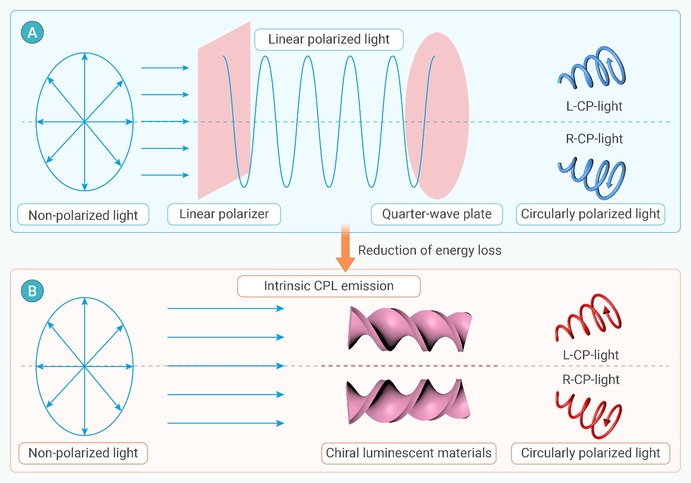
Figure 1.
Mechanisms of circularly polarized light generation
-
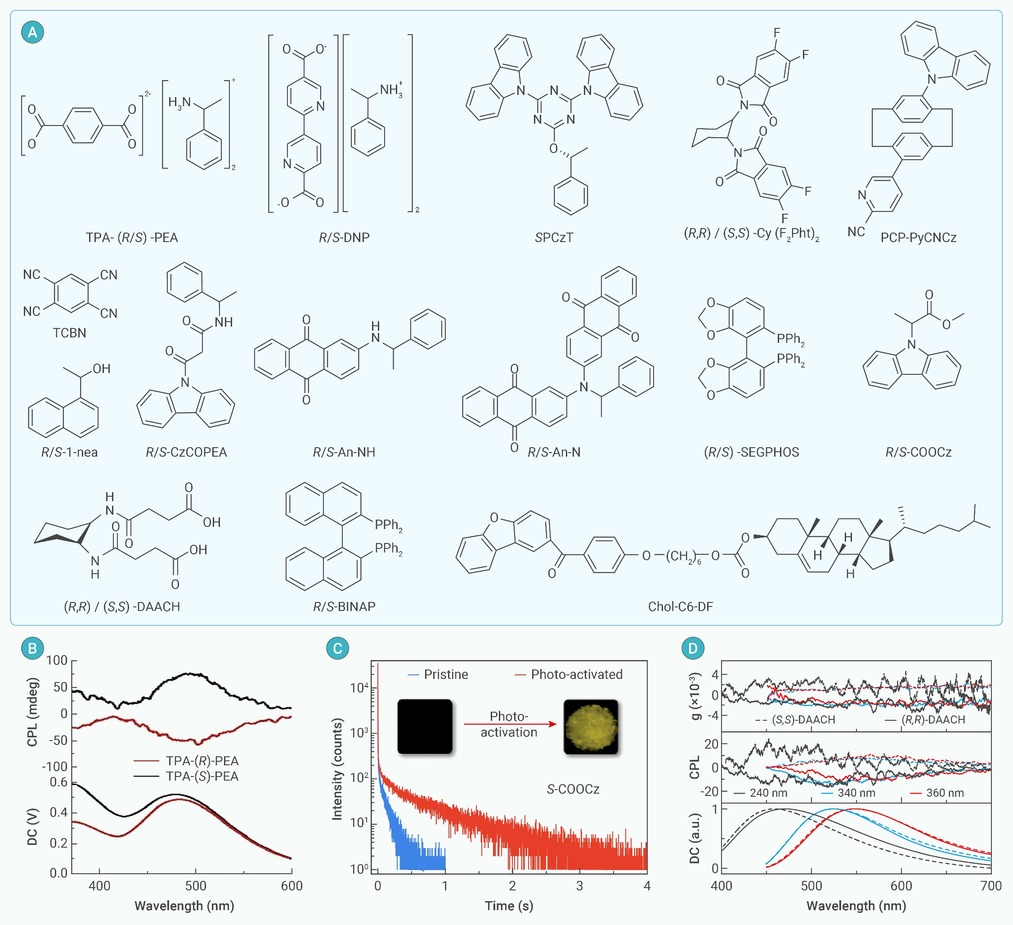
Figure 2.
Representative circularly polarized room-temperature phosphorescence (CP-RTP) materials based on organic crystal
-
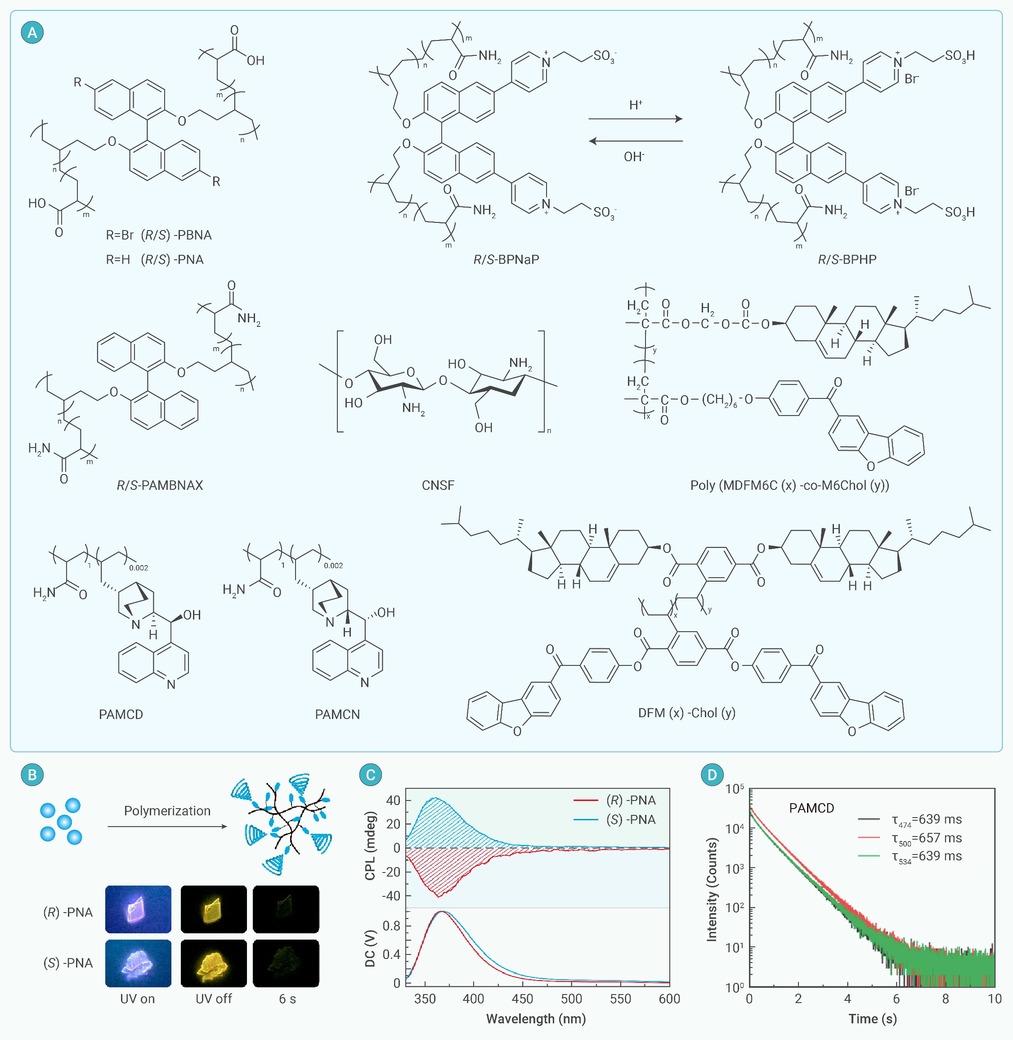
Figure 3.
CP-RTP materials derived from bonded polymer systems
-
Figure 4.
CP-RTP materials based on doped polymer systems
-
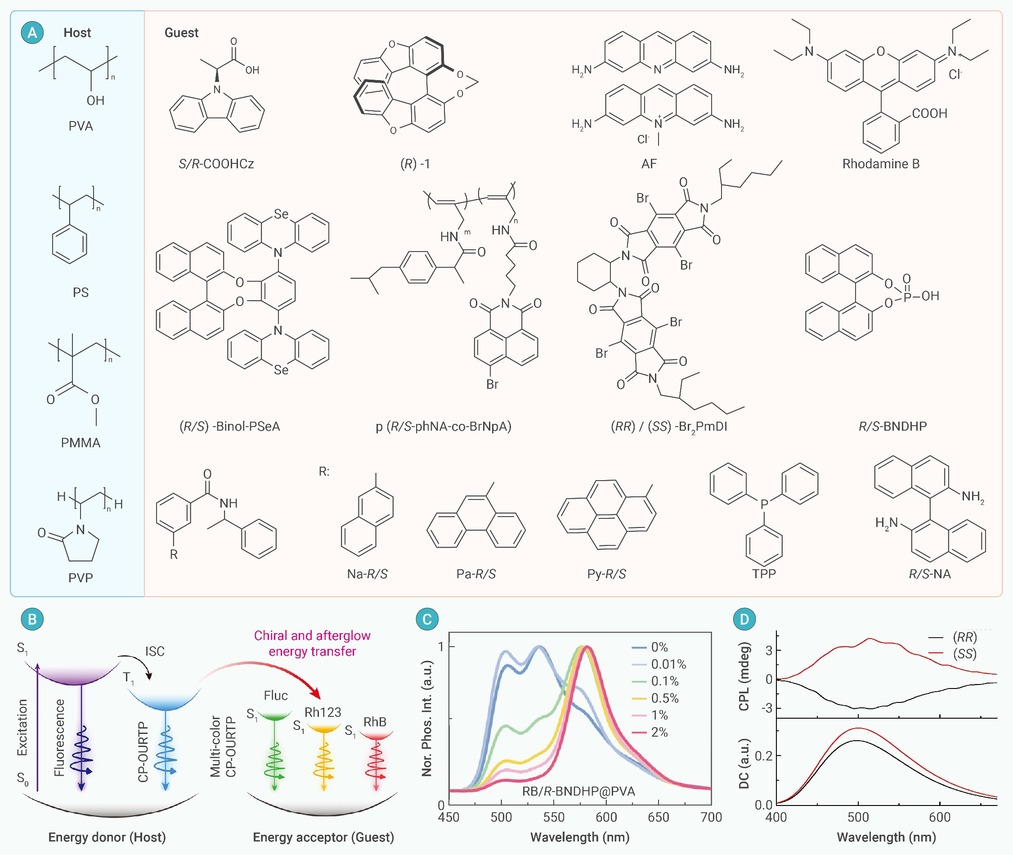
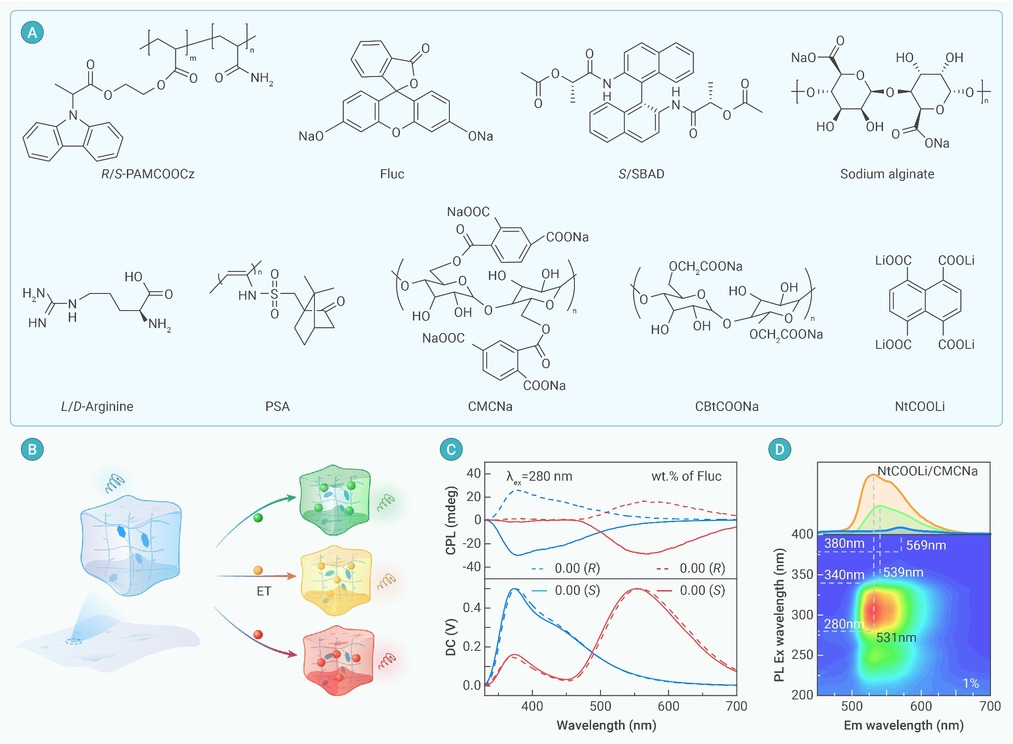
Figure 5.
CP-RTP materials developed from doped polymer systems
-
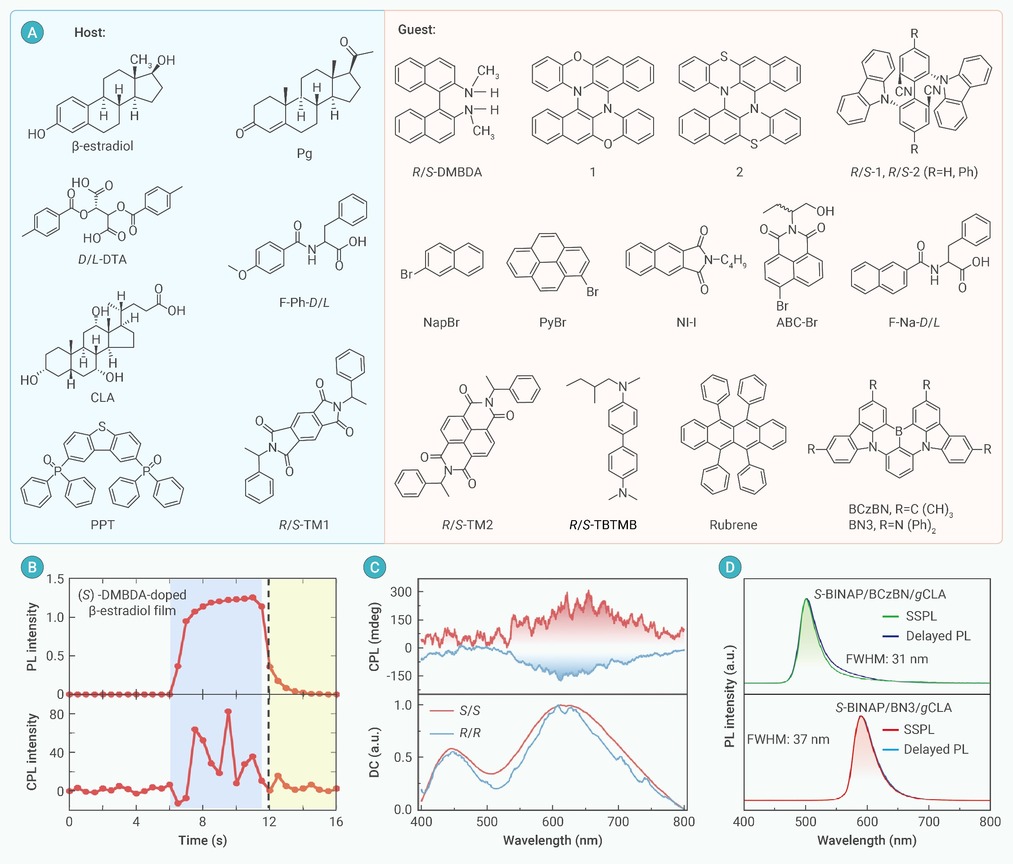
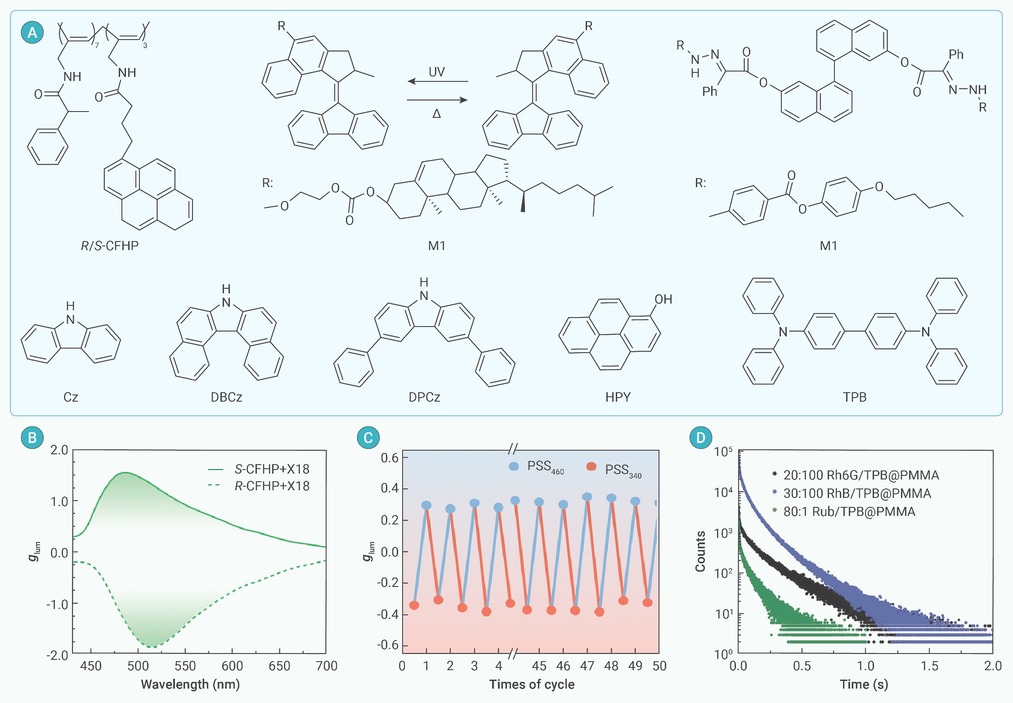
Figure 6.
CP-RTP materials constructed from host-guest doping systems
-
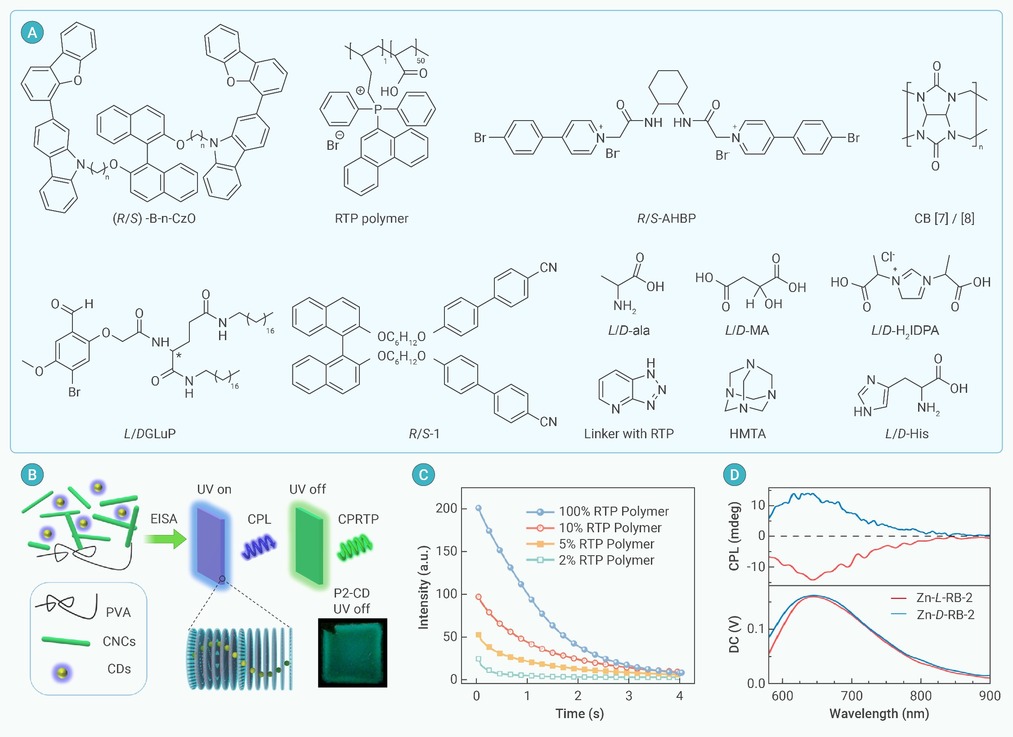
Figure 7.
CP-RTP materials assembled from supramolecular systems
-
Figure 8.
CP-RTP materials integrated in multilayer systems
-
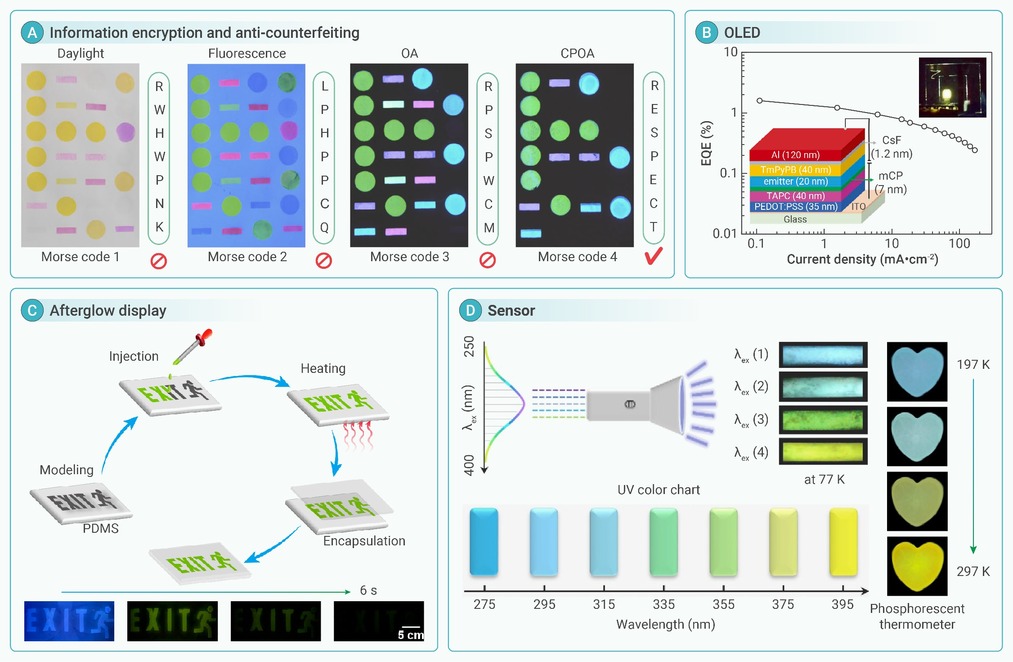
Figure 9.
Applications of CP-RTP materials
