
Ultrafast light-induced charge and thermal transport effects in layered MXene materials
-
GRAPHICAL ABSTRACT
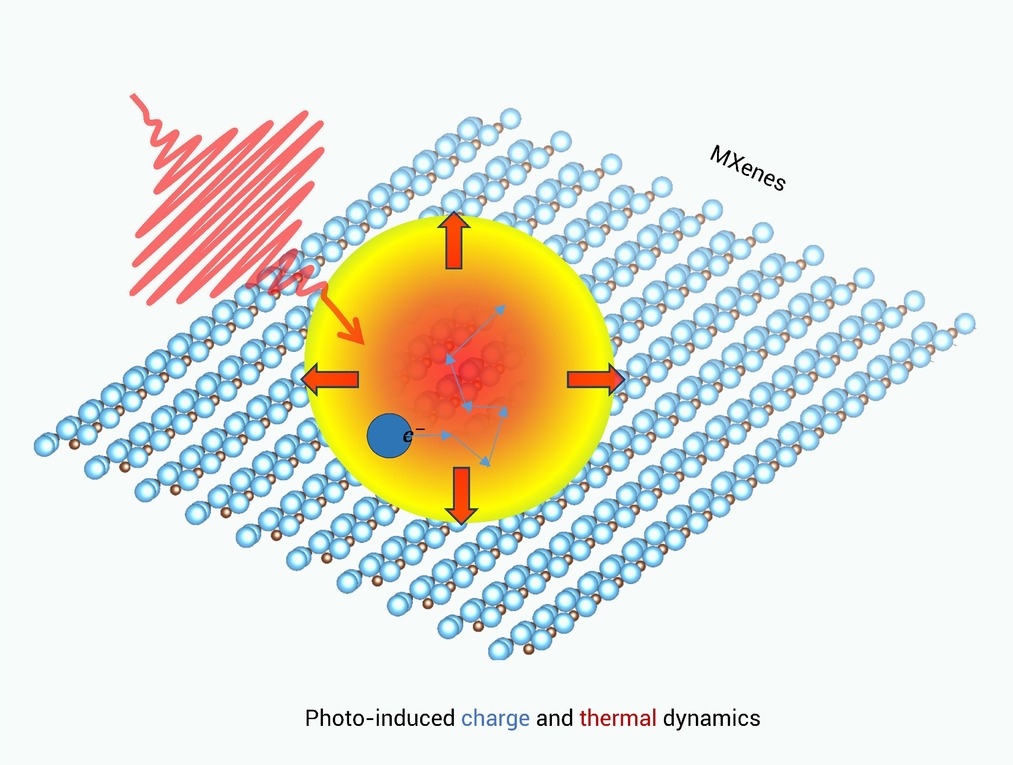
 DownLoad:
Full size image
DownLoad:
Full size image
-
PUBLIC SUMMARY
-
We present an overview of recent advances on ultrafast spectroscopy investigations of MXenes.
We review the influence of surface terminations and flake morphology on conductivity and thermal dissipation.
We highlight the observation of high electrical and low thermal conductivity in MXenes including Ti3C2.
A highly coordinated effort will be essential to uncover the fundamental charge and thermal effects in MXenes.
-
-
ABSTRACT
The recent emergence of layered MXenes has provided a versatile platform for investigating ionic and electronic transport phenomena relevant to energy conversion and storage applications. While most current studies have focused on materials synthesis and integration into electrochemical systems, few have explored the fundamental aspects of charge, thermal transport, and optical properties. Aiming to inspire future investigations into the rich electrical and photophysical properties of MXenes, in this mini review we summarize recent advances in uncovering their complex electronic structure and its influence on charge dynamics and thermal transport, as revealed mostly by state-of-the-art ultrafast spectroscopic techniques. We highlight the essential role of surface terminations in dictating electronic and thermal properties, and the strong photothermal response exhibited by MXenes, a feature that has direct implications for their use in optoelectronic and (photo)thermoelectric devices. In particular, the unusual combination of high electrical mobility and intrinsically low thermal conductivity stands out as a distinctive characteristic of MXenes, offering exciting opportunities for thermoelectric energy harvesting and other applications that benefit from decoupled electrical and thermal transport. The review concludes by outlining promising future directions, including deeper investigation into structure–property relationships, improved control over surface chemistry, and the development of novel MXene-based systems tailored for ultrafast and light-responsive functionalities. -

-
REFERENCES
[1] Naguib M., Kurtoglu M., Presser V., et al. (2011). Two-dimensional nanocrystals produced by exfoliation of Ti3AlC2. Adv. Mater. 23:4248−4253. DOI:10.1002/adma.201102306 [2] Anasori B., Lukatskaya M.R. and Gogotsi Y. (2017). 2D metal carbides and nitrides (MXenes) for energy storage. Nat. Rev. Mater. 2:16098. DOI:10.1038/natrevmats.2016.98 [3] Li X., Huang Z., Shuck C.E., et al. (2022). MXene chemistry, electrochemistry and energy storage applications. Nat. Rev. Chem. 6:389−404. DOI:10.1038/s41570-022-00384-8 [4] Sun B., Lu Q., Chen K., et al. (2022). Redox-active metaphosphate-like terminals enable high-capacity MXene anodes for ultrafast Na-ion storage. Adv. Mater. 34:2108682. DOI:10.1002/adma.202108682 [5] Naguib M., Halim J., Lu J., et al. (2013). New two-dimensional Niobium and Vanadium carbides as promising materials for Li-ion batteries. J. Am. Chem. Soc. 135:15966−15969. DOI:10.1021/ja405735d [6] Hart J.L., Hantanasirisakul K., Lang A.C., et al. (2019). Control of MXenes ’ electronic properties through termination and intercalation. Nat. Commun. 10:522. DOI:10.1038/s41467-018-08169-8 [7] Anasori B., Shi C., Moon E.J., et al. (2016). Control of electronic properties of 2D carbides (MXenes) by manipulating their transition metal layers. Nanoscale Horiz. 1:227−234. DOI:10.1039/C5NH00125K [8] Kamysbayev V., Filatov AS., Hu H., et al. (2020). Covalent surface modifications and superconductivity of two-dimensional metal carbide MXenes. Science 369:979−983. DOI:10.1126/science.aba8311 [9] Shayesteh Zeraati A., Mirkhani S.A., Sun P., et al. (2021). Improved synthesis of Ti3C2T x MXenes resulting in exceptional electrical conductivity, high synthesis yield, and enhanced capacitance. Nanoscale 13:3572−3580. DOI:10.1039/D0NR06671K [10] Naguib M., Mashtalir O., Carle J., et al. (2012). Two-dimensional transition metal carbides. ACS Nano 6:1322−1331. DOI:10.1021/nn204153h [11] Anasori B., Xie Y., Beidaghi M., et al. (2015). Two-dimensional, ordered, double transition metals carbides (MXenes). ACS Nano 9:9507−9516. DOI:10.1021/acsnano.5b03591 [12] Li D., Zheng W., Gali S.M., et al. (2024). MXenes with ordered triatomic-layer borate polyanion terminations. Nat. Mater. 23:1085−1092. DOI:10.1038/s41563-024-01911-2 [13] Gogotsi Y. and Huang Q. (2021). MXenes: Two-dimensional building blocks for future materials and devices. ACS Nano 15:5775−5780. DOI:10.1021/acsnano.1c03161 [14] Zhao T., Wan H., Zhang T., et al. (2024). Mechanism of the terahertz wave–MXene interaction and surface/interface chemistry of MXene for terahertz absorption and shielding. Acc. Chem. Res. 57:2184−2193. DOI:10.1021/acs.accounts.4c00326 [15] Nguyen T.T., Murali G., Patel M., et al. (2022). MXene-integrated metal oxide transparent photovoltaics and self-powered photodetectors. ACS Appl. Energy Mater. 5:7134−7143. DOI:10.1021/acsaem.2c00458 [16] Singh A.K., Montoya J.H., Gregoire J.M., et al. (2019). Robust and synthesizable photocatalysts for CO2 reduction: A data-driven materials discovery. Nat. Commun. 10:443. DOI:10.1038/s41467-019-08356-1 [17] Li R., Zhang L., Shi L., et al. (2017). MXene Ti3C2: An effective 2D light-to-heat conversion material. ACS Nano 11:3752−3759. DOI:10.1021/acsnano.6b08415 [18] Khazaei M., Ranjbar A., Arai M., et al. (2017). Electronic properties and applications of MXenes: A theoretical review. J. Mater. Chem. C 5:2488−2503. DOI:10.1039/C7TC00140A19 [19] Mathis T.S., Maleski K., Goad A., et al. (2021). Modified MAX phase synthesis for environmentally stable and highly conductive Ti3C2 MXene. ACS Nano 15:6420−6429. DOI:10.1021/acsnano.0c08357 [20] Han M., Maleski K., Shuck C.E., et al. (2020). Tailoring electronic and optical properties of MXenes through forming solid solutions. J. Am. Chem. Soc. 142:19110−19118. DOI:10.1021/jacs.0c07395 [21] Hantanasirisakul K. and Gogotsi Y. (2018). Electronic and optical properties of 2D transition metal carbides and nitrides (MXenes). Adv. Mater. 30:1804779. DOI:10.1002/adma.201804779 [22] Gao L., Ma C., Wei S., et al. (2021). Applications of few-layer Nb2C MXene: Narrow-band photodetectors and femtosecond mode-locked fiber lasers. ACS Nano. 15:954−965. DOI:10.1021/acsnano.0c07608 [23] Lau K.Y., Liu X. and Qiu J. (2022). MXene saturable absorbers in mode-locked fiber laser. Laser Photonics Rev. 16:2100709. DOI:10.1002/lpor.202100709 [24] Bharathan G., Xu L., Jiang X., et al. (2021). MXene and PtSe2 saturable absorbers for all-fibre ultrafast mid-infrared lasers. Opt. Mater. Express 11:1898. DOI:10.1364/OME.426862 [25] Ahmad H., Kamaruzzaman K., Samion M.Z., et al. (2025). MXene-Cr2C as a novel saturable absorber for mode-locking at 2.07 μm. Opt. Mater. 160:116713. DOI:10.1016/j.optmat.2025.116713 [26] Li G., Amer N., Hafez H.A., et al. (2020). Dynamical control over terahertz electromagnetic interference shielding with 2D Ti3C2Ty MXene by ultrafast optical pulses. Nano. Lett. 20:636−643. DOI:10.1021/acs.nanolett.9b04404 [27] Li X. and Luo H. (2023). Maximizing terahertz energy absorption with MXene absorber. Nano.-Micro. Lett. 15:198. DOI:10.1007/s40820-023-01167-6 [28] Zhao T., Xie P., Wan H., et al. (2023). Ultrathin MXene assemblies approach the intrinsic absorption limit in the 0.5–10 THz band. Nat. Photonics 17:622–628. DOI:10.1038/s41566-023-01197-x [29] Wang J., Xie Z., Lu G., et al. (2023). An infrared photothermoelectric detector enabled by MXene and PEDOT:PSS composite for noncontact fingertip tracking. Microsyst. Nanoeng. 9:21. DOI:10.1038/s41378-022-00454-3 [30] Hassan T., Iqbal A., Yoo B., et al. (2024). Multifunctional MXene/carbon nanotube Janus film for electromagnetic shielding and infrared shielding/detection in harsh environments. Nano.-Micro. Lett. 16:216. DOI:10.1007/s40820-024-01431-3 [31] Kuang P., Low J., Cheng B., et al. (2020). MXene-based photocatalysts. J. Mater. Sci. Technol. 56:18−44. DOI:10.1016/j.jmst.2020.02.037 [32] Meskher H., Thakur AK., Hazra SK., et al. (2025). Recent advances in applications of MXenes for desalination, water purification and as an antibacterial: A review. Environ. Sci. Nano. 12:1012−1036. DOI:10.1039/D4EN00427B [33] Lin H., Gao S., Dai C., et al. (2017). A Two-dimensional biodegradable Niobium carbide (MXene) for photothermal tumor eradication in NIR-I and NIR-II biowindows. J. Am. Chem. Soc. 139:16235−16247. DOI:10.1021/jacs.7b07818 [34] Lin H., Wang X., Yu L., et al. (2017). Two-dimensional ultrathin MXene ceramic nanosheets for photothermal conversion. Nano. Lett. 17:384−391. DOI:10.1021/acs.nanolett.6b04339 [35] Konstantatos G., Badioli M., Gaudreau L., et al. (2012). Hybrid graphene–quantum dot phototransistors with ultrahigh gain. Nat. Nanotechnol. 7:363−368. DOI:10.1038/nnano.2012.60 [36] Koppens F.H.L., Mueller T., Avouris P., et al. (2014). Photodetectors based on graphene, other two-dimensional materials and hybrid systems. Nat. Nanotechnol. 9:780−793. DOI:10.1038/nnano.2014.215 [37] Mehew J.D., Unal S., Torres Alonso E., et al (2017) Fast and highly sensitive ionic-polymer-gated WS2–graphene photodetectors. Adv. Mater. 29:1700222. DOI:10.1002/adma.201700222. [38] Chen T., Sheng Y., Zhou Y., et al. (2019). High photoresponsivity in ultrathin 2D lateral graphene: WS2: Graphene photodetectors using direct CVD growth. ACS Appl. Mater. Interfaces 11:6421−6430. DOI:10.1021/acsami.8b20321 [39] Zheng W., Sun B., Li D., et al. (2022). Band transport by large Fröhlich polarons in MXenes. Nat. Phys. 18:544−550. DOI:10.1038/s41567-022-01541-y [40] Colin-Ulloa E., Fitzgerald A., Montazeri K., et al. (2023). Ultrafast spectroscopy of plasmons and free carriers in 2D MXenes. Adv. Mater. 35:2208659. DOI:10.1002/adma.202208659 [41] Schultz T., Frey N.C., Hantanasirisakul K., et al. (2019). Surface termination dependent work function and electronic properties of Ti3C2Tx MXene. Chem. Mater. 31:6590–6597. DOI:10.1021/acs.chemmater.9b00414 [42] Khazaei M., Arai M., Sasaki T., et al. (2013). Novel electronic and magnetic properties of two-dimensional transition metal carbides and nitrides. Adv. Funct. Mater. 23:2185−2192. DOI:10.1002/adfm.201202502 [43] Swapnalin J. and Banerjee P. (2024). 2D Titanium carbide (MXene): Band gap modulation. ECS Meet. Abstr. MA2024-02:1787–1787. DOI:10.1149/MA2024-02201787mtgabs. [44] Guo Z., Miao N., Zhou J., et al. (2018). Coincident modulation of lattice and electron thermal transport performance in MXenes via surface functionalization. Phys. Chem. Chem. Phys. 20:19689−19697. DOI:10.1039/C8CP02564A [45] Gholivand H., Fuladi S., Hemmat Z., et al. (2019). Effect of surface termination on the lattice thermal conductivity of monolayer Ti3C2Tz MXenes. J. Appl. Phys. 126:065101. DOI:10.1063/1.5094294 [46] Zhang Q., Chen Y., Zhang Y., et al. (2020). Surface oxidation modulates the interfacial and lateral thermal migration of MXene (Ti3C2Tx) flakes. J. Phys. Chem. Lett. 11:9521−9527. DOI:10.1021/acs.jpclett.0c02886 [47] Lai S., Jeon J., Jang SK., et al. (2016). Correction: Surface group modification and carrier transport properties of layered transition metal carbides (Ti2CTx , T: –OH, –F and –O). Nanoscale 8:1216. DOI:10.1039/C5NR90214B [48] Si C., Zhou J. and Sun Z. (2015). Half-metallic ferromagnetism and surface functionalization-induced metal–insulator transition in graphene-like two-dimensional Cr2C crystals. ACS Appl. Mater. Interfaces 7:17510−17515. DOI:10.1021/acsami.5b05401 [49] Xie Y. and Kent P.R.C. (2013). Hybrid density functional study of structural and electronic properties of functionalized Tin+1Xn (X = C, N) monolayers. Phys. Rev. B 87:235441. DOI:10.1103/PhysRevB.87.235441 [50] Bafekry A., Nguyen C.V., Stampfl C., et al. (2020). Oxygen vacancies in the single layer of Ti2CO2 MXene: Effects of gating voltage, mechanical strain, and atomic impurities. Phys. Status Solidi B 257:2000343. DOI:10.1002/pssb.202000343 [51] Mandia A.K., Koshi N.A., Muralidharan B., et al. (2022). Electrical and magneto-transport in the 2D semiconducting MXene Ti2CO2. J. Mater. Chem. C 10:9062−9072. DOI:10.1039/D2TC01279K [52] Weng H., Ranjbar A., Liang Y., et al. (2015). Large-gap two-dimensional topological insulator in oxygen functionalized MXene. Phys. Rev. B 92:075436. DOI:10.1103/PhysRevB.92.075436 [53] Ding Y., Nie X., Dong H., et al. (2020). Many-body effects in an MXene Ti2CO2 monolayer modified by tensile strain: GW-BSE calculations. Nanoscale Adv. 2:2471−2477. DOI:10.1039/C9NA00632J [54] Kumar N. and Karlický F. (2023). Oxygen-terminated Ti3C2 MXene as an excitonic insulator. Appl. Phys. Lett. 122:183102. DOI:10.1063/5.0143313 [55] Magnuson M., Eklund P. and Polley C. (2025). Fermiology and band structure of Oxygen-terminated Ti3C2Tx MXene. Phys. Rev. Lett. 134:106201. DOI:10.1103/PhysRevLett.134.106201 [56] Lipatov A., Alhabeb M., Lu H., et al. (2020). Electrical and elastic properties of individual single-layer Nb4C3Tx MXene flakes. Adv. Electron. Mater. 6:1901382. DOI:10.1002/aelm.201901382 [57] Miranda A., Halim J., Barsoum M.W. et al. (2016). Electronic properties of freestanding Ti3C2Tx MXene monolayers. Appl. Phys. Lett. 108:033102. DOI:10.1063/1.4939971 [58] Halim J., Moon E.J., Eklund P., et al. (2018). Variable range hopping and thermally activated transport in molybdenum-based MXenes. Phys. Rev. B 98:104202. DOI:10.1103/PhysRevB.98.104202 [59] Li F., Zhou J., Zhang J., et al. (2024). Research and progress on organic semiconductor power devices. Materials 17:3362. DOI:10.3390/ma17133362 [60] Urbančič J., Tomsič E., Chhikara M., et al. (2023). Time-of-flight photoconductivity investigation of high charge carrier mobility in Ti3C2Tx MXenes thin-film. Diam. Relat. Mater. 135:109879. DOI:10.1016/j.diamond.2023.109879 [61] Ahmed S. and Yi J. (2017). Two-dimensional transition metal dichalcogenides and their charge carrier mobilities in field-effect transistors. Nano.-Micro. Lett. 9:50. DOI:10.1007/s40820-017-0152-6 [62] Zhang X., Zhao X., Wu D., et al. (2015). High and anisotropic carrier mobility in experimentally possible Ti2CO2 (MXene) monolayers and nanoribbons. Nanoscale 7:16020−16025. DOI:10.1039/C5NR04717J [63] Xu M., Yang J. and Liu L. (2019). Temperature-dependent optical and electrical properties of bulk Ti2AlC and two-dimensional MXenes from first-principles. Phys. B Condens. Matter. 560:146−154. DOI:10.1016/j.physb.2019.02.025 [64] Jing Z., Liu J., LiN., et al. (2021). Electron-phonon scattering limited intrinsic electrical conductivity of metallic MXenes X2C (X= Ti or Mo). J. Phys. Appl. Phys. 54:015301. DOI:10.1088/1361-6463/abb84a [65] Li E., Wei J., Zhang T., et al. (2024). Charge carriers localization effect revealed through terahertz spectroscopy of MXene: Ti3C2Tx. Small 20:2306200. DOI:10.1002/smll.202306200 [66] Li G., Natu V., Shi T., et al. (2020). Two-dimensional MXenes Mo2Ti2C3Tz and Mo2TiC2Tz : Microscopic conductivity and dynamics of photoexcited carriers. ACS Appl. Energy Mater. 3:1530−1539. DOI:10.1021/acsaem.9b01966 [67] Mei Y., Diemer P.J., Niazi M.R., et al. (2017). Crossover from band-like to thermally activated charge transport in organic transistors due to strain-induced traps. Proc. Natl. Acad. Sci. 114:E6739−E6748. DOI:10.1073/pnas.1705164114 [68] Franchini C., Reticcioli M., Setvin M., et al. (2021). Polarons in materials. Nat. Rev. Mater. 6:560−586. DOI:10.1038/s41578-021-00289-w [69] Wu H., Gu J., Li Z., et al. (2022). Characterization of phonon thermal transport of Ti3C2Tx MXene thin film. J. Phys. Condens. Matter. 34:155704. DOI:10.1088/1361-648X/ac4f1c [70] Purbayanto M.A.K., Chandel M., Birowska M., et al. (2023). Optically active MXenes in Van der Waals heterostructures. Adv. Mater. 35:2301850. DOI:10.1002/adma.202301850 [71] Zhang Q., Li W., Zhao R., et al. (2024). Real-time observation of two distinctive non- thermalized hot electron dynamics at MXene/molecule interfaces. Nat. Commun. 15:4406. DOI:10.1038/s41467-024-48842-9 [72] Zhang J., Muñoz-Mármol R., Fu S., et al. (2025). Interface-tailored secondary excitation and ultrafast charge/energy transfer in Ti3C2T x -MoS2 heterostructure films. J. Am. Chem. Soc. 147:10012−10022. DOI:10.1021/jacs.5c01826 [73] Debow S., Zhang T., Liu X., et al. (2021). Charge dynamics in TiO2/MXene composites. J. Phys. Chem. C 125:10473−10482. DOI:10.1021/acs.jpcc. 1c01543. DOI:10.1021/acs.jpcc.1c01543 [74] Chen J., Xue Z., Li Y., et al. (2021). Effects of intercalation on the interlayer electron-transfer process in Mo-based multilayered MXene flakes. J. Phys. Chem. C 125:17232−17240. DOI:10.1021/acs.jpcc.1c05178 [75] Zhao J., Zhang Q., Sui L., et al. (2023). Evidence of surface-mediated carrier-phonon scattering in MXene. ACS Nano 17:23714−23722. DOI:10.1021/acsnano.3c07431 [76] Volkov M., Willinger E., Kuznetsov D.A., et al. (2021). Photo-switchable nanoripples in Ti3C2T x MXene. ACS Nano. 15:14071−14079. DOI:10.1021/acsnano.1c03635 [77] Lioi D.B., Stevenson P.R., Seymour B.T., et al. (2020). Simultaneous ultrafast transmission and reflection of nanometer-thick Ti3C2T x MXene films in the visible and near-infrared: implications for energy storage, electromagnetic shielding, and laser systems. ACS Appl. Nano. Mater. 3:9604–9609. DOI:10.1021/acsanm.0c01644. [78] Guzelturk B., Kamysbayev V., Wang D., et al. (2023). Understanding and Controlling Photothermal Responses in MXenes. Nano. Lett. 23:2677−2686. DOI:10.1021/acs.nanolett.2c05001 [79] Wang T., Yao C., Gao R., et al. (2024). Ultrafast carrier and lattice cooling in Ti2CTx MXene thin films. Nano. Lett. 24:16333−16341. DOI:10.1021/acs.nanolett.4c04583 [80] Huang Y., Zhou J., Wang G., et al. (2019). Abnormally strong electron–phonon scattering induced unprecedented reduction in lattice thermal conductivity of two-dimensional Nb2C. J. Am. Chem. Soc. 141:8503−8508. DOI:10.1021/jacs.9b01742 [81] Huang Y., Spiece J., Parker T., et al (2024). Violation of the Wiedemann-Franz law and ultra-low thermal conductivity of Ti3C2Tz MXene ACS Nano. 18:32491–32497. DOI:10.1021/acsnano.4c08189. [82] Wang A., Li S., Zhang X. and Bao H. (2022). Roles of electrons on the thermal transport of 2D metallic MXenes. Phys. Rev. Mater. 6:014009. DOI:10.1103/PhysRevMaterials.6.014009 [83] Jensen S.A., Mics Z., Ivanov I., et al. (2014). Competing ultrafast energy relaxation pathways in photoexcited graphene. Nano. Lett. 14:5839−5845. DOI:10.1021/nl502740g [84] Shi S-F., Tang T-T., Zeng B., et al. (2014). Controlling graphene ultrafast hot carrier response from metal-like to semiconductor-like by electrostatic gating. Nano. Lett. 14:1578−1582. DOI:10.1021/nl404826r [85] Frenzel A.J., Lui C.H., Shin Y.C., et al. (2014). Semiconducting-to-metallic photoconductivity crossover and temperature-dependent Drude weight in graphene. Phys. Rev. Lett. 113:056602. DOI:10.1103/PhysRevLett.113.056602 [86] Vorobeva N.S., Bagheri S., Torres A., et al. (2022). Negative photoresponse in Ti3C2Tx MXene monolayers. Nat. Phys. 18:544−550. DOI:10.1515/nanoph-2022-0182 [87] Shekhirev M., Busa J., Shuck C.E., et al. (2022). Ultralarge flakes of Ti3C2Tx MXene via soft delamination. ACS Nano 16:13695−13703. DOI:10.1021/acsnano.2c04506 [88] Xia F., Lao J., Yu R., et al. (2019). Ambient oxidation of Ti3C2 MXene initialized by atomic defects. Nanoscale 11:23330−23337. DOI:10.1039/C9NR07236E [89] Wang D., Zhou C., Filatov A.S., et al. (2023). Direct synthesis and chemical vapor deposition of 2D carbide and nitride MXenes. Science 379:1242−1247. DOI:10.1126/science.add9204 [90] Hong Y-L., Liu Z., Wang L., et al. (2020). Chemical vapor deposition of layered two-dimensional MoSi2N4 materials. Science 369:670−674. DOI:10.1126/science.abb7023 [91] Murali G., Modigunta J.K.R., Park Y.H., et al. (2022). Stability and degradation of MXene. In: Khalid M, Grace AN, Arulraj A et al Fundamental Aspects and Perspectives of MXenes. Engineering Materials. Springer, Cham. DOI:10.1007/978-3-031-05006-0_5 [92] Habib T., Zhao X., Shah S.A., et al. (2019). Oxidation stability of Ti3C2Tx MXene nanosheets in solvents and composite films. npj 2D Mater. Appl. 3: 8. DOI:10.1038/s41699-019-0089-3 [93] Seyedin S., Zhang J., Usman K.A.S., et al. (2019). Facile solution processing of stable MXene dispersions towards conductive composite fibers. Glob. Chall. 3:1900037. DOI:10.1002/gch2.201900037 [94] Ippolito S., Kelly A.G., Furlan De Oliveira R., et al. (2021). Covalently interconnected transition metal dichalcogenide networks via defect engineering for high-performance electronic devices. Nat. Nanotechnol. 16:592−598. DOI:10.1038/s41565-021-00857-9 [95] Ippolito S., Urban F., Zheng W., et al. (2023). Unveiling charge-transport mechanisms in electronic devices based on defect-engineered MoS2 covalent networks. Adv. Mater. 35:2211157. DOI:10.1002/adma.202211157 [96] Un H., Lu Y., Li J., et al. (2024). Controlling film formation and host-guest interactions to enhance the thermoelectric properties of Nickel-Nitrogen-based 2D conjugated coordination polymers. Adv. Mater. 36:2312325. DOI:10.1002/adma.202312325 [97] Gabbett C., Kelly A.G., Coleman E., et al. (2024). Understanding how junction resistances impact the conduction mechanism in nano-networks. Nat. Commun. 15:4517. DOI:10.1038/s41467-024-48614-5 [98] Li G., Kushnir K., Dong Y., et al. (2018). Equilibrium and non-equilibrium free carrier dynamics in 2D Ti3C2Tx MXenes: THz spectroscopy study. 2D Mater. 5:035043. DOI:10.1088/2053-1583/aacb9e [99] Liu T., Zhang C., Li X. (2022). 2D MXenes for hot-carrier photodetection. Adv. Opt. Mater. 10:2201153. DOI:10.1002/adom.202201153 [100] Cui X., Ruan Q., Zhuo X., et al. (2023). Photothermal nanomaterials: A powerful light-to-heat converter. Chem. Rev. 123:6891−6952. DOI:10.1021/acs.chemrev.3c00159 -
ABOUT THIS ARTICLE
Cite this article:
Georgoulis I., Zheng W., Zhang Q., et al. (2025). Ultrafast light-induced charge and thermal transport effects in layered MXene materials. The Innovation Materials 3:100168. https://doi.org/10.59717/j.xinn-mater.2025.100168
Welcome!
To request copyright permission to republish or share portions of our works, please visit Copyright Clearance Center's (CCC) Marketplace website at marketplace.copyright.com.
Export File
Citation
Georgoulis I., Zheng W., Zhang Q., et al. (2025). Ultrafast light-induced charge and thermal transport effects in layered MXene materials. The Innovation Materials 3:100168. https://doi.org/10.59717/j.xinn-mater.2025.100168

Format
Content
-
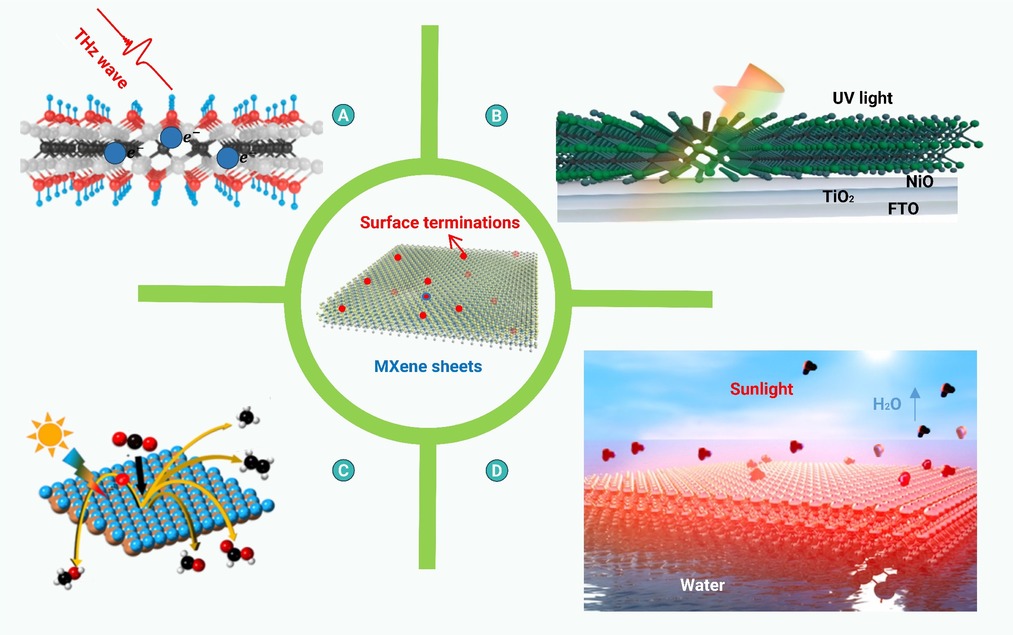
Figure 1.
Potential integration of MXenes in light sensing and energy harvesting applications beyond traditional electrochemical systems, including
-
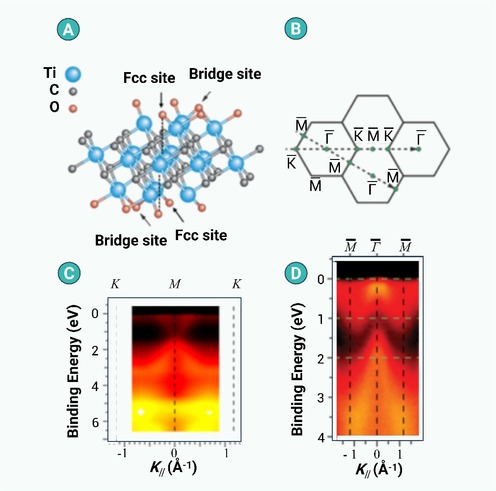
Figure 2.
First direct mapping of the Ti3C2O2 band structure via ARPES
-
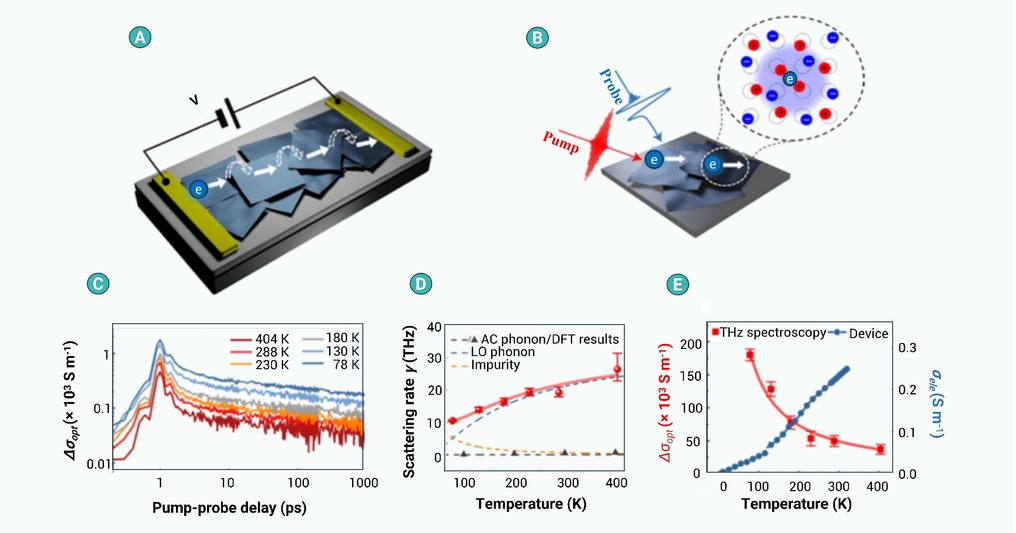
Figure 3.
Unveiling charge transport mechanism in MXenes by combining electrical and THz spectroscopy
-
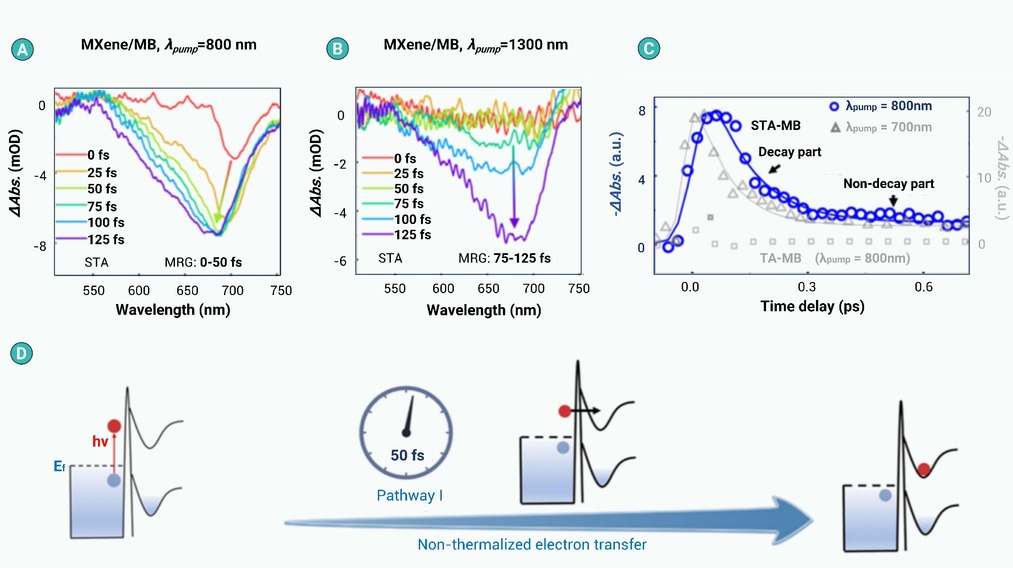
Figure 4.
Interfacial charge carrier dynamics at the MXene/methylene blue (MB) interface following selective excitation of MXene
-
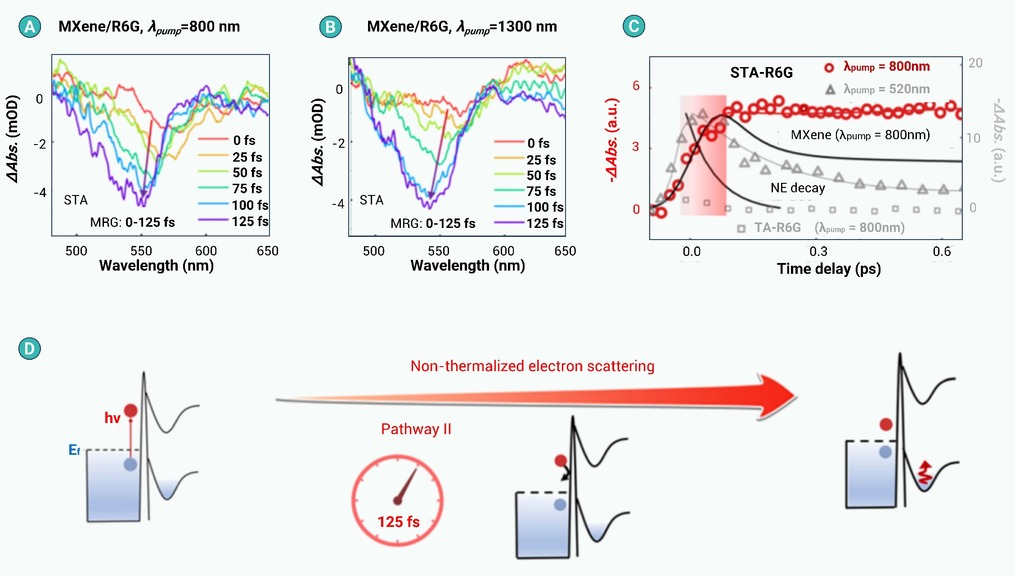
Figure 5.
Interfacial ultrafast dynamics at the MXene–rhodamine 6G (R6G) interface following selective excitation of MXene
-
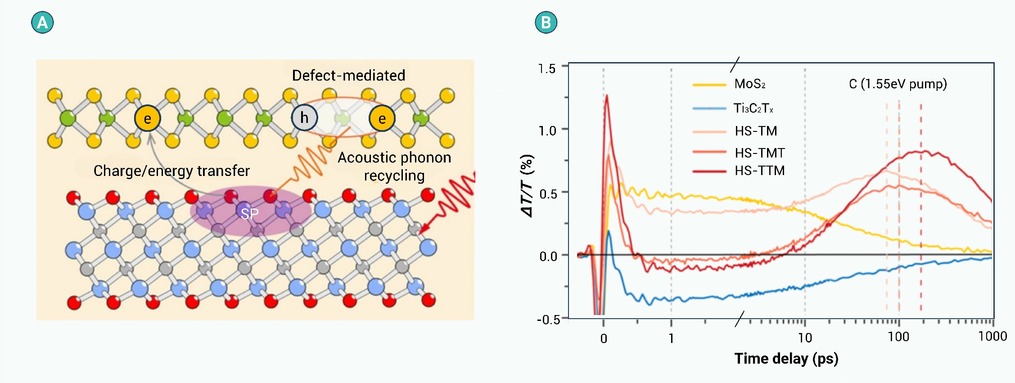
Figure 6.
Interfacial charge and energy transfer between Ti3C2 and MoS2
-
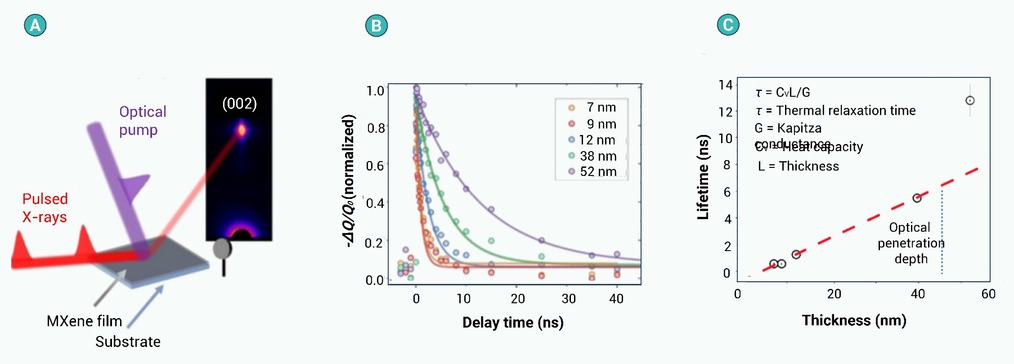
Figure 7.
Ultrafast optical pump–X-ray diffraction spectroscopy reveals high interfacial thermal boundary conductance between Ti3C2Tₓ films and the substrate
-
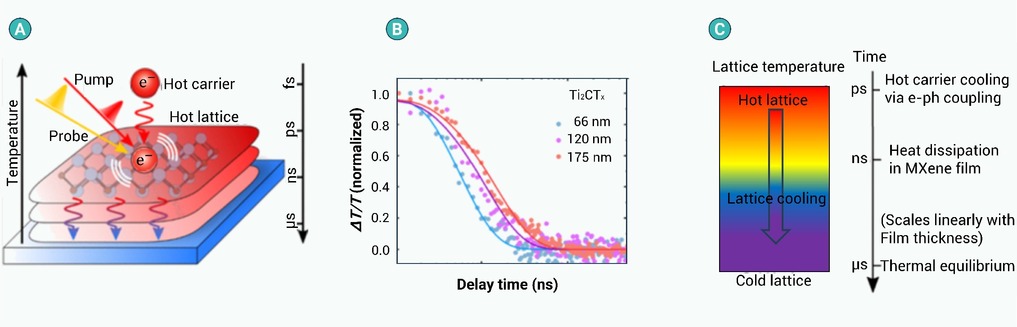
Figure 8.
Ultrafast transient absorption spectroscopy for investigating thermal transport in MXenes (Ti3C2Tₓ vs. Ti2CTₓ)
-
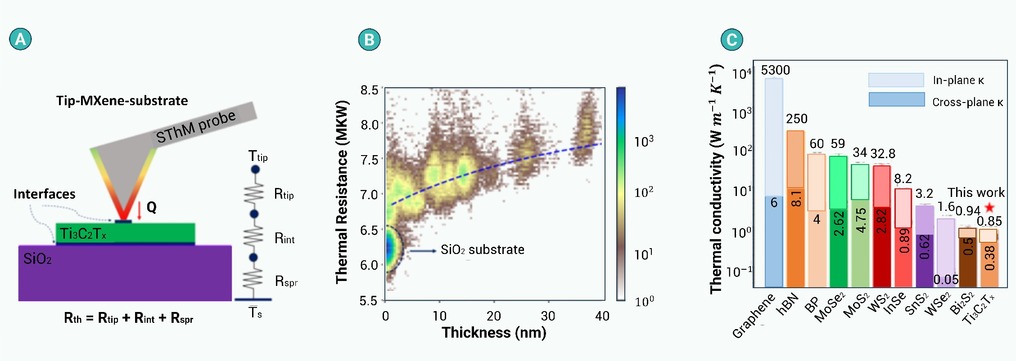
Figure 9.
Scanning thermal microscopy (SThM) to study thermal transport in MXenes
-
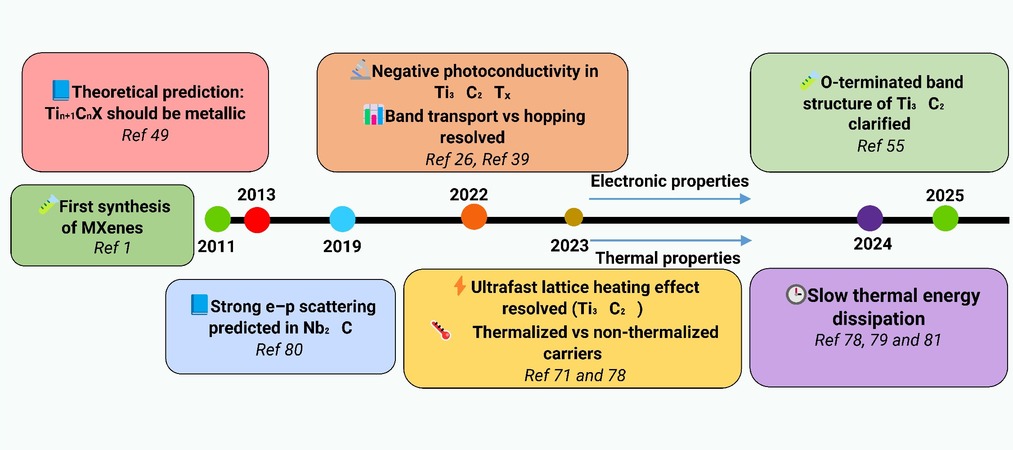
Figure 10.
Recent advances in understanding electrical and thermal transport phenomena in MXenes using ultrafast spectroscopy.
