
Ferroelectric-based leaky integrate-and-fire neurons: A review on device design and performance optimization
-
GRAPHICAL ABSTRACT
 DownLoad:
Full size image
DownLoad:
Full size image
-
PUBLIC SUMMARY
-
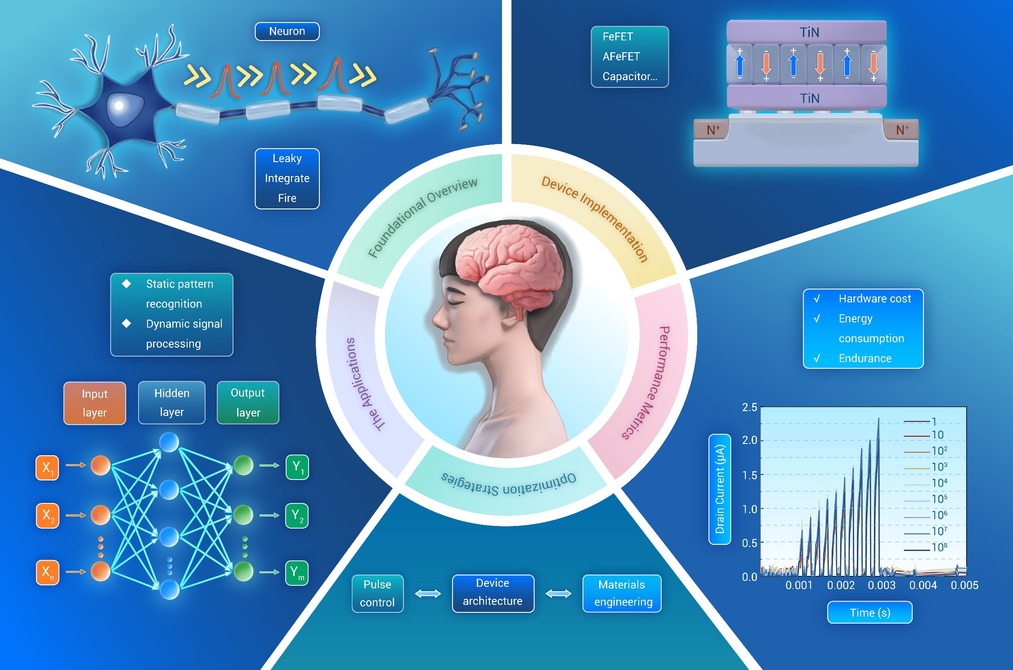
Ferroelectric devices are promising candidates for implementing leaky integrate-and-fire (LIF) neurons.
Foundational overview and device designs of ferroelectric/antiferroelectric neurons are introduced.
Key performance metrics and optimization strategies are discussed.
Applications of ferroelectric-based neurons for high-performance neuromorphic computing are presented.
-
-
ABSTRACT
The leaky integrate-and-fire (LIF) neurons implemented in hardware have been proposed as a key approach for neuromorphic computing, offering a promising pathway to overcome the limitations of traditional von Neumann architectures. Among various candidates, ferroelectric-based neuromorphic devices (including antiferroelectric devices) offer a compact, energy-efficient, and highly scalable neuromorphic hardware, making them promising candidates for LIF neurons. This review systematically explains ferroelectric-based LIF neurons, covering the fundamental principles of neuronal operation, the implementation of neuronal functionalities, the key performance metrics, and strategies for performance optimization. Specifically, the implementation of neuronal functionalities is discussed focusing on the realization of leaky behavior by introducing depolarizing or inducing antiferroelectric phase to achieve volatility, since the neuronal integration and firing behaviors can be easily mimicked through the inherent cumulative polarization switching. Moreover, the key performance metrics, including hardware cost, energy consumption, and endurance of devices are identified to demonstrate the comprehensive advantages of ferroelectric LIF neurons. Additionally, the review also covers the applications of ferroelectric LIF neurons. Finally, this review summarizes challenges and prospects of ferroelectric-based artificial neurons for advanced neuromorphic computing systems. This review aims to provide theoretical guidance and practical insights to support further progress in neuromorphic computing systems based on ferroelectric materials. -

-
REFERENCES
[1] Tang J. S., Yuan F., Shen X. K., et al. (2019). Bridging biological and artificial neural networks with emerging neuromorphic devices: Fundamentals, progress, and challenges. Adv. Mater. 31:33. DOI:10.1002/adma.201902761 [2] Zhong S., Su L. R., Xu M. K., et al. (2025). Recent advances in artificial sensory neurons: Biological fundamentals, devices, applications, and challenges. Nano-Micro Lett. 17:49. DOI:10.1007/s40820-024-01550-x [3] Peng H. H., Gan L. and Guo X. (2024). Memristor-based spiking neural networks: Cooperative development of neural network architecture/algorithms and memristors. Chip 3:17. DOI:10.1016/j.chip.2024.100093 [4] Yang J. H., Mao S. C., Chen K. T., et al. (2023). Emulating nociceptive receptor and LIF neuron behavior via ZrOx-based threshold switching memristor. Adv. Electron. Mater. 9:11. DOI:10.1002/aelm.202201006 [5] Izhikevich E. M. (2003). Simple model of spiking neurons. IEEE T. Neural Networ. 14:1569−1572. DOI:10.1109/tnn.2003.820440 [6] Zhe S. (2025). Progress on the application of supercomputer brain simulation technology. Chinese Journal of Contemporary Neurology & Neurosurgery 25:112. DOI:10.3969/j.issn.1672⁃6731.2025.02.003 [7] Dutta S., Schafer C., Gomez J., et al. (2020). Supervised learning in all FeFET-based spiking neural network: Opportunities and challenges. Front. Neurosci. 14:14. DOI:10.3389/fnins.2020.00634 [8] Akopyan F., Sawada J., Cassidy A., et al. (2015). True North: Design and tool flow of a 65 mW 1 million neuron programmable neurosynaptic chip. IEEE Trans. Comput-Aided Des. Integr. Circuits Syst. 34:1537−1557. DOI:10.1109/tcad.2015.2474396 [9] Davies M., Srinivasa N., Lin T. H., et al. (2018). Loihi: A neuromorphic manycore processor with on-chip learning. IEEE Micro 38:82−99. DOI:10.1109/mm.2018.112130359 [10] Zhang Z. H., Tian G. L., Huo J. L., et al. (2023). Recent progress of hafnium oxide-based ferroelectric devices for advanced circuit applications. Sci. China-Inf. Sci. 66:21. DOI:10.1007/s11432-023-3780-7 [11] Zhang X. M., Zhuo Y., Luo Q., et al. (2020). An artificial spiking afferent nerve based on Mott memristors for neurorobotics. Nat. Commun. 11:9. DOI:10.1038/s41467-019-13827-6 [12] Park W., Kim G., In J. H., et al. (2023). High amplitude spike generator in Au nanodot-incorporated NbOx Mott memristor. Nano Lett. 23:5399−5407. DOI:10.1021/acs.nanolett.2c04599 [13] Ren H. H., Li F. F., Wang M., et al. (2024). An ion-mediated spiking chemical neuron based on Mott memristor. Adv. Mater. 36:10. DOI:10.1002/adma.202403678 [14] Zhao Z. R., Luan W. H., Zhai Y. B., et al. (2025). Mott memristors for neuromorphics. Adv. Phys. Res. 4:19. DOI:10.1002/apxr.202400129 [15] del Valle J., Salev P., Kalcheim Y., et al. (2020). A caloritronics-based Mott neuristor. Sci. Rep. 10:10. DOI:10.1038/s41598-020-61176-y [16] Wright C. D., Hosseini P. and Diosdado J. A. V. (2013). Beyond von-neumann computing with nanoscale phase-change memory devices. Adv. Funct. Mater. 23:2248−2254. DOI:10.1002/adfm.201202383 [17] Tuma T., Pantazi A., Le Gallo M., et al. (2016). Stochastic phase-change neurons. Nat. Nanotechnol. 11:693−699. DOI:10.1038/nnano.2016.70 [18] Cobley R. A., Hayat H. and Wright C. D. (2018). A self-resetting spiking phase-change neuron. Nanotechnology 29:8. DOI:10.1088/1361-6528/aab177 [19] Cao R. R., Zhang X. M., Liu S., et al. (2022). Compact artificial neuron based on anti-ferroelectric transistor. Nat. Commun. 13:10. DOI:10.1038/s41467-022-34774-9 [20] Wu Y. W., Yang H., He Q., et al. (2024). The investigation of neuromimetic dynamics in ferroelectrics via In situ TEM. Nano Lett. 24:7424−7431. DOI:10.1021/acs.nanolett.4c01626 [21] Wang Z. Y., Wang L. Y., Nagai M., et al. (2017). Nanoionics-enabled memristive devices: Strategies and materials for neuromorphic applications. Adv. Electron. Mater. 3:38. DOI:10.1002/aelm.201600510 [22] Wang Z. R., Joshi S., Savel'ev S., et al. (2018). Fully memristive neural networks for pattern classification with unsupervised learning. Nat. Electron. 1:137−145. DOI:10.1038/s41928-018-0023-2 [23] Nie F., Fang H., Wang J., et al. (2025). An adaptive solid-state synapse with bi-directional relaxation for multimodal recognition and spatio-temporal learning. Adv. Mater. 37:12. DOI:10.1002/adma.202412006 [24] Abbott L. F. and Regehr W. G. (2004). Synaptic computation. Nature 431:796−803. DOI:10.1038/nature03010 [25] Li B., Suutari B. S., Sun S. D., et al. (2020). Neuronal inactivity co-opts LTP machinery to drive potassium channel splicing and homeostatic spike widening. Cell 181:1547−1565.e1515. DOI:10.1016/j.cell.2020.05.013 [26] Bashir F., Alzahrani A., Abbas H., et al. (2025). Toward cognitive machines: Evaluating single device based spiking neural networks for brain-inspired computing. ACS Appl. Electron. Mater. 7:1329−1341. DOI:10.1021/acsaelm.4c02015 [27] Bian J. Y., Liu Z. Y., Tao Y., et al. (2024). Advances in memristor based artificial neuron fabrication-materials, models, and applications. Int. J. Extreme Manuf. 6:24. DOI:10.1088/2631-7990/acfcf1 [28] Park T. J., Deng S. B., Manna S., et al. (2023). Complex oxides for brain-inspired computing: A review. Adv. Mater. 35:38. DOI:10.1002/adma.202203352 [29] McCulloch W. S. and Pitts W. (1990). A logical calculus of the ideas immanent in nervous activity (reprinted from bulletin of mathematical biophysics, vol 5, pg 115-133, 1943). Bull. Math. Biol. 52:99−115. DOI:10.1016/s0092-8240(05)80006-0 [30] Hodgkin A. L. and Huxley A. F. (1952). A quantitative description of membrane current and its application to conduction and excitationin nerve. J. Physiol.-London 117:500−544. DOI:10.1113/jphysiol.1952.sp004764 [31] Morris C. and Lecar H. (1981). Voltage oscillations in the barnacle giant muscle-fiber. Biophys. J. 35:193−213. DOI:10.1016/s0006-3495(81)84782-0 [32] Abbott L. F. (1999). Lapicque's introduction of the integrate-and-fire model neuron (1907). Brain Res. Bull. 50:303−304. DOI:10.1016/s0361-9230(99)00161-6 [33] Adda C., Corraze B., Stoliar P., et al. (2018). Mott insulators: A large class of materials for Leaky Integrate and Fire (LIF) artificial neuron. J. Appl. Phys. 124:7. DOI:10.1063/1.5042756 [34] Bian J. Y., Tao Y., Wang Z. Q., et al. (2022). A stacked memristive device enabling both analog and threshold switching behaviors for artificial leaky integrate and fire neuron. IEEE Electron Device Lett. 43:1436−1439. DOI:10.1109/led.2022.3188786 [35] Duan Q. X., Jing Z. K., Zou X. L., et al. (2020). Spiking neurons with spatiotemporal dynamics and gain modulation for monolithically integrated memristive neural networks. Nat. Commun. 11:13. DOI:10.1038/s41467-020-17215-3 [36] Wan C. J., Zhu L. Q., Liu Y. H., et al. (2016). Proton-conducting graphene oxide-coupled neuron transistors for brain-inspired cognitive systems. Adv. Mater. 28:3557−3563. DOI:10.1002/adma.201505898 [37] Li Z. X., Geng X. Y., Wang J. R., et al. (2021). Emerging artificial neuron devices for probabilistic computing. Front. Neurosci. 15:18. DOI:10.3389/fnins.2021.717947 [38] Zhao C. Y., Dong W. K., Yang Y., et al. (2025). Intrinsic ferroelectric CuVP2S6 for potential applications in neuromorphic recognition and translation. Nat. Commun. 16:9. DOI:10.1038/s41467-025-61508-4 [39] Oh S., Hwang H. and Yoo I. K. (2019). Ferroelectric materials for neuromorphic computing. APL Mater. 7:14. DOI:10.1063/1.5108562 [40] Huo J. L., Li L. Q., Zheng H. F., et al. (2024). Compact physical implementation of spiking neural network using ambipolar WSe2 n-type/p-type ferroelectric field-effect transistor. ACS Nano 18:28394−28405. DOI:10.1021/acsnano.4c11081 [41] Ma T. P. and Han J. P. (2002). Why is nonvolatile ferroelectric memory field-effect transistor still elusive. IEEE Electron Device Lett. 23:386−388. DOI:10.1109/led.2002.1015207 [42] Chen C., Yang M., Liu S., et al. (2019). Bio-inspired neurons based on novel leaky-FeFET with ultra-low hardware cost and advanced functionality for all-ferroelectric neural network. 39th Symposium on VLSI Technology / 33rd Symposium on VLSI Circuits. IEEE. DOI:10.23919/VLSIT.2019.8776495 [43] Luo J., Yu L. T., Liu T. Y., et al. (2019). Capacitor-less stochastic leaky-FeFET neuron of both excitatory and inhibitory connections for SNN with reduced hardware cost. 65th IEEE Annual International Electron Devices Meeting (IEDM). IEEE. DOI:10.1109/IEDM19573.2019.8993535 [44] Lee G., Kim H. J., Shin E. J., et al. (2022). A novel split-gate ferroelectric FET for a compact and energy efficient neuron. IEEE Electron Device Lett. 43:1375−1378. DOI:10.1109/led.2022.3187624 [45] Müller J., Böscke T. S., Schröder U., et al. (2012). Ferroelectricity in simple binary ZrO2 and HfO2. Nano Lett. 12:4318−4323. DOI:10.1021/nl302049k [46] Zhu Z., Zhang B. and Zheng Y. (2025). Progress on hafnium oxide-based emerging ferroelectric materials and applications. Microstructures 5:2025095. DOI:10.20517/microstructures.2025.32 [47] Zhang S. T., Kounga A. B., Jo W., et al. (2009). High-strain lead-free antiferroelectric electrostrictors. Adv. Mater. 21:4716−4720. DOI:10.1002/adma.200901516 [48] Gao J., Chien Y. C., Huo J. L., et al. (2025). Reconfigurable neuromorphic functions in antiferroelectric transistors through coupled polarization switching and charge trapping dynamics. Nat. Commun. 16:11. DOI:10.1038/s41467-025-59603-7 [49] Xu K. L., Wang T. Y., Lu C., et al. (2024). Novel two-terminal synapse/neuron based on an antiferroelectric hafnium zirconium oxide device for neuromorphic computing. Nano Lett. 24:11170−11178. DOI:10.1021/acs.nanolett.4c02142 [50] Kim J., Park E. C., Shin W., et al. (2024). All-ferroelectric spiking neural networks via morphotropic phase boundary neurons. Adv. Sci. 11:14. DOI:10.1002/advs.202407870 [51] Sun C., Wang X. L., Xu H. W., et al. (2022). Novel a-IGZO anti-ferroelectric FET LIF neuron with co-integrated ferroelectric FET synapse for spiking neural networks. International Electron Devices Meeting (IEDM). IEEE. DOI:10.1109/IEDM45625.2022.10019526 [52] Liu H. F., Qin Y., Chen H. Y., et al. (2023). Artificial neuronal devices based on emerging materials: Neuronal dynamics and applications. Adv. Mater. 35:32. DOI:10.1002/adma.202205047 [53] Song Y., Jiang P. F., Xu P., et al. (2025). Fatigue of ferroelectric field effect transistor: Mechanisms and optimization strategies. J. Semicond. 46:13. DOI:10.1088/1674-4926/24100010 [54] Mulaosmanovic H., Breyer E. T., Mikolajick T., et al. (2019). Recovery of cycling endurance failure in ferroelectric FETs by self-heating. IEEE Electron Device Lett. 40:216−219. DOI:10.1109/led.2018.2889412 [55] Ali T., Polakowski P., Riedel S., et al. (2018). High endurance ferroelectric hafnium oxide-based FeFET memory without retention penalty. IEEE Trans. Electron Devices 65:3769−3774. DOI:10.1109/ted.2018.2856818 [56] Tan A. J., Chatterjee K., Zhou J. R., et al. (2020). Experimental demonstration of a ferroelectric HfO2-based content addressable memory cell. IEEE Electron Device Lett. 41:240−243. DOI:10.1109/led.2019.2963300 [57] Yurchuk E., Mueller S., Martin D., et al. (2014). Origin of the endurance degradation in the novel HfO2-based 1T ferroelectric non-volatile memories. International Reliability Physics Symposium (IRPS). IEEE. DOI:10.1109/IRPS.2014.6860603 [58] Yurchuk E., Müller J., Müller S., et al. (2016). Charge-trapping phenomena in HfO2-based FeFET-type nonvolatile memories. IEEE Trans. Electron Devices 63:3501−3507. DOI:10.1109/ted.2016.2588439 [59] Gong N. B. and Ma T. P. (2018). A study of endurance issues in HfO2-based ferroelectric field effect transistors: charge trapping and trap generation. IEEE Electron Device Lett. 39:15−18. DOI:10.1109/led.2017.2776263 [60] Wang Z., Crafton B., Gomez J., et al. (2018). Experimental demonstration of ferroelectric spiking neurons for unsupervised clustering. 64th IEEE Annual International Electron Devices Meeting (IEDM). IEEE. DOI:10.1109/IEDM.2018.8614586 [61] Luo X. P., Yang P., Yu S. H., et al. (2024). The optical-electronic integrated spiking neurons based on antiferroelectric thin-film transistors. IEEE Trans. Electron Devices 71:6442−6447. DOI:10.1109/ted.2024.3450440 [62] Kim J., Park E. C., Shin W., et al. (2024). Analog reservoir computing via ferroelectric mixed phase boundary transistors. Nat. Commun. 15:14. DOI:10.1038/s41467-024-53321-2 [63] Stoliar P., Tranchant J., Corraze B., et al. (2017). A leaky-integrate-and-fire neuron analog realized with a Mott insulator. Adv. Funct. Mater. 27:7. DOI:10.1002/adfm.201604740 [64] Wang X. J., Zhu Y. X., Zhou Z. L., et al. (2025). Memristor-based spiking neuromorphic systems toward brain-inspired perception and computing. Nanomaterials 15:23. DOI:10.3390/nano15141130 [65] Chen Y. N., Zhang G. B., Liu F., et al. (2025). Revolutionizing neuromorphic computing with memristor-based artificial neurons. J. Semicond. 46:11. DOI:10.1088/1674-4926/24110006 [66] Zuo W. B., Zhu Q. H., Fu Y. Y., et al. (2023). Volatile threshold switching memristor: An emerging enabler in the AIoT era. J. Semicond. 44:23. DOI:10.1088/1674-4926/44/5/053102 [67] Hassan N., Hu X., Jiang-Wei L., et al. (2018). Magnetic domain wall neuron with lateral inhibition. J. Appl. Phys. 124:10. DOI:10.1063/1.5042452 [68] Li S., Kang W., Huang Y. Q., et al. (2017). Magnetic skyrmion-based artificial neuron device. Nanotechnology 28:7. DOI:10.1088/1361-6528/aa7af5 [69] Bindal N., Rajib M. M., Raj R. K., et al. (2025). Antiferromagnetic skyrmion-based energy-efficient leaky integrate and fire neuron device. Nanotechnology 36:10. DOI:10.1088/1361-6528/adb8c1 [70] Wang D., Tang R. F., Lin H., et al. (2023). Spintronic leaky-integrate-fire spiking neurons with self-reset and winner-takes-all for neuromorphic computing. Nat. Commun. 14:12. DOI:10.1038/s41467-023-36728-1 [71] Lone A. H., Tang M., Rahimi D. N., et al. (2025). Spintronic memtransistor leaky integrate and fire neuron for spiking neural networks. Adv. Electron. Mater. 11:15. DOI:10.1002/aelm.202500091 [72] Verma G., Bindal N., Nisar A., et al. (2021). Advances in neuromorphic spin-based spiking neural networks: A review. IEEE Nanotechnol. Mag. 15:33−44. DOI:10.1109/mnano.2021.3098219 [73] Majumdar S. (2024). Harnessing ferroic ordering in thin film devices for analog memory and neuromorphic computing applications down to deep cryogenic temperatures. Front. Nanotechnol. 6:26. DOI:10.3389/fnano.2024.1371386 [74] Liu L., Wang D., Wang D. D., et al. (2024). Domain wall magnetic tunnel junction-based artificial synapses and neurons for all-spin neuromorphic hardware. Nat. Commun. 15:12. DOI:10.1038/s41467-024-48631-4 [75] Liang Q., Huang Y. J., Tan Y. L., et al. (2025). Recent progress in neuromorphic computing based on spin-orbit torque devices. J. Phys. D-Appl. Phys. 58:29. DOI:10.1088/1361-6463/ae1241 [76] Chen K. Y., Chen P. H., Kao R. W., et al. (2018). Impact of plasma treatment on reliability performance for HfZrOx-based metal-ferroelectric-metal capacitors. IEEE Electron Device Lett. 39:87−90. DOI:10.1109/led.2017.2771390 [77] Chen Y. H., Su C. J., Yang T. H., et al. (2020). Improved TDDB reliability and interface states in 5-nm Hf0.5Zr0.5O2 ferroelectric technologies using NH3 plasma and microwave annealing. IEEE Trans. Electron Devices 67:1581-1585. DOI:10.1109/ted.2020.2973652. [78] Lee J., Song M. S., Jang W. S., et al. (2022). Modulating the ferroelectricity of hafnium zirconium oxide ultrathin films via interface engineering to control the oxygen vacancy distribution. Adv. Mater. Interfaces 9:11. DOI:10.1002/admi.202101647 [79] Liu J.-Q., Zhu H.-L., Liu F., et al. (2025). Defect-induced interfacial modulation for enhanced resistive switching performance in antiferroelectric/ferroelectric heterostructures. Microstructures 5:2025064. DOI:10.20517/microstructures.2024.156 [80] Mulaosmanovic H., Chicca E., Bertele M., et al. (2018). Mimicking biological neurons with a nanoscale ferroelectric transistor. Nanoscale 10:21755−21763. DOI:10.1039/c8nr07135g -
ABOUT THIS ARTICLE
Cite this article:
Lu M., Wang J., Fang H., et al. (2026). Ferroelectric-based leaky integrate-and-fire neurons: A review on device design and performance optimization. The Innovation Materials 4:100202. https://doi.org/10.59717/j.xinn-mater.2026.100202
Welcome!
To request copyright permission to republish or share portions of our works, please visit Copyright Clearance Center's (CCC) Marketplace website at marketplace.copyright.com.
Export File
Citation
Lu M., Wang J., Fang H., et al. (2026). Ferroelectric-based leaky integrate-and-fire neurons: A review on device design and performance optimization. The Innovation Materials 4:100202. https://doi.org/10.59717/j.xinn-mater.2026.100202

Format
Content
-
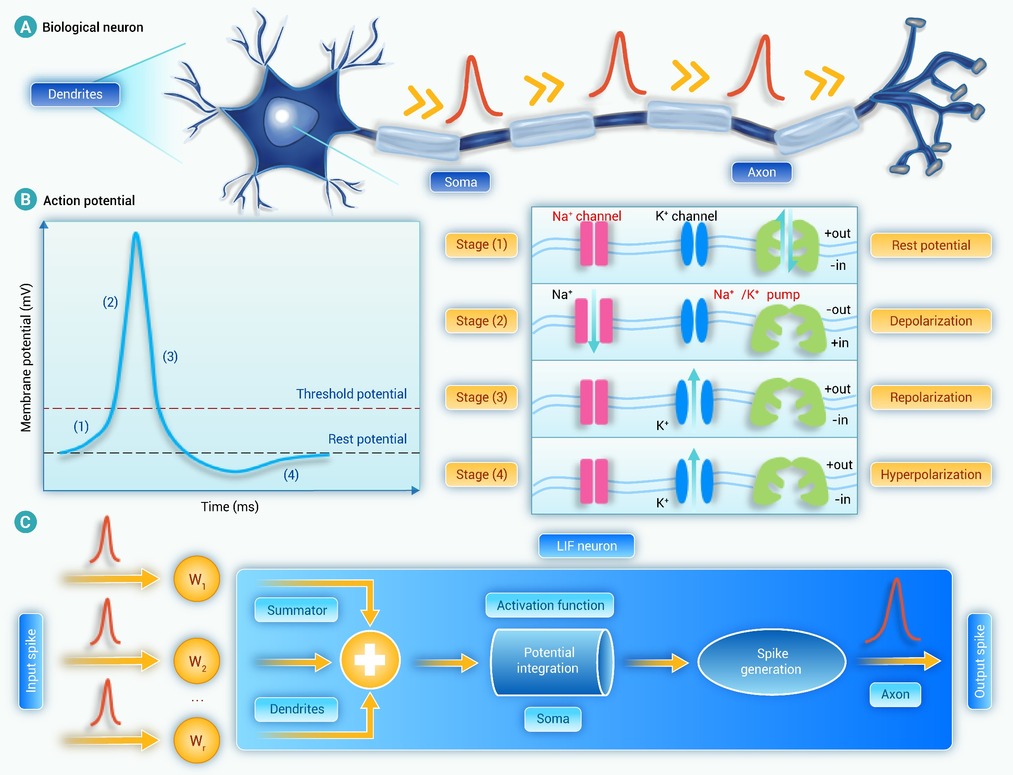
Figure 1.
Comparison of biological neuron and the LIF neuron
-
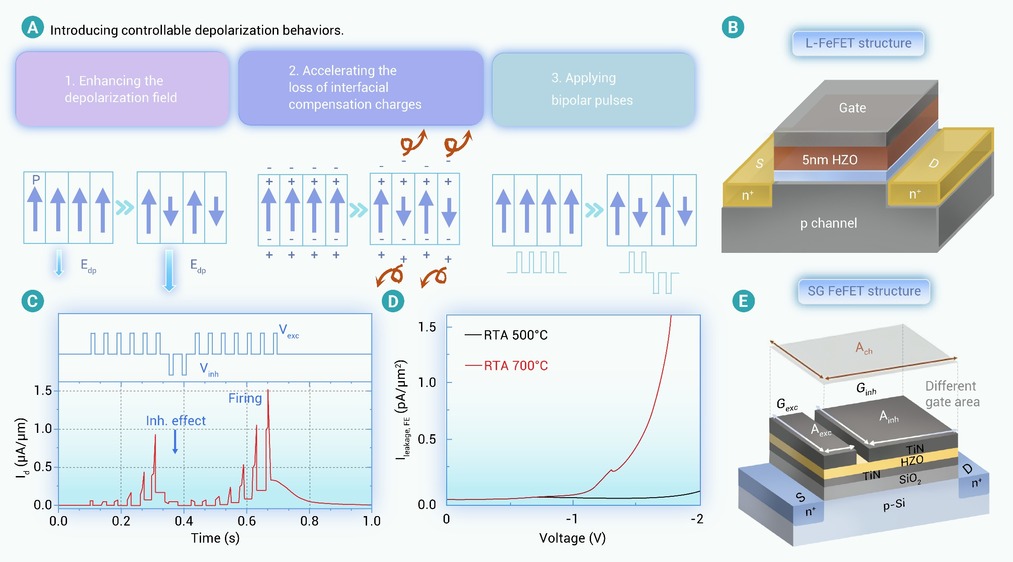
Figure 2.
The device design and LIF implementation of ferroelectric neurons
-
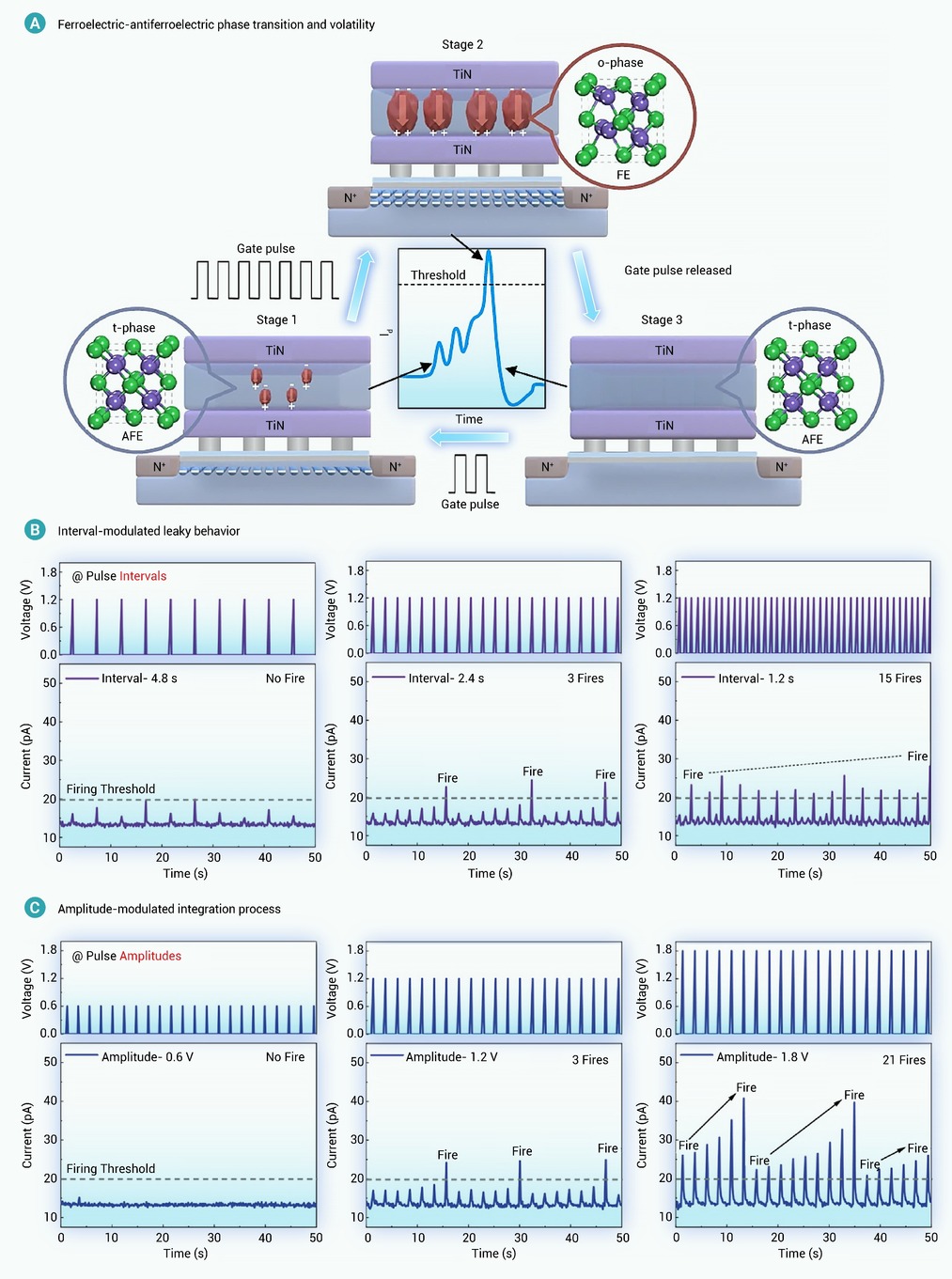
Figure 3.
Field-induced programmable neuron response via antiferroelectric-ferroelectric phase transition and volatility
-
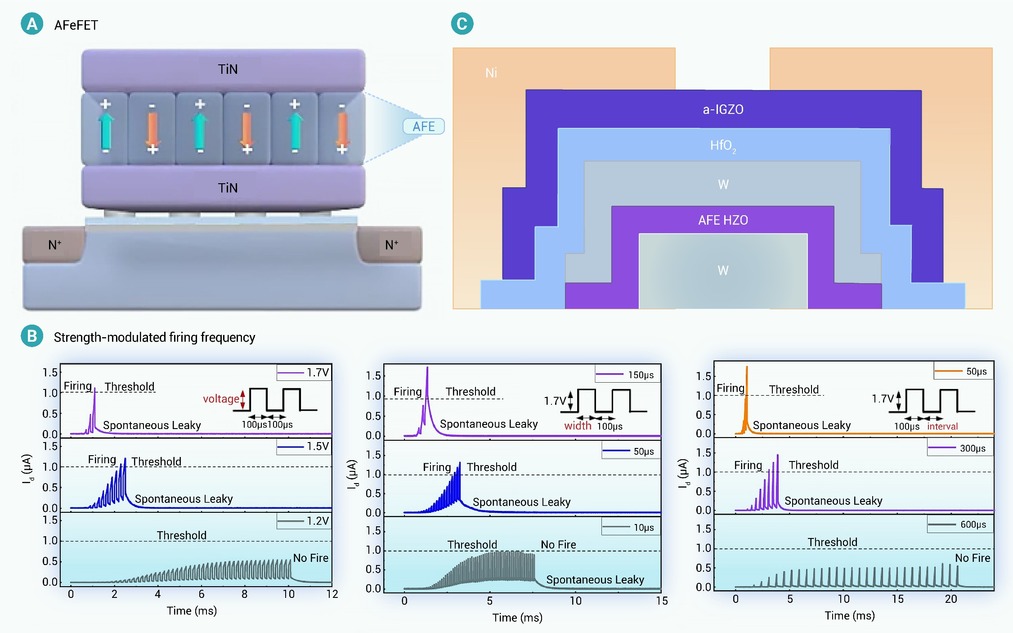
Figure 4.
The device design and LIF implementation of antiferroelectric neurons
-
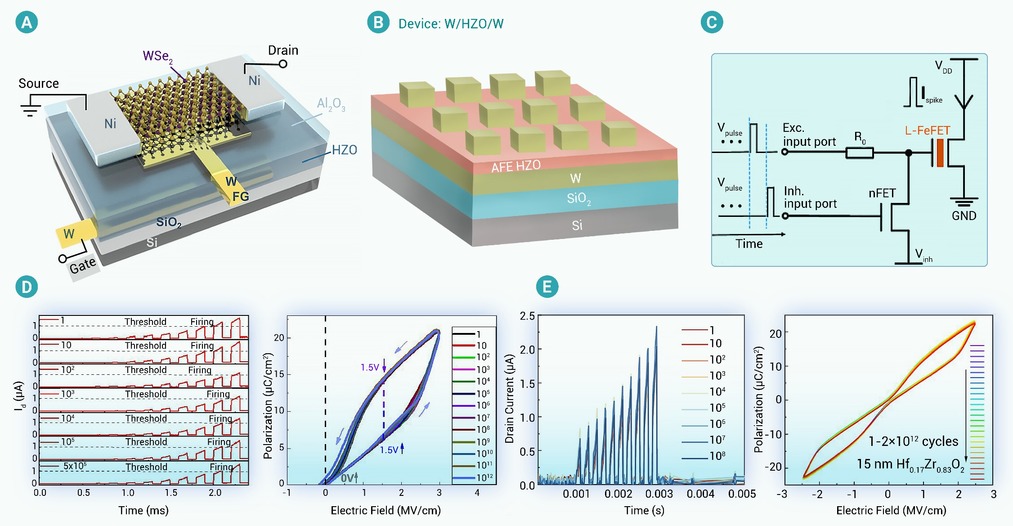
Figure 5.
The hardware cost and endurance of ferroelectric neurons
-
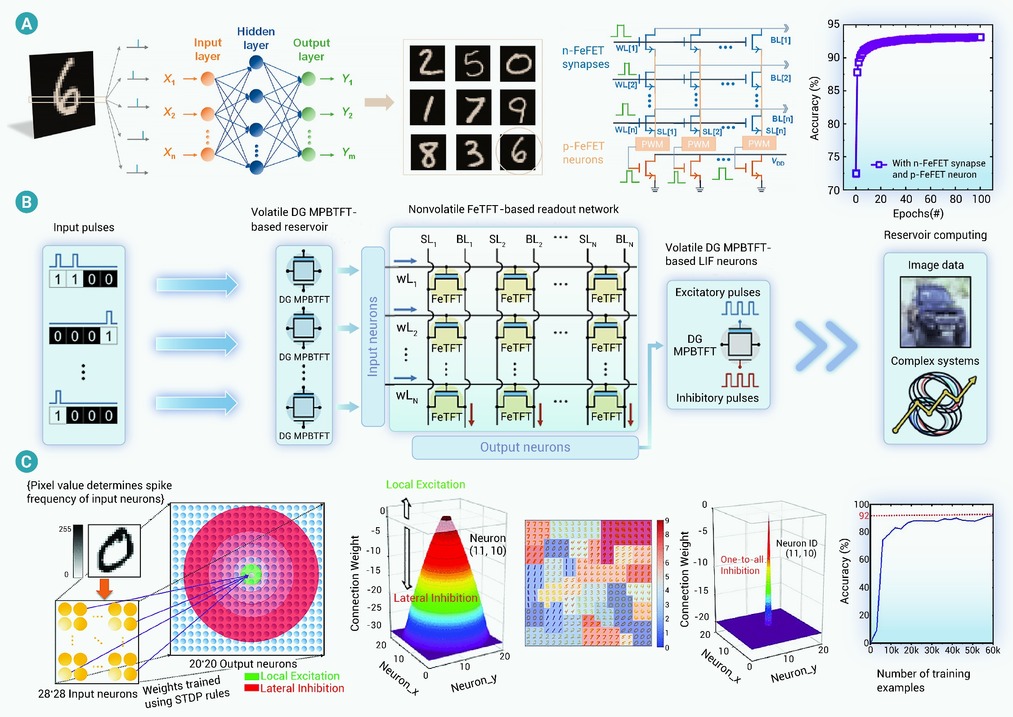
Figure 6.
The applications of ferroelectric LIF neurons
