
AI for Lithium-ion battery research under data-scarce scenarios
-
GRAPHICAL ABSTRACT
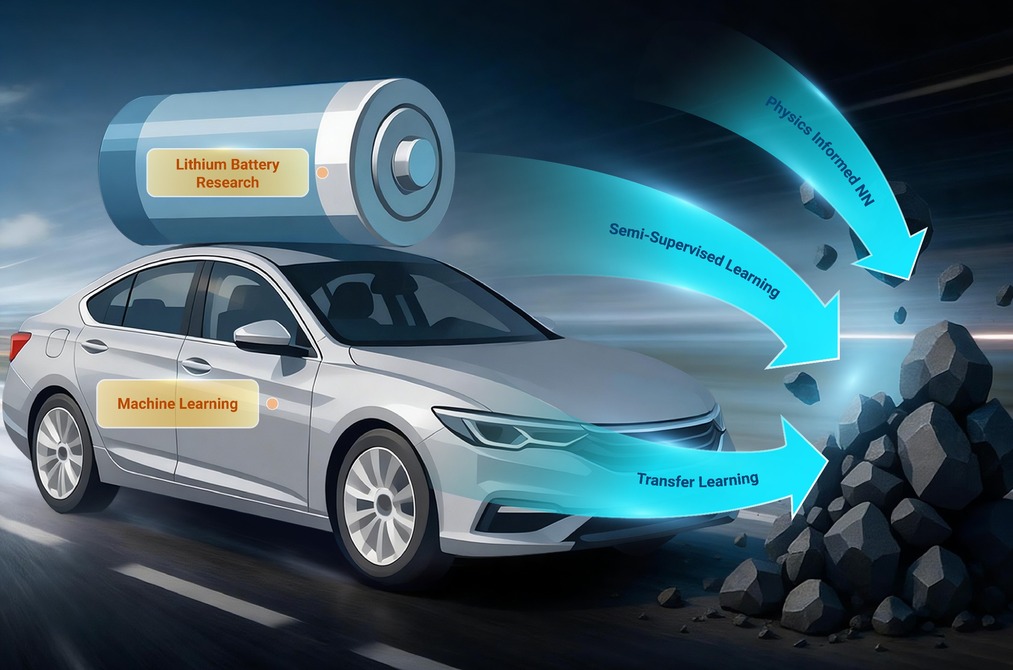
 DownLoad:
Full size image
DownLoad:
Full size image
-
PUBLIC SUMMARY
-
Root causes and consequences of data scarcity in LIB research are critically examined.
Materials-level and device-level solutions for mitigating data scarcity are systematically presented.
Future avenues for further reducing the impact of data scarcity across the field are proposed.
-
-
ABSTRACT
The global challenge on energy crises has promoted the extensive research on energy storage, which positions the lithium-ion batteries (LIBs) as a core technology due to the exceptional performance. While conventional approaches for LIB research are limited by long development cycles, high resource demands, and heavy reliance on the expertise of researchers, data-driven methods powered by ML exhibit remarkable potentials on enabling the efficient and accurate predictions of key battery performance metrics, significantly reducing the time and economic costs on the R&D of batteries. Despite these advances, data scarcity remains a major obstacle to the widespread applications of these techniques due to the high costs and prolonged cycles associated with battery experiments. To investigate appropriate approaches for addressing these challenges, a comprehensive review on the data-driven methods for lithium battery research is provided, offering insights into mitigating the impact of data scarcity. To reach this goal, this review systematically examines the implementations of data-driven methods associated with the applications in the battery domain. Detailed studies have been conducted to investigate the root causes of data scarcity at various levels ranging from materials to devices and effective strategies to accommodate these issues. Finally, the review discusss future directions, emphasizing the need for collaborative data-sharing frameworks and adaptive ML models that balance domain expertise with computational innovation. By addressing data scarcity through these strategies, this work aims to accelerate the development of next-generation LIB while retaining the core insights of traditional methodologies.-
Keywords:
- Machine learning /
- lithium-ion battery /
- Data scarcity /
- Material development /
- Device optimization
-

-
REFERENCES
[1] Tarascon J.-M. and Armand M. (2001). Issues and challenges facing rechargeable lithium batteries. Nature 414:359−367. DOI:10.1038/35104644 [2] Wang H., Yu Z., Kong X., et al. (2021). Dual-solvent Li-ion solvation enables high-performance Li-metal batteries. Adv. Mater. 33:2008619. DOI:10.1002/adma.202008619 [3] Wang Y., Chen C., Xie H., et al. (2017). 3D-printed all-fiber Li-ion battery toward wearable energy storage. Adv. Funct. Mater. 27:1703140. DOI:10.1002/adfm.201703140 [4] Xu K. (2004). Nonaqueous liquid electrolytes for lithium-based rechargeable batteries. Chem. Rev. 104:4303−4418. DOI:10.1021/cr030203g [5] Zhang Y., Li Y., Guo Z., et al. (2024). Health monitoring by optical fiber sensing technology for rechargeable batteries. eScience 4:100174. DOI:10.1016/j.esci.2023.100174 [6] Bresser D., Hosoi K., Howell D., et al. (2018). Perspectives of automotive battery R&D in china, germany, japan, and the USA. J. Power Sources 382:176−178. DOI:10.1016/j.jpowsour.2018.02.039 [7] Dunn B., Kamath H. and Tarascon J.-M. (2011). Electrical energy storage for the grid: a battery of choices. Science 334:928−935. DOI:10.1126/science.1212741 [8] Nykvist B. and Nilsson M. (2015). Rapidly falling costs of battery packs for electric vehicles. Nat. Clim. Chang. 5:329−332. DOI:10.1038/nclimate2564 [9] Schmuch R., Wagner R., Hörpel G., et al. (2018). Performance and cost of materials for lithium-based rechargeable automotive batteries. Nat. Energy 3:267−278. DOI:10.1038/s41560-018-0107-2 [10] Vikström H., Davidsson S. and Höök M. (2013). Lithium availability and future production outlooks. Appl. Energy 110:252−266. DOI:10.1016/j.apenergy.2013.04.005 [11] Liu Y., Chen S., Li P., et al. (2024). Status, challenges, and promises of data-driven battery lifetime prediction under cyber-physical system context. IET Cyber-Phys. Syst. 9:207−217. DOI:10.1049/cps2.12086 [12] Xue Z., Zhang Y., Cheng C., et al. (2020). Remaining useful life prediction of lithium-ion batteries with adaptive unscented Kalman filter and optimized support vector regression. Neurocomputing 376:95−102. DOI:10.1016/j.neucom.2019.09.074 [13] Lipu M.S.H., Hannan M.A., Hussain A., et al. (2018). A review of state of health and remaining useful life estimation methods for lithium-ion battery in electric vehicles: challenges and recommendations. J. Clean. Prod. 205:115−133. DOI:10.1016/j.jclepro.2018.09.065 [14] Zheng X. and Fang H. (2015). An integrated unscented Kalman filter and relevance vector regression approach for lithium-ion battery remaining useful life and short-term capacity prediction. Reliab. Eng. Syst. Saf. 144:74−82. DOI:10.1016/j.ress.2015.07.013 [15] Azis N.A., Joelianto E. and Widyotriatmo A. (2019). State of charge (SoC) and state of health (SoH) estimation of lithium-ion battery using dual extended Kalman filter based on polynomial battery model. 2019 6th Int. Conf. Instrum., Control Autom. 2019:88-93. DOI:10.1109/ica.2019.8916734 [16] Guha A., Patra A. and Vaisakh K.V. (2017). Remaining useful life estimation of lithium-ion batteries based on the internal resistance growth model. 2017 Indian Control Conf. 2017:33-38. DOI:10.1109/indiancc.2017.7846448 [17] Li D.Z., Wang W. and Ismail F. (2014). A mutated particle filter technique for system state estimation and battery life prediction. IEEE Trans. Instrum. Meas. 63:2034−2043. DOI:10.1109/tim.2014.2303534 [18] Ahwiadi M. and Wang W. (2019). An enhanced mutated particle filter technique for system state estimation and battery life prediction. IEEE Trans. Instrum. Meas. 68:923−935. DOI:10.1109/tim.2018.2853900 [19] Weng C., Cui Y., Sun J., et al. (2013). On-board state of health monitoring of lithium-ion batteries using incremental capacity analysis with support vector regression. J. Power Sources 235:36−44. DOI:10.1016/j.jpowsour.2013.02.012 [20] Weng C., Feng X., Sun J., et al. (2016). State-of-health monitoring of lithium-ion battery modules and packs via incremental capacity peak tracking. Appl. Energy 180:360−368. DOI:10.1016/j.apenergy.2016.07.126 [21] Zhang Y., Tang Q., Zhang Y., et al. (2020). Identifying degradation patterns of lithium ion batteries from impedance spectroscopy using machine learning. Nat. Commun. 11:15135. DOI:10.1038/s41467-020-15235-7 [22] Ding R., Wang R., Ding Y., et al. (2020). Designing AI-aided analysis and prediction models for nonprecious metal electrocatalyst-based proton-exchange membrane fuel cells. Angew. Chem. 132:19337−19345. DOI:10.1002/ange.202006928 [23] Ying X. (2019). An overview of overfitting and its solutions. J. Phys.: Conf. Ser. 1168:022022. DOI:10.1088/1742-6596/1168/2/022022 [24] Dietterich T. (1995). Overfitting and undercomputing in machine learning. ACM Comput. Surv. 27:326−327. DOI:10.1145/212094.212114 [25] Hawkins D.M. (2003). The problem of overfitting. J. Chem. Inf. Comput. Sci. 44:1−12. DOI:10.1021/ci0342472 [26] Severson K.A., Attia P.M., Jin N., et al. (2019). Data-driven prediction of battery cycle life before capacity degradation. Nat. Energy 4:383−391. DOI:10.1038/s41560-019-0356-8 [27] Yang D., Zhang X., Pan R., et al. (2018). A novel Gaussian process regression model for state-of-health estimation of lithium-ion battery using charging curve. J. Power Sources 384:387−395. DOI:10.1016/j.jpowsour.2018.03.015 [28] Attia P.M., Grover A., Jin N., et al. (2020). Closed-loop optimization of fast-charging protocols for batteries with machine learning. Nature 578:397−402. DOI:10.1038/s41586-020-1994-5 [29] Weng A., Mohtat P., Attia P.M., et al. (2021). Predicting the impact of formation protocols on battery lifetime immediately after manufacturing. Joule 5:2971−2992. DOI:10.1016/j.joule.2021.09.015 [30] Jones P.K., Stimming U. and Lee A.A. (2022). Impedance-based forecasting of lithium-ion battery performance amid uneven usage. Nat. Commun. 13:6324. DOI:10.1038/s41467-022-32422-w [31] Tao S., Liu H., Sun C., et al. (2023). Collaborative and privacy-preserving retired battery sorting for profitable direct recycling via federated machine learning. Nat. Commun. 14:8883. DOI:10.1038/s41467-023-43883-y [32] Guo N., Chen S., Tao J., et al. (2024). Semi-supervised learning for explainable few-shot battery lifetime prediction. Joule 8:1820−1836. DOI:10.1016/j.joule.2024.02.020 [33] Ward L., Agrawal A., Choudhary A., et al. (2016). A general-purpose machine learning framework for predicting properties of inorganic materials. npj Comput. Mater. 2:16028. DOI:10.1038/npjcompumats.2016.28 [34] Zhang Y., He X., Chen Z., et al. (2019). Unsupervised discovery of solid-state lithium ion conductors. Nat. Commun. 10:5267. DOI:10.1038/s41467-019-13214-1 [35] Jiang Z., Li J., Yang Y., et al. (2020). Machine-learning-revealed statistics of the particle-carbon/binder detachment in lithium-ion battery cathodes. Nat. Commun. 11:2737. DOI:10.1038/s41467-020-16233-5 [36] Niri M.F., Liu K., Apachitei G., et al. (2021). Machine learning for optimised and clean Li-ion battery manufacturing: Revealing the dependency between electrode and cell characteristics. J. Clean. Prod. 324:129272. DOI:10.1016/j.jclepro.2021.129272 [37] Finegan D.P., Squires I., Dahari A., et al. (2022). Machine-learning-driven advanced characterization of battery electrodes. ACS Energy Lett. 7:4368−4378. DOI:10.1021/acsenergylett.2c01996 [38] Merchant A., Batzner S., Schoenholz S.S., et al. (2023). Scaling deep learning for materials discovery. Nature 624:80−85. DOI:10.1038/s41586-023-06735-9 [39] Ren F., Wu Y., Zuo W., et al. (2024). Visualizing the SEI formation between lithium metal and solid-state electrolyte. Energy Environ. Sci. 17:2743−2752. DOI:10.1039/d3ee03536k [40] Naaz F., Herle A., Channegowda J., et al. (2021). A generative adversarial network-based synthetic data augmentation technique for battery condition evaluation. Int. J. Energy Res. 45:19120−19135. DOI:10.1002/er.7013 [41] Laskowski F.A.L., McHaffie D.B. and See K.A. (2023). Identification of potential solid-state Li-ion conductors with semi-supervised learning. Energy Environ. Sci. 16:1264−1276. DOI:10.1039/d2ee03499a [42] Lin T., Chen S., Harris S.J., et al. (2024). Investigating explainable transfer learning for battery lifetime prediction under state transitions. eScience 4:100280. DOI:10.1016/j.esci.2024.100280 [43] Finegan D.P., Zhu J., Feng X., et al. (2021). The application of data-driven methods and physics-based learning for improving battery safety. Joule 5:316−329. DOI:10.1016/j.joule.2020.11.018 [44] Richardson R.R., Birkl C.R., Osborne M.A., et al. (2019). Gaussian process regression for in situ capacity estimation of lithium-ion batteries. IEEE Trans. Ind. Inform. 15:127−138. DOI:10.1109/tii.2018.2794997 [45] Lin C.P., Cabrera J., Yu D.Y.W., et al. (2020). SoH estimation and SoC recalibration of lithium-ion battery with incremental capacity analysis & cubic smoothing spline. J. Electrochem. Soc. 167:090537. DOI:10.1149/1945-7111/ab8f56 [46] Zhang J. and Lee J. (2011). A review on prognostics and health monitoring of Li-ion battery. J. Power Sources 196:6007−6014. DOI:10.1016/j.jpowsour.2011.03.101 [47] Verma P., Maire P. and Novák P. (2010). A review of the features and analyses of the solid electrolyte interphase in Li-ion batteries. Electrochim. Acta 55:6332−6341. DOI:10.1016/j.electacta.2010.05.072 [48] Yang M., Sun X., Liu R., et al. (2024). Predict the lifetime of lithium-ion batteries using early cycles: A review. Appl. Energy 376:124171. DOI:10.1016/j.apenergy.2024.124171 [49] Lin M., You Y., Meng J., et al. (2023). Lithium-ion battery degradation trajectory early prediction with synthetic dataset and deep learning. J. Energy Chem. 85:534−546. DOI:10.1016/j.jechem.2023.06.036 [50] Iftikhar M., Shoaib M., Altaf A., et al. (2024). A deep learning approach to optimize remaining useful life prediction for Li-ion batteries. Sci. Rep. 14:77427. DOI:10.1038/s41598-024-77427-1 [51] Ren X. and Malik J. (2003). Learning a classification model for segmentation. Proc. IEEE Int. Conf. Comput. Vis. 2003:10−17. DOI:10.1109/iccv.2003.1238308 [52] Bolloju S., Vangapally N., Elias Y., et al. (2025). Electrolyte additives for Li-ion batteries: classification by elements. Prog. Mater. Sci. 147:101349. DOI:10.1016/j.pmatsci.2024.101349 [53] Li X., Yuan C., Li X., et al. (2020). State of health estimation for Li-ion battery using incremental capacity analysis and Gaussian process regression. Energy 190:116467. DOI:10.1016/j.energy.2019.116467 [54] Nahar L., Awrangjeb M. and Islam M.S. (2026). AI-enabled defect detection in industrial products: A comprehensive survey, key insights and future research challenges. Adv. Eng. Inform. 69:104067. DOI:10.1016/j.aei.2025.104067 [55] Shen S., Sadoughi M., Li M., et al. (2020). Deep convolutional neural networks with ensemble learning and transfer learning for capacity estimation of lithium-ion batteries. Appl. Energy 260:114296. DOI:10.1016/j.apenergy.2019.114296 [56] Zhang J., Wang Y., Jiang B., et al. (2023). Realistic fault detection of Li-ion battery via dynamical deep learning. Nat. Commun. 14:1226. DOI:10.1038/s41467-023-41226-5 [57] Ghadbeigi L., Harada J.K., Lettiere B.R., et al. (2015). Performance and resource considerations of Li-ion battery electrode materials. Energy Environ. Sci. 8:1640−1650. DOI:10.1039/c5ee00685f [58] Paulson N.H., Kubal J., Ward L., et al. (2022). Feature engineering for machine learning enabled early prediction of battery lifetime. J. Power Sources 527:231127. DOI:10.1016/j.jpowsour.2022.231127 [59] Urban A., Seo D.-H. and Ceder G. (2016). Computational understanding of Li-ion batteries. npj Comput. Mater. 2:16002. DOI:10.1038/npjcompumats.2016.2 [60] Ma G., Xu S., Jiang B., et al. (2022). Real-time personalized health status prediction of lithium-ion batteries using deep transfer learning. Energy Environ. Sci. 15:4083−4094. DOI:10.1039/d2ee01676a [61] Zhu J., Wang Y., Huang Y., et al. (2022). Data-driven capacity estimation of commercial lithium-ion batteries from voltage relaxation. Nat. Commun. 13:3837. DOI:10.1038/s41467-022-29837-w [62] Das Goswami B.R., Mastrogiorgio M., Ragone M., et al. (2024). A combined multiphysics modeling and deep learning framework to predict thermal runaway in cylindrical Li-ion batteries. J. Power Sources 595:234065. DOI:10.1016/j.jpowsour.2024.234065 [63] Settles B. (2012). Active learning. Springer. DOI:10.1007/978-3-031-01560-1 [64] Zhu R., Chen Y., Peng W., et al. (2022). Bayesian deep-learning for RUL prediction: an active learning perspective. Reliab. Eng. Syst. Saf. 228:108758. DOI:10.1016/j.ress.2022.108758 [65] Kim S., Choi Y.Y. and Choi J.-I. (2022). Impedance-based capacity estimation for lithium-ion batteries using generative adversarial network. Appl. Energy 308:118317. DOI:10.1016/j.apenergy.2021.118317 [66] Fernandez A., Garcia S., Herrera F., et al. (2018). SMOTE for learning from imbalanced data: Progress and challenges, marking the 15-year anniversary. J. Artif. Intell. Res. 61:863−905. DOI:10.1613/jair.1.11192 [67] Chawla N.V., Bowyer K.W., Hall L.O., et al. (2002). SMOTE: Synthetic minority over-sampling technique. J. Artif. Intell. Res. 16:321−357. DOI:10.1613/jair.953 [68] Camacho L., Douzas G. and Bacao F. (2022). Geometric SMOTE for regression. Expert Syst. Appl. 193:116387. DOI:10.1016/j.eswa.2021.116387 [69] Han H., Wang W.Y. and Mao B.H. (2005). borderline-SMOTE: A new over-sampling method in imbalanced data sets learning. Lect. Notes Comput. Sci. 3644:878−887. DOI:10.1007/11538059_91 [70] Xu S., Lu B., Baldea M., et al. (2015). Data cleaning in the process industries. Rev. Chem. Eng. 31:453−490. DOI:10.1515/revce-2015-0022 [71] Wang Y., Yao Q., Kwok J.T., et al. (2020). Generalizing from a few examples. ACM Comput. Surv. 53:63. DOI:10.1145/3386252 [72] Velleman P.F. (1980). Definition and comparison of robust nonlinear data smoothing algorithms. J. Am. Stat. Assoc. 75:609−615. DOI:10.1080/01621459.1980.10477521 [73] Patro S.G.K. and Sahu K.K. (2015). Normalization: A preprocessing stage. IARJSET 2:20−22. DOI:10.17148/iarjset.2015.2305 [74] Xiong R., Sun Y., Wang C., et al. (2023). A data-driven method for extracting aging features to accurately predict the battery health. Energy Storage Mater. 57:460−470. DOI:10.1016/j.ensm.2023.02.034 [75] Tao S., Sun C., Fu S., et al. (2023). Battery cross-operation-condition lifetime prediction via interpretable feature engineering assisted adaptive machine learning. ACS Energy Lett. 8:3269−3279. DOI:10.1021/acsenergylett.3c01012 [76] Ma M., Li X., Gao W., et al. (2022). Multi-fault diagnosis for series-connected lithium-ion battery pack with reconstruction-based contribution based on parallel PCA-KPCA. Appl. Energy 324:119678. DOI:10.1016/j.apenergy.2022.119678 [77] Sarasketa-Zabala E., Martinez-Laserna E., Berecibar M., et al. (2016). Realistic lifetime prediction approach for Li-ion batteries. Appl. Energy 162:839−852. DOI:10.1016/j.apenergy.2015.10.115 [78] Liu Y. and Li X. (2018). Predictive modeling for advanced virtual metrology: A tree-based approach. Proc. IEEE Int. Conf. Emerg. Technol. Factory Autom. 2018:845−852. DOI:10.1109/etfa.2018.8502480 [79] Mosavi A., Salimi M., Faizollahzadeh Ardabili S., et al. (2019). State of the art of machine learning models in energy systems, a systematic review. Energies 12:1301. DOI:10.3390/en12071301 [80] Oh H.-S. (2013). Introduction to linear regression analysis, 5th edition by montgomery, douglas c. , Peck, Elizabeth A., and Vining, G. Geoffrey. Biometrics 69:1087. DOI:10.1111/biom.12129 [81] Weisberg S. (2005). Applied linear regression. Wiley. DOI:10.1002/0471704091. [82] Su X., Yan X. and Tsai C. (2012). Linear regression. WIREs Comput. Stat. 4:275−294. DOI:10.1002/wics.1198 [83] Vilsen S.B. and Stroe D.-I. (2021). Battery state-of-health modelling by multiple linear regression. J. Clean. Prod. 290:125700. DOI:10.1016/j.jclepro.2020.125700 [84] Sun J., Fan C. and Yan H. (2024). SoH estimation of lithium-ion batteries based on multi-feature deep fusion and XGBoost. Energy 306:132429. DOI:10.1016/j.energy.2024.132429 [85] Prokhorenkova L., Gusev G., Vorobev A., et al. (2018). CatBoost: Unbiased boosting with categorical features. Adv. Neural Inf. Process. Syst. 31:6638−6648. DOI:10.13140/RG.2.2.30029.96485 [86] Niu S., Liu Y., Wang J., et al. (2020). A decade survey of transfer learning (2010-2020). IEEE Trans. Artif. Intell. 1:151−166. DOI:10.1109/tai.2021.3054609 [87] Samek W., Montavon G., Lapuschkin S., et al. (2021). Explaining deep neural networks and beyond: A review of methods and applications. Proc. IEEE 109:247−278. DOI:10.1109/jproc.2021.3060483 [88] Miikkulainen R., Liang J., Meyerson E., et al. (2024). Evolving deep neural networks. Artificial intelligence in the age of neural networks and brain computing. Elsevier. DOI:10.1016/b978-0-323-96104-2.00002-6 [89] Li Z., Liu F., Yang W., et al. (2022). A survey of convolutional neural networks: Analysis, applications, and prospects. IEEE Trans. Neural Netw. Learn. Syst. 33:6999−7019. DOI:10.1109/tnnls.2021.3084827 [90] Gu J., Wang Z., Kuen J., et al. (2018). Recent advances in convolutional neural networks. Pattern Recognit. 77:354−377. DOI:10.1016/j.patcog.2017.10.013 [91] Sherstinsky A. (2020). Fundamentals of recurrent neural network (RNN) and long short-term memory (LSTM) network. Physica D 404:132306. DOI:10.1016/j.physd.2019.132306 [92] Yu Y., Si X., Hu C., et al. (2019). A review of recurrent neural networks: LSTM cells and network architectures. Neural Comput. 31:1235−1270. DOI:10.1162/neco_a_01199 [93] Varis D. and Bojar O. (2021). Sequence length is a domain: Length-based overfitting in transformer models. Proc. Conf. Empir. Methods Nat. Lang. Process. 2021:3042−3051. DOI:10.18653/v1/2021.emnlp-main.650 [94] Tibshirani R. (1996). Regression shrinkage and selection via the lasso. J. R. Stat. Soc. B 58:267−288. DOI:10.1111/j.2517-6161.1996.tb02080.x [95] Owen A.B. (2007). A robust hybrid of lasso and ridge regression. Contemp. Math. 443:59−71. DOI:10.1090/conm/443/08555 [96] Wu X. (2023). A dropout optimization algorithm to prevent overfitting in machine learning. Mach. Learn. Theory Pract. 4:18−26. DOI:10.38007/ML.2023.040103 [97] Kyono T., Zhang Y. and van der Schaar M. (2020). CASTLE: Regularization via auxiliary causal graph discovery. Adv. Neural Inf. Process. Syst. 33:1501−1512. DOI:10.5555/3495724.3495939 [98] Cuomo S., Di Cola V.S., Giampaolo F., et al. (2022). Scientific machine learning through physics-informed neural networks: Where we are and what’s next. J. Sci. Comput. 92:88. DOI:10.1007/s10915-022-01939-z [99] Xiao J., Wang Y., Xiang H., et al. (2025). A physics-informed multiview collaborative semisupervised framework for battery lifespan early prediction. IEEE Trans. Ind. Inform. 21:9933−9944. DOI:10.1109/tii.2025.3609201 [100] Weiss K., Khoshgoftaar T.M. and Wang D. (2016). A survey of transfer learning. J. Big Data 3:9. DOI:10.1186/s40537-016-0043-6 [101] Zhu X. and Goldberg A. (2009). Introduction to semi-supervised learning. Morgan & Claypool Publishers. DOI:10.7551/mitpress/6173.003.0003. [102] Wong T.-T. (2015). Performance evaluation of classification algorithms by k-fold and leave-one-out cross validation. Pattern Recognit. 48:2839−2846. DOI:10.1016/j.patcog.2015.03.009 [103] Vakharia V., Shah M., Nair P., et al. (2023). Estimation of lithium-ion battery discharge capacity by integrating optimized explainable-AI and stacked LSTM model. Batteries 9:125. DOI:10.3390/batteries9020125 [104] Zhu J., Chen N. and Shen C. (2020). A new data-driven transferable remaining useful life prediction approach for bearing under different working conditions. Mech. Syst. Signal Process. 139:106602. DOI:10.1016/j.ymssp.2019.106602 [105] Gou J., Yu B., Maybank S.J., et al. (2021). Knowledge distillation: A survey. Int. J. Comput. Vis. 129:1789−1819. DOI:10.1007/s11263-021-01453-z [106] Kilic A., Oral B., Eroglu D., et al. (2023). Machine learning for beyond Li-ion batteries: powering the research. J. Energy Storage 73:109057. DOI:10.1016/j.est.2023.109057 [107] Luo H., Gou Q., Zheng Y., et al. (2025). Machine learning-assisted high-donor-number electrolyte additive screening toward construction of dendrite-free aqueous zinc-ion batteries. ACS Nano 19:2427−2443. DOI:10.1021/acsnano.4c13312 [108] Luo H., Deng J., Gou Q., et al. (2023). Accelerated discovery of novel high-performance zinc-ion battery cathode materials by combining high-throughput screening and experiments. Chin. Chem. Lett. 34:107885. DOI:10.1016/j.cclet.2022.107885 [109] Lv C., Zhou X., Zhong L., et al. (2022). Machine learning: An advanced platform for materials development and state prediction in lithium-ion batteries. Adv. Mater. 34:2101474. DOI:10.1002/adma.202101474 [110] Xu Z., Duan H., Dou Z., et al. (2023). Machine learning molecular dynamics simulation identifying weakly negative effect of polyanion rotation on Li-ion migration. npj Comput. Mater. 9:143. DOI:10.1038/s41524-023-01049-w [111] Sendek A.D., Cubuk E.D., Antoniuk E.R., et al. (2019). Machine learning-assisted discovery of solid Li-ion conducting materials. Chem. Mater. 31:342−352. DOI:10.1021/acs.chemmater.8b03272 [112] Chouchane M., Yao W., Cronk A., et al. (2024). Improved rate capability for dry thick electrodes through finite elements method and machine learning coupling. ACS Energy Lett. 9:1480−1486. DOI:10.1021/acsenergylett.4c00203 [113] Saad Y., Chelikowsky J.R. and Shontz S.M. (2010). Numerical methods for electronic structure calculations of materials. SIAM Rev. 52:3−54. DOI:10.1137/060651653 [114] Nascimento R.G., Corbetta M., Kulkarni C.S., et al. (2021). Hybrid physics-informed neural networks for lithium-ion battery modeling and prognosis. J. Power Sources 513:230526. DOI:10.1016/j.jpowsour.2021.230526 [115] Shorten C. and Khoshgoftaar T.M. (2019). A survey on image data augmentation for deep learning. J. Big Data 6:60. DOI:10.1186/s40537-019-0197-0 [116] Chlap P., Min H., Vandenberg N., et al. (2021). A review of medical image data augmentation techniques for deep learning applications. J. Med. Imaging Radiat. Oncol. 65:545−563. DOI:10.1111/1754-9485.13261 [117] Bailey J.J., Wade A., Boyce A.M., et al. (2023). Quantitative assessment of machine-learning segmentation of battery electrode materials for active material quantification. J. Power Sources 557:232503. DOI:10.1016/j.jpowsour.2022.232503 [118] Badmos O., Kopp A., Bernthaler T., et al. (2019). Image-based defect detection in lithium-ion battery electrode using convolutional neural networks. J. Intell. Manuf. 31:885−897. DOI:10.1007/s10845-019-01484-x [119] Väyrynen A. and Salminen J. (2012). Lithium ion battery production. J. Chem. Thermodyn. 46:80−85. DOI:10.1016/j.jct.2011.09.005 [120] McLay A. (1996). Computational fluid dynamics: The basics with applications. Aeronaut. J. 100:365. DOI:10.1017/s0001924000067129 [121] Saw L.H., Ye Y., Yew M.C., et al. (2017). Computational fluid dynamics simulation on open cell aluminium foams for Li-ion battery cooling system. Appl. Energy 204:1489−1499. DOI:10.1016/j.apenergy.2017.04.022 [122] Tan C., Ardanese R., Huemiller E., et al. (2023). Data-driven battery electrode production process modeling enabled by machine learning. J. Mater. Process. Technol. 316:117967. DOI:10.1016/j.jmatprotec.2023.117967 [123] Liu K., Wei Z., Yang Z., et al. (2021). Mass load prediction for lithium-ion battery electrode clean production: a machine learning approach. J. Clean. Prod. 289:125159. DOI:10.1016/j.jclepro.2020.125159 [124] Deringer V.L., Bartók A.P., Bernstein N., et al. (2021). Gaussian process regression for materials and molecules. Chem. Rev. 121:10073−10141. DOI:10.1021/acs.chemrev.1c00022 [125] Zhu P., Slater P.R. and Kendrick E. (2022). Insights into architecture, design and manufacture of electrodes for lithium-ion batteries. Mater. Des. 223:111208. DOI:10.1016/j.matdes.2022.111208 [126] Nair P., Vakharia V., Borade H., et al. (2023). Predicting Li-ion battery remaining useful life: An XDFM-driven approach with explainable AI. Energies 16:5725. DOI:10.3390/en16155725 [127] Zhang H., Li Y., Zheng S., et al. (2025). Battery lifetime prediction across diverse ageing conditions with inter-cell deep learning. Nat. Mach. Intell. 7:270−277. DOI:10.1038/s42256-024-00972-x [128] Sui X., He S. and Teodorescu R. (2024). Small-sample-learning-based lithium-ion batteries health assessment: An optimized ensemble framework. IEEE Trans. Ind. Appl. 60:4366−4380. DOI:10.1109/tia.2024.3351619 [129] Zhai X., Liu G., Lu T., et al. (2025). Transforming waste to value: enhancing battery lifetime prediction using incomplete data samples. J. Energy Chem. 106:642−649. DOI:10.1016/j.jechem.2025.03.011 [130] Yu C., Lu T., Liu G., et al. (2025). Dimensional-noise-aware battery lifetime prediction via an EM-TLS framework. Prog. Nat. Sci. Mater. Int. 35:146−155. DOI:10.1016/j.pnsc.2024.11.009 [131] Lu T., Zhai X., Chen S., et al. (2024). Robust battery lifetime prediction with noisy measurements via total-least-squares regression. Integr. 96:102136. DOI:10.1016/j.vlsi.2023.102136 [132] Yu J., Yang J., Wu Y., et al. (2020). Online state-of-health prediction of lithium-ion batteries with limited labeled data. Int. J. Energy Res. 44:11345−11360. DOI:10.1002/er.5750 [133] Babaeiyazdi I., Rezaei-Zare A. and Shokrzadeh S. (2021). State of charge prediction of EV Li-ion batteries using EIS: a machine learning approach. Energy 223:120116. DOI:10.1016/j.energy.2021.120116 [134] Jospin L.V., Laga H., Boussaid F., et al. (2022). Hands-on Bayesian neural networks—a tutorial for deep learning users. IEEE Comput. Intell. Mag. 17:29−48. DOI:10.1109/mci.2022.3155327 [135] Zhang S., Liu Z. and Su H. (2023). State of health estimation for lithium-ion batteries on few-shot learning. Energy 268:126726. DOI:10.1016/j.energy.2023.126726 [136] Wang F., Zhai Z., Zhao Z., et al. (2024). Physics-informed neural network for lithium-ion battery degradation stable modeling and prognosis. Nat. Commun. 15:48779. DOI:10.1038/s41467-024-48779-z [137] Lin Y.-H., Ruan S.-J., Chen Y.-X., et al. (2023). Physics-informed deep learning for lithium-ion battery diagnostics using electrochemical impedance spectroscopy. Renew. Sustain. Energy Rev. 188:113807. DOI:10.1016/j.rser.2023.113807 [138] Nair P., Vakharia V., Shah M., et al. (2024). AI-driven digital twin model for reliable lithium-ion battery discharge capacity predictions. Int. J. Intell. Syst. 2024:8185044. DOI:10.1155/2024/8185044 [139] Vilalta R. and Drissi Y. (2002). A perspective view and survey of meta-learning. Artif. Intell. Rev. 18:77−95. DOI:10.1023/a:1019956318069 [140] Hospedales T.M., Antoniou A., Micaelli P., et al. (2022). Meta-learning in neural networks: a survey. IEEE Trans. Pattern Anal. Mach. Intell. 44:5149−5169. DOI:10.1109/tpami.2021.3079209 [141] Ding S., Dong C., Zhao T., et al. (2021). A meta-learning based multimodal neural network for multistep ahead battery thermal runaway forecasting. IEEE Trans. Ind. Inform. 17:4503−4511. DOI:10.1109/tii.2020.3015555 [142] Cui X., Kang S.D., Wang S., et al. (2024). Data-driven analysis of battery formation reveals the role of electrode utilization in extending cycle life. Joule 8:3072−3087. DOI:10.1016/j.joule.2024.07.024 [143] Zhao S., Chen S., Zhou J., et al. (2024). Potential to transform words to watts with large language models in battery research. Cell Rep. Phys. Sci. 5:101844. DOI:10.1016/j.xcrp.2024.101844 [144] Liu R., Zou Z., Chen S., et al. (2025). Harnessing AI for understanding scientific literature: Innovations and applications of chat-agent system in battery recycling research. Mater. Today Energy 49:101818. DOI:10.1016/j.mtener.2025.101818 -
ABOUT THIS ARTICLE
Cite this article:
Zhang J., Zhai X., Zhang Q., et al. (2026). AI for Lithium-ion battery research under data-scarce scenarios. The Innovation Materials 4:100209. https://doi.org/10.59717/j.xinn-mater.2026.100209
Welcome!
To request copyright permission to republish or share portions of our works, please visit Copyright Clearance Center's (CCC) Marketplace website at marketplace.copyright.com.
Export File
Citation
Zhang J., Zhai X., Zhang Q., et al. (2026). AI for Lithium-ion battery research under data-scarce scenarios. The Innovation Materials 4:100209. https://doi.org/10.59717/j.xinn-mater.2026.100209

Format
Content
-
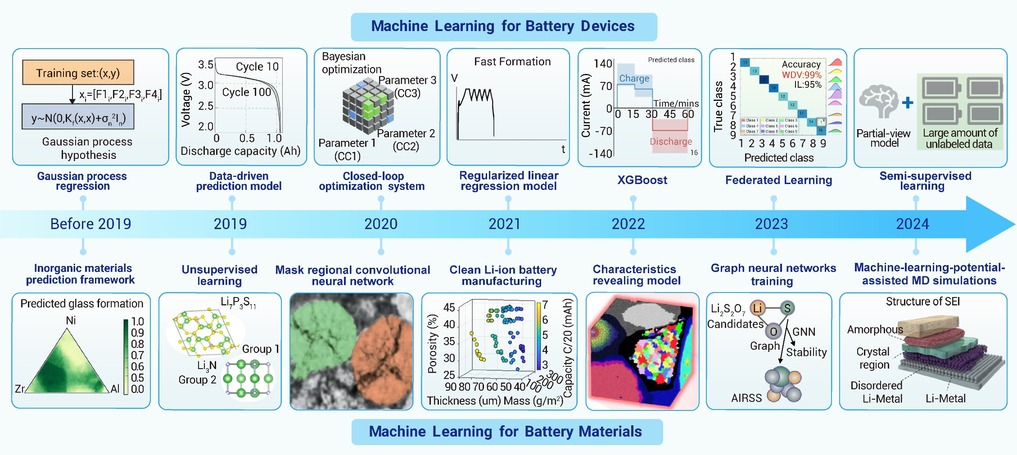
Figure 1.
Recent advances of ML assisted methods for LIB research.26-39
-
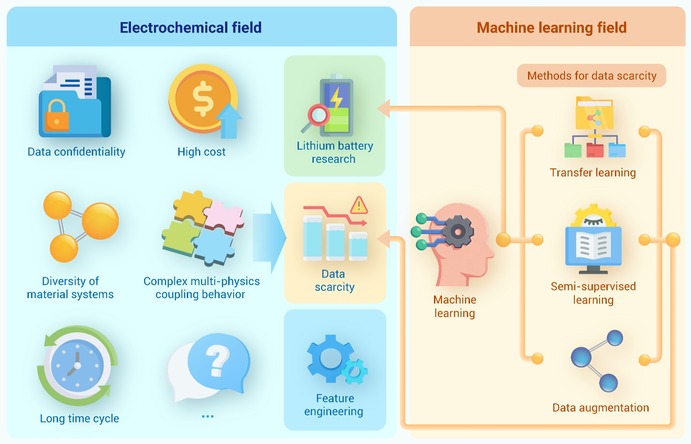
Figure 2.
Machine learning methods to tackle data-scarcity issue.
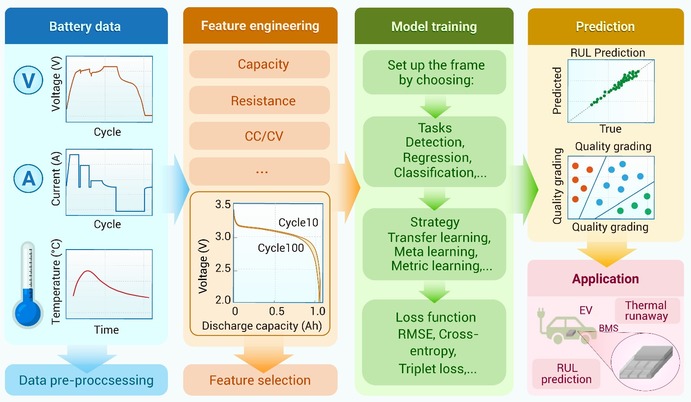
- Figure 3.
-
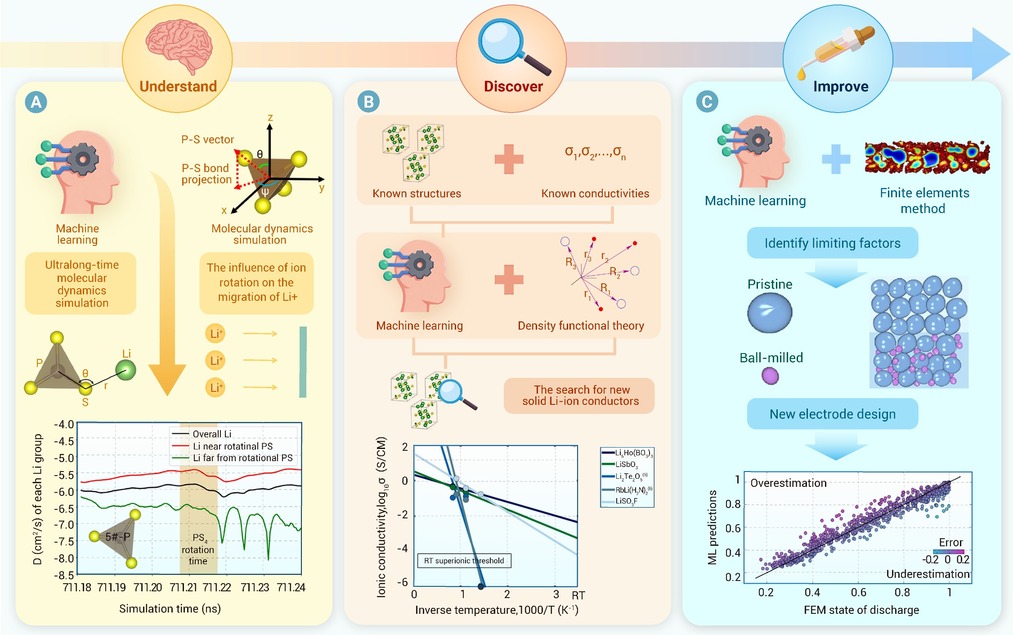
Figure 4.
ML assisted MD,DFT and FEM
-
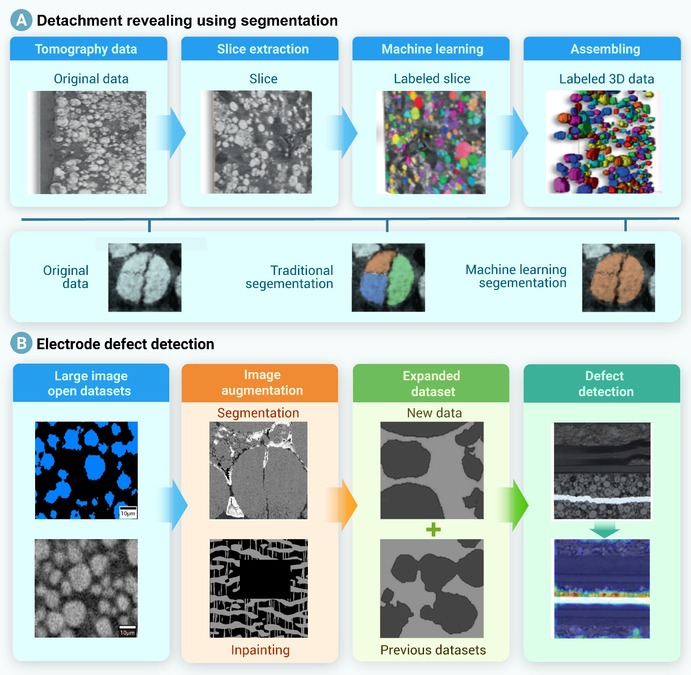
Figure 5.
ML image segmentation and data augmentations in material characterization
-
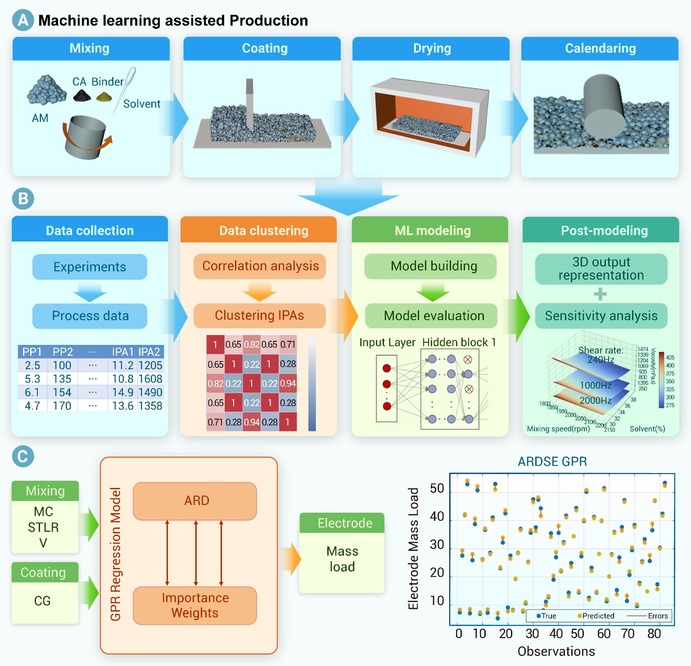
Figure 6.
ML involved production workflow
-
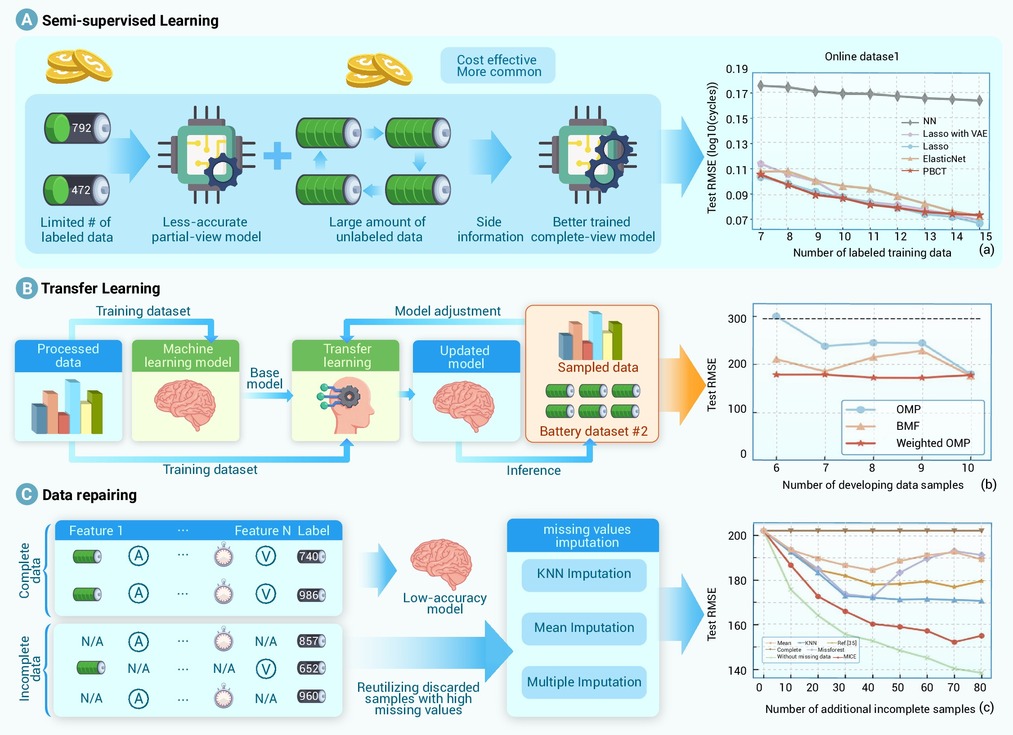
Figure 7.
ML guided efficient data utilization in life management
-
Figure 8.
SOX estimation based on ML methodologies
-
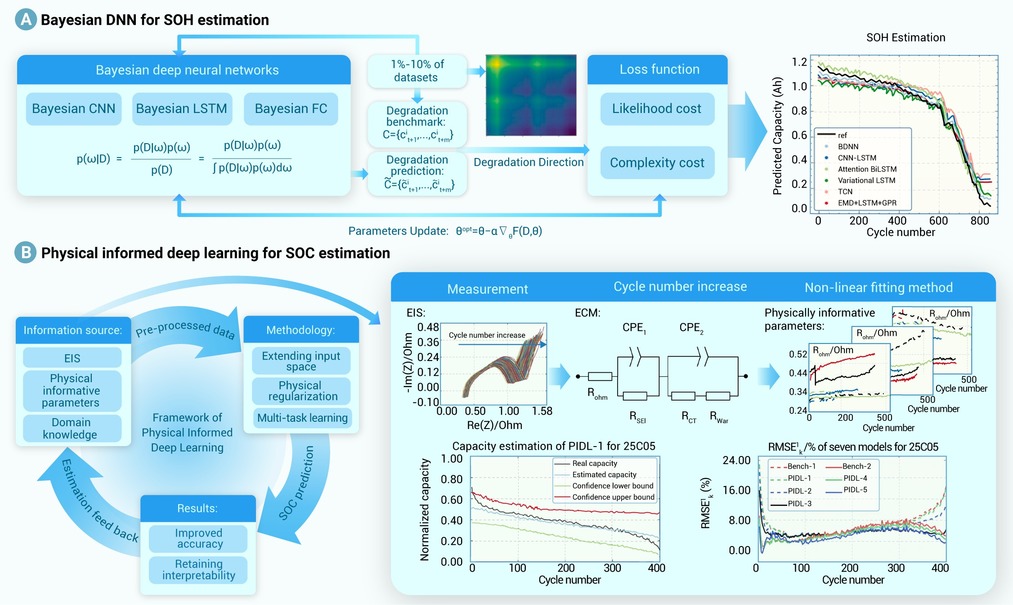
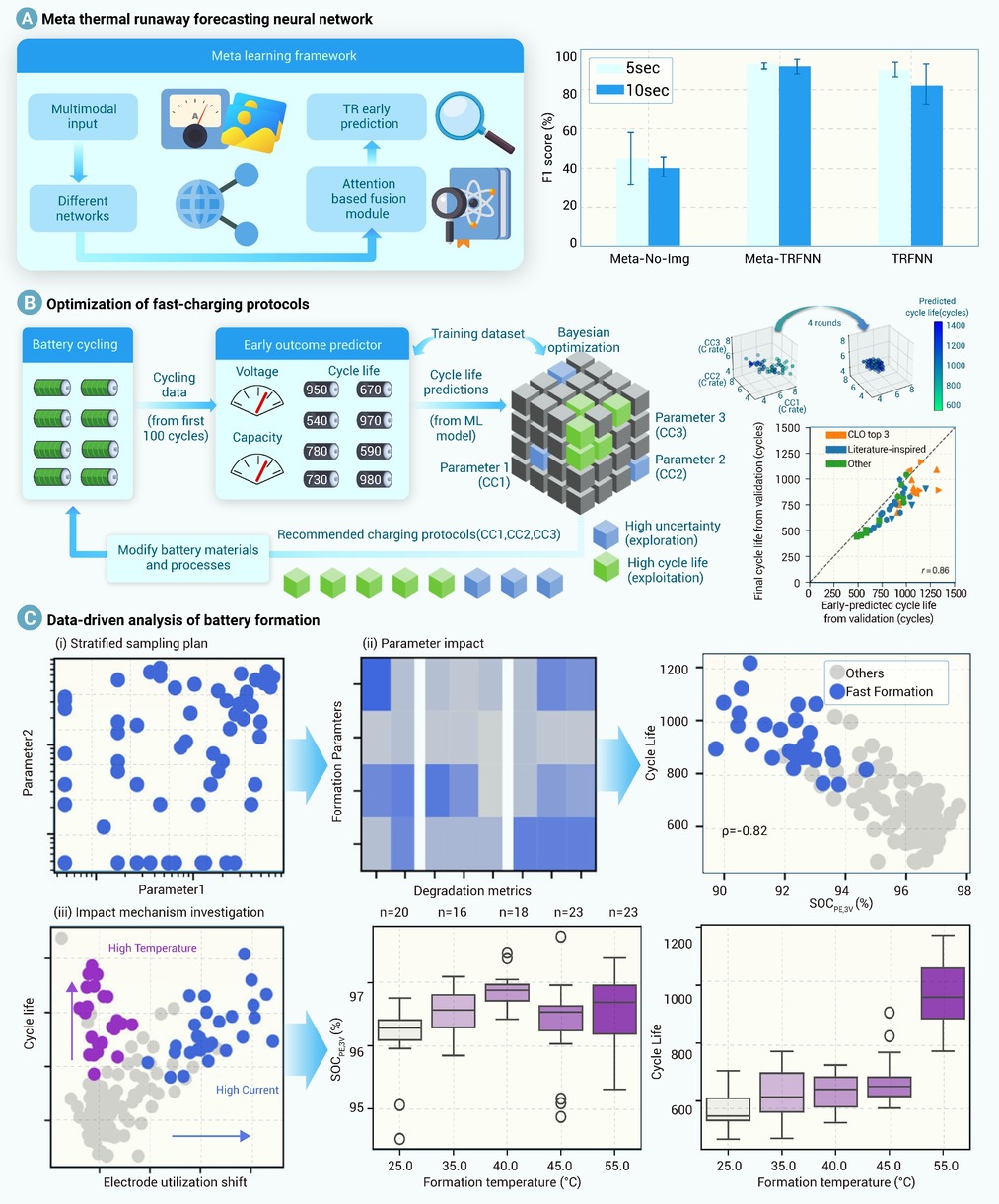
Figure 9.
ML assisted predictive and adaptive battery management
