
Weak emissive D-O-A organic phosphor: Exceptional matrix-free sensitization in MR-TADF OLEDs
-
GRAPHICAL ABSTRACT
 DownLoad:
Full size image
DownLoad:
Full size image
-
PUBLIC SUMMARY
-
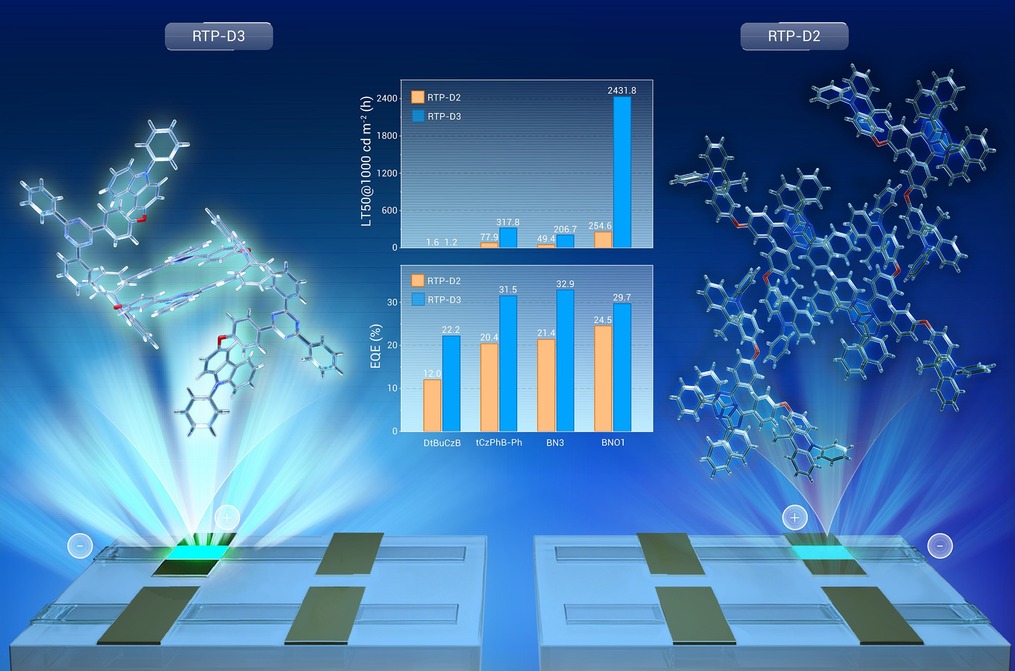
A weakly emissive D–O–A organic phosphor is developed to act as an efficient sensitizer for MR–TADF emitters.
High-performance narrowband electroluminescence is achieved ranging from sky blue to red.
The exceptional results break a habitual thinking that the best sensitizer should be the best emitter.
-
-
ABSTRACT
D-O-A organic phosphors showing strong aggregation-induced room-temperature phosphorescence (RTP) have been successfully demonstrated as the ideal matrix-free sensitizers for MR-TADF OLEDs. However, weak emissive ones still remain unexplored according to a habitual thinking that the best sensitizer should be the best emitter. Herein, a poor RTP emitter named RTP-D3 is newly developed based on carbazole as the donor, triazine as the acceptor and oxygen as the bridge. In spite of the extremely low photoluminescence quantum yield, RTP-D3 can sensitize the terminal MR-TADF molecules effectively and universally because of favored π-π and C-H∙∙∙π intermolecular interactions among triazine moieties and thus a balanced charge transport. Consequently, high performance sky-blue, green, yellow and red narrowband electroluminescence is realized together with a state-of-art external quantum efficiency of 22.2% (49.2 cd/A, 55.2 lm/W), 31.5% (105.1 cd/A, 113.9 lm/W), 32.9% (112.4 cd/A, 133.3 lm/W) and 29.7% (55.4 cd/A, 66.9 lm/W) as well as Commission Internationale de l’Eclairage (CIE) coordinates of (0.12, 0.48), (0.26, 0.70), (0.45, 0.54) and (0.61, 0.39), respectively. The exceptional results break a conventional blind spot about RTP sensitizer, highlighting that the less emissive D-O-A organic phosphors are also suitable for the best matrix-free sensitization in MR-TADF OLEDs. -

-
REFERENCES
[1] Hatakeyama T., Shiren K., Nakajima K., et al. (2016). Ultrapure blue thermally activated delayed fluorescence molecules: Efficient HOMO-LUMO separation by the multiple resonance effect. Adv. Mater. 28:2777−2781. DOI:10.1002/adma.201505491 [2] Fan X., Hao X., Huang F., et al. (2023). RGB thermally activated delayed fluorescence emitters for organic light-emitting diodes toward realizing the BT.2020 standard. Adv. Sci. 10:2303504. DOI:10.1002/advs.202303504 [3] Suresh S. M., Hall D., Beljonne D., et al. (2020). Multiresonant thermally activated delayed fluorescence emitters based on heteroatom-doped nanographenes: Recent advances and prospects for organic light-emitting diodes. Adv. Funct. Mater. 30:1908677. DOI:10.1002/adfm.201908677 [4] Kothavale S. S. and Lee J. Y. (2020). Three- and four-coordinate, boron-based, thermally activated delayed fluorescent emitters. Adv. Opt. Mater. 8:2000922. DOI:10.1002/adom.202000922 [5] Kim H. J. and Yasuda T. (2022). Narrowband emissive thermally activated delayed fluorescence materials. Adv. Opt. Mater. 10:2201714. DOI:10.1002/adom.202201714 [6] Jiang H., Jin J. and Wong W.-Y. (2023). High-performance multi-resonance thermally activated delayed fluorescence emitters for narrowband organic light-emitting diodes. Adv. Funct. Mater. 33:2306880. DOI:10.1002/adfm.202306880 [7] Xu Y., Wang Q., Cai X., et al. (2023). Frontier molecular orbital engineering: Constructing highly efficient narrowband organic electroluminescent materials. Angew. Chem. Int. Ed. 62:e202312451. DOI:10.1002/anie.202312451 [8] Kondo Y., Yoshiura K., Kitera S., et al. (2019). Narrowband deep-blue organic light-emitting diode featuring an organoboron-based emitter. Nat. Photon. 13:678−682. DOI:10.1038/s41566-019-0476-5 [9] Suresh S. M., Duda E., Hall D., et al. (2020). A deep blue B,N-doped heptacene emitter that shows both thermally activated delayed fluorescence and delayed fluorescence by triplet-triplet annihilation. J. Am. Chem. Soc. 142:6588−6599. DOI:10.1021/jacs.9b13704 [10] Xu Y., Li C., Li Z., et al. (2020). Constructing charge-transfer excited states based on frontier molecular orbital engineering: Narrowband green electroluminescence with high color purity and efficiency. Angew. Chem. Int. Ed. 59:17442−17446. DOI:10.1002/anie.202007210 [11] Zhang Y., Zhang D., Huang T., et al. (2021). Multi-resonance deep-red emitters with shallow potential-energy surfaces to surpass energy-gap law. Angew. Chem. Int. Ed. 60:20498−20503. DOI:10.1002/anie.202107848 [12] Park I. S., Min H. and Yasuda T. (2022). Ultrafast triplet-singlet exciton interconversion in narrowband blue organoboron emitters doped with heavy chalcogens. Angew. Chem. Int. Ed. 61:e202205684. DOI:10.1002/anie.202205684 [13] Hu Y. X., Miao J., Hua T., et al. (2022). Efficient selenium-integrated TADF OLEDs with reduced roll-off. Nat. Photon. 16:803−810. DOI:10.1038/s41566-022-01083-y [14] Fan X.-C., Wang K., Shi Y.-Z., et al. (2023). Ultrapure green organic light-emitting diodes based on highly distorted fused π-conjugated molecular design. Nat. Photon. 17:280−285. DOI:10.1038/s41566-022-01106-8 [15] Wan D., Zhou J., Meng G., et al. (2024). Peripheral carbazole units-decorated MR emitter containing B−N covalent bond for highly efficient green OLEDs with low roll-off. J. Semicond. 45:082402. DOI:10.1088/1674-4926/24040008 [16] Wan D., Zhou J., Yang Y., et al. (2024). Peripheral substitution engineering of MR-TADF emitters embedded with B-N covalent bond towards efficient BT.2020 blue electroluminescence. Adv. Mater. 36:2409706. DOI:10.1002/adma.202409706 [17] Zhang Y., Wei J., Zhang D., et al. (2022). Sterically wrapped multiple resonance fluorophors for suppression of concentration quenching and spectrum broadening. Angew. Chem. Int. Ed. 61:e202113206. DOI:10.1002/anie.202113206 [18] Zhang D., Song X., Gillett A. J., et al. (2020). Efficient and stable deep-blue fluorescent organic light-emitting diodes employing a sensitizer with fast triplet upconversion. Adv. Mater. 32:1908355. DOI:10.1002/adma.201908355 [19] Jeon S. O., Lee K. H., Kim J. S., et al. (2021). High-efficiency, long-lifetime deep-blue organic light-emitting diodes. Nat. Photon. 15:208−215. DOI:10.1038/s41566-021-00763-5 [20] Chan C.-Y., Tanaka M., Lee Y.-T., et al. (2021). Stable pure-blue hyperfluorescence organic light-emitting diodes with high-efficiency and narrow emission. Nat. Photon. 15:203−207. DOI:10.1038/s41566-020-00745-z [21] Adachi C. (2014). Third-generation organic electroluminescence materials. Jpn. J. Appl. Phys. 53:060101. DOI:10.7567/JJAP.53.060101 [22] Liu Y., Li C., Ren Z., et al. (2018). All-organic thermally activated delayed fluorescence materials for organic light-emitting diodes. Nat. Rev. Mater. 3:18020. DOI:10.1038/natrevmats.2018.20 [23] Cai M., Zhang D. and Duan L. (2019). High performance thermally activated delayed fluorescence sensitized organic light-emitting diodes. Chem. Rec. 19:1611−1623. DOI:10.1002/tcr.201800148 [24] Chen J., Liu H., Guo J., et al. (2022). Robust luminescent molecules with high-level reverse intersystem crossing for efficient near ultraviolet organic light-emitting diodes. Angew. Chem. Int. Ed. 61:e202116810. DOI:10.1002/anie.202116810 [25] Cho H.-H., Congrave D. G., Gillett A. J., et al. (2024). Suppression of Dexter transfer by covalent encapsulation for efficient matrix-free narrowband deep blue hyperfluorescent OLEDs. Nat. Mater. 23:519−526. DOI:10.1038/s41563-024-01812-4 [26] Zhang D., Duan L., Li C., et al. (2014). High-efficiency fluorescent organic light-emitting devices using sensitizing hosts with a small singlet-triplet exchange energy. Adv. Mater. 26:5050−5055. DOI:10.1002/adma.201401476 [27] Cho H.-H., Romanov A. S., Bochmann M., et al. (2021). Matrix-free hyperfluorescent organic light-emitting diodes based on carbene-metal-amides. Adv. Opt. Mater. 9:2001965. DOI:10.1002/adom.202001965 [28] Zhang Q., Tsang D., Kuwabara H., et al. (2015). Nearly 100% internal quantum efficiency in undoped electroluminescent devices employing pure organic emitters. Adv. Mater. 27:2096−2100. DOI:10.1002/adma.201405474 [29] Li X., Yan L., Liu S., et al. (2023). Polymerized thermally activated delayed-fluorescence small molecules: Long-axis polymerization leads to a nearly concentration-independent luminescence. Angew. Chem. Int. Ed. 62:e202300529. DOI:10.1002/anie.202300529 [30] Su N., Chen B. and Ding J. (2024). Two birds with one stone: polymerized thermally activated delayed fluorescence small molecules. Chem. Eur. J. 30:e202304095. DOI:10.1002/chem.202304095 [31] Zhao W., He Z. and Tang B. Z. (2020). Room-temperature phosphorescence from organic aggregates. Nat. Rev. Mater. 5:869−885. DOI:10.1038/s41578-020-0223-z [32] Liu X., Yang L., Li X., et al. (2021). An electroactive pure organic room-temperature phosphorescence polymer based on a donor-oxygen-acceptor geometry. Angew. Chem. Int. Ed. 60:2455−2463. DOI:10.1002/anie.202011957 [33] Xu L., Mo Y., Su N., et al. (2023). D-O-A based organic phosphors for both aggregation-induced electrophosphorescence and host-free sensitization. Nat. Commun. 14:1678. DOI:10.1038/s41467-023-37414-y [34] Stavrou K., Franca L. G., Danos A., et al. (2024). Key requirements for ultraefficient sensitization in hyperfluorescence organic light-emitting diodes. Nat. Photon. 18:554−561. DOI:10.1038/s41566-024-01395-1 [35] El-Sayed M. A. (1963). Spin-orbit coupling and the radiationless processes in nitrogen heterocyclics. J. Chem. Phys. 38:2834−2838. DOI:10.1063/1.1733610 [36] Lee D. R., Lee K. H., Shao W., et al. (2020). Heavy atom effect of selenium for metal-free phosphorescent light-emitting diodes. Chem. Mater. 32:2583−2592. DOI:10.1021/acs.chemmater.0c00078 [37] Baldo M. A., O’Brien D. F., Thompson M. E., et al. (1999). Excitonic singlet-triplet ratio in a semiconducting organic thin film. Phys. Rev. B. 60:14422. DOI:10.1103/PhysRevB.60.14422 [38] Liu J., Zhu Y., Tsuboi T., et al. (2022). Toward a BT.2020 green emitter through a combined multiple resonance effect and multi-lock strategy. Nat. Commun. 13:4876. DOI:10.1038/s41467-022-32607-3 [39] Chen Y., Zhang Y., Huang T., et al. (2022). Highly efficient and nearly roll-off–free electrofluorescent devices via multiple sensitizations. Sci. Adv. 8:eabp9203. DOI:10.1126/sciadv.abp9203 [40] Zou Y., Hu J., Yu M., et al. (2022). High-performance narrowband pure-red OLEDs with external quantum efficiencies up to 36.1% and ultralow efficiency roll-off. Adv. Mater. 34:2201442. DOI:10.1002/adma.202201442 [41] Xu Y., Cheng Z., Li Z., et al. (2020). Molecular-structure and device-configuration optimizations toward highly efficient green electroluminescence with narrowband emission and high color purity. Adv. Opt. Mater. 8:1902142. DOI:10.1002/adom.201902142 [42] Qi Y., Ning W., Zou Y., et al. (2021). Peripheral decoration of multi-resonance molecules as a versatile approach for simultaneous long-wavelength and narrowband emission. Adv. Funct. Mater. 31:2102017. DOI:10.1002/adfm.202102017 [43] Blom P. W. M., de Jong M. J. M. and Vleggaar J. J. M. (1996). Electron and hole transport in poly(p-phenylene vinylene) devices. Appl. Phys. Lett. 68:3308−3310. DOI:10.1063/1.116583 [44] Chen C.-H., Lin S.-C., Lin B.-Y., et al. (2022). New bipolar host materials for high power efficiency green thermally activated delayed fluorescence OLEDs. Chem. Eng. J. 442:136292. DOI:10.1016/j.cej.2022.136292 -
ABOUT THIS ARTICLE
Cite this article:
Xu L., Xiao S., Yang Y., et al. (2026). Weak emissive D-O-A organic phosphor: Exceptional matrix-free sensitization in MR-TADF OLEDs. The Innovation Materials 4:100210. https://doi.org/10.59717/j.xinn-mater.2026.100210
Welcome!
To request copyright permission to republish or share portions of our works, please visit Copyright Clearance Center's (CCC) Marketplace website at marketplace.copyright.com.
Export File
Citation
Xu L., Xiao S., Yang Y., et al. (2026). Weak emissive D-O-A organic phosphor: Exceptional matrix-free sensitization in MR-TADF OLEDs. The Innovation Materials 4:100210. https://doi.org/10.59717/j.xinn-mater.2026.100210

Format
Content
-
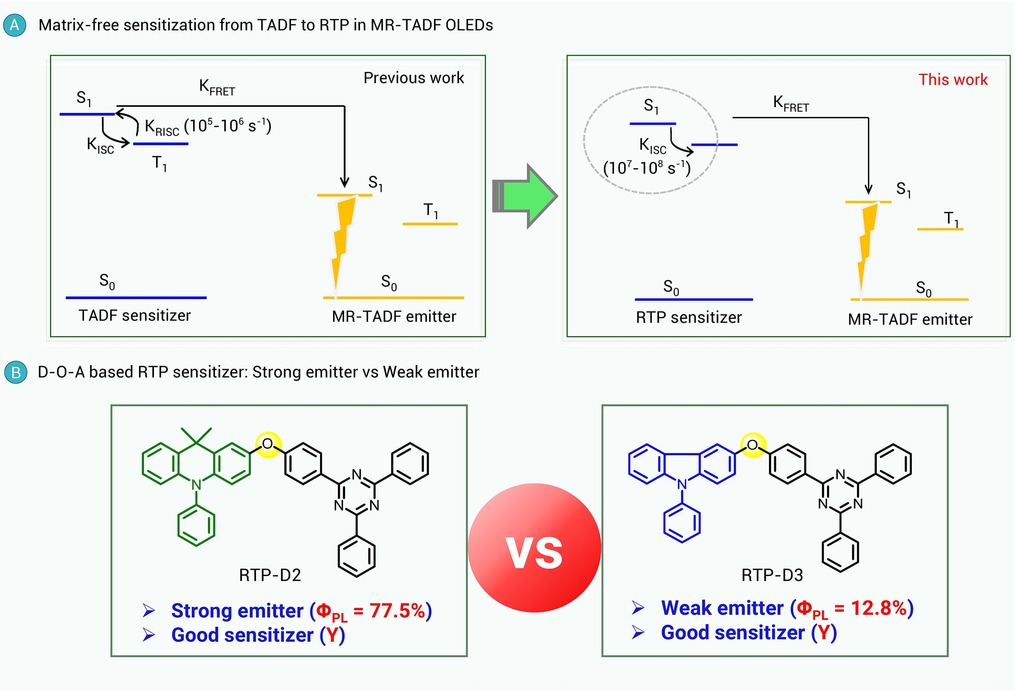
Figure 1.
D-O-A based organic phosphors for RTP matrix-free sensitization in MR-TADF OLEDs: strong emitter vs weak emitter.
-
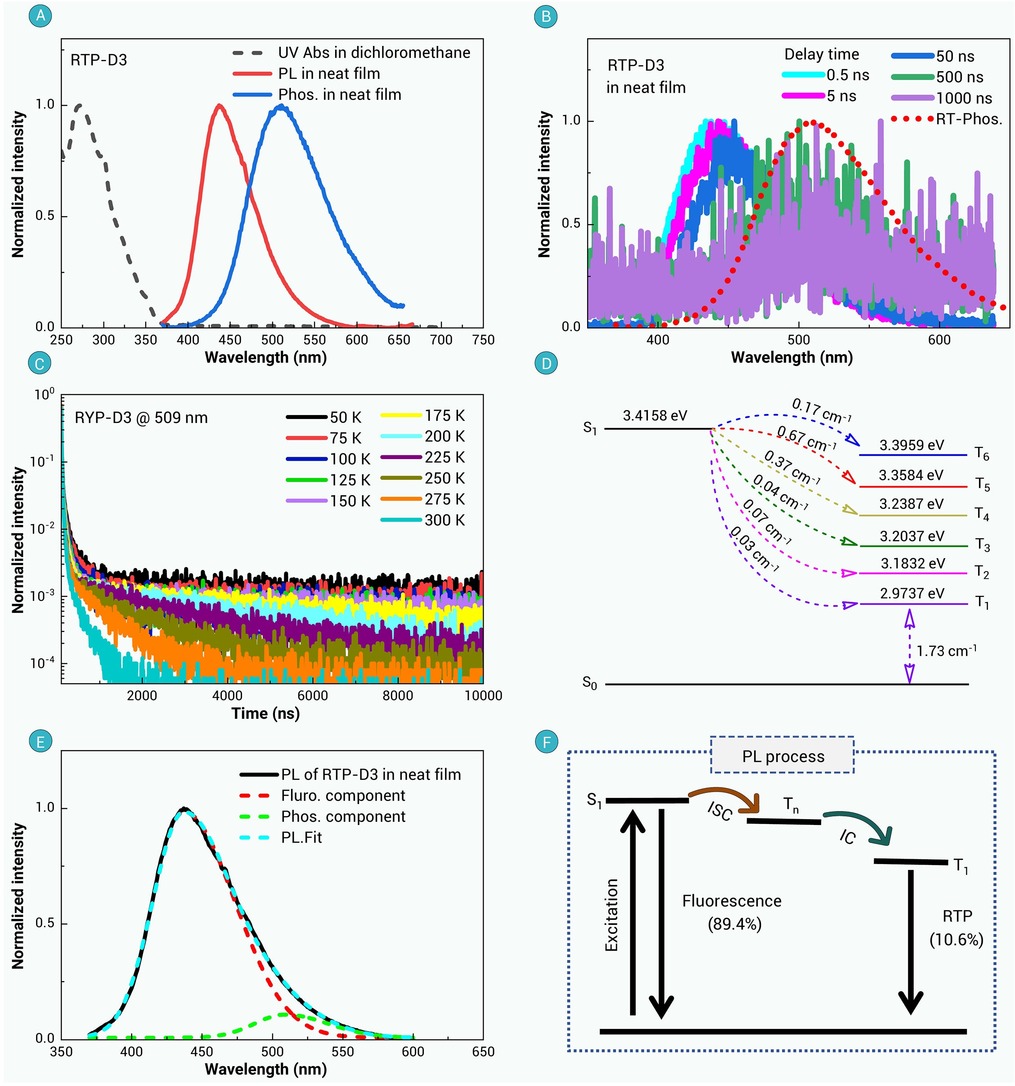
Figure 2.
RTP nature of RTP-D3
-
Figure 3.
Aggregation-induced electrophosphorescence of RTP-D3
-
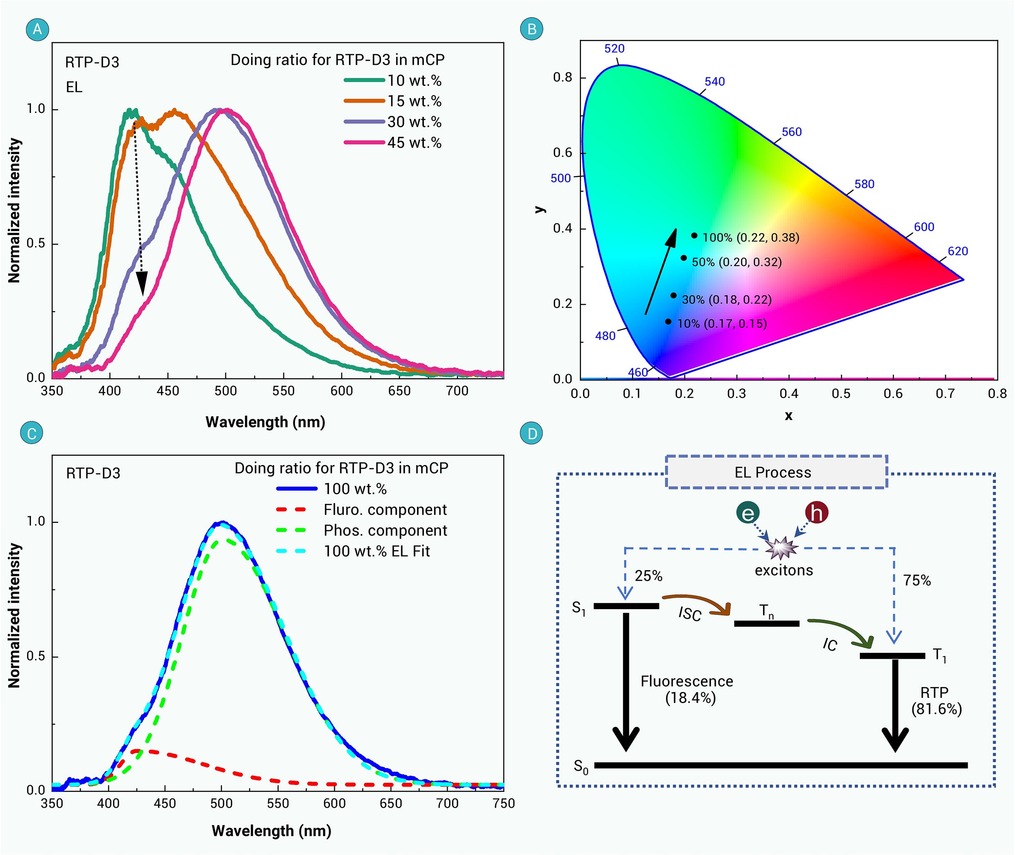
Figure 4.
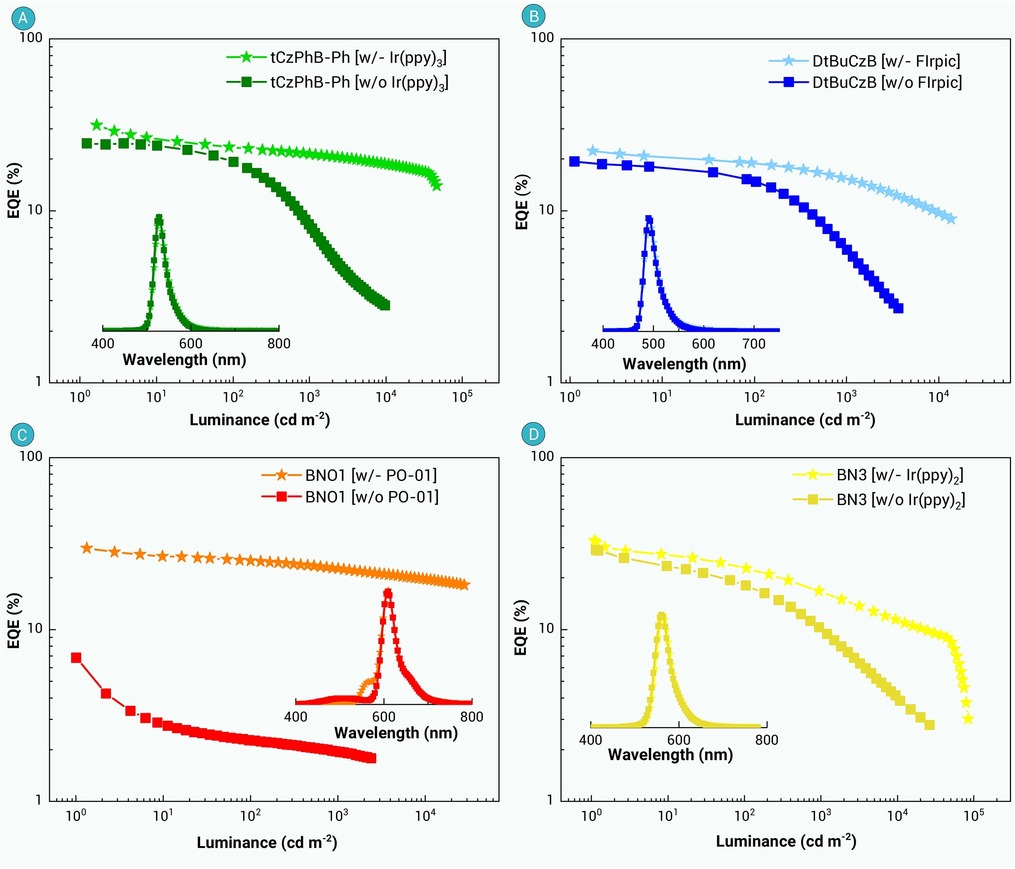
Device performance of matrix-free MR-TADF OLEDs using RTP-D3 as the sensitizer
-
Figure 5.
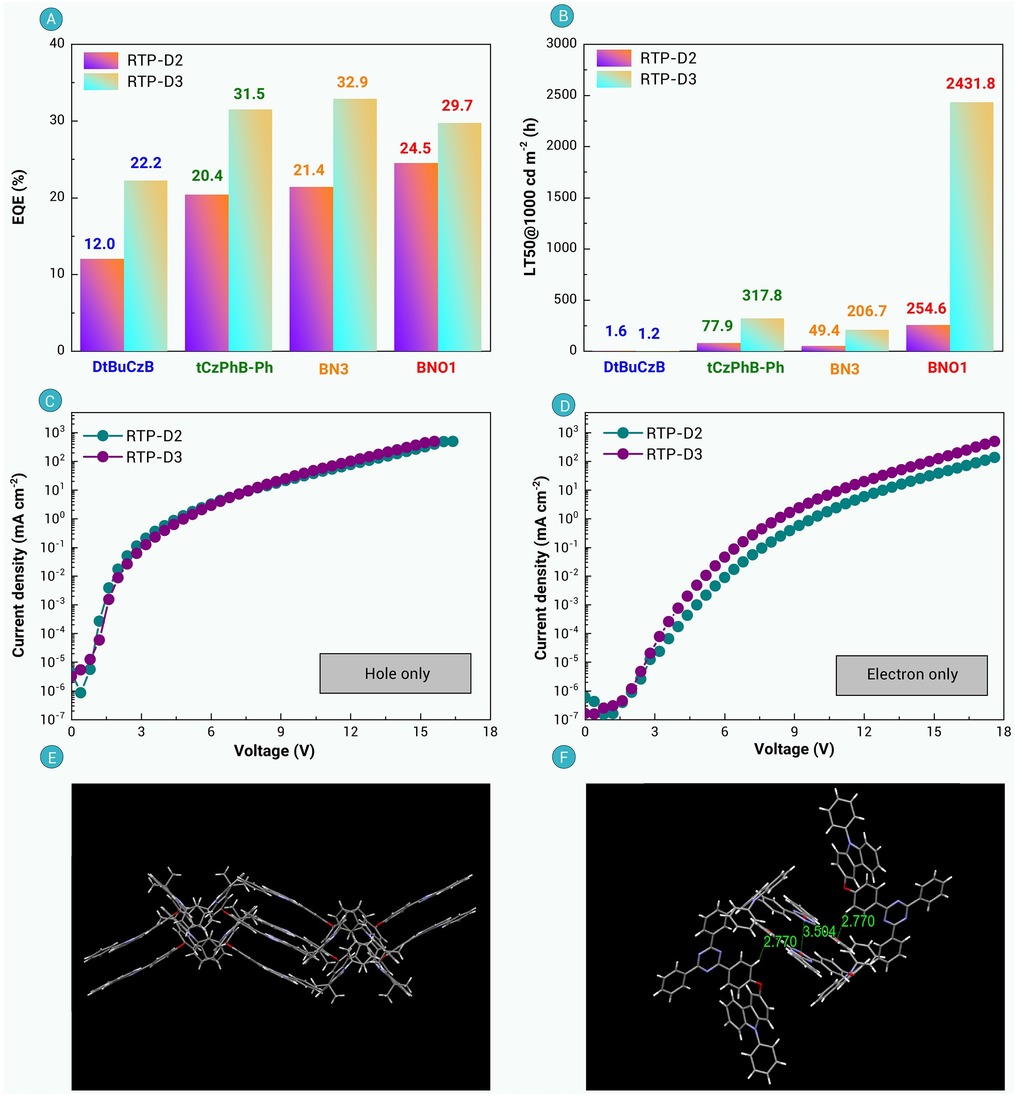
Comparison between RTP-D3 and RTP-D2
