
Microfluidic ultrasmall photothermal AIE nanoparticles for accelerated diabetic wound
-
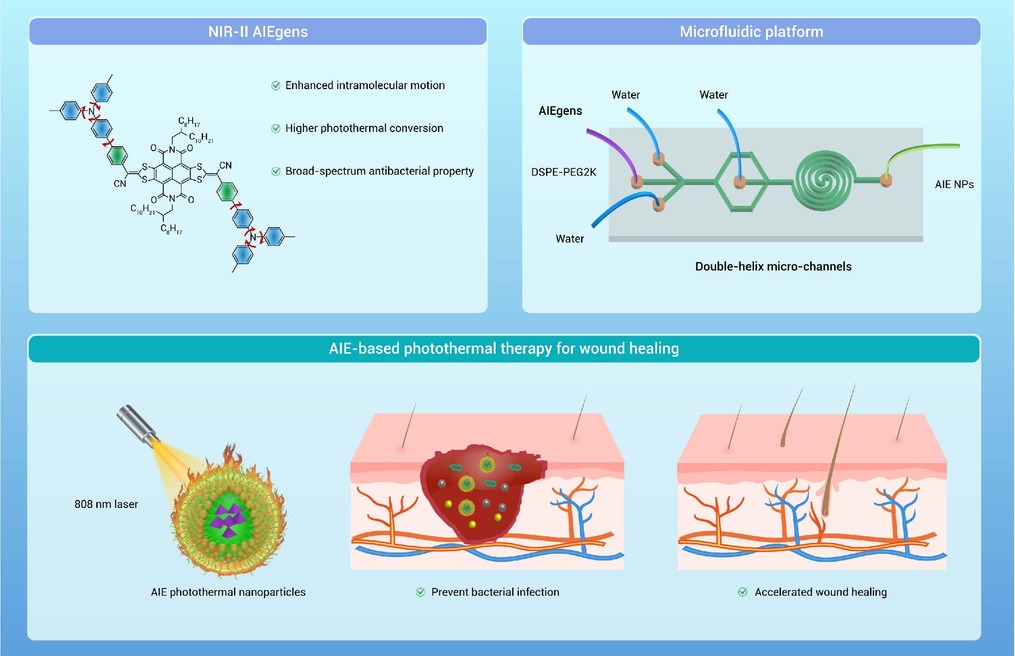
GRAPHICAL ABSTRACT
 DownLoad:
Full size image
DownLoad:
Full size image
-
PUBLIC SUMMARY
-
This study develops an NIR-II AIEgen with high photothermal efficiency for wound care.
Microfluidics enables ultrasmall AIE nanoparticles with antibacterial activity and biocompatibility.
AIE photothermal nanoparticles prevent bacterial infections and accelerate chronic wound healing.
-
-
ABSTRACT
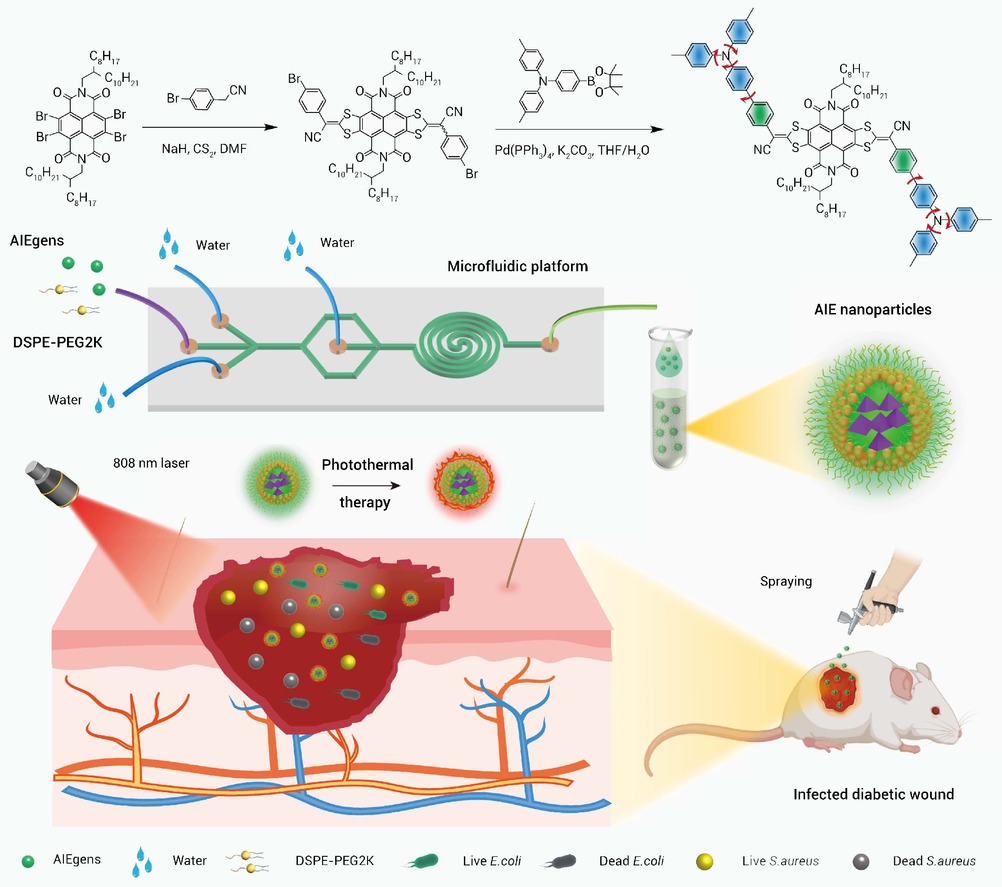
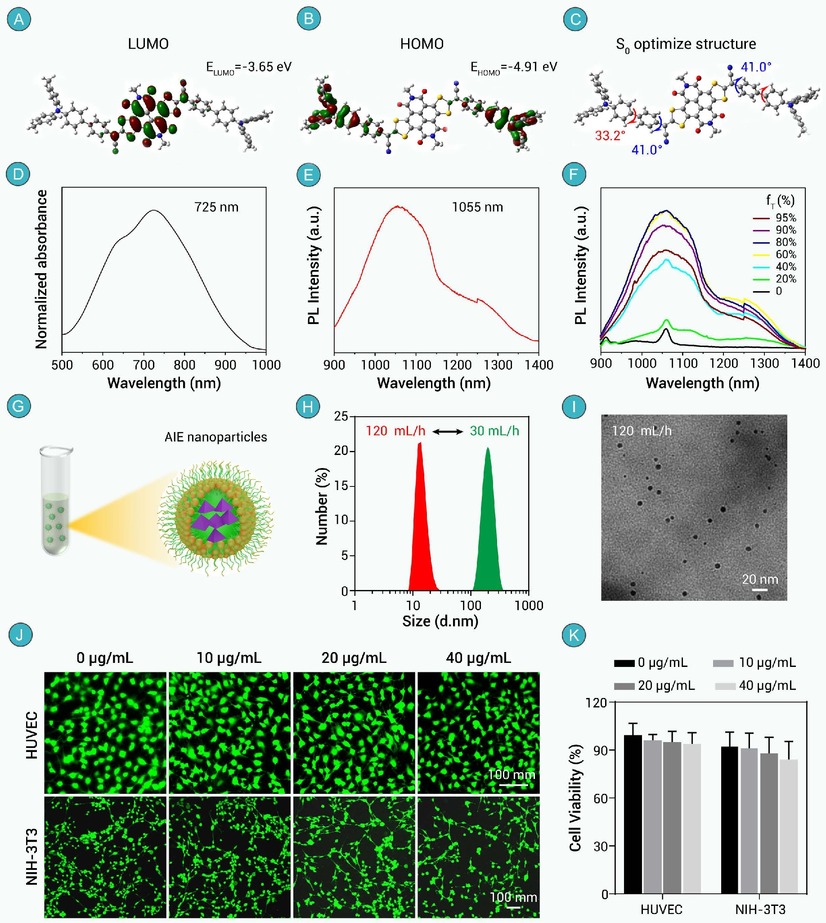
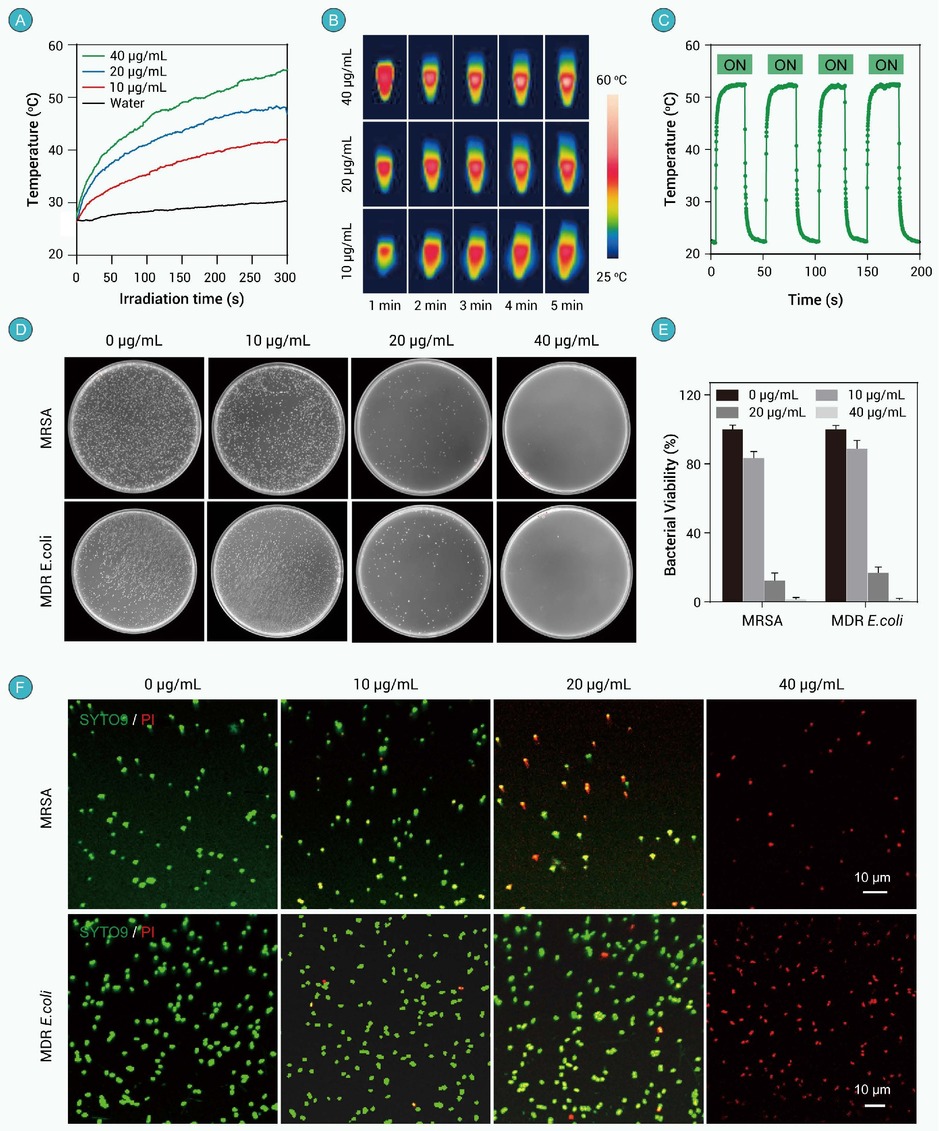
Therapeutic strategies are critical for the effective management of diabetic wounds, which are often complicated by persistent infections and slow healing. Conventional wound dressings offer limited therapeutic efficacy and adaptability across diverse clinical scenarios. Here, we report the development of near-infrared II (NIR-II) photothermal nanoparticles based on aggregation-induced emission luminogens (AIEgens) to address these challenges. Benefiting from unrestricted intramolecular motion in the aggregated state, AIEgens demonstrate high photothermal conversion efficiency under 808 nm irradiation. Integration with a microfluidic synthesis platform enables precise control over nanoparticle size, resulting in ultrasmall AIE nanoparticles (~ 20 nm) with excellent biocompatibility and broad-spectrum antibacterial activity. Upon in situ deposition onto infected wounds, these AIE nanoparticles function as efficient photothermal agents, providing adaptable and comfortable coverage while markedly accelerating diabetic wound healing. This work not only introduces a versatile photothermal platform for infection-responsive therapy but also offers a promising strategy for the development of AIE-based healthcare.-
Keywords:
- Aggregation-induced emission /
- microfluidics /
- photothermal therapy /
- wound healing
-

-
REFERENCES
[1] Uberoi A., McCready-Vangi A. and Grice E. (2024). The wound microbiota: Microbial mechanisms of impaired wound healing and infection. Nat. Rev. Microbiol. 22:507. DOI:10.1038/s41579-024-01035-z [2] Jeffcoate W. J., Bus S. A., Game F. L. et al. (2016). Reporting standards of studies and papers on the prevention and management of foot ulcers in diabetes: Required details and markers of good quality. The Lancet 4:781. DOI:10.1016/s2213-8587(16)30012-2 [3] Xin J., Gao L., Zhang W. et al. (2025). A thermogalvanic cell dressing for smart wound monitoring and accelerated healing. Nat. Biomed. Eng. 10:80. DOI:10.1038/s41551-025-01440-6 [4] Holt R. I. G., Cockram C. S., Ma R. C. W. et al. (2024). Diabetes and infection: Review of the epidemiology, mechanisms and principles of treatment. Diabetologia 67:1168. DOI:10.1007/s00125-024-06102-x [5] Buch P. J., Chai Y. and Goluch E. D. (2019). Treating polymicrobial infections in chronic diabetic wounds. Clin. Microbiol. Rev. 32:1128. DOI:10.1128/cmr.00091-18 [6] Lafata J. E., Dobie E. A., Divine G. W. et al. (2009). Sustained hyperglycemia among patients with diabetes: What matters when action is needed. Diabetes Care 32:1447. DOI:10.2337/dc08-2028 [7] Chin J. S., Madden L., Chew S. Y. et al. (2019). Drug therapies and delivery mechanisms to treat perturbed skin wound healing. Adv. Drug Delivery Rev. 149:2. DOI:10.1016/j.addr.2019.03.006 [8] Zheng Z., Yang J., Zheng W. et al. (2025). Comprehensive management of diabetic ulceration: Strategies and perspectives. J. Control. Release 385:114058. DOI:10.1016/j.jconrel.2025.114058 [9] Xue Y., Zhou J., Lu Y. et al. (2025). Advancements in wound management: Microenvironment-sensitive bioactive dressings with on-demand regulations for diabetic wounds. Engineering 48:234. DOI:10.1016/j.eng.2025.01.018 [10] Wang X., Zhong B., Lou Z. et al. (2024). The advancement of intelligent dressings for monitoring chronic wound infections. Chem. Eng. J. 485:149643. DOI:10.1016/j.cej.2024.149643 [11] Manivasagan P., Thambi T., Joe A. et al. (2024). Progress in nanomaterial-based synergistic photothermal-enhanced chemodynamic therapy in combating bacterial infections. Prog. Mater. Sci. 144:101292. DOI:10.1016/j.pmatsci.2024.101292 [12] Xin H. L., Liu Y. Y., Xiao Y. N. et al. (2024). Design and nanoengineering of photoactive antimicrobials for bioapplications: from fundamentals to advanced strategies. Adv. Funct. Mater. 34:2402607. DOI:10.1002/adfm.202402607 [13] Li Y., Zhao Z., Zhang J. et al. (2018). A bifunctional aggregation-induced emission luminogen for monitoring and killing of multidrug-resistant bacteria. Adv. Funct. Mater. 28:1804632. DOI:10.1002/adfm.202213353 [14] Wang W., Gao Y., Zhang M. et al. (2023). Neutrophil-like biomimic AIE nanoparticles with high-efficiency inflammatory cytokine targeting enable precise photothermal therapy and alleviation of inflammation. ACS Nano 17:7394. DOI:10.1021/acsnano.2c11762 [15] Liu J., Wang Y. X., Gao W. J. et al. (2024). Development of D–A–D-Type NIR-II photothermal agents for synergistic eradication of multidrug-resistant bacteria and promoting diabetic wound healing. Adv. Funct. Mater. 35:2411986. DOI:10.1002/adfm.202411986 [16] Zhu L., Song G., Zhang W. et al. (2025). Aggregation induced emission luminogen bacteria hybrid bionic robot for multimodal phototheranostics and immunotherapy. Nat. Commun. 16:2578. DOI:10.1038/s41467-025-57533-y [17] Wang W., Gao Y., Xu W. et al. (2024). The one-stop integrated nanoagent based on photothermal therapy for deep infection healing and inflammation inhibition. Adv. Mater. 36:2307785. DOI:10.1002/adma.202307785 [18] Yan D., Huang Y., Zhang J. et al. (2023). Adding flying wings: Butterfly-shaped NIR-II AIEgens with multiple molecular rotors for photothermal combating of bacterial biofilms. J. Am. Chem. Soc. 145:25705. DOI:10.1021/jacs.3c09058 [19] Qi J., Ou H. L., Liu Q. et al. (2021). Gathering brings strength: How organic aggregates boost disease phototheranostics. Aggregate 2:95. DOI:10.1002/agt2.25 [20] Kong X. W., Liang J., Lu M. et al. (2024). A NIR-II organic dendrimer with superb photothermal performance based on electron-donor iteration for photothermal immunotherapy. Adv. Mater. 36:2409041. DOI:10.1002/adma.202409041 [21] Xu C. and Pu K. (2021). Second Near-infrared photothermal materials for combinational nanotheranostics. Chem. Soc. Rev. 50:1111. DOI:10.1039/d0cs00664e [22] Zhao Z., Zhang H. K., Tang B. Z. et al. (2020). Aggregation-induced emission: New vistas at aggregate level. Angew. Chem. Int. Ed. 59:9888. DOI:10.1002/anie.201916729 [23] Zhang R. Y., Shen P., Xiong Y. et al. (2024). Bright, photostable and long-circulating NIR-II nanoparticles for whole-process monitoring and evaluation of renal transplantation. Nat. Sci. Rev. 11:nwad286. DOI:10.1093/nsr/nwad286 [24] Duo Y. H., Han L., Yang Y. Q. et al. (2024). Aggregation-induced emission luminogen: role in biopsy for precision medicine. Chem. Rev. 124:11242. DOI:10.1021/acs.chemrev.4c00244 [25] Zhao Z., Chen C., Wu W. et al. (2019). Highly efficient photothermal nanoagent achieved by harvesting energy via excited-state intramolecular motion within nanoparticles. Nat. Commun. 10:768. DOI:10.1038/s41467-019-08722-z [26] Gu H., Sun W., Du J. J. et al. (2024). Dual-acceptor engineering of donor-acceptor type molecules for all-round boosting anti-tumor phototherapy. Smart Mol. 2:e20230014. DOI:10.1002/smo.20230014 [27] Yan D. Y., Xie W., Zhang J. Y. et al. (2021). Donor/π-bridge manipulation for constructing a stable NIR-II aggregation-induced emission luminogen with balanced phototheranostic performance. Angew. Chem. Int. Ed. 60:26769. DOI:10.1002/anie.202111767 [28] Yan D. Y., Qin Y., Yan S. S. et al. (2023). Near-infrared emissive AIE nanoparticles for biomedical applications: From the perspective of different nanocarriers. Particuology, 74:103. DOI:10.1016/j.partic.2022.06.001 [29] Li B., Wang W., Zhao L. et al. (2024). Photothermal therapy of tuberculosis using targeting pre-activated macrophage membrane-coated nanoparticles. Nat. Nanotechnol. 19:834. DOI:10.1038/s41565-024-01618-0 [30] Middha E. and Liu B. (2020). Nanoparticles of organic electronic materials for biomedical applications. ACS Nano 14:9228. DOI:10.1021/acsnano.0c02651 [31] Meng Z. J., Ji X. H., Yin S. Y. et al. (2025). Preclinical studies on the photothermal therapy of NIR-II AIEgens: Across tumor types. Small 21:e09080. DOI:10.1002/smll.202509080 [32] Zhang Z., Kang M., Tan H. et al. (2022). The fast-growing field of photo-driven theranostics based on aggregation-induced emission. Chem. Soc. Rev. 51:1983. DOI:10.1039/d1cs01138c [33] Kong L., He W., Gong J. et al. (2024). Photo-induced Bacillus subtilis-spore transformation for bowel disease therapy and therapeutic outcome visualization. Aggregate 5:e597. DOI:10.1002/agt2.597 [34] Chen D., Xiao T., Wang L. et al. (2024). A simple "spraying" fluorescence-guided surgery by AIE probes for liver tumor resection through configuration-induced cross-identification. Aggregate, 5:e550. DOI:10.1002/agt2.550 [35] Zhu Z. R., Liu S. C., Wu X. P. et al. (2025). An azo substituted quinoline-malononitrile enzyme-activable aggregation-induced emission nanoprobe for hypoxia imaging. Smart Mol. 3:e20240028. DOI:10.1002/smo.20240028 [36] Ding Q., Ding L., Xiang C. et al. (2025). pH-responsive AIE photosensitizers for enhanced antibacterial therapy. Angew. Chem. Int. Ed. 64:e202506505. DOI:10.1002/anie.202506505 [37] The C., Manghnani P., Boon G. et al. (2019). Bright aggregation-induced emission dots for dynamic tracking and grading of patient-derived xenografts in zebrafish. Adv. Funct. Mater. 29:1901226. DOI:10.1002/adfm.201901226 [38] Dong R. H., Liu Y., Mou L. et al. (2019). Microfluidics-based biomaterials and biodevices. Adv. Mater. 31:1805033. DOI:10.1002/adma.201805033 [39] Ma H., Kang Y. S., Xu W. Q. et al. (2025). An Immediate bacterial-responsive supramolecular thio-naphthalene diimide: A real-time NIR-II photothermal anti-bacterial. Angew. Chem. Int. Ed. 64:e202505069. DOI:10.1002/anie.202505069 -
ABOUT THIS ARTICLE
Cite this article:
Dong R., Ma F., Meng Z., et al. (2026). Microfluidic ultrasmall photothermal AIE nanoparticles for accelerated diabetic wound. The Innovation Materials 4:100216. https://doi.org/10.59717/j.xinn-mater.2026.100216
Welcome!
To request copyright permission to republish or share portions of our works, please visit Copyright Clearance Center's (CCC) Marketplace website at marketplace.copyright.com.
Export File
Citation
Dong R., Ma F., Meng Z., et al. (2026). Microfluidic ultrasmall photothermal AIE nanoparticles for accelerated diabetic wound. The Innovation Materials 4:100216. https://doi.org/10.59717/j.xinn-mater.2026.100216

Format
Content
-
Figure 1.
Schematics of microfluidic photothermal AIE nanoparticles for accelerated healthcare of diabetic wound healing
-
Figure 1.
Photophysical properties and cell viability of AIE nanoparticles
-
Figure 2.
Photothermal properties and antibacterial activity of AIE nanoparticles
-
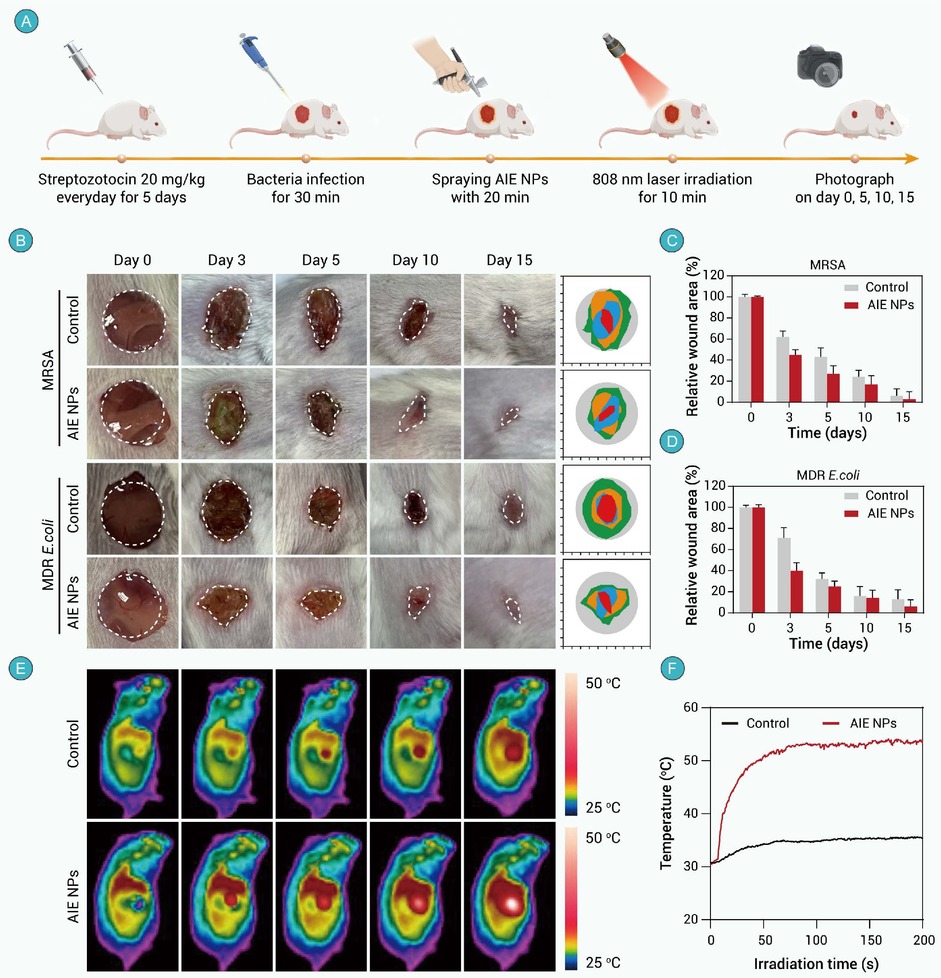
Figure 3.
AIE photothermal nanoparticles for diabetic wound healing
-
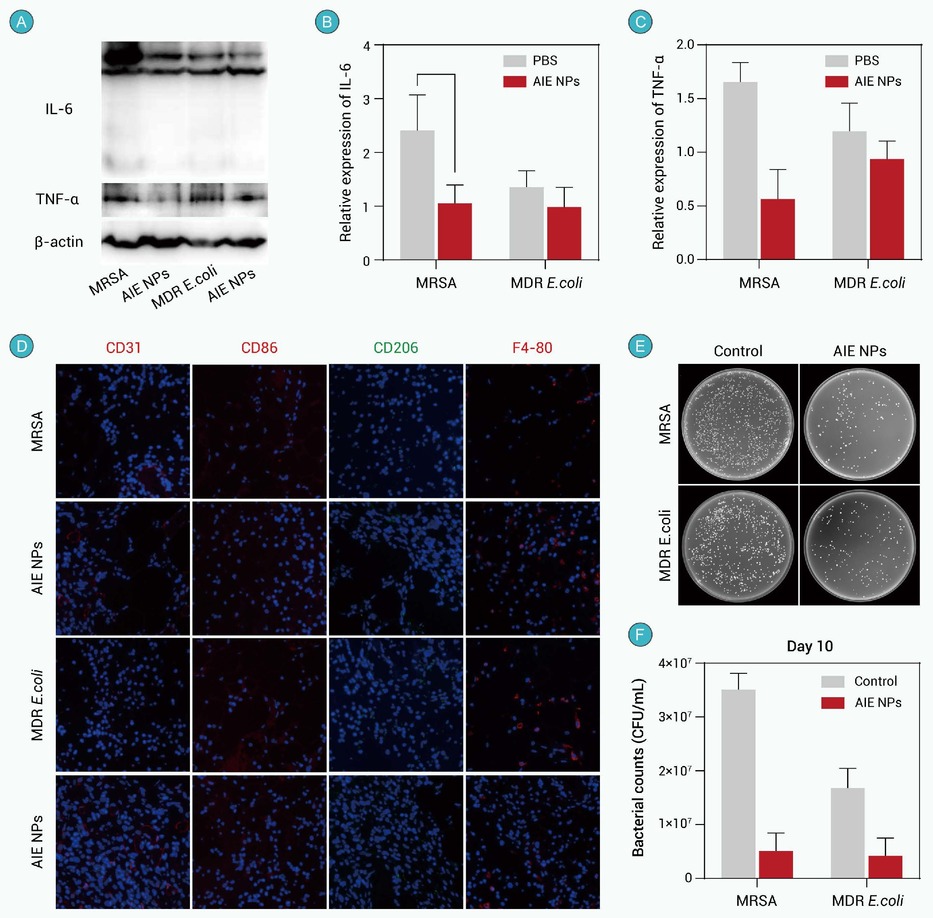
Figure 4.
Evaluation of antibacterial efficacy and anti-inflammatory effects of AIE photothermal nanoparticles
-
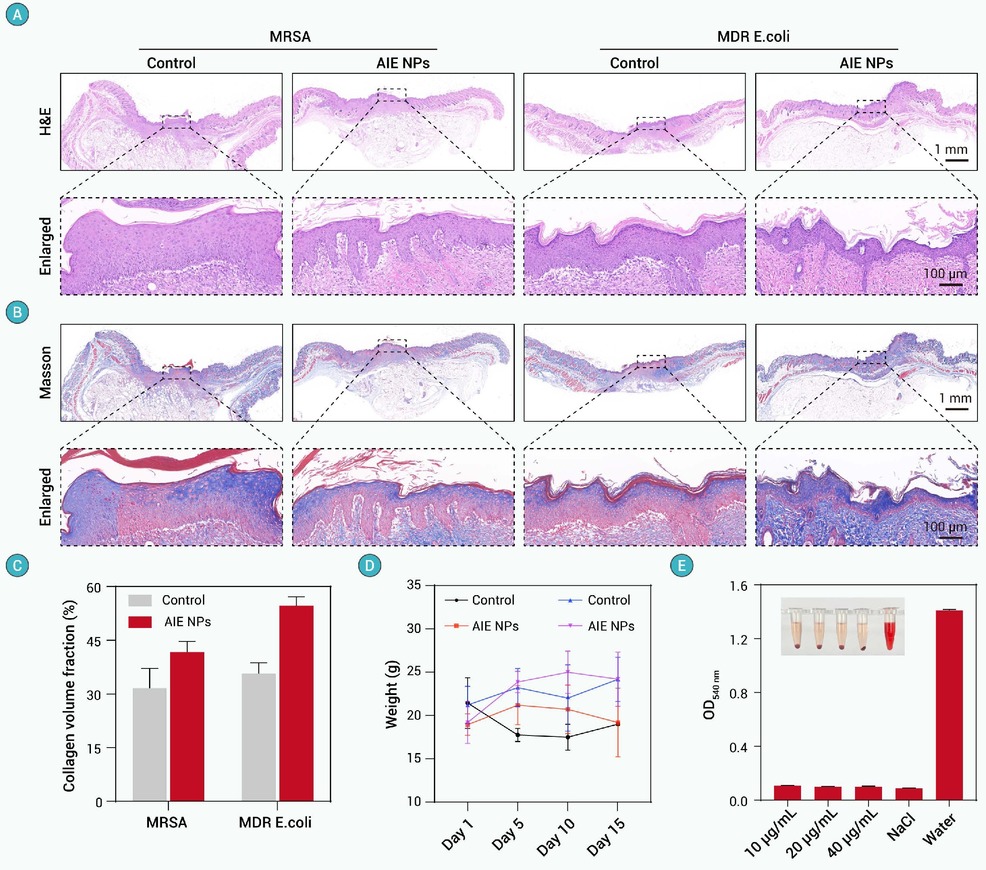
Figure 5.
Evaluation of tissue regeneration and biosafety of AIE photothermal nanoparticles
