
COVID-19 Pandemic: End of emergency, but not end of challenge
-

-
REFERENCES
[1] World Health Organization. (2023). Coronavirus disease (COVID-19) pandemic. https://www.who.int/emergencies/diseases/novel-coronavirus-2019 (accessed May 24 2023). [2] Altarawneh, H.N., Chemaitelly, H., Hasan, M.R., et al. (2022). Protection against the Omicron Variant from Previous SARS-CoV-2 Infection. N. Engl. J. Med. 386: 1288−1290. DOI: 10.1056/NEJMc2200133. [3] Bowe, B., Xie, Y., and Al-Aly, Z. (2022). Acute and postacute sequelae associated with SARS-CoV-2 reinfection. Nat. Med. 28: 2398−2405. DOI: 10.1038/s41591-022-02051-3. [4] Nasserie, T., Hittle, M., and Goodman, S.N. (2021). Assessment of the frequency and variety of persistent symptoms among patients with COVID-19: A systematic review. JAMA Netw. Open 4: e2111417. DOI: 10.1001/jamanetworkopen.2021.11417. [5] Huang, L., Li, X., Gu, X., et al. (2022). Health outcomes in people 2 years after surviving hospitalisation with COVID-19: A longitudinal cohort study. Lancet Respir. Med. 10: 863−876. DOI: 10.1016/S2213-2600(22)00126-6. -
ABOUT THIS ARTICLE
Cite this article:
Song R., Xu J., and Cao B. (2023). COVID-19 Pandemic: End of emergency, but not end of challenge. The Innovation Medicine 1(1), 100004. https://doi.org/10.59717/j.xinn-med.2023.100004
Welcome!
To request copyright permission to republish or share portions of our works, please visit Copyright Clearance Center's (CCC) Marketplace website at marketplace.copyright.com.
Export File
Citation
Song R., Xu J., and Cao B. (2023). COVID-19 Pandemic: End of emergency, but not end of challenge. The Innovation Medicine 1(1), 100004. https://doi.org/10.59717/j.xinn-med.2023.100004

Format
Content
 DownLoad:
-
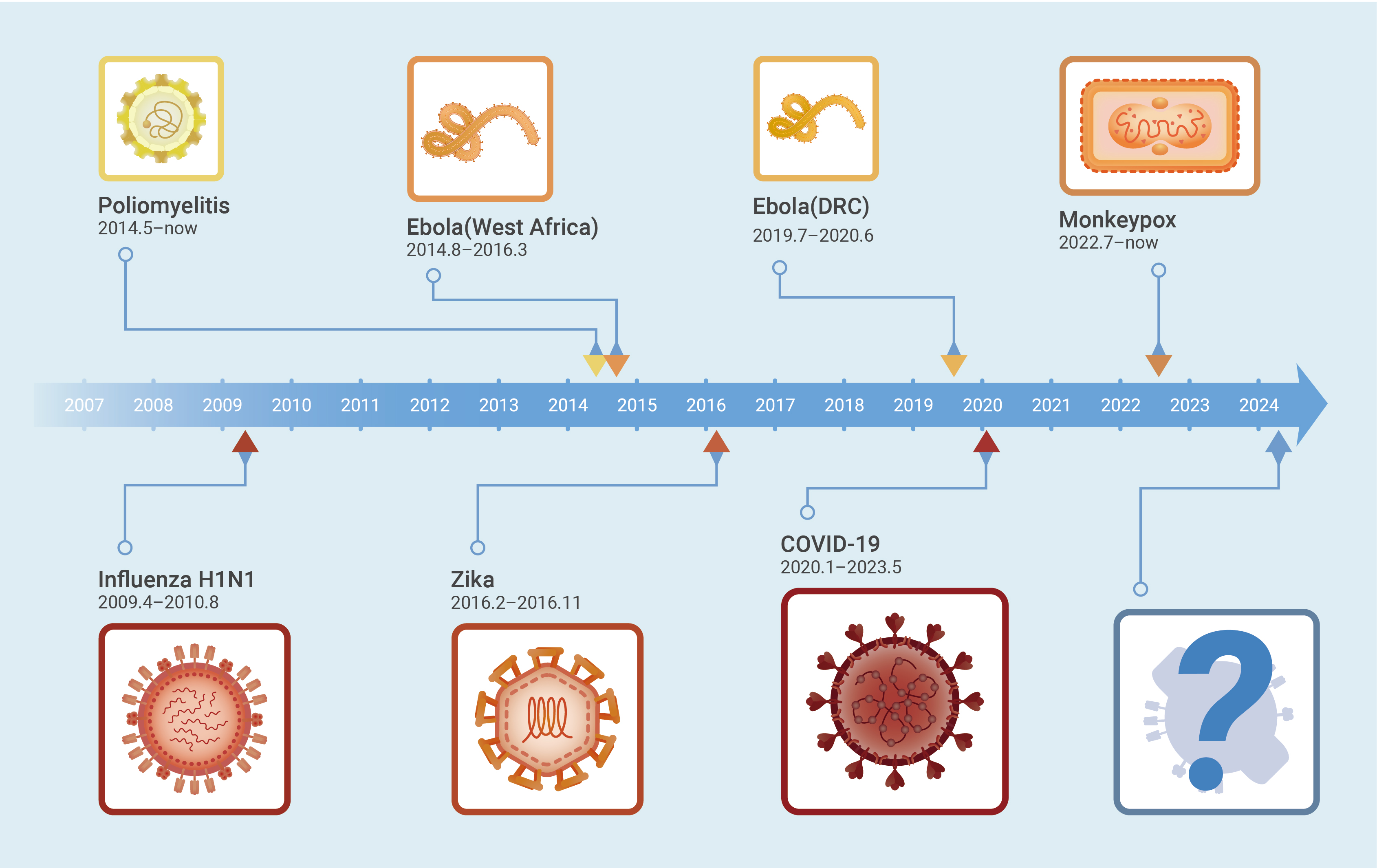
Figure 1.
The seven public health emergencies of international concern (PHEIC) in history.
