
Geographical and sexual disparities of lung cancer mortality trends in China: A population-based study
-
GRAPHICAL ABSTRACT
 DownLoad:
Full size image
DownLoad:
Full size image
-
PUBLIC SUMMARY
-
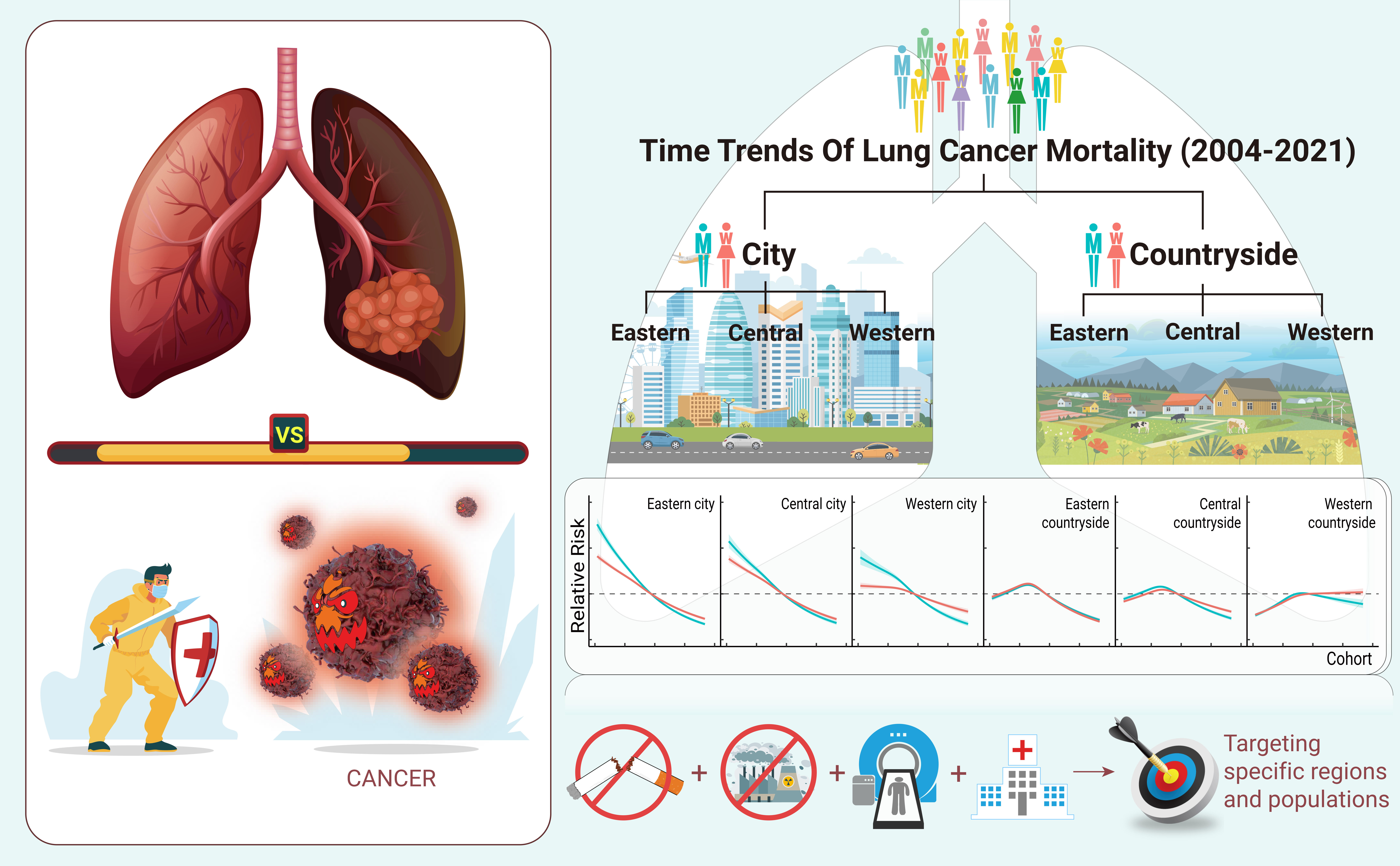
This is the most comprehensive and up-to-date analysis of lung cancer mortality trends in China.
We found contrasting patterns in lung cancer mortality trends between cities and countryside in China.
Cohort effects illustrated a downward trend in cities, but with an inverted U-shape curve in rural areas.
It is important to take region- and population-specific primary prevention strategies to reduce the burden of lung cancer.
-
-
ABSTRACT
Lung cancer (LC) is one of the major causes of cancer deaths in China. Death burden and mortality of LC vary according to sexes and regions. We aimed to comprehensively evaluate the geographical and sexual disparities in LC mortality trends in China, and a further age-period-cohort analysis to explore underlying factors. LC mortality data during 2004-2021 were extracted from the Disease Surveillance Points system. Annual age-standardized mortality rates (ASMR) were calculated for 36 sub-populations by sex, urban-rural status and geographical regions. The age-period-cohort model was applied to investigate age, period and cohort effects on mortality trends. Time trends of ASMR for LC overall did not show statistical significance during 2004-2021, but contrasting patterns were observed between cities and countryside, with annual average percent changes of -1.58% (95%CI, -2.11%- -1.05%) and 0.57% (95%CI, 0.07%- 1.07%), respectively. ASMR of LC decreased in eastern and central regions and increased markedly in western region. Cohort effects illustrated a downward trend in cities, but an inverted U-shape curve peaking around the 1950s appeared in the countryside, and the decreasing trends were slower in the western region. There are substantial geographical and sexual disparities in LC mortality trends in China, notably with unfavorable trends in the western countryside. The variation in cohort effects on the mortality trends implies the importance of taking region- and population-specific primary prevention strategies to reduce the disease burden of LC in China. -

-
REFERENCES
[1] Bray, F., Colombet, M., Mery, L., et al. (2017). Cancer incidence in five continents, Vol. XI (International Agency for Research on Cancer). [2] Zheng, R., Zhang, S., Zeng, H., et al. (2022). Cancer incidence and mortality in China, 2016. J. Natl. Cancer Cent. 2: 1−9. DOI: 10.1016/j.jncc.2022.02.002. [3] He, S., Li, H., Chen, W., et al. (2020). Trends and risk factors of lung cancer in China. Chin. J. Cancer Res. 32: 683−694. DOI: 10.21147/j.issn.1000-9604.2020.06.02. [4] Zheng, R., Zhang, S., Wang, S., et al. (2022). Lung cancer incidence and mortality in China: Updated statistics and an overview of temporal trends from 2000 to 2016. J. Natl. Cancer Cent. 2: 139−147. DOI: 10.1016/j.jncc.2022.07.004. [5] World Cancer Report – IARC. https://www.iarc.who.int/world-cancer-report-focus/. [6] Cen, X., Wang, D., Sun, W., et al. (2020). The trends of mortality and years of life lost of cancers in urban and rural areas in China, 1990-2017. Cancer Med. 9 : 1562-1571. DOI: 10.1002/cam4.2765. [7] Su, B., Zhong, P., Xuan, Y., et al. (2023). Changing Patterns in Cancer Mortality from 1987 to 2020 in China. Cancers (Basel) 15 : 476. DOI: 10.3390/cancers15020476. [8] Chinese CDC 2023-08-01. https://ncncd.chinacdc.cn/xzzq_1/202101/t20210111_223706.htm. [9] Yang, G., Hu, J., Rao, K.Q., et al. (2005). Mortality registration and surveillance in China: History, current situation and challenges. Popul. Health Metr. 3: 3. DOI: 10.1186/1478-7954-3-3. [10] Liu, S., Wu, X., Lopez, A.D., et al. (2016). An integrated national mortality surveillance system for death registration and mortality surveillance, China. Bull. World Health Organ. 94: 46−57. DOI: 10.2471/BLT.15.153148. [11] National Bureau of Statistics: Tabulation on the 2010 population census of China 2023-03-16. http://www.stats.gov.cn/tjsj/pcsj/rkpc/6rp/html/A0301a.htm. [12] Li, M., Wan, X., Wang, Y., et al. (2017). Time trends of esophageal and gastric cancer mortality in China, 1991-2009: An age-period-cohort analysis. Sci. Rep. 7: 6797. DOI: 10.1038/s41598-017-07071-5. [13] Clayton, D., and Schifflers, E. (1987). Models for temporal variation in cancer rates I: Age-period and age-cohort models. Stat. Med. 6: 449−467. DOI: 10.1002/sim.4780060405. [14] Carstensen, B. (2007). Age-period-cohort models for the Lexis diagram. Stat. Med. 26: 3018−3045. DOI: 10.1002/sim.2764. [15] Peto, R., Darby, S., Deo, H., et al. (2000). Smoking, smoking cessation, and lung cancer in the UK since 1950: A combination of national statistics with two case-control studies. BMJ 321: 323−329. DOI: 10.1136/bmj.321.7257.323. [16] Huang, Z., Sun, S., Lee, M., et al. (2022). Single-cell analysis of somatic mutations in human bronchial epithelial cells about aging and smoking. Nat. Genet. 54: 492−498. DOI: 10.1038/s41588-022-01035-w. [17] Wang, M., Luo, X., Xu, S., et al. (2019). Trends in smoking prevalence and implication for chronic diseases in China: Serial national cross-sectional surveys from 2003 to 2013. Lancet Respir. Med. 7: 35−45. DOI: 10.1016/S2213-2600(18)30432-6. [18] Wang, M., Hou, Z.H., Xu, H., et al. (2019). Association of estimated long-term exposure to air pollution and traffic proximity with a marker for coronary atherosclerosis in a nationwide study in China. JAMA Netw. Open 2: e196553. DOI: 10.1001/jamanetworkopen.2019.6553. [19] Xiao, Q., Geng, G., Liang, F., et al. (2020). Changes in spatial patterns of PM(2.5) pollution in China 2000-2018: Impact of clean air policies. Environ. Int. 141 : 105776. DOI: 10.1016/j.envint.2020.105776. [20] Zhao, S., Yu, Y., Yin, D., et al. (2016). Annual and diurnal variations of gaseous and particulate pollutants in 31 provincial capital cities based on in situ air quality monitoring data from China National Environmental Monitoring Center. Environ. Int. 86: 92−106. DOI: 10.1016/j.envint.2015.11.003. [21] Zhang, M., Yang, L., Wang, L., et al. (2022). Trends in smoking prevalence in urban and rural China, 2007 to 2018: Findings from 5 consecutive nationally representative cross-sectional surveys. PLoS Med. 19: e1004064. DOI: 10.1371/journal.pmed.1004064. [22] Mu, L., Liu, L., Niu, R., et al. (2013). Indoor air pollution and risk of lung cancer among Chinese female non-smokers. Cancer Causes Control 24: 439−450. DOI: 10.1007/s10552-012-0130-8. [23] Vermeulen, R., Downward, G.S., Zhang, J., et al. (2019). Constituents of household air pollution and risk of lung cancer among never-smoking women in Xuanwei and Fuyuan, China. Environ. Health Perspect. 127: 97001. DOI: 10.1289/EHP4913. [24] Wang, T.J., Zhou, B.S., and Shi, J.P. (1996). Lung cancer in nonsmoking Chinese women: A case-control study. Lung Cancer 14 Suppl 1 : S93-98. DOI: 10.1016/s0169-5002(96)90214-7. [25] Ko, Y.C., Cheng, L.S., Lee, C.H., et al. (2000). Chinese food cooking and lung cancer in women nonsmokers. Am. J. Epidemiol. 151: 140−147. DOI: 10.1093/oxfordjournals.aje.a010181. [26] Chan, K.H., Lam, K.B.H., Kurmi, O.P., et al. (2017). Trans-generational changes and rural-urban inequality in household fuel use and cookstove ventilation in China: A multi-region study of 0.5 million adults. Int. J. Hyg. Environ. Health 220 : 1370-1381. DOI: 10.1016/j.ijheh.2017.09.010. [27] Yu, K., Qiu, G., Chan, K.H., et al. (2018). Association of solid fuel use with risk of cardiovascular and all-cause mortality in rural China. JAMA 319: 1351−1361. DOI: 10.1001/jama.2018.2151. [28] Cheng, E.S., Chan, K.H., Weber, M., et al. (2022). Solid fuel, secondhand smoke, and lung cancer mortality: A prospective cohort of 323,794 Chinese never-smokers. Am. J. Respir. Crit. Care Med. 206: 1153−1162. DOI: 10.1164/rccm.202201-0114OC. [29] Barone-Adesi, F., Chapman, R.S., Silverman, D.T., et al. (2012). Risk of lung cancer associated with domestic use of coal in Xuanwei, China: Retrospective cohort study. BMJ 345: e5414. DOI: 10.1136/bmj.e5414. [30] Cella, D.F., Orav, E.J., Kornblith, A.B., et al. (1991). Socioeconomic status and cancer survival. J. Clin. Oncol. 9: 1500−1509. DOI: 10.1200/JCO.1991.9.8.1500. [31] Redondo-Sánchez, D., Petrova, D., Rodríguez-Barranco, M., et al. (2022). Socio-economic inequalities in lung cancer outcomes: An overview of systematic reviews. Cancers 14: 398. DOI: 10.3390/cancers14020398. [32] Finke, I., Behrens, G., Weisser, L., et al. (2018). Socioeconomic differences and lung cancer survival-systematic review and meta-analysis. Front. Oncol. 8: 536. DOI: 10.3389/fonc.2018.00536. [33] Sosa, E., D'Souza, G., Akhtar, A., et al. (2021). Racial and socioeconomic disparities in lung cancer screening in the United States: A systematic review. CA Cancer J. Clin. 71: 299−314. DOI: 10.3322/caac.21671. [34] Forrest, L.F., Sowden, S., Rubin, G., et al. (2017). Socio-economic inequalities in stage at diagnosis, and in time intervals on the lung cancer pathway from first symptom to treatment: systematic review and meta-analysis. Thorax 72: 430−436. DOI: 10.1136/thoraxjnl-2016-209013. [35] Zhao, Y., Tang, S., Mao, W., et al. (2021). Socio-economic and rural-urban differences in healthcare and catastrophic health expenditure among cancer patients in China: Analysis of the China health and retirement longitudinal study. Front. Public Health 9: 779285. DOI: 10.3389/fpubh.2021.779285. [36] Forrest, L.F., Adams, J., Wareham, H., et al. (2013). Socioeconomic inequalities in lung cancer treatment: Systematic review and meta-analysis. Plos Med. 10 : ARTN e1001376. DOI: 10.1371/journal.pmed.1001376. [37] Pauk, N., Kubík, A., Zatloukal, P., et al. (2005). Lung cancer in women. Lung Cancer 48: 1−9. DOI: 10.1016/j.lungcan.2004.10.009. [38] Chen, W., Xia, C., Zheng, R., et al. (2019). Disparities by province, age, and sex in site-specific cancer burden attributable to 23 potentially modifiable risk factors in China: A comparative risk assessment. Lancet Glob. Health 7: e257−e269. DOI: 10.1016/S2214-109X(18)30488-1. [39] Travis, W.D., Brambilla, E., Burke, A.P., et al. (2015). WHO Classificationof Tumours of the Lung, Pleura, Thymus and Heart, Fourth edition Edition. [40] Howlader, N., Forjaz, G., Mooradian, M.J., et al. (2020). The effect of advances in lung-cancer treatment on population mortality. N. Engl. J. Med. 383: 640−649. DOI: 10.1056/NEJMoa1916623. [41] Nicholson, A.G., Tsao, M.S., Beasley, M.B., et al. (2022). The 2021 WHO classification of lung tumors: Impact of advances since 2015. J. Thorac. Oncol. 17: 362−387. DOI: 10.1016/j.jtho.2021.11.003. [42] Liu, X., Yu, Y., Wang, M., et al. (2020). The mortality of lung cancer attributable to smoking among adults in China and the United States during 1990-2017. Cancer Commun. (Lond) 40 : 611-619. DOI: 10.1002/cac2.12099. [43] Wang, N., Xu, Z., Lui, C.W., et al. (2022). Age-period-cohort analysis of lung cancer mortality in China and Australia from 1990 to 2019. Sci. Rep. 12: 8410. DOI: 10.1038/s41598-022-12483-z. [44] Zhang, Y., Luo, G., Etxeberria, J., et al. (2021). Global patterns and trends in lung cancer incidence: A population-based study. J. Thorac. Oncol. 16: 933−944. DOI: 10.1016/j.jtho.2021.01.1626. [45] You, D.F., Zhang, M.Z., He, W.J., et al. (2021). Association between dietary sodium, potassium intake and lung cancer risk: Evidence from the prostate, lung, colorectal and ovarian cancer screening trial and the Women's Health Initiativey. Transl. Lung Cancer Res. 10: 45−56. DOI: 10.21037/tlcr-20-870. -
ABOUT THIS ARTICLE
Cite this article:
Huang W., Zhai G., Dong H., et al., (2023). Geographical and sexual disparities of lung cancer mortality trends in China: A population-based study. The Innovation Medicine 1(3), 100032. https://doi.org/10.59717/j.xinn-med.2023.100032
Welcome!
To request copyright permission to republish or share portions of our works, please visit Copyright Clearance Center's (CCC) Marketplace website at marketplace.copyright.com.
Article Metrics
Relative Articles
Cited by
Export File
Citation
Huang W., Zhai G., Dong H., et al., (2023). Geographical and sexual disparities of lung cancer mortality trends in China: A population-based study. The Innovation Medicine 1(3), 100032. https://doi.org/10.59717/j.xinn-med.2023.100032

Format
Content
-
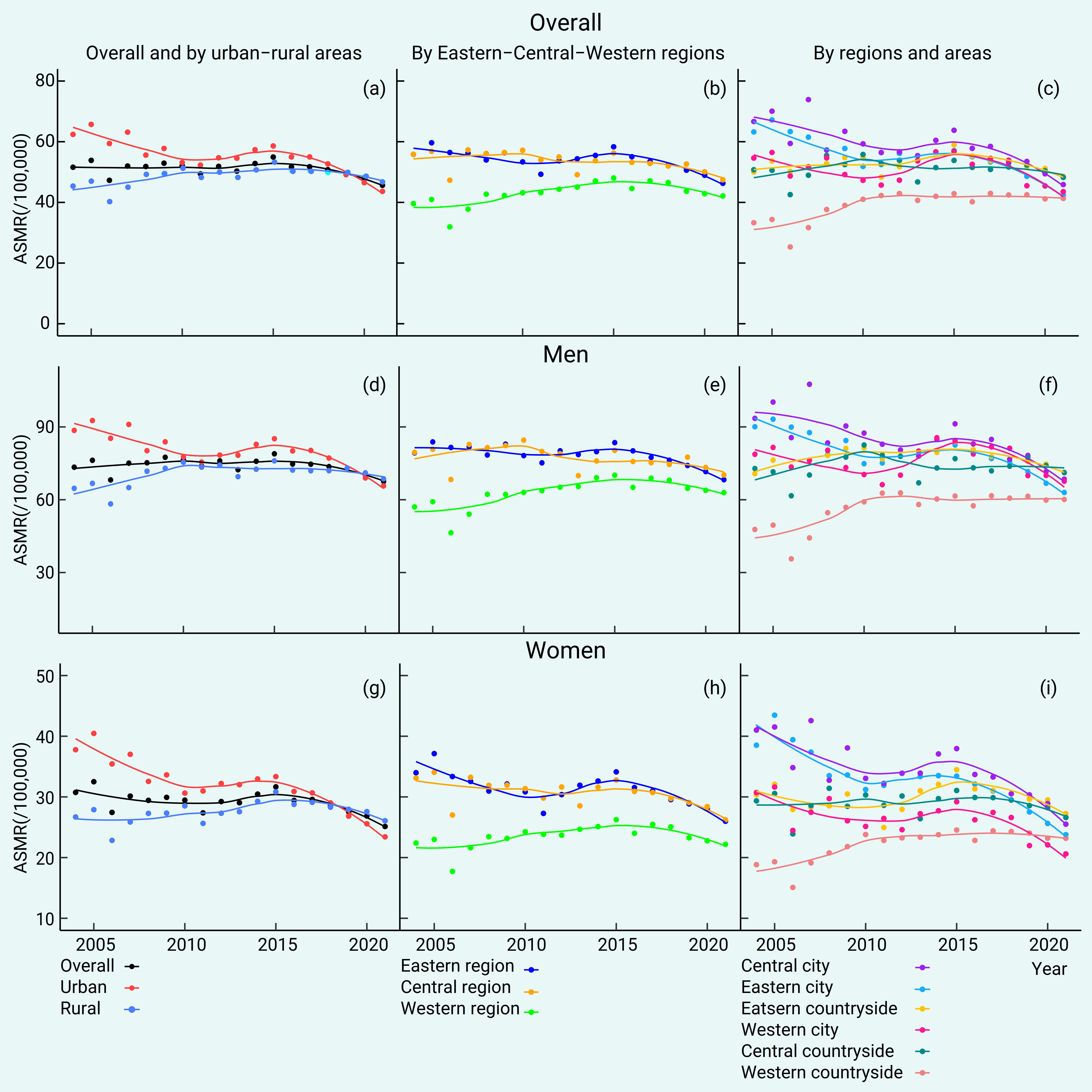
Figure 1.
Trends of the age-standardized rates for lung cancer mortality in Chinese population stratified by gender, regions and areas from 2004 to 2021.
-
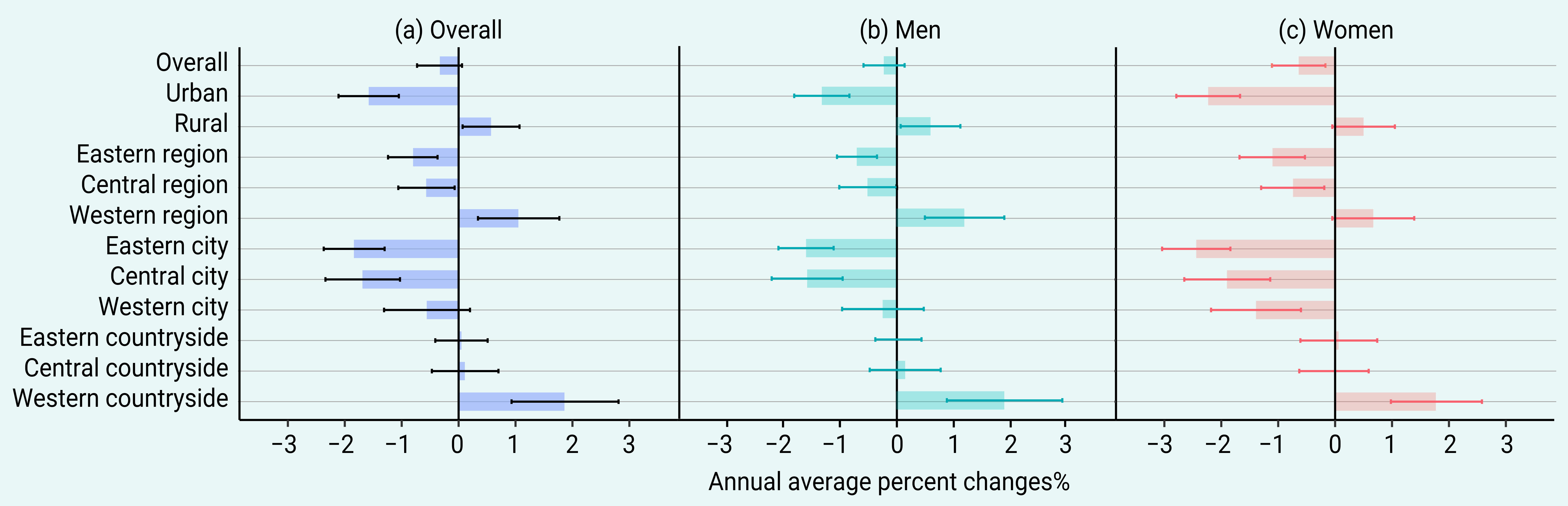
Figure 2.
The annual average percent changes of age-standardized lung cancer mortality rates in different locations during 2004-2021, overall and by sex.
-
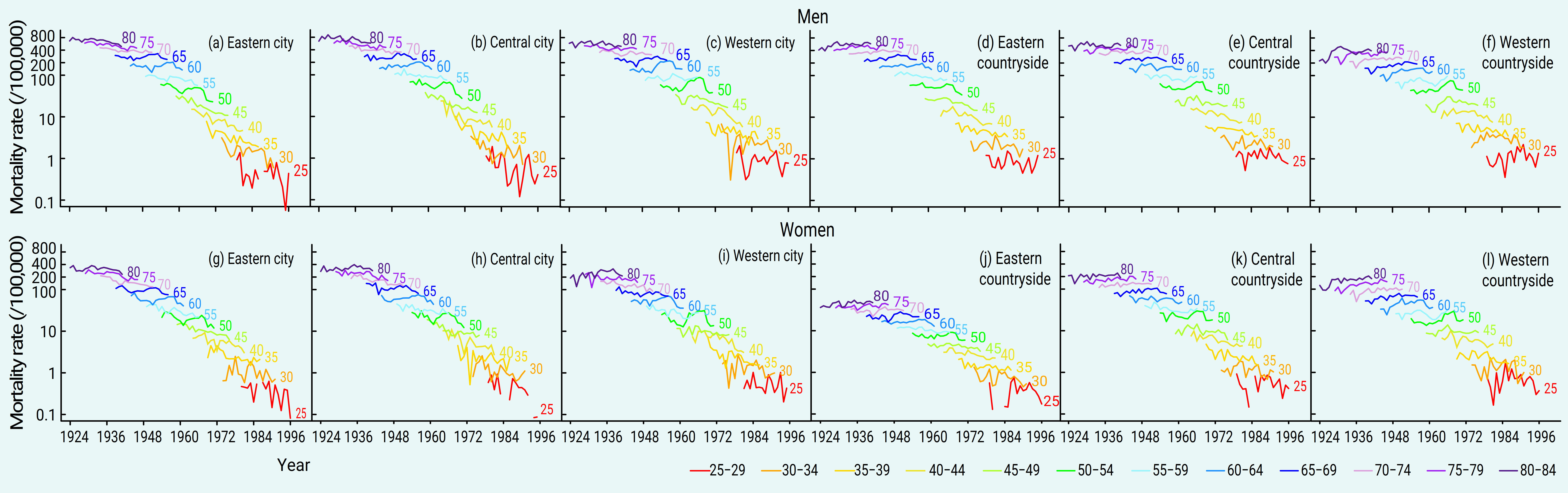
Figure 3.
Cohort-specific mortality rates of lung cancer on a semilogarithmic scale in different age groups, stratified by gender, regions and areas.
-
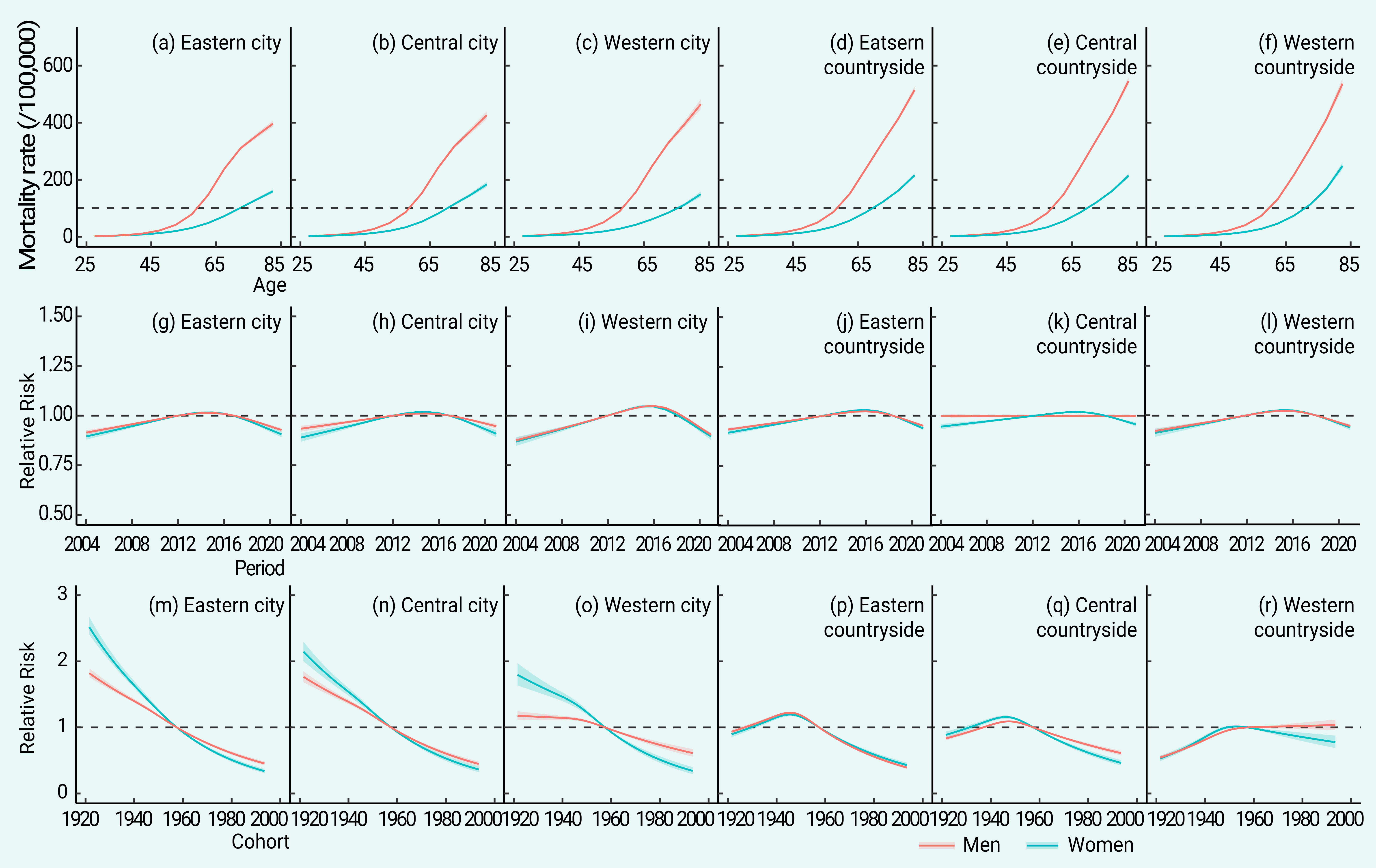
Figure 4.
Age, period, and cohort effects on lung cancer mortality, stratified by regions, areas and gender (parameterized by natural splines with three knots)
