
-

-
REFERENCES
[1] Howard, A., Hope, W., and Gerada, A. (2023). ChatGPT and antimicrobial advice: the end of the consulting infection doctor. Lancet. Infect. Dis. 23: 405−406. DOI: 10.1016/S1473-3099(23)00113-5. [2] Kung, T.H., Cheatham, M., Medenilla, A., et al. (2023). Performance of ChatGPT on USMLE: Potential for AI-assisted medical education using large language models. PLOS Digit. Health 2: e0000198. DOI: 10.1371/journal.pdig.0000198. [3] Lee, P., Bubeck, S., and Petro, J. (2023). Benefits, Limits, and Risks of GPT-4 as an AI Chatbot for Medicine. N. Engl. J. Med. 388: 1233−1239. DOI: 10.1056/NEJMsr2214184. [4] Li, H., Moon, J.T., Iyer, D., et al. (2023). Decoding radiology reports: Potential application of OpenAI ChatGPT to enhance patient understanding of diagnostic reports. Clin. Imaging. 101: 137−141. DOI: 10.1016/j.clinimag.2023.06.008. [5] Zhou, Z., Wang, X., Li, X., and Liao, L. (2023). Is ChatGPT an Evidence-based Doctor. Eur. Urol. 23: S0302−2838. DOI: 10.1016/j.eururo.2023.03.037. -
ABOUT THIS ARTICLE
Cite this article:
Yin C., Zheng J., Liu J., et al., (2023). ChatGPT: The doctor's assistant? The Innovation Medicine 1(3), 100034. https://doi.org/10.59717/j.xinn-med.2023.100034
Welcome!
To request copyright permission to republish or share portions of our works, please visit Copyright Clearance Center's (CCC) Marketplace website at marketplace.copyright.com.
Export File
Citation
Yin C., Zheng J., Liu J., et al., (2023). ChatGPT: The doctor's assistant? The Innovation Medicine 1(3), 100034. https://doi.org/10.59717/j.xinn-med.2023.100034

Format
Content
 DownLoad:
-
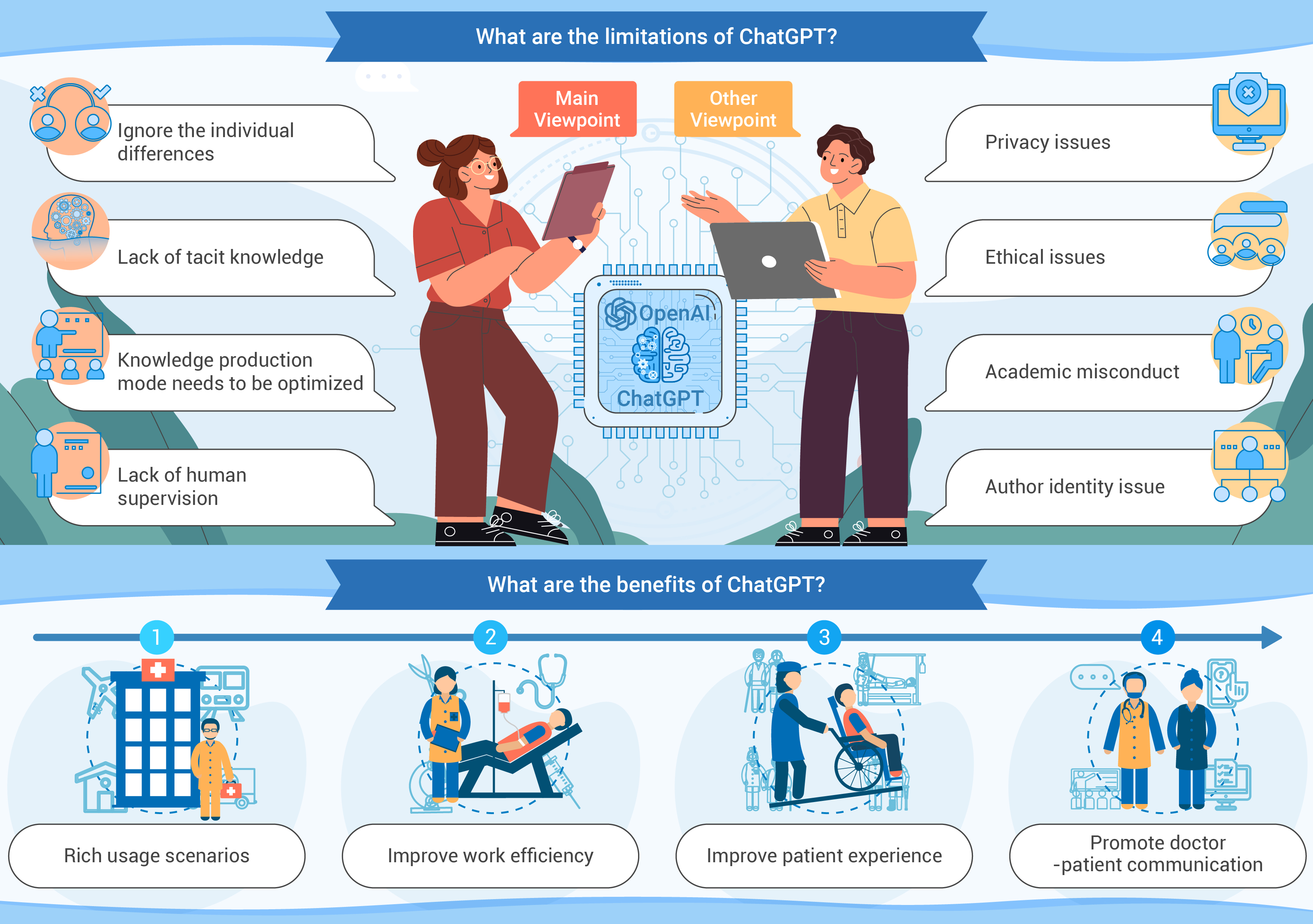
Figure 1.
The limitations and benefits of ChatGPT.
