
The associations of energy adjusted dietary inflammatory index with brain structure and cognitive function
-
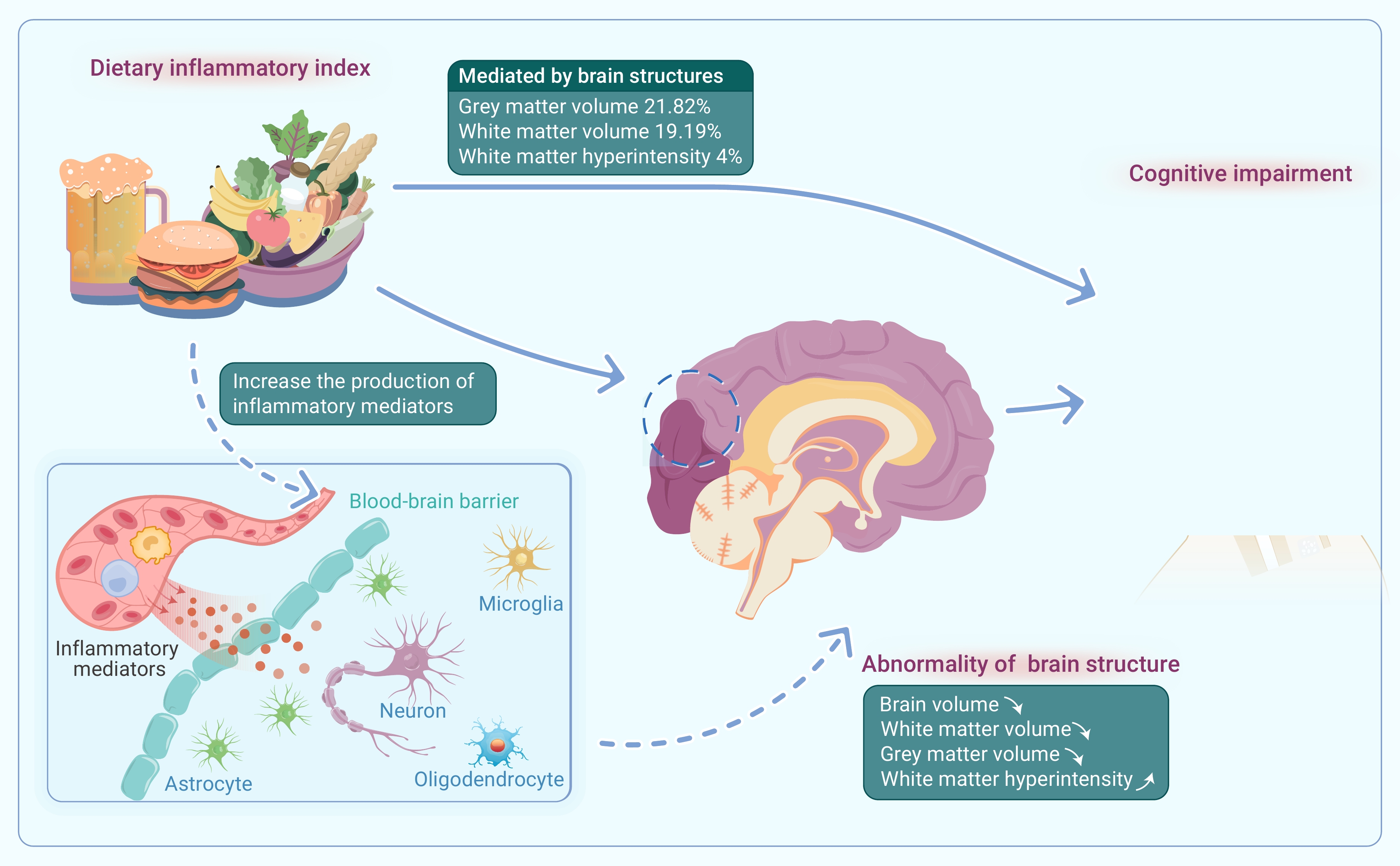
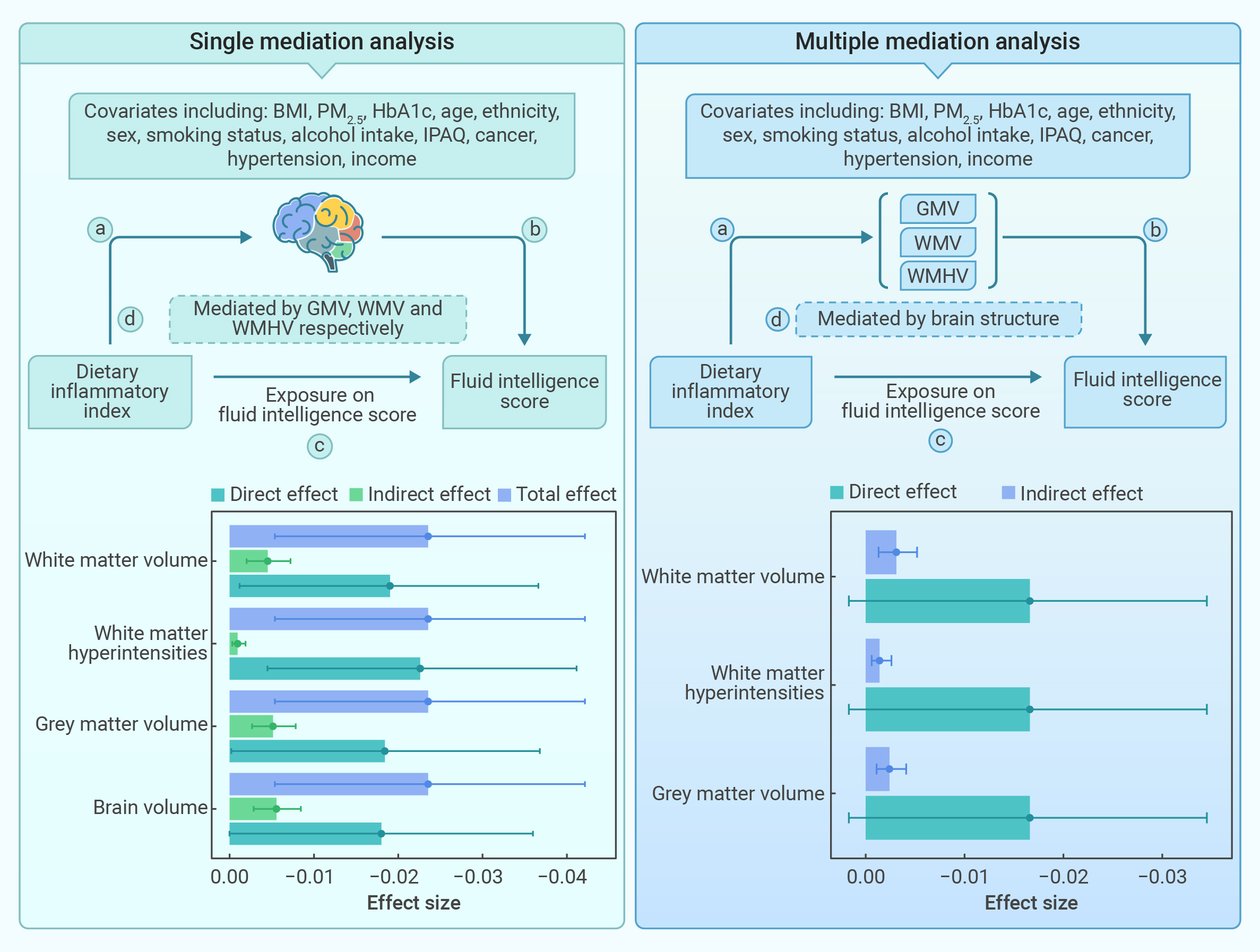
GRAPHICAL ABSTRACT
 DownLoad:
Full size image
DownLoad:
Full size image
-
PUBLIC SUMMARY
-
Higher dietary inflammatory index links to more severe brain structure abnormalities.
Brain structure abnormalities mediate the “inflammatory diet-cognition” association.
Controlling inflammatory diet may protect rain structure and cognitive function.
-
-
ABSTRACT
Limited research exists on the mediating effect of brain structure in the association between dietary inflammatory index (DII) and cognitive impairment. To address this issue, this analysis utilized data from a cohort of 15,526 participants in the UK Biobank who underwent brain magnetic resonance imaging (MRI) during 2014-2020. We assessed the associations between energy adjusted DII (E-DII, calculated by 28 components) and cognitive function (represented by fluid intelligence scores, FIS), as well as the brain structures, including total brain volume (TBV), white matter volume (WMV), white matter hyperintensities volume (WMHV) and grey matter volume (GMV) of 76 cortices, 14 subcortices and 28 cerebellum regions. We further estimated the mediation effects of brain structures on the association between E-DII and cognitive function. From this analysis, we observed that higher E-DII was associated with reduced TBV, GMV, WMV, FIS and higher WMHV. Each one unit increase in E-DII was associated with 0.025(0.007, 0.041) FIS decrease, 937.93 mm3 (95% CI: 494.48.07,1,381.38 ) GMV decrease, 675.02 mm3 (95% CI: 279.02,1,071.02 ) WMV decrease and 93.80 mm3 (95% CI: 41.45, 146.14) WMHV increase. Furthermore, GMV, WMHV, WMV were found to significantly mediate the association between E-DII and cognitive function, accounting for 21.82% (95% CI: 11.26%, 33.24%), 19.19% (95% CI: 8.52%, 30.63%) and 4% (95% CI: 1.31%, 7.99%). These results indicated that controlling of inflammatory diet could prevent brain structures abnormalities and might reduce the risk of cognitive impairment. -

-
REFERENCES
[1] Pais, R., Ruano, L., P Carvalho, O., et al. (2020). Global cognitive impairment prevalence and incidence in community dwelling older adults-a systematic review. Geriatrics 5: 4. DOI: 10.3390/geriatrics5010004. [2] Charisis, S., Ntanasi, E., Yannakoulia, M., et al. (2021). Diet inflammatory index and dementia incidence: A population-based study. Neurology 97: 2381−2391. DOI: 10.1212/WNL.0000000000012973. [3] Sartori, A.C., Vance, D.E., Slater, L.Z., et al. (2012). The impact of inflammation on cognitive function in older adults: Implications for healthcare practice and research. J. Neurosci. Nurs. 44: 206−217. DOI: 10.1097/JNN.0b013e3182527690. [4] Zhang, Q., Wu, Y., Han, T., et al. (2019). Changes in cognitive function and risk factors for cognitive impairment of the elderly in China: 2005-2014. Int. J. Environ. Res. Public Health 16: 16. DOI: 10.3390/ijerph16162847. [5] Khoo, J., Piantadosi, C., Duncan, R., et al. (2011). Comparing effects of a low-energy diet and a high-protein low-fat diet on sexual and endothelial function, urinary tract symptoms, and inflammation in obese diabetic men. J. Sex. Med. 8: 2868−2875. DOI: 10.1111/j.1743-6109.2011.02417.x. [6] Jia, Y., Yan, S., Sun, M., et al. (2022). Association between dietary inflammatory index and cognitive impairment: A meta-analysis. Front. Aging Neurosci. 14: 1007629. DOI: 10.3389/fnagi.2022.1007629. [7] Shivappa, N., Steck, S.E., Hurley, T.G., et al. (2014). Designing and developing a literature-derived, population-based dietary inflammatory index. Public Health Nutr. 17: 1689−1696. DOI: 10.1017/S1368980013002115. [8] Sun, M., Wang, L., Guo, Y., et al. (2022). The association among inflammatory diet, glycohemoglobin, and cognitive function impairment in the elderly: Based on the NHANES 2011-2014. J. Alzheimers Dis. 87: 1713−1723. DOI: 10.3233/JAD-215688. [9] Li, R., Zhan, W., Huang, X., et al. (2021). Association of dietary inflammatory index (DII) and depressive disorders. J. Inflamm. Res. 14: 6959−6973. DOI: 10.2147/JIR.S344002. [10] Melo Van Lent, D., Gokingco, H., Short, M.I., et al. (2022). Higher dietary inflammatory index scores are associated with brain MRI markers of brain aging: Results from the Framingham heart study offspring cohort. Alzheimers Dement. 19: 621−631 DOI: 10.1002/alz.12685. [11] Frith, E., Shivappa, N., Mann, J.R., et al. (2018). Dietary inflammatory index and memory function: Population-based national sample of elderly Americans. Br. J. Nutr. 119: 552−558. DOI: 10.1017/S0007114517003804. [12] Zabetian-Targhi, F., Srikanth, V.K., Smith, K.J., et al. (2021). Associations between the dietary inflammatory index, brain volume, small vessel disease, and global cognitive function. J. Acad. Nutr. Diet. 121: 915−924. DOI: 10.1016/j.jand.2020.11.004. [13] Chen, L., Cai, M., Li, H., et al. (2022). Risk/benefit tradeoff of habitual physical activity and air pollution on chronic pulmonary obstructive disease: Findings from a large prospective cohort study. BMC Med. 20: 70. DOI: 10.1186/s12916-022-02274-8. [14] Caleyachetty, R., Littlejohns, T., Lacey, B., et al. (2021). United Kingdom Biobank (UK Biobank): JACC focus seminar 6/8. J. Am. Coll. Cardiol. 78: 56−65. DOI: 10.1016/j.jacc.2021.03.342. [15] Alfaro-Almagro, F., Jenkinson, M., Bangerter, N.K., et al. (2018). Image processing and quality control for the first 10,000 brain imaging datasets from UK Biobank. Neuroimage 166: 400−424. DOI: 10.1016/j.neuroimage.2017.10.034. [16] Miller, K.L., Alfaro-Almagro. F., Bangerter, N.K., et al. (2016). Multimodal population brain imaging in the UK Biobank prospective epidemiological study. Nat. Neurosci. 19: 1523−1536. DOI: 10.1038/nn.4393. [17] Daviet, R., Aydogan, G., Jagannathan, K., et al. (2022). Associations between alcohol consumption and gray and white matter volumes in the UK Biobank. Nat. Commun. 13: 1175. DOI: 10.1038/s41467-022-28735-5. [18] Asadi, Z., Yaghooti-Khorasani, M., Ghazizadeh, H., et al. (2020). Association between dietary inflammatory index and risk of cardiovascular disease in the Mashhad stroke and heart atherosclerotic disorder study population. IUBMB Life 72: 706−715. DOI: 10.1002/iub.2172. [19] Shi, Y., Lin, F., Li, Y., et al. (2023). Association of pro-inflammatory diet with increased risk of all-cause dementia and Alzheimer's dementia: A prospective study of 166,377 UK Biobank participants. BMC Med. 21: 266. DOI: 10.1186/s12916-023-02940-5. [20] Hebert, J.R., Shivappa, N., Wirth, M.D., et al. (2019). Perspective: The dietary inflammatory index (DII)-lessons learned, improvements made, and future directions. Adv. Nutr. 10: 185−195. DOI: 10.1093/advances/nmy071. [21] Sudlow, C., Gallacher, J., Allen, N., et al. (2015). UK biobank: An open access resource for identifying the causes of a wide range of complex diseases of middle and old age. PLoS Med. 12: e1001779. DOI: 10.1371/journal.pmed.1001779. [22] Schulz, C.A., Weinhold, L., Schmid, M., et al. (2023) Analysis of associations between dietary patterns, genetic disposition, and cognitive function in data from UK Biobank. Eur. J. Nutr. 62 : 511-521. DOI: 10.1007/s00394-022-02976-y. [23] Duchowny, K.A., Ackley, S.F., Brenowitz, W.D., et al. (2022). Associations between handgrip strength and dementia risk, cognition, and neuroimaging outcomes in the UK Biobank cohort study. JAMA Netw. Open 5: e2218314. DOI: 10.1001/jamanetworkopen.2022.18314. [24] Kievit, R.A., Fuhrmann, D., Borgeest, G.S., et al. (2018). The neural determinants of age-related changes in fluid intelligence: A pre-registered, longitudinal analysis in UK Biobank. Wellcome Open Res. 3: 38. DOI: 10.12688/wellcomeopenres.14241.2. [25] Textor, J., Hardt, J., and Knüppel, S. (2011) DAGitty: A graphical tool for analyzing causal diagrams. Epidemiology 22 : 745. DOI: 10.1097/EDE.0b013e318225c2be. [26] Park, S.K., Jung, J.Y., Kang, J.G., et al. (2019). Left ventricular geometry and risk of incident hypertension. Heart 105: 1402−1407. DOI: 10.1136/heartjnl-2018-314657. [27] Di Pino, A., Scicali, R., Calanna, S., et al. (2014). Cardiovascular risk profile in subjects with prediabetes and new-onset type 2 diabetes identified by HbA(1c) according to American Diabetes Association criteria. Diabetes Care 37: 1447−1453. DOI: 10.2337/dc13-2357. [28] Tyrrell, J., Jones, S.E., Beaumont, R., et al. (2016). Height, body mass index, and socioeconomic status: Mendelian randomisation study in UK Biobank. BMJ 352: i582. DOI: 10.1136/bmj.i582. [29] Zheng, D., Cai, M., Qian, Z., et al. (2023) The associations of glycosylated hemoglobin with grey matter volume and depression: Investigating mediating role of grey matter volume. Global Trans. 5 : 107-116. DOI: 10.1016/j.glt.2023.06.004. [30] Craig, C.L., Marshall, A.L., Sjöström, M., et al. (2003). International physical activity questionnaire: 12-country reliability and validity. Med. Sci. Sports Exerc. 35: 1381−1395. DOI: 10.1249/01.MSS.0000078924.61453.FB. [31] Bull, F.C., Al-Ansari, S.S., Biddle, S., et al. (2020). World Health Organization 2020 guidelines on physical activity and sedentary behaviour. Br. J. Sports Med. 54: 1451−1462. DOI: 10.1136/bjsports-2020-102955. [32] Frye, B.M., Craft, S., Register, T.C., et al. (2021). Diet, psychosocial stress, and Alzheimer's disease-related neuroanatomy in female nonhuman primates. Alzheimers Dement. 17: 743−744. DOI: 10.1002/alz.12232. [33] Gu, Y., Manly, J.J., Mayeux, R.P., et al. (2018). An inflammation-related nutrient pattern is associated with both brain and cognitive measures in a multiethnic elderly population. Curr. Alzheimer Res. 15: 493−501. DOI: 10.2174/1567205015666180101145619. [34] Kokubun, K., and Yamakawa, Y. (2019). Association between food patterns and gray matter volume. Front. Hum. Neurosci. 13: 384. DOI: 10.3389/fnhum.2019.00384. [35] Song, S., Gaynor, A.M., Cruz, E., et al. (2022). Mediterranean diet and white matter hyperintensity change over time in cognitively intact adults. Nutrients 14: 3664. DOI: 10.3390/nu14173664. [36] Cox, S.R., Ritchie, S.J., Tucker-Drob, E.M., et al. (2016). Ageing and brain white matter structure in 3,513 UK Biobank participants. Nat. Commun. 7: 13629. DOI: 10.1038/ncomms13629. [37] Bettcher, B.M., Wilheim, R., Rigby, T., et al. (2012). C-reactive protein is related to memory and medial temporal brain volume in older adults. Brain Behav. Immun. 26: 103−108. DOI: 10.1016/j.bbi.2011.07.240. [38] Janowitz, D., Habes. M., Toledo, J.B., et al. (2020). Inflammatory markers and imaging patterns of advanced brain aging in the general population. Brain Imaging Behav. 14: 1108−1117. DOI: 10.1007/s11682-019-00058-y. [39] Heringa, S.M., van den Berg, E., Reijmer, Y.D., et al. (2014). Markers of low-grade inflammation and endothelial dysfunction are related to reduced information processing speed and executive functioning in an older population - the Hoorn Study. Psychoneuroendocrinology 40: 108−118. DOI: 10.1016/j.psyneuen.2013.11.011. [40] Conole, E.L.S., Stevenson, A.J., Muñoz Maniega, S., et al. (2021). DNA methylation and protein markers of chronic inflammation and their associations with brain and cognitive aging. Neurology 97: e2340−e2352. DOI: 10.1212/WNL.0000000000012997. [41] Montagne, A., Nation, D.A., Sagare, A.P., et al. (2020). APOE4 leads to blood-brain barrier dysfunction predicting cognitive decline. Nature 581: 71−76. DOI: 10.1038/s41586-020-2247-3. [42] Freeman, L.R., Haley-Zitlin, V., Rosenberger, D.S., et al. (2014). Damaging effects of a high-fat diet to the brain and cognition: A review of proposed mechanisms. Nutr. Neurosci. 17: 241−251. DOI: 10.1179/1476830513Y.0000000092. [43] Hsuchou, H., Kastin, A.J, Mishra, P.K., et al. (2012). C-reactive protein increases BBB permeability: Implications for obesity and neuroinflammation. Cell Physiol. Biochem. 30: 1109−1119. DOI: 10.1159/000343302. [44] Miller, A.H., Maletic, V., and Raison, C.L. (2009). Inflammation and its discontents: The role of cytokines in the pathophysiology of major depression. Biol. Psychiatry 65: 732−741. DOI: 10.1016/j.biopsych.2008.11.029. [45] Edison, P. (2020). Brain connectivity and cognitive impairment. Brain Connect. 10: 329−330. DOI: 10.1089/brain.2020.29013.ped. -
ABOUT THIS ARTICLE
Cite this article:
Zheng D., Zhuo B., Zheng G., et al., (2023). The associations of energy adjusted dietary inflammatory index with brain structure and cognitive function. The Innovation Medicine 1(3), 100036. https://doi.org/10.59717/j.xinn-med.2023.100036
Welcome!
To request copyright permission to republish or share portions of our works, please visit Copyright Clearance Center's (CCC) Marketplace website at marketplace.copyright.com.
Article Metrics
Relative Articles
Cited by
Export File
Citation
Zheng D., Zhuo B., Zheng G., et al., (2023). The associations of energy adjusted dietary inflammatory index with brain structure and cognitive function. The Innovation Medicine 1(3), 100036. https://doi.org/10.59717/j.xinn-med.2023.100036

Format
Content
-
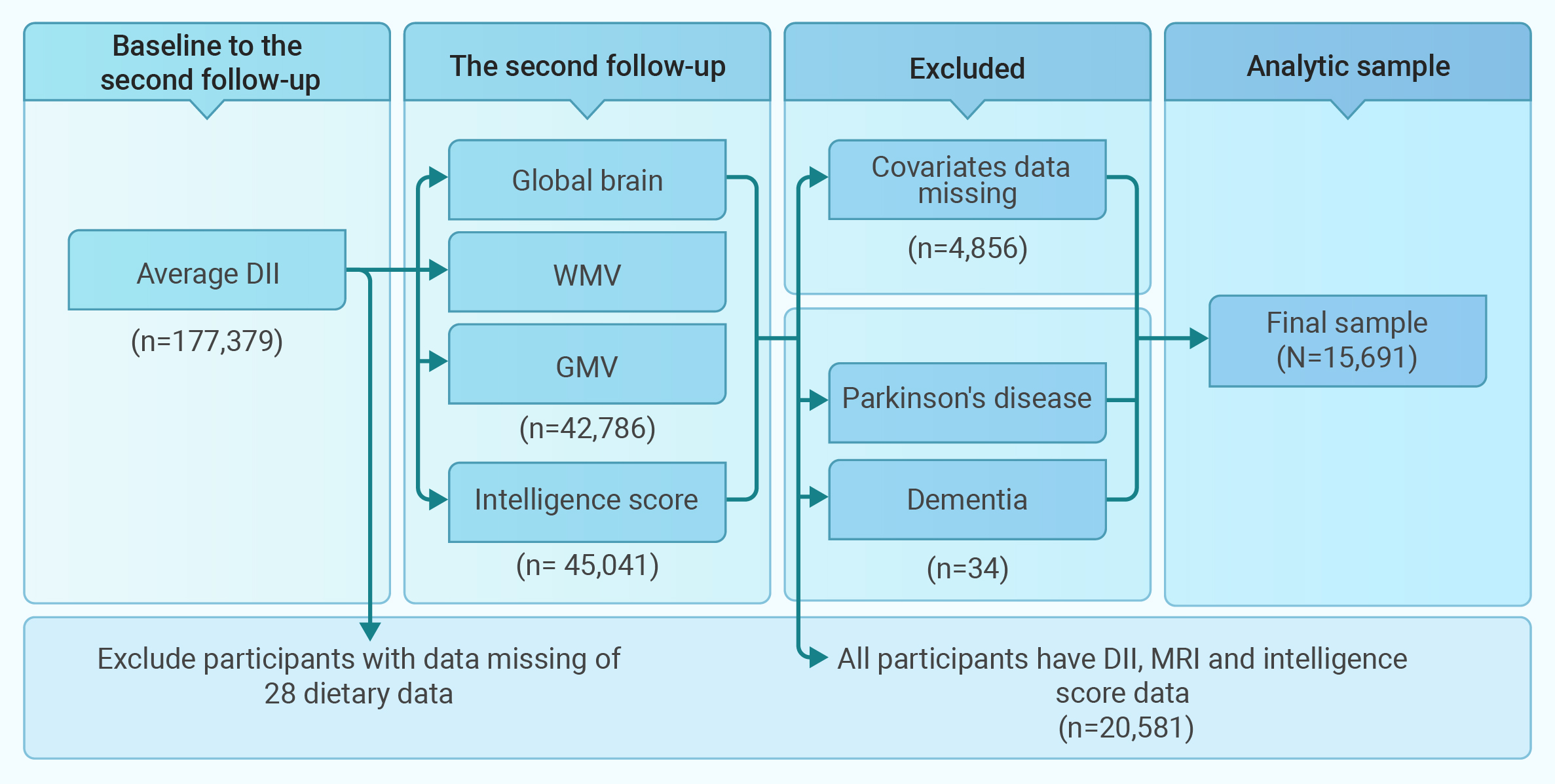
Figure 1.
The flowchart for this study.
-
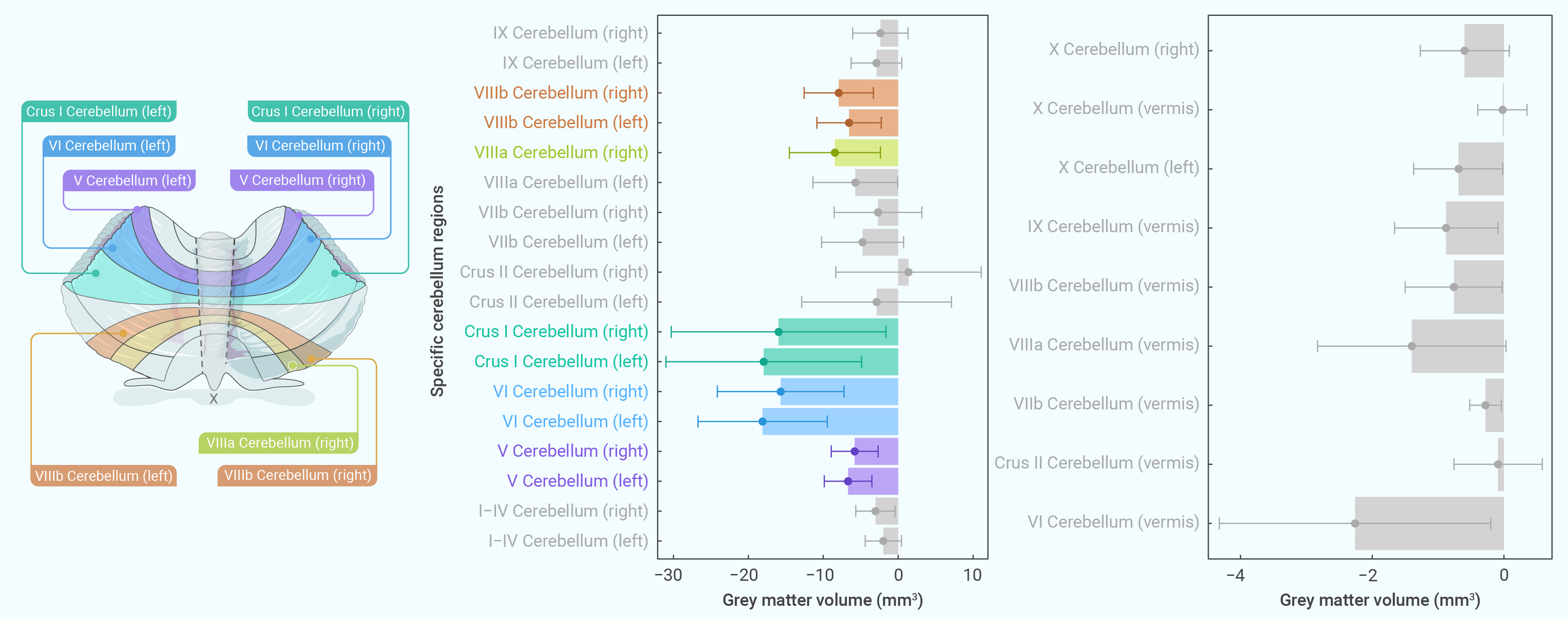
Figure 2.
The changes in GMV of specific cerebellum regions for each unit increase in E-DII.
-
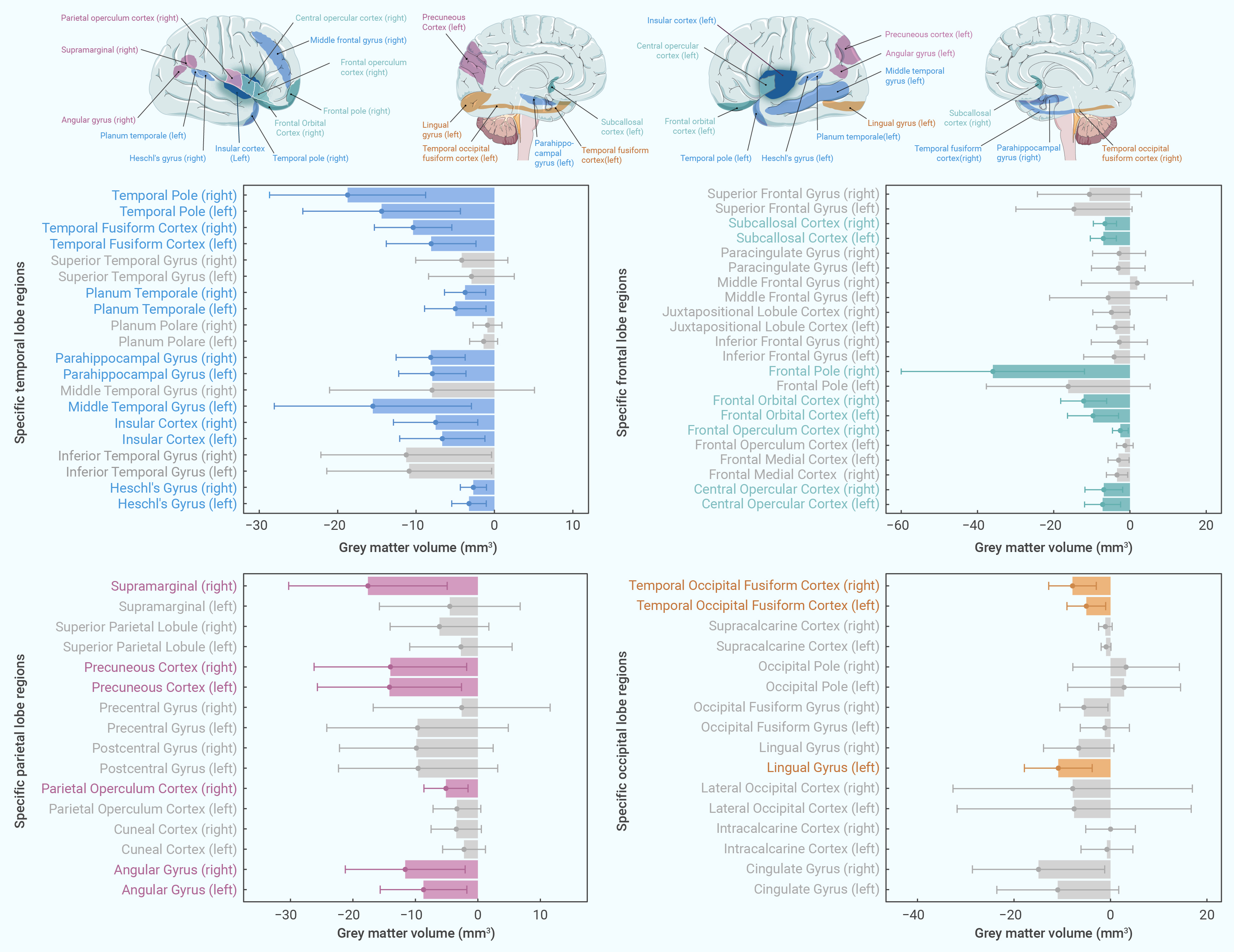
Figure 3.
The changes in GMV of specific cerebral cortices for each unit increase in E-DII.
-
Figure 4.
Brain MRI metrics partly mediate the association between DII and fluid intelligence score.
