
The modification effect of ozone pollution on the associations between heat wave and cardiovascular mortality
-
GRAPHICAL ABSTRACT

 DownLoad:
Full size image
DownLoad:
Full size image
-
PUBLIC SUMMARY
-
Heat wave had an adverse health effect on mortality from cardiovascular diseases.
High concentration of ozone pollution enhanced the associations between heat wave and mortality from cerebrovascular diseases.
The modification effect of ozone pollution on heat wave was observed in southern China and temperate climatic zone.
-
-
ABSTRACT
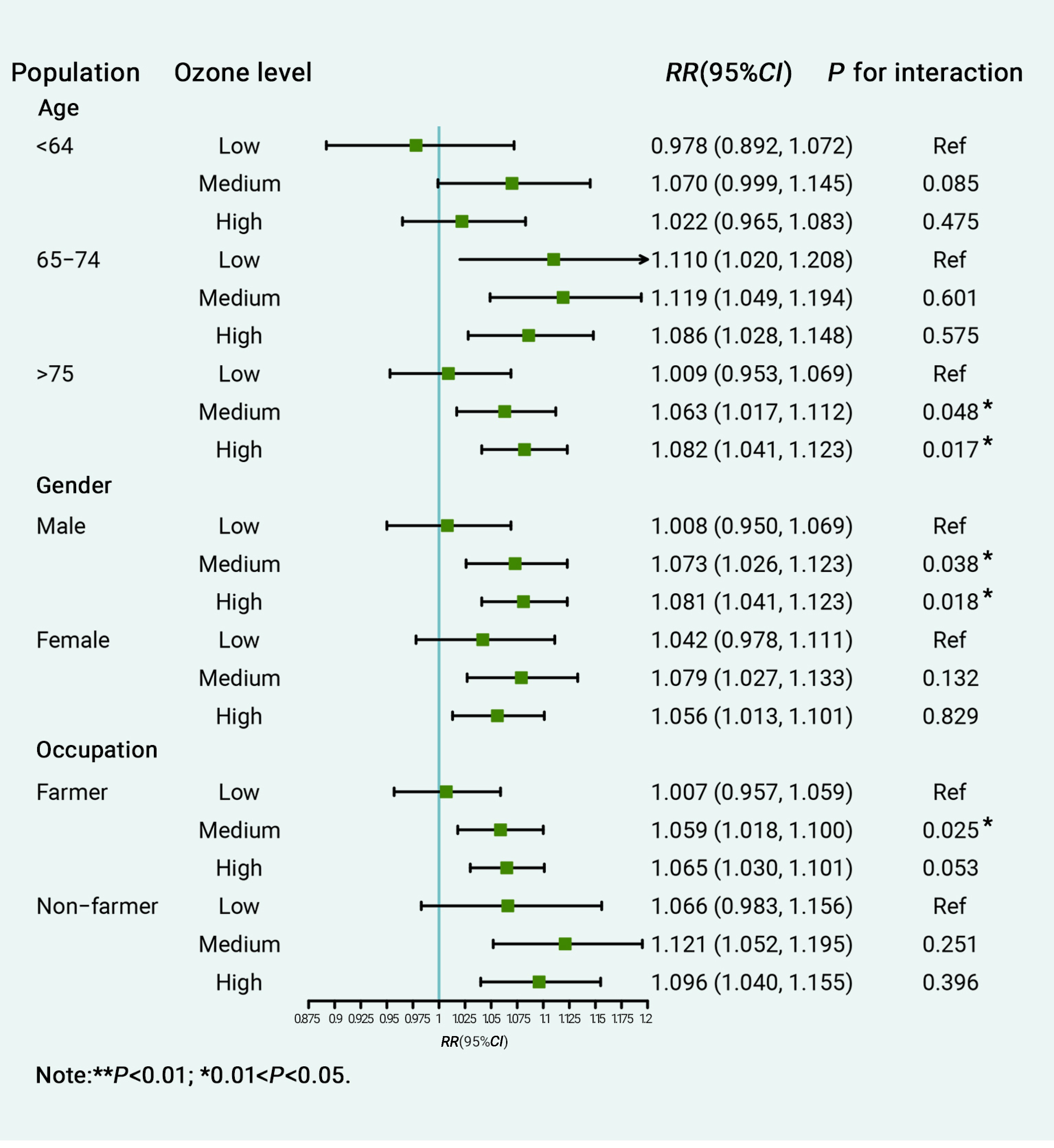
Epidemiological evidence concerning whether ozone modifies the impact of heat waves remain unexplored, especially in developing countries. To comprehensively evaluate the potential modification effect of ozone on heat wave impacts in warm seasons, we adopted a dataset (including mortality from overall cardiovascular diseases, chronic heart diseases and cerebrovascular diseases) in 250 Chinese cities from 2015 to 2019. A conditional quasi-Poisson regression model within the framework of the space-time-stratified case-crossover design was applied to obtain province-level associations, and a meta-analysis was adopted to pool province-level associations to national-average associations. Ozone concentration was categorized into low, medium and high levels using the 33rd and 66th percentiles of the location-specific levels as cutoffs, then we calculated the effect of heat waves in various ozone strata. Further stratification analyses on sub-populations (age group, sex and occupation) and regions were carried out. Heat waves were found to be positively associated with mortality from overall cardiovascular diseases (RR=1.043, 95% CI: 1.027-1.059). Higher concentrations of ozone significantly enhanced the effects of heat waves on cerebrovascular mortality. The mortality risk of heat waves was 1.071 (95% CI: 1.036-1.108) and 1.069 (95% CI: 1.039-1.100) at the medium and high levels, respectively (P for interaction=0.012 and 0.040, compared to the low level). A significant modification effect of ozone on the cerebrovascular mortality impact of heat waves was observed among people over 75, males and farmers, as well as in southern China and temperate climatic zones. Our findings suggest that ozone might potentially modify the mortality effect of heat waves. -

-
REFERENCES
[1] Xue, T., Zhu, T., Peng, W., et al. (2021). Clean air actions in China, PM2.5 exposure, and household medical expenditures: A quasi-experimental study. PLoS Med. 18 : e1003480. DOI: 10.1371/journal.pmed.1003480. [2] Liu, S., Li, Y., Zeng, X., et al. (2019). Burden of cardiovascular diseases in China, 1990-2016: Findings from the 2016 Global Burden of Disease Study. JAMA Cardiol. 4: 342−352. DOI: 10.1001/jamacardio.2019.0295. [3] Zhao, D., Liu, J., Wang, M., et al. (2019). Epidemiology of cardiovascular disease in China: current features and implications. Nat. Rev. Cardiol. 16: 203−212. DOI: 10.1038/s41569-018-0119-4. [4] Chen, R., Yin, P., Wang, L., et al. (2018). Association between ambient temperature and mortality risk and burden: time series study in 272 main Chinese cities. BMJ 363: k4306. DOI: 10.1136/bmj.k4306. [5] Schramm, P.J., Vaidyanathan, A., Radhakrishnan, L., et al. (2021). Heat-related emergency department visits during the northwestern heat wave - United States, June 2021. Morb. Mortal. Wkly. Rep. 70: 1020−1021. DOI: 10.15585/mmwr.mm7029e1. [6] Yin, P., Chen, R., Wang, L., et al. (2018). The added effects of heatwaves on cause-specific mortality: A nationwide analysis in 272 Chinese cities. Environ. Int. 121: 898−905. DOI: 10.1016/j.envint.2018.10.016. [7] Cheng, J., Su, H., Xu, Z., et al. (2021). Extreme temperature exposure and acute myocardial infarction: Elevated risk within hours. Environ. Res. 202: 111691. DOI: 10.1016/j.envres.2021.111691. [8] Chen, K., Breitner, S., Wolf, K., et al. (2019). Temporal variations in the triggering of myocardial infarction by air temperature in Augsburg, Germany, 1987-2014. Eur. Heart. J. 40: 1600−1608. DOI: 10.1093/eurheartj/ehz116. [9] Claeys, M.J., Rajagopalan, S., Nawrot, T.S., et al. (2017). Climate and environmental triggers of acute myocardial infarction. Eur. Heart. J. 38: 955−960. DOI: 10.1093/eurheartj/ehw151. [10] Yin, P., Chen, R., Wang, L., et al. (2017). Ambient ozone pollution and daily mortality: A nationwide study in 272 Chinese cities. Environ. Health Perspect. 125: 117006. DOI: 10.1289/EHP1849. [11] Chen, R., Yin, P., Meng, X., et al. (2019). Associations between coarse particulate matter air pollution and cause-specific mortality: A nationwide analysis in 272 Chinese cities. Environ. Health Perspect. 127: 17008. DOI: 10.1289/EHP2711. [12] Zhao, S., Liu, S., Hou, X., et al. (2021). Air pollution and cause-specific mortality: A comparative study of urban and rural areas in China. Chemosphere 262: 127884. DOI: 10.1016/j.chemosphere.2020.127884. [13] Huang, J., Pan, X., Guo, X., et al. (2018). Health impact of China's air pollution prevention and control action plan: An analysis of national air quality monitoring and mortality data. Lancet Planet. Health 2: e313−e323. DOI: 10.1016/S2542-5196(18)30141-4. [14] Lin, H., Liu, T., Fang, F., et al. (2017). Mortality benefits of vigorous air quality improvement interventions during the periods of APEC Blue and Parade Blue in Beijing, China. Environ. Pollut. 220: 222−227. DOI: 10.1016/j.envpol.2016.09.041. [15] Ding, D., Zhu, Y., Jang, C., et al. (2016). Evaluation of health benefit using BenMAP-CE with an integrated scheme of model and monitor data during Guangzhou Asian Games. J. Environ. Sci. (China) 42: 9−18. DOI: 10.1016/j.jes.2015.06.003. [16] Wang, F., Qiu, X., Cao, J., et al. (2021). Policy-driven changes in the health risk of PM2.5 and O3 exposure in China during 2013-2018. Sci. Total Environ. 757 : 143775. DOI: 10.1016/j.scitotenv.2020.143775. [17] Peng, R.D., Samoli, E., Pham, L., et al. (2013). Acute effects of ambient ozone on mortality in Europe and North America: Results from the APHENA study. Air Qual. Atmos. Health 6: 445−453. DOI: 10.1007/s11869-012-0180-9. [18] Yan, M., Liu, Z., Liu, X., et al. (2013). Meta-analysis of the Chinese studies of the association between ambient ozone and mortality. Chemosphere 93: 899−905. DOI: 10.1016/j.chemosphere.2013.05.040. [19] Bell, M.L., Dominici, F., and Samet, J.M. (2005). A meta-analysis of time-series studies of ozone and mortality with comparison to the national morbidity, mortality, and air pollution study. Epidemiology 16: 436−445. DOI: 10.1097/01.ede.0000165817.40152.85. [20] Cohen, A.J., Brauer, M., Burnett, R., et al. (2017). Estimates and 25-year trends of the global burden of disease attributable to ambient air pollution: An analysis of data from the Global Burden of Diseases Study 2015. Lancet 389: 1907−1918. DOI: 10.1016/S0140-6736(17)30505-6. [21] Kahle, J.J., Neas, L.M., Devlin, R.B., et al. (2015). Interaction effects of temperature and ozone on lung function and markers of systemic inflammation, coagulation, and fibrinolysis: a crossover study of healthy young volunteers. Environ. Health Perspect. 123: 310−316. DOI: 10.1289/ehp.1307986. [22] Chen, K., Wolf, K., Breitner, S., et al. (2018). Two-way effect modifications of air pollution and air temperature on total natural and cardiovascular mortality in eight European urban areas. Environ. Int. 116: 186−196. DOI: 10.1016/j.envint.2018.04.021. [23] Fann, N., Coffman, E., Jackson, M., et al. (2022). The Role of Temperature in modifying the risk of ozone-attributable mortality under future changes in climate: A proof-of-concept analysis. Environ. Sci. Technol. 56: 1202−1210. DOI: 10.1021/acs.est.1c05975. [24] Hu, X., Han, W., Wang, Y., et al. (2022). Does air pollution modify temperature-related mortality? A systematic review and meta-analysis. Environ. Res. 210: 112898. DOI: 10.1016/j.envres.2022.112898. [25] Rai, M., Stafoggia, M., de'Donato, F., et al. (2023). Heat-related cardiorespiratory mortality: Effect modification by air pollution across 482 cities from 24 countries. Environ. Int. 174: 107825. DOI: 10.1016/j.envint.2023.107825. [26] Shi, W., Sun, Q., Du, P., et al. (2020). Modification effects of temperature on the ozone-mortality relationship: A nationwide multicounty study in China. Environ. Sci. Technol. 54: 2859−2868. DOI: 10.1021/acs.est.9b05978. [27] Liu, S., Wu, X., Lopez, A.D., et al. (2016). An integrated national mortality surveillance system for death registration and mortality surveillance, China. Bull. World Health Organ. 94: 46−57. DOI: 10.2471/BLT.15.153148. [28] Zhou, M., Wang, H., Zhu, J., et al. (2016). Cause-specific mortality for 240 causes in China during 1990-2013: A systematic subnational analysis for the Global Burden of Disease Study 2013. Lancet 387: 251−272. DOI: 10.1016/S0140-6736(15)00551-6. [29] Wu, Y., Li, S., and Guo, Y. (2021). Space-time-stratified case-crossover design in environmental epidemiology study. Health Data Sci. 2021: 9870798. DOI: 10.34133/2021/9870798. [30] Wei, Y., Wang, Y., Di, Q., et al. (2019). Short term exposure to fine particulate matter and hospital admission risks and costs in the Medicare population: time stratified, case crossover study. BMJ 367: l6258. DOI: 10.1136/bmj.l6258. [31] Armstrong, B.G., Gasparrini, A., and Tobias, A. (2014). Conditional Poisson models: A flexible alternative to conditional logistic case cross-over analysis. BMC Med. Res. Methodol. 14: 122. DOI: 10.1186/1471-2288-14-122. [32] Wang, Y., Lin, L., Xu, Z., et al. (2023). Have residents adapted to heat wave and cold spell in the 21st century? Evidence from 136 Chinese cities. Environ. Int. 173 : 107811. DOI: 10.1016/j.envint.2023.107811. [33] Peel, M.C., Finlayson, B.L., and McMahon, T.A. (2007). Updated world map of the Köppen-Geiger climate classification. Hydrol. Earth Syst. Sci. 11: 1633−1644. DOI: 10.5194/hess-11-1633-2007. [34] Yang, C., Yang, H., Guo, S., et al. (2012). Alternative ozone metrics and daily mortality in Suzhou: The China Air Pollution and Health Effects Study (CAPES). Sci. Total. Environ. 426: 83−89. DOI: 10.1016/j.scitotenv.2012.03.036. [35] Li, G., Zeng, Q., and Pan, X. (2016). Disease burden of ischaemic heart disease from short-term outdoor air pollution exposure in Tianjin, 2002-2006. Eur. J. Prev. Cardiol. 23: 1774−1782. DOI: 10.1177/2047487316651352. [36] Qiu, H., Tian, L., Ho, K.F., et al. (2015). Air pollution and mortality: Effect modification by personal characteristics and specific cause of death in a case-only study. Environ. Pollut. 199: 192−197. DOI: 10.1016/j.envpol.2015.02.002. [37] Chen, J., Guo, L., Liu, H., et al. (2023). Modification effects of ambient temperature on associations of ambient ozone exposure before and during pregnancy with adverse birth outcomes: A multicity study in China. Environ. Int. 172: 107791. DOI: 10.1016/j.envint.2023.107791. [38] Tang, Y.M., Wang, D.G., Li, J., et al. (2016). Relationships between micronutrient losses in sweat and blood pressure among heat-exposed steelworkers. Ind. Health 54: 215−223. DOI: 10.2486/indhealth.2014-0225. [39] Nindl, B.C., Castellani, J.W., Warr, B.J., et al. (2013). Physiological Employment Standards III: physiological challenges and consequences encountered during international military deployments. Eur. J. Appl. Physiol. 113: 2655−2672. DOI: 10.1007/s00421-013-2591-1. [40] Díaz, J., Carmona, R., Mirón, I.J., et al. (2015). Geographical variation in relative risks associated with heat: Update of Spain's Heat Wave Prevention Plan. Environ. Int. 85: 273−283. DOI: 10.1016/j.envint.2015.09.022. [41] Xu, Z., FitzGerald, G., Guo, Y., et al. (2016). Impact of heatwave on mortality under different heatwave definitions: A systematic review and meta-analysis. Environ. Int. 89-90: 193−203. DOI: 10.1016/j.envint.2016.02.007. [42] Hartley, A., Marshall, D.C., Salciccioli, J.D., et al. (2016). Trends in mortality from ischemic heart disease and cerebrovascular disease in Europe: 1980 to 2009. Circulation 133: 1916−1926. DOI: 10.1161/CIRCULATIONAHA.115.018931. [43] Pu, X., Wang, T.J., Huang, X., et al. (2017). Enhanced surface ozone during the heat wave of 2013 in Yangtze River Delta region, China. Sci. Total Environ. 603-604: 807−816. DOI: 10.1016/j.scitotenv.2017.03.056. [44] Cao, B., and Yin, Z. (2020). Future atmospheric circulations benefit ozone pollution control in Beijing-Tianjin-Hebei with global warming. Sci. Total Environ. 743: 140645. DOI: 10.1016/j.scitotenv.2020.140645. [45] Li, X., Wu, C., Lu, J., et al. (2020). Cardiovascular risk factors in China: A nationwide population-based cohort study. Lancet Public Health 5: e672−e681. DOI: 10.1016/S2468-2667(20)30191-2. [46] Li, G., Huang, J., Wang, J., et al. (2021). Long-term exposure to ambient PM2.5 and increased risk of CKD prevalence in China. J. Am. Soc. Nephrol. 32 : 448-458. DOI: 10.1681/asn.2020040517. [47] Yang, X., Zeng, G., Iyakaremye, V., et al. (2022). Effects of different types of heat wave days on ozone pollution over Beijing-Tianjin-Hebei and its future projection. Sci. Total Environ. 837: 155762. DOI: 10.1016/j.scitotenv.2022.155762. [48] Gordon, C.J. (2003). Role of environmental stress in the physiological response to chemical toxicants. Environ. Res. 92: 1−7. DOI: 10.1016/S0013-9351(02)00008-7. [49] Wen, J., Zou, L., Jiang, Z., et al. (2023). Association between ambient temperature and risk of stroke morbidity and mortality: A systematic review and meta-analysis. Brain Behav. 13: e3078. DOI: 10.1002/brb3.3078. [50] Lavados, P.M., Olavarría, V.V., and Hoffmeister, L. (2018). Ambient temperature and stroke risk: Evidence supporting a short-term effect at a population level from acute environmental exposures. Stroke 49: 255−261. DOI: 10.1161/STROKEAHA.117.017838. [51] Chaseling, G.K., Iglesies-Grau, J., Juneau, M., et al. (2021). Extreme heat and cardiovascular health: What a cardiovascular health professional should know. Can. J. Cardiol. 37: 1828−1836. DOI: 10.1016/j.cjca.2021.08.008. [52] Chuang, K.J., Chan, C.C., Su, T.C., et al. (2007). The effect of urban air pollution on inflammation, oxidative stress, coagulation, and autonomic dysfunction in young adults. Am. J. Respir. Crit. Care. Med. 176: 370−376. DOI: 10.1164/rccm.200611-1627OC. [53] Cerza, F., Renzi, M., Gariazzo, C., et al. (2019). Long-term exposure to air pollution and hospitalization for dementia in the Rome longitudinal study. Environ. Health 18: 72. DOI: 10.1186/s12940-019-0511-5. [54] Solleiro-Villavicencio, H., Hernández-Orozco, E., and Rivas-Arancibia, S. (2021). Effect of exposure to low doses of ozone on interleukin 17A expression during progressive neurodegeneration in the rat hippocampus. Neurologia (Engl Ed) 36: 673−680. DOI: 10.1016/j.nrl.2018.08.001. [55] Zeger, S.L., Thomas, D., Dominici, F., et al. (2000). Exposure measurement error in time-series studies of air pollution: Concepts and consequences. Environ. Health Perspect. 108: 419−426. DOI: 10.1289/ehp.00108419. [56] Li, H., Chen, R., Meng, X., et al. (2015). Short-term exposure to ambient air pollution and coronary heart disease mortality in 8 Chinese cities. Int. J. Cardiol. 197: 265−270. DOI: 10.1016/j.ijcard.2015.06.050. [57] Guo, Y., Li, S., Tian, Z., et al. (2013). The burden of air pollution on years of life lost in Beijing, China, 2004-08: Retrospective regression analysis of daily deaths. BMJ 347: f7139. DOI: 10.1136/bmj.f7139. [58] Bhaskaran, K., Armstrong, B., Hajat, S., et al. (2012). Heat and risk of myocardial infarction: hourly level case-crossover analysis of MINAP database. BMJ 345: e8050. DOI: 10.1136/bmj.e8050. -
ABOUT THIS ARTICLE
Cite this article:
Qi J., Wang Y., Wang L., et al., (2023). The modification effect of ozone pollution on the associations between heat wave and cardiovascular mortality. The Innovation Medicine 1(3), 100043. https://doi.org/10.59717/j.xinn-med.2023.100043
Welcome!
To request copyright permission to republish or share portions of our works, please visit Copyright Clearance Center's (CCC) Marketplace website at marketplace.copyright.com.
Article Metrics
Relative Articles
Cited by
Export File
Citation
Qi J., Wang Y., Wang L., et al., (2023). The modification effect of ozone pollution on the associations between heat wave and cardiovascular mortality. The Innovation Medicine 1(3), 100043. https://doi.org/10.59717/j.xinn-med.2023.100043

Format
Content
-
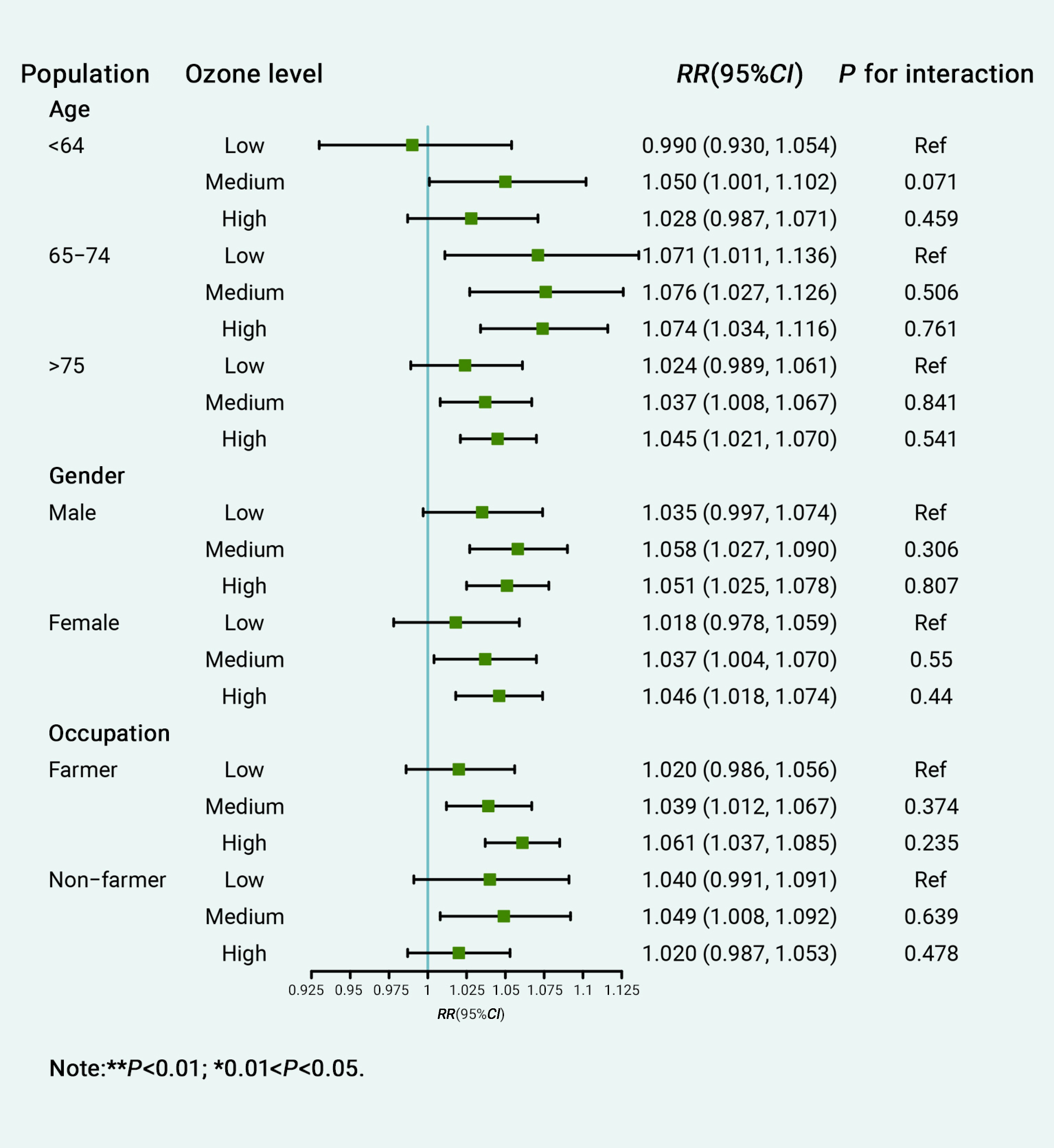
Figure 1.
Relative risks (RR, 95%CI) of mortality from all cardiovascular diseases associated with heat wave (>97.5th for ≥2d) at different ozone levels (4-day moving average ozone) in different sub-populations, and p-value for potential modification effect.
-
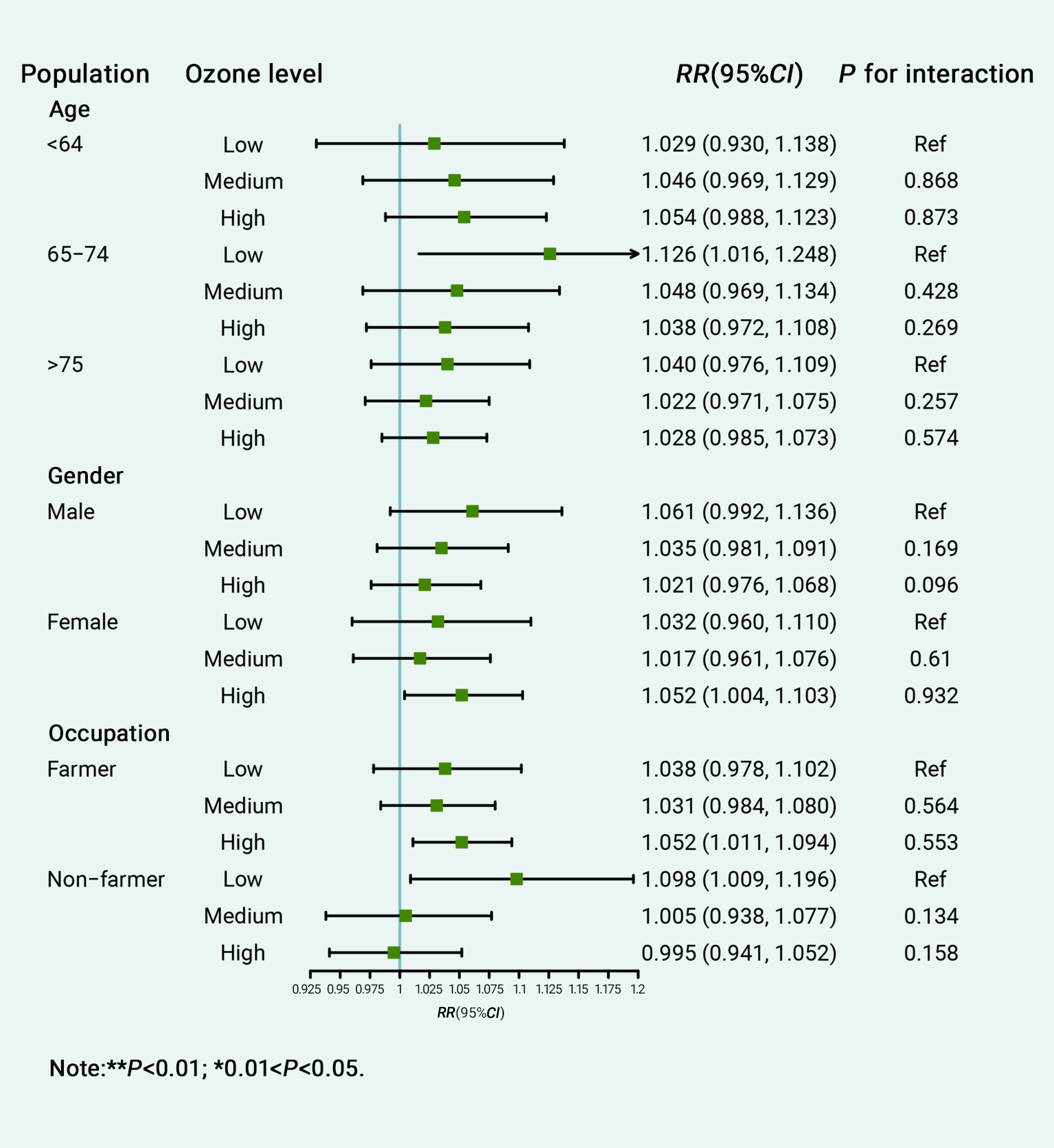
Figure 2.
Relative risks (RR, 95%CI) of mortality from all chronic heart diseases associated with heat wave (>97.5th for ≥2d) at different ozone levels (4-day moving average ozone) in different sub-populations, and p-value for potential modification effect.
-
Figure 3.
Relative risks (RR, 95%CI) of mortality from all cerebrovascular diseases associated with heat wave (>97.5th for ≥2d) at different ozone levels (4-day moving average ozone) in different sub-populations, and p-value for potential modification effect.
-
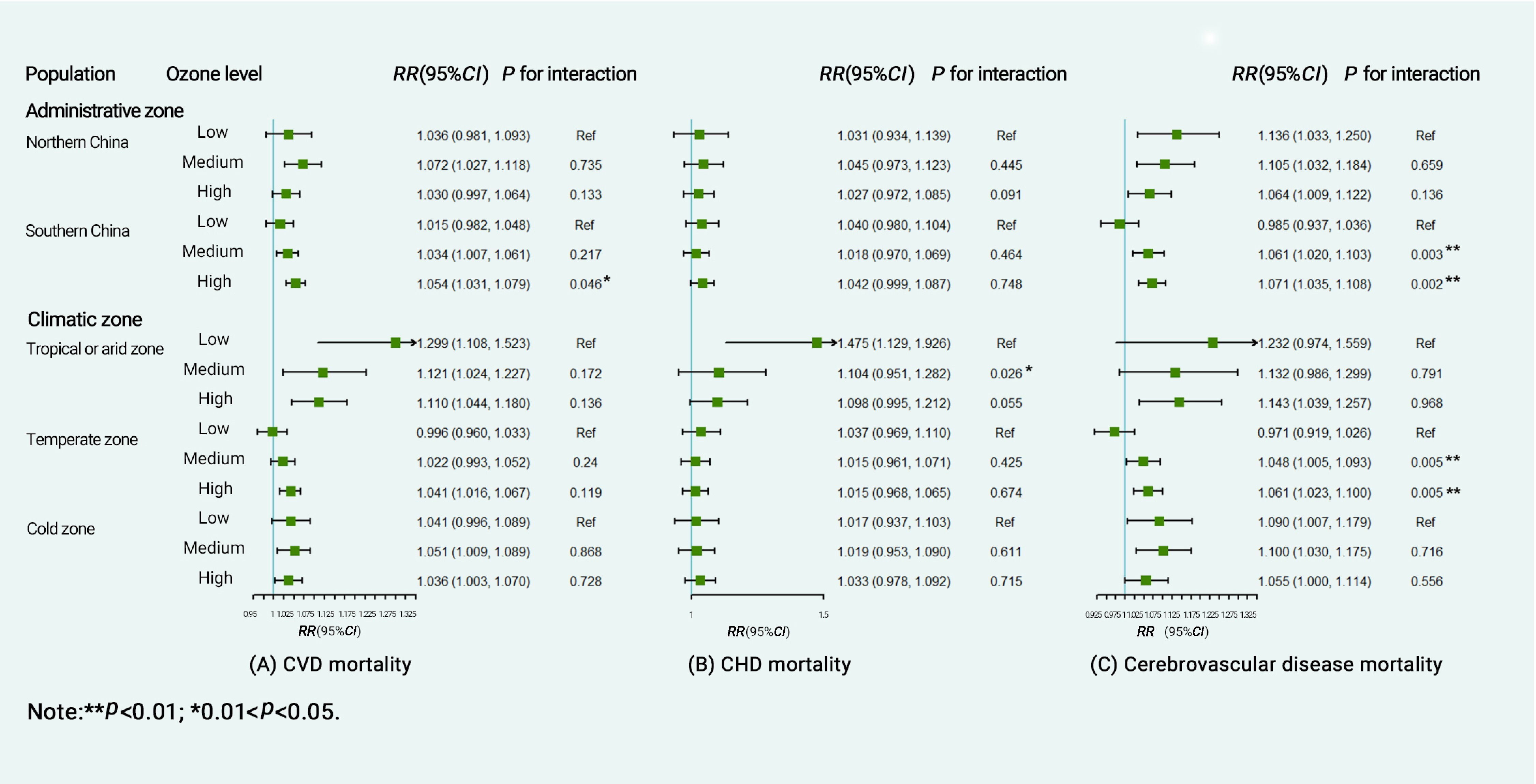
Figure 4.
Relative risks (RR, 95%CI) of mortality from three cardiovascular diseases associated with heat wave (>97.5th for ≥2d) at different ozone levels (4-day moving average ozone) in different regions, and p-value for potential modification effect.
