
Precise diagnosis and treatment for peripheral T-cell lymphomas: From pathogenic mechanisms to innovative approaches
-
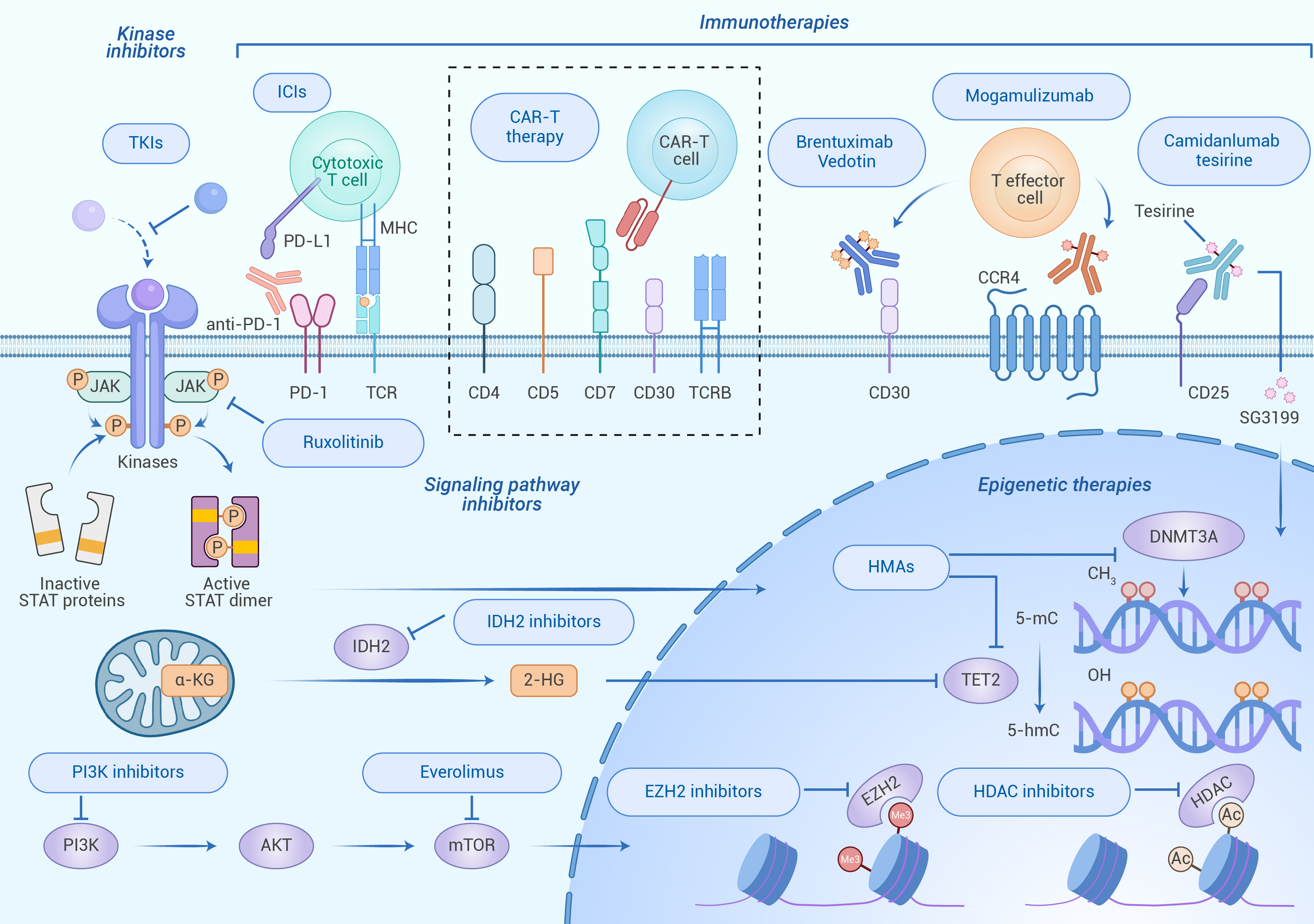
GRAPHICAL ABSTRACT
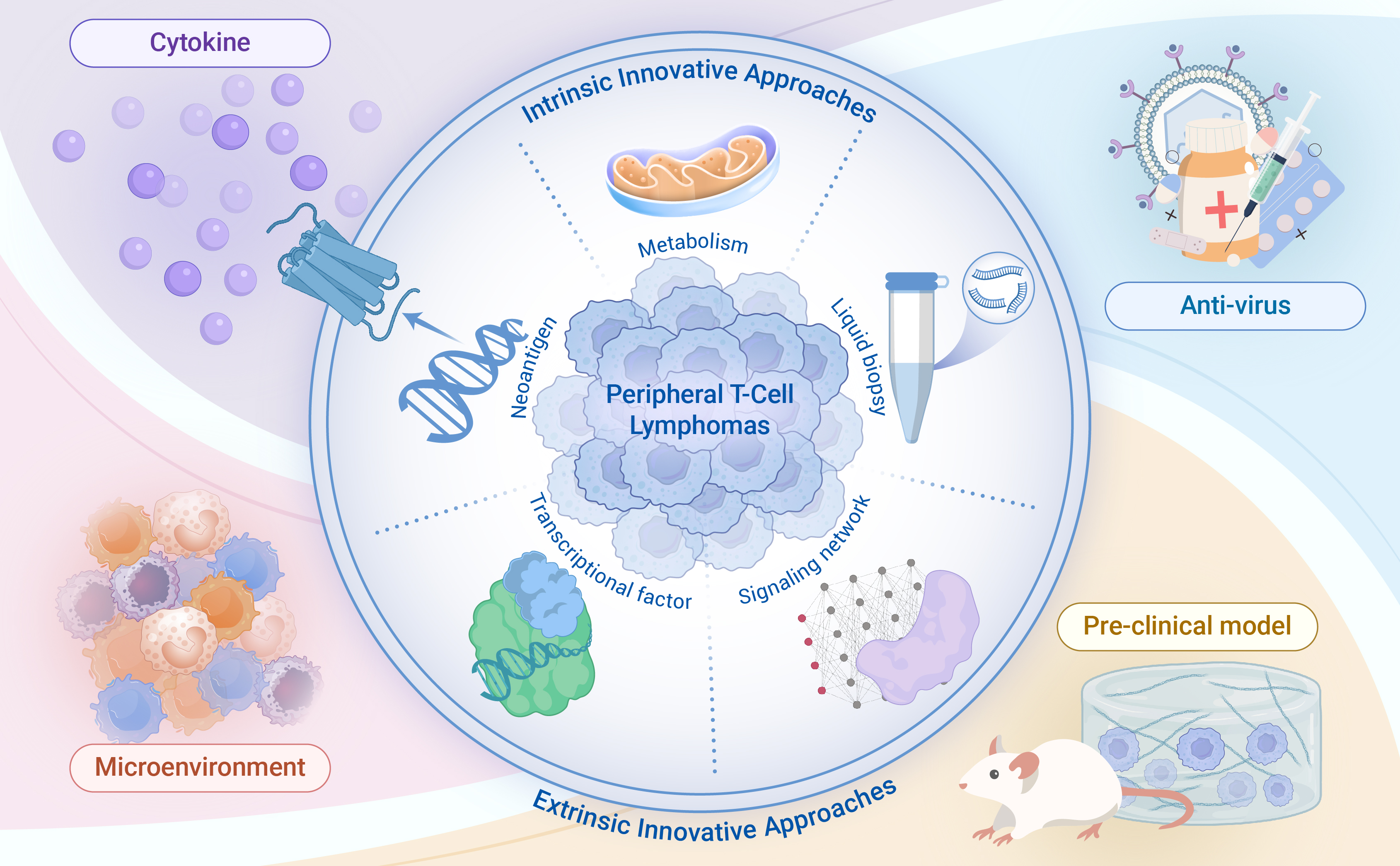
 DownLoad:
Full size image
DownLoad:
Full size image
-
PUBLIC SUMMARY
-
Peripheral T-cell lymphomas (PTCLs) are clinically challenging for their heterogeneity and low chemo-sensitivity.
Multi-omics studies reveal pathogenic mechanisms and new treatment targets for PTCLs.
Emerging strategies bridge the research-practice gap in precise medicine for PTCLs.
-
-
ABSTRACT
Peripheral T-cell lymphomas (PTCLs) encompass a diverse group of aggressive non-Hodgkin’s lymphomas originating from mature T lymphocytes. Despite their relatively low prevalence compared to B-cell lymphomas, PTCLs pose significant clinical challenges due to their heterogeneity, lack of specific biomarkers, and often poor response to conventional chemotherapies. Unraveling the intricate pathogenic mechanisms underlying PTCLs is pivotal for the development of targeted therapies, which has become a major focus of PTCL research in recent years. It was previously postulated that genomic alterations play a pivotal role in T-cell transformation and lymphomagenesis. Recent multi-omics investigations and functional studies focusing on pathogenic mechanisms have unveiled that in addition to genetic abnormalities, diverse intrinsic and extrinsic mechanisms are implicated in the pathogenesis of PTCLs. In this Review, we provide an overview of the recent advances in the pathogenesis and management of PTCLs, focusing on the current and potential precise diagnosis and treatment based on intrinsic and extrinsic mechanisms. Bioengineering and drug development have enabled the effective modulation of many previously “undruggable” targets, which offers the potential to target new biomarkers associated with PTCL pathogenesis. The integration of artificial intelligence (AI) in clinical practice enables a comprehensive framework, merging diverse data sources and clinical context to discover precise biomarkers for personalized medicine. Finally, we present pressing questions and challenges that demand attention and discuss emerging solutions. -

-
REFERENCES
[1] Ma, H., Marchi, E., and O'Connor, O.A. (2020). The peripheral T-cell lymphomas: an unusual path to cure. Lancet Haematol 7: e765−e771. DOI: 10.1016/S2352-3026(20)30207-6. [2] Marchi, E., and O'Connor, O.A. (2020). The rapidly changing landscape in mature T-cell lymphoma (MTCL) biology and management. CA Cancer J Clin 70: 47−70. DOI: 10.3322/caac.21589. [3] Fiore, D., Cappelli, L.V., Broccoli, A., et al. (2020). Peripheral T cell lymphomas: from the bench to the clinic. Nat. Rev. Cancer 20: 323−342. DOI: 10.1038/s41568-020-0247-0. [4] Zhang, Y., Xu, W., Liu, H., and Li, J. (2016). Therapeutic options in peripheral T cell lymphoma. J Hematol Oncol 9: 37. DOI: 10.1186/s13045-016-0267-0. [5] Moffitt, A.B., and Dave, S.S. (2017). Clinical Applications of the Genomic Landscape of Aggressive Non-Hodgkin Lymphoma. J Clin Oncol 35: 955−962. DOI: 10.1200/JCO.2016.71.7603. [6] Miao, Y., Medeiros, L.J., Li, Y., et al. (2019). Genetic alterations and their clinical implications in DLBCL. Nat Rev Clin Oncol 16: 634−652. DOI: 10.1038/s41571-019-0225-1. [7] Alaggio, R., Amador, C., Anagnostopoulos, I., et al. (2022). The 5th edition of the World Health Organization Classification of Haematolymphoid Tumours: Lymphoid Neoplasms. Leukemia 36: 1720−1748. DOI: 10.1038/s41375-022-01620-2. [8] Lopez-Guillermo, A., Cid, J., Salar, A., et al. (1998). Peripheral T-cell lymphomas: initial features, natural history, and prognostic factors in a series of 174 patients diagnosed according to the R. E.A.L. Classification. Ann. Oncol. 9: 849−855. DOI: 10.1023/a:1008418727472. [9] Armitage, J.O. (2017). The aggressive peripheral T-cell lymphomas: 2017. Am J Hematol 92: 706−715. DOI: 10.1002/ajh.24791. [10] Mulvey, E., and Ruan, J. (2020). Biomarker-driven management strategies for peripheral T cell lymphoma. J Hematol Oncol 13: 59. DOI: 10.1186/s13045-020-00889-z. [11] Yap, D.R.Y., Lim, J.Q., Huang, D., et al. (2023). Emerging predictive biomarkers for novel therapeutics in peripheral T-cell and natural killer/T-cell lymphoma\. Front Immunol 14: 1068662. DOI: 10.3389/fimmu.2023.1068662. [12] Izykowska, K., Rassek, K., Korsak, D., and Przybylski, G.K. (2020). Novel targeted therapies of T cell lymphomas. J Hematol Oncol 13: 176. DOI: 10.1186/s13045-020-01006-w. [13] Pizzi, M., Margolskee, E., and Inghirami, G. (2018). Pathogenesis of Peripheral T Cell Lymphoma. Annu Rev Pathol 13: 293−320. DOI: 10.1146/annurev-pathol-020117-043821. [14] Xie, C., Li, X., Zeng, H., and Qian, W. (2020). Molecular insights into pathogenesis and targeted therapy of peripheral T cell lymphoma. Exp Hematol Oncol 9: 30. DOI: 10.1186/s40164-020-00188-w. [15] Palomero, T., Couronné, L., Khiabanian, H., et al. (2014). Recurrent mutations in epigenetic regulators, RHOA and FYN kinase in peripheral T cell lymphomas. Nat. Genet. 46: 166−170. DOI: 10.1038/ng.2873. [16] Dupuis, J., Emile, J.F., Mounier, N., et al. (2006). Prognostic significance of Epstein-Barr virus in nodal peripheral T-cell lymphoma, unspecified: A Groupe d'Etude des Lymphomes de l'Adulte (GELA) study. Blood 108: 4163−4169. DOI: 10.1182/blood-2006-04-017632. [17] Foss, F. (2011). Hematology: relapsed and refractory PTCL--into the therapeutic abyss. Nat Rev Clin Oncol 8 :321-322. DOI: 10.1038/nrclinonc.2011.51. [18] Horwitz, S., Coiffier, B., Foss, F., et al. (2015). Utility of (1)(8)fluoro-deoxyglucose positron emission tomography for prognosis and response assessments in a phase 2 study of romidepsin in patients with relapsed or refractory peripheral T-cell lymphoma. Ann. Oncol. 26: 774−779. DOI: 10.1093/annonc/mdv010. [19] Prince, H.M., Kim, Y.H., Horwitz, S.M., et al. (2017). Brentuximab vedotin or physician's choice in CD30-positive cutaneous T-cell lymphoma (ALCANZA): an international, open-label, randomised, phase 3, multicentre trial. Lancet 390: 555−566. DOI: 10.1016/S0140-6736(17)31266-7. [20] Kim, Y.H., Bagot, M., Pinter-Brown, L., et al. (2018). Mogamulizumab versus vorinostat in previously treated cutaneous T-cell lymphoma (MAVORIC): an international, open-label, randomised, controlled phase 3 trial. Lancet Oncol 19: 1192−1204. DOI: 10.1016/S1470-2045(18)30379-6. [21] Shi, Y., Jia, B., Xu, W., et al. (2017). Chidamide in relapsed or refractory peripheral T cell lymphoma: a multicenter real-world study in China. J Hematol Oncol 10: 69. DOI: 10.1186/s13045-017-0439-6. [22] Horwitz, S.M., Koch, R., Porcu, P., et al. (2018). Activity of the PI3K-delta,gamma inhibitor duvelisib in a phase 1 trial and preclinical models of T-cell lymphoma. Blood 131: 888−898. DOI: 10.1182/blood-2017-08-802470. [23] Vanden Bempt, M., Debackere, K., Demeyer, S., et al. (2022). Aberrant MYCN expression drives oncogenic hijacking of EZH2 as a transcriptional activator in peripheral T-cell lymphoma. Blood 140: 2463−2476. DOI: 10.1182/blood.2022016428. [24] Ruan, J., Zain, J., Palmer, B., et al. (2023). Multicenter phase 2 study of romidepsin plus lenalidomide for previously untreated peripheral T-cell lymphoma. Blood Adv. DOI: 10.1182/bloodadvances.2023009767. [25] Mondal, D., Shinde, S., Paul, S., et al. (2023). Diagnostic significance of dysregulated miRNAs in T-cell malignancies and their metabolic roles. Front Oncol 13: 1230273. DOI: 10.3389/fonc.2023.1230273. [26] Ahearne, M.J., Allchin, R.L., Fox, C.P., and Wagner, S.D. (2014). Follicular helper T-cells: expanding roles in T-cell lymphoma and targets for treatment. Br. J. Haematol. 166: 326−335. DOI: 10.1111/bjh.12941. [27] Saito, T., Matsuno, Y., Tanosaki, R., et al. (2002). Gamma delta T-cell neoplasms: a clinicopathological study of 11 cases. Ann. Oncol. 13: 1792−1798. DOI: 10.1093/annonc/mdf293. [28] Lunning, M.A., and Vose, J.M. (2017). Angioimmunoblastic T-cell lymphoma: the many-faced lymphoma. Blood 129: 1095−1102. DOI: 10.1182/blood-2016-09-692541. [29] Frizzera, G., Moran, E.M., and Rappaport, H. (1975). Angio-immunoblastic lymphadenopathy. Diagnosis and clinical course. Am. J. Med. 59: 803−818. DOI: 10.1016/0002-9343(75)90466-0. [30] Federico, M., Rudiger, T., Bellei, M., et al. (2013). Clinicopathologic characteristics of angioimmunoblastic T-cell lymphoma: analysis of the international peripheral T-cell lymphoma project. J Clin Oncol 31: 240−246. DOI: 10.1200/JCO.2011.37.3647. [31] Vose, J., Armitage, J., Weisenburger, D., and International, T.C.L.P. (2008). International peripheral T-cell and natural killer/T-cell lymphoma study: pathology findings and clinical outcomes. J Clin Oncol 26: 4124−4130. DOI: 10.1200/JCO.2008.16.4558. [32] Vinuesa, C.G., Tangye, S.G., Moser, B., and Mackay, C.R. (2005). Follicular B helper T cells in antibody responses and autoimmunity. Nat. Rev. Immunol. 5: 853−865. DOI: 10.1038/nri1714. [33] de Leval, L., Rickman, D.S., Thielen, C., et al. (2007). The gene expression profile of nodal peripheral T-cell lymphoma demonstrates a molecular link between angioimmunoblastic T-cell lymphoma (AITL) and follicular helper T (TFH) cells. Blood 109: 4952−4963. DOI: 10.1182/blood-2006-10-055145. [34] Willenbrock, K., Brauninger, A., and Hansmann, M.L. (2007). Frequent occurrence of B-cell lymphomas in angioimmunoblastic T-cell lymphoma and proliferation of Epstein-Barr virus-infected cells in early cases. Br. J. Haematol. 138: 733−739. DOI: 10.1111/j.1365-2141.2007.06725.x. [35] Dobay, M.P., Lemonnier, F., Missiaglia, E., et al. (2017). Integrative clinicopathological and molecular analyses of angioimmunoblastic T-cell lymphoma and other nodal lymphomas of follicular helper T-cell origin. Haematologica 102: e148−e151. DOI: 10.3324/haematol.2016.158428. [36] Satou, A., Takahara, T., and Tsuzuki, T. (2022). Pathological and Molecular Features of Nodal Peripheral T-Cell Lymphomas. Diagnostics (Basel) 12 . DOI: 10.3390/diagnostics12082001. [37] Kutok, J.L., and Aster, J.C. (2002). Molecular biology of anaplastic lymphoma kinase-positive anaplastic large-cell lymphoma. J Clin Oncol 20: 3691−3702. DOI: 10.1200/JCO.2002.12.033. [38] Stein, H., Foss, H.D., Durkop, H., et al. (2000). CD30(+) anaplastic large cell lymphoma: a review of its histopathologic, genetic, and clinical features. Blood 96: 3681−3695. DOI: 10.1182/blood.V96.12.3681. [39] Mora, J., Filippa, D.A., Thaler, H.T., et al. (2000). Large cell non-Hodgkin lymphoma of childhood. Cancer 88: 186−197. DOI: 3.0.Co;2-5">10.1002/(sici)1097-0142(20000101)88:1<186::Aid-cncr26>3.0.Co;2-5. [40] Savage, K.J., Harris, N.L., Vose, J.M., et al. (2008). ALK- anaplastic large-cell lymphoma is clinically and immunophenotypically different from both ALK+ ALCL and peripheral T-cell lymphoma, not otherwise specified: report from the International Peripheral T-Cell Lymphoma Project. Blood 111: 5496−5504. DOI: 10.1182/blood-2008-01-134270. [41] Falini, B., Pileri, S., Zinzani, P.L., et al. (1999). ALK+ lymphoma: clinico-pathological findings and outcome. Blood 93: 2697−2706. DOI. [42] Chiarle, R., Voena, C., Ambrogio, C., et al. (2008). The anaplastic lymphoma kinase in the pathogenesis of cancer. Nat. Rev. Cancer 8: 11−23. DOI: 10.1038/nrc2291. [43] Vasmatzis, G., Johnson, S.H., Knudson, R.A., et al. (2012). Genome-wide analysis reveals recurrent structural abnormalities of TP63 and other p53-related genes in peripheral T-cell lymphomas. Blood 120: 2280−2289. DOI: 10.1182/blood-2012-03-419937. [44] Feldman, A.L., Dogan, A., Smith, D.I., et al. (2011). Discovery of recurrent t(6;7)(p25.3;q32.3) translocations in ALK-negative anaplastic large cell lymphomas by massively parallel genomic sequencing. Blood 117 :915-919. DOI: 10.1182/blood-2010-08-303305. [45] Parrilla Castellar, E.R., Jaffe, E.S., Said, J.W., et al. (2014). ALK-negative anaplastic large cell lymphoma is a genetically heterogeneous disease with widely disparate clinical outcomes. Blood 124: 1473−1480. DOI: 10.1182/blood-2014-04-571091. [46] Weisenburger, D.D., Savage, K.J., Harris, N.L., et al. (2011). Peripheral T-cell lymphoma, not otherwise specified: a report of 340 cases from the International Peripheral T-cell Lymphoma Project. Blood 117: 3402−3408. DOI: 10.1182/blood-2010-09-310342. [47] Iqbal, J., Weisenburger, D.D., Greiner, T.C., et al. (2010). Molecular signatures to improve diagnosis in peripheral T-cell lymphoma and prognostication in angioimmunoblastic T-cell lymphoma. Blood 115: 1026−1036. DOI: 10.1182/blood-2009-06-227579. [48] Iqbal, J., Wright, G., Wang, C., et al. (2014). Gene expression signatures delineate biological and prognostic subgroups in peripheral T-cell lymphoma. Blood 123: 2915−2923. DOI: 10.1182/blood-2013-11-536359. [49] Amador, C., Greiner, T.C., Heavican, T.B., et al. (2019). Reproducing the molecular subclassification of peripheral T-cell lymphoma-NOS by immunohistochemistry. Blood 134: 2159−2170. DOI: 10.1182/blood.2019000779. [50] Jassim, A., Rahrmann, E.P., Simons, B.D., and Gilbertson, R.J. (2023). Cancers make their own luck: theories of cancer origins. Nature Reviews Cancer. DOI: 10.1038/s41568-023-00602-5. [51] Watatani, Y., Sato, Y., Miyoshi, H., et al. (2019). Molecular heterogeneity in peripheral T-cell lymphoma, not otherwise specified revealed by comprehensive genetic profiling. Leukemia 33: 2867−2883. DOI: 10.1038/s41375-019-0473-1. [52] da Silva Almeida, A.C., Abate, F., Khiabanian, H., et al. (2015). The mutational landscape of cutaneous T cell lymphoma and Sézary syndrome. Nat. Genet. 47: 1465−1470. DOI: 10.1038/ng.3442. [53] Soverini, S., Martelli, M., and Bavaro, L. (2019). BCR-ABL1 mutation screening in chronic myeloid leukaemia: is next now. Lancet Haematol 6: e236−e237. DOI: 10.1016/S2352-3026(19)30046-8. [54] Kaufman, C.K., Mosimann, C., Fan, Z.P., et al. (2016). A zebrafish melanoma model reveals emergence of neural crest identity during melanoma initiation. Science 351: aad2197. DOI: 10.1126/science.aad2197. [55] Wahida, A., Buschhorn, L., Frohling, S., et al. (2023). The coming decade in precision oncology: six riddles. Nat. Rev. Cancer 23: 43−54. DOI: 10.1038/s41568-022-00529-3. [56] Tomasetti, C., and Vogelstein, B. (2015). Cancer etiology. Variation in cancer risk among tissues can be explained by the number of stem cell divisions. Science 347: 78−81. DOI: 10.1126/science.1260825. [57] Abascal, F., Harvey, L.M.R., Mitchell, E., et al. (2021). Somatic mutation landscapes at single-molecule resolution. Nature 593: 405−410. DOI: 10.1038/s41586-021-03477-4. [58] Zhu, L., Finkelstein, D., Gao, C., et al. (2016). Multi-organ Mapping of Cancer Risk. Cell 166: 1132−1146.e1137. DOI: 10.1016/j.cell.2016.07.045. [59] Lehar, S.M., and Bevan, M.J. (2002). T cell development in culture. Immunity 17: 689−692. DOI: 10.1016/s1074-7613(02)00477-6. [60] Na, I.K., Markley, J.C., Tsai, J.J., et al. (2010). Concurrent visualization of trafficking, expansion, and activation of T lymphocytes and T-cell precursors in vivo. Blood 116: e18−25. DOI: 10.1182/blood-2009-12-259432. [61] Belver, L., and Ferrando, A. (2016). The genetics and mechanisms of T cell acute lymphoblastic leukaemia. Nat. Rev. Cancer 16: 494−507. DOI: 10.1038/nrc.2016.63. [62] Coustan-Smith, E., Mullighan, C.G., Onciu, M., et al. (2009). Early T-cell precursor leukaemia: a subtype of very high-risk acute lymphoblastic leukaemia. Lancet Oncol 10: 147−156. DOI: 10.1016/S1470-2045(08)70314-0. [63] Van Vlierberghe, P., Ambesi-Impiombato, A., Perez-Garcia, A., et al. (2011). ETV6 mutations in early immature human T cell leukemias. J. Exp. Med. 208: 2571−2579. DOI: 10.1084/jem.20112239. [64] Hunger, S.P., and Mullighan, C.G. (2015). Acute Lymphoblastic Leukemia in Children. N Engl J Med 373: 1541−1552. DOI: 10.1056/NEJMra1400972. [65] Litzow, M.R., and Ferrando, A.A. (2015). How I treat T-cell acute lymphoblastic leukemia in adults. Blood 126: 833−841. DOI: 10.1182/blood-2014-10-551895. [66] Weng, A.P., Ferrando, A.A., Lee, W., et al. (2004). Activating mutations of NOTCH1 in human T cell acute lymphoblastic leukemia. Science 306: 269−271. DOI: 10.1126/science.1102160. [67] Grabher, C., von Boehmer, H., and Look, A.T. (2006). Notch 1 activation in the molecular pathogenesis of T-cell acute lymphoblastic leukaemia. Nat. Rev. Cancer 6: 347−359. DOI: 10.1038/nrc1880. [68] Li, Z., Song, Y., Zhang, M., et al. (2022). Genomic landscape of T-cell lymphoblastic lymphoma. Chin J Cancer Res 34: 83−94. DOI: 10.21147/j.issn.1000-9604.2022.02.03. [69] O'Neil, J., Grim, J., Strack, P., et al. (2007). FBW7 mutations in leukemic cells mediate NOTCH pathway activation and resistance to gamma-secretase inhibitors. J. Exp. Med. 204: 1813−1824. DOI: 10.1084/jem.20070876. [70] Thompson, B.J., Buonamici, S., Sulis, M.L., et al. (2007). The SCFFBW7 ubiquitin ligase complex as a tumor suppressor in T cell leukemia. J. Exp. Med. 204: 1825−1835. DOI: 10.1084/jem.20070872. [71] Pear, W.S., Aster, J.C., Scott, M.L., et al. (1996). Exclusive development of T cell neoplasms in mice transplanted with bone marrow expressing activated Notch alleles. J. Exp. Med. 183: 2283−2291. DOI: 10.1084/jem.183.5.2283. [72] Chiang, M.Y., Shestova, O., Xu, L., et al. (2013). Divergent effects of supraphysiologic Notch signals on leukemia stem cells and hematopoietic stem cells. Blood 121: 905−917. DOI: 10.1182/blood-2012-03-416503. [73] Girardi, T., Vicente, C., Cools, J., and De Keersmaecker, K. (2017). The genetics and molecular biology of T-ALL. Blood 129: 1113−1123. DOI: 10.1182/blood-2016-10-706465. [74] Koch, U., and Radtke, F. (2011). Notch in T-ALL: new players in a complex disease. Trends Immunol. 32: 434−442. DOI: 10.1016/j.it.2011.06.005. [75] Ferrando, A.A. (2009). The role of NOTCH1 signaling in T-ALL. Hematology Am Soc Hematol Educ Program:353-361. DOI: 10.1182/asheducation-2009.1.353. [76] Lemonnier, F., Couronné, L., Parrens, M., et al. (2012). Recurrent TET2 mutations in peripheral T-cell lymphomas correlate with TFH-like features and adverse clinical parameters. Blood 120: 1466−1469. DOI: 10.1182/blood-2012-02-408542. [77] Cairns, R.A., Iqbal, J., Lemonnier, F., et al. (2012). IDH2 mutations are frequent in angioimmunoblastic T-cell lymphoma. Blood 119: 1901−1903. DOI: 10.1182/blood-2011-11-391748. [78] Couronné, L., Bastard, C., and Bernard, O.A. (2012). TET2 and DNMT3A mutations in human T-cell lymphoma. N Engl J Med 366: 95−96. DOI: 10.1056/NEJMc1111708. [79] Ji, M.M., Huang, Y.H., Huang, J.Y., et al. (2018). Histone modifier gene mutations in peripheral T-cell lymphoma not otherwise specified. Haematologica 103: 679−687. DOI: 10.3324/haematol.2017.182444. [80] Jaiswal, S., Fontanillas, P., Flannick, J., et al. (2014). Age-related clonal hematopoiesis associated with adverse outcomes. N Engl J Med 371: 2488−2498. DOI: 10.1056/NEJMoa1408617. [81] Genovese, G., Kahler, A.K., Handsaker, R.E., et al. (2014). Clonal hematopoiesis and blood-cancer risk inferred from blood DNA sequence. N Engl J Med 371: 2477−2487. DOI: 10.1056/NEJMoa1409405. [82] Loh, P.R., Genovese, G., Handsaker, R.E., et al. (2018). Insights into clonal haematopoiesis from 8,342 mosaic chromosomal alterations. Nature 559: 350−355. DOI: 10.1038/s41586-018-0321-x. [83] Loh, P.R., Genovese, G., and McCarroll, S.A. (2020). Monogenic and polygenic inheritance become instruments for clonal selection. Nature 584: 136−141. DOI: 10.1038/s41586-020-2430-6. [84] Venugopal, K., Feng, Y., Shabashvili, D., and Guryanova, O.A. (2021). Alterations to DNMT3A in Hematologic Malignancies. Cancer Res. 81: 254−263. DOI: 10.1158/0008-5472.Can-20-3033. [85] Lopez-Moyado, I.F., and Rao, A. (2020). DNMT3A and TET2 mutations reshape hematopoiesis in opposing ways. Nat. Genet. 52: 554−556. DOI: 10.1038/s41588-020-0641-2. [86] Xie, M., Lu, C., Wang, J., et al. (2014). Age-related mutations associated with clonal hematopoietic expansion and malignancies. Nat. Med. 20: 1472−1478. DOI: 10.1038/nm.3733. [87] Yao, W.Q., Wu, F., Zhang, W., et al. (2020). Angioimmunoblastic T-cell lymphoma contains multiple clonal T-cell populations derived from a common TET2 mutant progenitor cell. J. Pathol. 250: 346−357. DOI: 10.1002/path.5376. [88] von Beck, K., von Beck, T., Ferrell, P.B., Jr., et al. (2023). Lymphoid clonal hematopoiesis: implications for malignancy, immunity, and treatment. Blood Cancer J 13: 5. DOI: 10.1038/s41408-022-00773-8. [89] Kikushige, Y., Ishikawa, F., Miyamoto, T., et al. (2011). Self-renewing hematopoietic stem cell is the primary target in pathogenesis of human chronic lymphocytic leukemia. Cancer Cell 20: 246−259. DOI: 10.1016/j.ccr.2011.06.029. [90] Nam, A.S., Dusaj, N., Izzo, F., et al. (2022). Single-cell multi-omics of human clonal hematopoiesis reveals that DNMT3A R882 mutations perturb early progenitor states through selective hypomethylation. Nat. Genet. 54: 1514−1526. DOI: 10.1038/s41588-022-01179-9. [91] Izzo, F., Lee, S.C., Poran, A., et al. (2020). DNA methylation disruption reshapes the hematopoietic differentiation landscape. Nat. Genet. 52: 378−387. DOI: 10.1038/s41588-020-0595-4. [92] Jaiswal, S., and Ebert, B.L. (2019). Clonal hematopoiesis in human aging and disease. Science 366 . DOI: 10.1126/science.aan4673. [93] Mitchell, S.R., Gopakumar, J., and Jaiswal, S. (2021). Insights into clonal hematopoiesis and its relation to cancer risk. Curr. Opin. Genet. Dev. 66: 63−69. DOI: 10.1016/j.gde.2020.12.004. [94] Yang, L., Rau, R., and Goodell, M.A. (2015). DNMT3A in haematological malignancies. Nat. Rev. Cancer 15: 152−165. DOI: 10.1038/nrc3895. [95] Lopez-Bigas, N., and Gonzalez-Perez, A. (2020). Are carcinogens direct mutagens. Nat. Genet. 52: 1137−1138. DOI: 10.1038/s41588-020-00730-w. [96] Fujisawa, M., Nguyen, T.B., Abe, Y., et al. (2022). Clonal germinal center B cells function as a niche for T-cell lymphoma. Blood 140: 1937−1950. DOI: 10.1182/blood.2022015451. [97] Liu, Y.F., Wang, B.Y., Zhang, W.N., et al. (2016). Genomic Profiling of Adult and Pediatric B-cell Acute Lymphoblastic Leukemia. EBioMedicine 8: 173−183. DOI: 10.1016/j.ebiom.2016.04.038. [98] Zhang, M.C., Tian, S., Fu, D., et al. (2023). Genetic subtype-guided immunochemotherapy in diffuse large B cell lymphoma: The randomized GUIDANCE-01 trial. Cancer Cell 41: 1705−1716.e1705. DOI: 10.1016/j.ccell.2023.09.004. [99] Schmitz, R., Wright, G.W., Huang, D.W., et al. (2018). Genetics and Pathogenesis of Diffuse Large B-Cell Lymphoma. N Engl J Med 378: 1396−1407. DOI: 10.1056/NEJMoa1801445. [100] Eide, C.A., Zabriskie, M.S., Savage Stevens, S.L., et al. (2019). Combining the Allosteric Inhibitor Asciminib with Ponatinib Suppresses Emergence of and Restores Efficacy against Highly Resistant BCR-ABL1 Mutants. Cancer Cell 36 :431-443 e435. DOI: 10.1016/j.ccell.2019.08.004. [101] Voldborg, B.R., Damstrup, L., Spang-Thomsen, M., and Poulsen, H.S. (1997). Epidermal growth factor receptor (EGFR) and EGFR mutations, function and possible role in clinical trials. Ann. Oncol. 8: 1197−1206. DOI: 10.1023/a:1008209720526. [102] Masopust, D., and Schenkel, J.M. (2013). The integration of T cell migration, differentiation and function. Nat. Rev. Immunol. 13: 309−320. DOI: 10.1038/nri3442. [103] O'Shea, J.J., and Paul, W.E. (2010). Mechanisms underlying lineage commitment and plasticity of helper CD4+ T cells. Science 327: 1098−1102. DOI: 10.1126/science.1178334. [104] DuPage, M., and Bluestone, J.A. (2016). Harnessing the plasticity of CD4(+) T cells to treat immune-mediated disease. Nat. Rev. Immunol. 16: 149−163. DOI: 10.1038/nri.2015.18. [105] Cuadros, M., Dave, S.S., Jaffe, E.S., et al. (2007). Identification of a proliferation signature related to survival in nodal peripheral T-cell lymphomas. J Clin Oncol 25: 3321−3329. DOI: 10.1200/JCO.2006.09.4474. [106] Piccaluga, P.P., Agostinelli, C., Califano, A., et al. (2007). Gene expression analysis of angioimmunoblastic lymphoma indicates derivation from T follicular helper cells and vascular endothelial growth factor deregulation. Cancer Res. 67: 10703−10710. DOI: 10.1158/0008-5472.CAN-07-1708. [107] Piccaluga, P.P., Fuligni, F., De Leo, A., et al. (2013). Molecular profiling improves classification and prognostication of nodal peripheral T-cell lymphomas: results of a phase III diagnostic accuracy study. J Clin Oncol 31: 3019−3025. DOI: 10.1200/JCO.2012.42.5611. [108] Piva, R., Agnelli, L., Pellegrino, E., et al. (2010). Gene expression profiling uncovers molecular classifiers for the recognition of anaplastic large-cell lymphoma within peripheral T-cell neoplasms. J Clin Oncol 28: 1583−1590. DOI: 10.1200/JCO.2008.20.9759. [109] Went, P., Agostinelli, C., Gallamini, A., et al. (2006). Marker expression in peripheral T-cell lymphoma: a proposed clinical-pathologic prognostic score. J Clin Oncol 24: 2472−2479. DOI: 10.1200/JCO.2005.03.6327. [110] Piccaluga, P.P., Agostinelli, C., Califano, A., et al. (2007). Gene expression analysis of peripheral T cell lymphoma, unspecified, reveals distinct profiles and new potential therapeutic targets. J. Clin. Invest. 117: 823−834. DOI: 10.1172/JCI26833. [111] Inghirami, G., Chan, W.C., Pileri, S., and malignancies, A.x.c.G.-d.t.m.o.l. (2015). Peripheral T-cell and NK cell lymphoproliferative disorders: cell of origin, clinical and pathological implications. Immunol. Rev. 263: 124−159. DOI: 10.1111/imr.12248. [112] Wang, T., Feldman, A.L., Wada, D.A., et al. (2014). GATA-3 expression identifies a high-risk subset of PTCL, NOS with distinct molecular and clinical features. Blood 123: 3007−3015. DOI: 10.1182/blood-2013-12-544809. [113] Herek, T.A., Bouska, A., Lone, W., et al. (2022). DNMT3A mutations define a unique biological and prognostic subgroup associated with cytotoxic T cells in PTCL-NOS. Blood 140: 1278−1290. DOI: 10.1182/blood.2021015019. [114] Ho, I.C., and Glimcher, L.H. (2002). Transcription: tantalizing times for T cells. Cell 109 Suppl :S109-120. DOI: 10.1016/s0092-8674(02)00705-5. [115] Oestreich, K.J., and Weinmann, A.S. (2012). Master regulators or lineage-specifying? Changing views on CD4+ T cell transcription factors. Nat. Rev. Immunol. 12 (11):799-804. DOI: 10.1038/nri3321. [116] Heavican, T.B., Bouska, A., Yu, J., et al. (2019). Genetic drivers of oncogenic pathways in molecular subgroups of peripheral T-cell lymphoma. Blood 133: 1664−1676. DOI: 10.1182/blood-2018-09-872549. [117] Amador, C., Bouska, A., Wright, G., et al. (2022). Gene Expression Signatures for the Accurate Diagnosis of Peripheral T-Cell Lymphoma Entities in the Routine Clinical Practice. J Clin Oncol 40: 4261−4275. DOI: 10.1200/JCO.21.02707. [118] Bera, K., Schalper, K.A., Rimm, D.L., et al. (2019). Artificial intelligence in digital pathology - new tools for diagnosis and precision oncology. Nat Rev Clin Oncol 16: 703−715. DOI: 10.1038/s41571-019-0252-y. [119] Gleeson, M. (2019). Moving to a higher echelon in CD30-positive T-cell lymphoma. Lancet 393: 201−202. DOI: 10.1016/S0140-6736(18)33127-1. [120] Stein, H., Mason, D.Y., Gerdes, J., et al. (1985). The expression of the Hodgkin's disease associated antigen Ki-1 in reactive and neoplastic lymphoid tissue: evidence that Reed-Sternberg cells and histiocytic malignancies are derived from activated lymphoid cells. Blood 66: 848−858. DOI. DOI: 10.1182/blood.V66.4.848.848. [121] Cheson, B.D., Horwitz, S.M., and Weisenburger, D.D. (2011). Peripheral T-cell lymphomas: diagnosis and treatment options. Proceedings from a live roundtable, August 17, 2011, Kauai, Hawaii. Clin Adv Hematol Oncol 9 :1-14; quiz 15-16. DOI. [122] Duvic, M. (2011). CD30+ neoplasms of the skin. Curr Hematol Malig Rep 6: 245−250. DOI: 10.1007/s11899-011-0096-8. [123] Beck, A., Goetsch, L., Dumontet, C., and Corvaia, N. (2017). Strategies and challenges for the next generation of antibody-drug conjugates. Nat. Rev. Drug Discov. 16: 315−337. DOI: 10.1038/nrd.2016.268. [124] Batlevi, C.L., Matsuki, E., Brentjens, R.J., and Younes, A. (2016). Novel immunotherapies in lymphoid malignancies. Nat Rev Clin Oncol 13: 25−40. DOI: 10.1038/nrclinonc.2015.187. [125] Horwitz, S., O'Connor, O.A., Pro, B., et al. (2022). The ECHELON-2 Trial: 5-year results of a randomized, phase III study of brentuximab vedotin with chemotherapy for CD30-positive peripheral T-cell lymphoma. Ann. Oncol. 33: 288−298. DOI: 10.1016/j.annonc.2021.12.002. [126] National Comprehensive Cancer Network (2023). T-Cell Lymphomas (Version 1.2023). https://www.nccn.org/professionals/physician_gls/pdf/t-cell.pdf. [127] Suzuki, R. (2010). Dosing of a phase I study of KW-0761, an anti-CCR4 antibody, for adult T-cell leukemia-lymphoma and peripheral T-cell lymphoma. J Clin Oncol 28 :e404-405; author reply e406. DOI: 10.1200/JCO.2010.29.7242. [128] Hamadani, M., Collins, G.P., Caimi, P.F., et al. (2021). Camidanlumab tesirine in patients with relapsed or refractory lymphoma: a phase 1, open-label, multicentre, dose-escalation, dose-expansion study. Lancet Haematol 8: e433−e445. DOI: 10.1016/S2352-3026(21)00103-4. [129] Luo, L., Zhou, X., Zhou, L., et al. (2022). Current state of CAR-T therapy for T-cell malignancies. Ther Adv Hematol 13 :20406207221143025. DOI: 10.1177/20406207221143025. [130] Nicolay, J.P., Albrecht, J.D., Alberti-Violetti, S., and Berti, E. (2021). CCR4 in cutaneous T-cell lymphoma: Therapeutic targeting of a pathogenic driver. Eur. J. Immunol. 51: 1660−1671. DOI: 10.1002/eji.202049043. [131] Jones, D., O'Hara, C., Kraus, M.D., et al. (2000). Expression pattern of T-cell-associated chemokine receptors and their chemokines correlates with specific subtypes of T-cell non-Hodgkin lymphoma. Blood 96: 685−690. DOI. DOI: 10.1182/blood.V96.2.685.014k26_685_690. [132] Yoshie, O., Fujisawa, R., Nakayama, T., et al. (2002). Frequent expression of CCR4 in adult T-cell leukemia and human T-cell leukemia virus type 1-transformed T cells. Blood 99: 1505−1511. DOI: 10.1182/blood.v99.5.1505. [133] Wang, L., Ni, X., Covington, K.R., et al. (2015). Genomic profiling of Sezary syndrome identifies alterations of key T cell signaling and differentiation genes. Nat. Genet. 47: 1426−1434. DOI: 10.1038/ng.3444. [134] Ishida, T., Utsunomiya, A., Iida, S., et al. (2003). Clinical significance of CCR4 expression in adult T-cell leukemia/lymphoma: its close association with skin involvement and unfavorable outcome. Clin. Cancer. Res. 9 :3625-3634. [135] Oka, S., Ono, K., and Nohgawa, M. (2019). Successful treatment with mogamulizumab of refractory/relapsed angioimmunoblastic T-cell lymphoma following autologous stem cell transplantation. Leuk. Lymphoma 60: 1595−1597. DOI: 10.1080/10428194.2018.1537489. [136] Fuji, S., Inoue, Y., Utsunomiya, A., et al. (2016). Pretransplantation Anti-CCR4 Antibody Mogamulizumab Against Adult T-Cell Leukemia/Lymphoma Is Associated With Significantly Increased Risks of Severe and Corticosteroid-Refractory Graft-Versus-Host Disease, Nonrelapse Mortality, and Overall Mortality. J Clin Oncol 34: 3426−3433. DOI: 10.1200/JCO.2016.67.8250. [137] Zammarchi, F., Havenith, K., Bertelli, F., et al. (2020). CD25-targeted antibody-drug conjugate depletes regulatory T cells and eliminates established syngeneic tumors via antitumor immunity. J Immunother Cancer 8 . DOI: 10.1136/jitc-2020-000860. [138] Safarzadeh Kozani, P., Safarzadeh Kozani, P., and Rahbarizadeh, F. (2021). CAR-T cell therapy in T-cell malignancies: Is success a low-hanging fruit. Stem Cell Res Ther 12: 527. DOI: 10.1186/s13287-021-02595-0. [139] Fleischer, L.C., Spencer, H.T., and Raikar, S.S. (2019). Targeting T cell malignancies using CAR-based immunotherapy: challenges and potential solutions. J Hematol Oncol 12: 141. DOI: 10.1186/s13045-019-0801-y. [140] Fang, K.K., Lee, J.B., and Zhang, L. (2022). Adoptive Cell Therapy for T-Cell Malignancies. Cancers (Basel) 15 . DOI: 10.3390/cancers15010094. [141] Alcantara, M., Tesio, M., June, C.H., and Houot, R. (2018). CAR T-cells for T-cell malignancies: challenges in distinguishing between therapeutic, normal, and neoplastic T-cells. Leukemia 32: 2307−2315. DOI: 10.1038/s41375-018-0285-8. [142] Sims, J.E., Tunnacliffe, A., Smith, W.J., and Rabbitts, T.H. (1984). Complexity of human T-cell antigen receptor beta-chain constant- and variable-region genes. Nature 312: 541−545. DOI: 10.1038/312541a0. [143] Maciocia, P.M., Wawrzyniecka, P.A., Philip, B., et al. (2017). Targeting the T cell receptor beta-chain constant region for immunotherapy of T cell malignancies. Nat. Med. 23: 1416−1423. DOI: 10.1038/nm.4444. [144] Tunnacliffe, A., Kefford, R., Milstein, C., et al. (1985). Sequence and evolution of the human T-cell antigen receptor beta-chain genes. Proc Natl Acad Sci U S A 82: 5068−5072. DOI: 10.1073/pnas.82.15.5068. [145] Lybaert, L., Lefever, S., Fant, B., et al. (2023). Challenges in neoantigen-directed therapeutics. Cancer Cell 41: 15−40. DOI: 10.1016/j.ccell.2022.10.013. [146] Blass, E., and Ott, P.A. (2021). Advances in the development of personalized neoantigen-based therapeutic cancer vaccines. Nat Rev Clin Oncol 18: 215−229. DOI: 10.1038/s41571-020-00460-2. [147] Yarchoan, M., Johnson, B.A., 3rd, Lutz, E.R., et al. (2017). Targeting neoantigens to augment antitumour immunity. Nat. Rev. Cancer 17: 209−222. DOI: 10.1038/nrc.2016.154. [148] Lang, F., Schrors, B., Lower, M., et al. (2022). Identification of neoantigens for individualized therapeutic cancer vaccines. Nat. Rev. Drug Discov. 21: 261−282. DOI: 10.1038/s41573-021-00387-y. [149] Yamamoto, T.N., Kishton, R.J., and Restifo, N.P. (2019). Developing neoantigen-targeted T cell-based treatments for solid tumors. Nat. Med. 25: 1488−1499. DOI: 10.1038/s41591-019-0596-y. [150] Sun, L., Su, Y., Jiao, A., et al. (2023). T cells in health and disease. Signal Transduct Target Ther 8: 235. DOI: 10.1038/s41392-023-01471-y. [151] Lin, J.X., Migone, T.S., Tsang, M., et al. (1995). The role of shared receptor motifs and common Stat proteins in the generation of cytokine pleiotropy and redundancy by IL-2, IL-4, IL-7, IL-13, and IL-15. Immunity 2: 331−339. DOI: 10.1016/1074-7613(95)90141-8. [152] Pires, I.S., Hammond, P.T., and Irvine, D.J. (2021). Engineering Strategies for Immunomodulatory Cytokine Therapies - Challenges and Clinical Progress. Adv Ther (Weinh) 4 . DOI: 10.1002/adtp.202100035. [153] Saxton, R.A., Glassman, C.R., and Garcia, K.C. (2023). Emerging principles of cytokine pharmacology and therapeutics. Nat. Rev. Drug Discov. 22: 21−37. DOI: 10.1038/s41573-022-00557-6. [154] Deckers, J., Anbergen, T., Hokke, A.M., et al. (2023). Engineering cytokine therapeutics. Nat Rev Bioeng 1: 286−303. DOI: 10.1038/s44222-023-00030-y. [155] McKinney, M., Moffitt, A.B., Gaulard, P., et al. (2017). The Genetic Basis of Hepatosplenic T-cell Lymphoma. Cancer Discov 7: 369−379. DOI: 10.1158/2159-8290.Cd-16-0330. [156] Odejide, O., Weigert, O., Lane, A.A., et al. (2014). A targeted mutational landscape of angioimmunoblastic T-cell lymphoma. Blood 123: 1293−1296. DOI: 10.1182/blood-2013-10-531509. [157] Timmins, M.A., Wagner, S.D., and Ahearne, M.J. (2020). The new biology of PTCL-NOS and AITL: current status and future clinical impact. Br. J. Haematol. 189: 54−66. DOI: 10.1111/bjh.16428. [158] Chiba, S., and Sakata-Yanagimoto, M. (2020). Advances in understanding of angioimmunoblastic T-cell lymphoma. Leukemia 34: 2592−2606. DOI: 10.1038/s41375-020-0990-y. [159] Rodriguez Cortes, J., Cooke, A.R., Quinn, A., et al. (2019). Role of Vav1 Genomic Alterations in T-Cell Differentiation and Transformation in Peripheral T-Cell Lymphoma. Blood 134: 1482−1482. DOI: 10.1182/blood-2019-129438. [160] Janikova, A. (2022). Editorial: PTCL from genes to therapy. Front Oncol 12: 1014483. DOI: 10.3389/fonc.2022.1014483. [161] de Leval, L. (2020). Approach to nodal-based T-cell lymphomas. Pathology 52: 78−99. DOI: 10.1016/j.pathol.2019.09.012. [162] Boi, M., Zucca, E., Inghirami, G., and Bertoni, F. (2015). Advances in understanding the pathogenesis of systemic anaplastic large cell lymphomas. Br. J. Haematol. 168: 771−783. DOI: 10.1111/bjh.13265. [163] Zettl, A., Rudiger, T., Konrad, M.A., et al. (2004). Genomic profiling of peripheral T-cell lymphoma, unspecified, and anaplastic large T-cell lymphoma delineates novel recurrent chromosomal alterations. Am J Pathol 164: 1837−1848. DOI: 10.1016/S0002-9440(10)63742-X. [164] Werner, M.T., Zhao, C., Zhang, Q., and Wasik, M.A. (2017). Nucleophosmin-anaplastic lymphoma kinase: the ultimate oncogene and therapeutic target. Blood 129: 823−831. DOI: 10.1182/blood-2016-05-717793. [165] Chiarle, R., Simmons, W.J., Cai, H., et al. (2005). Stat3 is required for ALK-mediated lymphomagenesis and provides a possible therapeutic target. Nat. Med. 11: 623−629. DOI: 10.1038/nm1249. [166] Zhang, Q., Wang, H., Kantekure, K., et al. (2011). Oncogenic tyrosine kinase NPM-ALK induces expression of the growth-promoting receptor ICOS. Blood 118: 3062−3071. DOI: 10.1182/blood-2011-01-332916. [167] Zhang, Q., Wei, F., Wang, H.Y., et al. (2013). The potent oncogene NPM-ALK mediates malignant transformation of normal human CD4(+) T lymphocytes. Am J Pathol 183: 1971−1980. DOI: 10.1016/j.ajpath.2013.08.030. [168] Gambacorti-Passerini, C., Messa, C., and Pogliani, E.M. (2011). Crizotinib in anaplastic large-cell lymphoma. N Engl J Med 364: 775−776. DOI: 10.1056/NEJMc1013224. [169] Gambacorti Passerini, C., Farina, F., Stasia, A., et al. (2014). Crizotinib in advanced, chemoresistant anaplastic lymphoma kinase-positive lymphoma patients. J. Natl. Cancer Inst. 106: djt378. DOI: 10.1093/jnci/djt378. [170] Mosse, Y.P., Lim, M.S., Voss, S.D., et al. (2013). Safety and activity of crizotinib for paediatric patients with refractory solid tumours or anaplastic large-cell lymphoma: a Children's Oncology Group phase 1 consortium study. Lancet Oncol 14: 472−480. DOI: 10.1016/S1470-2045(13)70095-0. [171] Irshaid, L., and Xu, M.L. (2020). ALCL by any other name: the many facets of anaplastic large cell lymphoma. Pathology 52: 100−110. DOI: 10.1016/j.pathol.2019.09.007. [172] Pina-Oviedo, S., Ortiz-Hidalgo, C., Carballo-Zarate, A.A., and Zarate-Osorno, A. (2021). ALK-Negative Anaplastic Large Cell Lymphoma: Current Concepts and Molecular Pathogenesis of a Heterogeneous Group of Large T-Cell Lymphomas. Cancers (Basel) 13 . DOI: 10.3390/cancers13184667. [173] Feldman, A.L., Law, M., Remstein, E.D., et al. (2009). Recurrent translocations involving the IRF4 oncogene locus in peripheral T-cell lymphomas. Leukemia 23: 574−580. DOI: 10.1038/leu.2008.320. [174] Abate, F., da Silva-Almeida, A.C., Zairis, S., et al. (2017). Activating mutations and translocations in the guanine exchange factor VAV1 in peripheral T-cell lymphomas. Proc Natl Acad Sci U S A 114: 764−769. DOI: 10.1073/pnas.1608839114. [175] Streubel, B., Vinatzer, U., Willheim, M., et al. (2006). Novel t(5;9)(q33;q22) fuses ITK to SYK in unspecified peripheral T-cell lymphoma. Leukemia 20: 313−318. DOI: 10.1038/sj.leu.2404045. [176] Moon, C.S., Reglero, C., Cortes, J.R., et al. (2021). FYN-TRAF3IP2 induces NF-kappaB signaling-driven peripheral T cell lymphoma. Nat Cancer 2: 98−113. DOI: 10.1038/s43018-020-00161-w. [177] Debackere, K., Marcelis, L., Demeyer, S., et al. (2021). Fusion transcripts FYN-TRAF3IP2 and KHDRBS1-LCK hijack T cell receptor signaling in peripheral T-cell lymphoma, not otherwise specified. Nat Commun 12: 3705. DOI: 10.1038/s41467-021-24037-4. [178] Vallois, D., Dupuy, A., Lemonnier, F., et al. (2018). RNA fusions involving CD28 are rare in peripheral T-cell lymphomas and concentrate mainly in those derived from follicular helper T cells. Haematologica 103: e360−e363. DOI: 10.3324/haematol.2017.186767. [179] Pileri, S.A., Tabanelli, V., Fiori, S., et al. (2021). Peripheral T-Cell Lymphoma, Not Otherwise Specified: Clinical Manifestations, Diagnosis, and Future Treatment. Cancers (Basel) 13 . DOI: 10.3390/cancers13184535. [180] Dobson, R., Du, P.Y., Rásó-Barnett, L., et al. (2022). Early detection of T-cell lymphoma with T follicular helper phenotype by RHOA mutation analysis. Haematologica 107: 489−499. DOI: 10.3324/haematol.2020.265991. [181] Goffin, J., and Eisenhauer, E. (2002). DNA methyltransferase inhibitors-state of the art. Ann. Oncol. 13: 1699−1716. DOI: 10.1093/annonc/mdf314. [182] Cang, S., Ma, Y., and Liu, D. (2009). New clinical developments in histone deacetylase inhibitors for epigenetic therapy of cancer. J Hematol Oncol 2: 22. DOI: 10.1186/1756-8722-2-22. [183] Cools, J. (2014). RHOA mutations in peripheral T cell lymphoma. Nat. Genet. 46: 320−321. DOI: 10.1038/ng.2937. [184] Lu, S., Jang, H., Muratcioglu, S., et al. (2016). Ras Conformational Ensembles, Allostery, and Signaling. Chem Rev 116: 6607−6665. DOI: 10.1021/acs.chemrev.5b00542. [185] Lu, S., Jang, H., Gu, S., et al. (2016). Drugging Ras GTPase: a comprehensive mechanistic and signaling structural view. Chem Soc Rev 45: 4929−4952. DOI: 10.1039/c5cs00911a. [186] Sakata-Yanagimoto, M., Enami, T., Yoshida, K., et al. (2014). Somatic RHOA mutation in angioimmunoblastic T cell lymphoma. Nat. Genet. 46: 171−175. DOI: 10.1038/ng.2872. [187] Yoo, H.Y., Sung, M.K., Lee, S.H., et al. (2014). A recurrent inactivating mutation in RHOA GTPase in angioimmunoblastic T cell lymphoma. Nat. Genet. 46: 371−375. DOI: 10.1038/ng.2916. [188] Cortes, J.R., Ambesi-Impiombato, A., Couronné, L., et al. (2018). RHOA G17V Induces T Follicular Helper Cell Specification and Promotes Lymphomagenesis. Cancer Cell 33: 259−273.e257. DOI: 10.1016/j.ccell.2018.01.001. [189] Ng, S.Y., Brown, L., Stevenson, K., et al. (2018). RhoA G17V is sufficient to induce autoimmunity and promotes T-cell lymphomagenesis in mice. Blood 132: 935−947. DOI: 10.1182/blood-2017-11-818617. [190] Yin, G., Huang, J., Petela, J., et al. (2023). Targeting small GTPases: emerging grasps on previously untamable targets, pioneered by KRAS. Signal Transduct Target Ther 8: 212. DOI: 10.1038/s41392-023-01441-4. [191] Moore, A.R., Rosenberg, S.C., McCormick, F., and Malek, S. (2020). RAS-targeted therapies: is the undruggable drugged. Nat. Rev. Drug Discov. 19: 533−552. DOI: 10.1038/s41573-020-0068-6. [192] Kim, D., Xue, J.Y., and Lito, P. (2020). Targeting KRAS(G12C): From Inhibitory Mechanism to Modulation of Antitumor Effects in Patients. Cell 183: 850−859. DOI: 10.1016/j.cell.2020.09.044. [193] Lin, Y., Lu, S., Zhang, J., and Zheng, Y. (2021). Structure of an inactive conformation of GTP-bound RhoA GTPase. Structure 29: 553−563.e555. DOI: 10.1016/j.str.2020.12.015. [194] Jiang, H., Zu, S., Lu, Y., et al. (2023). A RhoA structure with switch II flipped outward revealed the conformational dynamics of switch II region. Journal of Structural Biology 215 (2). DOI: 10.1016/j.jsb.2023.107942. [195] Boike, L., Henning, N.J., and Nomura, D.K. (2022). Advances in covalent drug discovery. Nat. Rev. Drug Discov. 21: 881−898. DOI: 10.1038/s41573-022-00542-z. [196] Scarfò, I., Pellegrino, E., Mereu, E., et al. (2016). Identification of a new subclass of ALK-negative ALCL expressing aberrant levels of ERBB4 transcripts. Blood 127: 221−232. DOI: 10.1182/blood-2014-12-614503. [197] Vallois, D., Dobay, M.P., Morin, R.D., et al. (2016). Activating mutations in genes related to TCR signaling in angioimmunoblastic and other follicular helper T-cell-derived lymphomas. Blood 128: 1490−1502. DOI: 10.1182/blood-2016-02-698977. [198] Gmyrek, G.B., Pingel, J., Choi, J., and Green, J.M. (2017). Functional analysis of acquired CD28 mutations identified in cutaneous T cell lymphoma. Cell. Immunol. 319: 28−34. DOI: 10.1016/j.cellimm.2017.07.002. [199] Vaque, J.P., Gomez-Lopez, G., Monsalvez, V., et al. (2014). PLCG1 mutations in cutaneous T-cell lymphomas. Blood 123: 2034−2043. DOI: 10.1182/blood-2013-05-504308. [200] Rohr, J., Guo, S., Huo, J., et al. (2016). Recurrent activating mutations of CD28 in peripheral T-cell lymphomas. Leukemia 30: 1062−1070. DOI: 10.1038/leu.2015.357. [201] Ambrogio, C., Voena, C., Manazza, A.D., et al. (2008). The anaplastic lymphoma kinase controls cell shape and growth of anaplastic large cell lymphoma through Cdc42 activation. Cancer Res. 68: 8899−8907. DOI: 10.1158/0008-5472.Can-08-2568. [202] Menotti, M., Ambrogio, C., Cheong, T.C., et al. (2019). Wiskott-Aldrich syndrome protein (WASP) is a tumor suppressor in T cell lymphoma. Nat. Med. 25: 130−140. DOI: 10.1038/s41591-018-0262-9. [203] Turner, S.D., Yeung, D., Hadfield, K., et al. (2007). The NPM-ALK tyrosine kinase mimics TCR signalling pathways, inducing NFAT and AP-1 by RAS-dependent mechanisms. Cell. Signal. 19: 740−747. DOI: 10.1016/j.cellsig.2006.09.007. [204] Pechloff, K., Holch, J., Ferch, U., et al. (2010). The fusion kinase ITK-SYK mimics a T cell receptor signal and drives oncogenesis in conditional mouse models of peripheral T cell lymphoma. J. Exp. Med. 207: 1031−1044. DOI: 10.1084/jem.20092042. [205] Bonzheim, I., Geissinger, E., Roth, S., et al. (2004). Anaplastic large cell lymphomas lack the expression of T-cell receptor molecules or molecules of proximal T-cell receptor signaling. Blood 104: 3358−3360. DOI: 10.1182/blood-2004-03-1037. [206] Zamo, A., Chiarle, R., Piva, R., et al. (2002). Anaplastic lymphoma kinase (ALK) activates Stat3 and protects hematopoietic cells from cell death. Oncogene 21: 1038−1047. DOI: 10.1038/sj.onc.1205152. [207] Manso, R., Sánchez-Beato, M., Monsalvo, S., et al. (2014). The RHOA G17V gene mutation occurs frequently in peripheral T-cell lymphoma and is associated with a characteristic molecular signature. Blood 123: 2893−2894. DOI: 10.1182/blood-2014-02-555946. [208] Aaronson, D.S., and Horvath, C.M. (2002). A road map for those who don't know JAK-STAT. Science 296: 1653−1655. DOI: 10.1126/science.1071545. [209] Chen, J., Zhang, Y., Petrus, M.N., et al. (2017). Cytokine receptor signaling is required for the survival of ALK- anaplastic large cell lymphoma, even in the presence of JAK1/STAT3 mutations. Proc Natl Acad Sci U S A 114: 3975−3980. DOI: 10.1073/pnas.1700682114. [210] Abraham, R.M., Zhang, Q., Odum, N., and Wasik, M.A. (2011). The role of cytokine signaling in the pathogenesis of cutaneous T-cell lymphoma. Cancer Biol Ther 12: 1019−1022. DOI: 10.4161/cbt.12.12.18144. [211] Rolf, J., Fairfax, K., and Turner, M. (2010). Signaling pathways in T follicular helper cells. J. Immunol. 184: 6563−6568. DOI: 10.4049/jimmunol.1000202. [212] Slupianek, A., Nieborowska-Skorska, M., Hoser, G., et al. (2001). Role of phosphatidylinositol 3-kinase-Akt pathway in nucleophosmin/anaplastic lymphoma kinase-mediated lymphomagenesis. Cancer Res. 61: 2194−2199. [213] Mondragon, L., Mhaidly, R., De Donatis, G.M., et al. (2019). GAPDH Overexpression in the T Cell Lineage Promotes Angioimmunoblastic T Cell Lymphoma through an NF-kappaB-Dependent Mechanism. Cancer Cell 36 :268-287 e210. DOI: 10.1016/j.ccell.2019.07.008. [214] Moskowitz, A.J., Ghione, P., Jacobsen, E., et al. (2021). A phase 2 biomarker-driven study of ruxolitinib demonstrates effectiveness of JAK/STAT targeting in T-cell lymphomas. Blood 138: 2828−2837. DOI: 10.1182/blood.2021013379. [215] Kim, S.J., Shin, D.Y., Kim, J.S., et al. (2016). A phase II study of everolimus (RAD001), an mTOR inhibitor plus CHOP for newly diagnosed peripheral T-cell lymphomas. Ann. Oncol. 27: 712−718. DOI: 10.1093/annonc/mdv624. [216] Boddicker, R.L., Kip, N.S., Xing, X., et al. (2015). The oncogenic transcription factor IRF4 is regulated by a novel CD30/NF-κB positive feedback loop in peripheral T-cell lymphoma. Blood 125: 3118−3127. DOI: 10.1182/blood-2014-05-578575. [217] Nishizawa, S., Sakata-Yanagimoto, M., Hattori, K., et al. (2017). BCL6 locus is hypermethylated in angioimmunoblastic T-cell lymphoma. Int. J. Hematol. 105: 465−469. DOI: 10.1007/s12185-016-2159-z. [218] Nurieva, R.I., Chung, Y., Martinez, G.J., et al. (2009). Bcl6 mediates the development of T follicular helper cells. Science 325: 1001−1005. DOI: 10.1126/science.1176676. [219] Liu, D., Yan, J., Sun, J., et al. (2021). BCL6 controls contact-dependent help delivery during follicular T-B cell interactions. Immunity 54: 2245−2255.e2244. DOI: 10.1016/j.immuni.2021.08.003. [220] Schleussner, N., Merkel, O., Costanza, M., et al. (2018). The AP-1-BATF and -BATF3 module is essential for growth, survival and TH17/ILC3 skewing of anaplastic large cell lymphoma. Leukemia 32: 1994−2007. DOI: 10.1038/s41375-018-0045-9. [221] Bandini, C., Pupuleku, A., Spaccarotella, E., et al. (2018). IRF4 Mediates the Oncogenic Effects of STAT3 in Anaplastic Large Cell Lymphomas. Cancers (Basel) 10 (1). DOI: 10.3390/cancers10010021. [222] Shaulian, E., and Karin, M. (2002). AP-1 as a regulator of cell life and death. Nat. Cell Biol. 4: E131−136. DOI: 10.1038/ncb0502-e131. [223] Watanabe, M., Sasaki, M., Itoh, K., et al. (2005). JunB induced by constitutive CD30-extracellular signal-regulated kinase 1/2 mitogen-activated protein kinase signaling activates the CD30 promoter in anaplastic large cell lymphoma and reed-sternberg cells of Hodgkin lymphoma. Cancer Res. 65: 7628−7634. DOI: 10.1158/0008-5472.Can-05-0925. [224] Atsaves, V., Zhang, R., Ruder, D., et al. (2015). Constitutive control of AKT1 gene expression by JUNB/CJUN in ALK+ anaplastic large-cell lymphoma: a novel crosstalk mechanism. Leukemia 29: 2162−2172. DOI: 10.1038/leu.2015.127. [225] Yin, H., Wang, J., Tan, Y., et al. (2023). Transcription factor abnormalities in B-ALL leukemogenesis and treatment. Trends Cancer. DOI: 10.1016/j.trecan.2023.06.004. [226] Pighi, C., Cheong, T.C., Compagno, M., et al. (2021). Frequent mutations of FBXO11 highlight BCL6 as a therapeutic target in Burkitt lymphoma. Blood Adv 5: 5239−5257. DOI: 10.1182/bloodadvances.2021005682. [227] Słabicki, M., Yoon, H., Koeppel, J., et al. (2020). Small-molecule-induced polymerization triggers degradation of BCL6. Nature 588: 164−168. DOI: 10.1038/s41586-020-2925-1. [228] Finley, L.W.S. (2023). What is cancer metabolism. Cell 186: 1670−1688. DOI: 10.1016/j.cell.2023.01.038. [229] Yoon, S.E., Cho, J., Kim, Y.J., et al. (2021). Comprehensive analysis of clinical, pathological, and genomic characteristics of follicular helper T-cell derived lymphomas. Exp Hematol Oncol 10: 33. DOI: 10.1186/s40164-021-00224-3. [230] Ye, Y., Ding, N., Mi, L., et al. (2021). Correlation of mutational landscape and survival outcome of peripheral T-cell lymphomas. Exp Hematol Oncol 10: 9. DOI: 10.1186/s40164-021-00200-x. [231] Wilcox, R.A. (2016). A three-signal model of T-cell lymphoma pathogenesis. Am J Hematol 91: 113−122. DOI: 10.1002/ajh.24203. [232] Vega, F., Amador, C., Chadburn, A., et al. (2022). Genetic profiling and biomarkers in peripheral T-cell lymphomas: current role in the diagnostic work-up. Mod Pathol 35: 306−318. DOI: 10.1038/s41379-021-00937-0. [233] Dang, L., Yen, K., and Attar, E.C. (2016). IDH mutations in cancer and progress toward development of targeted therapeutics. Ann. Oncol. 27: 599−608. DOI: 10.1093/annonc/mdw013. [234] Wang, C., McKeithan, T.W., Gong, Q., et al. (2015). IDH2R172 mutations define a unique subgroup of patients with angioimmunoblastic T-cell lymphoma. Blood 126: 1741−1752. DOI: 10.1182/blood-2015-05-644591. [235] Churchill, H., Naina, H., Boriack, R., et al. (2015). Discordant intracellular and plasma D-2-hydroxyglutarate levels in a patient with IDH2 mutated angioimmunoblastic T-cell lymphoma. Int J Clin Exp Pathol 8: 11753−11759. [236] Lemonnier, F., Cairns, R.A., Inoue, S., et al. (2016). The IDH2 R172K mutation associated with angioimmunoblastic T-cell lymphoma produces 2HG in T cells and impacts lymphoid development. Proc Natl Acad Sci U S A 113: 15084−15089. DOI: 10.1073/pnas.1617929114. [237] Green, A., and Beer, P. (2010). Somatic mutations of IDH1 and IDH2 in the leukemic transformation of myeloproliferative neoplasms. N Engl J Med 362: 369−370. DOI: 10.1056/NEJMc0910063. [238] Ward, P.S., Patel, J., Wise, D.R., et al. (2010). The common feature of leukemia-associated IDH1 and IDH2 mutations is a neomorphic enzyme activity converting alpha-ketoglutarate to 2-hydroxyglutarate. Cancer Cell 17: 225−234. DOI: 10.1016/j.ccr.2010.01.020. [239] Stein, E.M., DiNardo, C.D., Pollyea, D.A., et al. (2017). Enasidenib in mutant IDH2 relapsed or refractory acute myeloid leukemia. Blood 130: 722−731. DOI: 10.1182/blood-2017-04-779405. [240] Thol, F., and Ganser, A. (2020). Treatment of Relapsed Acute Myeloid Leukemia. Curr Treat Options Oncol 21: 66. DOI: 10.1007/s11864-020-00765-5. [241] Guo, J., Zhang, R., Yang, Z., et al. (2021). Biological Roles and Therapeutic Applications of IDH2 Mutations in Human Cancer. Front Oncol 11: 644857. DOI: 10.3389/fonc.2021.644857. [242] Mercurio, C., Minucci, S., and Pelicci, P.G. (2010). Histone deacetylases and epigenetic therapies of hematological malignancies. Pharmacol. Res. 62: 18−34. DOI: 10.1016/j.phrs.2010.02.010. [243] Bachy, E., Camus, V., Thieblemont, C., et al. (2022). Romidepsin Plus CHOP Versus CHOP in Patients With Previously Untreated Peripheral T-Cell Lymphoma: Results of the Ro-CHOP Phase III Study (Conducted by LYSA). J Clin Oncol 40: 242−251. DOI: 10.1200/jco.21.01815. [244] O'Connor, O.A., Horwitz, S., Masszi, T., et al. (2015). Belinostat in Patients With Relapsed or Refractory Peripheral T-Cell Lymphoma: Results of the Pivotal Phase II BELIEF (CLN-19) Study. J Clin Oncol 33: 2492−2499. DOI: 10.1200/jco.2014.59.2782. [245] Ruan, J., Moskowitz, A., Mehta-Shah, N., et al. (2023). Multicenter phase 2 study of oral azacitidine (CC-486) plus CHOP as initial treatment for PTCL. Blood 141: 2194−2205. DOI: 10.1182/blood.2022018254. [246] Falchi, L., Ma, H., Klein, S., et al. (2021). Combined oral 5-azacytidine and romidepsin are highly effective in patients with PTCL: a multicenter phase 2 study. Blood 137: 2161−2170. DOI: 10.1182/blood.2020009004. [247] Provez, L., Putteman, T., Landfors, M., et al. (2023). Pre-Clinical Evaluation of the Hypomethylating Agent Decitabine for the Treatment of T-Cell Lymphoblastic Lymphoma. Cancers (Basel) 15 . DOI: 10.3390/cancers15030647. [248] Veltmaat, N., Zhong, Y., de Jesus, F.M., et al. (2023). Genomic profiling of post-transplant lymphoproliferative disorders using cell-free DNA. J Hematol Oncol 16: 104. DOI: 10.1186/s13045-023-01500-x. [249] Cirillo, M., Craig, A.F.M., Borchmann, S., and Kurtz, D.M. (2020). Liquid biopsy in lymphoma: Molecular methods and clinical applications. Cancer Treat Rev 91: 102106. DOI: 10.1016/j.ctrv.2020.102106. [250] Camus, V., Viennot, M., Lequesne, J., et al. (2021). Targeted genotyping of circulating tumor DNA for classical Hodgkin lymphoma monitoring: a prospective study. Haematologica 106: 154−162. DOI: 10.3324/haematol.2019.237719. [251] Miljkovic, M.D., Melani, C., Pittaluga, S., et al. (2021). Next-generation sequencing-based monitoring of circulating tumor DNA reveals clonotypic heterogeneity in untreated PTCL. Blood Adv 5: 4198−4210. DOI: 10.1182/bloodadvances.2020003679. [252] Kohnke, T., and Majeti, R. (2021). Clonal Hematopoiesis: From Mechanisms to Clinical Intervention. Cancer Discov 11: 2987−2997. DOI: 10.1158/2159-8290.CD-21-0901. [253] Desai, P., Mencia-Trinchant, N., Savenkov, O., et al. (2018). Somatic mutations precede acute myeloid leukemia years before diagnosis. Nat. Med. 24: 1015−1023. DOI: 10.1038/s41591-018-0081-z. [254] Calvo-Vidal, M.N., and Cerchietti, L. (2013). The metabolism of lymphomas. Curr Opin Hematol 20: 345−354. DOI: 10.1097/MOH.0b013e3283623d16. [255] Fox, C.J., Hammerman, P.S., and Thompson, C.B. (2005). Fuel feeds function: energy metabolism and the T-cell response. Nat. Rev. Immunol. 5: 844−852. DOI: 10.1038/nri1710. [256] Kishton, R.J., Sukumar, M., and Restifo, N.P. (2017). Metabolic Regulation of T Cell Longevity and Function in Tumor Immunotherapy. Cell Metab 26: 94−109. DOI: 10.1016/j.cmet.2017.06.016. [257] Chapman, N.M., Boothby, M.R., and Chi, H. (2020). Metabolic coordination of T cell quiescence and activation. Nat. Rev. Immunol. 20: 55−70. DOI: 10.1038/s41577-019-0203-y. [258] Mahadevan, D., Spier, C., Della Croce, K., et al. (2005). Transcript profiling in peripheral T-cell lymphoma, not otherwise specified, and diffuse large B-cell lymphoma identifies distinct tumor profile signatures. Mol. Cancer Ther. 4: 1867−1879. DOI: 10.1158/1535-7163.Mct-05-0146. [259] Poirier, F., Joubert-Caron, R., Labas, V., and Caron, M. (2003). Proteomic analysis of a lymphoma-derived cell line (DG75) following treatment with a demethylating drug: modification of membrane-associated proteins. Proteomics 3: 1028−1036. DOI: 10.1002/pmic.200300374. [260] McDonnell, S.R., Hwang, S.R., Rolland, D., et al. (2013). Integrated phosphoproteomic and metabolomic profiling reveals NPM-ALK-mediated phosphorylation of PKM2 and metabolic reprogramming in anaplastic large cell lymphoma. Blood 122: 958−968. DOI: 10.1182/blood-2013-01-482026. [261] Garcia-Bermudez, J., Baudrier, L., Bayraktar, E.C., et al. (2019). Squalene accumulation in cholesterol auxotrophic lymphomas prevents oxidative cell death. Nature 567: 118−122. DOI: 10.1038/s41586-019-0945-5. [262] McDonnell, S.R., Hwang, S.R., Basrur, V., et al. (2012). NPM-ALK signals through glycogen synthase kinase 3β to promote oncogenesis. Oncogene 31: 3733−3740. DOI: 10.1038/onc.2011.542. [263] Kittipongdaja, W., Wu, X., Garner, J., et al. (2015). Rapamycin Suppresses Tumor Growth and Alters the Metabolic Phenotype in T-Cell Lymphoma. J Invest Dermatol 135: 2301−2308. DOI: 10.1038/jid.2015.153. [264] Lien, E.C., Lyssiotis, C.A., and Cantley, L.C. (2016). Metabolic Reprogramming by the PI3K-Akt-mTOR Pathway in Cancer. Recent Results Cancer Res 207: 39−72. DOI: 10.1007/978-3-319-42118-6_3. [265] Xiong, J., Bian, J., Wang, L., et al. (2015). Dysregulated choline metabolism in T-cell lymphoma: role of choline kinase-α and therapeutic targeting. Blood Cancer J 5: 287. DOI: 10.1038/bcj.2015.10. [266] Leca, J., Lemonnier, F., Meydan, C., et al. (2023). IDH2 and TET2 mutations synergize to modulate T Follicular Helper cell functional interaction with the AITL microenvironment. Cancer Cell 41 :323-339 e310. DOI: 10.1016/j.ccell.2023.01.003. [267] Pirozzi, C.J., and Yan, H. (2021). The implications of IDH mutations for cancer development and therapy. Nature Reviews Clinical Oncology 18: 645−661. DOI: 10.1038/s41571-021-00521-0. [268] Intlekofer, A.M., Shih, A.H., Wang, B., et al. (2018). Acquired resistance to IDH inhibition through trans or cis dimer-interface mutations. Nature 559: 125−129. DOI: 10.1038/s41586-018-0251-7. [269] Wang, L., Li, L.R., Zhang, L., and Wang, J.W. (2020). The landscape of new drugs in extranodal NK/T-cell lymphoma. Cancer Treat Rev 89: 102065. DOI: 10.1016/j.ctrv.2020.102065. [270] Xiong, J., Cui, B.W., Wang, N., et al. (2020). Genomic and Transcriptomic Characterization of Natural Killer T Cell Lymphoma. Cancer Cell 37 :403-419 e406. DOI: 10.1016/j.ccell.2020.02.005. [271] Rizzari, C., Zucchetti, M., Conter, V., et al. (2000). L-asparagine depletion and L-asparaginase activity in children with acute lymphoblastic leukemia receiving i. m. or i.v. Erwinia C. or E. coli L-asparaginase as first exposure. Ann. Oncol. 11: 189−193. DOI: 10.1023/a:1008368916800. [272] Clavell, L.A., Gelber, R.D., Cohen, H.J., et al. (1986). Four-agent induction and intensive asparaginase therapy for treatment of childhood acute lymphoblastic leukemia. N Engl J Med 315: 657−663. DOI: 10.1056/NEJM198609113151101. [273] Barrington, S.F., and Trotman, J. (2021). The role of PET in the first-line treatment of the most common subtypes of non-Hodgkin lymphoma. Lancet Haematol 8: e80−e93. DOI: 10.1016/S2352-3026(20)30365-3. [274] Cottereau, A.S., Becker, S., Broussais, F., et al. (2016). Prognostic value of baseline total metabolic tumor volume (TMTV0) measured on FDG-PET/CT in patients with peripheral T-cell lymphoma (PTCL). Ann. Oncol. 27: 719−724. DOI: 10.1093/annonc/mdw011. [275] Zeman, M.N., Akin, E.A., Merryman, R.W., and Jacene, H.A. (2023). Interim FDG-PET/CT for Response Assessment of Lymphoma. Semin. Nucl. Med. 53: 371−388. DOI: 10.1053/j.semnuclmed.2022.10.004. [276] Miyawaki, K., and Sugio, T. (2022). Lymphoma Microenvironment in DLBCL and PTCL-NOS: the key to uncovering heterogeneity and the potential for stratification. J Clin Exp Hematop 62: 127−135. DOI: 10.3960/jslrt.22027. [277] Gaulard, P., and de Leval, L. (2014). The microenvironment in T-cell lymphomas: emerging themes. Semin. Cancer Biol. 24: 49−60. DOI: 10.1016/j.semcancer.2013.11.004. [278] Pritchett, J.C., Yang, Z.Z., Kim, H.J., et al. (2022). High-dimensional and single-cell transcriptome analysis of the tumor microenvironment in angioimmunoblastic T cell lymphoma (AITL). Leukemia 36: 165−176. DOI: 10.1038/s41375-021-01321-2. [279] Witalis, M., Chang, J., Zhong, M.C., et al. (2020). Progression of AITL-like tumors in mice is driven by Tfh signature proteins and T-B cross talk. Blood Adv 4: 868−879. DOI: 10.1182/bloodadvances.2019001114. [280] Chen, Z., Zhu, Q., Deng, X., et al. (2022). Angioimmunoblastic T-cell lymphoma with predominant CD8+ tumor-infiltrating T-cells is a distinct immune pattern with an immunosuppressive microenvironment. Front Immunol 13: 987227. DOI: 10.3389/fimmu.2022.987227. [281] Sugio, T., Miyawaki, K., Kato, K., et al. (2018). Microenvironmental immune cell signatures dictate clinical outcomes for PTCL-NOS. Blood Adv 2: 2242−2252. DOI: 10.1182/bloodadvances.2018018754. [282] Bronte, V., and Murray, P.J. (2015). Understanding local macrophage phenotypes in disease: modulating macrophage function to treat cancer. Nat. Med. 21: 117−119. DOI: 10.1038/nm.3794. [283] Cortes, J.R., Filip, I., Albero, R., et al. (2022). Oncogenic Vav1-Myo1f induces therapeutically targetable macrophage-rich tumor microenvironment in peripheral T cell lymphoma. Cell Rep 39: 110695. DOI: 10.1016/j.celrep.2022.110695. [284] Chen, J., Jiang, C.C., Jin, L., and Zhang, X.D. (2016). Regulation of PD-L1: a novel role of pro-survival signalling in cancer. Ann. Oncol. 27: 409−416. DOI: 10.1093/annonc/mdv615. [285] Lin, Z.X., Bai, B., Cai, Q.C., et al. (2012). High numbers of tumor-associated macrophages correlate with poor prognosis in patients with mature T- and natural killer cell lymphomas. Med Oncol 29: 3522−3528. DOI: 10.1007/s12032-012-0244-6. [286] Zhang, W., Wang, Z., Luo, Y., et al. (2016). GATA3 expression correlates with poor prognosis and tumor-associated macrophage infiltration in peripheral T cell lymphoma. Oncotarget 7: 65284−65294. DOI: 10.18632/oncotarget.11673. [287] Wang, J., and Ke, X.Y. (2011). The four types of Tregs in malignant lymphomas. J Hematol Oncol 4: 50. DOI: 10.1186/1756-8722-4-50. [288] Zhao, W.L., Mourah, S., Mounier, N., et al. (2004). Vascular endothelial growth factor-A is expressed both on lymphoma cells and endothelial cells in angioimmunoblastic T-cell lymphoma and related to lymphoma progression. Lab. Invest. 84: 1512−1519. DOI: 10.1038/labinvest.3700145. [289] Villanueva, M.T. (2017). Cancer immunotherapy: Searching in the immune checkpoint black box. Nat. Rev. Drug Discov. 16: 599. DOI: 10.1038/nrd.2017.163. [290] Chen, X., Wu, W., Wei, W., and Zou, L. (2022). Immune Checkpoint Inhibitors in Peripheral T-Cell Lymphoma. Front Pharmacol 13: 869488. DOI: 10.3389/fphar.2022.869488. [291] Wilcox, R.A., Feldman, A.L., Wada, D.A., et al. (2009). B7-H1 (PD-L1, CD274) suppresses host immunity in T-cell lymphoproliferative disorders. Blood 114: 2149−2158. DOI: 10.1182/blood-2009-04-216671. [292] Miyoshi, H., Kiyasu, J., Kato, T., et al. (2016). PD-L1 expression on neoplastic or stromal cells is respectively a poor or good prognostic factor for adult T-cell leukemia/lymphoma. Blood 128: 1374−1381. DOI: 10.1182/blood-2016-02-698936. [293] Krishnan, C., Warnke, R.A., Arber, D.A., and Natkunam, Y. (2010). PD-1 expression in T-cell lymphomas and reactive lymphoid entities: potential overlap in staining patterns between lymphoma and viral lymphadenitis. Am J Surg Pathol 34: 178−189. DOI: 10.1097/PAS.0b013e3181cc7e79. [294] Manso, R., Rodriguez-Perales, S., Torres-Ruiz, R., et al. (2021). PD-L1 expression in peripheral T-cell lymphomas is not related to either PD-L1 gene amplification or rearrangements. Leuk. Lymphoma 62: 1648−1656. DOI: 10.1080/10428194.2021.1881511. [295] Kim, W.Y., Jung, H.Y., Nam, S.J., et al. (2016). Expression of programmed cell death ligand 1 (PD-L1) in advanced stage EBV-associated extranodal NK/T cell lymphoma is associated with better prognosis. Virchows Arch 469: 581−590. DOI: 10.1007/s00428-016-2011-0. [296] Lesokhin, A.M., Ansell, S.M., Armand, P., et al. (2016). Nivolumab in Patients With Relapsed or Refractory Hematologic Malignancy: Preliminary Results of a Phase Ib Study. J Clin Oncol 34: 2698−2704. DOI: 10.1200/JCO.2015.65.9789. [297] Shi, Y., Wu, J., Wang, Z., et al. (2021). Efficacy and safety of geptanolimab (GB226) for relapsed or refractory peripheral T cell lymphoma: an open-label phase 2 study (Gxplore-002). J Hematol Oncol 14: 12. DOI: 10.1186/s13045-021-01033-1. [298] Merrill, M.H., Dahi, P.B., Redd, R.A., et al. (2023). A phase 2 study of pembrolizumab after autologous stem cell transplantation in patients with T-cell non-Hodgkin lymphoma. Blood 142: 621−628. DOI: 10.1182/blood.2023020244. [299] Meeuwes, F.O., Brink, M., van der Poel, M.W.M., et al. (2022). Impact of rituximab on treatment outcomes of patients with angioimmunoblastic T-cell lymphoma; a population-based analysis. Eur. J. Cancer 176: 100−109. DOI: 10.1016/j.ejca.2022.09.008. [300] Doubrovina, E., Oflaz-Sozmen, B., Prockop, S.E., et al. (2012). Adoptive immunotherapy with unselected or EBV-specific T cells for biopsy-proven EBV+ lymphomas after allogeneic hematopoietic cell transplantation. Blood 119: 2644−2656. DOI: 10.1182/blood-2011-08-371971. [301] Kimura, H., Ito, Y., Kawabe, S., et al. (2012). EBV-associated T/NK-cell lymphoproliferative diseases in nonimmunocompromised hosts: prospective analysis of 108 cases. Blood 119: 673−686. DOI: 10.1182/blood-2011-10-381921. [302] Hue, S.S., Oon, M.L., Wang, S., et al. (2020). Epstein-Barr virus-associated T- and NK-cell lymphoproliferative diseases: an update and diagnostic approach. Pathology 52: 111−127. DOI: 10.1016/j.pathol.2019.09.011. [303] Kato, S., Takahashi, E., Asano, N., et al. (2012). Nodal cytotoxic molecule (CM)-positive Epstein-Barr virus (EBV)-associated peripheral T cell lymphoma (PTCL): a clinicopathological study of 26 cases. Histopathology 61: 186−199. DOI: 10.1111/j.1365-2559.2012.04199.x. [304] Ng, S.B., Chung, T.H., Kato, S., et al. (2018). Epstein-Barr virus-associated primary nodal T/NK-cell lymphoma shows a distinct molecular signature and copy number changes. Haematologica 103: 278−287. DOI: 10.3324/haematol.2017.180430. [305] Ho, J.W.Y., Li, L., Wong, K.Y., et al. (2023). Comprehensive Profiling of EBV Gene Expression and Promoter Methylation Reveals Latency II Viral Infection and Sporadic Abortive Lytic Activation in Peripheral T-Cell Lymphomas. Viruses 15 . DOI: 10.3390/v15020423. [306] Higgins, J.P., van de Rijn, M., Jones, C.D., et al. (2000). Peripheral T-cell lymphoma complicated by a proliferation of large B cells. Am J Clin Pathol 114: 236−247. DOI: 10.1309/72cm-kaxf-66de-4xva. [307] Ho, J.W., Ho, F.C., Chan, A.C., et al. (1998). Frequent detection of Epstein-Barr virus-infected B cells in peripheral T-cell lymphomas. J. Pathol. 185: 79−85. DOI: 3.0.Co;2-3">10.1002/(sici)1096-9896(199805)185:1<79::Aid-path52>3.0.Co;2-3. [308] Weiss, L.M., Jaffe, E.S., Liu, X.F., et al. (1992). Detection and localization of Epstein-Barr viral genomes in angioimmunoblastic lymphadenopathy and angioimmunoblastic lymphadenopathy-like lymphoma. Blood 79: 1789−1795. DOI. DOI: 10.1182/blood.V79.7.1789.1789. [309] Wai, C.M.M., Chen, S., Phyu, T., et al. (2022). Immune pathway upregulation and lower genomic instability distinguish EBV-positive nodal T/NK-cell lymphoma from ENKTL and PTCL-NOS. Haematologica 107: 1864−1879. DOI: 10.3324/haematol.2021.280003. [310] Bayda, N., Tilloy, V., Chaunavel, A., et al. (2021). Comprehensive Epstein-Barr Virus Transcriptome by RNA-Sequencing in Angioimmunoblastic T Cell Lymphoma (AITL) and Other Lymphomas. Cancers (Basel) 13 . DOI: 10.3390/cancers13040610. [311] Qiu, J., Smith, P., Leahy, L., and Thorley-Lawson, D.A. (2015). The Epstein-Barr virus encoded BART miRNAs potentiate tumor growth in vivo. PLoS Pathog 11: e1004561. DOI: 10.1371/journal.ppat.1004561. [312] Chen, H., Smith, P., Ambinder, R.F., and Hayward, S.D. (1999). Expression of Epstein-Barr virus BamHI-A rightward transcripts in latently infected B cells from peripheral blood. Blood 93: 3026−3032. DOI. DOI: 10.1182/blood.V93.9.3026.409k28_3026_3032. [313] Bristol, J.A., Djavadian, R., Albright, E.R., et al. (2018). A cancer-associated Epstein-Barr virus BZLF1 promoter variant enhances lytic infection. PLoS Pathog 14: e1007179. DOI: 10.1371/journal.ppat.1007179. [314] Münz, C. (2019). Latency and lytic replication in Epstein-Barr virus-associated oncogenesis. Nat. Rev. Microbiol. 17: 691−700. DOI: 10.1038/s41579-019-0249-7. [315] de Mel, S., Soon, G.S., Mok, Y., et al. (2018). The Genomics and Molecular Biology of Natural Killer/T-Cell Lymphoma: Opportunities for Translation. Int J Mol Sci 19 . DOI: 10.3390/ijms19071931. [316] Matsuoka, M., and Jeang, K.T. (2007). Human T-cell leukaemia virus type 1 (HTLV-1) infectivity and cellular transformation. Nat. Rev. Cancer 7: 270−280. DOI: 10.1038/nrc2111. [317] Ishitsuka, K., and Tamura, K. (2014). Human T-cell leukaemia virus type I and adult T-cell leukaemia-lymphoma. Lancet Oncol 15: e517−526. DOI: 10.1016/s1470-2045(14)70202-5. [318] Ohsugi, T., Kumasaka, T., Okada, S., and Urano, T. (2007). The Tax protein of HTLV-1 promotes oncogenesis in not only immature T cells but also mature T cells. Nat. Med. 13: 527−528. DOI: 10.1038/nm0507-527. [319] Rende, F., Cavallari, I., Corradin, A., et al. (2011). Kinetics and intracellular compartmentalization of HTLV-1 gene expression: nuclear retention of HBZ mRNAs. Blood 117: 4855−4859. DOI: 10.1182/blood-2010-11-316463. [320] Melamed, A., Yaguchi, H., Miura, M., et al. (2018). The human leukemia virus HTLV-1 alters the structure and transcription of host chromatin in cis. Elife 7 . DOI: 10.7554/eLife.36245. [321] Barski, M.S., Vanzo, T., Zhao, X.Z., et al. (2021). Structural basis for the inhibition of HTLV-1 integration inferred from cryo-EM deltaretroviral intasome structures. Nat Commun 12: 4996. DOI: 10.1038/s41467-021-25284-1. [322] Satou, Y., Miyazato, P., Ishihara, K., et al. (2016). The retrovirus HTLV-1 inserts an ectopic CTCF-binding site into the human genome. Proc Natl Acad Sci U S A 113: 3054−3059. DOI: 10.1073/pnas.1423199113. [323] Drosu, N.C., Edelman, E.R., and Housman, D.E. (2020). Tenofovir prodrugs potently inhibit Epstein-Barr virus lytic DNA replication by targeting the viral DNA polymerase. Proc Natl Acad Sci U S A 117: 12368−12374. DOI: 10.1073/pnas.2002392117. [324] Boehm, K.M., Khosravi, P., Vanguri, R., et al. (2022). Harnessing multimodal data integration to advance precision oncology. Nat. Rev. Cancer 22: 114−126. DOI: 10.1038/s41568-021-00408-3. [325] Lipkova, J., Chen, R.J., Chen, B., et al. (2022). Artificial intelligence for multimodal data integration in oncology. Cancer Cell 40: 1095−1110. DOI: 10.1016/j.ccell.2022.09.012. [326] Khosravi, P., Lysandrou, M., Eljalby, M., et al. (2021). A Deep Learning Approach to Diagnostic Classification of Prostate Cancer Using Pathology-Radiology Fusion. J. Magn. Reson. Imaging 54: 462−471. DOI: 10.1002/jmri.27599. [327] Moran-Crusio, K., Reavie, L., Shih, A., et al. (2011). Tet2 loss leads to increased hematopoietic stem cell self-renewal and myeloid transformation. Cancer Cell 20: 11−24. DOI: 10.1016/j.ccr.2011.06.001. [328] Muto, H., Sakata-Yanagimoto, M., Nagae, G., et al. (2014). Reduced TET2 function leads to T-cell lymphoma with follicular helper T-cell-like features in mice. Blood Cancer J 4: e264. DOI: 10.1038/bcj.2014.83. [329] Zheng, J., Wang, Z., Pan, X., et al. (2023). DNMT3A(R882H) accelerates angioimmunoblastic T-cell lymphoma in mice. Oncogene 42: 1940−1950. DOI: 10.1038/s41388-023-02699-2. [330] Li, W., Kou, J., Zhang, Z., et al. (2023). Cellular redox homeostasis maintained by malic enzyme 2 is essential for MYC-driven T cell lymphomagenesis. Proc Natl Acad Sci U S A 120: e2217869120. DOI: 10.1073/pnas.2217869120. [331] Sato, F., Ishida, T., Ito, A., et al. (2013). Angioimmunoblastic T-cell lymphoma mice model. Leuk Res 37: 21−27. DOI: 10.1016/j.leukres.2012.09.009. [332] Townsend, E.C., Murakami, M.A., Christodoulou, A., et al. (2016). The Public Repository of Xenografts Enables Discovery and Randomized Phase II-like Trials in Mice. Cancer Cell 30: 183. DOI: 10.1016/j.ccell.2016.06.008. [333] Liu, Y., Wu, W., Cai, C., et al. (2023). Patient-derived xenograft models in cancer therapy: technologies and applications. Signal Transduct Target Ther 8: 160. DOI: 10.1038/s41392-023-01419-2. [334] Khan, A.O., Rodriguez-Romera, A., Reyat, J.S., et al. (2023). Human Bone Marrow Organoids for Disease Modeling, Discovery, and Validation of Therapeutic Targets in Hematologic Malignancies. Cancer Discov 13: 364−385. DOI: 10.1158/2159-8290.CD-22-0199. [335] Greaves, M., and Maley, C.C. (2012). Clonal evolution in cancer. Nature 481: 306−313. DOI: 10.1038/nature10762. [336] Papalexi, E., and Satija, R. (2018). Single-cell RNA sequencing to explore immune cell heterogeneity. Nat. Rev. Immunol. 18: 35−45. DOI: 10.1038/nri.2017.76. [337] Wan, J.C.M., Massie, C., Garcia-Corbacho, J., et al. (2017). Liquid biopsies come of age: towards implementation of circulating tumour DNA. Nat. Rev. Cancer 17: 223−238. DOI: 10.1038/nrc.2017.7. [338] Niroula, A., Sekar, A., Murakami, M.A., et al. (2021). Distinction of lymphoid and myeloid clonal hematopoiesis. Nat. Med. 27: 1921−1927. DOI: 10.1038/s41591-021-01521-4. [339] van Zeventer, I.A., de Graaf, A.O., Salzbrunn, J.B., et al. (2023). Evolutionary landscape of clonal hematopoiesis in 3,359 individuals from the general population. Cancer Cell 41 :1017-1031 e1014. DOI: 10.1016/j.ccell.2023.04.006. [340] Zhang, Y., Lee, D., Brimer, T., et al. (2020). Genomics of Peripheral T-Cell Lymphoma and Its Implications for Personalized Medicine. Front Oncol 10: 898. DOI: 10.3389/fonc.2020.00898. [341] Luo, H., Liu, D., Liu, W., et al. (2023). Clinical and genetic characterization of Epstein-Barr virus-associated T/NK-cell lymphoproliferative diseases. J. Allergy Clin. Immunol. 151: 1096−1109. DOI: 10.1016/j.jaci.2022.11.012. [342] Vermaat, J.S., Somers, S.F., de Wreede, L.C., et al. (2020). MYD88 mutations identify a molecular subgroup of diffuse large B-cell lymphoma with an unfavorable prognosis. Haematologica 105: 424−434. DOI: 10.3324/haematol.2018.214122. [343] Ryan, J.L., Jones, R.J., Kenney, S.C., et al. (2010). Epstein-Barr virus-specific methylation of human genes in gastric cancer cells. Infect Agent Cancer 5: 27. DOI: 10.1186/1750-9378-5-27. -
ABOUT THIS ARTICLE
Cite this article:
Qiu Y. and Zhao W. (2024). Precise diagnosis and treatment for peripheral T-cell lymphomas: From pathogenic mechanisms to innovative approaches. The Innovation Medicine 2(1): 100048. https://doi.org/10.59717/j.xinn-med.2024.100048
Welcome!
To request copyright permission to republish or share portions of our works, please visit Copyright Clearance Center's (CCC) Marketplace website at marketplace.copyright.com.
Export File
Citation
Qiu Y. and Zhao W. (2024). Precise diagnosis and treatment for peripheral T-cell lymphomas: From pathogenic mechanisms to innovative approaches. The Innovation Medicine 2(1): 100048. https://doi.org/10.59717/j.xinn-med.2024.100048

Format
Content

-
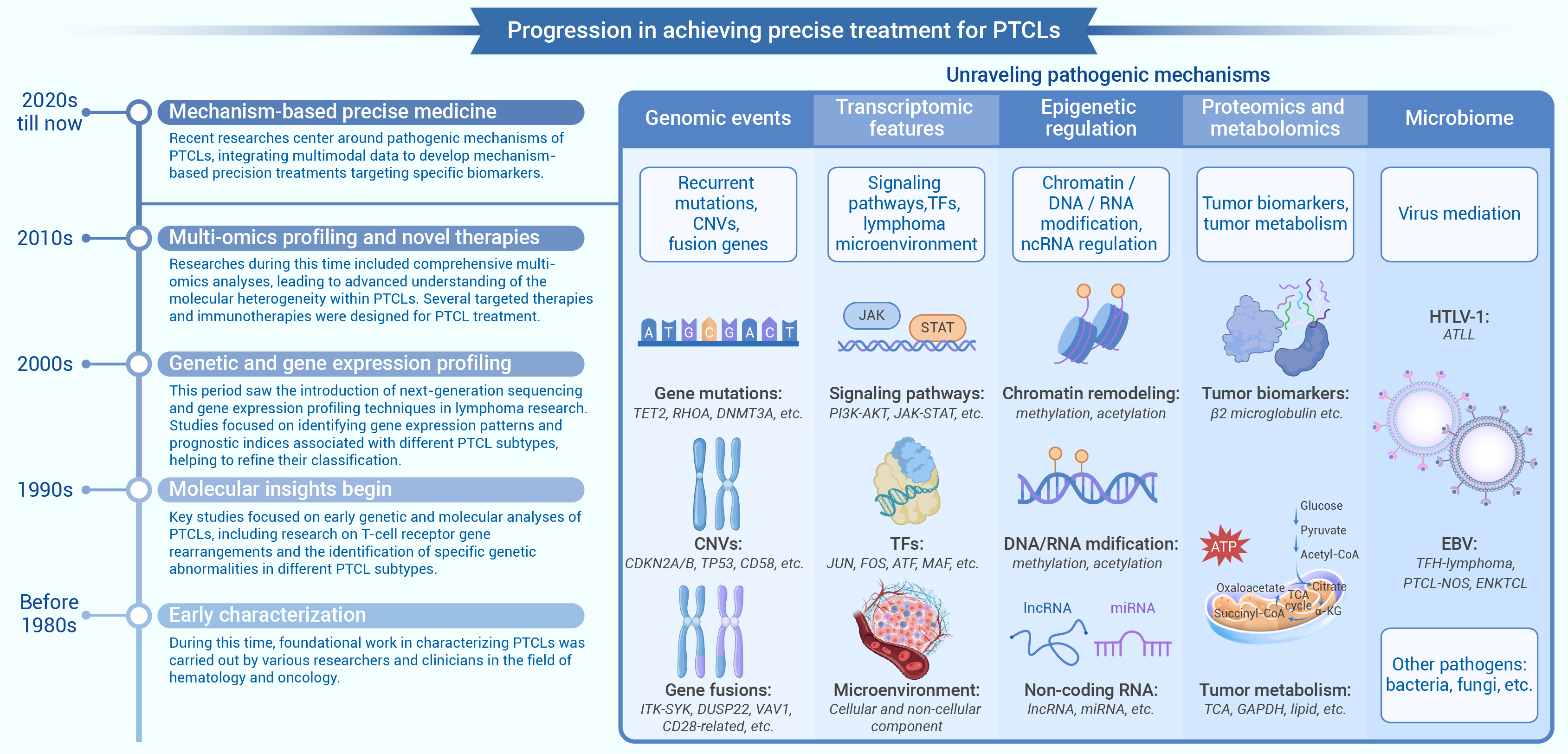
Figure 1.
Progression in achieving precise management for PTCLs
-
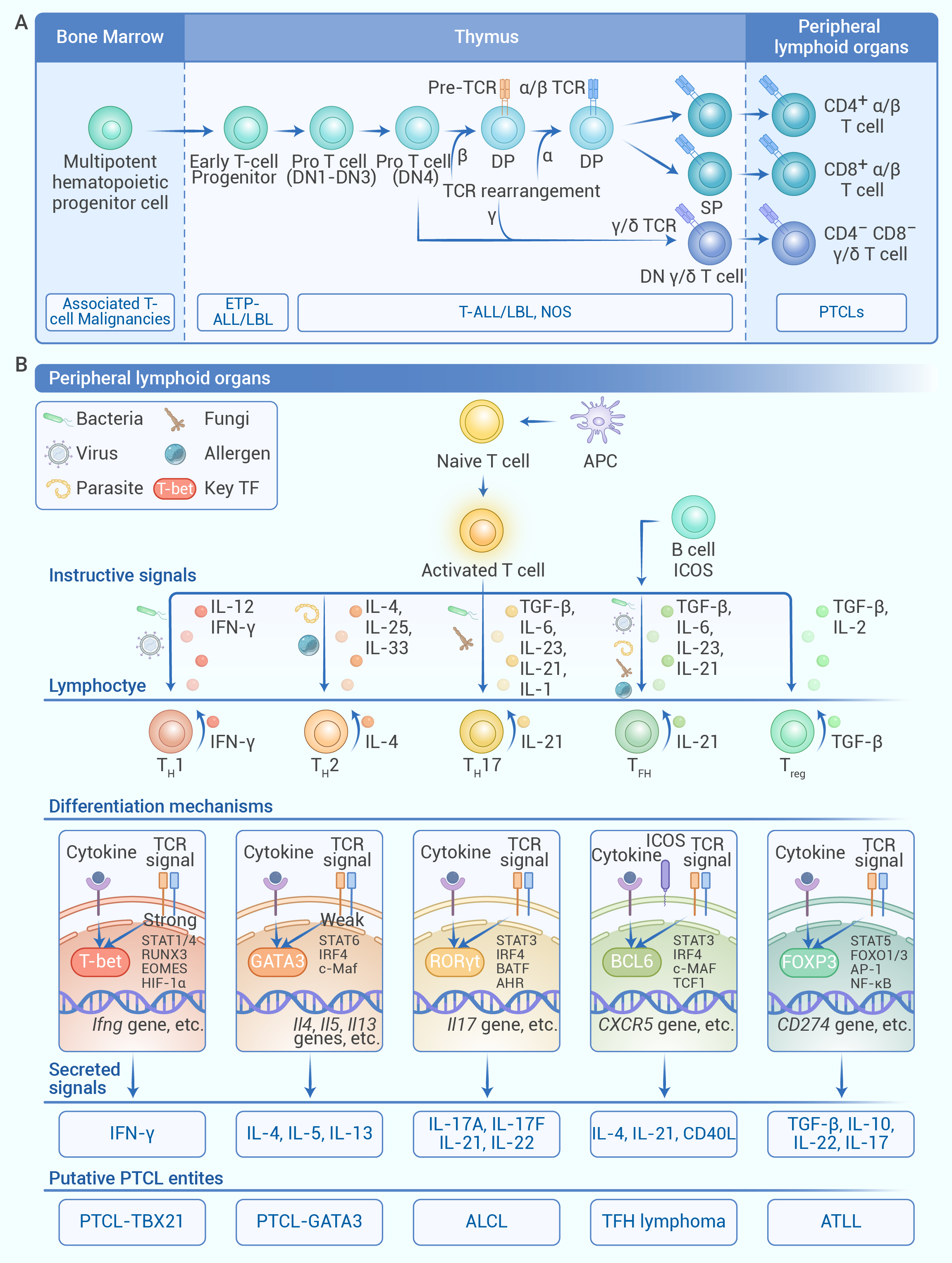
Figure 2.
Overall scheme of T-cell development and differentiation
-
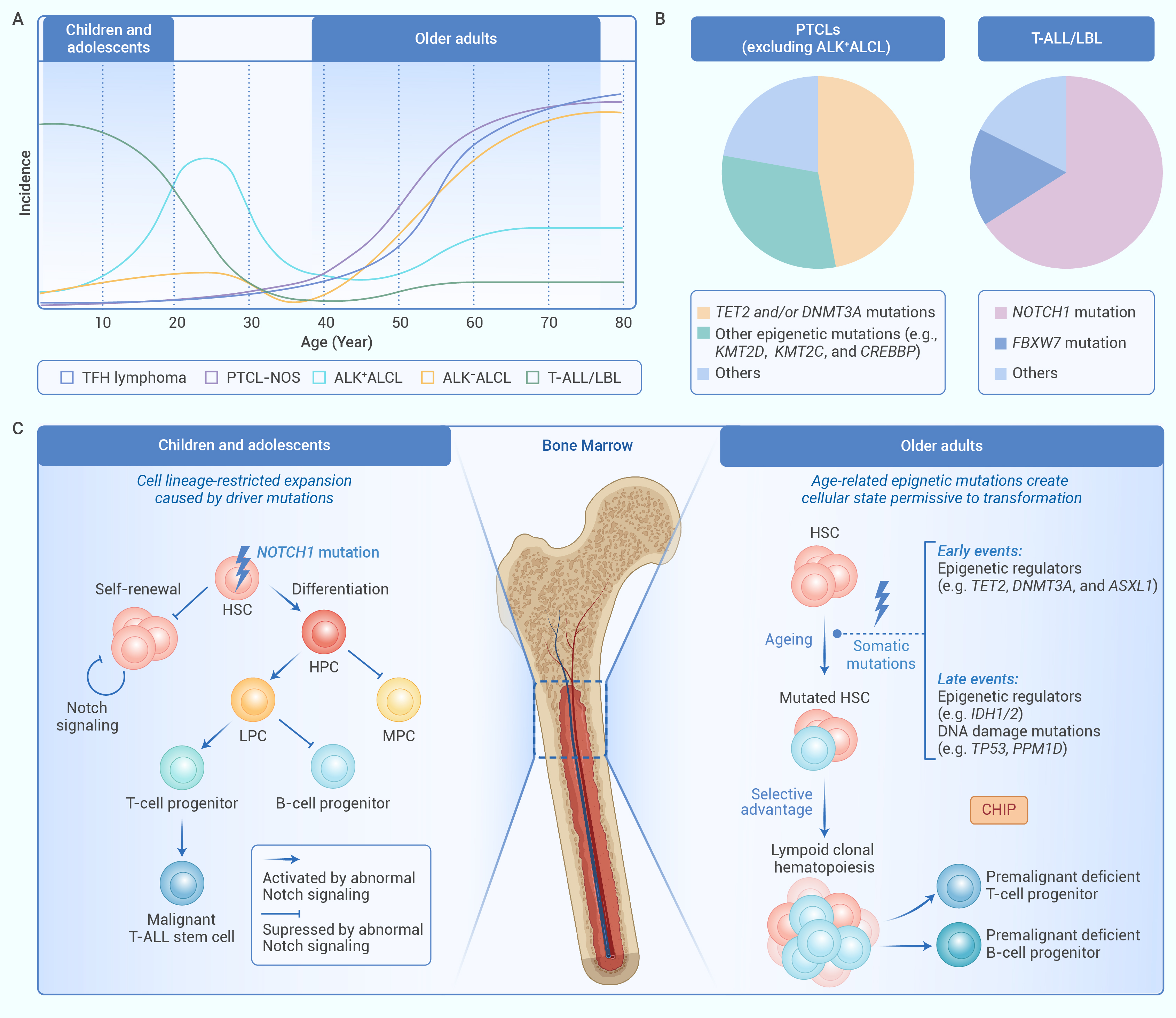
Figure 3.
Comparison between PTCLs and T-ALL/LBL
-
Figure 4.
Cellular targets for precise medicine in PTCLs
-
Figure 5.
Common mechanisms of transcriptional factor dysregulation in PTCLs
-
Figure 6.
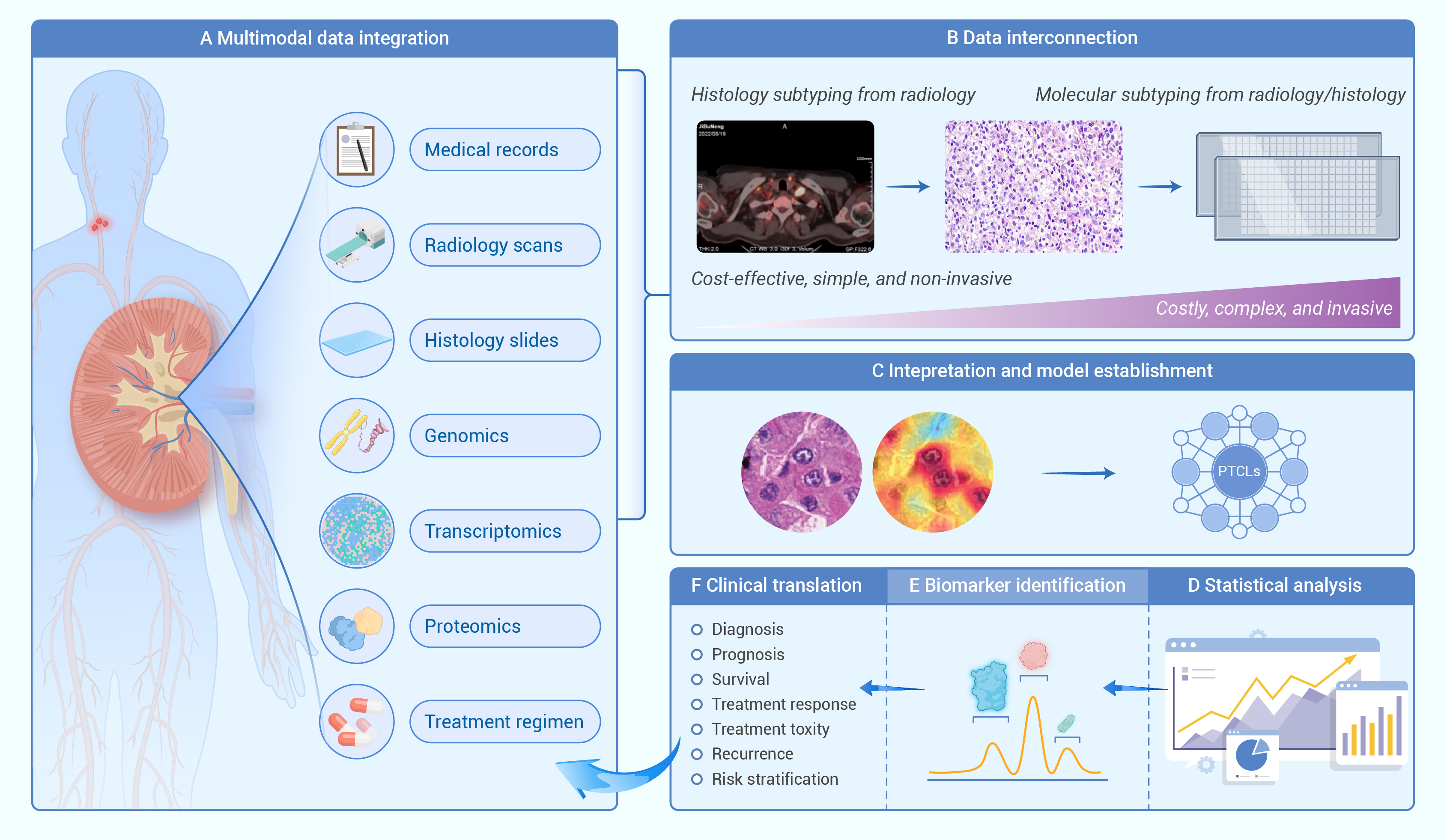
AI-aided biomarker identification from multimodal data
