
Anti-aging therapeutics for the musculoskeletal and cardiovascular systems: The role of regular exercise
-

-
REFERENCES
[1] MoTrPAC Study Group. (2024). Temporal dynamics of the multi-omic response to endurance exercise training. Nature 629 : 174−183. DOI: 10.1038/s41586-023-06877-w. [2] Sun, S., Ma, S., Cai, Y., et al. (2023). A single-cell transcriptomic atlas of exercise-induced anti-inflammatory and geroprotective effects across the body. The Innovation 4: 100380. DOI: 10.1016/j.xinn.2023.100380. [3] McGee, S.L. and Hargreaves, M. (2020). Exercise adaptations: Molecular mechanisms and potential targets for therapeutic benefit. Nat. Rev. Endocrinol. 16: 495−505. DOI: 10.1038/s41574-020-0377-1. [4] Yu, S., Tang, Q., Lu, X., et al. (2024). Time of exercise differentially impacts bone growth in mice. Nat. Metab. 6: 1036−1052. DOI: 10.1038/s42255-024-01057-0. [5] Wang, F., Dai, Y., Zhu, X., et al. (2021). Saturated very long chain fatty acid configures glycosphingolipid for lysosome homeostasis in long-lived C. elegans. Nat. Commun. 12: 5073. DOI: 10.1038/s41467-021-25398-6. -
ABOUT THIS ARTICLE
Cite this article:
Zhang W., Zhou W., Luo Z., et al., (2024). Anti-aging therapeutics for the musculoskeletal and cardiovascular systems: The role of regular exercise. The Innovation Medicine 2(3): 100085. https://doi.org/10.59717/j.xinn-med.2024.100085
Welcome!
To request copyright permission to republish or share portions of our works, please visit Copyright Clearance Center's (CCC) Marketplace website at marketplace.copyright.com.
Export File
Citation
Zhang W., Zhou W., Luo Z., et al., (2024). Anti-aging therapeutics for the musculoskeletal and cardiovascular systems: The role of regular exercise. The Innovation Medicine 2(3): 100085. https://doi.org/10.59717/j.xinn-med.2024.100085

Format
Content
 DownLoad:
-
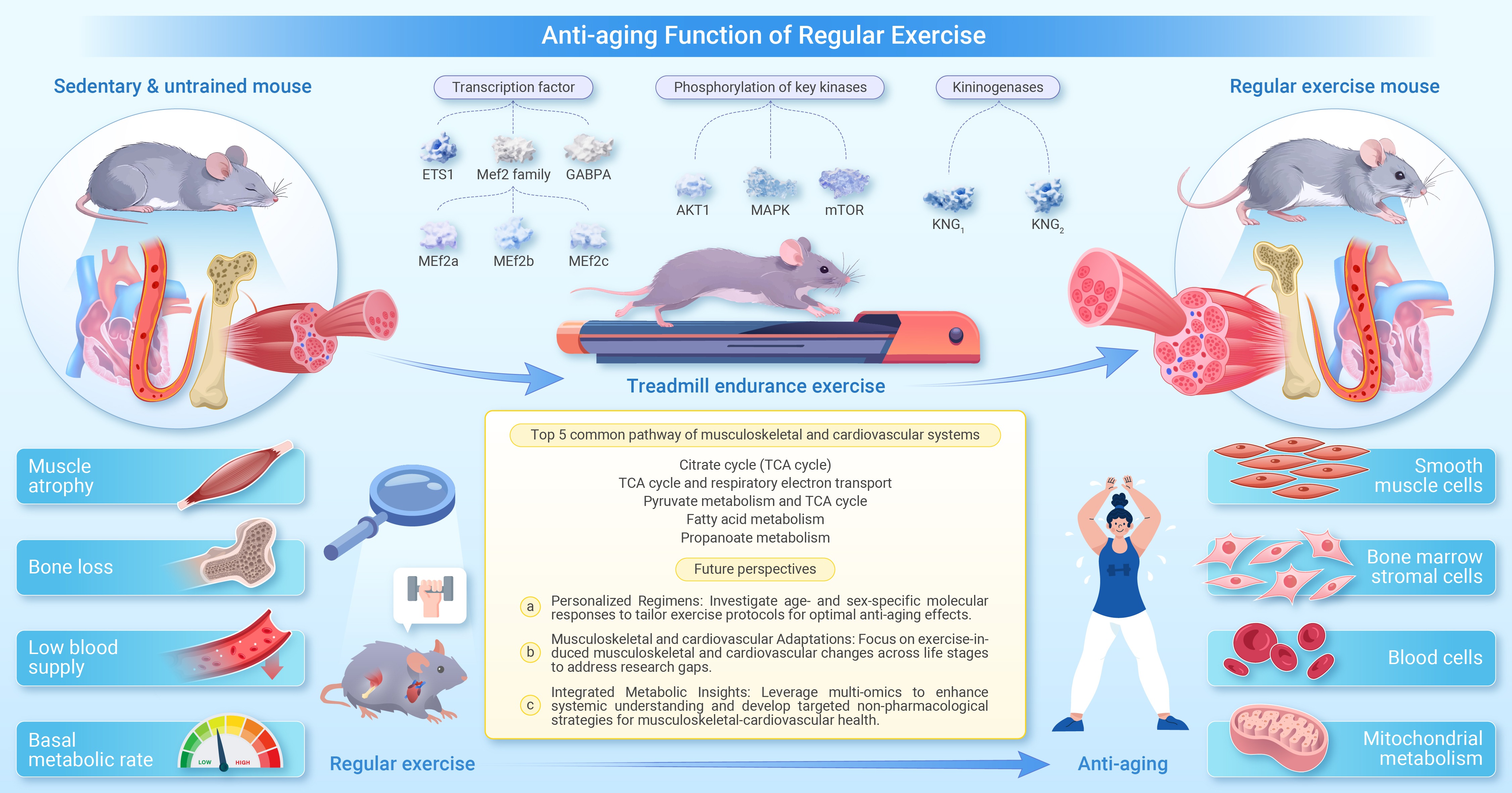
Figure 1.
Anti-aging function of regular exercise
