
Interpretable learning predicts miscarriage using pre-pregnancy serum metabolites
-
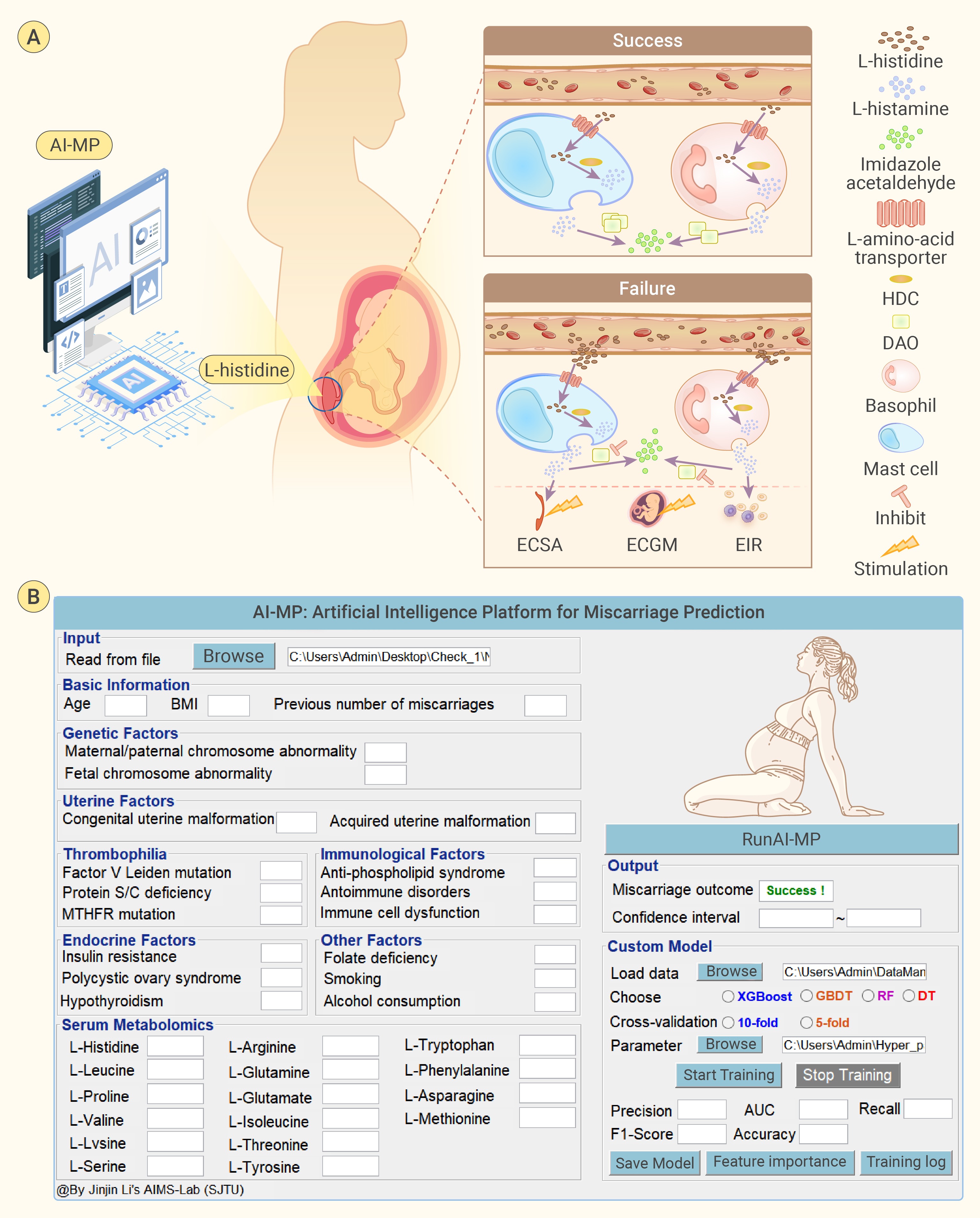
GRAPHICAL ABSTRACT
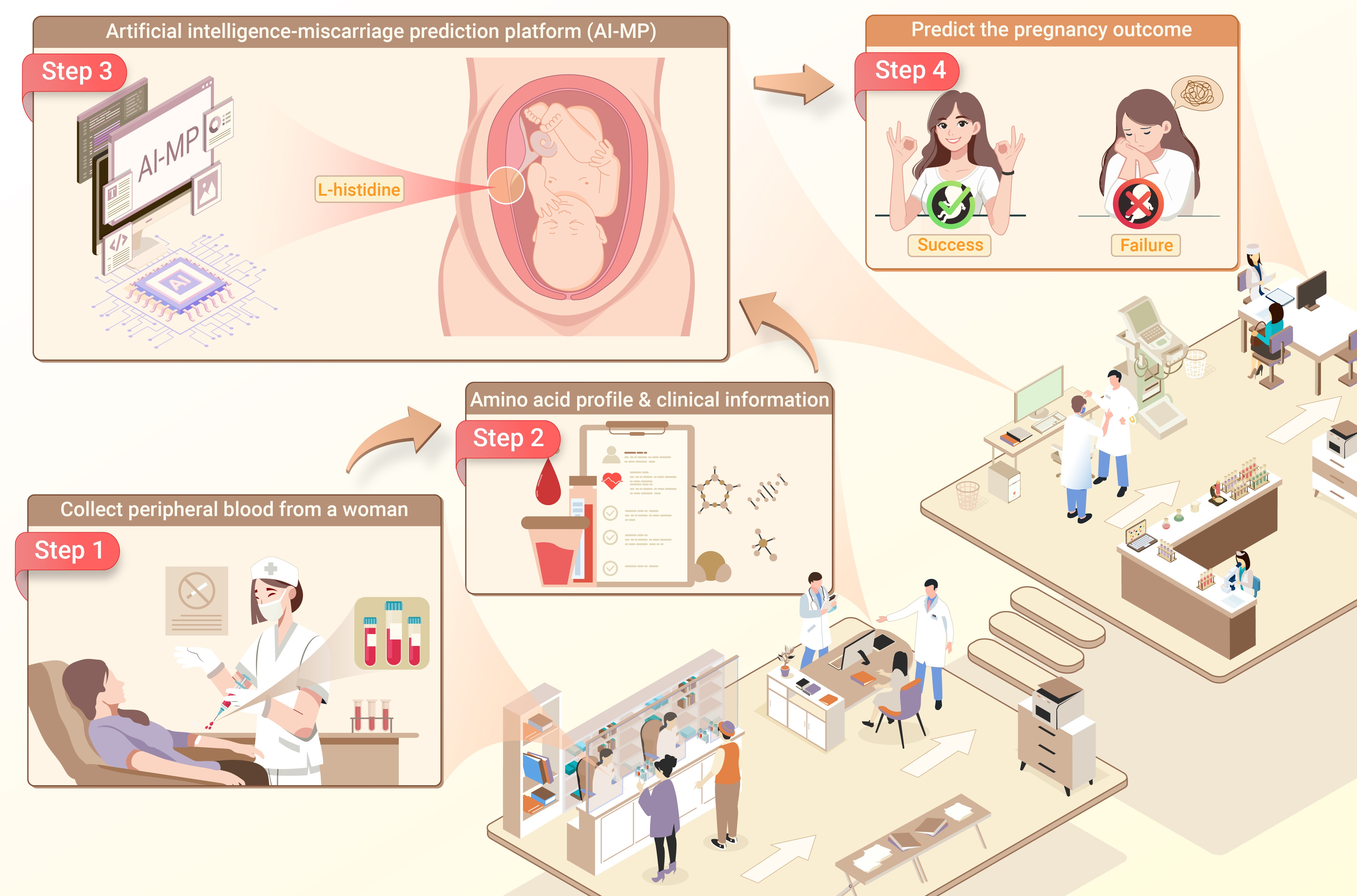
 DownLoad:
Full size image
DownLoad:
Full size image
-
PUBLIC SUMMARY
-
Amino acids, especially the L-histidine, play a pivotal role in pregnancy.
Pre-pregnancy serum amino acid profiles can predict miscarriage.
An interactive platform is established to predict miscarriage prior to conception.
-
-
ABSTRACT
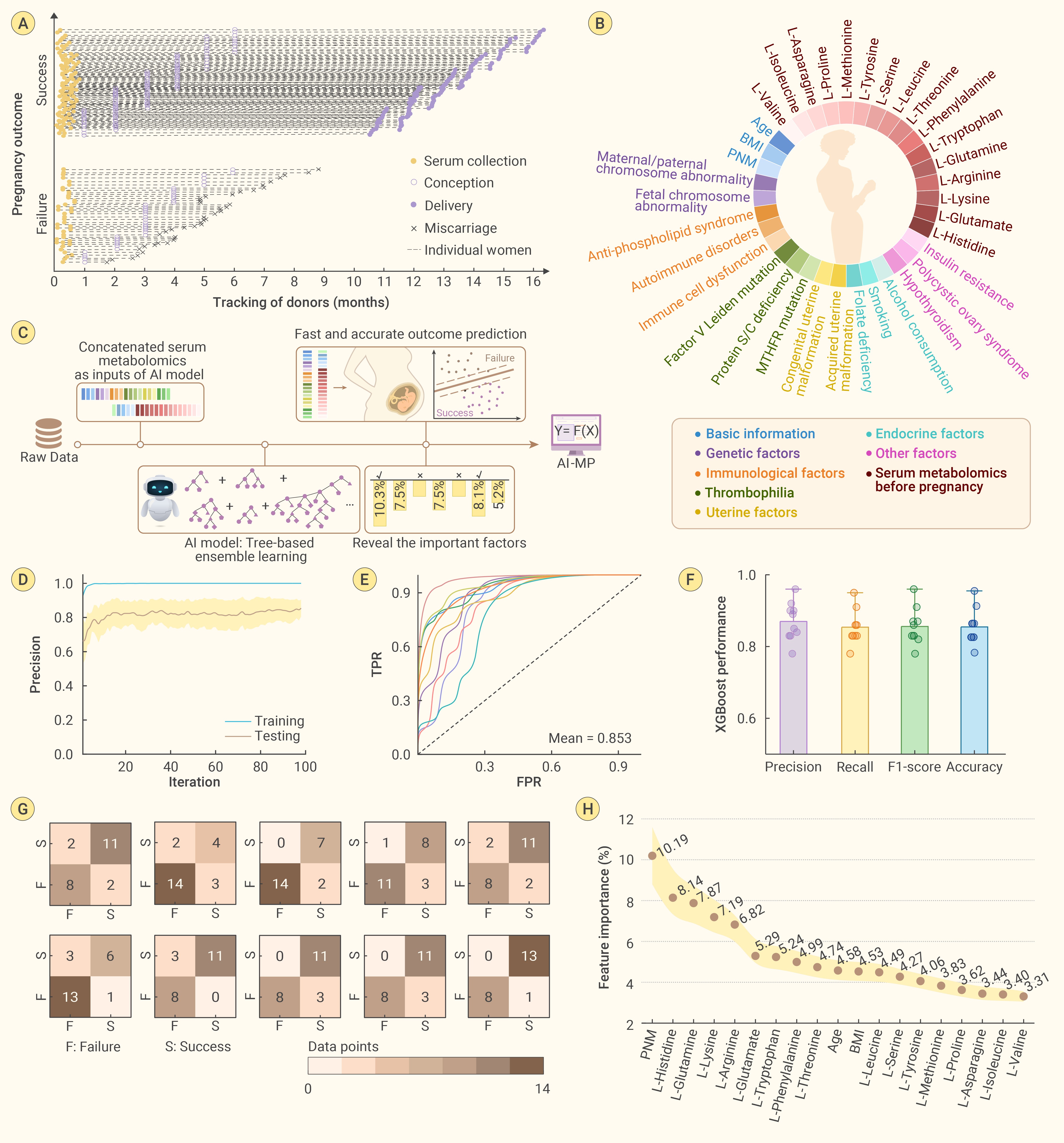
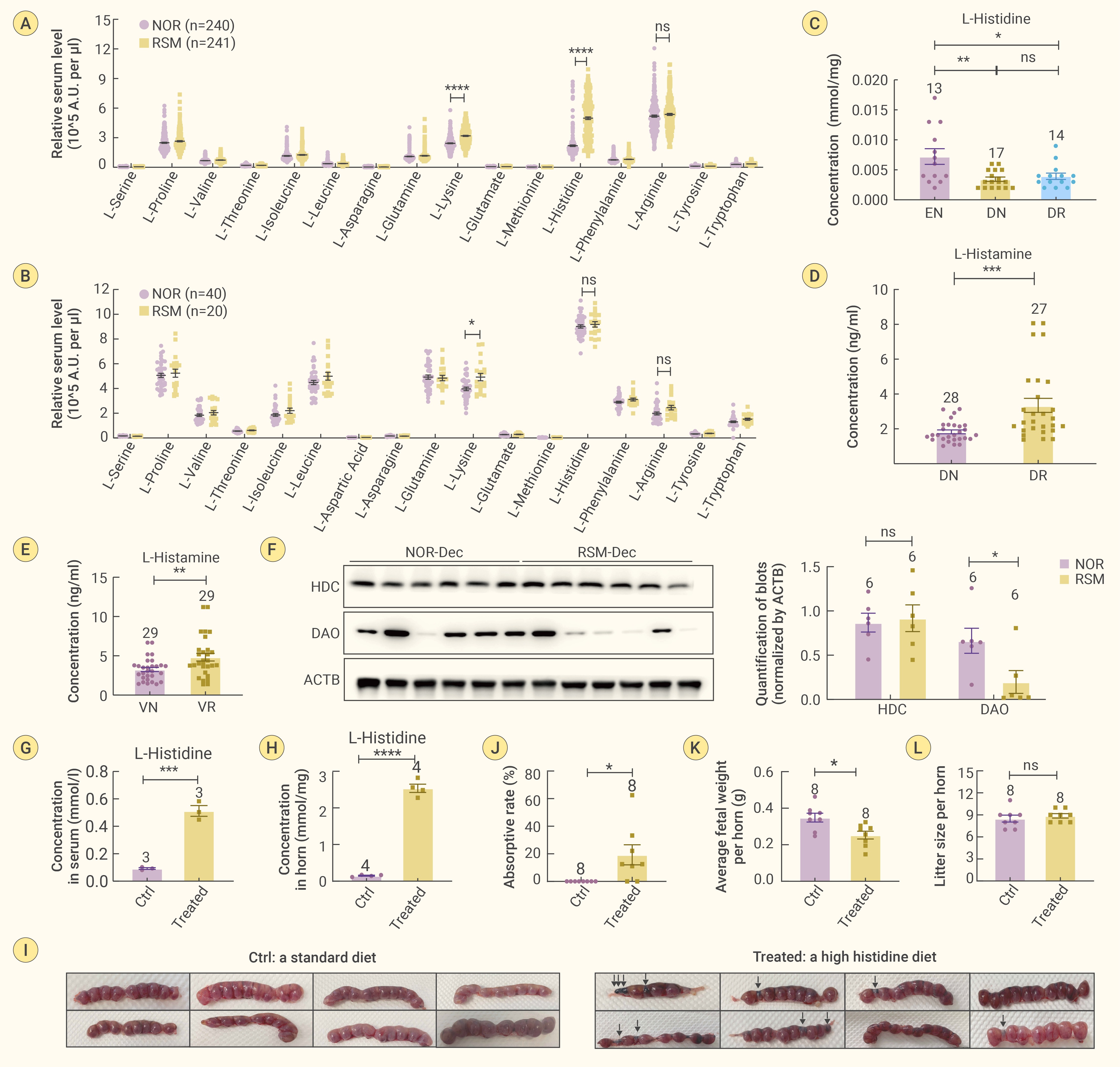
In preconception counseling, there has been a lack of quantitative approaches to predict the outcome of an upcoming pregnancy, which would greatly benefit women and society. By applying state-of-the-art artificial intelligence algorithms to clinical and metabolome data from 481 women, we have, for the first time, proposed a pre-pregnancy classifier that predicts miscarriage with a high precision rate of 87%. Our embedded feature engineering revealed the critical impact of serum histidine level, further supported by its elevation in recurrent spontaneous miscarriage (RSM). Mechanistically, elevated histidine level, combined with compromised diamine oxidase (DAO) expression, led to a fatal accumulation of histamine at the maternal-fetal interface (157 specimens from 113 donors). Additionally, a high-histidine diet induced significant embryo loss in mice without causing malabsorption of other amino acids. This pilot study shows promise in predicting pregnancy outcomes prior to conception, opening an important window for early warning that is particularly meaningful given the global decline in birth rates. -

-
REFERENCES
[1] Kramer, M.S., McLean, F.H., Boyd, M.E., et al. (1988). The validity of gestational age estimation by menstrual dating in term, preterm, and postterm gestations. JAMA 260: 3306−3308. DOI: 10.1001/jama.1988.03410220090034. [2] Doubilet, P.M., Benson, C.B., Bourne, T., et al. (2013). Diagnostic criteria for nonviable pregnancy early in the first trimester. N. Engl. J. Med. 369: 1443−1451. DOI: 10.1056/NEJMra1302417. [3] Quenby, S., Gallos, I.D., Dhillon-Smith, R.K., et al. (2021). Miscarriage matters: The epidemiological, physical, psychological, and economic costs of early pregnancy loss. Lancet 397: 1658−1667. DOI: 10.1016/s0140-6736(21)00682-6. [4] Magnus, M.C., Wilcox, A.J., Morken, N.H., et al. (2019). Role of maternal age and pregnancy history in risk of miscarriage: Prospective register based study. BMJ (Clinical research ed.) 364: l869. DOI: 10.1136/bmj.l869. [5] Coomarasamy, A., Dhillon-Smith, R.K., Papadopoulou, A., et al. (2021). Recurrent miscarriage: Evidence to accelerate action. Lancet 397: 1675−1682. DOI: 10.1016/s0140-6736(21)00681-4. [6] Najafi, K., Mehrjoo, Z., Ardalani, F., et al. (2021). Identifying the causes of recurrent pregnancy loss in consanguineous couples using whole exome sequencing on the products of miscarriage with no chromosomal abnormalities. Sci. Rep. 11: 6952. DOI: 10.1038/s41598-021-86309-9. [7] Van Dijk, M.M., Kolte, A.M., Limpens, J., et al. (2020). Recurrent pregnancy loss: Diagnostic workup after two or three pregnancy losses? A systematic review of the literature and meta-analysis. Hum. Reprod. Update 26: 356−367. DOI: 10.1093/humupd/dmz048. [8] Kuehn, B.M. (2021). More comprehensive care for miscarriage needed worldwide. JAMA 325: 2335. DOI: 10.1001/jama.2021.8549. [9] Slomski, A. (2020). Mixed results for progesterone for miscarriage prevention. JAMA 324: 1129. DOI: 10.1001/jama.2020.17525. [10] Pearson, H. (2004). Predicting miscarriage. Nature DOI: 10.1038/news040105-11. [11] Bender Atik, R., Christiansen, O.B., Elson, J., et al. (2023). Eshre guideline: Recurrent pregnancy loss: An update in 2022. Hum. Reprod. Open 2023: hoad002. DOI: 10.1093/hropen/hoad002. [12] Practice Committee of the American Society for Reproductive Medicine. (2012). Evaluation and treatment of recurrent pregnancy loss: A committee opinion. Fertil. Steril. 98: 1103−1111. DOI: 10.1016/j.fertnstert.2012.06.048. [13] De Fabo, E.C., Webber, L.J., Ulman, E.A., et al. (1997). Dietary l-histidine regulates murine skin levels of trans-urocanic acid, an immune-regulating photoreceptor, with an unanticipated modulation: Potential relevance to skin cancer. J. Nutr. 127: 2158−2164. DOI: 10.1093/jn/127.11.2158. [14] Cuny, H., Rapadas, M., Gereis, J., et al. (2020). Nad deficiency due to environmental factors or gene-environment interactions causes congenital malformations and miscarriage in mice. Proc. Natl. Acad. Sci. U.S.A. 117: 3738−3747. DOI: 10.1073/pnas.1916588117. [15] Wang, X.H., Xu, S., Zhou, X.Y., et al. (2021). Low chorionic villous succinate accumulation associates with recurrent spontaneous abortion risk. Nat. Commun. 12: 3428. DOI: 10.1038/s41467-021-23827-0. [16] Tang, L., Xu, X.H., Xu, S., et al. (2023). Dysregulated gln-glu-α-ketoglutarate axis impairs maternal decidualization and increases the risk of recurrent spontaneous miscarriage. Cell Rep. Med. 4: 101026. DOI: 10.1016/j.xcrm.2023.101026. [17] Kim, M., Chen, C., Wang, P., et al. (2022). Detection of ovarian cancer via the spectral fingerprinting of quantum-defect-modified carbon nanotubes in serum by machine learning. Nat. Biomed. 6: 267−275. DOI: 10.1038/s41551-022-00860-y. [18] Megahed, F.M., Chen, Y.J., Megahed, A., et al. (2021). The class imbalance problem. Nat. Methods 18: 1270−1272. DOI: 10.1038/s41592-021-01302-4. [19] Yang, H., Li, J., Lim, K.Z. et al. (2022). Automatic strain sensor design via active learning and data augmentation for soft machines. Nat. Mach. Intell. 4: 84−94. DOI: 10.1038/s42256-021-00434-8. [20] Yue, Q., Yuan, A., Che, X., et al. (2016). Batch model for batched timestamps data analysis with application to the ssa disability program. KDD 2016: 343−352. DOI: 10.1145/2939672.2939706. [21] Holeček, M. (2020). Histidine in health and disease: Metabolism, physiological importance, and use as a supplement. Nutrients 12: 848. DOI: 10.3390/nu12030848. [22] Velicky, P., Windsperger, K., Petroczi, K., et al. (2018). Pregnancy-associated diamine oxidase originates from extravillous trophoblasts and is decreased in early-onset preeclampsia. Sci. Rep. 8: 6342. DOI: 10.1038/s41598-018-24652-0. [23] Maintz, L., Schwarzer, V., Bieber, T., et al. (2008). Effects of histamine and diamine oxidase activities on pregnancy: A critical review. Hum. Reprod. Update 14: 485−495. DOI: 10.1093/humupd/dmn014. [24] Weisburger, W.R., Mendelsohn, G., Eggleston, J.C., et al. (1978). Immunohistochemical localization of histaminase (diamine oxidase) in decidual cells of human placenta. Lab. Invest. 38: 703−706. DOI. [25] Legge, M. and Duff, G.B. (1981). Plasma diamine oxidase levels in pregnancy complicated by threatened abortion. J. Clin. Pathol. 34: 187−188. DOI: 10.1136/jcp.34.2.187. [26] Brew, O. and Sullivan, M.H. (2006). The links between maternal histamine levels and complications of human pregnancy. J. Reprod. Immunol. 72: 94−107. DOI: 10.1016/j.jri.2006.04.002. [27] Fitzgerald, J.S., Poehlmann, T.G., Schleussner, E., et al. (2008). Trophoblast invasion: The role of intracellular cytokine signalling via signal transducer and activator of transcription 3 (stat3). Hum. Reprod. Update 14: 335−344. DOI: 10.1093/humupd/dmn010. [28] Díaz-Hernández, I., Alecsandru, D., García-Velasco, J.A., et al. (2021). Uterine natural killer cells: From foe to friend in reproduction. Hum. Reprod. Update 27: 720−746. DOI: 10.1093/humupd/dmaa062. [29] Vera-Aviles, M., Vantana, E., Kardinasari, E., et al. (2018). Protective role of histidine supplementation against oxidative stress damage in the management of anemia of chronic kidney disease. Pharmaceuticals (Basel, Switzerland) 11: 111. DOI: 10.3390/ph11040111. [30] Gibbs, N.K. (2020). L-histidine supplementation in adults and young children with atopic dermatitis (eczema). J. Nutr. 150: 2576s−2579s. DOI: 10.1093/jn/nxaa200. [31] Thalacker-Mercer, A.E. and Gheller, M.E. (2020). Benefits and adverse effects of histidine supplementation. J. Nutr. 150: 2588s−2592s. DOI: 10.1093/jn/nxaa229. [32] Holeček, M. and Vodeničarovová, M. (2020). Effects of histidine supplementation on amino acid metabolism in rats. Physiol. Res. 69: 99−111. DOI: 10.33549/physiolres.934296. [33] Holeček, M. and Vodeničarovová, M. (2019). Effects of histidine load on ammonia, amino acid, and adenine nucleotide concentrations in rats. Amino Acids 51: 1667−1680. DOI: 10.1007/s00726-019-02803-5. [34] Deng, T., Liao, X., and Zhu, S. (2022). Recent advances in treatment of recurrent spontaneous abortion. Obstet. Gyneco. Surv. 77: 355−366. DOI: 10.1097/ogx.0000000000001033. [35] Yang, X., Li, N., Guo, T., et al. (2020). Comparison of the effects of low-molecular-weight heparin and fondaparinux on liver function in patients with pulmonary embolism. J. Clin. Pharmacol. 60: 1671−1678. DOI: 10.1002/jcph.1686. [36] Zaret, K.S. (2002). Regulatory phases of early liver development: Paradigms of organogenesis. Nat. Rev. Genet. 3: 499−512. DOI: 10.1038/nrg837. [37] Shin, D. and Monga, S.P. (2013). Cellular and molecular basis of liver development. Compr. Physiol. 3: 799−815. DOI: 10.1002/cphy.c120022. [38] Tanaka, M., Fuentes, M.E., Yamaguchi, K., et al. (1999). Embryonic lethality, liver degeneration, and impaired nf-kappa b activation in ikk-beta-deficient mice. Immunity 10: 421−429. DOI: 10.1016/s1074-7613(00)80042-4. [39] Liu, X., Zhang, S., Shao, L., et al. (2024). Improving prediction of treatment response and prognosis in colorectal cancer with ai-based medical image analysis. The Innovation Medicine 2: 100069. DOI: 10.59717/j.xinn-med.2024.100069. [40] Xu, Y., Liu, X., Cao, X., et al. (2021). Artificial intelligence: A powerful paradigm for scientific research. The Innovation 2: 100179. DOI: 10.1016/j.xinn.2021.100179. [41] Hantel, A., Walsh, T.P., Marron, J.M., et al. (2024). Perspectives of oncologists on the ethical implications of using artificial intelligence for cancer care. JAMA Netw. Open 7: e244077. DOI: 10.1001/jamanetworkopen.2024.4077. [42] Huang, T., Xu, H., Wang, H., et al. (2023). Artificial intelligence for medicine: Progress, challenges, and perspectives. The Innovation Medicine 1: 100030. DOI: 10.59717/j.xinn-med.2023.100030. -
ABOUT THIS ARTICLE
Cite this article:
Tang L., Wang Z., Xu X., et al., (2024). Interpretable learning predicts miscarriage using pre-pregnancy serum metabolites. The Innovation Medicine 2(4): 100093. https://doi.org/10.59717/j.xinn-med.2024.100093
Welcome!
To request copyright permission to republish or share portions of our works, please visit Copyright Clearance Center's (CCC) Marketplace website at marketplace.copyright.com.
Article Metrics
Relative Articles
Cited by
Export File
Citation
Tang L., Wang Z., Xu X., et al., (2024). Interpretable learning predicts miscarriage using pre-pregnancy serum metabolites. The Innovation Medicine 2(4): 100093. https://doi.org/10.59717/j.xinn-med.2024.100093

Format
Content
-
Figure 1.
Establishment of AI model to predict miscarriage before pregnancy
-
Figure 2.
Hyperactive histidine-histamine flux contributed to fetal loss in both human and mice
-
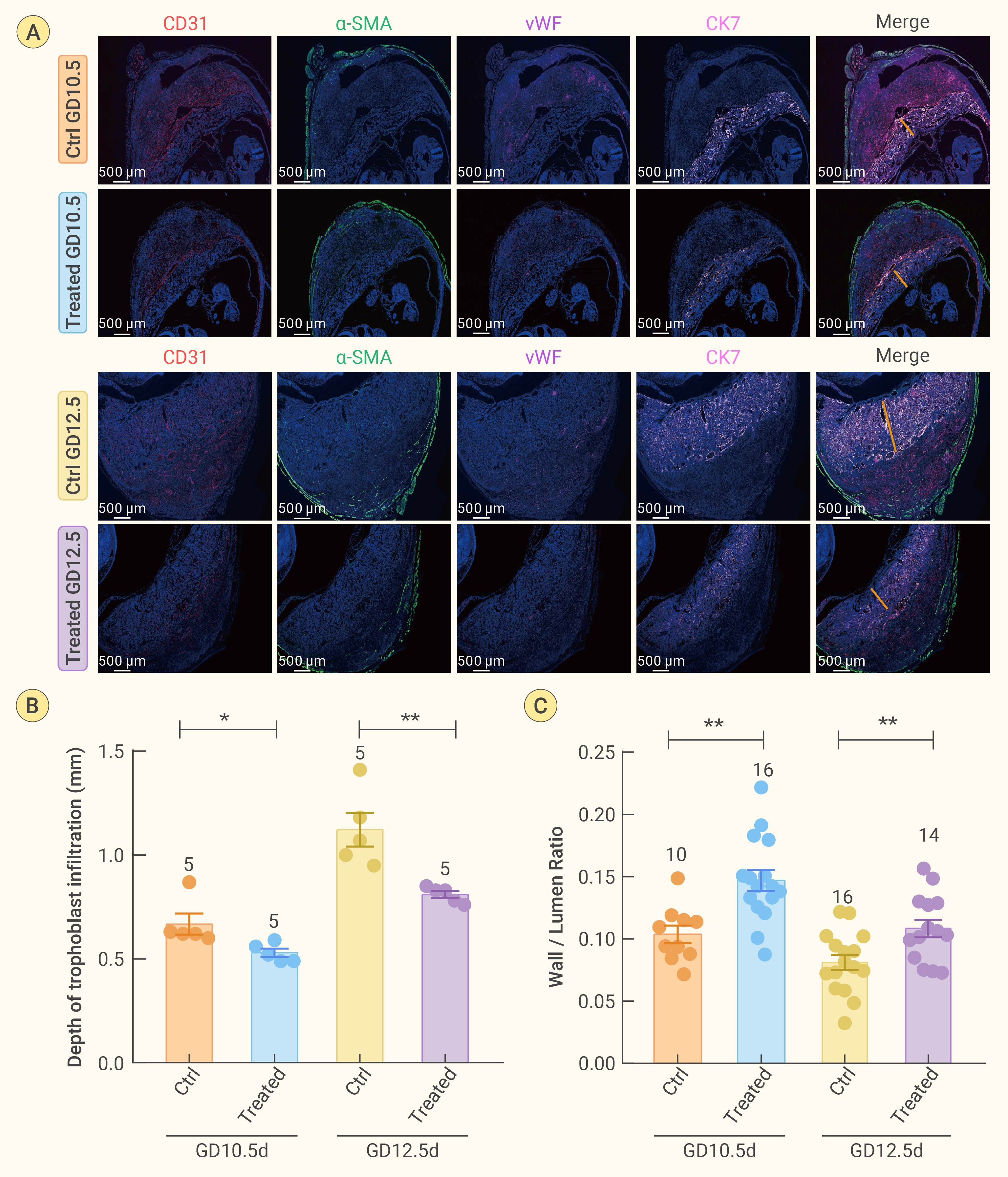
Figure 3.
Uterine spiral artery remodeling and trophoblast invasion in mice under different diets
-
Figure 4.
Revelation of AI-MP and its platform interface
