
Crosstalk between bladder cancer and the tumor microenvironment: Molecular mechanisms and targeted therapy
-
GRAPHICAL ABSTRACT

 DownLoad:
Full size image
DownLoad:
Full size image
-
PUBLIC SUMMARY
-
An overview of the multilevel crosstalk between bladder cancer and the tumor microenvironment (TME).
The most advanced therapeutic approaches targeting the TME in BCa.
Challenges and future perspectives associated with TME therapies.
-
-
ABSTRACT
Bladder cancer (BCa) is the most common and lethal urological malignancy. Lymphatic metastasis is the main type of metastasis and a poor prognostic factor for bladder cancer patients. Although several treatments are approved for BCa patients, some patients are still resistant to current therapy. The tumor microenvironment (TME), which consists of diverse cellular components, is a crucial mediator of cancer progression and treatment resistance. However, the literature on the interactions between BCa and the TME lacks coherence and systematic analysis, while the impact of intratumoral heterogeneity (ITH) on the tumorigenesis and progression of BCa has not been fully summarized. Iterative insights into factors intrinsic to and extrinsic to BCa cells that regulate metastasis and treatment response are critically needed. Here, we provide an overview of the current knowledge of the multilevel crosstalk between BCa and the TME, including protein-coding genes and epigenetic factors in BCa cells, tumor-associated macrophages (TAMs), cancer-associated fibroblasts (CAFs), tumor-associated neutrophils (TANs), endothelial cells (ECs), lymphatic endothelial cells (LECs) and other cells that play crucial roles in tumorigenesis, progression, and the development of drug resistance. We also summarize the most advanced therapeutic approaches targeting the TME in BCa and discuss some of the challenges and future perspectives associated with TME therapies. -

-
REFERENCES
[1] Sung, H., Ferlay, J., Siegel, R.L., et al. (2021). Global cancer statistics 2020: Globocan estimates of incidence and mortality worldwide for 36 cancers in 185 countries. CA Cancer J. Clin. 71: 209−249. DOI: 10.3322/caac.21660. [2] Lenis, A.T., Lec, P.M., Chamie, K., et al. (2020). Bladder cancer: A review. JAMA 324: 1980−1991. DOI: 10.1001/jama.2020.17598. [3] Ritch, C.R., Velasquez, M.C., Kwon, D., et al. (2020). Use and validation of the aua/suo risk grouping for nonmuscle invasive bladder cancer in a contemporary cohort. J. Urol. 203: 505−511. DOI: 10.1097/ju.0000000000000593. [4] van den Bosch, S., and Alfred Witjes, J. (2011). Long-term cancer-specific survival in patients with high-risk, non-muscle-invasive bladder cancer and tumour progression: A systematic review. Eur. Urol. 60: 493−500. DOI: 10.1016/j.eururo.2011.05.045. [5] Rosenberg, J.E., Powles, T., Sonpavde, G.P., et al. (2023). Ev-301 long-term outcomes: 24-month findings from the phase iii trial of enfortumab vedotin versus chemotherapy in patients with previously treated advanced urothelial carcinoma. Ann. Oncol. 34: 1047−1054. DOI: 10.1016/j.annonc.2023.08.016. [6] Balar, A.V., Castellano, D., O'Donnell, P.H., et al. (2017). First-line pembrolizumab in cisplatin-ineligible patients with locally advanced and unresectable or metastatic urothelial cancer (keynote-052): A multicentre, single-arm, phase 2 study. Lancet Oncol. 18: 1483−1492. DOI: 10.1016/s1470-2045(17)30616-2. [7] Grossman, H.B., Natale, R.B., Tangen, C.M., et al. (2003). Neoadjuvant chemotherapy plus cystectomy compared with cystectomy alone for locally advanced bladder cancer. N. Engl. J. Med. 349: 859−866. DOI: 10.1056/NEJMoa022148. [8] Yin, M., Joshi, M., Meijer, R.P., et al. (2016). Neoadjuvant chemotherapy for muscle-invasive bladder cancer: A systematic review and two-step meta-analysis. Oncologist 21: 708−715. DOI: 10.1634/theoncologist.2015-0440. [9] Witjes, J.A., Bruins, H.M., Cathomas, R., et al. (2021). European association of urology guidelines on muscle-invasive and metastatic bladder cancer: Summary of the 2020 guidelines. Eur. Urol. 79: 82−104. DOI: 10.1016/j.eururo.2020.03.055. [10] Flaig, T.W., Spiess, P.E., Abern, M., et al. (2022). Nccn guidelines® insights: Bladder cancer, version 2.2022. J. Natl. Compr. Canc. Netw. 20 :866-878. DOI: 10.6004/jnccn.2022.0041. [11] Galsky, M.D., Arija JÁ, A., Bamias, A., et al. (2020). Atezolizumab with or without chemotherapy in metastatic urothelial cancer (imvigor130): A multicentre, randomised, placebo-controlled phase 3 trial. Lancet 395: 1547−1557. DOI: 10.1016/s0140-6736(20)30230-0. [12] Andrews, T.S., Kiselev, V.Y., McCarthy, D., and Hemberg, M. (2021). Tutorial: Guidelines for the computational analysis of single-cell rna sequencing data. Nature Protoc. 16: 1−9. DOI: 10.1038/s41596-020-00409-w. [13] Slovin, S., Carissimo, A., Panariello, F., et al. (2021). Single-cell rna sequencing analysis: A step-by-step overview. Methods Mol. Biol. 2284: 343−365. DOI: 10.1007/978-1-0716-1307-8_19. [14] Fan, J., Lu, F., Qin, T., et al. (2023). Multiomic analysis of cervical squamous cell carcinoma identifies cellular ecosystems with biological and clinical relevance. Nature Genet. 55: 2175−2188. DOI: 10.1038/s41588-023-01570-0. [15] Vitale, I., Shema, E., Loi, S., et al. (2021). Intratumoral heterogeneity in cancer progression and response to immunotherapy. Nature Med. 27: 212−224. DOI: 10.1038/s41591-021-01233-9. [16] Belli, C., Trapani, D., Viale, G., et al. (2018). Targeting the microenvironment in solid tumors. Cancer Treat. Rev. 65: 22−32. DOI: 10.1016/j.ctrv.2018.02.004. [17] Wang, X., Almet, A.A., and Nie, Q. (2023). The promising application of cell-cell interaction analysis in cancer from single-cell and spatial transcriptomics. Semin. Cancer Biol. 95: 42−51. DOI: 10.1016/j.semcancer.2023.07.001. [18] Ugai, T., Yao, Q., Ugai, S., and Ogino, S. (2024). Advancing precision oncology: Insights into the tumor microenvironment and immunotherapy outcomes. The Innovation 5: 100656. DOI: 10.1016/j.xinn.2024.100656. [19] Wen, L., Li, G., Huang, T., et al. (2022). Single-cell technologies: From research to application. The Innovation 3: 100342. DOI: 10.1016/j.xinn.2022.100342. [20] Wei, W., Rong, Y., Sanhe, L., et al. (2022). Single-cell sequencing and its applications in bladder cancer. Expert Rev. Mol. Med. 24: e6. DOI: 10.1017/erm.2021.23. [21] de Visser, K.E., and Joyce, J.A. (2023). The evolving tumor microenvironment: From cancer initiation to metastatic outgrowth. Cancer Cell 41: 374−403. DOI: 10.1016/j.ccell.2023.02.016. [22] Knowles, M.A., and Hurst, C.D. (2015). Molecular biology of bladder cancer: New insights into pathogenesis and clinical diversity. Nat. Rev. Cancer 15: 25−41. DOI: 10.1038/nrc3817. [23] Lee, Y.C., Lam, H.M., Rosser, C., et al. (2022). The dynamic roles of the bladder tumour microenvironment. Nat. Rev. Urol. 19: 515−533. DOI: 10.1038/s41585-022-00608-y. [24] Gerard, C.L., Delyon, J., Wicky, A., et al. (2021). Turning tumors from cold to inflamed to improve immunotherapy response. Cancer Treat. Rev. 101: 102227. DOI: 10.1016/j.ctrv.2021.102227. [25] Akkari, L., Bowman, R.L., Tessier, J., et al. (2020). Dynamic changes in glioma macrophage populations after radiotherapy reveal csf-1r inhibition as a strategy to overcome resistance. Sci. Transl. Med. 12 . DOI: 10.1126/scitranslmed.aaw7843. [26] Olson, O.C., Kim, H., Quail, D.F., et al. (2017). Tumor-associated macrophages suppress the cytotoxic activity of antimitotic agents. Cell Rep. 19: 101−113. DOI: 10.1016/j.celrep.2017.03.038. [27] Shree, T., Olson, O.C., Elie, B.T., et al. (2011). Macrophages and cathepsin proteases blunt chemotherapeutic response in breast cancer. Genes Dev. 25: 2465−2479. DOI: 10.1101/gad.180331.111. [28] Bejarano, L., Jordāo, M.J.C., and Joyce, J.A. (2021). Therapeutic targeting of the tumor microenvironment. Cancer Discov. 11: 933−959. DOI: 10.1158/2159-8290.Cd-20-1808. [29] Babar, Q., Saeed, A., Tabish, T.A., et al. (2023). Targeting the tumor microenvironment: Potential strategy for cancer therapeutics. BBA Mol. Basis Dis. 1869: 166746. DOI: 10.1016/j.bbadis.2023.166746. [30] Komura, K., Hirosuna, K., Tokushige, S., et al. (2023). The impact of fgfr3 alterations on the tumor microenvironment and the efficacy of immune checkpoint inhibitors in bladder cancer. Mol. Cancer 22: 185. DOI: 10.1186/s12943-023-01897-6. [31] Bhowmick, N.A., Neilson, E.G., and Moses, H.L. (2004). Stromal fibroblasts in cancer initiation and progression. Nature 432: 332−337. DOI: 10.1038/nature03096. [32] Junttila, M.R., and de Sauvage, F.J. (2013). Influence of tumour micro-environment heterogeneity on therapeutic response. Nature 501: 346−354. DOI: 10.1038/nature12626. [33] Wang, R., Peng, X., Yuan, Y., et al. (2024). Dynamic immune recovery process after liver transplantation revealed by single-cell multi-omics analysis. The Innovation 5: 100599. DOI: 10.1016/j.xinn.2024.100599. [34] Barkley, D., Moncada, R., Pour, M., et al. (2022). Cancer cell states recur across tumor types and form specific interactions with the tumor microenvironment. Nat. Genet. 54: 1192−1201. DOI: 10.1038/s41588-022-01141-9. [35] Easwaran, H., Tsai, H.C., and Baylin, S.B. (2014). Cancer epigenetics: Tumor heterogeneity, plasticity of stem-like states, and drug resistance. Mol. Cell 54: 716−727. DOI: 10.1016/j.molcel.2014.05.015. [36] McGranahan, N., and Swanton, C. (2017). Clonal heterogeneity and tumor evolution: Past, present, and the future. Cell 168: 613−628. DOI: 10.1016/j.cell.2017.01.018. [37] Alizadeh, A.A., Aranda, V., Bardelli, A., et al. (2015). Toward understanding and exploiting tumor heterogeneity. Nat. Med. 21: 846−853. DOI: 10.1038/nm.3915. [38] Zhang, Q., Liu, S., Wang, H., et al. (2023). Etv4 mediated tumor-associated neutrophil infiltration facilitates lymphangiogenesis and lymphatic metastasis of bladder cancer. Adv. Sci. (Weinh) 10: e2205613. DOI: 10.1002/advs.202205613. [39] Hu, W.M., Li, M., Ning, J.Z., et al. (2023). Fam171b stabilizes vimentin and enhances ccl2-mediated tam infiltration to promote bladder cancer progression. J. Exp. Clin. Cancer Res. 42: 290. DOI: 10.1186/s13046-023-02860-5. [40] Lv, J., Wu, Q., Li, K., et al. (2023). Lysine n-methyltransferase setd7 promotes bladder cancer progression and immune escape via stat3/pd-l1 cascade. Int. J. Biol. Sci. 19: 3744−3761. DOI: 10.7150/ijbs.87182. [41] Flavahan, W.A., Gaskell, E., and Bernstein, B.E. (2017). Epigenetic plasticity and the hallmarks of cancer. Science 357 . DOI: 10.1126/science.aal2380. [42] Piunti, A., and Shilatifard, A. (2016). Epigenetic balance of gene expression by polycomb and compass families. Science 352: aad9780. DOI: 10.1126/science.aad9780. [43] Wang, H., Fan, Z., Shliaha, P.V., et al. (2023). H3k4me3 regulates rna polymerase ii promoter-proximal pause-release. Nature 615: 339−348. DOI: 10.1038/s41586-023-05780-8. [44] Shilatifard, A. (2012). The COMPASS family of histone h3k4 methylases: Mechanisms of regulation in development and disease pathogenesis. Annu. Rev. Biochem. 81: 65−95. DOI: 10.1146/annurev-biochem-051710-134100. [45] Huang, M., Dong, W., Xie, R., et al. (2022). Hsf1 facilitates the multistep process of lymphatic metastasis in bladder cancer via a novel prmt5-wdr5-dependent transcriptional program. Cancer Commun. (Lond) 42: 447−470. DOI: 10.1002/cac2.12284. [46] Zhang, J., Zhou, Q., Xie, K., et al. (2021). Targeting wd repeat domain 5 enhances chemosensitivity and inhibits proliferation and programmed death-ligand 1 expression in bladder cancer. J. Exp. Clin. Cancer Res. 40: 203. DOI: 10.1186/s13046-021-01989-5. [47] van Kouwenhove, M., Kedde, M., and Agami, R. (2011). Microrna regulation by rna-binding proteins and its implications for cancer. Nat. Rev. Cancer 11: 644−656. DOI: 10.1038/nrc3107. [48] Ashrafizadeh, M., Zarrabi, A., Samarghandian, S., and Najafi, M. (2020). Pten: What we know of the function and regulation of this onco-suppressor factor in bladder cancer. Eur. J. Pharmacol. 881: 173226. DOI: 10.1016/j.ejphar.2020.173226. [49] Yuan, F., Yin, X.Y., Huang, Y., et al. (2023). Exosomal mir-93-5p as an important driver of bladder cancer progression. Transl. Androl. Urol. 12: 286−299. DOI: 10.21037/tau-22-872. [50] Lin, F., Yin, H.B., Li, X.Y., et al. (2020). Bladder cancer cell-secreted exosomal mir-21 activates the pi3k/akt pathway in macrophages to promote cancer progression. Int. J. Oncol. 56: 151−164. DOI: 10.3892/ijo.2019.4933. [51] Zhou, M., Wang, S., Hu, L., et al. (2016). Mir-199a-5p suppresses human bladder cancer cell metastasis by targeting ccr7. BMC Urol. 16: 64. DOI: 10.1186/s12894-016-0181-3. [52] Peng, W.X., Koirala, P., and Mo, Y.Y. (2017). Lncrna-mediated regulation of cell signaling in cancer. Oncogene 36: 5661−5667. DOI: 10.1038/onc.2017.184. [53] Mattick, J.S., Amaral, P.P., Carninci, P., et al. (2023). Long non-coding rnas: Definitions, functions, challenges and recommendations. Nat. Rev. Mol. Cell Biol. 24: 430−447. DOI: 10.1038/s41580-022-00566-8. [54] Zheng, H., Chen, C., Luo, Y., et al. (2021). Tumor-derived exosomal bcyrn1 activates wnt5a/vegf-c/vegfr3 feedforward loop to drive lymphatic metastasis of bladder cancer. Clin. Transl. Med. 11: e497. DOI: 10.1002/ctm2.497. [55] Pan, W., Han, J., Wei, N., et al. (2022). Linc00702-mediated dusp1 transcription in the prevention of bladder cancer progression: Implications in cancer cell proliferation and tumor inflammatory microenvironment. Genomics 114: 110428. DOI: 10.1016/j.ygeno.2022.110428. [56] Wu, S., Xu, R., Zhu, X., et al. (2020). The long noncoding rna linc01140/mir-140-5p/fgf9 axis modulates bladder cancer cell aggressiveness and macrophage m2 polarization. Aging 12: 25845−25864. DOI: 10.18632/aging.202147. [57] Wang, Y., Zhang, L., Wei, N., et al. (2020). Silencing linc00482 inhibits tumor-associated inflammation and angiogenesis through down-regulation of mmp-15 via foxa1 in bladder cancer. Aging 13: 2264−2278. DOI: 10.18632/aging.202247. [58] Chen, C., He, W., Huang, J., et al. (2018). Lnmat1 promotes lymphatic metastasis of bladder cancer via ccl2 dependent macrophage recruitment. Nat. Commun. 9: 3826. DOI: 10.1038/s41467-018-06152-x. [59] Li, Y., Zheng, H., Luo, Y., et al. (2023). An hgf-dependent positive feedback loop between bladder cancer cells and fibroblasts mediates lymphangiogenesis and lymphatic metastasis. Cancer Commun. 43: 1289−1311. DOI: 10.1002/cac2.12470. [60] Chen, X., Xie, R., Gu, P., et al. (2019). Long noncoding rna lbcs inhibits self-renewal and chemoresistance of bladder cancer stem cells through epigenetic silencing of sox2. Clin. Cancer Res. 25: 1389−1403. DOI: 10.1158/1078-0432.Ccr-18-1656. [61] Chen, Z., Chen, X., Xie, R., et al. (2019). Dancr promotes metastasis and proliferation in bladder cancer cells by enhancing il-11-stat3 signaling and ccnd1 expression. Mol. Ther. 27: 326−341. DOI: 10.1016/j.ymthe.2018.12.015. [62] Sanger, H.L., Klotz, G., Riesner, D., et al. (1976). Viroids are single-stranded covalently closed circular rna molecules existing as highly base-paired rod-like structures. Proc. Natl. Acad. Sci. U. S. A. 73: 3852−3856. DOI: 10.1073/pnas.73.11.3852. [63] Zhu, J., Luo, Y., Zhao, Y., et al. (2021). Circehbp1 promotes lymphangiogenesis and lymphatic metastasis of bladder cancer via mir-130a-3p/tgfβr1/vegf-d signaling. Mol. Ther. 29: 1838−1852. DOI: 10.1016/j.ymthe.2021.01.031. [64] Lu, Q., Yin, H., Deng, Y., et al. (2022). Circdhtkd1 promotes lymphatic metastasis of bladder cancer by upregulating cxcl5. Cell Death Discov. 8: 243. DOI: 10.1038/s41420-022-01037-x. [65] Yang, C., Wu, S., Mou, Z., et al. (2022). Exosome-derived circtrps1 promotes malignant phenotype and cd8+ t cell exhaustion in bladder cancer microenvironments. Mol. Ther. 30: 1054−1070. DOI: 10.1016/j.ymthe.2022.01.022. [66] An, M., Zheng, H., Huang, J., et al. (2022). Aberrant nuclear export of circncor1 underlies smad7-mediated lymph node metastasis of bladder cancer. Cancer Res. 82: 2239−2253. DOI: 10.1158/0008-5472.Can-21-4349. [67] Lv, J., Li, K., Yu, H., et al. (2023). Hnrnpl induced circfam13b increased bladder cancer immunotherapy sensitivity via inhibiting glycolysis through igf2bp1/pkm2 pathway. J. Exp. Clin. Cancer Res. 42: 41. DOI: 10.1186/s13046-023-02614-3. [68] Sun, J., Zhang, H., Wei, W., et al. (2023). Regulation of cd8(+) t cells infiltration and immunotherapy by circmga/hnrnpl complex in bladder cancer. Oncogene 42: 1247−1262. DOI: 10.1038/s41388-023-02637-2. [69] Cassetta, L., Fragkogianni, S., Sims, A.H., et al. (2019). Human tumor-associated macrophage and monocyte transcriptional landscapes reveal cancer-specific reprogramming, biomarkers, and therapeutic targets. Cancer Cell 35: 588−602.e510. DOI: 10.1016/j.ccell.2019.02.009. [70] Qian, J., Olbrecht, S., Boeckx, B., et al. (2020). A pan-cancer blueprint of the heterogeneous tumor microenvironment revealed by single-cell profiling. Cell Res. 30: 745−762. DOI: 10.1038/s41422-020-0355-0. [71] Schulz, C., Gomez Perdiguero, E., Chorro, L., et al. (2012). A lineage of myeloid cells independent of myb and hematopoietic stem cells. Science 336: 86−90. DOI: 10.1126/science.1219179. [72] Hashimoto, D., Chow, A., Noizat, C., et al. (2013). Tissue-resident macrophages self-maintain locally throughout adult life with minimal contribution from circulating monocytes. Immunity 38: 792−804. DOI: 10.1016/j.immuni.2013.04.004. [73] Yona, S., Kim, K.W., Wolf, Y., et al. (2013). Fate mapping reveals origins and dynamics of monocytes and tissue macrophages under homeostasis. Immunity 38: 79−91. DOI: 10.1016/j.immuni.2012.12.001. [74] Pridans, C., Sauter, K.A., Irvine, K.M., et al. (2018). Macrophage colony-stimulating factor increases hepatic macrophage content, liver growth, and lipid accumulation in neonatal rats. J. Appl. Physiol. Gastrointest. Liver Physiol. 314: G388−g398. DOI: 10.1152/ajpgi.00343.2017. [75] Lin, H., Lee, E., Hestir, K., et al. (2008). Discovery of a cytokine and its receptor by functional screening of the extracellular proteome. Science 320: 807−811. DOI: 10.1126/science.1154370. [76] Chiang, Y., Tsai, Y.C., Wang, C.C., et al. (2022). Tumor-derived c-c motif ligand 2 induces the recruitment and polarization of tumor-associated macrophages and increases the metastatic potential of bladder cancer cells in the postirradiated microenvironment. Int. J. Radiat. Oncol. Biol. Phys. 114: 321−333. DOI: 10.1016/j.ijrobp.2022.06.054. [77] Miyake, M., Hori, S., Morizawa, Y., et al. (2016). Cxcl1-mediated interaction of cancer cells with tumor-associated macrophages and cancer-associated fibroblasts promotes tumor progression in human bladder cancer. Neoplasia 18: 636−646. DOI: 10.1016/j.neo.2016.08.002. [78] Martínez, V.G., Rubio, C., Martínez-Fernández, M., et al. (2017). Bmp4 induces m2 macrophage polarization and favors tumor progression in bladder cancer. Clin. Cancer Res. 23: 7388−7399. DOI: 10.1158/1078-0432.Ccr-17-1004. [79] Perdiguero, E.G., and Geissmann, F. (2016). The development and maintenance of resident macrophages. Nat. Immunol. 17: 2−8. DOI: 10.1038/ni.3341. [80] Ji, H., Cao, R., Yang, Y., et al. (2014). Tnfr1 mediates tnf-α-induced tumour lymphangiogenesis and metastasis by modulating vegf-c-vegfr3 signalling. Nat. Commun. 5: 4944. DOI: 10.1038/ncomms5944. [81] Shen, C., Liu, J., Jiao, W., et al. (2023). A feed-forward loop based on aerobic glycolysis and tgf-β between tumor-associated macrophages and bladder cancer cells promoted malignant progression and immune escape. J. Cancer Res. Clin. Oncol. 149: 12867−12880. DOI: 10.1007/s00432-023-05164-5. [82] Albrengues, J., Bertero, T., Grasset, E., et al. (2015). Epigenetic switch drives the conversion of fibroblasts into proinvasive cancer-associated fibroblasts. Nat. Commun. 6: 10204. DOI: 10.1038/ncomms10204. [83] Jung, Y., Kim, J.K., Shiozawa, Y., et al. (2013). Recruitment of mesenchymal stem cells into prostate tumours promotes metastasis. Nat. Commun. 4: 1795. DOI: 10.1038/ncomms2766. [84] Zeisberg, E.M., Potenta, S., Xie, L., et al. (2007). Discovery of endothelial to mesenchymal transition as a source for carcinoma-associated fibroblasts. Cancer Res. 67: 10123−10128. DOI: 10.1158/0008-5472.Can-07-3127. [85] Arina, A., Idel, C., Hyjek, E.M., et al. (2016). Tumor-associated fibroblasts predominantly come from local and not circulating precursors. Proc. Natl. Acad. Sci. U. S. A. 113: 7551−7556. DOI: 10.1073/pnas.1600363113. [86] Ma, Z., Li, X., Mao, Y., et al. (2022). Interferon-dependent slc14a1(+) cancer-associated fibroblasts promote cancer stemness via wnt5a in bladder cancer. Cancer Cell 40: 1550−1565.e1557. DOI: 10.1016/j.ccell.2022.11.005. [87] Ping, Q., Wang, C., Cheng, X., et al. (2023). Tgf-β1 dominates stromal fibroblast-mediated emt via the fap/vcan axis in bladder cancer cells. J. Trans. Med. 21: 475. DOI: 10.1186/s12967-023-04303-3. [88] Grimm, S., Jennek, S., Singh, R., et al. (2015). Malignancy of bladder cancer cells is enhanced by tumor-associated fibroblasts through a multifaceted cytokine-chemokine loop. Exp. Cell Res. 335: 1−11. DOI: 10.1016/j.yexcr.2015.04.001. [89] Sahai, E., Astsaturov, I., Cukierman, E., et al. (2020). A framework for advancing our understanding of cancer-associated fibroblasts. Nat. Rev. Cancer 20: 174−186. DOI: 10.1038/s41568-019-0238-1. [90] Mezheyeuski, A., Segersten, U., Leiss, L.W., et al. (2020). Fibroblasts in urothelial bladder cancer define stroma phenotypes that are associated with clinical outcome. Sci. Rep. 10: 281. DOI: 10.1038/s41598-019-55013-0. [91] Chhabra, Y., and Weeraratna, A.T. (2023). Fibroblasts in cancer: Unity in heterogeneity. Cell 186: 1580−1609. DOI: 10.1016/j.cell.2023.03.016. [92] Goulet, C.R., Champagne, A., Bernard, G., et al. (2019). Cancer-associated fibroblasts induce epithelial-mesenchymal transition of bladder cancer cells through paracrine il-6 signalling. BMC Cancer 19: 137. DOI: 10.1186/s12885-019-5353-6. [93] Yang, F., Guo, Z., He, C., et al. (2021). Cancer-associated fibroblasts promote cell proliferation and invasion via paracrine wnt/il1β signaling pathway in human bladder cancer. Neoplasma 68: 79−86. DOI: 10.4149/neo_2020_200202N101. [94] Zhuang, J., Lu, Q., Shen, B., et al. (2015). Tgfβ1 secreted by cancer-associated fibroblasts induces epithelial-mesenchymal transition of bladder cancer cells through lncrna-zeb2nat. Sci. Rep. 5: 11924. DOI: 10.1038/srep11924. [95] Zhou, Z., Cui, D., Sun, M.H., et al. (2020). Cafs-derived mfap5 promotes bladder cancer malignant behavior through notch2/hey1 signaling. FASEB J. 34: 7970−7988. DOI: 10.1096/fj.201902659R. [96] Zheng, H., An, M., Luo, Y., et al. (2024). Pdgfrα(+)itga11(+) fibroblasts foster early-stage cancer lymphovascular invasion and lymphatic metastasis via itga11-sele interplay. Cancer Cell 42: 682−700.e612. DOI: 10.1016/j.ccell.2024.02.002. [97] Long, X., Xiong, W., Zeng, X., et al. (2019). Cancer-associated fibroblasts promote cisplatin resistance in bladder cancer cells by increasing igf-1/erβ/bcl-2 signalling. Cell Death Dis. 10: 375. DOI: 10.1038/s41419-019-1581-6. [98] Liang, T., Tao, T., Wu, K., et al. (2023). Cancer-associated fibroblast-induced remodeling of tumor microenvironment in recurrent bladder cancer. Adv. Sci. (Weinh) 10: e2303230. DOI: 10.1002/advs.202303230. [99] Chen, H., Yang, W., Xue, X., et al. (2022). Integrated analysis revealed an inflammatory cancer-associated fibroblast-based subtypes with promising implications in predicting the prognosis and immunotherapeutic response of bladder cancer patients. Int. J. Mol. Sci. 23 . DOI: 10.3390/ijms232415970. [100] Shi, Z.D., Sun, Z., Zhu, Z.B., et al. (2023). Integrated single-cell and spatial transcriptomic profiling reveals higher intratumour heterogeneity and epithelial-fibroblast interactions in recurrent bladder cancer. Clin. Transl. Med. 13: e1338. DOI: 10.1002/ctm2.1338. [101] Jaillon, S., Ponzetta, A., Di Mitri, D., et al. (2020). Neutrophil diversity and plasticity in tumour progression and therapy. Nat. Rev. Cancer 20: 485−503. DOI: 10.1038/s41568-020-0281-y. [102] Ostrand-Rosenberg, S., Beury, D.W., Parker, K.H., and Horn, L.A. (2020). Survival of the fittest: How myeloid-derived suppressor cells survive in the inhospitable tumor microenvironment. Cancer Immunol. Immunother. 69: 215−221. DOI: 10.1007/s00262-019-02388-8. [103] Kim, R., Hashimoto, A., Markosyan, N., et al. (2022). Ferroptosis of tumour neutrophils causes immune suppression in cancer. Nature 612: 338−346. DOI: 10.1038/s41586-022-05443-0. [104] Zhang, H., Ye, Y.L., Li, M.X., et al. (2017). Cxcl2/mif-cxcr2 signaling promotes the recruitment of myeloid-derived suppressor cells and is correlated with prognosis in bladder cancer. Oncogene 36: 2095−2104. DOI: 10.1038/onc.2016.367. [105] Huang, Z., Zhang, M., Chen, G., et al. (2019). Bladder cancer cells interact with vascular endothelial cells triggering egfr signals to promote tumor progression. Int. J. Oncol. 54: 1555−1566. DOI: 10.3892/ijo.2019.4729. [106] John, A., Günes, C., Bolenz, C., et al. (2020). Bladder cancer-derived interleukin-1 converts the vascular endothelium into a pro-inflammatory and pro-coagulatory surface. BMC cancer 20: 1178. DOI: 10.1186/s12885-020-07548-z. [107] Li, X., Peng, X., Zhang, C., et al. (2022). Bladder cancer-derived small extracellular vesicles promote tumor angiogenesis by inducing hbp-related metabolic reprogramming and serrs o-glcnacylation in endothelial cells. Adv. Sci. (Weinh) 9: e2202993. DOI: 10.1002/advs.202202993. [108] Li, X., Wei, Z., Yu, H., et al. (2021). Secretory autophagy-induced bladder tumour-derived extracellular vesicle secretion promotes angiogenesis by activating the tpx2-mediated phosphorylation of the aurka-pi3k-akt axis. Cancer Lett. 523: 10−28. DOI: 10.1016/j.canlet.2021.09.036. [109] Yi, X., Zheng, X., Xu, H., et al. (2022). Igfbp7 and the tumor immune landscape: A novel target for immunotherapy in bladder cancer. Front. Immunol. 13: 898493. DOI: 10.3389/fimmu.2022.898493. [110] Liu, S., Chen, X., and Lin, T. (2021). Lymphatic metastasis of bladder cancer: Molecular mechanisms, diagnosis and targeted therapy. Cancer Lett. 505: 13−23. DOI: 10.1016/j.canlet.2021.02.010. [111] Salomé, B., Sfakianos, J.P., Ranti, D., et al. (2022). Nkg2a and hla-e define an alternative immune checkpoint axis in bladder cancer. Cancer Cell 40: 1027−1043.e1029. DOI: 10.1016/j.ccell.2022.08.005. [112] Sun, Y., Sedgwick, A.J., Khan, M.A., et al. (2021). A transcriptional signature of il-2 expanded natural killer cells predicts more favorable prognosis in bladder cancer. Front. Immunol. 12: 724107. DOI: 10.3389/fimmu.2021.724107. [113] Long, F., Wang, W., Li, S., et al. (2023). The potential crosstalk between tumor and plasma cells and its association with clinical outcome and immunotherapy response in bladder cancer. J. Transl. Med. 21: 298. DOI: 10.1186/s12967-023-04151-1. [114] Schadendorf, D., Hodi, F.S., Robert, C., et al. (2015). Pooled analysis of long-term survival data from phase ii and phase iii trials of ipilimumab in unresectable or metastatic melanoma. J. Clin. Oncol. 33: 1889−1894. DOI: 10.1200/jco.2014.56.2736. [115] Weber, J.S., D'Angelo, S.P., Minor, D., et al. (2015). Nivolumab versus chemotherapy in patients with advanced melanoma who progressed after anti-ctla-4 treatment (checkmate 037): A randomised, controlled, open-label, phase 3 trial. Lancet Oncol. 16: 375−384. DOI: 10.1016/s1470-2045(15)70076-8. [116] Wherry, E.J., and Kurachi, M. (2015). Molecular and cellular insights into t cell exhaustion. Nat. Rev. Immunol. 15: 486−499. DOI: 10.1038/nri3862. [117] Oh, S.A., Wu, D.C., Cheung, J., et al. (2020). Pd-l1 expression by dendritic cells is a key regulator of t-cell immunity in cancer. Nat. Cancer 1: 681−691. DOI: 10.1038/s43018-020-0075-x. [118] Anderson, A.C., Joller, N., and Kuchroo, V.K. (2016). Lag-3, tim-3, and tigit: Co-inhibitory receptors with specialized functions in immune regulation. Immunity 44: 989−1004. DOI: 10.1016/j.immuni.2016.05.001. [119] Andrews, L.P., Marciscano, A.E., Drake, C.G., et al. (2017). Lag3 (cd223) as a cancer immunotherapy target. Immunol. Rev. 276: 80−96. DOI: 10.1111/imr.12519. [120] Blank, C.U., Rozeman, E.A., Fanchi, L.F., et al. (2018). Neoadjuvant versus adjuvant ipilimumab plus nivolumab in macroscopic stage iii melanoma. Nat. Med. 24: 1655−1661. DOI: 10.1038/s41591-018-0198-0. [121] Cassetta, L., and Pollard, J.W. (2018). Targeting macrophages: Therapeutic approaches in cancer. Nat. Rev. Drug Discov. 17: 887−904. DOI: 10.1038/nrd.2018.169. [122] Schiza, A., Wenthe, J., Mangsbo, S., et al. (2017). Adenovirus-mediated cd40l gene transfer increases teffector/tregulatory cell ratio and upregulates death receptors in metastatic melanoma patients. J. Transl. Med. 15: 79. DOI: 10.1186/s12967-017-1182-z. [123] Özdemir, B.C., Pentcheva-Hoang, T., Carstens, J.L., et al. (2015). Depletion of carcinoma-associated fibroblasts and fibrosis induces immunosuppression and accelerates pancreas cancer with reduced survival. Cancer Cell 28: 831−833. DOI: 10.1016/j.ccell.2015.11.002. [124] Sherman, M.H., Yu, R.T., Engle, D.D., et al. (2014). Vitamin d receptor-mediated stromal reprogramming suppresses pancreatitis and enhances pancreatic cancer therapy. Cell 159: 80−93. DOI: 10.1016/j.cell.2014.08.007. [125] Pàez-Ribes, M., Allen, E., Hudock, J., et al. (2009). Antiangiogenic therapy elicits malignant progression of tumors to increased local invasion and distant metastasis. Cancer Cell 15: 220−231. DOI: 10.1016/j.ccr.2009.01.027. [126] Goveia, J., Rohlenova, K., Taverna, F., et al. (2020). An integrated gene expression landscape profiling approach to identify lung tumor endothelial cell heterogeneity and angiogenic candidates. Cancer Cell 37: 21−36.e13. DOI: 10.1016/j.ccell.2019.12.001. [127] Li, F., Zhang, H., Huang, Y., et al. (2024). Single-cell transcriptome analysis reveals the association between histone lactylation and cisplatin resistance in bladder cancer. Drug Resist. Updat. 73: 101059. DOI: 10.1016/j.drup.2024.101059. [128] Xu, N., Yao, Z., Shang, G., et al. (2022). Integrated proteogenomic characterization of urothelial carcinoma of the bladder. J. Hematol. Oncol. 15: 76. DOI: 10.1186/s13045-022-01291-7. [129] Siefker-Radtke, A.O., Cho, D.C., Diab, A., et al. (2022). Bempegaldesleukin plus nivolumab in first-line metastatic urothelial carcinoma: Results from pivot-02. Eur. Urol. 82: 365−373. DOI: 10.1016/j.eururo.2022.05.002. [130] Sun, S., Ma, S., Cai, Y., et al. (2023). A single-cell transcriptomic atlas of exercise-induced anti-inflammatory and geroprotective effects across the body. The Innovation 4: 100380. DOI: 10.1016/j.xinn.2023.100380. [131] Ringel, A.E., Drijvers, J.M., Baker, G.J., et al. (2020). Obesity shapes metabolism in the tumor microenvironment to suppress anti-tumor immunity. Cell 183: 1848−1866.e1826. DOI: 10.1016/j.cell.2020.11.009. [132] Bagaev, A., Kotlov, N., Nomie, K., et al. (2021). Conserved pan-cancer microenvironment subtypes predict response to immunotherapy. Cancer Cell 39: 845−865.e847. DOI: 10.1016/j.ccell.2021.04.014. [133] Zhao, F., Yang, T., Zhou, L., et al. (2023). Sig1r activates extracellular matrix-induced bladder cancer cell proliferation and angiogenesis by combing β-integrin. Aging 15: 4182−4201. DOI: 10.18632/aging.204721. [134] Yang, D., Qian, H., Fang, Z., et al. (2020). Silencing circular rna vangl1 inhibits progression of bladder cancer by regulating mir-1184/igfbp2 axis. Cancer Med. 9: 700−710. DOI: 10.1002/cam4.2650. [135] Park, W.Y., Gray, J.M., Holewinski, R.J., et al. (2023). Apoptosis-induced nuclear expulsion in tumor cells drives s100a4-mediated metastatic outgrowth through the rage pathway. Nat. Cancer 4: 419−435. DOI: 10.1038/s43018-023-00524-z. -
ABOUT THIS ARTICLE
Cite this article:
Lu X., Cheng L., Yang C., et al., (2024). Crosstalk between bladder cancer and the tumor microenvironment: Molecular mechanisms and targeted therapy. The Innovation Medicine 2(4): 100094. https://doi.org/10.59717/j.xinn-med.2024.100094
Welcome!
To request copyright permission to republish or share portions of our works, please visit Copyright Clearance Center's (CCC) Marketplace website at marketplace.copyright.com.

Export File
Citation
Lu X., Cheng L., Yang C., et al., (2024). Crosstalk between bladder cancer and the tumor microenvironment: Molecular mechanisms and targeted therapy. The Innovation Medicine 2(4): 100094. https://doi.org/10.59717/j.xinn-med.2024.100094

Format
Content


-
Figure 1.
Transcriptional regulation and miRNAs through which tumor cells induce the transformation of the TME toward a protumorigenic phenotype
-
Figure 2.
Mechanisms of lncRNAs in Regulating BCa Progression
-
Figure 3.
Mechanisms by which circRNAs regulate the progression of BCa
-
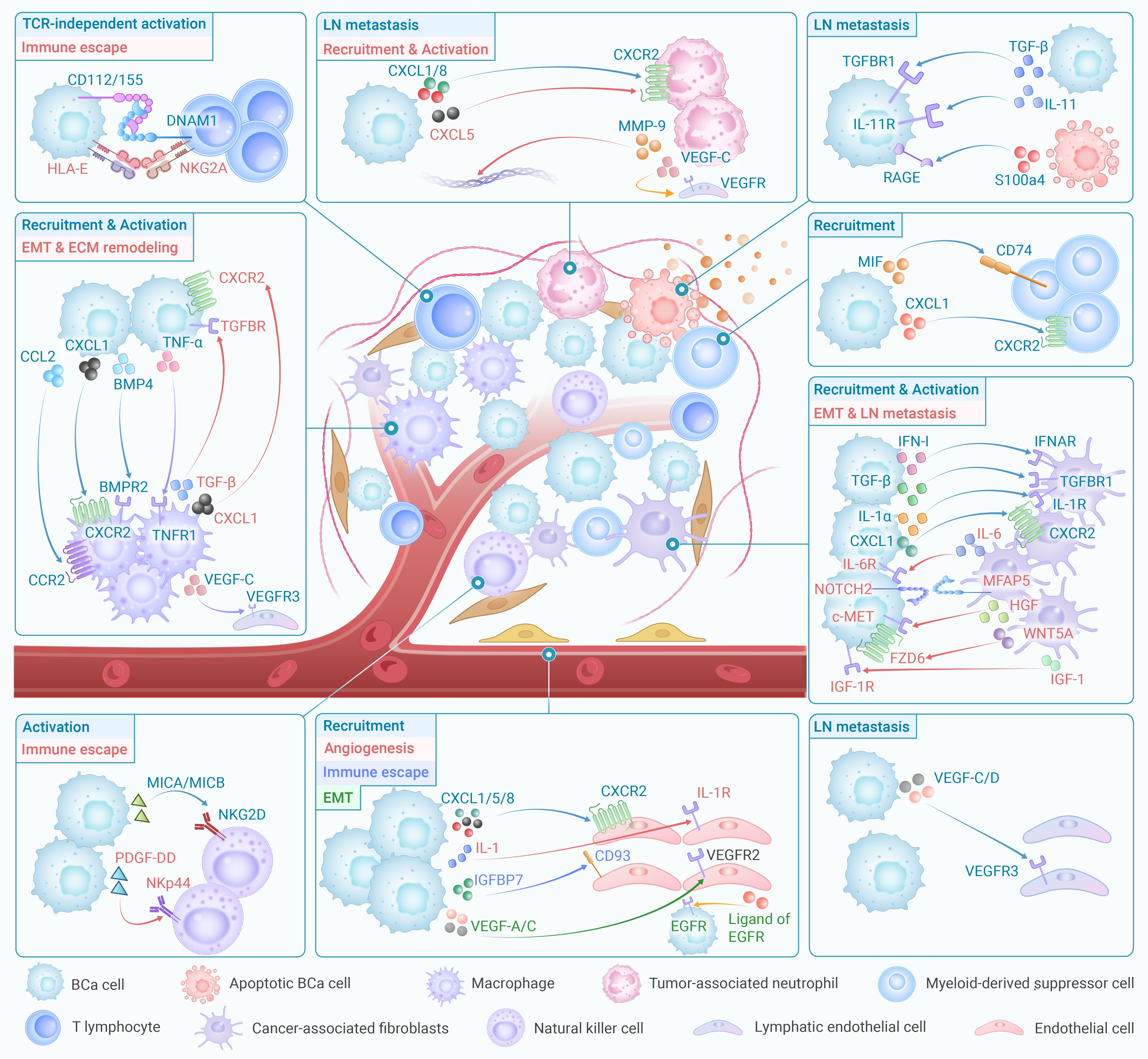
Figure 4.
Crosstalk between BCa and the tumor microenvironment drives BCa progression through ligand‒receptor interactions
