
The role of small Extracellular Vesicles (sEVs) and Rab27a in nanoparticle metastasis and tumor targeting
-

-
REFERENCES
[1] Zhong W., Xiao Z., Qin Z., et al. (2023). Tumor-derived small extracellular vesicles inhibit the efficacy of CAR T cells against solid tumors. Cancer Res. 83:2790−2806. DOI:10.1158/0008-5472.CAN-22-2220 [2] Nia H. T., Munn L. L. and Jain R. K. (2020). Physical traits of cancer. Science 370:eaaz0868. DOI:10.1126/science.aaz0868 [3] Ostrowski M., Carmo N. B., Krumeich S., et al. (2010). Rab27a and Rab27b control different steps of the exosome secretion pathway. Nat. Cell Biol. 12:19-30; sup pp 11-13. DOI:10.1038/ncb2000 [4] Alshaer W., Zureigat H., Al Karaki A., et al. (2021). siRNA: Mechanism of action, challenges, and therapeutic approaches. Eur. J. Pharmacol. 905:174178. DOI:10.1016/j.ejphar.2021.174178 [5] Xiong J., Wang Y., Wang H., et al. (2024). GHRH-stimulated pituitary small extracellular vesicles inhibit hepatocyte proliferation and IGF-1 expression by its cargo miR-375-3p. J. Nanobiotechnology 22:649. DOI:10.1186/s12951-024-02857-y -
ABOUT THIS ARTICLE
Cite this article:
Si J., Su X., Jin Z., et al. (2025). The role of small Extracellular Vesicles (sEVs) and Rab27a in nanoparticle metastasis and tumor targeting. The Innovation Medicine 3:100126. https://doi.org/10.59717/j.xinn-med.2025.100126
Welcome!
To request copyright permission to republish or share portions of our works, please visit Copyright Clearance Center's (CCC) Marketplace website at marketplace.copyright.com.
Export File
Citation
Si J., Su X., Jin Z., et al. (2025). The role of small Extracellular Vesicles (sEVs) and Rab27a in nanoparticle metastasis and tumor targeting. The Innovation Medicine 3:100126. https://doi.org/10.59717/j.xinn-med.2025.100126

Format
Content
 DownLoad:
-
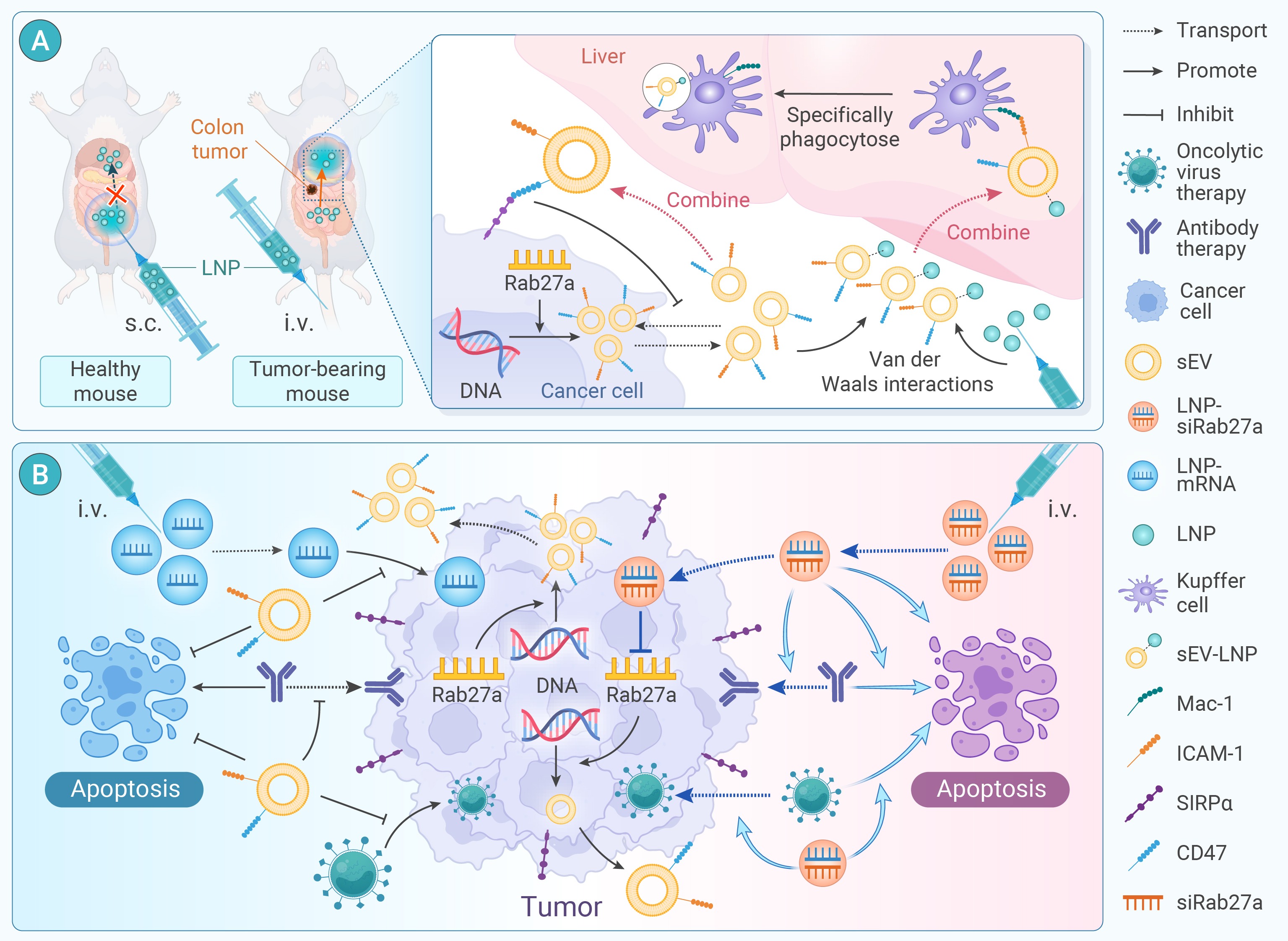
Figure 1.
Unraveling the role of sEVs in tumor defense mechanisms and its implications for nanoparticle-based cancer therapies
