
An integrated exposome risk prioritization strategy for disease-specific substance priority listing: Preeclampsia as a proof-of-concept
-
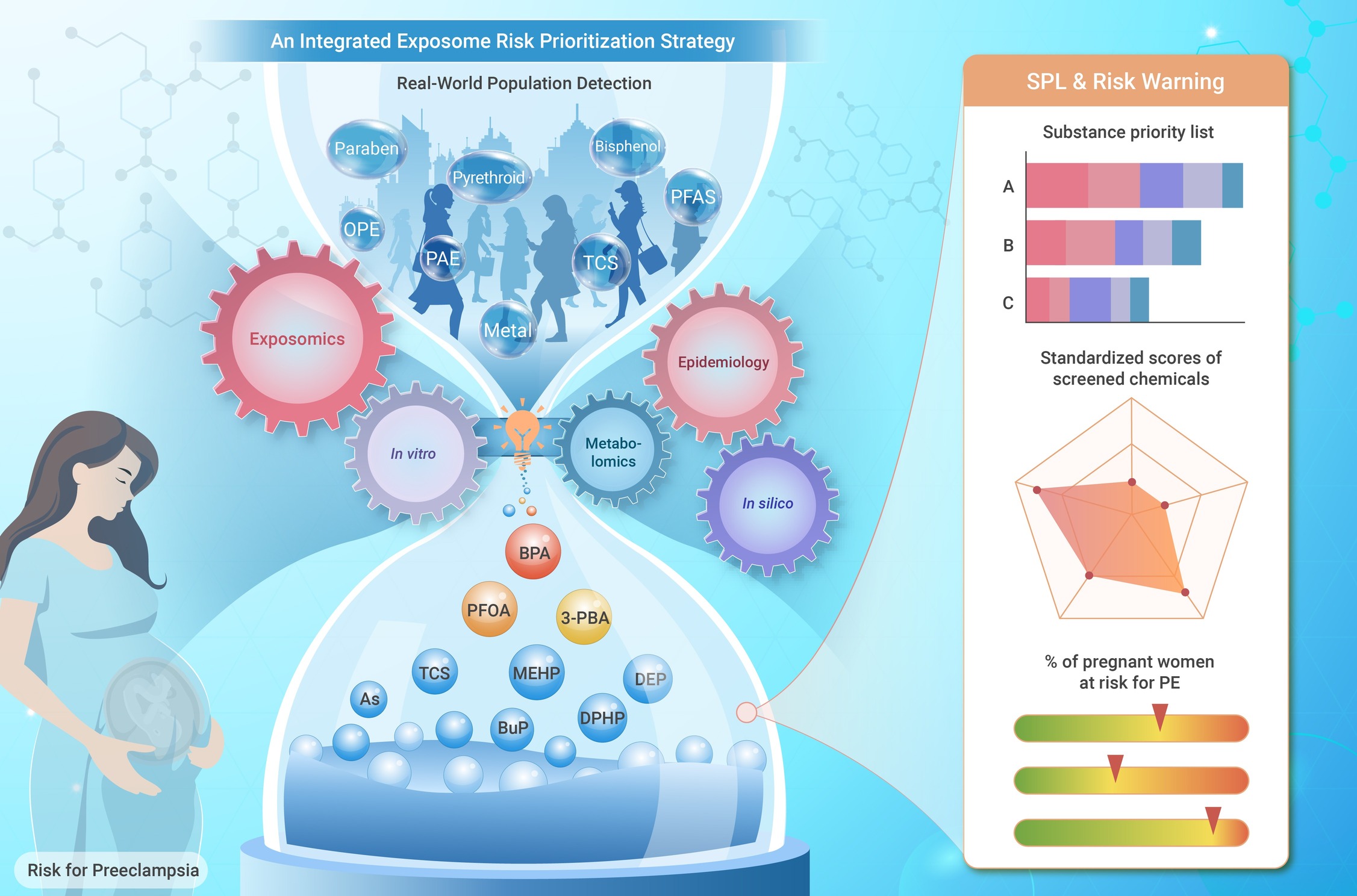
GRAPHICAL ABSTRACT
 DownLoad:
Full size image
DownLoad:
Full size image
-
PUBLIC SUMMARY
-
The role of environmental causes in pregnancy complications is increasingly recognized.
From exposomes to multi-omics, integrating research strategy for comprehensive chemical risk assessment.
Bisphenol A, perfluorooctanoic acid and 3-phenoxybenzoic acid are the main risk factors for PE.
Establishes chemical risk hierarchy for PE using exposure thresholds and mechanistical evidence.
-
-
ABSTRACT
Environmental risk assessment and management policies are challenged by the ever-mounting number of chemicals, mandating effective substance priority list (SPL) for health risks. Hence, a comprehensive SPL tool considering evidence from varying levels is highly needed, particularly with disease-specific precision. Here, we constructed an integrated chemical risk ranking score (ICRRS) approach based on exposomic profiling, epidemiological analyses, in vitro cytotoxicity, metabolism-disruption, and in silico toxicity, to prioritize chemicals related to the risk of preeclampsia (PE). Using this approach, of the 99 chemicals measured, we shortlisted nine chemicals of concern that are most relevant to PE, including bisphenol A, perfluorooctanoic acid and 3-phenoxybenzoic acid, affecting up to 50% women. This multi-dimensional approach containing complementary evidence from various aspects, allowing a precision prioritization of chemicals in relation to PE risk. This model of SPL construction can be adapted for other diseases, assisting the identification of pivotal substances that should be placed under more strict regulations on production and usage for human health. -

-
REFERENCES
[1] Vermeulen R., Schymanski E. L., Barabási A.-L., et al. (2020). The exposome and health: Where chemistry meets biology. Science 367:392−396. DOI:10.1126/science.aay3164 [2] Punt A., Bouwmeester H., Blaauboer B. J., et al. (2020). New approach methodologies (NAMs) for human-relevant biokinetics predictions: Meeting the paradigm shift in toxicology towards an animal-free chemical risk assessment. Altex 37:607−622. DOI:10.14573/altex.2003242 [3] Major M. B. and Moon R. T. (2009). “Omic” risk assessment. Sci. Signal. 2:eg7. DOI:10.1126/scisignal.272eg7 [4] Drakvik E., Altenburger R., Aoki Y., et al. (2020). Statement on advancing the assessment of chemical mixtures and their risks for human health and the environment. Environ. Int. 134:105267. DOI:10.1016/j.envint.2019.105267 [5] Posthuma L., Altenburger R., Backhaus T., et al. (2019). Improved component-based methods for mixture risk assessment are key to characterize complex chemical pollution in surface waters. Environ. Sci. Eur. 31:1−11. DOI:10.1186/s12302-019-0246-5 [6] Knapen D., Angrish M. M., Fortin M. C., et al. (2018). Adverse outcome pathway networks I: Development and applications. Environ. Toxicol. Chem. 37:1723−1733. DOI:10.1002/etc.4125 [7] Chen Q., Wei X., Xie R., et al. (2024). Beyond physical particles: A holistic assessment of human health risks from real-world micro-nanoplastic exposure. Innov. Med. 2:100104. DOI:10.59717/j.xinn-med.2024.100104 [8] Fang M., Hu L., Chen D., et al. (2021). Exposome in human health: Utopia or wonderland. The Innovation 2:100172. DOI:10.1016/j.xinn.2021.100172 [9] Zhao F., Li L., Chen Y., et al. (2021). Risk-based chemical ranking and generating a prioritized human exposome database. Environ. Health Persp. 129:047014. DOI:10.1289/EHP7722 [10] Feng X., Li D., Liang W., et al. (2021). Recognition and prioritization of chemical mixtures and transformation products in Chinese estuarine waters by suspect screening analysis. Environ. Sci. Technol. 55:9508−9517. DOI:10.1021/acs.est.0c06773 [11] Vryzas Z., Ramwell C. and Sans C. (2020). Pesticide prioritization approaches and limitations in environmental monitoring studies: From Europe to Latin America and the Caribbean. Environ. Int. 143:105917. DOI:10.1016/j.envint.2020.105917 [12] Agency for Toxic Substances and Disease Registry Division of Toxicology and Human Health Sciences. (2022). https://www.atsdr.cdc.gov/index.html. [13] List of New Pollutants to be Controlled (2023 Edition). https://www.mee.gov.cn/xxgk2018/xxgk/xxgk02/202212/t20221230_1009167.html. [14] Agency E. E. Europe has the Human Biomonitoring for Europe. (2022). https://www.hbm4eu.eu/. [15] Wang F., Xiang L., Sze-Yin Leung K., et al. (2024). Emerging contaminants: A One Health perspective. The Innovation 5:100612. DOI:10.1016/j.xinn.2024.100612 [16] Burton G. J. and Fowden A. L. (2015). The placenta: A multifaceted, transient organ. Philos. Trans. R. Soc. Lond. B Biol. Sci. 370:20140066. DOI:10.1098/rstb.2014.0066 [17] Rosen E. M., Muñoz M. I., McElrath T., et al. (2018). Environmental contaminants and preeclampsia: A systematic literature review. J. Toxicol. Environ. Health B Crit. Rev. 21:291−319. DOI:10.1080/10937404.2018.1554515 [18] Cantonwine D. E., Meeker J. D., Ferguson K. K., et al. (2016). Urinary concentrations of bisphenol A and phthalate metabolites measured during pregnancy and risk of preeclampsia. Environ. Health Perspect. 124:1651−1655. DOI:10.1289/Ehp188 [19] Hirke A., Varghese B., Varade S., et al. (2023). Exposure to endocrine-disrupting chemicals and risk of gestational hypertension and preeclampsia: A systematic review and meta-analysis. Environ. Pollut. 317:120828. DOI:10.1016/j.envpol.2022.120828 [20] Tian Y., Zhou Q., Zhang L., et al. (2023). In utero exposure to per-/polyfluoroalkyl substances (PFASs): Preeclampsia in pregnancy and low birth weight for neonates. Chemosphere 313:137490. DOI:10.1016/j.chemosphere.2022.137490 [21] Borghese M. M., Walker M., Helewa M. E., et al. (2020). Association of perfluoroalkyl substances with gestational hypertension and preeclampsia in the MIREC study. Environ. Int. 141:105789. DOI:10.1016/j.envint.2020.105789 [22] Tao L, Tang W, Xia Z, et al. (2024). Machine learning predicts the serum PFOA and PFOS levels in pregnant women: Enhancement of fatty acid status on model performance. Environ. Int. 190:108837. DOI:10.1016/j.envint.2024.108837 [23] Deng M., Gao T., Tao L., et al. (2023). Are human exposure assessment the same for non-persistent organic chemicals-from the lens of urinary variability and predictability. Sci. Total. Environ. 868:161542. DOI:10.1016/j.scitotenv.2023.161542 [24] Liu M., Jia S., Dong T., et al. (2020). Metabolomic and transcriptomic analysis of MCF-7 cells exposed to 23 chemicals at human-relevant levels: Estimation of individual chemical contribution to effects. Environ. Health Perspect. 128:127008. DOI:10.1289/EHP6641 [25] Fourth national report on human exposure to environmental chemicals: updated tables, March 2018, Volume two. (2018). https://dtsc.ca.gov/wp-content/uploads/sites/31/2018/10/CDC_Report_2.pdf. [26] Zhang Y., Lv J., Fan Y. J., et al. (2023). Evaluating the effect of gestational exposure to perfluorohexane sulfonate on placental development in mice combining alternative splicing and gene expression analyses. Environ. Health Perspect. 131:117011. DOI:10.1289/ehp13217 [27] Davis A. P., Wiegers T. C., Johnson R. J., et al. (2023). Comparative toxicogenomics database (CTD): update 2023. Nucleic Acids Res. 51:D1257−D1262. DOI:10.1093/nar/gkac833 [28] Mi H., Muruganujan A., Casagrande J. T., et al. (2013). Large-scale gene function analysis with the PANTHER classification system. Nat. Protoc. 8:1551−1566. DOI:10.1038/nprot.2013.092 [29] Rylander L., Lindh C. H., Hansson S. R., et al. (2020). Per-and polyfluoroalkyl substances in early pregnancy and risk for preeclampsia: A case-control study in southern Sweden. Toxics 8:43. DOI:10.3390/toxics8020043 [30] Bommarito P. A., Ferguson K. K., Meeker J. D., et al. (2021). Maternal levels of perfluoroalkyl substances (PFAS) during early pregnancy in relation to preeclampsia subtypes and biomarkers of preeclampsia risk. Environ. Health Perspect. 129:107004. DOI:10.1289/EHP9091 [31] Huang R., Chen Q., Zhang L., et al. (2019). Prenatal exposure to perfluoroalkyl and polyfluoroalkyl substances and the risk of hypertensive disorders of pregnancy. Environ. Health-Glob. 18:5. DOI:10.1186/s12940-018-0445-3 [32] Wang Z., Zhou Y., Liang H., et al. (2021). Prenatal exposure to bisphenol analogues and digit ratio in children at ages 4 and 6 years: A birth cohort study. Environ. Pollut. 278:116820. DOI:10.1016/j.envpol.2021.116820 [33] Engdahl E., Svensson K., Lin P.-I. D., et al. (2021). DNA methylation at GRIN2B partially mediates the association between prenatal bisphenol F exposure and cognitive functions in 7-year-old children in the SELMA study. Environ. Int. 156:106617. DOI:10.1016/j.envint.2021.106617 [34] Hartung T. (2019). Predicting toxicity of chemicals: Software beats animal testing. EFSA J. 17:e170710. DOI:10.2903/j.efsa.2019.e170710 [35] Cong Y., Han X., Wang Y., et al. (2020). Drug toxicity evaluation based on organ-on-a-chip technology: A review. Micromachines (Basel) 11:381. DOI:10.3390/mi11040381 [36] Townsend P. A. and Grayson M. N. (2021). Density functional theory in the prediction of mutagenicity: A perspective. Chem. Res. Toxicol. 34:179−188. DOI:10.1021/acs.chemrestox.0c00113 [37] Sedykh A. Y., Shah R. R., Kleinstreuer N. C., et al. (2021). Saagar-A new, extensible set of molecular substructures for QSAR/QSPR and read-across predictions. Chem. Res. Toxicol. 34:634−640. DOI:10.1021/acs.chemrestox.0c00464 [38] Liang C., Ding R., Sun Q., et al. (2024). An overview of adverse outcome pathway links between PM(2.5) exposure and cardiac developmental toxicity. Environ. Health 2:105-113. DOI:10.1021/envhealth.3c00143. [39] Choi W., Kim S., Baek Y.-W., et al. (2017). Exposure to environmental chemicals among Korean adults-updates from the second Korean National Environmental Health Survey (2012–2014). Int. J. Hyg. Envir. Heal. 220:29−35. DOI:10.1016/j.ijheh.2016.10.002 [40] Agency for Toxic Substances and Disease Registry. (2024). https://www.atsdr.cdc.gov/index.html. [41] Vivienne H. (2024). Pollutants in EU waters: Update of chemical substances listed for control. European Parliamentary Research Service 749.772. https://www.europarl.europa.eu/RegData/etudes/BRIE/2023/749772/EPRS_BRI(2023)749772_EN.pdf. [42] Substances of Priority Control and Product Notification under K-REACH. (2019). https://www.chemsafetypro.com/Topics/Korea/Substances_of_Priority_Control_and_Product_Notification_under_K-REACH.html. [43] Whaley P., Halsall C., Ågerstrand M., et al. (2016). Implementing systematic review techniques in chemical risk assessment: Challenges, opportunities and recommendations. Environ. Int. 92-93:556−564. DOI:10.1016/j.envint.2015.11.002 [44] Zhao F., Li L., Chen Y., et al. (2021). Risk-based chemical ranking and generating a prioritized human exposome database. Environ. Health Perspect. 129:47014. DOI:10.1289/ehp7722 [45] Han P., Li X., Yang J., et al. (2024). Advancing toxicity predictions: A review on in vitro to in vivo extrapolation in next-generation risk assessment. Environ. Health 2:499−513. DOI:10.1021/envhealth.4c00043 [46] Zhao Y., Zhou J., Xu H., et al. (2023). Prenatal exposure to perfluorooctane sulfonate and perfluorooctanoate and the risk of preeclampsia: A nested case-control study in Shanghai, China. Chin. Med. J. 136:857−859. DOI:10.1097/cm9.0000000000002414 [47] Liu H., Pu Y., Ai S., et al. (2022). The relationship between preeclampsia and arsenic concentration in the peripheral blood. Biol. Trace. Elem. Res. 200:3965−3974. DOI:10.1007/s12011-021-02988-5 [48] Ye Y., Tang Y., Xiong Y., et al. (2019). Bisphenol A exposure alters placentation and causes preeclampsia‐like features in pregnant mice involved in reprogramming of DNA methylation of WNT2. FASEB J. 33:2732. DOI:10.1096/fj.201800934RRR [49] Wang Y., Wang K. K., Han T. B., et al. (2020). Exposure to multiple metals and prevalence for preeclampsia in Taiyuan, China. Environ. Int. 145:106098. DOI:10.1016/j.envint.2020.106098 [50] Honkisz E., Zieba-Przybylska D. and Wojtowicz A. K. (2012). The effect of triclosan on hormone secretion and viability of human choriocarcinoma JEG-3 cells. Reprod. Toxicol. 34:385−392. DOI:10.1016/j.reprotox.2012.05.094 -
ABOUT THIS ARTICLE
Cite this article:
Gao T., Tao L., Gao C., et al. (2025). An integrated exposome risk prioritization strategy for disease-specific substance priority listing: Preeclampsia as a proof-of-concept. The Innovation Medicine 3:100136. https://doi.org/10.59717/j.xinn-med.2025.100136
Welcome!
To request copyright permission to republish or share portions of our works, please visit Copyright Clearance Center's (CCC) Marketplace website at marketplace.copyright.com.
Article Metrics
Relative Articles
Cited by
Export File
Citation
Gao T., Tao L., Gao C., et al. (2025). An integrated exposome risk prioritization strategy for disease-specific substance priority listing: Preeclampsia as a proof-of-concept. The Innovation Medicine 3:100136. https://doi.org/10.59717/j.xinn-med.2025.100136

Format
Content
-
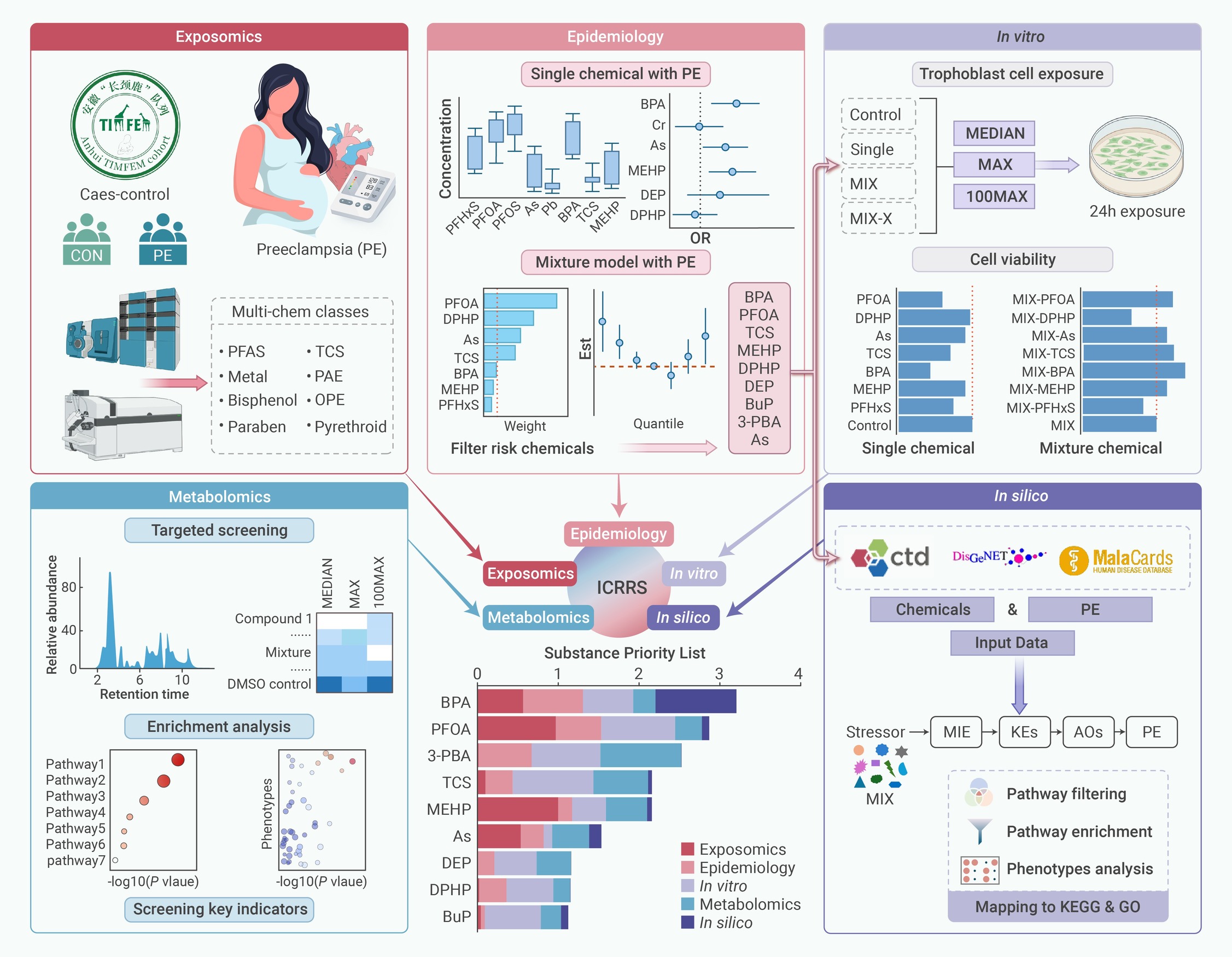
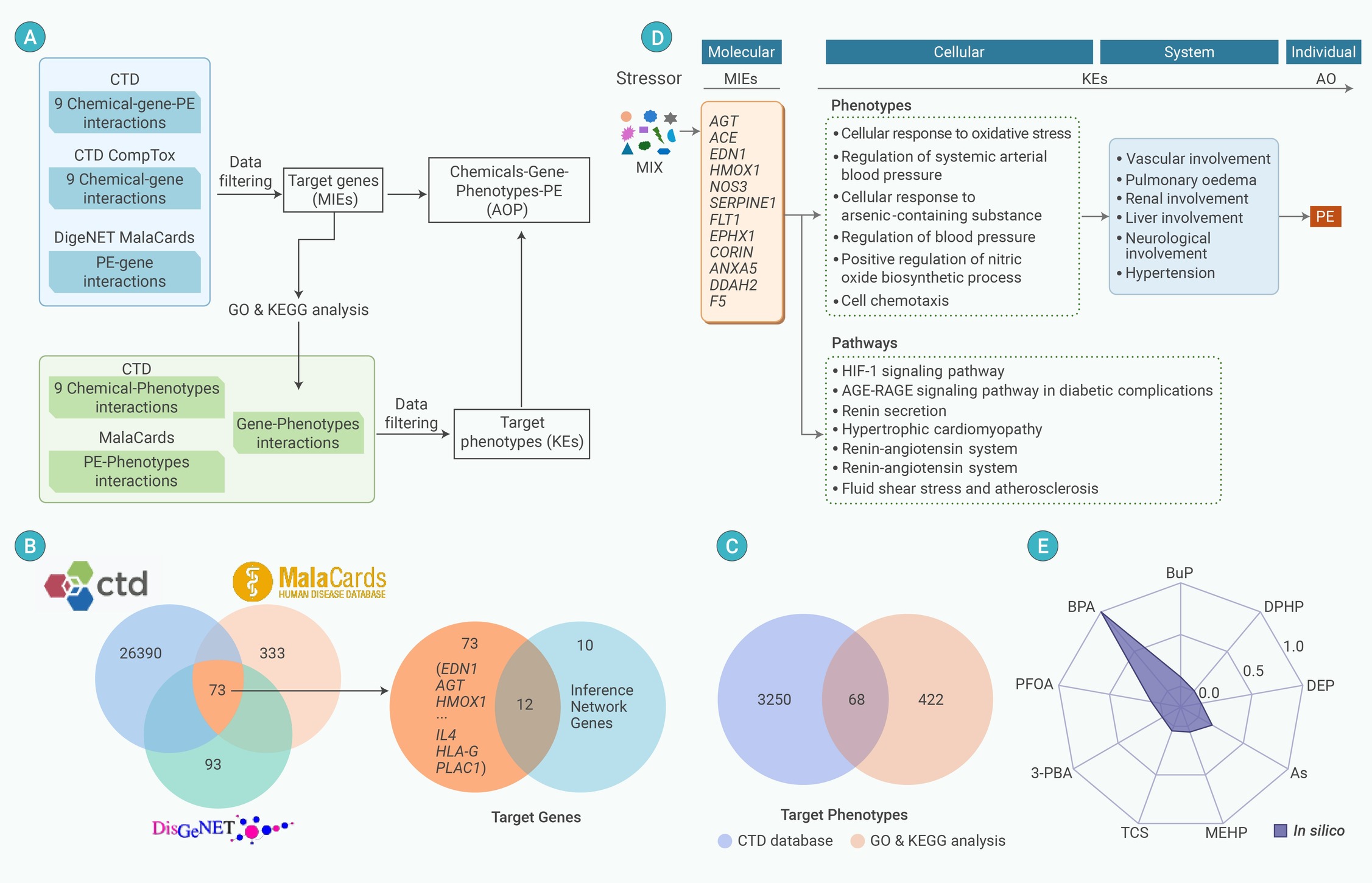
Figure 1.
Overview of the integrated chemical exposome risk prioritization strategy, using PE as a model disease
-
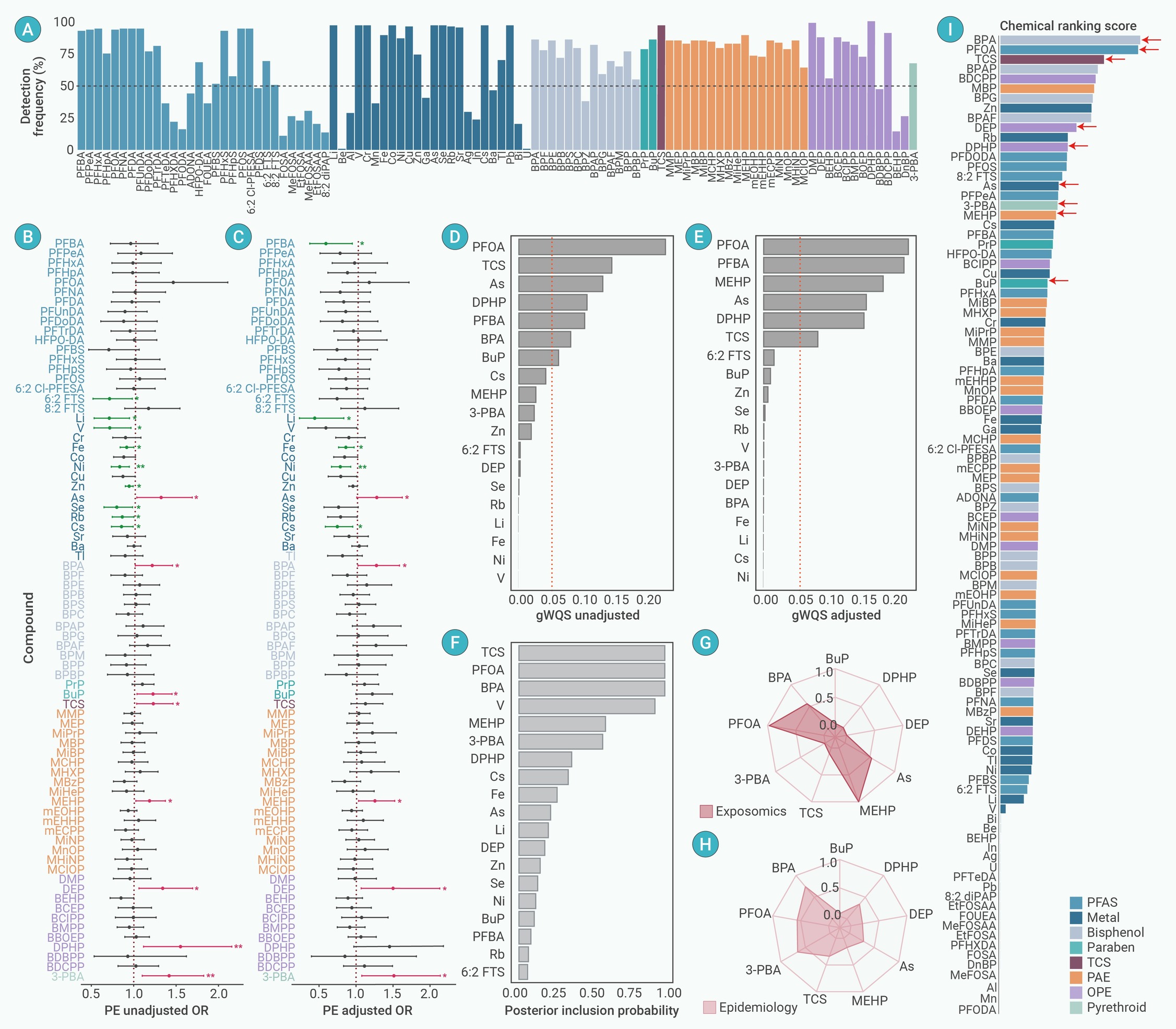
Figure 2.
Exposomic profiling and epidemiological screening for chemicals in relation to elevated risks (exposure risk and human health risk) of PE in the pregnant women
-
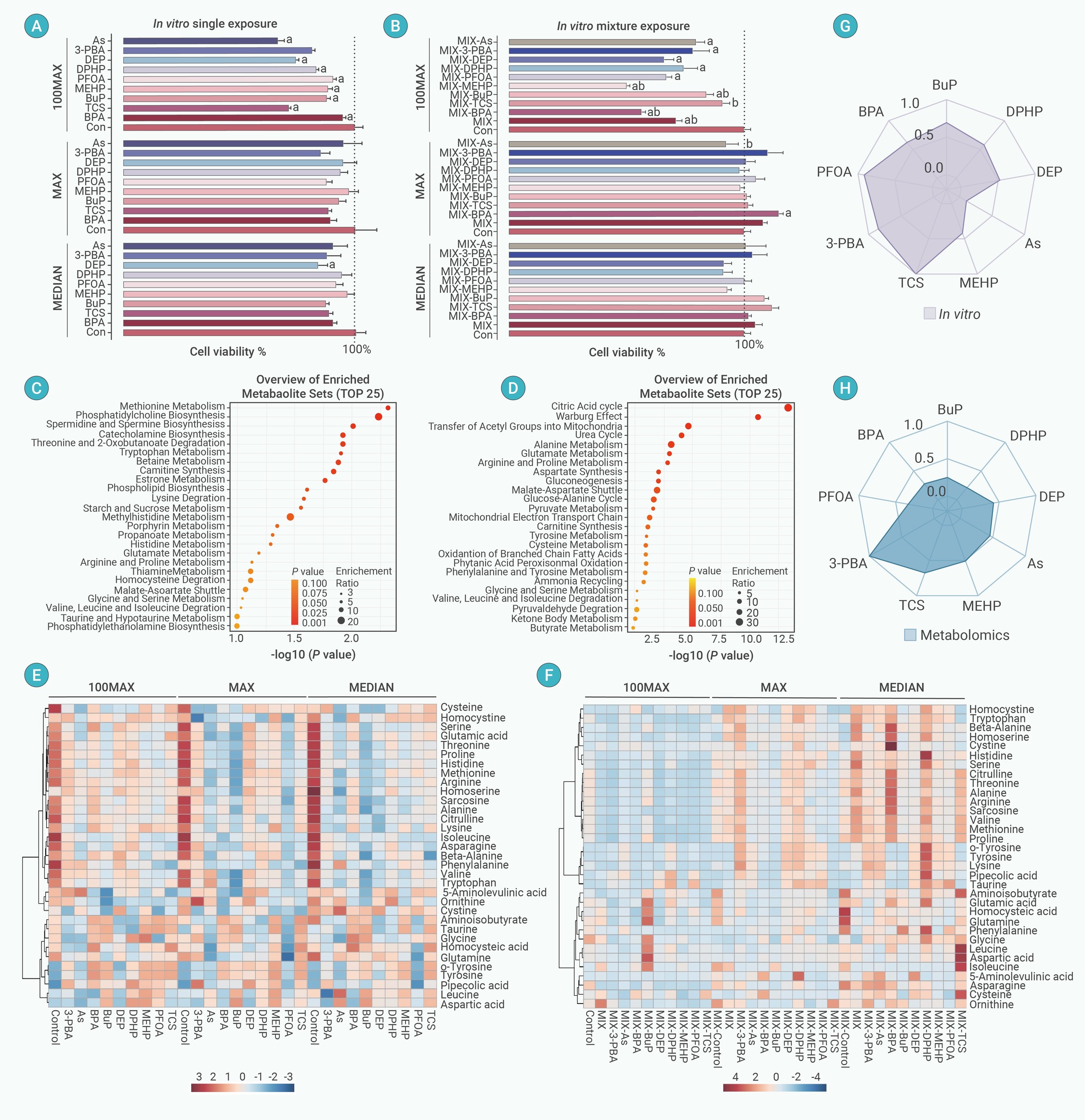
Figure 3.
In vitro cytotoxicity and metabolism disruption of screened chemicals
-
Figure 4.
In silico toxicity of screened chemicals
-
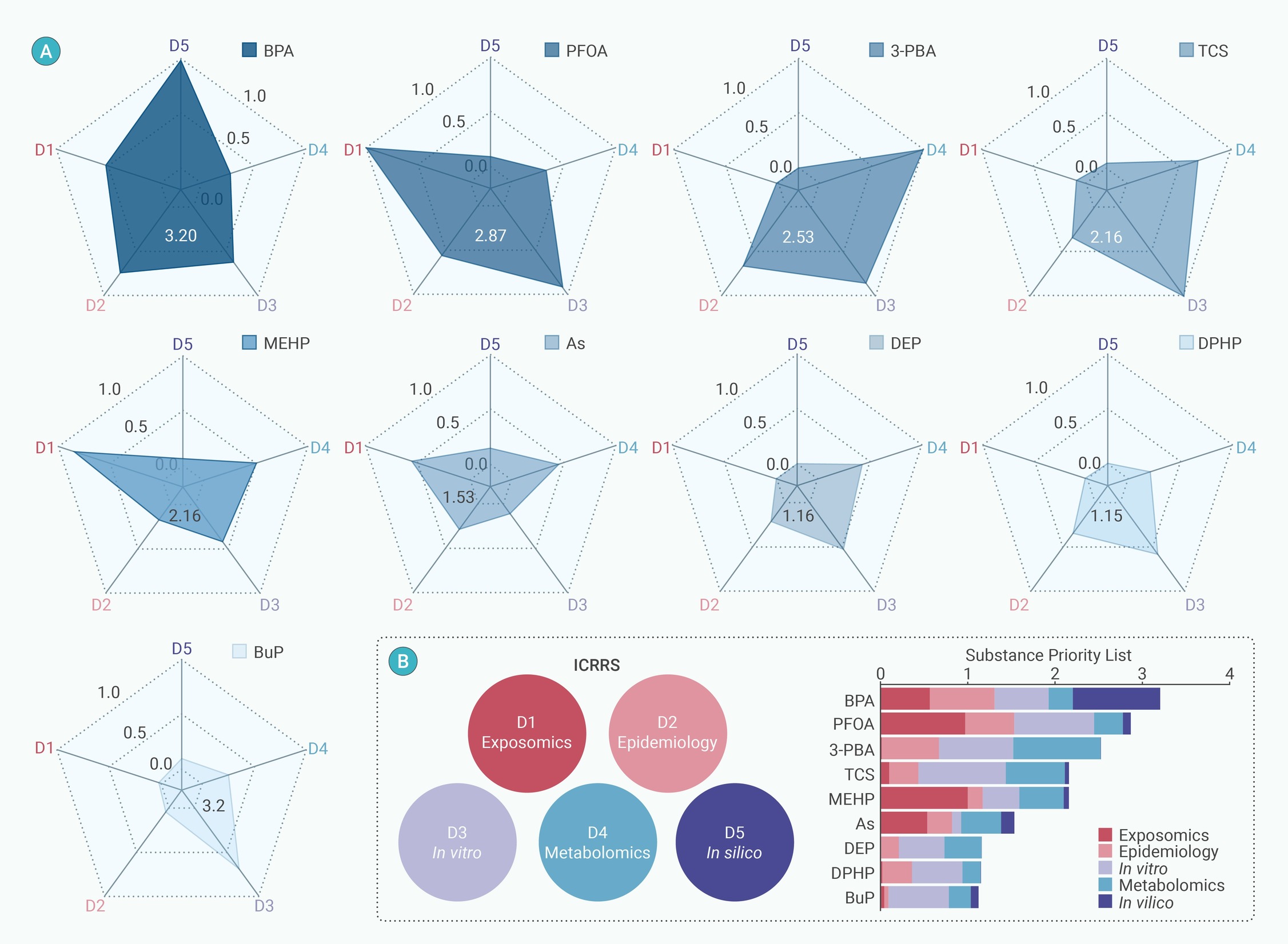
Figure 5.
SPL of environmental chemicals for PE using the ICRRS
-
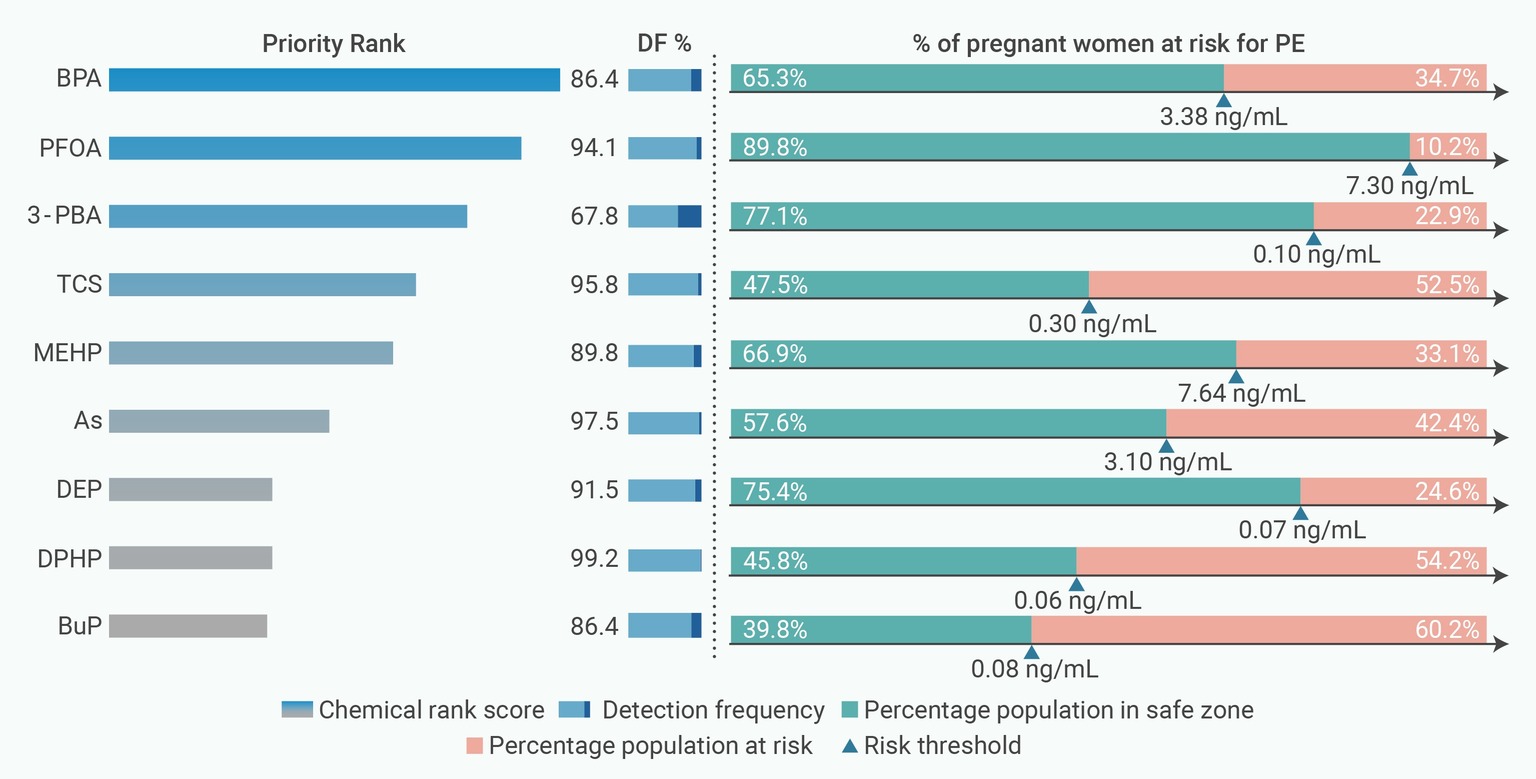
Figure 6.
Precision prioritization of chemicals considering both our PE-specific SPL and exposure risk in this study
