
Causal association and genetic correlation of frailty with metabolic dysfunction-associated steatotic liver disease: Epidemiological and genetic analyses
-
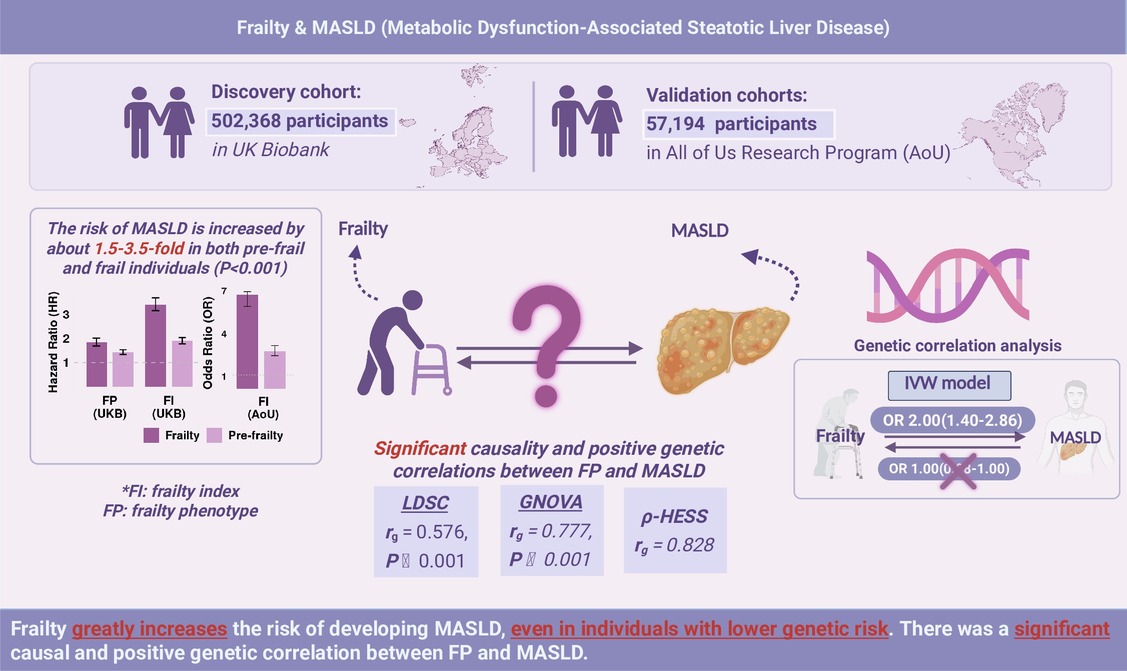
GRAPHICAL ABSTRACT
 DownLoad:
Full size image
DownLoad:
Full size image
-
PUBLIC SUMMARY
-
The risk of metabolic dysfunction-associated fatty liver disease (MASLD) increases significantly with frailty.
There was a significant causal and positive genetic correlation between frailty and MASLD.
Early clinical frailty screening can identify high-risk populations for MASLD before liver damage occurs.
-
-
ABSTRACT
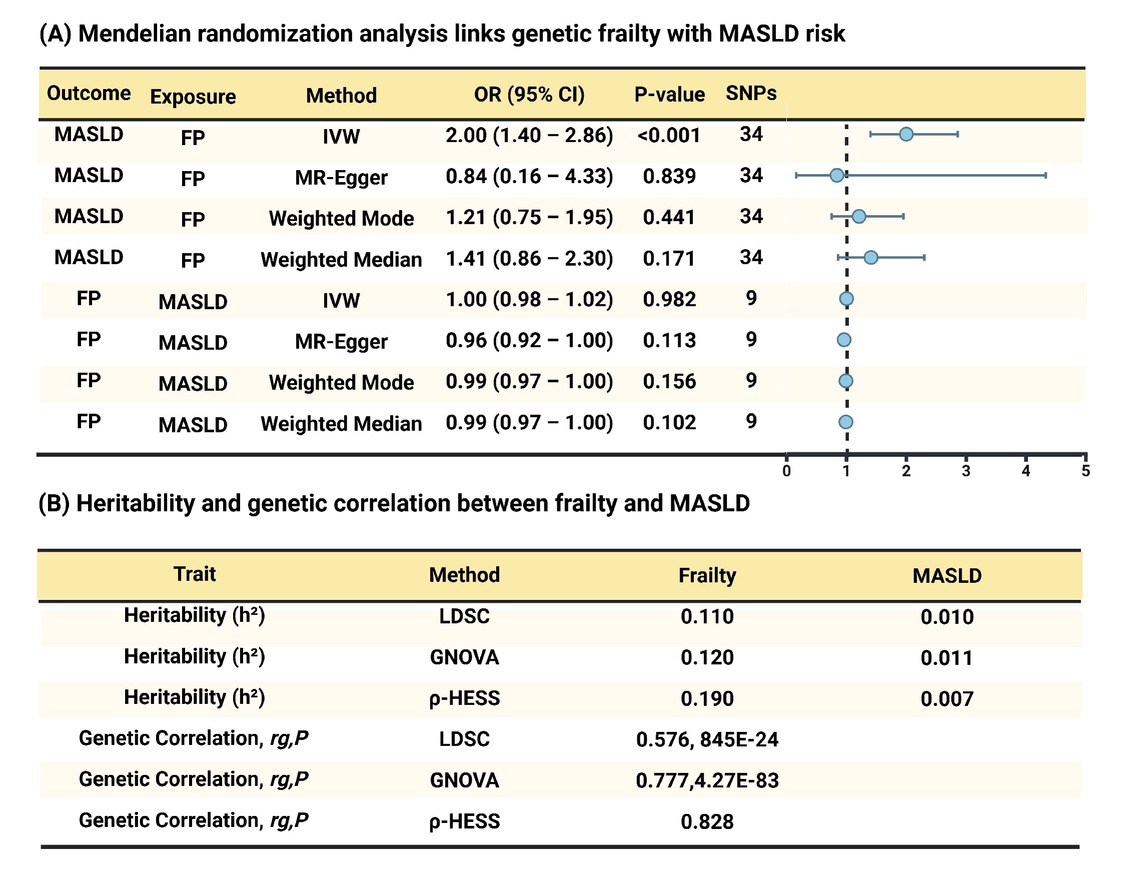
Frailty has become a major public health issue, but its association with Metabolic dysfunction-associated steatotic liver disease (MASLD) remains controversial. We conducted an observational study of frailty and MASLD using the frailty index (FI) and frailty phenotype (FP) in the UK Biobank. And the results were validated in the National Health and the All of Us Research Program (AoU) database. We explored the causal relationship and genetic correlation between frailty and MASLD. In the UK population, both pre-frail and frail individuals had increased risks of MASLD in the analyses of FI and FP. Notably, the odds ratios of FI to the occurrence of MASLD were even more significant in our study in the US population. The odds ratios were 2.75 ([95% CI 2.41-3.15]; P<0.001) for pre-frailty and 6.88 (95% CI 6.02-7.90; P<0.001) for frailty. There was significant causality (OR 2.00; [95% CI 1.40-2.86]; P<0.001) and positive genetic correlations (LDSC: rg =0.576, P<0.001; GNOVA: rg =0.777, P<0.001; ρ-HESS: rg =0.828) between FP and MASLD. Frailty greatly increases the risk of developing MASLD. There was a significant causal and positive genetic correlation between FP and MASLD. -

-
REFERENCES
[1] Rinella M.E., Satapathy S.K., Brandman D., et al. (2023). Factors impacting survival in those transplanted for NASH cirrhosis: Data from the NailNASH consortium. Clin. Gastroenterol. Hepatol. 21:445−455.e2. DOI:10.1016/j.cgh.2022.02.028 [2] Huang D.Q., Wong V.W.S., Rinella M.E., et al. (2025). Metabolic dysfunction-associated steatotic liver disease in adults. Nat. Rev. Dis. Primers. 11:14. DOI:10.1038/s41572-025-00599-1 [3] Younossi Z., Anstee Q.M., Marietti M., et al. (2018). Global burden of NAFLD and NASH: Trends, predictions, risk factors and prevention. Nat. Rev. Gastroenterol. Hepatol. 15:11−20. DOI:10.1038/nrgastro.2017.109 [4] Fried L.P., Tangen C.M., Walston J., et al. (2001). Frailty in older adults: Evidence for a phenotype. J. Gerontol. A Biol. Sci. Med. Sci. 56:M146−M156. DOI:10.1093/gerona/56.3.m146 [5] Miller J.C., MacDonell S.O., Gray A.R., et al. (2016). Iodine status of New Zealand elderly residents in long-term residential care. Nutrients 8:445. DOI:10.3390/nu8080445 [6] Xu C.Q., Mohamad Y., Kappus M.R., et al. (2021). The relationship between frailty and cirrhosis etiology: From the Functional Assessment in Liver Transplantation (FrAILT) Study. Liver Int. 41:2467−2473. DOI:10.1111/liv.15006 [7] Younossi Z.M., Koenig A.B., Abdelatif D., et al. (2016). Global epidemiology of nonalcoholic fatty liver disease-Meta-analytic assessment of prevalence, incidence, and outcomes. Hepatology 64:73−84. DOI:10.1002/hep.28431 [8] Chalasani N., Younossi Z., Lavine J.E., et al. (2018). The diagnosis and management of nonalcoholic fatty liver disease: Practice guidance from the American Association for the Study of Liver Diseases. Hepatology 67:328−357. DOI:10.1002/hep.29367 [9] Marchesini G., Brizi M., Bianchi G., et al. (2001). Nonalcoholic fatty liver disease: A feature of the metabolic syndrome. Diabetes 50:1844−1850. DOI:10.2337/diabetes.50.8.1844 [10] Sudlow C., Gallacher J., Allen N., et al. (2015). UK biobank: An open access resource for identifying the causes of a wide range of complex diseases of middle and old age. PLoS Med. 12:e1001779. DOI:10.1371/journal.pmed.1001779 [11] Hammack-Aviran C., Fair A.M., Aldrich M., et al. (2023). Integrating participants as partners in research governance and operations: An approach from the All of Us Research Program Engagement Core. BMJ Open. 13:e068100. DOI:10.1136/bmjopen-2022-068100 [12] Mendonça N., Kingston A., Yadegarfar M., et al. (2020). Transitions between frailty states in the very old: The influence of socioeconomic status and multi-morbidity in the Newcastle 85+ cohort study. Age Ageing 49:974−981. DOI:10.1093/ageing/afaa054 [13] Rockwood K. and Mitnitski A. (2007). Frailty in relation to the accumulation of deficits. J. Gerontol. A Biol. Sci. Med. Sci. 62:722−727. DOI:10.1093/gerona/62.7.722 [14] Kennedy C.C., Ioannidis G., Rockwood K., et al. (2014). A frailty index predicts 10-year fracture risk in adults age 25 years and older: Results from the Canadian Multicentre Osteoporosis Study (CaMos). Osteoporos. Int. 25:2825−2832. DOI:10.1007/s00198-014-2828-9 [15] Rockwood K., Song X., MacKnight C., et al. (2005). A global clinical measure of fitness and frailty in elderly people. CMAJ 173:489−495. DOI:10.1503/cmaj.050051 [16] Kleiner D.E., Brunt E.M., Van Natta M., et al. (2005). Design and validation of a histological scoring system for nonalcoholic fatty liver disease. Hepatology 41:1313−1321. DOI:10.1002/hep.20701 [17] Lonardo A., Nascimbeni F., Ballestri S., et al. (2019). Sex differences in nonalcoholic fatty liver disease: State of the art and identification of research gaps. Hepatology 70:1457−1469. DOI:10.1002/hep.30626 [18] Stringhini S., Carmeli C., Jokela M., et al. (2017). Socioeconomic status and the 25 × 25 risk factors as determinants of premature mortality: A multicohort study and meta-analysis of 1.7 million men and women. Lancet 389:1229-1237. DOI:10.1016/S0140-6736(16)32380-7 [19] Pampel F.C., Krueger P.M. and Denney J.T. (2010). Socioeconomic disparities in health behaviors. Annu. Rev. Sociol. 36:349−370. DOI:10.1146/annurev.soc.012809.102529 [20] Luppino F.S., de Wit L.M., Bouvy P.F., et al. (2010). Overweight, obesity, and depression: A systematic review and meta-analysis of longitudinal studies. Arch. Gen. Psychiatry 67:220−229. DOI:10.1001/archgenpsychiatry.2010.2 [21] Ascha M.S., Hanouneh I.A., Lopez R., et al. (2010). The incidence and risk factors of hepatocellular carcinoma in patients with nonalcoholic steatohepatitis. Hepatology 51:1972−1978. DOI:10.1002/hep.23527 [22] Barchetta I., Cimini F.A. and Cavallo M.G. (2020). Vitamin D and metabolic dysfunction-associated fatty liver disease (MAFLD): An update. Nutrients 12:3302. DOI:10.3390/nu12113302 [23] Zhang Z. (2016). Multiple imputation with multivariate imputation by chained equation (MICE) package. Ann. Transl. Med. 4:30. DOI:10.3978/j.issn.2305-5839.2015.12.63 [24] Bycroft C., Freeman C., Petkova D., et al. (2018). The UK Biobank resource with deep phenotyping and genomic data. Nature 562:203−209. DOI:10.1038/s41586-018-0579-z [25] Ekstedt M., Hagström H., Nasr P., et al. (2015). Fibrosis stage is the strongest predictor for disease-specific mortality in NAFLD after up to 33 years of follow-up. Hepatology 61:1547−1554. DOI:10.1002/hep.27368 [26] Choi S.W. and O'Reilly P.F. (2019). PRSice-2: Polygenic Risk Score software for biobank-scale data. Gigascience 8:giz082. DOI:10.1093/gigascience/giz082 [27] von Hinke Kessler Scholder S., Smith G.D., Lawlor D.A., et al. (2011). Mendelian randomization: The use of genes in instrumental variable analyses. Health Econ. 20:893−896. DOI:10.1002/hec.1746 [28] Smith G.D. and Ebrahim S. (2003). 'Mendelian randomization': Can genetic epidemiology contribute to understanding environmental determinants of disease. Int. J. Epidemiol. 32:1−22. DOI:10.1093/ije/dyg070 [29] Bowden J., Davey Smith G., Haycock P.C., et al. (2016). Consistent estimation in mendelian randomization with some invalid instruments using a weighted median estimator. Genet. Epidemiol. 40:304−314. DOI:10.1002/gepi.21965 [30] Bowden J., Davey Smith G. and Burgess S. (2015). Mendelian randomization with invalid instruments: Effect estimation and bias detection through Egger regression. Int. J. Epidemiol. 44:512−525. DOI:10.1093/ije/dyv080 [31] Bulik-Sullivan B.K., Loh P.R., Finucane H.K., et al. (2015). LD Score regression distinguishes confounding from polygenicity in genome-wide association studies. Nat. Genet. 47:291−295. DOI:10.1038/ng.3211 [32] Zeng J., de Vlaming R., Wu Y., et al. (2018). Signatures of negative selection in the genetic architecture of human complex traits. Nat. Genet. 50:746−753. DOI:10.1038/s41588-018-0101-4 [33] Lai J.C., Dodge J.L., Kappus M.R., et al. (2020). Changes in frailty are associated with waitlist mortality in patients with cirrhosis. J. Hepatol. 73:575−581. DOI:10.1016/j.jhep.2020.03.029 [34] Targher G., Mantovani A., Grander C., et al. (2021). Association between non-alcoholic fatty liver disease and impaired cardiac sympathetic/parasympathetic balance in subjects with and without type 2 diabetes-The Cooperative Health Research in South Tyrol (CHRIS)-NAFLD sub-study. Nutr. Metab. Cardiovasc. Dis. 31:3464−3473. DOI:10.1016/j.numecd.2021.08.037 [35] Chang Y.W., Chen W.L., Lin F.G., et al. (2012). Frailty and its impact on health-related quality of life: A cross-sectional study on elder community-dwelling preventive health service users. PLoS One 7:e38079. DOI:10.1371/journal.pone.0038079 [36] Noureddin M., Vipani A., Bresee C., et al. (2018). NASH leading cause of liver transplant in women: Updated analysis of indications for liver transplant and ethnic and gender variances. Am. J. Gastroenterol. 113:1649−1659. DOI:10.1038/s41395-018-0088-6 [37] Muzurović E., Mikhailidis D.P. and Mantzoros C. (2021). Non-alcoholic fatty liver disease, insulin resistance, metabolic syndrome and their association with vascular risk. Metabolism 119:154770. DOI:10.1016/j.metabol.2021.154770 [38] Farrell G.C., Haczeyni F. and Chitturi S. (2018). Pathogenesis of NASH: How metabolic complications of overnutrition favour lipotoxicity and pro-inflammatory fatty liver disease. Adv. Exp. Med. Biol. 1061:19−44. DOI:10.1007/978-981-10-8684-7_3 [39] Serviddio G., Sastre J., Bellanti F., et al. (2008). Mitochondrial involvement in non-alcoholic steatohepatitis. Mol. Aspects. Med. 29:22−35. DOI:10.1016/j.mam.2007.09.014 [40] Zhong Q., Zhou R., Huang Y.N., et al. (2025). Frailty and risk of metabolic dysfunction-associated steatotic liver disease and other chronic liver diseases. J. Hepatol. 82:427−437. DOI:10.1016/j.jhep.2024.08.024 [41] López-Otín C., Blasco M.A., Partridge L., et al. (2013). The hallmarks of aging. Cell 153:1194−1217. DOI:10.1016/j.cell.2013.05.039 [42] Keating S.E., Hackett D.A., Parker H.M., et al. (2015). Effect of aerobic exercise training dose on liver fat and visceral adiposity. J. Hepatol. 63:174−182. DOI:10.1016/j.jhep.2015.02.022 [43] Gonzales M.M., Garbarino V.R., Marques Zilli E., et al. (2021). Senolytic therapy to modulate the progression of alzheimer's disease (SToMP-AD): A pilot clinical trial. J. Prev. Alzheimers Dis. 9:22−29. DOI:10.14283/jpad.2021.62 -
ABOUT THIS ARTICLE
Cite this article:
Zhang H., Li L., Zhang L., et al. (2025). Causal association and genetic correlation of frailty with metabolic dysfunction-associated steatotic liver disease: Epidemiological and genetic analyses. The Innovation Medicine 3:100155. https://doi.org/10.59717/j.xinn-med.2025.100155
Welcome!
To request copyright permission to republish or share portions of our works, please visit Copyright Clearance Center's (CCC) Marketplace website at marketplace.copyright.com.
Article Metrics
Relative Articles
Cited by
Export File
Citation
Zhang H., Li L., Zhang L., et al. (2025). Causal association and genetic correlation of frailty with metabolic dysfunction-associated steatotic liver disease: Epidemiological and genetic analyses. The Innovation Medicine 3:100155. https://doi.org/10.59717/j.xinn-med.2025.100155

Format
Content
-
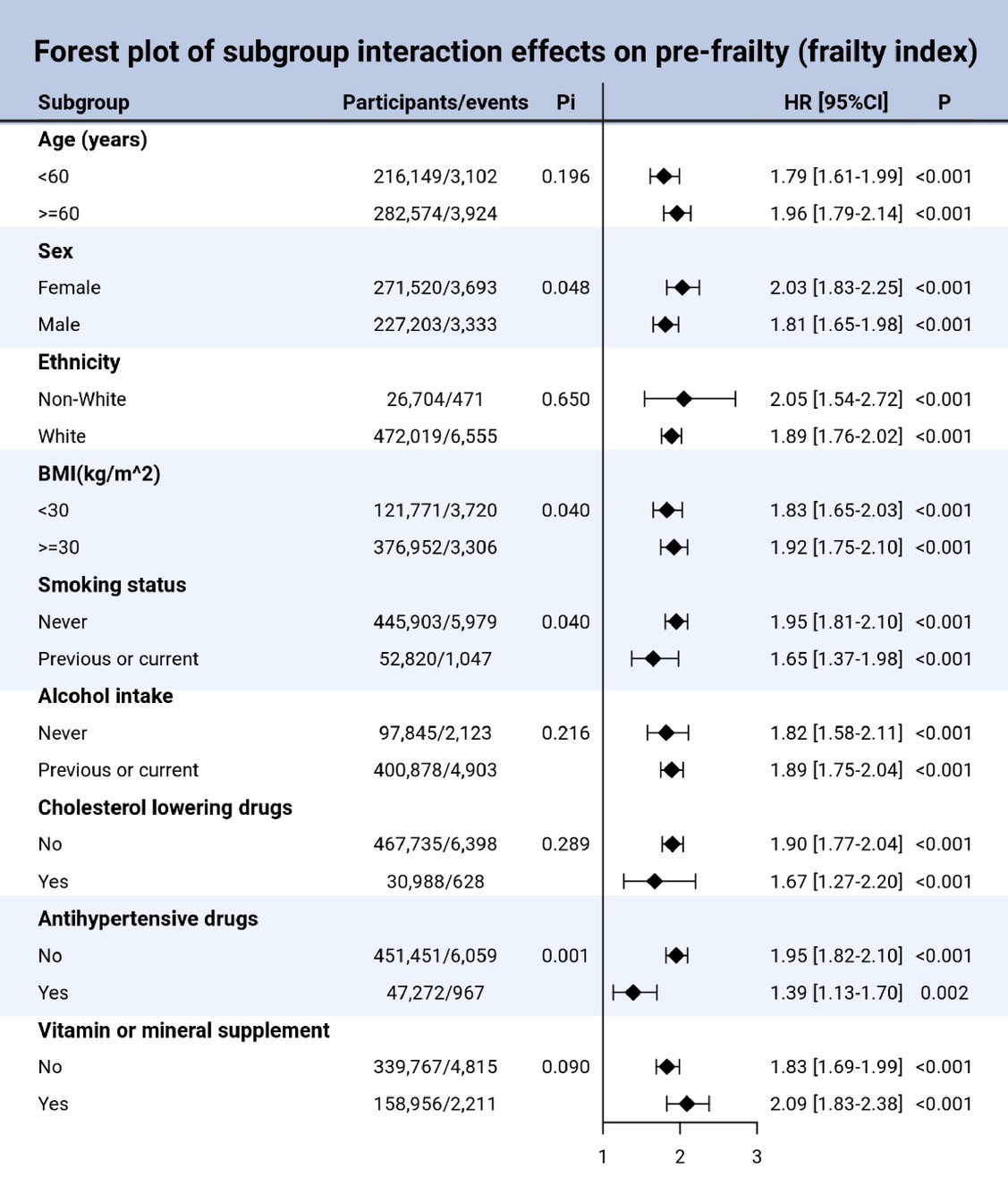
Figure 1.
Forest plot of subgroup interaction effects on pre-frailty (frailty index)
-
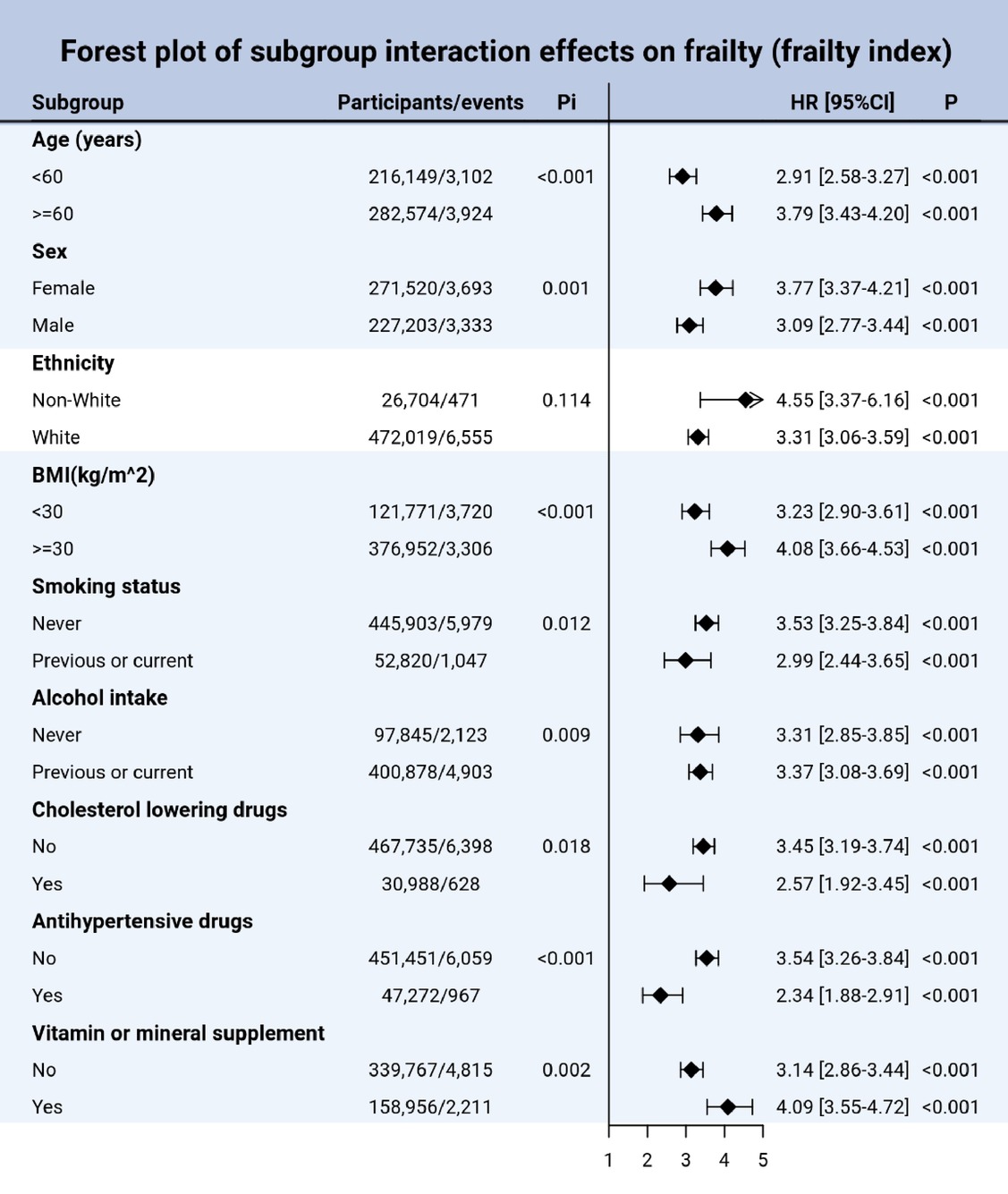
Figure 2.
Forest plot of subgroup interaction effects on frailty (frailty index)
-
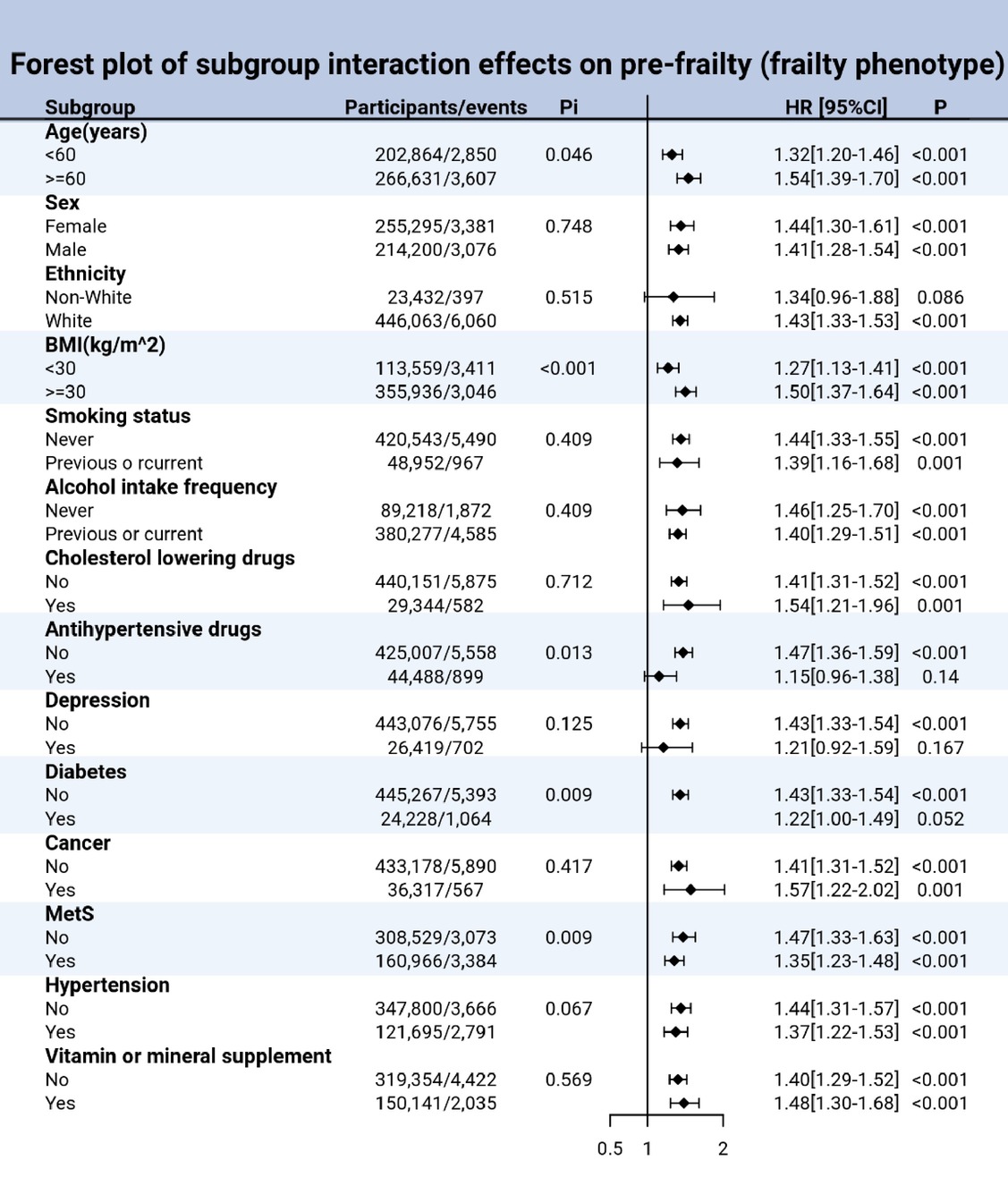
Figure 3.
Forest plot of subgroup interaction effects on pre-frailty (frailty phenotype)
-
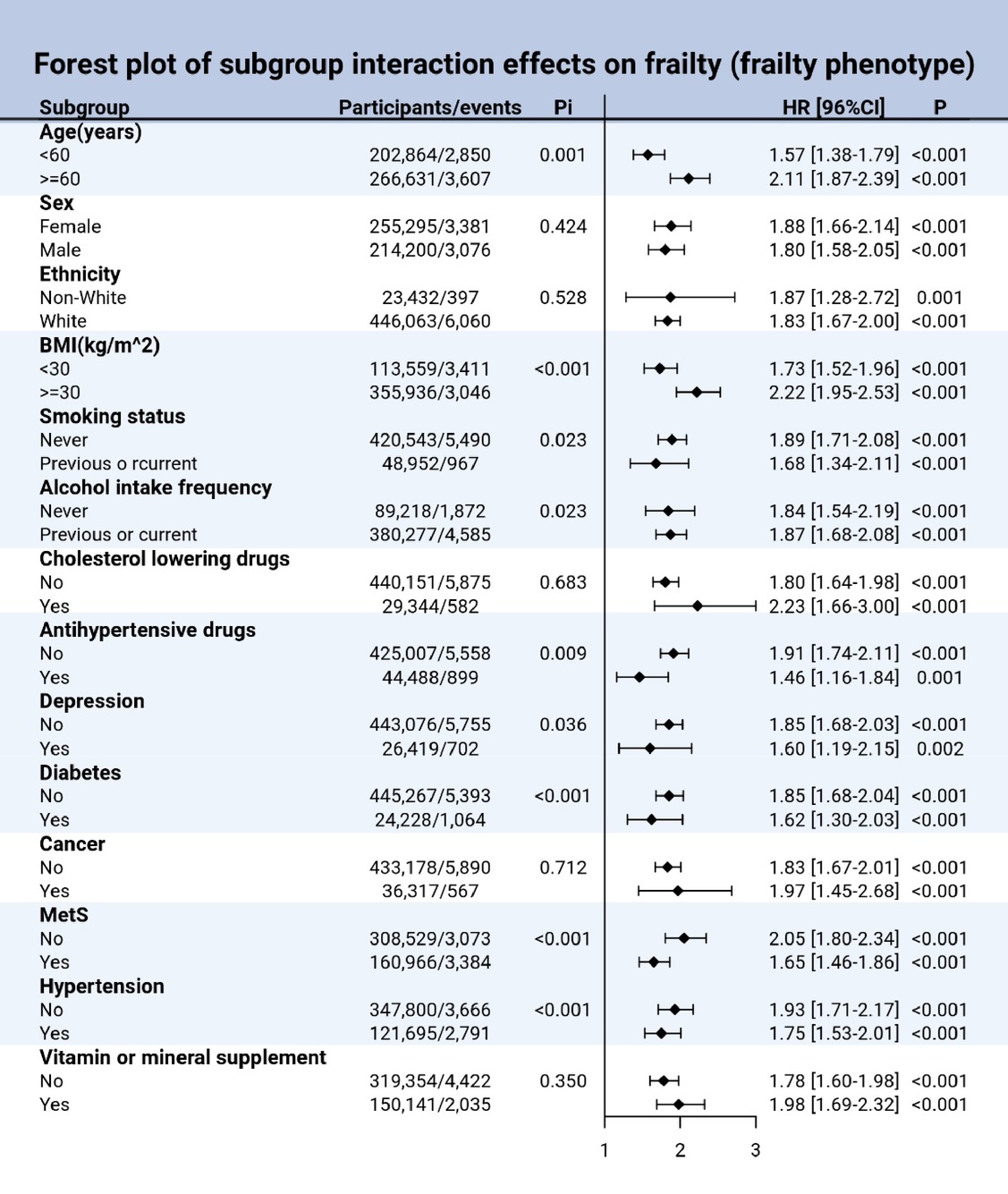
Figure 4.
Forest plot of subgroup interaction effects on frailty (frailty phenotype)
-
Figure 5.
The results of genetic analysis of frailty and MASLD
