
AgainstOTE: A generative pretrain-tune framework for de novo molecular generation against off-target effects
-
GRAPHICAL ABSTRACT
 DownLoad:
Full size image
DownLoad:
Full size image
-
PUBLIC SUMMARY
-
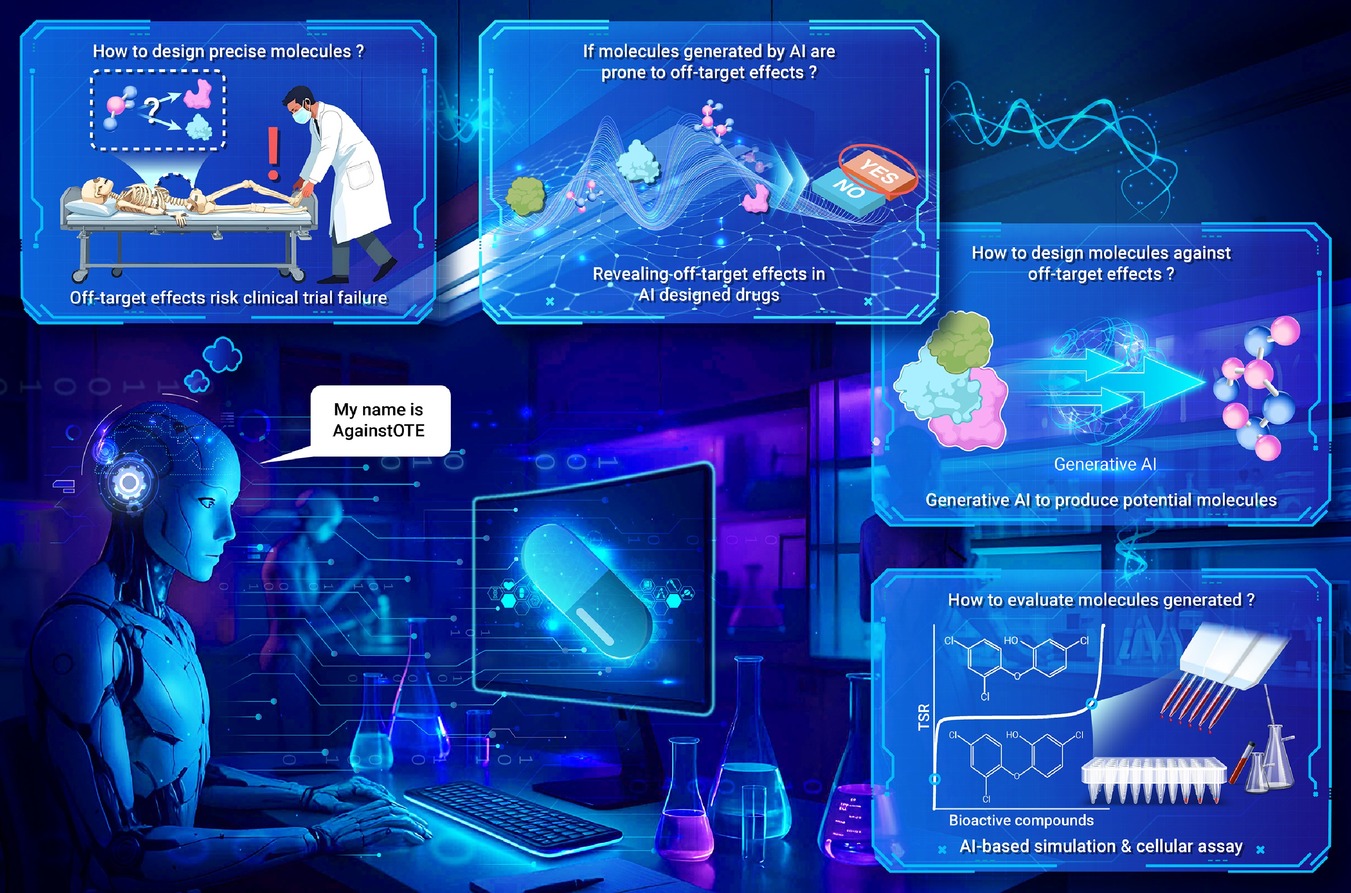
Preclinical AI-based drug discovery plays an important role in the development of innovative drugs.
Our pre-experiments reveal off-target effects in AI produced molecules, highly risking clinical trial failures.
A generative pretrain-tune framework is proposed to generate potential candidates against off-target effects.
AI simulation reveals superior chemical properties and inhibited off-target binding affinity.
Biological assay is carried out after chemical synthesis of predicted receptor-selective molecules.
-
-
ABSTRACT
De novo molecular generation is committed by the mission to create novel molecules from scratch with desired properties. Learning from massive protein-molecule data, generative models can serve drug discovery, accelerating the development of innovative medical treatment and products curing stubborn diseases. Previous research celebrates phased success by optimizing the joint distribution of molecule-protein pairs. However, our preliminary experiments show that AI-generated molecules exhibit off-target effects, potentially leading to the failure of clinical trials. This indicates precisely binding to the target yet not to others far from settled. Chemical candidate space may be quite narrow, instead of vastly searching only conditioned on target proteins. In this study, we present a generative pretrain-tune framework for de novo molecular generation against off-target effects (AgainstOTE). For pretraining an initialized generative model which is called AgainstOTE-R1 in this context, it exploits the dual-receptor cooperative training mechanism, randomly selecting any other protein as off-target input, providing neural networks the opportunity observing all kinds of structures while focusing on the target. Then it employs structural displacement to create structural randomly shifted samples for simulating conformational changes brought by mobility of proteins. Consistent chemical embeddings are accessed by a regularizer comprising of E(3)-equivariant graph projector and molecular principal component analysis (MolPCA). With structural regularization implemented by a molecular contrastive learning architecture normalizing searching space by evenly distributing molecular features from both target and off-target proteins, AgainstOTE-R1 produces plausible compounds with discriminative structures even when exposed binding sites are similar. For enhancing the physical and biological plausibility, an advanced molecular generation model is tuned from the R1 model. In this stage, more district biochemically meaningful off-target receptors are selected by protein language models as training samples. Additionally, molecular dynamics simulation is exploited in structural displacement for physically modeling temporal trajectories of proteins instead of random sampling. We conduct extensive AI simulation and biochemical experiments to evaluate performance of this framework while designing target-to-sidelobe ratios (TSR) especially to assess off-target effects. Experimental results warn of off-target effects in AI-generated molecules and provide important insights for designing a drug against it. -

-
REFERENCES
[1] Li Y., Zhang L., Wang Y., et al. (2022). Generative deep learning enables the discovery of a potent and selective RIPK1 inhibitor. Nat. Commun. 13:6891. DOI:10.1038/s41467-022-34692-w [2] Segler M. H. S., Preuss M. and Waller M. P. (2018). Planning chemical syntheses with deep neural networks and symbolic AI. Nature 555:604−610. DOI:10.1038/nature25978 [3] Shi H., Doench J. G. and Chi H. (2023). CRISPR screens for functional interrogation of immunity. Nat. Rev. Immunol. 23:363−380. DOI:10.1038/s41577-022-00802-4 [4] Vamathevan J., Clark D., Czodrowski P., et al. (2019). Applications of machine learning in drug discovery and development. Nat. Rev. Drug Discov. 18:463−477. DOI:10.1038/s41573-019-0024-5 [5] Moret M., Pachon A. I., Cotos L., et al. (2023). Leveraging molecular structure and bioactivity with chemical language models for de novo drug design. Nat. Commun. 14:114. DOI:10.1038/s41467-022-35692-6 [6] Nguyen M. N., Sen N., Lin M., et al. (2019). Discovering putative protein targets of small molecules: A Study of the p53 Activator Nutlin. J. Chem. Inf. Model. 59:1529−1546. DOI:10.1021/acs.jcim.8b00762 [7] Cheng T., Li Q., Zhou Z., et al. (2012). Structure-based virtual screening for drug discovery: A problem-centric review. AAPS J. 14:133−141. DOI:10.1208/s12248-012-9322-0 [8] Scheiber J., Chen B., Milik M., et al. (2019). Gaining insight into off-target mediated effects of drug candidates with a comprehensive systems chemical biology analysis. J. Chem. Inf. Model. 49:308−317. DOI:10.1021/ci800344p [9] Peng X., Luo S., Guan J., et al. (2022). Pocket2Mol: Efficient molecular sampling based on 3D protein pockets. Proceedings of the 39th International Conference on Machine Learning 162:17644-17655. https://proceedings.mlr.press/v162/peng22b.html. [10] Zhavoronkov A., Ivanenkov Y. A., Aliper A. et al. (2019). Deep learning enables rapid identification of potent DDR1 kinase inhibitors. Nat. Biotechnol. 37:1038−1040. DOI:10.1038/s41587-019-0224-x [11] Masuda T., Ragoza M. and Koes D. R. (2020). Generating 3D molecular structures conditional on a receptor binding site with deep generative models. arXiv Preprint arXiv:2010.14442. DOI:10.48550/arXiv.2010.14442 [12] Francoeur P. G., Masuda T., Sunseri J., et al., (2020). Three-dimensional convolutional neural networks and a cross-docked data set for structure-based drug design. J. Chem. Inf. Model. 60:4200–4215. DOI:10.1021/acs.jcim.0c00411 [13] Kotsias P. C., Arús-Pous J., Chen H., et al. (2020). Direct steering of de novo molecular generation with descriptor conditional recurrent neural networks. Nat. Mach. Intell. 2:254−265. DOI:10.1038/s42256-020-0174-5 [14] Segler M. H. S., Kogej T., Tyrchan C., et al. (2018). Generating focused molecule libraries for drug discovery with recurrent neural networks. ACS Cent. Sci. 4:20−131. DOI:10.1021/acscentsci.7b00512 [15] Zhang J. and Chen H. (2022). De novo molecule design using molecular generative models constrained by ligand-protein interactions. J. Chem. Inf. Model. 62:3291−3306. DOI:10.1021/acs.jcim.2c00177 [16] Lim J., Ryu S., Kim J., et al. (2018). Molecular generative model based on conditional variational autoencoder for de novo molecular design. J. Cheminform. 10:31. DOI:10.1186/s13321-018-0286-7 [17] Jin W., Barzilay R. and Jaakkola T. S. (2018). Junction tree variational autoencoder for molecular graph generation. Proceedings of the 35th International Conference on Machine Learning 80:2323-2332. https://proceedings.mlr.press/v80/jin18a. [18] Fu T., Xiao C., Qian C., et al. (2021). Probabilistic and dynamic molecule-disease interaction modeling for drug discovery. Proceedings of the 27th ACM SIGKDD Conference on Knowledge Discovery & Data Mining pp:404–414. DOI:10.1145/3447548.3467286 [19] Lam H. Y. I., Pincket R., Han H., et al. (2023). Application of variational graph encoders as an effective generalist algorithm in computer-aided drug design. Nat. Mach. Intell. 5:754−764. DOI:10.1038/s42256-023-00683-9 [20] Cao N. D. and Kipf T. (2018). MolGAN, an implicit generative model for small molecular graphs. arXiv Preprint arXiv:1805.11973. DOI:10.48550/arXiv.1805.11973 [21] Kadurin A., Nikolenko S., Khrabrov K., et al. (2017). druGAN: An advanced generative adversarial autoencoder model for de novo generation of new molecules with desired molecular properties in silico. Mol. Pharm. 14:3098−3104. DOI:10.1021/acs.molpharmaceut.7b00346 [22] Prykhodko O., Johansson S. V., Kotsias P. C., et al. (2019). A de novo molecular generation method using latent vector based generative adversarial network. J. Cheminfo. 11:74. DOI:10.1186/s13321-019-0397-9 [23] Polykovskiy D., Zhebrak A., Vetrov D., et al. (2018). Entangled conditional adversarial autoencoder for de novo drug discovery. Mol Pharm. 15:4398−4405. DOI:10.1021/acs.molpharmaceut.8b00839 [24] Wang Y., Wang J., Cao Z., et al. (2022). Molecular contrastive learning of representations via graph neural networks. Nat. Mach. Intell. 4:279−287. DOI:10.1038/s42256-022-00447-x [25] Fang Y., Zhang Q., Zhang N., et al. (2023). Knowledge graph-enhanced molecular contrastive learning with functional prompt. Nat. Mac. Intell. 5:542−553. DOI:10.1038/s42256-023-00654-0 [26] Luo S., Guan J., Ma J., et al. (2021). A 3D generative model for structure-based drug design. Advances in Neural Information Processing Systems 34:6229-6239. https://proceedings.neurips.cc/paper/2021/hash/314450613369e0ee72d0da7f6fee773c-Abstract.html?ref=https://githubhelp.com. [27] Zhang Z., Min Y., Zheng S., et al. (2023). Molecule generation for target protein binding with structural motifs. The Eleventh International Conference on Learning Representations. https://openreview.net/forum?id=Rq13idF0F73. [28] Tong X., Liu X., Tan X., et al. (2021). Generative models for de novo drug design. J. Med. Chem. 64:14011−14027. DOI:10.1021/acs.jmedchem.1c00927 [29] Sanchez-Lengeling B. and Aspuru-Guzik A. (2018). Inverse molecular design using machine learning: Generative models for matter engineering. Science 361:360−365. DOI:10.1126/science.aat2663 [30] Jiang Y., Zhang G., You J., et al. (2024). PocketFlow is a data-and-knowledge-driven structure-based molecular generative model. Nat. Mach. Intell. 6:326−337. DOI:10.1038/s42256-024-00808-8 [31] Sadybekov A. A., Sadybekov A. V., Liu Y., et al. (2022). Synthon-based ligand discovery in virtual libraries of over 11 billion compounds. Nature 601:452−459. DOI:10.1038/s41586-021-04220-9 [32] Alhossary A., Handoko S. D., Mu Y., et al. (2015). Fast, accurate, and reliable molecular docking with QuickVina 2. Bioinformatics 31:2214−6. DOI:10.1093/bioinformatics/btv082 [33] Jensen K. T., Kao T. C., Tripodi M., et al. (2020). Manifold GPLVMs for discovering non-Euclidean latent structure in neural data. Advances in Neural Information Processing Systems 33. https://proceedings.neurips.cc/paper/2020/hash/fedc604da8b0f9af74b6cfc0fab2163c-Abstract.html. [34] Elnaggar A., Essam H., Salah-Eldin W., et al. (2023). Ankh: Optimized protein language model unlocks general-purpose modelling. arXiv Preprint arXiv:2301.06568. DOI:10.48550/arXiv.2301.06568 [35] Gowers R. J., Linke M., Barnoud J., et al. (2019). MDAnalysis: A python package for the rapid analysis of molecular dynamics simulations. Proceedings of the 15th Python in Science Conference pp:98–105. https://www.osti.gov/servlets/purl/1565806. [36] Eastman P., Swails J., Chodera J. D., et al. (2017). OpenMM 7: Rapid development of high performance algorithms for molecular dynamics. PLoS Comput. Biol. 13:e1005659. DOI:10.1371/journal.pcbi.1005659 [37] Satorras V. G., Hoogeboom E. and Welling M. (2021). E(n) equivariant graph neural networks. Proceedings of the 38th International Conference on Machine Learning 139:9323-9332. https://proceedings.mlr.press/v139/satorras21a.html. [38] Wang Y., Shen Y., Chen S., et al. (2023). Learning harmonic molecular representations on riemannian manifold. The Eleventh International Conference on Learning Representations. https://openreview.net/forum?id=ySCL-NG_I3. [39] Stärk H., Ganea O., Pattanaik L., et al. (2022). EquiBind: Geometric deep learning for drug binding structure prediction. Proceedings of the 39th International Conference on Machine Learning 162:20503-20521. https://proceedings.mlr.press/v162/stark22b. [40] Zhang B. and Sennrich R. (2019). Root mean square layer normalization. Advances in Neural Information Processing Systems 32. https://proceedings.neurips.cc/paper/2019/hash/1e8a19426224ca89e83cef47f1e7f53b-Abstract.html. [41] Vaswani A., Shazeer N., Parmar N., et al. (2017). Attention is all you need. Advances in Neural Information Processing Systems 30. https://proceedings.neurips.cc/paper/2017/hash/3f5ee243547dee91fbd053c1c4a845aa-Abstract.html. [42] Hanin B. and Rolnick D. (2019). Deep ReLU networks have surprisingly few activation patterns. Advances in Neural Information Processing Systems 32. https://proceedings.neurips.cc/paper_files/paper/2019/hash/9766527f2b5d3e95d4a733fcfb77bd7e-Abstract.html. [43] Chen T., Kornblith S., Norouzi M., et al. (2022). A simple framework for contrastive learning of visual representations. Proceedings of the 37th International Conference on Machine Learning 119:1597-1607. https://proceedings.mlr.press/v119/chen20j.html. [44] Sohn K. (2016). Improved deep metric learning with multi-class n-pair loss objective. Advances in Neural Information Processing Systems 29. https://proceedings.neurips.cc/paper/2016/hash/6b180037abbebea991d8b1232f8a8ca9-Abstract.html. [45] Oord A. V. D., Li Y. and Vinyals O. (2018). Representation learning with contrastive predictive coding. arXiv Preprint arXiv:1807.03748. DOI:10.48550/arXiv.1807.03748 [46] Bolme D. S., Beveridge J. R., Draper B. A., et al. (2010). Visual object tracking using adaptive correlation filters. IEEE Computer Society Conference on Computer Vision and Pattern Recognition pp:2544-2550. DOI:10.1109/CVPR.2010.5539960 [47] Skwierawska A. and Pazik A. (2012). Inhibition of impurities formation in the synthesis of N-alkyltheobromines stimulated by microwave irradiation. Cationic and anionic response of membrane electrodes. J. Incl. Phenom. Macrocycl. Chem. 74:145−155. DOI:10.1007/s10847-011-0093-5 [48] Stec J., Fomovska A., Afanador G. A., et al. (2013). Modification of triclosan scaffold in search of improved inhibitors for enoyl-acyl carrier protein (ACP) reductase in Toxoplasma gondii. ChemMedChem 8:1138−60. DOI:10.1002/cmdc.201300050 [49] Weininger D. (1988). SMILES, a chemical language and information system. 1. introduction to methodology and encoding rules. J. Chem. Inf. Comput. Sci. 28:31–36. DOI:10.1021/ci00057a005 [50] O’Boyle N. and Dalke A. (2018). DeepSMILES: An adaptation of SMILES for use in machine-learning of chemical structures. ChemRxiv. chemrxiv:7097960.v1. DOI:10.26434/chemrxiv.7097960.v1 [51] Liu Y., Jin M., Pan S., et al. (2023). Graph self-supervised learning: A survey. IEEE Transactions on Knowledge and Data Engineering 35:5879−5900. DOI:10.1109/TKDE.2022.3172903 [52] Li Y., Liu L., Shen C., et al. (2017). Mining mid-level visual patterns with deep CNN activations. International Journal of Computer Vision 121:344−364. DOI:10.1007/s11263-016-0945-y [53] Stretcu O. and Leordeanu M. (2015). Multiple frames matching for object discovery in video. Proceedings of the British Machine Vision Conference pp:186.1-186.12. DOI:10.5244/C.29.186 [54] Rives A., Goyal S., Meier J., et al. (2020). Biological structure and function emerge from scaling unsupervised learning to 250 million protein sequences. Proceedings of the National Academy of Sciences of the United States of America 118:e2016239118. DOI:10.1073/pnas.2016239118 [55] Devlin J., Chang M. W. Lee, et al. (2018). BERT: Pre-training of deep bidirectional transformers for language understanding. Proceedings of the 2019 Conference of the North American Chapter of the Association for Computational Linguistics: Human Language Technologies 1:4171–4186. DOI:10.18653/v1/N19-1423 [56] Liu Y., Ott M., Goyal N., et al. (2019). RoBERTa: A robustly optimized BERT pretraining approach. arXiv Preprint arXiv:1907.11692. DOI:10.48550/arXiv.1907.11692 [57] Hsu C., Verkuil R., Liu J., et al. (2022). Learning inverse folding from millions of predicted structures. Proceedings of the 39th International Conference on Machine Learning 162:8946-8970. https://proceedings.mlr.press/v162/hsu22a.html. [58] Lin Z., Akin H., Rao R., et al. (2022). Language models of protein sequences at the scale of evolution enable accurate structure prediction. bioRxiv Preprint DOI:10.1101/2022.07.20.500902 [59] Thomson E. C., Rosen L. E., Shepherd J. G., et al. (2021). Circulating SARS-CoV-2 spike N439K variants maintain fitness while evading antibody-mediated immunity. Cell 184:1171−1187. DOI:10.1016/j.cell.2021.01.037 [60] Hou Y. J., Chiba S., Halfmann P., et al. (2020). SARS-CoV-2 D614G variant exhibits efficient replication ex vivo and transmission in vivo. Science 370:1464−1468. DOI:10.1126/science.abe8499 [61] Weissman D., Alameh M. G., Silva T., et al. (2021). D614G Spike Mutation Increases SARS CoV-2 Susceptibility to Neutralization. Cell Host Microbe. 29:23−31. DOI:10.1016/j.chom.2020.11.012 [62] Yurkovetskiy L., Wang X., Pascal K. E., et al. (2020). Structural and functional analysis of the D614G SARS-CoV-2 spike protein variant. Cell 183:739−751. DOI:10.1016/j.cell.2020.09.032 [63] Ragoza M., Masuda T. and Koes D. R. (2022). Generating 3d molecules conditional on receptor binding sites with deep generative models. Chem. Sci. 13:2701−2713. DOI:10.1039/d1sc05976a [64] Liu M., Luo Y., Uchino K., et al. (2022). Generating 3d molecules for target protein binding. Proceedings of the 39th International Conference on Machine Learning 162:13912-13924. https://proceedings.mlr.press/v162/liu22m.html. [65] Bickerton G. R., Paolini G. V., Besnard J., et al. (2012). Quantifying the chemical beauty of drugs. Nat. Chem. 4:90−98. DOI:10.1038/nchem.1243 [66] Ertl P. and Schuffenhauer A. (2009). Estimation of synthetic accessibility score of drug-like molecules based on molecular complexity and fragment contributions. J. Cheminform. 1:8. DOI:10.1186/1758-2946-1-8 [67] Wildman S. A. and Crippen G. M. (1999). Prediction of physicochemical parameters by atomic contributions. J. Chem. Inf. Comput. Sci. 39:868−873. DOI:10.1021/ci990307l [68] Lipinski C. A., Lombardo F., Dominy B. W., et al. (2001). Experimental and computational approaches to estimate solubility and permeability in drug discovery and development settings. Adv. Drug Del. Rev. 46:3−26. DOI:10.1016/s0169-409x(00)00129-0 [69] Jensen R. K. and Nassas G. (1988). Growth of segment principal moments of inertia between four and twenty years. Med. Sci. Sports. Exerc. 20:594−604. DOI:10.1249/00005768-198812000-00013 [70] Becht E., McInnes L., Healy J., et al. (2018). Dimensionality reduction for visualizing single-cell data using UMAP. Nat. Biotechnol. 37:38−44. DOI:10.1038/nbt.4314 [71] Wang, R., Fang, X., Lu, Y., et al. (2004). The PDBbind database: Collection of binding affinities for protein-ligand complexes with known three-dimensional structures. J. Med. Chem. 47:2977−2980. DOI:10.1021/jm030580l [72] Wang Y., Dong L., Li J., et al. (2017). Pentoxifylline induces apoptosis of HepG2 cells by reducing reactive oxygen species production and activating the MAPK signaling. Life Sci. 183:60−68. DOI:10.1016/j.lfs.2017.05.029 [73] Lu J., Yang Y., Guo G., et al. (2017). IKBKE regulates cell proliferation and epithelial-mesenchymal transition of human malignant glioma via the Hippo pathway. Oncotarget 8:49502−49514. DOI:10.18632/oncotarget.17738 [74] Hu L. and Zhang Q. (2024). Mechanism of TBK1 activation in cancer cells. Cell Insight 3:100197. DOI:10.1016/j.cellin.2024.100197 [75] Ait-Touchente Z., Zine N., Jaffrezic-Renault N., et al. (2023). A Exploring the versatility of microemulsions in cutaneous drug delivery: opportunities and challenges. Nanomaterials 13:1688. DOI:10.3390/nano13101688 [76] Zhuo S., Zhang F., Yu J., et al. (2020). pH-sensitive biomaterials for drug delivery. Molecules 25:5649. DOI:10.3390/molecules25235649 [77] Gomte S. S., Agnihotri T. G., Khopade S., et al. (2024). Exploring the potential of pH-sensitive polymers in targeted drug delivery. J. Biomater. Sci. Polym. Ed. 35:228−268. DOI:10.1080/09205063.2023.2279792 [78] Muttenthaler M., King G. F., Adams D. J., et al. (2021). Trends in peptide drug discovery. Nat. Rev. Drug Discov. 20:309−325. DOI:10.1038/s41573-020-00135-8 [79] Huang T., Xu H., Wang H., et al., (2023). Artificial intelligence for medicine: Progress, challenges, and perspectives. Innov. Med. 1:100030. DOI:10.59717/j.xinn-med.2023.100030 [80] Dai J., Xu H., Chen T., et al. (2025). Artificial intelligence for medicine 2025: Navigating the endless frontier. Innov. Med. 3:100120. DOI:10.59717/j.xinn-med.2025.100120 -
ABOUT THIS ARTICLE
Cite this article:
Xu Y., Fang W., Wang S., et al. (2025). AgainstOTE: A generative pretrain-tune framework for de novo molecular generation against off-target effects. The Innovation Medicine 3:100158. https://doi.org/10.59717/j.xinn-med.2025.100158
Welcome!
To request copyright permission to republish or share portions of our works, please visit Copyright Clearance Center's (CCC) Marketplace website at marketplace.copyright.com.
Article Metrics
Relative Articles
Cited by
Export File
Citation
Xu Y., Fang W., Wang S., et al. (2025). AgainstOTE: A generative pretrain-tune framework for de novo molecular generation against off-target effects. The Innovation Medicine 3:100158. https://doi.org/10.59717/j.xinn-med.2025.100158

Format
Content
-
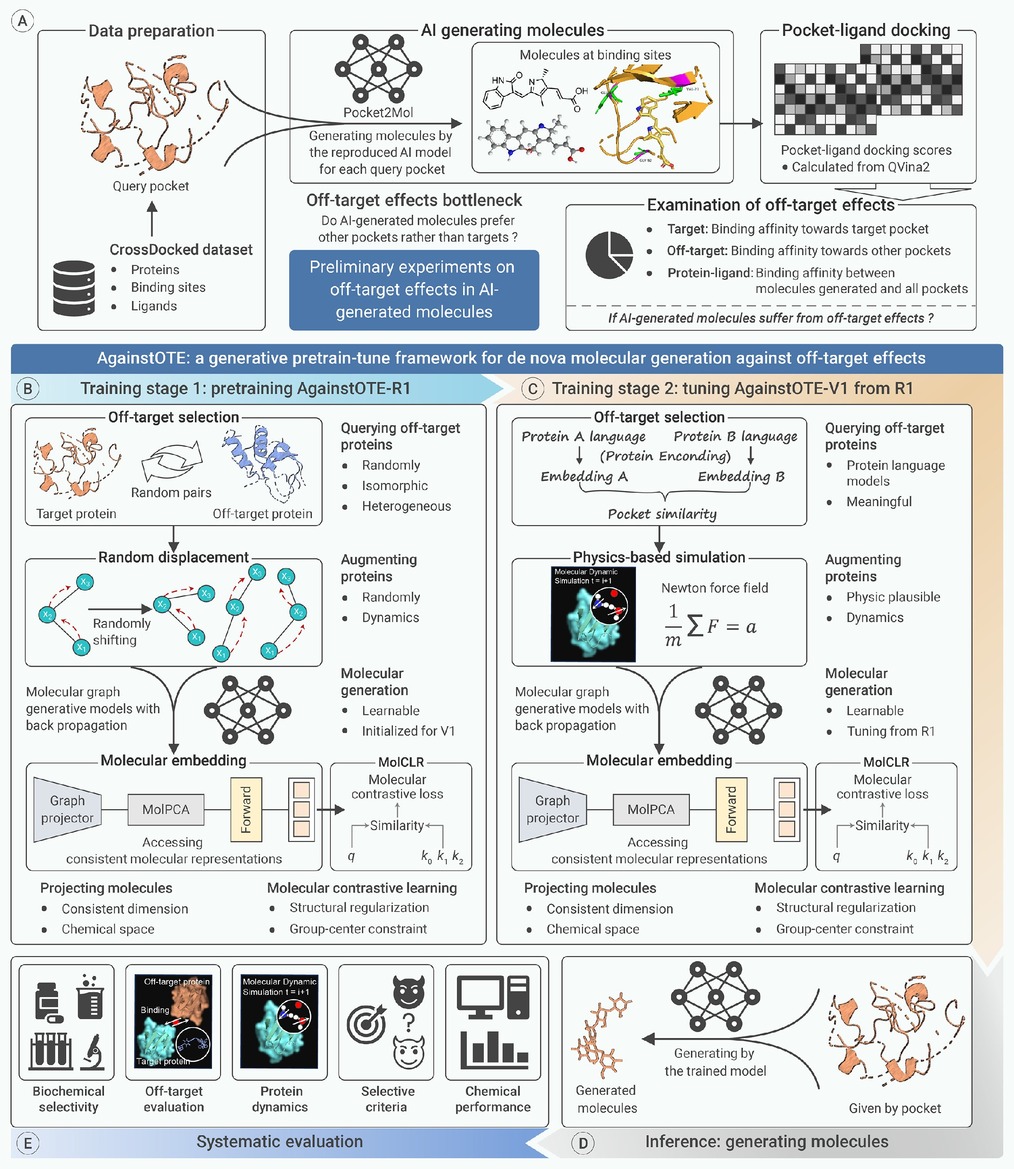
Figure 1.
Workflow
-
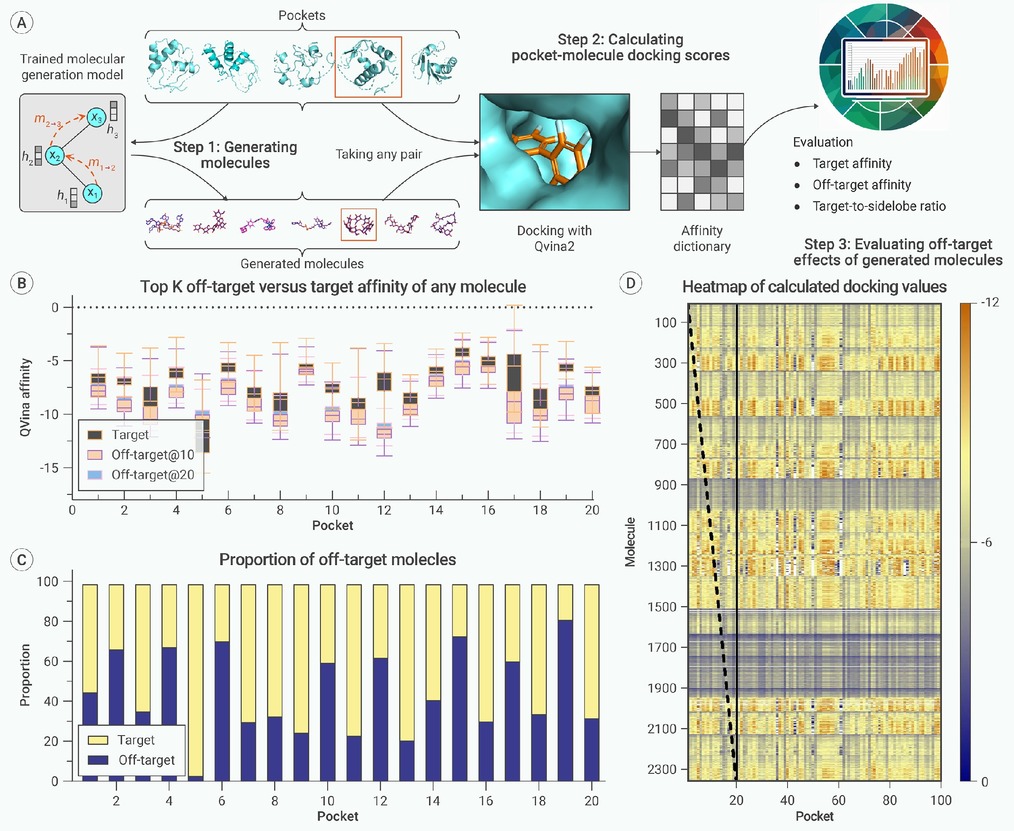
Figure 2.
Preliminary experiments and steps of investigating off-target effects
-
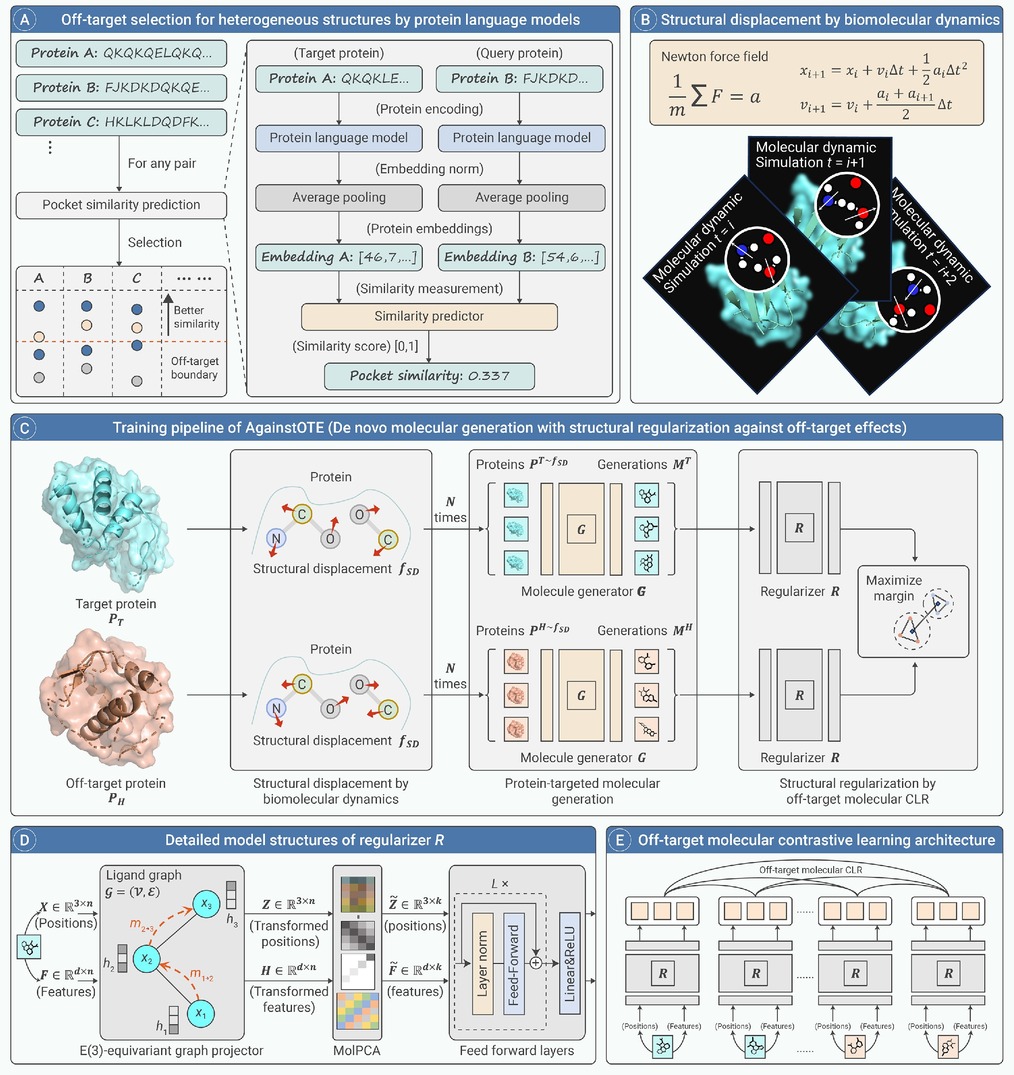
Figure 3.
Model details of AgainstOTE
-
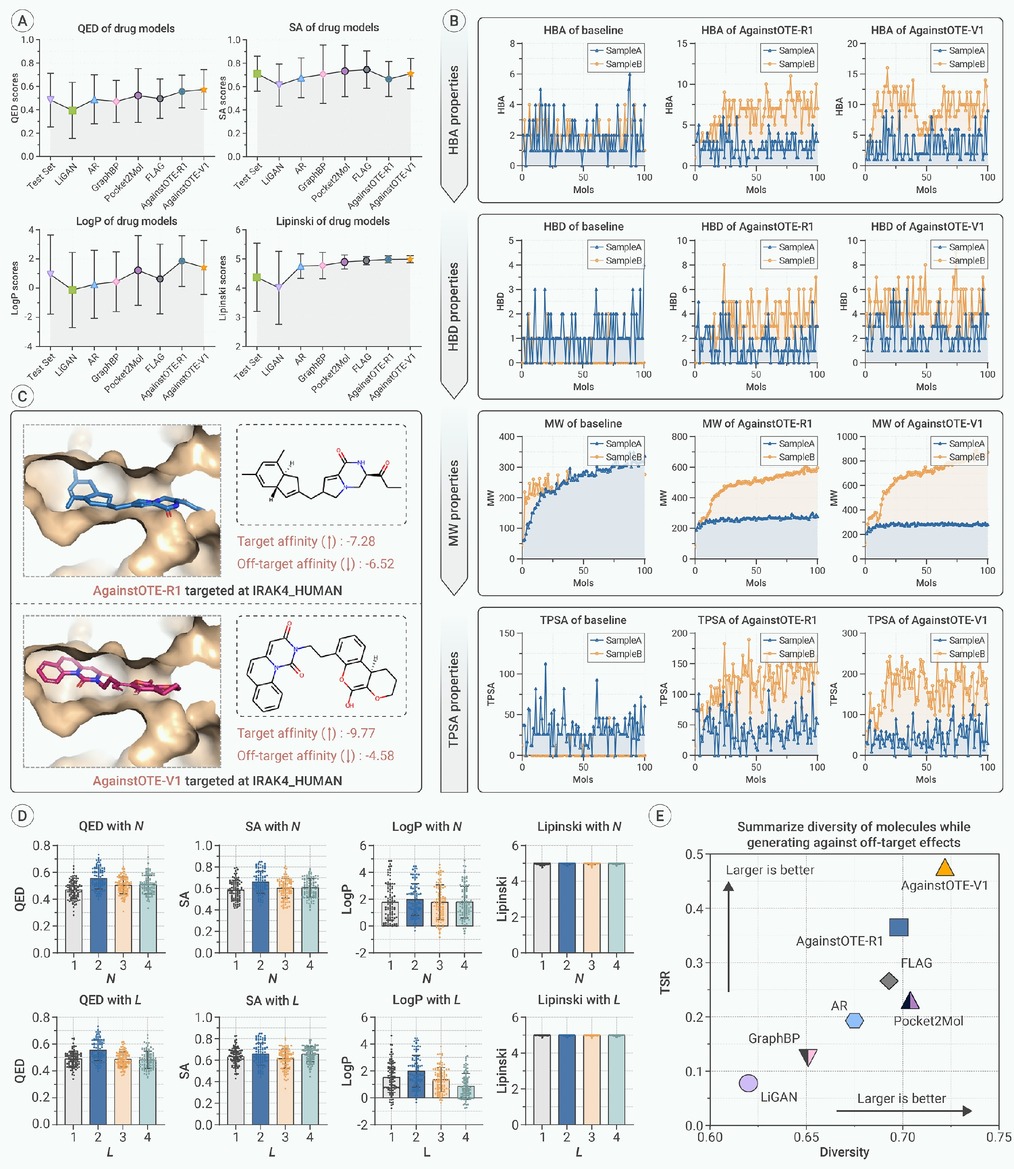
Figure 4.
Evaluation in chemical properties
-
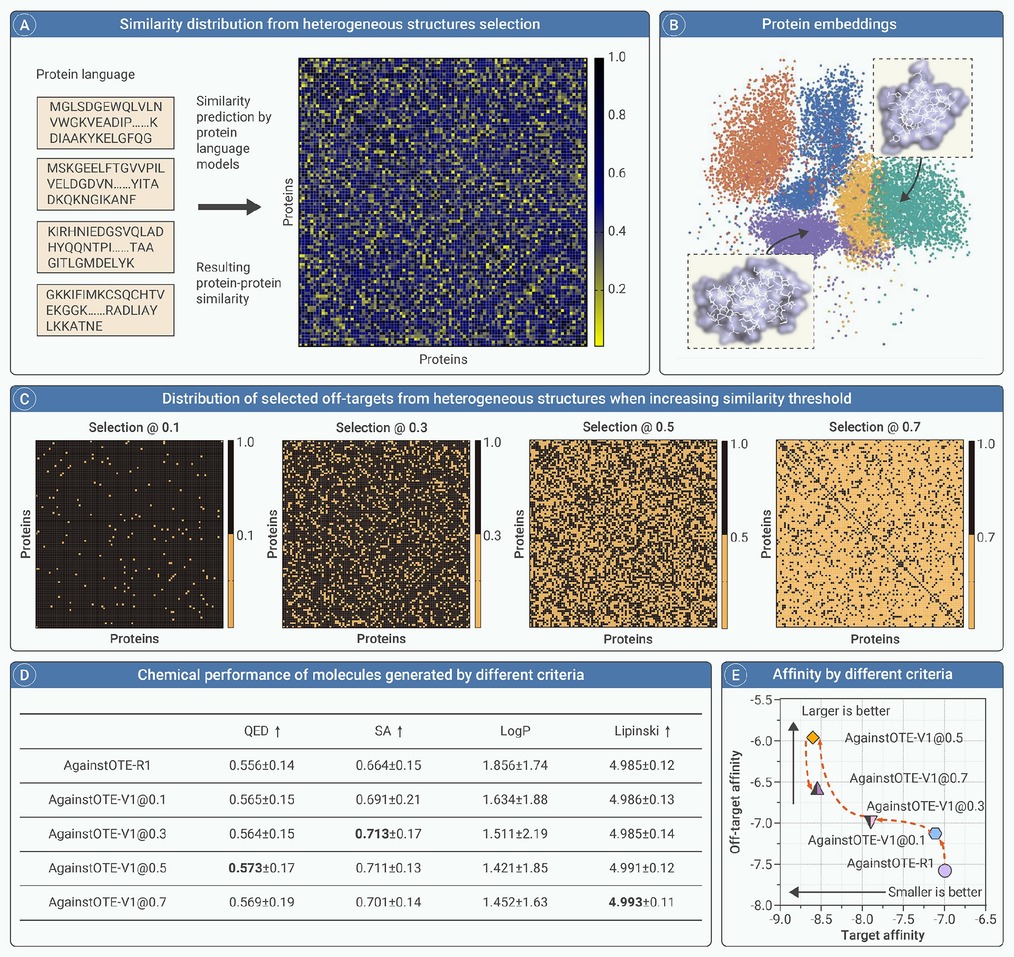
Figure 5.
Experiments on selection of off-target proteins by protein language models
-
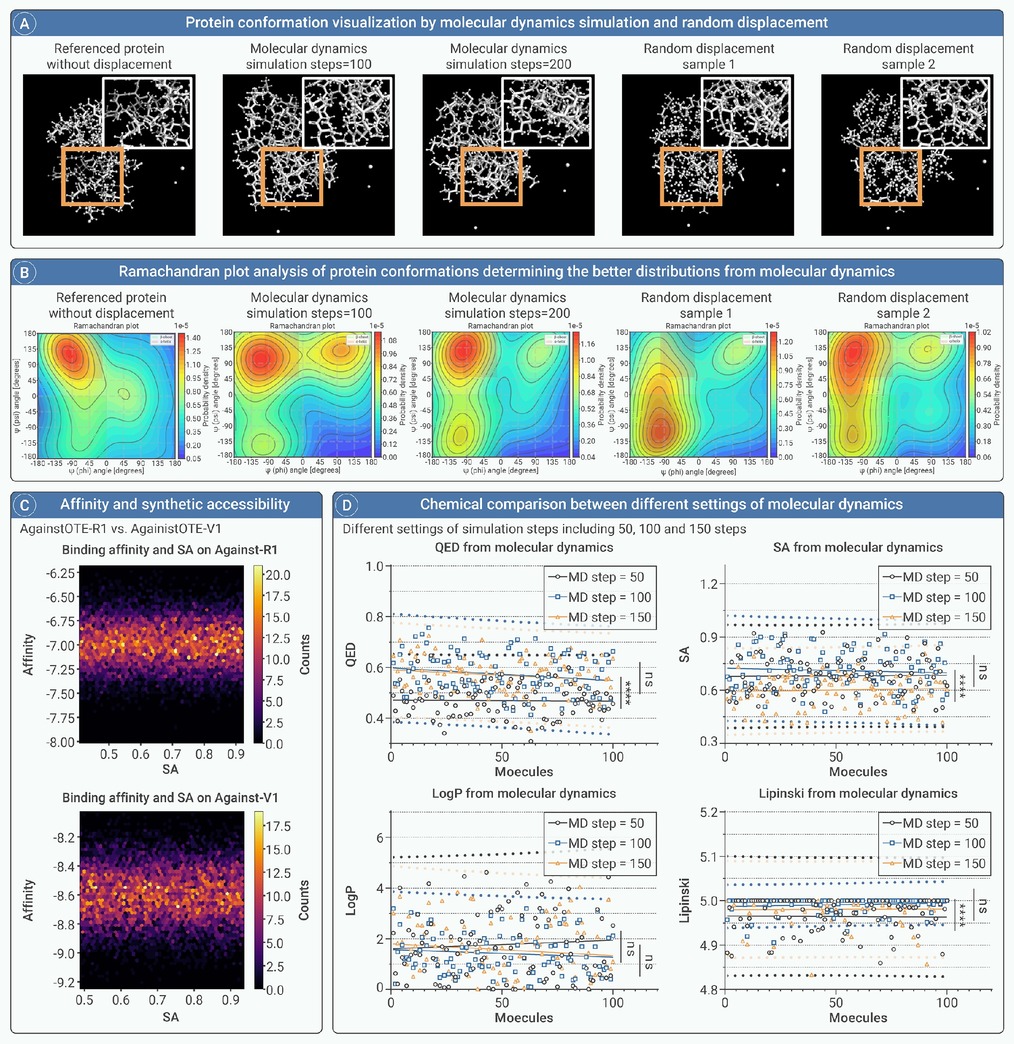
Figure 6.
Detailed experiments on structural displacement by molecular dynamics simulation
-
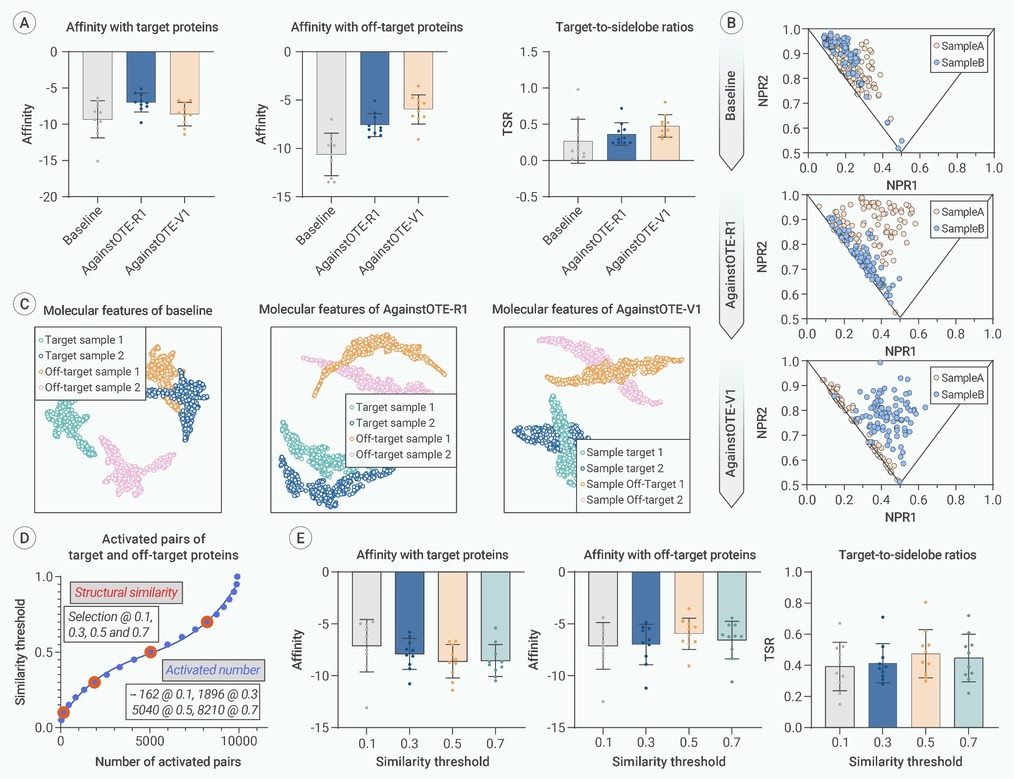
Figure 7.
Evaluation of off-target effects
-
Figure 8.
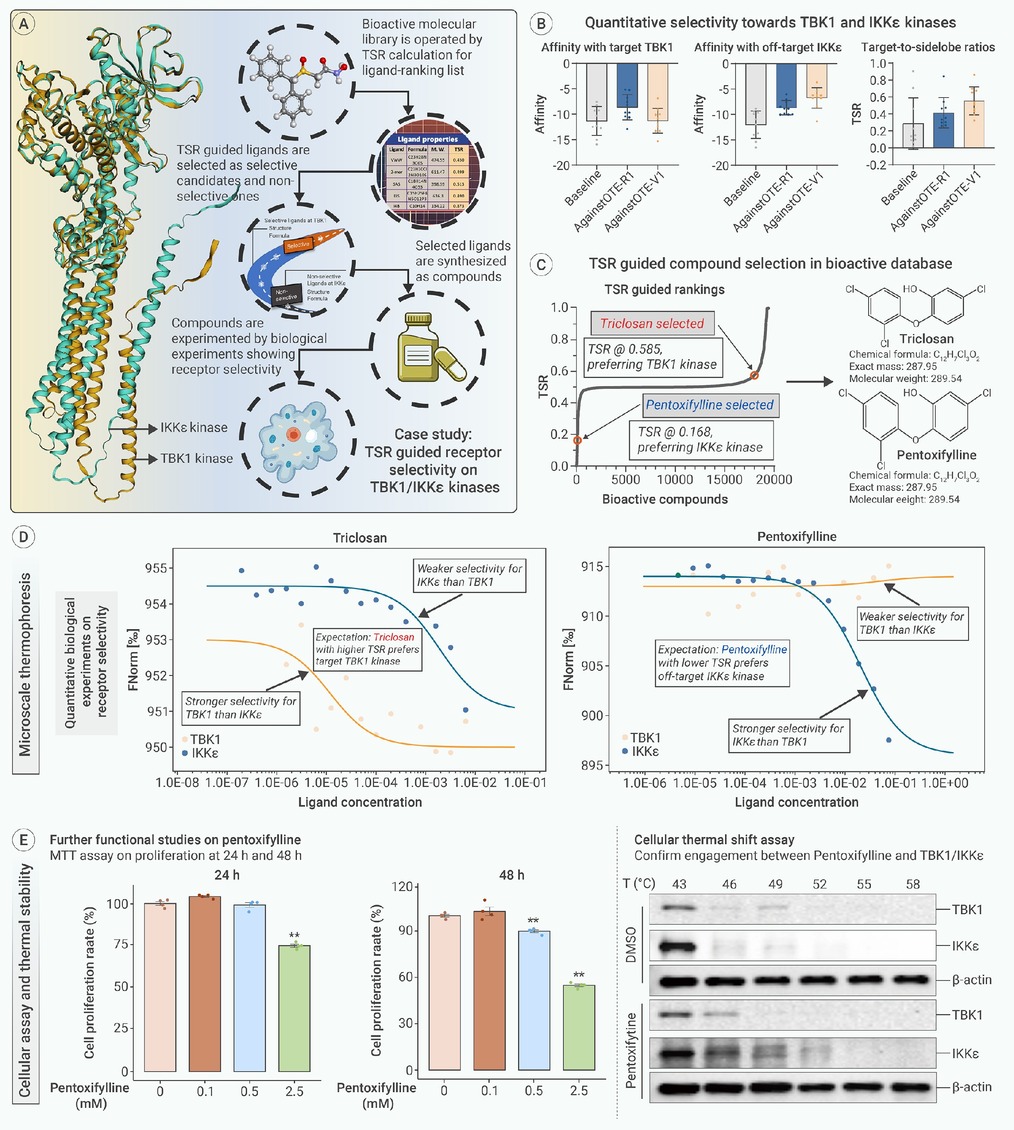
Biological receptor selectivity reveals reduction of risk against off-target effects on target TBK1 and off-target IKK
$\epsilon $
