
Weight management in China: Energy metabolism as the core principle for precision prevention and control
-

-
REFERENCES
[1] Wang Y., Zhao L., Gao L., et al. (2021) Health policy and public health implications of obesity in China. Lancet Diabetes Endocrinol. 9:446-461. DOI:10.1016/S2213-8587(21)00118-2 [2] Xiao N., Ding Y., Cui B., et al. (2024). Navigating obesity: A comprehensive review of epidemiology, pathophysiology, complications and management strategies. Innov. Med. 2:100090. DOI:10.59717/j.xinn-med.2024.100090 [3] Jia X., Hu C., Xu Y., et al. (2025). Revisiting obesity thresholds for cardiovascular disease and mortality risk in Chinese adults: Age- and gender-specific insights. Cell Rep. Med. 6:102309. DOI:10.1016/j.xcrm.2025.102309 [4] Lyu Q., Xue W., Liu R., et al. (2024). A brain-to-gut signal controls intestinal fat absorption. Nature 634:936−943. DOI:10.1038/s41586-024-07929-5 [5] Zhang Y., Liu R., Chen Y., et al. (2025). Akkermansia muciniphila supplementation in patients with overweight/obese type 2 diabetes: Efficacy depends on its baseline levels in the gut. Cell Metab. 37:592−605.e6. DOI:10.1016/j.cmet.2024.12.010 -
ABOUT THIS ARTICLE
Cite this article:
Xu M. and Ning G. (2026). Weight management in China: Energy metabolism as the core principle for precision prevention and control. The Innovation Medicine 4:100184. https://doi.org/10.59717/j.xinn-med.2026.100184
Welcome!
To request copyright permission to republish or share portions of our works, please visit Copyright Clearance Center's (CCC) Marketplace website at marketplace.copyright.com.
Export File
Citation
Xu M. and Ning G. (2026). Weight management in China: Energy metabolism as the core principle for precision prevention and control. The Innovation Medicine 4:100184. https://doi.org/10.59717/j.xinn-med.2026.100184

Format
Content
 DownLoad:
-
Figure 1.
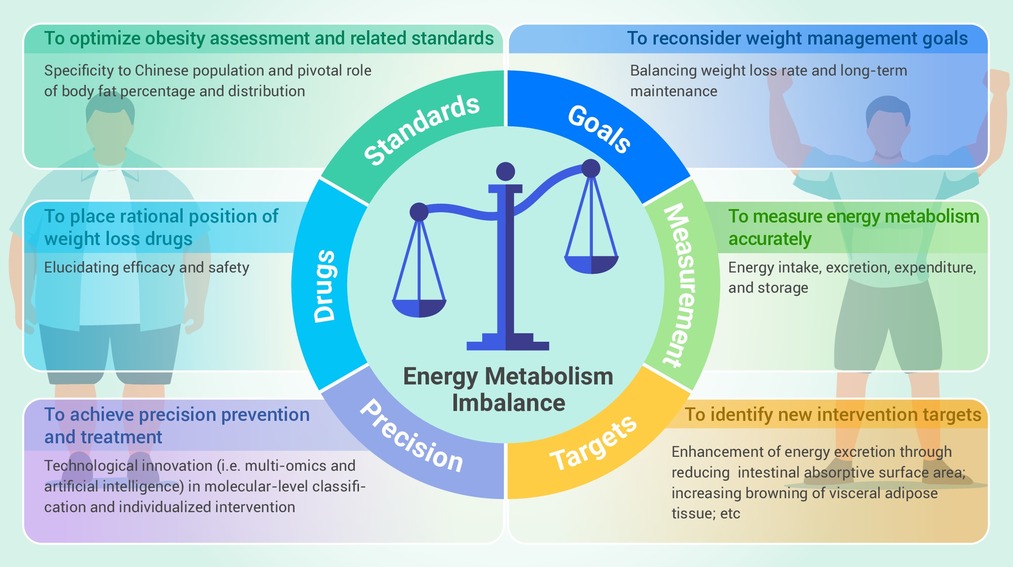
Several key issues for life-course weight management.
