
Addressing confounders in observational comparative effectiveness research: Methods, software, and reporting standards
-
GRAPHICAL ABSTRACT

 DownLoad:
Full size image
DownLoad:
Full size image
-
PUBLIC SUMMARY
-
Confounding is the primary threat to validity in observational comparative effectiveness research (CER).
Multiple statistical methods have been adopted to address measured, unmeasured, and time-varying confounders.
Sensitivity analyses are essential to evaluate the robustness of findings in the presence of confounders.
Writing guidelines and reporting standards are fundamental to ensure transparency and reproducibility.
-
-
ABSTRACT
Confounding poses a critical threat to the validity of observational comparative effectiveness research (CER) by distorting the estimated associations between treatments/exposures and outcomes. This challenge is particularly pronounced in real-world data, given the absence of randomization and the prevalence of unmeasured and time-varying confounders. Thus, the observed associations may be attributable to differences other than the treatments/exposures of interest and causality cannot be assumed. By synthesizing theoretical foundations, practical applications, software implementations, and reporting standards, this study provides insights into statistical approaches for identifying and handling confounders in observational CER, in order to strengthen the validity of causal inference in real-world evidence, and ultimately enhance the quality and reliability of observational CER. -

-
REFERENCES
[1] Howards P. P. (2018). An overview of confounding. Part 1: the concept and how to address it. Acta Obstet. Gynecol. Scand. 97:394-399. DOI:10.1111/aogs.13295 [2] Hariton E. and Locascio J. J. (2018). Randomised controlled trials - the gold standard for effectiveness research. BJOG 125:1716. DOI:10.1111/1471-0528.15199 [3] Norris S. L., Atkins D., Bruening W., et al. (2011). Observational studies in systematic reviews of comparative effectiveness: AHRQ and the Effective Health Care Program. J. Clin. Epidemiol. 64:1178. DOI:10.1016/j.jclinepi.2010.04.027 [4] Cuello-Garcia C. A., Santesso N., Morgan R. L., et al. (2022). GRADE guidance 24 optimizing the integration of randomized and non-randomized studies of interventions in evidence syntheses and health guidelines. J. Clin. Epidemiol. 142:200. DOI:10.1016/j.jclinepi.2021.11.026 [5] Meuli L. and Dick F. (2018). Understanding confounding in observational studies. Eur. J. Vasc. Endovasc. Surg. 55:737. DOI:10.1016/j.ejvs.2018.02.028 [6] Kyriacou D. N. and Lewis R. J. (2016). Confounding by indication in clinical research. JAMA 316:1818. DOI:10.1001/jama.2016.16435 [7] Prada-Ramallal G., Takkouche B. and Figueiras A. (2019). Bias in pharmacoepidemiologic studies using secondary health care databases: A scoping review. BMC Med. Res. Methodol. 19:53. DOI:10.1186/s12874-019-0695-y [8] Toh S., Reichman M. E., Graham D. J., et al. (2018). Prospective postmarketing surveillance of acute myocardial infarction in new users of Saxagliptin: A population-based study. Diabetes Care 41:39. DOI:10.2337/dc17-0476 [9] Varga A. N., Guevara Morel A. E., Lokkerbol J., et al. (2023). Dealing with confounding in observational studies: A scoping review of methods evaluated in simulation studies with single-point exposure. Stat. Med. 42:487. DOI:10.1002/sim.9628 [10] D'Onofrio B. M., Sjölander A., Lahey B. B., et al. (2020). Accounting for confounding in observational studies. Annu. Rev. Clin. Psychol. 16:25. DOI:10.1146/annurev-clinpsy-032816-045030 [11] Guo J., Wang T., Cao H., et al. (2025). Application of methodological strategies to address unmeasured confounding in real-world vaccine safety and effectiveness study: A systematic review. J. Clin. Epidemiol. 181:111737. DOI:10.1016/j.jclinepi.2025.111737 [12] Wei J. C., Kuo P. and Chang R. (2025). Strategies to avoid confounders and bias in observational studies. Int. J. Rheum. Dis. 28:e70076. DOI:10.1111/1756-185x.70076 [13] Luo H., Zhuang F., Xie R., et al. (2024). A survey on causal inference for recommendation. The Innovation 5:100590. DOI:10.1016/j.xinn.2024.100590 [14] Lash T. L., VanderWeele T. J., Haneuse S., et al. (2021). Modern Epidemiology, Fourth Edition (Wolters Kluwer). https://shop.lww.com/Modern-Epidemiology/p/9781451193282?srsltid=AfmBOopZYdqNHvzRTuna07KJSNgMQ7v9W00q8Wxb6F8xBn086utVlKPf. [15] Velentgas P., Dreyer N. A., Nourjah P., et al. (2013). Developing a protocol for observational comparative effectiveness research: A user's guide. In (Agency for Healthcare Research and Quality (US)). https://www.ncbi.nlm.nih.gov/books/NBK126190/. [16] Rubin D. B. (1973). Matching to remove bias in observational studies. Biometrics 29:159−183. DOI:10.2307/2529684 [17] Mantel N. and Haenszel W. (1959). Statistical aspects of the analysis of data from retrospective studies of disease. J. Natl. Cancer Inst. 22:719−748. [18] Rosenbaum P. R. and Rubin D. B. (1983). The central role of the propensity score in observational studies for causal effects. Biometrika 70:41. DOI:10.1093/biomet/70.1.41 [19] Andrew B. Y., Alan Brookhart M., Pearse R., et al. (2023). Propensity score methods in observational research: Brief review and guide for authors. Br. J. Anaesth. 131:805−809. DOI:10.1016/j.bja.2023.06.054 [20] Benedetto U., Head S. J., Angelini G. D., et al. (2018). Statistical primer: Propensity score matching and its alternatives. Eur. J. Cardiothorac. Surg. 53:1112. DOI:10.1093/ejcts/ezy167 [21] King G. and Nielsen R. (2019). Why propensity scores should not be used for matching. Political Analysis 27:435. DOI:10.1017/pan.2019.11 [22] Austin P. C. and Stuart E. A. (2015). Moving towards best practice when using inverse probability of treatment weighting (IPTW) using the propensity score to estimate causal treatment effects in observational studies. Stat. Med. 34:3661. DOI:10.1002/sim.6607 [23] Desai R. J. and Franklin J. M. (2019). Alternative approaches for confounding adjustment in observational studies using weighting based on the propensity score: A primer for practitioners. BMJ 367:l5657. DOI:10.1136/bmj.l5657 [24] Cole S. R. and Hernán M. A. (2008). Constructing inverse probability weights for marginal structural models. Am. J. Epidemiol. 168:656. DOI:10.1093/aje/kwn164 [25] Neuhäuser M., Thielmann M. and Ruxton G. D. (2018). The number of strata in propensity score stratification for a binary outcome. Arch Med. Sci. 14:695. DOI:10.5114/aoms.2016.61813 [26] Austin P. C. (2011). An introduction to propensity score methods for reducing the effects of confounding in observational studies. Multivariate Behav. Res. 46:399. DOI:10.1080/00273171.2011.568786 [27] Zou B., Zou F., Shuster J. J., et al. (2016). On variance estimate for covariate adjustment by propensity score analysis. Stat. Med. 35:3537. DOI:10.1002/sim.6943 [28] Dhruva S. S., Ross J. S., Mortazavi B. J., et al. (2020). Association of use of an intravascular microaxial left ventricular assist device vs intra-aortic balloon pump with in-hospital mortality and major bleeding among patients with acute myocardial infarction complicated by cardiogenic shock. JAMA 323:734. DOI:10.1001/jama.2020.0254 [29] Miettinen O. S. (1976). Stratification by a multivariate confounder score. Am. J. Epidemiol. 104:609. DOI:10.1093/oxfordjournals.aje.a112339 [30] Glynn R. J., Gagne J. J. and Schneeweiss S. (2012). Role of disease risk scores in comparative effectiveness research with emerging therapies. Pharmacoepidemiol. Drug Saf. 21 Suppl 2:138. DOI:10.1002/pds.3231 [31] Wyss R., Lunt M., Brookhart M. A., et al. (2014). Reducing bias amplification in the presence of unmeasured confounding through out-of-sample estimation strategies for the disease risk score. J. Causal Inference 2:131. DOI:10.1515/jci-2014-0009 [32] Tadrous M., Gagne J. J., Stürmer T., et al. (2013). Disease risk score as a confounder summary method: Systematic review and recommendations. Pharmacoepidemiol. Drug Saf. 22:122. DOI:10.1002/pds.3377 [33] Kumamaru H., Schneeweiss S., Glynn R. J., et al. (2016). Dimension reduction and shrinkage methods for high dimensional disease risk scores in historical data. Emerg. Themes Epidemiol. 13:5. DOI:10.1186/s12982-016-0047-x [34] Blin P., Dureau-Pournin C., Jové J., et al. (2020). Secondary prevention of acute coronary syndrome with antiplatelet agents in real life: A high-dimensional propensity score matched cohort study in the French National claims database. MethodsX 7:100796. DOI:10.1016/j.mex.2020.100796 [35] Davies N. M., Smith G. D., Windmeijer F., et al. (2013). Issues in the reporting and conduct of instrumental variable studies: A systematic review. Epidemiology 24:363. DOI:10.1097/EDE.0b013e31828abafb [36] Baiocchi M., Cheng J. and Small D. S. (2014). Instrumental variable methods for causal inference. Stat. Med. 33:2297. DOI:10.1002/sim.6128 [37] Guo Z., Cheng J., Lorch S. A., et al. (2014). Using an instrumental variable to test for unmeasured confounding. Stat. Med. 33:3528. DOI:10.1002/sim.6227 [38] Larsson S. C., Butterworth A. S. and Burgess S. (2023). Mendelian randomization for cardiovascular diseases: Principles and applications. Eur. Heart J. 44:4913. DOI:10.1093/eurheartj/ehad736 [39] Zheng J., Zhang Y., Rasheed H., et al. (2022). Trans-ethnic Mendelian-randomization study reveals causal relationships between cardiometabolic factors and chronic kidney disease. Int. J. Epidemiol. 50:1995. DOI:10.1093/ije/dyab203 [40] Gupta V., Walia G. K. and Sachdeva M. P. (2017). 'Mendelian randomization': An approach for exploring causal relations in epidemiology. Public Health 145:113. DOI:10.1016/j.puhe.2016.12.033 [41] Ference B. A., Holmes M. V. and Smith G. D. (2021). Using Mendelian Randomization to improve the design of randomized trials. Cold Spring Harb. Perspect. Med. 11:a040980. DOI:10.1101/cshperspect.a040980 [42] Brito C. and Pearl J. (2002). Generalized instrumental variables. Proceedings of the Eighteenth Conference on Uncertainty in Artificial Intelligence (UAI2002):85. UAI-P-2002-PG-85-93. [43] Zander B. v. d., Textor J. and Liskiewicz M. (2015). Efficiently finding conditional instruments for causal inference. Proceedings of the Twenty-Fourth International Joint Conference on Artificial Intelligence pp:3243-3249. [44] Cheng D., Li J., Liu L., et al. (2022). Ancestral instrument method for causal inference without complete knowledge. ArXiv Preprint ArXiv:2201.03810. DOI:10.48550/arXiv.2201.03810 [45] Cheng D., Li J., Liu L., et al. (2023). Discovering ancestral instrumental variables for causal inference from observational data. IEEE Transactions on Neural Networks and Learning Systems 35:11542−11552. DOI:10.1109/TNNLS.2023.3262848 [46] Cheng D., Xu Z., Li J., et al. (2024). Instrumental variable estimation for causal inference in longitudinal data with time-dependent latent confounders. Proceedings of the AAAI Conference on Artificial Intelligence 38:11480−11488. DOI:10.1609/aaai.v38i10.29029 [47] McIlroy D. R., Shotwell M. S., Lopez M. G., et al. (2022). Oxygen administration during surgery and postoperative organ injury: Observational cohort study. BMJ 379:e070941. DOI:10.1136/bmj-2022-070941 [48] Ashenfelter O. (1978). Estimating the effect of training programs on earnings. The Review of Economics and Statistics 60:47. DOI:10.2307/1924332 [49] Tchetgen Tchetgen E. J., Park C. and Richardson D. B. (2024). Universal difference-in-differences for causal inference in epidemiology. Epidemiology 35:16. DOI:10.1097/ede.0000000000001676 [50] Wang G., Hamad R. and White J. S. (2024). Advances in difference-in-differences methods for policy evaluation research. Epidemiology 35:628. DOI:10.1097/ede.0000000000001755 [51] Zeldow B. and Hatfield L. A. (2021). Confounding and regression adjustment in difference-in-differences studies. Health Serv. Res. 56:932−941. DOI:10.1111/1475-6773.13666 [52] Goodman-Bacon A. (2021). Difference-in-differences with variation in treatment timing. J. Econometrics 225:254. DOI:10.1016/j.jeconom.2021.03.014 [53] Renson A., Hudgens M. G., Keil A. P., et al. (2023). Identifying and estimating effects of sustained interventions under parallel trends assumptions. Biometrics 79:2998. DOI:10.1111/biom.13862 [54] Karter A. J., Parker M. M., Moffet H. H., et al. (2021). Association of real-time continuous glucose monitoring with glycemic control and acute metabolic events among patients with insulin-treated diabetes. JAMA 325:2273. DOI:10.1001/jama.2021.6530 [55] Lipsitch M., Tchetgen Tchetgen E. and Cohen T. (2010). Negative controls: A tool for detecting confounding and bias in observational studies. Epidemiology 21:383. DOI:10.1097/EDE.0b013e3181d61eeb [56] Groenwold R. H. (2013). Falsification end points for observational studies. JAMA 309:1769. DOI:10.1001/jama.2013.3089 [57] Piccininni M. and Stensrud M. J. (2024). Using negative control populations to assess unmeasured confounding and direct effects. Epidemiology 35:313. DOI:10.1097/ede.0000000000001724 [58] Shi X., Miao W. and Tchetgen E. T. (2020). A selective review of negative control methods in epidemiology. Curr. Epidemiol. Rep. 7:190. DOI:10.1007/s40471-020-00243-4 [59] Park C., Richardson D. B. and Tchetgen Tchetgen E. J. (2024). Single proxy control. Biometrics 80:ujae027. DOI:10.1093/biomtc/ujae027 [60] Li K., Emerman I., Cook A. J., et al. (2024). Using double negative controls to adjust for healthy user bias in a recombinant zoster vaccine safety study. Am. J. Epidemiol. 194:2641−2649. DOI:10.1093/aje/kwae439 [61] Schuemie M. J., Ryan P. B., DuMouchel W., et al. (2014). Interpreting observational studies: Why empirical calibration is needed to correct p-values. Stat. Med. 33:209. DOI:10.1002/sim.5925 [62] Newsome S. J., Daniel R. M., Carr S. B., et al. (2022). Using negative control outcomes and difference-in-differences analysis to estimate treatment effects in an entirely treated cohort: The effect of ivacaftor in cystic fibrosis. Am. J. Epidemiol. 191:505. DOI:10.1093/aje/kwab263 [63] Sofer T., Richardson D. B., Colicino E., et al. (2016). On negative outcome control of unobserved confounding as a generalization of difference-in-differences. Stat. Sci. 31:348. DOI:10.1214/16-sts558 [64] Schuemie M. J., Hripcsak G., Ryan P. B., et al. (2016). Robust empirical calibration of p-values using observational data. Stat. Med. 35:3883. DOI:10.1002/sim.6977 [65] Voss E. A., Boyce R. D., Ryan P. B., et al. (2017). Accuracy of an automated knowledge base for identifying drug adverse reactions. J. Biomed. Inform. 66:72. DOI:10.1016/j.jbi.2016.12.005 [66] Lane J. C. E., Weaver J., Kostka K., et al. (2020). Risk of hydroxychloroquine alone and in combination with azithromycin in the treatment of rheumatoid arthritis: A multinational, retrospective study. Lancet Rheumatol. 2:e698. DOI:10.1016/s2665-9913(20)30276-9 [67] VanderWeele T. J. and Ding P. (2017). Sensitivity analysis in observational research: Introducing the E-Value. Ann. Intern. Med. 167:268. DOI:10.7326/m16-2607 [68] Chung W. T. and Chung K. C. (2023). The use of the E-value for sensitivity analysis. J. Clin. Epidemiol. 163:92. DOI:10.1016/j.jclinepi.2023.09.014 [69] Ding P. and VanderWeele T. J. (2016). Sensitivity analysis without assumptions. Epidemiology 27:368−377. DOI:10.1097/EDE.0000000000000457 [70] Gaster T., Eggertsen C. M., Støvring H., et al. (2023). Quantifying the impact of unmeasured confounding in observational studies with the E value. BMJ Med. 2:e000366. DOI:10.1136/bmjmed-2022-000366 [71] VanderWeele T. J. (2017). On a square-root transformation of the odds ratio for a common outcome. Epidemiology 28:e58. DOI:10.1097/ede.0000000000000733 [72] Ioannidis J. P. A., Tan Y. J. and Blum M. R. (2019). Limitations and misinterpretations of E-values for sensitivity analyses of observational studies. Ann. Intern. Med. 170:108. DOI:10.7326/m18-2159 [73] Fisher D. P., Johnson E., Haneuse S., et al. (2018). Association between bariatric surgery and macrovascular disease outcomes in patients with type 2 diabetes and severe obesity. JAMA 320:1570. DOI:10.1001/jama.2018.14619 [74] Kasza J., Wolfe R. and Schuster T. (2017). Assessing the impact of unmeasured confounding for binary outcomes using confounding functions. Int. J. Epidemiol. 46:1303. DOI:10.1093/ije/dyx023 [75] Schneeweiss S. (2006). Sensitivity analysis and external adjustment for unmeasured confounders in epidemiologic database studies of therapeutics. Pharmacoepidemiol. Drug Saf. 15:291. DOI:10.1002/pds.1200 [76] Lin N. X., Logan S. and Henley W. E. (2013). Bias and sensitivity analysis when estimating treatment effects from the cox model with omitted covariates. Biometrics 69:850. DOI:10.1111/biom.12096 [77] Groenwold R. H., Nelson D. B., Nichol K. L., et al. (2010). Sensitivity analyses to estimate the potential impact of unmeasured confounding in causal research. Int. J. Epidemiol. 39:107. DOI:10.1093/ije/dyp332 [78] McCandless L. C. and Gustafson P. (2017). A comparison of Bayesian and Monte Carlo sensitivity analysis for unmeasured confounding. Stat. Med. 36:2887. DOI:10.1002/sim.7298 [79] Robins J. M., Hernán M. A. and Brumback B. (2000). Marginal structural models and causal inference in epidemiology. Epidemiology 11:550. DOI:10.1097/00001648-200009000-00011 [80] Mansournia M. A., Etminan M., Danaei G., et al. (2017). Handling time varying confounding in observational research. BMJ 359:j4587. DOI:10.1136/bmj.j4587 [81] Naimi A. I., Cole S. R. and Kennedy E. H. (2017). An introduction to g methods. Int. J. Epidemiol. 46:756. DOI:10.1093/ije/dyw323 [82] Clare P. J., Dobbins T. A. and Mattick R. P. (2019). Causal models adjusting for time-varying confounding-a systematic review of the literature. Int. J. Epidemiol. 48:254. DOI:10.1093/ije/dyy218 [83] Barbulescu A., Sjölander A., Delcoigne B., et al. (2023). Glucocorticoid exposure and the risk of serious infections in rheumatoid arthritis: A marginal structural model application. Rheumatology 62:3391. DOI:10.1093/rheumatology/kead083 [84] Latour C. D., Delgado M., Su I. H., et al. (2025). Use of sensitivity analyses to assess uncontrolled confounding from unmeasured variables in observational, active comparator pharmacoepidemiologic studies: A systematic review. Am. J. Epidemiol. 194:524. DOI:10.1093/aje/kwae234 [85] Xu J., Wang Y., He Q., et al. (2025). Evaluating the agreement between sensitivity and primary analyses in observational studies using routinely collected healthcare data: A meta-epidemiology study. BMC Med. 23:393. DOI:10.1186/s12916-025-04199-4 [86] Von Elm E., Altman D. G., Egger M., et al. (2007). The Strengthening the Reporting of Observational Studies in Epidemiology (STROBE) statement: Guidelines for reporting observational studies. Lancet 370:1453. DOI:10.1016/s0140-6736(07)61602-x [87] Langan S. M., Schmidt S. A., Wing K., et al. (2018). The reporting of studies conducted using observational routinely collected health data statement for pharmacoepidemiology (RECORD-PE). BMJ 363:k3532. DOI:10.1136/bmj.k3532 [88] Benchimol E. I., Smeeth L., Guttmann A., et al. (2015). The reporting of studies conducted using observational routinely-collected health data (RECORD) statement. PLoS Med. 12:e1001885. DOI:10.1371/journal.pmed.1001885 [89] Totik N., Yücel Karakaya S. P. and Alparslan Z. N. (2023). An introduction to propensity score analysis: Checklist for clinical researches. Eur. J. Theropeutics 29:667−676. DOI:10.58600/eurjther1813 [90] Skrivankova V. W., Richmond R. C., Woolf B. A. R., et al. (2021). Strengthening the reporting of observational studies in epidemiology using mendelian randomisation (STROBE-MR): Explanation and elaboration. BMJ 375:n2233. DOI:10.1136/bmj.n2233 [91] Walker V., Sanderson E., Levin M. G., et al. (2024). Reading and conducting instrumental variable studies: Guide, glossary, and checklist. BMJ 387:e078093. DOI:10.1136/bmj-2023-078093 [92] Correia L. C. L., Mascarenhas R. F., De Menezes F. S. C., et al. (2025). Confounder selection in observational studies in high-impact medical and epidemiological journals. JAMA Netw. Open 8:e2524176. DOI:10.1001/jamanetworkopen.2025.24176 [93] Wei Q., Cui M., Liu Z., et al. (2025). Integrating statistical design and inference: A roadmap for robust and trustworthy medical AI. Innov. Med. 3:100145. DOI:10.59717/j.xinn-med.2025.100145 -
ABOUT THIS ARTICLE
Cite this article:
Wang Y., Li W., Wang L., et al. (2026). Addressing confounders in observational comparative effectiveness research: Methods, software, and reporting standards. The Innovation Medicine 4:100187. https://doi.org/10.59717/j.xinn-med.2026.100187
Welcome!
To request copyright permission to republish or share portions of our works, please visit Copyright Clearance Center's (CCC) Marketplace website at marketplace.copyright.com.
Export File
Citation
Wang Y., Li W., Wang L., et al. (2026). Addressing confounders in observational comparative effectiveness research: Methods, software, and reporting standards. The Innovation Medicine 4:100187. https://doi.org/10.59717/j.xinn-med.2026.100187

Format
Content

-
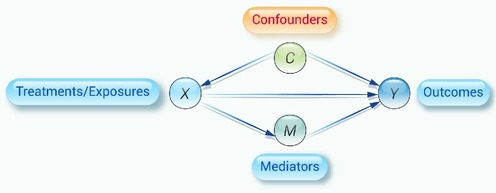
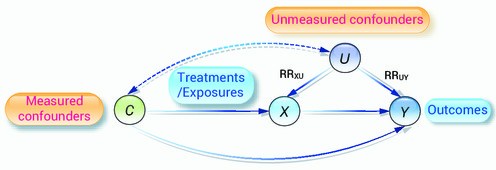
Figure 1.
Causal diagram (DAG) of confounders
-
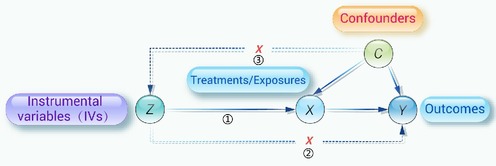
Figure 2.
Causal diagram (DAG) of instrumental variables (IVs)
-
Figure 3.
Causal diagram (DAG) of IV, CIV and AIV
-
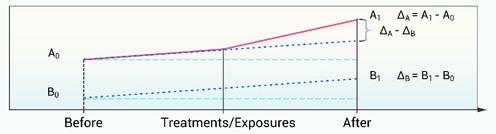
Figure 4.
Diagram of difference-in-differences (DID)
-
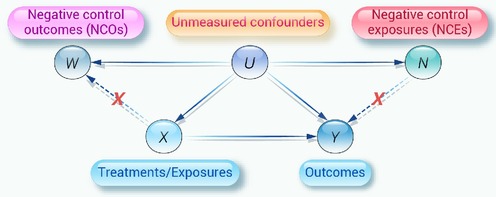
Figure 5.
Causal diagram (DAG) of NCEs and NCOs
-
Figure 6.
Causal diagram (DAG) of confounding structure
