
Urbanization, infrastructure, and mosquito thermal suitability shape the causal effects of extreme weather on dengue transmission
-
GRAPHICAL ABSTRACT
 DownLoad:
Full size image
DownLoad:
Full size image
-
PUBLIC SUMMARY
-
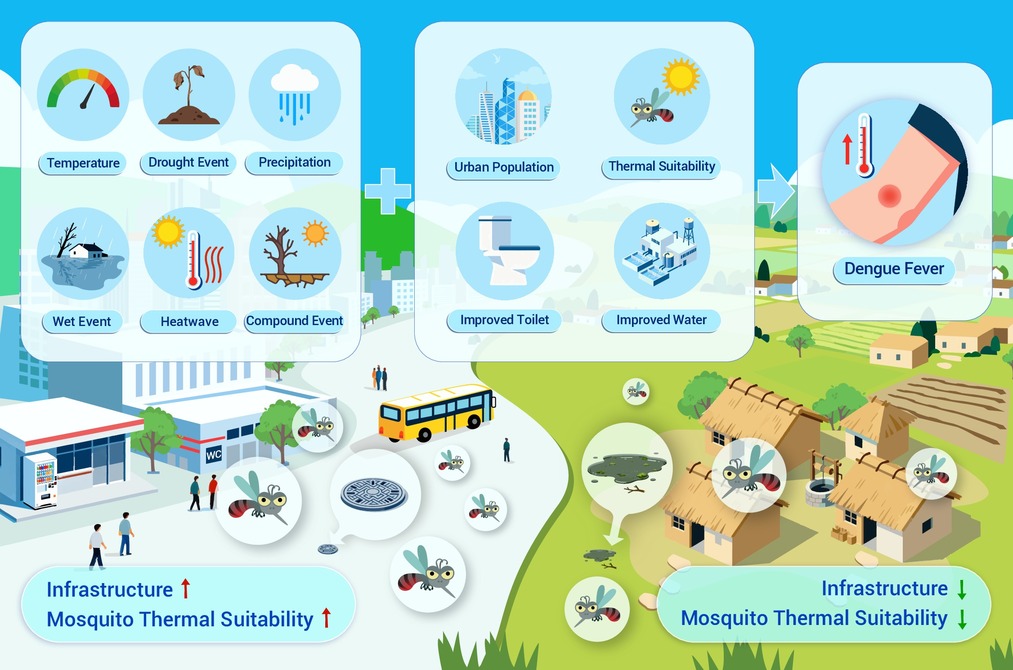
Among extreme weather, heatwaves present the highest risk, followed by drought and wet events.
Compound drought–heatwave events pose a lower dengue risk than individual events.
Extreme weather increases dengue risk in rural areas compared with urban areas.
Drought drives dengue in urban areas with better facilities and high mosquito thermal suitability.
-
-
ABSTRACT
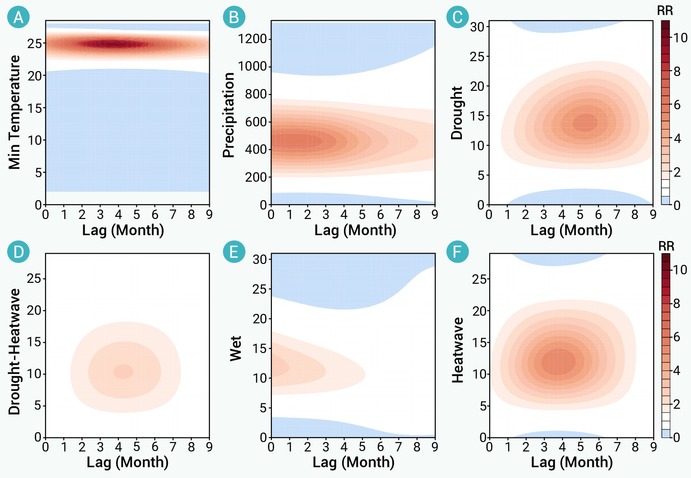
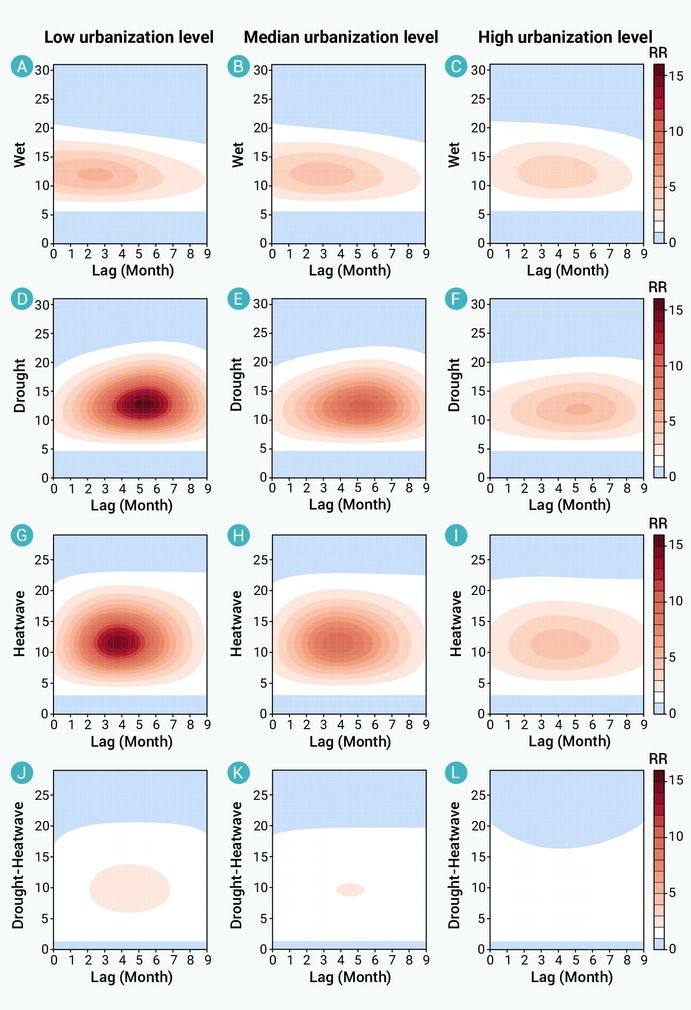
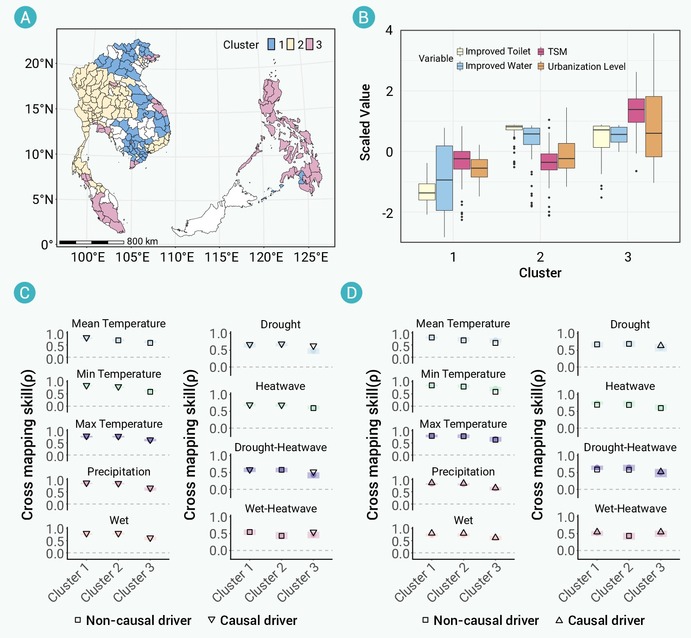
Dengue is a widespread arboviral disease and poses a persistent global health threat, particularly in Southeast Asia, a region characterized by frequent dengue and extreme weather. Urbanization, infrastructure, and mosquito thermal suitability are pivotal factors in shaping dengue dynamics. However, their roles in modulating the causal effects of extreme weather on dengue transmission remain unclear. Here, we compile monthly dengue data during 2000-2019 covering Singapore and 162 first–level administrative units in six Southeast Asian countries. A spatiotemporal Bayesian framework is developed to explicitly capture the interactions of extreme weather with urbanization and with infrastructure. We also apply convergent cross mapping (CCM) to identify causal associations between extreme weather and dengue, incorporating vector thermal suitability, urban development, and access to improved water and sanitation. Among extreme weather, heatwaves pose the highest relative risk (RR) [max RR 5.5, 95% CI: 3.27–9.25], followed by drought [max RR 5.21, 95% CI: 3.31–8.21], wet conditions [max RR 2.76, 95% CI: 1.79–4.26], and compound drought–heatwave events [max RR 2.55, 95% CI: 1.3–5.01]. Causal analysis indicates divergent pathways: in urban settings with improved infrastructure and high mosquito thermal suitability, drought and compound drought–heatwave events emerge as key drivers; in rural settings with poor infrastructure and low mosquito thermal suitability, their effects are not significant. This study reveals that extreme weather–driven dengue is modulated by social vulnerability and mosquito thermal suitability, and provides practical insights for integrating extreme weather into adaptation strategies for dengue control. -

-
REFERENCES
[1] WHO. (2025). Dengue in the South-East Asia. https://www.who.int/southeastasia/health-topics/dengue-and-severe-dengue. [2] Chen Y., Xu Y., Wang L., et al. (2024). Indian Ocean temperature anomalies predict long-term global dengue trends. Science 384:639−646. DOI:10.1126/science.adj4427 [3] Martina B. E. E., Koraka P. and Osterhaus A. D. M. E. (2009). Dengue virus pathogenesis: An integrated view. Clin. Microbiol. Rev. 22:564−581. DOI:10.1128/cmr.00035-09 [4] WHO. (2025). Dengue. https://www.who.int/news-room/fact-sheets/detail/dengue-and-severe-dengue. [5] Morin C. W., Comrie A. C. and Ernst K. (2013). Climate and dengue transmission: Evidence and implications. Environ. Health Perspect. 121: 1264–1272. DOI: 10.1289/ehp.1306556 [6] UNDRR. (2025). Dengue. https://www.undrr.org/understanding-disaster-risk/terminology/hips/bi0207. [7] Loo Y. Y., Billa L. and Singh A. (2015). Effect of climate change on seasonal monsoon in Asia and its impact on the variability of monsoon rainfall in Southeast Asia. Geosci. Front. 6:817–823. DOI:10.1016/j.gsf.2014.02.009 [8] Mutheneni S. R., Morse A. P., Caminade C., et al. (2017). Dengue burden in India: Recent trends and importance of climatic parameters. Emerg. Microbes. Infect. 6:e70. DOI:10.1038/emi.2017.57 [9] CUSABIO team. (2019). Epidemic dengue fever in Southeast Asia. https://www.cusabio.com/c-20884.html. [10] Boonklong O. and Bhumiratana A. (2016). Seasonal and geographical variation of dengue vectors in Narathiwat, south Thailand. Can. J. Infect. Dis. Med. Microbiol. 2016:8062360. DOI:10.1155/2016/8062360 [11] Colón-González F. J., Gibb R., Khan K., et al. (2023). Projecting the future incidence and burden of dengue in Southeast Asia. Nat. Commun. 14:5439. DOI:10.1038/s41467-023-41017-y [12] Nakase T., Giovanetti M., Obolski U., et al. (2024). Population at risk of dengue virus transmission has increased due to coupled climate factors and population growth. Commun. Earth Environ. 5:475. DOI:10.1038/s43247-024-01639-6 [13] Lowe R., Lee S. A., O’Reilly K. M., et al. (2021). Combined effects of hydrometeorological hazards and urbanisation on dengue risk in Brazil: A spatiotemporal modelling study. Lancet Planet. Health 5:e209−219. DOI:10.1016/S2542-5196(20)30292-8 [14] Campbell K. M., Lin C. D., Iamsirithaworn S., et al. (2013). The complex relationship between weather and dengue virus transmission in Thailand. Am. J. Trop. Med. Hyg. 89:1066−1080. DOI:10.4269/ajtmh.13-0321 [15] Gibb R., Colón-González F. J., Lan P. T., et al. (2023). Interactions between climate change, urban infrastructure and mobility are driving dengue emergence in Vietnam. Nat. Commun. 14:8179. DOI:10.1038/s41467-023-43954-0 [16] Meher M. M., Afrin M., Bayazid A. A., et al. (2025). Deciphering the impact of heat wave in the global surge of infectious diseases. Hyg. Environ. Health Adv. 15:100135. DOI:10.1016/j.heha.2025.100135 [17] Li C., Liu Z., Li W., et al. (2023). Projecting future risk of dengue related to hydrometeorological conditions in mainland China under climate change scenarios: A modelling study. Lancet Planet. Health 7:e397−406. DOI:10.1016/S2542-5196(23)00051-7 [18] Seger K. R., Roth J. Jr., Schnall A. H., et al. (2019). Community assessments for mosquito prevention and control experiences, attitudes, and practices — U.S. Virgin Islands, 2017 and 2018. MMWR Morb. Mortal. Wkly. Rep. 68:500-504. DOI: 10.15585/mmwr.mm6822a3 [19] Hao Z., Singh V. P. and Hao F. (2018). Compound extremes in hydroclimatology: A review. Water 10:718. DOI:10.3390/w10060718 [20] Couper L. I., Nalukwago D. U., Lyberger K. P., et al. (2024). How much warming can mosquito vectors tolerate. Glob. Change Biol. 30:e17610. DOI:10.1111/gcb.17610 [21] Goodess C. M. (2013). How is the frequency, location and severity of extreme events likely to change up to 2060. Environ. Sci. Policy 27:S4−14. DOI:10.1016/j.envsci.2012.04.001 [22] Telle O., Nikolay B., Kumar V., et al. (2021). Social and environmental risk factors for dengue in Delhi city: A retrospective study. PLoS Negl. Trop. Dis. 15:e0009024. DOI:10.1371/journal.pntd.0009024 [23] Brady O. J. and Hay S. I. (2020). The global expansion of dengue: How Aedes aegypti mosquitoes enabled the first pandemic Arbovirus. Annu. Rev. Entomol. 65:191−208. DOI:10.1146/annurev-ento-011019-024918 [24] Man O., Kraay A., Thomas R., et al. (2023). Characterizing dengue transmission in rural areas: A systematic review. PLoS Negl. Trop. Dis. 17:e0011333. DOI:10.1371/journal.pntd.0011333 [25] Pearl J. (2009). Causal inference in statistics: An overview. Stat. Surv. 3:96−146. DOI:10.1214/09-SS057 [26] Saberski E., Lorimer T., Carpenter D., et al. (2024). The impact of data resolution on dynamic causal inference in multiscale ecological networks. Commun. Biol. 7:1442. DOI:10.1038/s42003-024-07054-z [27] Gaffin S. R., Rosenzweig C., Xing X., et al. (2004). Downscaling and geo-spatial gridding of socio-economic projections from the IPCC Special Report on Emissions Scenarios (SRES). Glob. Environ. Change 14:105−123. DOI:10.1016/j.gloenvcha.2004.02.004 [28] Liu X., Yu S., Yang Z., et al. (2024). The first global multi-timescale daily SPEI dataset from 1982 to 2021. Sci. Data 11:223. DOI:10.1038/s41597-024-03047-z [29] ASEAN Secretariat. (2025). Changing disaster risk landscape due to climate change in ASEAN. ASEAN Socio-Cultural Community Trend Report, Vol. 10. https://asean.org/wp-content/uploads/2025/04/20240324_Trend-Report_DM-10-2025.pdf. [30] Brunner L. and Voigt A. (2024). Pitfalls in diagnosing temperature extremes. Nat. Commun. 15:2087. DOI:10.1038/s41467-024-46349-x [31] Liu L. and Qin X. (2025). Investigating compound drought and hot extreme events in Southeast Asia through copula analysis. Int. J. Climatol. 45:e8773. DOI:10.1002/joc.8773 [32] Kraemer M. U. G., Sinka M. E., Duda K. A., et al. (2017). Data from: The global compendium of Aedes aegypti and Ae. albopictus occurrence. (Dryad) 6966759 bytes. DOI:10.5061/dryad.47v3c [33] Rue H., Martino S. and Chopin N. (2009). Approximate Bayesian inference for latent Gaussian models by using integrated nested Laplace approximations. J. R. Stat. Soc. B. 71:319−392. DOI:10.1111/j.1467-9868.2008.00700.x [34] Martins T. G., Simpson D., Lindgren F., et al. (2013). Bayesian computing with INLA: New features. Comput. Stat. Data Anal. 67:68−83. DOI:10.1016/j.csda.2013.04.014 [35] Moraga P. (2019). Geospatial health data: Modeling and visualization with R-INLA and shiny. (Chapman & Hall/CRC). https://www.paulamoraga.com/book-geospatial/. [36] Chen Y., Li N., Lourenço J., et al. (2022). Measuring the effects of COVID-19-related disruption on dengue transmission in southeast Asia and Latin America: A statistical modelling study. Lancet Infect. Dis. 22:657−667. DOI:10.1016/S1473-3099(22)00025-1 [37] Zhu S., Tang J., Zhou X., et al. (2023). Spatiotemporal analysis of the impact of urban landscape forms on PM2.5 in China from 2001 to 2020. Int. J. Digit. Earth 16:3417–3434. DOI:10.1080/17538947.2023.2249862 [38] Lowe R., Stewart-Ibarra A. M., Petrova D., et al. (2017). Climate services for health: Predicting the evolution of the 2016 dengue season in Machala, Ecuador. Lancet Planet. Health 1:e142−151. DOI:10.1016/S2542-5196(17)30064-5 [39] Sugihara G., Park J., Deyle E., et al. (2023). Empirical dynamic modeling. https://cran.r-project.org/web/packages/rEDM/vignettes/rEDM-tutorial.pdf. [40] Joseph Park, Cameron Smith, George Sugihara, et al. (2024). _rEDM: Empirical dynamic modeling ('EDM’)_. R package version 1.15.4. https://CRAN.R-project.org/package=rEDM. [41] Nova N., Deyle E. R., Shocket M. S., et al. (2021). Susceptible host availability modulates climate effects on dengue dynamics. Ecol. Lett. 24:415−425. DOI:10.1111/ele.13652 [42] Acosta-España J. D., Romero-Alvarez D., Luna C., et al. (2024). Infectious disease outbreaks in the wake of natural flood disasters: Global patterns and local implications. Infez. Med. 32:451–462. DOI:10.53854/liim-3204-4 [43] Grossi-Soyster E. N., Cook E. A. J., de Glanville W. A., et al. (2017). Serological and spatial analysis of alphavirus and flavivirus prevalence and risk factors in a rural community in western Kenya. PLoS Negl. Trop. Dis. 11:e0005998. DOI:10.1371/journal.pntd.0005998 [44] Li C., Wang Z., Yan Y., et al. (2023). Association between hydrological conditions and dengue fever incidence in coastal southeastern China from 2013 to 2019. JAMA Netw. Open 6:e2249440. DOI:10.1001/jamanetworkopen.2022.49440 [45] Naish S., Dale P., Mackenzie J. S., et al. (2014). Climate change and dengue: A critical and systematic review of quantitative modelling approaches. BMC Infect. Dis. 14:167. DOI:10.1186/1471-2334-14-167 [46] Trpiš M. (1972). Dry season survival of Aedes aegypti eggs in various breeding sites in the Dar es Salaam area, Tanzania. Bull. World Health Organ. 47:433−437. [47] Yan W., Zhou J., Wang X., et al. (2025). Vegetation resistance to compound drought and heatwave events buffers the spatial shift velocities of vegetation vulnerability. Commun. Earth Environ. 6:320. DOI:10.1038/s43247-025-02298-x [48] Perdomo H. D., Khorramnejad A., Cham N. M., et al. (2025). Prolonged exposure to heat enhances mosquito tolerance to viral infection. Commun. Biol. 8:168. DOI:10.1038/s42003-025-07617-8 [49] Vannavong N., Seidu R., Stenström T. A., et al. (2017). Effects of socio-demographic characteristics and household water management on Aedes aegypti production in suburban and rural villages in Laos and Thailand. Parasites Vectors. 10:170. DOI:10.1186/s13071-017-2107-7 [50] Karimidastenaei Z., Avellán T., Sadegh M., et al. (2022). Unconventional water resources: Global opportunities and challenges. Sci. Total Environ. 827:154429. DOI:10.1016/j.scitotenv.2022.154429 [51] Mahmud M. A. F., Abdul Mutalip M. H., Lodz N. A., et al. (2023). The application of environmental management methods in combating dengue: A systematic review. Int. J. Environ. Health Res. 33:1148−1167. DOI:10.1080/09603123.2022.2076815 [52] U.S. Environmental Protection Agency (EPA). (2018). Drought response and recovery: A basic guide for water utilities. (U.S. Environmental Protection Agency). https://www.epa.gov/waterutilityresponse/drought-response-and-recovery-guide-water-utilities. [53] Arham A. F., Mokhtar M. I., Zainal N., et al. (2025). Asian households’ dengue-related knowledge, attitudes, and practices: A systematic review. Humanit. Soc. Sci. Commun. 12:702. DOI:10.1057/s41599-025-05017-1 [54] Wilson A. L., Courtenay O., Kelly-Hope L. A., et al. (2020). The importance of vector control for the control and elimination of vector-borne diseases. PLoS Negl. Trop. Dis. 14:e0007831. DOI:10.1371/journal.pntd.0007831 [55] U.S. Environmental Protection Agency (EPA). (2016). Water utilities preparedness and resilience. https://www.epa.gov/arc-x/water-utilities-preparedness-and-resilience. [56] Koppe C., Kovats S., Jendritzky G., et al. (2004). Heat-waves: Risks and responses. (World Health Organization, Regional Office for Europe). https://iris.who.int/bitstream/handle/10665/107552/9789289010948-eng.pdf. [57] Zhou H. Y., Li Y., Li J. Y., et al. (2024). Harnessing the power of artificial intelligence to combat infectious diseases: Progress, challenges, and future outlook. Innov. Med. 2:100091. DOI:10.59717/j.xinn-med.2024.100091 [58] Sutanto H. and Ansharullah B. A. (2025). The role of artificial intelligence for dengue prevention, control, and management: A technical narrative review. Acta Trop. 268:107741. DOI:10.1016/j.actatropica.2025.107741 -
ABOUT THIS ARTICLE
Cite this article:
Wang D., Wu X., Chen J., et al. (2026). Urbanization, infrastructure, and mosquito thermal suitability shape the causal effects of extreme weather on dengue transmission. The Innovation Medicine 4:100188. https://doi.org/10.59717/j.xinn-med.2026.100188
Welcome!
To request copyright permission to republish or share portions of our works, please visit Copyright Clearance Center's (CCC) Marketplace website at marketplace.copyright.com.
Article Metrics
Relative Articles
Cited by
Export File
Citation
Wang D., Wu X., Chen J., et al. (2026). Urbanization, infrastructure, and mosquito thermal suitability shape the causal effects of extreme weather on dengue transmission. The Innovation Medicine 4:100188. https://doi.org/10.59717/j.xinn-med.2026.100188

Format
Content
-
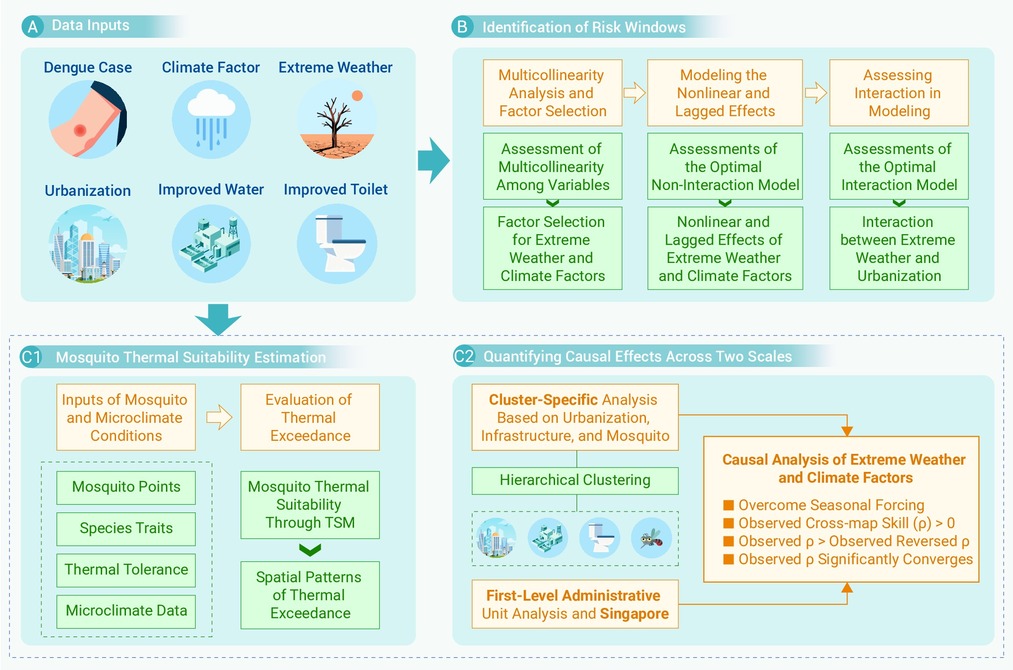
Figure 1.
Flowchart of the study.
-
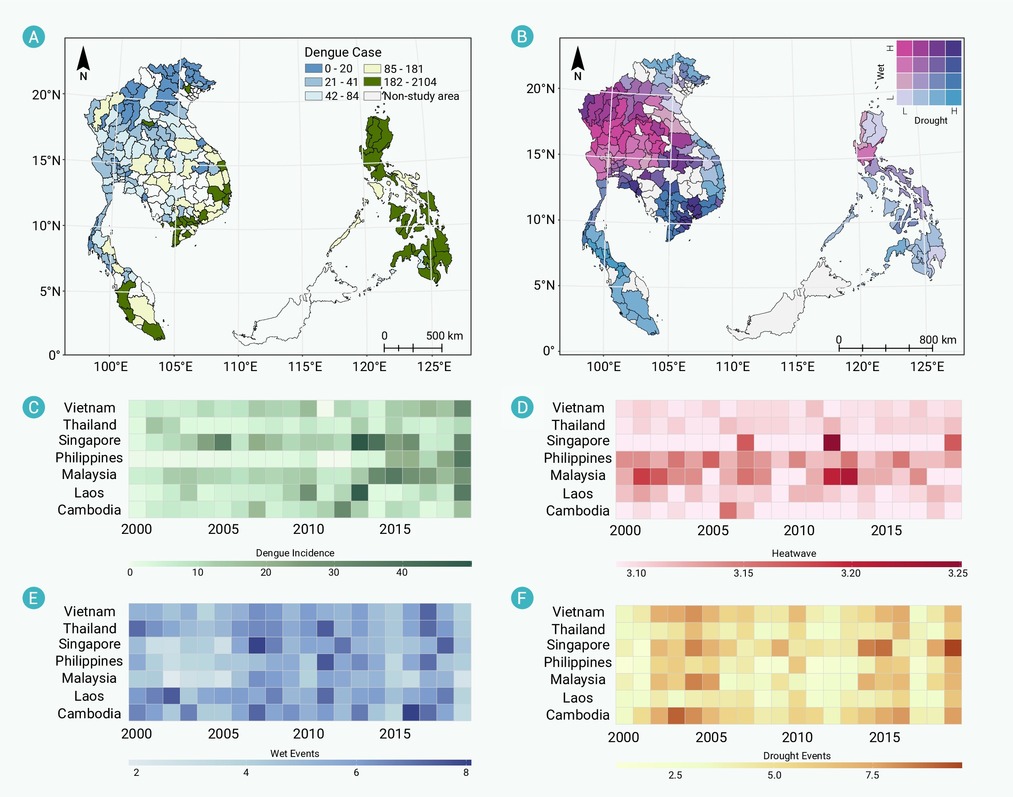
Figure 2.
Temporal and spatial variations of dengue and extreme weather events from 2000 to 2019
-
Figure 3.
Associations between key climate factors and extreme weather events and dengue risk
-
Figure 4.
Interactive effects of extreme weather events and urbanization levels on dengue risk
-
Figure 5.
Causal effects of extreme weather and climate factors on dengue transmission across area clusters characterized by mosquito thermal suitability, urbanization, and infrastructure
-
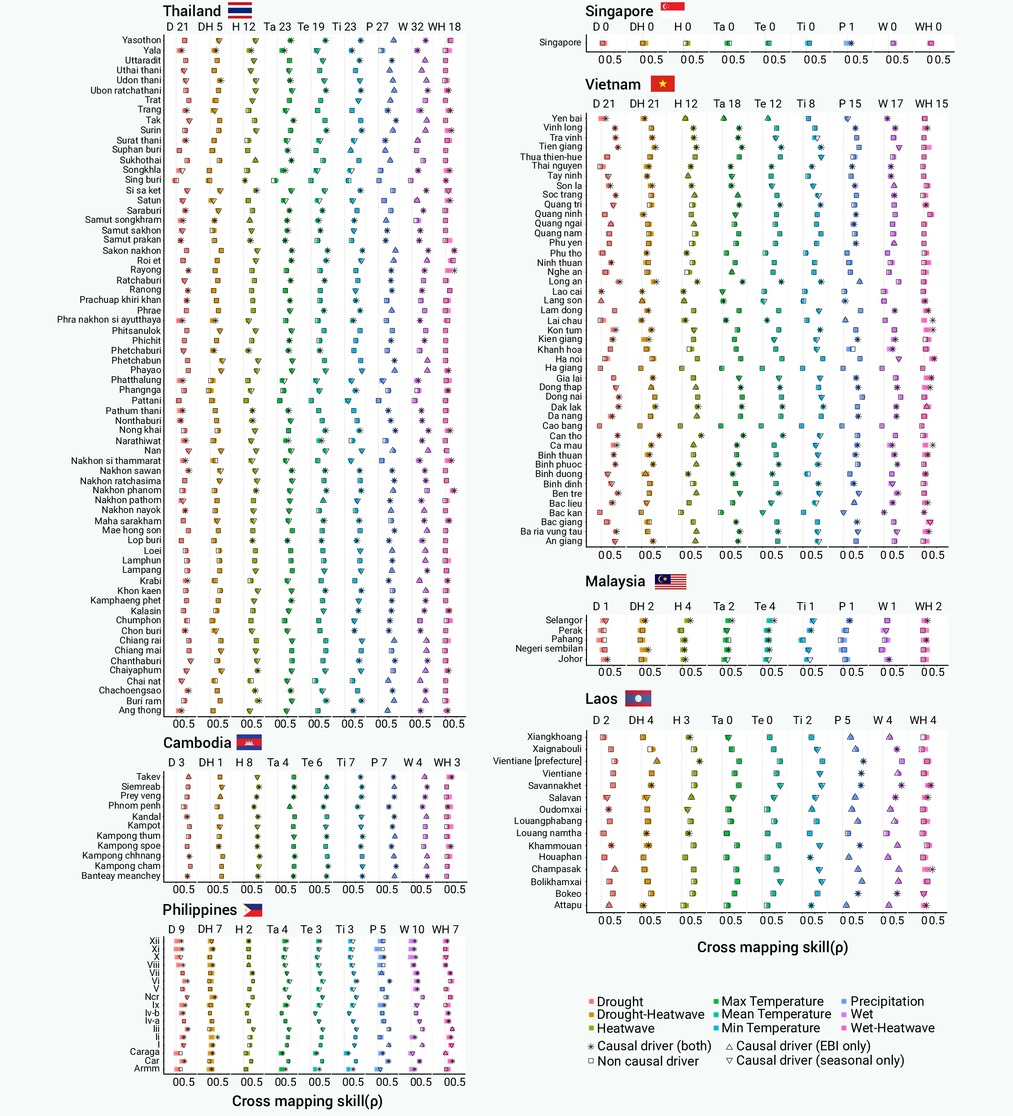
Figure 6.
Detection of causal drivers of climate factors and extreme weather events on dengue transmission for the whole of Singapore and each Admin-1 across six nations using the SEA null model
-
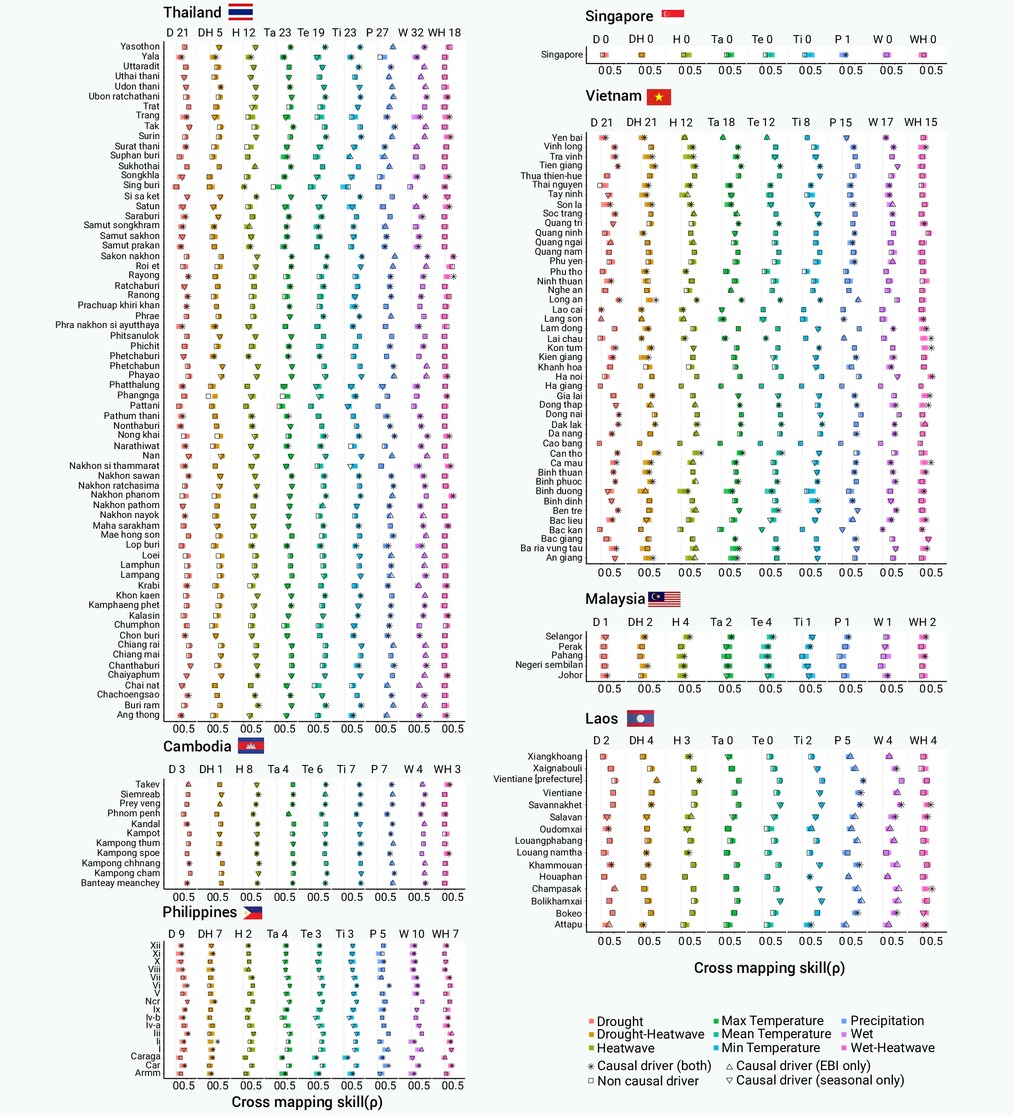
Figure 7.
Detection of causal drivers of climate factors and extreme weather events on dengue transmission for the whole of Singapore and each Admin-1 across six nations using the EBI null model
