
Microplastics and the gut-brain axis: Unraveling neurotoxic mechanisms and health implications
-
GRAPHICAL ABSTRACT
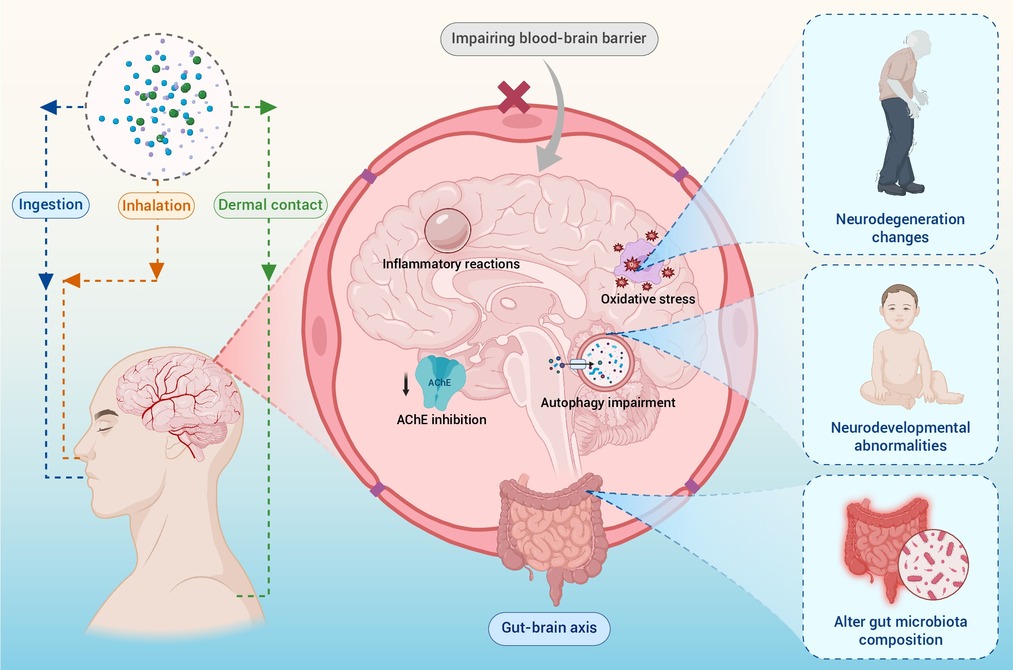
 DownLoad:
Full size image
DownLoad:
Full size image
-
PUBLIC SUMMARY
-
Microplastics impair intestinal barrier integrity and disrupt gut microbial balance.
Microplastics induce gut dysbiosis that drives systemic inflammation and oxidative stress.
Microplastics trigger gut-brain axis signaling that propagates inflammatory stress to the brain.
Microplastics may contribute to neurodevelopmental and neurodegenerative disorders.
-
-
ABSTRACT
Microplastics (MPs) are emerging environmental contaminants with increasing global prevalence, leading to inevitable human exposure through ingestion, inhalation, and dermal absorption. Despite the protective role of the blood-brain barrier (BBB), MPs can translocate and accumulate in the brain, raising concerns about their potential neurotoxicity. This review systematically evaluates the neurotoxic mechanisms of MPs, emphasizing their occurrence in the gastrointestinal tract and interaction with the gut-brain axis. MPs can disrupt intestinal barrier integrity, alter gut microbiota composition, and induce systemic inflammation, ultimately affecting neurotransmitter homeostasis. These disturbances may propagate to the central nervous system through neuroinflammatory pathways, oxidative stress, and dysregulated neurotransmission. Additionally, we discuss potential mechanisms of BBB penetration by MPs and their implications for neurodegenerative and neurodevelopmental disorders. It also highlights environmental exposure risks, technological challenges in assessing MPs’ toxicity in real-world conditions, and current research gaps. We emphasize the urgent need for human-based studies to elucidate the long-term health risks associated with MPs exposure, and implementing comprehensive strategies and policies to reduce reliance on conventional plastics and promote sustainable material alternatives can serve as an effective approach to mitigating MPs consumption. -

-
REFERENCES
[1] Chaudhary H. D., Shah G., Bhatt U., et al. (2025). Microplastics and plant health: A comprehensive review of sources, distribution, toxicity, and remediation. NPJ Emerg. Contam. 1:8. DOI:10.1038/s44454-025-00007-z [2] Huang W., Xia X. (2024). Element cycling with micro(nano)plastics. Science 385:933−935. DOI:10.1126/science.adk9505 [3] Li C., Jin L. N., Bank M. S., et al. (2025). Potential planetary health impacts of the airborne plastisphere. One Earth 8:101446. DOI: 10.1016/j.oneear.2025.101446 [4] Li C., Gillings M. R., Zhang C., et al. (2024). Ecology and risks of the global plastisphere as a newly expanding microbial habitat. The Innovation 5:100543. DOI:10.1016/j.xinn.2023.100543 [5] Shruti V., Kutralam-Muniasamy G. (2025). The human plastisphere: A bioparticulate system challenging microplastic risk assessment and governance. Environ. Sci. Technol. 59:24131. DOI:10.1021/acs.est.5c05922 [6] Argentieri M. A., Amin N., Nevado-Holgado A. J., et al. (2025). Integrating the environmental and genetic architectures of aging and mortality. Nat. Med. 1:1−10. DOI:10.1038/s41591-024-03483-9 [7] Xu J., Zuo R., Shang J., et al. (2023). Nano- and micro-plastic transport in soil and groundwater environments: sources, behaviors, theories, and models. Sci. Total Environ. 904:166641. DOI:10.1016/j.scitotenv.2023.166641 [8] Xu Z., Zhang Y., Xu Z., et al. (2023). Dysregulation of gut health in zebrafish by differentially charged nanoplastic exposure: An integrated analysis of histopathology, immunology, and microbial informatics. Environ. Sci. Nano 10:933−947. DOI:10.1039/D2EN00542E [9] Wei G., Zhang K., Shen F.-J., et al. (2025). Low-dose polystyrene microplastics exposure increases susceptibility to obesity-induced MASLD via disrupting intestinal barrier integrity and gut microbiota homeostasis. Ecotoxicol. Environ. Saf. 299:118310. DOI:10.1016/j.ecoenv.2024.118310 [10] Bist P. and Choudhary S. (2022). Impact of heavy metal toxicity on the gut microbiota and its relationship with metabolites and future probiotics strategy: A review. Biol. Trace Elem. Res. 200:5328−5350. DOI:10.1007/s12011-021-03092-4 [11] Liu Q., Chen Z., Chen Y., et al. (2021). Microplastics and nanoplastics: Emerging contaminants in food. J. Agric. Food Chem. 69:10450−10468. DOI:10.1021/acs.jafc.1c04199 [12] Chen X., Zhuang J., Chen Q., et al. (2022). Polyvinyl chloride microplastics induced gut barrier dysfunction, microbiota dysbiosis and metabolism disorder in adult mice. Ecotoxicol. Environ. Saf. 241:113809. DOI:10.1016/j.ecoenv.2022.113809 [13] Yan Z., Liu Y., Zhang T., et al. (2021). Analysis of microplastics in human feces reveals a correlation between fecal microplastics and inflammatory bowel disease status. Environ. Sci. Technol. 56:414−421. DOI:10.1021/acs.est.1c03924 [14] Ejazi S. A., Louisthelmy R., Maisel K., et al. (2023). Mechanisms of nanoparticle transport across intestinal tissue: An oral delivery perspective. ACS Nano 17:13044−13061. DOI:10.1021/acsnano.3c02403 [15] Wang Y., Xu K., Gao X., et al. (2024). Polystyrene nanoplastics with different functional groups and charges have different impacts on type 2 diabetes. Part. Fibre Toxicol. 21:21. DOI:10.1186/s12989-024-00582-w [16] Park K.-Y., Kim M. S., Oh N., et al. (2024). Cytotoxicity of amine-modified polystyrene MPs and NPs on neural stem cells cultured from mouse subventricular zone. Heliyon 10:e30518. DOI:10.1016/j.heliyon.2024.e30518 [17] Baek M.-J., Hur W., Kashiwagi S., et al. (2025). Design considerations for organ-selective nanoparticles. ACS Nano 19:14605−14626. DOI:10.1021/acsnano.5c00484 [18] Jones L. R., Wright S. J., Gant T. W., et al. (2023). A critical review of microplastics toxicity and potential adverse outcome pathway in human gastrointestinal tract following oral exposure. Toxicol. Lett. 385:51−60. DOI:10.1016/j.toxlet.2023.08.011 [19] Bruno A., Dovizio M., Milillo C., et al. (2024). Orally ingested micro- and nano-plastics: A hidden driver of inflammatory bowel disease and colorectal cancer. Cancers 16:3079. DOI:10.3390/cancers16173079 [20] Fan W., Liang C., Ou M., et al. (2020). MicroRNA-146a is a wide-reaching neuroinflammatory regulator and potential treatment target in neurological diseases. Front. Mol. Neurosci. 13:90. DOI:10.3389/fnmol.2020.00090 [21] Rahman M. A., Akter S., Ashrafudoulla M., et al. (2025). Biofilm–microplastic interactions in food safety: mechanisms, risks, and control strategies. Crit. Rev. Food Sci. Nutr. 1:1−19. DOI:10.1080/10408398.2025.2517825 [22] Liu S., He Y., Yin J., et al. (2024). Neurotoxicities induced by micro/nanoplastics: A review focusing on the risks of neurological diseases. J. Hazard. Mater. 469:134054. DOI:10.1016/j.jhazmat.2024.134054 [23] Borgatta M. and Breider F. (2024). Inhalation of microplastics-a toxicological complexity. Toxics 12:358. DOI:10.3390/toxics12050358 [24] Wootton N., Silva V., Giuretis D., et al. (2025). Microplastic presence in dried and fresh fish from seafood markets in Sri Lanka. Mar. Freshwater Res. 76: MF24270. DOI: 10.1071/MF24270 [25] de Souza J. S., de Pinho J. V., de Almeida Rodrigues P., et al. (2024). A systematic review of microplastic contamination in commercially important bony fish and its implications for health. Environments 11:174. DOI:10.3390/environments11080174 [26] Danopoulos E., Jenner L. C., Twiddy M., et al. (2020). Microplastic contamination of seafood intended for human consumption: A systematic review and meta-analysis. Environ. Health Perspect. 128:126002. DOI:10.1289/EHP7171 [27] Raut S. S., Singh R., Lekhak U. M., et al. (2024). Naturally occurring nanoparticles (NONPs): a review. Next Sustain. 3:100037. DOI:10.1016/j.nxsust.2024.100037 [28] Aljeradat B., Kumar D., Abdulmuizz S., et al. (2024). Neuromodulation and the gut–brain axis: therapeutic mechanisms and implications for gastrointestinal and neurological disorders. Pathophysiology 31:244−268. DOI:10.3390/pathophysiology31020019 [29] Gieryńska M., Szulc-Dąbrowska L., Struzik J., et al. (2022). Integrity of the intestinal barrier: The involvement of epithelial cells and microbiota-a mutual relationship. Animals 12:145. DOI:10.3390/ani12020145 [30] Ghosal S., Bag S., Rao S., et al. (2024). Exposure to polyethylene microplastics exacerbate inflammatory bowel disease tightly associated with intestinal gut microflora. RSC Adv. 14:25130−25148. DOI:10.1039/D4RA04544K [31] Gao B. and Tu P. (2025). Effects of environmental exposure on host and microbial metabolism. Metabolites 15:646. DOI:10.3390/metabo15100646 [32] Fournier E., Ratel J., Denis S., et al. (2023). Exposure to polyethylene microplastics alters immature gut microbiome in an infant in vitro gut model. J. Hazard. Mater. 443:130383. DOI:10.1016/j.jhazmat.2022.130383 [33] Chen S., Li S.-W., Gu X.-Y., et al. (2023). Reduced dietary Ca, Cu, Zn, Mn, and Mg bioavailability but increased Fe bioavailability with polyethylene microplastic ingestion in a mouse model: Changes in intestinal permeability and gut metabolites. Sci. Total Environ. 885:163853. DOI:10.1016/j.scitotenv.2023.163853 [34] Xin L., Chen Y., Rong W., et al. (2024). Gut microbiota analysis in silkworms (Bombyx mori) provides insights into identifying key bacterials for inclusion in artificial diet formulations. Animals 14:1261. DOI:10.3390/ani14091261 [35] Zhang J., Ma C., Xia X., et al. (2023). Differentially charged nanoplastics induce distinct effects on the growth and gut of benthic insects (Chironomus kiinensis) via charge-specific accumulation and perturbation of the gut microbiota. Environ. Sci. Technol. 57:11218−11230. DOI:10.1021/acs.est.3c02144 [36] Zeng G., Li J., Wang Y., et al. (2024). Polystyrene microplastic-induced oxidative stress triggers intestinal barrier dysfunction via the NF-κB/NLRP3/IL-1β/MCLK pathway. Environ. Pollut. 345:123473. DOI:10.1016/j.envpol.2024.123473 [37] Chen X., Chen Y., Luo Y., et al. (2024). Polyethylene microplastics induced gut microbiota dysbiosis leading to liver injury via the TLR2/NF-κB/NLRP3 pathway in mice. J. Hazard. Mater. 503:123474. DOI:10.1016/j.jhazmat.2023.123474 [38] Hirt N. and Body-Malapel M. (2020). Immunotoxicity and intestinal effects of nano- and microplastics: A review of the literature. Part. Fibre Toxicol. 17:57. DOI:10.1186/s12989-020-00387-7 [39] Liu Y., Zhang H., Wang S., et al. (2025). Recent progress in intestinal toxicity of microplastics and nanoplastics: A systematic review of preclinical evidence. Microplastics 3:217−233. DOI:10.3390/microplastics3020013 [40] Li L., Lv X., He J., et al. (2024). Chronic exposure to polystyrene nanoplastics induces intestinal mechanical and immune barrier dysfunction in mice. Ecotoxicol. Environ. Saf. 269:115749. DOI:10.1016/j.ecoenv.2023.115749 [41] Lee H.-S., Amarakoon D., Wei C.-I., et al. (2021). Adverse effect of polystyrene microplastics (PS-MPs) on tube formation and viability of human umbilical vein endothelial cells. Food Chem. Toxicol. 154:112356. DOI:10.1016/j.fct.2021.112356 [42] Yang W., Jannatun N., Zeng Y., et al. (2022). Impacts of microplastics on immunity. Front. Toxicol. 4:956885. DOI:10.3389/ftox.2022.956885 [43] Eleftherianos I., Heryanto C., Bassal T., et al. (2021). Haemocyte-mediated immunity in insects: Cells, processes and associated components in the fight against pathogens and parasites. Immunology 164:401−432. DOI:10.1111/imm.13390 [44] Dicks L. M. (2022). Gut bacteria and neurotransmitters. Microorganisms 10:1838. DOI:10.3390/microorganisms10091838 [45] Ghosh A. and Gorain B. (2025). Mechanistic insight of neurodegeneration due to micro/nano-plastic-induced gut dysbiosis. Arch. Toxicol. 99:83−101. DOI:10.1007/s00204-024-03613-w [46] Lv C., Cheng L., Feng W., et al. (2024). Targeting microbiota–immune–synaptic plasticity to explore the effect of tea polyphenols on improving memory in the aged type 2 diabetic rat model. Nutr. Neurosci. 27:1422−1438. DOI:10.1080/1028415X.2024.2341188 [47] Eslami M., Alibabaei F., Babaeizad A., et al. (2024). The importance of gut microbiota on choline metabolism in neurodegenerative diseases. Biomolecules 14:1345. DOI:10.3390/biom14111345 [48] Yu Y., Xie D., Yang Y., et al. (2023). Carboxyl-modified polystyrene microplastics induce neurotoxicity by affecting dopamine, glutamate, serotonin, and GABA neurotransmission in. Caenorhabditis elegans. J. Hazard. Mater. 445:130543. DOI:10.1016/j.jhazmat.2022.130543 [49] Du L., Liu H., Song X., et al. (2024). Developments in the field of intestinal toxicity and signaling pathways associated with rodent exposure to micro(nano)plastics. Toxicology 507:153883. DOI:10.1016/j.tox.2024.153883 [50] Moiniafshari K., Zanut A., Tapparo A., et al. (2025). A perspective on the potential impact of microplastics and nanoplastics on the human central nervous system. Environ. Sci. Nano 12:1809−1820. DOI:10.1039/D4EN01017E [51] Teleanu R. I., Niculescu A.-G., Roza E., et al. (2022). Neurotransmitters-key factors in neurological and neurodegenerative disorders of the central nervous system. Int. J. Mol. Sci. 23:5954. DOI:10.3390/ijms23115954 [52] Yu Y., Tan S., Xie D., et al. (2023). Photoaged microplastics induce neurotoxicity associated with damage to serotonergic, glutamatergic, dopaminergic, and GABAergic neuronal systems in Caenorhabditis elegans. Sci. Total Environ. 900:165874. DOI:10.1016/j.scitotenv.2023.165874 [53] Von Hellfeld R., Zarzuelo M., Zaldibar B., et al. (2022). Accumulation, depuration, and biological effects of polystyrene microplastic spheres and adsorbed cadmium and benzo(a)pyrene on the mussel. Mytilus galloprovincialis Toxics 10:18. DOI:10.3390/toxics10010018 [54] Shang Y., Wang S., Jin Y., et al. (2021). Polystyrene nanoparticles induced neurodevelopmental toxicity in Caenorhabditis elegans through regulation of dpy-5 and rol-6. Ecotoxicol. Environ. Saf. 222:112523. DOI:10.1016/j.ecoenv.2021.112523 [55] Wang Z., He H., Zhai Y., et al. (2024). Microplastic photoaging: A critical review on occurrence, influence factors, mechanism and potential effect. J. Clean. Prod. 464:142783. DOI:10.1016/j.jclepro.2024.142783 [56] Tang Y., Zhou W., Sun S., et al. (2020). Immunotoxicity and neurotoxicity of bisphenol A and microplastics alone or in combination to a bivalve species, Tegillarca granosa. Environ. Pollut. 265:115115. DOI:10.1016/j.envpol.2020.115115 [57] Tlili S., Jemai D., Brinis S., et al. (2020). Microplastics mixture exposure at environmentally relevant conditions induces oxidative stress and neurotoxicity in the wedge clam Donax trunculus. Chemosphere 258:127344. DOI:10.1016/j.chemosphere.2020.127344 [58] Liu Y., Wang Y., Ling X., et al. (2021). Effects of nanoplastics and butyl methoxydibenzoylmethane on early zebrafish embryos identified by single-cell RNA sequencing. Environ. Sci. Technol. 55:1885−1896. DOI:10.1021/acs.est.0c06479 [59] Chen Q., Gundlach M., Yang S., et al. (2017). Quantitative investigation of mechanisms of microplastics and nanoplastics toward zebrafish larvae locomotor activity. Sci. Total Environ. 584:1022−1031. DOI:10.1016/j.scitotenv.2017.01.156 [60] Yu H., Chen Q., Qiu W., et al. (2022). Concurrent water- and foodborne exposure to microplastics leads to differential microplastic ingestion and neurotoxic effects in zebrafish. Water Res. 219:118582. DOI:10.1016/j.watres.2022.118582 [61] Shan S., Zhang Y., Zhao H., et al. (2022). Polystyrene nanoplastics penetrate across the blood-brain barrier and induce activation of microglia in the brain of mice. Chemosphere 298:134261. DOI:10.1016/j.chemosphere.2022.134261 [62] Liu S., Li H., Wang J., et al. (2022). Polystyrene microplastics aggravate inflammatory damage in mice with intestinal immune imbalance. Sci. Total Environ. 833:155198. DOI:10.1016/j.scitotenv.2022.155198 [63] Xu T., Liu J., Li X.-R., et al. (2021). The mTOR/NF-κB pathway mediates neuroinflammation and synaptic plasticity in diabetic encephalopathy. Mol. Neurobiol. 58:3848−3862. DOI:10.1007/s12035-020-02313-7 [64] Harvey N. E., Mercer G. V., Stapleton D., et al. (2023). Maternal exposure to polystyrene nanoplastics impacts developmental milestones and brain structure in mouse offspring. Environ. Sci. Adv. 2:622−628. DOI:10.1039/D2VA00227B [65] Liang B., Deng Y., Zhong Y., et al. (2024). Gastrointestinal incomplete degradation exacerbates neurotoxic effects of PLA microplastics via oligomer nanoplastics formation. Adv. Sci. 11:2401009. DOI:10.1002/advs.202401009 [66] Colapietro V., Casadei L., Guarrera L., et al. (2025). Nano and microplastics in the brain: An emerging threat to neural health. Nanomaterials 15:1361. DOI:10.3390/nano15171361 [67] Araújo A. M., Mota C., Ramos H., et al. (2025). The neurotoxic threat of micro-and nanoplastics: evidence from in vitro and in vivo models. Arch. Toxicol. 1:21. DOI:10.1007/s00204-025-04091-3 [68] Shaw J. C., Crombie G. K., Zakar T., et al. (2020). Perinatal compromise contributes to programming of GABAergic and glutamatergic systems leading to long-term effects on offspring behaviour. J. Neuroendocrinol. 32:e12814. DOI:10.1111/jne.12814 [69] Li L., Yang J., Wang Y., et al. (2025). Environmental neurotoxicity revisited: Evaluating microplastics as a potential risk factor for autism spectrum disorder. Innov. Med. 3:100156. DOI:10.59717/j.xinnmed.2025.100156 [70] Cao X., Xie W., Feng M., et al. (2024). Nanoplastic exposure Mediates neurodevelopmental toxicity by Activating the oxidative stress response in zebrafish (Danio rerio). ACS Omega 9:16508−16518. DOI:10.1021/acsomega.4c00231 [71] Gou X., Fu Y., Li J., et al. (2024). Impact of nanoplastics on Alzheimer’s disease: Enhanced amyloid-β peptide aggregation and augmented neurotoxicity. J. Hazard. Mater. 465:133518. DOI:10.1016/j.jhazmat.2024.133518 [72] Chen Y., Nan Y., Xu L., et al. (2025). Polystyrene nanoplastics exposure induces cognitive impairment in mice via induction of oxidative stress and ERK/MAPK-mediated neuronal cuproptosis. Part. Fibre Toxicol. 22:13. DOI:10.1186/s12989-025-00633-w [73] So Y. H., Shin H. S., Lee S. H., et al. (2023). Maternal exposure to polystyrene microplastics impairs social behavior in mouse offspring with a potential neurotoxicity. Neurotoxicology 99:206−216. DOI:10.1016/j.neuro.2023.10.013 [74] Cho Y., Seo E. U., Hwang K. S., et al. (2024). Evaluation of size-dependent uptake, transport and cytotoxicity of polystyrene microplastic in a blood-brain barrier (BBB) model. Nano Converg. 11:40. DOI:10.1186/s40580-024-00448-z [75] Góm-Scho G., Ree T., Xu J., et al. (2024). Microplastic-induced inflammatory responses disrupt the gut–brain axis through altered SCFA production and cytokine signaling. Front. Cell. Infect. Microbiol. 14:149275. DOI:10.3389/fcimb.2024.149275 [76] Yang X., Li Z., Long F., et al. (2024). Micro-nanoplastic induced cardiovascular disease and dysfunction: a scoping review. Part. Fibre Toxicol. 21:34. DOI:10.1186/s12989-024-00596-4 [77] Huang X., Hussain B. and Chang J. (2021). Peripheral inflammation and blood–brain barrier disruption: effects and mechanisms. CNS Neurosci. Ther. 27:36−47. DOI:10.1111/cns.13554 [78] Ullah S., Ahmad S., Guo X., et al. (2023). A review of the endocrine disrupting effects of micro-and nanoplastics in mammals. Front. Endocrinol. 13:1084236. DOI:10.3389/fendo.2022.1084236 [79] Huang M., Bargues-Carot A., Riaz Z., et al. (2022). Impact of environmental risk factors on mitochondrial dysfunction, neuroinflammation, protein misfolding, and oxidative stress in the etiopathogenesis of Parkinson’s disease. Int. J. Mol. Sci. 23:10808. DOI:10.3390/ijms232010808 [80] Riggott C., Ford A. C. and Gracie D. J. (2024). The role of the gut–brain axis in inflammatory bowel disease and its therapeutic implications. Alim. Pharmacol. Ther. 60:1200−1214. DOI:10.1111/apt.17692 [81] Gałęcka I. and Całka J. (2024). Oral exposure to microplastics affects the neurochemical plasticity of reactive neurons in the Porcine Jejunum. Nutrients 16:2268. DOI:10.3390/nu16122268 [82] Zinkow A., Grodzicki W., Czerwińska M., et al. (2024). Molecular mechanisms linking omega-3 fatty acids and the gut–brain axis. Molecules 30:71. DOI:10.3390/molecules30010071 [83] Zhang Q., Zheng S., Pei X., et al. (2025). The effects of microplastics exposure on quail's hypothalamus: Neurotransmission disturbance, cytokine imbalance and ROS/TGF-β/Akt/FoxO3a signaling disruption. Comp. Biochem. Physiol. C Toxicol. Pharmacol. 287:110054. DOI:10.1016/j.cbpc.2024.110054 [84] Donkers J. M., Höppener E. M., Grigoriev I., et al. (2022). Advanced epithelial lung and gut barrier models demonstrate passage of microplastic particles. Microplast. Nanoplast. 2:6. DOI:10.1186/s43591-022-00021-2 [85] Ragusa A. and Fanos V. (2025). Micro-and nanoplastics in the brain: neurodevelopmental risks and blood–brain barrier accumulation. J. Pediatr. Neonatal Individ. Med. 14:e140206. DOI:10.7363/140206 [86] Escolano J.-C., Taubenberger A. V., Abuhattum S., et al. (2021). Compliant substrates enhance macrophage cytokine release and NLRP3 inflammasome formation during their pro-inflammatory response. Front. Cell Dev. Biol. 9:639815. DOI:10.3389/fcell.2021.639815 [87] Evsiukova V. S., Bazovkina D., Bazhenova E., et al. (2021). Tryptophan hydroxylase 2 deficiency modifies the effects of fluoxetine and pargyline on the behavior, 5-HT-and BDNF-systems in the brain of zebrafish (Danio rerio). Int. J. Mol. Sci. 22:12851. DOI:10.3390/ijms222312851 [88] Subramanian D. A., Langer R. and Traverso G. (2022). Mucus interaction to improve gastrointestinal retention and pharmacokinetics of orally administered nano-drug delivery systems. J. Nanobiotechnol. 20:362. DOI:10.1186/s12951-022-01691-9 [89] Kumari S., Begum M. Y., Chinglenthoiba C., et al. (2025). Deciphering the neurotoxic burden of micro-and nanoplastics: From multi-model experimental evidence to therapeutic innovation. Mol. Neurobiol. 1:23. DOI:10.1007/s12035-025-03894-x [90] Profaci C. P., Munji R. N., Pulido R. S., et al. (2020). The blood-brain barrier in health and disease: Important unanswered questions. J. Exp. Med. 217(4):e20190062. DOI:10.1084/jem.20190062 [91] Lenz M., Bittrich E., Stumpf M., et al. (2025). A systematic review of the potential neurotoxicity of micro-and nanoplastics: The known and unknown. Part. Fibre Toxicol. 22:29. DOI:10.1186/s12989-025-00647-4 [92] Kopatz V., Wen K., Kovács T., et al. (2023). Micro-and nanoplastics breach the blood–brain barrier (BBB): Biomolecular corona’s role revealed. Nanomaterials 13:1404. DOI:10.3390/nano13091404 [93] da Silva Brito W. A., Mutter F., Wende K., et al. (2022). Consequences of nano and microplastic exposure in rodent models: The known and unknown. Part. Fibre Toxicol. 19:28. DOI:10.1186/s12989-022-00491-7 [94] Staufer T., Kopatz V., Pradel A., et al. (2025). Biodistribution of nanoplastics in mice: Advancing analytical techniques using metal-doped plastics. Commun. Biol. 8:1247. DOI:10.1038/s42003-025-02471-x [95] Zhang X., Shan S., Zhao H., et al. (2024). Polystyrene nanoplastics promote blood–brain barrier dysfunction through autophagy pathway and excessive erythrophagocytosis. J. Hazard. Mater. 483:136013. DOI:10.1016/j.jhazmat.2023.136013 [96] Ehsanifar M. and Yavari Z. (2025). Neurotoxicity following exposure to micro-and nanoplastics. OBM Neurobiol. 9:277. DOI: 10.21926/obm.neurobiol.2501277 [97] Li, X., Zhang, Y., Wang, P., et al. (2025). Microplastics-induced neuroinflammation and behavioral deficits in zebrafish: Roles of oxidative stress and neuroimmune signaling. J. Hazard. Mater. 482:131720. DOI:10.1016/j.jhazmat.2024.131720 [98] Shi X., Wang Y. and Xu L. (2025). An overview of research on the association between microplastics and central nervous system disorders. Front. Public Health 13:1629181. DOI: 10.3389/fpubh.2025.1629181 [99] Chen L.-H. and Hu J.-N. (2025). Development of nano-delivery systems for loaded bioactive compounds: Using molecular dynamics simulations. Crit. Rev. Food Sci. Nutr. 65:1811−1832. DOI:10.1080/10408398.2023.2305897 [100] Zhang X., Shan S., Zhao H., et al. (2024). Inhaled polystyrene nanoplastics accumulate in the brain via the olfactory pathway and cause neurotoxicity in mice. Nano Impact 25:100395. DOI:10.1016/j.impact.2024.100395 [101] Zhang X., Liu F., Wang W., et al. (2022). Bioeffects of inhaled nanoplastics on neurons and alteration of animal behaviors through deposition in the brain. Part. Fibre Toxicol. 19:24. DOI:10.1186/s12989-022-00503-z [102] Nihart M., West A. E., Campen M. J., et al. (2025). Bioaccumulation of microplastics in decedent human brains. Nat. Med. 31:1114-1119. DOI:10.1038/s41591-024-03453-1 [103] Stepien K. M., Roncaroli F., Turton N., et al. (2020). Mechanisms of mitochondrial dysfunction in lysosomal storage disorders: a review. J. Clin. Med. 9:2596. DOI:10.3390/jcm9092596 [104] Brandl S. and Reindl M. (2023). Blood–brain barrier breakdown in neuroinflammation: Current in vitro models. Int. J. Mol. Sci. 24:12699. DOI:10.3390/ijms242312699 [105] Meng X., Yin K., Zhang Y., et al. (2022). Polystyrene microplastics induced oxidative stress, inflammation and necroptosis via NF-κB and RIP1/RIP3/MLKL pathway in chicken kidney. Toxicology 478:153296. DOI:10.1016/j.tox.2022.153296 [106] Ma Y., Yang H., Niu S., et al. (2025). Mechanisms of micro- and nanoplastics on blood–brain barrier crossing and neurotoxicity: Current evidence and future perspectives. Neurotoxicology 109:92−107. DOI:10.1016/j.neuro.2025.06.003 [107] Pan I. and Umapathy S. (2024). Probiotics: An emerging therapeutic approach towards gut-brain-axis oriented chronic health issues induced by microplastics -a comprehensive review. Heliyon 10:e32004. DOI:10.1016/j.heliyon.2024.e32004 [108] Buchanan S. M., Richards M., Schott J. M., et al. (2021). Mild parkinsonian signs: A systematic review of clinical, imaging, and pathological associations. Mov. Disord. 36:2481−2493. DOI:10.1002/mds.2865381-2493 [109] Zhu H., Wu P., Hu Z., et al. (2025). Unraveling the impact of polystyrene microplastics with varying particle sizes and concentrations on lipid in vitro digestion and ex vivo absorption. J. Hazard. Mater. 495:138821. DOI:10.1016/j.jhazmat.2024.138821 [110] Fröhlich E. (2024). Local and systemic effects of microplastic particles through cell damage, release of chemicals and drugs, dysbiosis, and interference with the absorption of nutrients. J. Toxicol. Environ. Health B. 27:315−344. DOI:10.1080/10937404.2024.2345678 [111] Du B., Li T., He H., et al. (2024). Analysis of biodistribution and in vivo toxicity of varying sized polystyrene micro and nanoplastics in mice. Int. J. Nanomed. 19:7617−7630. DOI:10.2147/IJN.S456789 [112] Portincasa P., Bonfrate L., Khalil M., et al. (2021). Intestinal barrier and permeability in health, obesity and NAFLD. Biomedicines 10:83. DOI:10.3390/biomedicines10020083 [113] Meade S., Liu Chen Kiow J., Massaro C., et al. (2023). Gut microbiome-associated predictors as biomarkers of response to advanced therapies in inflammatory bowel disease: a systematic review. Gut Microbes 15:2287073. DOI:10.1080/19490976.2023.2287073 [114] Shahzadi C., Di Serafino A., Aruffo E., et al. (2023). A549 as an in vitro model to evaluate the impact of microplastics in the air. Biology 12:1243. DOI:10.3390/biology12101243 [115] Zhang X., Shan S., Zhao H., et al. (2023). Gut-brain axis mediates polystyrene nanoplastics-induced neurotoxicity via reprogramming of circadian rhythm pathways. Toxicol. Appl. Pharmacol. 475:116363. DOI:10.1016/j.taap.2022.116363 [116] Zou W., Lu S., Wang J., et al. (2023). Environmental microplastic exposure changes gut microbiota in chickens. Animals 13:2503. DOI:10.3390/ani13162503 [117] Li X., He E., Chen G., et al. (2024). Intergenerational neurotoxicity of polystyrene nanoplastics in offspring mice is mediated by dysfunctional microbe-gut-brain axis. Environ. Int. 192:109026. DOI:10.1016/j.envint.2023.109026 [118] Yu Y., Xie D., Yang Y., et al. (2023). Carboxyl-modified polystyrene microplastics induce neurotoxicity by affecting dopamine, glutamate, serotonin, and GABA neurotransmission in Caenorhabditis elegans. J. Hazard. Mater. 445:130543. DOI: 10.1016/j.jhazmat.2022.130543 [119] Ashrafi G., de Juan-Sanz J., Farrell R. J., et al. (2020). Molecular tuning of the axonal mitochondrial Ca2+ uniporter ensures metabolic flexibility of neurotransmission. Neuron 105:678-687.e5. DOI: 10.1016/j.neuron.2019.11.020 [120] Kim J., Kirkland R., Lee S., et al. (2020). Gut microbiota composition modulates inflammation and structure of the vagal afferent pathway. Physiol. Behav. 225:113082. DOI:10.1016/j.physbeh.2020.113082 [121] Wang S., Han Q., Wei Z., et al. (2022). Polystyrene microplastics affect learning and memory in mice by inducing oxidative stress and decreasing the level of acetylcholine. Food Chem. Toxicol. 162:112904. DOI:10.1016/j.fct.2022.112904 [122] Li J., Chen Y., Chen Y., et al. (2025). Polystyrene microplastics and nanoplastics induce neurotoxicity in zebrafish via oxidative stress and neurotransmitter disruption. Comp. Biochem. Physiol. C. 275:110397. DOI:10.1016/j.cbpc.2025.110397 [123] Fan J. and Ha Y. (2025). Micro- and nanoplastics and the immune system: Mechanistic insights and future directions. Toxicol. Lett. 405:108924. DOI:10.1016/j.toxlet.2025.108924 [124] Kang H., Huang D., Zhang W., et al. (2024). Pulmonary flora-derived lipopolysaccharide mediates lung–brain axis through activating microglia involved in polystyrene microplastic-induced cognitive dysfunction. Adv. Sci. 11:2404966. DOI:10.1002/advs.202404966 [125] Wu, Y., Zhou, Q., Lei, Y., et al. (2024). Nanoplastics activate a TLR4/p38-mediated pro-inflammatory response in microglia. J. Hazard. Mater. 481:132658. DOI:10.1016/j.jhazmat.2023.132658 [126] Khan A. and Jia Z. (2023). Recent insights into uptake, toxicity, and molecular targets of microplastics and nanoplastics relevant to human health impacts. iScience 26:106789. DOI:10.1016/j.isci.2023.106789 [127] Cheng W., Chen H., Zhou Y., et al. (2024). Aged fragmented-polypropylene microplastics induced ageing status-dependent bioenergetic imbalance and reductive stress: In vivo and liver organoids-based in vitro study. Environ. Int. 191:108949. DOI:10.1016/j.envint.2024.108949 [128] Yang B., Zhang F., Liu Y., et al. (2025). Polystyrene microplastics exposure significantly alters neurotransmitter levels-dopamine, serotonin, acetylcholine-and induces glutamate/GABA imbalance in mice, impairing locomotion and synaptic plasticity. Environ. Res. 250:118524. DOI:10.1016/j.envres.2024.118524 [129] Kuai Y., Chen Z., Xie K., et al. (2024). Long-term exposure to polystyrene microplastics reduces macrophages and affects the microbiota–gut–brain axis in mice. Toxicology 509:153951. DOI:10.1016/j.tox.2024.153951 [130] Fakayode S. O., Mehari T. F., Fernand Narcisse V. E., et al. (2024). Microplastics: Challenges, toxicity, spectroscopic and real-time detection methods. Appl. Spectrosc. Rev. 59:1183-1277. DOI:10.1080/05704928.2024.2345678 [131] Kim J., Kirkland R., Lee S., et al. (2025). Polystyrene nanoplastics trigger pyroptosis in dopaminergic neurons by disrupting autophagosome–lysosome fusion via TSC2-mTOR-TFEB signaling. J. Transl. Med. 23:631. DOI: 10.1186/s12967-025-06634-9 [132] Bhalla D., Dinesh S., Sharma S., et al. (2024). Gut-brain axis modulation of metabolic disorders: Exploring the intertwined neurohumoral pathways and therapeutic prospects. Neurochem. Res. 49:847−871. DOI:10.1007/s11064-024-03815-2 [133] Galea I. (2021). The blood–brain barrier in systemic infection and inflammation. Cell. Mol. Immunol. 18:2489−2501. DOI:10.1038/s41423-021-00767-9 [134] Welcome M. O. (2020). Cellular mechanisms and molecular signaling pathways in stress-induced anxiety, depression, and blood–brain barrier inflammation and leakage. Inflammopharmacology 28:643−665. DOI:10.1007/s10787-020-00712-8 [135] Günther C., Rothhammer V., Karow M., et al. (2021). The gut-brain axis in inflammatory bowel disease—current and future perspectives. Int. J. Mol. Sci. 22:8870. DOI:10.3390/ijms22168870 [136] Das T. K. and Ganesh B. P. (2023). Interlink between the gut microbiota and inflammation in the context of oxidative stress in Alzheimer’s disease progression. Gut Microbes 15:2206504. DOI:10.1080/19490976.2023.2206504 [137] Mititelu M., Neacșu S. M., Busnatu Ș. S., et al. (2025). Assessing heavy metal contamination in food: Implications for human health and environmental safety. Toxics 13:333. DOI:10.3390/toxics13030333 [138] Sheng Y. H. and Hasnain S. Z. (2022). Mucins and mucus: The underappreciated host defence system. Cell. Infect. Microbiol. 12:856962. DOI:10.3389/fcimb.2022.856962 [139] Wei S., Jiang J., Wang D., et al. (2024). GPR158 in pyramidal neurons mediates social novelty behavior via modulating synaptic transmission in male mice. Cell Rep. 43:114796. DOI:10.1016/j.celrep.2024.114796 [140] Wan M., Zhao W., Cai Y., et al. (2025). Role of gut-brain axis dysregulation in the pathogenesis of non-alcoholic fatty liver disease: Mechanisms and therapeutic implications. Am. J. Transl. Res. 17:3276. DOI:10.1234/ajtr.2025.3276 [141] Nie T., You L., Tang F., et al. (2024). Microbiota-gut-brain axis in age-related neurodegenerative diseases. Curr. Neuropharmacol. 23:524-546. DOI:10.2174/1570159X23666241101093436 [142] Boehme M., Guzzetta K. E., Wasén C., et al. (2023). The gut microbiota is an emerging target for improving brain health during ageing. Gut Microbiome 4:e2. DOI:10.1017/gmb.2022.11 [143] Silva Y. P., Bernardi A. and Frozza R. L. (2020). Short-chain fatty acids from gut microbiota in gut–brain communication. Front. Endocrinol. 11:25. DOI:10.3389/fendo.2020.00025 [144] Aindelis G. and Chlichlia K. (2020). Modulation of anti-tumour immune responses by probiotic bacteria. Vaccines 8:329. DOI:10.3390/vaccines8040329 [145] Krause S., Ouellet V., Allen D., et al. (2024). The potential of micro- and nanoplastics to exacerbate the health impacts and global burden of non-communicable diseases. Cell Rep. Med. 5:101743. DOI:10.1016/j.xcrm.2024.101743 [146] Dzierżyński E., Gawlik P.J., Puźniak D., et al. (2024). Microplastics in the human body: Exposure, detection, and risk of carcinogenesis: a state-of-the-art review. Cancers 16:3703. DOI:10.3390/cancers16213703 [147] Gupta R. K., Skoglund S., Iannitelli A., et al. (2024). Biomaterials-enhanced intranasal delivery of therapeutic agents: A direct route to the brain via olfactory and trigeminal pathways. Int. J. Mol. Sci. 25:5124. DOI:10.3390/ijms25105124 [148] Liew Z. and Guo P. (2022). Human health effects of chemical mixtures. Science 375:720−721. DOI:10.1126/science.abm6745 [149] Smith S. M. (2020). Hypothalamic-pituitary-adrenal axis and stress: its role in health and disease. Front. Physiol. 11:1222826. DOI:10.3389/fphys.2023.1222826 [150] Carretta M. D., Quiroga J., López R., et al. (2021). Participation of short-chain fatty acids and their receptors in gut inflammation and colon cancer. Front. Physiol. 12:662739. DOI:10.3389/fphys.2021.662739 [151] Han H., Yi B., Zhong R., et al. (2021). From gut microbiota to host appetite: Gut microbiota-derived metabolites as key regulators. Microbiome 9:162. DOI:10.1186/s40168-021-01148-3 [152] Wang Q., Zhang Y., Wang W., et al. (2023). Gut microbiota regulates postprandial GLP-1 response via ileal bile acid-TGR5 signaling. Cell Metab. 35:1098-1110. DOI:10.1016/j.cmet.2023.03.001 [153] Peterson C. T. (2020). Dysfunction of the microbiota-gut-brain axis in neurodegenerative disease: The promise of therapeutic modulation with prebiotics, medicinal herbs, probiotics, and synbiotics. J. Evid.-Based Integr. Med. 25:2515690X20957225. DOI:10.1177/2515690X20957225 [154] Brierley D. I. and de Lartigue G. (2022). Reappraising the role of the vagus nerve in GLP‐1‐mediated regulation of eating. Br. J. Pharmacol. 179:584-599. DOI:10.1111/bph.15525 [155] Nihart A. J., Garcia M. A., El Hayek E., et al. (2024). Bioaccumulation of microplastics in decedent human brains. Nat. Med. 30:1114-1119. DOI:10.1038/s41591-024-03453-1 [156] Morais L. H., Schreiber H. L., Mazmanian S. K., et al. (2021). The gutmicrobiota–brain axis in behaviour and brain disorders. Nat. Rev. Microbiol. 19:241−255. DOI:10.1038/s41579-020-00460-0 [157] Li G., Liu X., Sun X., et al. (2024). Polystyrene microplastics induce anxiety via HRAS derived PERK-NF-κB pathway. Environ. Int. 185:108543. DOI:10.1016/j.envint.2024.108543 [158] Lee C.-W., Hsu L.-F., Wu I.-L., et al. (2022). Exposure to polystyrene microplastics impairs hippocampus-dependent learning and memory in mice. J. Hazard. Mater. 430:128431. DOI:10.1016/j.jhazmat.2022.128431 [159] Antunes J., Sobral P., Martins M., et al. (2023). Nanoplastics activate a TLR4/p38-mediated pro-inflammatory response in mouse microglia. Environ. Toxicol. Pharmacol. 104:104298. DOI:10.1016/j.etap.2023.104298 [160] Gebril H. M., Aryasomayajula A., de Lima M. R. N., et al. (2024). Nanotechnology for microglial targeting and inhibition of neuroinflammation underlying Alzheimer’s pathology. Transl. Neurodegener. 13:2. DOI:10.1186/s40035-024-00305-9 [161] Zhao J., Lan R., Tan H., et al. (2025). Detection and characterization of microplastics and nanoplastics in biological samples. Nat. Rev. Bioeng. 1:1-15. DOI:10.1038/s44222-025-00335-0 [162] Xiao L., Song Q. and Miao S. (2025). Advancing microplastics detection and prediction: Integrating traditional methods with machine learning for environmental and food safety application. Trends Food Sci. Technol. 159:104964. DOI:10.1016/j.jpgs.2025.104964 [163] Biswas A., Saini N., Chivukula N., et al. (2025). The dawn of a new air pollutant: Inhalable microplastics as emerging vectors of hazardous contaminants and their implications for human health. Environ. Int. 205:109897. DOI:10.1016/j.envint.2025.109897 [164] Wu T., Zhao L., Ren M., et al. (2025). Small-sample learning for next-generation human health risk assessment: Harnessing AI, exposome data, and systems biology. Environ. Sci. Technol. 59:5−10. DOI:10.1021/acs.est.4c08659 [165] Hu Y., Nicolas G. M., Cai Y., et al. (2025). Epidermal and dermal cell-composed organospheres to assess microplastic-induced skin toxicity. Biomaterials 324:123513. DOI:10.1016/j.biomaterials.2025.123513 [166] Muhammad Z., Yang Q. and Liu N. (2025). Microplastics exposure is harmful to male reproductive health. In: Zafar M. I. (ed.) Integrative Male Reproductive Health – Risk, Mechanisms, and Interventions (IntechOpen), pp:105-328. DOI:10.5772/intechopen.1012349 [167] Verstegen M. M., Coppes R. P., Beghin A., et al. (2025). Clinical applications of human organoids. Nat. Med. 31:409-421. DOI: 10.1038/s41591-024-03489-3 [168] LeSavage B. L., Suhar R. A., Broguiere N., et al. (2022). Next-generation cancer organoids. Nat. Mater. 21:143−159. DOI:10.1038/s41563-021-01192-2 [169] Kharaghani D., DeLoid G. M., He P., et al. (2025). Toxicity and absorption of polystyrene micro-nanoplastics in healthy and Crohn’s disease human duodenum-chip models. J. Hazard Mater. 490:137714. DOI:10.1016/j.jhazmat.2025.137714 [170] Jiang X., Liu X., Luo F., et al. (2025). Research trends and hotspots of infertility and phthalate esters: A bibliometric and visualization analysis from 2001 to 2024. Front. Med. 12:1563179. DOI:10.3389/fmed.2025.1563179 [171] Cao Z., Lu Y., Yang Q., et al. (2025). Mapping the hidden journey of microplastics: Multi-organ deposition patterns and organ-specific health risks revealed by AI-driven analysis. Innov. Med. 6:100650. DOI:10.1016/j.xinn.2025.100650 -
ABOUT THIS ARTICLE
Cite this article:
Farooq U., Muhammad Z., Yang Q., et al. (2026). Microplastics and the gut-brain axis: Unraveling neurotoxic mechanisms and health implications. The Innovation Medicine 4:100190. https://doi.org/10.59717/j.xinn-med.2026.100190
Welcome!
To request copyright permission to republish or share portions of our works, please visit Copyright Clearance Center's (CCC) Marketplace website at marketplace.copyright.com.
Article Metrics
Relative Articles
Cited by
Export File
Citation
Farooq U., Muhammad Z., Yang Q., et al. (2026). Microplastics and the gut-brain axis: Unraveling neurotoxic mechanisms and health implications. The Innovation Medicine 4:100190. https://doi.org/10.59717/j.xinn-med.2026.100190

Format
Content
-
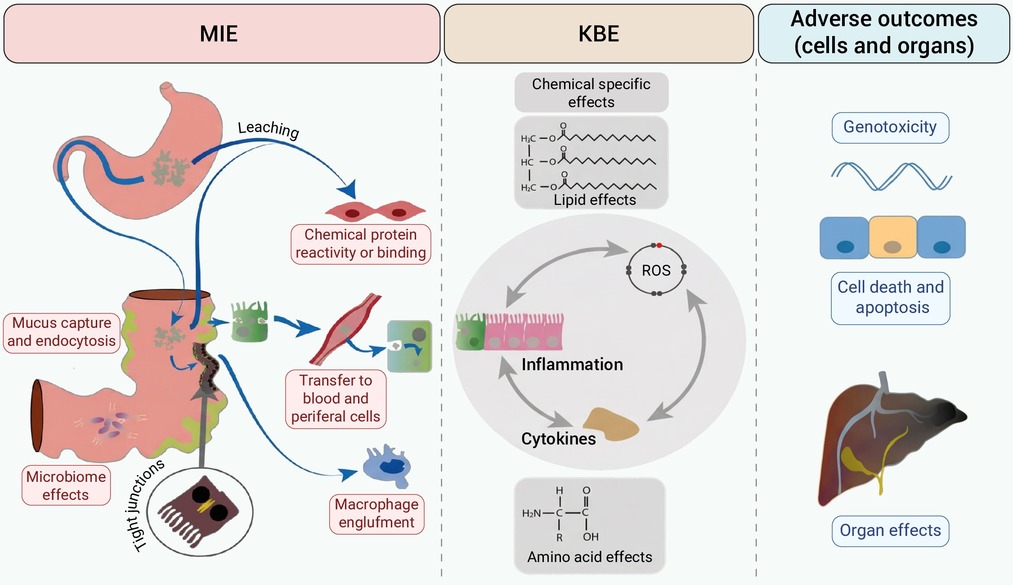
Figure 1.
Suggested Adverse Outcome Pathway (AOP) for the oral ingestion of MPs within humans (Crown Copyright © 2023 Published by Elsevier B.V).18
-
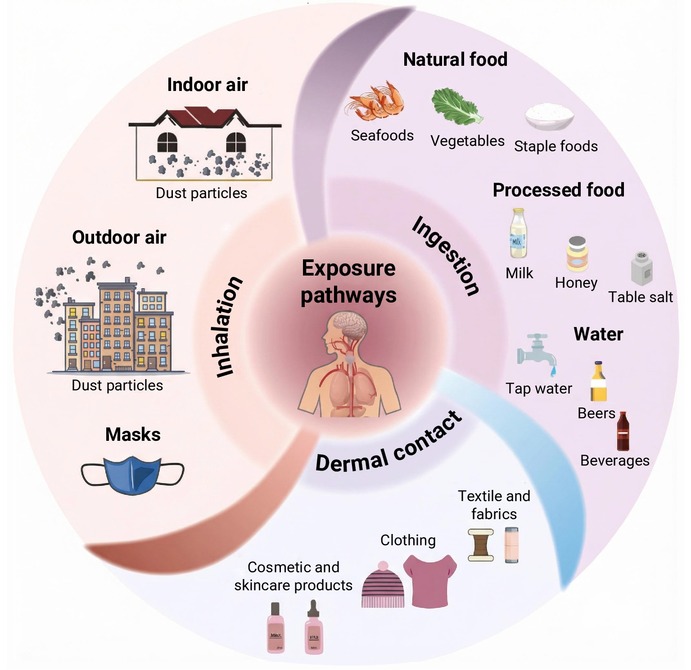
Figure 2.
Exposure pathways of MPs (© 2024 Elsevier B.V. All rights reserved).
-
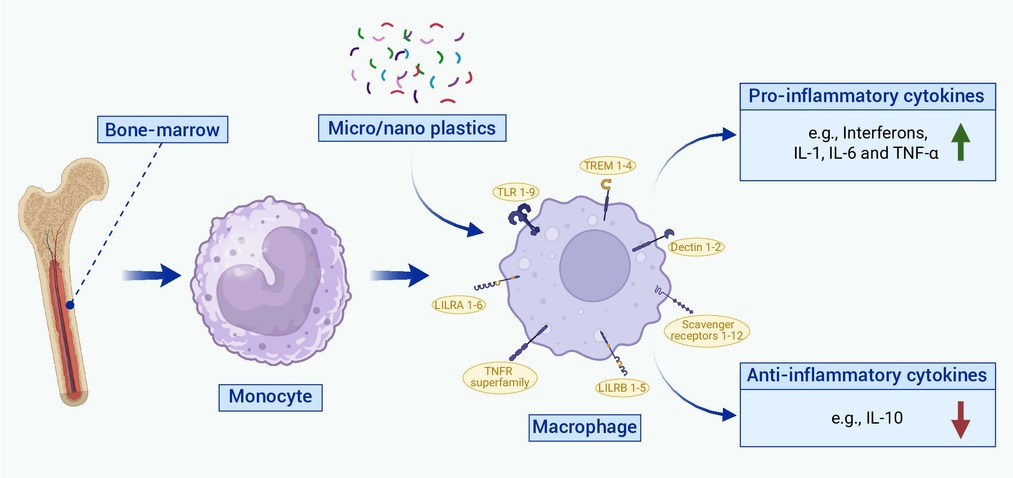
Figure 3.
An innate response in producing and regulating both pro- and anti-inflammatory cytokines from bone-marrow-derived macrophages induced by MPs.42
-
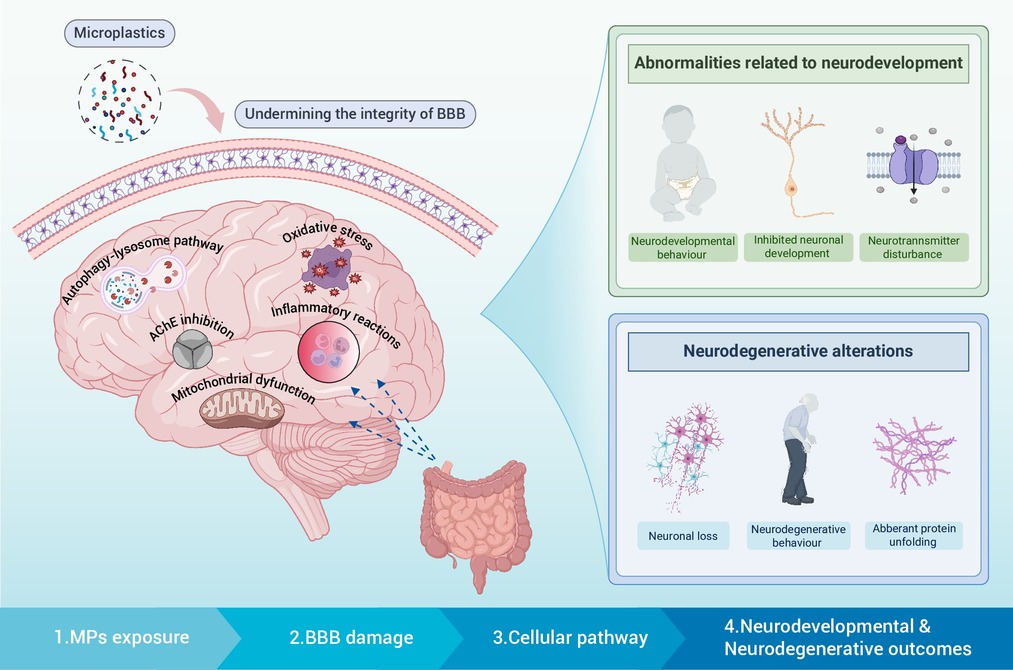
Figure 4.
Risks of neurological diseases induced by MPs and possible mechanisms (This figure was created by BioRender.com).
-
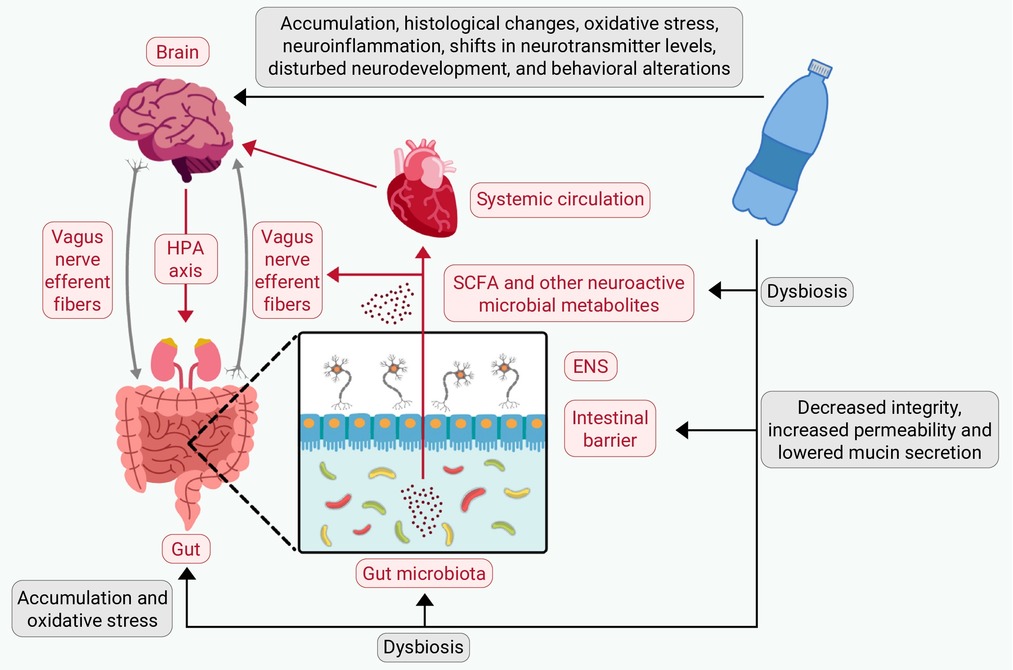
Figure 5.
Impact of MPs exposure on the GBA (© 2021 MDPI under CC BY 4.0).82
-
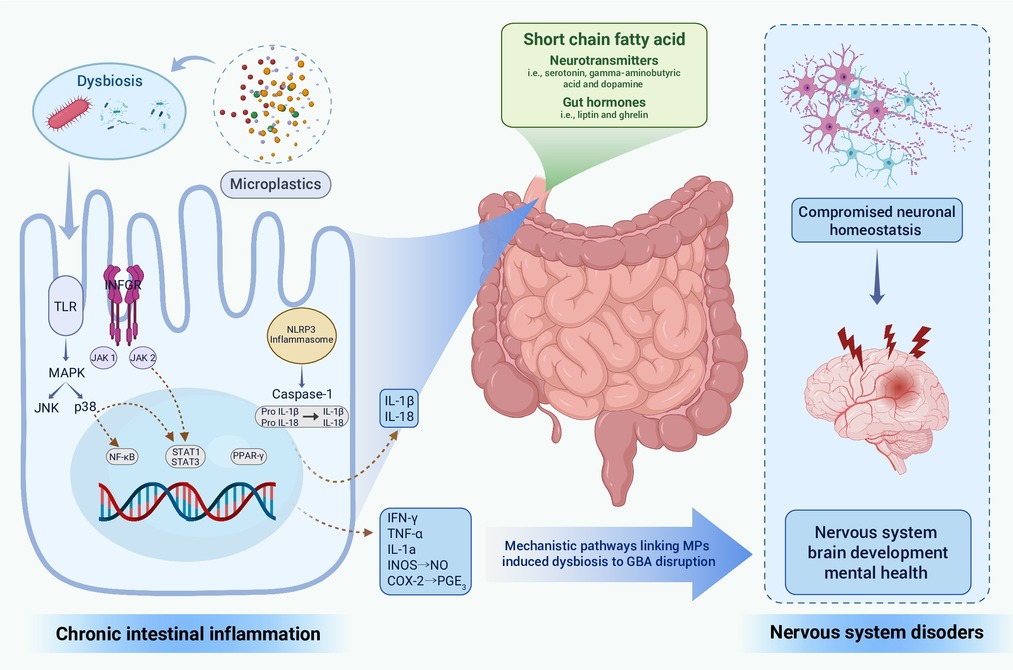
Figure 6.
Schematic representation of the correlation between chronic intestinal inflammation and the development of brain disorders by MP exposure (This figure was created by BioRender.com).
