
A global systematic analysis and statistical evaluation of prognostic prediction models for non-small cell lung cancer
-
GRAPHICAL ABSTRACT
 DownLoad:
Full size image
DownLoad:
Full size image
-
PUBLIC SUMMARY
-
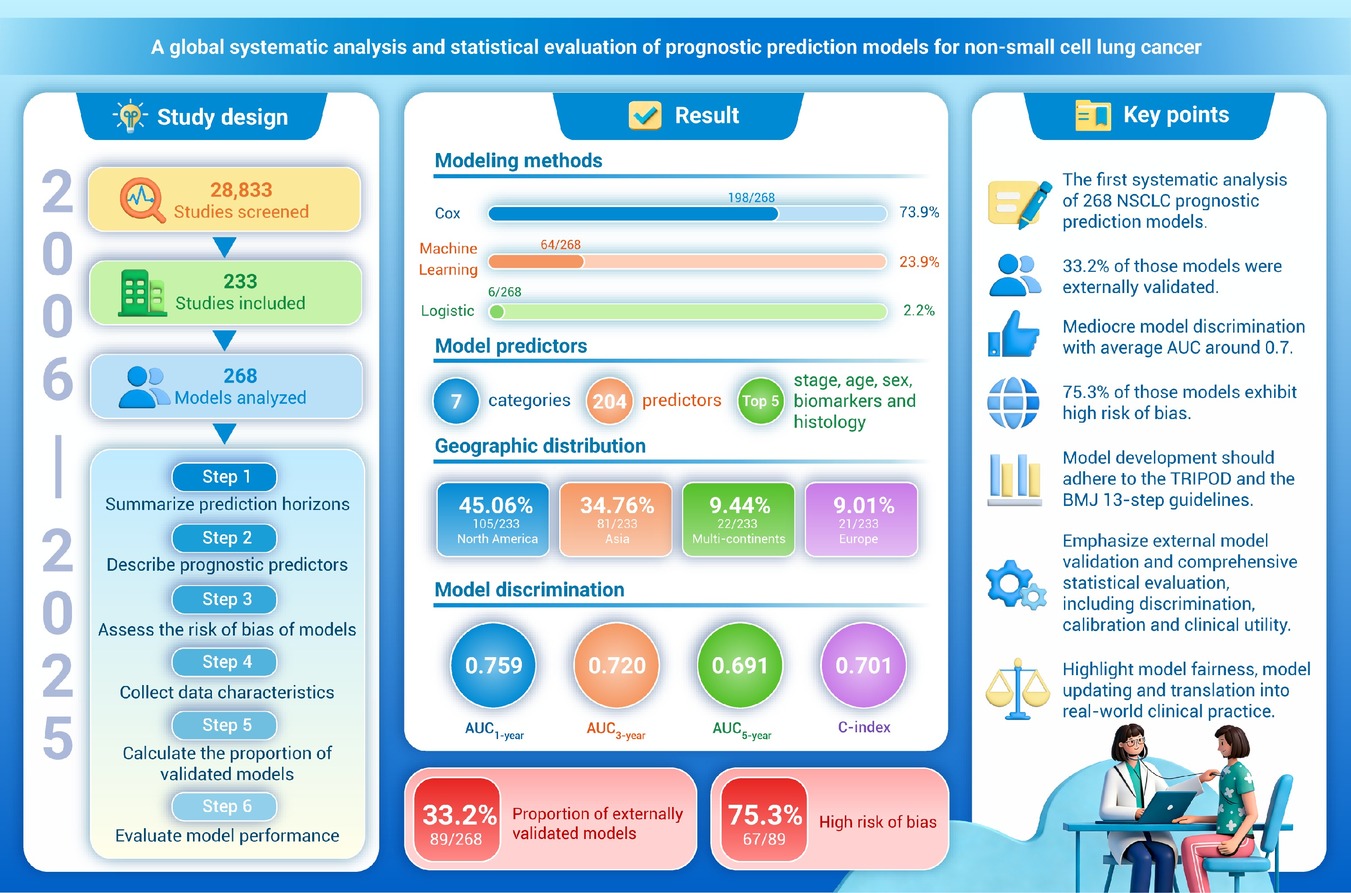
We performed the first global systematical analysis of 268 prognostic prediction models for NSCLC.
Existing models exhibit mediocre discrimination with average AUC around 0.7.
Only 33.2% of existing models were externally validated, and 75.3% of these exhibit high risk of bias.
Adherence to TRIPOD and BMJ 13-step guidelines may improve model reliability and clinical translation.
The community should highlight model fairness, model updating and translation into real-world clinical practice.
-
-
ABSTRACT
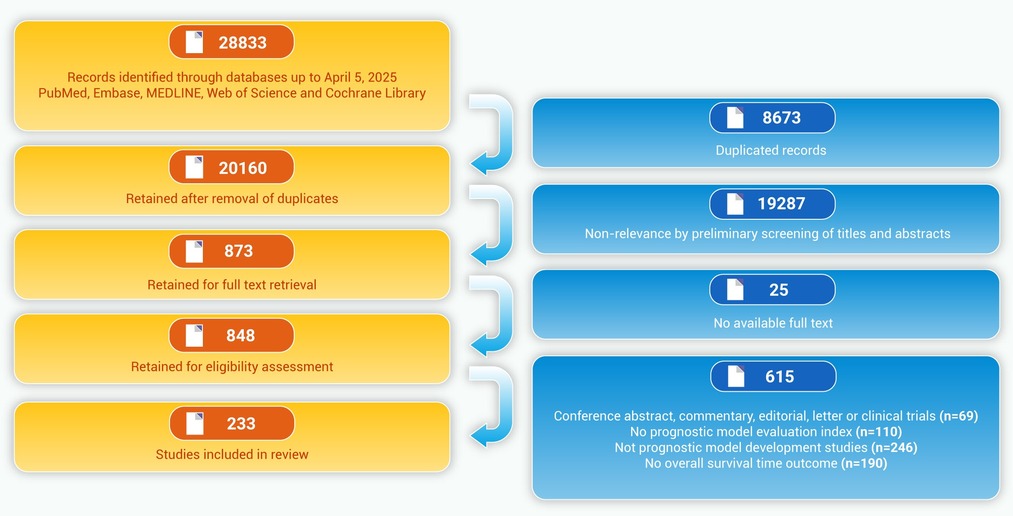
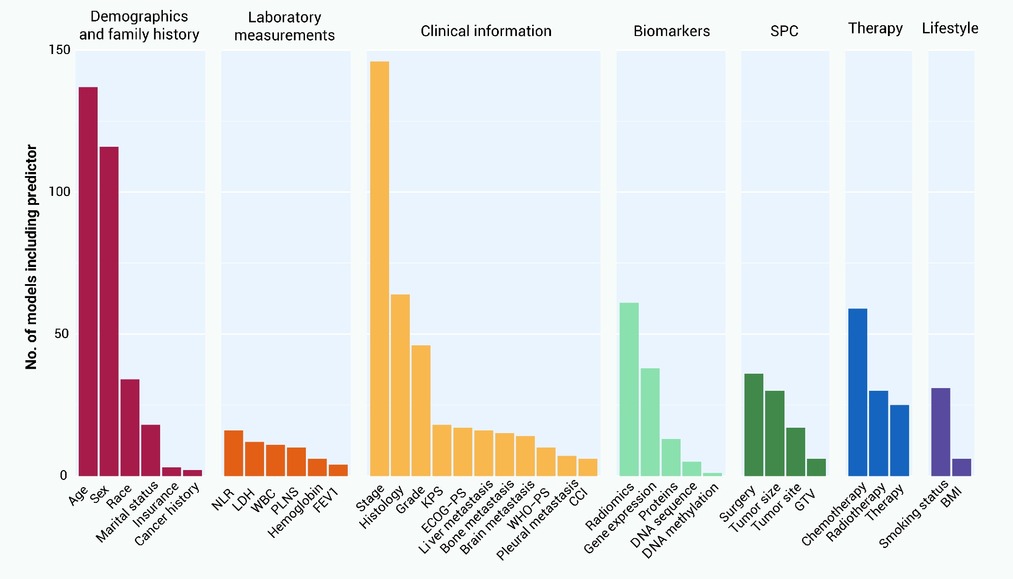
Prognostic prediction models can aid clinical decision-making for high-risk non-small cell lung cancer (NSCLC) patients. We conducted a systematic search across multiple databases and evaluated eligible studies using PRISMA and PROBAST checklists. Of 28,833 references screened, 233 studies describing 268 models were included. Among them, 89 underwent external validation; 67 (75.28%) were classified with high risk for bias. Most models were developed in North America (45.06%). The median area under the receiver operating characteristic curve (AUC) for 1-, 3-, and 5-year predictions were 0.759, 0.720, and 0.691, respectively. The most common predictors were age (54.85%) and stage (58.21%). And, 47.01% of models were sex-specific. Recently, easily accessible radiomic features have been increasingly used in statistical modeling compared to molecular omics. Models integrating radiomic and clinical features showed potential for improved performance (1-, 3-, and 5-year AUCs: 0.931, 0.985, 0.942). Model discrimination varied across different studies, and there is a lack of model calibration and clinical utility. This review highlights advances and limitations in NSCLC prognostic models. To enhance model reliability and generalizability, it remains crucial to adhere to the TRIPOD guideline to perform prediction model study, and to emphasize comprehensive model validation and bias-reduction strategies. Following a step-by-step guide to develop and validate clinical prediction models by Efthimiou, et al. (BMJ, 2024), along with a multifaceted, multidisciplinary and multi-regional approach, is the key way to facilitate the development and clinical application of qualified models. -

-
REFERENCES
[1] Bray F., Laversanne M., Sung H., et al. (2024). Global cancer statistics 2022: GLOBOCAN estimates of incidence and mortality worldwide for 36 cancers in 185 countries. CA Cancer J. Clin. 74:229−263. DOI:10.3322/caac.21834 [2] Chen P., Liu Y., Wen Y., et al. (2022). Non-small cell lung cancer in China. Cancer Commun. (Lond) 42:937−970. DOI:10.1002/cac2.12359 [3] Lai Y. H., Chen W. N., Hsu T. C., et al. (2020). Overall survival prediction of non-small cell lung cancer by integrating microarray and clinical data with deep learning. Sci. Rep. 10:4679. DOI:10.1038/s41598-020-61588-w [4] Liu Z., Zhang J., Liu J., et al. (2023). Combining network pharmacology, molecular docking and preliminary experiments to explore the mechanism of action of FZKA formula on non-small cell lung cancer. Protein Pept. Lett. 30:1038−1047. DOI:10.2174/0109298665268153231024111622 [5] Wang Y., Lin X. and Sun D. (2021). A narrative review of prognosis prediction models for non-small cell lung cancer: What kind of predictors should be selected and how to improve models. Ann. Transl. Med. 9:1597. DOI:10.21037/atm-21-4733 [6] Brundage M. D., Davies D. and Mackillop W. J. (2002). Prognostic factors in non-small cell lung cancer: A decade of progress. Chest 122:1037−1057. DOI:10.1378/chest.122.3.1037 [7] Cai Y., Sheng Z., Dong Z., et al. (2023). EGFR inhibitor CL-387785 suppresses the progression of lung adenocarcinoma. Curr. Mol. Pharmacol. 16:211−216. DOI:10.2174/1874467215666220329212300 [8] Efthimiou O., Seo M., Chalkou K., et al. (2024). Developing clinical prediction models: A step-by-step guide. BMJ 386:e078276. DOI:10.1136/bmj-2023-078276 [9] Debray T. P., Damen J. A., Snell K. I., et al. (2017). A guide to systematic review and meta-analysis of prediction model performance. BMJ 356:i6460. DOI:10.1136/bmj.i6460 [10] Moher D., Liberati A., Tetzlaff J., et al. (2009). Preferred reporting items for systematic reviews and meta-analyses: The PRISMA statement. BMJ 339:b2535. DOI:10.1136/bmj.b2535 [11] Moons K. G. M., Wolff R. F., Riley R. D., et al. (2019). PROBAST: A tool to Assess Risk of Bias and Applicability of Prediction Model Studies: Explanation and elaboration. Ann. Intern. Med. 170:W1−W33. DOI:10.7326/M18-1377 [12] Xie H. and Xie C. (2019). A six-gene signature predicts survival of adenocarcinoma type of non-small-cell lung cancer patients: A comprehensive study based on integrated analysis and weighted gene coexpression network. Biomed. Res. Int. 2019:4250613. DOI:10.1155/2019/4250613 [13] Paesmans M. (2012). Prognostic and predictive factors for lung cancer. Breathe 9:112−121. DOI:10.1183/20734735.006911 [14] Wang T., Lu R., Lai S., et al. (2019). Development and validation of a nomogram prognostic model for patients with advanced non-small-cell lung cancer. Cancer Inform. 18:1176935119837547. DOI:10.1177/1176935119837547. [15] Wang H., Wang X., Xu L., et al. (2020). High expression levels of pyrimidine metabolic rate-limiting enzymes are adverse prognostic factors in lung adenocarcinoma: A study based on The Cancer Genome Atlas and Gene Expression Omnibus datasets. Purinergic Signal. 16:347−366. DOI:10.1007/s11302-020-09711-4 [16] Nguyen T. T., Lee H. S., Burt B. M., et al. (2022). A lepidic gene signature predicts patient prognosis and sensitivity to immunotherapy in lung adenocarcinoma. Genome Med. 14:5. DOI:10.1186/s13073-021-01010-w [17] Li F., Bing Z., Chen W., et al. (2021). Prognosis biomarker and potential therapeutic target CRIP2 associated with radiosensitivity in NSCLC cells. Biochem. Biophys. Res. Commun. 584:73−79. DOI:10.1016/j.bbrc.2021.11.002 [18] Chen J., Wu R., Xuan Y., et al. (2020). Bioinformatics analysis and experimental validation of TTK as a biomarker for prognosis in non-small cell lung cancer. Biosci. Rep. 40:BSR20202711. DOI:10.1042/BSR20202711 [19] Zhang R., Chen C., Dong X., et al. (2020). Independent validation of early-stage non-small cell lung cancer prognostic scores incorporating epigenetic and transcriptional biomarkers with gene-gene interactions and main effects. Chest 158:808−819. DOI:10.1016/j.chest.2020.01.048 [20] Tang F. H., Fong Y. W., Yung S. H., et al. (2023). Radiomics-clinical AI model with probability weighted strategy for prognosis prediction in non-small cell lung cancer. Biomedicines 11:2093. DOI:10.3390/biomedicines11082093 [21] Wang X., Guo Z., Wu X., et al. (2023). Predictive nomogram for hyperprogressive disease during anti-PD-1/PD-L1 treatment in patients with advanced non-small cell lung cancer. Immunotargets Ther. 12:1−16. DOI:10.2147/ITT.S373866 [22] Li X., Gu W., Liu Y., et al. (2022). A novel quantitative prognostic model for initially diagnosed non-small cell lung cancer with brain metastases. Cancer Cell Int. 22:251. DOI:10.1186/s12935-022-02671-2 [23] Huang Z., Xing S., Zhu Y., et al. (2020). Establishment and validation of nomogram model integrated with inflammation-based factors for the prognosis of advanced non-small cell lung cancer. Technol. Cancer Res. Treat. 19:1533033820971605. DOI:10.1177/1533033820971605 [24] Huang H., Chen Y., Weng X., et al. (2022). Development and validation of a nomogram for evaluating the prognosis of immunotherapy plus antiangiogenic therapy in non-small cell lung cancer. Cancer Cell Int. 22:261. DOI:10.1186/s12935-022-02675-y [25] He L. N., Chen T., Fu S., et al. (2022). Reducing number of target lesions for RECIST1.1 to predict survivals in patients with advanced non-small-cell lung cancer undergoing anti-PD1/PD-L1 monotherapy. Lung Cancer 165:10-17. DOI:10.1016/j.lungcan.2021.12.015 [26] Dinglin X. X., Ma S. X., Wang F., et al. (2017). Establishment of an adjusted prognosis analysis model for initially diagnosed non-small-cell lung cancer with brain metastases from Sun Yat-Sen University Cancer Center. Clin. Lung Cancer 18:e179−e186. DOI:10.1016/j.cllc.2016.12.016 [27] Chen S., Li X., Lv H., et al. (2018). Prognostic dynamic nomogram integrated with inflammation-based factors for non-small cell lung cancer patients with chronic hepatitis B viral infection. Int. J. Biol. Sci. 14:1813−1821. DOI:10.7150/ijbs.27260 [28] Chen S., Lai Y., He Z., et al. (2018). Establishment and validation of a predictive nomogram model for non-small cell lung cancer patients with chronic hepatitis B viral infection. J. Transl. Med. 16:116. DOI:10.1186/s12967-018-1496-5 [29] Chen S., Huang H., Liu Y., et al. (2020). A multi-parametric prognostic model based on clinical features and serological markers predicts overall survival in non-small cell lung cancer patients with chronic hepatitis B viral infection. Cancer Cell Int. 20:555. DOI:10.1186/s12935-020-01635-8 [30] Cao X., Zheng Y. Z., Liao H. Y., et al. (2020). A clinical nomogram and heat map for assessing survival in patients with stage I non-small cell lung cancer after complete resection. Ther. Adv. Med. Oncol. 12:1758835920970063. DOI:10.1177/1758835920970063 [31] Xiao W., Geng W., Xu J., et al. (2023). Construction and validation of a nomogram based on N6-Methylandenosine-related lncRNAs for predicting the prognosis of non-small cell lung cancer patients. Cancer Med. 12:2058−2074. DOI:10.1002/cam4.4961 [32] Miao T. W., Chen F. Y., Du L. Y., et al. (2022). Signature based on RNA-binding protein-related genes for predicting prognosis and guiding therapy in non-small cell lung cancer. Front. Genet. 13:930826. DOI:10.3389/fgene.2022.930826 [33] He R. and Zuo S. (2019). A robust 8-gene prognostic signature for early-stage non-small cell lung cancer. Front. Oncol. 9:693. DOI:10.3389/fonc.2019.00693 [34] Siontis G. C., Tzoulaki I., Siontis K. C., et al. (2012). Comparisons of established risk prediction models for cardiovascular disease: Systematic review. BMJ 344:e3318. DOI:10.1136/bmj.e3318 [35] Allemani C., Matsuda T., Di Carlo V., et al. (2018). Global surveillance of trends in cancer survival 2000-14 (CONCORD-3): Analysis of individual records for 37 513 025 patients diagnosed with one of 18 cancers from 322 population-based registries in 71 countries. Lancet 391:1023−1075. DOI:10.1016/S0140-6736(17)33326-3 [36] Goss P. E., Strasser-Weippl K., Lee-Bychkovsky B. L., et al. (2014). Challenges to effective cancer control in China, India, and Russia. Lancet Oncol. 15:489−538. DOI:10.1016/S1470-2045(14)70029-4 [37] Weiss K., Khoshgoftaar T. M. and Wang D. (2016). A survey of transfer learning. J. Big Data 3:9. DOI:10.1186/s40537-016-0043-6 [38] Gu T., Han Y. and Duan R. (2023). A transfer learning approach based on random forest with application to breast cancer prediction in underrepresented populations. Pac. Symp. Biocomput. 28:186−197. [39] Theodoris C. V., Xiao L., Chopra A., et al. (2023). Transfer learning enables predictions in network biology. Nature 618:616−624. DOI:10.1038/s41586-023-06139-9 [40] Spooner A., Chen E., Sowmya A., et al. (2020). A comparison of machine learning methods for survival analysis of high-dimensional clinical data for dementia prediction. Sci. Rep. 10:20410. DOI:10.1038/s41598-020-77220-w [41] Mbatchou J., Barnard L., Backman J., et al. (2021). Computationally efficient whole-genome regression for quantitative and binary traits. Nat. Genet. 53:1097−1103. DOI:10.1038/s41588-021-00870-7 [42] Zhou W., Nielsen J. B., Fritsche L. G., et al. (2018). Efficiently controlling for case-control imbalance and sample relatedness in large-scale genetic association studies. Nat. Genet. 50:1335−1341. DOI:10.1038/s41588-018-0184-y [43] Dey R., Zhou W., Kiiskinen T., et al. (2022). Efficient and accurate frailty model approach for genome-wide survival association analysis in large-scale biobanks. Nat. Commun. 13:5437. DOI:10.1038/s41467-022-32885-x [44] Denny J. C., Bastarache L., Ritchie M. D., et al. (2013). Systematic comparison of phenome-wide association study of electronic medical record data and genome-wide association study data. Nat. Biotechnol. 31:1102−1110. DOI:10.1038/nbt.2749 [45] Akazawa M. and Hashimoto K. (2021). Artificial intelligence in gynecologic cancers: Current status and future challenges - A systematic review. Artif. Intell. Med. 120:102164. DOI:10.1016/j.artmed.2021.102164 [46] Altman D. G., Vergouwe Y., Royston P., et al. (2009). Prognosis and prognostic research: Validating a prognostic model. BMJ 338:b605. DOI:10.1136/bmj.b605 [47] Justice A. C., Covinsky K. E. and Berlin J. A. (1999). Assessing the generalizability of prognostic information. Ann. Intern. Med. 130:515−524. DOI:10.7326/0003-4819-130-6-199903160-00016 [48] Liu W. T., Wang Y., Zhang J., et al. (2018). A novel strategy of integrated microarray analysis identifies CENPA, CDK1 and CDC20 as a cluster of diagnostic biomarkers in lung adenocarcinoma. Cancer Lett. 425:43−53. DOI:10.1016/j.canlet.2018.03.043 [49] Commander R., Wei C., Sharma A., et al. (2020). Subpopulation targeting of pyruvate dehydrogenase and GLUT1 decouples metabolic heterogeneity during collective cancer cell invasion. Nat. Commun. 11:1533. DOI:10.1038/s41467-020-15219-7 [50] Wood D. E., Kazerooni E. A., Baum S. L., et al. (2018). Lung cancer screening, version 3.2018, NCCN clinical practice guidelines in oncology. J. Natl. Compr. Canc. Netw. 16:412-441. DOI:10.6004/jnccn.2018.0020 [51] Subramanian J. and Simon R. (2010). Gene expression-based prognostic signatures in lung cancer: Ready for clinical use. J. Natl. Cancer Inst. 102:464−474. DOI:10.1093/jnci/djq025 [52] Sauerbrei W., Taube S. E., McShane L. M., et al. (2018). Reporting recommendations for tumor marker prognostic studies (REMARK): An abridged explanation and elaboration. J. Natl. Cancer Inst. 110:803−811. DOI:10.1093/jnci/djy088 [53] Dagogo-Jack I. and Shaw A. T. (2018). Tumour heterogeneity and resistance to cancer therapies. Nat. Rev. Clin. Oncol. 15:81−94. DOI:10.1038/nrclinonc.2017.166 [54] Gerlinger M., Rowan A. J., Horswell S., et al. (2012). Intratumor heterogeneity and branched evolution revealed by multiregion sequencing. N. Engl. J. Med. 366:883−892. DOI:10.1056/NEJMoa1113205 [55] Royston P., Moons K. G., Altman D. G., et al. (2009). Prognosis and prognostic research: Developing a prognostic model. BMJ 338:b604. DOI:10.1136/bmj.b604 [56] Vial A., Stirling D., Field M., et al. (2018). The role of deep learning and radiomic feature extraction in cancer-specific predictive modeling: A review. Transl. Cancer Res. 7:803−816. DOI:10.21037/tcr.2018.05.02 [57] Aerts H. J., Velazquez E. R., Leijenaar R. T., et al. (2014). Decoding tumour phenotype by noninvasive imaging using a quantitative radiomics approach. Nat. Commun. 5:4006. DOI:10.1038/ncomms5006 [58] Leger S., Zwanenburg A., Pilz K., et al. (2017). A comparative study of machine learning methods for time-to-event survival data for radiomics risk modeling. Sci. Rep. 7:13206. DOI:10.1038/s41598-017-13448-3 [59] Cai Y., Cai Y. Q., Tang L. Y., et al. (2024). Artificial intelligence in the risk prediction models of cardiovascular disease and development of an independent validation screening tool: A systematic review. BMC Med. 22:56. DOI:10.1186/s12916-024-03273-7 [60] Collins G. S., Reitsma J. B., Altman D. G., et al. (2015). Transparent reporting of a multivariable prediction model for individual prognosis or diagnosis (TRIPOD): The TRIPOD statement. BMJ 350:g7594. DOI:10.1136/bmj.g7594 [61] Kris M. G., Johnson B. E., Berry L. D., et al. (2014). Using multiplexed assays of oncogenic drivers in lung cancers to select targeted drugs. JAMA 311:1998−2006. DOI:10.1001/jama.2014.3741 [62] Riihimaki M., Hemminki A., Fallah M., et al. (2014). Metastatic sites and survival in lung cancer. Lung Cancer 86:78−84. DOI:10.1016/j.lungcan.2014.07.020 [63] Xu H., Feng G., Yang R., et al. (2025). Reaffirming the role of ovarian reserve in fertility assessment: Insights from OvaRePred. Innov. Med. 3:100135. DOI:10.59717/j.xinn-med.2025.100135 [64] Xu H., Feng G., Yang R., et al. (2023). OvaRePred: Online tool for predicting the age of fertility milestones. The Innovation 4:100490. DOI:10.1016/j.xinn.2023.100490 [65] Kalimouttou A., Kennedy J. N., Feng J., et al. (2025). Optimal vasopressin initiation in septic shock: The OVISS reinforcement learning study. JAMA 333:1688−1698. DOI:10.1001/jama.2025.3046 [66] Moons K. G., Altman D. G., Vergouwe Y., et al. (2009). Prognosis and prognostic research: Application and impact of prognostic models in clinical practice. BMJ 338:b606. DOI:10.1136/bmj.b606 [67] Moons K. G., Kengne A. P., Grobbee D. E., et al. (2012). Risk prediction models: II. External validation, model updating, and impact assessment. Heart 98:691−698. DOI:10.1136/heartjnl-2011-301247 -
ABOUT THIS ARTICLE
Cite this article:
Xu X., Chen L., Xue M., et al. (2026). A global systematic analysis and statistical evaluation of prognostic prediction models for non-small cell lung cancer. The Innovation Medicine 4:100195. https://doi.org/10.59717/j.xinn-med.2026.100195
Welcome!
To request copyright permission to republish or share portions of our works, please visit Copyright Clearance Center's (CCC) Marketplace website at marketplace.copyright.com.
Article Metrics
Relative Articles
Cited by
Export File
Citation
Xu X., Chen L., Xue M., et al. (2026). A global systematic analysis and statistical evaluation of prognostic prediction models for non-small cell lung cancer. The Innovation Medicine 4:100195. https://doi.org/10.59717/j.xinn-med.2026.100195

Format
Content
-
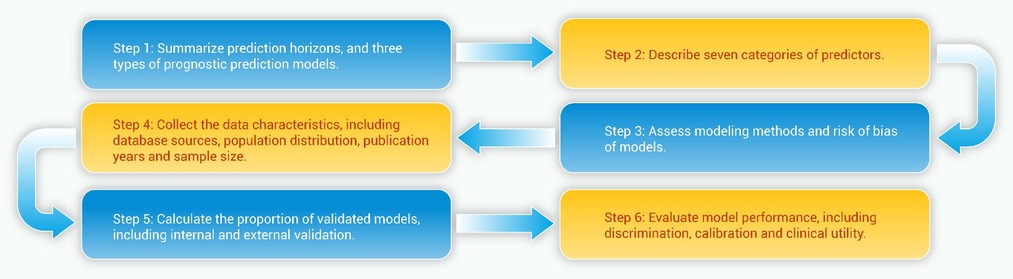
Figure 1.
The diagram outlines the structure of the systematic analysis and statistical evaluation.
-
Figure 2.
PRISMA flow diagram of our study.
-
Figure 3.
The distribution of predictors in 268 prognostic prediction models of NSCLC
-
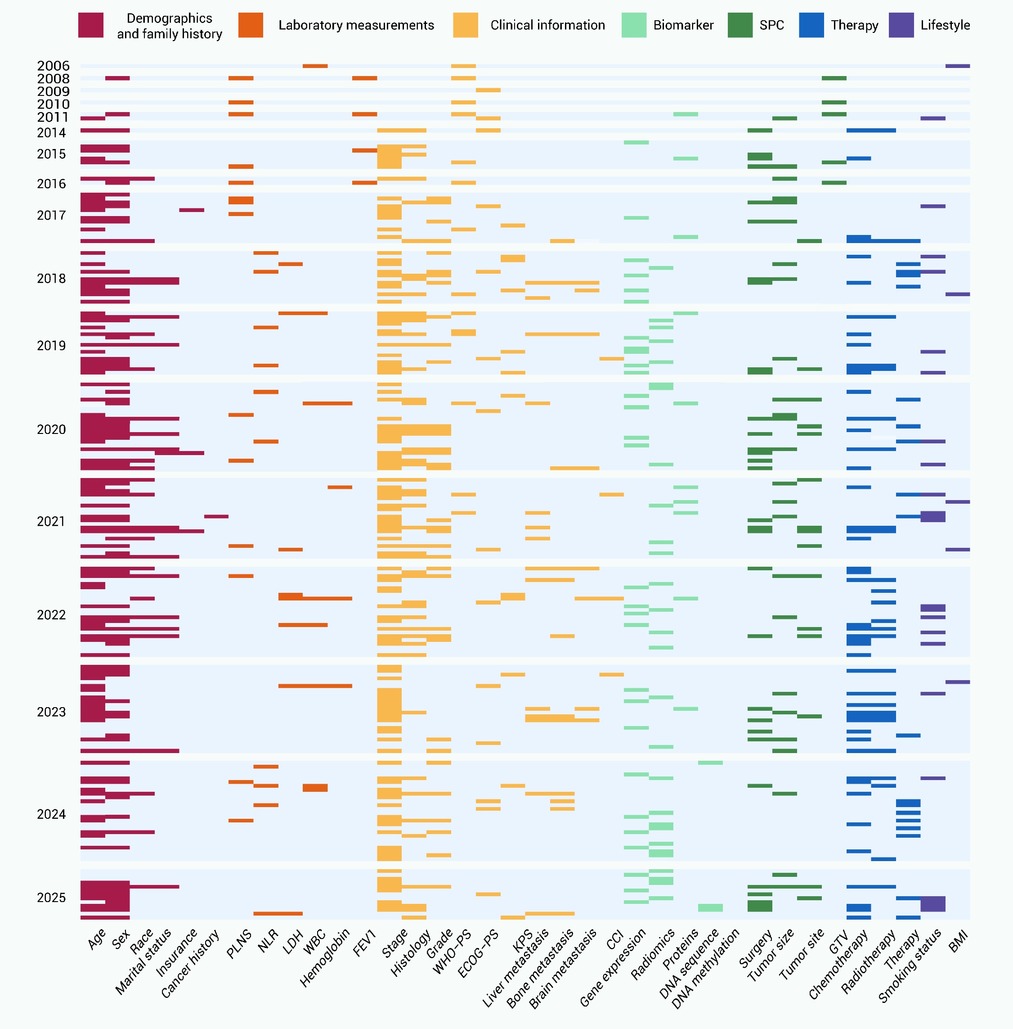
Figure 4.
Heatmap of predictors in prognostic prediction models of NSCLC over time
-
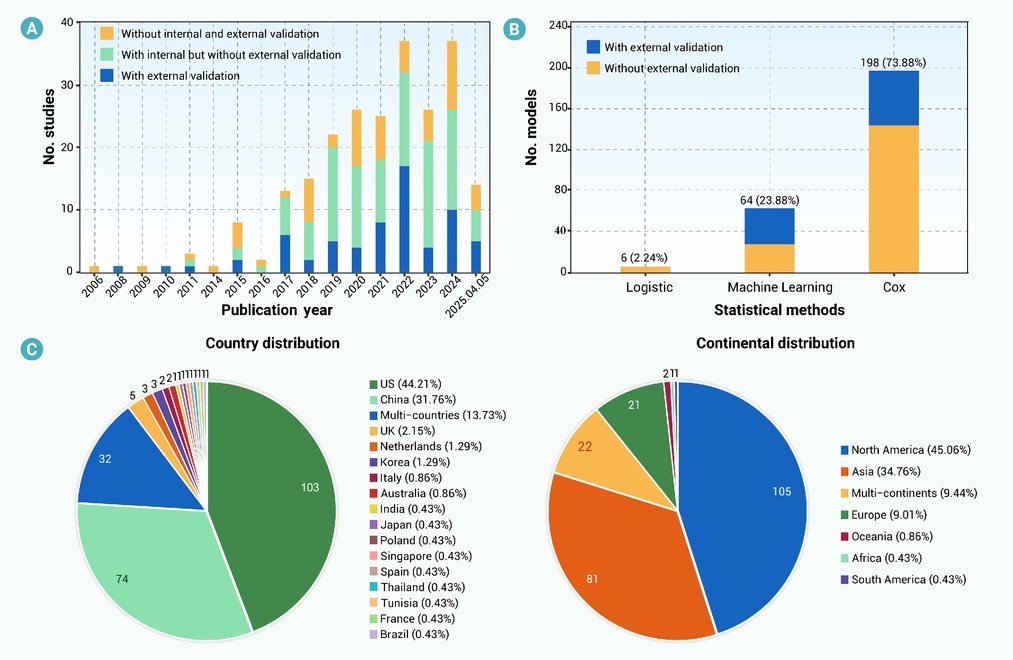
Figure 5.
Characteristics of prognostic prediction models of NSCLC
-
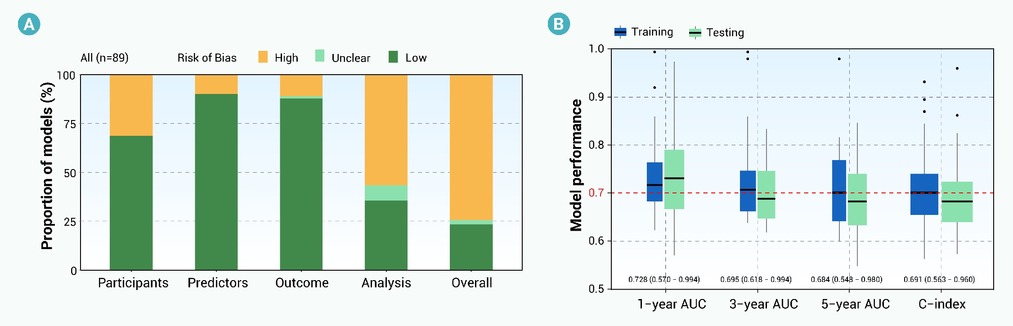
Figure 6.
Risk of bias assessment and predictive performance of externally validated NSCLC prognostic models
