
Innate immune restoration after major surgery in the elderly: functional adaptation for maintaining immune reactivity
-
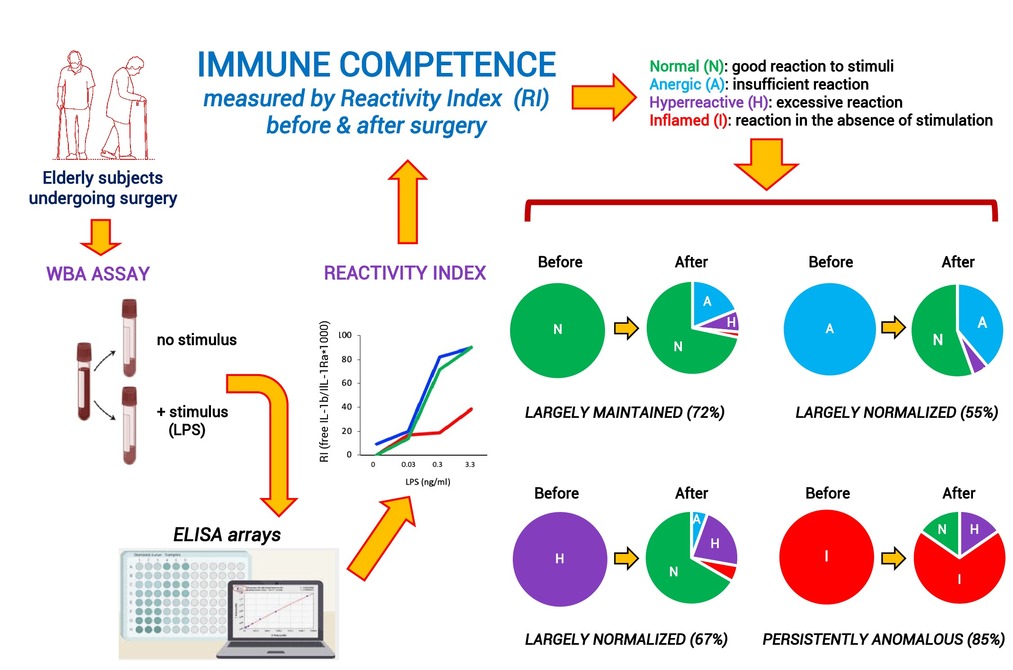
GRAPHICAL ABSTRACT
 DownLoad:
Full size image
DownLoad:
Full size image
-
PUBLIC SUMMARY
-
A new reactivity index allows to group elderly subjects into immunologically competent vs. anomalous.
After major physical stress (surgery), over 50% of initially anomalous subjects normalize.
Constitutively inflamed subjects do not normalize.
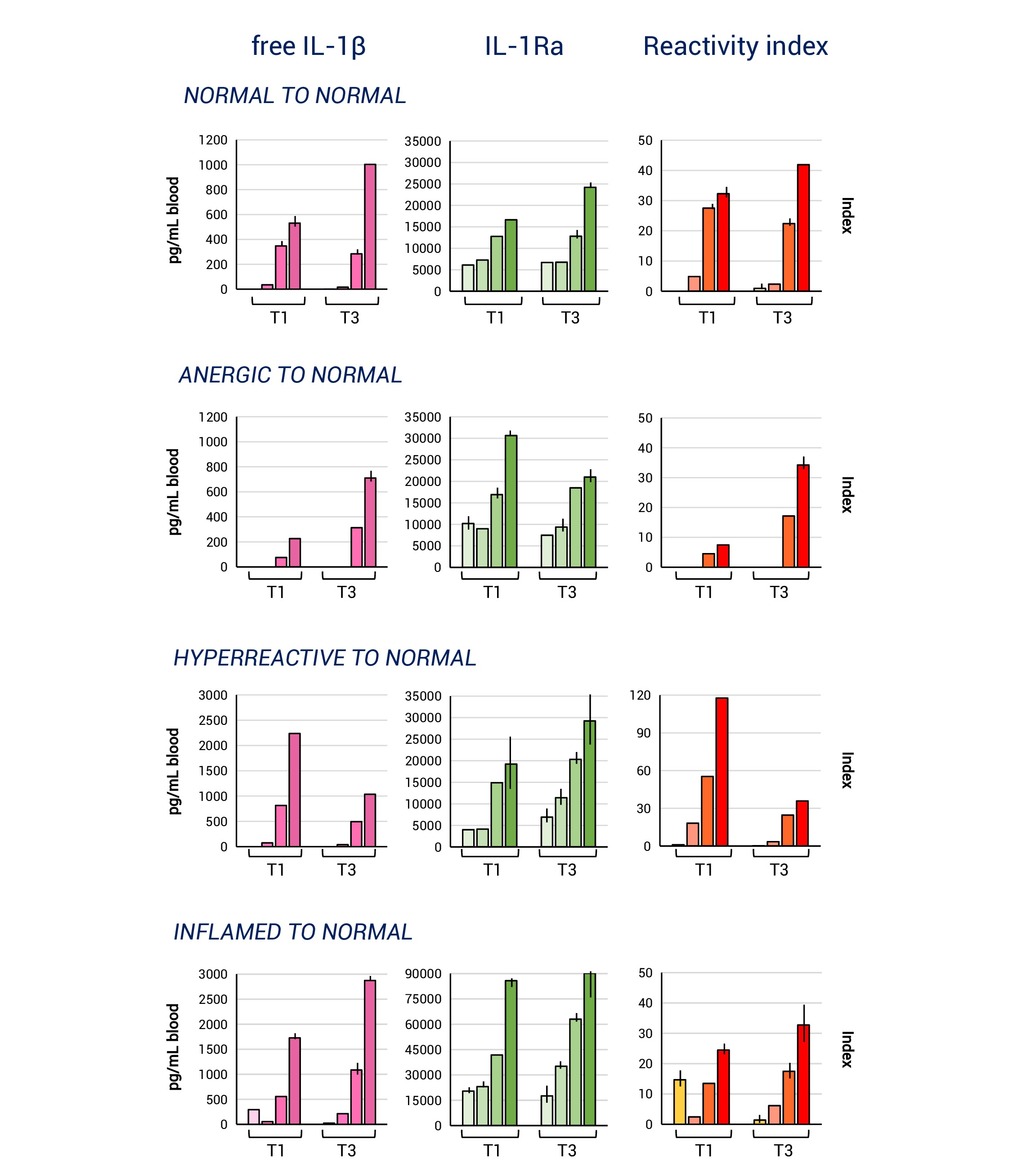
Normalization is due to active reprogramming of the production of inflammatory vs. anti-inflammatory factors.
Stress-induced generation of innate memory is suggested as adaptation mechanism to attain immune competence.
-
-
ABSTRACT
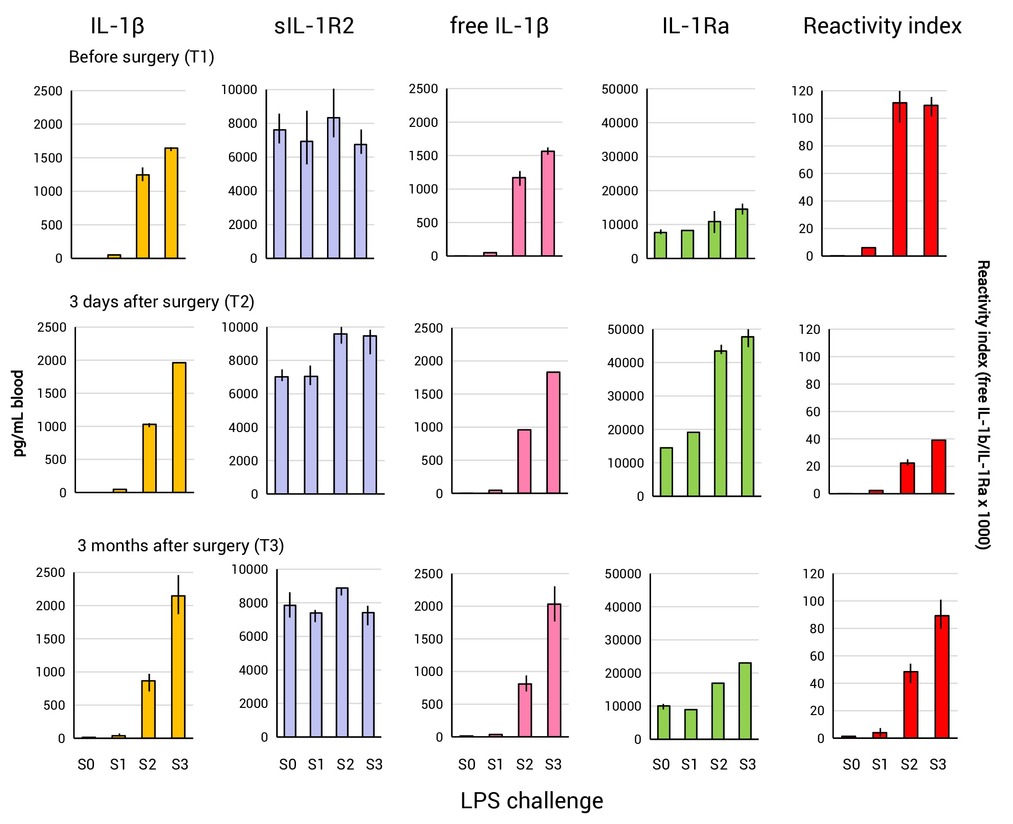
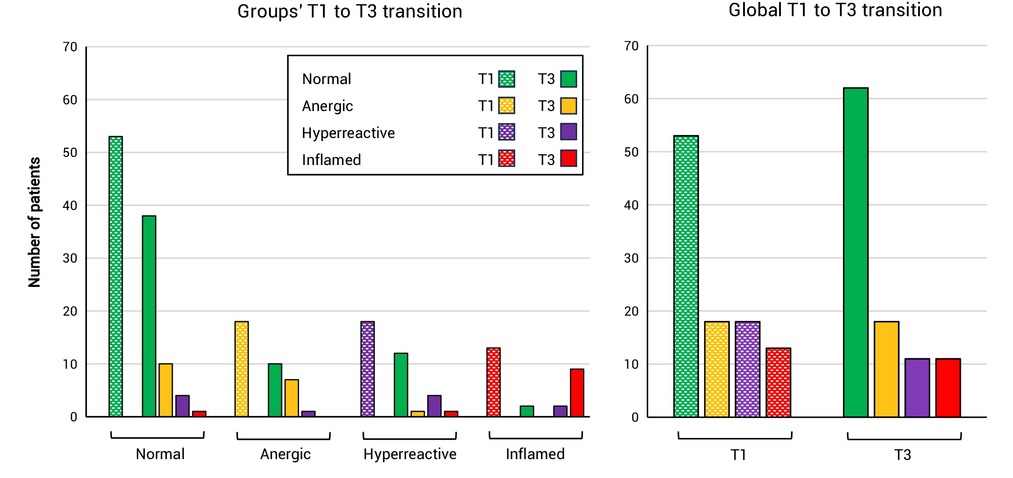
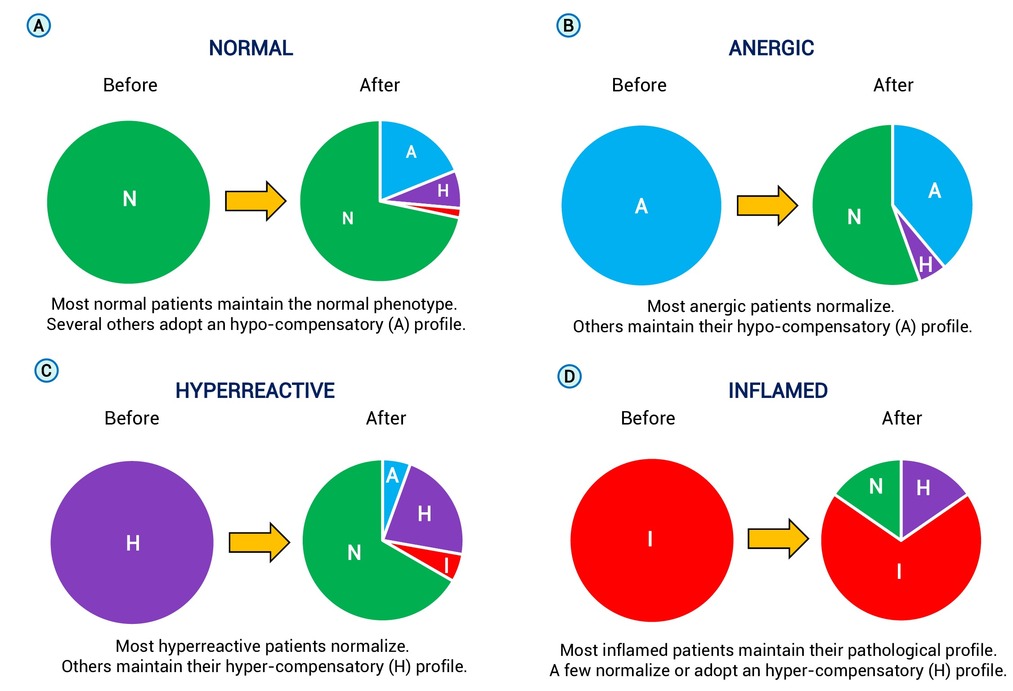
Innate immune memory reflects the capacity of innate immune cells to undergo functional reprogramming after challenges. Given its importance as protective immune mechanism in the elderly, in this study we aimed to characterize the development of protective functional innate memory upon major surgery in elderly patients. In a prospective cohort of 102 elderly patients undergoing major surgery, innate immune reactivity was measured as blood leukocyte response to bacterial LPS one day before surgery and 3 months post-operatively, using free active IL-1β as reactivity index. Based on their response, patients were initially classified into four functional response categories: Normal (n=53), Anergic (n=18), Hyperreactive (n=18), and Inflamed (n=13). Thirty-two circulating biomarkers and 29 clinical parameters were analyzed for association with immune state and trajectory. Three months post-surgery, substantial improvement occurred, with 55% Anergic and 67% Hyperreactive patients reaching immune normalization, although some patients maintained abnormal response and some adopted an abnormal reactivity. Irrespective of trajectory, the post-surgical reactivity index was the result of a re-directioning of the production of inflammatory vs. anti-inflammatory factors, suggestive of the establishment of functional innate immune memory. Among clinical and biochemical variables, age emerged as the only significant predictor of immune trajectory in initially Normal patients, with individuals >75 years showing a higher risk of post-operative anergy. This study suggests for the first time that surgery-related stress could induce a functional cell-intrinsic memory-like immune modulation that improves subsequent immune responsiveness in elderly individuals. Thus, surgery-induced innate memory can be considered as an adaptation mechanism for maintaining/attaining optimal immune functionality. The maladaptive post-operative immune reactivity observed in some individuals stresses the need for future personalized interventions to re-establish the capacity of optimal adaptation. -

-
REFERENCES
[1] Kurtz J. and Franz K. (2003). Innate defence: Evidence for memory in invertebrate immunity. Nature 425:37‐38. DOI:10.1038/425037a [2] Milutinović B. and Kurtz J. (2016). Immune memory in invertebrates. Semin. Immunol. 28:328−342. DOI:10.1016/j.smim.2016.05.004 [3] Coustau C., Kurtz J. and Moret Y. (2016). A novel mechanism of immune memory unveiled at the invertebrate-parasite interface. Trends Parasitol. 32:353−355. DOI:10.1016/j.pt.2016.02.005 [4] Melillo D., Marino R., Italiani P., et al. (2018). Innate memory in invertebrate metazoans: A critical appraisal. Front. Immunol. 9:1915. DOI:10.3389/fimmu.2018.01915 [5] Sun S. and Barreiro L.B. (2020). The epigenetically-encoded memory of the innate immune system. Curr. Opin. Immunol. 65:7−13. DOI:10.1016/j.coi.2020.02.002 [6] Lanz-Mendoza H. and Contreras-Garduño J. (2022). Innate immune memory in invertebrates: concept and potential mechanisms. Dev. Comp. Immunol. 127:104285. DOI:10.1016/j.dci.2021.104285 [7] Kurtz J., Andino R., Boraschi D., et al. (2025). Trained immunity and immune priming in plants and invertebrates. eLife 14:e106597. DOI:10.7554/eLife.106597 [8] Beeson P.B. (1946). Development of tolerance to typhoid bacterial pyrogen and its abolition by reticulo-endothelial blockade. Proc. Soc. Exp. Biol. Med. 61:248−250. DOI:10.3181/00379727-61-15291P [9] Dubos R.J. and Schaedler R.W. (1956). Reversible changes in the susceptibility of mice to bacterial infections. I. Changes brought about by injection of pertussis vaccine or of bacterial endotoxins. J. Exp. Med. 104:53−65. DOI:10.1084/jem.104.1.53 [10] Howard J.G., Biozzi G., Halpern B.N., et al. (1959). The effect of Mycobacterium tuberculosis (BCG) infection on the resistance of mice to bacterial endotoxin and Salmonella enteritidis infection. Br. J. Exp. Pathol. 40:281−290. [11] Youmans G.P. and Youmans A.S. (1965). Nonspecific factors in resistance of mice to experimental tuberculosis. J. Bacteriol. 90:1675−1681. DOI:10.1128/jb.90.6.1675-1681.1965 [12] Boraschi D. and Meltzer M.S. (1979). Macrophage cytotoxic defect of A/J mice. II. Comparison of the defective tumoricidal capacity of macrophages from A/J mice with that of the lipid A-unresponsive C3H/HeJ mice. J. Immunol. 122:1592–1597. [13] Bistoni F., Vecchiarelli A., Cenci E., et al. (1986). Evidence for macrophage-mediated protection against lethal Candida albicans infection. Infect. Immun. 51:668−674. DOI:10.1128/iai.51.2.668-674.1986 [14] Fan H. and Cook J.A. (2004). Molecular mechanism of endotoxin tolerance. J. Endotoxin Res. 10:71−84. DOI:10.1179/096805104225003997 [15] Cavaillon J.-M. and Adib-Conquy M. (2006). Bench to bedside review: Endotoxin tolerance as a model of leukocyte reprogramming in sepsis. Crit. Care 10:233. DOI:10.1186/cc5055 [16] Buckley J.M., Wang J.H. and Redmond H.P. (2006). Cellular reprogramming by Gram-positive bacterial components: A review. J. Leukoc. Biol. 80:731−741. DOI:10.1189/jlb.0506312 [17] Foster S.L., Hargreaves D.C. and Medzhitov R. (2007). Gene-specific control of inflammation by TLR-induced chromatin modifications. Nature 447:972−978. DOI:10/1038/nature05836 [18] Netea M.G., Quintin J. and van der Meer J.W.M. (2011). Trained immunity: A memory for innate host defense. Cell Host Microbe 9:355−361. DOI:10.1016/j.chom.2011.04.006 [19] Pradeu T. and Du Pasquier L. (2018). Immunological memory: What’s in a name. Immunol. Rev. 283:7−20. DOI:10.1111/imr.12652 [20] Netea M.G., Joosten L.A., Latz E., et al. (2016). Trained immunity: A program of innate immune memory in health and disease. Science 352:aaf1098. DOI:10.1126/science.aaf1098 [21] Arts R.J., Joosten L.A. and Netea M.G. (2018). The potential role of trained immunity in auto-immune and auto-inflammatory disorders. Front. Immunol. 9:298. DOI:10.3389/fimmu.2018.00298 [22] Ifrim D.C., Quintin J., Joosten L.A., et al. (2014). Trained immunity or tolerance: Opposing functional programs induced in human monocytes after engagement of various pattern recognition receptors. Clin. Vaccine Immunol. 21:534−545. DOI:10.1128/CVI.00688-13 [23] Saeed S., Quintin J., Kerstens H.H.D., et al. (2014). Epigenetic programming of monocyte-to-macrophage differentiation and trained immunity. Science 345:1251086. DOI:10.1126/science.1251086 [24] Franceschi C., Salvioli S., Garagnani P., et al. (2017). Immunobiography and the heterogeneity of immune responses in the elderly: A focus on inflammaging and trained immunity. Front. Immunol. 8:982. DOI:10.3389/fimmu.2017.00982 [25] Franceschi C., Bonafe M., Valensin S., et al. (2000). Inflamm-aging. An evolutionary perspective on immunosenescence. Ann. N. Y. Acad. Sci. 908:244−254. DOI:10.1111/j.1749-6632.2000.tb06651.x [26] Bulut O., Kilic G., Domiguez-Andres J., et al. (2020). Overcoming immune dysfunction in the elderly: Trained immunity as a novel approach. Int. Immunol. 32:741−753. DOI:10/1093/intimm/dxaa052 [27] Delgado-Pulido S., Yousefzadeh M.J. and Mittelbrunn M. (2025). Aging reshapes the adaptive immune system from healer to saboteur. Nat. Aging 5:1393−1403. DOI:10.1038/s43587-025-00906-1 [28] Bracken O.V., De Maeyer R.P.H. and Akbar A.N. (2026). Enhancing immunity during ageing by targeting interactions within the tissue environment. Nat. Rev. Drug Discov. 24:300−315. DOI:10.1038/s41573-024-01126-9 [29] Jang I.H., Niedernhofer L.J., Robbins P.D., et al. (2026). The ageing immune system as a driver of systemic ageing. Nat. Rev. Immunol. Advance online publication. DOI:10.1038/s41577-026-01269-3 [30] Boraschi D. (2022). What is IL-1 for? The functions of interleukin-1 across evolution. Front. Immunol. 13:872155. DOI:10.3389/fimmu.2022.872155 [31] Italiani P., Mosca E., Della Camera G., et al. (2020). Profiling the course of resolving vs. persistent inflammation in human monocytes: The role of IL-1 family molecules. Front. Immunol. 11:1426. DOI:10.3389/fimmu.2020.01426 [32] Symons J.A., Young P.R. and Duff G.W. (1995). Soluble type II interleukin 1 (IL-1) receptor binds and blocks processing of IL-1 beta precursor and loses affinity for IL-1 receptor antagonist. Proc. Natl. Acad. Sci. USA 92:1714−1718. DOI:10.1073/pnas.92.5.1714 [33] Manca M.L., Migliorini P. and Boraschi D. (2026). Human-AI collaboration versus expert intuition: A head-to-head comparison in patient classification. Innov. Med. 4:100182. DOI:10.59717/j.xinn-med.2026.100182 [34] Kagan J.C. (2017). LPS detection across the kingdoms of life. Trends Immunol. 38:696−704. DOI:10.1016/j.it.2017.05.001 [35] Kagan J.C, Su T., Horng T., et al. (2008). TRAM couples endocytosis of Toll-like receptor 4 to the induction of interferon-β. Nat. Immunol. 9:361−368. DOI:10.1038/ni1569 [36] Rathiman V.A.K., Vanaja S.K., Waggoner L., et al. (2012). TRIF licenses caspase-11-dependent NLRP3 inflammsome activation by Gram-negative bacteria. Cell 150:606−619. DOI:10.1016/j.cell.2012.07.007 [37] Iwasaki A. and Medzhitov R. (2015). Control of adaptive immunity by the innate immune system. Nat. Immunol. 16:343−353. DOI:10.1038/ni.3123 [38] Dinarello C.A. (2017). Overview of the IL-1 family in innate inflammation and acquired immunity. Immunol. Rev. 281:8−27. DOI:10.1111/imr.12621 [39] Van Den Eeckhout B., Tavernier J., Gerlo S. (2021). Interleukin-1 as innate mediator of T cell immunity. Front. Immunol. 11:621931. DOI:10.3389/fimmu.2020.621931 [40] Simats A., Zhang S., Messerer D., et al. (2024). Innate immune memory after brain injury drives inflammatory cardiac dysfunction. Cell 187:4637−4655. DOI:10.1016/j.cell.2024.06.028 [41] Nakayama Y., Fujiu K., Oshima T., et al. (2024). Heart failure promotes multimorbidity through innate immune memory. Sci. Immunol. 9:eade3814. DOI:10.1126/sciimmunol.ade3814 [42] Ochando J., Fayad Z.A., Madsen J.C., et al. (2020). Trained immunity in organ transplantation. Am. J. Transplant. 20:10−18. DOI:10.1111/ajt.15620 [43] Barrett T.J., Corr E.M., van Solingen C., et al. (2021). Chronic stress primes innate immune reponses in mice and humans. Cell Rep. 36:109595. DOI:10.1016/j.celrep.2021.109595 [44] Kollmann T.R., Levy O., Montgomery R.R., et al. (2012). Innate immune function by Toll-like receptors: distinct responses in newborns and the elderly. Immunity 37:771−783. DOI:10.1016/j.immuni.2012.10.014 -
ABOUT THIS ARTICLE
Cite this article:
Boraschi D., Italiani P., Manca M., et al. (2026). Innate immune restoration after major surgery in the elderly: functional adaptation for maintaining immune reactivity. The Innovation Medicine 4:100223. https://doi.org/10.59717/j.xinn-med.2026.100223
Welcome!
To request copyright permission to republish or share portions of our works, please visit Copyright Clearance Center's (CCC) Marketplace website at marketplace.copyright.com.
Export File
Citation
Boraschi D., Italiani P., Manca M., et al. (2026). Innate immune restoration after major surgery in the elderly: functional adaptation for maintaining immune reactivity. The Innovation Medicine 4:100223. https://doi.org/10.59717/j.xinn-med.2026.100223

Format
Content
-
Figure 1.
Calculation of the immune reactivity index
-
Figure 2.
Immune reactivity transition from T1 to T3
-
Figure 3.
Modalities of immune reactivity normalization at T3
-
Figure 4.
Schematic representation of the immune responsiveness grouping of patients and their transition after surgery
