
From testosterone to 11-oxygenated androgens: Integrating endocrine biology, nutrition, and systemic health across the lifespan
-
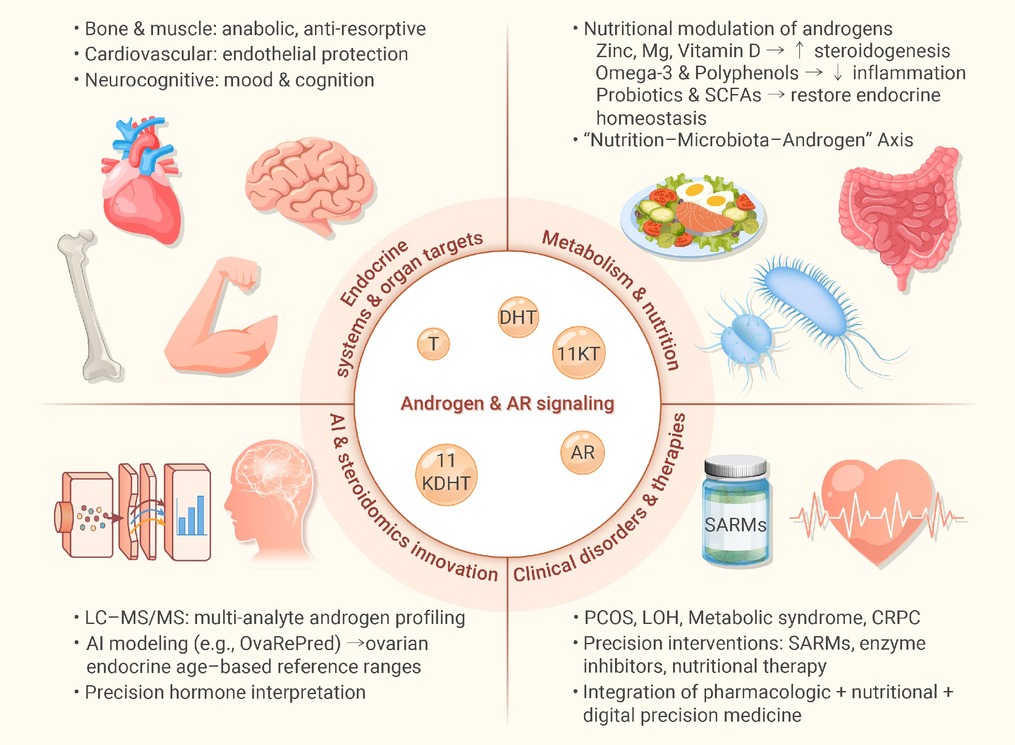
GRAPHICAL ABSTRACT
 DownLoad:
Full size image
DownLoad:
Full size image
-
PUBLIC SUMMARY
-
Androgens regulate multisystem physiology via AR signaling.
T, DHT, and 11-oxygenated androgens affect bone, muscle, and metabolism.
Nutrition modulates steroidogenesis and the microbiota–androgen axis.
LC-MS/MS enables accurate multi-androgen profiling.
AI tools support precision androgen medicine.
-
-
ABSTRACT
Androgens, historically regarded as male sex hormones, are increasingly recognized as central regulators of multisystem physiology across the lifespan in both sexes. Beyond reproductive functions, classical androgens together with emerging 11-oxygenated androgens participate in the regulation of metabolic homeostasis, immune balance, cardiovascular function, musculoskeletal integrity, neurocognitive processes, and systemic aging. Advances in steroidomics, liquid chromatography–tandem mass spectrometry (LC-MS/MS), and androgen receptor biology are reshaping androgen research from a reproduction-centered perspective toward an integrated endocrine framework linking physiology, disease, nutrition, and precision medicine.This review synthesizes current understanding of androgen biosynthesis, metabolism, and receptor signaling, and summarizes their roles in reproductive disorders such as polycystic ovary syndrome, congenital adrenal hyperplasia, and late-onset hypogonadism, as well as prostate disease, metabolic and cardiovascular disorders, bone and muscle health, dermatologic conditions, and neuropsychiatric function. Therapeutic approaches-including hormone replacement therapy, selective androgen receptor modulators, enzyme-targeted interventions, and structured safety monitoring-are also discussed.An emerging frontier is the integration of nutrition and gut microbiota into androgen regulation. Micronutrients such as zinc, magnesium, and vitamin D, together with balanced macronutrient intake, anti-inflammatory dietary patterns, and probiotics, influence steroidogenesis, inflammation, insulin resistance, and androgen receptor signaling, forming a potential “nutrition–microbiota–androgen axis”.Meanwhile, LC-MS/MS-based multi-androgen profiling and early integration with AI approaches-such as ovarian-endocrine-age modeling exemplified by OvaRePred-may enable individualized interpretation and predictive analytics. Collectively, the convergence of advanced analytics, nutrition science, and AI-driven modeling is redefining androgen medicine and enabling more precise diagnosis and personalized endocrine health management.-
Keywords:
- Androgens /
- 11-oxygenated androgens /
- Androgen receptor /
- LC–MS/MS /
- Nutrition–microbiota–androgen axis /
- Precision endocrinology /
- Artificial intelligence /
- Ovarian endocrine age /
- Polycystic ovary syndrome (PCOS) /
- Hypogonadism /
- Prostate diseases /
- Metabolic syndrome /
- Cardiovascular health /
- Bone and muscle health /
- Neurocognition
-

-
REFERENCES
[1] Gerald T. and Raj G. (2022). Testosterone and the androgen receptor. Urol. Clin. North Am. 49:603−614. DOI:10.1016/j.ucl.2022.07.004 [2] Mooradian A.D., Morley J.E. and Korenman S.G. (1987). Biological actions of androgens. Endocr. Rev. 8:1−28. DOI:10.1210/edrv-8-1-1 [3] Pepene C.E.G. (2011). Androgen excess as a major determinant of cardiovascular risk in women: Evidence from the polycystic ovary syndrome. Acta Endocrinol-Buch. 7:529−533. DOI:10.4183/aeb.2011.529 [4] Lopes R.A.M., Neves K.B., Carneiro F.S., et al. (2012). Testosterone and vascular function in aging. Front. Physiol. 3:89. DOI:10.3389/fphys.2012.00089 [5] Ben-Batalla I., Vargas-Delgado M.E., von Amsberg G., et al. (2020). Influence of androgens on immunity to self and foreign: Effects on immunity and cancer. Front. Immunol. 11:1184. DOI:10.3389/fimmu.2020.01184 [6] Becerra-Diaz M., Song M. and Heller N. (2020). Androgen and androgen receptors as regulators of monocyte and macrophage biology in the healthy and diseased lung. Front. Immunol. 11:1698. DOI:10.3389/fimmu.2020.01698 [7] Basilio J., Hochreiter B., Hoesel B., et al. (2022). Antagonistic functions of androgen receptor and NF-κB in prostate cancer-experimental and computational analyses. Cancers 14:6164. DOI:10.3390/cancers14246164 [8] Rupp M.R.G. and Jorgensen T.N. (2018). Androgen-induced immunosuppression. Front. Immunol. 9:794. DOI:10.3389/fimmu.2018.00794 [9] Walther A. and Seuffert J. (2020). Testosterone and dehydroepiandrosterone treatment in ageing men: Are we all set. World J. Mens Health 38:178−190. DOI:10.5534/wjmh.190006 [10] Pan X.F., Wu X.Y., Kaminga A.C., et al. (2019). Dehydroepiandrosterone and dehydroepiandrosterone sulfate in Alzheimer's disease: A systematic review and meta-analysis. Front. Aging Neurosci. 11:61. DOI:10.3389/fnagi.2019.00061 [11] Storbeck K.H., Bloem L.M., Africander D., et al. (2013). 11β-hydroxydihydrotestosterone and 11-ketodihydrotestosterone, novel C19 steroids with androgenic activity: A putative role in castration resistant prostate cancer. Mol. Cell. Endocrinol. 377:135−146. DOI:10.1016/j.mce.2013.07.006 [12] Turcu A.F., Rege J., Auchus R.J., et al. (2020). 11-oxygenated androgens in health and disease. Nat. Rev. Endocrinol. 16:284−296. DOI:10.1038/s41574-020-0336-x [13] Pretorius E., Africander D.J., Vlok M., et al. (2016). 11-ketotestosterone and 11-ketodihydrotestosterone in castration resistant prostate cancer: Potent androgens which can no longer be ignored. PLoS One 11:e0159867. DOI:10.1371/journal.pone.0159867 [14] Storbeck K.H. and O'Reilly M.W. (2023). The clinical and biochemical significance of 11-oxygenated androgens in human health and disease. Eur. J. Endocrinol. 188:R98−R109. DOI:10.1093/ejendo/lvad047 [15] Solomon Z.J., Mirabal J.R., Mazur D.J., et al. (2019). Selective androgen receptor modulators: Current knowledge and clinical applications. Sex. Med. Rev. 7:84−94. DOI:10.1016/j.sxmr.2018.09.006 [16] Chen J.G., Sowers M.R., Moran F.M., et al. (2006). Circulating bioactive androgens in midlife women. J. Clin. Endocrinol. Metab. 91:4387−4394. DOI:10.1210/jc.2006-0284 [17] Christiansen A.R., Lipshultz L.I., Hotaling J.M., et al. (2020). Selective androgen receptor modulators: The future of androgen therapy. Transl. Androl. Urol. 9:S135−S148. DOI:10.21037/tau.2019.11.02 [18] Bhasin S., Cunningham G.R., Hayes F.J., et al. (2021). Testosterone therapy in adult men with androgen deficiency syndromes: An endocrine society clinical practice guideline (vol 91, pg 1995, 2006). J. Clin. Endocrinol. Metab. 106:E2843−E2843. DOI:10.1210/clinem/dgab306 [19] Chen J.F., Lin P.W., Tsai Y.R., et al. (2019). Androgens and androgen receptor actions on bone health and disease: From androgen deficiency to androgen therapy. Cells 8:1318. DOI:10.3390/cells8111318 [20] Bhasin S., Woodhouse L., Casaburi R., et al. (2001). Testosterone dose-response relationships in healthy young men. Am. J. Physiol. Endocrinol. Metab. 281:E1172−E1181. DOI:10.1152/ajpendo.2001.281.6.E1172 [21] Wang B.L., Liu X.Q., Chen W.X., et al. (2025). Effects of androgen replacement therapy on cognitive function in patients with hypogonadism: A systematic review and meta-analysis. Biomed. Rep. 22:105. DOI:10.3892/br.2025.1983 [22] Azziz R., Carmina E., Dewailly D., et al. (2009). The androgen excess and PCOS society criteria for the polycystic ovary syndrome: The complete task force report. Fertil. Steril. 91:456−488. DOI:10.1016/j.fertnstert.2008.06.035 [23] O'Reilly M.W., Kempegowda P., Jenkinson C., et al. (2017). 11-oxygenated C19 steroids are the predominant androgens in polycystic ovary syndrome. J. Clin. Endocrinol. Metab. 102:840−848. DOI:10.1210/jc.2016-3285 [24] Di Guardo F., Cerana M.C., D'urso G., et al. (2019). Male PCOS equivalent and nutritional restriction: Are we stepping forward. Med. Hypotheses 126:1−3. DOI:10.1016/j.mehy.2019.03.003 [25] Sharma A. and Welt C.K. (2021). Practical approach to hyperandrogenism in women. Med. Clin. North Am. 105:1099−1116. DOI:10.1016/j.mcna.2021.06.008 [26] Handelsman D.J. and Wartofsky L. (2013). Requirement for mass spectrometry sex steroid assays in the journal of clinical endocrinology and metabolism. J. Clin. Endocrinol. Metab. 98:3971−3973. DOI:10.1210/jc.2013-3375 [27] Karashima S. and Osaka I. (2022). Rapidity and precision of steroid hormone measurement. J. Clin. Med. 11:956. DOI:10.3390/jcm11040956 [28] Xu H.Y., Feng G.S., Yang R., et al. (2025). OvaRePred (HerTempo): An enhanced ovarian aging clock for personalized reserve assessment, endocrine age modeling, and predicting reproductive milestones across the female lifecycle. Front. Endocrinol. 16:1658068. DOI:10.3389/fendo.2025.1658068 [29] Dai J., Xu H., Chen T., et al. (2025). Artificial intelligence for medicine 2025: Navigating the endless frontier. Innov. Med. 3:100120. DOI:10.59717/j.xinn-med.2025.100120 [30] Huang T., Xu H., Wang H., et al. (2023). Artificial intelligence for medicine: Progress, challenges, and perspectives. Innov. Med. 1:100030. DOI:10.59717/j.xinn-med.2023.100030 [31] Feng G., Xu H., Wan S., et al. (2024). Twelve practical recommendations for developing and applying clinical predictive models. Innov. Med. 2:100105. DOI:10.59717/j.xinn-med.2024.100105 [32] Whittaker J. and Wu K.X. (2021). Low-fat diets and testosterone in men: Systematic review and meta-analysis of intervention studies. J. Steroid Biochem. 210:105878. DOI:10.1016/j.jsbmb.2021.105878 [33] Pilz S., Trummer C., Pandis M., et al. (2018). Vitamin D: Current guidelines and future outlook. Anticancer Res. 38:1145−1151. DOI:10.21873/anticanres.12333 [34] Maggio M., De Vita F., Lauretani F., et al. (2014). The interplay between magnesium and testosterone in modulating physical function in men. Int. J. Endocrinol. 2014:525249. DOI:10.1155/2014/525249 [35] Te L.G., Liu J.S., Ma J., et al. (2023). Correlation between serum zinc and testosterone: A systematic review. J. Trace Elem. Med. Biol. 76:127124. DOI:10.1016/j.jtemb.2022.127124 [36] Pearce K.L. and Tremellen K. (2019). The effect of macronutrients on reproductive hormones in overweight and obese men: A pilot study. Nutrients 11:3390. DOI:10.3390/nu11123059 [37] Fricke C. and Voderholzer U. (2023). Endocrinology of underweight and anorexia nervosa. Nutrients 15:3059. DOI:10.3390/nu15163509 [38] Colldén H., Landin A., Wallenius V., et al. (2019). The gut microbiota is a major regulator of androgen metabolism in intestinal contents. Am. J. Physiol. Endocrinol. Metab. 317:E1182−E1192. DOI:10.1152/ajpendo.00338.2019 [39] Matsushita M., Fujita K., Motooka D., et al. (2022). Firmicutes in gut microbiota correlate with blood testosterone levels in elderly men. World J. Mens Health 40:517−525. DOI:10.5534/wjmh.210190 [40] Santos-Marcos J.A., Mora-Ortiz M., Tena-Sempere M., et al. (2023). Interaction between gut microbiota and sex hormones and their relation to sexual dimorphism in metabolic diseases. Biol. Sex Differ. 14:4. DOI:10.1186/s13293-023-00490-2 [41] Cai H., Cao X.H., Qin D.Z., et al. (2022). Gut microbiota supports male reproduction nutrition, immunity, and signaling. Front. Microbiol. 13:977574. DOI:10.3389/fmicb.2022.977574 [42] Penning T.M. (2010). New frontiers in androgen biosynthesis and metabolism. Curr. Opin. Endocrinol. 17:233−239. DOI:10.1097/MED.0b013e3283381a31 [43] Erickson G.F., Magoffin D.A., Dyer C.A., et al. (1985). The ovarian androgen producing cells - a review of structure-function relationships. Endocr. Rev. 6:371−399. DOI:10.1210/edrv-6-3-371 [44] Zirkin B.R. and Papadopoulos V. (2018). Leydig cells: Formation, function, and regulation. Biol. Reprod. 99:101−111. DOI:10.1093/biolre/ioy059 [45] Blouin K., Richard C., Brochu G., et al. (2006). Androgen inactivation and steroid-converting enzyme expression in abdominal adipose tissue in men. J. Endocrinol. 191:637−649. DOI:10.1677/joe.1.06365 [46] Marchetti P.M. and Barth J.H. (2013). Clinical biochemistry of dihydrotestosterone. Ann. Clin. Biochem. 50:95−107. DOI:10.1258/acb.2012.012159 [47] Paulukinas R.D., Mesaros C.A. and Penning T.M. (2022). Conversion of classical and 11-oxygenated androgens by insulin-induced AKR1C3 in a model of human PCOS adipocytes. Endocrinology 163:bqac068. DOI:10.1210/endocr/bqac068 [48] Acevedo-Rodriguez A., Kauffman A.S., Cherrington B.D., et al. (2018). Emerging insights into hypothalamic-pituitary-gonadal axis regulation and interaction with stress signalling. J. Neuroendocrinol. 30:e12590. DOI:10.1111/jne.12590 [49] Payne A.H. and Hales D.B. (2004). Overview of steroidogenic enzymes in the pathway from cholesterol to active steroid hormones. Endocr. Rev. 25:947−970. DOI:10.1210/er.2003-0030 [50] Santi D., Crépieux P., Reiter E., et al. (2020). Follicle-stimulating hormone (FSH) action on spermatogenesis: A focus on physiological and therapeutic roles. J. Clin. Med. 9:1014. DOI:10.3390/jcm9041014 [51] Muttukrishna S., Suharjono H., McGarrigle H., et al. (2004). Inhibin B and anti-Mullerian hormone: Markers of ovarian response in IVF/ICSI patients. Bjog-Int. J. Obstet. Gy. 111:1248−1253. DOI:10.1111/j.1471-0528.2004.00452.x [52] Handa R.J. and Weiser M.J. (2014). Gonadal steroid hormones and the hypothalamo-pituitary-adrenal axis. Front. Neuroendocrin. 35:197−220. DOI:10.1016/j.yfrne.2013.11.001 [53] Pignatelli D., Xiao F., Gouveia A.M., et al. (2006). Adrenarche in the rat. J. Endocrinol. 191:301−308. DOI:10.1677/joe.1.06972 [54] Auchus R.J. and Rainey W.E. (2004). Adrenarche - physiology, biochemistry and human disease. Clin. Endocrinol. 60:288−296. DOI:10.1046/j.1365-2265.2003.01858.x [55] Tomlinson J.W., Walker E.A., Bujalska I.J., et al. (2004). 11β-hydroxysteroid dehydrogenase type 1: A tissue-specific regulator of glucocorticoid response. Endocr. Rev. 25:831−866. DOI:10.1210/er.2003-0031 [56] Makridakis N.M., di Salle E. and Reichardt J.K.V. (2000). Biochemical and pharmacogenetic dissection of human steroid 5α-reductase type II. Pharmacogenetics 10:407−413. DOI:10.1097/00008571-200007000-00004 [57] Labrie F., Luu-The V., Bélanger A., et al. (2005). Is dehydroepiandrosterone a hormone. J. Endocrinol. 187:169−196. DOI:10.1677/joe.1.06264 [58] Wilson J.D., Griffin J.E. and Russell D.W. (1993). Steroid 5-alpha-reductase-2 deficiency. Endocr. Rev. 14:577−593. DOI:10.1210/er.14.5.577 [59] Simpson E.R., Mahendroo M.S., Means G.D., et al. (1994). Aromatase cytochrome-P450, the enzyme responsible for estrogen biosynthesis. Endocr. Rev. 15:342−355. DOI:10.1210/er.15.3.342 [60] Penning T.M. and Drury J.E. (2007). Human aldo-keto reductases: Function, gene regulation, and single nucleotide polymorphisms. Arch. Biochem. Biophys. 464:241−250. DOI:10.1016/j.abb.2007.04.024 [61] Tukey R.H. and Strassburg C.P. (2000). Human UDP-glucuronosyltransferases: Metabolism, expression, and disease. Annu. Rev. Pharmacol. 40:581−616. DOI:10.1146/annurev.pharmtox.40.1.581 [62] Isoherranen N. and Thummel K.E. (2013). Drug metabolism and transport during pregnancy: How does drug disposition change during pregnancy and what are the mechanisms that cause such changes. Drug Metab. Dispos. 41:256−262. DOI:10.1124/dmd.112.050245 [63] Rege J. and Rainey W.E. (2012). The steroid metabolome of adrenarche. J. Endocrinol. 214:133−143. DOI:10.1530/Joe-12-0183 [64] Slominski A.T., Manna P.R. and Tuckey R.C. (2015). On the role of skin in the regulation of local and systemic steroidogenic activities. Steroids 103:72−88. DOI:10.1016/j.steroids.2015.04.006 [65] O'Reilly M.W., House P.J. and Tomlinson J.W. (2014). Understanding androgen action in adipose tissue. J. Steroid Biochem. 143:277−284. DOI:10.1016/j.jsbmb.2014.04.008 [66] Bujalska I.J., Kumar S. and Stewart P.M. (1997). Does central obesity reflect ''Cushing's disease of the omentum''. Lancet 349:1210−1213. DOI:10.1016/S0140-6736(96)11222-8 [67] Miller W.L. and Auchus R.J. (2011). The molecular biology, biochemistry, and physiology of human steroidogenesis and its disorders. Endocr. Rev. 32:81−151. DOI:10.1210/er.2010-0013 [68] Brinkmann A.O., Faber P.W., Vanrooij H.C.J., et al. (1989). The human androgen receptor - domain-structure, genomic organization and regulation of expression. J. Steroid Biochem. 34:307−310. DOI:10.1016/0022-4731(89)90098-8 [69] Swerdloff R.S. and Wang C. (2008). Free testosterone measurement by the analog displacement direct assay: Old concerns and new evidence. Clin. Chem. 54:458−460. DOI:10.1373/clinchem.2007.101303 [70] Cumming D.C. and Wall S.R. (1985). Non-sex hormone-binding globulin-bound testosterone as a marker for hyperandrogenism. J. Clin. Endocrinol. Metab. 61:873−876. DOI:10.1210/jcem-61-5-873 [71] Hammond G.L. (2016). Plasma steroid-binding proteins: Primary gatekeepers of steroid hormone action. J. Endocrinol. 230:R13−R25. DOI:10.1530/Joe-16-0070 [72] Gilliland J.M., Kirk J. and Smeaton T.C. (1981). Normalized androgen ratio - its application to clinical dermatology. Clin. Exp. Dermatol. 6:349−353. DOI:10.1111/j.1365-2230.1981.tb02317.x [73] Gyawali P., Martin S.A., Heilbronn L.K., et al. (2018). Cross-sectional and longitudinal determinants of serum sex hormone binding globulin (SHBG) in a cohort of community-dwelling men. PLoS One 13:e0200078. DOI:10.1371/journal.pone.0200078 [74] Cooper L.A., Page S.T., Amory J.K., et al. (2015). The association of obesity with sex hormone-binding globulin is stronger than the association with ageing - implications for the interpretation of total testosterone measurements. Clin. Endocrinol. 83:828−833. DOI:10.1111/cen.12768 [75] Plymate S.R., Moore D.E., Cheng C.Y., et al. (1985). Sex hormone-binding globulin changes during the menstrual-cycle. J. Clin. Endocrinol. Metab. 61:993−996. DOI:10.1210/jcem-61-5-993 [76] Muka T., Nano J., Jaspers L., et al. (2017). Associations of steroid sex hormones and sex hormone-binding globulin with the risk of type 2 diabetes in women: A population-based cohort study and meta-analysis. Diabetes 66:577−586. DOI:10.2337/db16-0473 [77] Ciarambino T., Crispino P., Leto G., et al. (2022). Influence of gender in diabetes mellitus and its complication. Int. J. Mol. Sci. 23:8850. DOI:10.3390/ijms23168850 [78] Kerlan V., Nahoul K., Lemartelot M.T., et al. (1994). Longitudinal-study of maternal plasma bioavailable testosterone and androstanediol glucuronide levels during pregnancy. Clin. Endocrinol. 40:263−267. DOI:10.1111/j.1365-2265.1994.tb02478.x [79] Panzer C., Wise S., Fantini G., et al. (2006). Impact of oral contraceptives on sex hormone-binding globulin and androgen levels: A retrospective study in women with sexual dysfunction. J. Sex. Med. 3:104−113. DOI:10.1111/j.1743-6109.2005.00198.x [80] Tchernof A. and Després J.P. (2000). Sex steroid hormones, sex hormone-binding globulin, and obesity in men and women. Horm. Metab. Res. 32:526−536. DOI:10.1055/s-2007-978681 [81] Zhu J.L., Chen Z., Feng W.J., et al. (2019). Sex hormone-binding globulin and polycystic ovary syndrome. Clin. Chim. Acta 499:142−148. DOI:10.1016/j.cca.2019.09.010 [82] Manni A., Pardridge W.M., Cefalu W., et al. (1985). Bioavailability of albumin-bound testosterone. J. Clin. Endocrinol. Metab. 61:705−710. DOI:10.1210/jcem-61-4-705 [83] Raivio T., Palvimo J.J., Dunkel L., et al. (2001). Novel assay for determination of androgen bioactivity in human serum. J. Clin. Endocrinol. Metab. 86:1539−1544. DOI:10.1210/jc.86.4.1539 [84] Riadfahmy D., Read G.F., Walker R.F., et al. (1982). Steroids in saliva for assessing endocrine function. Endocr. Rev. 3:367−395. DOI:10.1210/edrv-3-4-367 [85] Del Rosso J.Q. and Kircik L. (2024). The cutaneous effects of androgens and androgen-mediated sebum production and their pathophysiologic and therapeutic importance in acne vulgaris. J. Dermatol. Treat. 35:2298878. DOI:10.1080/09546634.2023.2298878 [86] Vass R.A., Bell E.F., Roghair R.D., et al. (2023). Insulin, testosterone, and albumin in term and preterm breast milk, donor milk, and infant formula. Nutrients 15:1476. DOI:10.3390/nu15061476 [87] Celec P., Ostatníková D. and Hodosy J. (2015). On the effects of testosterone on brain behavioral functions. Front. Neurosci. 9:12. DOI:10.3389/fnins.2015.00012 [88] Ryberg H., Norlén A.K., Landin A., et al. (2024). Sex steroid levels in corresponding cerebrospinal fluid and serum samples quantified by mass spectrometry in men. Endocr. Connect. 13:e230250. DOI:10.1530/EC-23-0250 [89] Quigley C.A. (1995). Androgen receptor defects - historical, clinical, and molecular perspectives (vol 16, pg 271, 1995). Endocr. Rev. 16:546−546. DOI:10.1210/edrv-16-3-271 [90] Bhasin S., Storer T.W., Berman N., et al. (1996). The effects of supraphysiologic doses of testosterone on muscle size and strength in normal men. N. Engl. J. Med. 335:1−7. DOI:10.1056/nejm199607043350101 [91] Heemers H.V. and Tindall D.J. (2007). Androgen receptor (AR) coregulators: A diversity of functions converging on and regulating the AR transcriptional complex. Endocr. Rev. 28:778−808. DOI:10.1210/er.2007-0019 [92] Forger N.G. (2009). Control of cell number in the sexually dimorphic brain and spinal cord. J. Neuroendocrinol. 21:393−399. DOI:10.1111/j.1365-2826.2009.01825.x [93] Regitz-Zagrosek V., Lehmkuhl E. and Mahmoodzadeh S. (2007). Gender aspects of the role of the metabolic syndrome as a risk factor for cardiovascular disease. Gender Med. 4:S162−S177. DOI:10.1016/S1550-8579(07)80056-8 [94] Bennett N.C., Gardiner R.A., Hooper J.D., et al. (2010). Molecular cell biology of androgen receptor signalling. Int. J. Biochem. Cell Biol. 42:813−827. DOI:10.1016/j.biocel.2009.11.013 [95] Uhlen M., Fagerberg L., Hallström B.M., et al. (2015). Tissue-based map of the human proteome. Science 347:1260419. DOI:10.1126/science.1260419 [96] Ahmad I. and Newell-Fugate A.E. (2022). Role of androgens and androgen receptor in control of mitochondrial function. Am. J. Physiol. Cell. Physiol. 323:C835−C846. DOI:10.1152/ajpcell.00205.2022 [97] Yin L.J., Luo M., Wang R., et al. (2021). Mitochondria in sex hormone-induced disorder of energy metabolism in males and females. Front. Endocrinol. 12:749451. DOI:10.3389/fendo.2021.749451 [98] Alemany M. (2022). The roles of androgens in humans: Biology, metabolic regulation and health. Int. J. Mol. Sci. 23:11952. DOI:10.3390/ijms231911952 [99] Kelly D.M. and Jones T.H. (2015). Testosterone and obesity. Obes. Rev. 16:581−606. DOI:10.1111/obr.12282 [100] Traish A.M. (2014). Adverse health effects of testosterone deficiency (TD) in men. Steroids 88:106−116. DOI:10.1016/j.steroids.2014.05.010 [101] Kelly D.M. and Jones T.H. (2013). Testosterone: A metabolic hormone in health and disease. J. Endocrinol. 217:R25−R45. DOI:10.1530/Joe-12-0455 [102] Hirschberg A.L. (2012). Sex hormones, appetite and eating behaviour in women. Maturitas 71:248−256. DOI:10.1016/j.maturitas.2011.12.016 [103] Góral A., Zywot K., Zalewski W., et al. (2025). Polycystic ovary syndrome and eating disorders-a literature review. J. Clin. Med. 14:27. DOI:10.3390/jcm14010027 [104] Allen N.E. and Key T.J. (2000). The effects of diet on circulating sex hormone levels in men. Nutr. Res. Rev. 13:159−184. DOI:10.1079/095442200108729052 [105] Zamir A., Ben-Zeev T. and Hoffman J.R. (2021). Manipulation of dietary intake on changes in circulating testosterone concentrations. Nutrients 13:3375. DOI:10.3390/nu13103375 [106] Mazza E., Troiano E., Ferro Y., et al. (2024). Obesity, dietary patterns, and hormonal balance modulation: Gender-specific impacts. Nutrients 16:1629. DOI:10.3390/nu16111629 [107] Calcaterra V., Verduci E., Stagi S., et al. (2024). How the intricate relationship between nutrition and hormonal equilibrium significantly influences endocrine and reproductive health in adolescent girls. Front. Nutr. 11:1337328. DOI:10.3389/fnut.2024.1337328 [108] Stiles L.I., Ferrao K., Mehta K.J. (2024). Role of zinc in health and disease. Clin. Exp. Med. 24:38. DOI:10.1007/s10238-024-01302-6 [109] Lin M.W. and Wu M.H. (2015). The role of vitamin D in polycystic ovary syndrome. Indian J. Med. Res. 142:238−240. DOI:10.4103/0971-5916.166527 [110] Trummer C., Pilz S., Schwetz V., et al. (2018). Vitamin D, PCOS and androgens in men: A systematic review. Endocr. Connect. 7:R95−R113. DOI:10.1530/Ec-18-0009 [111] Excoffon L., Guillaume Y.C., Woronoff-Lemsi M.C., et al. (2009). Magnesium effect on testosterone-SHBG association studied by a novel molecular chromatography approach. J. Pharmaceut. Biomed. 49:175−180. DOI:10.1016/j.jpba.2008.10.041 [112] Janjuha R., Bunn D., Hayhoe R., et al. (2020). Effects of dietary or supplementary micronutrients on sex hormones and IGF-1 in middle and older age: A systematic review and meta-analysis. Nutrients 12:1457. DOI:10.3390/nu12051457 [113] Monson N.R., Klair N., Patel U., et al. (2023). Association between vitamin D deficiency and testosterone levels in adult males: A systematic review. Cureus J. Med. Science 15:e45856. DOI:10.7759/cureus.45856 [114] Kowalczyk K., Kadlubek S., Kruzel A., et al. (2025). Dietary patterns and metabolic and hormonal parameters in women with suspected PCOS. J. Clin. Med. 14:2708. DOI:10.3390/jcm14082708 [115] Choi Y., Kang K., Je M., et al. (2025). The influence of dietary patterns on polycystic ovary syndrome management in women: A review of randomized controlled trials with and without an isocaloric dietary design. Nutrients 17:674. DOI:10.3390/nu17040674 [116] Dokras A., Sarwer D.B., Allison K.C., et al. (2016). Weight loss and lowering androgens predict improvements in health-related quality of life in women with PCOS. J. Clin. Endocrinol. Metab. 101:2966−2974. DOI:10.1210/jc.2016-1896 [117] Ni M.C., Lei H.Y., Ye T., et al. (2025). Adipose-androgen crosstalk in polycystic ovary syndrome: Mechanisms and therapeutic implications. Front. Endocrinol. 16:1731179. DOI:10.3389/fendo.2025.1731179 [118] Brown A.W., Aslibekyan S., Bier D., et al. (2023). Toward more rigorous and informative nutritional epidemiology: The rational space between dismissal and defense of the status quo. Crit. Rev. Food Sci. 63:3150−3167. DOI:10.1080/10408398.2021.1985427 [119] Bailey R.L. (2021). Overview of dietary assessment methods for measuring intakes of foods, beverages, and dietary supplements in research studies. Curr. Opin. Biotech. 70:91−96. DOI:10.1016/j.copbio.2021.02.007 [120] Windus J.L., Stewart S.J., Adam M.T.P., et al. (2025). Exploring dietary assessment methods used to measure individual dietary intakes in low- and middle-income countries and under-served populations in high-income countries. Nutrients 17:360. DOI:10.3390/nu17020360 [121] Tremaroli V. and Bäckhed F. (2012). Functional interactions between the gut microbiota and host metabolism. Nature 489:242−249. DOI:10.1038/nature11552 [122] Nicholson J.K., Holmes E., Kinross J., et al. (2012). Host-gut microbiota metabolic interactions. Science 336:1262−1267. DOI:10.1126/science.1223813 [123] Rosner W., Auchus R.J., Azziz R., et al. (2007). Position statement: Utility, limitations, and pitfalls in measuring testosterone: An endocrine society position statement. J. Clin. Endocrinol. Metab. 92:405−413. DOI:10.1210/jc.2006-1864 [124] Rowland I., Gibson G., Heinken A., et al. (2018). Gut microbiota functions: Metabolism of nutrients and other food components. Eur. J. Nutr. 57:1−24. DOI:10.1007/s00394-017-1445-8 [125] Hu S.W., Ding Q.Y., Zhang W., et al. (2023). Gut microbial beta-glucuronidase: A vital regulator in female estrogen metabolism. Gut Microbes 15:2236749. DOI:10.1080/19490976.2023.2236749 [126] Hanna A., Abbas H., Yassine F., et al. (2025). Systematic review of gut microbiota composition, metabolic alterations, and the effects of treatments on PCOS and gut microbiota across human and animal studies. Front. Microbiol. 16:1549499. DOI:10.3389/fmicb.2025.1549499 [127] Wang K.X., Li Y.H. and Chen Y. (2023). Androgen excess: A hallmark of polycystic ovary syndrome. Front. Endocrinol. 14:1273542. DOI:10.3389/fendo.2023.1273542 [128] Diamanti-Kandarakis E. and Dunaif A. (2012). Insulin resistance and the polycystic ovary syndrome revisited: an update on mechanisms and implications. Endocr. Rev. 33:981−1030. DOI:10.1210/er.2011-1034 [129] Azziz R., Carmina E., Chen Z.J., et al. (2016). Polycystic ovary syndrome. Nat. Rev. Dis. Primers 2:16057. DOI:10.1038/nrdp.2016.57 [130] Legro R.S., Arslanian S.A., Ehrmann D.A., et al. (2021). Diagnosis and treatment of polycystic ovary syndrome: An endocrine society clinical practice guideline (vol 98, pg 4565, 2013). J. Clin. Endocrinol. Metab. 106:E2462−E2462. DOI:10.1210/clinem/dgab248 [131] Zhang X.H., Xu H.Y., Sun Y., et al. (2025). Simultaneous profiling of classic and 11-oxygenated androgens via a novel derivatization method coupled with HPLC-MS/MS: a game-changer for endocrine disorders. Talanta Open 11:100459. DOI:10.1016/j.talo.2025.100459 [132] Zhang X., Xu H., Feng G., et al. (2022). Sensitive HPLC-DMS/MS/MS method coupled with dispersive magnetic solid phase extraction followed by in situ derivatization for the simultaneous determination of multiplexing androgens and 17-hydroxyprogesterone in human serum and its application to patients with polycystic ovarian syndrome. Clin. Chim. Acta 538:221−230. DOI:10.1016/j.cca.2022.11.025 [133] Zhang X., Xu H., Zhou C., et al. (2022). Magnetic solid phase extraction followed by in-situ derivatization with core-shell structured magnetic graphene oxide nanocomposite for the accurate quantification of free testosterone and free androstenedione in human serum. J. Chromatogr. B 1196:123188. DOI:10.1016/j.jchromb.2022.123188 [134] Zhang X., Zhou C., Xu H., et al. (2021). A sensitive HPLC-DMS/MS/MS method for multiplex analysis of androgens in human serum without derivatization and its application to PCOS patients. J. Pharm. Biomed. Anal. 192:113680. DOI:10.1016/j.jpba.2020.113680 [135] Lim S.S., Hutchison S.K., Van Ryswyk E., et al. (2019). Lifestyle changes in women with polycystic ovary syndrome. Cochrane Database Syst. Rev. 2019:CD007506. DOI:10.1002/14651858.CD007506.pub4 [136] González F., Considine R.V., Abdelhadi O.A., et al. (2020). Inflammation triggered by saturated fat ingestion is linked to insulin resistance and hyperandrogenism in polycystic ovary syndrome. J. Clin. Endocrinol. Metab. 105:E2152−E2167. DOI:10.1210/clinem/dgaa108 [137] Barrea L., Verde L., Annunziata G., et al. (2024). Role of Mediterranean diet in endocrine diseases: A joint overview by the endocrinologist and the nutritionist. J. Endocrinol. Invest. 47:17−33. DOI:10.1007/s40618-023-02169-2 [138] Calcaterra V., Rossi V., Massini G., et al. (2023). Probiotics and polycystic ovary syndrome: A perspective for management in adolescents with obesity. Nutrients 15:3144. DOI:10.3390/nu15143144 [139] Guevara D.M., Cañas S.V., Palacios I., et al. (2024). Effectiveness of probiotics, prebiotics, and synbiotics in managing insulin resistance and hormonal imbalance in women with polycystic ovary syndrome (PCOS): A systematic review of randomized clinical trials. Nutrients 16:3916. DOI:10.3390/nu16223916 [140] Oliveira L.C.S.D., Costa E.C., Martins F.D.G., et al. (2024). Probiotics supplementation in the treatment of male infertility: A systematic review. J. Bras. Reprod. Assist. 28:341−348. DOI:10.5935/1518-0557.20240013 [141] Speiser P.W. and White P.C. (2003). Congenital adrenal hyperplasia. N. Engl. J. Med. 349:776−788. DOI:10.1056/NEJMra021561 [142] Auchus R.J. and Arlt W. (2013). Approach to the patient: The adult with congenital adrenal hyperplasia. J. Clin. Endocrinol. Metab. 98:2645−2655. DOI:10.1210/jc.2013-1440 [143] Speiser P.W., Azziz R., Baskin L.S., et al. (2021). Congenital adrenal hyperplasia due to steroid 21-hydroxylase deficiency: an endocrine society clinical practice guideline (vol 95, pg 4133, 2010). J. Clin. Endocrinol. Metab. 106:E2853−E2853. DOI:10.1210/clinem/dgab316 [144] Mallappa A. and Merke D.P. (2022). Management challenges and therapeutic advances in congenital adrenal hyperplasia. Nat. Rev. Endocrinol. 18:337−352. DOI:10.1038/s41574-022-00655-w [145] Turcu A.F. and Auchus R.J. (2015). The next 150 years of congenital adrenal hyperplasia. J. Steroid Biochem. 153:63−71. DOI:10.1016/j.jsbmb.2015.05.013 [146] Turcu A.F., Nanba A.T. and Auchus R.J. (2018). The rise, fall, and resurrection of 11-oxygenated androgens in human physiology and disease. Horm. Res. Paediat. 89:284−291. DOI:10.1159/000486036 [147] Lin H.C., Zheng Z.J., Chen Q.X., et al. (2025). Male reproductive metabolic syndrome: Redefining the "male PCOS equivalent" and its link to erectile dysfunction. Innov. Med. 3:100144. DOI:10.59717/j.xinn-med.2025.100144 [148] Bhasin S., Brito J.P., Cunningham G.R., et al. (2018). Testosterone therapy in men with hypogonadism: An endocrine society clinical practice guideline. J. Clin. Endocrinol. Metab. 103:1715−1744. DOI:10.1210/jc.2018-00229 [149] Corona G., Vignozzi L., Sforza A., et al. (2015). Obesity and late-onset hypogonadism. Mol. Cell. Endocrinol. 418:120−133. DOI:10.1016/j.mce.2015.06.031 [150] Webber L., Davies M., Anderson R., et al. (2016). ESHRE guideline: Management of women with premature ovarian insufficiency. Hum. Reprod. 31:926−937. DOI:10.1093/humrep/dew027 [151] Wierman M.E., Arlt W., Basson R., et al. (2014). Androgen therapy in women: A reappraisal: an endocrine society clinical practice guideline. J. Clin. Endocrinol. Metab. 99:3489−3510. DOI:10.1210/jc.2014-2260 [152] Snyder P.J., Peachey H., Hannoush P., et al. (1999). Effect of testosterone treatment on bone mineral density in men over 65 years of age. J. Clin. Endocrinol. Metab. 84:1966−1972. DOI:10.1210/jc.84.6.1966 [153] Bauman D.R., Steckelbroeck S., Williams M.V., et al. (2006). Identification of the major oxidative 3α-hydroxysteroid dehydrogenase in human prostate that converts 5α-androstane-3α,17β-diol to 5α-dihydrotestosterone: A potential therapeutic target for androgen-dependent disease. Mol. Endocrinol. 20:444−458. DOI:10.1210/me.2005-0287 [154] Hoke G.P., McWilliams G.W. (2008). Epidemiology of benign prostatic hyperplasia and comorbidities in racial and ethnic minority populations. Am. J. Med. 121:s3−s10. DOI:10.1016/j.amjmed.2008.05.021 [155] Carson C. and Rittmaster R. (2003). The role of dihydrotestosterone in benign prostatic hyperplasia. Urology 61:2−7. DOI:10.1016/S0090-4295(03)00045-1 [156] Andriole G., Bruchovsky N., Chung L.W.K., et al. (2004). Dihydrotestosterone and the prostate: The scientific rationale for 5α-reductase inhibitors in the treatment of benign prostatic hyperplasia. J. Urol. 172:1399−1403. DOI:10.1097/01.ju.0000139539.94828.29 [157] du Toit T. and Swart A.C. (2020). The 11β-hydroxyandrostenedione pathway and C11-oxy C21 backdoor pathway are active in benign prostatic hyperplasia yielding 11-ketotestosterone and 11keto-progesterone. J. Steroid Biochem. 196:105497. DOI:10.1016/j.jsbmb.2019.105497 [158] Andriole G.L., Bostwick D.G., Brawley O.W., et al. (2010). Effect of dutasteride on the risk of prostate cancer. N. Engl. J. Med. 362:1192−1202. DOI:10.1056/NEJMoa0908127 [159] Bartsch G., Rittmaster R.S. and Klocker H. (2000). Dihydrotestosterone and the concept of 5α-reductase inhibition in human benign prostatic hyperplasia. Eur. Urol. 37:367−380. DOI:10.1159/000020181 [160] Lepor H. (2016). Alpha-blockers for the treatment of benign prostatic hyperplasia. Urol. Clin. N. Am. 43:311−323. DOI:10.1016/j.ucl.2016.04.009 [161] Gacci M., Corona G., Salvi M., et al. (2012). A systematic review and meta-analysis on the use of phosphodiesterase 5 inhibitors alone or in combination with α-blockers for lower urinary tract symptoms due to benign prostatic hyperplasia. Eur. Urol. 61:994−1003. DOI:10.1016/j.eururo.2012.02.033 [162] Liu Q.Z., Zhang X.F., Zhou F.H., et al. (2020). Efficacy and tolerability of combination therapy with alpha-blockers and phosphodiesterase-5 inhibitors compared with monotherapy for lower urinary tract symptoms: Protocol for a systematic review and network meta-analysis. Medicine 99:e22834. DOI:10.1097/MD.0000000000022834 [163] Schröder F., Crawford E.D., Axcrona K., et al. (2012). Androgen deprivation therapy: Past, present and future. BJU Int. 109:1−12. DOI:10.1111/j.1464-410X.2012.11215.x [164] Watson P.A., Arora V.K. and Sawyers C.L. (2015). Emerging mechanisms of resistance to androgen receptor inhibitors in prostate cancer. Nat. Rev. Cancer 15:701−711. DOI:10.1038/nrc4016 [165] Scher H.I., Fizazi K., Saad F., et al. (2012). Increased survival with enzalutamide in prostate cancer after chemotherapy. N. Engl. J. Med. 367:1187−1197. DOI:10.1056/NEJMoa1207506 [166] Snaterse G., van Dessel L.F., van Riet J., et al. (2021). 11-ketotestosterone is the predominant active androgen in prostate cancer patients after castration. JCI Insight 6:148507. DOI:10.1172/jci.insight.148507 [167] Barnard M., Quanson J.L., Mostaghel E., et al. (2018). 11-oxygenated androgen precursors are the preferred substrates for aldo-keto reductase 1C3 (AKR1C3): implications for castration resistant prostate cancer. J. Steroid Biochem. 183:192−201. DOI:10.1016/j.jsbmb.2018.06.013 [168] Kelm J.M., Pandey D.S., Malin E., et al. (2023). PROTAC'ing oncoproteins: targeted protein degradation for cancer therapy. Mol. Cancer 22:62. DOI:10.1186/s12943-022-01707-5 [169] Zhang Y.L., Ming A.N., Wang J.Y., et al. (2024). PROTACs targeting androgen receptor signaling: Potential therapeutic agents for castration-resistant prostate cancer. Pharmacol. Res. 205:107234. DOI:10.1016/j.phrs.2024.107234 [170] de Bono J., Kang J.Y. and Hussain M. (2020). Olaparib for metastatic castration-resistant prostate cancer reply. N. Engl. J. Med. 383:891−891. DOI:10.1056/NEJMc2023199 [171] Kostos L., Tran B. and Azad A.A. (2024). Combination of PARP inhibitors and androgen receptor pathway inhibitors in metastatic castration-resistant prostate cancer. Drugs 84:1093−1109. DOI:10.1007/s40265-024-02071-y [172] Sartor A.O., Morris M.J., Chi K.N., et al. (2022). PSMAfore: A phase 3 study to compare 177Lu-PSMA-617 treatment with a change in androgen receptor pathway inhibitor in taxane-naïve patients with metastatic castration-resistant prostate cancer. J. Clin. Oncol. 40:TPS211. DOI:10.1200/JCO.2022.40.6_suppl.TPS211 [173] Bienenfeld A., Azarchi S., Lo Sicco K., et al. (2019). Androgens in women: Androgen-mediated skin disease and patient evaluation. J. Am. Acad. Dermatol. 80:1497−1506. DOI:10.1016/j.jaad.2018.08.062 [174] Ceruti J.M., Leirós G.J. and Balañá M.E. (2018). Androgens and androgen receptor action in skin and hair follicles. Mol. Cell. Endocrinol. 465:122−133. DOI:10.1016/j.mce.2017.09.009 [175] Zouboulis C.C., Blume-Peytavi U., Kosmadaki M., et al. (2022). Skin, hair and beyond: The impact of menopause. Climacteric 25:434−442. DOI:10.1080/13697137.2022.2050206 [176] Rizk J., Sahu R, Delphine Duteil D. (2023). An overview on androgen-mediated actions in skeletal muscle and adipose tissue. Steroids 199:109306. DOI:10.1016/j.steroids.2023.109306 [177] Fohr B., Schulz A. and Battmann A. (2000). Sex steroids and bone metabolism: comparison of in vitro effects of 17β-estradiol and testosterone on human osteosarcoma cell lines of various gender and differentiation. Exp. Clin. Endocr. Diab. 108:414−423. DOI:10.1055/s-2000-8400 [178] Notelovitz M. (2002). Androgen effects on bone and muscle. Fertil. Steril. 77:S34−S41. DOI:10.1016/s0015-0282(02)02968-0 [179] Labrie F., Luu-The V., Labrie C., et al. (2001). DHEA and its transformation into androgens and estrogens in peripheral target tissues: intracrinology. Front. Neuroendocrin. 22:185−212. DOI:10.1006/frne.2001.0216 [180] Watts N.B. and Diab D.L. (2010). Long-term use of bisphosphonates in osteoporosis. J. Clin. Endocrinol. Metab. 95:1555−1565. DOI:10.1210/jc.2009-1947 [181] Mohler M.L., Bohl C.E., Jones A., et al. (2009). Nonsteroidal selective androgen receptor modulators (SARMs): Dissociating the anabolic and androgenic activities of the androgen receptor for therapeutic benefit. J. Med. Chem. 52:3597−3617. DOI:10.1021/jm900280m [182] Corona G., Monami M., Rastrelli G., et al. (2011). Testosterone and metabolic syndrome: A meta-analysis study. J. Sex. Med. 8:272−283. DOI:10.1111/j.1743-6109.2010.01991.x [183] Alberti K.G.M.M., Zimmet P. and Shaw J. (2005). The metabolic syndrome - a new worldwide definition. Lancet 366:1059−1062. DOI:10.1016/S0140-6736(05)67402-8 [184] Su L.H. and Chen T.H.H. (2010). Association of androgenetic alopecia with metabolic syndrome in men: A community-based survey. Brit. J. Dermatol. 163:371−377. DOI:10.1111/j.1365-2133.2010.09816.x [185] Cai J.J., Wen J., Jiang W.H., et al. (2016). Androgen actions on endothelium functions and cardiovascular diseases. J. Geriatr. Cardiol. 13:183−196. DOI:10.11909/j.issn.1671-5411.2016.02.003 [186] Grandys M., Majerczak J., Zapart-Bukowska J., et al. (2021). Lowered serum testosterone concentration is associated with enhanced inflammation and worsened lipid profile in men. Front. Endocrinol. 12:735638. DOI:10.3389/fendo.2021.735638 [187] Kapoor D., Goodwin E., Channer K.S., et al. (2006). Testosterone replacement therapy improves insulin resistance, glycaemic control, visceral adiposity and hypercholesterolaemia in hypogonadal men with type 2 diabetes. Eur. J. Endocrinol. 154:899−906. DOI:10.1530/eje.1.02166 [188] Powrie Y.S.L. and Smith C. (2018). Central intracrine DHEA synthesis in ageing-related neuroinflammation and neurodegeneration: Therapeutic potential. J. Neuroinflamm. 15:289. DOI:10.1186/s12974-018-1324-0 [189] Traish A., Bolanos J., Nair S., et al. (2018). Do androgens modulate the pathophysiological pathways of inflammation. Appraising the contemporary evidence. J. Clin. Med. 7:549. DOI:10.3390/jcm7120549 [190] Jayaraman A., Lent-Schochet D. and Pike C.J. (2014). Diet-induced obesity and low testosterone increase neuroinflammation and impair neural function. J. Neuroinflamm. 11:162. DOI:10.1186/s12974-014-0162-y [191] Glynne S., Kamal A., Kamel A.M., et al. (2025). Effect of transdermal testosterone therapy on mood and cognitive symptoms in peri- and postmenopausal women: a pilot study. Arch. Womens Ment. Health 28:541−550. DOI:10.1007/s00737-024-01513-6 [192] Jayaraman A., Christensen A., Moser V.A., et al. (2014). Selective androgen receptor modulator RAD140 is neuroprotective in cultured neurons and kainate-lesioned male rats. Endocrinology 155:1398−1406. DOI:10.1210/en.2013-1725 [193] Rode I. and Boehm T. (2012). Regenerative capacity of adult cortical thymic epithelial cells. P. Natl. Acad. Sci. USA 109:3463−3468. DOI:10.1073/pnas.1118823109 [194] Polesso F., Caruso B., Hammond S.A., et al. (2023). Restored thymic output after androgen blockade participates in antitumor immunity. J. Immunol. 210:496−503. DOI:10.4049/jimmunol.2200696 [195] Wilhelmson A.S., Rodriguez M.L., Johansson I., et al. (2020). Androgen receptors in epithelial cells regulate thymopoiesis and recent thymic emigrants in male mice. Front. Immunol. 11:1342. DOI:10.3389/fimmu.2020.01342 [196] Shabbir S., Khurram E., Moorthi V.S., et al. (2023). The interplay between androgens and the immune response in polycystic ovary syndrome. J. Transl. Med. 21:259. DOI:10.1186/s12967-023-04116-4 [197] Lai J.J., Lai K.P., Zeng W.P., et al. (2012). Androgen receptor influences on body defense system via modulation of innate and adaptive immune systems. Am. J. Pathol. 181:1504−1512. DOI:10.1016/j.ajpath.2012.07.008 [198] Duah M., Li L.L., Shen J.Y., et al. (2021). Thymus degeneration and regeneration. Front. Immunol. 12:706244. DOI:10.3389/fimmu.2021.706244 [199] Hoffmann J.P., Liu J.A., Seddu K., et al. (2023). Sex hormone signaling and regulation of immune function. Immunity 56:2472−2491. DOI:10.1016/j.immuni.2023.10.008 [200] Teede H.J., Misso M.L., Costello M.F., et al. (2018). Recommendations from the international evidence-based guideline for the assessment and management of polycystic ovary syndrome. Hum. Reprod. 33:1602−1618. DOI:10.1093/humrep/dey256 [201] Hartgens F. and Kuipers H. (2004). Effects of androgenic-anabolic steroids in athletes. Sports Med. 34:513−554. DOI:10.2165/00007256-200434080-00003 [202] Dhurat R., Sharma A., Rudnicka L., et al. (2020). 5-alpha reductase inhibitors in androgenetic alopecia: Shifting paradigms, current concepts, comparative efficacy, and safety. Dermatol. Ther. 33:e13379. DOI:10.1111/dth.13379 [203] Nikolaou N., Hodson L. and Tomlinson J.W. (2021). The role of 5-reduction in physiology and metabolic disease: Evidence from cellular, pre-clinical and human studies. J. Steroid Biochem. 207:105808. DOI:10.1016/j.jsbmb.2021.105808 [204] De Bono J.S., Logothetis C.J., Molina A., et al. (2011). Abiraterone and increased survival in metastatic prostate cancer. N. Engl. J. Med. 364:1995−2005. DOI:10.1056/NEJMoa1014618 [205] Escamilla-Cruz M., Magaña M., Escandón-Perez S., et al. (2023). Use of 5-alpha reductase inhibitors in dermatology: A narrative review. Dermatol. Ther. 13:1721−1731. DOI:10.1007/s13555-023-00974-4 [206] Kango G., Malek R., Mannuel H., et al. (2024). Targeting androgen biosynthesis in prostate cancer: Implications on endocrine physiology. Curr. Opin. Oncol. 36:195−201. DOI:10.1097/Cco.0000000000001032 [207] Tingö L., Hutchinson A.N., Bergh C., et al. (2022). Potential modulation of inflammation by probiotic and omega-3 supplementation in elderly with chronic low-grade inflammation-a randomized, placebo-controlled trial. Nutrients 14:3998. DOI:10.3390/nu14193998 [208] Jamilian M., Mansury S., Bahmani F., et al. (2018). The effects of probiotic and selenium co-supplementation on parameters of mental health, hormonal profiles, and biomarkers of inflammation and oxidative stress in women with polycystic ovary syndrome. J. Ovarian Res. 11:457. DOI:10.1186/s13048-018-0457-1 [209] Bron P.A., Kleerebezem M., Brummer R.J., et al. (2017). Can probiotics modulate human disease by impacting intestinal barrier function. Brit. J. Nutr. 117:93−107. DOI:10.1017/S0007114516004037 [210] Ríos-Covián D., Ruas-Madiedo P., Margolles A., et al. (2016). Intestinal short chain fatty acids and their link with diet and human health. Front. Microbiol. 7:185. DOI:10.3389/fmicb.2016.00185 [211] Wang C., Nieschlag E., Swerdloff R., et al. (2009). ISA, ISSAM, EAU, EAA and ASA recommendations: Investigation, treatment and monitoring of late-onset hypogonadism in males. Aging Male 12:5−12. DOI:10.1080/13685530802389628 [212] Rhoden E.L. and Morgentaler A. (2004). Risks of testosterone-replacement therapy and recommendations for monitoring. N. Engl. J. Med. 350:482−492. DOI:10.1056/NEJMra022251 [213] Ohlander S.J., Varghese B. and Pastuszak A.W. (2018). Erythrocytosis following testosterone therapy. Sex. Med. Rev. 6:77−85. DOI:10.1016/j.sxmr.2017.04.001 [214] Cornford P., van den Bergh R.C.N., Briers E., et al. (2021). EAU-EANM-ESTRO-ESUR-SIOG guidelines on prostate cancer. Part II-2020 update: Treatment of relapsing and metastatic prostate cancer. Eur. Urol. 79:263-282. DOI:10.1016/j.eururo.2020.09.046. [215] Mulhall J.P., Trost L.W., Brannigan R.E., et al. (2018). Evaluation and management of testosterone deficiency: AUA guideline. J. Urol. 200:423−432. DOI:10.1016/j.juro.2018.03.115 [216] Tosi F., Fiers T., Kaufman J.M., et al. (2016). Implications of androgen assay accuracy in the phenotyping of women with polycystic ovary syndrome. J. Clin. Endocrinol. Metab. 101:610−618. DOI:10.1210/jc.2015-2807 [217] Keevil B.G. (2016). LC-MS/MS analysis of steroids in the clinical laboratory. Clin. Biochem. 49:989−997. DOI:10.1016/j.clinbiochem.2016.04.009 [218] Frederiksen H., Johannsen T.H., Andersen S.E., et al. (2024). Sex- and age-specific reference intervals of 16 steroid metabolites quantified simultaneously by LC-MS/MS in sera from 2458 healthy subjects aged 0 to 77 years. Clin. Chim. Acta 562:119852. DOI:10.1016/j.cca.2024.119852 [219] Braun V., Ceglarek U., Gaudl A., et al. (2024). Evaluation of five multisteroid LC-MS/MS methods used for routine clinical analysis: Comparable performance was obtained for nine analytes. Clin. Chem. Lab. Med. 62:900−910. DOI:10.1515/cclm-2023-0847 [220] Wang Q.Q. and Mesaros C. (2025). Advances and challenges in liquid chromatography-spectrometry (LC-MS) methodology for quantifying androgens and estrogens in human serum and plasma. J. Steroid Biochem. 245:106618. DOI:10.1016/j.jsbmb.2024.106618 [221] Vesper H.W. and Botelho J.C. (2010). Standardization of testosterone measurements in humans. J. Steroid Biochem. 121:513−519. DOI:10.1016/j.jsbmb.2010.03.032 [222] Shi J.Y., Bird R., Schmeling M.W., et al. (2021). Using mass spectrometry to overcome the longstanding inaccuracy of a commercially-available clinical testosterone immunoassay. J. Chromatogr. B 1183:122969. DOI:10.1016/j.jchromb.2021.122969 [223] Ambroziak U., Kepczynska-Nyk A., Kurylowicz A., et al. (2015). LC-MS/MS improves screening towards 21-hydroxylase deficiency. Gynecol. Endocrinol. 31:296−300. DOI:10.3109/09513590.2014.994599 [224] Dunn J.F., Nisula B.C. and Rodbard D. (1981). Transport of steroid-hormones - binding of 21 endogenous steroids to both testosterone-binding globulin and corticosteroid-binding globulin in human-plasma. J. Clin. Endocrinol. Metab. 53:58−68. DOI:10.1210/jcem-53-1-58 [225] Vermeulen A., Verdonck L. and Kaufman J.M. (1999). A critical evaluation of simple methods for the estimation of free testosterone in serum. J. Clin. Endocrinol. Metab. 84:3666−3672. DOI:10.1210/jc.84.10.3666 [226] Goodman N.F., Cobin R.H., Futterweit W., et al. (2015). American Association of Clinical Endocrinologists, American College of Endocrinology, and Androgen Excess and PCOS Society disease state clinical review: Guide to the best practices in the evaluation and treatment of polycystic ovary syndrome. Endocr. Pract. 21:1415−1426. DOI:10.4158/Ep15748.Dscpt2 [227] Taieb J., Mathian B., Millot F., et al. (2003). Testosterone measured by 10 immunoassays and by isotope-dilution gas chromatography-mass spectrometry in sera from 116 men, women, and children. Clin. Chem. 49:1381−1395. DOI:10.1373/49.8.1381 [228] Heijboer A.C. and Hannema S.E. (2023). Androgen excess and deficiency: analytical and diagnostic approaches. Clin. Chem. 69:1361−1373. DOI:10.1093/clinchem/hvad146 [229] French D., Drees J., Stone J.A., et al. (2019). Comparison of four clinically validated testosterone LC-MS/MS assays: Harmonization is an attainable goal. Clin. Mass Spectrom. 11:12−20. DOI:10.1016/j.clinms.2018.11.005 [230] Wallace W.H. and Kelsey T.W. (2010). Human ovarian reserve from conception to the menopause. PLoS One 5:e8772. DOI:10.1371/journal.pone.0008772 [231] Yu J.Y., Ma X.M., Wang X.Y., et al. (2022). Application and mechanism of probiotics in skin care: A review. J. Cosmet. Dermatol. 21:886−894. DOI:10.1111/jocd.14734 [232] Xu H., Feng G., Shi L., et al. (2023). PCOSt: A non-invasive and cost-effective screening tool for polycystic ovary syndrome. Innovation 4:100407. DOI:10.1016/j.xinn.2023.100407 [233] Xu H., Zhang X., Yang R., et al. (2023). Can androgens be replaced by AMH in initial screening of polycystic ovary syndrome. Innov. Med. 1:100010. DOI:10.59717/j.xinn-med.2023.100010 [234] Xu H., Wang W., Han Y., et al. (2024). OvaRePred: Redefing ovarian aging and pioneering the journey towards women's health management. Innov. Med. 2:100068. DOI:10.59717/j.xinn-med.2024.100068 [235] The Innovation Editorial Team (2024). Innovation focus in 2023. Innovation 5:100560. DOI:10.1016/j.xinn.2023.100560. [236] Xu H., Feng G., Li R., et al. (2023). ADpred: A non-invasive model for three different types of dementia, and mild cognitive impairment. Innov. Med. 1:100026. DOI:10.59717/j.xinn-med.2023.100026 -
ABOUT THIS ARTICLE
Cite this article:
Xu H., Zhang H., Yang R., et al. (2026). From testosterone to 11-oxygenated androgens: Integrating endocrine biology, nutrition, and systemic health across the lifespan. The Innovation Nutrition 1:100004. https://doi.org/10.59717/j.xinn-nutri.2026.100004
Welcome!
To request copyright permission to republish or share portions of our works, please visit Copyright Clearance Center's (CCC) Marketplace website at marketplace.copyright.com.
Export File
Citation
Xu H., Zhang H., Yang R., et al. (2026). From testosterone to 11-oxygenated androgens: Integrating endocrine biology, nutrition, and systemic health across the lifespan. The Innovation Nutrition 1:100004. https://doi.org/10.59717/j.xinn-nutri.2026.100004

Format
Content
-
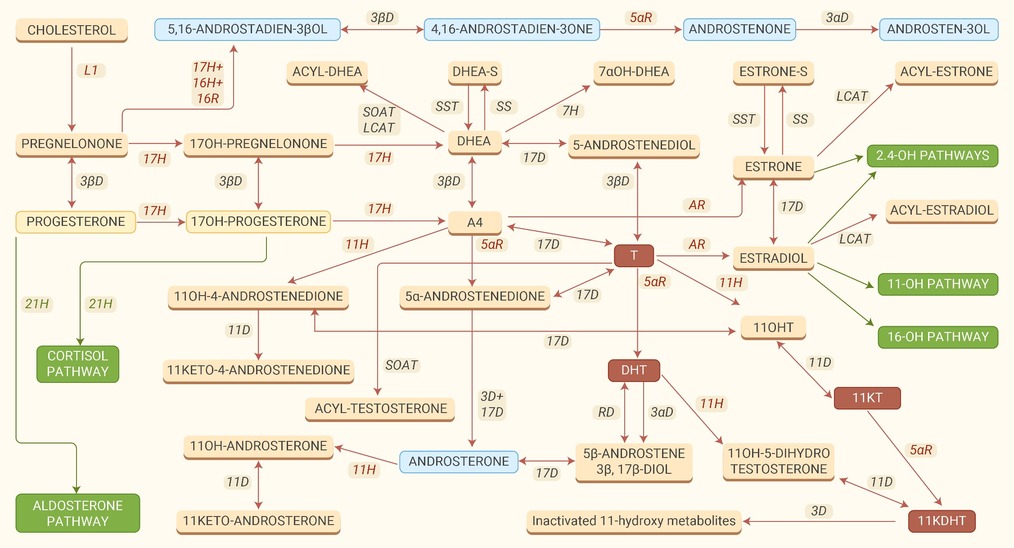
Figure 1.
Overview of Classic and 11-Oxygenated Androgen Biosynthesis and Conversion Pathways.
-
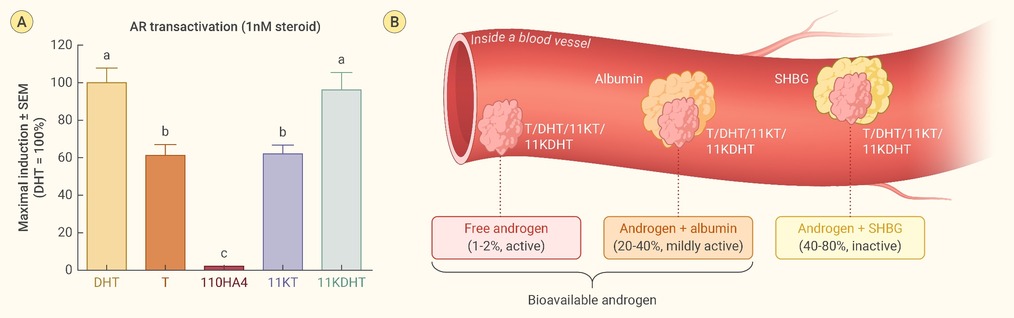
Figure 2.
Androgen bioactivity and binding dynamics.
-
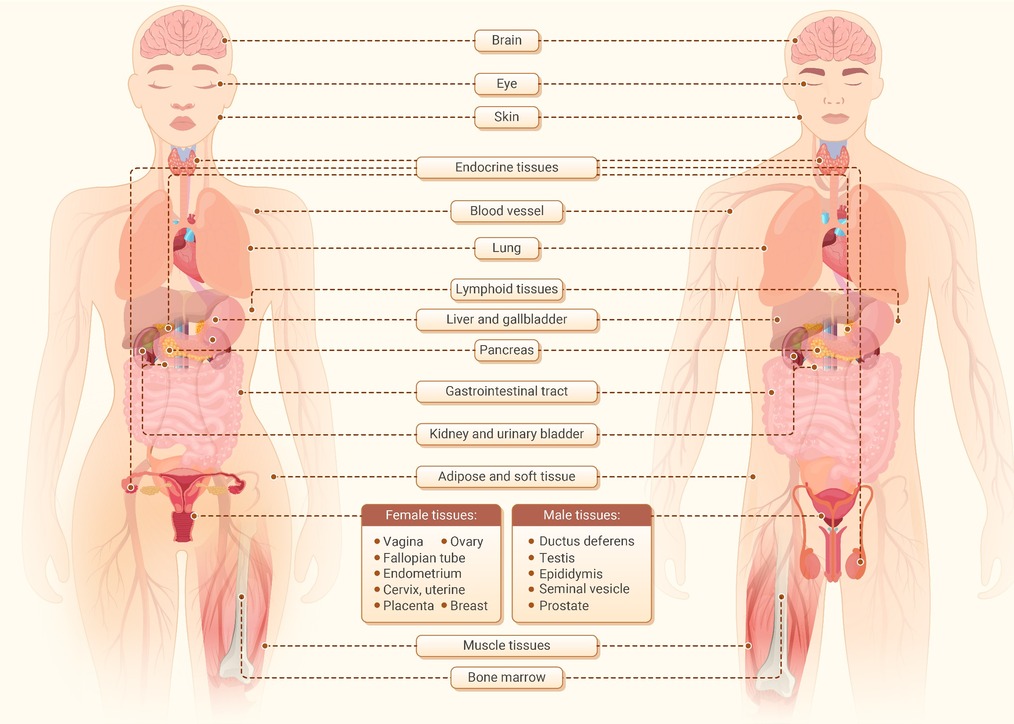
Figure 3.
Distribution of androgen receptor (AR) expression.
-
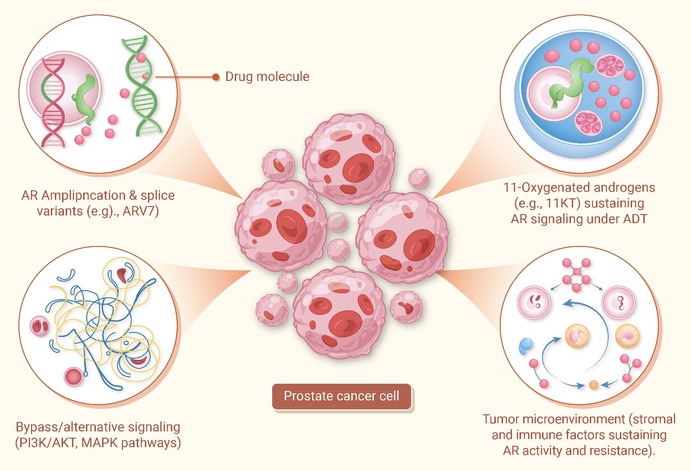
Figure 4.
Mechanisms of prostate cancer drug resistance.
-
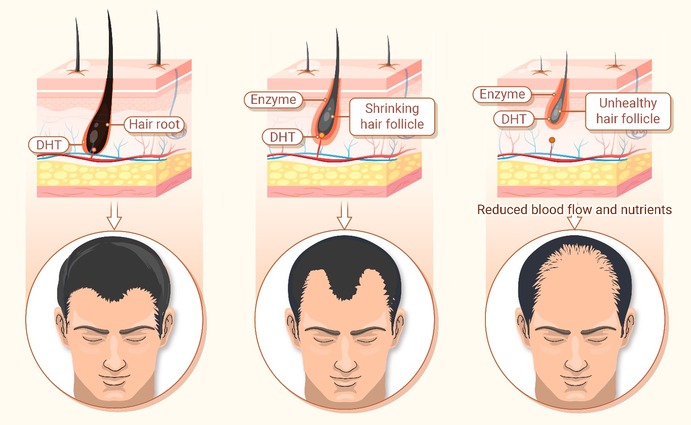
Figure 5.
Role of dihydrotestosterone (DHT) in androgenic alopecia.
-
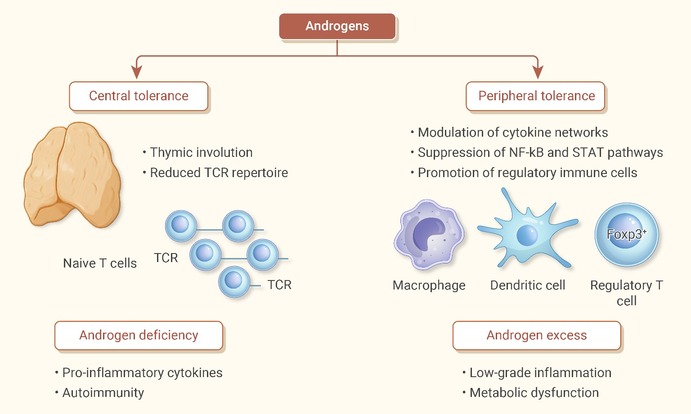
Figure 6.
Androgen regulation of central and peripheral immune tolerance.
-
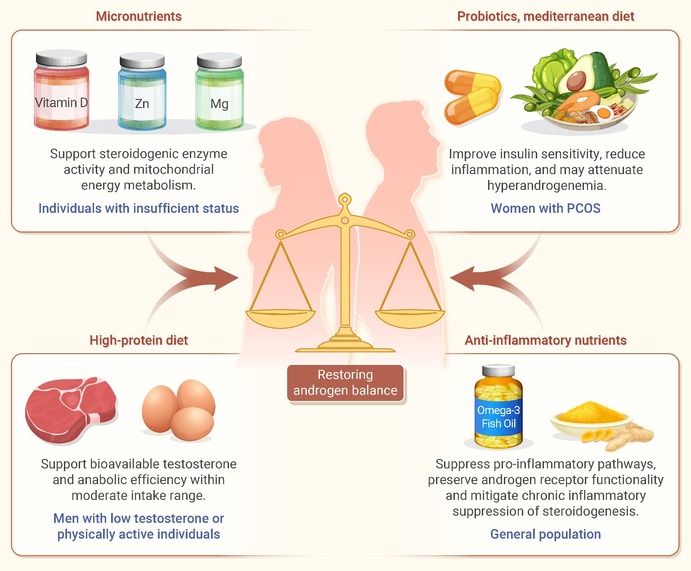
Figure 7.
Nutritional strategies for restoring androgen balance across diverse populations.
