
Dietary factors and cognitive aging: Mapping epidemiological evidence and the role of gut microbiota
-
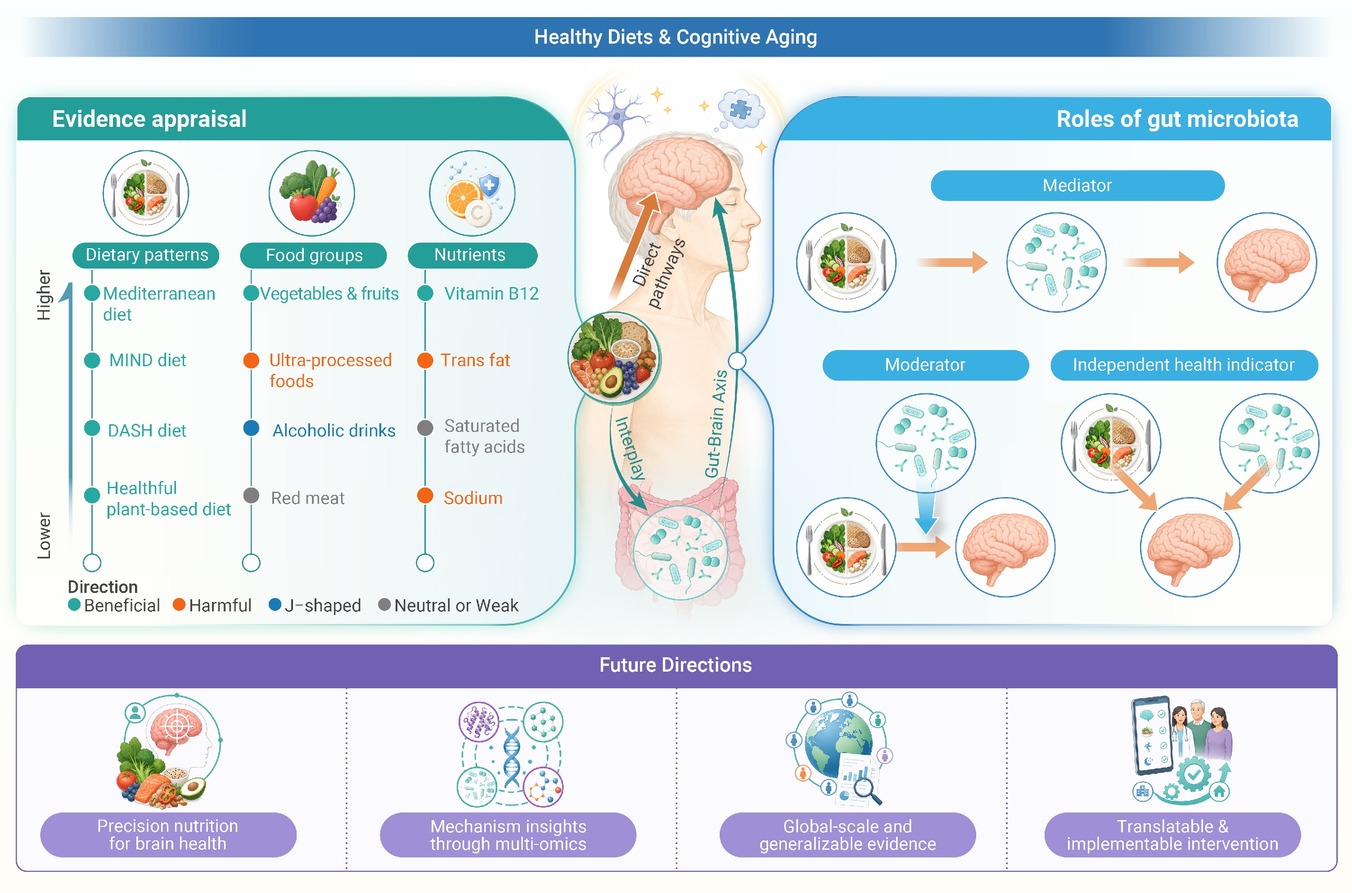
GRAPHICAL ABSTRACT
 DownLoad:
Full size image
DownLoad:
Full size image
-
PUBLIC SUMMARY
-
Healthy dietary patterns have generally been associated with better cognitive health.
Evidence on specific dietary components and cognitive aging offers clues to diverse mechanistic pathways.
Gut microbiota may act as a mediator, moderator, or health indicator in the associations of diet with cognition.
Diet-microbiota-cognition research faces challenges in measurement, methodology, and generalizability.
Further work should clarify causal pathways and personalize dietary strategies for dementia prevention.
-
-
ABSTRACT
Dementia is a growing global health challenge with limited pharmacological treatments. Emerging evidence from randomized controlled trials and prospective cohort studies suggests that healthy dietary patterns may contribute to the prevention or delay of cognitive decline. This review summarizes current evidence on the relations of overall dietary patterns and specific foods and nutrients to cognitive aging, with a particular focus on the potential role of gut microbiota, which is largely shaped by diet. Certain healthy dietary patterns, such as the Mediterranean and the Mediterranean–DASH Intervention for Neurodegenerative Delay (MIND) diets, characterized by specific foods (e.g., vegetables and fruits) and dietary nutrients (e.g., n-3 fatty acids, B vitamins, and carotenoids) have shown potential benefits on cognitive health. However, inconsistencies across study findings necessitate further investigation. We review how the gut microbiota may mediate or moderate the diet-cognition association, or serve as a marker for cognitive health, particularly through mechanisms involving metabolic, immune, and neuroinflammatory pathways. Finally, we highlight key methodological challenges, including variability in exposure assessment, study design, and population heterogeneity, and propose a roadmap for future research, advocating for large-scale, multi-omics studies across diverse populations. These efforts are expected to facilitate the development of precision nutrition strategies for the prevention of cognitive decline and dementia.-
Keywords:
- diet /
- cognitive aging /
- dementia /
- gut microbiota /
- nutritional epidemiology
-

-
REFERENCES
[1] Livingston G., Huntley J., Liu K.Y., et al. (2024). Dementia prevention, intervention, and care: 2024 report of the Lancet standing commission. Lancet 404:572−628. DOI:10.1016/S0140-6736(24)01296-0 [2] 2026 Alzheimer’s disease facts and figures (2026). Alzheimers Dement. 22:e71345. DOI:10.1002/alz.71345 [3] GBD 2021 Nervous System Disorders Collaborators (2024). Global, regional, and national burden of disorders affecting the nervous system, 1990-2021: A systematic analysis for the Global Burden of Disease Study 2021. Lancet Neurol. 23:344–381. DOI:10.1016/S1474-4422(24)00038-3 [4] Fox N.C., Belder C., Ballard C., et al. (2025). Treatment for Alzheimer’s disease. Lancet 406:1408−1423. DOI:10.1016/S0140-6736(25)01329-7 [5] Mente A., Dehghan M., Rangarajan S., et al. (2023). Diet, cardiovascular disease, and mortality in 80 countries. Eur. Heart J. 44:2560−2579. DOI:10.1093/eurheartj/ehad269 [6] Yassine H.N., Samieri C., Livingston G., et al. (2022). Nutrition state of science and dementia prevention: Recommendations of the nutrition for dementia prevention working group. Lancet Healthy Longev. 3:e501−e512. DOI:10.1016/S2666-7568(22)00120-9 [7] Scarmeas N., Anastasiou C.A. and Yannakoulia M. (2018). Nutrition and prevention of cognitive impairment. Lancet Neurol. 17:1006−1015. DOI:10.1016/S1474-4422(18)30338-7 [8] Hu F.B. (2024). Diet strategies for promoting healthy aging and longevity: An epidemiological perspective. J. Intern. Med. 295:508−531. DOI:10.1111/joim.13728 [9] Charisis S., Yannakoulia M. and Scarmeas N. (2025). Diets to promote healthy brain ageing. Nat. Rev. Neurol. 21:5−16. DOI:10.1038/s41582-024-01036-9 [10] Xu Z., Chen S., Guo M., et al. (2024). The impact of diet quality on cognitive ability of Chinese older adults: Evidence from the China Health and Nutrition Survey (CHNS). BMC Geriatr. 24:55. DOI:10.1186/s12877-023-04630-6 [11] Saji N., Tsuduki T., Murotani K., et al. (2022). Relationship between the Japanese-style diet, gut microbiota, and dementia: A cross-sectional study. Nutrition 94:111524. DOI:10.1016/j.nut.2021.111524 [12] Shakersain B., Rizzuto D., Larsson S., et al. (2018). The nordic prudent diet reduces risk of cognitive decline in the swedish older adults: A population-based cohort study. Nutrients 10:229. DOI:10.3390/nu10020229 [13] Ross F.C., Patangia D., Grimaud G., et al. (2024). The interplay between diet and the gut microbiome: Implications for health and disease. Nat. Rev. Microbiol. 22:671−686. DOI:10.1038/s41579-024-01068-4 [14] Schneider E., O’Riordan K.J., Clarke G., et al. (2024). Feeding gut microbes to nourish the brain: Unravelling the diet–microbiota–gut–brain axis. Nat. Metab. 6:1454−1478. DOI:10.1038/s42255-024-01108-6 [15] Gou W., Miao Z., Deng K., et al. (2023). Nutri-microbiome epidemiology, an emerging field to disentangle the interplay between nutrition and microbiome for human health. Protein Cell 14:787−806. DOI:10.1093/procel/pwad023 [16] Kolodziejczyk A.A., Zheng D. and Elinav E. (2019). Diet–microbiota interactions and personalized nutrition. Nat. Rev. Microbiol. 17:742−753. DOI:10.1038/s41579-019-0256-8 [17] Valles-Colomer M., Menni C., Berry S.E., et al. (2023). Cardiometabolic health, diet and the gut microbiome: A meta-omics perspective. Nat. Med. 29:551−561. DOI:10.1038/s41591-023-02260-4 [18] Wu J.H.Y., Micha R. and Mozaffarian D. (2019). Dietary fats and cardiometabolic disease: Mechanisms and effects on risk factors and outcomes. Nat. Rev. Cardiol. 16:581−601. DOI:10.1038/s41569-019-0206-1 [19] Hu F.B. (2002). Dietary pattern analysis: A new direction in nutritional epidemiology. Curr. Opin. Lipidol. 13:3−9. DOI:10.1097/00041433-200202000-00002 [20] Cespedes E.M. and Hu F.B. (2015). Dietary patterns: From nutritional epidemiologic analysis to national guidelines. Am. J. Clin. Nutr. 101:899−900. DOI:10.3945/ajcn.115.110213 [21] Katz D.L. and Meller S. (2014). Can we say what diet is best for health? Annu. Rev. Public Health 35:83−103. DOI:10.1146/annurev-publhealth-032013-182351 [22] Bhushan A., Fondell E., Ascherio A., et al. (2018). Adherence to Mediterranean diet and subjective cognitive function in men. Eur. J. Epidemiol. 33:223−234. DOI:10.1007/s10654-017-0330-3 [23] Féart C. (2009). Adherence to a Mediterranean diet, cognitive deecline, and risk of dementia. JAMA 302:638. DOI:10.1001/jama.2009.1146 [24] Fekete M., Varga P., Ungvari Z., et al. (2025). The role of the Mediterranean diet in reducing the risk of cognitive impairement, dementia, and Alzheimer’s disease: A meta-analysis. GeroScience 47:3111−3130. DOI:10.1007/s11357-024-01488-3 [25] Liu Y., Gu X., Li Y., et al. (2025). Interplay of genetic predisposition, plasma metabolome and Mediterranean diet in dementia risk and cognitive function. Nat. Med. 31:3790−3800. DOI:10.1038/s41591-025-03891-5 [26] Martínez-Lapiscina E.H., Clavero P., Toledo E., et al. (2013). Mediterranean diet improves cognition: The PREDIMED-NAVARRA randomised trial. J. Neurol. Neurosurg. Psychiatry 84:1318−1325. DOI:10.1136/jnnp-2012-304792 [27] Valls-Pedret C., Sala-Vila A., Serra-Mir M., et al. (2015). Mediterranean diet and age-related cognitive decline: A randomized clinical trial. JAMA Intern. Med. 175:1094. DOI:10.1001/jamainternmed.2015.1668 [28] Tangney C.C., Li H., Wang Y., et al. (2014). Relation of DASH- and Mediterranean-like dietary patterns to cognitive decline in older persons. Neurology 83:1410−1416. DOI:10.1212/WNL.0000000000000884 [29] Chen H., Cortese M., Flores-Torres M.H., et al. (2026). Dietary patterns and indicators of cognitive function. JAMA Neurol. 83:382−391. DOI:10.1001/jamaneurol.2026.0062 [30] Blumenthal J.A., Smith P.J., Mabe S., et al. (2019). Lifestyle and neurocognition in older adults with cognitive impairments: A randomized trial. Neurology 92:e212–e223. DOI:10.1212/WNL.0000000000006784 [31] Smith P.J., Blumenthal J.A., Babyak M.A., et al. (2010). Effects of the dietary approaches to stop hypertension diet, exercise, and caloric restriction on neurocognition in overweight adults with high blood pressure. Hypertension 55:1331−1338. DOI:10.1161/HYPERTENSIONAHA.109.146795 [32] Morris M.C., Tangney C.C., Wang Y., et al. (2015). MIND diet slows cognitive decline with aging. Alzheimers Dement. 11:1015−1022. DOI:10.1016/j.jalz.2015.04.011 [33] Morris M.C., Tangney C.C., Wang Y., et al. (2015). MIND diet associated with reduced incidence of Alzheimer’s disease. Alzheimers Dement. 11:1007−1014. DOI:10.1016/j.jalz.2014.11.009 [34] Huang L., Tao Y., Chen H., et al. (2023). Mediterranean-dietary approaches to stop hypertension intervention for neurodegenerative delay (MIND) diet and cognitive function and its decline: A prospective study and meta-analysis of cohort studies. Am. J. Clin. Nutr. 118:174−182. DOI:10.1016/j.ajcnut.2023.04.025 [35] Chen H., Shen J., Tao Y., et al. (2025). Circulating metabolomic profile of the MIND diet and its relation to cognition in middle‐aged and older adults. iMetaOmics 2:e61. DOI:10.1002/imo2.61 [36] Chen H., Dhana K., Huang Y., et al. (2023). Association of the Mediterranean dietary approaches to stop hypertension intervention for neurodegenerative delay (MIND) diet with the risk of dementia. JAMA Psychiatry 80:630. DOI:10.1001/jamapsychiatry.2023.0800 [37] Liu Y., Li Y., Li Y., et al. (2026). Long-term adherence and changes in the Mediterranean and MIND diets in relation to dementia risk and cognitive function. Alzheimers Dement. 22:e71324. DOI:10.1002/alz.71324 [38] Soest A.P. van, Beers S., Rest O. van de, et al. (2024). The Mediterranean-F approaches to stop hypertension intervention for neurodegenerative delay (MIND) diet for the aging brain: A systematic review. Adv. Nutr. 15:100184. DOI:10.1016/j.advnut.2024.100184 [39] Chen C., Hayden K.M., Kaufman J.D., et al. (2021). Adherence to a MIND-Like dietary pattern, long-term exposure to fine particulate matter air pollution, and MRI-based measures of brain volume: The women’s health initiative memory study-MRI. Environ. Health. Perspect. 129:127008. DOI:10.1289/EHP8036 [40] Chen H., Hailili G., Tong L., et al. (2026). Adherence to the MIND diet and longitudinal brain structural changes over a decade: Evidence from the Framingham Heart Study Offspring Cohort. J. Neurol. Neurosurg. Psychiatry 97:505−512. DOI:10.1136/jnnp-2025-336957 [41] Chen H., Dunk M.M., Wang B., et al. (2024). Associations of the Mediterranean‐DASH Intervention for neurodegenerative delay diet with brain structural markers and their changes. Alzheimers Dement. 20:1190−1200. DOI:10.1002/alz.13521 [42] Agarwal P., Leurgans S.E., Agrawal S., et al. (2023). Association of Mediterranean-DASH intervention for neurodegenerative delay and Mediterranean diets with Alzheimer diseasepathology. Neurology 100: e2259–e2268. DOI:10.1212/WNL.0000000000207176 [43] Dhana K., James B.D., Agarwal P., et al. (2021). MIND diet, common brain pathologies, and cognition in community-dwelling older adults. J. Alzheimers Dis. 83:683−692. DOI:10.3233/JAD-210107 [44] Dhana K., Agarwal P., James B.D., et al. (2024). Healthy lifestyle and cognition in older adults with common neuropathologies of dementia. JAMA Neurol. 81:233. DOI:10.1001/jamaneurol.2023.5491 [45] Agarwal P., Agrawal S., Wagner M., et al. (2025). MIND diet and hippocampal sclerosis among community-based older adults. JAMA Netw. Open 8:e2526089. DOI:10.1001/jamanetworkopen.2025.26089 [46] Baker L.D., Espeland M.A., Whitmer R.A., et al. (2025). Structured vs self-guided multidomain lifestyle interventions for global cognitive function: The US pointer randomized clinical trial. JAMA 334:681. DOI:10.1001/jama.2025.12923 [47] Barnes L.L., Dhana K., Liu X., et al. (2023). Trial of the MIND diet for prevention of cognitive decline in older persons. N. Engl. J. Med. 389:602−611. DOI:10.1056/NEJMoa2302368 [48] Arjmand G., Abbas-Zadeh M. and Eftekhari M.H. (2022). Effect of MIND diet intervention on cognitive performance and brain structure in healthy obese women: A randomized controlled trial. Sci. Rep. 12:2871. DOI:10.1038/s41598-021-04258-9 [49] Liu X., Sacks F.M., Beck T., et al. (2025). Apolipoprotein E ε4-dependent associations between carotenoids and cognitive decline: Findings from the MIND (Mediterranean-DASH intervention for neurodegenerative delay) randomized controlled trial. Am. J. Clin. Nutr. 122:1289−1297. DOI:10.1016/j.ajcnut.2025.08.012 [50] Rest O. van de, Berendsen A.A., Haveman-Nies A., et al. (2015). Dietary patterns, cognitive decline, and dementia: A systematic review. Adv. Nutr. 6:154−168. DOI:10.3945/an.114.007617 [51] Musicus A.A., Wang D.D., Janiszewski M., et al. (2022). Health and environmental impacts of plant-rich dietary patterns: A US prospective cohort study. Lancet Planet. Health 6:e892−e900. DOI:10.1016/S2542-5196(22)00243-1 [52] Liu X., Dhana K., Barnes L.L., et al. (2022). A healthy plant-based diet was associated with slower cognitive decline in African American older adults: A biracial community-based cohort. Am. J. Clin. Nutr. 116:875−886. DOI:10.1093/ajcn/nqac204 [53] Sawicki C.M., Ramesh G., Bui L., et al. (2024). Planetary health diet and cardiovascular disease: Results from three large prospective cohort studies in the USA. Lancet Planet. Health 8:e666−e674. DOI:10.1016/S2542-5196(24)00170-0 [54] Charisis S., Ntanasi E., Yannakoulia M., et al. (2021). Diet inflammatory index and dementia incidence: A population-based study. Neurology 97:e2381–e2391. DOI:10.1212/WNL.0000000000012973 [55] Van Lent D.M., Mesa H.G., Short M.I., et al. (2025). Association between dietary inflammatory index score and incident dementia. Alzheimers Dement. 21:e14390. DOI:10.1002/alz.14390 [56] Chen S.-J., Chen H., You J., et al. (2025). Machine learning-assisted optimization of dietary intervention against dementia risk. Nat. Hum. Behav. 9:2313−2326. DOI:10.1038/s41562-025-02255-w [57] Yuan C., Fondell E., Bhushan A., et al. (2019). Long-term intake of vegetables and fruits and subjective cognitive function in US men. Neurology 92:e63–e75. DOI:10.1212/WNL.0000000000006684 [58] Huang L., Hailili G., Zhao M., et al. (2026). Association of vegetable and fruit intake with risk of dementia: Three prospective studies and meta-analysis of cohort studies. Am. J. Clin. Nutr. 124:101421. DOI:10.1016/j.ajcnut.2026.101421 [59] Zhou Y., Wang J., Cao L., et al. (2022). Fruit and vegetable consumption and cognitive disorders in older adults: A meta-analysis of observational studies. Front. Nutr. 9:871061. DOI:10.3389/fnut.2022.871061 [60] Kang J.H., Ascherio A. and Grodstein F. (2005). Fruit and vegetable consumption and cognitive decline in aging women. Ann. Neurol. 57:713−720. DOI:10.1002/ana.20476 [61] Devore E.E., Kang J.H., Breteler M.M.B., et al. (2012). Dietary intakes of berries and flavonoids in relation to cognitive decline. Ann. Neurol. 72:135−143. DOI:10.1002/ana.23594 [62] Morris M.C., Wang Y., Barnes L.L., et al. (2018). Nutrients and bioactives in green leafy vegetables and cognitive decline: Prospective study. Neurology 90:e214–e222. DOI:10.1212/WNL.0000000000004815 [63] Ross A.B., Shertukde S.P., Livingston Staffier K., et al. (2023). The relationship between whole-grain intake and measures of cognitive decline, mood, and anxiety—a systematic review. Adv. Nutr. 14:652−670. DOI:10.1016/j.advnut.2023.04.003 [64] Liu X., Beck T., Dhana K., et al. (2023). Association of whole grain consumption and cognitive decline: An investigation from a community-based biracial cohort of older adults. Neurology 101:e2277−e2287. DOI:10.1212/WNL.0000000000207938 [65] Theodore L.E., Kellow N.J., McNeil E.A., et al. (2020). Nut consumption for cognitive performance: A systematic review. Adv. Nutr. 12:777−792. DOI:10.1093/advances/nmaa153 [66] Zhao M., Yan M., Fei L., et al. (2026). Nut consumption and long-term risk of all-cause dementia: Preliminary findings from three prospective cohort studies. Nutrients 18:1722. DOI:10.3390/nu18111722 [67] Moabedi M., Aliakbari M., Erfanian S., et al. (2024). The effect of consuming nuts on cognitive function: A systematic review and meta-analysis of randomized clinical trials. Front Nutr 11:1463801. DOI:10.3389/fnut.2024.1463801 [68] Sala-Vila A., Valls-Pedret C., Rajaram S., et al. (2020). Effect of a 2-year diet intervention with walnuts on cognitive decline. The walnuts and healthy aging (WAHA) study: A randomized controlled trial. Am. J. Clin. Nutr. 111:590−600. DOI:10.1093/ajcn/nqz328 [69] Yu J. and Zeng H. (2025). Association of high consumption of soy products with the risk of cognitive impairment and major neurocognitive disorders: A systematic review and dose-response meta-analysis. Front. Nutr. 12:1635844. DOI:10.3389/fnut.2025.1635844 [70] Shen J., Chen H., Gong Y., et al. (2026). Association between plant-based diets and incident dementia: Results from prospective cohort studies and a meta-analysis. J. Prev. Alzheimers Dis. 13:100457. DOI:10.1016/j.tjpad.2025.100457 [71] Li Y., Li Y., Gu X., et al. (2025). Long-term intake of red meat in relation to dementia risk and cognitive function in US adults. Neurology 104:e210286. DOI:10.1212/WNL.0000000000210286 [72] Talebi S., Asoudeh F., Naeini F., et al. (2023). Association between animal protein sources and risk of neurodegenerative diseases: A systematic review and dose-response meta-analysis. Nutr. Rev. 81:1131−1143. DOI:10.1093/nutrit/nuac114 [73] Norgren J., Carballo-Casla A., Grande G., et al. (2026). Meat consumption and cognitive health by APOE genotype. JAMA Netw. Open 9:e266489. DOI:10.1001/jamanetworkopen.2026.6489 [74] Godos J., Caruso G., Micek A., et al. (2026). Fish consumption and cognitive function in aging: A systematic review of observational studies. GeroScience15:2026. DOI:10.1007/s11357-026-02188-w [75] Sasaki N., Jones L.E. and Carpenter D.O. (2024). Fish consumption and omega-3 polyunsaturated fatty acids from diet are positively associated with cognitive function in older adults even in the presence of exposure to lead, cadmium, selenium, and methylmercury: A cross-sectional study using NHANES 2011–2014 data. Am. J. Clin. Nutr. 119:283−293. DOI:10.1016/j.ajcnut.2023.12.007 [76] Villoz F., Filippini T., Ortega N., et al. (2023). Dairy intake and risk of cognitive decline and dementia: A systematic review and dose-response meta-analysis of prospective studies. Adv. Nutr. 15:100160. DOI:10.1016/j.advnut.2023.100160 [77] Du Y., Borné Y., Samuelsson J., et al. (2026). High- and low-fat dairy consumption and long-term risk of dementia: Evidence from a 25-year prospective cohort study. Neurology 106:e214343. DOI:10.1212/WNL.0000000000214343 [78] Luo K., Chen G.-C., Zhang Y., et al. (2024). Variant of the lactase LCT gene explains association between milk intake and incident type 2 diabetes. Nat. Metab. 6:169−186. DOI:10.1038/s42255-023-00961-1 [79] Talaei M., Feng L., Yuan J.-M., et al. (2020). Dairy, soy, and calcium consumption and risk of cognitive impairment: The Singapore Chinese health study. Eur. J. Nutr. 59:1541−1552. DOI:10.1007/s00394-019-02010-8 [80] Li F., Liu X., Jiang B., et al. (2024). Tea, coffee, and caffeine intake and risk of dementia and Alzheimer’s disease: A systematic review and meta-analysis of cohort studies. Food. Funct. 15:8330−8344. DOI:10.1039/D4FO01750A [81] Zhang Y., Liu Y., Li Y., et al. (2026). Coffee and tea intake, dementia risk, and cognitive function. JAMA 335:961. DOI:10.1001/jama.2025.27259 [82] Zhang Y., Yang H., Li S., et al. (2021). Consumption of coffee and tea and risk of developing stroke, dementia, and poststroke dementia: A cohort study in the UK Biobank. PLoS Med. 18:e1003830. DOI:10.1371/journal.pmed.1003830 [83] Yan M., Shen J., Zhao M., et al. (2026). Coffee and tea intake, circulating inflammatory biomarkers, and long-term risk of dementia: Findings from two longitudinal studies. Eur. J. Epidemiol. 41:27−38. DOI:10.1007/s10654-025-01302-0 [84] Gardiner C., Weakley J., Burke L.M., et al. (2023). The effect of caffeine on subsequent sleep: A systematic review and meta-analysis. Sleep. Med. Rev. 69:101764. DOI:10.1016/j.smrv.2023.101764 [85] Noordzij M., Uiterwaal C.S., Arends L.R., et al. (2005). Blood pressure response to chronic intake of coffee and caffeine: A meta-analysis of randomized controlled trials. J. Hypertens. 23:921. DOI:10.1097/01.hjh.0000166828.94699.1d [86] Millman J.F., Okamoto S., Teruya T., et al. (2021). Extra-virgin olive oil and the gut-brain axis: Influence on gut microbiota, mucosal immunity, and cardiometabolic and cognitive health. Nutr. Rev. 79:1362−1374. DOI:10.1093/nutrit/nuaa148 [87] Silva P., Rodríguez-Pérez M., Gómez-Torres Ó., et al. (2023). Olive oil and wine as source of multi-target agents in the prevention of Alzheimer disease. Nutr. Res. Rev. 36:140−154. DOI:10.1017/S095442242100041X [88] Alkhalifa A.E., Al-Ghraiybah N.F. and Kaddoumi A. (2024). Extra-virgin olive oil in Alzheimer’s disease: A comprehensive review of cellular, animal, and clinical studies. Int. J. Mol. Sci. 25:1914. DOI:10.3390/ijms25031914 [89] Fazlollahi A., Motlagh Asghari K., Aslan C., et al. (2023). The effects of olive oil consumption on cognitive performance: A systematic review. Front. Nutr. 10:1218538. DOI:10.3389/fnut.2023.1218538 [90] Tessier A.-J., Cortese M., Yuan C., et al. (2024). Consumption of olive oil and diet quality and risk of dementia-related death. JAMA Netw. Open 7:e2410021. DOI:10.1001/jamanetworkopen.2024.10021 [91] Zarezadeh M., Mahmoudinezhad M., Faghfouri A.H., et al. (2024). Alcohol consumption in relation to cognitive dysfunction and dementia: A systematic review and dose-response meta-analysis of comparative longitudinal studies. Ageing Res. Rev. 100:102419. DOI:10.1016/j.arr.2024.102419 [92] Lucerón-Lucas-Torres M., Cavero-Redondo I., Martínez-Vizcaíno V., et al. (2022). Association between wine consumption and cognitive decline in older people: A systematic review and meta-analysis of longitudinal studies. Front. Nutr. 9:863059. DOI:10.3389/fnut.2022.863059 [93] Lane M.M., Gamage E., Du S., et al. (2024). Ultra-processed food exposure and adverse health outcomes: Umbrella review of epidemiological meta-analyses. BMJ 384:e077310. DOI:10.1136/bmj-2023-077310 [94] Henney A.E., Gillespie C.S., Alam U., et al. (2024). High intake of ultra-processed food is associated with dementia in adults: A systematic review and meta-analysis of observational studies. J. Neurol. 271:198−210. DOI:10.1007/s00415-023-12033-1 [95] O’Connor L.E., Herrick K.A. and Papier K. (2024). Handle with care: Challenges associated with ultra-processed foods research. Int. J. Epidemiol. 53:dyae106. DOI:10.1093/ije/dyae106 [96] Carmichael O.T., Agarwal P., Albensi B.C., et al. (2026). Ultraprocessed foods and the aging brain: State of the science. Ann. Rev. Nutr. 46:Published Online. DOI:10.1146/annurev-nutr-061824-053453 [97] Arshad M.T., Maqsood S., Altalhi R., et al. (2025). Role of dietary carbohydrates in cognitive function: A review. Food. Sci. Nutr. 13:e70516. DOI:10.1002/fsn3.70516 [98] Zhang N., Andresen J., Janzi S., et al. (2026). Free sugar intake and dementia risk: A swedish cohort study on dietary sources and dementia subtypes. J. Nutr. 156:101518. DOI:10.1016/j.tjnut.2026.101518 [99] Chen H., Ding Y., Dhana K., et al. (2025). Sweetened beverages and incident all-cause dementia among older adults. JAMA Psychiatry 82:801. DOI:10.1001/jamapsychiatry.2025.1230 [100] Yan K., Wang X., Wang F., et al. (2025). The association between dietary fiber intake and cognitive function: Mediating role of inflammatory markers. Front. Nutr. 12:1638315. DOI:10.3389/fnut.2025.1638315 [101] Yamagishi K., Maruyama K., Ikeda A., et al. (2023). Dietary fiber intake and risk of incident disabling dementia: The circulatory risk in communities study. Nutr. Neurosci. 26:148−155. DOI:10.1080/1028415X.2022.2027592 [102] Prokopidis K., Giannos P., Ispoglou T., et al. (2022). Dietary fiber intake is associated with cognitive function in older adults: Data from the national health and nutrition examination survey. Am. J. Med. 135:e257−e262. DOI:10.1016/j.amjmed.2022.03.022 [103] Azuma N., Mawatari T., Saito Y., et al. (2023). Effect of continuous ingestion of bifidobacteria and dietary fiber on improvement in cognitive function: A randomized, double-blind, placebo-controlled trial. Nutrients 15:4175. DOI:10.3390/nu15194175 [104] Trompette A., Gollwitzer E.S., Yadava K., et al. (2014). Gut microbiota metabolism of dietary fiber influences allergic airway disease and hematopoiesis. Nat. Med. 20:159−166. DOI:10.1038/nm.3444 [105] Yeh T.-S., Yuan C., Ascherio A., et al. (2021). Long-term dietary protein intake and subjective cognitive decline in US men and women. Am. J. Clin. Nutr., Published online July 22:2021. DOI:10.1093/ajcn/nqab236 [106] Morris M.C., Evans D.A., Bienias J.L., et al. (2003). Dietary fats and the risk of incident Alzheimer disease. Arch. Neurol. 60:194. DOI:10.1001/archneur.60.2.194 [107] Zhu R., Chen M., Zhang Z., et al. (2021). Dietary fatty acids and risk for Alzheimer’s disease, dementia, and mild cognitive impairment: A prospective cohort meta-analysis. Nutrition 90:111355. DOI:10.1016/j.nut.2021.111355 [108] Morris M.C., Evans D.A., Bienias J.L., et al. (2003). Consumption of fish and n-3 fatty ccids and risk of incident Alzheimer disease. Arch. Neurol. 60:940. DOI:10.1001/archneur.60.7.940 [109] Suh S.W., Lim E., Burm S.-Y., et al. (2024). The influence of n-3 polyunsaturated fatty acids on cognitive function in individuals without dementia: A systematic review and dose–response meta-analysis. BMC Med. 22:109. DOI:10.1186/s12916-024-03296-0 [110] Van De Rest O., Wang Y., Barnes L.L., et al. (2016). APOE ε4 and the associations of seafood and long-chain omega-3 fatty acids with cognitive decline. Neurology 86:2063−2070. DOI:10.1212/WNL.0000000000002719 [111] Liu X., Beck T., Dhana K., et al. (2024). Dietary fats and the APOE-e4 risk allele in relation to cognitive decline: A longitudinal investigation in a biracial population sample. J. Nutr. Health Aging. 28:100211. DOI:10.1016/j.jnha.2024.100211 [112] Ruan Y., Tang J., Guo X., et al. (2018). Dietary fat intake and risk of Alzheimer’s disease and dementia: A meta-analysis of cohort studies. Curr. Alzheimer Res. 15:869−876. DOI:10.2174/1567205015666180427142350 [113] Wu M., Huang L., Huang Y., et al. (2025). Association between dietary fat intake and long-term risk of dementia: A prospective cohort study. Am. J. Clin. Nutr. 122:1725−1734. DOI:10.1016/j.ajcnut.2025.09.028 [114] Zeng Y., Cao S., Tang J., et al. (2024). Effects of saturated and monounsaturated fatty acids on cognitive impairment: Evidence from Mendelian randomization study. Eur. J. Clin. Nutr. 78:585−590. DOI:10.1038/s41430-024-01437-5 [115] Solfrizzi V., Custodero C., Lozupone M., et al. (2017). Relationships of dietary patterns, foods, and micro- and macronutrients with Alzheimer’s disease and late-life cognitive disorders: A systematic review. J. Alzheimers. Dis. 59:815−849. DOI:10.3233/JAD-170248 [116] Barnard N.D., Bunner A.E. and Agarwal U. (2014). Saturated and trans fats and dementia: A systematic review. Neurobiol. Aging 35:S65−S73. DOI:10.1016/j.neurobiolaging.2014.02.030 [117] Wang Z., Zhu W., Xing Y., et al. (2022). B vitamins and prevention of cognitive decline and incident dementia: A systematic review and meta-analysis. Nutr. Rev. 80:931−949. DOI:10.1093/nutrit/nuab057 [118] EFSA Panel on Dietetic Products, Nutrition and Allergies (NDA) (2016). Dietary reference values for choline. EFSA J. 14:4484. DOI:10.2903/j.efsa.2016.4484 [119] Chen H., Li T., Wu M., et al. (2026). Dietary choline intake and incident dementia in middle-aged and older adults: A prospective cohort study and dose-response meta-analysis. Nutr. J. 25:54. DOI:10.1186/s12937-026-01354-2 [120] Vázquez-Lorente H., Manzanares-Errazu J.M., Babio N., et al. (2026). Dietary choline and betaine intake and 2-year changes in cognitive function in older adults with overweight or obesity and metabolic syndrome: A prospective cohort analysis. Am. J. Clin. Nutr. 123:101265. DOI:10.1016/j.ajcnut.2026.101265 [121] Yuan J., Liu X., Liu C., et al. (2022). Is dietary choline intake related to dementia and Alzheimer’s disease risks. Results from the Framingham Heart Study. Am. J. Clin. Nutr. 116:1201−1207. DOI:10.1093/ajcn/nqac193 [122] Morris M.C. (2002). Dietary intake of antioxidant nutrients and the risk of incident Alzheimer disease in a biracial community study. JAMA 287:3230. DOI:10.1001/jama.287.24.3230 [123] Morris M.C., Evans D.A., Bienias J.L., et al. (2002). Vitamin E and cognitive decline in older persons. Arch. Neurol. 59:1125. DOI:10.1001/archneur.59.7.1125 [124] Liu X., Finno C.J., Beck T., et al. (2023). Association of vitamin E and cognitive decline in older adults with and without the APOEɛ4 allele: A biracial population-based community study. J. Alzheimers Dis. 96:1129−1138. DOI:10.3233/JAD-230797 [125] Hu X., Zhou J., Sun Y., et al. (2025). Association of antioxidants intake in diet and supplements with risk of Alzheimer’s disease: A systematic review and dose-response meta-analysis of prospective cohort studies. Aging Clin. Exp. Res. 37:166. DOI:10.1007/s40520-024-02893-6 [126] Rao A. and Rao L. (2007). Carotenoids and human health. Pharmacol. Res. 55:207−216. DOI:10.1016/j.phrs.2007.01.012 [127] Davinelli S., Ali S., Solfrizzi V., et al. (2021). Carotenoids and cognitive outcomes: A meta-analysis of randomized intervention trials. Antioxidants 10:223. DOI:10.3390/antiox10020223 [128] Yuan C., Chen H., Wang Y., et al. (2021). Dietary carotenoids related to risk of incident Alzheimer dementia (AD) and brain AD neuropathology: A community-based cohort of older adults. Am. J. Clin. Nutr. 113:200−208. DOI:10.1093/ajcn/nqaa303 [129] Yuan C., Fondell E., Ascherio A., et al. (2020). Long-term intake of dietary carotenoids is positively associated with late-life subjective cognitive function in a prospective study in US women. J. Nutr. 150:1871−1879. DOI:10.1093/jn/nxaa087 [130] Qu M., Shi H., Wang K., et al. (2021). The associations of plasma/serum carotenoids with Alzheimer’s disease: A systematic review and meta-analysis. J. Alzheimers Dis. 82:1055−1066. DOI:10.3233/JAD-210384 [131] Hailili G., Huang L., Wu M., et al. (2025). Dietary provitamin A and non-provitamin A carotenoid in relation to cognitive function among middle-aged and older adults. Nutr. J. 24:119. DOI:10.1186/s12937-025-01180-y [132] Chew E.Y., Clemons T.E., Agrón E., et al. (2015). Effect of omega-3 fatty acids, lutein/zeaxanthin, or other nutrient supplementation on cognitive function: The AREDS2 randomized clinical trial. JAMA 314:791−801. DOI:10.1001/jama.2015.9677 [133] Caruso G., Torrisi S.A., Mogavero M.P., et al. (2022). Polyphenols and neuroprotection: Therapeutic implications for cognitive decline. Pharmacol. Ther. 232:108013. DOI:10.1016/j.pharmthera.2021.108013 [134] Godos J., Micek A., Mena P., et al. (2024). Dietary (Poly)phenols and cognitive decline: A systematic review and meta-analysis of observational studies. Mol. Nutr. Food. Res. 68:2300472. DOI:10.1002/mnfr.202300472 [135] Chen W.-Y., Cheng Y.-C., Chiu C.-C., et al. (2024). Effects of vitamin D supplementation on cognitive outcomes: A systematic review and meta-analysis. Neuropsychol. Rev. 34:568−580. DOI:10.1007/s11065-023-09598-z [136] Zhang X.-X., Wang H.-R., Meng-Wei, et al. (2024). Association of Vitamin D levels with risk of cognitive impairment and dementia: A systematic review and meta-analysis of prospective studies. J. Alzheimers Dis. 98:373−385. DOI:10.3233/JAD-231381 [137] Schwingshackl L., Knüppel S., Schwedhelm C., et al. (2016). Perspective: NutriGrade: A scoring system to assess and judge the meta-evidence of randomized controlled trials and cohort studies in nutrition research. Adv. Nutr. 7:994−1004. DOI:10.3945/an.116.013052 [138] Shen J., Sun Z., Song H., et al. (2026). Healthful plant-based diet, gut enterotype, and cognition in a rural Chinese elderly cohort: A longitudinal multi-omics study. Cell. Rep. Med. Online ahead of print. DOI:10.1016/j.xcrm.2026.102797 [139] Ni J., Hernández-Cacho A., Nishi S.K., et al. (2025). Mediterranean diet, gut microbiota, and cognitive decline in older adults with obesity/overweight and metabolic syndrome: A prospective cohort study. BMC Med. 23:669. DOI:10.1186/s12916-025-04488-y [140] Nagpal R., Neth B.J., Wang S., et al. (2019). Modified Mediterranean-ketogenic diet modulates gut microbiome and short-chain fatty acids in association with Alzheimer’s disease markers in subjects with mild cognitive impairment. EBioMedicine 47:529−542. DOI:10.1016/j.ebiom.2019.08.032 [141] Dilmore A.H., Martino C., Neth B.J., et al. (2023). Effects of a ketogenic and low fat diet on the human metabolome, microbiome and food-ome in adults at risk for Alzheimer’s disease. Alzheimers Dement. 19:4805−4816. DOI:10.1002/alz.13007 [142] Ni J., Nishi S.K., Babio N., et al. (2025). Nut consumption, gut microbiota, and cognitive function: Findings from a prospective study in older adults at risk of cognitive decline. Age Ageing 54:afaf208. DOI:10.1093/ageing/afaf208 [143] Ni J., Nishi S.K., Babio N., et al. (2026). Total and different types of olive oil consumption, gut microbiota, and cognitive function changes in older adults. Microbiome 14:68. DOI:10.1186/s40168-025-02306-4 [144] Liaquat M., Le Gall G., Scholey A., et al. (2025). APOE4 genotype shapes the role of dietary fibers in cognitive health through gut microbiota changes. Gut Microbes 17:2526133. DOI:10.1080/19490976.2025.2526133 [145] Jiang H., Zhang J., Li S., et al. (2025). Dietary index for gut microbiota (DI-GM) and cognitive function: NHANES findings and validation in a Hong Kong cohort with metagenomic data. J. Prev. Alzheimers Dis. 13:100319. DOI:10.1016/j.tjpad.2025.100319 [146] Segev T., Barak D., Zahavi L., et al. (2026). Diet–microbiome associations in 10,068 individuals from the Human Phenotype Project to guide personalized nutrition. Nat. Med. 32:1884−1894. DOI:10.1038/s41591-026-04312-x [147] David L.A., Maurice C.F., Carmody R.N., et al. (2014). Diet rapidly and reproducibly alters the human gut microbiome. Nature 505:559−563. DOI:10.1038/nature12820 [148] Wu G.D., Chen J., Hoffmann C., et al. (2011). Linking long-term dietary patterns with gut microbial enterotypes. Science 334:105−108. DOI:10.1126/science.1208344 [149] Ghosh T.S., Rampelli S., Jeffery I.B., et al. (2020). Mediterranean diet intervention alters the gut microbiome in older people reducing frailty and improving health status: The NU-AGE 1-year dietary intervention across five European countries. Gut 69:1218−1228. DOI:10.1136/gutjnl-2019-319654 [150] Morais L.H., Schreiber H.L. and Mazmanian S.K. (2021). The gut microbiota–brain axis in behaviour and brain disorders. Nat. Rev. Microbiol. 19:241−255. DOI:10.1038/s41579-020-00460-0 [151] Loh J.S., Mak W.Q., Tan L.K.S., et al. (2024). Microbiota–gut–brain axis and its therapeutic applications in neurodegenerative diseases. Signal Transduct. Target. Ther. 9:37. DOI:10.1038/s41392-024-01743-1 [152] Jamerlan A.M., An S.S.A. and Hulme J.P. (2025). Microbial diversity and fitness in the gut–brain axis: Influences on developmental risk for Alzheimer’s disease. Gut Microbes 17(1):2486518. DOI:10.1080/19490976.2025.2486518. [153] Li J., Li Y., Ivey K.L., et al. (2022). Interplay between diet and gut microbiome, and circulating concentrations of trimethylamine N-oxide: Findings from a longitudinal cohort of US men. Gut 71:724−733. DOI:10.1136/gutjnl-2020-322473 [154] Zhu G., Zhao J., Zhang H., et al. (2023). Gut microbiota and its metabolites: Bridge of dietary nutrients and Alzheimer’s disease. Adv. Nutr. 14:819−839. DOI:10.1016/j.advnut.2023.04.005 [155] Connell E., Le Gall G., Pontifex M.G., et al. (2022). Microbial-derived metabolites as a risk factor of age-related cognitive decline and dementia. Mol. Neurodegener. 17:43. DOI:10.1186/s13024-022-00548-6 [156] Dalile B., Van Oudenhove L., Vervliet B., et al. (2019). The role of short-chain fatty acids in microbiota–gut–brain communication. Nat. Rev. Gastroenterol. Hepatol. 16:461−478. DOI:10.1038/s41575-019-0157-3 [157] Corrêa-Oliveira R., Fachi J.L., Vieira A., et al. (2016). Regulation of immune cell function by short-chain fatty acids. Clin. Transl. Immunology 5:e73. DOI:10.1038/cti.2016.17 [158] Liang X., Fu Y., Cao W., et al. (2022). Gut microbiome, cognitive function and brain structure: A multi-omics integration analysis. Transl. Neurodegener. 11:49. DOI:10.1186/s40035-022-00323-z [159] Mann E.R., Lam Y.K. and Uhlig H.H. (2024). Short-chain fatty acids: Linking diet, the microbiome and immunity. Nat. Rev. Immunol. 24:577−595. DOI:10.1038/s41577-024-01014-8 [160] Savignac H.M., Corona G., Mills H., et al. (2013). Prebiotic feeding elevates central brain derived neurotrophic factor, N-methyl-d-aspartate receptor subunits and d-serine. Neurochem. Int. 63:756−764. DOI:10.1016/j.neuint.2013.10.006 [161] Barichello T., Generoso J.S., Simões L.R., et al. (2015). Sodium butyrate prevents memory impairment by re-establishing BDNF and GDNF expression in experimental pneumococcal meningitis. Mol. Neurobiol. 52:734−740. DOI:10.1007/s12035-014-8914-3 [162] Koh A., Vadder F.D., Kovatcheva-Datchary P., et al. (2016). From dietary fiber to host physiology: Short-chain fatty acids as key bacterial metabolites. Cell 165:1332−1345. DOI:10.1016/j.cell.2016.05.041 [163] Hoyles L., Pontifex M.G., Rodriguez-Ramiro I., et al. (2021). Regulation of blood–brain barrier integrity by microbiome-associated methylamines and cognition by trimethylamine N-oxide. Microbiome 9:235. DOI:10.1186/s40168-021-01181-z [164] Hoyles L., Jiménez-Pranteda M.L., Chilloux J., et al. (2018). Metabolic retroconversion of trimethylamine N-oxide and the gut microbiota. Microbiome 6:73. DOI:10.1186/s40168-018-0461-0 [165] Inoue Y., Shue F., Bu G., et al. (2023). Pathophysiology and probable etiology of cerebral small vessel disease in vascular dementia and Alzheimer’s disease. Mol. Neurodegener. 18:46. DOI:10.1186/s13024-023-00640-5 [166] Rath S., Heidrich B., Pieper D.H., et al. (2017). Uncovering the trimethylamine-producing bacteria of the human gut microbiota. Microbiome 5:54. DOI:10.1186/s40168-017-0271-9 [167] Cai J., Rimal B., Jiang C., et al. (2022). Bile acid metabolism and signaling, the microbiota, and metabolic disease. Pharmacol. Ther. 237:108238. DOI:10.1016/j.pharmthera.2022.108238 [168] Agus A., Planchais J. and Sokol H. (2018). Gut microbiota regulation of tryptophan metabolism in health and disease. Cell Host Microbe. 23:716−724. DOI:10.1016/j.chom.2018.05.003 [169] Meiners F., Ortega-Matienzo A., Fuellen G., et al. (2025). Gut microbiome-mediated health effects of fiber and polyphenol-rich dietary interventions. Front. Nutr. 12:1647740. DOI:10.3389/fnut.2025.1647740 [170] Kearns R. (2024). The kynurenine pathway in gut permeability and inflammation. Inflammation 48:1063−1077. DOI:10.1007/s10753-024-02135-x [171] Badawy A.A.-B. (2017). Tryptophan availability for kynurenine pathway metabolism across the life span: Control mechanisms and focus on aging, exercise, diet and nutritional supplements. Neuropharmacology 112:248−263. DOI:10.1016/j.neuropharm.2015.11.015 [172] Sun P., Wang M., Liu Y.-X., et al. (2023). High-fat diet-disturbed gut microbiota-colonocyte interactions contribute to dysregulating peripheral tryptophan-kynurenine metabolism. Microbiome 11:154. DOI:10.1186/s40168-023-01606-x [173] Malesza I.J., Malesza M., Walkowiak J., et al. (2021). High-fat, western-style diet, systemic inflammation, and gut microbiota: A narrative review. Cells 10:3164. DOI:10.3390/cells10113164 [174] Moreira A.P.B., Texeira T.F.S., Ferreira A.B., et al. (2012). Influence of a high-fat diet on gut microbiota, intestinal permeability and metabolic endotoxaemia. Br. J. Nutr. 108:801−809. DOI:10.1017/S0007114512001213 [175] Nowell J., Blunt E. and Edison P. (2023). Incretin and insulin signaling as novel therapeutic targets for Alzheimer’s and Parkinson’s disease. Mol. Psychiatry 28:217−229. DOI:10.1038/s41380-022-01792-4 [176] Shuai M., Xu F., Pan X.-F., et al. (2026). Host genetic regulation of gut mycobiome offers insights into the gut–brain interaction. Vita 1(1). DOI:10.15302/vita.2026.04.0024. [177] Chica Cardenas L.A., Leonard M.M., Baldridge M.T., et al. (2026). Gut virome dynamics: From commensal to critical player in health and disease. Nat. Rev. Gastroenterol. Hepatol. 23:126−144. DOI:10.1038/s41575-025-01134-z [178] Böswald L.F., Wenderlein J., Bachmann M., et al. (2025). Fibre supplementation alters the gastrointestinal microbiome, the microbial metabolites and indicators of neurodegeneration in a mouse model of Alzheimer’s disease. Sci. Rep. 15:32705. DOI:10.1038/s41598-025-20986-8 [179] Boscaini S., Bastiaanssen T.F.S., Moloney G.M., et al. (2026). Habitual coffee intake shapes the gut microbiome and modifies host physiology and cognition. Nat. Commun. 17:3439. DOI:10.1038/s41467-026-71264-8 [180] Wang D.D., Nguyen L.H., Li Y., et al. (2021). The gut microbiome modulates the protective association between a Mediterranean diet and cardiometabolic disease risk. Nat. Med. 27:333−343. DOI:10.1038/s41591-020-01223-3 [181] Ma W., Nguyen L.H., Song M., et al. (2021). Dietary fiber intake, the gut microbiome, and chronic systemic inflammation in a cohort of adult men. Genome. Med. 13:102. DOI:10.1186/s13073-021-00921-y [182] Li Y., Wang D.D., Satija A., et al. (2021). Plant-based diet index and metabolic risk in men: Exploring the role of the gut microbiome. J. Nutr. 151:2780−2789. DOI:10.1093/jn/nxab175 [183] Jeffery I.B., Claesson M.J., O’Toole P.W., et al. (2012). Categorization of the gut microbiota: Enterotypes or gradients. Nat. Rev. Microbiol. 10:591−592. DOI:10.1038/nrmicro2859 [184] Samieri C., Yassine H.N., Melo Van Lent D., et al. (2022). Personalized nutrition for dementia prevention. Alzheimers Dement. 18:1424−1437. DOI:10.1002/alz.12486 [185] Ghosh T.S., Shanahan F. and O’Toole P.W. (2022). The gut microbiome as a modulator of healthy ageing. Nat. Rev. Gastroenterol. Hepatol. 19:565−584. DOI:10.1038/s41575-022-00605-x [186] Weersma R.K., Zhernakova A. and Fu J. (2020). Interaction between drugs and the gut microbiome. Gut 69:1510−1519. DOI:10.1136/gutjnl-2019-320204 [187] Morris M.C. (2016). Nutrition and risk of dementia: Overview and methodological issues. Ann. N. Y. Acad. Sci. 1367:31−37. DOI:10.1111/nyas.13047 [188] Willett W.C. (2013). Nutritional epidemiology. 3rd ed. (Oxford University Press). DOI:10.1093/acprof:oso/9780199754038.001.0001 [189] Zhang J., Geng T., Wang Y., et al. (2026). Challenges, advances and future directions in nutritional epidemiology. Inno. Nutr. 1:100009. DOI:10.59717/j.xinn-nutri.2026.100009 [190] Willett W.C., Hu F.B. and Gu X. (2025). Assessing diet in epidemiologic studies. Nat. Food 6:927−929. DOI:10.1038/s43016-025-01245-5 [191] Naska A., Lagiou A. and Lagiou P. (2017). Dietary assessment methods in epidemiological research: Current state of the art and future prospects. F1000Res 6:926. DOI:10.12688/f1000research.10703.1 [192] Dao M.C., Subar A.F., Warthon-Medina M., et al. (2019). Dietary assessment toolkits: An overview. Public Health. Nutr. 22:404−418. DOI:10.1017/S1368980018002951 [193] Gibson R.S. (2005). Principles of nutritional assessment. 2nd(ed). Oxford University Press, pp:105–128. DOI: 10.1093/oso/9780195171693 [194] Kesari A. and Noel J.Y. (2026). Nutritional assessment.2nd(ed). StatPearls Publishing.https://www.statpearls.com/point-of-care/140683 [195] Zheng Q., Zhang Y., Lee D.H., et al. (2026). Diet, physical activity, all-cause and cause-specific mortality: Repeated measures considerations. Eur. J. Epidemiol., Published online March 18:2026. DOI:10.1007/s10654-026-01386-2 [196] Zuniga K. and McAuley E. (2015). Considerations in selection of diet assessment methods for examining the effect of nutrition on cognition. J. Nutr. Health Aging 19:333−340. DOI:10.1007/s12603-014-0566-5 [197] Martinez-Guryn K., Leone V. and Chang E.B. (2019). Regional diversity of the gastrointestinal microbiome. Cell Host Microbe. 26:314−324. DOI:10.1016/j.chom.2019.08.011 [198] Ji B.W., Sheth R.U., Dixit P.D., et al. (2020). Macroecological dynamics of gut microbiota. Nat. Microbiol. 5:768−775. DOI:10.1038/s41564-020-0685-1 [199] Schluter J., Peled J.U., Taylor B.P., et al. (2020). The gut microbiota is associated with immune cell dynamics in humans. Nature 588:303−307. DOI:10.1038/s41586-020-2971-8 [200] Halfvarson J., Brislawn C.J., Lamendella R., et al. (2017). Dynamics of the human gut microbiome in inflammatory bowel disease. Nat. Microbiol. 2:17004. DOI:10.1038/nmicrobiol.2017.4 [201] Fu B.C., Randolph T.W., Lim U., et al. (2016). Characterization of the gut microbiome in epidemiologic studies: The multiethnic cohort experience. Ann. Epidemiol. 26:373−379. DOI:10.1016/j.annepidem.2016.02.009 [202] Knight R., Vrbanac A., Taylor B.C., et al. (2018). Best practices for analysing microbiomes. Nat. Rev. Microbiol. 16:410−422. DOI:10.1038/s41579-018-0029-9 [203] Fierer N., Leung P.M., Lappan R., et al. (2025). Guidelines for preventing and reporting contamination in low-biomass microbiome studies. Nat Microbiol 10:1570−1580. DOI:10.1038/s41564-025-02035-2 [204] Harvey P.D. (2019). Domains of cognition and their assessment. Dialogues Clin. Neurosci. 21:227−237. DOI:10.31887/DCNS.2019.21.3/pharvey [205] Reuben D.B., Kremen S. and Maust D.T. (2024). Dementia prevention and treatment: A narrative review. JAMA Intern. Med. 184:563. DOI:10.1001/jamainternmed.2023.8522 [206] Frisoni G.B., Hansson O., Nichols E., et al. (2025). New landscape of the diagnosis of Alzheimer’s disease. Lancet 406:1389−1407. DOI:10.1016/S0140-6736(25)01294-2 [207] Dubois B., Villain N., Schneider L., et al. (2024). Alzheimer disease as a clinical-biological construct—an international working group recommendation. JAMA Neurol. 81:1304. DOI:10.1001/jamaneurol.2024.3770 [208] Jack C.R., Andrews J.S., Beach T.G., et al. (2024). Revised criteria for diagnosis and staging of Alzheimer’s disease: Alzheimer’s association workgroup. Alzheimers Dement. 20:5143−5169. DOI:10.1002/alz.13859 [209] Palmqvist S., Whitson H.E., Allen L.A., et al. (2025). Alzheimer’s association clinical practice guideline on the use of blood‐based biomarkers in the diagnostic workup of suspected Alzheimer’s disease within specialized care settings. Alzheimers Dement. 21:e70535. DOI:10.1002/alz.70535 [210] Schliep K.C., Ju S., Foster N.L., et al. (2022). How good are medical and death records for identifying dementia. Alzheimers Dement. 18:1812−1823. DOI:10.1002/alz.12526 [211] Puri S., Shaheen M. and Grover B. (2023). Nutrition and cognitive health: A life course approach. Front. Public Health 11:1023907. DOI:10.3389/fpubh.2023.1023907 [212] Chong M.F.-F. (2022). Dietary trajectories through the life course: Opportunities and challenges. Br. J. Nutr. 128:154−159. DOI:10.1017/S0007114522001295 [213] Attaye I., Warmbrunn M.V., Boot A.N.A.F., et al. (2022). A systematic review and meta-analysis of dietary interventions modulating gut microbiota and cardiometabolic diseases—striving for new standards in microbiome studies. Gastroenterology 162:1911−1932. DOI:10.1053/j.gastro.2022.02.011 [214] Tito R.Y., Verbandt S., Aguirre Vazquez M., et al. (2024). Microbiome confounders and quantitative profiling challengepredicted microbial targets in colorectal cancer development. Nat. Med. 30:1339−1348. DOI:10.1038/s41591-024-02963-2 [215] Muralitharan R.R., Buikema J.W. and Marques F.Z. (2024). Minimizing gut microbiome confounding factors in cardiovascular research. Cardiovasc. Res. 120:e60−e62. DOI:10.1093/cvr/cvae228 [216] Hall A.B., Tolonen A.C. and Xavier R.J. (2017). Human genetic variation and the gut microbiome in disease. Nat. Rev. Genet. 18:690−699. DOI:10.1038/nrg.2017.63 [217] Goodrich J.K., Waters J.L., Poole A.C., et al. (2014). Human genetics shape the gut microbiome. Cell 159:789−799. DOI:10.1016/j.cell.2014.09.053 [218] Ramos C., Gibson G.R., Walton G.E., et al. (2022). Systematic review of the effects of exercise and physical activity on the gut microbiome of older adults. Nutrients 14:674. DOI:10.3390/nu14030674 [219] Anderson J.R., Carroll I., Azcarate-Peril M.A., et al. (2017). A preliminary examination of gut microbiota, sleep, and cognitive flexibility in healthy older adults. Sleep Med. 38:104−107. DOI:10.1016/j.sleep.2017.07.018 [220] Meyer K., Lulla A., Debroy K., et al. (2022). Association of the gut microbiota with cognitive function in midlife. JAMA Netw. Open 5:e2143941. DOI:10.1001/jamanetworkopen.2021.43941 [221] Krukowski H., Valkenburg S., Vich Vila A., et al. (2026). Host factors dictate gut microbiome alterations in chronic kidney disease more strongly than kidney function. Nat. Microbiol. 11:664−677. DOI:10.1038/s41564-026-02259-w [222] Vujkovic-Cvijin I., Sklar J., Jiang L., et al. (2020). Host variables confound gut microbiota studies of human disease. Nature 587:448−454. DOI:10.1038/s41586-020-2881-9 [223] Haran J.P. and McCormick B.A. (2021). Aging, frailty, and the microbiome—how dysbiosis influences human aging and disease. Gastroenterology 160:507−523. DOI:10.1053/j.gastro.2020.09.060 [224] Lim M.Y. and Nam Y.-D. (2023). Gut microbiome in healthy aging versus those associated with frailty. Gut Microbes 15:2278225. DOI:10.1080/19490976.2023.2278225 [225] Brenowitz W.D. and Risacher S.L. (2026). Sensory changes in preclinical, prodromal, and clinical Alzheimer’s disease and related dementias. Alz. & Dem. Diag. Ass. & Dis. Mo. 18:e70298. DOI:10.1002/dad2.70298 [226] Dietary patterns and risk of cognitive decline, dementia, and Alzheimer’s disease: A systematic review (2024). U.S. department of agriculture, food and nutrition service, center for nutrition policy and promotion, nutrition evidence systematic review. DOI:10.52570/NESR.DGAC2025.SR20. [227] Guo C., Xiong Z., Yang L., et al. (2025). Effects of a healthy diet based on seed-rich vegetables on the gut microbiota and intrinsic brain activity in perimenopausal women: A pilot study on cognitive improvement. Sci. Rep. 15:17444. DOI:10.1038/s41598-025-99406-w [228] Ren F., Wei J., Chen Q., et al. (2025). Artificial intelligence-driven multi-omics approaches in Alzheimer’s disease: Progress, challenges, and future directions. Acta Pharm. Sin. B 15:4327−4385. DOI:10.1016/j.apsb.2025.07.030 [229] Chen C., Wang G., Li D., et al. (2025). Microbiota–gut–brain axis in neurodegenerative diseases: Molecular mechanisms and therapeutic targets. Mol. Biomed. 6:64. DOI:10.1186/s43556-025-00307-1 [230] Aerqin Q., Wang Z.-T., Wu K.-M., et al. (2022). Omics-based biomarkers discovery for Alzheimer’s disease. Cell. Mol. Life Sci. 79:585. DOI:10.1007/s00018-022-04614-6 [231] Govender P. and Ghai M. (2025). Population-specific differences in the human microbiome: Factors defining the diversity. Gene 933:148923. DOI:10.1016/j.gene.2024.148923 [232] Huang L., Zhao C., Gao M., et al. (2024). Associations of vegetable and fruit intake with cognitive function and its decline: Two longitudinal studies. J. Nutr. Health Aging. 28:100223. DOI:10.1016/j.jnha.2024.100223 [233] Morgan A., Durkin C., Tari B., et al. (2025). Dementia data landscape 1.Cohorts. Alzheimers Dement. 21:e70901. DOI:10.1002/alz.70901 [234] Patel P.G., Patel A.C., Chakraborty P., et al. (2023). Impact of dietary habits, ethnicity, and geographical provenance in shaping human gut microbiome diversity. Kothari, V., Kumar, P. and Ray, S. (eds). Probiotics, Prebiotics, Synbiotics, and Postbiotics: Human Microbiome and Human Health (Springer Nature), pp:3–27. DOI:10.1007/978-981-99-1463-0_1. [235] Pérez-Prieto I., Plaza-Florido A., Ubago-Guisado E., et al. (2024). Physical activity, sedentary behavior and microbiome: A systematic review and meta-analysis. J. Sci. Med. Sport. 27:793−804. DOI:10.1016/j.jsams.2024.07.003 [236] Hoisington A.J., Brenner L.A., Kinney K.A., et al. (2015). The microbiome of the built environment and mental health. Microbiome 3:60. DOI:10.1186/s40168-015-0127-0 [237] Frioux C., Ansorge R., Özkurt E., et al. (2023). Enterosignatures define common bacterial guilds in the human gut microbiome. Cell Host Microbe. 31:1111−1125.e6. DOI:10.1016/j.chom.2023.05.024 [238] Andreu-Sánchez S., Blanco-Míguez A., Wang D., et al. (2025). Global genetic diversity of human gut microbiome species is related to geographic location and host health. Cell 188:3942−3959.e9. DOI:10.1016/j.cell.2025.04.014 [239] Qin Y., Havulinna A.S., Liu Y., et al. (2022). Combined effects of host genetics and diet on human gut microbiota and incident disease in a single population cohort. Nat. Genet. 54:134−142. DOI:10.1038/s41588-021-00991-z [240] Chen L., Zhernakova D.V., Kurilshikov A., et al. (2022). Influence of the microbiome, diet and genetics on inter-individual variation in the human plasma metabolome. Nat. Med. 28:2333−2343. DOI:10.1038/s41591-022-02014-8 [241] Cuparencu C., Diener C., Wilson T., et al. (2026). Integration of modern technologies to advance dietary assessment. Nat. Food. 7:17−26. DOI:10.1038/s43016-025-01290-0 [242] Cuparencu C., Bulmuş-Tüccar T., Stanstrup J., et al. (2024). Towards nutrition with precision: Unlocking biomarkers as dietary assessment tools. Nat. Metab. 6:1438−1453. DOI:10.1038/s42255-024-01067-y [243] Wu Z., Liu B., Wang X., et al. (2026). Effect of low-carbohydrate and low-fat diets on metabolomic indices and coronary heart disease in U. S. Individuals. J. Am. Coll. Cardiol. 87:2764−2781. DOI:10.1016/j.jacc.2025.12.038 [244] Wang X., Xia P., Wang F., et al. (2026). Metabolomic signatures of dietary carbohydrates and differential association with type 2 diabetes. Nat. Health 1:145−157. DOI:10.1038/s44360-025-00023-8 [245] Larsson S.C. (2021). Mendelian randomization as a tool for causal inference in human nutrition and metabolism. Curr. Opin. Lipidol. 32:1−8. DOI:10.1097/MOL.0000000000000721 [246] Tobias D.K. and Lajous M. (2021). What would the trial be? Emulating randomized dietary intervention trials to estimate causal effects with observational data. Am. J. Clin. Nutr. 114:416−417. DOI:10.1093/ajcn/nqab169 [247] Zheng J., Zhou Z., Huang J., et al. (2025). Exposure to sugar rationing in first 1000 days after conception and long term cardiovascular outcomes: Natural experiment study. BMJ 391:e083890. DOI:10.1136/bmj-2024-083890 [248] Luo J., Le Cessie S., Van Heemst D., et al. (2021). Diet-derived circulating antioxidants and risk of coronary heart disease. J. Am. Coll. Cardiol. 77:45−54. DOI:10.1016/j.jacc.2020.10.048 [249] Ji D., Chen W.-Z., Zhang L., et al. (2024). Gut microbiota, circulating cytokines and dementia: A Mendelian randomization study. J. Neuroinflammation 21:2. DOI:10.1186/s12974-023-02999-0 [250] Liu X., Tong X., Zou Y., et al. (2022). Mendelian randomization analyses support causal relationships between blood metabolites and the gut microbiome. Nat. Genet. 54:52−61. DOI:10.1038/s41588-021-00968-y -
ABOUT THIS ARTICLE
Cite this article:
Chen H., Shen J., Liu X., et al. (2026). Dietary factors and cognitive aging: Mapping epidemiological evidence and the role of gut microbiota. The Innovation Nutrition 1:100030. https://doi.org/10.59717/j.xinn-nutri.2026.100030
Welcome!
To request copyright permission to republish or share portions of our works, please visit Copyright Clearance Center's (CCC) Marketplace website at marketplace.copyright.com.
Export File
Citation
Chen H., Shen J., Liu X., et al. (2026). Dietary factors and cognitive aging: Mapping epidemiological evidence and the role of gut microbiota. The Innovation Nutrition 1:100030. https://doi.org/10.59717/j.xinn-nutri.2026.100030

Format
Content
-
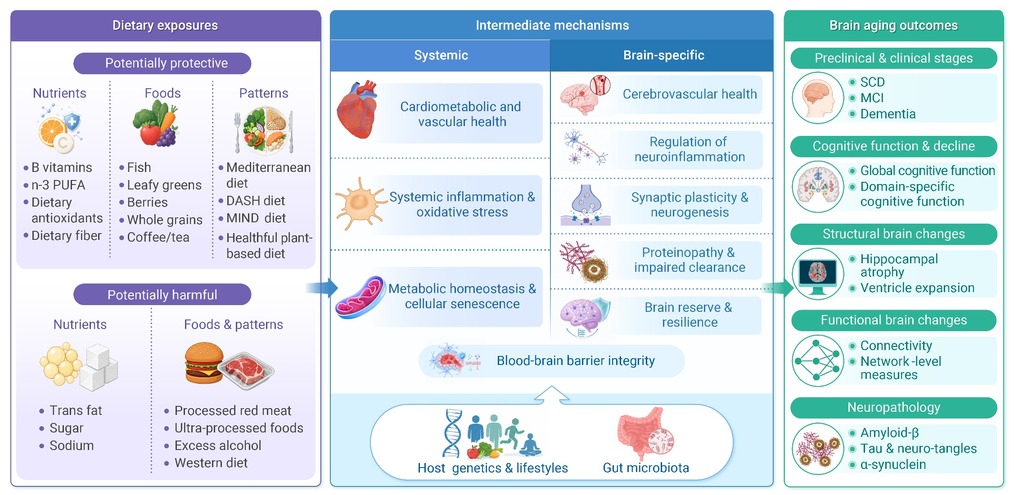
Figure 1.
Conceptual framework of hypothesized intermediate processes linking dietary exposures to brain-aging outcomes
-
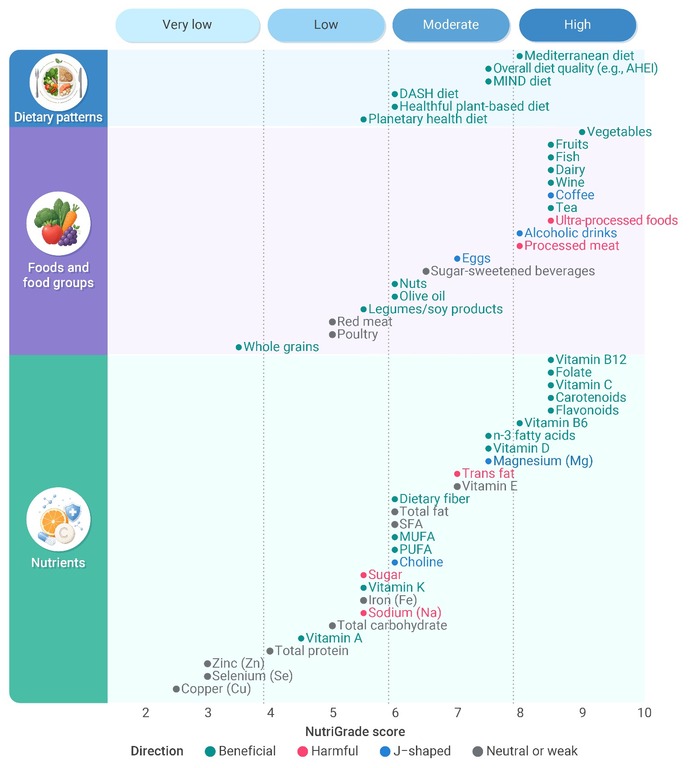
Figure 2.
Evaluating the evidence level of existing literature on associations of major dietary factors with cognitive outcomes based on the NutriGrade* framework
-
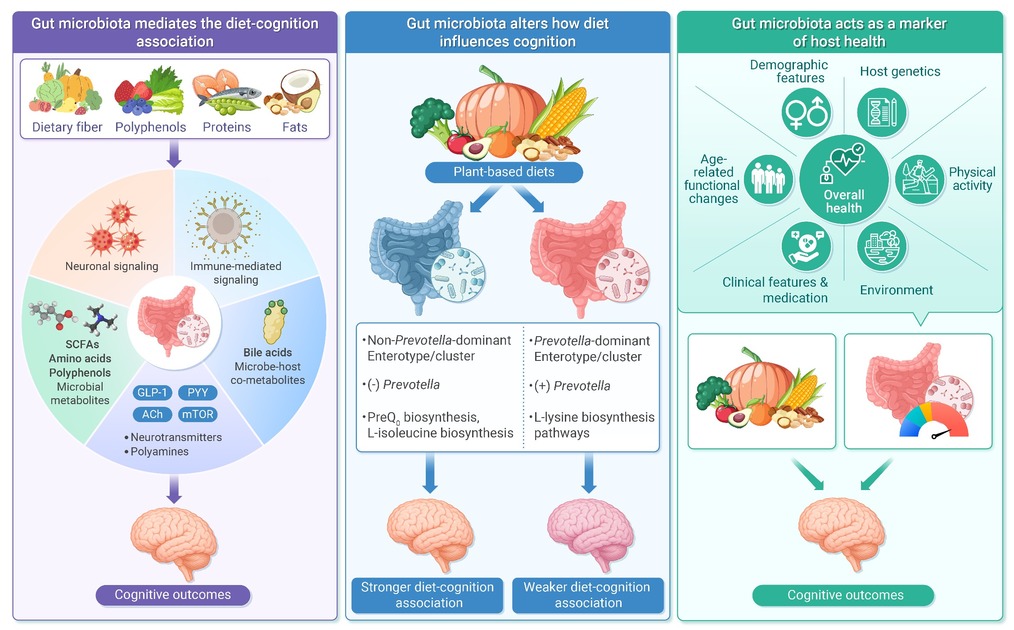
Figure 3.
Potential roles of the gut microbiome in diet-cognition associations
-
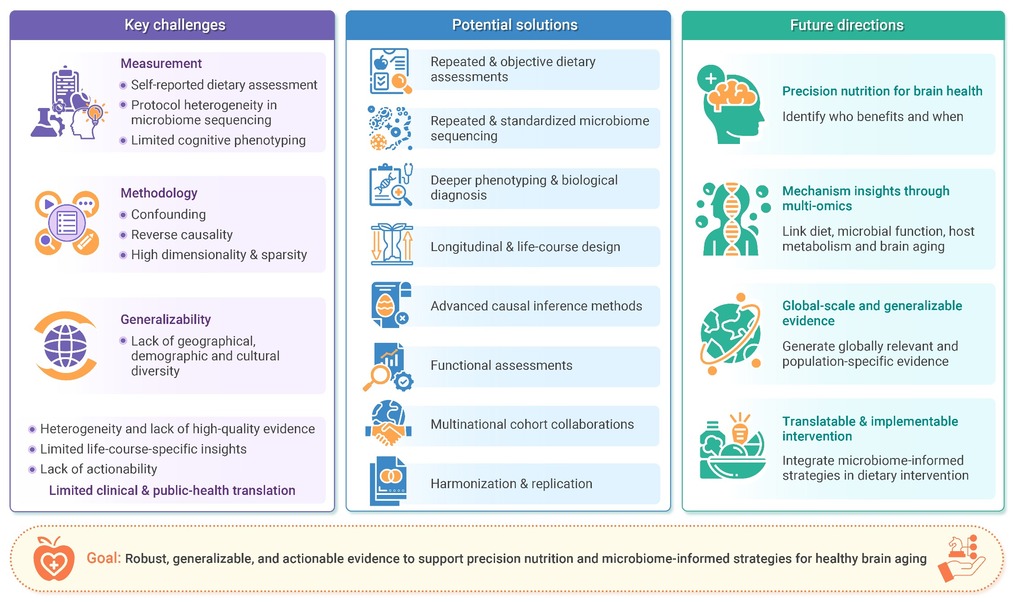
Figure 4.
Potential solutions to key challenges and future directions in diet-microbiota-cognition research.
