
Tumour innervation as a regulatory layer of cancer immunity
-
GRAPHICAL ABSTRACT
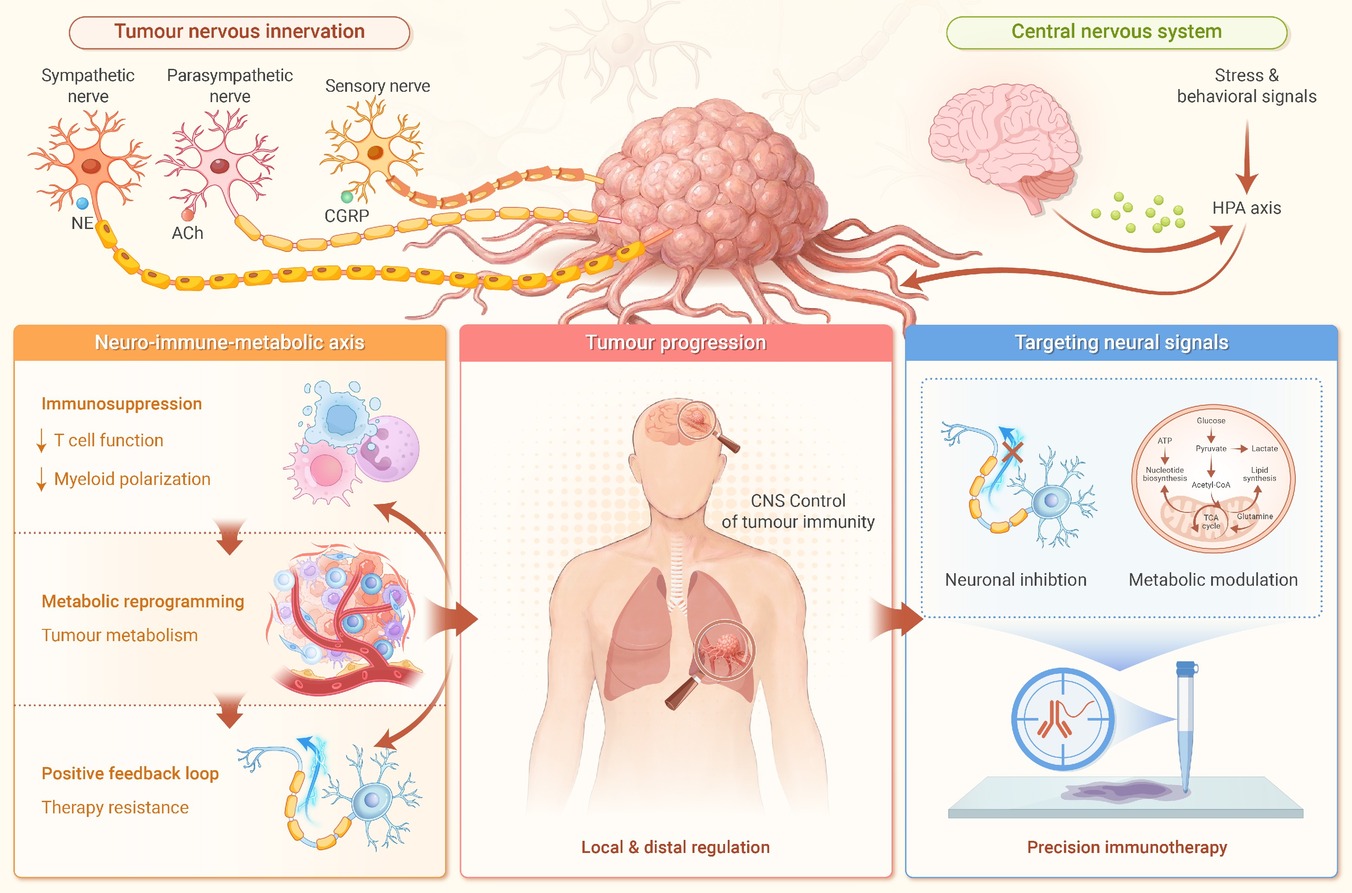
 DownLoad:
Full size image
DownLoad:
Full size image
-
PUBLIC SUMMARY
-
Tumor innervation is a key regulator of the tumor microenvironment (TME) and affects cancer immunity.
Neurotransmitters and neuropeptides shape immune cell function, forming a neuro–immune–metabolic axis.
Neural signals interact with oncogenic pathways and exhibit marked heterogeneity within the TME.
-
-
ABSTRACT
Tumour immune regulation has traditionally been interpreted through immune cell states, metabolic reprogramming, and genomic alterations. Although this framework has advanced cancer immunology, it does not fully explain the marked heterogeneity of the tumour immune microenvironment or the poor response of many immunologically “cold” tumours to immune checkpoint blockade. Emerging evidence identifies the nervous system as an important but underappreciated regulator of tumour immunity. Many solid tumours are densely innervated by sympathetic, parasympathetic, and sensory nerves, and increased neural fiber density is frequently associated with immunosuppression, tumour progression, and metastasis. Through predominantly non-synaptic signalling, neurotransmitters and neuropeptides modulate immune cell recruitment, T cell activity, myeloid polarization, and immune tolerance within the tumour microenvironment. Neural signals also reshape tumour metabolism, establishing a neuro–immune–metabolic axis that converts transient neural inputs into sustained immunosuppressive states and self-reinforcing feedback loops linked to therapeutic resistance. At the systemic level, the central nervous system further influences tumour immunity through stress-related neuroendocrine pathways and behavioral states. In this Review, we summarize current knowledge on tumour innervation, neuro–immune crosstalk, and their metabolic basis, and discuss how neural regulation may shape immunotherapy responses and offer new opportunities for precision immunomodulation in cancer. -

-
REFERENCES
[1] Wherry E.J. and Kurachi M. (2015). Molecular and cellular insights into T cell exhaustion. Nat. Rev. Immunol. 15:486−499. DOI:10.1038/nri3862 [2] Binnewies M., Roberts E.W., Kersten K., et al. (2018). Understanding the tumor immune microenvironment (TIME) for effective therapy. Nat. Med. 24:541−550. DOI:10.1038/s41591-018-0014-x [3] Pavlova N.N. and Thompson C.B. (2016). The emerging Hallmarks of cancer metabolism. Cell Metab. 23:27−47. DOI:10.1016/j.cmet.2015.12.006 [4] Buck M.D., Sowell R.T., Kaech S.M., et al. (2017). Metabolic Instruction of immunity. Cell 169:570−586. DOI:10.1016/j.cell.2017.04.004 [5] Topper M.J., Vaz M., Chiappinelli K.B., et al. (2017). Epigenetic therapy ties MYC depletion to reversing immune evasion and treating lung cancer. Cell 171:1284−1300.e1221. DOI:10.1016/j.cell.2017.10.022 [6] Fridman W.H., Zitvogel L., Sautès-Fridman C., et al. (2017). The immune contexture in cancer prognosis and treatment. Nat. Rev. Clin. Oncol. 14:717−734. DOI:10.1038/nrclinonc.2017.101 [7] Galon J. and Bruni D. (2019). Approaches to treat immune hot, altered and cold tumours with combination immunotherapies. Nat. Rev. Drug. Discov. 18:197−218. DOI:10.1038/s41573-018-0007-y [8] Hegde P.S. and Chen D.S. (2020). Top 10 challenges in cancer immunotherapy. Immunity 52:17−35. DOI:10.1016/j.immuni.2019.12.011 [9] Amit M., Eichwald T., Roger A., et al. (2025). Neuro-immune cross-talk in cancer. Nat. Rev. Cancer 25:573−589. DOI:10.1038/s41568-025-00831-w [10] Reavis H.D., Chen H.I. and Drapkin R. (2020). Tumor Innervation: Cancer has some nerve. Trends Cancer 6:1059−1067. DOI:10.1016/j.trecan.2020.07.005 [11] Li X., Peng X., Yang S., et al. (2022). Targeting tumor innervation: Premises, promises, and challenges. Cell Death Discov. 8:131. DOI:10.1038/s41420-022-00930-9 [12] Wang X., Fan Y., Wang Q., et al. (2025). Tumor-infiltrating nerves: Unraveling the role of cancer neuroscience in tumorigenesis, disease progression, and emerging therapies. Discov. Oncol. 16:1209. DOI:10.1007/s12672-025-02827-2 [13] Giampietri C., Pizzichini E., Somma F., et al. (2025). Roles of peripheral nerves in tumor initiation and progression. Int. J. Mol. Sci. 26:7064. DOI:10.3390/ijms26157064 [14] Park S.H., Tsuzuki S., Contino K.F., et al. (2024). Crosstalk between bone metastatic cancer cells and sensory nerves in bone metastatic progression. Life Sci. Alliance 7:e202302041. DOI:10.26508/lsa.202302041 [15] Pu T., Sun J., Ren G., et al. (2025). Neuro-immune crosstalk in cancer: Mechanisms and therapeutic implications. Signal Transduct. Target Ther. 10:176. DOI:10.1038/s41392-025-02241-8 [16] Mardelle U., Bretaud N., Daher C., et al. (2024). From pain to tumor immunity: Influence of peripheral sensory neurons in cancer. Front. Immunol. 15:1335387. DOI:10.3389/fimmu.2024.1335387 [17] Kizil B., De Virgiliis F. and Scheiermann C. (2024). Neural control of tumor immunity. FEBS J. 291:4670−4679. DOI:10.1111/febs.17280 [18] Zhang L., Zhu D., Wang J., et al. (2025). The neuro-immune axis in cancer: Mechanisms of innervation-driven tumor progression and therapeutic opportunities. Front. Immunol. 16:1693419. DOI:10.3389/fimmu.2025.1693419 [19] Sattler A., Korzun T., Gupta K., et al. (2025). Sympathetic nerve signaling rewires the tumor microenvironment: A shift in "microenvironmental-ity." Cancer Metastasis Rev. 44:25. DOI:10.1007/s10555-025-10241-x [20] Restaino A.C., Ahmadi M., Eichwald T., et al. (2025). Tumor-infiltrating nociceptor neurons promote immunosuppression. Sci. Signal. 18:eads7889. DOI:10.1126/scisignal.ads7889 [21] Fjæstad K.Y., Johansen A.Z., Linder H., et al. (2025). β-adrenergic signaling blockade attenuates metastasis through activation of cytotoxic CD4 T cells. Nat. Commun. 16:10063. DOI:10.1038/s41467-025-65048-9 [22] Zhang Y., Yu F., Ouyang J., et al. (2025). ADRB2 inhibition suppresses cancer immune evasion by regulating tumor SOX10-PD-L1 axis and T cell function. J. Immunother. Cancer 13:e011611. DOI:10.1136/jitc-2025-011611 [23] Baruch E.N., Gleber-Netto F.O., Nagarajan P., et al. (2025). Cancer-induced nerve injury promotes resistance to anti-PD-1 therapy. Nature 646:462−473. DOI:10.1038/s41586-025-09370-8 [24] Gysler S.M. and Drapkin R. (2021). Tumor innervation: Peripheral nerves take control of the tumor microenvironment. J. Clin. Invest. 131:e147276. DOI:10.1172/jci147276 [25] Chen S.H., Zhang B.Y., Zhou B., et al. (2019). Perineural invasion of cancer: A complex crosstalk between cells and molecules in the perineural niche. Am. J. Cancer Res. 9:1-21. https://pmc.ncbi.nlm.nih.gov/articles/PMC6356921/. [26] Carter J.B., Johnson M.M., Chua T.L., et al. (2013). Outcomes of primary cutaneous squamous cell carcinoma with perineural invasion: An 11-year cohort study. JAMA Dermatol. 149:35−41. DOI:10.1001/jamadermatol.2013.746 [27] Sur D., Zeng Y., Kobayashi H., et al. (2025). Entangled cellular and molecular relationships at the sensory neuron-cancer interface. Neuron 113:2760−2790. DOI:10.1016/j.neuron.2025.07.017 [28] Xie Y., Tolmeijer S., Oskam J. M., et al. (2019). Glucocorticoids inhibit macrophage differentiation towards a pro-inflammatory phenotype upon wounding without affecting their migration. Dis. Model Mech. 12:dmm037887. DOI:10.1242/dmm.037887 [29] Staedtke V., Bai R.Y., Kim K., et al. (2018). Disruption of a self-amplifying catecholamine loop reduces cytokine release syndrome. Nature 564:273−277. DOI:10.1038/s41586-018-0774-y [30] Dubeykovskaya Z., Si Y., Chen X., et al. (2016). Neural innervation stimulates splenic TFF2 to arrest myeloid cell expansion and cancer. Nat. Commun. 7:10517. DOI:10.1038/ncomms10517 [31] Udit S., Blake K. and Chiu I.M. (2022). Somatosensory and autonomic neuronal regulation of the immune response. Nat. Rev. Neurosci. 23:157−171. DOI:10.1038/s41583-021-00555-4 [32] Lin B., Ye Z., Ye Z., et al. (2023). Gut microbiota in brain tumors: An emerging crucial player. CNS Neurosci. Ther. 29 Suppl 1:84-97. DOI:10.1111/cns.14081. [33] McIlvried L.A., Atherton M.A., Horan N.L., et al. (2022). Sensory neurotransmitter calcitonin gene-related peptide modulates tumor growth and lymphocyte infiltration in oral squamous cell carcinoma. Adv. Biol. (Weinh.) 6:e2200019. DOI:10.1002/adbi.202200019 [34] Yaniv D., Mattson B., Talbot S., et al. (2024). Targeting the peripheral neural-tumour microenvironment for cancer therapy. Nat. Rev. Drug Discov. 23:780−796. DOI:10.1038/s41573-024-01017-z [35] Tsuru S., Ito Y., Matsuda H., et al. (2020). RAMP1 signaling in immune cells regulates inflammation-associated lymphangiogenesis. Lab. Invest. 100:738−750. DOI:10.1038/s41374-019-0364-0 [36] Balood M., Ahmadi M., Eichwald T., et al. (2022). Nociceptor neurons affect cancer immunosurveillance. Nature 611:405−412. DOI:10.1038/s41586-022-05374-w [37] Saul A.N., Oberyszyn T.M., Daugherty C., et al. (2005). Chronic stress and susceptibility to skin cancer. J. Natl. Cancer Inst. 97:1760−1767. DOI:10.1093/jnci/dji401 [38] Lutgendorf S.K., Sood A.K., Anderson B., et al. (2005). Social support, psychological distress, and natural killer cell activity in ovarian cancer. J. Clin. Oncol. 23:7105−7113. DOI:10.1200/jco.2005.10.015 [39] Varker K.A., Terrell C.E., Welt M., et al. (2007). Impaired natural killer cell lysis in breast cancer patients with high levels of psychological stress is associated with altered expression of killer immunoglobin-like receptors. J. Surg. Res. 139:36−44. DOI:10.1016/j.jss.2006.08.037 [40] Taves M.D. and Ashwell J.D. (2021). Glucocorticoids in T cell development, differentiation and function. Nat. Rev. Immunol. 21:233−243. DOI:10.1038/s41577-020-00464-0 [41] Tian Y., Qiu X., Qi X., et al. (2022). Electroacupuncture promotes apoptosis and inhibits axonogenesis by activating p75 neurotrophin receptor for triple-negative breast xenograft in mice. J. Chem. Neuroanat. 124:102133. DOI:10.1016/j.jchemneu.2022.102133 [42] Sakai T., Saito Y., Yamamura K., et al. (2025). Newly formed adrenergic nerve fibers and perineural invasion in head and neck squamous cell carcinoma: A multicohort study. Jpn J. Clin. Oncol. 55:1117−1130. DOI:10.1093/jjco/hyaf098 [43] Lucido C.T., Wynja E., Madeo M., et al. (2019). Innervation of cervical carcinoma is mediated by cancer-derived exosomes. Gynecol. Oncol. 154:228−235. DOI:10.1016/j.ygyno.2019.04.651 [44] Zhao Q., Yang Y., Liang X., et al. (2014). The clinicopathological significance of neurogenesis in breast cancer. BMC Cancer 14:484. DOI:10.1186/1471-2407-14-484 [45] Ayala G. E., Dai H., Powell M., et al. (2008). Cancer-related axonogenesis and neurogenesis in prostate cancer. Clin. Cancer Res. 14:7593−7603. DOI:10.1158/1078-0432.Ccr-08-1164 [46] Entschladen F., Palm D., Lang K., et al. (2006). Neoneurogenesis: Tumors may initiate their own innervation by the release of neurotrophic factors in analogy to lymphangiogenesis and neoangiogenesis. Med. Hypotheses 67:33−35. DOI:10.1016/j.mehy.2006.01.015 [47] Madeo M., Colbert P.L., Vermeer D.W., et al. (2018). Cancer exosomes induce tumor innervation. Nat. Commun. 9:4284. DOI:10.1038/s41467-018-06640-0 [48] Amit M., Takahashi H., Dragomir M.P., et al. (2020). Loss of p53 drives neuron reprogramming in head and neck cancer. Nature 578:449−454. DOI:10.1038/s41586-020-1996-3 [49] Sinha S., Fu Y.Y., Grimont A., et al. (2017). PanIN neuroendocrine cells promote tumorigenesis via neuronal cross-talk. Cancer Res. 77:1868−1879. DOI:10.1158/0008-5472.Can-16-0899-t [50] Gupta S., Viotti A., Eichwald T., et al. (2024). Navigating the blurred path of mixed neuroimmune signaling. J. Allergy Clin. Immunol. 153:924−938. DOI:10.1016/j.jaci.2024.02.006 [51] Rosas-Ballina M., Olofsson P.S., Ochani M., et al. (2011). Acetylcholine-synthesizing T cells relay neural signals in a vagus nerve circuit. Science 334:98−101. DOI:10.1126/science.1209985 [52] Fujii T., Mashimo M., Moriwaki Y., et al. (2017). Physiological functions of the cholinergic system in immune cells. J. Pharmacol. Sci. 134:1−21. DOI:10.1016/j.jphs.2017.05.002 [53] Chiu I. M., von Hehn C.A. and Woolf C. J. (2012). Neurogenic inflammation and the peripheral nervous system in host defense and immunopathology. Nat. Neurosci. 15:1063−1067. DOI:10.1038/nn.3144 [54] Jain A., Gyori B.M., Hakim S., et al. (2024). Nociceptor-immune interactomes reveal insult-specific immune signatures of pain. Nat. Immunol. 25:1296−1305. DOI:10.1038/s41590-024-01857-2 [55] Chiu I. M., Barrett L.B., Williams E.K., et al. (2014). Transcriptional profiling at whole population and single cell levels reveals somatosensory neuron molecular diversity. eLife 3. DOI:10.7554/eLife.04660. [56] Crosson T., Roversi K., Balood M., et al. (2019). Profiling of how nociceptor neurons detect danger - new and old foes. J. Intern. Med. 286:268−289. DOI:10.1111/joim.12957 [57] Renthal W., Tochitsky I., Yang L., et al. (2020). Transcriptional reprogramming of distinct peripheral sensory neuron subtypes after axonal injury. Neuron 108:128−144.e129. DOI:10.1016/j.neuron.2020.07.026 [58] Ulrich-Lai Y.M. and Herman J.P. (2009). Neural regulation of endocrine and autonomic stress responses. Nat. Rev. Neurosci. 10:397−409. DOI:10.1038/nrn2647 [59] Hoeppner L.H., Wang Y., Sharma A., et al. (2015). Dopamine D2 receptor agonists inhibit lung cancer progression by reducing angiogenesis and tumor infiltrating myeloid derived suppressor cells. Mol. Oncol. 9:270−281. DOI:10.1016/j.molonc.2014.08.008 [60] Schneider M.A., Heeb L., Beffinger M.M., et al. (2021). Attenuation of peripheral serotonin inhibits tumor growth and enhances immune checkpoint blockade therapy in murine tumor models. Sci. Transl. Med. 13:eabc8188. DOI:10.1126/scitranslmed.abc8188 [61] Hunzeker J.T., Elftman M.D., Mellinger J.C., et al. (2011). A marked reduction in priming of cytotoxic CD8+ T cells mediated by stress-induced glucocorticoids involves multiple deficiencies in cross-presentation by dendritic cells. J. Immunol. 186:183−194. DOI:10.4049/jimmunol.1001737 [62] Watanabe Y., Nakayama T., Nagakubo D., et al. (2006). Dopamine selectively induces migration and homing of naive CD8+ T cells via dopamine receptor D3. J. Immunol. 176:848−856. DOI:10.4049/jimmunol.176.2.848 [63] Acharya N., Madi A., Zhang H., et al. (2020). Endogenous glucocorticoid signaling regulates CD8(+) T cell differentiation and development of dysfunction in the tumor microenvironment. Immunity 53:658−671.e656. DOI:10.1016/j.immuni.2020.08.005 [64] Liu Y., Rui X.-X., Shi H., et al. (2018). Norepinephrine Inhibits Th17 cells via β2-adrenergic receptor (β2-AR) signaling in a mouse model of rheumatoid arthritis. Med. Sci. Monit. 24:1196−1204. DOI:10.12659/msm.906184 [65] Guereschi M.G., Araujo L.P., Maricato J.T., et al. (2013). Beta2‐adrenergic receptor signaling in CD4+Foxp3+ regulatory T cells enhances their suppressive function in a PKA‐dependent manner. Eur. J. Immunol. 43:1001−1012. DOI:10.1002/eji.201243005 [66] Cheng J., Yan J., Liu Y., et al. (2023). Cancer-cell-derived fumarate suppresses the anti-tumor capacity of CD8+ T cells in the tumor microenvironment. Cell Metab. 35:961−978.e910. DOI:10.1016/j.cmet.2023.04.017 [67] Wang H., Kadlecek T.A., Au-Yeung B.B., et al. (2010). ZAP-70: An essential kinase in T-cell signaling. Cold Spring Harb. Perspect. in Biol. 2:a002279−a002279. DOI:10.1101/cshperspect.a002279 [68] Damasio M.P., Marchingo J.M., Spinelli L., et al. (2021). Extracellular signal-regulated kinase (ERK) pathway control of CD8+ T cell differentiation. Biochem. J. 478:79−98. DOI:10.1042/bcj20200661 [69] Burgraff N.J., Neumueller S.E., Buchholz K.J., et al. (2019). Brainstem serotonergic, catecholaminergic, and inflammatory adaptations during chronic hypercapnia in goats. FASEB J. 33:14491−14505. DOI:10.1096/fj.201901288RR [70] Bardou I., Kaercher R.M., Brothers H.M., et al. (2014). Age and duration of inflammatory environment differentially affect the neuroimmune response and catecholaminergic neurons in the midbrain and brainstem. Neurobiol. Aging 35:1065−1073. DOI:10.1016/j.neurobiolaging.2013.11.006 [71] Hoppmann U., Engler H., Krause S., et al. (2021). Systemic catecholaminergic deficiency in depressed patients with and without coronary artery disease. J. Clin. Med. 10. DOI:10.3390/jcm10050986. [72] Grailer J.J., Haggadone M.D., Sarma J.V., et al. (2014). Induction of M2 regulatory Macrophages through the β2-adrenergic receptor with protection during endotoxemia and acute lung injury. J. of Innate Immun. 6:607−618. DOI:10.1159/000358524 [73] Kizaki T., Shirato K., Sakurai T., et al. (2009). β2-Adrenergic receptor regulate Toll-like receptor 4-induced late-phase NF-κB activation. Mol. Immun. 46:1195−1203. DOI:10.1016/j.molimm.2008.11.005 [74] Magnon C., Hall S.J., Lin J., et al. (2013). Autonomic nerve development contributes to prostate cancer progression. Science 341:1236361. DOI:10.1126/science.1236361 [75] Picard M., McManus M.J., Gray J.D., et al. (2015). Mitochondrial functions modulate neuroendocrine, metabolic, inflammatory, and transcriptional responses to acute psychological stress. Proc. Natl. Acad. Sci. USA 112:E6614−6623. DOI:10.1073/pnas.1515733112 [76] Mineur Y.S., Obayemi A., Wigestrand M.B., et al. (2013). Cholinergic signaling in the hippocampus regulates social stress resilience and anxiety- and depression-like behavior. Proc. Natl. Acad. Sci. USA 110:3573−3578. DOI:10.1073/pnas.1219731110 [77] Picciotto M.R., Higley M.J. and Mineur Y.S. (2012). Acetylcholine as a neuromodulator: Cholinergic signaling shapes nervous system function and behavior. Neuron 76:116−129. DOI:10.1016/j.neuron.2012.08.036 [78] Renz B.W., Takahashi R., Tanaka T., et al. (2018). β2 Adrenergic-neurotrophin feedforward loop promotes pancreatic cancer. Cancer Cell 33:75−90.e77. DOI:10.1016/j.ccell.2017.11.007 [79] Renz B.W., Tanaka T., Sunagawa M., et al. (2018). Cholinergic signaling via muscarinic receptors directly and indirectly suppresses pancreatic tumorigenesis and cancer stemness. Cancer Discov.Cancer Discov. 8:1458−1473. DOI:10.1158/2159-8290.Cd-18-0046 [80] Allen J.K., Armaiz-Pena G.N., Nagaraja A.S., et al. (2018). Sustained adrenergic signaling promotes intratumoral innervation through BDNF induction. Cancer Res. 78:3233−3242. DOI:10.1158/0008-5472.Can-16-1701 [81] Reijmen E., Vannucci L., De Couck M., et al. (2018). Therapeutic potential of the vagus nerve in cancer. Immunol. Lett. 202:38−43. DOI:10.1016/j.imlet.2018.07.006 [82] De Couck M., Caers R., Spiegel D., et al. (2018). The role of the vagus nerve in cancer prognosis: A systematic and a comprehensive review. J. Oncol. 2018:1236787. DOI:10.1155/2018/1236787 [83] Husby A., Wohlfahrt J. and Melbye M. (2020). Vasectomy and prostate cancer risk: A 38-year nationwide cohort study. J. Natl. Cancer Inst. 112:71−77. DOI:10.1093/jnci/djz099 [84] Nagashima H., Mahlakõiv T., Shih H.Y., et al. (2019). Neuropeptide CGRP limits group 2 innate lymphoid cell responses and constrains type 2 inflammation. Immunity 51:682−695.e686. DOI:10.1016/j.immuni.2019.06.009 [85] Cleypool C.G.J., Mackaaij C., Lotgerink Bruinenberg D., et al. (2021). Sympathetic nerve distribution in human lymph nodes. J. Anat. 239:282−289. DOI:10.1111/joa.13422 [86] Wang P.L., Czepielewski R.S. and Randolph G. J. (2021). Sensory nerves regulate transcriptional dynamics of lymph node cells. Trends Immunol. 42:180−182. DOI:10.1016/j.it.2021.01.008 [87] Huang S., Ziegler C.G.K., Austin J., et al. (2021). Lymph nodes are innervated by a unique population of sensory neurons with immunomodulatory potential. Cell 184:441−459.e425. DOI:10.1016/j.cell.2020.11.028 [88] Lucas E.D. and Tamburini B.A.J. (2019). Lymph Node Lymphatic Endothelial Cell Expansion and Contraction and the Programming of the Immune Response. Front. Immunol. 10:36. DOI:10.3389/fimmu.2019.00036 [89] Darragh L.B., Nguyen A., Pham T.T., et al. (2024). Sensory nerve release of CGRP increases tumor growth in HNSCC by suppressing TILs. Med. 5:254−270.e258. DOI:10.1016/j.medj.2024.02.002 [90] Duan J.X., Zhou Y., Zhou A.Y., et al. (2017). Calcitonin gene-related peptide exerts anti-inflammatory property through regulating murine macrophages polarization in vitro. Mol. Immunol. 91:105−113. DOI:10.1016/j.molimm.2017.08.020 [91] Tamari M., Del Bel K.L., Ver Heul A.M., et al. (2024). Sensory neurons promote immune homeostasis in the lung. Cell 187:44−61.e17. DOI:10.1016/j.cell.2023.11.027 [92] Zhang Y., Guo Y., Liu Z., et al. (2025). Cancer cells co-opt an inter-organ neuroimmune circuit to escape immune surveillance. Cell 188:6754−6773.e6729. DOI:10.1016/j.cell.2025.09.029 [93] Zhang H., Liu Y., Liu J., et al. (2024). cAMP-PKA/EPAC signaling and cancer: The interplay in tumor microenvironment. J. Hematol. Oncol. 17:5. DOI:10.1186/s13045-024-01524-x [94] Russo A.F. and Hay D.L. (2023). CGRP physiology, pharmacology, and therapeutic targets: Migraine and beyond. Physiol. Rev. 103:1565−1644. DOI:10.1152/physrev.00059.2021 [95] Hou Y., Lin B., Xu T., et al. (2024). The neurotransmitter calcitonin gene-related peptide shapes an immunosuppressive microenvironment in medullary thyroid cancer. Nat. Commun. 15. DOI:10.1038/s41467-024-49824-7. [96] Zhang C., Guo X., Liu P., et al. (2025). The neuro-immune axis in cancer: From mechanisms to therapeutic opportunities. J. Hematol. Oncol. 18:93. DOI:10.1186/s13045-025-01748-5 [97] Zhang Y., Lin C., Liu Z., et al. (2022). Cancer cells co-opt nociceptive nerves to thrive in nutrient-poor environments and upon nutrient-starvation therapies. Cell Metab. 34:1999−2017.e1910. DOI:10.1016/j.cmet.2022.10.012 [98] Chen Z., Luo J., Li J., et al. (2021). Interleukin-33 Promotes serotonin release from enterochromaffin cells for intestinal homeostasis. Immunity 54:151−163.e156. DOI:10.1016/j.immuni.2020.10.014 [99] Mashaghi A., Marmalidou A., Tehrani M., et al. (2016). Neuropeptide substance P and the immune response. Cell. Mol. Life Sci. 73:4249−4264. DOI:10.1007/s00018-016-2293-z [100] Isorna I., González-Moles M., Muñoz M., et al. (2023). Substance P and neurokinin-1 receptor system in thyroid cancer: Potential targets for new molecular therapies. J. Clin. Med. 12:6409. DOI:10.3390/jcm12196409 [101] Padmanaban V., Keller I., Seltzer E.S., et al. (2024). Neuronal substance P drives metastasis through an extracellular RNA-TLR7 axis. Nature 633:207−215. DOI:10.1038/s41586-024-07767-5 [102] Chernova I., Lai J.P., Li H., et al. (2009). Substance P (SP) enhances CCL5-induced chemotaxis and intracellular signaling in human monocytes, which express the truncated neurokinin-1 receptor (NK1R). J. Leukoc. Biol. 85:154−164. DOI:10.1189/jlb.0408260 [103] Teo I., Krishnan A. and Lee G.L. (2019). Psychosocial interventions for advanced cancer patients: A systematic review. Psychooncology 28:1394−1407. DOI:10.1002/pon.5103 [104] Pan Y., Xiong M., Chen R., et al. (2018). Athymic mice reveal a requirement for T-cell-microglia interactions in establishing a microenvironment supportive of Nf1 low-grade glioma growth. Genes. Dev. 32:491−496. DOI:10.1101/gad.310797.117 [105] Yang H., Xia L., Chen J., et al. (2019). Stress-glucocorticoid-TSC22D3 axis compromises therapy-induced antitumor immunity. Nat. Med. 25:1428−1441. DOI:10.1038/s41591-019-0566-4 [106] Shi R.J., Ke B.W., Tang Y.L., et al. (2023). Perineural invasion: A potential driver of cancer-induced pain. Biochem. Pharmacol. 215:115692. DOI:10.1016/j.bcp.2023.115692 [107] Mantyh P. W. (2006). Cancer pain and its impact on diagnosis, survival and quality of life. Nat. Rev. Neurosci. 7:797−809. DOI:10.1038/nrn1914 [108] Bhol N.K., Bhanjadeo M.M., Singh A.K., et al. (2024). The interplay between cytokines, inflammation, and antioxidants: Mechanistic insights and therapeutic potentials of various antioxidants and anti-cytokine compounds. Biomed. Pharmacother. 178:117177. DOI:10.1016/j.biopha.2024.117177 [109] Kolawole O.R. and Kashfi K. (2022). NSAIDs and cancer resolution: New paradigms beyond cyclooxygenase. Int. J. Mol. Sci. 23:1432. DOI:10.3390/ijms23031432 [110] Fallon M., Giusti R., Aielli F., et al. (2018). Management of cancer pain in adult patients: ESMO clinical practice guidelines. Ann. Oncol. 29:iv166−iv191. DOI:10.1093/annonc/mdy152 [111] Pereira M.R. and Leite P.E. (2016). The involvement of parasympathetic and sympathetic nerve in the inflammatory reflex. J. Cell. Physiol. 231:1862−1869. DOI:10.1002/jcp.25307 [112] Ryan N., Lamenza F., Shrestha S., et al. (2024). Host derived macrophage migration inhibitory factor expression attenuates anti-tumoral immune cell accumulation and promotes immunosuppression in the tumor microenvironment of head and neck squamous cell carcinoma. Biochim. Biophy. Acta 1870:167345. DOI:10.1016/j.bbadis.2024.167345 [113] Nizam E., Köksoy S. and Erin N. (2020). NK1R antagonist decreases inflammation and metastasis of breast carcinoma cells metastasized to liver but not to brain; phenotype-dependent therapeutic and toxic consequences. Cancer Immunol. Immunother. 69:1639−1650. DOI:10.1007/s00262-020-02574-z [114] Schmitd L.B., Perez-Pacheco C., Bellile E.L., et al. (2022). Spatial and transcriptomic analysis of perineural invasion in oral cancer. Clinical Cancer Res. 28:3557−3572. DOI:10.1158/1078-0432.Ccr-21-4543 [115] Liu I., Jiang L., Samuelsson E.R., et al. (2022). The landscape of tumor cell states and spatial organization in H3-K27M mutant diffuse midline glioma across age and location. Nat. Genet. 54:1881−1894. DOI:10.1038/s41588-022-01236-3 [116] Beopoulos A., Gea M., Fasano A., et al. (2021). Autonomic nervous system neuroanatomical alterations could provoke and maintain gastrointestinal dysbiosis in autism spectrum disorder (ASD): A novel microbiome-host interaction mechanistic hypothesis. Nutrients 14:65. DOI:10.3390/nu14010065 [117] Mathur R., Wang Q., Schupp P.G., et al. (2024). Glioblastoma evolution and heterogeneity from a 3D whole-tumor perspective. Cell 187:446−463.e416. DOI:10.1016/j.cell.2023.12.013 [118] Wang X.D., Li S.Y., Zhang S.J., et al. (2020). The neural system regulates bone homeostasis via mesenchymal stem cells: A translational approach. Theranostics 10:4839−4850. DOI:10.7150/thno.43771 [119] Zahalka A.H. and Frenette P.S. (2020). Nerves in cancer. Nat. Rev. Cancer 20:143−157. DOI:10.1038/s41568-019-0237-2 [120] Ge Y., Liu H., Zhang Y., et al. (2022). Inhibition of DCLK1 kinase reverses epithelial-mesenchymal transition and restores T-cell activity in pancreatic ductal adenocarcinoma. Transl. Oncol. 17:101317. DOI:10.1016/j.tranon.2021.101317 [121] Knox S.M., Lombaert I.M., Reed X., et al. (2010). Parasympathetic innervation maintains epithelial progenitor cells during salivary organogenesis. Science 329:1645−1647. DOI:10.1126/science.1192046 [122] Knox S.M., Lombaert I.M., Haddox C.L., et al. (2013). Parasympathetic stimulation improves epithelial organ regeneration. Nat. Commun. 4:1494. DOI:10.1038/ncomms2493 [123] Carmeliet P. (2003). Angiogenesis in health and disease. Nat. Med. 9:653−660. DOI:10.1038/nm0603-653 [124] Fani M., Maecke H.R. and Okarvi S.M. (2012). Radiolabeled peptides: Valuable tools for the detection and treatment of cancer. Theranostics 2:481−501. DOI:10.7150/thno.4024 [125] Virgolini I., Raderer M., Kurtaran A., et al. (1994). Vasoactive intestinal peptide-receptor imaging for the localization of intestinal adenocarcinomas and endocrine tumors. N. Engl. J. Med. 331:1116−1121. DOI:10.1056/nejm199410273311703 [126] Reubi J.C. (2003). Peptide receptors as molecular targets for cancer diagnosis and therapy. Endocr. Rev. 24:389−427. DOI:10.1210/er.2002-0007 [127] Xu X.R., Xiao Q., Hong Y.C., et al. (2021). Activation of dopaminergic VTA inputs to the mPFC ameliorates chronic stress-induced breast tumor progression. CNS Neurosci. Ther. 27:206−219. DOI:10.1111/cns.13465 [128] Cui Q., Jiang D., Zhang Y., et al. (2023). The tumor-nerve circuit in breast cancer. Cancer Metastasis Rev. 42:543−574. DOI:10.1007/s10555-023-10095-1 [129] Buckingham S.C., Campbell S.L., Haas B.R., et al. (2011). Glutamate release by primary brain tumors induces epileptic activity. Nat. Med. 17:1269−1274. DOI:10.1038/nm.2453 [130] Faulkner S., Jobling P., March B., et al. (2019). Tumor neurobiology and the war of nerves in cancer. Cancer Discov. 9:702−710. DOI:10.1158/2159-8290.Cd-18-1398 [131] Yang D.Q., Freund D.M., Harris B.R., et al. (2016). Measuring relative utilization of aerobic glycolysis in breast cancer cells by positional isotopic discrimination. FEBS Lett. 590:3179−3187. DOI:10.1002/1873-3468.12360 [132] Caragher S.P., Shireman J.M., Huang M., et al. (2019). Activation of Dopamine Receptor 2 Prompts Transcriptomic and Metabolic Plasticity in Glioblastoma. J. Neurosci. 39:1982−1993. DOI:10.1523/jneurosci.1589-18.2018 [133] Lamboy-Caraballo R., Ortiz-Sanchez C., Acevedo-Santiago A., et al. (2020). Norepinephrine-induced DNA damage in ovarian cancer cells. Int. J. Mol. Sci. 21:2250. DOI:10.3390/ijms21062250 [134] Krishna S. and Hervey-Jumper S.L. (2022). Neural regulation of cancer: Cancer-induced remodeling of the central nervous system. Adv. Biol. (Weinh.) 6:e2200047. DOI:10.1002/adbi.202200047 [135] Dutta P., Courties G., Wei Y., et al. (2012). Myocardial infarction accelerates atherosclerosis. Nature 487:325−329. DOI:10.1038/nature11260 [136] Campbell J.P., Karolak M.R., Ma Y., et al. (2012). Stimulation of host bone marrow stromal cells by sympathetic nerves promotes breast cancer bone metastasis in mice. PLoS Biol. 10:e1001363. DOI:10.1371/journal.pbio.1001363 [137] Partecke L.I., Käding A., Trung D.N., et al. (2017). Subdiaphragmatic vagotomy promotes tumor growth and reduces survival via TNFα in a murine pancreatic cancer model. Oncotarget 8:22501−22512. DOI:10.18632/oncotarget.15019 [138] Stopczynski R.E., Normolle D.P., Hartman D.J., et al. (2014). Neuroplastic changes occur early in the development of pancreatic ductal adenocarcinoma. Cancer Res. 74:1718−1727. DOI:10.1158/0008-5472.Can-13-2050 [139] Hoover G., Gilbert S., Curley O., et al. (2025). Nerve-to-cancer transfer of mitochondria during cancer metastasis. Nature 644:252−262. DOI:10.1038/s41586-025-09176-8 [140] Fu Y., Ge Z.S., Cao Q.Y., et al. (2026). Peripheral nerves in cancer: Regulatory roles and therapeutic strategies. MedComm 7. DOI:10.1002/mco2.70594. [141] Fitzgerald P.J. (2020). Norepinephrine release may play a critical role in the Warburg effect: An integrative model of tumorigenesis. Neoplasma 67:947−957. DOI:10.4149/neo_2020_200422N432 [142] Qiao G., Chen M., Mohammadpour H., et al. (2021). Chronic adrenergic stress contributes to metabolic dysfunction and an exhausted phenotype in T Cells in the tumor microenvironment. Cancer Immunol. Res. 9:651−664. DOI:10.1158/2326-6066.Cir-20-0445 [143] Thielman N.R.J., Funes V., Davuluri S., et al. (2024). Semaphorin 3D promotes pancreatic ductal adenocarcinoma progression and metastasis through macrophage reprogramming. Sci. Adv. 10:eadp0684. DOI:10.1126/sciadv.adp0684 [144] Sierra J.R., Corso S., Caione L., et al. (2008). Tumor angiogenesis and progression are enhanced by Sema4D produced by tumor-associated macrophages. J. Exp. Med. 205:1673−1685. DOI:10.1084/jem.20072602 [145] Bresnick A.R., Weber D.J. and Zimmer D.B. (2015). S100 proteins in cancer. Nat. Rev. Cancer 15:96−109. DOI:10.1038/nrc3893 [146] Perego M., Tyurin V.A., Tyurina Y.Y., et al. (2020). Reactivation of dormant tumor cells by modified lipids derived from stress-activated neutrophils. Sci. Transl. Med. 12. DOI:10.1126/scitranslmed.abb5817. [147] Mohammadpour H., MacDonald C.R., McCarthy P.L., et al. (2021). β2-adrenergic receptor signaling regulates metabolic pathways critical to myeloid-derived suppressor cell function within the TME. Cell Rep. 37:109883. DOI:10.1016/j.celrep.2021.109883 [148] Liu Y., Lin J., Yu Z., et al. (2025). Tumor-associated Schwann cell remodeling under metabolic stress via lactate sensing orchestrates pancreatic ductal adenocarcinoma development. Cell Metab. 37:1907−1925.e1914. DOI:10.1016/j.cmet.2025.07.008 [149] Maddocks O.D., Berkers C.R., Mason S.M., et al. (2013). Serine starvation induces stress and p53-dependent metabolic remodelling in cancer cells. Nature 493:542−546. DOI:10.1038/nature11743 [150] Whiteley A.E., Ma D., Wang L., et al. (2024). Breast cancer exploits neural signaling pathways for bone-to-meninges metastasis. Science 384:eadh5548. DOI:10.1126/science.adh5548 [151] Lin C., Cao W., Ren Z., et al. (2017). GDNF secreted by nerves enhances PD-L1 expression via JAK2-STAT1 signaling activation in HNSCC. Oncoimmunology 6:e1353860. DOI:10.1080/2162402x.2017.1353860 [152] Chen Z., Fang Y. and Jiang W. (2023). Important cells and factors from tumor microenvironment participated in perineural invasion. Cancers (Basel) 15. DOI:10.3390/cancers15051360. [153] Dash U.C., Bhol N.K., Swain S.K., et al. (2025). Oxidative stress and inflammation in the pathogenesis of neurological disorders: Mechanisms and implications. Acta Pharm. Sin. B 15:15−34. DOI:10.1016/j.apsb.2024.10.004 [154] Jiang C.C., Marsland M., Wang Y., et al. (2022). Tumor innervation is triggered by endoplasmic reticulum stress. Oncogene 41:586−599. DOI:10.1038/s41388-021-02108-6 [155] Banh R.S., Biancur D.E., Yamamoto K., et al. (2020). Neurons release serine to support mRNA translation in pancreatic cancer. Cell 183:1202−1218.e1225. DOI:10.1016/j.cell.2020.10.016 [156] Takashima Y., Hamano M., Yoshii K., et al. (2023). Reciprocal expression of the immune response genes CXCR3 and IFI44L as module hubs are associated with patient survivals in primary central nervous system lymphoma. Int J. Clin. Oncol. 28:468−481. DOI:10.1007/s10147-022-02285-8 [157] Zhong J., Xing X., Gao Y., et al. (2024). Distinct roles of TREM2 in central nervous system cancers and peripheral cancers. Cancer Cell 42:968−984.e969. DOI:10.1016/j.ccell.2024.05.001 [158] Chen H., Liu D., Guo L., et al. (2018). Chronic psychological stress promotes lung metastatic colonization of circulating breast cancer cells by decorating a pre-metastatic niche through activating β-adrenergic signaling. J. Pathol. 244:49−60. DOI:10.1002/path.4988 [159] Partecke L.I., Speerforck S., Käding A., et al. (2016). Chronic stress increases experimental pancreatic cancer growth, reduces survival and can be antagonised by beta-adrenergic receptor blockade. Pancreatology 16:423−433. DOI:10.1016/j.pan.2016.03.005 [160] Thaker P.H., Han L.Y., Kamat A.A., et al. (2021). Author Correction: Chronic stress promotes tumor growth and angiogenesis in a mouse model of ovarian carcinoma. Nat. Med. 27:2246. DOI:10.1038/s41591-021-01566-5 [161] He X. Y., Gao Y., Ng D., et al. (2024). Chronic stress increases metastasis via neutrophil-mediated changes to the microenvironment. Cancer Cell 42:474−486.e412. DOI:10.1016/j.ccell.2024.01.013 [162] Ceyhan G.O., Bergmann F., Kadihasanoglu M., et al. (2007). The neurotrophic factor artemin influences the extent of neural damage and growth in chronic pancreatitis. Gut 56:534−544. DOI:10.1136/gut.2006.105528 [163] Dong Z., Wang Y. and Jin W. (2025). The neuroscience of cancer: Focus on neuropeptidergic systems. Acta Pharm. Sin. B 15:2323−2350. DOI:10.1016/j.apsb.2025.03.025 [164] Moody T.W., Chan D., Fahrenkrug J., et al. (2003). Neuropeptides as autocrine growth factors in cancer cells. Curr. Pharm. Des. 9:495−509. DOI:10.2174/1381612033391621 [165] Thaker P.H., Han L.Y., Kamat A.A., et al. (2006). Chronic stress promotes tumor growth and angiogenesis in a mouse model of ovarian carcinoma. Nat. Med. 12:939−944. DOI:10.1038/nm1447 [166] Zhang X., Zhang Y., He Z., et al. (2019). Chronic stress promotes gastric cancer progression and metastasis: An essential role for ADRB2. Cell Death Dis. 10:788. DOI:10.1038/s41419-019-2030-2 [167] Le C.P., Nowell C.J., Kim-Fuchs C., et al. (2016). Chronic stress in mice remodels lymph vasculature to promote tumour cell dissemination. Nat. Commun. 7:10634. DOI:10.1038/ncomms10634 [168] Borniger J.C., Walker Ii W.H., Surbhi, et al. (2018). A role for hypocretin/orexin in metabolic and sleep abnormalities in a mouse model of non-metastatic breast cancer. Cell Metab. 28:118−129.e115. DOI:10.1016/j.cmet.2018.04.021 [169] Chen S., Zhang W., Li X., et al. (2024). DNA polymerase beta connects tumorigenicity with the circadian clock in liver cancer through the epigenetic demethylation of Per1. Cell Death Dis. 15:78. DOI:10.1038/s41419-024-06462-7 [170] Ortega-Campos S.M., Verdugo-Sivianes E.M., Amiama-Roig A., et al. (2023). Interactions of circadian clock genes with the hallmarks of cancer. Biochim. Biophys. Acta. Rev. Cancer 1878:188900. DOI:10.1016/j.bbcan.2023.188900 [171] Pruessner J.C., Champagne F., Meaney M.J., et al. (2004). Dopamine release in response to a psychological stress in humans and its relationship to early life maternal care: A positron emission tomography study using [11C]raclopride. J. Neurosci. 24:2825−2831. DOI:10.1523/jneurosci.3422-03.2004 [172] Khan A., Song M. and Dong Z. (2025). Chronic stress: A fourth etiology in tumorigenesis. Mol. Cancer 24:196. DOI:10.1186/s12943-025-02402-x [173] Tang P.C., Chung J.Y., Liao J., et al. (2022). Single-cell RNA sequencing uncovers a neuron-like macrophage subset associated with cancer pain. Sci. Adv. 8:eabn5535. DOI:10.1126/sciadv.abn5535 [174] Zhang Y., Sang R., Bao J., et al. (2023). Schwann cell-derived CXCL2 contributes to cancer pain by modulating macrophage infiltration in a mouse breast cancer model. Brain Behav. Immun. 109:308−320. DOI:10.1016/j.bbi.2023.02.004 [175] Zhang Z., Lv Z.G., Lu M., et al. (2024). Nerve-tumor crosstalk in tumor microenvironment: From tumor initiation and progression to clinical implications. Biochim. Biophys. Acta. Rev. Cancer 1879:189121. DOI:10.1016/j.bbcan.2024.189121 [176] Chida Y., Hamer M., Wardle J., et al. (2008). Do stress-related psychosocial factors contribute to cancer incidence and survival. Nat. Clin. Pract. Oncol. 5:466−475. DOI:10.1038/ncponc1134 [177] Marzorati C., Voskanyan V., Sala D., et al. (2025). Psychosocial factors associated with quality of life in cancer patients undergoing treatment: An umbrella review. Health Qual. Life Outcomes 23:31. DOI:10.1186/s12955-025-02357-z [178] Yan J., Chen Y., Luo M., et al. (2023). Chronic stress in solid tumor development: From mechanisms to interventions. J. Biomed. Sci. 30:8. DOI:10.1186/s12929-023-00903-9 [179] Wculek S.K. and Malanchi I. (2015). Neutrophils support lung colonization of metastasis-initiating breast cancer cells. Nature 528:413−417. DOI:10.1038/nature16140 [180] Jing H., Gao Y., Sun Z., et al. (2025). Recent advances in novel tumor immunotherapy strategies based on regulating the tumor microenvironment and immune checkpoints. Front. Immunol. 16:1529403. DOI:10.3389/fimmu.2025.1529403 [181] Seicol B. J., Guo Z., Garrity K., et al. (2023). Potential uses of auditory nerve stimulation to modulate immune responses in the inner ear and auditory brainstem. Front. Integr. Neurosci. 17:1294525. DOI:10.3389/fnint.2023.1294525 [182] Liu S., Wang Z., Su Y., et al. (2021). A neuroanatomical basis for electroacupuncture to drive the vagal-adrenal axis. Nature 598:641−645. DOI:10.1038/s41586-021-04001-4 [183] Brem S. (2024). Vagus nerve stimulation: Novel concept for the treatment of glioblastoma and solid cancers by cytokine (interleukin-6) reduction, attenuating the SASP, enhancing tumor immunity. Brain Behav. Immun. Health 42:100859. DOI:10.1016/j.bbih.2024.100859 [184] Fnu T., Shi P., Zhang W., et al. (2025). Sympathetic neurons promote small cell lung cancer through the β2-adrenergic receptor. Cancer Discov. 15:616−632. DOI:10.1158/2159-8290.Cd-24-0718 [185] Zhong S., Yu D., Zhang X., et al. (2016). β-Blocker use and mortality in cancer patients: Systematic review and meta-analysis of observational studies. Eur. J. Cancer Prev. 25:440−448. DOI:10.1097/cej.0000000000000192 [186] Li G., Jiang Y., Tong H., et al. (2025). Sciatic nerve stimulation enhances NK cell cytotoxicity through dopamine signaling and synergizes immunotherapy in triple-negative breast cancer. Drug Resist. Updat. 79:101212. DOI:10.1016/j.drup.2025.101212 [187] Erin N., Duymuş O., Oztürk S., et al. (2012). Activation of vagus nerve by semapimod alters substance P levels and decreases breast cancer metastasis. Regul. Pept. 179:101−108. DOI:10.1016/j.regpep.2012.08.001 [188] Bucsek M. J., Giridharan T., MacDonald C.R., et al. (2018). An overview of the role of sympathetic regulation of immune responses in infectious disease and autoimmunity. Int. J. of Hyperthermia 34:135−143. DOI:10.1080/02656736.2017.1411621 [189] van Weperen V.Y.H., Hoang J. D., Jani N.R., et al. (2024). Circulating noradrenaline leads to release of neuropeptide Y from cardiac sympathetic nerve terminals via activation of β‐adrenergic receptors. J. Physiol. 603:1911−1921. DOI:10.1113/jp285945 [190] Liu Q.-Q., Dong Z.-K., Wang Y.-F., et al. (2025). Reprogramming neural-tumor crosstalk: Emerging therapeutic dimensions and targeting strategies. Mil. Med. Res. 12:73. DOI:10.1186/s40779-025-00661-9 [191] El-Sayes N., Vito A. and Mossman K. (2021). Tumor heterogeneity: A great barrier in the age of cancer immunotherapy. Cancers (Basel) 13. DOI:10.3390/cancers13040806. [192] Nuevo-Tapioles C., Santacatterina F., Stamatakis K., et al. (2020). Coordinate β-adrenergic inhibition of mitochondrial activity and angiogenesis arrest tumor growth. Nat. Commun. 11:3606. DOI:10.1038/s41467-020-17384-1 [193] Drost J. and Clevers H. (2018). Organoids in cancer research. Nat. Rev. Cancer 18:407−418. DOI:10.1038/s41568-018-0007-6 [194] Fan H.Y., Liang X.H. and Tang Y.L. (2024). Neuroscience in peripheral cancers: Tumors hijacking nerves and neuroimmune crosstalk. MedComm (2020) 5:e784. DOI:10.1002/mco2.784. [195] Marx V. (2024). Closing in on cancer heterogeneity with organoids. Nat. Methods 21:551−554. DOI:10.1038/s41592-024-02231-8 [196] Benzaquen D., Lawrence Y.R., Taussky D., et al. (2024). The crosstalk between nerves and cancer-A poorly understood phenomenon and new possibilities. Cancers (Basel) 16. DOI:10.3390/cancers16101875. [197] Zhu B., Yin H., Zhang D., et al. (2024). Synthetic biology approaches for improving the specificity and efficacy of cancer immunotherapy. Cell Mol. Immunol. 21:436−447. DOI:10.1038/s41423-024-01153-x -
ABOUT THIS ARTICLE
Cite this article:
Wang D., Fu Z., Yang Z., et al. (2026). Tumour innervation as a regulatory layer of cancer immunity. The Innovation Oncology 1:100010. https://doi.org/10.59717/j.xinn-oncol.2026.100010
Welcome!
To request copyright permission to republish or share portions of our works, please visit Copyright Clearance Center's (CCC) Marketplace website at marketplace.copyright.com.
Export File
Citation
Wang D., Fu Z., Yang Z., et al. (2026). Tumour innervation as a regulatory layer of cancer immunity. The Innovation Oncology 1:100010. https://doi.org/10.59717/j.xinn-oncol.2026.100010

Format
Content
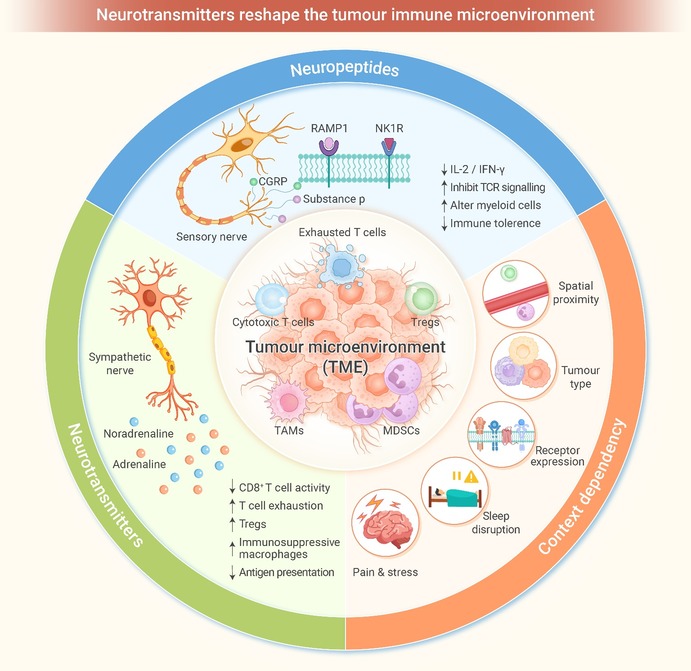
-
Figure 1.
Neurotransmitters reshape the tumour immune landscape
-
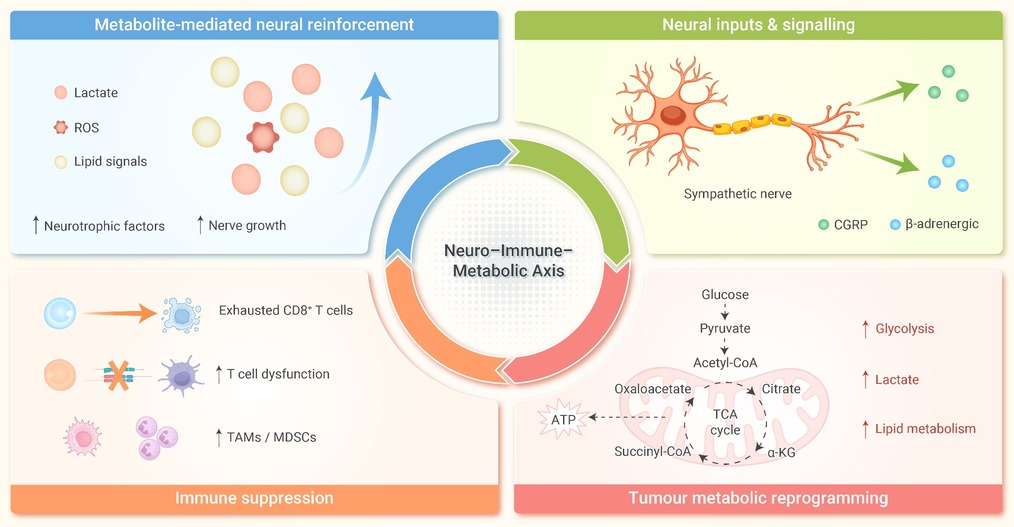
Figure 2.
The neuro–immune–metabolic axis
-
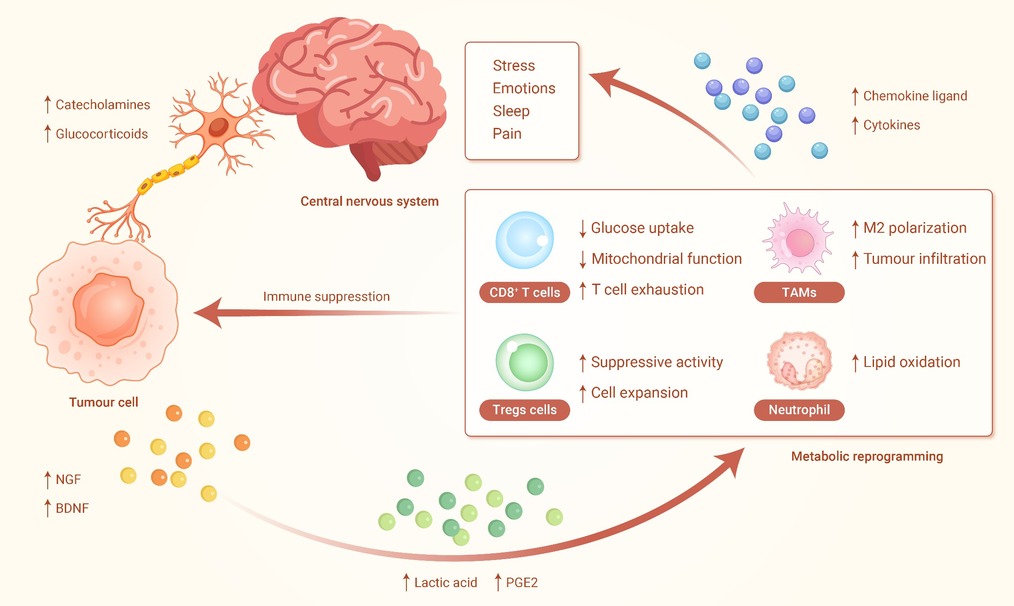
Figure 3.
The neuro–endocrine–metabolic axis in tumour progression
