
Economic feasibility of offshore carbon capture and utilization systems in Southeast Asia
-
GRAPHICAL ABSTRACT

 DownLoad:
Full size image
DownLoad:
Full size image
-
PUBLIC SUMMARY
-
Offshore Carbon Capture and Utilization (CCU) system offers a pathway to reduce carbon emissions in Southeast Asia by leveraging existing offshore infrastructure.
This study evaluates the economic feasibility of deploying offshore CCU system as a complement to offshore Carbon Capture and Storage (CCS) in Southeast Asia.
A probabilistic quantitative economic feasibility analysis is applied to address market volatility, revenue fluctuations, and regulatory uncertainties.
The findings highlight that CCS and CCU face financial challenges when operating separately.
CCU enhances economic potential by reducing costs, generating revenue from CO2-derived products, and improving overall financial sustainability.
-
-
ABSTRACT
Offshore Carbon Capture and Utilization (CCU) is a promising method to reduce carbon emissions while creating economic value. This study assesses the economic feasibility of an offshore CCU system in Southeast Asia as a complement to offshore Carbon Capture and Storage (CCS). A probabilistic quantitative economic feasibility analysis is performed by integrating a conventional financial analysis (CFA) with a probabilistic risk module (PRM) to evaluate cost structures, revenue potential, operational risks, and market uncertainties. The findings show that offshore CCU reduces capital expenditures (CAPEX) by leveraging existing offshore infrastructure and generates revenue from CO2-derived products such as sustainable fuels and chemicals. However, standalone financial viability remains challenging without supportive policy incentives or market-driven mechanisms. Automation and optimization are essential to reduce operational expenditure (OPEX) and improve profitability. Additionally, offshore CCU supports compliance with carbon regulations and strengthens environmental, social, and governance (ESG) performance. This study highlights offshore CCU as a complementary and sustainable strategy for carbon management. Future work should focus on optimizing CCU technologies and refining carbon policy frameworks to accelerate adoption in Southeast Asia.-
Keywords:
- Offshore CCU /
- Economic Feasibility /
- Carbon Capture /
- Revenue Potential /
- Market Uncertainty /
- Carbon Policy
-

-
REFERENCES
[1] Dimabuyu A. (2023). Upscaling CCUS in Asia Pacific – a look at upstream synergy projects and potential for multi-user hubs. APPEA J. 63:S371−S374. DOI:10.1071/AJ22164 [2] Wright B. (2024). McDermott Scoops Kasawari CCS Transport and Install Work. J. Petrol. Tech. https://jpt.spe.org/mcdermott-scoops-kasawari-ccs-transport-and-install-work#:~:text=Operated%20by%20Petronas%2C%20the%20Kasawari,begin%20operations%20later%20this%20year. [3] Agarwal R., Dua V. and Agarwal V. (2025). CCS in Southeast Asia: An opportunity or distant reality? McKinsey & Company. https://www.mckinsey.com/featured-insights/future-of-asia/ccs-in-southeast-asia-an-opportunity-or-distant-reality#:~:text=Thailand.%20For%20large%20emitter,starts%20operations%20offshore%20Malaysia%2C%E2%80%9D%20Offshore. [4] International Energy Agency. (2021). Carbon Capture, Utilisation and Storage: The Opportunity in Southeast Asia. https://iea.blob.core.windows.net/assets/2c510792-7de5-458c-bc5c-95c7e2560738/CarbonCaptureUtilisationandStorage_TheOpportunityinSoutheastAsia.pdf#:~:text=than%2030%20commercial%20CCUS%20facilities,term. [5] Coca N. (2023). Indonesia and Malaysia want to become CCS hubs. What does it mean for the energy transition? Energy Monitor. https://www.energymonitor.ai/carbon-removal/indonesia-and-malaysia-want-to-become-ccs-hubs-what-does-it-mean-for-the-energy-transition/#:~:text=In%20September%202023%2C%20Japan%20and,CCS%20hub%20in%20the%20region%E2%80%9D. [6] Anyadike N. (2023). Norway Kick-Starts $2.98B Carbon Capture and Storage Project. The Earth & I. https://www.theearthandi.org/post/norway-kick-starts-carbon-capture-and-storage-project. [7] Buli N. (2025). Shell, Equinor, TotalEnergies to invest $714 million in carbon storage expansion. Reuters. https://www.reuters.com/business/energy/shell-equinor-totalenergies-invest-714-million-carbon-storage-expansion-2025-03-27/. [8] Kanfa. (2025). Carbon Capture Utilisation and Storage. https://www.kanfa.energy/carbon-capture-utilisation-and-storage/. [9] International Energy Agency. (2023). Emissions from Oil and Gas Operations in Net Zero Transitions. A World Energy Outlook Special Report on the Oil and Gas Industry and COP28. https://www.iea.org/reports/emissions-from-oil-and-gas-operations-in-net-zero-transitions. [10] World Bank Group. (2023). Global Gas Flaring Tracker Report 2023. https://www.worldbank.org/en/topic/extractiveindustries/publication/2023-global-gas-flaring-tracker-report. [11] Skytruth. (2024). Exposing the Environmental Costs of Offshore Oil: Greenhouse Gas Emissions, Oil. Slicks, and Flaring. https://skytruth.org/section/environmental-costs-offshore-oil/. [12] Laughin SM. and Hollsten B. Adopting Green Energy in the Oil and Gas Industry: Opportunities and Implications in the Gulf of Mexico. J. Offshore Tech. https://www.researchgate.net/publication/385006304_Adopting_Green_Energy_in_the_Oil_and_Gas_Industry_Opportunities_and_Implications_in_the_Gulf_of_Mexico. [13] Hamieh A., Rowaihy F., Al-Juaied M., et al. (2022). Quantification and analysis of CO2 footprint from industrial facilities in Saudi Arabia. Energy Conver. Manag. X. 16:100299. DOI:10.1016/j.ecmx.2022.100299 [14] Fattouh B., Muslemani H. and Jewad R. (2024). Capture Carbon, Capture Value: An Overview of CCS Business Models. (Oxford Institute for Energy Studies, ed.). OIES Paper: CM. ISBN:978-1-78467-228-7. [15] Rowaihy F., Hamieh A., Odeh N., et al. (2025). Decarbonizing Saudi Arabia energy and industrial sectors: Assessment of carbon capture cost. Carbon Cap. Sci. Tech. 14:100375. DOI:10.1016/j.ccst.2025.100375 [16] Sekar A. (2022). The need to establish a regional carbon market in Southeast Asia. Modern Diplomacy. https://moderndiplomacy.eu/2022/02/14/the-need-to-establish-a-regional-carbon-market-in-southeast-asia/. [17] Lawson M., Phua D., Rogers C., et al. (2023). Developing carbon trading markets in Southeast Asia. https://www.kwm.com/cn/en/insights/latest-thinking/development-of-carbon-trading-markets-in-southeast-asia.html. [18] Chao J. (2023). Southeast Asian countries’ ambitions for voluntary carbon market. https://www.reccessary.com/en/research/southeast-asian-countries-ambitions-for-voluntary-carbon-market. [19] Nagireddi S., Agarwal J.R. and Vedapuri D. Carbon Dioxide Capture, Utilization, and Sequestration: Current Status, Challenges, and Future Prospects for Global Decarbonization. ACS Eng. Au. 4:22-48. DOI:10.1021/acsengineeringau.3c00049. [20] Chitose-bio. (2023). CHITOSE Group Held the Official Launching Ceremony of CHITOSE Carbon Capture Central (C4) in Malaysia. https://chitose-bio.com/news/5434/. [21] Wong P.K., Bu J., Chen L., et al. (2011). Carbon Capture and Storage/Utilization Technology Primer: A Summary. https://www.nccs.gov.sg/files/docs/default-source/default-document-library/carbon-capture-and-storage-utilisation-technology-primer-a-summary.pdf. [22] Oils & Fats International. (2024). Eves Energy to build microalgae oil plant in Indonesia. https://www.ofimagazine.com/news/eves-energy-to-build-microalgae-oil-plant-in-indonesia. [23] Xu P., Shao S., Qian J., et al. (2024). Scale-up of microalgal systems for decarbonization and bioproducts: Challenges and opportunities. Bioresour Technol. 398:130528. DOI:10.1016/j.biortech.2024.130528 [24] International Energy Agency. (2023). CCUS Policies and Business Models. https://www.iea.org/reports/ccus-policies-and-business-models-building-a-commercial-market. [25] Cherepovitsyna A., Kuznetsova E., Popov A., et al. Carbon Capture and Utilization Projects Run by Oil and Gas Companies: A Case Study from Russia. Sustainability 16:6221. DOI:10.3390/su16146221. [26] Jonathan C. (2024). The Sustainable Aviation Fuel (SAF) Solution Framework. Climate Drift. https://www.climatedrift.com/p/the-sustainable-aviation-fuel-saf. [27] International Renewable Energy Agency. (2021). Innovation Outlook Renewable Methanol. https://www.irena.org/-/media/Files/IRENA/Agency/Publication/2021/Jan/IRENA_Innovation_Renewable_Methanol_2021.pdf. [28] CarbonCure. (2022). Carbon Credits: The New Revenue Opportunity for Concrete Producers. https://www.carboncure.com/blog/concrete-corner/carbon-credits-the-new-revenue-opportunity-for-concrete-producers/. [29] Adam B., Mahmood E., Jack S., et al. (2020). The Role of Renewable Transport Fuels in Decarbonizing Road Transport. https://www.ieabioenergy.com/wp-content/uploads/2020/11/Production-Technologies-and-Costs.pdf. [30] Donofrio S. and Procton A. (2023) Ecosystem Marketplace Insight Report: State of the Voluntary Carbon Market 2023. https://www.forest-trends.org. [31] Christian N., Sabine G., Sienna H., et al. (2023). Trends and Projections in the EU ETS in 2023 The EU Emissions Trading System in Numbers. https://www.eionet.europa.eu/etcs/etc-cm. [32] Ministry of Sustainability and the Environment. (2024). Carbon Pricing Act. https://www.mse.gov.sg/policies/climate-change/carbon-pricing-act. [33] World Bank Group. (2023). State and Trends of Carbon Pricing 2023. https://openknowledge.worldbank.org/entities/publication/58f2a409-9bb7-4ee6-899d-be47835c838f. [34] Yuanrong Z., Stephanie S. and Nikita P. (2022). Current and Future Cost of E-Kerosene in the United States and Europe. ICCT 20. https://theicct.org/publication/fuels-us-eu-cost-ekerosene-mar22/. [35] Intratec.US. Methanol Prices | Current and Forecast. https://www.intratec.us/solutions/primary-commodity-prices/commodity/methanol-prices. [36] The International Air Transport Association (IATA). (2024). Jet Fuel Price Monitor. https://www.iata.org/en/publications/economics/fuel-monitor/. [37] World Bank Group. (2023). Food Security Update. https://www.worldbank.org/en/topic/agriculture/brief/food-security-update. [38] Independent Commodity Intelligence Services. (2024). Polyethylene Terephthalate (PET) Price Forecast Methodology. https://www.chemanalyst.com/Pricing-data/polyethylene-terephthalate-72. [39] Bourbon E. and Science A. (2024). Clean Cities Alternative Fuel Price Report. https://afdc.energy.gov/files/u/publication/alternative_fuel_price_report_january_2024.pdf. -
ABOUT THIS ARTICLE
Cite this article:
Ng C.Y., Ong M.C. and Chiu G.L.F. (2025). Economic feasibility of offshore carbon capture and utilization systems in Southeast Asia. The Innovation Energy 2:100100. https://doi.org/10.59717/j.xinn-energy.2025.100100
Welcome!
To request copyright permission to republish or share portions of our works, please visit Copyright Clearance Center's (CCC) Marketplace website at marketplace.copyright.com.
Article Metrics
Relative Articles
Cited by
Export File
Citation
Ng C.Y., Ong M.C. and Chiu G.L.F. (2025). Economic feasibility of offshore carbon capture and utilization systems in Southeast Asia. The Innovation Energy 2:100100. https://doi.org/10.59717/j.xinn-energy.2025.100100

Format
Content

-
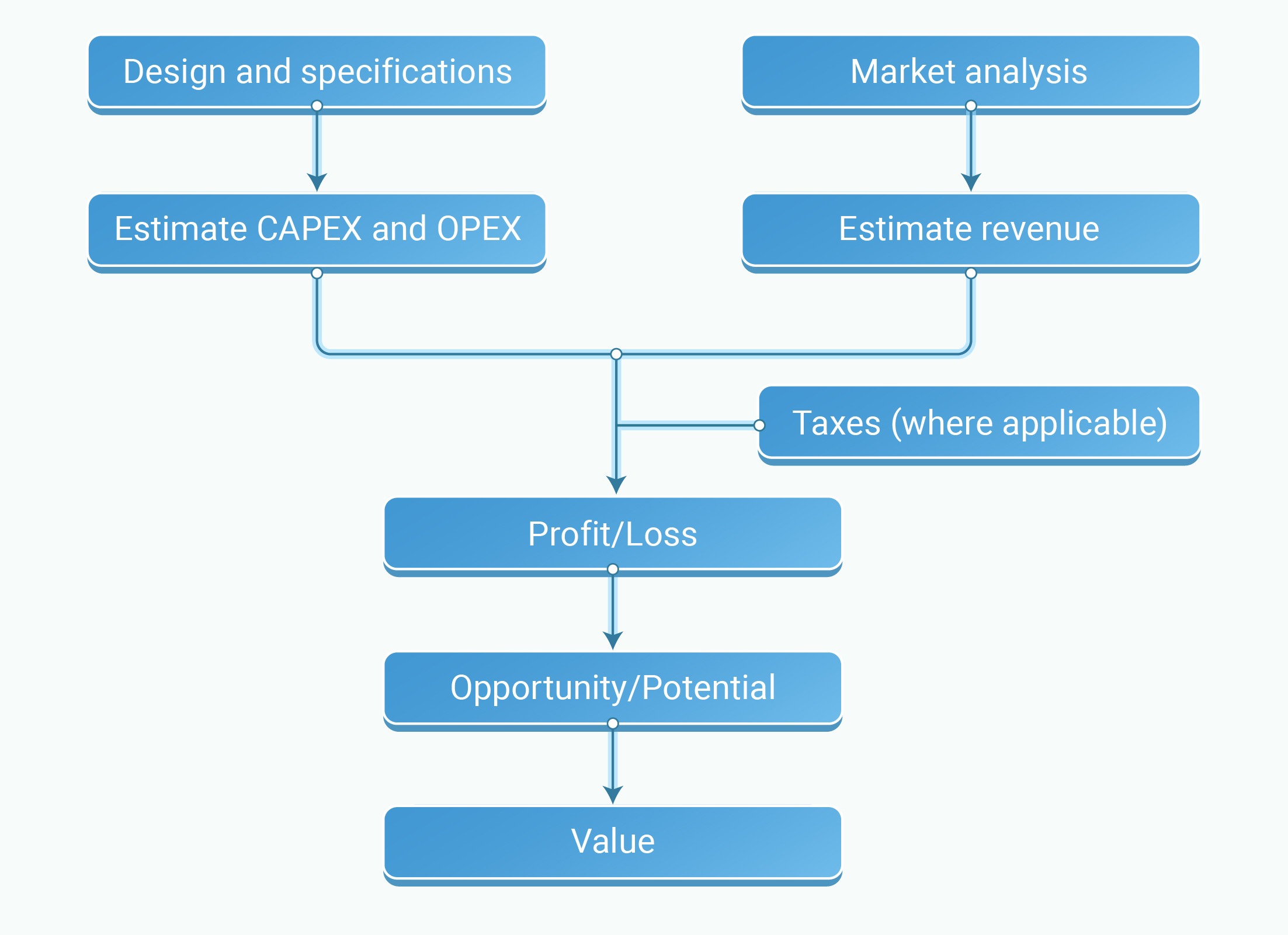
Figure 1.
Conventional Financial Analysis (CFA) Framework
-
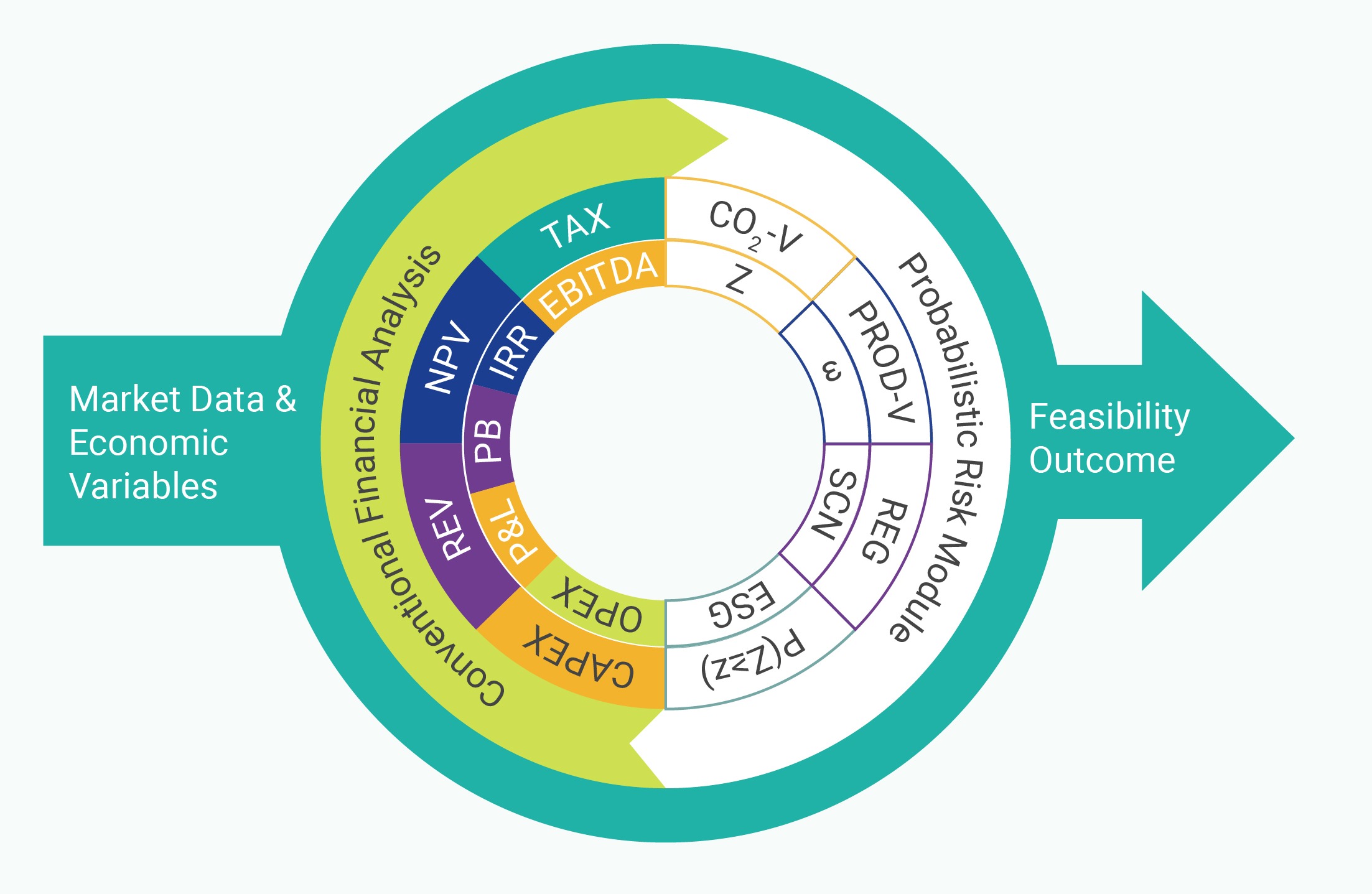
Figure 2.
Integrated Economic Feasibility Framework (CFA + PRM)
-
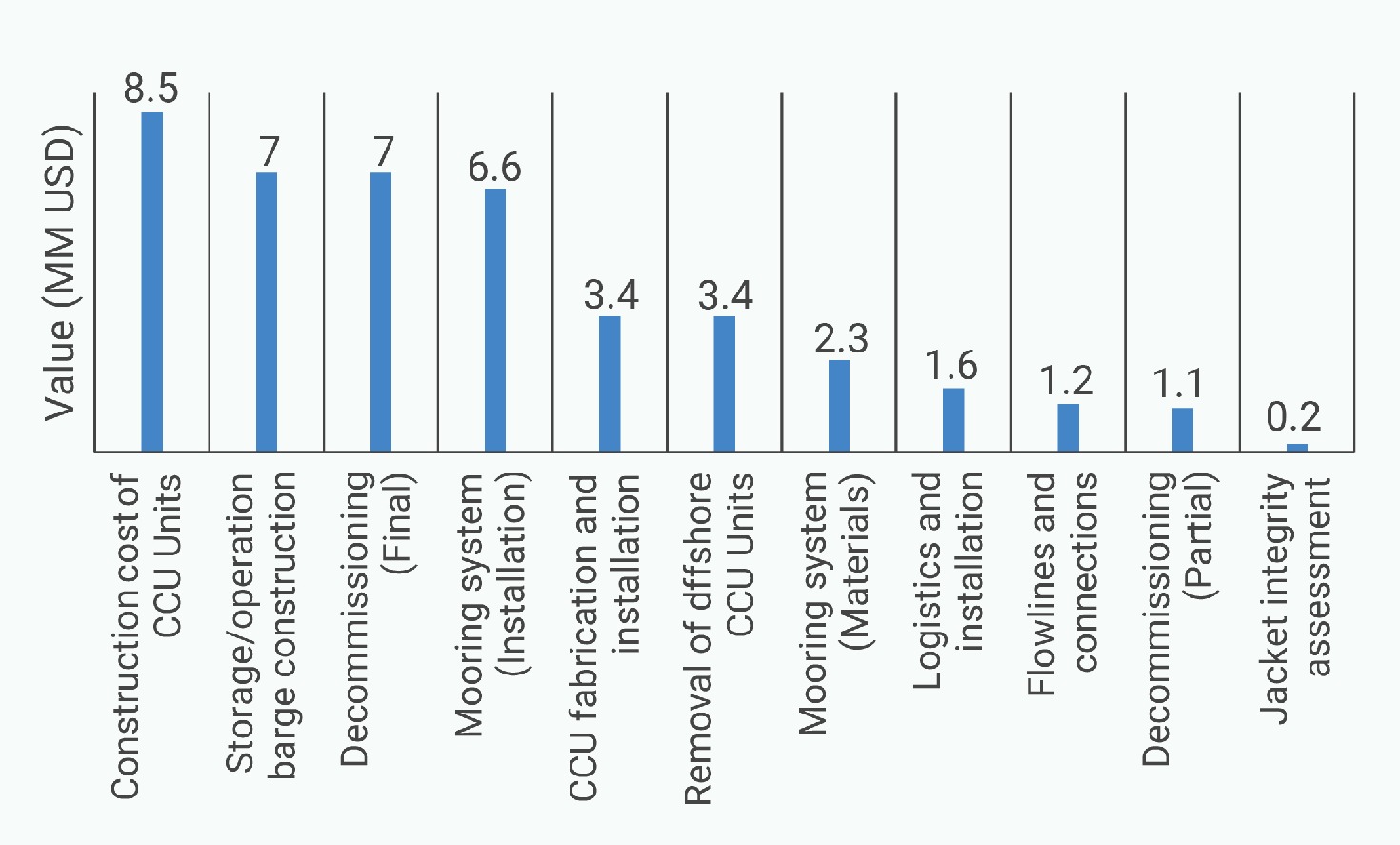
Figure 3.
Breakdown of CAPEX Components for Offshore CCU System
-
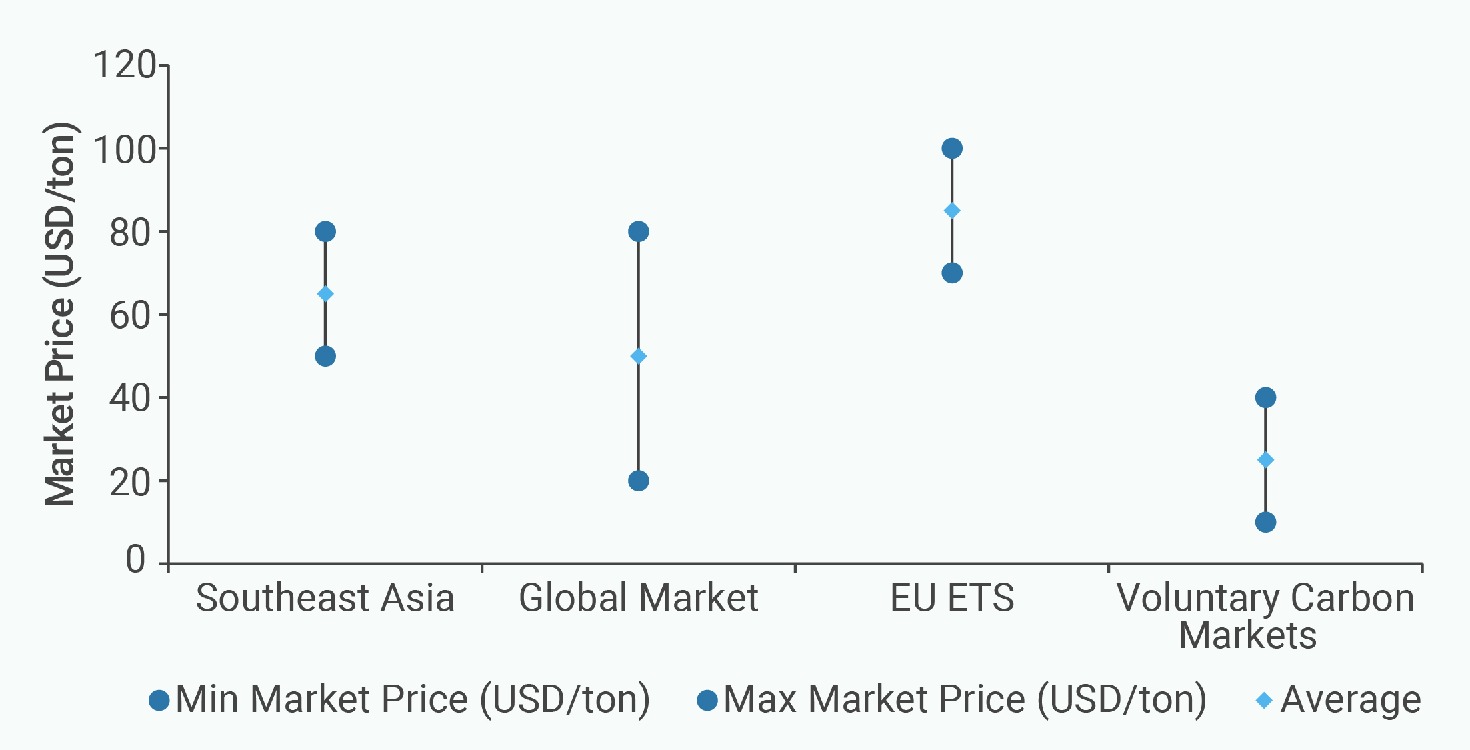
Figure 4.
Market Price Ranges for Different Carbon Pricing Mechanisms30-33
-
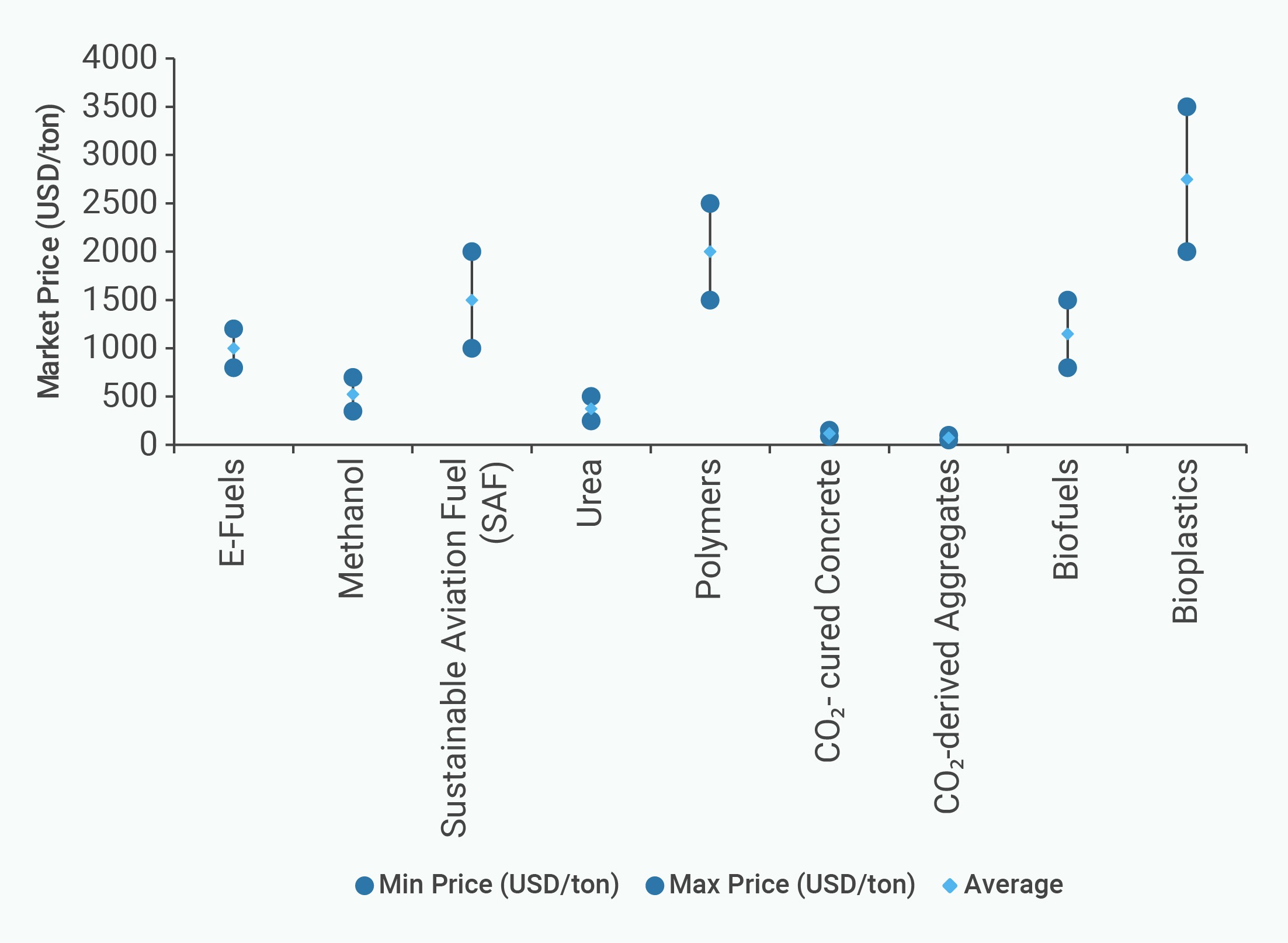
Figure 5.
Market Price Ranges for Various CO2 Utilization Products28,34-39
-
Figure 6.
Key Economic Factors Impacting Offshore CCU System Viability
