
-
GRAPHICAL ABSTRACT

 DownLoad:
Full size image
DownLoad:
Full size image
-
PUBLIC SUMMARY
-
Challenges of direct seawater electrolysis are summarized.
Optimization strategies of catalysts for direct seawater electrolysis are summarized.
Innovative electrolyzer architectures for direct seawater electrolysis are summarized.
The superiority of direct over indirect seawater electrolysis is provided.
The application of direct seawater electrolysis for energy storage is summarized.
-
-
ABSTRACT
Hydrogen production through water electrolysis represents one of the most promising low-carbon energy alternatives. However, current water electrolysis technologies depend on high-purity water feedstocks and their large-scale commercialization could exacerbate global freshwater scarcity. Direct seawater electrolysis (DSE) not only addresses this water resource challenge but also offers a potential solution for integrating deep-sea renewable energy sources. In this review, we first examine the challenges of DSE. Subsequently, we emphasize DSE technology and associated modification strategies, followed assessed the feasibility and economic viability of DSE. Finally, we summarize the potential applications of DSE in energy storage systems. These insights are intended to inform and guide future advancements in hydrogen production. We posit that on-site hydrogen production via DSE represents an optimal model for future renewable energy utilization and continuous research in this field should be actively promoted. -

-
REFERENCES
[1] Kuang Y., Kenney M.J., Meng Y., et al. (2019). Solar-driven, highly sustained splitting of seawater into hydrogen and oxygen fuels. Proc. Natl. Acad. Sci. 116:6624−9. DOI:10.1073/pnas.1900556116 [2] Khan M.A., Al-Attas T., Roy S., et al. (2021). Seawater electrolysis for hydrogen production: A solution looking for a problem. Energy Environ. Sci. 14:4831−9. DOI:10.1039/D1EE00870F [3] Tong W., Forster M., Dionigi F., et al. (2020). Electrolysis of low-grade and saline surface water. Nat. Energy. 5:367−77. DOI:10.1038/s41560-020-0550-8 [4] Franco B.A., Baptista P., Neto R.C., et al. (2021). Assessment of offloading pathways for wind-powered offshore hydrogen production: Energy and economic analysis. Appl. Energy 286:116553. DOI:10.1016/j.apenergy.2021.116553 [5] Fei H., Liu R., Liu T., et al. (2024). Direct seawater electrolysis: From catalyst design to device applications. Adv. Mater. 36:2309211. DOI:10.1002/adma.202309211 [6] Baturina O.A., Finn M. and Weathers B. (2023). Effect of pH on the selectivity of γ-MnO2 electrocatalysts towards oxygen evolution reaction in the presence of chloride ions in alkaline environment. ECS Meet. Abstr. MA2023-2:2836-2836. DOI:10.1149/MA2023-02582836mtgabs. [7] Xu B., Liang J., Sun X., et al. (2023). Designing electrocatalysts for seawater splitting: Surface/interface engineering toward enhanced electrocatalytic performance. Green Chem. 25:3767−90. DOI:10.1039/D2GC03377A [8] Dionigi F., Reier T., Pawolek Z., et al. (2016). Design criteria, operating conditions, and nickel–iron hydroxide catalyst materials for selective seawater electrolysis. Chem. Sus. Chem. 9:962−72. DOI:10.1002/cssc.201501581 [9] Yu Z. and Liu L. (2024). Recent advances in hybrid seawater electrolysis for hydrogen production. Adv. Mater. 36:2308647. DOI:10.1002/adma.202308647 [10] Li J., Fu G., Sheng X., et al. (2024). A comprehensive review on catalysts for seawater electrolysis. Adv. Powder Mater. 3:100227. DOI:10.1016/j.apmate.2024.100227 [11] Liu D., Cai Y., Wang X., et al. (2024). Innovations in electrocatalysts, hybrid anodic oxidation, and electrolyzers for enhanced direct seawater electrolysis. Energy Environ. Sci. 17:6897−942. DOI:10.1039/D4EE01693A [12] Sun J.P., Zhao Z., Li J., et al. (2023). Recent advances in electrocatalytic seawater splitting. Rare Met. 42:751−68. DOI:10.1007/s12598-022-02168-x [13] Zhang F., Yu L., Wu L., et al. (2021). Rational design of oxygen evolution reaction catalysts for seawater electrolysis. Trends Chem. 3:485−98. DOI:10.1016/j.trechm.2021.03.003 [14] Zhang S., Wang Y., Li S., et al. (2023). Concerning the stability of seawater electrolysis: A corrosion mechanism study of halide on ni-based anode. Nat. Commun. 14:4822. DOI:10.1038/s41467-023-40563-9 [15] Kang X., Yang F., Zhang Z., et al. (2023). A corrosion-resistant RuMoNi catalyst for efficient and long-lasting seawater oxidation and anion exchange membrane electrolyzer. Nat. Commun. 14:3607. DOI:10.1038/s41467-023-39386-5 [16] Yang F., Luo Y., Yu Q., et al. (2021). A durable and efficient electrocatalyst for saline water splitting with current density exceeding 2000 mA cm−2. Adv. Funct. Mater. 31:2010367. DOI:10.1002/adfm.202010367 [17] Sha Q., Wang S., Yan L., et al. (2025). 10,000-h-stable intermittent alkaline seawater electrolysis. Nature 639:360−7. DOI:10.1038/s41586-025-08610-1 [18] He W., Li X., Tang C., et al. (2023). Materials design and system innovation for direct and indirect seawater electrolysis. ACS Nano. 17:22227−39. DOI:10.1021/acsnano.3c08450 [19] Lindquist G.A., Xu Q., Oener S.Z., et al. (2020). Membrane electrolyzers for impure-water splitting. Joule 4:2549−61. DOI:10.1016/j.joule.2020.09.020 [20] Guo J., Zheng Y., Hu Z., et al. (2023). Direct seawater electrolysis by adjusting the local reaction environment of a catalyst. Nat. Energy 8:264−272. DOI:10.1038/s41560-023-01195-x [21] Yang C., Rousse G., Louise Svane K., et al. (2020). Cation insertion to break the activity/stability relationship for highly active oxygen evolution reaction catalyst. Nat. Commun. 11:1378. DOI:10.1038/s41467-020-15231-x [22] Xing J., Zeng Z., Best W., et al. (2023). Long-term durability test of highly efficient membrane electrode assemblies for anion exchange membrane seawater electrolyzers. J. Power Sources 558:232564. DOI:10.1016/j.jpowsour.2022.232564 [23] Yu Q., Fu Y., Liu Z., et al. (2025). Regulating local atomic environment of Fe3O4 to promote anion exchange membrane based alkaline seawater electrolysis. Appl. Catal. B Environ. Energy 361:124598. DOI:10.1016/j.apcatb.2024.124598 [24] Malek A., Xue Y., Lu X. (2023). Dynamically Restructuring Nix Cry O Electrocatalyst for Stable Oxygen Evolution Reaction in Real Seawater. Angew. Chem. Int. Ed. 62:e202309854. DOI:10.1002/anie.202309854 [25] Sun P., Zheng X., Chen A., et al. (2024). Constructing amorphous-crystalline interfacial bifunctional site island-sea synergy by morphology engineering boosts alkaline seawater hydrogen evolution. Adv. Sci. 11:2309927. DOI:10.1002/advs.202309927 [26] Guo L., Chi J., Cui T., et al. (2024). Phosphorus defect mediated electron redistribution to boost anion exchange membrane-based alkaline seawater electrolysis. Adv. Energy Mater. 14:2400975. DOI:10.1002/aenm.202400975 [27] Liu D., Wei X., Lu J., et al. (2024). Efficient and ultrastable seawater electrolysis at industrial current density with strong metal-support interaction and dual cl− -repelling layers. Adv. Mater. 36:2408982. DOI:10.1002/adma.202408982 [28] Wang K., Liu X., Yu Q., et al. (2024). Mn doping and P vacancy induced fast phase reconstruction of FeP for enhanced electrocatalytic oxygen evolution reaction in alkaline seawater. Small 20:2308613. DOI:10.1002/smll.202308613 [29] Yang C., Li Y.D., Cao L.J., et al. (2024). Engineering FeOOH/ni(OH)2 heterostructures on Ni3S2 surface to enhance seawater splitting. Rare Met. 43:1989−98. DOI:10.1007/s12598-023-02590-9 [30] Exner K.S. (2019). Controlling stability and selectivity in the competing chlorine and oxygen evolution reaction over transition metal oxide electrodes. Chem. Electro. Chem. 6:3401−9. DOI:10.1002/celc.201900834 [31] Yu J., Li B.Q., Zhao C.X., et al. (2020). Seawater electrolyte-based metal–air batteries: From strategies to applications. Energy Environ. Sci. 13:3253−68. DOI:10.1039/D0EE01617A [32] Khatun S. (2021). Seawater electrocatalysis: activity and selectivity. J. Mater. Chem. A. 9:74−86. DOI:10.1039/D0TA08709B [33] Xu W., Wang Z., Liu P., et al. (2024). Ag nanoparticle-induced surface chloride immobilization strategy enables stable seawater electrolysis. Adv. Mater. 36:2306062. DOI:10.1002/adma.202306062 [34] Hu H., Wang X., Zhang Z., et al. (2024). Engineered nickel–iron nitride electrocatalyst for industrial-scale seawater hydrogen production. Adv. Mater. 37:2415421. DOI:10.1002/adma.202415421 [35] Liu W., Guo X., Jiang Z., et al. (2024). Cl− boosted active and stable seawater reduction on pt/CoP nanoarray electrocatalysts. Adv. Energy Mater. 15:2404978. DOI:10.1002/aenm.202404978 [36] Ma T., Xu W., Li B., et al. (2021). The critical role of additive sulfate for stable alkaline seawater oxidation on nickel-based electrodes. Angew. Chem. Int. Ed. 60:22740−4. DOI:10.1002/anie.202110355 [37] Hausmann J.N. and Menezes P.W. (2022). Effect of surface-adsorbed and intercalated (oxy)anions on the oxygen evolution reaction. Angew. Chem. Int. Ed. 61:e202207279. DOI:10.1002/anie.202207279 [38] Shao L., Han X., Shi L., et al. (2024). In situ generation of molybdate-modulated nickel-iron oxide electrodes with high corrosion resistance for efficient seawater electrolysis. Adv. Energy Mater. 14:2303261. DOI:10.1002/aenm.202303261 [39] Bao D., Huang L., Gao Y., et al. (2024). Dynamic creation of a local acid-like environment for hydrogen evolution reaction in natural seawater. J. Am. Chem. Soc. 146:34711−9. DOI:10.1021/jacs.4c13036 [40] Zhang X.L., Yu P.C., Sun S.P., et al. (2024). In situ ammonium formation mediates efficient hydrogen production from natural seawater splitting. Nat. Commun. 15:9462. DOI:10.1038/s41467-024-53724-1 [41] Wang J., Liang C., Ma X., et al. (2024). Dynamically adaptive bubbling for upgrading oxygen evolution reaction using lamellar fern-like alloy aerogel self-standing electrodes. Adv. Mater. 36:2307925. DOI:10.1002/adma.202307925 [42] Luo Y., Zhang Z., Chhowalla M., et al. (2022). Recent advances in design of electrocatalysts for high-current-density water splitting. Adv. Mater. 34:2108133. DOI:10.1002/adma.202108133 [43] Yu L., Wu L., McElhenny B., et al. (2020). Ultrafast room-temperature synthesis of porous S-doped ni/fe (oxy)hydroxide electrodes for oxygen evolution catalysis in seawater splitting. Energy Environ. Sci. 13:3439−46. DOI:10.1039/D0EE00921K [44] Liu R., Gong Z., Liu J., et al. (2021). Design of aligned porous carbon films with single-atom co–N–C sites for high-current-density hydrogen generation. Adv. Mater. 33:2103533. DOI:10.1002/adma.202103533 [45] Yang X., Shen H., Xiao X., et al. (2025). Regulating interfacial H2 O activity and H2 bubbles by core/shell nanoarrays for 800 h stable alkaline seawater electrolysis. Adv. Mater. 37:2416658. DOI:10.1002/adma.202416658 [46] Liu P., Klyushin A., Chandramathy Surendran P., et al. (2023). Carbon encapsulation of supported metallic iridium nanoparticles: An in situ transmission electron microscopy study and implications for hydrogen evolution reaction. ACS Nano. 17:24395−403. DOI:10.1021/acsnano.3c10850 [47] Wang J., Liu Y., Yang G., et al. (2025). MXene-assisted NiFe sulfides for high-performance anion exchange membrane seawater electrolysis. Nat. Commun. 16:1319. DOI:10.1038/s41467-025-56639-7 [48] Na J., Yu H., Jia S., et al. (2024). Electrochemical reconstruction of non-noble metal-based heterostructure nanorod arrays electrodes for highly stable anion exchange membrane seawater electrolysis. J. Energy Chem. 91:370−82. DOI:10.1016/j.jechem.2023.12.018 [49] Li G., Han G., Wang L., et al. (2023). Dual hydrogen production from electrocatalytic water reduction coupled with formaldehyde oxidation via a copper-silver electrocatalyst. Nat. Commun. 14:525. DOI:10.1038/s41467-023-36142-7 [50] Li Y., Wei X., Chen L., et al. (2019). Nickel-molybdenum nitride nanoplate electrocatalysts for concurrent electrolytic hydrogen and formate productions. Nat. Commun. 10:5335. DOI:10.1038/s41467-019-13375-z [51] Yu Z., Li Y., Martin-Diaconescu V., et al. (2022). Highly efficient and stable saline water electrolysis enabled by self-supported nickel-iron phosphosulfide nanotubes with heterointerfaces and under-coordinated metal active sites. Adv. Funct. Mater. 32:2206138. DOI:10.1002/adfm.202206138 [52] Rollinson A.N., Jones J., Dupont V., et al. (2011). Urea as a hydrogen carrier: A perspective on its potential for safe, sustainable and long-term energy supply. Energy Environ. Sci. 4:1216. DOI:10.1039/c0ee00705f [53] Gao X., Zhang S., Wang P., et al. (2024). Urea catalytic oxidation for energy and environmental applications. Chem. Soc. Rev. 53:1552−91. DOI:10.1039/D3CS00963G [54] Zaher A., Shehata N. (2021). Recent advances and challenges in management of urea wastewater: A mini review. IOP Conf. Ser. Mater. Sci. Eng. 1046:12021. DOI:10.1088/1757-899X/1046/1/012021 [55] Zhu B., Liang Z. and Zou R. (2020). Designing Advanced Catalysts for Energy Conversion Based on Urea Oxidation Reaction. Small 16:1906133. DOI:10.1002/smll.201906133 [56] Zheng X., Yang J., Li P., et al. (2023). Dual-atom support boosts nickel-catalyzed urea electrooxidation. Angew. Chem. Int. Ed. 62:e202217449. DOI:10.1002/anie.202217449 [57] Wang C., Lu H., Mao Z., et al. (2020). Bimetal schottky heterojunction boosting energy-saving hydrogen production from alkaline water via urea electrocatalysis. Adv. Funct. Mater. 30:2000556. DOI:10.1002/adfm.202000556 [58] Ye K., Wang G., Cao D., et al. (2018). Recent advances in the electro-oxidation of urea for direct urea fuel cell and urea electrolysis. Top. Curr. Chem. 376:42. DOI:10.1007/s41061-018-0219-y [59] Liao W., Zhao Q., Wang S., et al. (2023). Insights into mechanisms on electrochemical oxygen evolution substitution reactions. J. Catal. 428:115161. DOI:10.1016/j.jcat.2023.11516 [60] Boggs B.K., King R.L., Botte G.G. (2009). Urea electrolysis: Direct hydrogen production from urine. Chem. Commun. 32:4859. DOI:10.1039/b905974a [61] Sun X. and Ding R. (2020). Recent progress with electrocatalysts for urea electrolysis in alkaline media for energy-saving hydrogen production. Catal. Sci. Technol. 10:1567−81. DOI:10.1039/C9CY02618E [62] Guo L., Chi J., Zhu J., et al. (2023). Dual-doping NiMoO4 with multi-channel structure enable urea-assisted energy-saving H2 production at large current density in alkaline seawater. Appl. Catal. B Environ. 320:121977. DOI:10.1016/j.apcatb.2022.121977 [63] Yu Z., Xu J., Meng L., et al. (2021). Efficient hydrogen production by saline water electrolysis at high current densities without the interfering chlorine evolution. J. Mater. Chem. A. 9:22248−53. DOI:10.1039/D1TA05703K [64] Li Y., Zhang J., Liu Y., et al. (2020). Partially exposed RuP2 surface in hybrid structure endows its bifunctionality for hydrazine oxidation and hydrogen evolution catalysis. Sci. Adv. 6:eabb4197. DOI:10.1126/sciadv.abb4197 [65] Sun F., Qin J., Wang Z., et al. (2021). Energy-saving hydrogen production by chlorine-free hybrid seawater splitting coupling hydrazine degradation. Nat. Commun. 12:4182. DOI:10.1038/s41467-021-24529-3 [66] Guan X., Wu Q., Li H., et al. (2023). Identifying the roles of ru single atoms and nanoclusters for energy-efficient hydrogen production assisted by electrocatalytic hydrazine oxidation. Appl. Catal. B Environ. 323:122145. DOI:10.1016/j.apcatb.2022.122145 [67] Wang H., Yan F., Wang H., et al. (2024). The combination of electronic structure and lattice strain engineering for multi-powered hydrazine-assisted seawater electrolysis system at high current densities. Adv. Energy Mater. 14:2402611. DOI:10.1002/aenm.202402611 [68] Zhang Y., Gao F., Wang D., et al. (2023). Amorphous/Crystalline Heterostructure Transition-Metal-based Catalysts for High-Performance Water Splitting. Coord. Chem. Rev. 475:214916. DOI:10.1016/j.ccr.2022.214916 [69] Li D., Qin Y., Liu J., et al. (2022). Dense crystalline–amorphous interfacial sites for enhanced electrocatalytic oxygen evolution. Adv. Funct. Mater. 32:2107056. DOI:10.1002/adfm.202107056 [70] Shen S., Wang Z., Lin Z., et al. (2022). Crystalline-amorphous interfaces coupling of CoSe2 /CoP with optimized d-band center and boosted electrocatalytic hydrogen evolution. Adv. Mater. 34:2110631. DOI:10.1002/adma.202110631 [71] Lu B., Dun R., Wang W., et al. (2024). Electroless plating synthesis of bifunctional crystalline/amorphous pd-NiFeB heterostructure catalysts for boosted electrocatalytic water splitting. Appl. Catal. B Environ. 342:123343. DOI:10.1016/j.apcatb.2023.123343 [72] Quan Q., Li X., Song C., et al. (2024). Polyoxometalate-derived bi-functional crystalline/amorphous interfaces with optimized d-electron configuration for efficient self-powered hydrazine-seawater splitting. Chem. Eng. J. 488:150897. DOI:10.1016/j.cej.2024.150897 [73] Li Y., Wei X., Chen L., et al. (2021). Electrocatalytic hydrogen production trilogy. Angew. Chem. Int. Ed. 60:19550−71. DOI:10.1002/anie.202009854 [74] Wang T., Cao X., Jiao L. (2022). Progress in hydrogen production coupled with electrochemical oxidation of small molecules. Angew. Chem. Int. Ed. 61:e202213328. DOI:10.1002/anie.202213328 [75] Deng C., Toe C.Y., Li X., et al. (2022). Earth-Abundant Metal-Based Electrocatalysts Promoted Anodic Reaction in Hybrid Water Electrolysis for Efficient Hydrogen Production: Recent Progress and Perspectives. Adv. Energy Mater. 12:2201047. DOI:10.1002/aenm.202201047 [76] Yang Y., Wu X., Ahmad M., et al. (2023). A direct formaldehyde fuel cell for CO2 -emission free Co-generation of electrical energy and valuable chemical/hydrogen. Angew. Chem. Int. Ed. 62:e202302950. DOI:10.1002/anie.202302950 [77] Gong L., Yang Z., Li K., et al. (2018). Recent development of methanol electrooxidation catalysts for direct methanol fuel cell. J. Energy Chem. 27:1618−28. DOI:10.1016/j.jechem.2018.01.029 [78] Zhao X., Yin M., Ma L., et al. (2011). Recent advances in catalysts for direct methanol fuel cells. Energy Environ. Sci. 4:2736. DOI:10.1039/c1ee01307f [79] Xu K., Liang L., Li T., et al. (2024). Pt1.8 Pd0.2 CuGa intermetallic nanocatalysts with enhanced methanol oxidation performance for efficient hybrid seawater electrolysis. Adv. Mater. 36:2403792. DOI:10.1002/adma.202403792. [80] Lv Y., Lin L., Xue R., et al. (2024). Electronegativity induced d -band center offset for pt-rh dual sites in high-entropy alloy boosts liquid fuels electrooxidation. Adv. Energy Mater. 14:2304515. DOI:10.1002/aenm.202304515 [81] Mao Q., Deng K., Yu H., et al. (2022). In situ reconstruction of partially hydroxylated porous Rh metallene for ethylene glycol-assisted seawater splitting. Adv. Funct. Mater. 32:2201081. DOI:10.1002/adfm.202201081 [82] Qasim M., Badrelzaman M., Darwish N.N., et al. (2019). Reverse osmosis desalination: A state-of-the-art review. Desalination 459:59−104. DOI:10.1016/j.desal.2019.02.008 [83] Veroneau S.S., Hartnett A.C., Thorarinsdottir A.E., et al. (2022). Direct seawater splitting by forward osmosis coupled to water electrolysis. ACS Appl. Energy Mater. 5:1403−8. DOI:10.1021/acsaem.1c03998 [84] Xie H., Zhao Z., Liu T., et al. (2022). A membrane-based seawater electrolyser for hydrogen generation. Nature 612:673−8. DOI:10.1038/s41586-022-05379-5 [85] Dresp S., Ngo Thanh T., Klingenhof M., et al. (2020). Efficient direct seawater electrolysers using selective alkaline NiFe-LDH as OER catalyst in asymmetric electrolyte feeds. Energy Environ. Sci. 13:1725−9. DOI:10.1039/D0EE01125H [86] Liu T., Zhao Z., Tang W., et al. (2024). In-situ direct seawater electrolysis using floating platform in ocean with uncontrollable wave motion. Nat. Commun. 15:5305. DOI:10.1038/s41467-024-49639-6 [87] Shi H., Wang T., Liu J., et al. (2023). A sodium-ion-conducted asymmetric electrolyzer to lower the operation voltage for direct seawater electrolysis. Nat. Commun. 14:3934. DOI:10.1038/s41467-023-39681-1 [88] Laguna-Bercero M.A. (2012). Recent advances in high temperature electrolysis using solid oxide fuel cells: A review. J. Power Sources. 203:4−16. DOI:10.1016/j.jpowsour.2011.12.019 [89] Song Z., Pan H., Wan G., et al. (2023). Enhancing durability of solid oxide cells for hydrogen production from seawater by designing nano-structured Sm0.5Sr0.5Co3-δ infiltrated air electrodes. Int. J. Hydrog. Energy 48:27095-104. DOI:10.1016/j.ijhydene.2023.03.366. [90] Luo X., Wu A., Sang J., et al. (2023). The properties of the fuel electrode of solid oxide cells under simulated seawater electrolysis. Int. J. Hydrog. Energy 48:10359−67. DOI:10.1016/j.ijhydene.2022.11.350 [91] Rausch B., Symes M.D., Chisholm G., et al. (2014). Decoupled catalytic hydrogen evolution from a molecular metal oxide redox mediator in water splitting. Science 345:1326−30. DOI:10.1126/science.1257443 [92] Zhang F., Zhang H., Salla M., et al. (2021). Decoupled redox catalytic hydrogen production with a robust electrolyte-borne electron and proton carrier. J. Am. Chem. Soc. 143:223−31. DOI:10.1021/jacs.0c09510 [93] Symes M.D. and Cronin, L. (2013). Decoupling hydrogen and oxygen evolution during electrolytic water splitting using an electron-coupled-proton buffer. Nat. Chem. 5:403−9. DOI:10.1038/nchem.1621 [94] Zhu Z., Jiang T., Sun J., et al. (2023). pH-universal decoupled water electrolysis enabled by electrocatalytic hydrogen gas capacitive chemistry. JACS Au. 3:488−97. DOI:10.1021/jacsau.2c00624 [95] Liu T., Lan C., Tang M., et al. (2024). Redox-mediated decoupled seawater direct splitting for H2 production. Nat. Commun. 15:8874. DOI:10.1038/s41467-024-53335-w [96] Hausmann J.N., Winter L.R., Khan M.A., et al. (2024). Hyping direct seawater electrolysis hinders electrolyzer development. Joule 8:2436−42. DOI:10.1016/j.joule.2024.07.005 [97] Farràs P., Strasser P. and Cowan A.J. (2021). Water electrolysis: Direct from the sea or not to be. Joule 5:1921−3. DOI:10.1016/j.joule.2021.07.014 [98] Caldera U. and Breyer C. (2017). Learning curve for seawater reverse osmosis desalination plants: Capital cost trend of the past, present, and future. Water Resour. Res. 53:10523−38. DOI:10.1002/2017WR021402 [99] Dresp S., Dionigi F., Klingenhof M., et al. (2019). Direct electrolytic splitting of seawater: Opportunities and challenges. ACS Energy Lett. 4:933−42. DOI:10.1021/acsenergylett.9b00220 [100] Meharban F., Tang X., Yang S., et al. (2025). Harnessing direct seawater electrolysis for a sustainable offshore hydrogen future: A critical review and perspective. Appl. Energy 384:125468. DOI:10.1016/j.apenergy.2025.125468 [101] Omerspahic M., Al-Jabri H., Siddiqui S.A., et al. (2022). Characteristics of desalination brine and its impacts on marine chemistry and health, with emphasis on the persian/arabian gulf: A review. Front. Mar. Sci. 9:845113. DOI:10.3389/fmars.2022.845113 [102] Yu H., Wan J., Goodsite M., et al. (2023). Advancing direct seawater electrocatalysis for green and affordable hydrogen. One Earth. 6:267−77. DOI:10.1016/j.oneear.2023.02.003 [103] Desai D., Beh E.S., Sahu S., et al. (2018). Electrochemical desalination of seawater and hypersaline brines with coupled electricity storage. ACS Energy Lett. 3:375−9. DOI:10.1021/acsenergylett.7b01220 [104] Wei J., Shao Y., Xu J., et al. (2024). Sequential oxygen evolution and decoupled water splitting via electrochemical redox reaction of nickel hydroxides. Nat. Commun. 15:9012. DOI:10.1038/s41467-024-53310-5 -
ABOUT THIS ARTICLE
Cite this article:
Ran S., Zhao C., Yan X., et al. (2025). Recent advancements in direct seawater electrolysis. The Innovation Energy 2:100110. https://doi.org/10.59717/j.xinn-energy.2025.100110
Welcome!
To request copyright permission to republish or share portions of our works, please visit Copyright Clearance Center's (CCC) Marketplace website at marketplace.copyright.com.
Article Metrics
Relative Articles
Cited by
Export File
Citation
Ran S., Zhao C., Yan X., et al. (2025). Recent advancements in direct seawater electrolysis. The Innovation Energy 2:100110. https://doi.org/10.59717/j.xinn-energy.2025.100110

Format
Content



-
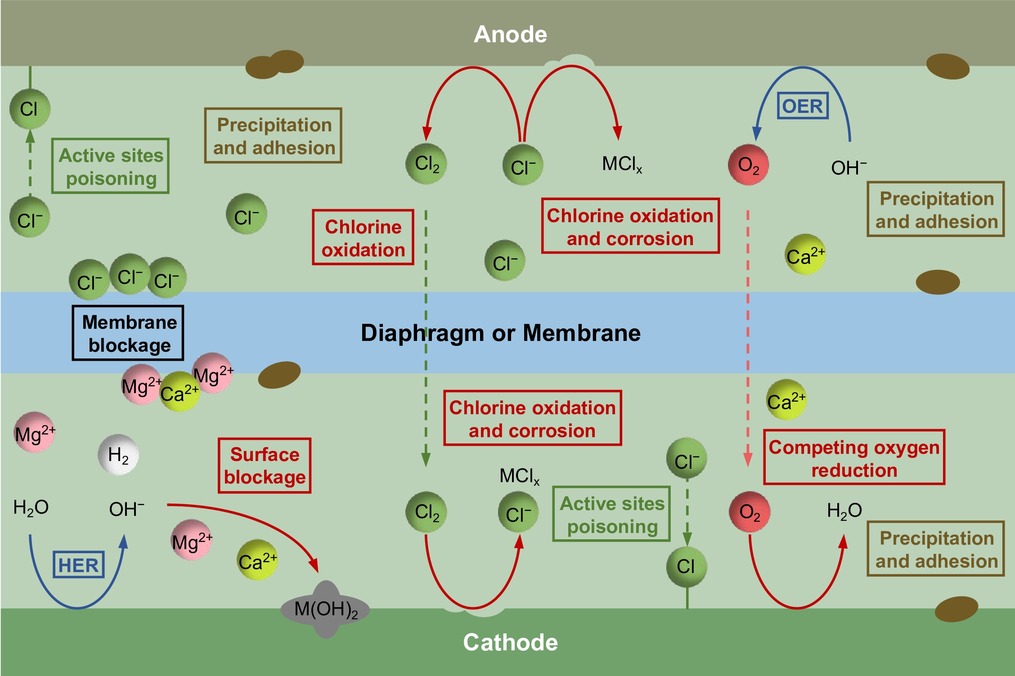
Figure 1.
Challenges of DSE.5
-
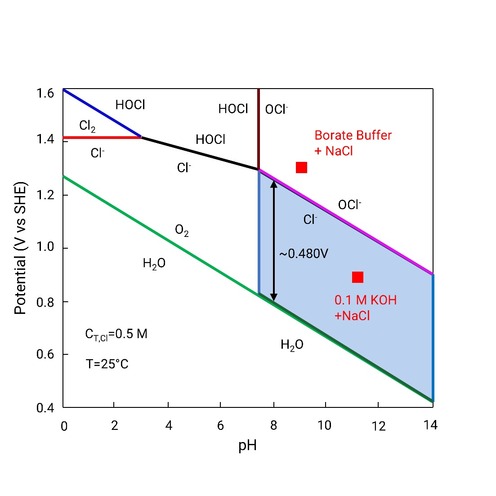
Figure 2.
Competing OER and CER Pourbaix graphs.8
-
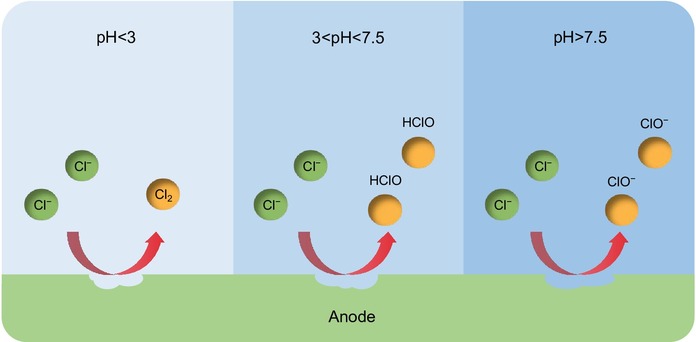
Figure 3.
CER reaction mechanism under different pH.9
-
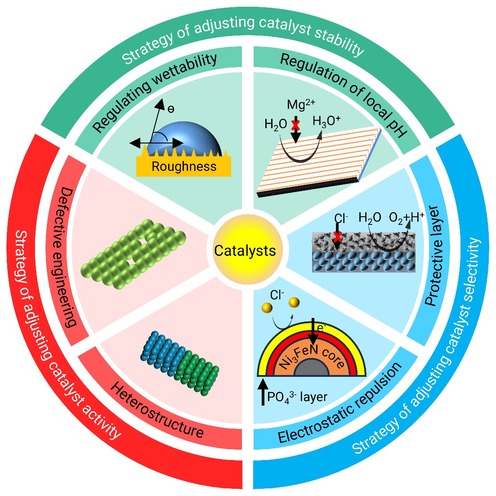
Figure 4.
Strategies to improve catalyst performance.
-
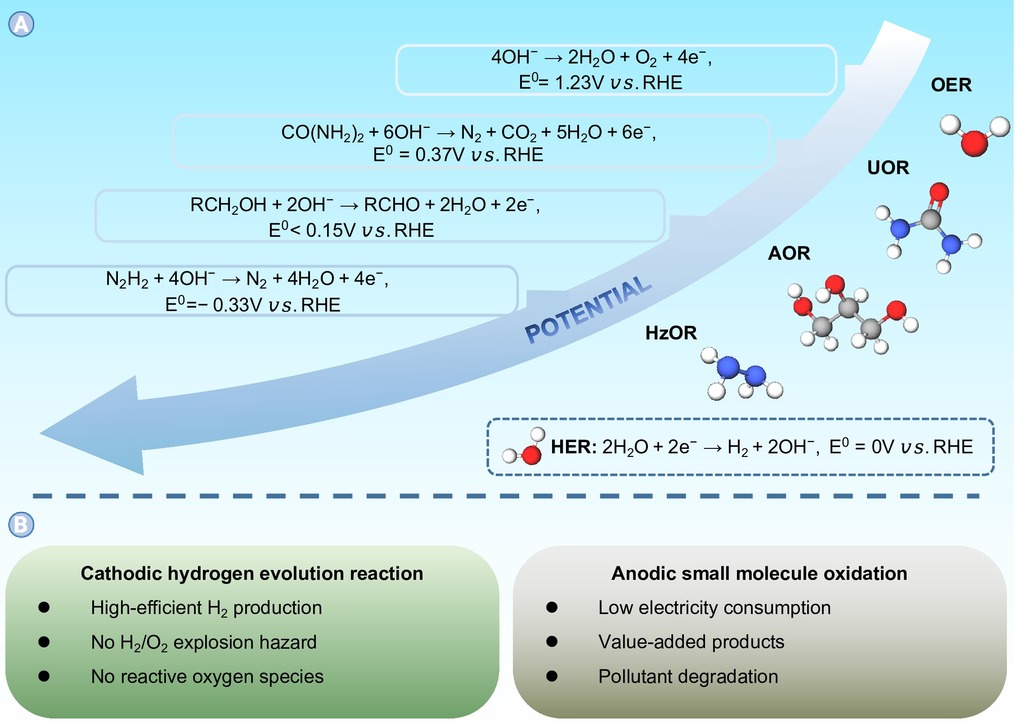
Figure 5.
(A) Comparison of HER and other small molecule oxidation reactions with low onset potentials, (B) Advantages of small molecule assisted oxidation for hydrogen production.
-
Figure 6.
Innovations in electrolysis tanks
-
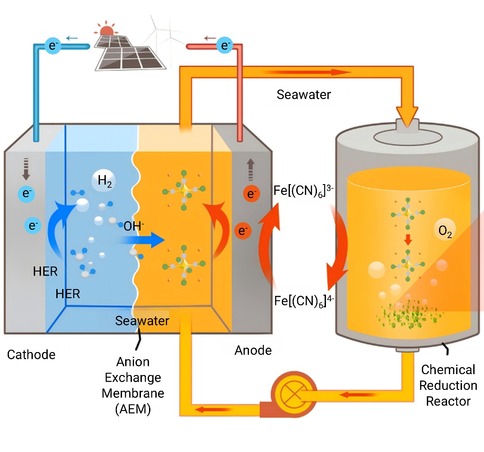
Figure 7.
Redox-mediated seawater direct decoupling electrolyzers.95
-
Figure 8.
In-situ direct seawater electrolysis using floating platform in ocean with uncontrollable wave motion.86
-
Figure 9.
Process scheme of producing fresh water and energy storage based on seawater electrolysis.
