
Comparative RNA editomics prioritizes candidate adaptive RNA editing sites
-
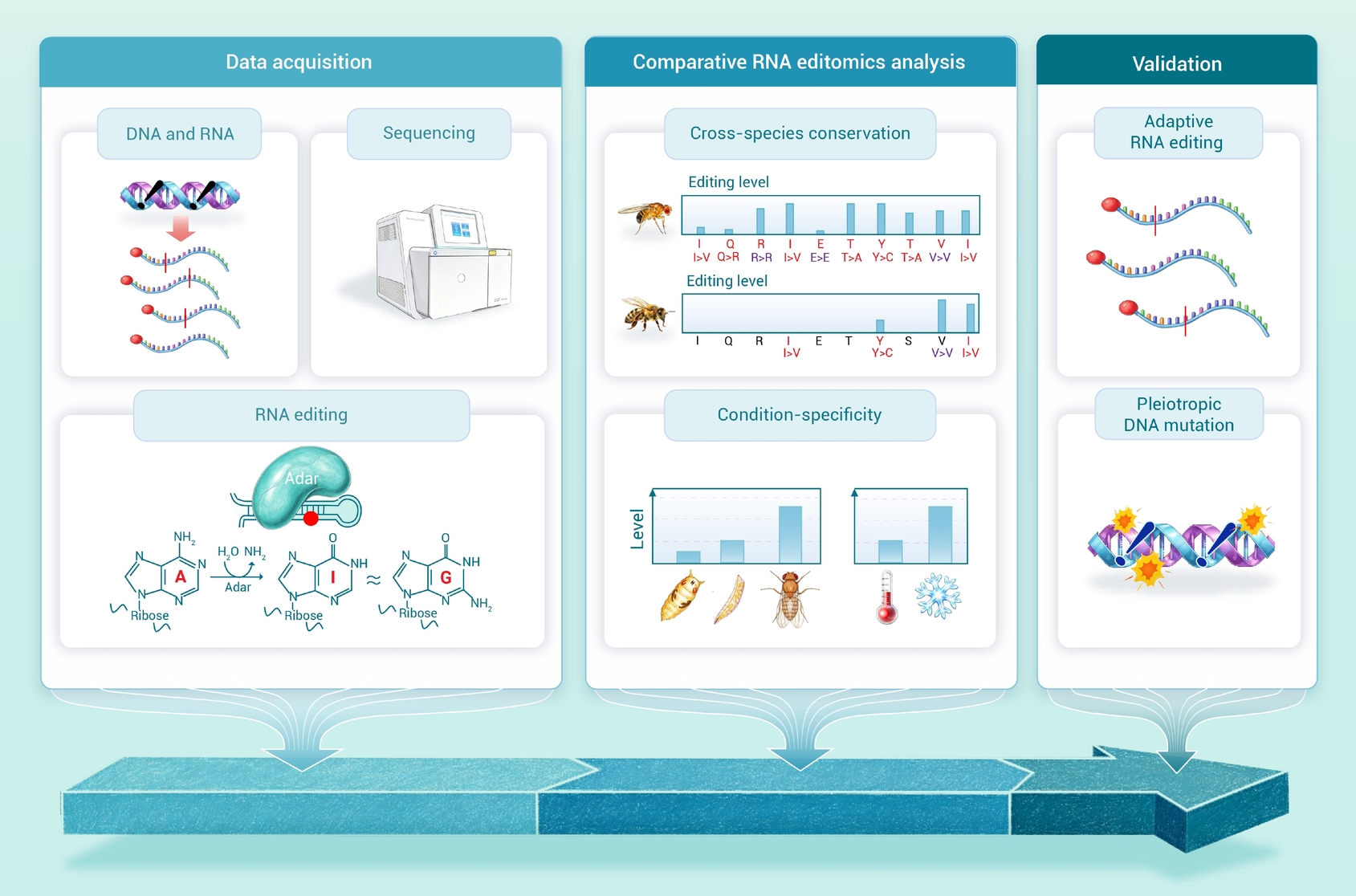
GRAPHICAL ABSTRACT
 DownLoad:
Full size image
-
PUBLIC SUMMARY
-
The neutral theory and molecular error hypothesis propose most molecular complexity may be non-adaptive.
Certain RNA editing sites represent a plastic anti-pleiotropic mechanism resolving evolutionary trade-offs.
Comparative RNA editomics is a pipeline encompassing editing identification and evolutionary analysis.
Validating adaptive RNA editing relies on the comparisons between fully edited and uneditable mutants.
-
-
ABSTRACT
A-to-I mRNA editing is a widespread RNA modification that introduces A-to-G variations at mRNA level, enhancing transcriptomic and proteomic diversity without altering the genome. Recently, the term adaptation has gained significant attention but lacks a mechanistic classification. This article aims to discuss conceptual frameworks and research methods related to adaptive and non-adaptive RNA editing. We begin by discussing neutral evolution and the molecular error theory, highlighting that while identifying adaptive signals is desirable, most molecular complexity may be non-adaptive. Conceptually, adaptation could be understood as a continuum between two poles: (1) the permanent mutations leading to fixed adaptation, which is pleiotropic, and (2) the acquisition of plasticity to cope with changing environments, which is anti-pleiotropic. Adaptive RNA editing actually belongs to the latter class due to its regulatable nature. We introduce the term “comparative RNA editomics” to encompass the analyses related to RNA editing, including identification, selection analysis, linkage analysis, condition-specificity, and evolutionary dynamics based on multi-omics data. Such pipelines allow us to prioritize potential adaptive editing sites (e.g., Adar auto-recoding in insects) from non-adaptive editing (e.g., Drosophila lncRNA roX1 editing). The adaptive nature of several recoding and stop-codon read-through editing sites in Fusarium graminearum have been experimentally validated due to the high feasibility of genetic manipulation and phenotypical assays in fungi. Our deep insights complement traditional views on adaptation and facilitate future studies in functional genomics.-
Keywords:
- RNA editing /
- adaptation /
- neutral evolution /
- comparative RNA editomics /
- experimental validation
-

-
REFERENCES
[1] Zhang P., Zhu Y., Guo Q., et al. (2023). On the origin and evolution of RNA editing in metazoans. Cell Rep. 42:112112. DOI:10.1016/j.celrep.2023.112112 [2] Duan Y., Xie Q., Yang J., et al. (2026). Challenging the prokaryotic MGE-defense origin of eukaryotic RNA editing. mLife 5:296−300. DOI:10.1002/mlf2.70084 [3] Bian Z., Ni Y., Xu J. R., et al. (2019). A-to-I mRNA editing in fungi: occurrence, function, and evolution. Cell. Mol. Life Sci. 76:329−340. DOI:10.1007/s00018-018-2936-3 [4] Bar-Yaacov D., Pilpel Y. and Dahan O. (2018). RNA editing in bacteria: occurrence, regulation and significance. RNA Biol. 15:863−867. DOI:10.1080/15476286.2018.1481698 [5] Duan Y. (2025). Accurate interpretation of inosines in RNAs: recognized as G is more than basepairing with C. Epigenomics 7:733−738. DOI:10.1080/17501911.2025.2523237 [6] Eisenberg E. and Levanon E. Y. (2018). A-to-I RNA editing - immune protector and transcriptome diversifier. Nat. Rev. Genet. 19:473−490. DOI:10.1038/s41576-018-0006-1 [7] Pullirsch D. and Jantsch M. F. (2010). Proteome diversification by adenosine to inosine RNA-editing. RNA Biol. 7:205−212. DOI. DOI:10.4161/rna.7.2.11286 [8] Du Y., Wang C., Zhang Y., et al. (2025). Evolutionary origins and adaptive significance of A-to-I RNA editing in animals and fungi. BioEssays 47:e202400220. DOI:10.1002/bies.202400220 [9] Duan Y., Li H. and Cai W. (2023). Adaptation of A-to-I RNA editing in bacteria, fungi, and animals. Front. Microbiol. 14:1204080. DOI:10.3389/fmicb.2023.1204080 [10] Yablonovitch A. L., Deng P., Jacobson D., et al. (2017). The evolution and adaptation of A-to-I RNA editing. PLoS Genet. 13:e1007064. DOI:10.1371/journal.pgen.1007064 [11] Redensek S., Dolzan V. and Kunej T. (2018). From genomics to omics landscapes of Parkinson’s disease: revealing the molecular mechanisms. OMICS 22:1−16. DOI:10.1089/omi.2017.0181 [12] Zhang J. and Xu C. (2022). Gene product diversity: adaptive or not. Trends Genet. 38:1112−1122. DOI:10.1016/j.tig.2022.05.002 [13] Duan Y., Cao Q., Xie Q., et al. (2025). On the origin, evolution, and maintenance of RNA editing. Nucleic Acids Res. 53:gkaf947. DOI:10.1093/nar/gkaf947 [14] Yuan Y., Zhang Y., Zhang P., et al. (2021). Comparative genomics provides insights into the aquatic adaptations of mammals. Proc. Natl. Acad. Sci. U. S. A. 118:e2106080118. DOI:10.1073/pnas.2106080118 [15] Wang Z. and Duan Y. (2025). Fascination with RNA editing: in the lights of evolution and biology. J. Mol. Evol. 93:543−552. DOI:10.1007/s00239-025-10270-8 [16] Liu Z. and Zhang J. (2018). Human C-to-U coding RNA editing is largely nonadaptive. Mol. Biol. Evol. 35:963−969. DOI:10.1093/molbev/msy011 [17] Xu G. and Zhang J. (2014). Human coding RNA editing is generally nonadaptive. Proc. Natl. Acad. Sci. U. S. A. 111:3769−3774. DOI:10.1073/pnas.1321745111 [18] Kimura M. and Ohta T. (1971). On the rate of molecular evolution. J. Mol. Evol. 1:1−17. DOI:10.1007/BF01659390 [19] Ohta T. (1998). Evolution by nearly-neutral mutations. Genetica 102-103:83-90. DOI:10.1023/A:1017007513825 [20] Liu Y., Pan Y., Cao Y., et al. (2025). The genetics and evolution of moth melanism in the absence of strong natural selection. Nat. Sci. Rev. 13:nwaf441. DOI:10.1093/nsr/nwaf441 [21] Liu Z. and Zhang J. (2018). Most m6A RNA modifications in protein-coding regions are evolutionarily unconserved and likely nonfunctional. Mol. Biol. Evol. 35:666−675. DOI:10.1093/molbev/msx320 [22] Xu C. and Zhang J. (2018). Alternative polyadenylation of mammalian transcripts is generally deleterious, not adaptive. Cell Syst. 6:734−742. DOI:10.1016/j.cels.2018.05.007 [23] Xu C. and Zhang J. (2020). A different perspective on alternative cleavage and polyadenylation. Nat. Rev. Genet. 21:63. DOI:10.1038/s41576-019-0198-z [24] Grmai L., Hudry B., Miguel-Aliaga I., et al. (2018). Chinmo prevents transformer alternative splicing to maintain male sex identity. PLoS Genet. 14:e1007203. DOI:10.1371/journal.pgen.1007203 [25] Cao Q. and Duan Y. (2026). RNA modifications as a means of self-recognition and immune protection. Crit. Rev. Biochem. Mol. Biol. 61:17−23. DOI:10.1080/10409238.2025.2591027 [26] Birk M. A., Liscovitch-Brauer N., Dominguez M. J., et al. (2023). Temperature-dependent RNA editing in octopus extensively recodes the neural proteome. Cell 186:2544−2555. DOI:10.1016/j.cell.2023.05.004 [27] Liu J., Ma L., Xie Q., et al. (2026). The neuronal A-to-I RNA editome of Solenopsis invicta expands conserved recoding repertoire between two ant species. BMC Genomics DOI:10.1186/s12864-026-13199-4. [28] Duan Y., Cai W. and Li H. (2023). Chloroplast C-to-U RNA editing in vascular plants is adaptive due to its restorative effect: testing the restorative hypothesis. RNA 29:141−152. DOI:10.1261/rna.079450.122 [29] Yang L., Yi L., Yang J., et al. (2024). Temporal landscape and translational regulation of A-to-I RNA editing in mouse retina development. BMC Biol. 22:106. DOI:10.1186/s12915-024-01908-y [30] Duan Y. and Cao Q. (2025). Systematic revelation and meditation on the significance of long exons using representative eukaryotic genomes. BMC Genomics 26:290. DOI:10.1186/s12864-025-11504-1 [31] Duan Y., Xu Y., Song F., et al. (2023). Differential adaptive RNA editing signals between insects and plants revealed by a new measurement termed haplotype diversity. Biol. Direct. 18:47. DOI:10.1186/s13062-023-00404-7 [32] Liu H., Li Y., Chen D., et al. (2017). A-to-I RNA editing is developmentally regulated and generally adaptive for sexual reproduction in Neurospora crassa. Proc. Natl. Acad. Sci. U. S. A. 114:7756−7765. DOI:10.1073/pnas.1702591114 [33] Elias E., Gifford I., Didi L., et al. (2025). A-to-I mRNA editing recodes hundreds of genes in dozens of species and produces endogenous protein isoforms in bacteria. Nucleic Acids Res. 53:gkaf656. DOI:10.1093/nar/gkaf656 [34] Du Z., Wang X., Duan Y., et al. (2025). Global invasion history and genomic signatures of adaptation of the highly invasive sycamore lace bug. Genom. Proteom. Bioinf. 22:qzae074. DOI:10.1093/gpbjnl/qzae074 [35] Lamichhaney S., Berglund J., Almen M. S., et al. (2015). Evolution of Darwin's finches and their beaks revealed by genome sequencing. Nature 518:371−375. DOI:10.1038/nature14181 [36] De Bie T., Cristianini N., Demuth J. P., et al. (2006). CAFE: a computational tool for the study of gene family evolution. Bioinformatics 22:1269−1271. DOI:10.1093/bioinformatics/btl097 [37] Cui J., Chen Y., Hines H. M., et al. (2024). Does coevolution in refugia drive mimicry in bumble bees. Insights from a South Asian mimicry group. Sci. Adv. 10:eadl2286. DOI:10.1126/sciadv.adl2286 [38] Walton O. C. and Stevens M. (2018). Avian vision models and field experiments determine the survival value of peppered moth camouflage. Commun. Biol. 1:118. DOI:10.1038/s42003-018-0126-3 [39] Van't Hof A. E., Campagne P., Rigden D. J., et al. (2016). The industrial melanism mutation in British peppered moths is a transposable element. Nature 534:102−105. DOI:10.1038/nature17951 [40] Ma L., Duan Y., Gao F., et al. (2025). Hemipteran insects experience recurrent and synergistic molecular evolution adapting to diet shift. BMC Biol. 23:320. DOI:10.1186/s12915-025-02429-y [41] Ma L., Duan Y., Wu Y., et al. (2024). Comparative genomic analyses on assassin bug Rhynocoris fuscipes (Hemiptera: Reduviidae) reveal genetic bases governing the diet-shift. iScience 27. DOI:ARTN 110411 10.1016/j.isci.2024.110411. [42] He Y., Guo Y., Zheng W., et al. (2023). Polygenic adaptation leads to a higher reproductive fitness of native Tibetans at high altitude. Curr. Biol. 33:4037−4051. DOI:10.1016/j.cub.2023.08.021 [43] Tian S., Lee B., Banerjee T. D., et al. (2025). A novel Hox gene promoter fuels the evolution of adaptive phenotypic plasticity in wing eyespots of satyrid butterflies. Nat. Ecol. Evol. 9:2391–2403. DOI:10.1038/s41559-025-02891-5. [44] Wang S., Qiu L., Wu Y., et al. (2026). Temperature-responsive spatial-temporal regulation underlies phenotypic plasticity of body pigmentation in Eastern honey bee. Insect Biochem. Mol. Biol. 186:104454. DOI:10.1016/j.ibmb.2025.104454 [45] Zheng S., Wang Y., Li G., et al. (2025). Functional polymorphism of CYCLE underlies the diapause variation in moths. Science 388:eado2129. DOI:10.1126/science.ado2129 [46] Xin K., Kang X., Liu M., et al. (2025). Navigating trade-offs: the adaptive significance of A-to-I RNA editing in fungi, bacteria, and animals. Epigenetics Insights 18:e002. DOI:10.48130/epi-0025-0002 [47] Wang X., Du Z., Duan Y., et al. (2025). Population genomics analyses reveal the role of hybridization in the rapid invasion of fall armyworm. J. Adv. Res. 74:43−55. DOI:10.1016/j.jare.2024.09.028 [48] Akam M. (1998). The Yin and Yang of Evo/Devo. Cell 92:153−155. DOI:10.1016/s0092-8674(00)80909-5 [49] Beldade P. and Monteiro A. (2021). Eco-evo-devo advances with butterfly eyespots. Curr. Opin. Genet. Dev. 69:6−13. DOI:10.1016/j.gde.2020.12.011 [50] Gomez-Llano M., Bassar R. D., Svensson E. I., et al. (2024). Meta-analytical evidence for frequency-dependent selection across the tree of life. Ecol. Lett. 27:e14477. DOI:10.1111/ele.14477 [51] Liddicoat B. J., Piskol R., Chalk A. M., et al. (2015). RNA editing by ADAR1 prevents MDA5 sensing of endogenous dsRNA as nonself. Science 349:1115−1120. DOI:10.1126/science.aac7049 [52] Jarmoskaite I. and Li J. B. (2024). Multifaceted roles of RNA editing enzyme ADAR1 in innate immunity. RNA 30:500−511. DOI:10.1261/rna.079953.124 [53] Cao Q. and Duan Y. (2026). ADAR-mediated tolerance and SOS splicing-mediated excision of transposable elements. Transcription 17:28−31. DOI:10.1080/21541264.2026.2638060 [54] Zhang H., Fu Q., Shi X., et al. (2020). Human A-to-I RNA editing SNP loci are enriched in GWAS signals for autoimmune diseases and under balancing selection. Genome Biol. 21:288. DOI:10.1186/s13059-020-02205-x [55] Duan Y., Ma L., Liu J., et al. (2024). The first A-to-I RNA editome of hemipteran species Coridius chinensis reveals overrepresented recoding and prevalent intron editing in early-diverging insects. Cell. Mol. Life Sci. 81:136. DOI:10.1007/s00018-024-05175-6 [56] Yu Y., Zhou H., Kong Y., et al. (2016). The landscape of A-to-I RNA editome is shaped by both positive and purifying selection. PLoS Genet. 12:e1006191. DOI:10.1371/journal.pgen.1006191 [57] Zak H., Rozenfeld E., Levi M., et al. (2024). A highly conserved A-to-I RNA editing event within the glutamate-gated chloride channel GluClalpha is necessary for olfactory-based behaviors in Drosophila. Sci. Adv. 10:eadi9101. DOI:10.1126/sciadv.adi9101 [58] Xie Q. and Duan Y. (2025). An ultimate question for functional A-to-I mRNA editing: why not a genomic G. J. Mol. Evol. 93:185−192. DOI:10.1007/s00239-025-10238-8 [59] Chu D. and Wei L. (2019). The chloroplast and mitochondrial C-to-U RNA editing in Arabidopsis thaliana shows signals of adaptation. Plant Direct 3:e00169. DOI:10.1002/pld3.169 [60] Higuchi M., Stefan M., Single F. N., et al. (2000). Point mutation in an AMPA receptor gene rescues lethality in mice deficient in the RNA-editing enzyme ADAR2. Nature 406:78−81. DOI:10.1038/35017558 [61] Sommer B., Kohler M., Sprengel R., et al. (1991). RNA editing in brain controls a determinant of ion flow in glutamate-gated channels. Cell 67:11−19. DOI:10.1016/0092-8674(91)90568-J [62] Cao Q. and Duan Y. (2026). Functionality versus adaptation: Insights from transcriptional adaptation. J. Mol. Evol. 94:416−423. DOI:10.1007/s00239-026-10318-3 [63] Xie Q., Ma L., Cai W., et al. (2026). How particular RNA editing sites can be selectively superior to heterozygous SNPs independent of temporospatial regulation. Mol. Cell. Biol. 46:238−252. DOI:10.1080/10985549.2025.2603947 [64] Liscovitch-Brauer N., Alon S., Porath H. T., et al. (2017). Trade-off between transcriptome plasticity and genome evolution in cephalopods. Cell 169:191-202 e111. DOI:10.1016/j.cell.2017.03.025. [65] Jiang D. and Zhang J. (2019). The preponderance of nonsynonymous A-to-I RNA editing in coleoids is nonadaptive. Nat. Commun. 10:5411. DOI:10.1038/s41467-019-13275-2 [66] Shoshan Y., Liscovitch-Brauer N., Rosenthal J. J. C., et al. (2021). Adaptive proteome diversification by nonsynonymous A-to-I RNA editing in coleoid cephalopods. Mol. Biol. Evol. 38:3775−3788. DOI:10.1093/molbev/msab154 [67] Lo Giudice C., Hernandez I., Ceci L. R., et al. (2019). RNA editing in plants: A comprehensive survey of bioinformatics tools and databases. Plant Physiol. Bioch. 137:53−61. DOI:10.1016/j.plaphy.2019.02.001 [68] Takenaka M., Zehrmann A., Verbitskiy D., et al. (2013). RNA editing in plants and its evolution. Annu. Rev. Genet. 47:335−352. DOI:10.1146/annurev-genet-111212-133519 [69] Eisenberg E. (2012). Bioinformatic approaches for identification of A-to-I editing sites. Curr. Top. Microbiol. Immunol. 353:145−162. DOI:10.1007/82_2011_147 [70] Wei L. (2024). In silico and experimental approaches for validating RNA editing events in transcriptomes. RNA Biol. 21:31−36. DOI:10.1080/15476286.2024.2432729 [71] Xu Y., Liu J., Zhao T., et al. (2023). Identification and interpretation of A-to-I RNA editing events in insect transcriptomes. Int. J. Mol. Sci. 24:17126. DOI:10.3390/ijms242417126 [72] Duan Y., Huang M., Ye L., et al. (2026). Dynamic A-to-I RNA editing in response to gut microbiome in honeybees. Genome Res. 36:713−725. DOI:10.1101/gr.280291.124 [73] Duan Y., Zhao T., Xie Q., et al. (2026). Dynamic transcriptome, proteome, and A-to-I editome are associated with temperature adaptation in the highly invasive lace bug. Chem. Eng. J. 538:176930. DOI:10.1016/j.cej.2026.176930 [74] Zheng C., Ma L., Song F., et al. (2024). Comparative genomic analyses reveal evidence for adaptive A-to-I RNA editing in insect Adar gene. Epigenetics 19:2333665. DOI:10.1080/15592294.2024.2333665 [75] Di Giorgio S., Martignano F., Torcia M. G., et al. (2020). Evidence for host-dependent RNA editing in the transcriptome of SARS-CoV-2. Sci. Adv. 6:eabb5813. DOI:10.1126/sciadv.abb5813 [76] Wei L. (2022). Reconciling the debate on deamination on viral RNA. J. Appl. Genet. 63:583−585. DOI:10.1007/s13353-022-00698-9 [77] Tang F., Barbacioru C., Wang Y., et al. (2009). mRNA-Seq whole-transcriptome analysis of a single cell. Nat. Methods 6:377−382. DOI:10.1038/nmeth.1315 [78] Hagemann-Jensen M., Ziegenhain C. and Sandberg R. (2022). Scalable single-cell RNA sequencing from full transcripts with Smart-seq3xpress. Nat. Biotechnol 40:1452−1457. DOI:10.1038/s41587-022-01311-4 [79] Duan Y., Xie Q., Ma L., et al. (2025). Abundant A-to-I RNA editing in spermatocytes may suppress transposons to compensate for piRNA downregulation in male germlines. RNA Biol. 22:1−9. DOI:10.1080/15476286.2025.2578573 [80] Duan Y., Liu J., Xu S., et al. (2026). A single-cell transcriptome atlas reveals paradoxical monoallelic expression of RNA editing and heterozygous SNPs. Nucleic Acids Res. 54:gkag846. DOI:10.1093/nar/gkag846 [81] Picardi E. and Pesole G. (2013). REDItools: high-throughput RNA editing detection made easy. Bioinformatics 29:1813−1814. DOI:10.1093/bioinformatics/btt287 [82] Duan Y., Chen S., Cai W., et al. (2025). Signal peptides restrict genome evolution and A-to-I RNA editing. NAR Genom. Bioinform. 7:lqaf096. DOI:10.1093/nargab/lqaf096 [83] Owji H., Nezafat N., Negahdaripour M., et al. (2018). A comprehensive review of signal peptides: Structure, roles, and applications. Eur. J. Cell Biol. 97:422−441. DOI:10.1016/j.ejcb.2018.06.003 [84] Zhang Y. and Duan Y. (2023). Genome-wide analysis on driver and passenger RNA editing sites suggests an underestimation of adaptive signals in insects. Genes (Basel) 14:1951. DOI:10.3390/genes14101951 [85] Liu J., Zhao T., Zheng C., et al. (2024). An orthology-based methodology as a complementary approach to retrieve evolutionarily conserved A-to-I RNA editing sites. RNA Biol. 21:29−45. DOI:10.1080/15476286.2024.2397757 [86] Lewontin R. C. (1988). On measures of gametic disequilibrium. Genetics 120:849−852. DOI:10.1093/genetics/120.3.849 [87] Graveley B. R., Brooks A. N., Carlson J. W., et al. (2011). The developmental transcriptome of Drosophila melanogaster. Nature 471:473−479. DOI:10.1038/nature09715 [88] Cao Q., Wang Y. and Duan Y. (2026). Dynamic and extensive A-to-I RNA recoding in immunoglobulin shapes myeloid neoplasms transcriptome. J. Biol. Chem. 302:111066. DOI:10.1016/j.jbc.2025.111066 [89] Li Q., Wang Z., Lian J., et al. (2014). Caste-specific RNA editomes in the leaf-cutting ant Acromyrmex echinatior. Nat. Commun. 5:4943. DOI:10.1038/ncomms5943 [90] Yablonovitch A. L., Fu J., Li K., et al. (2017). Regulation of gene expression and RNA editing in Drosophila adapting to divergent microclimates. Nat. Commun. 8:1570. DOI:10.1038/s41467-017-01658-2 [91] Liu J., Xie Q., Cai W., et al. (2025). Promiscuous RNA editing in lncRNA roX1 is generally non-adaptive. RNA 31:1357−1367. DOI:10.1261/rna.080591.125 [92] Ilik I. A., Quinn J. J., Georgiev P., et al. (2013). Tandem stem-loops in roX RNAs act together to mediate X chromosome dosage compensation in Drosophila. Mol. Cell. 51:156−173. DOI:10.1016/j.molcel.2013.07.001 [93] Meller V. H., Wu K. H., Roman G., et al. (1997). roX1 RNA paints the X chromosome of male Drosophila and is regulated by the dosage compensation system. Cell 88:445−457. DOI:10.1016/s0092-8674(00)81885-1 [94] Porath H. T., Hazan E., Shpigler H., et al. (2019). RNA editing is abundant and correlates with task performance in a social bumblebee. Nat. Commun. 10:1605. DOI:10.1038/s41467-019-09543-w [95] Rangan K. J. and Reck-Peterson S. L. (2023). RNA recoding in cephalopods tailors microtubule motor protein function. Cell 186:2531−2543. DOI:10.1016/j.cell.2023.04.032 [96] An N. A., Ding W., Yang X. Z., et al. (2019). Evolutionarily significant A-to-I RNA editing events originated through G-to-A mutations in primates. Genome. Biol. 20:24. DOI:10.1186/s13059-019-1638-y [97] Li B., Duan Y., Du Z., et al. (2024). Natural selection and genetic diversity maintenance in a parasitic wasp during continuous biological control application. Nat. Commun. 15:1379. DOI:10.1038/s41467-024-45631-2 [98] Duan Y., Ma L., Song F., et al. (2023). Autorecoding A-to-I RNA editing sites in the Adar gene underwent compensatory gains and losses in major insect clades. RNA 29:1509−1519. DOI:10.1261/rna.079682.123 [99] Ma L., Zheng C., Xu S., et al. (2023). A full repertoire of Hemiptera genomes reveals a multi-step evolutionary trajectory of auto-RNA editing site in insect Adar gene. RNA Biol. 20:703−714. DOI:10.1080/15476286.2023.2254985 [100] Zheng C., Liu J. and Duan Y. (2024). Adaptive evolution of A-to-I auto-editing site in Adar of eusocial insects. BMC Genomics 25:803. DOI:10.1186/s12864-024-10709-0 [101] Zhao T., Ma L., Xu S., et al. (2024). Narrowing down the candidates of beneficial A-to-I RNA editing by comparing the recoding sites with uneditable counterparts. Nucleus 15:2304503. DOI:10.1080/19491034.2024.2304503 [102] Savva Y. A., Jepson J. E., Sahin A., et al. (2012). Auto-regulatory RNA editing fine-tunes mRNA re-coding and complex behaviour in Drosophila. Nat. Commun. 3:790. DOI:10.1038/ncomms1789 [103] Ma L., Zheng C., Liu J., et al. (2024). Learning from the codon table: convergent recoding provides novel understanding on the evolution of A-to-I RNA editing. J. Mol. Evol. 92:488−504. DOI:10.1007/s00239-024-10190-z [104] Zhang R., Deng P., Jacobson D., et al. (2017). Evolutionary analysis reveals regulatory and functional landscape of coding and non-coding RNA editing. PLoS Genet. 13:e1006563. DOI:10.1371/journal.pgen.1006563 [105] Xu G. and Zhang J. (2015). In search of beneficial coding RNA editing. Mol. Biol. Evol. 32:536−541. DOI:10.1093/molbev/msu314 [106] Duan Y., Ma L., Zhao T., et al. (2024). Conserved A-to-I RNA editing with non-conserved recoding expands the candidates of functional editing sites. Fly (Austin) 18:2367359. DOI:10.1080/19336934.2024.2367359 [107] Wang Y., Xu X., Yu S., et al. (2017). Systematic characterization of A-to-I RNA editing hotspots in microRNAs across human cancers. Genome Res. 27:1112−1125. DOI:10.1101/gr.219741.116 [108] Qi Z., Lu P., Long X., et al. (2024). Adaptive advantages of restorative RNA editing in fungi for resolving survival-reproduction trade-offs. Sci. Adv. 10:eadk6130. DOI:10.1126/sciadv.adk6130 [109] Xin K., Zhang Y., Fan L., et al. (2023). Experimental evidence for the functional importance and adaptive advantage of A-to-I RNA editing in fungi. Proc. Natl. Acad. Sci. U. S. A. 120:e2219029120. DOI:10.1073/pnas.2219029120 [110] Feng C., Xin K., Du Y., et al. (2024). Unveiling the A-to-I mRNA editing machinery and its regulation and evolution in fungi. Nat. Commun. 15:3934. DOI:10.1038/s41467-024-48336-8 [111] Bar-Yaacov D., Mordret E., Towers R., et al. (2017). RNA editing in bacteria recodes multiple proteins and regulates an evolutionarily conserved toxin-antitoxin system. Genome Res. 27:1696−1703. DOI:10.1101/gr.222760.117 [112] Didi L., Fargeon O., Aspit L., et al. (2025). A-to-I mRNA editing in bacteria can affect protein sequence, disulfide bond formation, and function. Nucleic Acids Res. 53:gkaf584. DOI:10.1093/nar/gkaf584 [113] Covello P. S. and Gray M. W. (1993). On the evolution of RNA editing. Trends Genet. 9:265−268. DOI:10.1016/0168-9525(93)90011-6 [114] Jobson R. W. and Qiu Y. L. (2008). Did RNA editing in plant organellar genomes originate under natural selection or through genetic drift. Biol. Direct 3:43. DOI:10.1186/1745-6150-3-43 [115] Chateigner-Boutin A. L. and Small I. (2010). Plant RNA editing. RNA Biol. 7:213−219. DOI:10.4161/rna.7.2.11343 [116] Chateigner-Boutin A. L. and Small I. (2011). Organellar RNA editing. Wiley Interdiscip. Rev. RNA 2:493−506. DOI:10.1002/wrna.72 [117] Duan Y. and Cao Q. (2025). On the reversibility of RNA deamination versus RNA methylation: exploring the proximate and ultimate causes. J. Genet. 104:20. DOI:10.1007/s12041-025-01510-3 [118] Wang X., Lu Z., Gomez A., et al. (2014). N6-methyladenosine-dependent regulation of messenger RNA stability. Nature 505:117−120. DOI:10.1038/nature12730 [119] Wang X., Zhao B. S., Roundtree I. A., et al. (2015). N6-methyladenosine modulates messenger RNA translation efficiency. Cell 161:1388−1399. DOI:10.1016/j.cell.2015.05.014 [120] Goodwin S., McPherson J. D. and McCombie W. R. (2016). Coming of age: ten years of next-generation sequencing technologies. Nat. Rev. Genet. 17:333−351. DOI:10.1038/nrg.2016.49 [121] Wenger A. M., Peluso P., Rowell W. J., et al. (2019). Accurate circular consensus long-read sequencing improves variant detection and assembly of a human genome. Nat. Biotechnol. 37:1155−1162. DOI:10.1038/s41587-019-0217-9 -
ABOUT THIS ARTICLE
Cite this article:
Duan Y.G., Cai W.Z. and Li H. (2026). Comparative RNA editomics prioritizes candidate adaptive RNA editing sites. The Innovation Insights 1:100009. https://doi.org/10.59717/j.tiis.2026.100009
Welcome!
To request copyright permission to republish or share portions of our works, please visit Copyright Clearance Center's (CCC) Marketplace website at marketplace.copyright.com.
Export File
Citation
Duan Y.G., Cai W.Z. and Li H. (2026). Comparative RNA editomics prioritizes candidate adaptive RNA editing sites. The Innovation Insights 1:100009. https://doi.org/10.59717/j.tiis.2026.100009

Format
Content
-
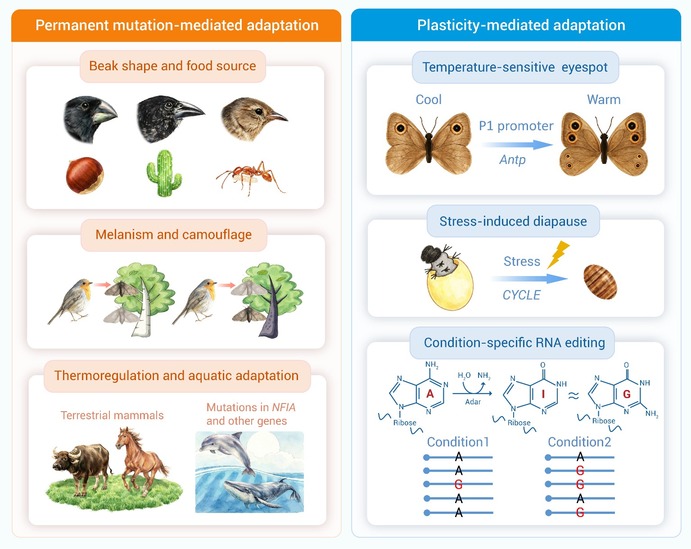
Figure 1.
Illustration of two conceptual poles of adaptation
-
Figure 2.
Comparative RNA editomics analysis followed by experimental validation to identify adaptive RNA editing sites
-
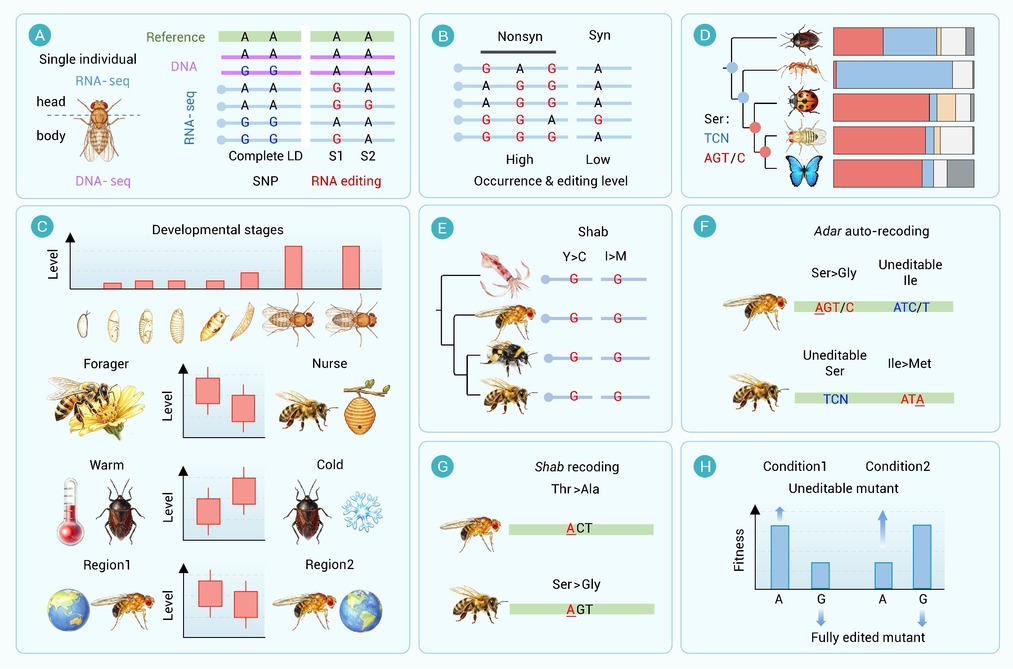
Figure 3.
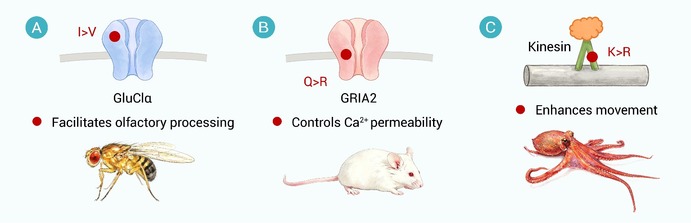
In search of functional and potentially adaptive RNA editing sites in animals
