
Continuous microreactor technology to container-scale manufacturing: A blueprint for the next generation pharma industry
-
GRAPHICAL ABSTRACT
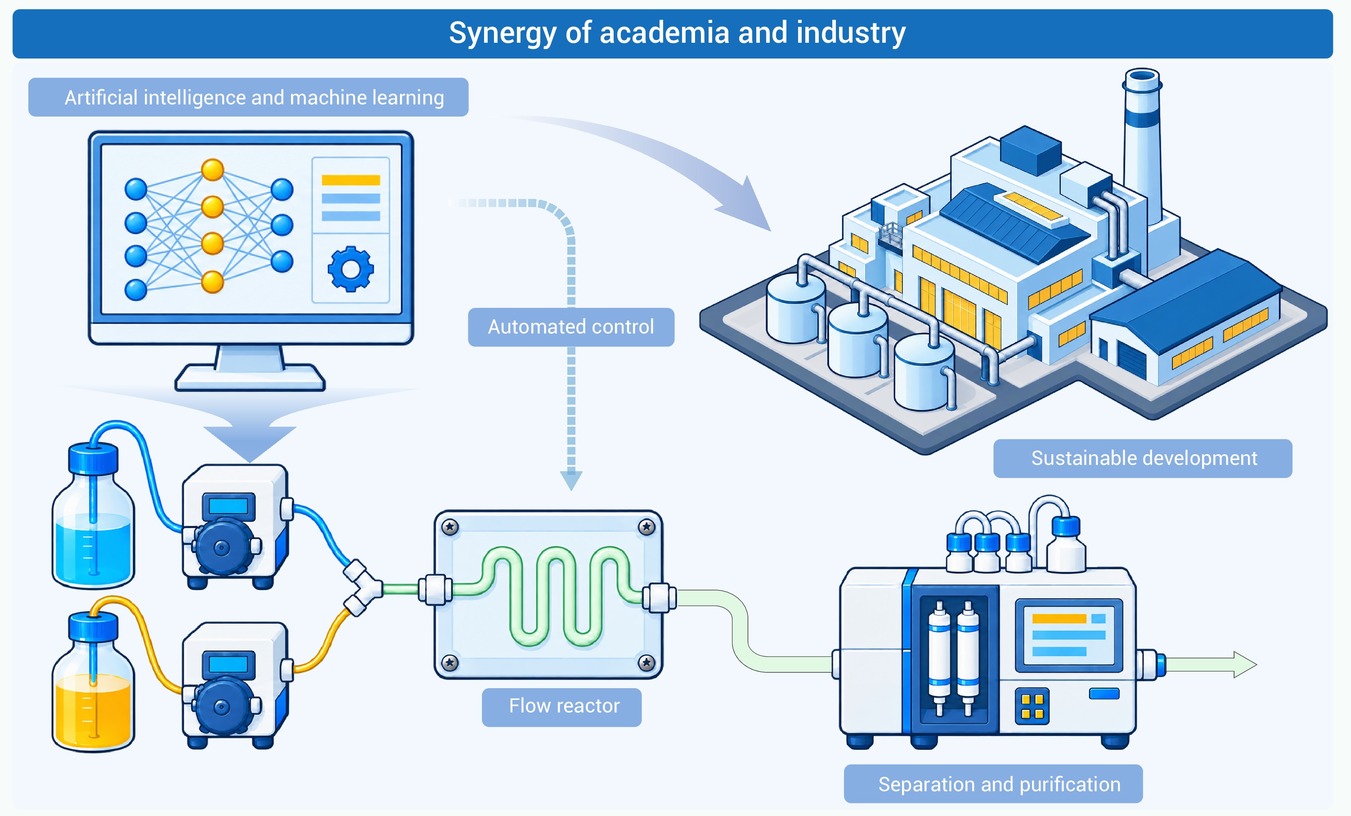
 DownLoad:
Full size image
-
PUBLIC SUMMARY
-
Integrated flow purification combines separation and isolation with continuous synthesis.
Artificial intelligence and real-time monitoring support data-driven process optimization.
Integrated purification helps reduce waste, solvent use, and intermediate processing steps.
Industrial flow platforms combine reaction, purification, and product isolation in one process.
Modular plants offer flexible production, from active ingredients to distributed manufacturing.
-
-
ABSTRACT
Continuous flow chemistry and microfluidic technologies are presently regarded as a pivota platform for the technological transformation of the pharmaceutical and fine-chemical sectors, facilitating the transition from conventional batch manufacturing to intelligent, sustainable, and fully integrated production systems. In this review, recent advances in the continuous synthesis of active pharmaceutical substances (APIs) and bioactive molecules such as amino acids and peptides are systematically organized, with particular emphasis on the utilization of microfluidic reactors, multistage flow platforms, and modular production complexes. Contemporary strategies for scale-up, notably numbering-up, the integration of Process Analytical Technology (PAT), and the deployment of artificial intelligence (AI) and machine learning (ML) algorithms for autonomous synthesis optimization, predictive quality control, and the implementation of self-optimizing reactors, are examined. Special attention is given to inline purification and isolation techniques, including liquid–liquid extraction, membrane-based separations, scavenger systems, continuous chromatography, and microfluidic crystallization. Emerging trends toward modular and container-based “mini-plants” are analyzed as the foundation of distributed manufacturing concepts and “pharmaceuticals-on-demand” paradigms. The synthesis of these elements demonstrates that the convergence of flow chemistry, digitalization, automation, and AI-driven control establishes a new paradigm of sustainable, flexible, and decentralized chemical-pharmaceutical production. Overall, the reviewed studies indicate that continuous microfluidic technologies constitute one of the most promising avenues for the next generation of the pharmaceutical industry. -

-
REFERENCES
[1] Jamieson P., Bannon R., Cronly D., et al. (2026). The impact of continuous flow technology and collaboration between academia and industry. JACS Au 6:691−719. DOI:10.1021/jacsau.5c01617 [2] Bonciolini S., Pulcinella A. and Noël T. (2025). Tech-enhanced synthesis: Exploring the synergy between organic chemistry and technology. J. Am. Chem. Soc. 147:28523−28545. DOI:10.1021/jacs.5c10303 [3] Gutmann B., Cantillo D. and Kappe C.O. (2015). Continuous-flow technology—A tool for the safe manufacturing of active pharmaceutical ingredients. Angew. Chem., Int. Ed. 54:6688−6728. DOI:10.1002/anie.201409318 [4] Lee S.L., O’Connor T.F., Yang X., et al. (2015). Modernizing pharmaceutical manufacturing: from batch to continuous production. J. Pharm. Innov. 10:191−199. DOI:10.1007/s12247-015-9215-8 [5] Kochetkov K.A., Bystrova N.A., Pavlov P.A., et al. (2022). Microfluidic asymmetrical synthesis and chiral analysis. J. Ind. Eng. Chem. 115:62−91. DOI:10.1016/j.jiec.2022.08.025 [6] Sharma U.K. (2025). Hybrid enabling technologies for organic synthesis. CHIMIA 79:424−432. DOI:10.2533/chimia.2025.424 [7] Movsisyan M., Delbeke E.I.P., Berton J.K.E.T., et al. (2016). Taming hazardous chemistry by continuous flow technology. Chem. Soc. Rev. 45:4892−4928. DOI:10.1039/C5CS00902B [8] Pavlov P.A., Bukharkina T.V., Bystrova N.A., et al. (2025). Microfluidic dithionate reduction: A step forward in effective green chemistry. Results Eng. 26:105602. DOI:10.1016/j.rineng.2025.105602 [9] Zhao W., Wang S., Zhao W., et al. (2025). Continuous-flow microreactor system for enhanced selectivity and safety in nitrobenzene nitration. ACS Omega 10:15503−15510. DOI:10.1021/acsomega.5c00377 [10] Hyer A., Gregory D., Kay K., et al. (2024). Continuous manufacturing of active pharmaceutical ingredients: Current trends and perspectives. Adv. Synth. Catal. 366:357−389. DOI:10.1002/adsc.202301137 [11] Roudsari Z.O., Esmaeili Z., Nasirzadeh N., et al. (2024). Microfluidics as a promising technology for personalized medicine. Bioimpacts 15:29944−29944. DOI:10.34172/bi.29944 [12] Hughes D.L. (2020). Applications of flow chemistry in the pharmaceutical industry—Highlights of the recent patent literature. Org. Process Res. Dev. 24:1850−1860. DOI:10.1021/acs.oprd.0c00156 [13] Raby-Buck S.E., Devlin J., Gupta P., et al. (2025). Continuous flow chemistry for molecular synthesis. Nat. Rev. Methods Primers 5:44. DOI:10.1038/s43586-025-00414-x [14] Oshchepkov M., Makarov N., Anisimov V., et al. (2026). Ceramic-based microfluidic and mesoscale reactor systems: Applications and perspectives. Results Eng. 32:112016. DOI:10.1016/j.rineng.2026.112016 [15] Neyt N.C. and Riley D.L. (2021). Application of reactor engineering concepts in continuous flow chemistry: A review. React. Chem. Eng. 6:1295−1326. DOI:10.1039/d1re00004g [16] Sagandira C.R., Nqeketo S., Mhlana K., et al. (2022). Towards 4th industrial revolution efficient and sustainable continuous flow manufacturing of active pharmaceutical ingredients. React. Chem. Eng. 7:214−244. DOI:10.1039/d1re00483b [17] Hayes H.L.D. and Mallia C.J. (2024). Continuous flow chemistry with solids: A review. Org. Process Res. Dev. 28:1327−1354. DOI:10.1021/acs.oprd.3c00407 [18] Johnston Z., Peme T., Mabasa T., et al. (2026). Advances in solid handling for continuous flow synthesis of specialty chemicals and pharmaceuticals. Commun. Chem. 9:101. DOI:10.1038/s42004-026-01954-3 [19] Rodriguez-Zubiri M. and Felpin F.-X. (2022). Analytical tools integrated in continuous-flow reactors: Which one for what. Org. Process Res. Dev. 26:1766−1793. DOI:10.1021/acs.oprd.2c00102 [20] Fernández-Maza C., Fallanza M., Gómez-Coma L., et al. (2022). Performance of continuous-flow micro-reactors with curved geometries. Experimental and numerical analysis. Chem. Eng. J. 437:135192. DOI:10.1016/j.cej.2022.135192 [21] Taylor C.J., Manson J.A., Clemens G., et al. (2022). Modern advancements in continuous-flow aided kinetic analysis. React. Chem. Eng. 7:1037−1046. DOI:10.1039/d1re00467k [22] Rychev K.V., Pavlov P.A., Kochetkov K.A., et al. (2026). Asymmetric catalysis in microreactor systems of flow chemistry: a powerful tool in the synthesis of biologically active compounds. Russ. Chem. Rev. 95:RCR5233. DOI:10.59761/RCR5233 [23] Nolan L.J., King S.J., Wharry S., et al. (2024). A pharma perspective on sustainability advantages through adoption of continuous flow. Curr. Opin. Green Sustain. Chem. 46:100886. DOI:10.1016/j.cogsc.2024.100886 [24] Conway S.L., Rosas J.G., Overton P., et al. (2023). Implementation of a fully integrated continuous manufacturing line for direct compression and coating at a commercial pharmaceutical facility – Part 1: Operational considerations and control strategy. Int. J. Pharm. 642:122820. DOI:10.1016/j.ijpharm.2023.122820 [25] Velez-Silva N.L., Drennen J.K. and Anderson C.A. (2024). Continuous manufacturing of pharmaceutical products: A density-insensitive near infrared method for the in-line monitoring of continuous powder streams. Int. J. Pharm. 650:123699. DOI:10.1016/j.ijpharm.2023.123699 [26] Wong C.K., Lai R.Y. and Stenzel M.H. (2023). Dynamic metastable polymersomes enable continuous flow manufacturing. Nat. Commun. 14:6237. DOI:10.1038/s41467-023-41883-6 [27] Lovato K., Fier P.S. and Maloney K.M. (2021). The application of modern reactions in large-scale synthesis. Nat. Rev. Chem. 5:546−563. DOI:10.1038/s41570-021-00288-z [28] ltd M.D.F. (2026). Microreactor Technology Market Size, Share & Trends, 2033 [29] Microreactor Technology Market Size | Industry Report, 2033 [30] Oshchepkov M., Tkachenko S., Popov K., et al. (2024). Continuous-flow synthesis of the naphthalimide derivatives for medical and engineering applications. Dyes Pigm. 231:112386. DOI:10.1016/j.dyepig.2024.112386 [31] Zhao X., Jiang H., Wang S., et al. (2025). Microreactors in chemical process intensification: Chemical reactions, crystallizations, extractions and emulsifications. Chem. Eng. J. 519:165223. DOI:10.1016/j.cej.2025.165223 [32] Microreactor Technology Market Trends | Size & CAGR of 21.81%. https://www.industryresearch.biz/market-reports/microreactor-technology-market-113941 (accessed 29 March 2026 [33] Google AUO. Continuous Flow Reactors Yield Multiple Benefits. Chemical Processing, https://www.chemicalprocessing.com/processing-equipment/reaction-synthesis/article/21436111/continuous-flow-reactors-yield-multiple-benefits (2022, accessed 24 September 2026 [34] Poechlauer P., Colberg J., Fisher E., et al. (2013). Pharmaceutical roundtable study demonstrates the value of continuous manufacturing in the design of greener processes. Org. Process Res. Dev. 17:1472−1478. DOI:10.1021/op400245s [35] Nasr M.M., Krumme M., Matsuda Y., et al. (2017). Regulatory perspectives on continuous pharmaceutical manufacturing: Moving from theory to practice. J. Pharm. Sci. 106:3199−3206. DOI:10.1016/j.xphs.2017.06.015 [36] Teżyk M., Milanowski B., Ernst A., et al. (2016). Recent progress in continuous and semi-continuous processing of solid oral dosage forms: a review. Drug Dev. Ind. Pharm. 42:1195−1214. DOI:10.3109/03639045.2015.1122607 [37] Hu C., Shores B.T., Derech R.A., et al. (2020). Continuous reactive crystallization of an API in PFR-CSTR cascade with in-line PATs. React. Chem. Eng. 5:1950−1962. DOI:10.1039/D0RE00216J [38] Domokos A., Nagy B., Szilágyi B., et al. (2021). Integrated continuous pharmaceutical technologies—A review. Org. Process Res. Dev. 25:721−739. DOI:10.1021/acs.oprd.0c00504 [39] Mendoza Suarez F. and Tatarchuk B. (2025). Comparative economic analysis of batch vs. continuous manufacturing in catalytic heterogeneous processes: impact of catalyst activity maintenance and materials costs on total costs of manufacturing in the production of fine chemicals and pharmaceuticals. J. Flow Chem. 15:21–38. DOI:10.1007/s41981-024-00342-z. [40] Deibele L. and Dohrn R. (2006). Miniplant-Technik: in der Prozessindustrie. Wiley https://www.wiley.com/en-us/shop/general-introductory-chemical-engineering/miniplant-technik-in-der-prozessindustrie-p-9783527660377 [41] Kockmann N. and Roberge D.M. (2011). Scale-up concept for modular microstructured reactors based on mixing, heat transfer, and reactor safety. Chem. Eng. Process. Process Intensif. 50:1017−1026. DOI:10.1016/j.cep.2011.05.021 [42] Zvagulis A., Bonollo S., Lanari D., et al. (2010). 2-tert-Butylimino-2-diethylamino-1,3-dimethylperhydro-1,3,2- diazaphosphorine supported on polystyrene (PS-BEMP) as an efficient recoverable and reusable catalyst for the phenolysis of epoxides under solvent-free conditions. Adv. Synth. Catal. 352:2489−2496. DOI:10.1002/adsc.201000375 [43] Kockmann N., Gottsponer M. and Roberge D.M. (2011). Scale-up concept of single-channel microreactors from process development to industrial production. Chem. Eng. J. 167:718−726. DOI:10.1016/j.cej.2010.08.089 [44] Freemantle M. (2003). “Numbering up” small reactors. Chem. Eng. News Archive 81:36−37. DOI:10.1021/cen-v081n024.p036 [45] Hessel V., Schouten J.C., Renken A., et al. (2009). Micro Process Engineering, 3 Volume Set: A Comprehensive Handbook. Vch Pub. DOI:10.1002/9783527631445 [46] Saber M., Commenge J.M. and Falk L. (2010). Microreactor numbering-up in multi-scale networks for industrial-scale applications: Impact of flow maldistribution on the reactor performances. Chem. Eng. Sci. 65:372−379. DOI:10.1016/j.ces.2009.06.010 [47] Doyle B.J., Elsner P., Gutmann B., et al. (2020). Mini-Monoplant Technology for Pharmaceutical Manufacturing. Org. Process Res. Dev. 24:2169−2182. DOI:10.1021/acs.oprd.0c00207 [48] Hessel V., Mukherjee S., Mitra S., et al. (2024). Sustainability of flow chemistry and microreaction technology. Green Chem. 26:9503−9528. DOI:10.1039/D4GC01882F [49] Yang M., Yang L., Zheng J., et al. (2021). Mixing performance and continuous production of nanomaterials in an advanced-flow reactor. Chem. Eng. J. 412:128565. DOI:10.1016/j.cej.2021.128565 [50] Song Q., Lei X., Yang S., et al. (2022). Continuous-flow synthesis of nitro-o-xylenes: Process optimization, impurity study and extension to analogues. Molecules 27:5139. DOI:10.3390/molecules27165139 [51] He C., Zhang C., Hussain S.M., et al. (2026). Reaction kinetics and mass transfer of heterogeneous nitration of 1-nitronaphthalene in microreactors. Ind. Eng. Chem. Res. 65:3760−3776. DOI:10.1021/acs.iecr.5c04845 [52] Chin K.-Y., Shiue A., Lai P.-Y., et al. (2025). Comparative study of continuous-Flow reactors for emulsion polymerization. Polymers 17:2289. DOI:10.3390/polym17172289 [53] Xing D., Lei X., Fu Y., et al. (2025). Development of a scalable and sustainable continuous-flow microreaction process for mononitration of aromatic compounds with high selectivity and yield. RSC Adv. 15:3474−3479. DOI:10.1039/D4RA09115A [54] 262d) Seamless Scaleup of continuous flowreactor from lab to 10,000 metric-tons annual rhroughput | AIChE, https://proceedings.aiche.org/conferences/aiche-annual-meeting/2021/proceeding/paper/262d-seamless-scaleup-continuous-flow-reactor-lab-10000-metric-tons-annual-throughput (accessed 23 May 2026 [55] Ma B., Shen W., Wang Y., et al. Continuous synthesis of isooctyl nitrate in a flow reactor. WO2015134703A1, https://patents.google.com/patent/WO2015134703A1/en (2015, accessed 23 May 2026 [56] He Z.B., Zhang Y., Yan S.H., et al. Method for preparing nitroguanidine by adopting micro-channel reactor. CN103172546A, https://patents.google.com/patent/CN103172546A/en (2013, accessed 23 May 2026 [57] Sustainability and energy efficiency at a turning point. 2024. https://chemanager-online.com/en/news/sustainability-and-energy-efficiency-at-a-turning-point [58] Millireactor in Production. https://chemanager-online.com/en/topics/millireactor-in-production (accessed 24 September 2026 [59] Flow chemistry in a world-scale-factory. https://chemanager-online.com/en/topics/flow-chemistry-in-a-world-scale-factory (accessed 24 September 2026 [60] Polterauer D., Roberge D.M., Hanselmann P., et al. (2021). Process intensification of ozonolysis reactions using dedicated microstructured reactors. React. Chem. Eng. 6:2253−2258. DOI:10.1039/d1re00264c [61] Azzawi A., Mehesch H.-E., Zadow E.V., et al. (2008). Method for the production of organic peroxides by means of a microreaction technique. [62] Keutz T. von, Williams J.D. and Kappe C.O. (2020). Continuous jlow C-glycosylation via metal–halogen exchange: Process understanding and improvements toward efficient manufacturing of remdesivir. Org. Process Res. Dev. 24:2362−2368. DOI:10.1021/acs.oprd.0c00370 [63] Köckinger M., Wyler B., Aellig C., et al. (2020). Optimization and scale-up of the continuous flow acetylation and nitration of 4-fluoro-2-methoxyaniline to prepare a key building block of osimertinib. Org. Process Res. Dev. 24:2217−2227. DOI:10.1021/acs.oprd.0c00254 [64] Turconi J., Griolet F., Guevel R., et al. (2014). Semisynthetic artemisinin, the chemical path to industrial production. Org. Process Res. Dev. 18:417−422. DOI:10.1021/op4003196 [65] Kung S.H., Lund S., Murarka A., et al. (2018). Approaches and recent developments for the commercial production of semi-synthetic artemisinin. Front. Plant Sci. 9:87 DOI:10.3389/fpls.2018.00087 [66] Cole K.P., Groh J.M., Johnson M.D., et al. (2017). Kilogram-scale prexasertib monolactate monohydrate synthesis under continuous-flow CGMP conditions. Science 356:1144−1150. DOI:10.1126/science.aan0745 [67] Corning® Advanced-flowTM reactors utilized by medichem in full-scale production. https://www.corning.com/asean/en/about-us/news-events/news-releases/2015/02/products_services_afr_news_center_news_releases_2015_2015020401.html (accessed 24 September 2026 [68] Touge T., Kuwana M., Komatsuki Y., et al. (2019). Development of asymmetric transfer hydrogenation with a bifunctional Oxo-tethered ruthenium catalyst in flow for the synthesis of a ceramide (d-erythro-CER[NDS]). Org. Process Res. Dev. 23:452−461. DOI:10.1021/acs.oprd.8b00338 [69] Johnson M.D., May S.A., Haeberle B., et al. (2016). Design and comparison of tubular and pipes-in-series continuous reactors for direct asymmetric reductive amination. Org. Process Res. Dev. 20:1305−1320. DOI:10.1021/acs.oprd.6b00137 [70] Pharmaceutical R. Flow Chemistry Efficiency in API manufacturing webinar available on-demand. https://www.prweb.com/releases/flow-chemistry-efficiency-in-api-manufacturing-webinar-available-on-demand-814547160.html (accessed 24 September 2026 [71] Research C for DE and Q13 continuous manufacturing of drug substances and drug products. https://www.fda.gov/regulatory-information/search-fda-guidance-documents/q13-continuous-manufacturing-drug-substances-and-drug-products (2023, accessed 24 September 2026 [72] Qiao D., Li H., Zhang X., et al. (2025). The convergence of artificial intelligence and microfluidics in drug research and development. Engineering 55:125−174. DOI:10.1016/j.eng.2025.07.025 [73] Coley C.W., Thomas D.A., Lummiss J.A.M., et al. (2019). A robotic platform for flow synthesis of organic compounds informed by AI planning. Science 365:eaax1566. DOI:10.1126/science.aax1566 [74] Park J., Kim Y.W. and Jeon H.-J. (2024). Machine learning-driven innovations in microfluidics. Biosensors 14:613. DOI:10.3390/bios14120613 [75] Wang Q., Liu Y., Li C., et al. (2025). Machine learning-enhanced nanoparticle design for precision cancer drug delivery. Adv. Sci. 12:e03138. DOI:10.1002/advs.202503138 [76] Williams J.D. and Kappe C.O. (2023). Self-optimizing flow reactors get a boost by multitasking. ACS Cent. Sci. 9:864−866. DOI:10.1021/acscentsci.3c00548 [77] Damir S.S., Probst J., deMello A., et al. (2025). Harnessing synergies between combinatorial microfluidics and machine learning for chemistry, biology, and fluidic design. Chem.-Methods 5:e202500069. DOI:10.1002/cmtd.202500069 [78] Shields B.J., Stevens J., Li J., et al. (2021). Bayesian reaction optimization as a tool for chemical synthesis. Nature 590:89−96. DOI:10.1038/s41586-021-03213-y [79] Choi E., An K. and Kang K.-T. (2022). Deep-learning-based microfluidic droplet classification for multijet monitoring. ACS Appl. Mater. Interfaces 14:15576−15586. DOI:10.1021/acsami.1c22048 [80] Sa J., Jeon B., Seo Y., et al. (2025). Physics-informed neural networks for complex fluids: opportunities and limitations. Korea-Aust. Rheol. J. 37:469−492. DOI:10.1007/s13367-025-00140-6 [81] Al Kez D., Foley A.M., Hasan Wong F.W.B.M., et al. (2025). AI-driven cooling technologies for high-performance data centres: state-of-the-art review and future directions. Sustain. Energy Technol. Assess. 82:104511. DOI:10.1016/j.seta.2025.104511 [82] Liu J., Du H., Huang L., et al. (2024). AI-powered microfluidics: Shaping the future of phenotypic drug discovery. ACS Appl. Mater. Interfaces 16:38832−38851. DOI:10.1021/acsami.4c07665 [83] Doganay M.T., Chakraborty P., Bommakanti S.M., et al. (2024). Artificial intelligence performance in testing microfluidics for point-of-care. Lab Chip 24:4998−5008. DOI:10.1039/D4LC00671B [84] Movahedi S., Bahramian F., Ahmadi M., et al. (2025). Next-generation microfluidics based on artificial intelligence: Applications for food sample analysis. Microchem. J. 212:113395. DOI:10.1016/j.microc.2025.113395 [85] Merrifield R.B. (1965). Automated synthesis of peptides. Science 150:178−185. DOI:10.1126/science.150.3693.178 [86] Fitzpatrick D.E. and Ley S.V. (2018). Engineering chemistry for the future of chemical synthesis. Tetrahedron 74:3087−3100. DOI:10.1016/j.tet.2017.08.050 [87] Mijalis A.J., Thomas D.A., Simon M.D., et al. (2017). A fully automated flow-based approach for accelerated peptide synthesis. Nat. Chem. Biol. 13:464−466. DOI:10.1038/nchembio.2318 [88] Otake Y., Nakamura H. and Fuse S. (2018). Rapid and mild synthesis of amino acid N-carboxy anhydrides: Basic-to-acidic flash switching in a microflow reactor. Angew. Chem., Int. Ed. 57:11389−11393. DOI:10.1002/anie.201803549 [89] Xing J., Brooks A.F., Fink D., et al. (2017). High-yielding automated convergent synthesis of no-carrier-added [11C-carbonyl]-labeled amino acids using the strecker reaction. Synlett 28:371−375. DOI:10.1055/s-0036-1588638 [90] Mong S.K., Vinogradov A.A., Simon M.D., et al. (2014). Rapid total synthesis of DARPin pE59 and barnase. ChemBioChem 15:721−733. DOI:10.1002/cbic.201300797 [91] Hartrampf N., Saebi A., Poskus M., et al. (2020). Synthesis of proteins by automated flow chemistry. Science 368:980−987. DOI:10.1126/science.abb2491 [92] Yan C., Fyfe C., Minty L., et al. (2023). Computer vision as a new paradigm for monitoring of solution and solid phase peptide synthesis. Chem. Sci. 14:11872−11880. DOI:10.1039/D3SC01383A [93] Li C., Zhang G., Mohapatra S., et al. (2022). Machine learning guides peptide nucleic acid flow synthesis and sequence design. Adv. Sci. 9:2201988. DOI:10.1002/advs.202201988 [94] Mohapatra S., Hartrampf N., Poskus M., et al. (2020). Deep learning for prediction and optimization of fast-flow peptide synthesis. ACS Cent. Sci. 6:2277−2286. DOI:10.1021/acscentsci.0c00979 [95] Jolley K.E., Nye W., González Niño C., et al. (2017). Highly productive continuous flow synthesis of di- and tripeptides in water. Org. Process Res. Dev. 21:1557−1565. DOI:10.1021/acs.oprd.7b00214 [96] Liu Y., Ou S., Wu J., et al. (2024). Continuous flow ring-opening polymerization and ring-opening metathesis polymerization. Eur. Polym. J. 216:113288. DOI:10.1016/j.eurpolymj.2024.113288 [97] Maki Y., Mong S.K., Chandrashekar C., et al. (2025). Rapid synthesis of glycosylated insulins by flow-based peptide synthesis. Chem. Sci. 16:7929−7935. DOI:10.1039/D5SC01670C [98] Varró N., Mándityné Huszka B., Erdei E., et al. (2025). Upscaled synthesis of α- and β-peptides in a continuous-flow reactor using propylene carbonate as an eco-friendly solvent. Chem.-Methods 5:e202500010. DOI:10.1002/cmtd.202500010 [99] Cai Y., Gong M., Zeng M., et al. (2025). Immunopeptidomics-guided discovery and characterization of neoantigens for personalized cancer immunotherapy. Sci. Adv. 11:eadv6445. DOI:10.1126/sciadv.adv6445 [100] Truex N.L., Holden R.L., Wang B.-Y., et al. (2020). Automated flow synthesis of tumor neoantigen peptides for personalized immunotherapy. Sci. Rep. 10:723. DOI:10.1038/s41598-019-56943-5 [101] Harel O. and Jbara M. (2023). Chemical synthesis of bioactive proteins. Angew. Chem., Int. Ed. 62:e202217716. DOI:10.1002/anie.202217716 [102] Pawlas J. and Rasmussen J.H. (2024). Sustainable approaches in solid-phase peptide synthesis (SPPS). Royal Society of Chemistry pp:50-84. DOI:10.1039/9781837674541-00050. [103] Gates Z.P. and Hartrampf N. (2020). Flow-based SPPS for protein synthesis: A perspective. Pept. Sci. 112:e24198. DOI:10.1002/pep2.24198 [104] Lopes C., Cristóvão J., Silvério V., et al. (2022). Microfluidic production of mRNA-loaded lipid nanoparticles for vaccine applications. Expert Opin. Drug Deliv. 19:1381−1395. DOI:10.1080/17425247.2022.2135502 [105] Fardoost A., Karimi K., Govindaraju H., et al. (2024). Applications of microfluidics in mRNA vaccine development: A review. Biomicrofluidics 18:061502. DOI:10.1063/5.0228447 [106] Vu T., Durmus H., Rivner M., et al. (2026). BCMA-directed mRNA CAR T cell therapy for myasthenia gravis: a randomized, double-blind, placebo-controlled phase 2b trial. Nat. Med. 32:1131−1141. DOI:10.1038/s41591-025-04171-y [107] Sharma V., Mottafegh A., Joo J.-U., et al. (2024). Toward microfluidic continuous-flow and intelligent downstream processing of biopharmaceuticals. Lab Chip 24:2861−2882. DOI:10.1039/D3LC01097J [108] Du S. and Zhu Y. (2026). Synthetic strategies for linear and circular RNA. SynBio 4:4. DOI:10.3390/synbio4010004 [109] Royo M. del C.P., Stelzer T., Cowley A., et al. (2026). Integrated continuous cGMP platform for end-to-end mRNA manufacturing. Nucl. Acid Insights 3:85–102. DOI:10.18609/nuc.2026.011. [110] Sharma V., Joo J.-U., Mottafegh A., et al. (2025). Oscillatory microfluidic bioreactor for accelerated mRNA synthesis and enhanced protein expression. Chem. Eng. J. 517:164284. DOI:10.1016/j.cej.2025.164284 [111] Sharma V., Mottafegh A., Joo J.-U., et al. (2026). An automated modular microfluidic platform for end-to-end mRNA synthesis and purification. Lab Chip 26:2923−2936. DOI:10.1039/D6LC00118A [112] Kobayashi S. (2016). Flow “Fine” synthesis: High yielding and selective organic synthesis by flow methods. Chem. Asian J. 11:425−436. DOI:10.1002/asia.201500916 [113] Russell M.G. and Jamison T.F. (2019). Seven-step continuous flow synthesis of linezolid without intermediate purification. Angew. Chem., Int. Ed. 58:7678−7681. DOI:10.1002/anie.201901814 [114] Sagandira C.R., Mathe F.M., Guyo U., et al. (2020). The evolution of Tamiflu synthesis, 20 years on: Advent of enabling technologies the last piece of the puzzle. Tetrahedron 76:131440. DOI:10.1016/j.tet.2020.131440 [115] Sagandira C.R. and Watts P. (2020). Continuous-flow synthesis of (–)-oseltamivir phosphate (tamiflu). Synlett 31:1925−1929. DOI:10.1055/s-0039-1690878 [116] SAGANDIRA CR, Watts P. Flow synthesis process for the production of oseltamivir. WO2020183281A1, https://patents.google.com/patent/WO2020183281A1/en (2020, accessed 4 June 2026 [117] Sagandira C.R. and Watts P. (2019). Efficient continuous flow synthesis of ethyl shikimate: the first step in the synthesis of Tamiflu. J Flow Chem 9:79−87. DOI:10.1007/s41981-019-00037-w [118] Zhang Y.-Y., Ghirardello M., Williams R., et al. (2024). Microfluidics-based ionic catch and release oligosaccharide synthesis (ICROS-Microflow) to expedite glycosylation chemistry. JACS Au 4:4328−4333. DOI:10.1021/jacsau.4c00686 [119] Liu C., Xie J., Wu W., et al. (2021). Automated synthesis of prexasertib and derivatives enabled by continuous-flow solid-phase synthesis. Nat. Chem. 13:451−457. DOI:10.1038/s41557-021-00662-w [120] Nambiar A.M.K., Breen C.P., Hart T., et al. (2022). Bayesian optimization of computer-proposed multistep synthetic routes on an automated robotic flow platform. ACS Cent. Sci. 8:825−836. DOI:10.1021/acscentsci.2c00207 [121] Sagmeister P., Lebl R., Castillo I., et al. (2021). Advanced real-time process analytics for multistep synthesis in continuous flow. Angew. Chem., Int. Ed. 60:8139−8148. DOI:10.1002/anie.202016007 [122] Horáková P. and Kočí K. (2022). Continuous-flow chemistry and photochemistry for manufacturing of active pharmaceutical ingredients. Molecules 27:8536. DOI:10.3390/molecules27238536 [123] Dai C., Snead D.R., Zhang P., et al. (2015). Continuous-flow synthesis and purification of atropine with sequential in-line separations of structurally similar impurities. J Flow Chem 5:133−138. DOI:10.1556/1846.2015.00013 [124] Gregory D.G., Kay K.E., Turnage J.T., et al. (2026). Development of an advanced manufacturing technology for continuous drug substance production. Ind. Eng. Chem. Res. 65:1469−1482. DOI:10.1021/acs.iecr.5c04185 [125] García-Lacuna J. and Baumann M. (2022). Inline purification in continuous flow synthesis–opportunities and challenges. Beilstein J. Org. Chem. 18:1720−1740. DOI:10.3762/bjoc.18.182 [126] Grillo G., Cintas P., Colia M., et al. (2022). Process intensification in continuous flow organic synthesis with enabling and hybrid technologies. Front. Chem. Eng. 4:966451. DOI:10.3389/fceng.2022.966451. [127] Chen J., Zou Y., Liao L., et al. (2026). Trends and challenges in multistep continuous flow synthesis. JACS Au 6:731−755. DOI:10.1021/jacsau.5c01611 [128] Zhang S., Wang Y., Onck P., et al. (2020). A concise review of microfluidic particle manipulation methods. Microfluid Nanofluid 24:24. DOI:10.1007/s10404-020-2328-5 [129] Niu J., Lin S., Xu Y., et al. (2024). A stepwise multi-stage continuous dielectrophoresis separation microfluidic chip with microfilter structures. Talanta 279:126585. DOI:10.1016/j.talanta.2024.126585 [130] Çetin B. and Li D. (2011). Dielectrophoresis in microfluidics technology. ELECTROPHORESIS 32:2410–2427. DOI:10.1002/elps.201100167. [131] Bada J.L., Sephton M.A., Ehrenfreund P., et al. (2005). New strategies to detect life on Mars. A&G 46:6.26−6.27. DOI:10.1111/j.1468-4004.2005.46626.x [132] Aldemir A.T., Cadirci S. and Trabzon L. (2023). Investigation of inertial focusing of micro- and nanoparticles in spiral microchannels using computational fluid dynamics. Phys. Fluids. 35:112012. DOI:10.1063/5.0173356 [133] Ince D., Turhan H., Cadirci S., et al. (2022). Experimental and numerical study of the effect of the channel curvature angle on inertial focusing in curvilinear microchannels. J. Appl. Phys. 132:224703. DOI:10.1063/5.0117224 [134] Abedini-Nassab R., Pouryosef Miandoab M. and Şaşmaz M. (2021). Microfluidic synthesis, control, and sensing of magnetic nanoparticles: A review. Micromachines 12:768. DOI:10.3390/mi12070768 [135] Descamps L., Le Roy D., Tomba C., et al. (2021). Magnetic polymers for magnetophoretic separation in microfluidic devices. Magnetochemistry 7:100. DOI:10.3390/magnetochemistry7070100 [136] Simoens A., Dejaegere A., Vandevelde M., et al. (2025). Continuous flow synthesis of N,N-dimethyltryptamine (DMT) analogues with therapeutic potential. RSC Med. Chem. 16:367−372. DOI:10.1039/D4MD00562G [137] Feng K.-B., Zhu Y.-Y., Gu S.-X., et al. (2025). Typical Cases of Continuous Flow Chemistry in Pharmaceutical Synthesis in 2023–2024. Asian J. Org. Chem. 14:e202500132. DOI:10.1002/ajoc.202500132 [138] Wan L., Kong G., Liu M., et al. (2022). Flow chemistry in the multi-step synthesis of natural products. Green Synth. Catal. 3:243−258. DOI:10.1016/j.gresc.2022.07.007 [139] Zeng Z., Wang Z., Su Y., et al. (2024). Liquid–liquid flow characteristics and mass transfer enhancement in a Taylor–Couette microreactor. AIChE Journal 70:e18538. DOI:10.1002/aic.18538 [140] Capaldo L., Wen Z. and Noël T. (2023). A field guide to flow chemistry for synthetic organic chemists. Chem. Sci. 14:4230−4247. DOI:10.1039/D3SC00992K [141] Singh A., Gogoi R., Sharma K., et al. (2023). Continuous flow synthesis of disordered covalent organic framework for ultra-high removal of industrial pollutants in flow. Sep. Purif. Technol. 307:122739. DOI:10.1016/j.seppur.2022.122739 [142] Duan S., Feng X., Gonzalez M., et al. (2020). Developing a multistep continuous manufacturing process for (1R,2R)-2-amino-1-methylcyclopentan-1-ol. Org. Process Res. Dev. 24:2734−2744. DOI:10.1021/acs.oprd.0c00405 [143] Jiang T., Bordi S., McMillan A.E., et al. (2021). An integrated console for capsule-based, automated organic synthesis. Chem. Sci. 12:6977−6982. DOI:10.1039/D1SC01048D [144] Lei Z., Ang H.T. and Wu J. (2024). Advanced in-line purification technologies in multistep continuous flow pharmaceutical synthesis. Org. Process Res. Dev. 28:1355−1368. DOI:10.1021/acs.oprd.2c00374 [145] O’Connell K.C. and Landers J.P. (2023). Integrated membranes within centrifugal microfluidic devices: a review. Lab Chip 23:3130−3159. DOI:10.1039/D3LC00175J [146] Halloub A. and Kujawski W. (2025). Recent advances in polymeric membrane integration for organic solvent mixtures separation: Mini-review. Membranes 15:329. DOI:10.3390/membranes15110329 [147] Wen Z., Pintossi D., Nuño M., et al. (2022). Membrane-based TBADT recovery as a strategy to increase the sustainability of continuous-flow photocatalytic HAT transformations. Nat. Commun. 13:6147. DOI:10.1038/s41467-022-33821-9 [148] Snead D.R. and Jamison T.F. (2015). A three-minute synthesis and purification of ibuprofen: Pushing the limits of continuous-flow processing. Angew. Chem., Int. Ed. 54:983−987. DOI:10.1002/anie.201409093 [149] Lee H.-J., Kim H. and Kim D.-P. (2019). From p-Xylene to ibuprofen in flow: Three-step synthesis by a unified sequence of chemoselective C−H metalations. Chem. Eur. J. 25:11641−11645. DOI:10.1002/chem.201903267 [150] Xiao H., Feng Y., Goundry W.R.F., et al. (2024). Organic solvent nanofiltration in pharmaceutical applications. Org. Process Res. Dev. 28:891−923. DOI:10.1021/acs.oprd.3c00470 [151] Jungbauer A., Satzer P., Duerauer A., et al. (2024). Continuous downstream processing. Sep. Purif. Technol. 338:126439. DOI:10.1016/j.seppur.2024.126439 [152] Fioretti I., Kim T. K., and Sponchioni M. (2022). Continuous countercurrent chromatography for the downstream processing of bioproducts: A focus on flow-through technologies. Adv. Chem. Eng. pp: 27–67. DOI:10.1016/bs.ache.2022.03.002. [153] Burange A.S., Osman S.M. and Luque R. (2022). Understanding flow chemistry for the production of active pharmaceutical ingredients. iScience 25:103892. DOI:10.1016/j.isci.2022.103892 [154] Örkényi R., Éles J., Faigl F., et al. (2017). Continuous synthesis and purification by coupling a multistep flow reaction with centrifugal partition chromatography. Angew. Chem., Int. Ed. 56:8742–8745. DOI:10.1002/anie.201703852. [155] Ciriani M., Oliveira R. and Afonso C.A.M. (2022). Semi-continuous and continuous processes for enantiomeric separation. Green Chem. 24:4328−4362. DOI:10.1039/D1GC03668H [156] Chauhan R., Minocha N., Coliaie P., et al. (2023). Emerging microfluidic platforms for crystallization process development. Chem. Eng. Res. Des. 197:908−930. DOI:10.1016/j.cherd.2023.08.021 [157] Neugebauer P., Soritz S., Khinast J.G., et al. (2024). Enhanced sustainability with crystallization in continuous flow. Curr. Opin. Green Sustain. Chem. 48:100937. DOI:10.1016/j.cogsc.2024.100937 [158] Parvaresh R. and Nagy Z.K. (2025). Digital design of an integrated continuous crystallization, wet Milling and classification system with recycle for purity and crystal size distribution control. Ind. Eng. Chem. Res. 64:2858−2871. DOI:10.1021/acs.iecr.4c03749 [159] Nandan N. and Parambil J.V. (2023). Cooling crystallization of paracetamol in a slug-flow crystallizer with silicone oil as continuous Phase. Crystals 13:1094. DOI:10.3390/cryst13071094 [160] Shi H., Xiao Y., Ferguson S., et al. (2017). Progress of crystallization in microfluidic devices. Lab Chip 17:2167−2185. DOI:10.1039/C6LC01225F [161] Nishigaki A., Maruyama M., Numata M., et al. (2020). Microflow system promotes acetaminophen crystal nucleation. Eng. Life Sci. 20:395−401. DOI:10.1002/elsc.202000021 [162] Choi H., Wei Z., You J.B., et al. (2021). Effects of chemical and geometric microstructures on the crystallization of surface droplets during solvent exchange. Langmuir 37:5290−5298. DOI:10.1021/acs.langmuir.1c00354 [163] Jiang H., Wang X., Xu S., et al. (2025). Controllable preparation and thermochemical properties of ultrafine FOX-7 by microfluidic crystallization strategy. ACS Omega 10:14042−14051. DOI:10.1021/acsomega.4c10924 [164] Koryakina I.G., Bachinin S.V., Gerasimova E.N., et al. (2023). Microfluidic synthesis of metal-organic framework crystals with surface defects for enhanced molecular loading. Chem. Eng. J. 452:139450. DOI:10.1016/j.cej.2022.139450 [165] Mabaleha S.S., Sandaruwani A., Peng C., et al. (2025). Microfluidic synthesis of MOFs, COFs, and HOFs: Insights and advances. Mater. Sci. Eng. R Rep. 165:101005. DOI:10.1016/j.mser.2025.101005 [166] Devos C., Brozzi E., Van Gerven T., et al. (2023). Characterization of a modular microfluidic section for seeded nucleation in multiphase flow. Org. Process Res. Dev. 27:311−321. DOI:10.1021/acs.oprd.2c00341 [167] Yamazaki T., Miyabayashi K. and Tonomura O. (2025). Design of two-phase slug flow microreactors using reduced order flow model. Chem. Eng. Trans. 117:1063−1068. DOI:10.3303/CET25117178 [168] Kufner A.C., Rix M. and Wohlgemuth K. (2023). Modeling of continuous slug flow cooling crystallization towards pharmaceutical applications. Processes 11:2637. DOI:10.3390/pr11092637 [169] Nandan N., Ashesh A., Jose J., et al. (2025). Crystallization of glycine in a dual-zone continuous slug-flow crystallizer to improve crystal size distribution. Ind. Eng. Chem. Res. 64:719−730. DOI:10.1021/acs.iecr.4c03508 [170] Hosoya M., Tanaka M., Manaka A., et al. (2022). Integration of liquid–liquid biphasic flow alkylation and continuous crystallization using Taylor vortex flow reactors. Org. Process Res. Dev. 26:1531−1544. DOI:10.1021/acs.oprd.2c00088 [171] Orehek J., Teslić D. and Likozar B. (2021). Continuous crystallization processes in Pharmaceutical manufacturing: A review. Org. Process Res. Dev. 25:16−42. DOI:10.1021/acs.oprd.0c00398 [172] Qi X. and Hu G. (2025). Harnessing microfluidics for the effective and precise synthesis of advanced materials. Micromachines 16:1106. DOI:10.3390/mi16101106 [173] Haghighizadeh A., Mahdavi H. and Rajabi O. (2024). Recent progress in antisolvent crystallization of pharmaceuticals with a focus on the membrane-based technologies. Chem. Eng. Technol. 47:750−763. DOI:10.1002/ceat.202300412 [174] Sivo A., Kim T.K., Ruta V., et al. (2022). Enhanced flow synthesis of small molecules by in-line integration of sequential catalysis and benchtop twin-column continuous chromatography. React. Chem. Eng. 7:2650−2658. DOI:10.1039/D2RE00242F [175] Geller S., Lieberman H., Kloss A., et al. (2021). A systematic approach to development of analytical scale and microflow-based liquid chromatography coupled to mass spectrometry metabolomics methods to support drug discovery and development. J. Chromatogr. A. 1642:462047. DOI:10.1016/j.chroma.2021.462047 [176] Girel S., Meister I., Glauser G., et al. (2025). Hyphenation of microflow chromatography with electrospray ionization mass spectrometry for bioanalytical applications focusing on low molecular weight compounds: A tutorial review. Mass Spectrom. Rev. 44:491−512. DOI:10.1002/mas.21898 [177] Wang S., Miao Y., Zhao T., et al. (2026). A review of MEMS-based micro gas chromatography columns: Principles, technologies, and aerospace applications. Appl. Sci. 16:1183. DOI:10.3390/app16031183 [178] Ma L., Li N., Wang J., et al. (2023). Advances in application and innovation of microfluidic platforms for pharmaceutical analysis. Trends Anal. Chem. 160:116951. DOI:10.1016/j.trac.2023.116951 [179] Seifert T., Sievers S., Bramsiepe C., et al. (2012). Small scale, modular and continuous: A new approach in plant design. Chem. Eng. Process 52:140−150. DOI:10.1016/j.cep.2011.10.007 [180] Maiwald M. (2020). Integrated and networked systems and processes—A perspective for digital transformation in thermal process engineering. ChemEngineering 4:15. DOI:10.3390/chemengineering4010015 [181] Rogers L. and Jensen K.F. (2019). Continuous manufacturing–the Green Chemistry promise. Green Chem. 21:3481−3498. DOI:10.1039/C9GC00773C [182] Gürsel I.V., Hessel V., Wang Q., et al. (2012). Window of opportunity–potential of increase in profitability using modular compact plants and micro-reactor based flow processing. Green Process. Synth. 1:315−336. DOI:10.1515/gps-2012-0046 [183] Hessel V., Kralisch D., Kockmann N., et al. (2013). Novel Process windows for enabling, accelerating, and uplifting flow chemistry. ChemSusChem 6:746−789. DOI:10.1002/cssc.201200766 [184] Escribà-Gelonch M., Leon Izeppi G.A. de, Kirschneck D., et al. (2019). Multistep solvent-free 3 m2 footprint pilot miniplant for the synthesis of annual half-ton rufinamide precursor. ACS Sustainable Chem. Eng. 7:17237−17251. DOI:10.1021/acssuschemeng.9b03931 [185] Daly A.M., Hardiman S., Hogan D., et al. (2026). Insights into flow and continuous systems in pharmaceutical manufacturing: Challenges and opportunities. Org. Process Res. Dev. 30:578−594. DOI:10.1021/acs.oprd.5c00309 [186] Pannok M. and Lier S. (2025). Simulation-based approach to analyze modular intralogistic systems in the chemical industry. Flex Serv Manuf J 37:674−695. DOI:10.1007/s10696-024-09552-y [187] Becker T., Bruns B., Lier S., et al. (2021). Decentralized modular production to increase supply chain efficiency in chemical markets. J Bus Econ 91:867−895. DOI:10.1007/s11573-020-01019-4 [188] Reitze A., Jürgensmeyer N., Lier S., et al. (2018). Roadmap for a Smart Factory: A Modular, Intelligent Concept for the Production of Specialty Chemicals. Angew. Chem., Int. Ed. 57:4242−4247. DOI:10.1002/anie.201711571 [189] Monte J. O. and Olleros F. X. Microfactories and the new economies of scale and scope (2019). J. Manuf. Technol. Manag. 31:72–90. DOI:10.1108/JMTM-07-2018-0213. [190] Kim Y., Park L.K., Yiacoumi S., et al. (2017). Modular chemical process intensification: A review. Annu. Rev. Chem. Biomol. Eng. 8:359−380. DOI:10.1146/annurev-chembioeng-060816-101354 [191] Bogdan A.R., Poe S.L., Kubis D.C., et al. (2009). The continuous-flow synthesis of ibuprofen. Angew.Chem., Int. Ed. 48:8547−8550. DOI:10.1002/anie.200903055 [192] Lévesque F. and Seeberger P.H. (2012). Continuous-flow synthesis of the anti-malaria drug artemisinin. Angew. Chem., Int. Ed. 51:1706−1709. DOI:10.1002/anie.201107446 [193] Hartwig J., Ceylan S., Kupracz L., et al. (2013). Heating under high-frequency inductive conditions: Application to the continuous synthesis of the neurolepticum olanzapine (Zyprexa). Angew. Chem., Int. Ed. 52:9813−9817. DOI:10.1002/anie.201302239 [194] Hopkin M.D., Baxendale I.R. and Ley S.V. (2013). An expeditious synthesis of imatinib and analogues utilising flow chemistry methods. Org. Biomol. Chem. 11:1822−1839. DOI:10.1039/C2OB27002A [195] Fu W.C. and Jamison T.F. (2019). Modular continuous flow synthesis of imatinib and analogues. Org. Lett. 21:6112−6116. DOI:10.1021/acs.orglett.9b02259 [196] Murray P.R.D., Browne D.L., Pastre J.C., et al. (2013). Continuous flow-processing of organometallic reagents using an advanced peristaltic pumping system and the telescoped flow synthesis of (E/Z)-Tamoxifen. Org. Process Res. Dev. 17:1192−1208. DOI:10.1021/op4001548 [197] Natho P. and Luisi R. (2023). Flow chemistry as green technology for the genesis and use of organometallic reagents in the synthesis of key building blocks and APIs–An update. Tetrahedron Green Chem. 2:100015. DOI:10.1016/j.tgchem.2023.100015 [198] Bédard A.-C., Longstreet A.R., Britton J., et al. (2017). Minimizing E-factor in the continuous-flow synthesis of diazepam and atropine. Bioorgan. Med. Chem. 25:6233−6241. DOI:10.1016/j.bmc.2017.02.002 [199] Adamo A., Beingessner R.L., Behnam M., et al. (2016). On-demand continuous-flow production of pharmaceuticals in a compact, reconfigurable system. Science 352:61−67. DOI:10.1126/science.aaf1337 [200] Pellegatti L., Hafner A. and Sedelmeier J. (2016). A two-step continuous-flow procedure towards ribociclib. J. Flow Chem. 6:198−201. DOI:10.1556/1846.2016.00017 [201] De Vitis V., Dall’Oglio F., Pinto A., et al. (2017). Chemoenzymatic synthesis in flow reactors: A rapid and convenient preparation of captopril. ChemistryOpen 6:668−673. DOI:10.1002/open.201700082 [202] Balogh A., Domokos A., Farkas B., et al. (2018). Continuous end-to-end production of solid drug dosage forms: Coupling flow synthesis and formulation by electrospinning. Chem. Eng. J. 350:290−299. DOI:10.1016/j.cej.2018.05.188 [203] Yu E., Mangunuru H.P.R., Telang N.S., et al. (2018). High-yielding continuous-flow synthesis of antimalarial drug hydroxychloroquine. Beilstein J. Org. Chem. 14:583−592. DOI:10.3762/bjoc.14.45 [204] Jaman Z., Sobreira T.J.P., Mufti A., et al. (2019). Rapid on-demand synthesis of lomustine under continuous flow conditions. Org. Process Res. Dev. 23:334−341. DOI:10.1021/acs.oprd.8b00387 [205] Guo Y., Liu M., Jiang M., et al. (2023). Continuous-flow synthesis of the nucleobase unit of remdesivir. Engineering 21:92−100. DOI:10.1016/j.eng.2021.07.029 [206] Ren J., Han S. and Shi G. (2026). Continuous flow synthesis of fluconazole monitored by inline ultraviolet spectroscopy: 3D microfluidic platform and Bayesian optimization. Chem. Eng. J. 531:173906. DOI:10.1016/j.cej.2026.173906 -
ABOUT THIS ARTICLE
Cite this article:
Oshchepkov M., Kochetkov K., Pavlov P., et al. (2026). Continuous microreactor technology to container-scale manufacturing: A blueprint for the next generation pharma industry. The Innovation Insights 1:100016. https://doi.org/10.59717/j.tiis.2026.100016
Welcome!
To request copyright permission to republish or share portions of our works, please visit Copyright Clearance Center's (CCC) Marketplace website at marketplace.copyright.com.
Export File
Citation
Oshchepkov M., Kochetkov K., Pavlov P., et al. (2026). Continuous microreactor technology to container-scale manufacturing: A blueprint for the next generation pharma industry. The Innovation Insights 1:100016. https://doi.org/10.59717/j.tiis.2026.100016

Format
Content
-
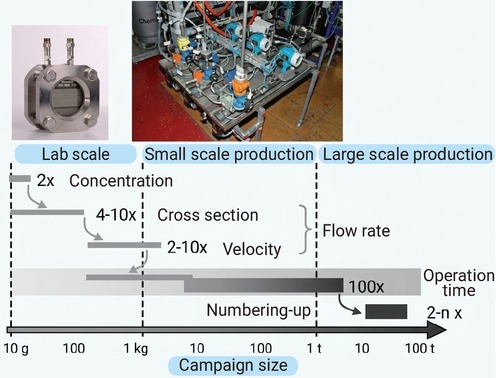
Figure 1.
Scaling parameters for continuous-flow microfluidic reactors (Lonza FlowPlate™).40
-
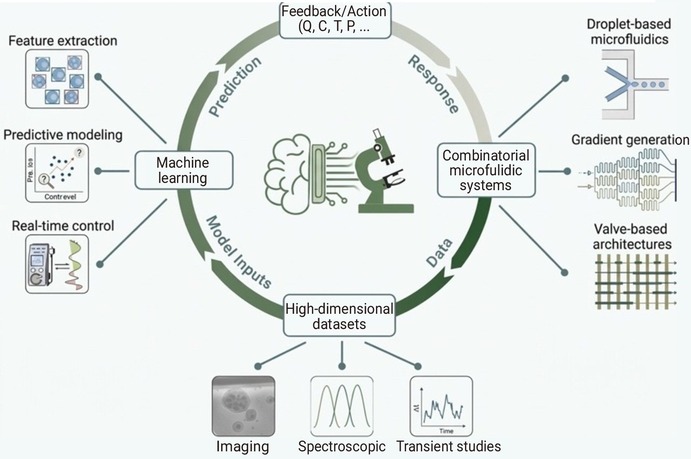
Figure 2.
Closed-loop optimization strategy harnessing synergies between CMFs and ML promotes development of intelligent microfluidic workflows
-
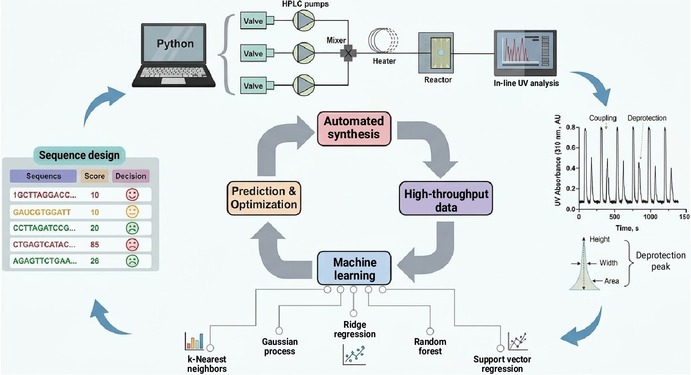
Figure 3.
Combining machine learning with automated synthesis technology delivers a design-build-test-learn cycle for PNA (Peptide nucleic acids) sequence design
-
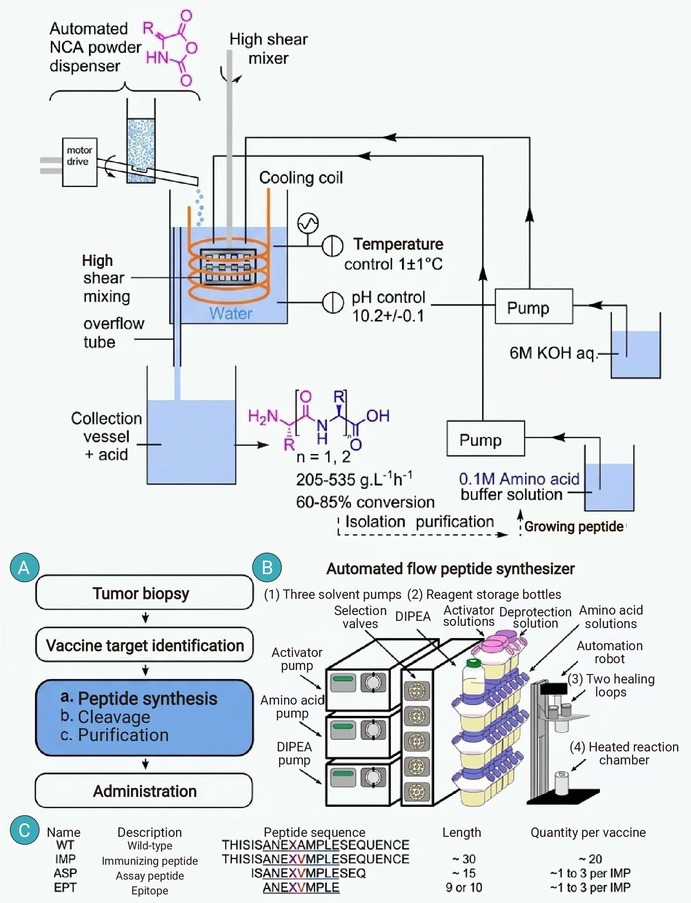
Figure 4.
(UP) Diagram of the continuous stirred tank reactor setup used, showing high shear mixer, continuous solids addition system, internal cooling coil, and pumps.95 (DOWN) Peptide design and production for a personalized neoantigen vaccine
-
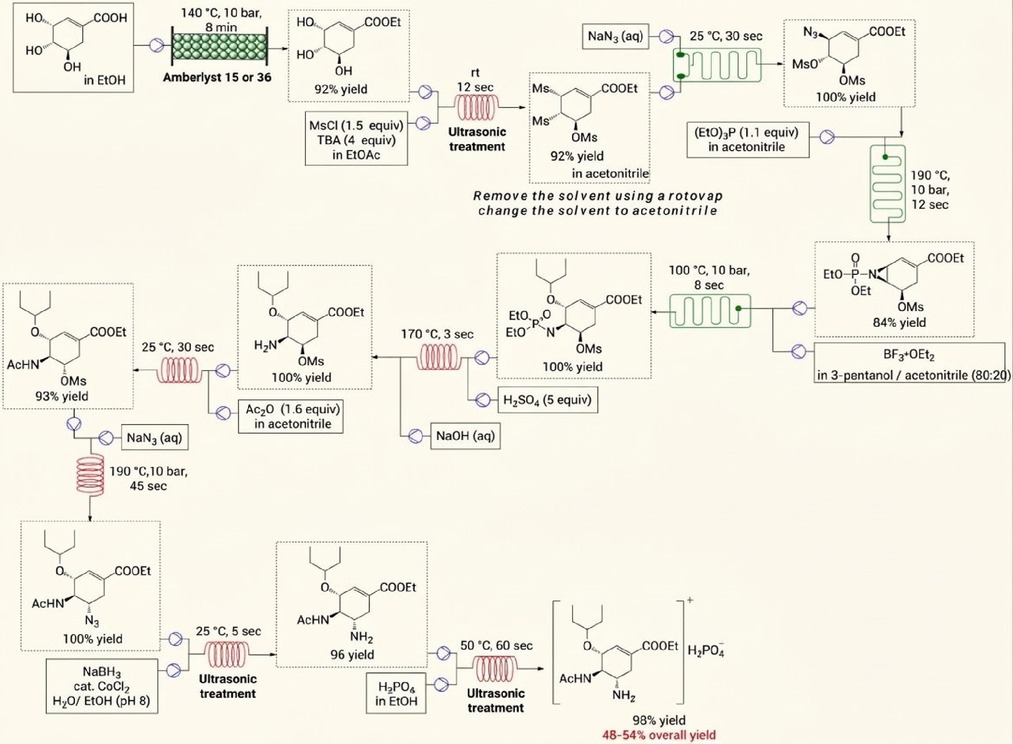
Figure 1.
Continuous synthesis of oseltamivir in a multistage continuous process.
-
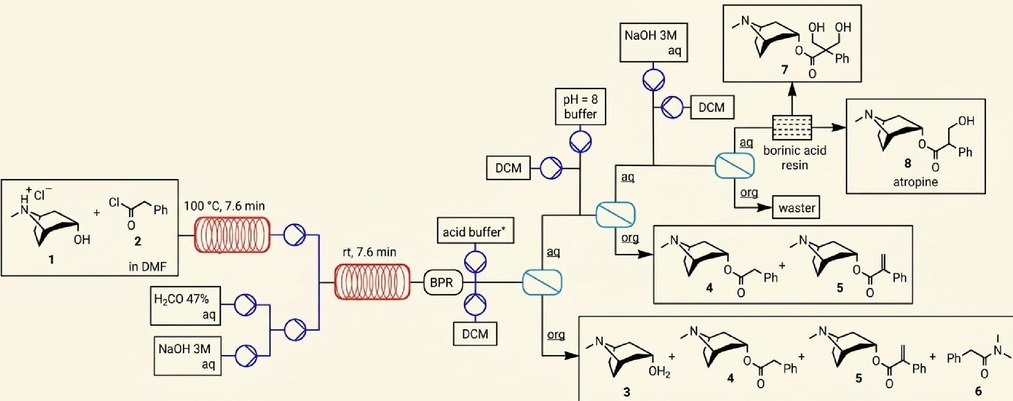
Figure 2.
Continuous-flow synthesis of atropine (adopt. from ref.123).
-
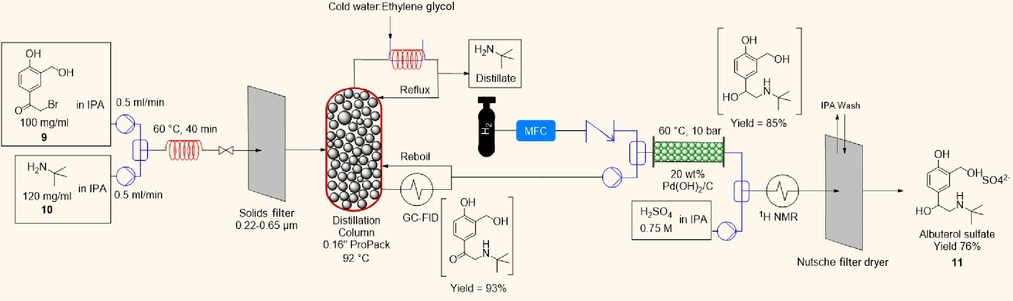
Figure 3.
Continuous-flow synthesis of albuterol sulfate (adopt. from ref.124).
-
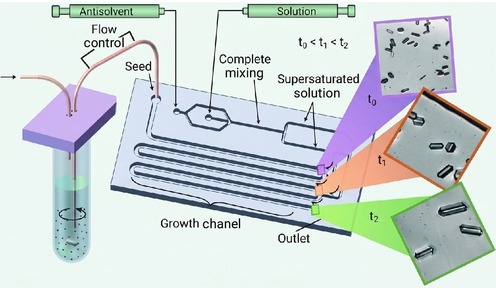
Figure 5.
Schematic diagram of a microflow system with crystallisation in the presence of an antisolvent.160
-
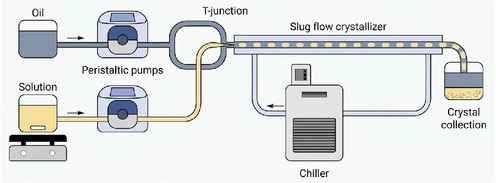
Figure 6.
Schematic diagram of a slug-flow (segmented) micro crystalliser.159
