
Patient-specific factors are associated with distinct brain network connectivity in disorders of consciousness
-
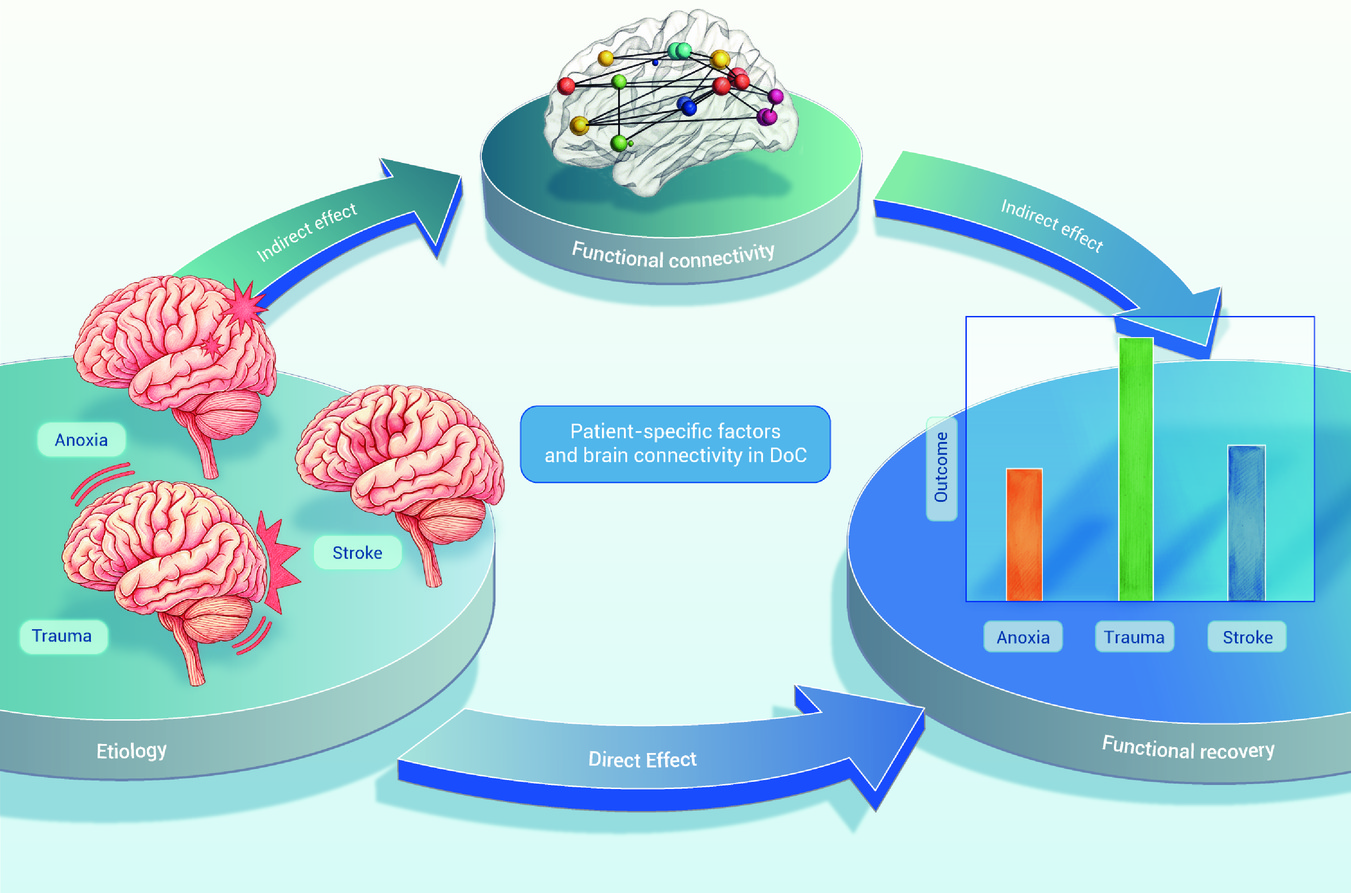
GRAPHICAL ABSTRACT
 DownLoad:
Full size image
-
PUBLIC SUMMARY
-
Clinical characteristics are associated with distinct large-scale brain network connectivity.
Etiology related connectivity are closely linked to patients’ consciousness level and functional recovery.
Internetwork connectivity accounted for greater functional recovery in traumatic brain injury patients.
-
-
ABSTRACT
Disorders of consciousness (DoC) arise from diverse etiologies and exhibit substantial clinical heterogeneity, including variations in patient age and time since injury. However, how these clinical characteristics relate to large-scale brain network connectivity and are associated with consciousness levels and functional outcomes remains poorly understood. In this study, resting-state functional magnetic resonance imaging (rs-fMRI) data from 128 DoC patients were analyzed. Functional connectivity (FC) patterns linked to key clinical characteristics were identified using an explainable machine learning framework. Statistical path analysis was then employed to assess whether intra- and inter-network FC account for the statistical effects of clinical characteristics on consciousness level and functional recovery. Patients with traumatic brain injury (TBI) and younger age exhibited higher consciousness levels and greater recovery potential, whereas time since injury showed no such relationship. Each clinical characteristic corresponded to distinct, largely non-overlapping FC patterns distributed across different large-scale brain networks. Notably, etiology-related intra- and inter-network connectivity reliably indexed patients’ recovery outcomes. Statistical path analysis further demonstrated that inter-network FC could statistically account for the superior recovery observed in TBI compared to anoxic patients. Clinical characteristics are associated with large-scale brain network connectivity in DoC, and are linked to the potential of functional recovery through these connectivity patterns. These findings highlight the value of integrating clinical-contextualized connectivity biomarkers into individualized prognostic assessment and therapeutic strategies. -

-
REFERENCES
[1] Giacino J. T., Kalmar K. and Whyte J. (2004). The JFK coma recovery scale-revised: Measurement characteristics and diagnostic utility. Arch. Phys. Med. Rehab. 85:2020−2029. DOI:10.1016/j.apmr.2004.02.033 [2] Bruno M.-A., Ledoux D., Vanhaudenhuyse A., et al. (2012). Prognosis of patients with altered state of consciousness. C. Schnakers, Laureys, S. (eds). Coma and disorders of consciousness (Springer), pp: 11-23. DOI:10.1007/978-1-4471-2440-5_2 [3] Jennett B. (2005). Thirty years of the vegetative state: Clinical, ethical and legal problems. Prog. Brain Res. 150:537−543. DOI:10.1016/S0079-6123(05)50037-2 [4] Celesia G. G. (2016). Vegetative state two decades after the multi-society task force (MSTF) report. M. Monti, Sannita, W. (eds). Brain Function and Responsiveness in Disorders of Consciousness (Springer), pp: 171-184. 10.1007/978-3-319-21425-2_13 [5] Kotchoubey B., Lang S., Mezger G., et al. (2005). Information processing in severe disorders of consciousness: Vegetative state and minimally conscious state. Clin. Neurophysiol. 116:2441−2453. DOI. DOI:10.1016/j.clinph.2005.03.028 [6] Ashwal S., Cranford R., Bernat J. L., et al. (1994). Medical aspects of the persistent vegetative state.1. New. Engl. J. Med. 330:1499-1508. DOI:10.1056/NEJM199405263302107 [7] Whyte J., Gosseries O., Chervoneva I., et al. (2009). Predictors of short-term outcome in brain-injured patients with disorders of consciousness. Prog. Brain Res. 177:63−72. DOI:10.1016/S0079-6123(09)17706-3 [8] Gonzalez M. C., Leguizamon F., Dei Vecchi L., et al. (2024). Factors influencing recovery in a pediatric sample with disorders of consciousness: Insights from an observational study. Brain Injury 38:1026−1034. DOI:10.1080/02699052.2024.2372451 [9] Edlow B. L., Claassen J., Schiff N. D., et al. (2021). Recovery from disorders of consciousness: Mechanisms, prognosis and emerging therapies. Nat. Rev. Neurol. 17:135−156. DOI:10.1038/s41582-020-00428-x [10] Yang Y., He Q., Dang Y., et al. (2023). Long-term functional outcomes improved with deep brain stimulation in patients with disorders of consciousness. Stroke Vasc. Neurol. 8. DOI:10.1136/svn-2022-001998 [11] Rosazza C., Andronache A., Sattin D., et al. (2016). Multimodal study of default-mode network integrity in disorders of consciousness. Ann. Neurol. 79:841−853. DOI:10.1002/ana.24634 [12] Carrion J. P. M., Stanziano M., D'Incerti L., et al. (2023). Disorder of consciousness: Structural integrity of brain networks for the clinical assessment. Ann. Clin. Transl. Neur. 10:384−396. DOI:10.1002/acn3.51729 [13] Nakase-Richardson R., McNamee S., Howe L. L., et al. (2013). Descriptive characteristics and rehabilitation outcomes in active duty military personnel and veterans with disorders of consciousness with combat- and noncombat-related brain injury. Arch. Phys. Med. Rehab. 94:1861−1869. DOI. DOI:10.1016/j.apmr.2013.05.027 [14] Kazazian K., Monti M. M. and Owen A. M. (2025). Functional neuroimaging in disorders of consciousness: Towards clinical implementation. Brain 148:2283−2298. DOI:10.1093/brain/awaf075 [15] Ntikas M., Stewart W., Ietswaart M., et al. (2024). Contrasting characteristics and outcomes of sports-related and non-sports-related traumatic brain injury. JAMA Netw. Open 7:e2353318. DOI:10.1001/jamanetworkopen.2023.53318 [16] Baricich A., de Sire A., Antoniono E., et al. (2017). Recovery from vegetative state of patients with a severe brain injury: A 4-year real-practice prospective cohort study. Funct. Neurol. 32:131−136. DOI:10.11138/fneur/2017.32.3.131 [17] Giacino J. T., Katz D. I., Schiff N. D., et al. (2018). Practice guideline update recommendations summary: Disorders of consciousness report of the guideline development, dissemination, and implementation subcommittee of the american academy of neurology; the american congress of rehabilitation medicine; and the national institute on disability, independent living, and aehabilitation research. Neurology 91:450−460. DOI:10.1212/Wnl.0000000000005926 [18] Hannawi Y., Lindquist M. A., Caffo B. S., et al. (2015). Resting brain activity in disorders of consciousness: A systematic review and meta-analysis. Neurology 84:1272−1280. DOI:10.1212/Wnl.0000000000001404 [19] Song M., Yang Y., He J. H., et al. (2018). Prognostication of chronic disorders of consciousness using brain functional networks and clinical characteristics. Elife 7:1−53. DOI:10.7554/eLife.36173 [20] Estraneo A., Masotta O., Bartolo M., et al. (2021). Multi-center study on overall clinical complexity of patients with prolonged disorders of consciousness of different etiologies. Brain Injury 35:1−7. DOI:10.1080/02699052.2020.1861652 [21] Vanhaudenhuyse A., Noirhomme Q., Tshibanda L. J. F., et al. (2010). Default network connectivity reflects the level of consciousness in non-communicative brain-damaged patients. Brain 133:161−171. DOI:10.1093/brain/awp313 [22] Demertzi A., Gomez F., Crone J. S., et al. (2014). Multiple fMRI system-level baseline connectivity is disrupted in patients with consciousness alterations. Cortex 52:35−46. DOI:10.1016/j.cortex.2013.11.005 [23] Demertzi A., Antonopoulos G., Heine L., et al. (2015). Intrinsic functional connectivity differentiates minimally conscious from unresponsive patients. Brain 138:2619−2631. DOI:10.1093/brain/awv169 [24] Qin P. M., Wu X. H., Huang Z. R., et al. (2015). How are different neural networks related to consciousness. Ann. Neurol. 78:594−605. DOI:10.1002/ana.24479 [25] Wu X., Zou Q., Hu J., et al. (2015). Intrinsic functional connectivity patterns predict consciousness level and recovery outcome in acquired brain injury. J. Neurosci. 35:12932−12946. DOI:10.1523/JNEUROSCI.0415-15.2015 [26] Silva S., De Pasquale F., Vuillaume C., et al. (2015). Disruption of posteromedial large-scale neural communication predicts recovery from coma. Neurology 85:2036−2044. DOI:10.1212/WNL.0000000000002196 [27] Fischer D. B., Boes A. D., Demertzi A., et al. (2016). A human brain network derived from coma-causing brainstem lesions. Neurology 87:2427−2434. DOI:10.1212/Wnl.0000000000003404 [28] Panda R., Thibaut A., Lopez-Gonzalez A., et al. (2022). Disruption in structural-functional network repertoire and time-resolved subcortical fronto-temporoparietal connectivity in disorders of consciousness. Elife 11:1−19. DOI:10.7554/eLife.77462 [29] Owen A. M., Coleman M. R., Boly M., et al. (2006). Detecting awareness in the vegetative state. Science 313:1402. DOI:10.1126/science.1130197 [30] Monti M. M., Vanhaudenhuyse A., Coleman M. R., et al. (2010). Willful modulation of brain activity in disorders of consciousness. New. Engl. J. Med. 362:579−589. DOI:10.1056/NEJMoa0905370 [31] Medina J. P., Nigri A., Stanziano M., et al. (2022). Resting-state fMRI in chronic patients with disorders of consciousness: The role of lower-order networks for clinical assessment. Brain Sci. 12:1−19. DOI:10.3390/brainsci12030355 [32] Jennett B. and Bond M. (1975). Assessment of outcome after severe brain-damage - practical scale. Lancet 1:480−484. DOI:10.1016/s0140-6736(75)92830-5 [33] Lundberg S. M. and Lee S. I. (2017). A unified approach to interpreting model predictions. Adv. Neural Inform. Process. Syst. https://proceedings.neurips.cc/paper/2017/file/8a20a8621978632d76c43dfd28b67767-Paper.pdf [34] Pedregosa F., Varoquaux G., Gramfort A., et al. (2011). Scikit-learn: Machine learning in python. J. Mach. Learn. Res. 12:2825-2830. https://jmlr.csail.mit.edu/papers/v12/pedregosa11a.html [35] Hayes A. F. (2012). PROCESS: A versatile computational tool for observed variable mediation, moderation, and conditional process modeling. http://www.afhayes.com/public/process2012.pdf [36] Hayes A. F. and Preacher K. J. (2014). Statistical mediation analysis with a multicategorical independent variable. Brit. J. Math. Stat. Psy. 67:451−470. DOI:10.1111/bmsp.12028 [37] Katz D. I., Polyak M., Coughlan D., et al. (2009). Natural history of recovery from brain injury after prolonged disorders of consciousness: Outcome of patients admitted to inpatient rehabilitation with 1-4 year follow-up. Prog. Brain Res. 177:73−88. DOI:10.1016/S0079-6123(09)17707-5 [38] Di Perri C., Bahri M. A., Amico E., et al. (2016). Neural correlates of consciousness in patients who have emerged from a minimally conscious state: A cross-sectional multimodal imaging study. Lacent Neurol. 15:830−842. DOI:10.1016/S1474-4422(16)00111-3 [39] Warren A. E. L., Raguz M., Friedrich H., et al. (2025). A human brain network linked to restoration of consciousness after deep brain stimulation. Nat. Commun. 16:6721. DOI:10.1038/s41467-025-61988-4 [40] Flores F. J., Hartnack K. E., Fath A. B., et al. (2017). Thalamocortical synchronization during induction and emergence from propofol-induced unconsciousness. Proc. Natl. Acad. Sci. 114:E6660−E6668. DOI:10.1073/pnas.1700148114 [41] Wang H., Hu Y., Ge Q., et al. (2025). Thalamic burst and tonic firing selectively indicate patients' consciousness level and recovery. The Innovation 6:1−11. DOI:10.1016/j.xinn.2025.100846 [42] Fischer D., Snider S. B., Barra M. E., et al. (2022). Disorders of consciousness associated with COVID-19: A prospective multimodal study of recovery and brain connectivity. Neurology 98:e315−e325. DOI:10.1212/WNL.0000000000013067 [43] Jang H., Mashour G. A., Hudetz A. G., et al. (2024). Measuring the dynamic balance of integration and segregation underlying consciousness, anesthesia, and sleep in humans. Nat. Commun. 15:9164. DOI:10.1038/s41467-024-53299-x [44] Brier M. R., Thomas J. B., Snyder A. Z., et al. (2012). Loss of intranetwork and internetwork resting state functional connections with Alzheimer's disease progression. J. Neurosci. 32:8890−8899. DOI:10.1523/JNEUROSCI.5698-11.2012 [45] Pang X., Liang X., Zhou X., et al. (2020). Alterations in intra-and internetwork functional connectivity associated with levetiracetam treatment in temporal lobe epilepsy. Neurol. Sci. 41:2165−2174. DOI:10.1007/s10072-020-04322-8 [46] Schumacher J., Peraza L. R., Firbank M., et al. (2018). Functional connectivity in dementia with Lewy bodies: A within‐and between‐network analysis. Hum. Brain Mapp. 39:1118−1129. DOI:10.1002/hbm.23901 [47] Yu M. C., Linn K. A., Cook P. A., et al. (2018). Statistical harmonization corrects site effects in functional connectivity measurements from multi-site fMRI data. Hum. Brain Mapp. 39:4213−4227. DOI:10.1002/hbm.24241 [48] Hutchison R. M., Womelsdorf T., Allen E. A., et al. (2013). Dynamic functional connectivity: Promise, issues, and interpretations. Neuroimage 80:360−378. DOI:10.1016/j.neuroimage.2013.05.079 [49] He Y. and Evans A. (2010). Graph theoretical modeling of brain connectivity. Curr. Opin. Neurol. 23:341−350. DOI:10.1097/WCO.0b013e32833aa567 -
ABOUT THIS ARTICLE
Cite this article:
Wang H., Ge Q., Han S., et al. (2027). Patient-specific factors are associated with distinct brain network connectivity in disorders of consciousness. The Innovation Life 5:100266. https://doi.org/10.59717/j.xinn-life.2026.100266
Welcome!
To request copyright permission to republish or share portions of our works, please visit Copyright Clearance Center's (CCC) Marketplace website at marketplace.copyright.com.
Export File
Citation
Wang H., Ge Q., Han S., et al. (2027). Patient-specific factors are associated with distinct brain network connectivity in disorders of consciousness. The Innovation Life 5:100266. https://doi.org/10.59717/j.xinn-life.2026.100266

Format
Content
-
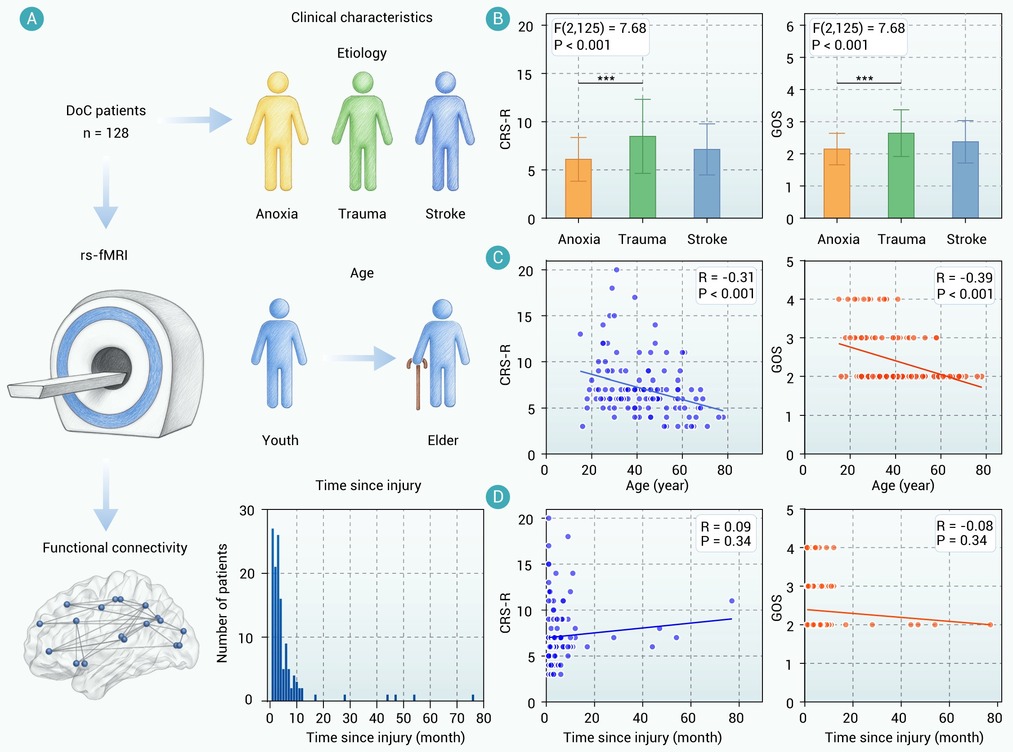
Figure 1.
Associations between clinical characteristics, consciousness levels, and functional recovery in patients with disorders of consciousness
-
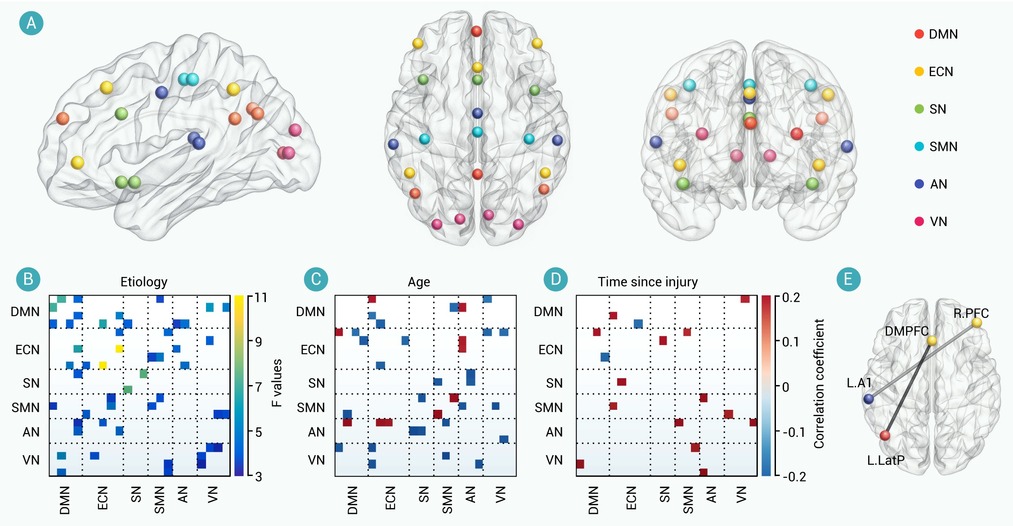
Figure 2.
Associations between clinical characteristics and resting-state functional connectivity across large-scale brain networks
-
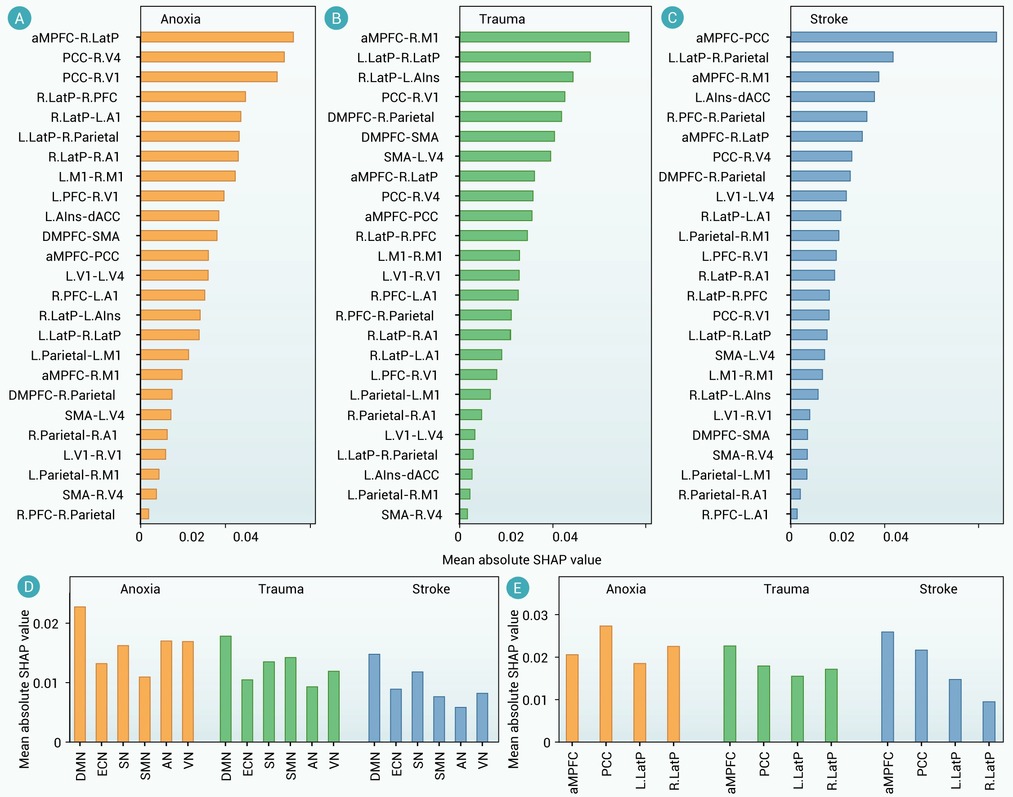
Figure 3.
SHAP analysis of etiology-related functional connectivity features
-
Figure 4.
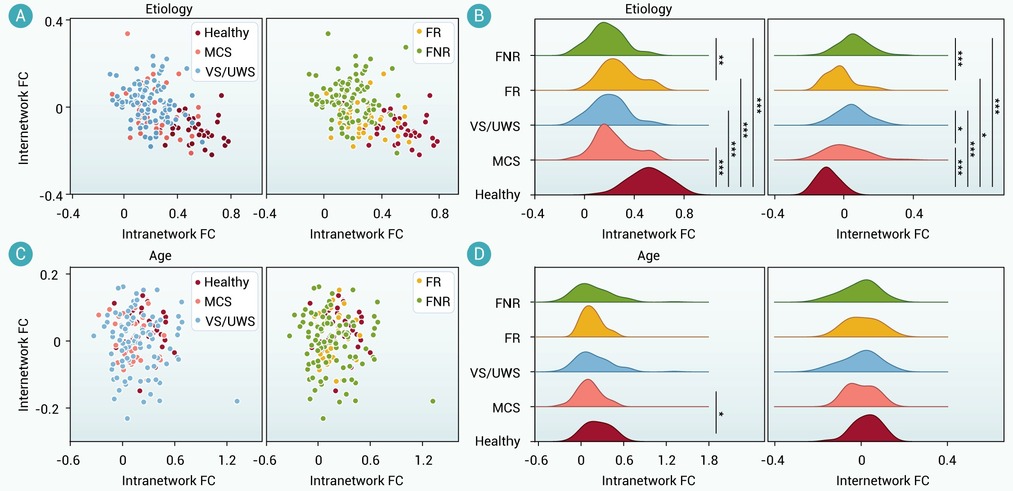
Intra- and internetwork functional connectivity in relation to consciousness level and functional recovery
-
Figure 5.
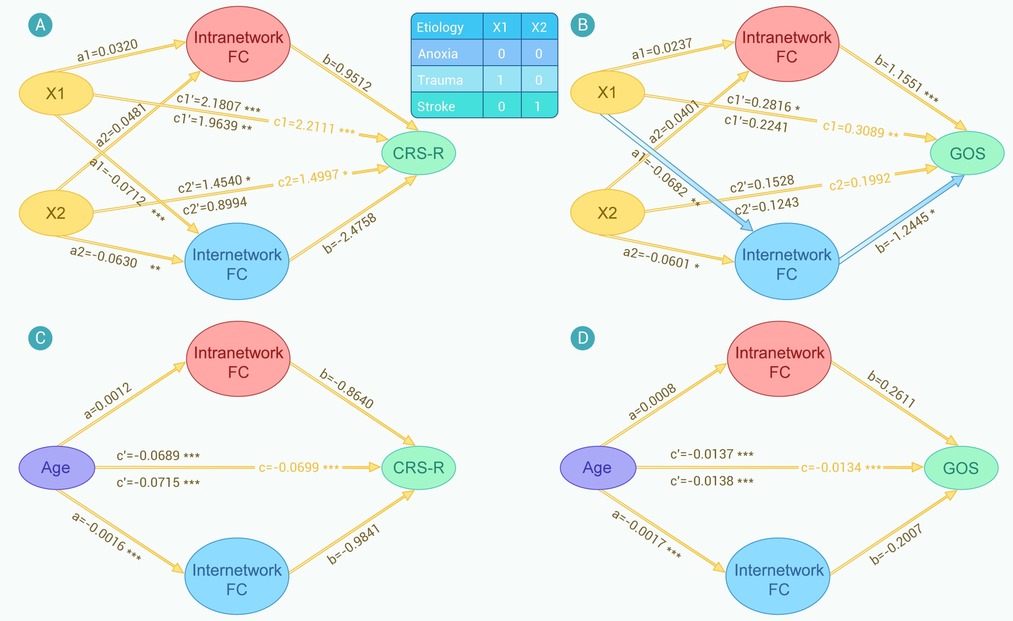
Mediation analysis linking clinical characteristics, functional connectivity, and behavioral outcomes
