
Engineering intramolecular adjuvants for next-generation vaccines
-
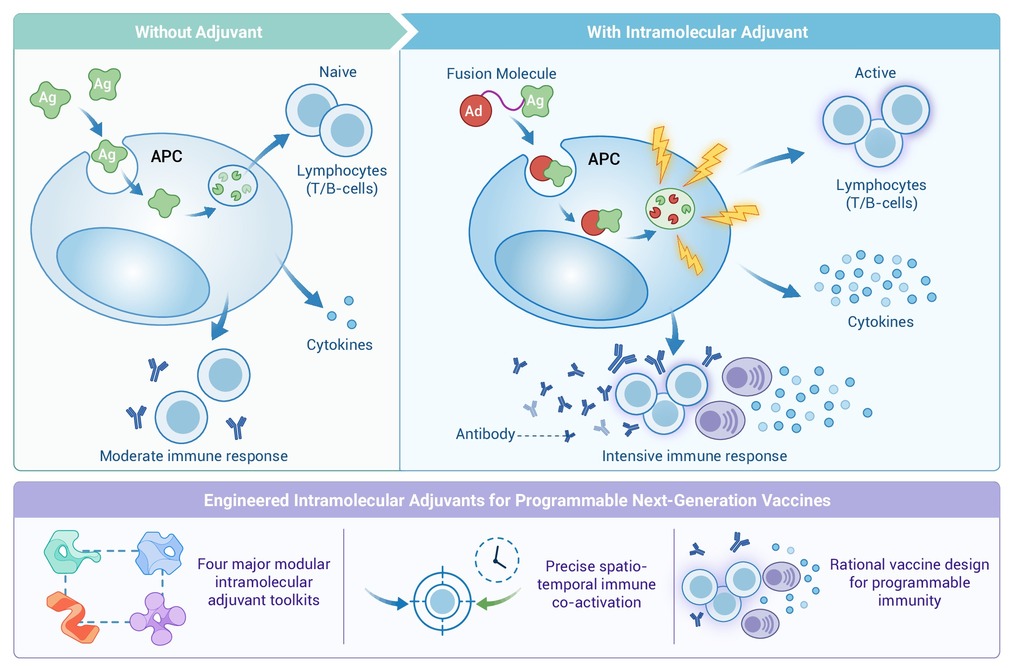
GRAPHICAL ABSTRACT
 DownLoad:
Full size image
-
PUBLIC SUMMARY
-
Intramolecular adjuvants fuse adjuvants with antigens into one molecule for precise immune activation.
Four major classifications: bacterial toxin derivatives, PRR ligands, cytokines and complement fragments.
This toolkit enables programmable immunity for next-generation vaccine design.
-
-
ABSTRACT
Vaccines play a pivotal role in reducing the global burden of infectious diseases. Currently, vaccine development is transitioning from empirical approaches toward precision engineering. The intramolecular adjuvant strategy, which fuses adjuvants and antigens into single molecules via genetic engineering, emerges as a promising strategy with the potential to play a key role in this transition. Through precise control of co-delivery and synergistic signaling, intramolecular adjuvants can modulate the magnitude, duration, and type of immune response, thereby advancing vaccine design toward a more programmable paradigm, in which immune activation can be rationally tuned at the molecular level, ultimately enabling “programmable immunity”. This review systematically summarizes the current toolbox of genetically encoded intramolecular adjuvants, including derivatives of bacterial toxins, pattern recognition receptor (PRR) ligands, cytokines, and the complement fragments. By integrating structural biology, synthetic biology, and immunology, we delineate their mechanisms in receptor-targeted delivery and synergistic immune pathway activation. Notably, artificial intelligence (AI) might accelerate the rational development of intramolecular adjuvants via sequence mining, structural optimization and de novo design. Collectively, this review aims to establish a systematic framework for intramolecular adjuvant selection and design, advancing a data-driven paradigm to counter emerging pathogens. -

-
REFERENCES
[1] Vij S., Thakur R. and Rishi P. (2022). Reverse engineering approach: A step towards a new era of vaccinology with special reference to salmonella. Expert Rev. Vaccines 21:1763−1785. DOI:10.1080/14760584.2022.2148661 [2] Cid R. and Bolívar J. (2021). Platforms for production of protein-based vaccines: From classical to next-generation strategies. Biomolecules 11:1072. DOI:10.3390/biom11081072 [3] Ben-Akiva E., Chapman A., Mao T., et al. (2025). Linking vaccine adjuvant mechanisms of action to function. Sci. Immunol. 10:eado5937. DOI:10.1126/sciimmunol.ado5937 [4] Pifferi C., Fuentes R. and Fernández-Tejada A. (2021). Natural and synthetic carbohydrate-based vaccine adjuvants and their mechanisms of action. Nat. Rev. Chem. 5:197−216. DOI:10.1038/s41570-020-00244-3 [5] Zhao T., Cai Y., Jiang Y., et al. (2023). Vaccine adjuvants: Mechanisms and platforms. Signal Transduct. Target. Ther. 8:283. DOI:10.1038/s41392-023-01557-7 [6] Kroemer G., Montégut L., Kepp O., et al. (2024). The danger theory of immunity revisited. Nat. Rev. Immunol. 24:912−928. DOI:10.1038/s41577-024-01102-9 [7] Sornay C., Vaur V., Wagner A., et al. (2022). An overview of chemo- and site-selectivity aspects in the chemical conjugation of proteins. R. Soc. Open Sci. 9:211563. DOI:10.1098/rsos.211563 [8] Li Q., Li Z., Deng N., et al. (2022). Built-in adjuvants for use in vaccines. Eur. J. Med. Chem. 227:113917. DOI:10.1016/j.ejmech.2021.113917 [9] Zhu Q., McLellan J. S., Kallewaard N. L., et al. (2017). A highly potent extended half-life antibody as a potential RSV vaccine surrogate for all infants. Sci. Transl. Med. 9:eaaj1928. DOI:10.1126/scitranslmed.aaj1928 [10] Foss S., Sakya S. A., Aguinagalde L., et al. (2024). Human IgG fc-engineering for enhanced plasma half-life, mucosal distribution and killing of cancer cells and bacteria. Nat. Commun. 15:2007. DOI:10.1038/s41467-024-46321-9 [11] Sun S., Cai Y., Song T.-Z., et al. (2021). Interferon-armed RBD dimer enhances the immunogenicity of RBD for sterilizing immunity against SARS-CoV-2. Cell Res. 31:1011−1023. DOI:10.1038/s41422-021-00531-8 [12] Yan W.-L., Wu C.-C., Shen K.-Y., et al. (2021). Activation of GM-CSF and TLR2 signaling synergistically enhances antigen-specific antitumor immunity and modulates the tumor microenvironment. J. Immunother. Cancer 9:e002758. DOI:10.1136/jitc-2021-002758 [13] Lin Y.-J., Jamin A., Wolfheimer S., et al. (2023). A flagellin-conjugate protein induces dual NLRC4- and NLRP3-inflammasome activation which modulates inflammatory cytokine secretion from macrophages. Front. Immunol. 14:1136669. DOI:10.3389/fimmu.2023.1136669 [14] Li X., Cao Y., Mou M., et al. (2023). Enhanced TLR5-dependent migration and activation of antigen-loaded airway dendritic cells by flagellin. J. Leukoc. Biol. 113:567−576. DOI:10.1093/jleuko/qiad030 [15] Zhao F. and Zai X. (2025). Proceeding artificial intelligence technology towards vaccine designs. Innov. Life 3:100162. DOI:10.59717/j.xinn-life.2025.100162 [16] Soni D., Borriello F., Scott D. A., et al. (2024). From hit to vial: Precision discovery and development of an imidazopyrimidine TLR7/8 agonist adjuvant formulation. Sci. Adv. 10:eadg3747. DOI:10.1126/sciadv.adg3747 [17] Tian X., Ai J., Tian X., et al. (2024). cGAS‐STING pathway agonists are promising vaccine adjuvants. Med. Res. Rev. 44:1768−1799. DOI:10.1002/med.22016 [18] Serrano A., Guyette J. L., Heim J. B., et al. (2022). Holotoxin disassembly by protein disulfide isomerase is less efficient for Escherichia coli heat-labile enterotoxin than cholera toxin. Sci. Rep. 12:34. DOI:10.1038/s41598-021-03939-9 [19] Bayart C., Mularoni A., Hemmani N., et al. (2022). Tetanus toxin fragment C: Structure, drug discovery research and production. Pharmaceuticals (Basel) 15:756. DOI:10.3390/ph15060756 [20] Malito E., Bursulaya B., Chen C., et al. (2012). Structural basis for lack of toxicity of the diphtheria toxin mutant CRM197. Proc. Natl. Acad. Sci. U. S. A. 109:5229−5234. DOI:10.1073/pnas.1201964109 [21] Stratmann T. (2015). Cholera toxin subunit B as adjuvant––an accelerator in protective immunity and a break in autoimmunity. Vaccines (Basel) 3:579−596. DOI:10.3390/vaccines3030579 [22] Li S., Wei Z., Chen J., et al. (2014). Oral administration of a fusion protein between the cholera toxin B subunit and the 42-amino acid isoform of amyloid-β peptide produced in silkworm pupae protects against Alzheimer’s disease in mice. PLoS One 9:e113585. DOI:10.1371/journal.pone.0113585 [23] Kenworthy A. K., Schmieder S. S., Raghunathan K., et al. (2021). Cholera toxin as a probe for membrane biology. Toxins (Basel) 13:543. DOI:10.3390/toxins13080543 [24] Ho P. L., Jobling M. G., Poole S. T., et al. (2020). Biochemical and immunological characterization of an ETEC CFA/I adhesin cholera toxin B subunit chimera. PLoS One 15:e0230138. DOI:10.1371/journal.pone.0230138 [25] Wang B., Pan X., Wang H., et al. (2014). Immunological response of recombinant H. pylori multi-epitope vaccine with different vaccination strategies. Int. J. Clin. Exp. Pathol. 7:6559−6566 [26] Pimenta F. C., Miyaji E. N., Arêas A. P. M., et al. (2006). Intranasal immunization with the cholera toxin B subunit-pneumococcal surface antigen a fusion protein induces protection against colonization with Streptococcus pneumoniae and has negligible impact on the nasopharyngeal and oral microbiota of mice. Infect. Immun. 74:4939−4944. DOI:10.1128/IAI.00134-06 [27] Qiu S., Ren X., Ben Y., et al. (2014). Fusion-expressed CTB improves both systemic and mucosal T-cell responses elicited by an intranasal DNA priming/intramuscular recombinant vaccinia boosting regimen. J. Immunol. Res. 2014:1−6. DOI:10.1155/2014/308732 [28] Wei H., Chen S., Liu C., et al. (2025). Fusion with CTB enhances the immunogenicity and protective efficacy of MIC2 subunit vaccine against Eimeria tenella. Poult. Sci. 104:105296. DOI:10.1016/j.psj.2025.105296 [29] Arabpour M., Paul S., Grauers Wiktorin H., et al. (2022). An adjuvant-containing cDC1-targeted recombinant fusion vaccine conveys strong protection against murine melanoma growth and metastasis. Oncoimmunology 11:2115618. DOI:10.1080/2162402X.2022.2115618 [30] He X., Fan K., Gong H., et al. (2024). Mechanism study of cross presentation of exogenous antigen induced by cholera toxin-like chimeric protein. Vaccine 42:1549−1560. DOI:10.1016/j.vaccine.2024.01.075 [31] Mudrak B. and Kuehn M. J. (2010). Heat-labile enterotoxin: Beyond G(m1) binding. Toxins (Basel) 2:1445−1470. DOI:10.3390/toxins2061445 [32] Ma Y. (2016). Recent advances in nontoxic Escherichia coli heat-labile toxin and its derivative adjuvants. Expert Rev. Vaccines 15:1361−1371. DOI:10.1080/14760584.2016.1182868 [33] Ge J.-W., Liu D.-Q. and Li Y.-J. (2012). Construction of recombinant lactobacilli expressing the core neutralizing epitope (COE) of porcine epidemic diarrhea virus and a fusion protein consisting of COE and Escherichia coli heat-labile enterotoxin B, and comparison of the immune responses by orogastric immunization. Can. J. Microbiol. 58:1258−1267. DOI:10.1139/w2012-098 [34] Marchioro S. B., Fisch A., Gomes C. K., et al. (2014). Local and systemic immune responses induced by a recombinant chimeric protein containing Mycoplasma hyopneumoniae antigens fused to the B subunit of Escherichia coli heat-labile enterotoxin LTB. Vet. Microbiol. 173:166−171. DOI:10.1016/j.vetmic.2014.07.009 [35] Yin J., Wu H., Li W., et al. (2024). Escherichia coli heat-labile enterotoxin B subunit as an adjuvant of mucosal immune combined with GCRV-II VP6 triggers innate immunity and enhances adaptive immune responses following oral vaccination of grass carp (Ctenopharyngodon idella). Fish Shellfish Immunol. 154:109969. DOI:10.1016/j.fsi.2024.109969 [36] Bhatia B., Solanki A. K., Kaushik H., et al. (2014). B-cell epitope of beta toxin of Clostridium perfringens genetically conjugated to a carrier protein: expression, purification and characterization of the chimeric protein. Protein Expr. Purif. 102:38−44. DOI:10.1016/j.pep.2014.06.014 [37] Solis-Andrade K. I., Gonzalez-Ortega O., Govea-Alonso D. O., et al. (2022). Production and purification of LTB-RBD: A potential antigen for mucosal vaccine development against SARS-CoV-2. Vaccines (Basel) 10:1759. DOI:10.3390/vaccines10101759 [38] Ma J., Yu L., Song B., et al. (2018). The double adjuvants LTB and CpG significantly enhanced the immuno-protective effects of recombinant GIT derived from Staphylococcus aureus and Streptococcus in mice. J. Med. Microbiol. 67:432−440. DOI:10.1099/jmm.0.000666 [39] Leach S., Clements J. D., Kaim J., et al. (2012). The adjuvant double mutant Escherichia coli heat labile toxin enhances IL-17A production in human T cells specific for bacterial vaccine antigens. PLoS One 7:e51718. DOI:10.1371/journal.pone.0051718 [40] Liu M., Zhang C., Mateo K., et al. (2011). Modified heat-stable toxins (hSTa) of enterotoxigenic Escherichia coli lose toxicity but display antigenicity after being genetically fused to heat-labile toxoid LT(R192G). Toxins (Basel) 3:1146−1162. DOI:10.3390/toxins3091146 [41] Antunes R. d. S., Paul S., Sidney J., et al. (2017). Definition of human epitopes recognized in tetanus toxoid and development of an assay strategy to detect ex vivo tetanus CD4+ T cell responses. PLoS One 12:e0169086. DOI:10.1371/journal.pone.0169086 [42] Zeltins A., West J., Zabel F., et al. (2017). Incorporation of tetanus-epitope into virus-like particles achieves vaccine responses even in older recipients in models of psoriasis, Alzheimer’s and cat allergy. NPJ Vaccines 2:30. DOI:10.1038/s41541-017-0030-8 [43] Cai H., Chen M. S., Sun Z. Y., et al. (2013). Self ‐ adjuvanting synthetic antitumor vaccines from MUC1 glycopeptides conjugated to T ‐ cell epitopes from tetanus toxoid. Angew. Chem. Int. Ed. Engl. 52:6106–6110. DOI:10.1002/anie.201300390 [44] Wen X., Wen K., Cao D., et al. (2014). Inclusion of a universal tetanus toxoid CD4+ T cell epitope P2 significantly enhanced the immunogenicity of recombinant rotavirus ΔVP8* subunit parenteral vaccines. Vaccine 32:4420−4427. DOI:10.1016/j.vaccine.2014.06.060 [45] Cui B., Liu X., Zhou P., et al. (2019). Immunogenicity and protective efficacy of recombinant proteins consisting of multiple epitopes of foot-and-mouth disease virus fused with flagellin. Appl. Microbiol. Biotechnol. 103:3367−3379. DOI:10.1007/s00253-019-09691-5 [46] Fellermann M., Wondany F., Carle S., et al. (2020). Super-resolution microscopy unveils transmembrane domain-mediated internalization of cross-reacting material 197 into diphtheria toxin-resistant mouse J774A.1 cells and primary rat fibroblasts in vitro. Arch. Toxicol. 94:1753–1761. DOI:10.1007/s00204-020-02731-4 [47] Pecetta S., Vijayakrishnan B., Romano M. R., et al. (2016). Evaluation of the non-toxic mutant of the diphtheria toxin K51E/E148K as carrier protein for meningococcal vaccines. Vaccine 34:1405−1411. DOI:10.1016/j.vaccine.2016.01.040 [48] Song C., Zheng X.-J., Guo H., et al. (2019). Fluorine-modified sialyl-Tn-CRM197 vaccine elicits a robust immune response. Glycoconj. J. 36:399−408. DOI:10.1007/s10719-019-09884-0 [49] Pecetta S., Tontini M., Faenzi E., et al. (2016). Carrier priming effect of CRM197 is related to an enhanced B and T cell activation in meningococcal serogroup A conjugate vaccination. Immunological comparison between CRM197 and diphtheria toxoid. Vaccine 34:2334–2341. DOI:10.1016/j.vaccine.2016.03.055 [50] Xu L., Zhang C., Zhang J., et al. (2021). Design, synthesis and primary immunologic evaluation of M2e-CRM(197) conjugate as a universal influenza vaccine candidate. Curr. Pharm. Biotechnol. 22:1910−1918. DOI:10.2174/1389201021666201104145006 [51] Chai P., Pu X., Ge J., et al. (2021). The recombinant protein combined vaccine based on the fragment C of tetanus toxin and the cross-reacting material 197. Appl. Microbiol. Biotechnol. 105:1683−1692. DOI:10.1007/s00253-021-11139-8 [52] Zhang, H., Yuan, C., Zhang, D., et al. (2011). A novel combined conjugate vaccine: Enhanced immunogenicity of bFGF with CRM197 as a carrier protein. Mol. Med. Rep. 4:857−63. DOI:10.3892/mmr.2011.521 [53] Wang K., Zhou L., Zhang X., et al. (2019). Hepatitis E vaccine candidate harboring a non-particulate immunogen of E2 fused with CRM197 fragment A. Antiviral Res. 164:154−161. DOI:10.1016/j.antiviral.2019.02.013 [54] Togashi T., Mitsuya N., Kogawara O., et al. (2016). Immunogenicity and safety of a fully liquid aluminum phosphate adjuvanted Haemophilus influenzae type b PRP-CRM197-conjugate vaccine in healthy Japanese children: A phase III, randomized, observer-blind, multicenter, parallel-group study. Vaccine 34:4635−4641. DOI:10.1016/j.vaccine.2016.05.050 [55] Pecetta S., Lo Surdo P., Tontini M., et al. (2015). Carrier priming with CRM 197 or diphtheria toxoid has a different impact on the immunogenicity of the respective glycoconjugates: Biophysical and immunochemical interpretation. Vaccine 33:314−320. DOI:10.1016/j.vaccine.2014.11.026 [56] Kuprianov V. V., Nikolaeva L. I., Zykova A. A., et al. (2020). Combination of three adjuvants enhances the immunogenicity of a recombinant protein containing the CTL epitopes of non-structural proteins of hepatitis C virus. Virus Res. 284:197984. DOI:10.1016/j.virusres.2020.197984 [57] Yang H., Lei X., Chai S., et al. (2025). A multi-epitope vaccine incorporating adhesin-derived antigens protects against Mycobacterium tuberculosis infection and dissemination. Front. Immunol. 16:1707471. DOI:10.3389/fimmu.2025.1707471 [58] La Rosa C., Longmate J., Lacey S. F., et al. (2012). Clinical evaluation of safety and immunogenicity of PADRE-cytomegalovirus (CMV) and tetanus-CMV fusion peptide vaccines with or without PF03512676 adjuvant. J. Infect. Dis. 205:1294−1304. DOI:10.1093/infdis/jis107 [59] Fraser C. C., Altreuter D. H., Ilyinskii P., et al. (2014). Generation of a universal CD4 memory T cell recall peptide effective in humans, mice and non-human primates. Vaccine 32:2896−2903. DOI:10.1016/j.vaccine.2014.02.024 [60] Ong G. H., Lian B. S. X., Kawasaki T., et al. (2021). Exploration of pattern recognition receptor agonists as candidate adjuvants. Front. Cell. Infect. Microbiol. 11:745016. DOI:10.3389/fcimb.2021.745016 [61] Lee S. M., Lee J., Kim D.-I., et al. (2025). Emulsion adjuvant-induced uric acid release modulates optimal immunogenicity by targeting dendritic cells and B cells. NPJ Vaccines 10:72. DOI:10.1038/s41541-025-01130-z [62] Medzhitov R., Preston-Hurlburt P. and Janeway C. A. (1997). A human homologue of the Drosophila Toll protein signals activation of adaptive immunity. Nature 388:394−397. DOI:10.1038/41131 [63] Luchner M., Reinke S. and Milicic A. (2021). TLR agonists as vaccine adjuvants targeting cancer and infectious diseases. Pharmaceutics 13:142. DOI:10.3390/pharmaceutics13020142 [64] Wang Y., Zhang S., Li H., et al. (2020). Small-molecule modulators of toll-like receptors. Acc. Chem. Res. 53:1046−1055. DOI:10.1021/acs.accounts.9b00631 [65] Bruun N., Laursen M. F., Carmelo R., et al. (2024). Novel nucleotide-packaging vaccine delivers antigen and poly(I:C) to dendritic cells and generate a potent antibody response in vivo. Vaccine 42:2909−2918. DOI:10.1016/j.vaccine.2024.03.058 [66] Mashhadi Abolghasem Shirazi M., Sadat S. M., Haghighat S., et al. (2023). Alum and a TLR7 agonist combined with built-in TLR4 and 5 agonists synergistically enhance immune responses against HPV RG1 epitope. Sci. Rep. 13:16801. DOI:10.1038/s41598-023-43965-3 [67] Maharaj L., Adeleke V. T., Fatoba A. J., et al. (2021). Immunoinformatics approach for multi-epitope vaccine design against P. falciparum malaria. Infect. Genet. Evol. 92:104875. DOI:10.1016/j.meegid.2021.104875 [68] Mahmoodi S., Amirzakaria J. Z., Ghasemian A., et al. (2023). In silico design and validation of a novel multi-epitope vaccine candidate against structural proteins of Chikungunya virus using comprehensive immunoinformatics analyses. PLoS One 18:e0285177. DOI:10.1371/journal.pone.0285177 [69] Rehman A., Ahmad S., Shahid F., et al. (2021). Integrated core proteomics, subtractive proteomics, and immunoinformatics investigation to unveil a potential multi-epitope vaccine against schistosomiasis. Vaccines (Basel) 9:658. DOI:10.3390/vaccines9060658 [70] Evangelista F. M. D., van Vliet A. H. M., Lawton S. P., et al. (2023). In silico design of a polypeptide as a vaccine candidate against ascariasis. Sci. Rep. 13:3504. DOI:10.1038/s41598-023-30445-x [71] Wu F., Luo S., Zhang Y., et al. (2023). Single-shot AAV-vectored vaccine against SARS-CoV-2 with fast and long-lasting immunity. Acta Pharm. Sin. B 13:2219−2233. DOI:10.1016/j.apsb.2022.07.004 [72] Lim J. S., Jeon E. J., Go H. S., et al. (2024). Mucosal TLR5 activation controls healthspan and longevity. Nat. Commun. 15:46. DOI:10.1038/s41467-023-44263-2 [73] Delaney K. N., Phipps J. P., Johnson J. B., et al. (2010). A recombinant flagellin-poxvirus fusion protein vaccine elicits complement-dependent protection against respiratory challenge with vaccinia virus in mice. Viral Immunol. 23:201−210. DOI:10.1089/vim.2009.0107 [74] Oh S.-h., Kim Cho Y.-S., Lee H.-B., et al. (2019). Enhancement of antigen-specific humoral immune responses and protein solubility through conjugation of bacterial flagellin, Vibrio vulnificus FlaB, to the N-terminus of porcine epidemic diarrhea virus surface protein antigen S0. J. Vet. Sci. 20:e70. DOI:10.4142/jvs.2019.20.e70 [75] Xiao X., Zhang Y., Wei Q., et al. (2017). Flagellin FljB as an adjuvant to the recombinant adenovirus rabies glycoprotein vaccine increases immune responses against rabies in mice. Arch. Virol. 162:2655−2665. DOI:10.1007/s00705-017-3413-2 [76] Khim K., Puth S., Radhakrishnan K., et al. (2023). Deglycosylation of eukaryotic-expressed flagellin restores adjuvanticity. NPJ Vaccines 8:139−145. DOI:10.1038/s41541-023-00738-3 [77] Afzal H., Murtaza A. and Cheng L.-T. (2025). Structural engineering of flagellin as vaccine adjuvant: Quest for the minimal domain of flagellin for TLR5 activation. Mol. Biol. Rep. 52:104. DOI:10.1007/s11033-024-10146-y [78] Forstnerič V., Ivičak-Kocjan K., Plaper T., et al. (2017). The role of the C-terminal D0 domain of flagellin in activation of Toll like receptor 5. PLoS Pathog. 13:e1006574. DOI:10.1371/journal.ppat.1006574 [79] Wang S., Zhang K., Song X., et al. (2023). TLR4 overexpression aggravates bacterial lipopolysaccharide-induced apoptosis via excessive autophagy and NF-κB/MAPK signaling in transgenic mammal models. Cells 12:1769. DOI:10.3390/cells12131769 [80] Xiao Y., Liu F., Yang J., et al. (2014). Over-activation of TLR5 signaling by high-dose flagellin induces liver injury in mice. Cell. Mol. Immunol. 12:729−742. DOI:10.1038/cmi.2014.110 [81] Xing J., Zhao X., Li X., et al. (2025). The recent advances in vaccine adjuvants. Front. Immunol. 16:1557415. DOI:10.3389/fimmu.2025.1557415 [82] Zhang B., Sun J., Wang Y., et al. (2021). Site-specific PEGylation of interleukin-2 enhances immunosuppression via the sustained activation of regulatory T cells. Nat. Biomed. Eng. 5:1288−1305. DOI:10.1038/s41551-021-00797-8 [83] Yang K., Bai B., Li X., et al. (2025). Coordinating interleukin-2 encoding circRNA with immunomodulatory lipid nanoparticles to potentiate cancer immunotherapy. Sci. Adv. 11:eadn7256. DOI:10.1126/sciadv.adn7256 [84] Tseng S.-H., Cheng M. A., Farmer E., et al. (2022). Albumin and interferon-β fusion protein serves as an effective vaccine adjuvant to enhance antigen-specific CD8+ T cell-mediated antitumor immunity. J. Immunother. Cancer 10:e004342. DOI:10.1136/jitc-2021-004342 [85] Hojecki C. E., Tursi N. J., Livingston C., et al. (2025). Advances in molecular adjuvants for nucleic acid vaccines. Front. Immunol. 16:1646800. DOI:10.3389/fimmu.2025.1646800 [86] Spunde K., Korotkaja K., Sominskaya I., et al. (2025). Genetic adjuvants: A paradigm shift in vaccine development and immune modulation. Mol. Ther. Nucleic Acids 36:102536. DOI:10.1016/j.omtn.2025.102536 [87] Zhang Z., He Q., Zhao W., et al. (2022). A heterologous V-01 or variant-matched bivalent V-01D-351 booster following primary series of inactivated vaccine enhances the neutralizing capacity against SARS-CoV-2 delta and omicron strains. J. Clin. Med. 11:4164. DOI:10.3390/jcm11144164 [88] Zhang J., Peng S., Xu F., et al. (2024). IFN-α armed gE elicits superior immunogenicity compared to unmodified antigens and flagellin armed gE in mice. Vaccine X 17:100432. DOI:10.1016/j.jvacx.2024.100432 [89] McCormick A. L., Thomas M. S. and Heath A. W. (2001). Immunization with an interferon-gamma-gp120 fusion protein induces enhanced immune responses to human immunodeficiency virus gp120. J. Infect. Dis. 184:1423−1430. DOI:10.1086/324371 [90] Tan F., Zhang L., Yin L., et al. (2024). Immune synergistic mechanism of recombinant plasmid adjuvant containing chicken IL-4 and IL-2 fusion genes on chicken coccidia live vaccine. Poult. Sci. 103:103204. DOI:10.1016/j.psj.2023.103204 [91] Ranasinghe C., Trivedi S., Wijesundara D. K., et al. (2014). IL-4 and IL-13 receptors: Roles in immunity and powerful vaccine adjuvants. Cytokine Growth Factor Rev. 25:437−442. DOI:10.1016/j.cytogfr.2014.07.010 [92] Aunins E. A., Phan A. T., Alameh M. G., et al. (2025). An Il12 mRNA-LNP adjuvant enhances mRNA vaccine-induced CD8 T cell responses. Sci. Immunol. 10:eads1328. DOI:10.1126/sciimmunol.ads1328 [93] Tang M., Huang Y., Bi J., et al. (2026). TIGIT-targeted IL-12 fusion protein engages NK and CD8(+) T cells for potent tumor immunotherapy. Cell Rep. Med. 7:102876. DOI:10.1016/j.xcrm.2026.102876 [94] Pallikkuth S., Kvistad D., Sirupangi T., et al. (2023). IL‐21‐IgFc immunotherapy alters transcriptional landscape of lymph node cells leading to enhanced flu vaccine response in aging and SIV infection. Aging Cell 22:e13984. DOI:10.1111/acel.13984 [95] Yang Y., Shao Z. and Gao J. (2017). Antitumor effect of a DNA vaccine harboring prostate cancer-specific antigen with IL-12 as an intramolecular adjuvant. Microb. Physiol. 27:168−174. DOI:10.1159/000477245 [96] Peters D., Kranz L. M., Eisel D., et al. (2024). RNA-encoded interleukin 2 with extended bioavailability amplifies RNA vaccine-induced antitumor T-cell immunity. Cancer Immunol. Res. 12:1409−1420. DOI:10.1158/2326-6066.CIR-23-0701 [97] Ma Y., An H.-J., Wei X.-Q., et al. (2013). Enhanced potency of replicon vaccine using one vector to simultaneously co-express antigen and interleukin-4 molecular adjuvant. Hum. Vaccin. Immunother. 9:242−249. DOI:10.4161/hv.22888 [98] Tenbusch M., Kuate S., Tippler B., et al. (2008). Coexpression of GM-CSF and antigen in DNA prime-adenoviral vector boost immunization enhances polyfunctional CD8+ T cell responses, whereas expression of GM-CSF antigen fusion protein induces autoimmunity. BMC Immunol. 9:13. DOI:10.1186/1471-2172-9-13 [99] Dong Y., Gong J.-Y., Liu X., et al. (2013). Enhanced immune response of a bicistronic DNA vaccine expressing fusion antigen Hsp65-ESAT-6 of Mycobacterium tuberculosis with GM-CSF as a molecular adjuvant. Braz. Arch. Biol. Technol. 56:757−765. DOI:10.1590/S1516-89132013000500006 [100] Lima J., Jenkins C., Guerrero A., et al. (2005). A DNA vaccine encoding genetic fusions of carcinoembryonic antigen (CEA) and granulocyte/macrophage colony-stimulating factor (GM-CSF). Vaccine 23:1273−1283. DOI:10.1016/j.vaccine.2004.08.043 [101] Wang Y., Shi J., Yan J., et al. (2017). Germinal-center development of memory B cells driven by IL-9 from follicular helper T cells. Nat. Immunol. 18:921−930. DOI:10.1038/ni.3788 [102] Luo X., Hou X., Wang Y., et al. (2025). An interleukin-9-ZBTB18 axis promotes germinal center development of memory B cells. Immunity 58:861−874.e866. DOI:10.1016/j.immuni.2025.02.021 [103] Sun Z., Wu Z. and Su X. (2025). Developing an effective therapeutic HPV vaccine to eradicate large tumors by genetically fusing Xcl1 and incorporating IL-9 as molecular adjuvants. Vaccines (Basel) 13:49. DOI:10.3390/vaccines13010049 [104] Koh C.-H., Kim B.-S., Kang C.-Y., et al. (2024). IL-17 and IL-21: Their immunobiology and therapeutic potentials. Immune Netw. 24:e2. DOI:10.4110/in.2024.24.e2 [105] Zhang J. and Shen M. (2025). The role of IL-17 in systemic autoinflammatory diseases: Mechanisms and therapeutic perspectives. Clin. Rev. Allergy Immunol. 68:27. DOI:10.1007/s12016-025-09042-5 [106] Quast I., Dvorscek A. R., Pattaroni C., et al. (2022). Interleukin-21, acting beyond the immunological synapse, independently controls T follicular helper and germinal center B cells. Immunity 55:1414−1430.e1415. DOI:10.1016/j.immuni.2022.06.020 [107] Cai Q., Wen H., Musiol R., et al. (2025). Empowering immune responses against cancer by IL-21-driven T cell reprogramming. Innov. Life 3:1001127. DOI:10.59717/j.xinn-life.2024.100127 [108] Dunkelberger J. R. and Song W.-C. (2010). Complement and its role in innate and adaptive immune responses. Cell Res. 20:34−50. DOI:10.1038/cr.2009.139 [109] Bergmann-Leitner E. S., Leitner W. W. and Tsokos G. C. (2006). Complement 3d: From molecular adjuvant to target of immune escape mechanisms. Clin. Immunol. 121:177−185. DOI:10.1016/j.clim.2006.07.001 [110] Wang X. L., Zhao X. R., Yu M., et al. (2006). Gene conjugation of molecular adjuvant C3d 3 to hCGβ increased the anti‐hCGβ Th2 and humoral immune response in DNA immunization. J. Gene Med. 8:498−505. DOI:10.1002/jgm.871 [111] Li B., Jiang A. Y., Raji I., et al. (2025). Enhancing the immunogenicity of lipid-nanoparticle mRNA vaccines by adjuvanting the ionizable lipid and the mRNA. Nat. Biomed. Eng. 9:167−184. DOI:10.1038/s41551-023-01082-6 [112] Bale S., Yang L., Alirezaei M., et al. (2023). Fusion of the molecular adjuvant C3d to cleavage-independent native-like HIV-1 env trimers improves the elicited antibody response. Front. Immunol. 14:1180959. DOI:10.3389/fimmu.2023.1180959 [113] Sicard T., Kassardjian A. and Julien J.-P. (2020). B cell targeting by molecular adjuvants for enhanced immunogenicity. Expert Rev. Vaccines 19:1023−1039. DOI:10.1080/14760584.2020.1857736 [114] Chiu C.-T., Tsai H.-H., Chen J.-Y., et al. (2024). An immunoreceptor-targeting strategy with minimalistic C3b peptide fusion enhances SARS-CoV-2 RBD mRNA vaccine immunogenicity. Int. J. Nanomedicine 19:7201−7214. DOI:10.2147/IJN.S463546 [115] Liu D., Zhang S., Poteet E., et al. (2021). Sublingual immunization with chimeric C1q/CD40 ligand/HIV virus-like particles induces strong mucosal immune responses against HIV. Vaccines (Basel) 9:1236. DOI:10.3390/vaccines9111236 [116] Hung C.-Y., Hurtgen B. J., Bellecourt M., et al. (2012). An agonist of human complement fragment C5a enhances vaccine immunity against Coccidioides infection. Vaccine 30:4681−4690. DOI:10.1016/j.vaccine.2012.04.084 [117] Kovács K. G., Mácsik-Valent B., Matkó J., et al. (2021). Revisiting the coreceptor function of complement receptor type 2 (CR2, CD21); coengagement with the B-cell receptor inhibits the activation, proliferation, and antibody production of human B cells. Front. Immunol. 12:620427. DOI:10.3389/fimmu.2021.620427 [118] Kim M. Y., Vergara E., Tran A., et al. (2024). Marked enhancement of the immunogenicity of plant‐expressed IgG‐Fc fusion proteins by inclusion of cholera toxin non‐toxic B subunit within the single polypeptide. Plant Biotechnol. J. 22:1402−1416. DOI:10.1111/pbi.14275 [119] Watt J. and Liu J. (2020). Preclinical progress of subunit and live attenuated Mycobacterium tuberculosis vaccines: A review following the first in human efficacy trial. Pharmaceutics 12:848. DOI:10.3390/pharmaceutics12090848 [120] Roopenian D. C. and Akilesh S. (2007). FcRn: The neonatal Fc receptor comes of age. Nat. Rev. Immunol. 7:715−725. DOI:10.1038/nri2155 [121] Hassannia H., Amiri M. M., Ghaedi M., et al. (2022). Preclinical assessment of immunogenicity and protectivity of novel ROR1 fusion proteins in a mouse tumor model. Cancers (Basel) 14:5827. DOI:10.3390/cancers14235827 [122] Sun S., He L., Zhao Z., et al. (2021). Recombinant vaccine containing an RBD-Fc fusion induced protection against SARS-CoV-2 in nonhuman primates and mice. Cell. Mol. Immunol. 18:1070−1073. DOI:10.1038/s41423-021-00658-z [123] Liu X., Drelich A., Li W., et al. (2020). Enhanced elicitation of potent neutralizing antibodies by the SARS-CoV-2 spike receptor binding domain Fc fusion protein in mice. Vaccine 38:7205−7212. DOI:10.1016/j.vaccine.2020.09.058 [124] Richel E., Wagner J. T., Klessing S., et al. (2023). Antigen-dependent modulation of immune responses to antigen-Fc fusion proteins by Fc-effector functions. Front. Immunol. 14:1275193. DOI:10.3389/fimmu.2023.1275193 [125] Baghani A. A., Soleimanpour S., Farsiani H., et al. (2017). CFP10: MFcγ2 as a novel tuberculosis vaccine candidate increases immune response in mouse. Iran J. Basic Med. Sci. 20:122−130. DOI:10.22038/ijbms.2017.8231 [126] Loureiro S., Ren J., Phapugrangkul P., et al. (2011). Adjuvant-free immunization with hemagglutinin-Fc fusion proteins as an approach to influenza vaccines. J. Virol. 85:3010−3014. DOI:10.1128/JVI.01241-10 [127] Phuah J. Y., Maas B. M., Tang A., et al. (2023). Quantification of clesrovimab, an investigational, half-life extended, anti-respiratory syncytial virus protein F human monoclonal antibody in the nasal epithelial lining fluid of healthy adults. Biomed. Pharmacother. 169:115851. DOI:10.1016/j.biopha.2023.115851 [128] Robbie G. J., Criste R., Dall'Acqua W. F., et al. (2013). A novel investigational Fc-modified humanized monoclonal antibody, motavizumab-YTE, has an extended half-life in healthy adults. Antimicrob. Agents Chemother. 57:6147−6153. DOI:10.1128/AAC.01285-13 [129] Ko S., Park S., Sohn M. H., et al. (2022). An Fc variant with two mutations confers prolonged serum half-life and enhanced effector functions on IgG antibodies. Exp. Mol. Med. 54:1850−1861. DOI:10.1038/s12276-022-00870-5 [130] Gehlert C. L., Rahmati P., Boje A. S., et al. (2022). Dual Fc optimization to increase the cytotoxic activity of a CD19-targeting antibody. Front. Immunol. 13:957874. DOI:10.3389/fimmu.2022.957874 [131] Cheng F., Wang B., Zhu X., et al. (2026). Alternative antigen retention by a gp96-fusion approach induces long-lasting and broad immunity in mice. Nat. Commun. 17:400. DOI:10.1038/s41467-025-67092-x [132] Yin Y., Gu Y., Zai X., et al. (2022). A novel built-in adjuvant metallothionein-3 aids protein antigens to induce rapid, robust, and durable immune responses. Front. Immunol. 13:1024437. DOI:10.3389/fimmu.2022.1024437 [133] Jiang X., Yu M., Qiao X., et al. (2014). Up-regulation of MDP and tuftsin gene expression in Th1 and Th17 cells as an adjuvant for an oral Lactobacillus casei vaccine against anti-transmissible gastroenteritis virus. Appl. Microbiol. Biotechnol. 98:8301−8312. DOI:10.1007/s00253-014-5893-2 [134] Zhou J., Cheung A. K., Liu H., et al. (2013). Potentiating functional antigen-specific CD8+ T cell immunity by a novel PD1 isoform-based fusion DNA vaccine. Mol. Ther. 21:1445−1455. DOI:10.1038/mt.2013.63 [135] Almunia C., Bretaudeau M., Held G., et al. (2013). Bee venom phospholipase A2, a good “chauffeur” for delivering tumor antigen to the MHC I and MHC II peptide-loading compartments of the dendritic cells: The case of NY-ESO-1. PLoS One 8:e67645. DOI:10.1371/journal.pone.0067645 [136] Xu Z. and Moyle P. M. (2018). Bioconjugation approaches to producing subunit vaccines composed of protein or peptide antigens and covalently attached Toll-like receptor ligands. Bioconjug. Chem. 29:572−586. DOI:10.1021/acs.bioconjchem.7b00478 [137] Axup J. Y., Bajjuri K. M., Ritland M., et al. (2012). Synthesis of site-specific antibody-drug conjugates using unnatural amino acids. Proc. Natl. Acad. Sci. U. S. A. 109:16101−16106. DOI:10.1073/pnas.1211023109 [138] Il Kim M., Lee C., Park J., et al. (2018). Crystal structure of Bacillus cereus flagellin and structure-guided fusion-protein designs. Sci. Rep. 8:5814. DOI:10.1038/s41598-018-24254-w [139] Chen X., Zaro J. L. and Shen W.-C. (2013). Fusion protein linkers: Property, design and functionality. Adv. Drug Deliv. Rev. 65:1357−1369. DOI:10.1016/j.addr.2012.09.039 [140] Pichichero M. E. (2013). Protein carriers of conjugate vaccines: Characteristics, development and clinical trials. Hum. Vaccin. Immunother. 9:2505−2523. DOI:10.4161/hv.26109 [141] Oldrini D., Di Benedetto R., Carducci M., et al. (2023). Testing a recombinant form of tetanus toxoid as a carrier protein for glycoconjugate vaccines. Vaccines (Basel) 11:1770. DOI:10.3390/vaccines11121770 [142] Kantoff P. W., Higano C. S., Shore N. D., et al. (2010). Sipuleucel-T immunotherapy for castration-resistant prostate cancer. N. Engl. J. Med. 363:411−422. DOI:10.1056/NEJMoa1001294 [143] King C., Garza E. N., Mazor R., et al. (2014). Removing T-cell epitopes with computational protein design. Proc. Natl. Acad. Sci. U. S. A. 111:8577−8582. DOI:10.1073/pnas.1321126111 [144] Basak S., Deb D., Narsaria U., et al. (2021). In silico designing of vaccine candidate against Clostridium difficile. Sci. Rep. 11:14215. DOI:10.1038/s41598-021-93305-6 [145] Nagpal G., Chaudhary K., Agrawal P., et al. (2018). Computer-aided prediction of antigen presenting cell modulators for designing peptide-based vaccine adjuvants. J. Transl. Med. 16:181. DOI:10.1186/s12967-018-1560-1 [146] Hemmati S., Saeidikia Z., Seradj H., et al. (2024). Immunomodulatory peptides as vaccine adjuvants and antimicrobial agents. Pharmaceuticals (Basel) 17:201. DOI:10.3390/ph17020201 [147] Ji Y., Bekkari K., Patel R., et al. (2025). Machine learning insights into vaccine adjuvants and immune outcomes. Front. Immunol. 16:1654060. DOI:10.3389/fimmu.2025.1654060 [148] Baek M., DiMaio F., Anishchenko I., et al. (2021). Accurate prediction of protein structures and interactions using a three-track neural network. Science 373:871−876. DOI:10.1126/science.abj8754 [149] Jumper J., Evans R., Pritzel A., et al. (2021). Highly accurate protein structure prediction with AlphaFold. Nature 596:583−589. DOI:10.1038/s41586-021-03819-2 [150] Krokidis M. G., Koumadorakis D. E., Lazaros K., et al. (2025). AlphaFold3: An Overview of Applications and Performance Insights. Int. J. Mol. Sci. 26:3671. DOI:10.3390/ijms26083671 [151] Watson J. L., Juergens D., Bennett N. R., et al. (2023). De novo design of protein structure and function with RFdiffusion. Nature 620:1089−1100. DOI:10.1038/s41586-023-06415-8 [152] Yang W., Wang S., Lee G. R., et al. (2026). The past, present and future of de novo protein design. Nature 652:1139−1152. DOI:10.1038/s41586-026-10328-7 [153] Adams C. S., Kim H., Burtner A. E., et al. (2025). De novo design of protein minibinder agonists of TLR3. Nat. Commun. 16:1234. DOI:10.1038/s41467-025-56369-w [154] Haikal Y. and Blazeck J. (2024). Exploiting protein domain modularity to enable synthetic control of engineered cells. Curr. Opin. Biomed. Eng. 31:100550. DOI:10.1016/j.cobme.2024.100550 [155] Edman N. I., Phal A., Redler R. L., et al. (2024). Modulation of FGF pathway signaling and vascular differentiation using designed oligomeric assemblies. Cell 187:3726−3740.e43. DOI:10.1016/j.cell.2024.05.025 [156] Sappington I., Toul M., Lee D. S., et al. (2026). Improved protein binder design using β-pairing targeted RFdiffusion. Nat. Commun. 17:1101. DOI:10.1038/s41467-025-67866-3 [157] Kim J. Y., Rosenberger M. G., Rutledge N. S., et al. (2023). Next-generation adjuvants: Applying engineering methods to create and evaluate novel immunological responses. Pharmaceutics 15:1687. DOI:10.3390/pharmaceutics15061687 [158] Kortemme T. (2024). De novo protein design—From new structures to programmable functions. Cell 187:526−544. DOI:10.1016/j.cell.2023.12.028 [159] Li K., Hu X., Tu X. Y., et al. (2024). Enhancing COVID-19 vaccine efficacy: Dual adjuvant strategies with TLR7/8 agonists and glycolipids. J. Med. Chem. 67:21916−21933. DOI:10.1021/acs.jmedchem.4c01801 [160] Nguyen T. D., Le H. D., Dang G. C., et al. (2025). A combined adjuvant and ferritin nanocage based mucosal vaccine against Streptococcus pneumoniae induces protective immune responses in a murine model. Nat. Commun. 16:2871. DOI:10.1038/s41467-025-58115-8 [161] Kim J. G., Xu J., Lee D., et al. (2026). Comprehensive engineering of ionizable lipid nanoparticles and mRNA elements for next-generation vaccines. ACS Nano 20:7022−7045. DOI:10.1021/acsnano.5c19036 [162] Dai J., Xu H., Chen T., et al. (2025). Artificial intelligence for medicine 2025: Navigating the endless frontier. Innov. Med. 3:100120. DOI:10.59717/j.xinn-med.2025.100120 -
ABOUT THIS ARTICLE
Cite this article:
Wang Y., Liao W., Zhang Z., et al. (2026). Engineering intramolecular adjuvants for next-generation vaccines. The Innovation Medicine 4:100258. https://doi.org/10.59717/j.xinn-med.2026.100258
Welcome!
To request copyright permission to republish or share portions of our works, please visit Copyright Clearance Center's (CCC) Marketplace website at marketplace.copyright.com.
Export File
Citation
Wang Y., Liao W., Zhang Z., et al. (2026). Engineering intramolecular adjuvants for next-generation vaccines. The Innovation Medicine 4:100258. https://doi.org/10.59717/j.xinn-med.2026.100258

Format
Content
-
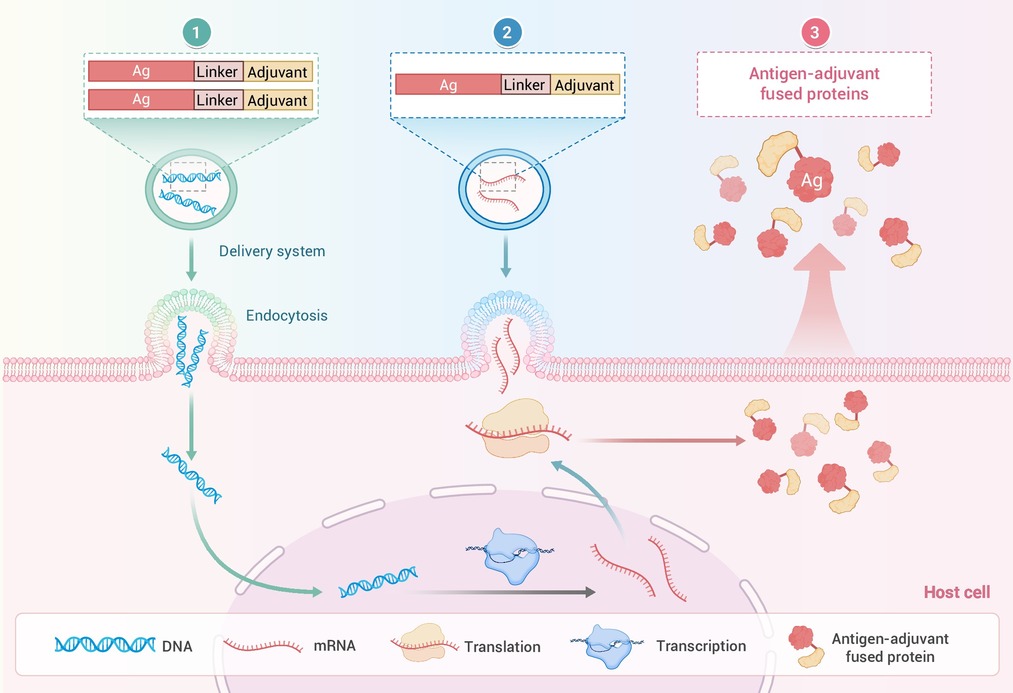
Figure 1.
Schematic overview of intramolecular adjuvant–antigen fusion constructs and their delivery pathways
-
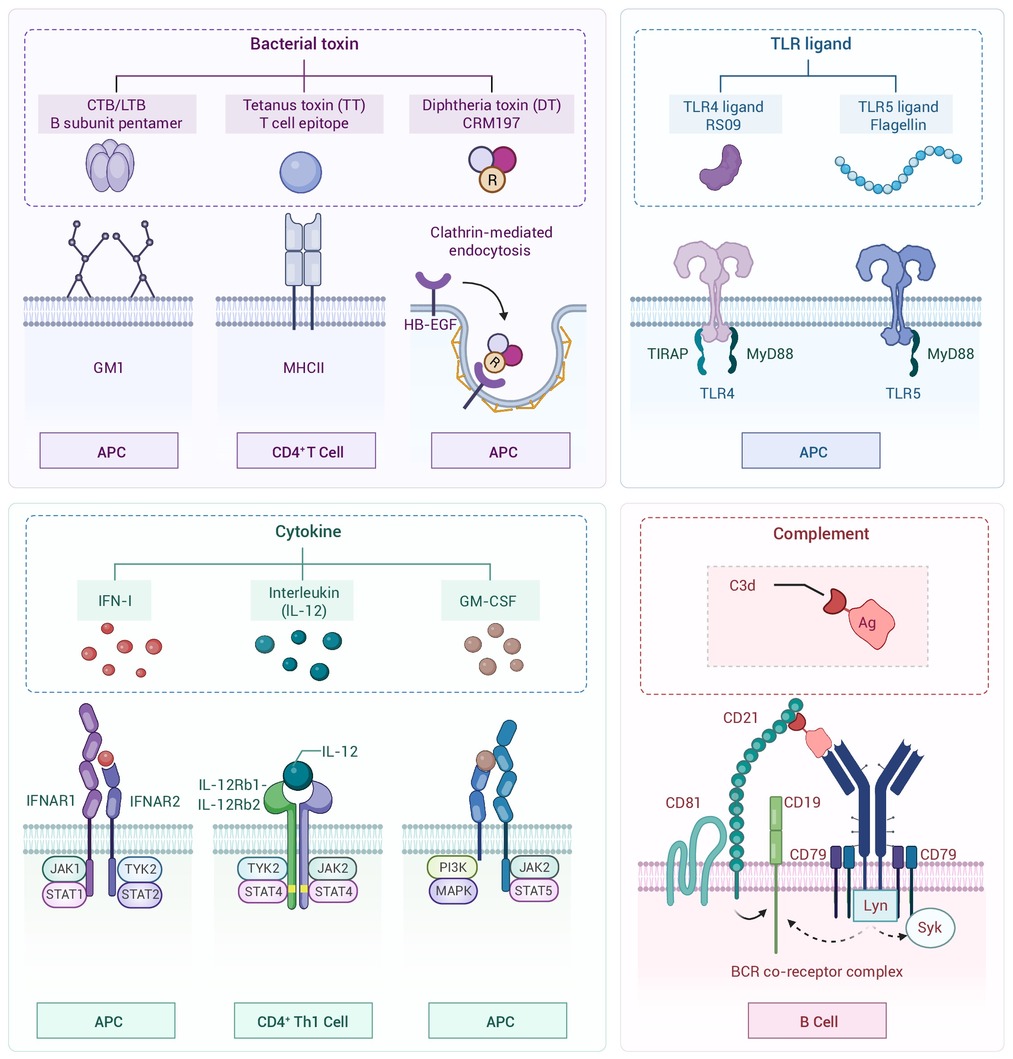
Figure 2.
Mechanistic classification and signaling pathways of four major genetically engineered intramolecular adjuvants
-
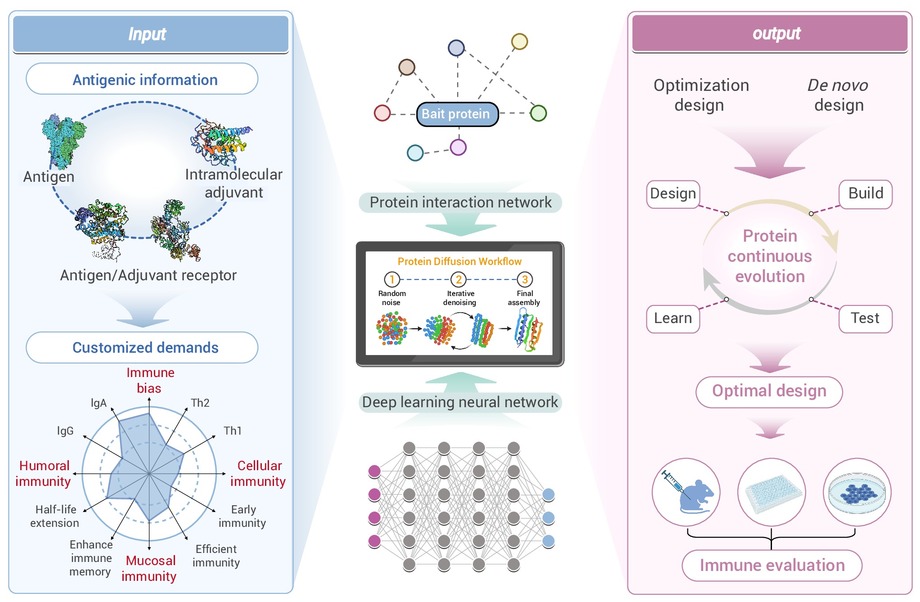
Figure 3.
AI-driven intelligent design platform for intramolecular adjuvants.
