
The dual impact of carbon neutrality and population aging on PM2.5-related mortality and economic burden in China
-
GRAPHICAL ABSTRACT
 DownLoad:
Full size image
-
PUBLIC SUMMARY
-
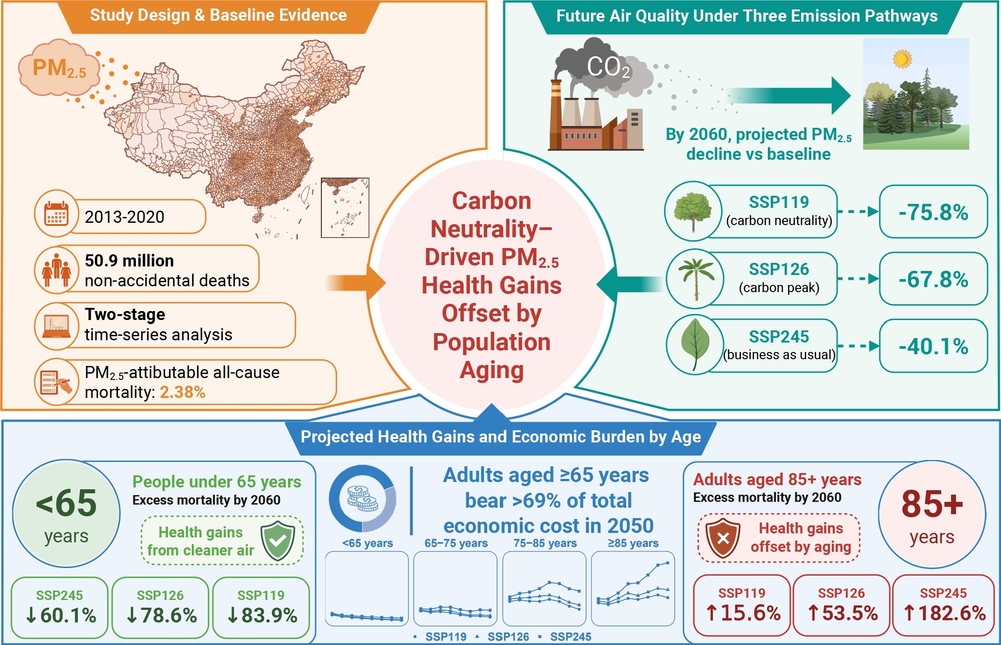
Achieving carbon neutrality could reduce PM2.5-related mortality by about 84% among those aged <65 years.
By 2050, older adults are expected to account for more than 69% of PM2.5-related economic losses.
Rapid aging will offset health gains from carbon neutrality in older adults.
-
-
ABSTRACT
Despite considerable regulatory interventions to mitigate air pollution, fine particulate matter (PM2.5) remains a critical health threat across China. Carbon neutrality strategies, though primarily aimed at mitigating climate change, may also yield substantial co-benefits for air quality and public health. However, the scale of these benefits may be undermined by rapid population aging. Here, we used a two-stage time-series analysis to quantify the exposure-response relationship between short-term PM2.5 exposure and mortality, using 50.9 million non-accidental deaths in mainland China. We then applied an air quality model to project future PM2.5 concentrations and estimate the associated disease burden under three carbon emissions scenarios. From 2013 to 2020, short-term PM2.5 exposure was attributable to 2.38% of all-cause mortality. By2060 , PM2.5 concentrations are projected to decline by 75.8%, 67.8%, and 40.1%, respectively, under three emission pathways: SSP119 (carbon neutrality), SSP126 (carbon peaking), and SSP245 (business as usual), compared with the baseline period. Consequently, excess mortality among individuals under 65 years of age is expected to decrease by 83.9%, 78.6%, and 60.1%, respectively. However, among adults aged 85 and over, PM2.5-attributable mortality is projected to increase by 15.6%, 53.5%, and 182.6%, respectively. By 2050, older adults are expected to account for more than 69% of PM2.5-related economic costs under the SSP119 scenario, reflecting the growing age-related burden in all scenarios. These findings underscore the health and financial benefits of achieving carbon neutrality and highlight the need to integrate demographic change into future climate and air quality policy frameworks. -

-
REFERENCES
[1] Huang J., Pan X., Guo X., et al. (2018). Health impact of China's Air Pollution Prevention and Control Action Plan: An analysis of national air quality monitoring and mortality data. Lancet Planet. Health 2:e313−e323. DOI:10.1016/S2542-5196(18)30141-4 [2] Yu T., Jiang Y., Chen R., et al. (2025). National and provincial burden of disease attributable to fine particulate matter air pollution in China, 1990-2021: An analysis of data from the Global Burden of Disease Study 2021. Lancet Planet. Health 9:e174−e185. DOI:10.1016/S2542-5196(25)00024-5 [3] World Health Organization. (2022). Billions of people still breathe unhealthy air: new WHO data. https://www.who.int/news/item/04-04-2022-billions-of-people-still-breathe-unhealthy-air-new-who-data. [4] Wan L., Bambrick H. and Tong M. (2025). Mortality attributable to ambient PM2.5 pollution in China's aging population. Environ. Impact Assess. Rev. 112:107823. DOI:10.1016/j.eiar.2025.107823. [5] Liu Y., Zhu G., Zhao Z., et al. (2022). Population aging might have delayed the alleviation of China's PM2.5 health burden. Atmos. Environ. 270:118895. DOI:10.1016/j.atmosenv.2021.118895. [6] Li C., van Donkelaar A., Hammer M. S., et al. (2023). Reversal of trends in global fine particulate matter air pollution. Nat. Commun. 14:5349. DOI:10.1038/s41467-023-41086-z [7] Yin H., Brauer M., Zhang J., et al. (2021). Population ageing and deaths attributable to ambient PM2·5 pollution: A global analysis of economic cost. Lancet Planet. Health 5:e356−e367. DOI:10.1016/S2542-5196(21)00131-5 [8] Brauer M., Roth G. A., Aravkin A. Y., et al. (2024). Global burden and strength of evidence for 88 risk factors in 204 countries and 811 subnational locations, 1990-2021: A systematic analysis for the Global Burden of Disease Study 2021. Lancet 403:2162−2203. DOI:10.1016/S0140-6736(24)00933-4 [9] Mora C., McKenzie T., Gaw I. M., et al. (2022). Over half of known human pathogenic diseases can be aggravated by climate change. Nat. Clim. Chang. 12:869−875. DOI:10.1038/s41558-022-01426-1 [10] Scovronick N., Budolfson M., Dennig F., et al. (2019). The impact of human health co-benefits on evaluations of global climate policy. Nat. Commun. 10:2095. DOI:10.1038/s41467-019-09499-x [11] Lelieveld J., Klingmüller K., Pozzer A., et al. (2019). Effects of fossil fuel and total anthropogenic emission removal on public health and climate. Proc. Natl. Acad. Sci. U. S. A. 116:7192−7197. DOI:10.1073/pnas.1819989116 [12] Shindell D., Faluvegi G., Seltzer K., et al. (2018). Quantified, localized health benefits of accelerated carbon dioxide emissions reductions. Nat. Clim. Chang. 8:291−295. DOI:10.1038/s41558-018-0108-y [13] Zhao X., Ma X., Chen B., et al. (2022). Challenges toward carbon neutrality in China: Strategies and countermeasures. Resources, Conservation and Recycling 176:105959. DOI:10.1016/j.resconrec.2021.105959 [14] Chen W., Lu X., Yuan D., et al. (2023). Global PM2.5 prediction and associated mortality to 2100 under different climate change scenarios. Environ. Sci. Technol. 57:10039-10052. DOI:10.1021/acs.est.3c03804 [15] Yang G., Wang Y., Zeng Y., et al. (2013). Rapid health transition in China, 1990-2010: Findings from the Global Burden of Disease Study 2010. Lancet 381:1987−2015. DOI:10.1016/S0140-6736(13)61097-1 [16] Xu J., Yao M., Wu W., et al. (2021). Estimation of ambient PM2.5-related mortality burden in China by 2030 under climate and population change scenarios: A modeling study. Environ. Int. 156:106733. DOI:10.1016/j.envint.2021.106733 [17] Wang Y., Liao H., Chen H., et al. (2023). Future projection of mortality from exposure to PM2.5 and O3 under the carbon neutral pathway: Roles of changing emissions and population aging. Geophys. Res. Lett. 50:e2023GL104838. DOI:10.1029/2023GL104838 [18] Li N., Chen W., Rafaj P., et al. (2019). Air quality improvement co-benefits of low-carbon pathways toward well below the 2 °C climate target in China. Environ. Sci. Technol. 53:5576−5584. DOI:10.1021/acs.est.8b06948 [19] Wang Y., Hu J., Huang L., et al. (2022). Projecting future health burden associated with exposure to ambient PM2.5 and ozone in China under different climate scenarios. Environ. Int. 169:107542. DOI:10.1016/j.envint.2022.107542 [20] Xu F., Huang Q., Yue H., et al. (2023). The challenge of population aging for mitigating deaths from PM2.5 air pollution in China. Nat. Commun. 14:5222. DOI:10.1038/s41467-023-40908-4 [21] Ban J., Cheng J., Zhang C., et al. (2024). China’s carbon-neutral policies will reduce short-term PM2.5-associated excess incidence of cardiovascular diseases. One Earth 7:497-505. DOI:10.1016/j.oneear.2024.01.006 [22] Qin Y., Zhou M., Hao Y., et al. (2024). Amplified positive effects on air quality, health, and renewable energy under China’s carbon neutral target. Nat. Geosci. 17:411−418. DOI:10.1038/s41561-024-01425-1 [23] Wei J., Li Z., Lyapustin A., et al. (2021). Reconstructing 1-km-resolution high-quality PM2.5 data records from 2000 to 2018 in China: Spatiotemporal variations and policy implications. Remote Sens. Environ. 252:112136. DOI:10.1016/j.rse.2020.112136 [24] Wei J., Liu S., Li Z., et al. (2022). Ground-level NO2 surveillance from space across China for high resolution using interpretable spatiotemporally weighted artificial intelligence. Environ. Sci. Technol. 56:9988−9998. DOI:10.1021/acs.est.2c03834 [25] Wei J., Li Z., Wang J., et al. (2023). Ground-level gaseous pollutants (NO2, SO2, and CO) in China: Daily seamless mapping and spatiotemporal variations. Atmos. Chem. Phys. 23:1511−1532. DOI:10.5194/acp-23-1511-2023 [26] Xiao Q., Geng G., Xue T., et al. (2022). Tracking PM2.5 and O3 pollution and the related health burden in China 2013-2020. Environ. Sci. Technol. 56:6922-6932. DOI:10.1021/acs.est.1c04548. [27] Muñoz-Sabater J., Dutra E., Agustí-Panareda A., et al. (2021). ERA5-Land: A state-of-the-art global reanalysis dataset for land applications. Earth Syst. Sci. Data 13:4349−4383. DOI:10.5194/essd-13-4349-2021 [28] Cheng J., Tong D., Zhang Q., et al. (2021). Pathways of China's PM2.5 air quality 2015–2060 in the context of carbon neutrality. Natl. Sci. Rev. 8. DOI:10.1093/nsr/nwab078 [29] Chen Y., Guo F., Wang J., et al. (2020). Provincial and gridded population projection for China under shared socioeconomic pathways from 2010 to 2100. Sci. Data 7:83. DOI:10.1038/s41597-020-0421-y [30] Guo J., Zhou J., Han R., et al. (2023). Association of short-term co-exposure to particulate matter and ozone with mortality risk. Environ. Sci. Technol. 57:15825−15834. DOI:10.1021/acs.est.3c04056 [31] Liu C., Chen R., Sera F., et al. (2019). Ambient particulate air pollution and daily mortality in 652 cities. N. Engl. J. Med. 381:705−715. DOI:10.1056/NEJMoa1817364 [32] Liu C., Chen R., Sera F., et al. (2023). Interactive effects of ambient fine particulate matter and ozone on daily mortality in 372 cities: Two stage time series analysis. BMJ 383:e075203. DOI:10.1136/bmj-2023-075203 [33] Chen R., Jiang Y., Hu J., et al. (2022). Hourly air pollutants and acute coronary syndrome onset in 1.29 million patients. Circulation 145:1749-1760. DOI:10.1161/circulationaha.121.057179 [34] Gasparrini A. and Leone M. (2014). Attributable risk from distributed lag models. BMC Med. Res. Methodol. 14:55. DOI:10.1186/1471-2288-14-55 [35] O'Brien E., Masselot P., Sera F., et al. (2023). Short-term association between sulfur dioxide and mortality: A multicountry analysis in 399 cities. Environ. Health Perspect. 131:37002. DOI:10.1289/ehp11112 [36] China National Information Center. (2021). Medium- and Long-Term Goals, Strategies, and Pathways for China's Economic and Social Development. https://www.efchina.org/Reports-zh/report-lceg-20210207-4-zh. [37] Schumacher A. E., Kyu H. H., Aali A., et al. (2024). Global age-sex-specific mortality, life expectancy, and population estimates in 204 countries and territories and 811 subnational locations, 1950-2021, and the impact of the COVID-19 pandemic: A comprehensive demographic analysis for the Global Burden of Disease Study 2021. Lancet 403:1989−2056. DOI:10.1016/S0140-6736(24)00476-8 [38] Baxter L. K., Dionisio K., Pradeep P., et al. (2019). Human exposure factors as potential determinants of the heterogeneity in city-specific associations between PM2.5 and mortality. J. Expo. Sci. Environ. Epidemiol. 29:557-567. DOI:10.1038/s41370-018-0080-7 [39] Ma Y., Nobile F., Marb A., et al. (2024). Short-term exposure to fine particulate matter and nitrogen dioxide and mortality in 4 countries. JAMA Netw. Open 7:e2354607−e2354607. DOI:10.1001/jamanetworkopen.2023.54607 [40] Masselot P., Sera F., Schneider R., et al. (2022). Differential mortality risks associated with PM2.5 components: A multi-country, multi-city study. Epidemiology 33:167-175. DOI:10.1097/EDE.0000000000001455 [41] Tian Y., Liu H., Wu Y., et al. (2019). Association between ambient fine particulate pollution and hospital admissions for cause specific cardiovascular disease: time series study in 184 major Chinese cities. BMJ 367:l6572. DOI:10.1136/bmj.l6572 [42] Peng S., Li Z., Ji J. S., et al. (2024). Interaction between extreme temperature events and fine particulate matter on cardiometabolic multimorbidity: Evidence from four national cohort studies. Environ. Sci. Technol. 58:12379−12389. DOI:10.1021/acs.est.4c02080 [43] Xu R., Huang S., Shi C., et al. (2023). Extreme temperature events, fine particulate matter, and myocardial infarction mortality. Circulation 148:312−323. DOI:10.1161/circulationaha.122.063504 [44] Maji K. J., Ye W.-F., Arora M., et al. (2018). PM2.5-related health and economic loss assessment for 338 Chinese cities. Environ. Int. 121:392-403. DOI:10.1016/j.envint.2018.09.024 [45] Pimpin L., Retat L., Fecht D., et al. (2018). Estimating the costs of air pollution to the National Health Service and social care: An assessment and forecast up to 2035. PLoS Med. 15:e1002602. DOI:10.1371/journal.pmed.1002602 [46] Aldy J. E. and Viscusi W. K. (2007). Age differences in the value of statistical life: Revealed preference evidence. Rev. Environ. Econ. Policy 1:241−260. DOI:10.1093/reep/rem014 [47] O’Brien J. (2018). Age, autos, and the value of a statistical life. J. Risk Uncertain. 57:51−79. DOI:10.1007/s11166-018-9285-3 [48] Li D., Wu Q., Cheng H., et al. (2024). Numerical study of the future PM2.5 concentration under climate change and best-health-effect (BHE) scenario. Environ. Pollut. 357:124391. DOI:10.1016/j.envpol.2024.124391 [49] Shi L., Zanobetti A., Kloog I., et al. (2016). Low-concentration PM2.5 and mortality: Estimating acute and chronic effects in a population-based study. Environ. Health Perspect. 124:46-52. DOI:10.1289/ehp.1409111 [50] Viscusi W. K. (2019). Risk guideposts for a safer society: Introduction and overview. J. Risk Uncertain. 58:101−119. DOI:10.1007/s11166-019-09307-3 -
ABOUT THIS ARTICLE
Cite this article:
Guo J., Lin L., Koutrakis P., et al. (2026). The dual impact of carbon neutrality and population aging on PM2.5-related mortality and economic burden in China. The Innovation Medicine 4:100259. https://doi.org/10.59717/j.xinn-med.2026.100259
Welcome!
To request copyright permission to republish or share portions of our works, please visit Copyright Clearance Center's (CCC) Marketplace website at marketplace.copyright.com.
Export File
Citation
Guo J., Lin L., Koutrakis P., et al. (2026). The dual impact of carbon neutrality and population aging on PM2.5-related mortality and economic burden in China. The Innovation Medicine 4:100259. https://doi.org/10.59717/j.xinn-med.2026.100259

Format
Content
-
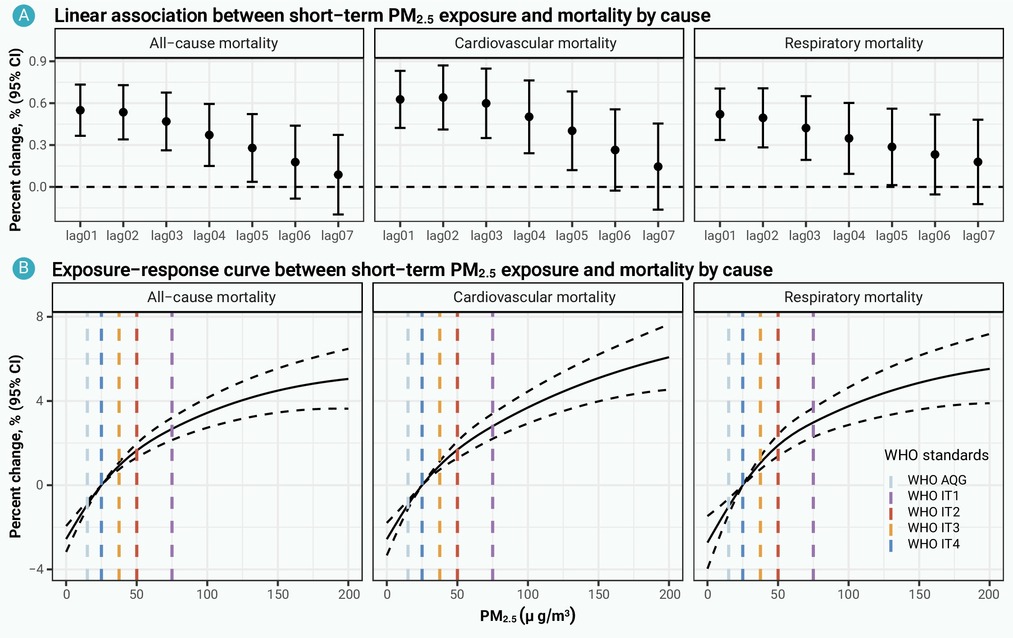
Figure 1.
Association between short-term PM2.5 exposure and all-cause, cardiovascular, and respiratory mortality
-
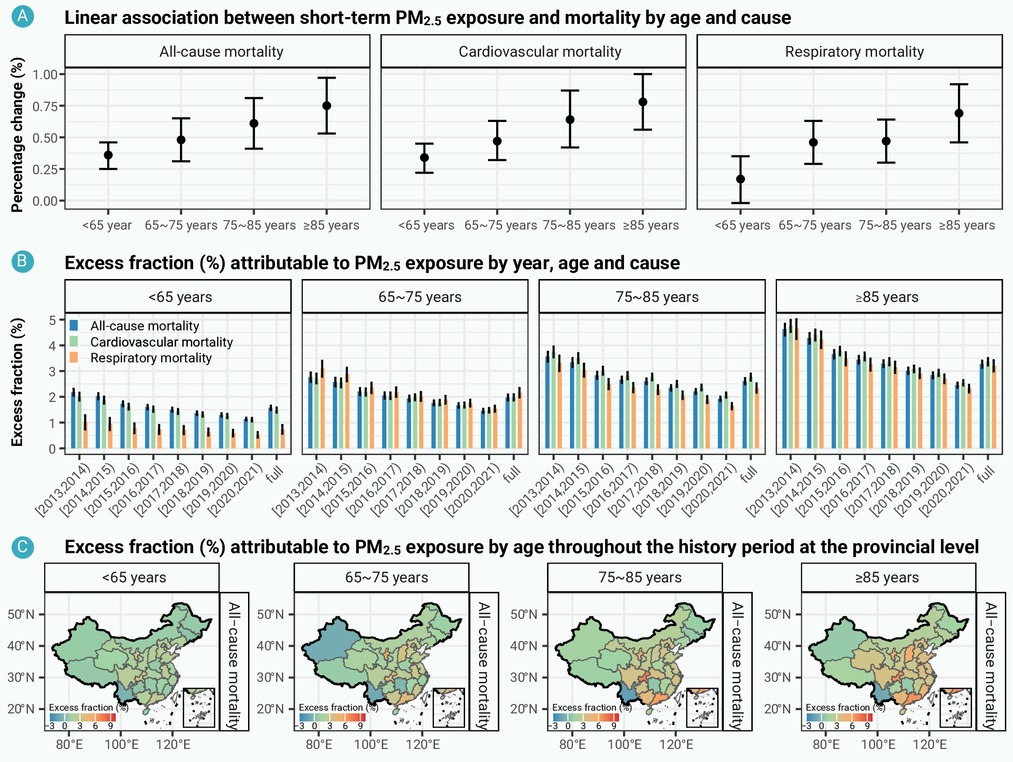
Figure 2.
Association between short-term PM2.5 exposure and mortality, and excess fraction attributable to PM2.5 exposure by age and cause
-
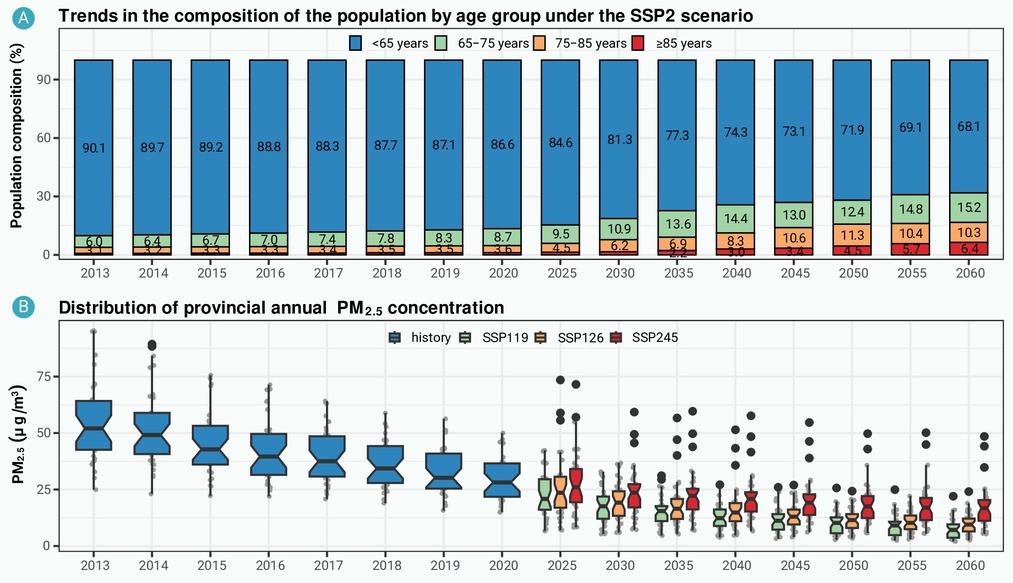
Figure 3.
Trends in national population composition by age group (A) and provincial distribution of annual average PM2.5 concentrations (B) from 2013 to
2060 -
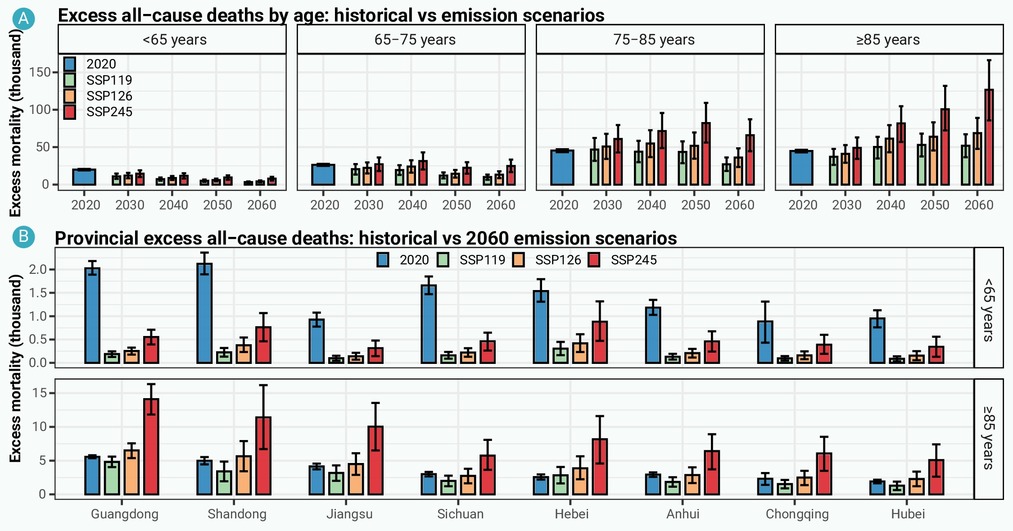
Figure 4.
Excess all-cause mortality in 2020 and under different emission scenarios in
2060 -
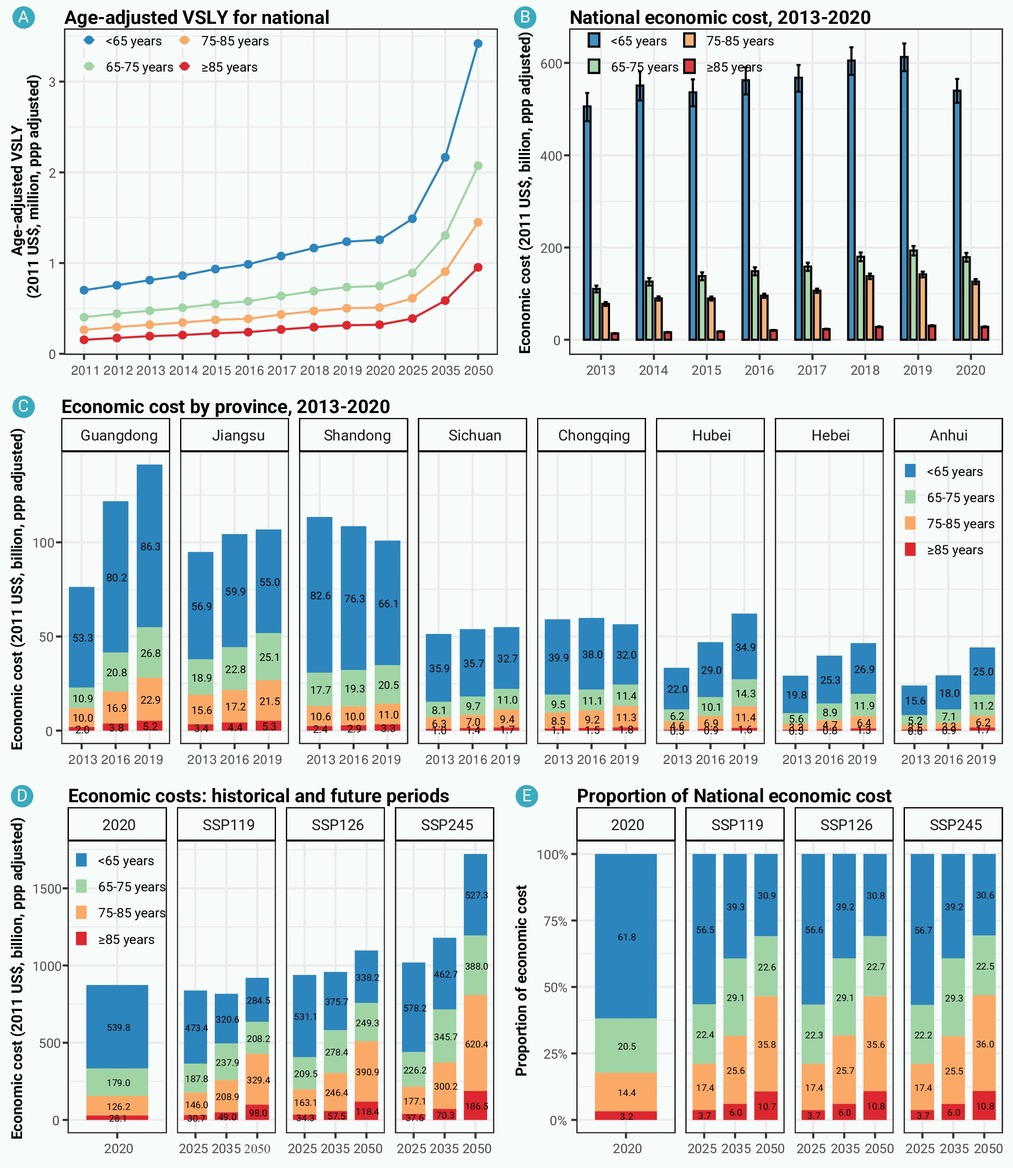
Figure 5.
Economic costs of all-cause mortality attributable to short-term PM2.5 exposure during the historical and future periods
