
From podium to daily practice: A narrative review of energy-based nutrition strategies for athletes and everyday exercisers
-
GRAPHICAL ABSTRACT
 DownLoad:
Full size image
-
PUBLIC SUMMARY
-
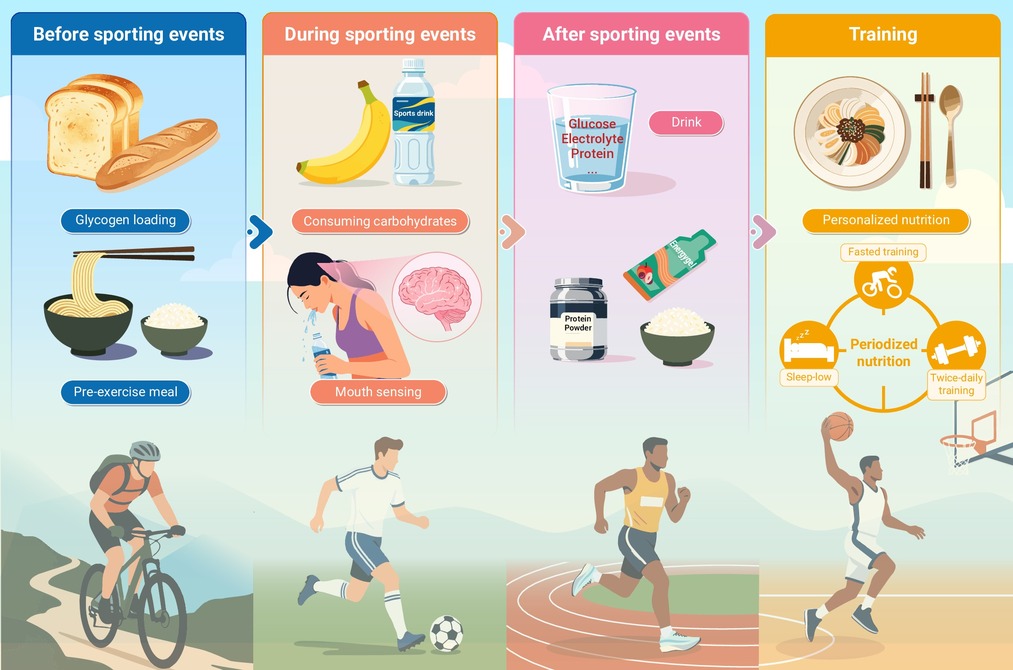
Before competitions, an appropriate high-carbohydrate diet to increase glycogen stores can enhance performance.
Avoiding low energy availability is very important for maintaining optimal health and performance.
During competitions, carbohydrate supplementation and carbohydrate mouth rinsing are beneficial.
Post-competition supplementation is essential for recovery, and current evidence suggests that multi-channel carbohydrate intake is particularly effective.
Current evidence does not support the efficacy of high-fat, low-carbohydrate diets or medium-chain triglycerides in significantly enhancing athletic performance.
-
-
ABSTRACT
Energy support plays a crucial role for athletes and everyday exercisers, with various nutritional strategies being developed to optimize energy metabolism. This review summarizes nutritional approaches related to energy metabolism, including the prevention of low energy availability, carbohydrate supplementation across different competition phases, and approaches to enhance fat oxidation. Avoiding low energy availability is very important for maintaining optimal health and performance; thus, the key is to identify and address the specific underlying causes of the energy deficit. Nutritional supplementation strategies vary across different phases of exercise. Before competitions, an appropriate high-carbohydrate diet to increase glycogen stores can enhance performance. During competitions, carbohydrate supplementation and carbohydrate mouth rinsing are beneficial. Post-competition supplementation is essential for recovery, and current evidence suggests that multiple-transportable carbohydrate intake is particularly effective. Additionally, periodized training with limited carbohydrate availability to boost metabolic adaptation is receiving significant attention; however, more research is still needed to validate its effects. Similarly, although both high-fat low-carbohydrate diets and medium-chain triglycerides may increase fat oxidation rates, current evidence does not support their efficacy in significantly enhancing athletic performance. Overall, individualized and periodized nutrition strategies are essential for optimizing athletic performance and maintaining athlete health. -

-
REFERENCES
[1] Zheng M., Wang X., Yin Y., et al. (2024). New-onset age of metabolic-associated fatty liver disease and incident cardiovascular diseases: Findings from prospective cohort. Innov. Med. 2:100064. DOI:10.59717/j.xinn-med.2024.100064 [2] Zhang B., Luo W., Cai Y., et al. (2024). Global burden of adolescent and young adult cardiovascular diseases and risk factors: Results from Global Burden of Disease Study 2019. Innov. Med. 2:100063. DOI:10.59717/j.xinn-med.2024.100063 [3] Burke L. M. and Hawley J. A. (2018). Swifter, higher, stronger: What's on the menu. Science 362:781−787. DOI:10.1126/science.aau2093 [4] Thomas D. T., Erdman K. A. and Burke L. M. (2016). American college of sports medicine joint position statement. Nutrition and athletic performance. Med. Sci. Sports Exerc. 48:543−568. DOI:10.1249/mss.0000000000000852 [5] Du M., Gu Y., Xu T., et al. (2025). Healing beyond tradition: advanced regenerative therapies for joint-related sports injuries. Innov. Med. 3:100132. DOI:10.59717/j.xinn-med. 2025.100132. DOI:10.59717/j.xinn-med.2025.100132 [6] Burke L. M., Hawley J. A., Wong S. H., et al. (2011). Carbohydrates for training and competition. J. Sports Sci. 29 Suppl 1:S17-27. DOI:10.1080/02640414.2011.585473. [7] Pelly F. E., O'Connor H. T., Denyer G. S., et al. (2011). Evolution of food provision to athletes at the summer Olympic Games. Nutr. Rev. 69:321−332. DOI:10.1111/j.1753-4887.2011.00396.x [8] Krogh A. and Lindhard J. (1920). The relative value of fat and carbohydrate as sources of muscular energy: with appendices on the correlation between standard metabolism and the respiratory quotient during rest and work. Biochem. J. 14:290−363. DOI:10.1042/bj0140290 [9] Bergström J. and Hultman E. (1967). A study of the glycogen metabolism during exercise in man. Scand. J. Clin. Lab. Invest. 19:218−228. DOI:10.3109/00365516709090629 [10] Egan B., Hawley J. A. and Zierath J. R. (2016). SnapShot: exercise metabolism. Cell Metab. 24:342−342.e341. DOI:10.1016/j.cmet.2016.07.013 [11] Loucks A. B. (2004). Energy balance and body composition in sports and exercise. J. Sports Sci. 22:1−14. DOI:10.1080/0264041031000140518 [12] Areta J. L., Taylor H. L. and Koehler K. (2021). Low energy availability: history, definition and evidence of its endocrine, metabolic and physiological effects in prospective studies in females and males. Eur. J. Appl. Physiol. 121:1−21. DOI:10.1007/s00421-020-04516-0 [13] Spriet L. L. (2014). New insights into the interaction of carbohydrate and fat metabolism during exercise. Sports Med. 44 Suppl 1:S87-96. DOI:10.1007/s40279-014-0154-1. [14] Loucks A. B., Thuma J. R. (2003). Luteinizing hormone pulsatility is disrupted at a threshold of energy availability in regularly menstruating women. J. Clin. Endocrinol. Metab. 88:297−311. DOI:10.1210/jc.2002-020369 [15] Mountjoy M., Ackerman K. E., Bailey D. M., et al. (2023). 2023 International Olympic Committee's (IOC) consensus statement on Relative Energy Deficiency in Sport (REDs). Br. J. Sports Med. 57:1073−1097. DOI:10.1136/bjsports-2023-106994 [16] Fagerberg P. (2018). Negative consequences of low energy availability in natural male bodybuilding: a review. Int. J. Sport Nutr. Exerc. Metab. 28:385−402. DOI:10.1123/ijsnem. 2016-0332. DOI:10.1123/ijsnem.2016-0332 [17] Koehler K., Hoerner N. R., Gibbs J. C., et al. (2016). Low energy availability in exercising men is associated with reduced leptin and insulin but not with changes in other metabolic hormones. J. Sports Sci. 34:1921−1929. DOI:10.1080/02640414.2016.1142109 [18] Langan-Evans C., Germaine M., Artukovic M., et al. (2021). The psychological and physiological consequences of low energy availability in a male combat sport athlete. Med. Sci. Sports Exerc. 53:673−683. DOI:10.1249/mss.0000000000002519 [19] Mountjoy M., Sundgot-Borgen J., Burke L., et al. (2014). The IOC consensus statement: beyond the Female Athlete Triad--Relative Energy Deficiency in Sport (RED-S). Br. J. Sports Med. 48:491-497. DOI:10.1136/bjsports-2014-093502. [20] Mathisen T. F., Ackland T., Burke L. M., et al. (2023). Best practice recommendations for body composition considerations in sport to reduce health and performance risks: a critical review, original survey and expert opinion by a subgroup of the IOC consensus on Relative Energy Deficiency in Sport (REDs). Br. J. Sports Med. 57:1148−1158. DOI:10.1136/bjsports -2023-106812. DOI:10.1136/bjsports-2023-106812 [21] Burke L., Deakin V., Minehan M. (2021). Clinical sports nutrition (McGraw Hill Education). [22] Romijn J. A., Coyle E. F., Sidossis L. S., et al. (1993). Regulation of endogenous fat and carbohydrate metabolism in relation to exercise intensity and duration. Am. J. Physiol. 265:E380−391. DOI:10.1152/ajpendo.1993.265.3.E380 [23] Ramadoss R., Stanzione J. R. and Volpe S. L. (2022). A comparison of substrate utilization profiles during maximal and submaximal exercise tests in athletes. Front. Psychol. 13:854451. DOI:10.3389/fpsyg.2022.854451 [24] Leckey J. J., Burke L. M., Morton J. P., et al. (2016). Altering fatty acid availability does not impair prolonged, continuous running to fatigue: evidence for carbohydrate dependence. J. Appl. Physiol (1985). 120:107-113. DOI:10.1152/japplphysiol.00855.2015. [25] Hawley J. A. and Leckey J. J. (2015). Carbohydrate dependence during prolonged, intense endurance exercise. Sports Med. 45 Suppl 1:S5-12. DOI:10.1007/s40279-015-0400-1. [26] Hargreaves M. and Spriet L. L. (2020). Skeletal muscle energy metabolism during exercise. Nat. Metab. 2:817−828. DOI:10.1038/s42255-020-0251-4 [27] Jensen R., Ørtenblad N., Stausholm M. H., et al. (2020). Heterogeneity in subcellular muscle glycogen utilisation during exercise impacts endurance capacity in men. J. Physiol. 598:4271−4292. DOI:10.1113/jp280247 [28] Jensen R., Ørtenblad N., Stausholm M. H., et al. (2021). Glycogen supercompensation is due to increased number, not size, of glycogen particles in human skeletal muscle. Exp. Physiol. 106:1272−1284. DOI:10.1113/ep089317 [29] Areta J. L. and Hopkins W. G. (2018). Skeletal muscle glycogen content at rest and during endurance exercise in humans: a meta-analysis. Sports. Med. 48:2091−2102. DOI:10.1007/ s40279-018-0941-1. DOI:10.1007/s40279-018-0941-1 [30] Burke L. M. (2017). Practical issues in evidence-based use of performance supplements: Supplement interactions, repeated use and individual responses. Sports Med. 47:79−100. DOI:10.1007/s40279-017-0687-1 [31] Bergström J., Hermansen L., Hultman E., et al. (1967). Diet, muscle glycogen and physical performance. Acta. Physiol. Scand. 71:140−150. DOI:10.1111/j.1748-1716.1967.tb03720.x [32] Hawley J. A., Schabort E. J., Noakes T. D., et al. (1997). Carbohydrate-loading and exercise performance. An update. Sports Med. 24:73−81. DOI:10.2165/00007256-199724020-00001 [33] Burke L. M., Castell L. M., Casa D. J., et al. (2019). International association of athletics federations consensus statement 2019: nutrition for athletics. Int. J. Sport Nutr. Exerc. Metab. 29:73−84. DOI:10.1123/ijsnem.2019-0065 [34] Vitale K. and Getzin A. (2019). Nutrition and supplement update for the endurance athlete: review and recommendations. Nutrients 11:1289. DOI:10.3390/nu11061289 [35] Rothschild J. A., Kilding A. E. and Plews D. J. (2020). What should I eat before exercise. Pre-exercise nutrition and the response to endurance exercise: Current prospective and future directions. Nutrients 12:3473. DOI:10.3390/nu12113473 [36] Naderi A., Gobbi N., Ali A., et al. (2023). Carbohydrates and endurance exercise: a narrative review of a food first approach. Nutrients 15:1367. DOI:10.3390/nu15061367 [37] Mata F., Valenzuela P. L., Gimenez J., et al. (2019). Carbohydrate availability and physical performance: Physiological overview and practical recommendations. Nutrients 11:1084. DOI:10.3390/nu11051084 [38] Thomas D. E., Brotherhood J. R. and Brand J. C. (1991). Carbohydrate feeding before exercise: effect of glycemic index. Int. J. Sports Med. 12:180−186. DOI:10.1055/s-2007-1024664 [39] Burdon C. A., Spronk I., Cheng H. L., et al. (2017). Effect of glycemic index of a pre-exercise meal on endurance exercise performance: A systematic review and meta-analysis. Sports Med. 47:1087−1101. DOI:10.1007/s40279-016-0632-8 [40] Vigh-Larsen J. F., Ørtenblad N., Spriet L. L., et al. (2021). Muscle glycogen metabolism and high-intensity exercise performance: a narrative review. Sports Med. 51:1855−1874. DOI:10.1007/s40279-021-01475-0 [41] Barnett C., Carey M., Proietto J., et al. (2004). Muscle metabolism during sprint exercise in man: influence of sprint training. J. Sci. Med. Sport 7:314−322. DOI:10.1016/s1440-2440 (04)80026-4. DOI:10.1016/s1440-2440(04)80026-4 [42] Gollnick P. D., Piehl K. and Saltin B. (1974). Selective glycogen depletion pattern in human muscle fibres after exercise of varying intensity and at varying pedalling rates. J. Physiol. 241:45−57. DOI:10.1113/jphysiol.1974.sp010639 [43] Olsson K. E. and Saltin B. (1970). Variation in total body water with muscle glycogen changes in man. Acta. Physiol. Scand. 80:11−18. DOI:10.1111/j.1748-1716.1970.tb04764.x [44] Kreitzman S. N., Coxon A. Y. and Szaz K. F. (1992). Glycogen storage: illusions of easy weight loss, excessive weight regain, and distortions in estimates of body composition. Am. J. Clin. Nutr. 56:292s−293s. DOI:10.1093/ajcn/56.1.292S [45] Iwayama K., Tanabe Y., Tanji F., et al. (2021). Diurnal variations in muscle and liver glycogen differ depending on the timing of exercise. J. Physiol. Sci. 71:35. DOI:10.1186/ s12576-021-00821-1. DOI:10.1186/s12576-021-00821-1 [46] Gonzalez J. T., Fuchs C. J., Betts J. A., et al. (2016). Liver glycogen metabolism during and after prolonged endurance-type exercise. Am. J. Physiol. Endocrinol. Metab. 311:E543−553. DOI:10.1152/ajpendo.00232.2016 [47] Décombaz J., Jentjens R., Ith M., et al. (2011). Fructose and galactose enhance postexercise human liver glycogen synthesis. Med. Sci. Sports Exerc. 43:1964−1971. DOI:10.1249/MSS. 0b013e318218ca5a. DOI:10.1249/MSS.0b013e318218ca5a [48] Fuchs C. J., Gonzalez J. T., Beelen M., et al. (2016). Sucrose ingestion after exhaustive exercise accelerates liver, but not muscle glycogen repletion compared with glucose ingestion in trained athletes. J. Appl. Physiol (1985). 120:1328-1334. DOI:10.1152/japplphysiol. 01023.2015. [49] Podlogar T., Cirnski S., Bokal Š., et al. (2022). Addition of fructose to a carbohydrate-rich breakfast improves cycling endurance capacity in trained cyclists. Int. J. Sport Nutr. Exerc. Metab. 32:439−445. DOI:10.1123/ijsnem.2022-0067 [50] Jeukendrup A. E., Moseley L., Mainwaring G. I., et al. (2006). Exogenous carbohydrate oxidation during ultraendurance exercise. J. Appl. Physiol (1985). 100:1134-1141. DOI:10. 1152/japplphysiol.00981.2004. [51] Coyle E. F., Hagberg J. M., Hurley B. F., et al. (1983). Carbohydrate feeding during prolonged strenuous exercise can delay fatigue. J. Appl. Physiol. Respir. Environ. Exerc. Physiol. 55:230−235. DOI:10.1152/jappl.1983.55.1.230 [52] Coyle E. F., Coggan A. R., Hemmert M. K., et al. (1986). Muscle glycogen utilization during prolonged strenuous exercise when fed carbohydrate. J. Appl. Physiol (1985). 61:165-172. DOI:10.1152/jappl.1986.61.1.165. [53] Jeukendrup A. E. (2011). Nutrition for endurance sports: marathon, triathlon, and road cycling. J. Sports Sci. 29 Suppl 1:S91-99. DOI:10.1080/02640414.2011.610348. [54] Leijssen D. P., Saris W. H., Jeukendrup A. E., et al. (1995). Oxidation of exogenous [13C]galactose and [13C]glucose during exercise. J. Appl. Physiol. 79:720−725. DOI:10.1152/jappl.1995.79.3.720 [55] Burelle Y., Lamoureux M. C., Péronnet F., et al. (2006). Comparison of exogenous glucose, fructose and galactose oxidation during exercise using 13C-labelling. Br. J. Nutr. 96:56−61. DOI:10.1079/bjn20061799 [56] Odell O. J., Podlogar T. and Wallis G. A. (2020). Comparable exogenous carbohydrate oxidation from lactose or sucrose during exercise. Med. Sci. Sports Exerc. 52:2663−2672. DOI:10.1249/mss.0000000000002426 [57] Wagenmakers A. J., Brouns F., Saris W. H., et al. (1993). Oxidation rates of orally ingested carbohydrates during prolonged exercise in men. J. Appl. Physiol (1985). 75:2774-2780. DOI:10.1152/jappl.1993.75.6.2774. [58] Jentjens R. L., Achten J. and Jeukendrup A. E. (2004). High oxidation rates from combined carbohydrates ingested during exercise. Med. Sci. Sports Exerc. 36:1551−1558. DOI:10.1249/ 01.mss.0000139796.07843.1d. DOI:10.1249/01.mss.0000139796.07843.1d [59] Jeukendrup A. E. and Jentjens R. (2000). Oxidation of carbohydrate feedings during prolonged exercise: current thoughts, guidelines and directions for future research. Sports Med. 29:407−424. DOI:10.2165/00007256-200029060-00004 [60] Rowlands D. S., Houltham S., Musa-Veloso K., et al. (2015). Fructose-glucose composite carbohydrates and endurance performance: critical review and future perspectives. Sports Med. 45:1561−1576. DOI:10.1007/s40279-015-0381-0 [61] Podlogar T. and Wallis G. A. (2022). New horizons in carbohydrate research and application for endurance athletes. Sports Med. 52:5−23. DOI:10.1007/s40279-022-01757-1 [62] Podlogar T., Bokal Š., Cirnski S., et al. (2022). Increased exogenous but unaltered endogenous carbohydrate oxidation with combined fructose-maltodextrin ingested at 120 g h(-1) versus 90 g h(-1) at different ratios. Eur. J. Appl. Physiol. 122:2393−2401. DOI:10.1007/s00421 -022-05019-w. DOI:10.1007/s00421-022-05019-w [63] Viribay A., Arribalzaga S., Mielgo-Ayuso J., et al. (2020). Effects of 120 g/h of carbohydrates intake during a mountain marathon on exercise-induced muscle damage in elite runners. Nutrients 12. DOI:10.3390/nu12051367. [64] Burke L. M. and Maughan R. J. (2015). The Governor has a sweet tooth - mouth sensing of nutrients to enhance sports performance. Eur. J. Sport. Sci. 15:29−40. DOI:10.1080/17461391. 2014.971880. DOI:10.1080/17461391.2014.971880 [65] Chambers E. S., Bridge M. W. and Jones D. A. (2009). Carbohydrate sensing in the human mouth: effects on exercise performance and brain activity. J. Physiol. 587:1779−1794. DOI:10.1113/jphysiol.2008.164285 [66] Brietzke C., Franco-Alvarenga P. E., Coelho-Júnior H. J., et al. (2019). Effects of carbohydrate mouth rinse on cycling time trial performance: a systematic review and meta-analysis. Sports Med. 49:57−66. DOI:10.1007/s40279-018-1029-7 [67] Lane S. C., Bird S. R., Burke L. M., et al. (2013). Effect of a carbohydrate mouth rinse on simulated cycling time-trial performance commenced in a fed or fasted state. Appl. Physiol. Nutr. Metab. 38:134−139. DOI:10.1139/apnm-2012-0300 [68] de Ataide e Silva T., Di Cavalcanti Alves de Souza M. E., de Amorim J. F., et al. (2013). Can carbohydrate mouth rinse improve performance during exercise. A systematic review. Nutrients 6:1−10. DOI:10.3390/nu6010001 [69] Rodrigues Oliveira-Silva I. G., Dos Santos M. P. P., Learsi da Silva Santos Alves S. K., et al. (2023). Effect of carbohydrate mouth rinse on muscle strength and muscular endurance: A systematic review with meta-analysis. Crit. Rev. Food. Sci. Nutr. 63:8796−8807. DOI:10.1080/ 10408398.2022.2057417. DOI:10.1080/10408398.2022.2057417 [70] Oliveira-Silva I. G. R., Dos Santos M. P. P., da Silva Santos Alves S. K. L., et al. (2024). Response to letter to the editor: "comment on effect of carbohydrate mouth rinse on muscle strength and muscular endurance: a systematic review with meta-analysis". Crit. Rev. Food. Sci. Nutr. 64:1448−1451. DOI:10.1080/10408398.2022.2117128 [71] Burke L. M., van Loon L. J. C. and Hawley J. A. (2017). Postexercise muscle glycogen resynthesis in humans. J. Appl. Physiol. 122:1055−1067. DOI:10.1152/japplphysiol. 00860.2016. DOI:10.1152/japplphysiol.00860.2016 [72] Gonzalez J. T. and Betts J. A. (2019). Dietary sugars, exercise and hepatic carbohydrate metabolism. Proc. Nutr. Soc. 78:246−256. DOI:10.1017/s0029665118002604 [73] Betts J. A. and Williams C. (2010). Short-term recovery from prolonged exercise: exploring the potential for protein ingestion to accentuate the benefits of carbohydrate supplements. Sports Med. 40:941−959. DOI:10.2165/11536900-000000000-00000 [74] Maunder E., Podlogar T. and Wallis G. A. (2018). Postexercise fructose-maltodextrin ingestion enhances subsequent endurance capacity. Med. Sci. Sports Exerc. 50:1039−1045. DOI:10.1249 /mss.0000000000001516. DOI:10.1249/mss.0000000000001516 [75] Podlogar T. and Wallis G. A. (2020). Impact of post-exercise fructose-maltodextrin ingestion on subsequent endurance performance. Front Nutr. 7:82. DOI:10.3389/fnut.2020.00082 [76] Luden N. D., Saunders M. J. and Todd M. K. (2007). Postexercise carbohydrate-protein- antioxidant ingestion decreases plasma creatine kinase and muscle soreness. Int. J. Sport Nutr. Exerc. Metab. 17:109−123. DOI:10.1123/ijsnem.17.1.109 [77] Skillen R. A., Testa M., Applegate E. A., et al. (2008). Effects of an amino acid carbohydrate drink on exercise performance after consecutive-day exercise bouts. Int. J. Sport Nutr. Exerc. Metab 18:473−492. DOI:10.1123/ijsnem.18.5.473 [78] Valentine R. J., Saunders M. J., Todd M. K., et al. (2008). Influence of carbohydrate-protein beverage on cycling endurance and indices of muscle disruption. Int. J. Sport Nutr. Exerc. Metab 18:363−378. DOI:10.1123/ijsnem.18.4.363 [79] Betts J. A., Toone R. J., Stokes K. A., et al. (2009). Systemic indices of skeletal muscle damage and recovery of muscle function after exercise: effect of combined carbohydrate-protein ingestion. Appl. Physiol. Nutr. Metab. 34:773−784. DOI:10.1139/h09-070 [80] Ferguson-Stegall L., McCleave E. L., Ding Z., et al. (2011). Postexercise carbohydrate-protein supplementation improves subsequent exercise performance and intracellular signaling for protein synthesis. J. Strength Cond. Res. 25:1210−1224. DOI:10.1519/JSC.0b013e318212db21 [81] Millard-Stafford M., Warren G. L., Thomas L. M., et al. (2005). Recovery from run training: efficacy of a carbohydrate-protein beverage. Int. J. Sport Nutr. Exerc. Metab. 15:610−624. DOI:10.1123/ijsnem.15.6.610 [82] Gilson S. F., Saunders M. J., Moran C. W., et al. (2010). Effects of chocolate milk consumption on markers of muscle recovery following soccer training: a randomized cross-over study. J. Int. Soc. Sports Nutr. 7:19. DOI:10.1186/1550-2783-7-19 [83] Jäger R., Kerksick C. M., Campbell B. I., et al. (2017). International society of sports nutrition position stand: Protein and exercise. J. Int. Soc. Sports Nutr. 14:20. DOI:10.1186/ s12970-017-0177-8. DOI:10.1186/s12970-017-0177-8 [84] Jeukendrup A. E. (2017). Periodized nutrition for athletes. Sports Med. 47:51−63. DOI:10.1007/s40279-017-0694-2 [85] Impey S. G., Hearris M. A., Hammond K. M., et al. (2018). Fuel for the work required: A theoretical framework for carbohydrate periodization and the glycogen threshold hypothesis. Sports Med. 48:1031−1048. DOI:10.1007/s40279-018-0867-7 [86] Akerstrom T. C., Birk J. B., Klein D. K., et al. (2006). Oral glucose ingestion attenuates exercise-induced activation of 5'-AMP-activated protein kinase in human skeletal muscle. Biochem. Biophys. Res. Commun. 342:949−955. DOI:10.1016/j.bbrc.2006.02.057 [87] Hansen A. K., Fischer C. P., Plomgaard P., et al. (2005). Skeletal muscle adaptation: training twice every second day vs. training once daily. J. Appl. Physiol. 98:93−99. DOI:10.1152/japplphysiol.00163.2004 [88] Hulston C. J., Venables M. C., Mann C. H., et al. (2010). Training with low muscle glycogen enhances fat metabolism in well-trained cyclists. Med. Sci. Sports Exerc. 42:2046−2055. DOI:10.1249/MSS.0b013e3181dd5070 [89] Yeo W. K., McGee S. L., Carey A. L., et al. (2010). Acute signalling responses to intense endurance training commenced with low or normal muscle glycogen. Exp. Physiol. 95:351−358. DOI:10.1113/expphysiol.2009.049353 [90] Cochran A. J., Myslik F., MacInnis M. J., et al. (2015). Manipulating carbohydrate availability between twice-daily sessions of high-intensity interval training over 2 weeks improves time-trial performance. Int. J. Sport Nutr. Exerc. Metab. 25:463−470. DOI:10.1123/ijsnem. 2014-0263. DOI:10.1123/ijsnem.2014-0263 [91] Nilsson L. H. and Hultman E. (1973). Liver glycogen in man--the effect of total starvation or a carbohydrate-poor diet followed by carbohydrate refeeding. Scand. J. Clin. Lab. Invest. 32:325-330. DOI:10.3109/00365517309084355. [92] Van Proeyen K., Szlufcik K., Nielens H., et al. (2011). Beneficial metabolic adaptations due to endurance exercise training in the fasted state. J. Appl. Physiol. 110:236−245. DOI:10.1152/japplphysiol.00907.2010 [93] De Bock K., Richter E. A., Russell A. P., et al. (2005). Exercise in the fasted state facilitates fibre type-specific intramyocellular lipid breakdown and stimulates glycogen resynthesis in humans. J. Physiol. 564:649−660. DOI:10.1113/jphysiol.2005.083170 [94] Cluberton L. J., McGee S. L., Murphy R. M., et al. (2005). Effect of carbohydrate ingestion on exercise-induced alterations in metabolic gene expression. J. Appl. Physiol. 99:1359−1363. DOI:10.1152/japplphysiol.00197.2005 [95] De Bock K., Derave W., Eijnde B. O., et al. (2008). Effect of training in the fasted state on metabolic responses during exercise with carbohydrate intake. J. Appl. Physiol. 104:1045−1055. DOI:10.1152/japplphysiol.01195.2007 [96] Marquet L. A., Brisswalter J., Louis J., et al. (2016). Enhanced endurance performance by periodization of carbohydrate intake: "sleep low" strategy. Med. Sci. Sports Exerc. 48:663−672. DOI:10.1249/mss.0000000000000823 [97] Noakes T., Volek J. S. and Phinney S. D. (2014). Low-carbohydrate diets for athletes: what evidence. Br. J. Sports Med. 48:1077−1078. DOI:10.1136/bjsports-2014-093824 [98] Burke L. M., Ross M. L., Garvican-Lewis L. A., et al. (2017). Low carbohydrate, high fat diet impairs exercise economy and negates the performance benefit from intensified training in elite race walkers. J. Physiol. 595:2785−2807. DOI:10.1113/jp273230 [99] Phinney S. D., Bistrian B. R., Evans W. J., et al. (1983). The human metabolic response to chronic ketosis without caloric restriction: preservation of submaximal exercise capability with reduced carbohydrate oxidation. Metabolism 32:769−776. DOI:10.1016/0026-0495(83) 90106-3. DOI:10.1016/0026-0495(83)90106-3 [100] Goedecke J. H., Christie C., Wilson G., et al. (1999). Metabolic adaptations to a high-fat diet in endurance cyclists. Metabolism 48:1509−1517. DOI:10.1016/s0026-0495(99)90238-x [101] Burke L. M. (2015). Re-examining high-fat diets for sports performance: Did we call the 'nail in the coffin' too soon? Sports Med. 45 Suppl 1:S33-49. DOI:10.1007/s40279-015-0393-9. [102] Burke L. M. and Hawley J. A. (2002). Effects of short-term fat adaptation on metabolism and performance of prolonged exercise. Med. Sci. Sports Exerc. 34:1492−1498. DOI:10.1097/ 00005768-200209000-00015. DOI:10.1097/00005768-200209000-00015 [103] Havemann L., West S. J., Goedecke J. H., et al. (2006). Fat adaptation followed by carbohydrate loading compromises high-intensity sprint performance. J. Appl. Physiol. (1985) 100:194-202. DOI:10.1152/japplphysiol.00813.2005. [104] Nosaka N., Suzuki Y., Nagatoishi A., et al. (2009). Effect of ingestion of medium-chain triacylglycerols on moderate- and high-intensity exercise in recreational athletes. J. Nutr. Sci. Vitaminol (Tokyo) 55:120−125. DOI:10.3177/jnsv.55.120 [105] Nosaka N., Suzuki Y., Suemitsu H., et al. (2018). Medium-chain triglycerides with maltodextrin increase fat oxidation during moderate-intensity exercise and extend the duration of subsequent high-intensity exercise. J. Oleo. Sci. 67:1455−1462. DOI:10.5650/jos.ess18112 [106] Van Zyl C. G., Lambert E. V., Hawley J. A., et al. (1996). Effects of medium-chain triglyceride ingestion on fuel metabolism and cycling performance. J. Appl. Physiol. 80:2217−2225. DOI:10.1152/jappl.1996.80.6.2217 [107] Tsuchiya Y., Ueda H., Shimizu T., et al. (2024). Eicosapentaenoic acid and medium-chain triacylglycerol structured lipid supplementation improves muscular endurance exercise performance and reduces muscle fatigue in young healthy male. J. Am. Nutr. Assoc:1-8. DOI:10.1080/27697061.2024.2413363. [108] Bone J. L., Ross M. L., Tomcik K. A., et al. (2021). The validity of ultrasound technology in providing an indirect estimate of muscle glycogen concentrations is equivocal. Nutrients 13:2371. DOI:10.3390/nu13072371 [109] Perrey S., Quaresima V. and Ferrari M. (2024). Muscle oximetry in sports science: An updated systematic review. Sports Med. 54:975−996. DOI:10.1007/s40279-023-01987-x [110] Muñoz Fabra E., Díez J. L., Bondia J., et al. (2021). A comprehensive review of continuous glucose monitoring accuracy during exercise periods. Sensors (Basel) 21. DOI:10.3390 /s21020479. [111] Clavel P., Tiollier E., Leduc C., et al. (2022). Concurrent validity of a continuous glucose-monitoring system at rest and during and following a high-intensity interval training session. Int. J. Sports Physiol. Perform. 17:627−633. DOI:10.1123/ijspp.2021-0222 [112] Brukner P. (2013). Challenging beliefs in sports nutrition: are two 'core principles' proving to be myths ripe for busting. Br. J. Sports Med. 47:663−664. DOI:10.1136/bjsports-2013-092440 [113] Needleman I., Ashley P., Petrie A., et al. (2013). Oral health and impact on performance of athletes participating in the London 2012 Olympic Games: a cross-sectional study. Br. J. Sports Med. 47:1054−1058. DOI:10.1136/bjsports-2013-092891 [114] Möhlenkamp S., Leineweber K., Lehmann N., et al. (2014). Coronary atherosclerosis burden, but not transient troponin elevation, predicts long-term outcome in recreational marathon runners. Basic Res. Cardiol. 109:391. DOI:10.1007/s00395-013-0391-8 [115] Huang T., Xu H., Wang H., et al. (2023). Artificial intelligence for medicine: progress, challenges, and perspectives. Innov. Med. 1:100030. DOI:10.59717/j.xinn-med.2023.100030 [116] Li Y., Xu F., Qiao J., et al. (2023). Into the microscale: Low-input sequencing technologies and applications in medicine. Innov. Med. 1:100041. DOI:10.59717/j.xinn-med.2023.100041 [117] Cohen Y., Valdés-Mas R. and Elinav E. (2023). The role of artificial intelligence in deciphering diet-disease relationships: case studies. Annu. Rev. Nutr. 43:225−250. DOI:10.1146/ annurev-nutr061121-090535. DOI:10.1146/annurev-nutr061121-090535 [118] Zhang W.-H., Zhou W., Luo Z.-W., et al. (2024). Anti-aging therapeutics for the musculoskeletal and cardiovascular systems: The role of regular exercise. Innov. Med. 2:100085. DOI:10.59717 /j.xinn-med.2024.100085. DOI:10.59717/j.xinn-med.2024.100085 [119] Xiao N., Ding Y., Cui B., et al. (2024). Navigating obesity: a comprehensive review of epidemiology, pathophysiology, complications and management strategies. Innov. Med. 2:100090. DOI:10.59717/j.xinn-med.2024.100090 [120] Nasb M., Li F., Dayoub L., et al. (2025). Bridging the gap: Integrating exercise mimicry into chronic disease management through suppressing chronic inflammation. J. Adv. Res. 70:307−322. DOI:10.1016/j.jare.2024.04.034 -
ABOUT THIS ARTICLE
Cite this article:
Liu W., Ai H., Li X., et al. (2026). From podium to daily practice: A narrative review of energy-based nutrition strategies for athletes and everyday exercisers. The Innovation Medicine 4:100260. https://doi.org/10.59717/j.xinn-med.2026.100260
Welcome!
To request copyright permission to republish or share portions of our works, please visit Copyright Clearance Center's (CCC) Marketplace website at marketplace.copyright.com.
Export File
Citation
Liu W., Ai H., Li X., et al. (2026). From podium to daily practice: A narrative review of energy-based nutrition strategies for athletes and everyday exercisers. The Innovation Medicine 4:100260. https://doi.org/10.59717/j.xinn-med.2026.100260

Format
Content
-
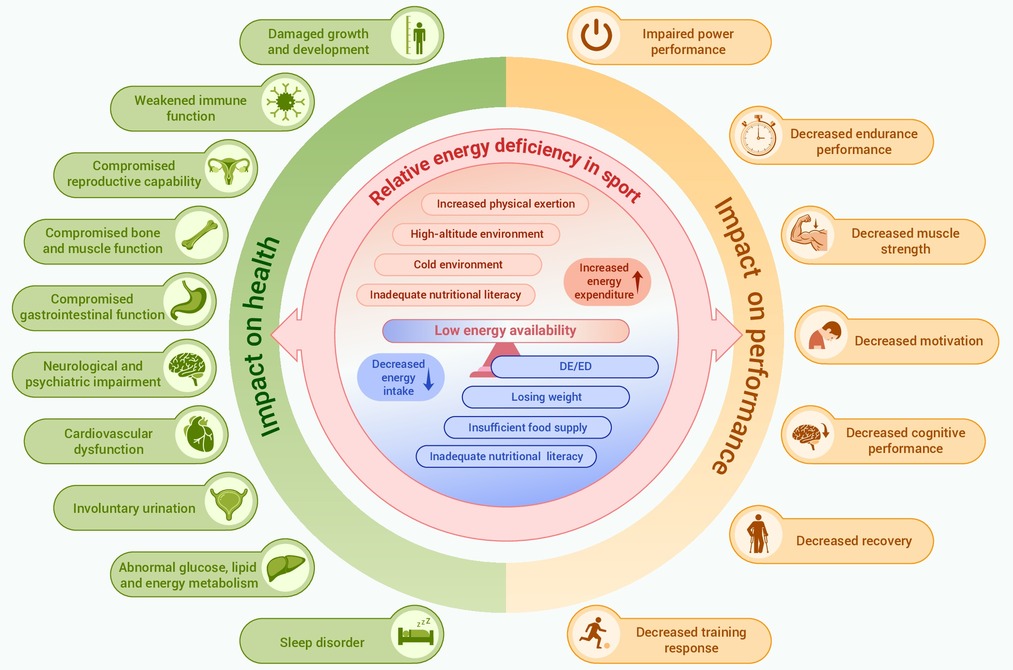
Figure 1.
The impacts of low energy availability and Relative Energy Deficiency in Sport on health and performance
-
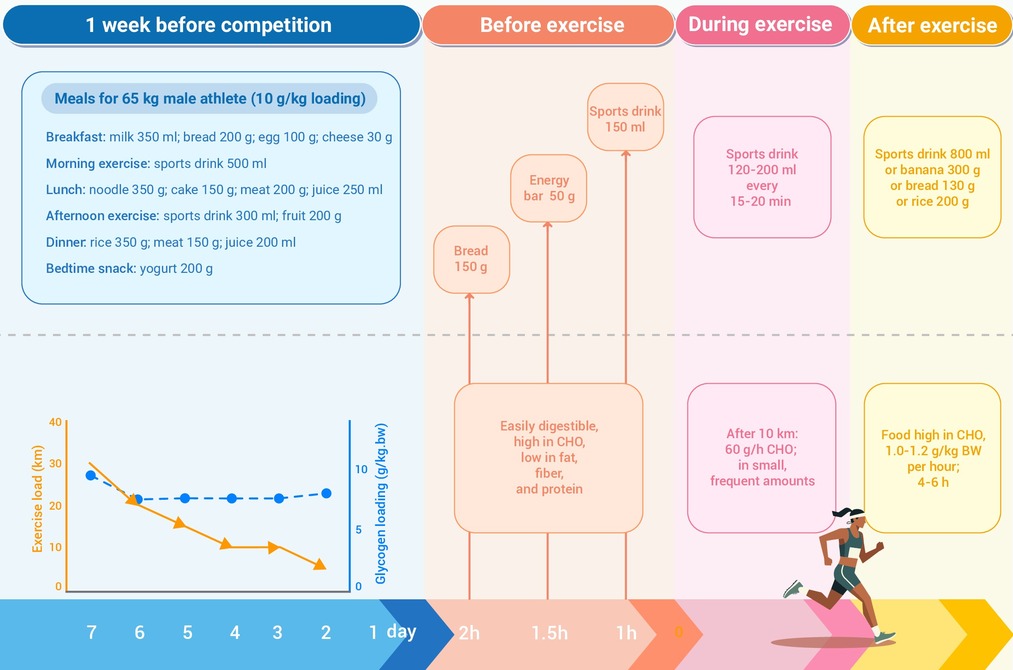
Figure 2.
An example of a diet plan for a 60 kg male marathon runner
-
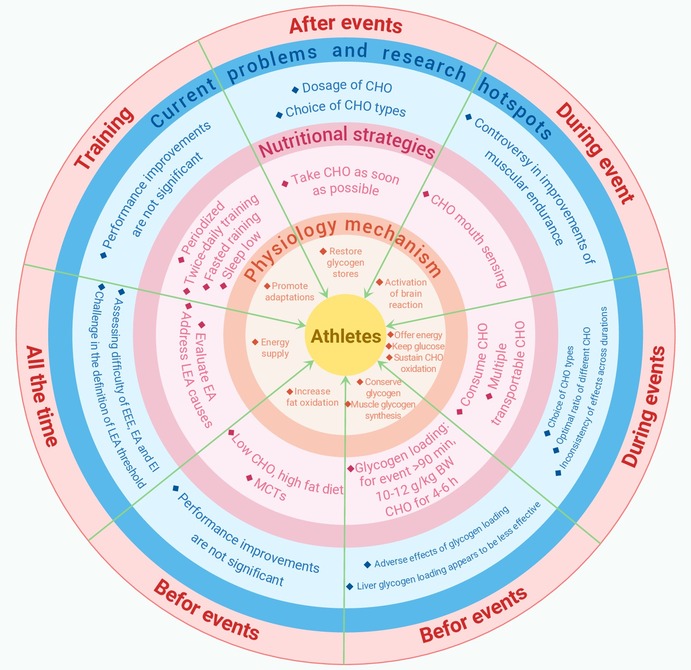
Figure 3.
The foundational mechanisms, strategies, and current research issues related to nutritional strategies involving energy metabolism for athletes
