
Lung xenotransplantation: From the first human milestone to the path of clinical translation
-
GRAPHICAL ABSTRACT
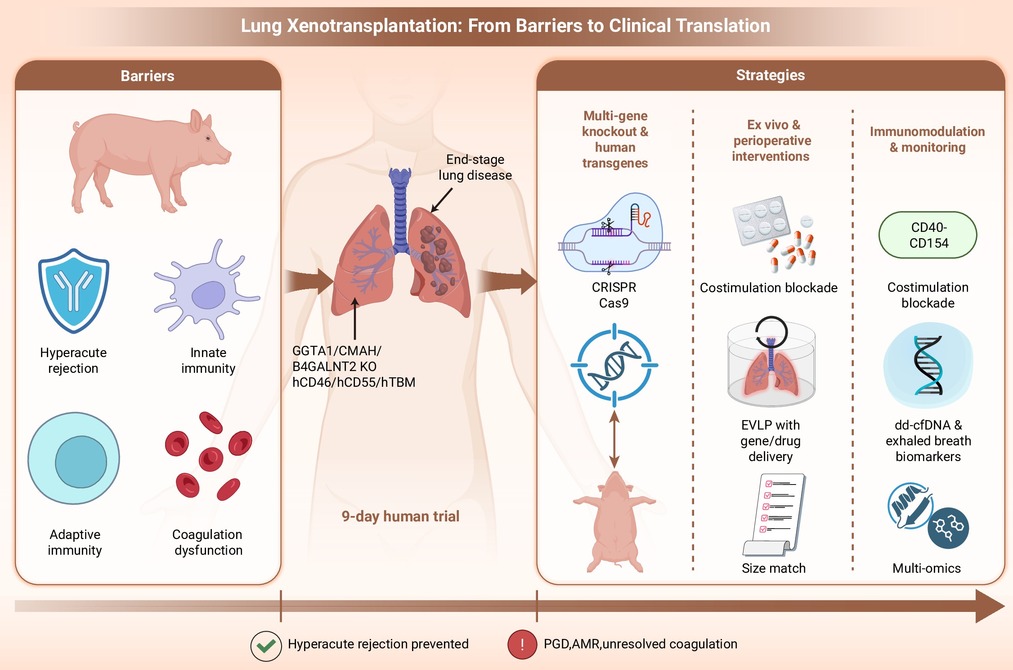
 DownLoad:
Full size image
-
PUBLIC SUMMARY
-
Lung transplantation faces donor shortage; xenotransplantation using gene-edited pigs offers promise.
In 2025, a gene-edited pig lung was transplanted into a brain-dead human, preventing hyperacute rejection.
However, the nine-day observation showed severe primary graft dysfunction and antibody-mediated injury.
This review analyzes lung xenograft barriers and a shift from passive camouflage to active immune remodeling.
Clinical translation needs integrated solutions: donor production, biosafety, perfusion, and monitoring.
-
-
ABSTRACT
Lung transplantation remains the only curative treatment for end-stage lung diseases, yet a critical shortage of donor organs persists. Xenotransplantation using genetically modified pigs has emerged as a promising solution, with recent breakthroughs in cardiac and renal xenotransplantation demonstrating clinical feasibility. However, the unique anatomical and physiological characteristics of the lung pose distinct challenges that have delayed progress in pulmonary xenotransplantation. The first reported transplantation of a gene-edited pig lung into a brain-dead human recipient in 2025 represents a pivotal milestone, successfully preventing hyperacute rejection through triple-gene knockout combined with transgenic expression of human complement regulatory proteins and thrombomodulin. Yet the nine-day observation window revealed persistent challenges, including severe primary graft dysfunction and active antibody-mediated injury, highlighting that current genetic modifications remain inadequate for achieving long-term graft survival. This review systematically analyzes the layered immunological and physiological barriers to lung xenotransplantation and evaluates evolving intervention strategies that reflect a paradigm shift from passive molecular camouflage toward active immunological remodeling. Looking beyond biological barriers, successful clinical translation requires integrated solutions spanning scalable donor production systems, surgical adaptation, rigorous biosafety frameworks, ex vivo perfusion platforms, and non-invasive monitoring technologies. Ultimately, the success of lung xenotransplantation will depend not on isolated technological breakthroughs but on the systematic integration of genetic engineering, immune modulation, and translational infrastructure, offering new hope to patients with end-stage lung disease. -

-
REFERENCES
[1] Giwa S., Lewis J. K., Alvarez L., et al. (2017). The promise of organ and tissue preservation to transform medicine. Nat. Biotechnol. 35:530−542. DOI:10.1038/nbt.3889 [2] Kistler K. D., Nalysnyk L., Rotella P., et al. (2014). Lung transplantation in idiopathic pulmonary fibrosis: A systematic review of the literature. BMC Pulm. Med. 14:139. DOI:10.1186/1471-2466-14-139 [3] Paglicci L., Borgo V., Lanzarone N., et al. (2021). Incidence and risk factors for respiratory tract bacterial colonization and infection in lung transplant recipients. Eur. J. Clin. Microbiol. Infect. Dis. 40:1271−1282. DOI:10.1007/s10096-021-04153-1 [4] Bernhardt A. M., Copeland H., Deswal A., et al. (2023). The international society for heart and lung transplantation/heart failure society of America Guideline on Acute Mechanical Circulatory Support. J. Card. Fail. 29:304−374. DOI:10.1016/j.cardfail.2022.11.003 [5] Ata B., Montgomery R. A., Ozyoruk Y. N., et al. (2025). Patient selection for xenotransplant human clinical trials: A data-driven approach. Transplantation 109:1471−1474. DOI:10.1097/tp.0000000000005384 [6] Loor G., Warnecke G., Villavicencio M. A., et al. (2019). Portable normothermic ex-vivo lung perfusion, ventilation, and functional assessment with the Organ Care System on donor lung use for transplantation from extended-criteria donors (EXPAND): A single-arm, pivotal trial. Lancet Respir. Med. 7:975−984. DOI:10.1016/s2213-2600(19)30200-0 [7] Singh T. P., Hsich E., Cherikh W. S., et al. (2025). The international thoracic organ transplant registry of the international society for heart and lung transplantation: 2025 annual report of heart and lung transplantation. J. Heart Lung Transplant. 44:1857−1873. DOI:10.1016/j.healun.2025.04.014 [8] Deitz R. L., Emerel L., Chan E. G., et al. (2023). Waitlist mortality and extracorporeal membrane oxygenation bridge to lung transplant. Ann. Thorac. Surg. 116:156−162. DOI:10.1016/j.athoracsur.2023.02.062 [9] Lehr C. J., Schold J. D., Arrigain S., et al. (2023). New OPTN/UNOS data demonstrates higher than previously reported waitlist mortality for lung transplant candidates supported with ECMO. J. Heart Lung Transplant. 42:1399−1407. DOI:10.1016/j.healun.2023.04.017 [10] Chen J. Y., Qiao K., Liu F., et al. (2020). Lung transplantation as therapeutic option in acute respiratory distress syndrome for coronavirus disease 2019-related pulmonary fibrosis. Chin. Med. J. (Engl) 133:1390−1396. DOI:10.1097/cm9.0000000000000839 [11] Auchincloss H., Jr. (1988). Xenogeneic transplantation. A review. Transplantation 46:1−20. DOI:10.1097/00007890-198807000-00001 [12] Auchincloss H., Jr. and Sachs D. H. (1998). Xenogeneic transplantation. Annu. Rev. Immunol. 16:433−470. DOI:10.1146/annurev.immunol.16.1.433 [13] Cooper D. K. C., Hara H., Iwase H., et al. (2019). Justification of specific genetic modifications in pigs for clinical organ xenotransplantation. Xenotransplantation 26:e12516. DOI:10.1111/xen.12516 [14] Cowan P. J. and Tector A. J. (2017). The resurgence of xenotransplantation. Am. J. Transplant. 17:2531−2536. DOI:10.1111/ajt.14311 [15] Estrada J. L., Martens G., Li P., et al. (2015). Evaluation of human and non-human primate antibody binding to pig cells lacking GGTA1/CMAH/β4GalNT2 genes. Xenotransplantation 22:194−202. DOI:10.1111/xen.12161 [16] Cozzi E. and White D. J. (1995). The generation of transgenic pigs as potential organ donors for humans. Nat. Med. 1:964−966. DOI:10.1038/nm0995-964 [17] Diamond L. E., Quinn C. M., Martin M. J., et al. (2001). A human CD46 transgenic pig model system for the study of discordant xenotransplantation. Transplantation 71:132−142. DOI:10.1097/00007890-200101150-00021 [18] Montgomery R. A., Stern J. M., Lonze B. E., et al. (2022). Results of two cases of pig-to-human kidney xenotransplantation. N. Engl. J. Med. 386:1889−1898. DOI:10.1056/NEJMoa2120238 [19] Whitsett J. A. and Alenghat T. (2015). Respiratory epithelial cells orchestrate pulmonary innate immunity. Nat. Immunol. 16:27−35. DOI:10.1038/ni.3045 [20] Kim H. and Kim S. J. (2025). 3D bioprinting of pig macrophages and human cells discovered the P2Y14 receptor as a mediator of xenogenic immune responses. Immunol. Invest. 54:18−33. DOI:10.1080/08820139.2024.2411388 [21] Bach F. H., Robson S. C., Winkler H., et al. (1995). Barriers to xenotransplantation. Nat. Med. 1:869−873. DOI:10.1038/nm0995-869 [22] He J., Shi J., Yang C., et al. (2025). Pig-to-human lung xenotransplantation into a brain-dead recipient. Nat. Med. 31:3388−3393. DOI:10.1038/s41591-025-03861-x [23] Burdorf L., Gao Z., Riner A., et al. (2023). Expression of human thrombomodulin by GalTKO.hCD46 pigs modulates coagulation cascade activation by endothelial cells and during ex vivo lung perfusion with human blood. Xenotransplantation 30:e12828. DOI:10.1111/xen.12828. [24] Kolber-Simonds D., Lai L., Watt S. R., et al. (2004). Production of alpha-1,3-galactosyltransferase null pigs by means of nuclear transfer with fibroblasts bearing loss of heterozygosity mutations. Proc. Natl. Acad. Sci. U. S. A. 101:7335−7340. DOI:10.1073/pnas.0307819101 [25] Lai L., Kolber-Simonds D., Park K. W., et al. (2002). Production of alpha-1,3-galactosyltransferase knockout pigs by nuclear transfer cloning. Science 295:1089−1092. DOI:10.1126/science.1068228 [26] Westall G. P., Levvey B. J., Salvaris E., et al. (2013). Sustained function of genetically modified porcine lungs in an ex vivo model of pulmonary xenotransplantation. J. Heart Lung Transplant. 32:1123−1130. DOI:10.1016/j.healun.2013.07.001 [27] Burdorf L., Stoddard T., Zhang T., et al. (2014). Expression of human CD46 modulates inflammation associated with GalTKO lung xenograft injury. Am. J. Transplant. 14:1084−1095. DOI:10.1111/ajt.12673 [28] Laird C. T., Burdorf L., French B. M., et al. (2017). Transgenic expression of human leukocyte antigen-E attenuates GalKO.hCD46 porcine lung xenograft injury. Xenotransplantation 24. DOI:10.1111/xen.12294 [29] Watanabe H., Sahara H., Nomura S., et al. (2018). GalT-KO pig lungs are highly susceptible to acute vascular rejection in baboons, which may be mitigated by transgenic expression of hCD47 on porcine blood vessels. Xenotransplantation 25:e12391. DOI:10.1111/xen.12391 [30] Watanabe H., Ariyoshi Y., Pomposelli T., et al. (2020). Intra-bone bone marrow transplantation from hCD47 transgenic pigs to baboons prolongs chimerism to >60 days and promotes increased porcine lung transplant survival. Xenotransplantation 27:e12552. DOI:10.1111/xen.12552 [31] Burdorf L., Laird C. T., Harris D. G., et al. (2022). Pig-to-baboon lung xenotransplantation: Extended survival with targeted genetic modifications and pharmacologic treatments. Am. J. Transplant. 22:28−45. DOI:10.1111/ajt.16809 [32] Wang H., VerHalen J., Madariaga M. L., et al. (2007). Attenuation of phagocytosis of xenogeneic cells by manipulating CD47. Blood 109:836−842. DOI:10.1182/blood-2006-04-019794 [33] Slavik J. M., Hutchcroft J. E. and Bierer B. E. (1999). CD28/CTLA-4 and CD80/CD86 families: Signaling and function. Immunol. Res. 19:1−24. DOI:10.1007/bf02786473 [34] Mohiuddin M. M., Singh A. K., Corcoran P. C., et al. (2016). Chimeric 2C10R4 anti-CD40 antibody therapy is critical for long-term survival of GTKO.hCD46.hTBM pig-to-primate cardiac xenograft. Nat. Commun. 7:11138. DOI:10.1038/ncomms11138 [35] Wu G., Pfeiffer S., Schröder C., et al. (2005). Co-stimulation blockade targeting CD154 and CD28/B7 modulates the induced antibody response after a pig-to-baboon cardiac xenograft. Xenotransplantation 12:197−208. DOI:10.1111/j.1399-3089.2005.00221.x [36] Nguyen B. N., Azimzadeh A. M., Zhang T., et al. (2007). Life-supporting function of genetically modified swine lungs in baboons. J. Thorac. Cardiovasc. Surg. 133:1354−1363. DOI:10.1016/j.jtcvs.2006.11.043 [37] Cooper D. K. C. and Kobayashi T. (2024). Xenotransplantation experiments in brain-dead human subjects-A critical appraisal. Am. J. Transplant. 24:520−525. DOI:10.1016/j.ajt.2023.12.020 [38] Briski O., La Motta G. E., Ratner L. D., et al. (2024). Comparison of ICSI, IVF, and in vivo derived embryos to produce CRISPR-Cas9 gene-edited pigs for xenotransplantation. Theriogenology 220:43−55. DOI:10.1016/j.theriogenology.2024.02.028 [39] Patterson G. A., Cooper J. D., Dark J. H., et al. (1988). Experimental and clinical double lung transplantation. J. Thorac. Cardiovasc. Surg. 95:70−74. DOI:10.1016/S0022-5223(19)35388-7 [40] Eberlein M., Arnaoutakis G. J., Yarmus L., et al. (2012). The effect of lung size mismatch on complications and resource utilization after bilateral lung transplantation. J. Heart Lung Transplant. 31:492−500. DOI:10.1016/j.healun.2011.12.009 [41] Eberlein M., Reed R. M., Bolukbas S., et al. (2015). Lung size mismatch and primary graft dysfunction after bilateral lung transplantation. J. Heart Lung Transplant. 34:233−240. DOI:10.1016/j.healun.2014.09.030 [42] Lange A., Medugorac I., Ali A., et al. (2024). Genetic diversity, growth and heart function of Auckland Island pigs, a potential source for organ xenotransplantation. Xenotransplantation 31:e12858. DOI:10.1111/xen.12858 [43] Hinrichs A., Riedel E. O., Klymiuk N., et al. (2021). Growth hormone receptor knockout to reduce the size of donor pigs for preclinical xenotransplantation studies. Xenotransplantation 28:e12664. DOI:10.1111/xen.12664 [44] Goerlich C. E., Griffith B., Hanna P., et al. (2023). The growth of xenotransplanted hearts can be reduced with growth hormone receptor knockout pig donors. J. Thorac. Cardiovasc. Surg. 165:e69−e81. DOI:10.1016/j.jtcvs.2021.07.051 [45] Denner J. (2023). Microchimerism, PERV and xenotransplantation. Viruses 15:190. DOI:10.3390/v15010190 [46] Semaan M., Rotem A., Barkai U., et al. (2013). Screening pigs for xenotransplantation: Prevalence and expression of porcine endogenous retroviruses in Göttingen minipigs. Xenotransplantation 20:148−156. DOI:10.1111/xen.12032 [47] Platt J. L. (2023). Xenotransplantation in transition. Hum. Immunol. 84:1−4. DOI:10.1016/j.humimm.2022.11.007 [48] Montgomery R. A., Griesemer A. D., Segev D. L., et al. (2024). The decedent model: A new paradigm for de-risking high stakes clinical trials like xenotransplantation. Am. J. Transplant. 24:526−532. DOI:10.1016/j.ajt.2024.01.035 [49] Hozain A. E., O'Neill J. D., Pinezich M. R., et al. (2020). Xenogeneic cross-circulation for extracorporeal recovery of injured human lungs. Nat. Med. 26:1102−1113. DOI:10.1038/s41591-020-0971-8 [50] Tracy K. M., Harris T. R., Petrovic M., et al. (2025). Lung rehabilitation using xenogeneic cross-circulation does not lead to hyperacute rejection in a human lung transplantation model. J. Heart Lung Transplant. 44:1122−1134. DOI:10.1016/j.healun.2025.02.1696 [51] Anand R. P., Layer J. V., Heja D., et al. (2023). Design and testing of a humanized porcine donor for xenotransplantation. Nature 622:393−401. DOI:10.1038/s41586-023-06594-4 [52] Harris D. G., Quinn K. J., French B. M., et al. (2015). Meta-analysis of the independent and cumulative effects of multiple genetic modifications on pig lung xenograft performance during ex vivo perfusion with human blood. Xenotransplantation 22:102−111. DOI:10.1111/xen.12149 [53] Burdorf L., Harris D., Dahi S., et al. (2019). Thromboxane and histamine mediate PVR elevation during xenogeneic pig lung perfusion with human blood. Xenotransplantation 26:e12458. DOI:10.1111/xen.12458 [54] Tai H. C., Zhu X., Hara H., et al. (2007). The pig-to-primate immune response: Relevance for xenotransplantation. Xenotransplantation 14:227−235. DOI:10.1111/j.1399-3089.2007.00401.x [55] Perrin S. and Magill M. (2022). The inhibition of CD40/CD154 costimulatory signaling in the prevention of renal transplant rejection in nonhuman primates: A systematic review and meta analysis. Front. Immunol. 13:861471. DOI:10.3389/fimmu.2022.861471 [56] Bender M., Abicht J. M., Reichart B., et al. (2024). Combination of anti-CD40 and anti-CD40L antibodies as co-stimulation blockade in preclinical cardiac xenotransplantation. Biomedicines 12:1927. DOI:10.3390/biomedicines12081927 [57] Ferrant J. L., Benjamin C. D., Cutler A. H., et al. (2004). The contribution of Fc effector mechanisms in the efficacy of anti-CD154 immunotherapy depends on the nature of the immune challenge. Int. Immunol. 16:1583−1594. DOI:10.1093/intimm/dxh162 [58] Barrile R., van der Meer A. D., Park H., et al. (2018). Organ-on-chip recapitulates thrombosis induced by an anti-CD154 monoclonal antibody: Translational potential of advanced microengineered systems. Clin. Pharmacol. Ther. 104:1240−1248. DOI:10.1002/cpt.1054 [59] Lassiter G., Otsuka R., Hirose T., et al. (2023). TNX-1500, a crystallizable fragment-modified anti-CD154 antibody, prolongs nonhuman primate renal allograft survival. Am. J. Transplant. 23:1171−1181. DOI:10.1016/j.ajt.2023.03.022 [60] Miura S., Habibabady Z. A., Pollok F., et al. (2023). TNX-1500, a crystallizable fragment-modified anti-CD154 antibody, prolongs nonhuman primate cardiac allograft survival. Am. J. Transplant. 23:1182−1193. DOI:10.1016/j.ajt.2023.03.025 [61] Lederman S., Daugherty B. L., Herje N., et al. (2026). First-in-human, phase 1, randomized, double-blind, placebo-controlled study of TNX-1500, an Fc-modified anti-CD154 monoclonal antibody, evaluating the safety, tolerability, pharmacokinetics, and pharmacodynamics of single-ascending doses in healthy adults. J. Clin. Immunol. 46:66. DOI:10.1007/s10875-026-02028-8 [62] Vermersch P., Granziera C., Mao-Draayer Y., et al. (2024). Inhibition of CD40L with frexalimab in multiple sclerosis. N. Engl. J. Med. 390:589−600. DOI:10.1056/NEJMoa2309439 [63] Schmalkuche K., Rother T., Besli S., et al. (2024). Human PD-L1 overexpression decreases xenogeneic human T-cell immune responses towards porcine kidneys. Front. Immunol. 15:1279050. DOI:10.3389/fimmu.2024.1279050 [64] Ding Q., Lu L., Zhou X., et al. (2011). Human PD-L1-overexpressing porcine vascular endothelial cells induce functionally suppressive human CD4+CD25hiFoxp3+ Treg cells. J. Leukoc. Biol. 90:77−86. DOI:10.1189/jlb.1210691 [65] Boettcher A. N., Loving C. L., Cunnick J. E., et al. (2018). Development of Severe Combined Immunodeficient (SCID) pig models for translational cancer modeling: Future insights on how humanized SCID pigs can improve preclinical cancer research. Front. Oncol. 8:559. DOI:10.3389/fonc.2018.00559 [66] Duan X., Chen C., Du C., et al. (2025). Homozygous editing of multiple genes for accelerated generation of xenotransplantation pigs. Genome. Res. 35:1167−1178. DOI:10.1101/gr.279709.124 [67] LaMattina J. C., Kumagai N., Barth R. N., et al. (2002). Vascularized thymic lobe transplantation in miniature swine: I. Vascularized thymic lobe allografts support thymopoiesis. Transplantation 73:826−831. DOI:10.1097/00007890-200203150-00032 [68] Yamada K., Shimizu A., Utsugi R., et al. (2000). Thymic transplantation in miniature swine. II. Induction of tolerance by transplantation of composite thymokidneys to thymectomized recipients. J. Immunol. 164:3079−3086. DOI:10.4049/jimmunol.164.6.3079 [69] Tasaki M., Wamala I., Tena A., et al. (2015). High incidence of xenogenic bone marrow engraftment in pig-to-baboon intra-bone bone marrow transplantation. Am. J. Transplant. 15:974−983. DOI:10.1111/ajt.13070 [70] Miura S., Habibabady Z. A., Pollok F., et al. (2022). Effects of human TFPI and CD47 expression and selectin and integrin inhibition during GalTKO.hCD46 pig lung perfusion with human blood. Xenotransplantation 29:e12725. DOI:10.1111/xen.12725. [71] Godwin J. W., Fisicaro N., d'Apice A. J., et al. (2006). Towards endothelial cell-specific transgene expression in pigs: Characterization of the pig ICAM-2 promoter. Xenotransplantation 13:514−521. DOI:10.1111/j.1399-3089.2006.00341.x [72] Ruan J., Liu N., Ouyang H., et al. (2014). Spatiotemporal control of porcine p65RHD expression by advanced Tet-On system in PIEC cells helps regulate NFкB activity. Mol. Biol. Rep. 41:1753−1761. DOI:10.1007/s11033-014-3024-x [73] Connolly M. R., Kuravi K., Burdorf L., et al. (2021). Humanized von Willebrand factor reduces platelet sequestration in ex vivo and in vivo xenotransplant models. Xenotransplantation 28:e12712. DOI:10.1111/xen.12712 [74] Yeung J. C., Wagnetz D., Cypel M., et al. (2012). Ex vivo adenoviral vector gene delivery results in decreased vector-associated inflammation pre- and post-lung transplantation in the pig. Mol. Ther. 20:1204−1211. DOI:10.1038/mt.2012.57 [75] Nykänen A. I., Mariscal A., Duong A., et al. (2024). Lung transplant immunomodulation with genetically engineered mesenchymal stromal cells-therapeutic window for interleukin-10. Cells 13:859. DOI:10.3390/cells13100859 [76] Lin H., Chen M., Tian F., et al. (2018). α(1)-Anti-trypsin improves function of porcine donor lungs during ex-vivo lung perfusion. J. Heart Lung Transplant. 37:656−666. DOI:10.1016/j.healun.2017.09.019 [77] Snell G. I., Yusen R. D., Weill D., et al. (2017). Report of the ISHLT working group on primary lung graft dysfunction, part I: Definition and grading-A 2016 consensus group statement of the international society for heart and lung transplantation. J. Heart Lung Transplant. 36:1097−1103. DOI:10.1016/j.healun.2017.07.021 [78] Kelly Wu W., Guenthart B. A., O'Neill J. D., et al. (2023). Technique for xenogeneic cross-circulation to support human donor lungs ex vivo. J. Heart Lung Transplant. 42:335−344. DOI:10.1016/j.healun.2022.11.002 [79] Li J., Liu K., Jamal M. A., et al. (2026). Integrative analysis of swine infectious diseases in the context of xenotransplantation. Int. J. Infect. Dis. 167:108527. DOI:10.1016/j.ijid.2026.108527 [80] Moreno Garijo J. and Roscoe A. (2020). Ex-vivo lung perfusion. Curr. Opin. Anaesthesiol. 33:50−54. DOI:10.1097/aco.0000000000000804 [81] Jager N. M., Venema L. H., Arykbaeva A. S., et al. (2022). Complement is activated during normothermic machine perfusion of porcine and human discarded kidneys. Front. Immunol. 13:831371. DOI:10.3389/fimmu.2022.831371 [82] Zipfel P. F. and Skerka C. (2009). Complement regulators and inhibitory proteins. Nat. Rev. Immunol. 9:729−740. DOI:10.1038/nri2620 [83] Mellati A., Lo Faro L., Dumbill R., et al. (2022). Kidney normothermic machine perfusion can be used as a preservation technique and a model of reperfusion to deliver novel therapies and assess inflammation and immune activation. Front. Immunol. 13:850271. DOI:10.3389/fimmu.2022.850271 [84] Hosgood S. A. and Nicholson M. L. (2024). Current basic research in normothermic machine perfusion. Eur. Surg. Res. 65:137−145. DOI:10.1159/000542290 [85] Wu W. K., Stier M. T., Stokes J. W., et al. (2023). Immune characterization of a xenogeneic human lung cross-circulation support system. Sci. Adv. 9:eade7647. DOI:10.1126/sciadv.ade7647 [86] Hoang T. X. and Kim J. Y. (2023). Regulatory macrophages in solid organ xenotransplantation. Korean J. Transplant. 37:229−240. DOI:10.4285/kjt.23.0055 [87] Shah P., Valantine H. A. and Agbor-Enoh S. (2021). Transcriptomics in transplantation: More than just biomarkers of allograft rejection. Am. J. Transplant. 21:2000−2001. DOI:10.1111/ajt.16429 [88] Mendelson J. B., Sternbach J. D., Doyle M. J., et al. (2024). Multi-omic and multispecies analysis of right ventricular dysfunction. J. Heart Lung Transplant. 43:303−313. DOI:10.1016/j.healun.2023.09.020 [89] Valeris-Chacin R., Garcia-Morante B., Sibila M., et al. (2025). Scoring of swine lung images: A comparison between a computer vision system and human evaluators. Vet. Res. 56:9. DOI:10.1186/s13567-024-01432-5 [90] Hegde S., Hofman E., Dubagunta S., et al. (2023). Implementation of a novel thoracostomy tube trainer with real-time feedback. Trauma Surg. Acute Care Open 8:e001131. DOI:10.1136/tsaco-2023-001131 [91] Kwon T., Song B. S. and Lim K. S. (2025). Pig-to-human lung xenotransplantation: Advancing xenogeneic respiratory transplantation and clinical translation. Signal Transduct. Target. Ther. 10:382. DOI:10.1038/s41392-025-02485-4 [92] Sykes M. and Sachs D. H. (2022). Progress in xenotransplantation: Overcoming immune barriers. Nat. Rev. Nephrol. 18:745−761. DOI:10.1038/s41581-022-00624-6 [93] Salet D. M., Bekkering S., Middeldorp S., et al. (2023). Targeting thromboinflammation in antiphospholipid syndrome. J. Thromb. Haemost. 21:744−757. DOI:10.1016/j.jtha.2022.12.002 [94] Yan W., Cao Y., Xu S., et al. (2025). Personalized multi-epitope nanovaccine unlocks B cell-mediated multiple pathways of antitumor immunity. Adv. Mater. 37:e2411361. DOI:10.1002/adma.202411361 [95] Das A. and Ali N. (2021). Nanovaccine: An emerging strategy. Expert Rev. Vaccines 20:1273−1290. DOI:10.1080/14760584.2021.1984890 [96] Schmauch E., Piening B. D., Dowdell A. K., et al. (2026). Multi-omics analysis of a pig-to-human decedent kidney xenotransplant. Nature 650:205−217. DOI:10.1038/s41586-025-09846-7 [97] Kögel J., Schmoeckel M. and Marckmann G. (2025). Who shall go first? A multicriteria approach to patient selection for first clinical trials of cardiac xenotransplantation. J. Med. Ethics 51:156−162. DOI:10.1136/jme-2024-110056 [98] Adams A., Cendales L. C., Cooper D. K. C., et al. (2023). American society of transplant surgeons-American Society of Transplantation report of FDA meeting on regulatory expectations for xenotransplantation products. Am. J. Transplant. 23:1290−1299. DOI:10.1016/j.ajt.2023.05.010 [99] Stewart A. G. and Fishman J. A. (2025). Surveillance and prevention of infection in clinical xenotransplantation. Clin. Microbiol. Rev. 38:e0015023. DOI:10.1128/cmr.00150-23 [100] Zajacova A., Alkhouri M., Guney M., et al. (2026). Exploring acute cellular rejection in lung transplantation: Insights from donor-derived cell-free DNA analysis. Biomed. Pap. Med. Fac. Univ. Palacky Olomouc Czech. Repub. 170:33−39. DOI:10.5507/bp.2025.016 [101] Gu R., Bodén E., Lindstedt S., et al. (2025). Exhaled breath particles as a diagnostic tool for bronchiolitis obliterans syndrome in lung transplant recipients: A longitudinal study. Front. Transplant. 4:1516728. DOI:10.3389/frtra.2025.1516728 [102] Fishman J. A., Denner J. and Scobie L. (2025). International Xenotransplantation Association (IXA) position paper on infectious disease considerations in xenotransplantation. Transplantation 109:1296−1300. DOI:10.1097/tp.0000000000005371 -
ABOUT THIS ARTICLE
Cite this article:
Fang Y., Gao J., Shan M., et al. (2026). Lung xenotransplantation: From the first human milestone to the path of clinical translation. The Innovation Medicine 4:100264. https://doi.org/10.59717/j.xinn-med.2026.100264
Welcome!
To request copyright permission to republish or share portions of our works, please visit Copyright Clearance Center's (CCC) Marketplace website at marketplace.copyright.com.
Export File
Citation
Fang Y., Gao J., Shan M., et al. (2026). Lung xenotransplantation: From the first human milestone to the path of clinical translation. The Innovation Medicine 4:100264. https://doi.org/10.59717/j.xinn-med.2026.100264

Format
Content
-
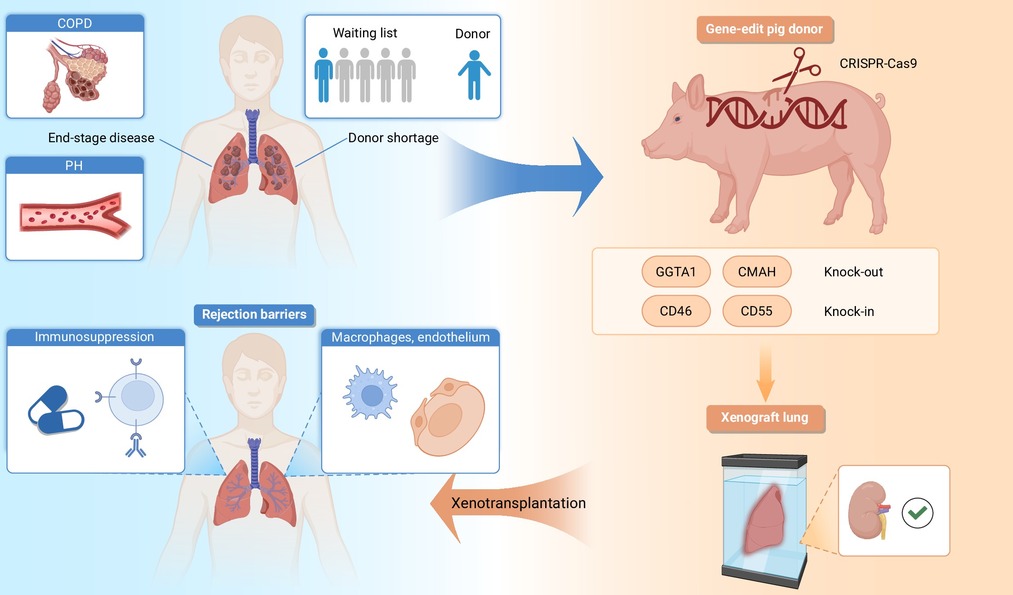
Figure 1.
Schematic diagram of the lung xenotransplantation process.
-
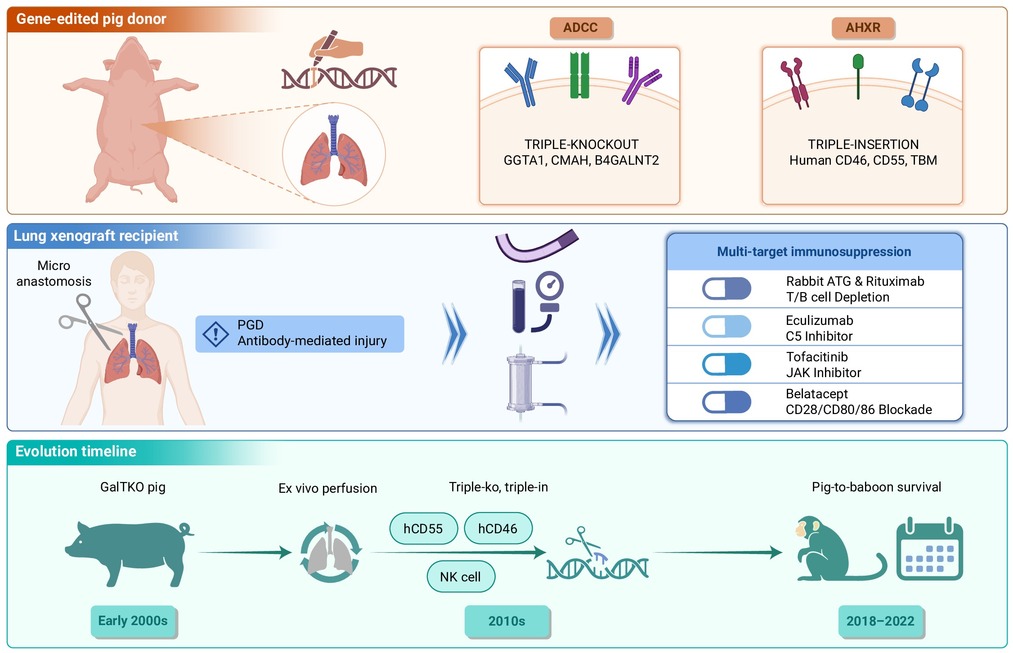
Figure 2.
The first clinical breakthrough in pig-to-human lung transplantation.
-
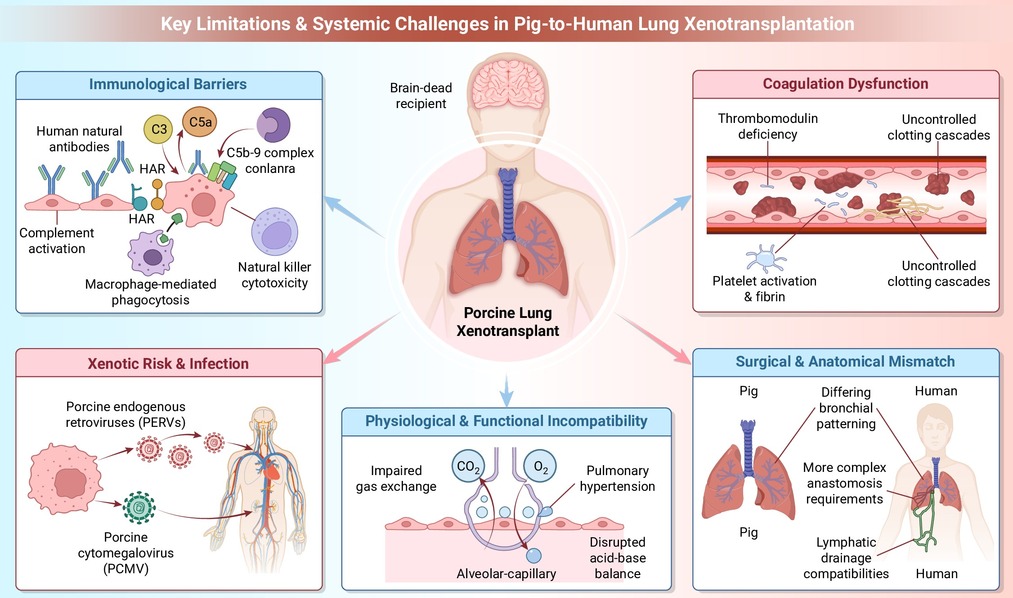
Figure 3.
Key limitations and systemic challenges in pig-to-human xenotransplantation.
-
Figure 4.
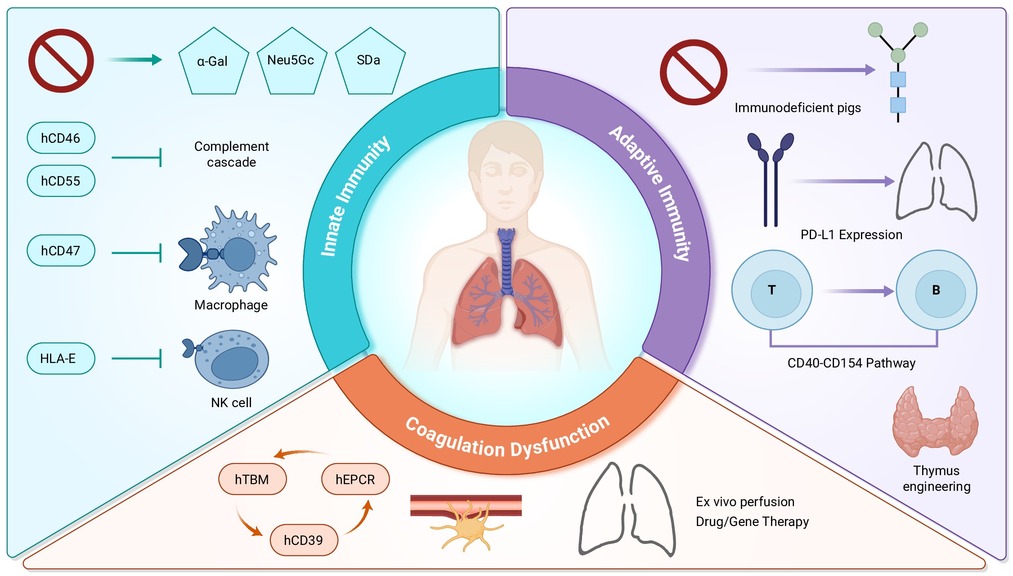
Immunological barriers and strategy in lung xenotransplantation.
-
Figure 5.
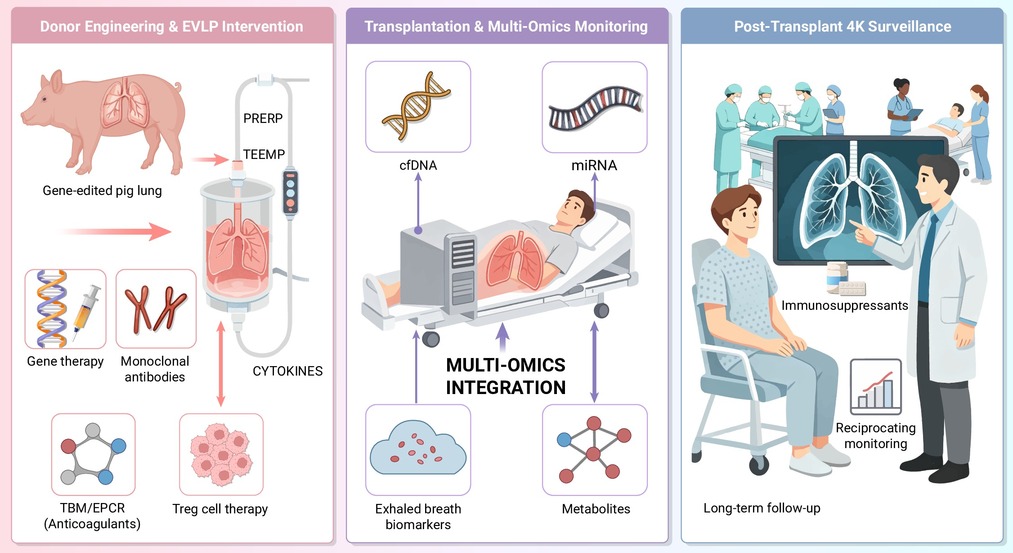
Future pathways of lung xenotransplantation.
