
Tissue kallikrein attenuates early ischemic edema by facilitating glymphatic system kinetics in pMCAO mice
-
GRAPHICAL ABSTRACT
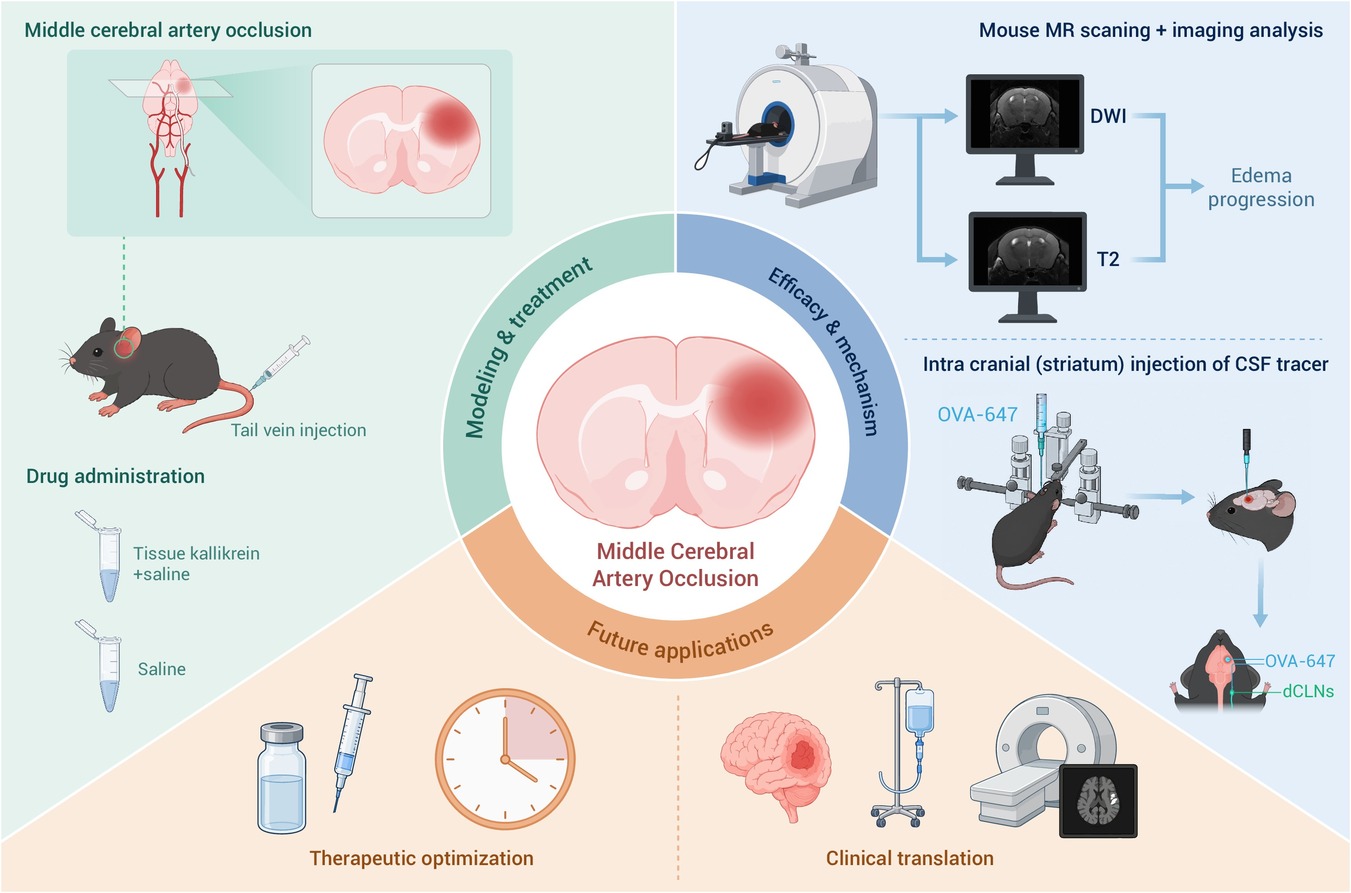
 DownLoad:
Full size image
-
PUBLIC SUMMARY
-
Glymphatic kinetics maintain brain homeostasis via fluid influx-efflux and modulate cerebral edema.
Our previous study confirmed impaired glymphatic transport in permanent middle cerebral artery occlusion mice.
Tissue kallikrein induces cerebrovascular vasodilation and subsequently facilitates glymphatic fluid dynamics.
This study underscores the need for clinical studies to explore TK's impact on ischemic edema.
TK mitigated brain edema in pMCAO mice with prolonged DWI/T2 mismatch, probably by boosting glymphatic efflux.
-
-
ABSTRACT
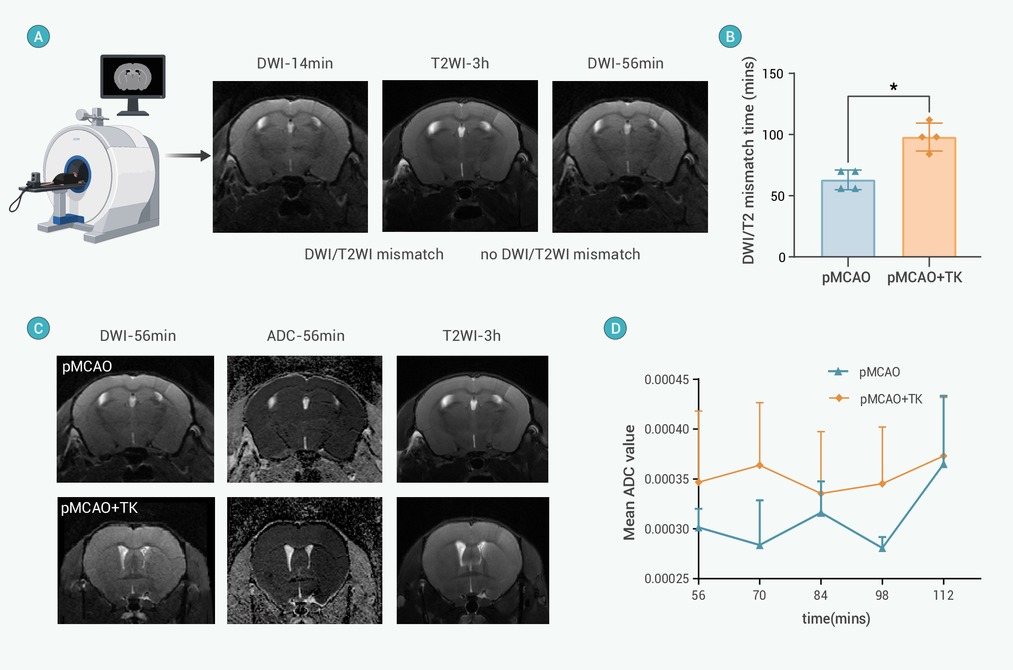
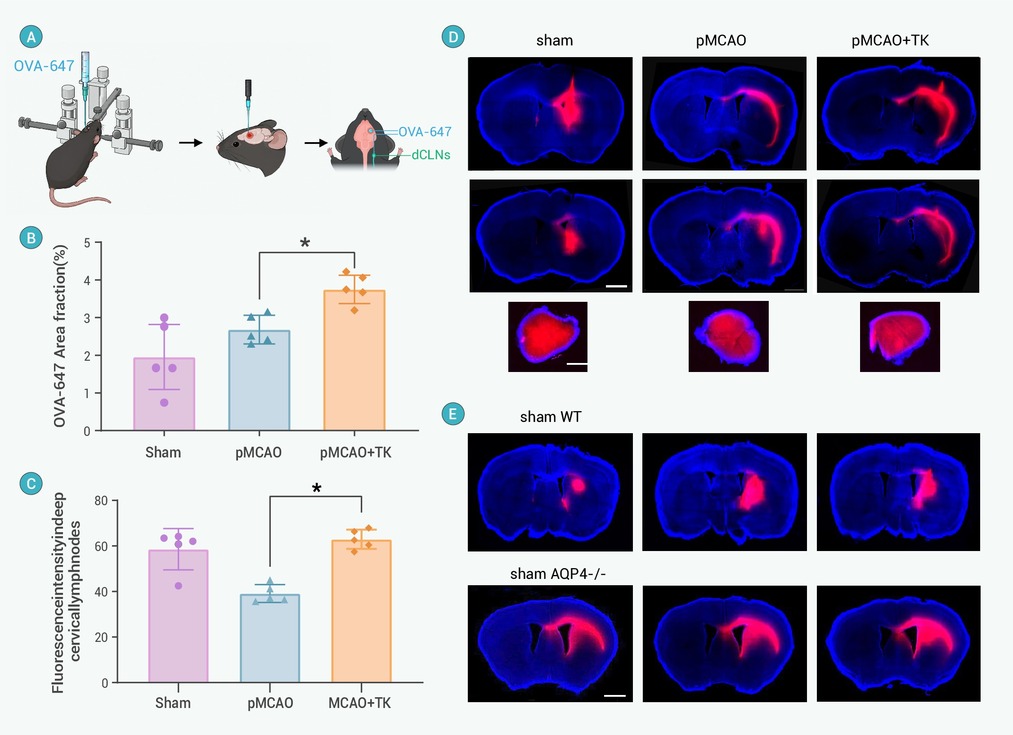
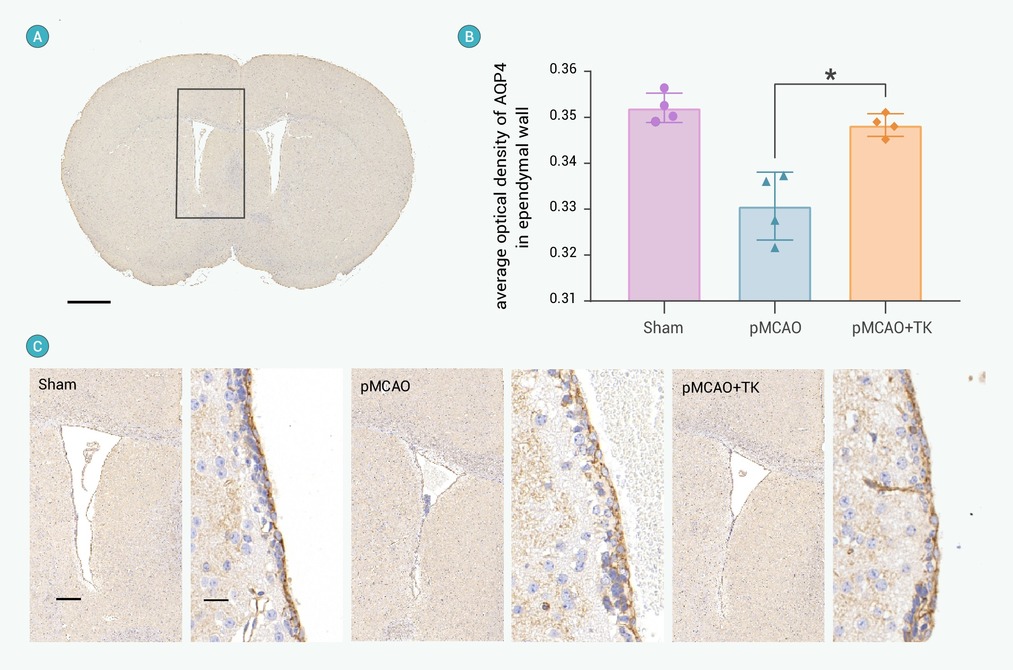
The glymphatic system (GS) maintains brain fluid homeostasis and is potentially associated with cerebral ischemic edema. Tissue kallikrein (TK) enhances local cerebrovascular vasodilation and facilitates the GS kinetics. Herein, this study hypothesized that TK could relieve early ischemic edema after vascular occlusion by altering glymphatic dynamics. In permanent middle cerebral artery occlusion (pMCAO) models, brain water content was measured to evaluate edema severity, diffusion-weighted imaging (DWI) and T2-weighted imaging (T2WI) mismatch—defined as an acute ischemic lesion observed in DWI not corresponding to a lesion in T2WI—was employed to assess edema progression. The fluorescent tracer OVA-647 was injected into the mouse striatum to quantify interstitial fluid (ISF) perfusion in the brain parenchyma and fluid outflow to the deep cervical lymph nodes (dCLNs). Immunohistochemistry was further applied to assess aquaporin-4 (AQP4) expression on the ventricular ependymal walls. Statistical results showed that TK-treated mice exhibited a significantly extended DWI/T2WI mismatch duration (98.0 ± 11.43 min vs. 63.0 ± 8.08 min; P =0.0286 ) and lower ipsilateral brain water content at 24 hours (P =0.0159 ). Meanwhile, the cerebrospinal fluid (CSF)/ISF tracer area fraction in the striatum was increased, and dCLN fluorescence intensity rose markedly (P =0.0349 and P =0.0002 , respectively), alongside upregulated AQP4 expression in the ependymal wall (P =0.0016 ). To conclude, TK effectively alleviates ischemic brain edema in pMCAO mice, as validated by reduced tissue water content and a prolonged DWI/T2WI mismatch. Its protective function is realized by upregulating ependymal AQP4 to boost glymphatic fluid perfusion and clearance.-
Keywords:
- kallikrein /
- ischemic edema /
- MCAO /
- glymphatic /
- CSF /
- kinetics
-

-
REFERENCES
[1] . Feigin V., Stark B., Johnson C., et al. (2021) Global, regional, and national burden of stroke and its risk factors, 1990-2019: a systematic analysis for the Global Burden of Disease Study 2019. Lancet Neurol. 20: 795-820. DOI: 10.1016/s1474-4422(21)00252-0. [2] Rosenberg GA. (1999). Ischemic brain edema. Prog. Cardiovasc. Dis. 42:209−216. DOI:10.1016/s0033-0620(99)70003-4 [3] Plog BA. and Nedergaard M. (2018). The Glymphatic System in Central Nervous System Health and Disease: Past, Present, and Future. Annu Rev Pathol. 13:379−394. DOI:10.1146/annurev-pathol-051217-111018 [4] Iliff JJ., Wang M., Zeppenfeld DM., et al. (2013). Cerebral arterial pulsation drives paravascular CSF-interstitial fluid exchange in the murine brain. J Neurosci. 33:18190−18199. DOI:10.1523/jneurosci.1592-13.2013 [5] . Mestre H., Du T., Sweeney AM., et al. (2020). Cerebrospinal fluid influx drives acute ischemic tissue swelling. Science. 367:eaax7171. DOI: 10.1126/science.aax7171 [6] Zhang J., Zhao H., Xue Y., et al. (2022). Impaired Glymphatic Transport Kinetics Following Induced Acute Ischemic Brain Edema in a Mouse pMCAO Model. Front Neurol. 13:860255. DOI:10.3389/fneur.2022.860255 [7] Nokkari A., Abou-El-Hassan H., Mechref Y., et al. (2018). Implication of the Kallikrein-Kinin system in neurological disorders: Quest for potential biomarkers and mechanisms. Prog Neurobiol. 165-167:26-50. DOI: 10.1016/j.pneurobio.2018.01.003 [8] Alexander-Curtis M., Pauls R., Chao J., et al. (2019). Human tissue kallikrein in the treatment of acute ischemic stroke. Ther Adv Neurol Disord. 12:1756286418821918. DOI: 10.1177/1756286418821918 [9] Yang X., Li Z., Zhang Y., et al. (2021). Human urinary kininogenase reduces the endothelial injury by inhibiting Pyk2/MCU pathway. Biomed Pharmacother. 143:112165. DOI:10.1016/j.biopha.2021.112165 [10] O'Donnell ME., Chen YJ., Lam TI., et al. (2013). Intravenous HOE-642 reduces brain edema and Na uptake in the rat permanent middle cerebral artery occlusion model of stroke: evidence for participation of the blood-brain barrier Na/H exchanger. J Cereb Blood Flow Metab. 33:225−234. DOI:10.1038/jcbfm.2012.160 [11] Keep RF., Hua Y. and Xi G. (2012). Brain water content. A misunderstood measurement? Transl Stroke Res. 3:263−265. DOI:10.1007/s12975-012-0152-2 [12] El Kady RM., Choudhary AK. and Tappouni R. (2011). Accuracy of apparent diffusion coefficient value measurement on PACS workstation: A comparative analysis. AJR Am J Roentgenol. 196:W280−284. DOI:10.2214/ajr.10.4706 [13] Chen W., Huang P., Zeng H., et al. (2020). Cocaine-induced structural and functional impairments of the glymphatic pathway in mice. Brain Behav Immun. 88:97−104. DOI:10.1016/j.bbi.2020.04.057 [14] Sevick RJ., Kanda F., Mintorovitch J., et al. (1992). Cytotoxic brain edema: assessment with diffusion-weighted MR imaging. Radiology. 185:687−690. DOI:10.1148/radiology.185.3.1438745 [15] Fitzek C., Mentzel HJ., Fitzek S., et al. (2003). Echoplanar diffusion-weighted MRI with intravenous gadolinium-DTPA. Neuroradiology. 45:592−597. DOI:10.1007/s00234-003-0965-5 [16] Liu Q., Yan L., Huang M., et al. (2020). Experimental alcoholism primes structural and functional impairment of the glymphatic pathway. Brain Behav Immun. 85:106−119. DOI:10.1016/j.bbi.2019.06.029 [17] Zhang J., Cao W. and Dong Q. (2023). Abstract 120: Tissue Kallikrein Attenuates Early Ischemic Edema Progression By Increasing The Glymphatic System Kinetics In Pmcao Mice. Stroke. 54(Suppl_1):A120−A120. DOI:10.1161/str.54.suppl_1.120 [18] Rocha M. and Jovin TG. (2017). Fast Versus Slow Progressors of Infarct Growth in Large Vessel Occlusion Stroke: Clinical and Research Implications. Stroke. 48:2621−2627. DOI:10.1161/strokeaha.117.017673 [19] Bai QK., Zhao ZG., Lu LJ., et al. (2019). Treating ischaemic stroke with intravenous tPA beyond 4.5 hours under the guidance of a MRI DWI/T2WI mismatch was safe and effective. Stroke Vasc Neurol. 4:8-13. DOI: 10.1136/svn-2018-000186 [20] Zhang J., Bai Q., Zhao Z., et al. (2022). MRI-guided thrombolysis for lenticulostriate artery stroke within 12 h of symptom onset. Sci Rep. 12:7445. DOI:10.1038/s41598-022-11459-3 [21] Thomalla G., Cheng B., Ebinger M., et al. (2011). DWI-FLAIR mismatch for the identification of patients with acute ischaemic stroke within 4·5 h of symptom onset (PRE-FLAIR): a multicentre observational study. Lancet Neurol. 10:978−986. DOI:10.1016/s1474-4422(11)70192-2 [22] Fisher M. and Albers GW. (2013). Advanced imaging to extend the therapeutic time window of acute ischemic stroke. Ann Neurol. 73:4−9. DOI:10.1002/ana.23744 [23] Regoli D. and Barabé J. (1980). Pharmacology of bradykinin and related kinins. Pharmacol Rev. 32:1−46. DOI: 10.1016/S0031-6997(25)06836-X [24] Sotiropoulou G. and Pampalakis G. (2012). Targeting the kallikrein-related peptidases for drug development. Trends Pharmacol Sci. 33:623−634. DOI:10.1016/j.tips.2012.09.005 [25] Prassas I., Eissa A., Poda G., et al. (2015). Unleashing the therapeutic potential of human kallikrein-related serine proteases. Nat Rev Drug Discov. 14:183−202. DOI:10.1038/nrd4534 [26] Emanuelia C. and Madeddu P. (2003). Human tissue kallikrein: a new bullet for the treatment of ischemia. Curr Pharm Des. 9:589−597. DOI:10.2174/1381612033391315 [27] Raspi G. (1996). Kallikrein and kallikrein-like proteinases: purification and determination by chromatographic and electrophoretic methods. J Chromatogr B Biomed Appl. 684:265−287. DOI:10.1016/0378-4347(96)00144-2 [28] Bengtson SH., Eddleston J., Christiansen SC., et al. (2007). Double-stranded RNA increases kinin B1 receptor expression and function in human airway epithelial cells. Int Immunopharmacol. 7:1880−1887. DOI:10.1016/j.intimp.2007.07.002 [29] Kato N., Hou Y., Lu Z., et al. (2009). Kallidinogenase normalizes retinal vasopermeability in streptozotocin-induced diabetic rats: potential roles of vascular endothelial growth factor and nitric oxide. Eur J Pharmacol. 606:187−190. DOI:10.1016/j.ejphar.2009.01.027 [30] Nielsen S., Nagelhus EA., Amiry-Moghaddam M., et al. (1997). Specialized membrane domains for water transport in glial cells: high-resolution immunogold cytochemistry of aquaporin-4 in rat brain. J Neurosci. 17:171−180. DOI:10.1523/jneurosci.17-01-00171.1997 [31] Castañeyra-Ruiz L., González-Marrero I., González-Toledo JM., et al. (2013). Aquaporin-4 expression in the cerebrospinal fluid in congenital human hydrocephalus. Fluids Barriers CNS. 10:18. DOI:10.1186/2045-8118-10-18 -
ABOUT THIS ARTICLE
Cite this article:
Zhang J., Shen W., Tao Y., et al. (2026). Tissue kallikrein attenuates early ischemic edema by facilitating glymphatic system kinetics in pMCAO mice. The Innovation Neurology 1:100011. https://doi.org/10.59717/j.xinn-tine.2026.100011
Welcome!
To request copyright permission to republish or share portions of our works, please visit Copyright Clearance Center's (CCC) Marketplace website at marketplace.copyright.com.
Export File
Citation
Zhang J., Shen W., Tao Y., et al. (2026). Tissue kallikrein attenuates early ischemic edema by facilitating glymphatic system kinetics in pMCAO mice. The Innovation Neurology 1:100011. https://doi.org/10.59717/j.xinn-tine.2026.100011

Format
Content
-
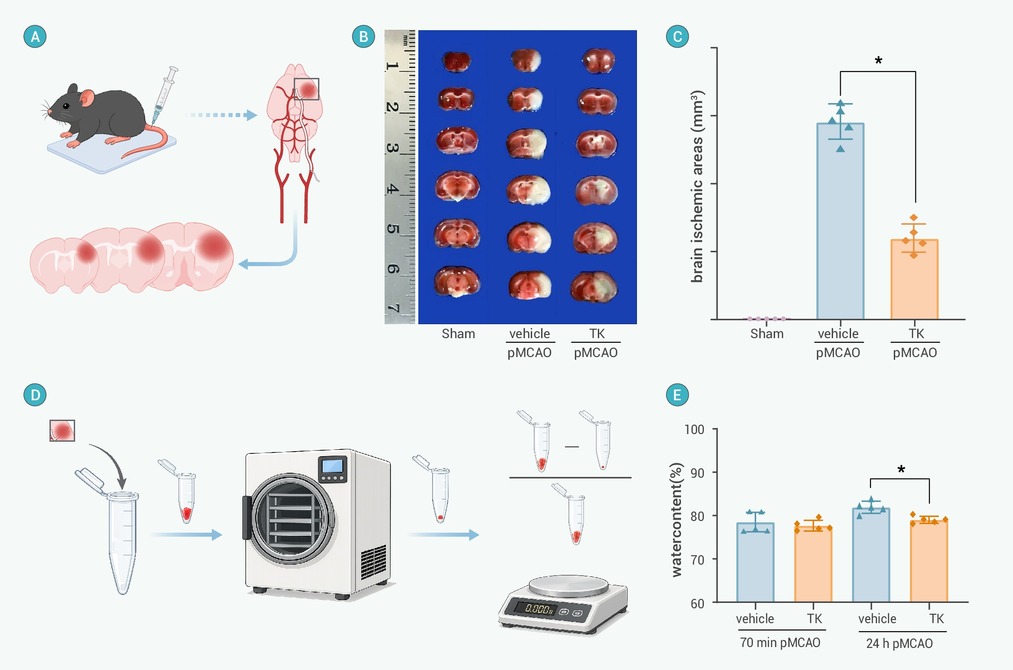
Figure 1.
Treatment with TK following pMCAO reduced cerebral infarction volume and alleviated tissue edema
-
Figure 2.
Treatment with TK after pMCAO attenuated the progression of brain edema
-
Figure 3.
Interstitial fluid perfusion and drainage were immediately impaired following pMCAO and reversed by TK treatment
-
Figure 4.
Immunohistochemical staining of AQP4 in ependymal wall
