
Decoding the Immuno-Oncology-Microbiome axis: Breakthroughs in mechanisms, technologies, and clinical applications
-
GRAPHICAL ABSTRACT
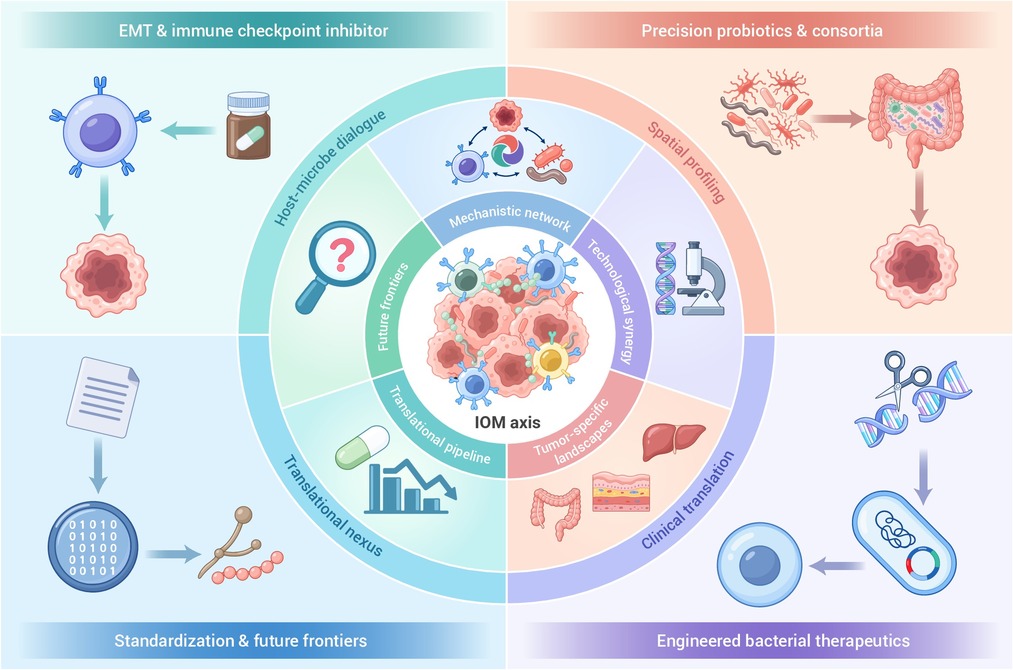
 DownLoad:
Full size image
-
PUBLIC SUMMARY
-
The IOM axis links microbes, immune cells, and tumors.
Beneficial microbes boost immunotherapy, but Fusobacterium nucleatum can block immune cells.
Single-cell and spatial sequencing reveal distinct microbial signatures in cancers.
Clinical efforts now test fecal microbiota transplantation (FMT), probiotics, and engineered bacteria.
Hurdles include high costs, technical variability, and strain-specific opposite effects.
-
-
ABSTRACT
The Immuno-Oncology-Microbiome (IOM) axis is a tripartite regulatory system involving microbiota, immune cells, and tumors, which critically modulates cancer progression and therapy response. This systematic review synthesizes key advances from 2022 to 2025, illustrating the field’s evolution from macro-associations to precise molecular mechanisms, driven by innovations in single-cell multi-omics, spatial biology, and synthetic biology. Mechanistically, the IOM axis functions via bidirectional pathways: immunostimulatory effects are mediated by microbial metabolites and components that sensitize tumors to immunotherapy, while immunosuppression is induced by pathobionts that remodel the tumor microenvironment to promote immune evasion and chemoresistance. Technologically, high-resolution tools have replaced traditional sequencing, enabling host-microbe transcriptomics, microbial microniche mapping, and the development of engineered bacterial therapeutics. Cancer-specific IOM signatures reveal organ-axis specialization, with distinct immune crosstalk patterns in colorectal cancer, melanoma, and hepatocellular carcinoma. Translational advances include standardized fecal microbiota transplantation, cancer-type specific probiotics/postbiotics, and engineered bacterial platforms, alongside microbial biomarkers for predicting therapy response. Despite progress, bottlenecks such as technical inconsistency, high costs, inter-individual heterogeneity, and understudied low-abundance taxa remain. Future priorities focus on low-cost spatial technologies, strain-level mechanistic resolution, and standardized clinical implementation, positioning microecological therapies as integral to precision oncology. -

-
REFERENCES
[1] Bai X., Duan Z., Deng J., et al. (2025). Ginsenoside Rh4 inhibits colorectal cancer via the modulation of gut microbiota-mediated bile acid metabolism. J. Adv. Res. 72:37−52. DOI:10.1016/j.jare.2024.06.028 [2] Battaglia T.W., Mimpen I.L., Traets J.J.H., et al. (2024). A pan-cancer analysis of the microbiome in metastatic cancer. Cell 187:2324−2335.e19. DOI:10.1016/j.cell.2024.03.021 [3] Bender M.J., McPherson A.C., Phelps C.M., et al. (2023). Dietary tryptophan metabolite released by intratumoral Lactobacillus reuteri facilitates immune checkpoint inhibitor treatment. Cell 186:1846−1862.e26. DOI:10.1016/j.cell.2023.03.011 [4] Chen C., Chen C., Zheng X., et al. (2025). Prediction model based on gut microbiota as a non-invasive tool for gastric cancer diagnosis. Appl. Microbiol. Biotechnol. 109:166. DOI:10.1007/s00253-025-13548-5 [5] Chen Y., Huang Y., Li W., et al. (2025a). Intratumoral microbiota-aided fusion radiomics model for predicting tumor response to neoadjuvant chemoimmunotherapy in triple-negative breast cancer. J. Transl. Med. 23:352. DOI:10.1186/s12967-025-06369-7 [6] Chen Y., Yang L., Huang Y., et al. (2025b). Intratumoral microbiota predicts the response to neoadjuvant chemoimmunotherapy in triple-negative breast cancer. J. Immunother. Cancer 13:e010365. DOI:10.1136/jitc-2024-010365 [7] Cheng M., Jin M., Yang S., et al. (2025). Effect of radiotherapy exposure on fruquintinib plus sintilimab treatment in refractory microsatellite stable metastatic colorectal cancer: A prospective observation study. J. Immunother. Cancer 13:e009415. DOI:10.1136/jitc-2024-009415 [8] Choudhury A., Scano C., Barton A., et al. (2025). Precision antimicrobial therapy against Fusobacterium nucleatum using bioengineered probiotics expressing guided antimicrobial peptides (gAMPs). Microb. Biotechnol. 18:e70241. DOI:10.1111/1751-7915.70241 [9] Ding T., Liu C., Li Z. (2025). The mycobiome in human cancer: Analytical challenges, molecular mechanisms, and therapeutic implications. Mol. Cancer 24:18. DOI:10.1186/s12943-025-02227-8 [10] Diop K., Benlaïfaoui M., Hunter S., et al. (2026). Metagenomics and culturomics reveal the dual role of the gut microbiome in the development of immune-related toxicities and the efficacy of immune checkpoint inhibitors in cancer. Microbiome. 14:170. DOI:10.1186/s40168-026-02419-4 [11] Dou Z., Ai C., Zhang J., et al. (2024). The intra-tumoral microbiome as a potential biomarker of response to external beam radiation therapy in cervical cancer. J. Transl. Med. 22:972. DOI:10.1186/s12967-024-05774-8 [12] Duttagupta S., Messaoudene M., Hunter S., et al. (2026). Fecal microbiota transplantation plus immunotherapy in non-small cell lung cancer and melanoma: The phase 2 FMT-LUMINate trial. Nat. Med. 32:1337−1350. DOI:10.1038/s41591-025-04186-5 [13] Eslami M., Naderian R., Bahar A., et al. (2025). Microbiota as diagnostic biomarkers: Advancing early cancer detection and personalized therapeutic approaches through microbiome profiling. Front. Immunol. 16:1559480. DOI:10.3389/fimmu.2025.1559480 [14] Fierer N., Leung P.M., Lappan R., et al. (2025). Guidelines for preventing and reporting contamination in low-biomass microbiome studies. Nat. Microbiol. 10:1570−1580. DOI:10.1038/s41564-025-02035-2 [15] Fong W., Li Q., Ji F., et al. (2023). Lactobacillus gallinarum-derived metabolites boost anti-PD1 efficacy in colorectal cancer by inhibiting regulatory T cells through modulating IDO1/Kyn/AHR axis. Gut 72:2272−2285. DOI:10.1136/gutjnl-2023-329543 [16] Galeano Niño J.L., Ponath F., Ajisafe V.A., et al. (2026). Tumor-infiltrating bacteria disrupt cancer epithelial cell interactions and induce cell-cycle arrest. Cancer Cell 44:166−186.e16. DOI:10.1016/j.ccell.2025.09.010 [17] Galeano Niño J.L., Wu H., LaCourse K.D., et al. (2022). Effect of the intratumoral microbiota on spatial and cellular heterogeneity in cancer. Nature 611:810−817. DOI:10.1038/s41586-022-05435-0 [18] Ge X., Pereira F.C., Mitteregger M., et al. (2022). SRS-FISH: A high-throughput platform linking microbiome metabolism to identity at the single-cell level. Proc. Natl. Acad. Sci. USA 119:e2203519119. DOI:10.1073/pnas.2203519119 [19] Ghaddar B., Blaser M.J., De S. (2023). Denoising sparse microbial signals from single-cell sequencing of mammalian host tissues. Nat. Comput. Sci. 3:741−747. DOI:10.1038/s43588-023-00507-1 [20] Glitza I.C., Seo Y.D., Spencer C.N., et al. (2024). Randomized placebo-controlled, biomarker-stratified phase ib microbiome modulation in melanoma: Impact of antibiotic preconditioning on microbiome and immunity. Cancer Discov. 14:1161−1175. DOI:10.1158/2159-8290.CD-24-0066 [21] Gopalakrishnan V., Spencer C.N., Nezi L., et al. (2018). Gut microbiome modulates response to anti-PD-1 immunotherapy in melanoma patients. Science 359:97−103. DOI:10.1126/science.aan4236 [22] Gu J., Xu X., Li X., et al. (2024). Tumor-resident microbiota contributes to colorectal cancer liver metastasis by lactylation and immune modulation. Oncogene 43:2389−2404. DOI:10.1038/s41388-024-03080-7 [23] Guo Y., Gao M., Wang L., et al. (2025). An engineered probiotic consortium based on quorum-sensing for colorectal cancer immunotherapy. Adv. Sci. (Weinh.) 12:e12744. DOI:10.1002/advs.202512744 [24] Gurbatri C.R., Radford G.A., Vrbanac L., et al. (2024). Engineering tumor-colonizing E. coli Nissle 1917 for detection and treatment of colorectal neoplasia. Nat. Commun. 15:646. DOI:10.1038/s41467-024-44776-4. [25] Hadi D.K., Baines K.J., Jabbarizadeh B., et al. (2025). Improved survival in advanced melanoma patients treated with fecal microbiota transplantation using healthy donor stool in combination with anti-PD1: Final results of the MIMic phase 1 trial. J. Immunother. Cancer 13:e012659. DOI:10.1136/jitc-2025-012659 [26] Han W., Zhou Y., Wang Y., et al. (2025). Exploring fecal microbiota signatures associated with immune response and antibiotic impact in NSCLC: Insights from metagenomic and machine learning approaches. Front. Cell. Infect. Microbiol. 15:1591076. DOI:10.3389/fcimb.2025.1591076 [27] He X., Ma X., Meng Z., et al. (2023). Localization of Fusobacterium nucleatum in oral squamous cell carcinoma and its possible directly interacting protein molecules: A case series. Histol. Histopathol. 38:929−939. DOI:10.14670/HH-18-560 [28] He Z., Yu J., Gong J., et al. (2024). Campylobacter jejuni-derived cytolethal distending toxin promotes colorectal cancer metastasis. Cell Host Microbe 32:2080−2091.e6. DOI:10.1016/j.chom.2024.11.006 [29] Hilmi M., Kamal M., Vacher S., et al. (2023). Intratumoral microbiome is driven by metastatic site and associated with immune histopathological parameters: An ancillary study of the SHIVA clinical trial. Eur. J. Cancer 183:152−161. DOI:10.1016/j.ejca.2023.01.024 [30] Huang F., Li S., Chen W., et al. (2023). Postoperative probiotics administration attenuates gastrointestinal complications and Gut microbiota dysbiosis caused by chemotherapy in colorectal cancer patients. Nutrients 15:356. DOI:10.3390/nu15020356 [31] Huang K.K., Ma H., Chong R.H.H., et al. (2023). Spatiotemporal genomic profiling of intestinal metaplasia reveals clonal dynamics of gastric cancer progression. Cancer Cell 41:2019−2037.e8. DOI:10.1016/j.ccell.2023.10.004 [32] Huang L., Rong Y., Guo M., et al. (2026). Engineered Akkermansia muciniphila vesicles for targeted pyroptosis and trained immunity to enhance immunotherapy in hepatocellular carcinoma. Cell Rep. Med. 7:102524. DOI:10.1016/j.xcrm.2025.102524 [33] Juwayria, Shrivastava P., Yadav K., et al. (2024). Microarray integrated spatial transcriptomics (MIST) for affordable and robust digital pathology. npj Syst. Biol. Appl. 10:142. DOI:10.1038/s41540-024-00462-1 [34] Kelliher J.M., Mirzayi C., Bordenstein S.R., et al. (2025). STREAMS guidelines: Standards for technical reporting in environmental and host-associated microbiome studies. Nat. Microbiol. 10:3059−3068. DOI:10.1038/s41564-025-02186-2 [35] Kim C.W., Kim H.-J., Lee H.K. (2024). Microbiome dynamics in immune checkpoint blockade. Trends Endocrinol. Metab. 35:996−1005. DOI:10.1016/j.tem.2024.04.013 [36] Kim L., Lavrinienko A., Sebechlebska Z., et al. (2025). Tier-based standards for FAIR sequence data and metadata sharing in microbiome research. Nucleic Acids Res. 53:gkaf777. DOI:10.1093/nar/gkaf777 [37] Kudira R., Yang Z.F., Osuji I., et al. (2025). Bile acids engage the SIPR-STAT3 signaling axis to modulate regulatory T cell responses in fibrosing cholangiopathies. J. Hepatol. 83:1128−1141. DOI:10.1016/j.jhep.2025.05.032 [38] LaCourse K.D., Zepeda-Rivera M., Kempchinsky A.G., et al. (2022). The cancer chemotherapeutic 5-fluorouracil is a potent Fusobacterium nucleatum inhibitor and its activity is modified by intratumoral microbiota. Cell Rep. 41:111625. DOI:10.1016/j.celrep.2022.111625 [39] Lee J., Im K.-I., Gil S., et al. (2024). TLR5 agonist in combination with anti-PD-1 treatment enhances anti-tumor effect through M1/M2 macrophage polarization shift and CD8+ T cell priming. Cancer Immunol. Immunother. 73:102. DOI:10.1007/s00262-024-03679-5 [40] Lei J., Wang X. and Liu X. (2025). Microbiota-derived metabolites in the epigenetic regulation of the host. Sci. Bull. (Beijing) 70:3667−3678. DOI:10.1016/j.scib.2025.09.030 [41] Li J., Zhang C., Huang X., et al. (2026). Candida albicans synergizes with Fusobacterium nucleatum in colorectal cancer progression via the Flo9-RadD interaction. Cancer Cell 44:1063−1079.e8. DOI:10.1016/j.ccell.2026.02.001 [42] Li X., Wang Y., Wu Y., et al. (2025). Intratumor microbiome-derived butyrate enhances progesterone sensitivity by inducing ferroptosis in endometrial cancer. Pharmacol. Res. 219:107902. DOI:10.1016/j.phrs.2025.107902 [43] Lin Y., Lau H.C.-H., Liu C., et al. (2025). Multi-cohort analysis reveals colorectal cancer tumor location-associated fecal microbiota and their clinical impact. Cell Host Microbe 33:589−601.e3. DOI:10.1016/j.chom.2025.03.012 [44] Liu R., Zou Y., Wang W.-Q., et al. (2023). Gut microbial structural variation associates with immune checkpoint inhibitor response. Nat. Commun. 14:7421. DOI:10.1038/s41467-023-42997-7 [45] Liu S., Liang Z., Zhu L., et al. (2025). FXR-mediated antigen-specific CD8+ T cell enhances antitumor immunity in intrahepatic cholangiocarcinoma. J. Immunother. Cancer 13:e012259. DOI:10.1136/jitc-2025-012259 [46] Liu Y., Ma P., Liu D., et al. (2025). Gram-negative intratumoral bacteria mediate lymph node metastasis through LPS-TLR4/MAPK signaling pathway in cervical cancer. J. Infect. 91:106532. DOI:10.1016/j.jinf.2025.106532 [47] Luke J.J., Piha-Paul S.A., Medina T., et al. (2023). Phase I study of SYNB1891, an engineered E. coli nissle strain expressing STING agonist, with and without Atezolizumab in advanced malignancies. Clin. Cancer Res. 29:2435−2444. DOI:10.1158/1078-0432.CCR-23-0118 [48] Ma Y., Chen H., Li H., et al. (2024). Intratumor microbiome-derived butyrate promotes lung cancer metastasis. Cell Rep. Med. 5:101488. DOI:10.1016/j.xcrm.2024.101488 [49] Matson V., Fessler J., Bao R., et al. (2018). The commensal microbiome is associated with anti-PD-1 efficacy in metastatic melanoma patients. Science 359:104−108. DOI:10.1126/science.aao3290 [50] McDonnell K.J. (2025). Operationalizing team science at the academic cancer center network to unveil the structure and function of the Gut microbiome. J. Clin. Med. 14:2040. DOI:10.3390/jcm14062040 [51] Meawad M., Singh D., Deng A., et al. (2025). Functional archetypes in the human gut microbiome reveal metabolic diversity, stability, and influence disease-associated signatures. Microbiome 13:241. DOI:10.1186/s40168-025-02240-5 [52] Meng H., Zhang T., Wang Z., et al. (2024). High-throughput host-microbe single-cell RNA sequencing reveals ferroptosis-associated heterogeneity during acinetobacter baumannii infection. Angew. Chem. Int. Ed. 63:e202400538. DOI:10.1002/anie.202400538 [53] Meza-Perez S., Liu M., Silva-Sanchez A., et al. (2024). Proteobacteria impair anti-tumor immunity in the omentum by consuming arginine. Cell Host Microbe 32:1177−1191.e7. DOI:10.1016/j.chom.2024.06.003 [54] Morad G., Damania A.V., Melendez B., et al. (2025). Microbial signals in primary and metastatic brain tumors. Nat. Med. 31:3675−3688. DOI:10.1038/s41591-025-03957-4 [55] Mowat C., Dhatt J., Bhatti I., et al. (2023). Short chain fatty acids prime colorectal cancer cells to activate antitumor immunity. Front. Immunol. 14:1190810. DOI:10.3389/fimmu.2023.1190810 [56] Niu X., Zhang P., Dai L., et al. (2025). Flagellin engineering enhances CAR-T cell function by reshaping tumor microenvironment in solid tumors. J. Immunother. Cancer 13:e010237. DOI:10.1136/jitc-2024-010237 [57] Petkevicius V., Lehr K., Kupcinskas J., et al. (2024). Fusobacterium nucleatum: Unraveling its potential role in gastric carcinogenesis. World J. Gastroenterol. 30:3972−3984. DOI:10.3748/wjg.v30.i35.3972 [58] Pi Z., Liu W., Song C., et al. (2024). Multi-level insights into the Immuno-Oncology-Microbiome axis: From biotechnology to novel therapies. IMeta 3:e240. DOI:10.1002/imt2.240 [59] Porcari S., Ciccarese C., Heidrich V., et al. (2026). Fecal microbiota transplantation plus pembrolizumab and axitinib in metastatic renal cell carcinoma: The randomized phase 2 TACITO trial. Nat. Med. 32:1316−1324. DOI:10.1038/s41591-025-04189-2 [60] Porcari S., Mullish B.H., Asnicar F., et al. (2025). International consensus statement on microbiome testing in clinical practice. Lancet Gastroenterol. Hepatol. 10:154−167. DOI:10.1016/S2468-1253(24)00311-X [61] Pratap Singh R., Kumari N., Gupta S., et al. (2023). Intratumoral microbiota changes with tumor stage and influences the immune signature of oral squamous cell carcinoma. Microbiol. Spectr. 11:e0459622. DOI:10.1128/spectrum.04596-22 [62] Qi Y., Duan G., Wei D., et al. (2022). The bile acid membrane receptor TGR5 in Cancer: Friend or foe. Molecules 27:5292. DOI:10.3390/molecules27165292 [63] Qiao L., Niu L., Wang Z., et al. (2025). Engineered bacteria for near-infrared light-inducible expression of cancer therapeutics. Nat. Cancer 6:612−628. DOI:10.1038/s43018-025-00932-3 [64] Rauber C., Roberti M.P., Vehreschild M.J., et al. (2025). Protocol: Faecal microbiota transfer in liver cancer to overcome resistance to atezolizumab/bevacizumab - a multicentre, randomised, placebo-controlled, double-blind phase II trial (the FLORA trial). BMJ Open 15:e097802. DOI:10.1136/bmjopen-2024-097802 [65] Robinson W., Stone J.K., Schischlik F., et al. (2024). Identification of intracellular bacteria from multiple single-cell RNA-seq platforms using CSI-Microbes. Sci. Adv. 10:eadj7402. DOI:10.1126/sciadv.adj7402 [66] Rosario S.R., Long M.D., Chilakapati S., et al. (2024). Integrative multi-omics analysis uncovers tumor-immune-gut axis influencing immunotherapy outcomes in ovarian cancer. Nat. Commun. 15:10609. DOI:10.1038/s41467-024-54565-8 [67] Roussel E., Brasse-Lagnel C., Tuech J.-J., et al. (2022). Influence of probiotics administration before liver resection in patients with liver disease: A randomized controlled trial. World J. Surg. 46:656−665. DOI:10.1007/s00268-021-06388-7 [68] Routy B., Le Chatelier E., Derosa L., et al. (2018). Gut microbiome influences efficacy of PD-1-based immunotherapy against epithelial tumors. Science 359:91−97. DOI:10.1126/science.aan3706 [69] Rubas N.C., Torres A., and Maunakea A.K. (2025). The Gut microbiome and epigenomic reprogramming: Mechanisms, interactions, and implications for human health and disease. Int. J. Mol. Sci. 26:8658. DOI:10.3390/ijms26178658 [70] Sambruni G., Macandog A.D., Wirbel J., et al. (2023). Location and condition based reconstruction of colon cancer microbiome from human RNA sequencing data. Genome Med. 15:32. DOI:10.1186/s13073-023-01180-9 [71] Sepich-Poore G.D., Zitvogel L., Straussman R., et al. (2021). The microbiome and human cancer. Science 371:eabc4552. DOI:10.1126/science.abc4552 [72] Spreafico A., Heirali A.A., Araujo D.V., et al. (2023). First-in-class Microbial Ecosystem Therapeutic 4 (MET4) in combination with immune checkpoint inhibitors in patients with advanced solid tumors (MET4-IO trial). Ann. Oncol. 34:520−530. DOI:10.1016/j.annonc.2023.02.011 [73] Stene C., Xu J., Fallone de Andrade S., et al. (2025). Synbiotics protected radiation-induced tissue damage in rectal cancer patients: A controlled trial. Clin. Nutr. 49:33−41. DOI:10.1016/j.clnu.2025.03.025 [74] Szóstak N., Kozłowski P., Zuo T., et al. (2025). The role of gut mycobiome in responses to cancer immunotherapy. Gut Microbes 17:2571433. DOI:10.1080/19490976.2025.2571433 [75] Ternes D., Tsenkova M., Pozdeev V.I., et al. (2022). The gut microbial metabolite formate exacerbates colorectal cancer progression. Nat. Metab. 4:458−475. DOI:10.1038/s42255-022-00558-0 [76] Thiruppathi J., Vijayan V., Hwang H.S., et al. (2025). Thermoresistant flagellin-adjuvanted cancer vaccine combined with photothermal therapy synergizes with anti-PD-1 treatment. J. Immunother. Cancer 13:e010272. DOI:10.1136/jitc-2024-010272 [77] Todorovic N., Bertorello S., Nannini G., et al. (2026). Comparative analysis of tumor microbiota identifies a metastatic-specific bacterial signature, highlighting streptococcus spp. as the predominant hub across cancers. Oncol. Res. 34:15. DOI:10.32604/or.2026.076380 [78] Ullern A., Holm K., Røssevold A.H., et al. (2025). Gut microbiota diversity is prognostic and associated with benefit from chemo-immunotherapy in metastatic triple-negative breast cancer. Mol. Oncol. 19:1229−1243. DOI:10.1002/1878-0261.13760 [79] Wang X., Fang Y., Liang W., et al. (2024). Fusobacterium nucleatum facilitates anti-PD-1 therapy in microsatellite stable colorectal cancer. Cancer Cell 42:1729−1746.e8. DOI:10.1016/j.ccell.2024.08.019 [80] Wang Y., Dong A., Man J., et al. (2025). TREM2 scFv-engineering escherichia coli displaying modulation of macrophages to boost cancer radio-immunotherapy. Adv. Mater. 37:e2417920. DOI:10.1002/adma.202417920 [81] Wei X.-Y., Feng H.-J., Zhu Y.-Y., et al. (2025). The immune microenvironment of pathogen-associated cancers and current clinical therapeutics. Mol. Cancer 24:232. DOI:10.1186/s12943-025-02448-x [82] Weinheimer A.R., Brown J.M., Thompson B., et al. (2025). Single-particle genomics uncovers abundant non-canonical marine viruses from nanolitre volumes. Nat. Microbiol. 10:3245−3257. DOI:10.1038/s41564-025-02167-5 [83] Wolf M., Scholz K.J., Al-Ahmad A., et al. (2026). Beyond a single species: Mapping virulence traits across the redefined Fusobacterium nucleatum complex. Virulence 17:2629110. DOI:10.1080/21505594.2026.2629110 [84] Wolk D.M., Parrott J.S., Babady N.E., et al. (2025). The American Society for Microbiology’s evidence-based laboratory medicine practice guidelines for the diagnosis of bloodstream infections using rapid tests: A systematic review and meta-analysis. Clin. Microbiol. Rev. 38:e0013724. DOI:10.1128/cmr.00137-24 [85] Wu J., Zheng W., Ding X.-Z., et al. (2025). Deoxycholic acid and Lipoteichoic acid cooperatively drive macrophage M2/M1 polarization via TGR5/STAT3 and TLR2/NF-κB to fuel HCC progression in obesity. Metabol. Open 28:100420. DOI:10.1016/j.metop.2025.100420 [86] Wu X., Xu W., Lin D., et al. (2026). The application and prospects of spatial omics technologies in clinical medical research and molecular diagnostics. J. Genet. Genomics 53:181−196. DOI:10.1016/j.jgg.2025.09.003 [87] Wu X.Q., Ying F., Chung K.P.S., et al. (2025). Intestinal Akkermansia muciniphila complements the efficacy of PD1 therapy in MAFLD-related hepatocellular carcinoma. Cell Rep. Med. 6:101900. DOI:10.1016/j.xcrm.2024.101900 [88] Xu H., Wang Y., Liu G., et al. (2025). Nano-armed Limosilactobacillus reuteri for enhanced photo-immunotherapy and microbiota tryptophan metabolism against colorectal cancer. Adv. Sci. (Weinh.) 12:e2410011. DOI:10.1002/advs.202410011 [89] Xu K.-F., Wu S.-Y., Wang Z., et al. (2024). Hyperbaric oxygen enhances tumor penetration and accumulation of engineered bacteria for synergistic photothermal immunotherapy. Nat. Commun. 15:5147. DOI:10.1038/s41467-024-49156-6 [90] Xu Y., Tan X., Yang Q., et al. (2024). Akkermansia muciniphila outer membrane protein regulates recruitment of CD8+ T cells in lung adenocarcinoma and through JAK-STAT signalling pathway. Microb. Biotechnol. 17:e14522. DOI:10.1111/1751-7915.14522 [91] Xu Z., Yeoh Y.K., Tun H.M., et al. (2024). Variation in the metagenomic analysis of fecal microbiome composition calls for a standardized operating approach. Microbiol. Spectr. 12:e0151624. DOI:10.1128/spectrum.01516-24 [92] Ya Z., Wu H., Jia W., et al. (2025). Whirlwind acoustic vortex-regulated intelligent microbots for enhanced uniform drug bioaccumulation to boost systemic immunity against large tumors. Small 21:e2503639. DOI:10.1002/smll.202503639 [93] Yang F., Zhang W., Wang R., et al. (2026). Pseudomonas aeruginosa exacerbates bladder cancer progression by activating cancer-driven immunosuppression. Cancer Immunol. Res. 14:387−398. DOI:10.1158/2326-6066.CIR-25-0873 [94] Yang Z., Ma J., Han J., et al. (2024). Gut microbiome model predicts response to neoadjuvant immunotherapy plus chemoradiotherapy in rectal cancer. Med 5:1293−1306.e4. DOI:10.1016/j.medj.2024.07.002 [95] Yu J., Zhu P., Shi L., et al. (2024). Bifidobacterium longum promotes postoperative liver function recovery in patients with hepatocellular carcinoma. Cell Host Microbe 32:131−144.e6. DOI:10.1016/j.chom.2023.11.011 [96] Zhai X., Shi X., Liu X., et al. (2025). Targeted enrichment of engineered bacteria on triple-negative breast cancer turns immunologically cold tumors hot. Adv. Sci. (Weinh.) 12:e10171. DOI:10.1002/advs.202510171 [97] Zhang C., Wang Y., He M., et al. (2025). Mannose enhances immunotherapy efficacy in ovarian cancer by modulating Gut microbial metabolites. Cancer Res. 85:2468−2484. DOI:10.1158/0008-5472.CAN-24-3209 [98] Zhang S.-L., Cheng L.-S., Zhang Z.-Y., et al. (2023). Untangling determinants of gut microbiota and tumor immunologic status through a multi-omics approach in colorectal cancer. Pharmacol. Res. 188:106633. DOI:10.1016/j.phrs.2022.106633 [99] Zhang Y., Xu X., Wang S., et al. (2026). Fecal microbiota transplantation combined with anti-PD-1 therapy in refractory microsatellite-stable gastric cancer: A phase I feasibility and safety study. J. Immunother. Cancer 14:e013823. DOI:10.1136/jitc-2025-013823 [100] Zhao C.-N., Li S.-S., Yau T., et al. (2025). Phocaeicola vulgatus induces immunotherapy resistance in hepatocellular carcinoma via reducing indoleacetic acid production. Cell Rep. Med. 6:102370. DOI:10.1016/j.xcrm.2025.102370 [101] Zhao F., An R., Ma Y., et al. (2025). Integrated spatial multi-omics profiling of Fusobacterium nucleatum in breast cancer unveils its role in tumour microenvironment modulation and cancer progression. Clin. Transl. Med. 15:e70273. DOI:10.1002/ctm2.70273 [102] Zhong Y., Sun P., Yu J., et al. (2025). Identification of Core gene expression alterations regulated by gut microbiota in tumor progression and immunotherapy resistance through integrative pan-cancer analysis. Int. J. Biol. Macromol. 322:146911. DOI:10.1016/j.ijbiomac.2025.146911 [103] Zhou Q., Lei L., Cheng J., et al. (2025). Microbiota-induced S100A11-RAGE axis underlies immune evasion in right-sided colon adenomas and is a therapeutic target to boost anti-PD1 efficacy. Gut 74:214−228. DOI:10.1136/gutjnl-2024-332193 [104] Zhou Y., Ge Q., Li M., et al. (2025). Full-length spatial transcriptome strategy based on robust and low-cost target tissue capture. Biosens. Bioelectron. 291:118018. DOI:10.1016/j.bios.2025.118018 [105] Zhou Y., Han W., Feng Y., et al. (2025). Revealing gut microbiota biomarkers associated with melanoma immunotherapy response and key bacteria-fungi interaction relationships: evidence from metagenomics, machine learning, and SHAP methodology. Front. Immunol. 16:1539653. DOI:10.3389/fimmu.2025.1539653 [106] Zhu C., Zhang C., Wang S., et al. (2024). Characterizations of multi-kingdom gut microbiota in immune checkpoint inhibitor-treated hepatocellular carcinoma. J. Immunother. Cancer 12:e008686. DOI:10.1136/jitc-2023-008686 [107] Zhu J., Qin S., Gu R., et al. (2025). Amuc_1434 from Akkermansia muciniphila enhances CD8+ T cell-mediated anti-tumor immunity by suppressing PD-L1 in colorectal cancer. FASEB J. 39:e70540. DOI:10.1096/fj.202403295RR [108] Zhu X., Chen S., Hu X., et al. (2023). Near-infrared nano-optogenetic activation of cancer immunotherapy via engineered bacteria. Adv. Mater. 35:e2207198. DOI:10.1002/adma.202207198 -
ABOUT THIS ARTICLE
Cite this article:
Wu Y., Tang F., Zengin G., et al. (2026). Decoding the Immuno-Oncology-Microbiome axis: Breakthroughs in mechanisms, technologies, and clinical applications. The Innovation Oncology 1:100045. https://doi.org/10.59717/j.xinn-oncol.2026.100045
Welcome!
To request copyright permission to republish or share portions of our works, please visit Copyright Clearance Center's (CCC) Marketplace website at marketplace.copyright.com.
Export File
Citation
Wu Y., Tang F., Zengin G., et al. (2026). Decoding the Immuno-Oncology-Microbiome axis: Breakthroughs in mechanisms, technologies, and clinical applications. The Innovation Oncology 1:100045. https://doi.org/10.59717/j.xinn-oncol.2026.100045

