
Anomalous ferroic transitions deviating from the model of Landau theory
-
GRAPHICAL ABSTRACT
 DownLoad:
Full size image
-
PUBLIC SUMMARY
-
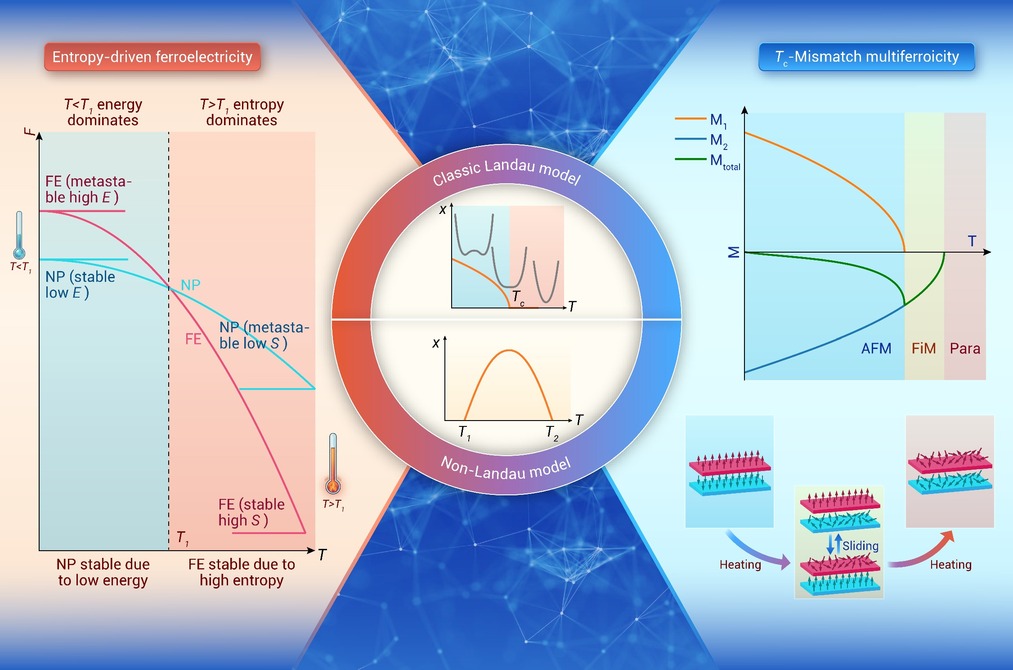
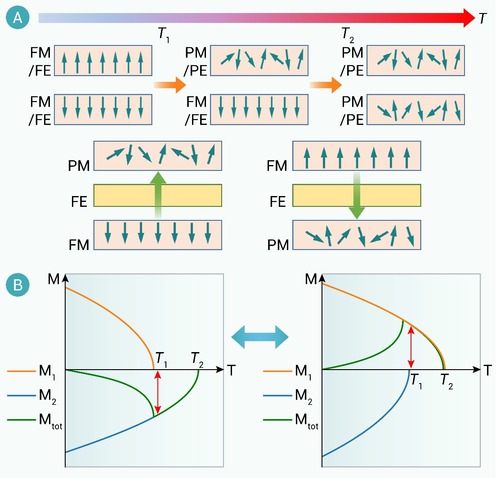
We predict anomalous phase transitions where ferroic orders peak at elevated temperatures.
Such behaviors may emerge in some unconventional ferroelectrics with long ion displacements.
They also occur in some compensated antiferromagnets, which may lead to unconventional strong multiferroicity.
-
-
ABSTRACT
Landau theory has been an effective model to describe ferroelectric and ferromagnetic transitions over the past century, where the polarization and magnetization decrease with temperature and disappear above the Curie temperature. In this paper we predict an anomalous temperature dependence of polarization or magnetization with maxima located at elevated temperatures, contrary to classical model. One class of examples may exist in emerging ferroelectrics with long ion displacements and quantized polarizations. Their ferroelectric switching pathways involve non-polar stable phases with low entropy, which become more favorable in free energy at low temperatures compared with polar phases. Another class includes Luttinger-compensated antiferromagnets with non-relativistic spin splittings, composed of two opposite spin sublattices with different spin exchange constants and thus different Curie temperature. Such a difference can be utilized to generate a unique type of multiferroicity, where large magnetizations can be reversed via ferroelectric switching between two Curie temperature with alternating half of spins in paramagnetic state. We demonstrate these proposals by first-principles calculations assisted by machine-learning-based force fields and Monte Carlo simulations, based on several paradigmatic systems composed of synthesized intercalated ferroelectric/magnetic materials. Our proposed new models may greatly broaden the scope of ferroicity/multiferroicity and help explain some previously unclarified phenomena. -

-
REFERENCES
[1] Levanyuk A. P., Burc Misirlioglu I. and Baris Okatan M. (2020). Landau, Ginzburg, Devonshire and others. Ferroelectrics 569:310−323. DOI:10.1080/00150193.2020.1822684 [2] Tang P. and Bauer G. E. W. (2023). Sliding phase transition in ferroelectric van der Waals bilayers. Phys. Rev. Lett. 130:176801. DOI:10.1103/PhysRevLett.130.176801 [3] Liu Y., Liu S., Li B., et al. (2022). Identifying the transition order in an artificial ferroelectric van der Waals heterostructure. Nano Lett. 22:1265−1269. DOI:10.1021/acs.nanolett.1c04467 [4] McClarty P. A. and Rau J. G. (2024). Landau theory of altermagnetism. Phys. Rev. Lett. 132:176702. DOI:10.1103/PhysRevLett.132.176702 [5] Zhang J. J., Yakobson B. I. and Dong S. (2025). Landau theory description of autferroicity. Phys. Rev. Lett. 134:216801. DOI:10.1103/PhysRevLett.134.216801 [6] Wu M., Burton J. D., Tsymbal E. Y., et al. (2013). Hydroxyl-decorated graphene systems as candidates for organic metal-free ferroelectrics, multiferroics, and high-performance proton battery cathode materials. Phys. Rev. B 87:081406. DOI:10.1103/PhysRevB.87.081406 [7] Wang X., Ren Y. and Wu M. (2022). Unconventional ferroelectricity with quantized polarizations in ionic conductors: High-throughput screening. J. Phys. Chem. Lett. 13:9552−9557. DOI:10.1021/acs.jpclett.2c02601 [8] Ji J., Yu G., Xu C., et al. (2024). Fractional quantum ferroelectricity. Nat. Commun. 15:135. DOI:10.1038/s41467-023-44453-y [9] Sheng Y., Wu M. and Liu J. M. (2024). Ferroelectricity with Long ion displacements in crystals of non‐polar point groups. Adv. Funct. Mater. 34:2404665. DOI:10.1002/adfm.202404665 [10] Lu C., Wu M., Lin L., et al. (2019). Single-phase multiferroics: New materials, phenomena, and physics. Natl. Sci. Rev. 6:653−668. DOI:10.1093/nsr/nwz091 [11] Dong S., Xiang H. and Dagotto E. (2019). Magnetoelectricity in multiferroics: A theoretical perspective. Natl. Sci. Rev. 6:629−641. DOI:10.1093/nsr/nwz023 [12] Zhong T., Li X., Wu M., et al. (2020). Room-temperature multiferroicity and diversified magnetoelectric couplings in 2D materials. Natl. Sci. Rev. 7:373−380. DOI:10.1093/nsr/nwz169 [13] Sun Z., Su Y., Zhi A., et al. (2024). Evidence for multiferroicity in single-layer CuCrSe2. Nat. Commun. 15:4252. DOI:10.1038/s41467-024-48636-z [14] Wang P., Zhao Y., Na R., et al. (2024). Chemical vapor deposition synthesis of intrinsic high-temperature ferroelectric 2D CuCrSe2. Adv. Mater. 36:e2400655. DOI:10.1002/adma.202400655 [15] Xu X., Zhong T., Zuo N., et al. (2022). High-Tc two-dimensional ferroelectric CuCrS2 grown via chemical vapor deposition. ACS Nano 16:8141−8149. DOI:10.1021/acsnano.2c01470 [16] Zhang Z., Xia J., Li J., et al. (2025). Robust ferroelectricity in nonstoichiometric 2D AgCr1-xS2 via chemical vapor deposition. Small 21:e2409004. DOI:10.1002/smll.202409004 [17] Xing J., Tang Y., Li J., et al. (2024). Intrinsic out-of-plane and in-plane ferroelectricity in 2D AgCrS2 with high curie temperature. Adv. Mater. 36:e2407655. DOI:10.1002/adma.202407655 [18] Wu J., Zhu H., Li X., et al. (2025). Dynamics of ferroelectricity in monolayer AgCr2S4 calculated with a machine learning potential. Phys. Rev. B 111:085417. DOI:10.1103/PhysRevB.111.085417 [19] Zhao Y., Liu Q., Zhang F., et al. (2022). Multiferroicity in a two-dimensional non-van der Waals crystal of AgCr2X4 (X = S or Se). J. Phys. Chem. Lett. 13:11346−11353. DOI:10.1021/acs.jpclett.2c03160 [20] Wang Y. and Wu M. (2024). Facile coordination transitions in AgCrX2 (X = S, Se): Unprecedented electrostrain, negative piezoelectricity and thermal expansion. Nano Lett. 24:9868−9873. DOI:10.1021/acs.nanolett.4c02037 [21] Du K., Guo L., Peng J., et al. (2020). Direct visualization of irreducible ferrielectricity in crystals. npj Quantum Mater. 5:49. DOI:10.1038/s41535-020-00252-y [22] Sun W., Ye H., Liang L., et al. (2024). Stacking-dependent ferroicity of a reversed bilayer: Altermagnetism or ferroelectricity. Phys. Rev. B 110:224418. DOI:10.1103/PhysRevB.110.224418 [23] Sheng Y., Zhang J., Liu J., et al. (2025). Ubiquitous van der Waals altermagnetism with sliding/moire ferroelectricity. Sci. China: Phys. Mech. Astron. 68:297511. DOI:10.1007/s11433-025-2698-5 [24] Zhong T., Zhang H. and Wu M. (2024). Single molecular semi-sliding ferroelectricity/multiferroicity. Research 7:0428. DOI:10.34133/research.0428 [25] Yang Q., Zhong T., Tu Z., et al. (2019). Design of single-molecule multiferroics for efficient ultrahigh-density nonvolatile memories. Adv. Sci. 6:1801572. DOI:10.1002/advs.201801572 [26] Meng J., Su Y., Zhu H., et al. (2024). Shape memory and self-healing in a molecular crystal with inverse temperature symmetry breaking. Chem. Sci. 15:5738−5745. DOI:10.1039/d3sc06800e [27] Zhan L. Y., Zhou Y., Li N., et al. (2024). A high working temperature multiferroic induced by inverse temperature symmetry breaking. J. Am. Ceram. Soc. 146:5414−5422. DOI:10.1021/jacs.3c12842 [28] Lei Y., Yang X., Wang S., et al. (2025). Electric field control of spin orbit coupling and circular photogalvanic effect in a true ferrielectric crystal. Natl. Sci. Rev. 12:nwaf320. DOI:10.1093/nsr/nwaf320 [29] Cococcioni M. and de Gironcoli S. (2005). Linear response approach to the calculation of the effective interaction parameters in the LDA+U method. Phys. Rev. B 71:035105. DOI:10.1103/PhysRevB.71.035105 [30] Dudarev S. L., Botton G. A., Savrasov S. Y., et al. (1998). Electron-energy-loss spectra and the structural stability of nickel oxide: An LSDA+U study. Phys. Rev. B 57:1505−1509. DOI:10.1103/PhysRevB.57.1505 [31] Perdew J. P., Burke K. and Ernzerhof M. (1996). Generalized gradient approximation made simple. Phys Rev Lett 77:3865−3868. DOI:10.1103/PhysRevLett.77.3865 [32] Blochl P. E. (1994). Projector augmented-wave method. Phys. Rev. B 50:17953−17979. DOI:10.1103/physrevb.50.17953 [33] Grimme S., Ehrlich S. and Goerigk L. (2011). Effect of the damping function in dispersion corrected density functional theory. J. Comput. Chem. 32:1456−1465. DOI:10.1002/jcc.21759 [34] Monkhorst H. J. and Pack J. D. (1976). Special points for Brillouin-zone integrations. Phys. Rev. B 13:5188−5192. DOI:10.1103/PhysRevB.13.5188 [35] Henkelman G., Uberuaga B. P. and Jónsson H. (2000). A climbing image nudged elastic band method for finding saddle points and minimum energy paths. J. Phys. Chem. Lett. 113:9901−9904. DOI:10.1063/1.1329672 [36] King-Smith R. D. and Vanderbilt D. (1993). Theory of polarization of crystalline solids. Phys. Rev. B 47:1651−1654. DOI:10.1103/physrevb.47.1651 [37] Zhang L., Han J., Wang H., et al. (2018). Deep potential molecular dynamics: A scalable model with the accuracy of quantum mechanics. Phys Rev Lett 120:143001. DOI:10.1103/PhysRevLett.120.143001 [38] Wang H., Zhang L., Han J., et al. (2018). DeePMD-kit: A deep learning package for many-body potential energy representation and molecular dynamics. Comput. Phys. Commun. 228:178−184. DOI:10.1016/j.cpc.2018.03.016 [39] Plimpton S. (1995). Fast parallel algorithms for short-range molecular dynamics. J. Comput. Phys. 117:1−19. DOI:10.1006/jcph.1995.1039 -
ABOUT THIS ARTICLE
Cite this article:
Sheng Y. and Wu M. (2026). Anomalous ferroic transitions deviating from the model of Landau theory. The Innovation Physics 1:100017. https://doi.org/10.59717/j.tip.2026.100017
Welcome!
To request copyright permission to republish or share portions of our works, please visit Copyright Clearance Center's (CCC) Marketplace website at marketplace.copyright.com.
Export File
Citation
Sheng Y. and Wu M. (2026). Anomalous ferroic transitions deviating from the model of Landau theory. The Innovation Physics 1:100017. https://doi.org/10.59717/j.tip.2026.100017

Format
Content
-
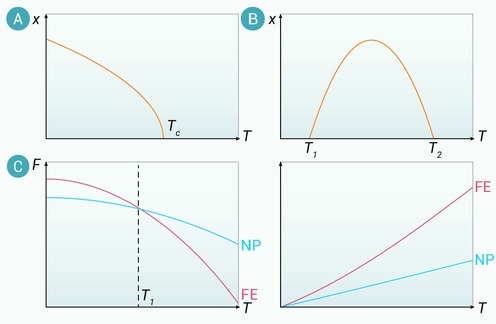
Figure 1.
Model of anomalous ferroic transition
-
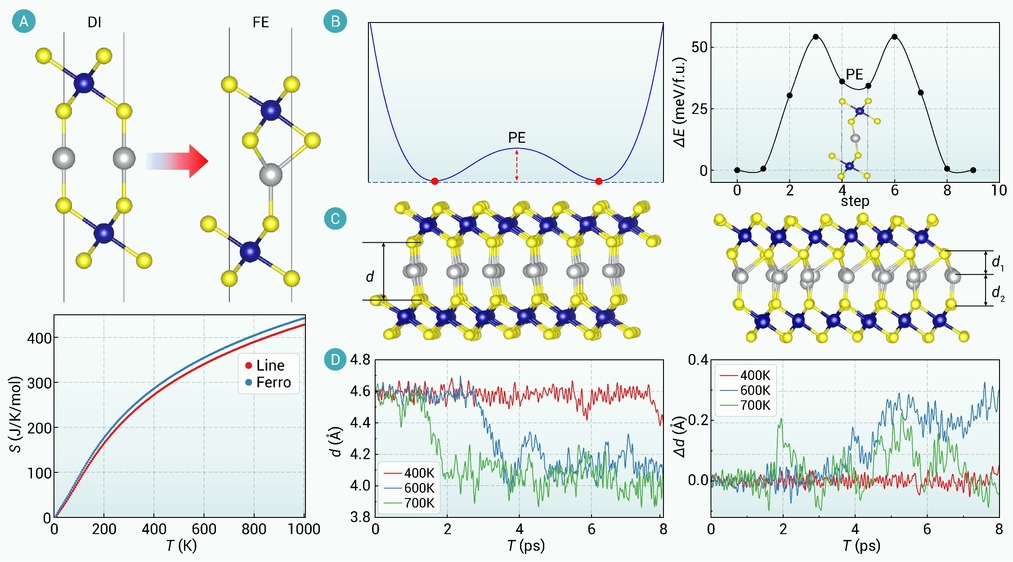
Figure 2.
DI-FE phase transition of AgCr2S4
-
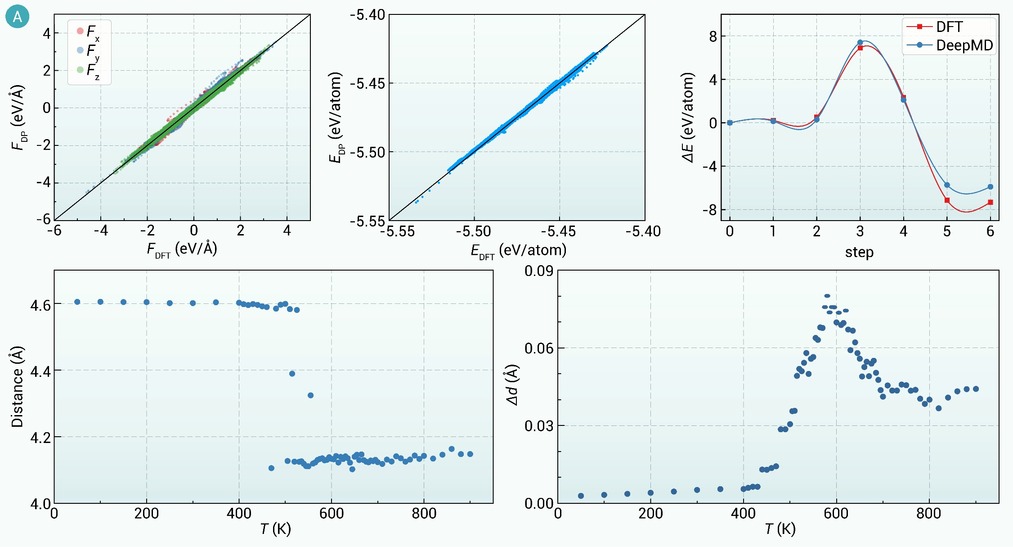
Figure 3.
Deep potential molecular dynamics simulations of AgCr2S4
-
Figure 4.
Model of anomalous temperature dependence in compensated antiferromagnets/antiferroelectrics and multiferroic hetero-trilayers
-
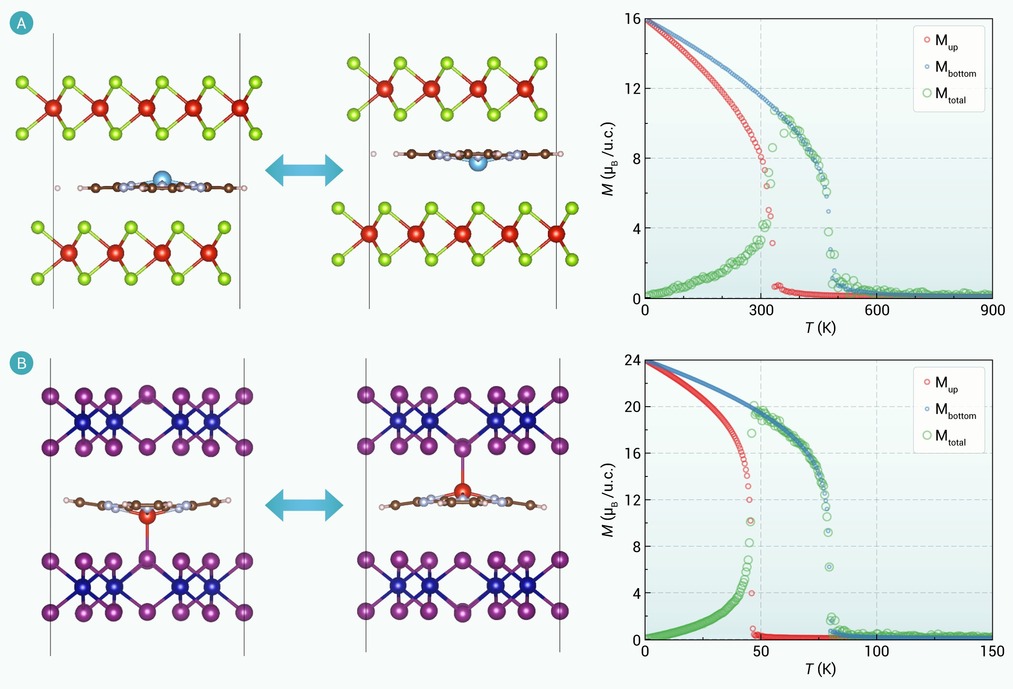
Figure 5.
Large electrically switchable magnetizations in intercalated magnetic bilayers
