
Spatial and temporal variation of metabolism in inland water transects under changing water regime conditions
-
GRAPHICAL ABSTRACT
 DownLoad:
Full size image
-
PUBLIC SUMMARY
-
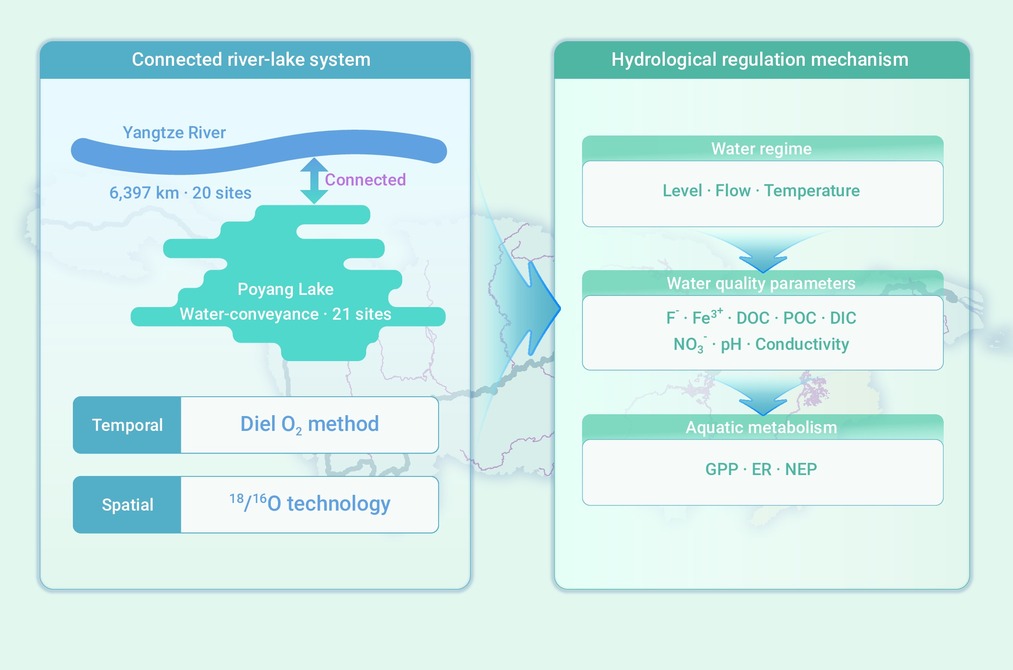
Gross primary productivity (GPP) and ecosystem respiration (ER) were measured using two complementary methods.
Water regime indirectly regulated metabolism via water-quality variables, with 55-day seasonal hysteresis.
Depletion of organic carbon supplied by the watershed and CO2 emissions increased at high GPP.
-
-
ABSTRACT
Investigating the regulatory mechanisms of inland water metabolism can elucidate its role in biogeochemical cycling and CO2 emissions. However, the underlying processes remain poorly understood, especially for systems with severe water regime fluctuations or large spatial heterogeneity in water regime, such as rivers and water conveyance-type lakes. The diel O2 method and the 18/16O technology are combined in this study to estimate the metabolism of such inland water systems along transects, covering temporal and spatial resolutions. The Yangtze River and Poyang Lake (a large water conveyance-type lake connected to the Yangtze River) were used to examine how hydrological dynamics and water quality parameters regulate aquatic metabolism. The lake metabolic rates estimated by 18/16O technology were as follows: gross primary productivity (GPP) was 16.0±16.0 g O2 m-2 d-1 (mean ± SD), ecosystem respiration (ER) was 18.0±17.8 g O2 m-2 d-1, and net ecosystem productivity (NEP) was -2.0±2.8 g O2 m-2 d-1, suggesting net heterotrophy. Water regime (including water level, flow, and water temperature) was strongly associated with metabolic rates, with water quality parameters (especially F-, Fe3+, DOC, POC) potentially mediating these relationships. On an annual timescale, metabolism exhibited seasonal hysteresis relative to water regime, with metabolic processes lagging hydrological changes by 55 days. Peaks in GPP and ER occurred during flow recession phases rather than at peak flows. This study demonstrates that water regime fluctuations indirectly regulate aquatic metabolism by modulating water quality parameters, with regulatory mechanisms differing between temporal and spatial scales. These findings deepen our mechanistic understanding of hydrological regulation on aquatic metabolism and provide critical information for predicting CO2 emissions from hydrologically dynamic inland waters under future environmental change. -

-
REFERENCES
[1] Palmer M. and Ruhi A. (2019). Linkages between flow regime, biota, and ecosystem processes: Implications for river restoration. Science 365:1264. DOI:10.1126/science.aaw2087 [2] Karpatne A., Khandelwal A., Chen X., et al. (2016). Global monitoring of inland water dynamics: State-of-the-art, challenges, and opportunities. Springer International Publishing. DOI: 10.1007/978-3-319-31858-5_7 [3] Palmer S. C. J., Kutser T. and Hunter P. D. (2015). Remote sensing of inland waters: Challenges, progress and future directions. Remote Sens. Environ. 157:1−8. DOI:10.1016/j.rse.2014.09.021 [4] Tranvik L. J., Cole J. J. and Prairie Y. T. (2018). The study of carbon in inland waters-from isolated ecosystems to players in the global carbon cycle. Limnol. Oceanogr. Lett. 3:41−48. DOI:10.1002/lol2.10068 [5] Battin T. J., Luyssaert S., Kaplan L. A., et al. (2009). The boundless carbon cycle. Nat. Geosci. 2:598−600. DOI:10.1038/ngeo618 [6] Tranvik L. J., Downing J. A., Cotner J. B., et al. (2009). Lakes and reservoirs as regulators of carbon cycling and climate. Limnol. Oceanogr. 54:2298−2314. DOI:10.4319/lo.2009.54.6_part_2.2298 [7] Gao Y., Jia J., Lu Y., Yang T., et al. (2021). Determining dominating control mechanisms of inland water carbon cycling processes and associated gross primary productivity on regional and global scales. Earth-Sci. Rev. 213:103497. DOI:10.1016/j.earscirev.2020.103497 [8] Bogard M. J., Kuhn C. D., Johnston S. E., et al. (2019). Negligible cycling of terrestrial carbon in many lakes of the arid circumpolar landscape. Nat. Geosci. 12:180. DOI:10.1038/s41561-019-0299-5 [9] Staehr P. A., Testa J. M., Kemp W. M., et al. (2012). The metabolism of aquatic ecosystems: history, applications, and future challenges. Aquat. Sci. 74:15−29. DOI:10.1007/s00027-011-0199-2 [10] Bender M., Grande K., Johnson K., et al. (1987). A comparison of 4 methods for determining planktonic community production. Limnol. Oceanogr. 32:1085−1098. DOI:10.4319/lo.1987.32.5.1085 [11] Odum H. (1956). Primary production in flowing waters. Limnol. Oceanogr. 1:102–117(1956). DOI: 10.4319/lo.1956.1.2.0102 [12] Staehr P. A., Bade D., Van de Bogert M. C., et al. (2010). Lake metabolism and the diel oxygen technique: State of the science. Limnology and Oceanography: Methods 8:628−644. DOI:10.4319/lom.2010.8.0628 [13] Peeters F., Atamanchuk D., Tengberg A., et al. (2016). Lake metabolism: Comparison of lake metabolic rates estimated from a Diel CO2 and the common Diel O2 technique. PLoS One 11:e0168393. DOI:10.1371/journal.pone.0168393 [14] Bogard M. J., Vachon D., St-Gelais N. F., et al. (2017). Using oxygen stable isotopes to quantify ecosystem metabolism in northern lakes. Biogeochemistry 133:347−364. DOI:10.1007/s10533-017-0338-5 [15] Peeters F., Hofmann H. and Fernandez J. E. (2019). On the calculation of lake metabolic rates: Diel O2 and 18/16O technique. Water Res. 165:114990. DOI:10.1016/j.watres.2019.114990 [16] Hotchkiss E. R., Sadro S. and Hanson P. C. (2018). Toward a more integrative perspective on carbon metabolism across lentic and lotic inland waters. Limnol. Oceanogr. Lett. 3. DOI: 10.1002/lol2.10081 [17] Bogard M. J., St-Gelais N. F., Vachon D., et al. (2020). Patterns of spring/summer open-water metabolism across boreal lakes. Ecosystems 23:1581−1597. DOI:10.1007/s10021-020-00487-7 [18] Jeppesen E., Audet J., Davidson T. A., et al. (2021). Nutrient Loading, temperature and heat wave effects on nutrients, oxygen and metabolism in shallow lake mesocosms pre-adapted for 11 years. Water 13:127. DOI:10.3390/w13020127 [19] Laas A., Noges P., Koiv T., et al. (2012). High-frequency metabolism study in a large and shallow temperate lake reveals seasonal switching between net autotrophy and net heterotrophy. Hydrobiologia 694:57−74. DOI:10.1007/s10750-012-1131-z [20] Song, C., Dodds, W. K., Rüegg, J., et al. (2018). Continental-scale decrease in net primary productivity in streams due to climate warming. Nat. Geosci. 11:415. DOI:10.1038/s41561-018-0125-5 [21] Scharfenberger U., Jeppesen E., Beklioğlu M., et al. (2019). Effects of trophic status, water level, and temperature on shallow lake metabolism and metabolic balance: A standardized pan-European mesocosm experiment. Limnol. Oceanogr. 64:616−631. DOI:10.1002/lno.11064 [22] Hoellein T. J., Bruesewitz D. A. and Richardson D. C. (2013). Revisiting Odum (1956): A synthesis of aquatic ecosystem metabolism. Limnol. Oceanogr. 58:2089−2100. DOI:10.4319/lo.2013.58.6.2089 [23] Solomon C. T., Bruesewitz D. A., Richardson D. C., et al. (2013). Ecosystem respiration: Drivers of daily variability and background respiration in lakes around the globe. Limnol. Oceanogr. 58:849−866. DOI:10.4319/lo.2013.58.3.0849 [24] Reynolds C. S. (2006). The ecology of phytoplankton. Cambridge University Press. DOI: 10.1017/CBO9780511542145 [25] Bernhardt E., Heffernan J., Grimm N., et al. (2017). The metabolic regimes of flowing waters. Limnol. Oceanogr. 63:S99-S118. DOI: 10.1002/lno.10726 [26] Yvon-Durocher G., Caffrey J. M., Cescatti A., et al. (2012). Reconciling the temperature dependence of respiration across timescales and ecosystem types. Nature 487:472−476. DOI:10.1038/nature11205 [27] Needoba J. A., Peterson T. D. and Johnson K. S. (2012). Method for the quantification of aquatic primary production and net ecosystem metabolism using in situ dissolved oxygen sensors. Humana Press. DOI: 10.1007/978-1-61779-915-0_4 [28] Lu Y., Gao Y., Jia J., et al. (2022). Water conveyance-type lake systems shift toward carbon sources under regulatory balanced water level metabolic processes. ACS Earth Space Chem. 6:2400−2411. DOI:10.1021/acsearthspacechem.2c00141 [29] Arndt S., Vanderborght J. P. and Regnier P. (2007). Diatom growth response to physical forcing in a macrotidal estuary: Coupling hydrodynamics, sediment transport, and biogeochemistry. J. Geophys. Res.-Oceans 112:C05045. DOI:10.1029/2006JC003581 [30] Wang Z., Chai F., Xue H., et al. (2021). Light regulation of phytoplankton growth in San Francisco Bay studied using a 3D sediment transport model. Front. Mar. Sci. 8:633707. DOI:10.3389/fmars.2021.633707 [31] Molinari B., Stewart‐Koster B. and Malthus T. J., (2022). Impact of water resource development on connectivity and primary productivity across a tropical river floodplain. J. Appl. Ecol. 59:1013–1025. DOI: 10.1111/1365-2664.14111. [32] Marzolf N. S. and Ardon M. (2021). Ecosystem metabolism in tropical streams and rivers: a review and synthesis. Limnol. Oceanogr. 66:1627−1638. DOI:10.1002/lno.11707 [33] Battin T. J., Lauerwald R., Bernhardt E. S., et al. (2023). River ecosystem metabolism and carbon biogeochemistry in a changing world. Nature 613:449−459. DOI:10.1038/s41586-022-05500-8 [34] Lu Y., Gao Y., Jia J., et al. (2021). Revealing carbon balance characteristics in a water conveyance-type lake and differences in carbon sources through its connective hydrological channels. J. Hydrol. 592:125820. DOI:10.1016/j.jhydrol.2020.125820 [35] Loken L. C., Van Nieuwenhuyse E. E., Dahlgren R. A., et al. (2021). Assessment of multiple ecosystem metabolism methods in an estuary. Limnol. Oceanogr. Meth. 19:741−757. DOI:10.1002/lom3.10458 [36] Barbosa P. M., Bodmer P., Stadler M., et al. (2023). Ecosystem metabolism Is the dominant source of carbon dioxide in three young boreal cascade-reservoirs (La Romaine Complex, Quebec). J. Geophys. Res.-Biogeosci. 128:e2022JG007253. DOI:10.1029/2022JG007253 [37] Dai Z., Liu J. T., Wei W., et al. Detection of the three gorges dam influence on the changjiang (Yangtze River) submerged delta. Sci. Rep. 4:6600(2014). DOI: 10.1038/srep06600 [38] Chai Y., Li Y., Yang Y., et al. (2019). Influence of climate variability and reservoir operation on streamflow in the Yangtze River. Sci. Rep. 9:5060(2019). DOI: 10.1038/s41598-019-41583-6 [39] Milliman J. D. and Farnsworth K. L. (2013). River discharge to the coastal ocean: a global synthesis. Cambridge University Press. DOI: 10.1017/CBO9780511781247 [40] Guo R., Zhu Y. and Liu Y. (2020). A Comparison study of precipitation in the Poyang and the Dongting lake basins from 1960-2015. Sci Rep 10:3381. DOI:10.1038/s41598-020-60243-8 [41] Gao J. H., Xu X., Jia J., et al. (2015). A numerical investigation of freshwater and sediment discharge variations of Poyang Lake catchment, China over the last 1000years. Holocene 25:1470−1482. DOI:10.1177/0959683615585843 [42] Wu Z., He H., Cai Y., et al. (2014). Spatial distribution of chlorophyll a and its relationship with the environment during summer in Lake Poyang: A Yangtze-connected lake. Hydrobiologia 732:61−70. DOI:10.1007/s10750-014-1844-2 [43] Jia J., Gao Y., Song X., et al. (2019). Characteristics of phytoplankton community and water net primary productivity response to the nutrient status of the Poyang Lake and Gan River, China. Ecohydrology 12:e2136. DOI:10.1002/eco.2136 [44] Wang X., Xu J., Wu Z., et al. (2019). Effect of annual prescribed burning of wetlands on soil organic carbon fractions: A 5-year study in Poyang, China. Ecol. Eng. 138:219−226. DOI:10.1016/j.ecoleng.2019.07.028 [45] Wang S., Gao Y., Jia J., et al. (2022). Determining whether hydrological processes drive carbon source and sink conversion shifts in a large floodplain-lake system in China. Water Res. 224:119105. DOI:10.1016/j.watres.2022.119105 [46] Liu X., Teubner K. and Chen Y. (2016). Water quality characteristics of Poyang Lake, China, in response to changes in the water level. Hydrol. Res. 47:238−248. DOI:10.2166/nh.2016.209 [47] Qin Y., Gou Y., Yu Z., et al. (2021). Effects of environmental factors on the methane and carbon dioxide fluxes at the middle of Three Gorges Reservoir. J. Water Clim. Chang. 12:4007−4020. DOI:10.2166/wcc.2021.081 [48] Johnson K. S. (2010). Simultaneous measurements of nitrate, oxygen, and carbon dioxide on oceanographic moorings: Observing the Redfield ratio in real time. Limnol. Oceanogr. 55:615−627. DOI:10.4319/lo.2010.55.2.0615 [49] Bas-Silvestre M., Quintana X. D., Compte J., et al. (2020). Ecosystem metabolism dynamics and environmental drivers in mediterranean confined coastal lagoons. Estuar. Coast. Shelf Sci. 245:106989. DOI:10.1016/j.ecss.2020.106989 [50] Yu G., Chen Z., Piao S., et al. (2014). High carbon dioxide uptake by subtropical forest ecosystems in the East Asian monsoon region. Proc. Natl. Acad. Sci. USA 111:4910−4915. DOI:10.1073/pnas.1317065111 [51] Davide V., Pardos M., Diserens J., et al. (2003). Characterisation of bed sediments and suspension of the river Po (Italy) during normal and high flow conditions. Water Res. 37:2847−2864. DOI:10.1016/S0043-1354(03)00133-7 [52] Tan Z., Yao H. and Zhuang Q. (2018). A small temperate lake in the 21st century: Dynamics of water temperature, ice phenology, dissolved oxygen, and chlorophyll a. Water Resour. Res. 54:4681–4699 DOI:10.1029/2017WR022334 [53] Markou G., Vandamme D. and Muylaert K. (2014). Microalgal and cyanobacterial cultivation: The supply of nutrients. Water Res. 65:186−202. DOI:10.1016/j.watres.2014.07.025 [54] Jane S. F., Hansen G. J. A., Kraemer B. M., et al. (2021). Widespread deoxygenation of temperate lakes. Nature 594:66–70. DOI: 10.1038/s41586-021-03550-y [55] Azevedo I. C., Bordalo A. A. and Duarte P. (2014). Influence of freshwater inflow variability on the Douro estuary primary productivity: A modelling study. Ecol. Model. 272:1−15. DOI:10.1016/j.ecolmodel.2013.09.010 [56] Chen Z. Y., Li J. F., Shen H. T., et al. (2001). Yangtze River of China: Historical analysis of discharge variability and sediment flux. Geomorphology 41:7−91. DOI:10.1016/S0169-555X(01)00106-4 [57] Wu S., Hu Z., Wang Z., et al. (2021). Spatiotemporal variations in extreme precipitation on the middle and lower reaches of the Yangtze River Basin (1970-2018). Quat. Int. 592:80−96. DOI:10.1016/j.quaint.2021.04.010 [58] Ding T., Gao J., Tian S., et al. (2014). Chemical and isotopic characteristics of the water and suspended particulate materials in the Yangtze River and their geological and environmental implications. Acta Geol. Sin.-Engl. Ed. 88:276−360. DOI:10.1111/1755-6724.12197 [59] Zhang L., Xue M., Wang M., et al. (2014). The spatiotemporal distribution of dissolved inorganic and organic carbon in the main stem of the Changjiang (Yangtze) River and the effect of the Three Gorges Reservoir. J. Geophys. Res.-Biogeosci. 119:741−757. DOI:10.1002/2012JG002230 [60] Thrane J. E., Hessen, D. O. and Andersen T. (2014). The absorption of light in lakes: Negative impact of dissolved organic carbon on primary productivity. Ecosystems 17:1040−1052. DOI:10.1007/s10021-014-9776-2 [61] Bade D. L., Carpenter S. R., et al. (2004). Controls of δ13C-DIC in lakes: Geochemistry, lake metabolism, and morphometry. Limnol. Oceanogr. 49:1160−1172. DOI:10.4319/lo.2004.49.4.1160 [62] Bernhardt E. S., Savoy P., Vlah M. J., et al. (2022). Light and flow regimes regulate the metabolism of rivers. Proc. Natl. Acad. Sci. USA 119:e2121976119. DOI:10.1073/pnas.2121976119 [63] Crichton R. (2002). Inorganic biochemistry of iron metabolism: From molecular mechanisms to clinical consequences, 2nd Edition. DOI: 10.1002/0470845791 [64] Forsberg B. R., Melack J. M., Richey J. E., et al. (2017). Regional and seasonal variability in planktonic photosynthesis and planktonic community respiration in Amazon floodplain lakes. Hydrobiologia 800:187−206. DOI:10.1007/s10750-017-3222-3 [65] Holtgrieve G. W., Arias M. E., Irvine K. N., et al. (2013). Patterns of ecosystem metabolism in the Tonle Sap Lake, cambodia with links to capture fisheries. PLoS One 8:e71395. DOI:10.1371/journal.pone.0071395 [66] Rudorff C. M., Melack J. M., MacIntyre S., et al. (2011). Seasonal and spatial variability of CO2 emission from a large floodplain lake in the lower Amazon. J. Geophys. Res.-Biogeosci. 116:G04007. DOI:10.1029/2011JG001919 [67] Xu Y. J. and Xu Z. (2022). Carbon dioxide degassing and lateral dissolved carbon export during the unprecedented 2019 Mississippi river mega flood - Implications for large river carbon transport under future climate. J. Hydrol. 614:128650. DOI:10.1016/j.jhydrol.2022.128650 -
ABOUT THIS ARTICLE
Cite this article:
Lu Y., Gao Y., Hessen D. O., et al. (2026). Spatial and temporal variation of metabolism in inland water transects under changing water regime conditions. The Innovation Water 1:100011. https://doi.org/10.59717/j.tiw.2026.100011
Welcome!
To request copyright permission to republish or share portions of our works, please visit Copyright Clearance Center's (CCC) Marketplace website at marketplace.copyright.com.
Export File
Citation
Lu Y., Gao Y., Hessen D. O., et al. (2026). Spatial and temporal variation of metabolism in inland water transects under changing water regime conditions. The Innovation Water 1:100011. https://doi.org/10.59717/j.tiw.2026.100011

Format
Content
-
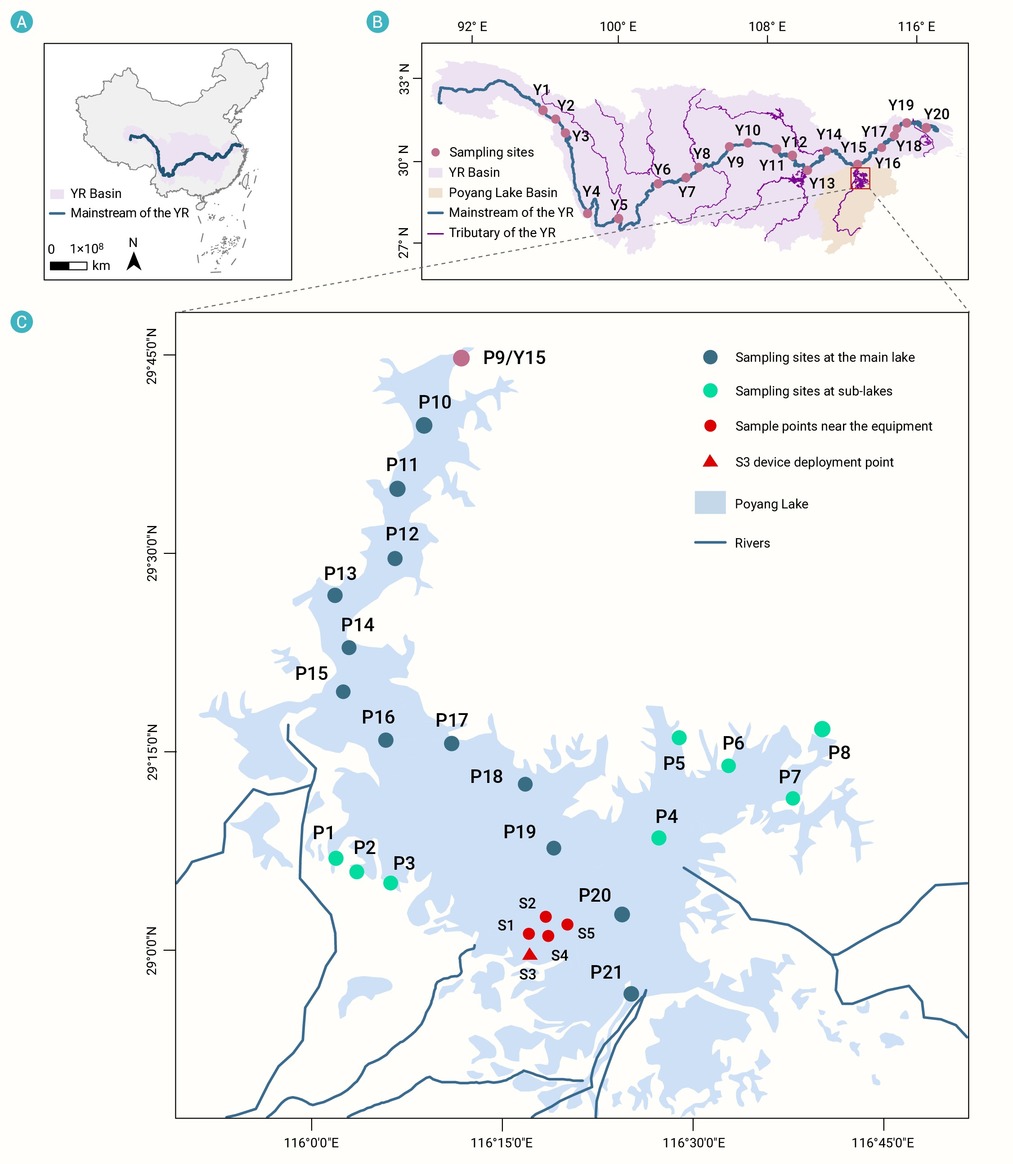
Figure 1.
Sampling point locations
-
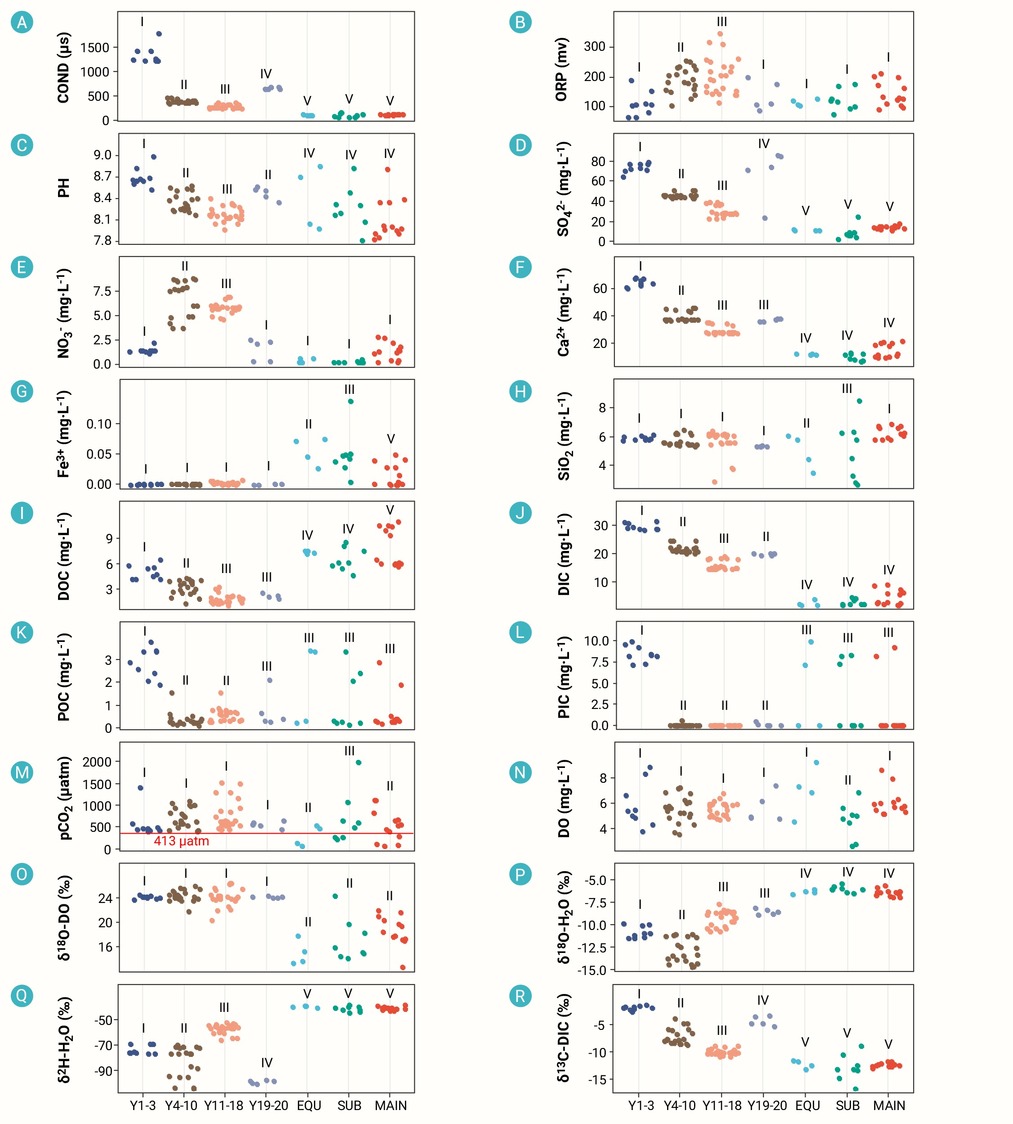
Figure 2.
Water quality parameters at each sampling point (divided into seven categories)
-
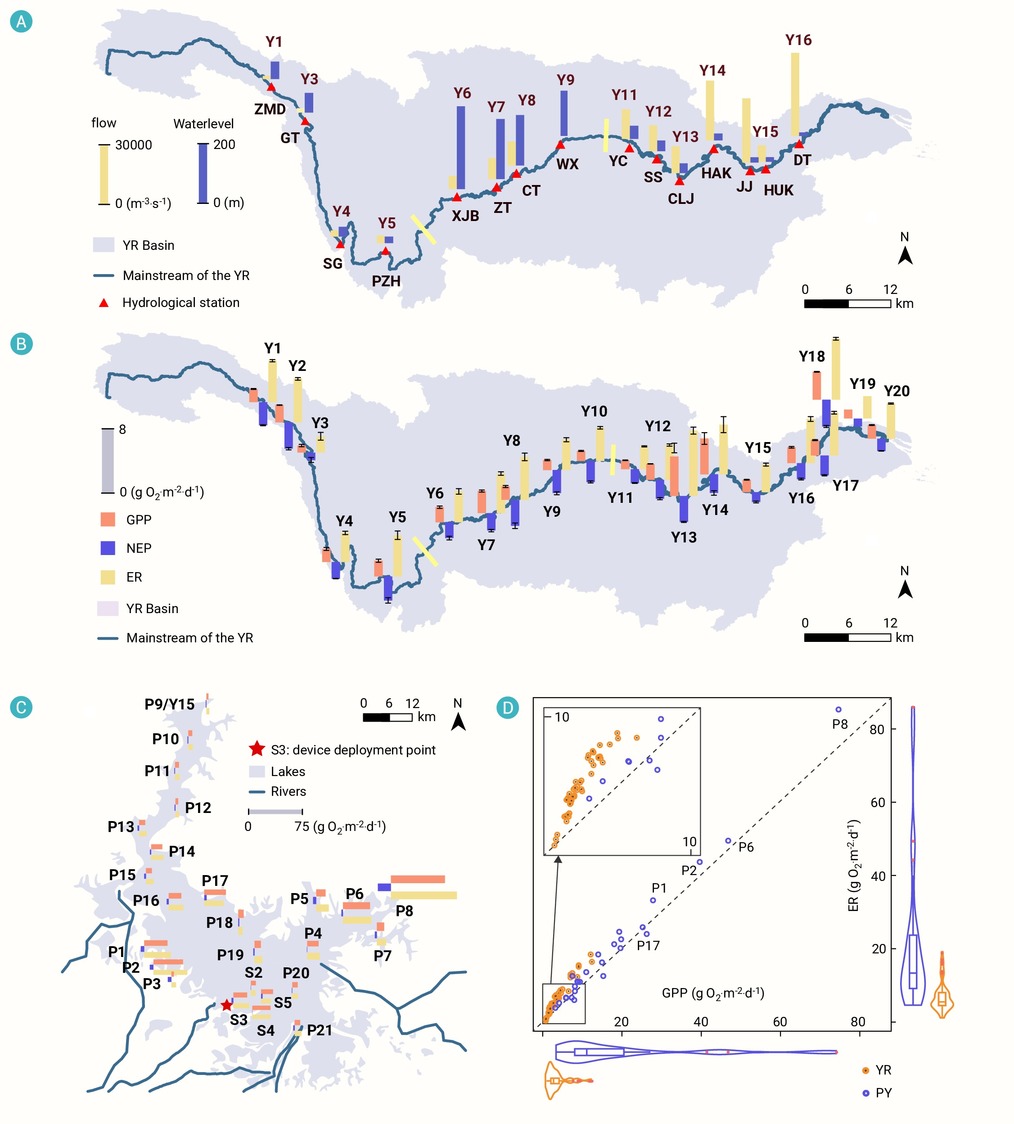
Figure 3.
Water levels at different stations on the Yangtze River
-
Figure 4.
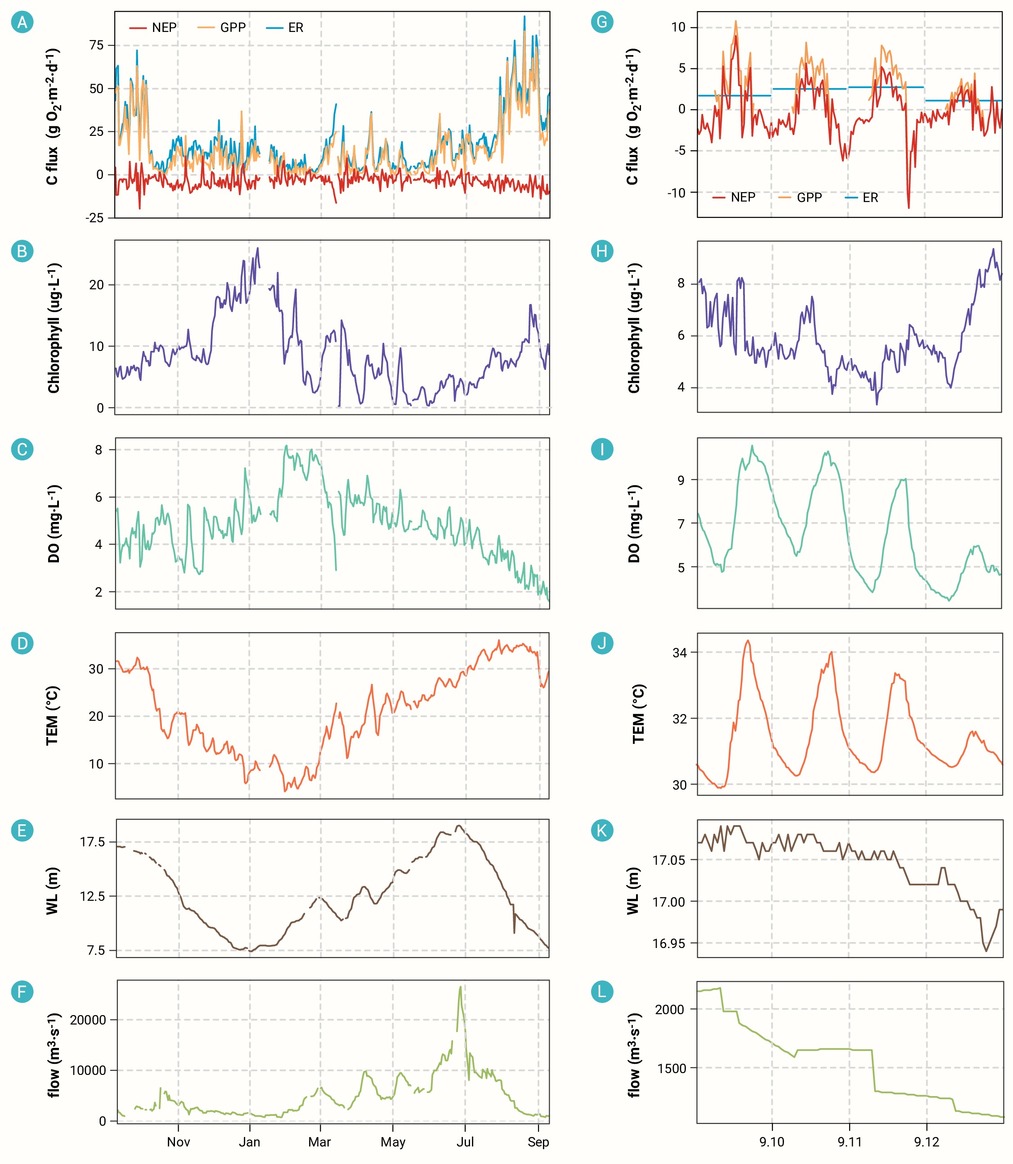
The Poyang Lake water regime and metabolic time series from September 9, 2021, to September 8, 2022 (A to F, daily), and from September 9 to September 12, 2021 (G to L, every half hour)
-
Figure 5.
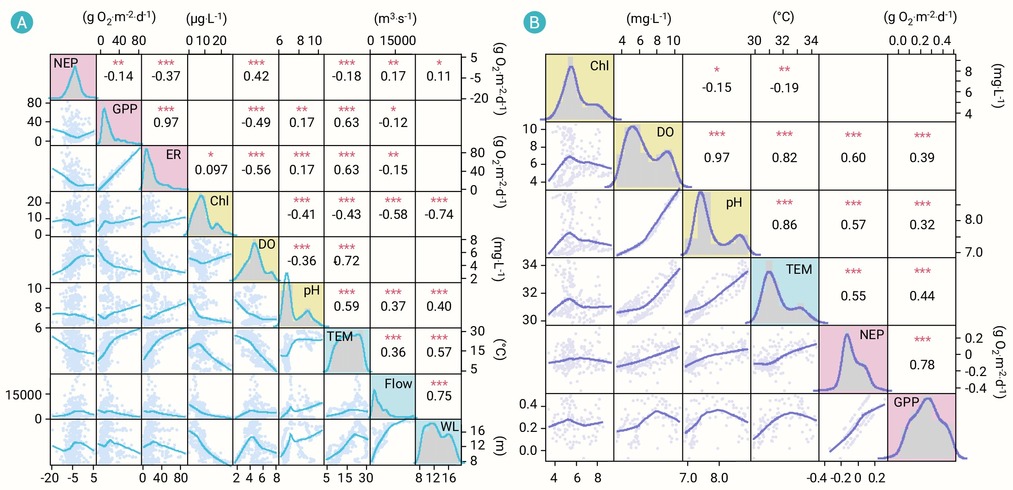
Scatter diagram fitting curves and correlations among metabolic, water regime, and water quality parameters of the Yangtze River, where (A) denotes the daily average value and (B) denotes the hourly average value from September 9 to September 12
-
Figure 6.
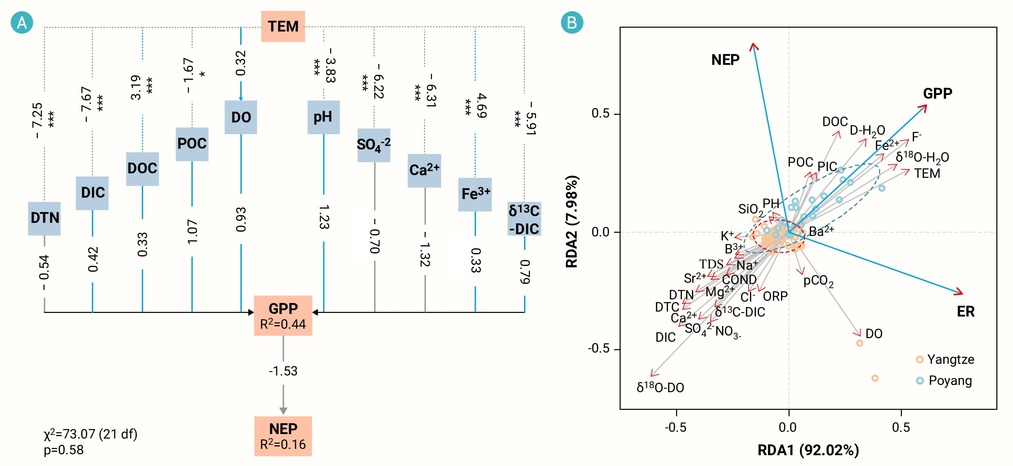
The relationship between water regimes, water quality parameters, and metabolic processes obtained through 18/16O technology
